



Abstract
Large inter-individual variability in daily energy and carbohydrate intake has been reported in highly-trained academy soccer players, potentially impacting training and match day performance, recovery and physical development. Nutritional interventions in these cohorts typically rely on group education without behaviour change theory, limiting their long-term effectiveness. Consequently, this study aimed to improve the nutritional intake of highly-trained youth soccer players via an individualised, theory-driven dietary behaviour change programme. This mixed-method case series utilised the COM-B model and Behaviour Change Wheel (BCW) to design and implement an eight-week dietary behaviour change programme in three full-time (16.7 ± 0.3 years) academy players (P1; P2; P3). Education and enablement were used to improve players' understanding of their energy and macronutrient requirements, alongside training to develop practical nutrition skills. Environmental restructuring was used to modify players' physical environment, ensuring they had appropriate food when away from the club. Daily energy intake increased by 55%, 19% and 24% for P1, P2 and P3, respectively, corresponding with DXA-derived fat-free mass gains of 1.4, 0.5 and 0.3 kg. Absolute carbohydrate intake increased by 217, 78 and 110 g.day−1 respectively, alongside improved fuelling practices around match day. Qualitative insights uncovered improvements in nutritional knowledge and cooking skills (Psychological and Physical Capability), while a desire to improve physical characteristics (Reflective Motivation) was a key adherence factor. The COM-B model and BCW provided a structured framework for designing an effective dietary behaviour change programme that successfully improved dietary behaviours in three highly trained youth soccer players.
Keywords
Introduction
Adequate nutrition is crucial for academy soccer players during adolescence, a period of rapid growth and high training demands. 1 However, evidence shows sub-optimal energy and CHO intake among U18 players in both Premier League and Championship academies.2–4 For example, Hannon and colleagues 2 reported several players displaying in-season negative energy balance of >1000 kcal.day−1. Crucially, sustained energy deficits can lead to low energy availability (LEA), which carries profound implications for both acute training and match play performance. 5
Insufficient CHO intake further exacerbates under-fuelling, as adequate muscle glycogen is essential for repeated high-intensity efforts. 6 Despite CHO recommendations of 6–8 g.kg.BM−1.day−1,2,7 academy players often fail to achieve these targets.2–4 This CHO shortfall can compromise performance, recovery, and skill execution, particularly when sub-optimal intake occurs around competitive match play.6,8 Therefore, it is essential to consider the effectiveness of nutritional interventions in improving dietary behaviours and ensuring academy soccer players meet their dietary requirements.
Traditional nutritional interventions, such as newsletters or group education, 9 have been questioned for their effectiveness in fostering long-term behaviour change. 10 Instead, individualised and theory-driven dietary behaviour change interventions have been called for to enhance the quality of nutrition provision to athletes. 11 Incorporating theoretical frameworks into nutritional interventions can assist in identifying ‘active ingredients’ as specific factors and behaviour change techniques which can effectively modify behaviour. 12 Sports nutrition interventions often omit behaviour change theory, limiting the understanding of ‘why’ and ‘how’ the intervention did or did not work, limiting successful replication in subsequent programmes. 11 Indeed, the theory-driven, mixed-methods approach adopted in the present investigation provides a rich understanding of complex nutritional behaviour change and the effectiveness of intervention. 13
In response to such challenges, the current study adopted the COM-B and Behaviour Change Wheel (BCW) behavioural frameworks to design and implement a dietary behaviour change programme among full-time, U18 academy soccer players. By addressing determinants of dietary behaviour, the COM-B model provides a structured and evidence-based approach to identifying barriers and enablers to change, making it a highly effective tool for designing interventions that lead to sustainable dietary behaviour improvements in youth athletes.14,15 As such, the current study aimed to increase energy and carbohydrate intake, particularly around match day, among a subgroup of highly trained academy soccer players over an eight-week in-season period, utilising a theoretically driven (COM-B) dietary behaviour change programme.
Methods
Study design
A mixed-methods, case series documented changes in dietary behaviours and key outcome measures in highly trained youth soccer players following an eight-week dietary behaviour change programme. Quantitative data included anthropometric data, external training loads, total daily energy expenditure (TDEE), energy intake (EI), macronutrient intake and nutritional knowledge attained via a validated general and sports nutritional knowledge (GeSNK) questionnaire. These data were collected over two separate 7-day in-season periods at the start and end of the eight-week intervention, each containing one match day (see supplementary materials for detailed overview of pre and post programme training microcycle). The eight-week intervention aligned with a typical training mesocycle for the U18, ensuring consistent external training loads during data collection. Additionally, semi-structured interviews during the final week of the programme explored players’ perceptions and behavioural changes. Approval for the research to be conducted was gained through a university ethics Committee (19414). A schematic of the study design can be seen in Figure 1.
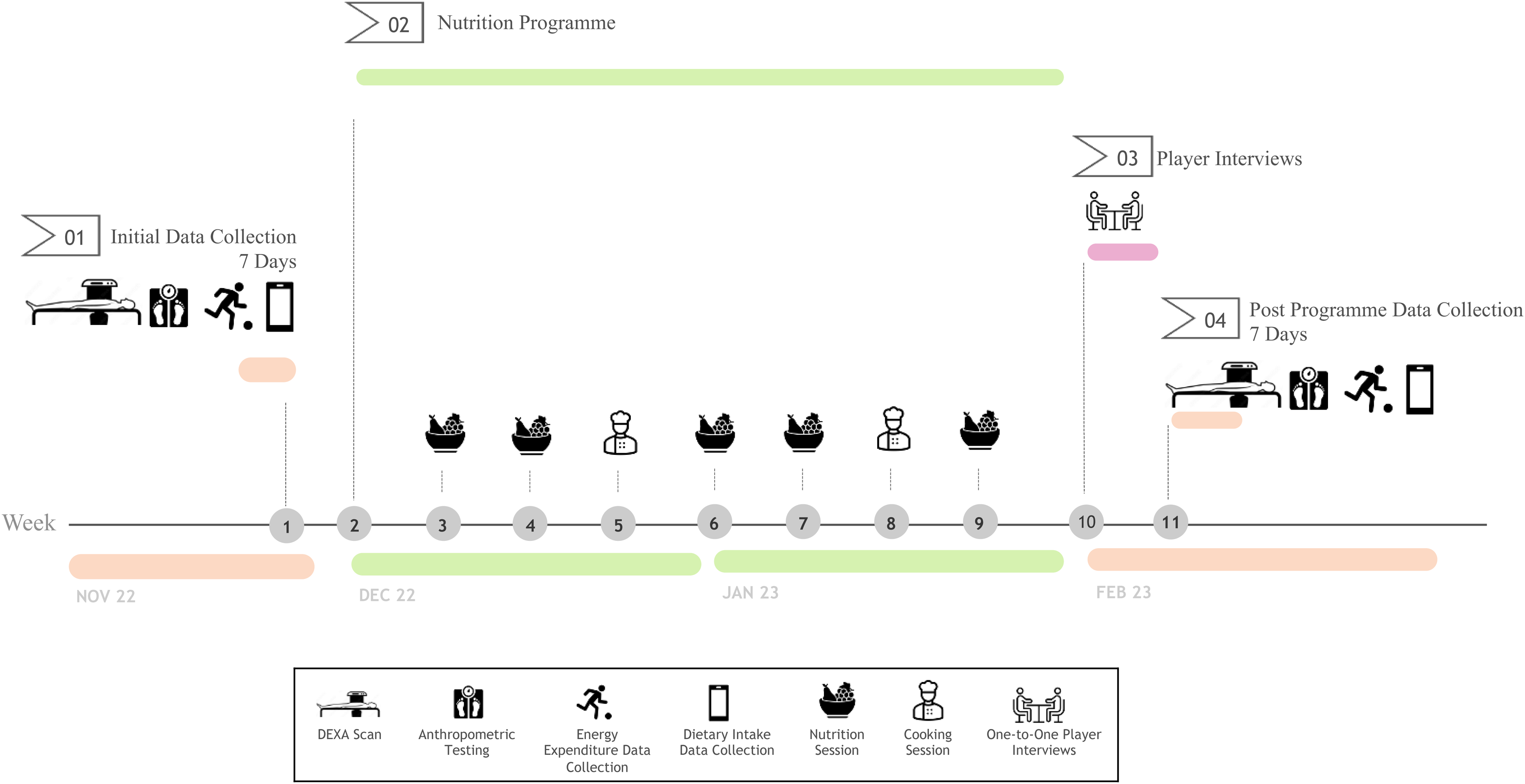
Schematic overview of the study period.
Qualitative philosophical approach
Within the qualitative work undertaken, we adopted a constructivist ontology and interpretive epistemology to underscore that experiences exist in multiple realities which are shaped by our social interactions and environment. Additionally, a critical realist approach was employed to acknowledge the existence of an objective reality while recognising that individuals interpret this reality through their own experiences and social contexts. We used an interpretive framework to facilitate a deep exploration of individual human experience. 16 In line with this philosophical approach, reflexive inductive thematic analysis was undertaken allowing themes within the data set to be found from participants’ viewpoints, capturing their experiences in detail. 17 For this reason, quantitative coding procedures were not employed, as our focus was on depth and meaning-making rather than frequency counts, which would have been inappropriate given the small sample and exploratory case-series design.
A reflexive qualitative analytical approach was taken, whereby the lead researcher thought reflexively and critically about the meaning of codes and themes resulting in data that was originally coded but on reflection was not relevant to the research aims being removed, codes and themes being relabelled, and codes being moved into different themes as the data set grew and new themes emerged. 16 This process of reflexive analysis was supported by co-authors acting as a critical friend who questioned and challenged the analysis.
Athlete information
Five full-time, professional, male U18 soccer players from a Category 1 Scottish Premier League academy were initially recruited, with three completing the programme. All five players were part of the Professional Development Phase Squad (U18s) and were purposely selected as they had previously displayed a sub-optimal dietary intake (Supplementary Materials). Additionally, key stakeholders within the club highlighted these specific players as having the potential to progress to the B or first-team squad if they developed their physical characteristics (specifically FFM). Two players withdrew: one due to injury and the other following a transfer. Baseline physical characteristics are presented in Table 1. To ensure player anonymity throughout the study, player names were removed and are from here on, referred to as Player 1 (P1), Player 2 (P2) and Player 3 (P3).
Overview of participant baseline characteristics.
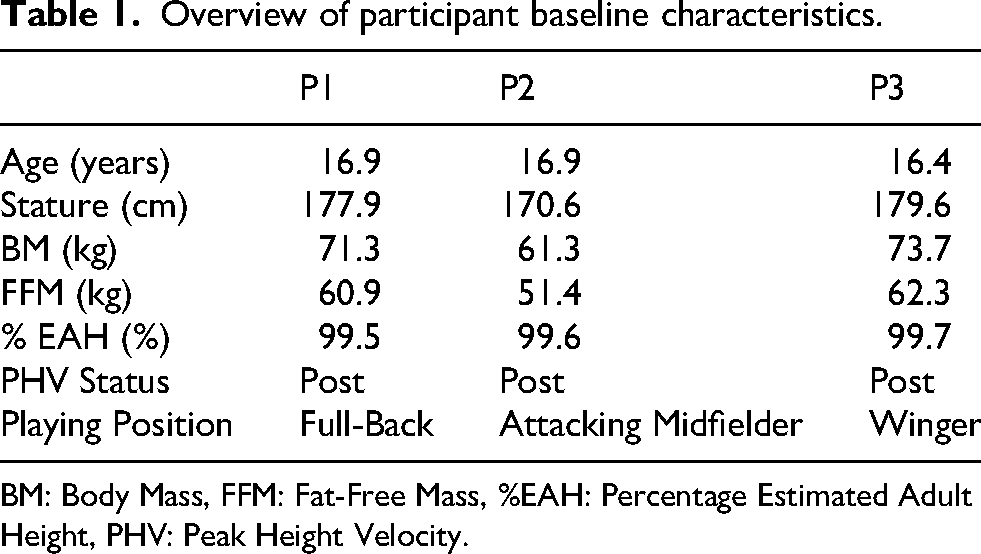
BM: Body Mass, FFM: Fat-Free Mass, %EAH: Percentage Estimated Adult Height, PHV: Peak Height Velocity.
Body composition and anthropometry
Anthropometric characteristics were assessed at baseline and following completion of the programme, including player stature (Seca, UK), mass (Seca, UK) and DXA derived whole-body body composition (DXA 150, iDXA GE Healthcare) DXA scans were undertaken in line with the guidelines proposed by Nona. 18 The coefficient of variation values (%) for the DXA machine used during the assessment of body composition were 1.17, 1.24 and 3.92 for total mass, whole-body lean tissue mass and whole-body fat mass respectively
Training and match external load
Training and match play external loads were assessed using 10-Hz GPS units (Catapult Vector S7), worn by players in manufacturer-provided vests. GPS has shown good inter-device reliability for total distance (TD), threshold-based distance, peak velocity and average acceleration, as displayed by a coefficient of variation (CV) of 0.1–3.9%. 19 Therefore, key metrics including total duration (min), total distance (TD, m), high-speed running (HSR, >5.5 m/s), sprint distance (>7 m/s), and high-intensity efforts were collected during the pre-and-post-programme assessment weeks. Since AEE often represents a major component of TDEE among athlete populations, 20 variations in training and match load were considered when estimating overall energy expenditure. To minimise the potential confounding influence of training load, both pre- and post-assessment periods were scheduled within identical one-game training weeks during the in-season phase. This approach standardised total match and training load (TML), helping to maintain comparable AEE and TDEE between assessments. All GPS data were processed using Catapult Openfield Console Software (v3.7.3).
Energy expenditure
Total daily energy expenditure (TDEE) was estimated via accelerometry (ActiGraph GT3X + ActiGraph, Pensacola, FL, USA) and GPS (Vector S7, Catapult Sports, Melbourne, Australia) derived metrics. Accelerometer-based energy expenditure was estimated using the Crouter, Flynn and Bassett Jr 21 vector magnitude regression equation, with the GT3X + triaxial accelerometer considered a reliable measure of movement across three axes, displaying CV values of 1.1 to 22.3% for vector magnitude. 22 Pitch-based energy expenditure was estimated using GPS-derived average metabolic power and the di Prampero and Osgnach 23 equation. While this method demonstrates reasonable accuracy compared to indirect open-circuit calorimetry for linear jogging and running, it has been shown to underestimate energy expenditure across a 90-min energy bout by 19% compared to measured energy expenditure. 24 To address potential underestimation of TDEE from indirect methods relative to measured energy expenditure, adjusted TDEE values for each player are provided in the Supplementary Materials.
Activity energy expenditure (AEE) was determined as TDEE minus resting metabolic rate (RMR) and thermic effect of food (TEF: assumed at 10% of EI). RMR was estimated using the Hannon, Carney, Floyd 25 equation based on DXA-derived fat-free mass (FFM). Energy availability (EA) was calculated as: EA = (EI - AEE)/FFM. Mean daily energy balance (EB) for the duration of the intervention was estimated using the equation developed by De Jonge, DeLany, Nguyen 26 and Pieper, Redman, Racette 27 , which has since been used to assess energy balance over an athletic season across multiple sports.28,29
Dietary intake
Self-reported dietary intake was assessed for a seven-day period at baseline and at the end of the eight-week intervention period using the Remote Food Photography Method (RFPM). 30 Seven days were chosen to assess energy and macronutrient intake, this time frame has been used previously to assess dietary intake in youth soccer players and has been deemed appropriate for capturing habitual dietary intake 2 whilst the RFPM has previously been shown as a valid tool for assessing dietary intake among adolescent, with small bias for under-reporting compared to weighed dietary intake under the observation of a researcher (CI = −5.7% to −2.2%). 31
Although the RFPM remains a valid approach to assessing dietary intake among youth athletes, concerns have been raised regarding the inter-practitioner reliability of this method, which has been reported as “poor” for both energy and macronutrient intake. 32 To ensure the reliability of the lead researcher's analysis of energy and macronutrient intake, a secondary set of analyses was conducted containing 11 days’ worth of dietary intake data. The secondary analysis was undertaken by the lead researcher, as well as an experienced, qualified nutritionist who had previous experience in dietary intake analysis. No significant differences between the lead researcher and the secondary nutritionist were observed for energy: p = 1.0, protein: p = 0.9, CHO: p = 0.6, or fat: p = 0.8.
All players were familiar with the RFPM and had previous experience of following the protocol. Each participant also conducted one in-person 24-h dietary recall during the assessment period to cross-check RFPM data. Dietary intake was analysed using Nutrimen software (Nutrimen LLP, Basingstoke, UK), providing absolute and relative energy and macronutrient intake for each player. Energy intake was reported in kilocalories per day (kcal.day−1) and kilocalories per kilogram BM per day (kcal.kg.BM−1.day−1) whilst macronutrient intake was reported in grams per day (g.day−1) and grams per kilogram BM per day (kcal.kg.BM−1.day−1).
Nutritional knowledge
A modified version of the validated General and Sports Nutrition Knowledge (GeSNK) questionnaire was used to assess nutrition knowledge, 33 and has previously demonstrated high validity and reliability with an internal consistency coefficient of a = 0.86. The modified questionnaire also underwent piloting with two male adolescent athletes to ensure appropriate comprehension of the questions and appropriateness for the age group targeted in the study. The final questionnaire comprised three sections: (1) unscored demographic questions and Likert scale ratings (1–10) on perceived nutrition importance for health and performance; (2) 15 scored sports nutrition items; and (3) 38 scored general nutrition items, using multiple-choice or three-point Likert scale formats. An additional refuelling-related item from Walsh, Cartwright, Corish 34 was included. Correct responses were scored +1, and incorrect or “I don’t know” responses received 0, with a maximum score of 53. The questionnaire was administered via QuestionPro (Survey Analytics LLC, Washington, USA) and is available in the Supplementary Materials.
Theoretical design and implementation of the programme
Design and implementation of the programme were undertaken using the COM-B model, which sits at the centre of the Behaviour Change Wheel (BCW) (Figure 2).The COM-B model posits that individuals require the Capability (psychological and physiological capacity to engage in the behaviour), Opportunity (factors which lie outside of the individual, such as social or physical environments in which individuals are embedded) and Motivation (habits, emotional responding and active decision making) to engage in specific behaviours. 35 These three components inform the BCW's nine intervention functions (Education, Persuasion, Incentivisation, Coercion, Training, Enablement, Modelling, Environmental Restructuring, and Restrictions) which guide intervention design. The outer layer of the BCW outlines policy categories that determine the modes of delivery. The behaviour change programme was developed using the three-stage guide proposed by Michie, Atkins & West. 36
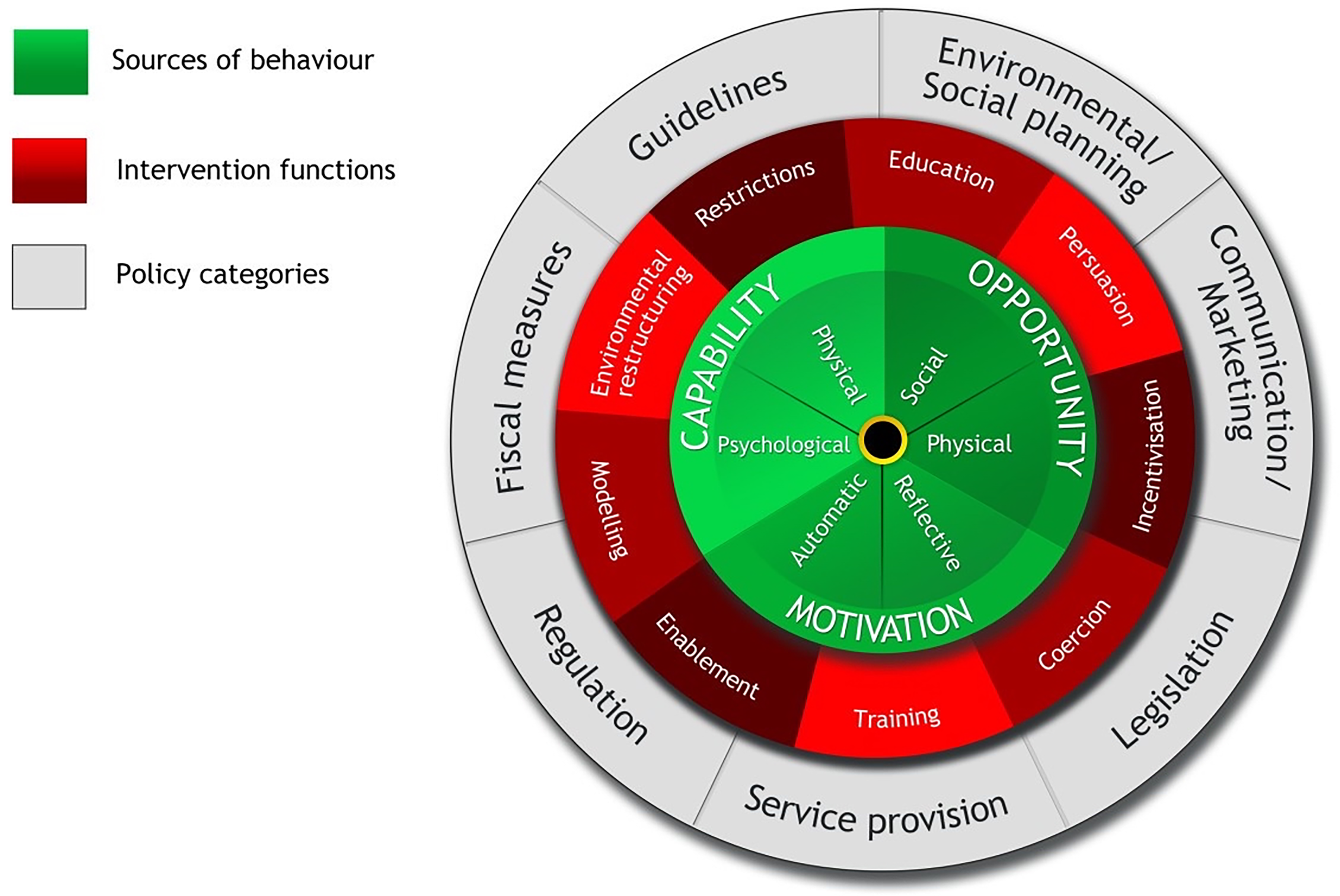
The behaviour change wheel (BCW) with the COM-B model at its core surrounded by its nine intervention functions and seven policy categories.35
Stage one: understand the problem and define the outcome
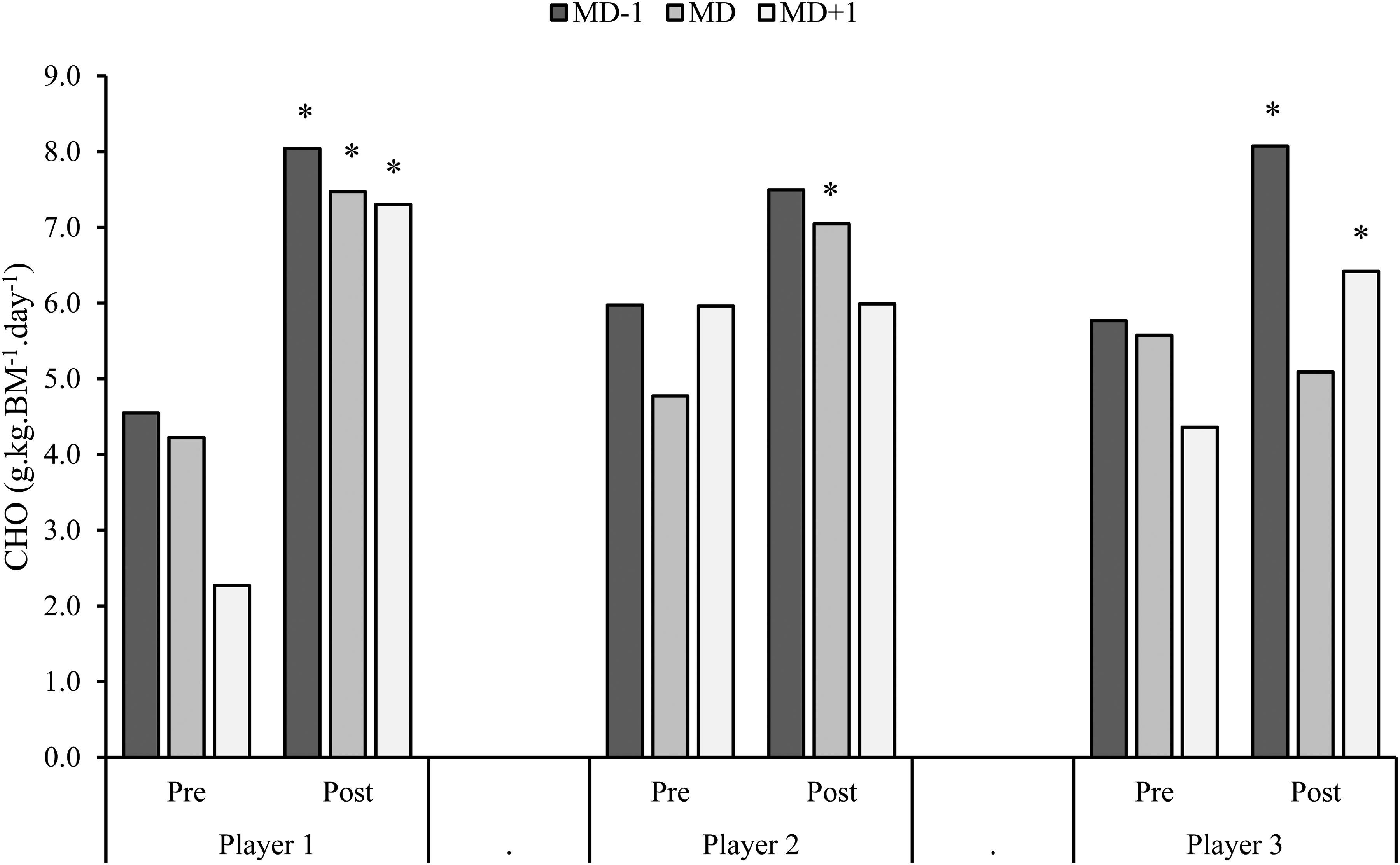
Target behaviours were identified through an analysis of dietary intake data, which revealed a negative energy balance of −639, −993, and −1248 kcal.day−1 for players 1, 2 and 3, respectively (Figure 3). Additionally, players consumed insufficient CHO to meet their training and match loads (TML), especially on MD-1, MD, and MD + 1 (see Figure 4). Accompanying this dietary analysis, players attended a 10–15 minute individual session with the lead researcher, in which they discussed their habitual eating behaviours outside of the club setting, including family meal practices, home food availability, and broader social influences. This contextual information was used to identify behavioural barriers and facilitators, enabling intervention strategies to be tailored to each player's real-life circumstances, strengthening the ecological validity of the study and likelihood of sustainable behaviour change. The RFPM protocol further supported this by capturing dietary intake across all eating occasions, including those outside the club environment.
Relative carbohydrate (CHO) intake for players 1, 2 and 3, respectively on match day-1 (MD-1), match day (MD) and match day +1 (MD + 1) during the pre-and-post-programme assessment. *Indicates statistically reliable change in EI from pre-to-post-programme assessment (RCI ≥ 1.96).
Accordingly, the programme was designed to increase players’ EI so that they were no longer in a hypocaloric state and to increase their CHO intake to >6.g.kg.BM−1.day−1, particularly around match day. To assist players in achieving these improvements in dietary intake, the programme was developed to:
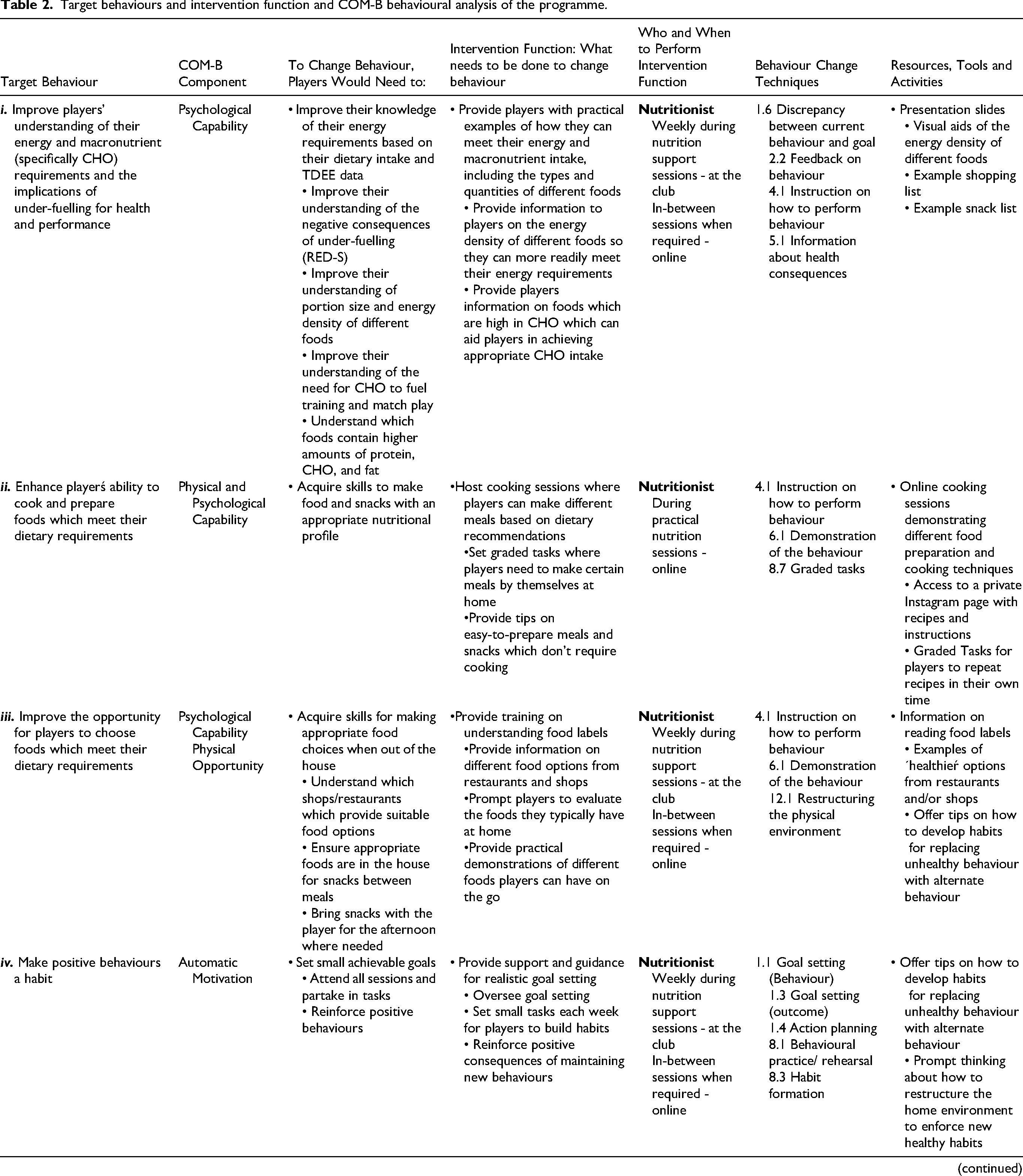
Improve players’ understanding of their energy and macronutrient (specifically CHO) requirements and the implications of under-fuelling for health and performance Enhance playerś ability to cook and prepare foods which meet their dietary requirements ( Improve the opportunity for players to choose foods which meet their dietary requirements ( Develop these new positive behaviours into habits Provide players with regular support throughout the programme
Using the COM-B model and the BCW, the lead researcher systematically mapped out the behavioural changes needed to achieve the desired outcome of the programme.
36
Table 2 details the behavioural specification, outlining
Target behaviours and intervention function and COM-B behavioural analysis of the programme.
Stage two: identifying intervention options
Intervention functions were selected based on the APEASE criteria (
Policies were chosen that support the appropriate intervention functions.
Stage 3: identify content and implementation options
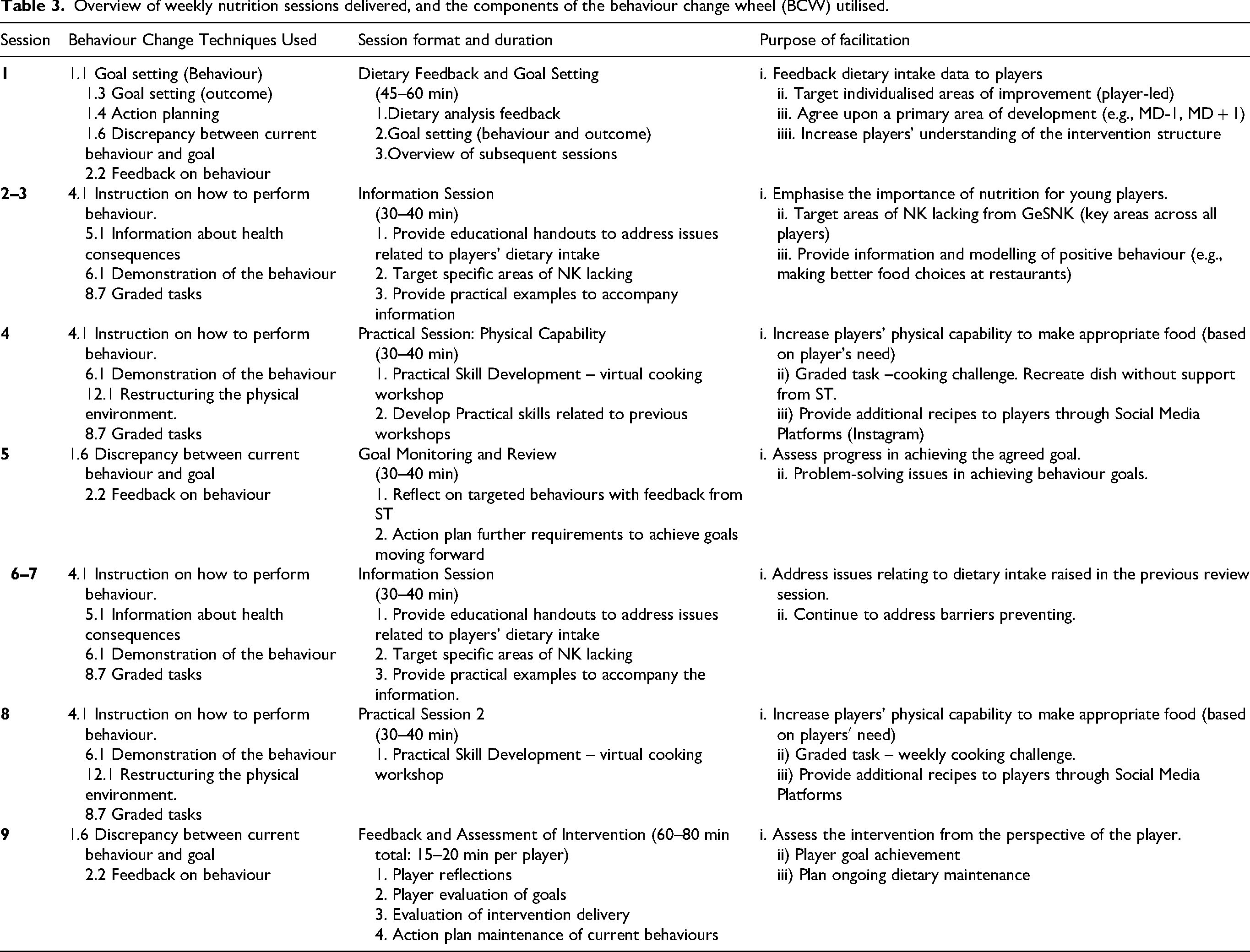
The programme incorporated specific Behaviour Change Techniques (BCTs) from the 93-item BCT taxonomy 37 to structure intervention content. Programme delivery was tailored to the real-world constraints of academy soccer, where sports nutritionists often work across the entire academy pathway. 9 Small group sessions were therefore utilised to foster accountability among players and facilitate peer support. Sessions were conducted by the lead researcher at the club training ground to minimise logistical challenges for players and lasted ∼30–35 min. An overview of the session content can be seen in Table 3.
Overview of weekly nutrition sessions delivered, and the components of the behaviour change wheel (BCW) utilised.
Post -programme interviews
After completing the programme, players participated in semi-structured interviews to:
investigate the efficacy of the COM-B behaviour change programme. explore their experience of the programme and identify the active ingredients which facilitated behaviour change.
Questions were developed to be open-ended to encourage rich and detailed responses from the players 38 and were related back to the specific components of the COM-B model, examining whether players had developed their capability, opportunity or motivation. Interviews (31 ± 5 min) were undertaken individually with players and were led by the lead researcher.
Analysis of data
Given the case series design (n = 3), descriptive statistics were used to assess changes in TDEE, EI, macronutrient intake, energy availability, NK, and external training load pre- and post-programme over the eight weeks, illustrating the magnitude of change for each player. To strengthen analytical rigour, a Reliable Change Index (RCI) was calculated for key quantitative outcomes (EI, CHO intake, and DXA-derived FFM) to determine whether observed changes exceeded expected measurement error, as outlined by Jacobson and Truax
39

For the RFPM-derived EI and CHO data, typical error incorporated both (i) day-to-day variability in intake across the 7-day assessment period and (ii) published coefficients of variation for the RFPM under free-living conditions (EI = 18.3%; CHO = 24.1%
32
). For DXA-derived lean mass, the instrument's reported precision was used (CV = 1.24%). A change was considered statistically significant when RCI ≥ 1.96, corresponding to the 95% confidence threshold on the standard normal distribution. In addition, the least significant change (LSC) was calculated to identify the minimum absolute change required to be considered statistically reliable at the 95% confidence level. The LSC was derived as:
This analytical approach provides a practical interpretation of reliability by expressing whether a change in assessment score is greater than what would be expected due to measurement error or natural variability. Quantitative data are therefore reported as mean ± SD for each player, alongside RCI and LSC values where applicable. Transcribed interviews were analysed using NVivo software (v.12) (QSR International, Massachusetts, USA) using the 6-stage thematic analysis. 17 Themes were mapped to COM-B components, capturing players’ behavioural changes and their experiences of the programme.
Results
Training and match loads, energy expenditure, and dietary intake
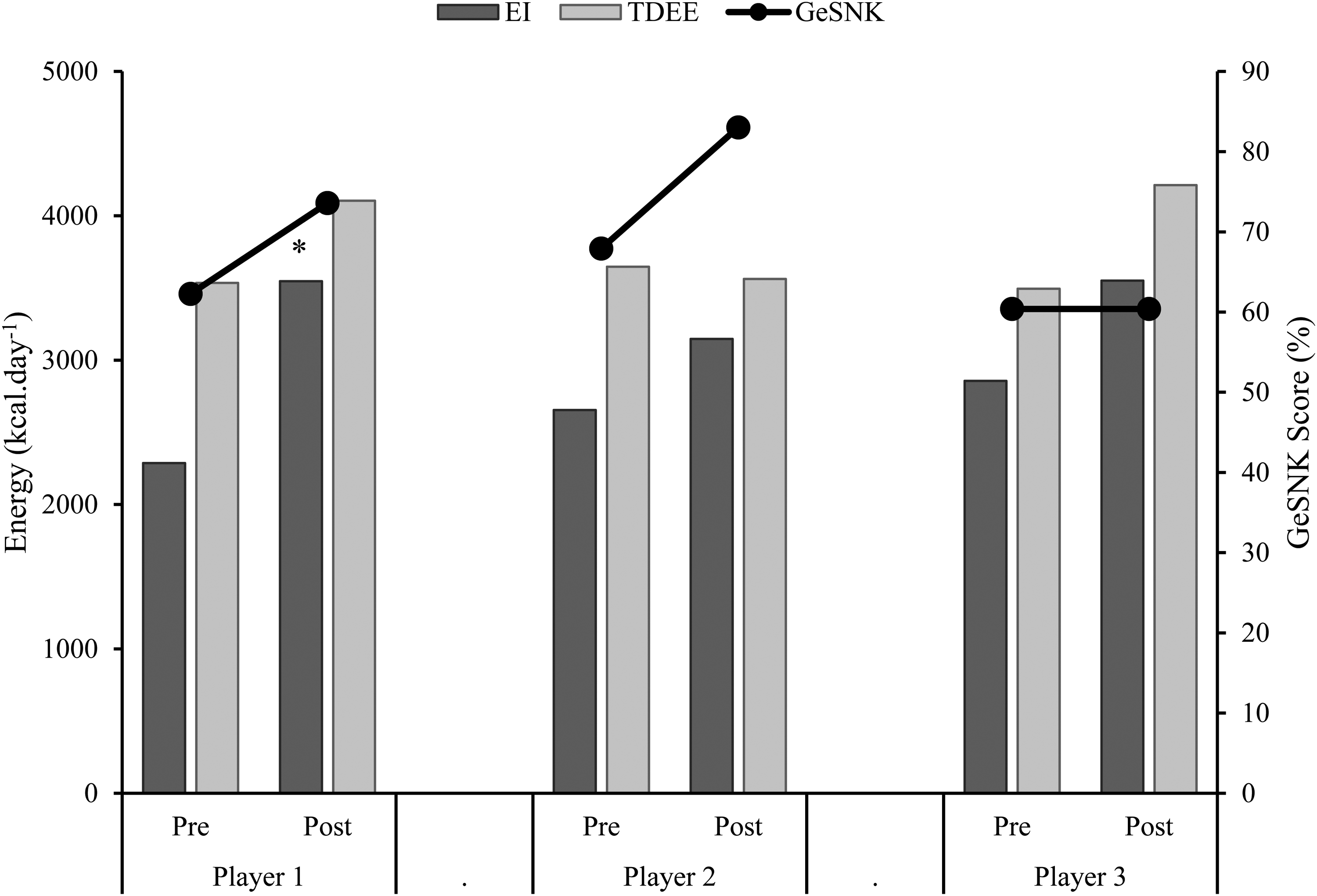
A summary of mean energy expenditure, energy and macronutrient intake and nutrition knowledge score from pre- and post-programme for P1, P2 and P3 can be seen in Figure 4. Absolute and relative intake of protein, carbohydrate, and fat during the pre-and post-assessment periods can also be seen for each player in Figure 5. Relative carbohydrate intake on MD-1, MD, and MD+1 is also presented in Figure 4.
Total daily energy expenditure (TDEE), energy intake (EI) and general and sports-specific nutrition knowledge (GeSNK) scores for players 1, 2 and 3 during the pre-and-post programme assessments. *Indicates statistically reliable change in EI (RCI ≥ 1.96).
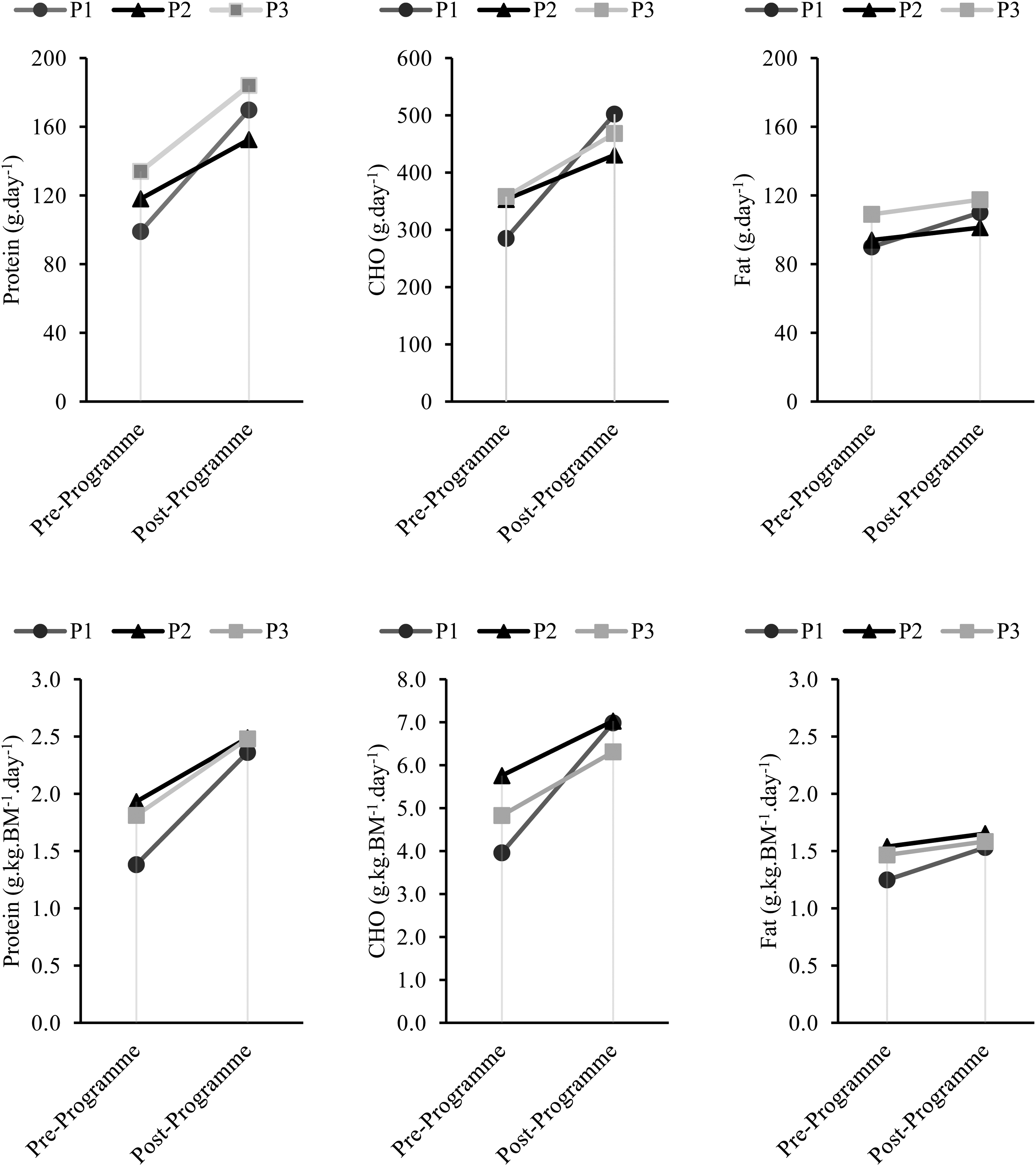
Absolute and relative intake of protein, carbohydrate (CHO), and fat for players 1, 2 and 3 (P1, P2 and P3) during the pre-to-post programme assessments.
Player 1
As displayed in Figures 3–5, P1 demonstrated the greatest increase in EI and CHO intake, particularly around match day. Mean EI increased by +1259.9 kcal·day−1 (55%, RCI = 3.48, LSC ≈ 618 kcal·day−1), indicating a statistically significant change. Mean CHO intake also increased by +217.4 g·day−1 (47%), (RCI = 3.49, LSC ≈ 62 g·day−1) also indicating a significant increase across the week. When examined across the match microcycle (Figure 4) CHO intake showed significant increases on MD-1 (+3.5 g·kg−1·BM−1·day−1; RCI = 3.96; LSC ≈ 1.7 g·kg−1·BM−1·day−1), MD (+3.3 g·kg−1·BM−1·day−1; RCI = 3.98; LSC ≈ 1.7 g·kg−1·BM−1·day−1), and MD + 1 (+5.0 g·kg−1·BM−1·day−1; RCI = 5.64; LSC ≈ 1.5 g·kg−1·BM−1·day−1). FFM did increase by +1.34 kg across the intervention period, however, it was not deemed to be a statistically significant change (LSC ≈ 2.1 kg; RCI = 0.63). In addition, despite a rise in mean AEE (1194 ± 308 to 1605 ± 509 kcal·day−1), P1 was able to increase EA from 18 ± 6 to 31 ± 7 kcal·kg−1 FFM·day−1. Nutritional knowledge also increased from 62% to 74%.
Player 2
P2 demonstrated moderate increases in EI and CHO intake across the intervention period. Mean EI increased by +492.5 kcal·day−1 (19%, RCI = 1.37, LSC ≈ 618 kcal·day−1), although this change did not exceed the reliability threshold. Mean CHO intake also increased by +77.9 g·day−1 (18%, RCI = 1.14, LSC ≈ 62 g·day−1), representing a non-significant improvement. Day-specific analysis (Figure 4) showed a significant increase on MD (+2.2 g·kg−1·BM−1·day−1; RCI = 2.17; LSC ≈ 1.8 g·kg−1·BM−1·day−1), whereas changes on MD-1 (+1.5 g·kg−1·BM−1·day−1; RCI = 1.37) and MD + 1 (0.0 g·kg−1·BM−1·day−1; RCI = 0.00) were non-significant. FFM increased by +0.52 kg, LSC ≈ 2.1 kg; RCI = 0.30), although not statistically significant. AEE decreased slightly from 1387 ± 388 to 1238 ± 325 kcal·day−1, while EA improved from 25 ± 14 to 37 ± 6 kcal·kg−1 FFM·day−1.
Nutritional knowledge increased from 68% to 83%.
Player 3
P3 showed smaller increases in EI and CHO intake compared with P1 and P2. Mean EI increased by +694.5 kcal·day−1 (24%, RCI = 1.58, LSC ≈ 618 kcal·day−1), which did not reach statistical significance. Mean CHO intake also increased by +109.9 g·day−1 (19%, RCI = 1.47, LSC ≈ 62 g·day−1), also falling below the reliability threshold. Figure 4 indicates meaningful improvements in CHO intake on MD-1 (+2.3 g·kg−1·BM−1·day−1; RCI = 2.19; LSC ≈ 1.9 g·kg−1·BM−1·day−1) and MD + 1 (+2.0 g·kg−1·BM−1·day−1; RCI = 2.22; LSC ≈ 1.8 g·kg−1·BM−1·day−1), while a small reduction was seen on MD (−0.5 g·kg−1·BM−1·day−1; RCI = −0.48). FFM increased modestly by +0.26 kg (LSC ≈ 2.1 kg; RCI = 0.12) yet was not deemed a statistically significant change. P3 however observed a significant increase in AEE from pre-to-post intervention (1071 ± 404 to 1709 ± 381 kcal·day−1) nevertheless. they remained in stable EA (29 ± 4 to 29 ± 8 kcal·kg−1 FFM·day−1). Nutritional knowledge remained stable between pre-and-post intervention assessment at 60%.
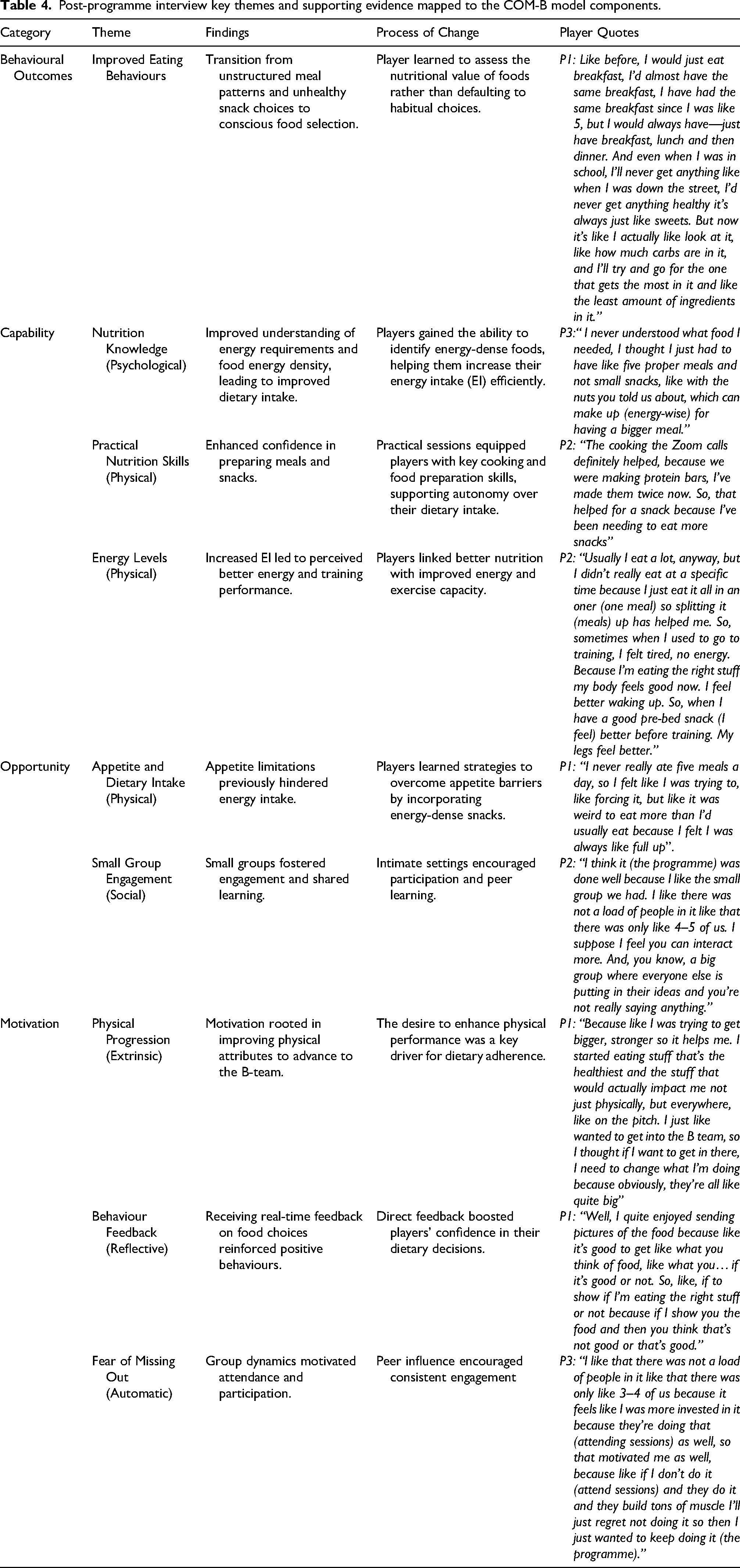
Accompanying quantitative changes from pre-to post-programme, interviews with players were undertaken to investigate players’ perceptions of the programme and their current behaviours. Themes were developed from the transcribed data and related to the aspects of capability, opportunity, and motivation that were developed through the programme (Table 4).
Post-programme interview key themes and supporting evidence mapped to the COM-B model components.
Discussion
This study demonstrated the potential effectiveness of a theory-driven, mixed-methods dietary intervention in improving energy intake (EI), energy availability (EA), and carbohydrate (CHO) consumption in highly trained U18 academy soccer players. By applying the COM-B and Behaviour Change Wheel (BCW) frameworks, the programme successfully addressed psychological and environmental barriers to dietary adherence, leading to some observable changes in nutritional behaviours and body composition.
Our constructivist and interpretive stance shaped the way we approached players’ dietary behaviours, recognising that these were not fixed but influenced by multiple social and environmental realities. At the same time, drawing on a critical realist position allowed us to acknowledge the presence of an objective reality (e.g., recorded dietary intake and body composition changes), while also recognising that these data were understood differently by each player depending on their context. This combination of perspectives meant that our interpretation went beyond reporting quantitative outcomes and instead placed them alongside players’ lived experiences, helping us to better understand how and why behaviour change occurred in this specific setting.
The observed increases in EI of 55%, 19% and 24% for P1, P2 and P3, respectively, were notable, especially considering players’ daily energy expenditure (∼3500–4000 kcal.day−1) and in-season training loads (∼25 km per week) were comparable to those of adult first-team players. 40 However, only P1's increase in EI was deemed statistically significant (RCI = 3.48), while P2 and P3 demonstrated positive, but non-statistically significant changes (RCI = 1.37 and 1.58, respectively). Nevertheless, such improvements, even if modest, are likely valuable in an applied academy setting where incremental gains in energy intake can meaningfully affect recovery, adaptation, and long-term physical development.
Whilst direct links between acute fluctuations in energy balance and youth athlete performance remain limited, 41 prolonged energy deficits may impair training adaptations and the development of FFM and increase the risk of illness and injury. 42 Accordingly, improvements in EA of 74% and 49% by P1 and P2, respectively, suggest that targeted nutritional interventions may help mitigate energy deficits and support physical development in academy soccer players. RCI analysis further indicated that P1's improvements in both EI and CHO intake exceeded the threshold for statistical reliability (RCI ≥ 1.96), confirming that observed changes were greater than expected day-to-day or measurement variability. While P2 and P3 demonstrated positive directional changes, their magnitudes did not surpass the RCI threshold, suggesting meaningful but not statistically reliable improvements. Although this study did not include a control group, several measures were taken to standardise external influences. Attempts were made to standardise training and match loads by selecting a one-game week. Players’ dietary provision at the club, and access to nutritional support remained consistent throughout the intervention period.
Despite increases in EI, EA remained below the optimal threshold for youth athletes (>45 kcal.kg FFM−1.day−1). However, P1 and P2 both increased EI sufficiently to achieve EA above the clinically low threshold (<30 kcal.kg FFM−1.day−1) that is associated with negative psychological and physiological consequences. 5 Whilst these data indicate positive outcomes of the intervention, caution should be taken when interpreting these findings as, although previously validated among youth soccer players and inter-practitioner reliability assessed, the RFPM method is subject to under-reporting and practitioner variability. 32 Accordingly, sustained nutritional support is likely required to help academy soccer players achieve appropriate energy balance and reduce the risk of LEA. In contrast, although changes in lean tissue mass were observed across the intervention period for P1(+1.34 kg), P2 (+0.5 kg) and, P3 (+0.26 kg), these values were not deemed to be statistically significant, potentially due to the in-season period constraining training stimuli and recovery opportunities.
Alongside EI, variability was observed between players with respect to CHO intake across the week (Figure 5) and around match day (Figure 4). As adequate muscle glycogen underpins high-intensity activities such as sprints, accelerations, and decelerations, 43 increased CHO intake during key fuelling periods is important to wide players such as P1 and P2, who rely on repeated sprints and accelerations.44,45 Enhanced CHO intake on MD and MD + 1 likely supports post-match recovery and glycogen resynthesis, aligning with current recommendations.7,46 It is important to note that while mean CHO intake increased across all players, decreases were also observed in P2 (MD + 1) and P3 (MD), potentially impacting recovery, which should be acknowledged when interpreting the outcomes. Nevertheless, these quantitative changes suggest structured nutritional support can positively influence both acute fuelling strategies and long-term recovery processes.
Qualitative data, as detailed in (Table 4), provide valuable insights into behavioural changes and the underpinning mechanisms developed during the programme. For example, although the causal relationship between NK and dietary intake was not analysed, players appeared to adopt more structured eating habits by displaying enhanced psychological and physical capability, including improved awareness of energy requirements and food choices, enabling them to adjust their EI accordingly. These findings support previous research that improved nutritional knowledge can support better dietary intake. 47 Moreover, key practical skills gained likely further facilitated behaviour change. 48 A key motivating factor for adhering to nutritional recommendations was the desire to develop FFM, as players believed this would support their progression to the B-team (U23) or first-team squad, where physical characteristics are often emphasised. 49 Social dynamics also played a role, with P3 expressing a ‘fear of missing out’ if they did not adhere to the programme. However, P3's GeSNK score did not improve post-intervention, suggesting that increased awareness may not always translate into measurable knowledge gains.
A key strength of this study lies in its novel use of the COM-B model and BCW framework to design and implement a dietary behaviour change programme within highly trained academy soccer players. This theory-driven approach ensured the programme components addressed individual needs and environmental barriers, fostering positive behaviour change. 36 Mixed methods also enabled a richer understanding of behaviour change processes, as quantitative data were contextualised with qualitative insights. 13 For example, although P3 showed no improvement in their post-programme NK score, interviews revealed an enhanced understanding of energy needs. Such insights illustrate the value of mixed methods in capturing nuanced behaviour changes that may not be evident through quantitative measures alone. 13 Notably, the eight-week programme's small-group format effectively fostered engagement and adherence, highlighting its applicability within in-season mesocycles, when time with players is limited. Extending programme duration could further enhance FFM gains and reinforce newly developed behaviours.
Despite its strengths, the study has several limitations. Firstly, given the small case series design (n = 3), findings are not generalisable across all academies. Instead, they provide context-specific insights into how theory-driven, individualised interventions can be applied in elite environments, offering practitioners an adaptable framework. Secondly, whilst the eight-week duration aligned with a single training mesocycle, it limited the evaluation of long-term behaviour maintenance. However, aligning the intervention with a defined mesocycle represented a methodological strength, as training load, recovery schedules, and player availability were standardised throughout this period. This design minimised potential confounding from seasonal variation or external changes in the environment and ensured that observed behavioural and physiological adaptations occurred under consistent performance demands. Moreover, such an approach reflects the practical constraints and time frames typical of applied nutrition support within elite youth football. Future work should include longitudinal follow-up to determine whether newly developed dietary behaviours are sustained beyond the immediate intervention period, as relapse to baseline behaviours is common in behaviour change programmes. 50
Thirdly, player selection was based on both objective dietary data and input from key academy staff, who identified players exhibiting sub-optimal intake and requiring additional physical development. This data-driven and practitioner-informed approach reflects standard practice in applied high-performance environments, where nutritional interventions are strategically targeted toward those most likely to benefit, ensuring that specialist support is directed to players with the highest potential for change. While this targeted design may limit generalisability to all academy athletes, it enhances ecological validity and aligns with real-world implementation of performance nutrition programmes. Fourthly, while RFPM captured eating behaviours comprehensively during assessment periods, it did not account for dietary intake outside those windows. Broader contextual influences (e.g., family food availability) may therefore have affected outcomes beyond what was measured. Fifthly, training loads were reported descriptively to provide context but not statistically matched to outcome measures, meaning their influence on body composition cannot be directly inferred. Finally, post-programme interviews were conducted without concurrent dietary intake or DXA data, reducing the depth of interpretation. Although no evidence of adverse effects was observed, future work should also remain mindful of unintended consequences, such as excessive focus on body mass or risk of disordered eating.
Nevertheless, the COM-B model and BCW appear to represent effective frameworks for facilitating positive dietary behaviours in highly trained academy soccer players. By addressing both individual and environmental barriers, these frameworks offer practitioners practical strategies to improve nutritional intake and supporting player development. Whilst our findings are not generalisable, theoretically-driven changes, such as providing simple education on energy density, restructuring mealtime environments, and introducing feedback sessions to youth athletes, appear to positively influence dietary behaviours in this cohort. Future research may benefit from evaluating if such strategies could be implemented in larger and more diverse cohorts, where more individualised support may not always be feasible.
Conclusion
This case series indicates a potentially effective approach to dietary behaviour change in a sub-group of full-time academy soccer players who display sub-optimal energy and carbohydrate intake, using the COM-B model to address individual and environmental barriers. Delivered in small focus groups, the intervention produced positive trends in dietary intake, aligning with recommended intake for carbohydrate intake within this cohort, although statistically significant increases in EI and FFM were observed only in P1. Educating players on food and energy density appear to help overcome appetite-related barriers, facilitating adequate energy intake without increasing food volume. Players’ focus on increasing FFM for physical development underscores the need to prioritise performance-driven dietary decisions over aesthetics. Collectively, these findings highlight the potential of theory-driven frameworks like COM-B and BCW in highly-trained youth sports nutrition interventions, while emphasising the need for sustained, longitudinal interventions to consolidate and expand these early improvements.
Supplemental Material
sj-docx-1-spo-10.1177_17479541251409330 - Supplemental material for A nutritional intervention within highly trained youth soccer players using a COM-B model of behaviour change: A case series approach
Supplemental material, sj-docx-1-spo-10.1177_17479541251409330 for A nutritional intervention within highly trained youth soccer players using a COM-B model of behaviour change: A case series approach by Sam Thompson, Rosie Arthur, Robert J Naughton, Oliver Morgan, Jack Nayler, Janice Buchanan and Viswanath B Unnithan in International Journal of Sports Science & Coaching
Footnotes
Acknowledgements
We would like to thank all stakeholders for taking part in the interviews. Additionally, we would like to thank Celtic Football Club for facilitating this research.

Funding
The authors disclosed receipt of the following financial support for the research, authorship, and/or publication of this article: This research was part-funded by Celtic Football Club
Declaration of conflicting interests
The authors declared no potential conflicts of interest with respect to the research, authorship, and/or publication of this article.
Data availability statement
Supplemental material
Supplemental material for this article is available online.
References
Supplementary Material
Please find the following supplemental material available below.
For Open Access articles published under a Creative Commons License, all supplemental material carries the same license as the article it is associated with.
For non-Open Access articles published, all supplemental material carries a non-exclusive license, and permission requests for re-use of supplemental material or any part of supplemental material shall be sent directly to the copyright owner as specified in the copyright notice associated with the article.
