



Abstract
Transition from elite sport is a significant event in an athlete's life. However, the mode of transition (retirement or delisted through loss of contract) can influence the experience and affect psychological wellbeing moving forward. This study explored professional female Australian rules football players (n = 130; mean age 26.6 ± 5.7 years) leaving the Australian Football League Women's (AFLW) competition between 2020 and 2024. Using scaled-response questions, self-reported responses were compared between voluntarily retired and delisted AFLW players across areas of their transition experience including leaving their club, athlete self-identity, the influence of sport in their daily life, psychological flourishing, financial confidence, and future vocational preparations. Delisted players (n = 87), compared to voluntarily retired players (n = 43), reported similar career spans (p = 0.108) but played less competitive matches than retired players (p = 0.013). Delisted players also reported a significantly worse experience of their club's handling of the process of leaving their club (p = 0.031). Delisted players reported stronger identity attachment to sport (p = 0.045), but similar responses to psychological flourishing and financial competence (all p > 0.05). A greater proportion of delisted players reported studying or looking for employment (p = 0.025). The experience of self-reported transition showed negative correlations with athletic identity (r = -0.228, p = 0.009) and positive correlations with psychological flourishing (r = 0.362, p < 0.001). The results of this exploratory study suggest that as delisted female professional AFLW players expressed lower perception of club's handling of the transition process, the role of professional AFLW club staff should look to improve the transition process in in preparation for an athlete's life outside of professional sport.
Introduction
In the lifecycle of the elite or professional sportsperson, none is more profound than the decision to end their participation as a competitive athlete. Acknowledged as career transition, this process into retirement will involve conflicting emotions ranging from denial, anger and despondency, through to happiness and acceptance.1–3
There has been extensive research on athlete career transition 4 with the International Society of Sport Psychology (ISSP) releasing position statements on career development and transitions of athletes, 5 recognising the importance of positive career transition experiences for elite/professional athletes psychological wellbeing. Despite the extensive body of knowledge and the recognition by the ISSP, it is recognised that transition out of professional sport continues to be a complex issue. 6 A concern within this issue is understanding the experiences of athletes, particularly the distinction between ‘voluntary retirement’, though which an athlete has made the decision to take leave from their sport at the time of their own choosing, and ‘forced retirement’ (also termed involuntary retirement)7,8 where the athlete does not have full control of their decision to finish competitive sport. To add complexity, ‘forced retirement’ decisions may be due to deselection from the club/team, or it may be due to medical injury factors, or a combination of both. 7
Despite the long history of research, the disparity between sports and across cultures make generalization of athlete transition suitable across all sports difficult. 9 For example, researchers2,10 have noted that the majority of previous studies have reported transition experiences in athletes from individual sports (e.g., professional tennis 1 ) where issues such as team deselection are not going to play a part in voluntary or forced retirement. Given, current knowledge of disparate experiences of transitioning athletes between individual sports and team sports, 11 research is required from athletes involved in team sports in contributing to our continuing understanding of athlete transition experiences.
While transition from elite or professional sport presents challenges for all athletes, unique challenges are found with female athletes. Park et al. 10 have described team sport athletes with a loss of athletic identity. Additionally, research by Haslam et al. 12 reported that team sport athletes with strong athletic identity experience significant challenges to adjusting to sport post-retirement. Moreover, athletes that lacked alterative ‘identities’ or had career plans struggled more with transition, emphasising the importance of financial and vocational preparedness. Further, limited exposure to career development programs during sporting careers restricts vocational exploration, leaving many unsure of their next steps. 5 For example, in women's association football studies have shown that, compared to male athletes, retirement can be stressful due to challenges such as financial instability, lack of institutional support, limited vocational guidance during careers, and mentorship, suggesting the necessity for comprehensive support programs to aid female athletes in their post-sport life.13–15
With the continuing research into transition from sport, relative to studies completed in international team sports, including professional ice hockey,16–18 baseball,18–20 association football (soccer),21–24 American football, 25 limited research has been completed into athlete transition from professional Australian rules football, arguably Australia's most popular sport in both participation rates and commercial sports entertainment. 26 The highest level of football participation is the Australian Football League (AFL), a professional competition. Traditionally a male only sport, in recent years the AFL, and lower-level Australian football competitions, have seen a substantial increase in female participation. This increase has led to the formation of the AFL Women's competition (AFLW). First season of the AFLW started in 2017 with eight teams, growing rapidly to 18 teams since the 2022 season. While the growth of professionalisation in the women's game has been impressive, there is continuing disparity in remuneration for play for female players compared to male players. Almost all players in the AFLW will have a “second job” (full or part-time) to supplement their AFLW wage. However, anecdotally many enjoy having a second job that provides a life-balance, positively impacting on their mental health. 27
Similar to AFL men's, each club controls the list of their own AFLW players who are employed to play on a contract. At the end of each season players will voluntarily decide to retire from professional women's football or are deselected (known as “delisted” in Australia) by the club's football department by not renewing the fixed-term contract of that player. These players are eligible to be contracted to another AFL women's club, or return to playing in a non-elite Australian football women's competition. 28
Currently research into athlete transition in Australian football players has been limited to only males. These include a narrative case study by Demetriou et al. 2 and narrative inquiry in a small group of retiring athletes by Agnew and Abery. 28 Both studies revealed a culture of neglect and isolation. More recently we have recently presented transition data from the AFL men's competition cohort, 29 with self-reported differences in the exit process, athletic identity, and confidence between those who voluntarily retired and those delisted. 29
Given the rise and maturation in the AFLW competition, not only in overall popularity but also professionalism, the competition is now at a point whereby there is a critical mass of female players leaving the sport and questions regarding transition from sport and psychological wellbeing also require addressing.30,31 The aim of this exploratory study was to investigate transitioning AFLW players from the game using the same design as our previous study. 29 However, as the majority of AFLW players have a “second job”, 27 which AFL men do not, responses to these questions will be important for comparison between the two environments and provide specific education and career-transition programs for female AFL players leaving the sport.
Materials and methods
This exploratory study used a quantitative research design implementing a cross-sectional survey approach (see section 2.1). Female professional athletes, all of whom are members of the Australian Football League Player Association (AFLPA), transitioning out of the AFLW competition (n = 432) across seasons 2020 to 2024 were invited by AFLPA to complete an anonymous online survey (see Supplementary File for survey questions
At the end of each season (2020 to 2024), players identified by their clubs as transitioning from the sport (either through voluntary retirement or delisting) were sent an email inviting them to participate. Participation was completely voluntary, and no incentive was provided for participation. Players responding to the invitation were provided with an individual link to a secure password protected online survey. Participants had a three-week window to opt-in and complete the survey. Any participants that started but did not complete the survey within this period was not included as the online platform did not keep incomplete surveys. The study was conducted in accordance with the ethical principles of the Declaration of Helsinki and was approved by La Trobe University Human Research Ethics (HEC21214).
Survey
Mirroring our previous research in AFL male athletes, 29 the survey comprised of 41 questions. The survey asked female players about their AFLW playing career history (how many seasons and matches played in AFLW), and their personal rating of their club exit experience. Questions then explored using psychometric tools for athletic self-identity, and psychological flourishing, and sociodemographic tools for financial capability, and vocational career preparation. Apart from their playing career history and club exit experience, questions were answered using scaled-response questions. Internal consistency reliability was assessed using Cronbach's alpha or test-retest (where appropriate). For exploratory research of the population tested we considered values of ≥ 0.70 as satisfactory threshold.32,33
Athlete club exit experience
Players were asked about their experience leaving their club on a scale of one to 10 (higher the number the better the experience). This included the exit interview and general impressions from club staff. Tables
Descriptive data between groups. Mean (95% CI).

1Higher scores indicate better experience. Maximum score 10.
Group mean (95% CI), internal consistency coefficients (ICC), and correlations between career length, number of games played, and self-reported experience of leaving their club, with self-reported total scores for identity, flourishing, financial competence, career exploration, self-doubt, and flexibility.
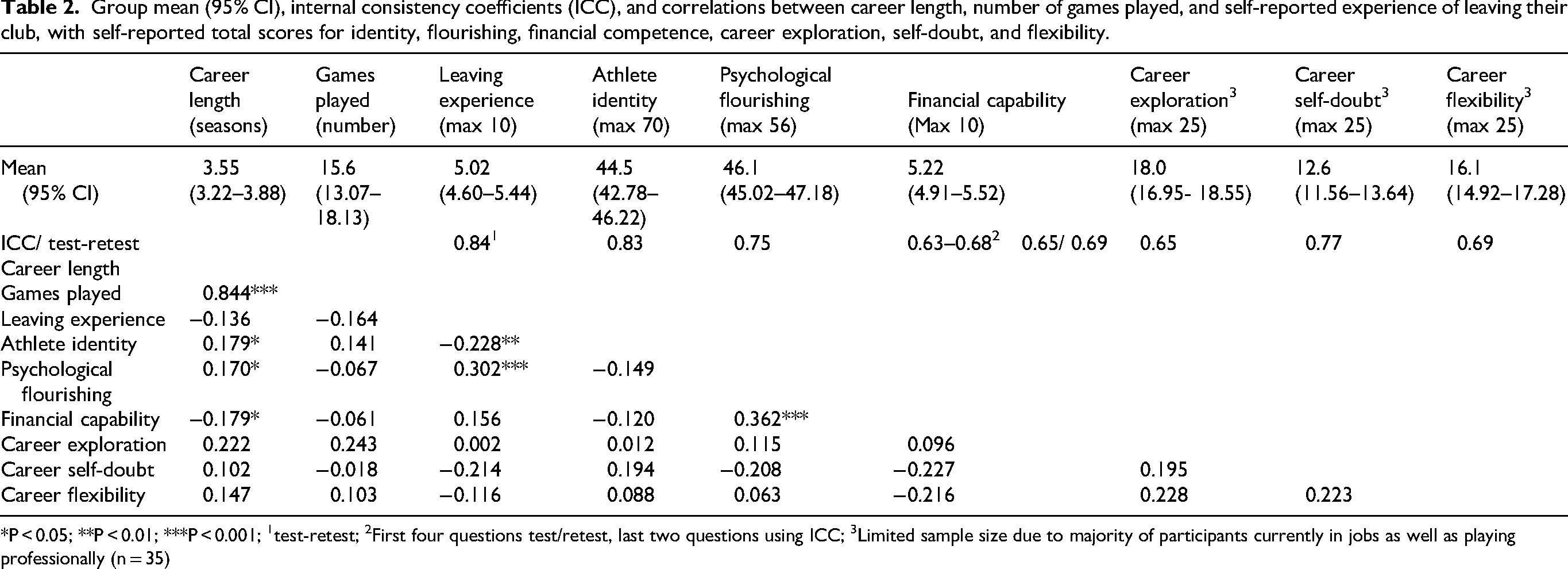
*P < 0.05; **P < 0.01; ***P < 0.001; 1test-retest; 2First four questions test/retest, last two questions using ICC; 3Limited sample size due to majority of participants currently in jobs as well as playing professionally (n = 35)
Athletic identity measurement scale
We used the 10-item athletic identity measurement scale
34
designed to assess factors of identification (social identity, exclusivity, and negative affectivity).
Athletic identity scale responses. Mean (95% CI).
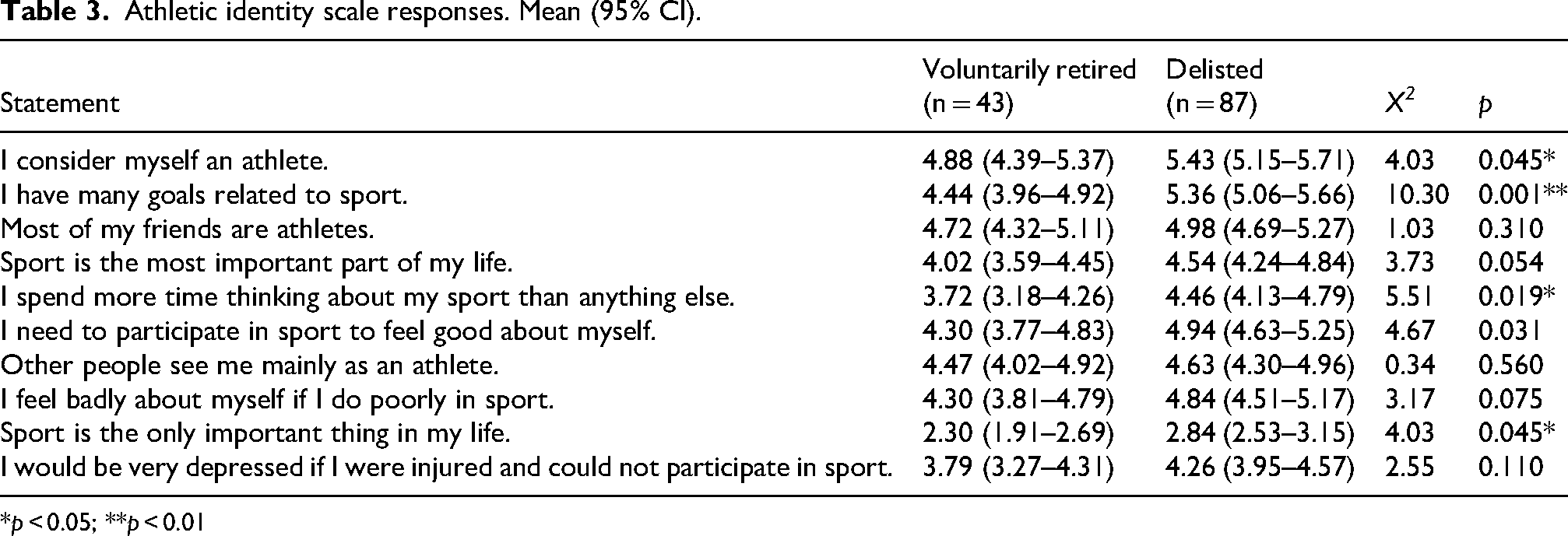
*p < 0.05; **p < 0.01
Flourishing scale
The flourishing scale
35
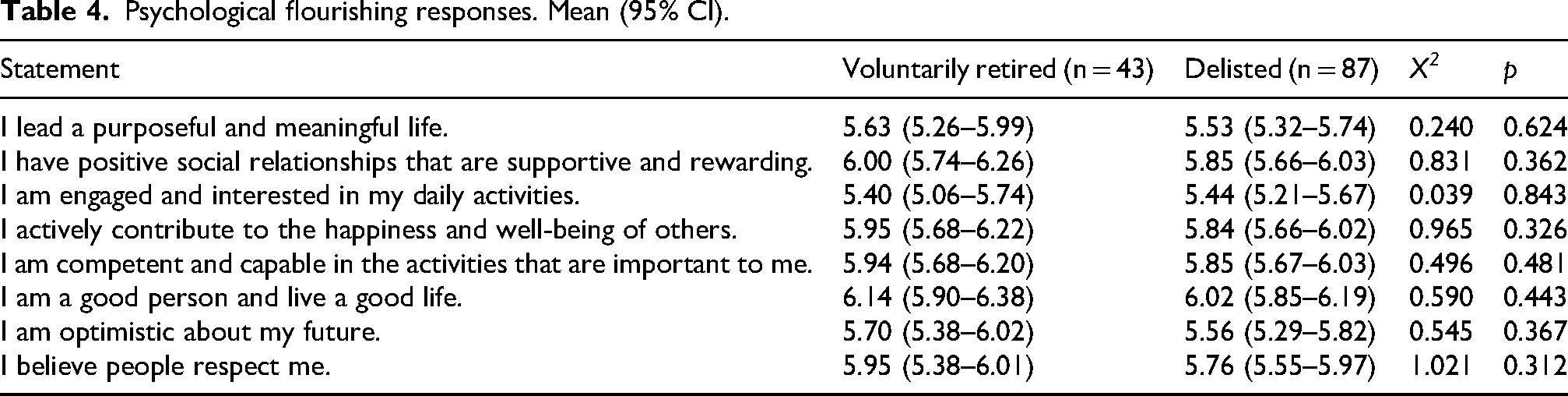
involved responding to eight items assessing the athlete's self-perceived success in areas including mental health, inter-personal relationships, meaning and purpose, self-esteem, and optimism. Questions were presented as statements, for example “I lead a purposeful and meaningful life” with participants similarly responding on a scale ranging from 1 (strongly disagree) to 7 (strongly agree). Consistent with prior research
33
all eight items were scored for an overall scale internal consistency (see
Psychological flourishing responses. Mean (95% CI).
Financial capability scale
The financial capability scale
36
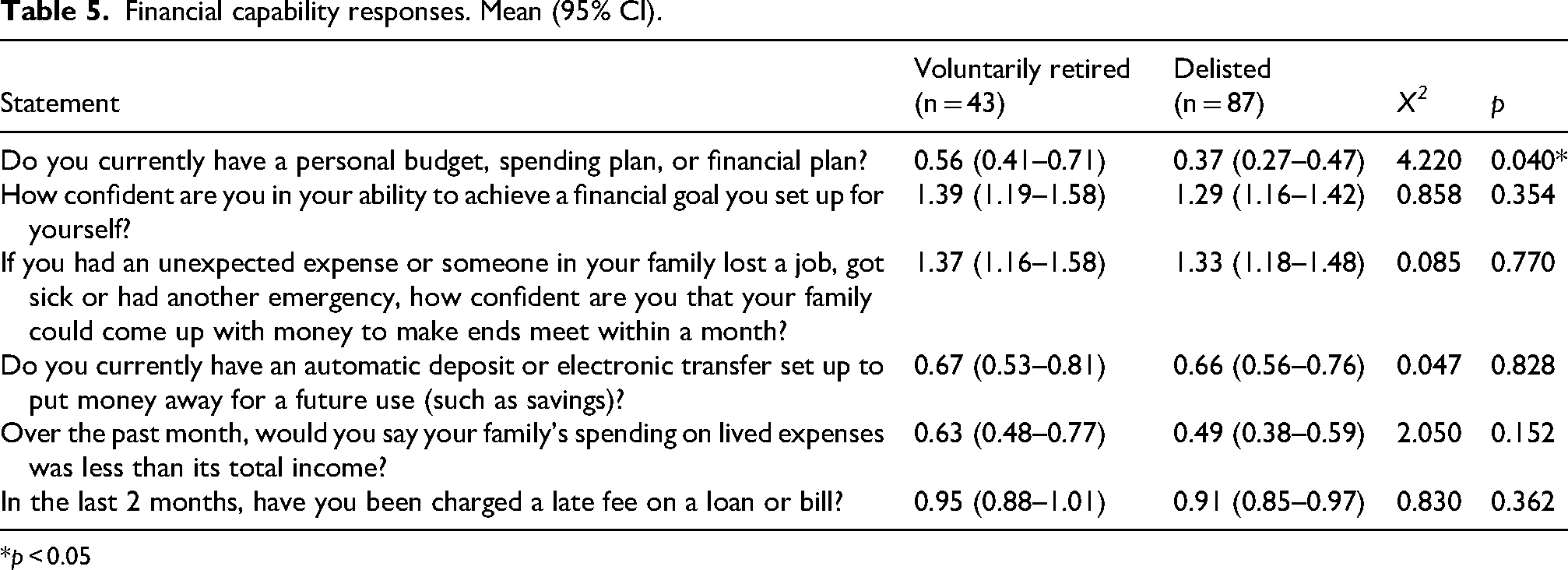
involved assessment of a participant's confidence in their financial capabilities. Of the six self-reported responses (see
Financial capability responses. Mean (95% CI).
*p < 0.05
Modified vocational identity status assessment
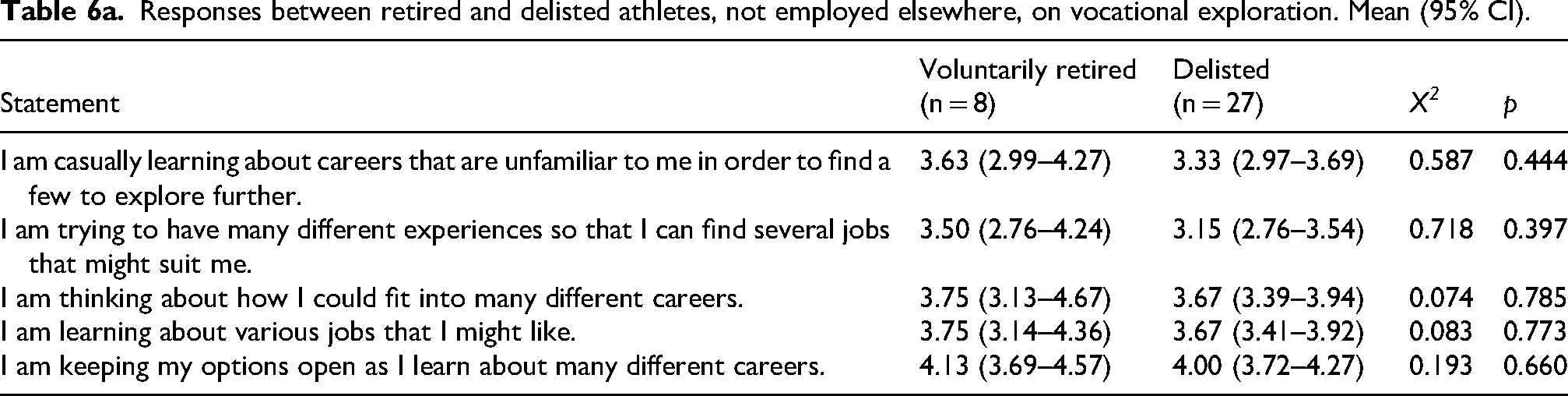
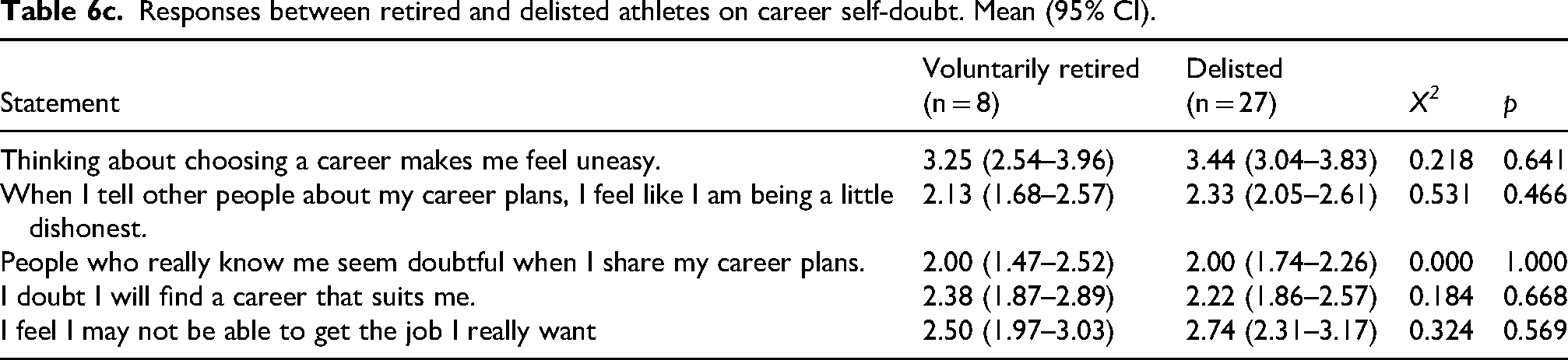
The vocational identity status assessment (VISA) is a 30-item self-report measure of the six vocational processes that constitute vocational identity. 37 Our study used a modified version of the measure representing three of the five dimensions of the VISA (15 questions) for career exploration (e.g., “I am learning about various jobs that I might like”), career self-doubt (e.g., “I doubt I will find a career that suits me”), and career commitment flexibility (e.g., “I will probably change my career goals”). As participants were in a phase of career transition rather than currently working as professional athletes, questions regarding current work status were excluded (redundant). All questions involved a five-point scale ranging from 1 (strongly disagree) to 5 (strongly agree) are presented in Table 6(a – c). Cronbach's alpha for each dimension is presented in Table 2.
Responses between retired and delisted athletes, not employed elsewhere, on vocational exploration. Mean (95% CI).
Responses between retired and delisted athletes on commitment flexibility. Mean (95% CI).
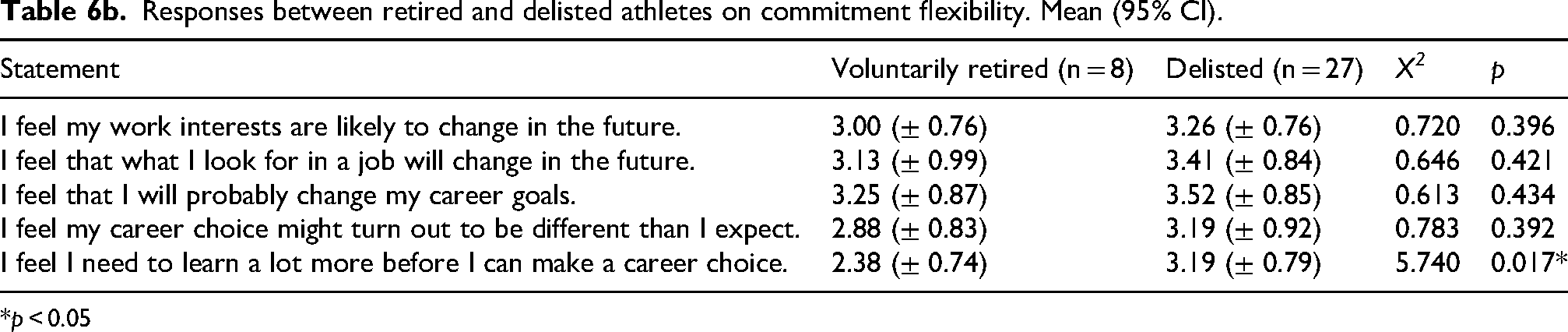
*p < 0.05
Responses between retired and delisted athletes on career self-doubt. Mean (95% CI).
Statistical analysis
Analysis of the data was by comparing total responses of each assessment between deselected and retired players. Statistical analyses were completed using Jamovi software (www.jamovi.org, V2.6.2.0). Shapiro-Wilk tests showed data to be normally distributed (W = 0.941–0.979; p > 0.05). Levene's tests showed equal variances across items (p > 0.05). Ordinal data for linear trends were analysed using Mantel-Haenszel tests, controlling for self-reported transition status (voluntarily retired or delisted). Pearson's r was used for associations between responses, and Cohen's d utilised to describe the magnitude of difference between groups for age, career length (number of seasons and matches played), and self-reported score of club transition experience (
Results
Of the 432 invitations across season 2020–2024, 30.1% (n = 130; mean age 26.6 ± 5.7 years) completed the survey. Comparisons in age, career length, number of games played, and club-exit transition experience are presented in
Correlation analysis
Between group comparisons
Athletic self-identity
Athlete self-identity responses are reported in
Psychological Flourishing
Financial Capability
Responses to questions on financial competency are reported in
Current Career Status
Athletes were asked to complete their current career status (
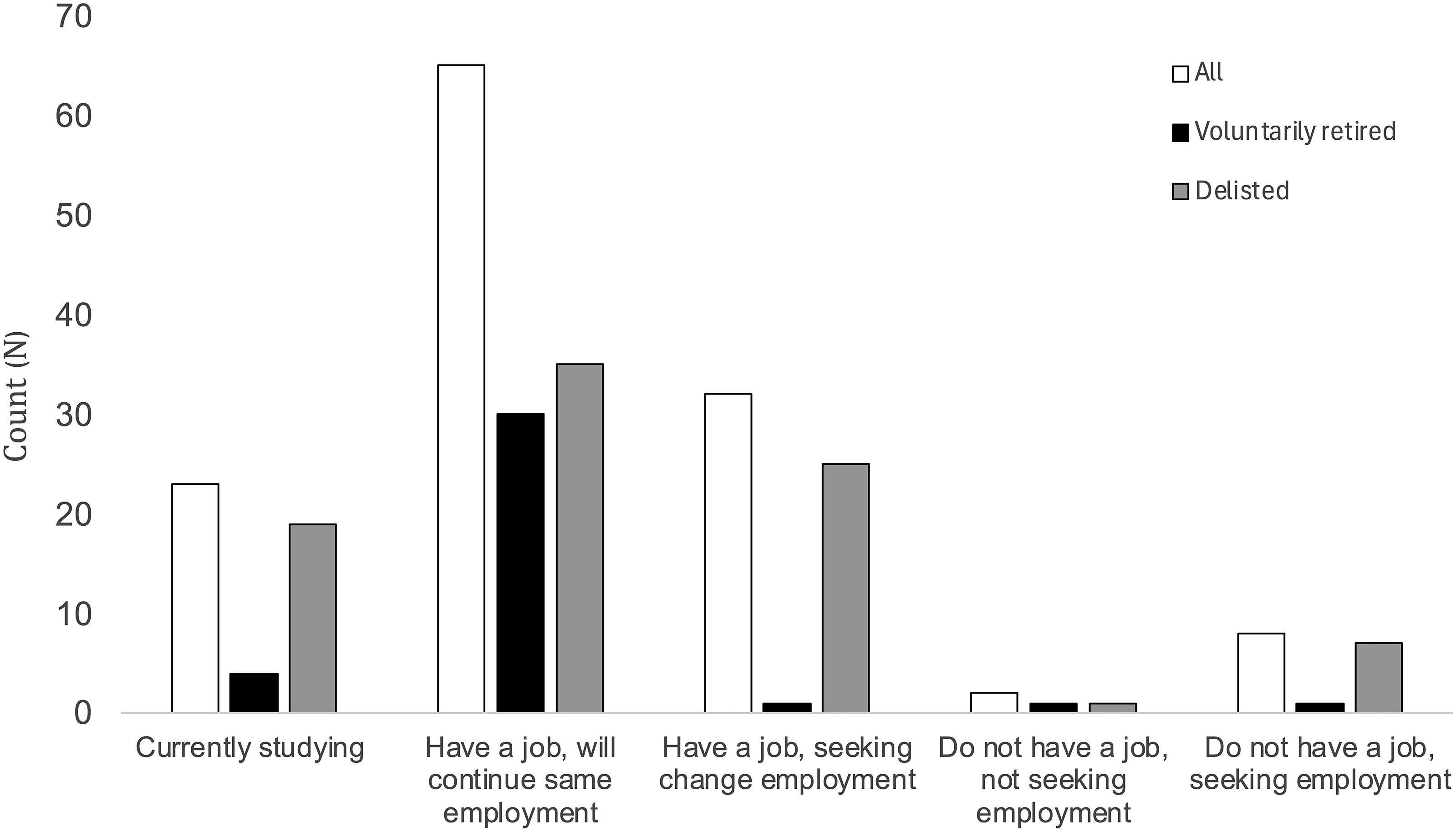
Current career status of all players (n = 130), retired players (n = 43), and delisted players (n = 87).
Vocational Identity
Unlike our previous study,
29
AFLW players participating in this study were not full time professional athletes (
Discussion
This is the first study to present transition from sport data in female professional Australian football athletes. Our exploratory study showed that athletes who were delisted self-reported a worse experience from leaving their club. Significant correlations were found between club experience of transition and psychological flourishing (positive correlation), and athlete identity (negative correlation).
Our findings of statistically significant differences in players’ (voluntarily retired vs delisted) rating of transition experience supports the findings from our study in AFL men. 29 It suggests that club staff have an unconscious bias towards retiring athletes, akin to a retiring employee being given a positive send off as acknowledgement of their service. While in our previous study, 29 retiring male athletes had a much longer career in the AFL, participants in the AFLW did not show a significant difference in career length between retiring and delisted players. Therefore, this study suggests that self-reported differences in how transitioning athletes are ‘treated’ by club staff appear to depend on their transition ‘status’. These findings also support previous case-study 2 and case-series 28 reports in AFL male athletes whereby players had described mismanagement issues, perceived lack of respect, the insensitive nature of being delisted similar to corporate workers being discharged from their employer. 28 However, we cannot dismiss that the players’ emotions, at being delisted, may affect objectivity in their self-reporting.
Given the differences in transition experience between retired and delisted players, we would have expected to have seen a difference in psychological flourishing and financial competence. However, our expectations were not supported and may reflect the employment status of the cohort. Despite the AFLW women's competition having rapid growth since its inception in 2017, unlike the AFL men who are all full-time professional athletes, women in the AFLW have a ‘second job’ to supplement their AFLW playing income. Having a job while playing may have buffered concerns around psychological flourishing or financial confidence. Indeed, correlation analysis showed a positive association between financial competence and psychological flourishing.
Despite similar responses in psychological flourishing and financial competence, it was interesting to see that a greater proportion of delisted players seeking employment or seeking different employment. This suggests that having a ‘second job’ for AFLW players was more one of convenience, rather than a career pathway while the players were competing in the AFLW. While the vocational identity/career exploration data from our study are underpowered and should be viewed with caution, it is interesting to see a that delisted players were expressing a need to learn a lot more before making a career choice. Further research should look at professional clubs on how they implement career preparation for athletes in advance of transition out of sport.
Limitations
Similar to our previous study, 29 limitations of this research included the self-reported nature of the survey, as well as a self-reported descriptive rating of their club exit interview experience. Also, we were not in a position to determine if participants were contracted to sub-elite leagues or were leaving the sport completely which may have influenced their responses. Analysis in the data was also limited to the transition status as due to identification concerns, we did not ask for player salaries or honours received. We could also not exclude the potential for selection bias given the ‘opt-in’ nature of the research. Further, limitations of this study were that a cross-cultural analysis was not possible as Australian rules football (i.e., AFLW) is not played at a professional/elite level anywhere else in the world. Future research could look at other female professional sports played in Australia for a cross-sport analysis.
Given the smaller sample size for the vocational identity items, the ICCs for career exploration and career flexibility fell below the commonly accepted threshold of 0.70 for this exploratory research.32,33 Accordingly, caution is warranted when interpreting these findings, particularly in terms of their generalisability to other female professional sporting populations who also maintain secondary employment.
With the continuing professionalisation of AFLW, particularly with wages parity with male players, it is likely that the proportion of athletes in the women's competition being full time professional athletes will increase, decreasing the number of athletes with a second job. We expect that as AFLW players become “full-time” without the need of a second job, that similarities we have previously found in male players may be observed in female athletes transitioning out of the sport. Studies in the future should employ a mixed methods approach that can use a prospective design to continue comparing transitioning athletes over time but allow for further in-depth analysis based on responses from sub-groups of individuals.
Conclusion
In conclusion, this exploratory study has shown that delisted athletes from the AFLW competition had poorer perceptions of their transition experience than those who voluntarily retired. While the caveat here is that the data is self-reported, this perception suggests an unconscious bias from club staff against delisted players viewed as being ‘redundant’. Although the majority of studies on retirement/redundancy transition have been on transition from corporate sectors, it has been argued that unconscious bias occurs in all organizations. 38 Given the findings of this study, concurring with our previous study, 29 future research should explore unconscious bias in the context of sport career transition, and also quantify the efficacy of staff training as a process rather than as an event, 28 to assist transitioning players towards a positive experience irrespective of transitioning status. 39 While findings from this study suggest delisted players are similar to voluntarily retiring players in terms of psychological flourishing and financial competence, the concern around the experience of leaving suggests professional clubs can improve the transition phase with a view that ‘at-risk’ identified athletes for delisting are managed through a process, rather than continue with a one-off end-of-season exit meeting. 11
Transitioning out of competitive sport has difficulties for all athletes. As per the ISSP position stand, 5 athletic self-identity, the degree of personal volition regarding making the decision to retire, planning for retirement from competition, and social support are among the most prominent factors that determine the transition quality. These are aspects that should be built into training for staff working with all athletes in professional sports5,10,13,14,40,41 to ensure transition for athletes is a holistic, collaborative and a positive experience.
Supplemental Material
sj-docx-1-spo-10.1177_17479541251403493 - Supplemental material for Exploring athletic identity, psychological flourishing, and financial and vocational confidence in Australian women footballers transitioning from professional sport
Supplemental material, sj-docx-1-spo-10.1177_17479541251403493 for Exploring athletic identity, psychological flourishing, and financial and vocational confidence in Australian women footballers transitioning from professional sport by Billymo Rist, Claire Quartuccio and Alan J Pearce in International Journal of Sports Science & Coaching
Footnotes

Funding
The authors received no financial support for the research, authorship, and/or publication of this article.
Declaration of conflicting interests
The authors declared no potential conflicts of interest with respect to the research, authorship, and/or publication of this article.
Data availability statement
The datasets presented in this article are not readily available because they may identify individual participants in the study. Requests to access the datasets should be directed to lead author Dr Billymo Rist.
Supplemental material
Supplemental material for this article is available online.
References
Supplementary Material
Please find the following supplemental material available below.
For Open Access articles published under a Creative Commons License, all supplemental material carries the same license as the article it is associated with.
For non-Open Access articles published, all supplemental material carries a non-exclusive license, and permission requests for re-use of supplemental material or any part of supplemental material shall be sent directly to the copyright owner as specified in the copyright notice associated with the article.
