



Abstract
Previous research investigating the microstructure of practice activities and coach behaviours pre-date or coincide with the professionalisation of female soccer within England in 2018. Following substantial structural developments at youth level, an examination of these aspects within the female soccer context has become essential for supporting youth development. A case study approach was adopted to explore practice structure, coaching behaviours, and the rationale for their use within sessions. Fourteen youth soccer coaches and the Academy Director from a single Category 1 soccer academy within England participated. Systematic observations of activities and behaviours within practice sessions were conducted and analysed using a computerised coding program, followed by individual video feedback sessions and stimulated recall interviews with each coach. Coaches predominantly used games-based (54.3%) over drill-based activities (23.6%) within their sessions, which was consistent across all age categories (U10-U16), and was influenced by coach education, individual coaching styles and the environment created and managed by the academy director. Transition periods between activities were perceived as excessive (22.1%) but varied between age categories. High levels of instruction and praise were provided to maintain an intense and positive learning environment, whereas some coaches utilised silence to promote autonomous learning, reflecting varied coaching styles. Dual-coaching also effectively ensured players were engaged and appropriately challenged. This study provides contemporary data on coaching practice activities and behaviours to extend existing knowledge. It also explores these aspects in female soccer for the first time, offering practical implications for coaching.
Keywords
Introduction
With the global rise in popularity of female soccer, 1 many associations and clubs are strengthening their talent development pathways to transition talented youth players to the senior teams and contribute to future successes. 2 To facilitate this process, many female soccer academies employ qualified coaches to plan, deliver, and evaluate practice sessions designed to facilitate the acquisition of soccer-specific skills (i.e., technical, tactical, physical) needed to become a professional player. 3 The design and content of these practice sessions are important given that future professional female soccer players accumulate between two to six thousand hours in coach-led practice during their youth development period (age 7–18 years 4 ). While research interest in female soccer continues to rise, it remains comparably lower than the male game,5,6 thus calls for more female-specific research have been made. 3
Research examining talent development in female soccer has indicated that hours accumulated in soccer-specific and other sport coach-led practice can differentiate levels of expertise in adulthood. 7 For example, 86 international female soccer players from Australia, Canada, England, Sweden, and the United States increased their engagement in coach-led practice throughout development, plateauing at ∼15–16 h-per-week in adulthood. 8 While this provides detailed retrospective accounts of the amounts and types of soccer-specific and other-sports activities, the microstructure of these activities remains unclear. 9 For example, Professional players in England and international players in Canada have been reported to engage in high amounts of coach-led practice that players perceived to be physically and cognitively challenging.4,10 Moreover, Güllich 11 found that international level players in Germany spent 35–40% of coach-led practice engaging in isolated drills (i.e., drill-based activities) and 45–50% in activities such as conditioned games that replicate the demands of competition (i.e., games-based activities). Although this provides retrospective insights into the ‘microstructure’ of coach-led practice, detailed examinations of these activities and their impact on skill learning are still required within the female game to offer insights into coaching approaches and implications for player development.4,10
One way to examine the underlying structure of coach-led practice sessions is through systematic coach observations. Several studies have observed the activities and/or behaviours employed by coaches of male soccer players across various ages and skill levels [for reviews, see12,13]. Specifically, earlier research identified a higher proportion of structured, drill-based activities incorporated into practice sessions, designed to enhance technical proficiency, reinforce fundamental motor patterns, and establish a foundation for game-based learning.14–17 While important in the early stages of skill learning and for refining isolated technical elements, an over-reliance on structured drills may limit opportunities for players to develop perceptual-cognitive skills, such as decision-making, which are critical for expert performance in soccer competition.18,19 Additionally, coaches exhibited a prescriptive approach, characterised by high frequencies of verbal instructions and feedback.16,17,20 Though explicit guidance can help convey tactical concepts and correct errors, excessive instruction may induce cognitive overload, potentially constraining players’ ability to self-regulate learning and apply skills flexibly in competition.15,21 However, recent evidence suggests a shift toward more games-based activities11,21–23 and instructional strategies that direct players’ attention to movement outcomes that can enhance skill learning. 24 This may be influenced by evidence-informed educational workshops and interventions,14,25,26 evolving coach education programmes,12,13 or broader influences from sport science research. Nonetheless, both drill-based and game-based activities have merit in player development, depending on skill level, training objectives, and individual needs. Rather than viewing them as opposing methods, an integrated approach may provide the most effective learning environment.
In addition to systematic observation, video feedback and reflective questioning via interviews have proven effective in uncovering the cognitive strategies and rationales behind observed activities and behaviours during coach-led practice.14,27,28 For example, follow-up interviews with youth professional soccer coaches revealed that drill-based activities were prescribed to develop specific technical skills through repetition and without opposition. 14 However, after discussing different activity types, such as games-based, they modulated their activity provision. This integrated approach enhances understanding of practice by stimulating awareness, discussion, and reflection, thus making it a powerful tool for promoting behavioural change13,29,30 and bridging the gap between science and application. 18
Despite recent structural changes to youth soccer talent pathways in England (e.g., creation of the Women's Super League Academy programme), research on female-specific talent development remains limited.2,6,31 While previous studies have examined the ‘macrostructure’ of activities, 4 the ‘microstructure’ of practice in female youth soccer remains unclear. Addressing this gap is essential to advancing both theoretical and applied perspectives on talent development in female soccer.4,6 The aim of this case study was to analyse the microstructure of coach-led practice at a professional female soccer academy in England. A mixed methods approach was adopted that integrated systematic observation with coach interviews to uncover both what coaches do and why they do it across multiple developmental stages. 16 Examining how these practices align with existing scientific literature and pedagogical frameworks can offer valuable insights for researchers, practitioners, and policymakers involved in female talent development. 32 By providing the first in-depth investigation of this kind within a female academy setting, this study contributes to the growing body of evidence that may inform best practices in female soccer talent development in England, as per other nations. 33
Methodology
Participants
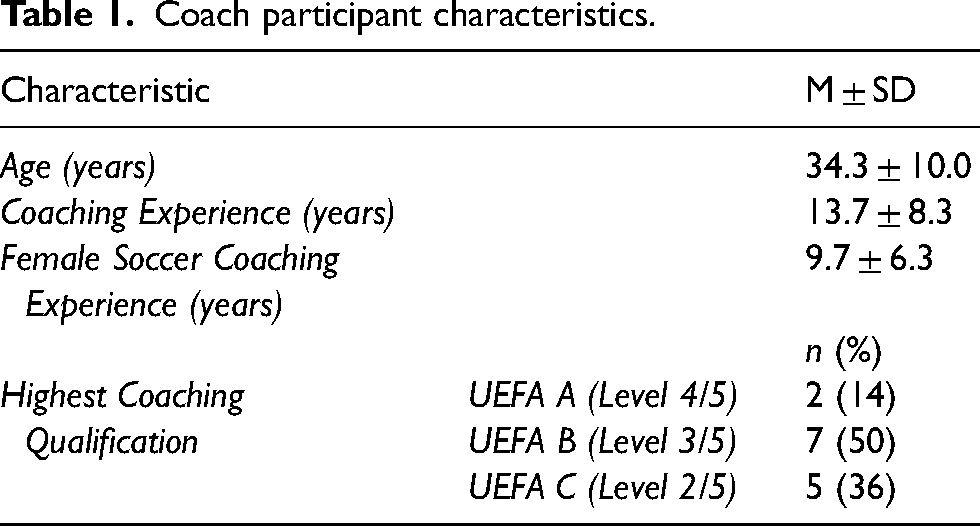
A purposive sampling approach was employed to recruit 14 coaches (8 male; 6 female) and the academy director (AD; 1 male) from a single Tier 1 (highest) female soccer academy in England (see Table 1 for participant characteristics). This academy was selected due to its role in developing youth players along a formal talent pathway toward senior professional soccer, and its alignment with recent reforms in female youth soccer development. During data collection (2022–2023 season), the senior team competed in the Women's Super League (WSL). Coaches designed and delivered practice sessions across six age groups ranging from U10-U16, with two coaches (1 male; 1 female) responsible for each group. The remaining coaches (2 male) led supplementary futsal practice (these sessions were not included, but the coaches participated in interviews). A typical weekly schedule included two practice sessions, one competitive match, and an additional strength and conditioning session. In line with other WSL academies, 2 the overarching purpose of the academy was to develop female players capable of progressing to the senior level and, where possible, representing national teams. As a tier 1 academy, it operates within the framework set by the governing body, ensuring alignment with national talent development pathways and coaching guidelines. 34 At the time of data collection, no member of the research team had prior affiliations with the club. The study was designed in accordance with the Declaration of Helsinki and approved by the local University ethics board. All participants provided written informed consent.
Coach participant characteristics.
Study design
This research employed a descriptive case study approach, 35 enabling in-depth investigation of practice activities and behaviours of a single group of coaches within their natural academy context. 36 Case studies are particularly valuable for examining complex issues such as talent development in real-life contexts, using multiple data collection methods to provide a holistic understanding of the structures and processes involved.37,38 Data were collected through systematic observations and semi-structured interviews, generating both behavioural and reflective insights. By grounding the findings in both theory and applied practice, this study provides meaningful implications for coaches and sport practitioners operating in similar performance environments. Due to limited existing data on female soccer academies, this study adopted an exploratory and descriptive approach aimed at generating foundational insights into how coaches structure sessions and interact with players. 35 Although no formal hypotheses were posed, inferential statistics were used to examine patterns across age groups, offering preliminary comparisons that may inform future hypothesis-driven work and situating the current findings within the broader landscape of talent development research.
Systematic observations
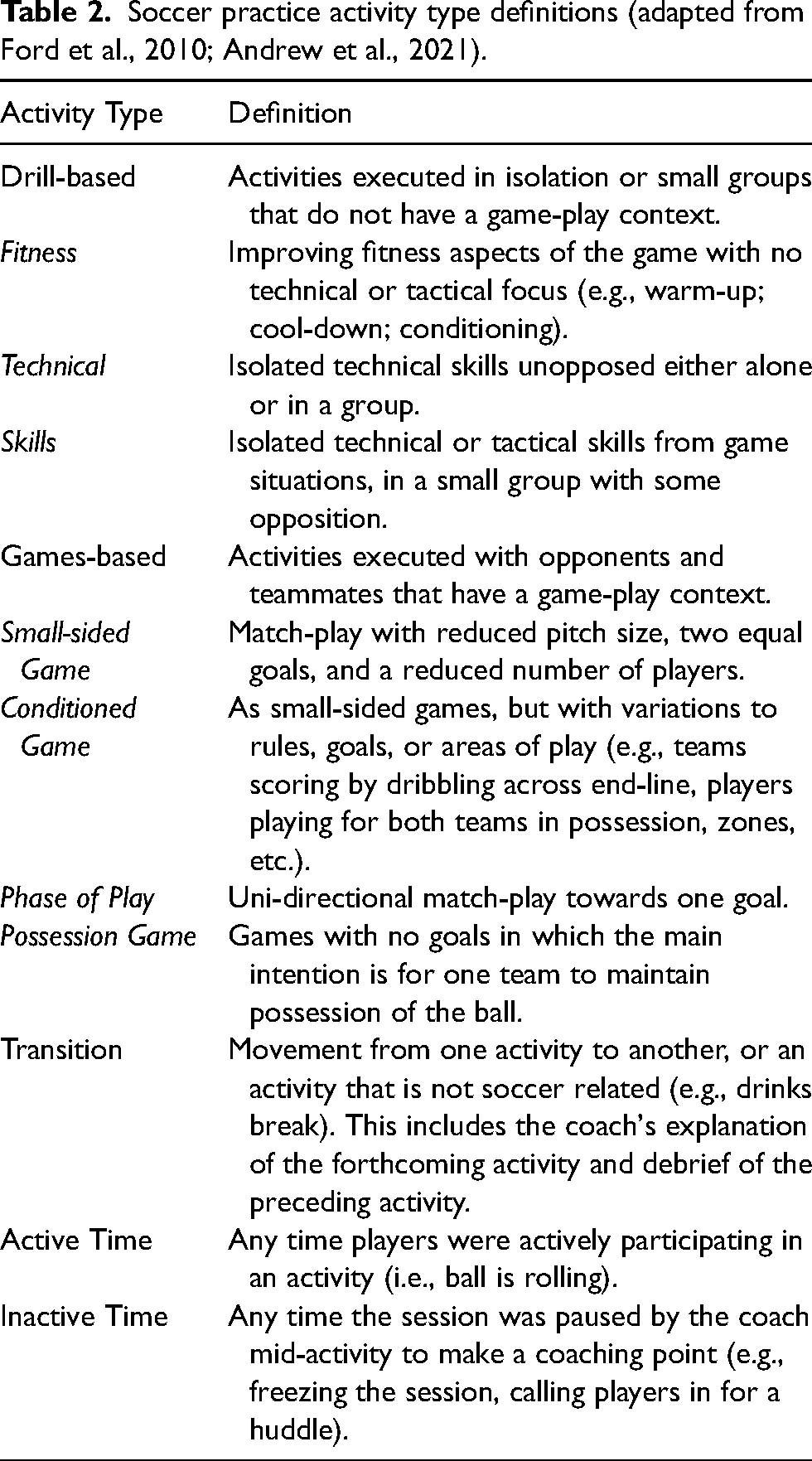
Systematic observations allow a trained observer to record and analyse events or behaviours using a predefined coding system16,39 and remains a prevalent method for understanding practice activities and behaviours of coaches.12,13 An adapted coding system from previous research14,15 was used to categorise all soccer practice activities, including sub-activities, into three types: games-based, drill-based, and transition (Table 2). Additionally, time spent active and inactive within drill-based and games-based activities were recorded at a group, rather than an individual level. 21 Inter-observer (90%) and intra-observer (100%) reliability scores for practice activity data exceeded the recommended level of agreement (85% 40 ).
Soccer practice activity type definitions (adapted from Ford et al., 2010; Andrew et al., 2021).
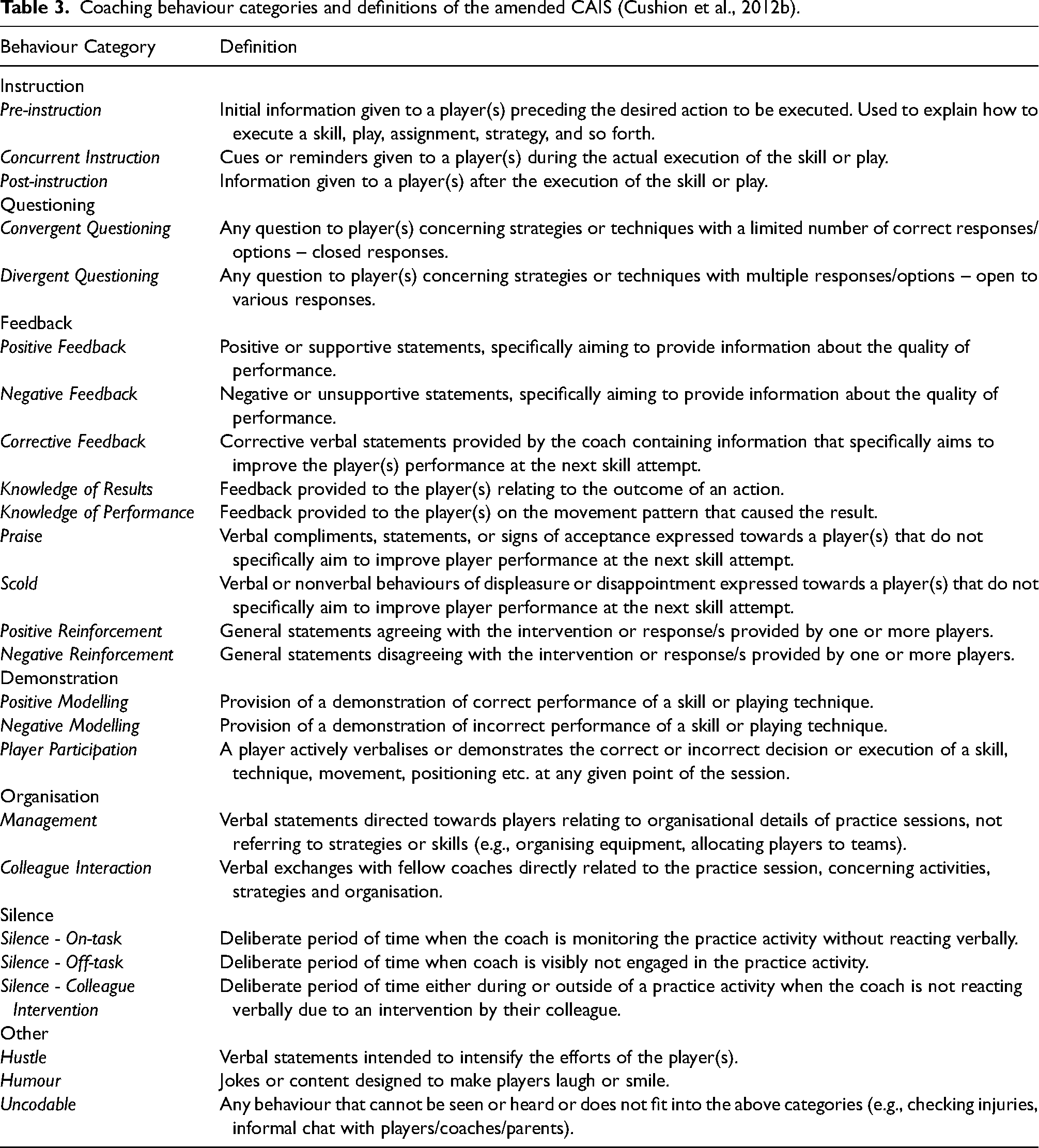
Coaching behaviours were also examined via systematic observation. In coaching literature, the Arizona State University Observation Instrument (ASUOI 41 ) and the Coach Analysis and Intervention System (CAIS 42 ) have been the most frequently used coding systems, yet both are often adapted by researchers to align with research purposes. 13 In the present study, modifications to the CAIS were developed in compliance with the five-stage process for the development and validation of instruments 43 : (1) Observer training, a 4-week training period was undertaken by the observer, involving manual coding of sample coaching sessions from pilot testing. The purpose of this training period was to allow the observer to develop proficiency in coding, familiarise with behavioural classifications on both the ASUOI and CAIS by strictly and consistently adhering to definitions, and subsequently determine and refine the instrument to be used; (2) Amending an existing observation instrument, following pilot testing, it was determined that coding with the CAIS more comprehensively reflected observed coach behaviours. To establish content validity, the CAIS was adapted based on pilot testing and modifications from previous research, 16 leading to 25 unique behaviours within 7 primary behaviour categories (Table 3). The behaviours ‘physical assistance’ and ‘punishment’ were removed from the final coding system due to no instances being recorded during pilot testing and a general absence of these behaviours in soccer.15,16 Additionally, ‘direct’ and ‘indirect’ management behaviours were merged into a single ‘management’ behaviour, while ‘confer with assistants’ was renamed to ‘colleague interaction’ to reflect the dual-coaching structure within the club, which lacked designated assistant coaches. A new behaviour named ‘colleague intervention’ was introduced as a form of silence to reflect times when their colleague interacted with players. Modifications were made to reduce the ‘uncodable’ behaviours to those not relevant to soccer or those that are a natural part of coaching (e.g., checking injuries); (3) Establishing face validity, the modified instrument was discussed and agreed with the AD, who held the UEFA ‘A’ coaching license and >10 years coaching experience. The AD, rather than coaches, was consulted to eradicate the influence of this process on later observed behaviours; (4) Inter-observer and (5) Intra-observer reliability, the modified instrument was tested for reliability agreements using the following calculation: (agreements/ (agreements + disagreements)) × 100. 44 Both inter-observer (90%) and intra-observer (100%) reliability scores for behaviour coding surpassed the recommended acceptance levels (80–85%40,42).
Coaching behaviour categories and definitions of the amended CAIS (Cushion et al., 2012b).
Procedure
All coaches were briefed on the study's aims and procedure one week prior to data collection at the training complex. Three practice sessions were piloted before data collection, serving multiple purposes: (1) to determine optimal camera placement for comprehensive video coverage without obstructing practice sessions; (2) to evaluate the technical performance of the recording equipment (e.g., battery life, video/audio quality); and (3) to familiarise the players and coaches with the presence of filming equipment, and facilitate observer habituation. 44 No pilot data were included in the main analysis. Rather, insights from the pilot led to minor adjustments in tripod positioning, audio recording equipment, and reinforced the decision to include both third-person and first-person perspectives for a richer data capture. These refinements were implemented before the main phase of data collection. Observations of practice sessions were conducted for 12 coaches over a consistent 10-week period during the 2022–23 season. No systematic observation data were collected for 2 coaches due to absences during this period. Each practice session was filmed from two perspectives: a third-person perspective using a digital video camera (Canon Vixia, Japan) mounted on a stationary Tripod (Libec, USA) situated at the corner of the training pitch to capture the entire session, and a first-person perspective using a chest-mounted action camera (GoPro, USA) worn by the coach to capture video and audio information from their viewpoint.
In total, 30 full practice sessions were filmed, resulting in 2926 min of footage, with an average session duration of 97.5 ± 18.1 min. Footage was uploaded to an Apple MacBook (Apple, USA) and analysed via Hudl Sportscode software (Hudl, USA) on a subsequent date and at a separate venue to allow for a full and in-depth analysis. 12 Activity and behaviour footage were separately coded by the lead researcher, who was trained and experienced in using Hudl Sportscode software.
Stimulated recall interviews
Semi-structured interviews were conducted to understand how and why coaches employed specific activities and behaviours in practice sessions.17,45 The primary author interviewed each coach approximately three months following the final systematic observation, allowing time to complete data analysis. All interviews were audio recorded and took place as part of bespoke video feedback sessions for each coach in a meeting room at the training complex. The AD was present during interviews principally for continuous professional development (CPD) purposes, allowing them to observe and reflect on coaching discussions, provide action points to coaches, and ensure that discussions were grounded within the broader organisational context. While their presence may have introduced a risk of social desirability bias, steps were taken to mitigate potential biases by fostering a non-judgmental environment and triangulating interview data with systematic observation data. Ultimately, the inclusion of the AD provided valuable contextual insights while also supporting professional learning within the academy.
Interview questions were developed following systematic observation analyses, allowing coaches to first respond to general questions about session planning and on overall and age-group-specific findings (e.g., “please could you walk me through how you typically plan your coaching sessions, and what factors influence your decisions?”). The second part of the interview focused on the specific behaviours and activities of each coach. Behaviours discussed during interviews aligned with the coding framework 16 and were selected by the interviewer based on their frequency or infrequency of use, ensuring questions were grounded in the coach's actual practice and designed to stimulate reflection and discussion. All behaviour definitions were provided to coaches for reference during the interview and to aid understanding. Coaches received video feedback of a particular behaviour they exhibited and were then asked to reflect on their use of that behaviour, through stimulated recall (e.g., “I noticed from the video that you tended to use more divergent than convergent questioning during your practice sessions. What guides your use of this style, and how do you think it impacts player learning?”). While two coaches were absent during the systematic observation period, their interviews were still conducted and included for analyses as they provided meaningful new insights. Although these coaches did not receive video feedback, they participated in all other aspects of the interview. Following the feedback sessions, the AD was also interviewed to provide context on the participants and coaching practices, discuss their role at the club, and review their overall thoughts on the research findings.
Data analysis
Systematic observation
A computerised analysis system (Hudl Sportscode) was utilised for ease of coding multiple behaviours at once. 27 All activities and behaviours were coded each time they occurred throughout the entire practice session (time-samples event 40 ). For each session, the duration of time spent in each activity was coded (time-use analysis 15 ). The time-use analysis data violated the statistical assumption of independence, which stipulates that one data point should not affect another. 46 Specifically, when a significant amount of time was allocated to one activity type, less time is available for other types. Therefore, only statistical comparisons between age categories were made, using three one-way ANOVAs for each activity type. We calculated the frequency and rate per minute (RPM) for each behaviour in line with previous research.14,15,25 The duration of each behaviour per session was also coded, which allowed for calculation of the proportion (%) of each behaviour throughout that session. To examine behaviours within each activity type, separate repeated measures ANOVAs were performed on the RPM of each behaviour within drill-based, games-based, and transition activity types. Any significant main effects were explored using post hoc pairwise comparisons with the Bonferroni adjustment method. The alpha level of significance was set at p < 0.05.
Stimulated recall interviews
Reflexive thematic analysis, a contemporary adaptation of Braun and Clarke's 47 traditional thematic analysis technique, was utilised to acknowledge the researcher's active role in interpreting and constructing meaning from the data.48–50 Rather than identifying themes as objective findings, this approach recognises that the researcher's experiences, reflections and analytical decisions shape the patterns observed in the data. 49 The researcher's immersion into the academy setting informed both the interpretation of participant narratives and the construction of themes, contributing to the co-production of knowledge. Interviews were transcribed verbatim, anonymised via coding, and analysed through reflexive thematic analysis. The analysis followed an iterative six-phase process, eliciting additional interpretations of the data and refining existing insights to ensure alignment with the study's aims, 49 aided by a worked example of this process 50 : (1) The lead researcher first immersed themselves in the data set by reading each interview transcript for familiarisation; (2) initial codes were then generated inductively to identify any meaningful data segments; (3) a deductive approach then guided the development of themes, utilising the observation tool and existing literature to organise and synthesise codes; (4) reflexivity was practiced through the regular sharing of themes with members of the research team for critical discussion and feedback, ensuring thorough examination and refinement; (5) these themes were discussed, named, and defined via reflective discussions; and (6) reviewed to finalise the construction of the themes and subthemes that are presented.
The integration of quantitative data with qualitative methods provides deeper understanding of practice structure and the nuances of coach behaviour, while also supporting data triangulation by enabling cross-validation of findings. This was a deliberate approach to enhance understanding by comparing what coaches did with how they described and rationalised their decisions and behaviours. This approach added depth and credibility to the analysis, particularly serving to highlight alignments or discrepancies between observed actions and articulated intentions. Moreover, exploring the coaches’ rationales allowed for rich insights into the complexities of their natural practice context. The reflexive nature of the analysis acknowledged the researcher's influence on interpretation. For example, the lead researcher engaged in discussions with a team member to critically examine potential biases stemming from personal interests and how this might have shaped what they derived from the data. Additionally, the presence of the AD during interviews was carefully considered and reflected upon as part of the reflexive process for its potential influence on participant responses.
Results
Practice activities
Coaches allocated more time to games-based (54.3 ± 15.4%) than drill-based activities (23.6 ± 15.9%; Figure 1), which was consistent across all age groups. A one-way ANOVA indicated no significant main effects of age category on drill-based [F(5, 32) = 0.29, p = 0.92] or games-based [F(5, 32) = 0.35, p = 0.88] activity proportions. Transition accounted for 22.1 ± 6.6% of session time and differed as a function of age category [F(5, 32) = 3.39, p = 0.01]. U11 coaches time in transition was significantly higher than U12 (p = 0.05) and U16 (p = 0.03) coaches. On average, players were actively engaged (i.e., ball-rolling) for 63.4 ± 8.6% of a session, with similar active time in drill-based (74.5 ± 9.7%) and games-based activities (79.8 ± 10.0%), and the remainder spent inactive in huddles, or the session was frozen mid-activity by coaches to make coaching points.
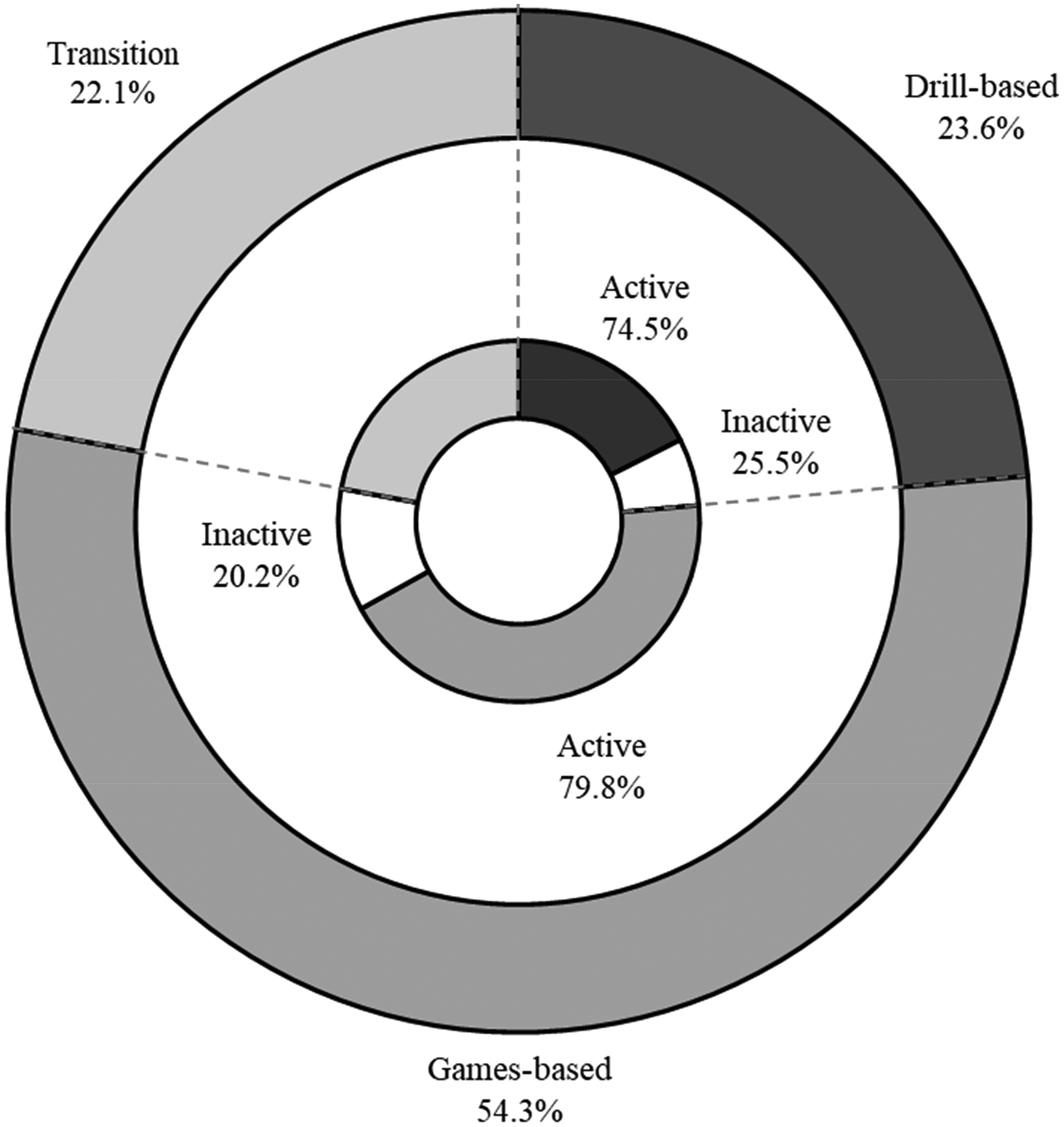
Mean percentage of coach-led practice sessions spent within each activity state (outer ring) and spent active (i.e., ball-rolling) or inactive (i.e., session frozen; group huddle) within each activity type (inner ring).
Coaching behaviours
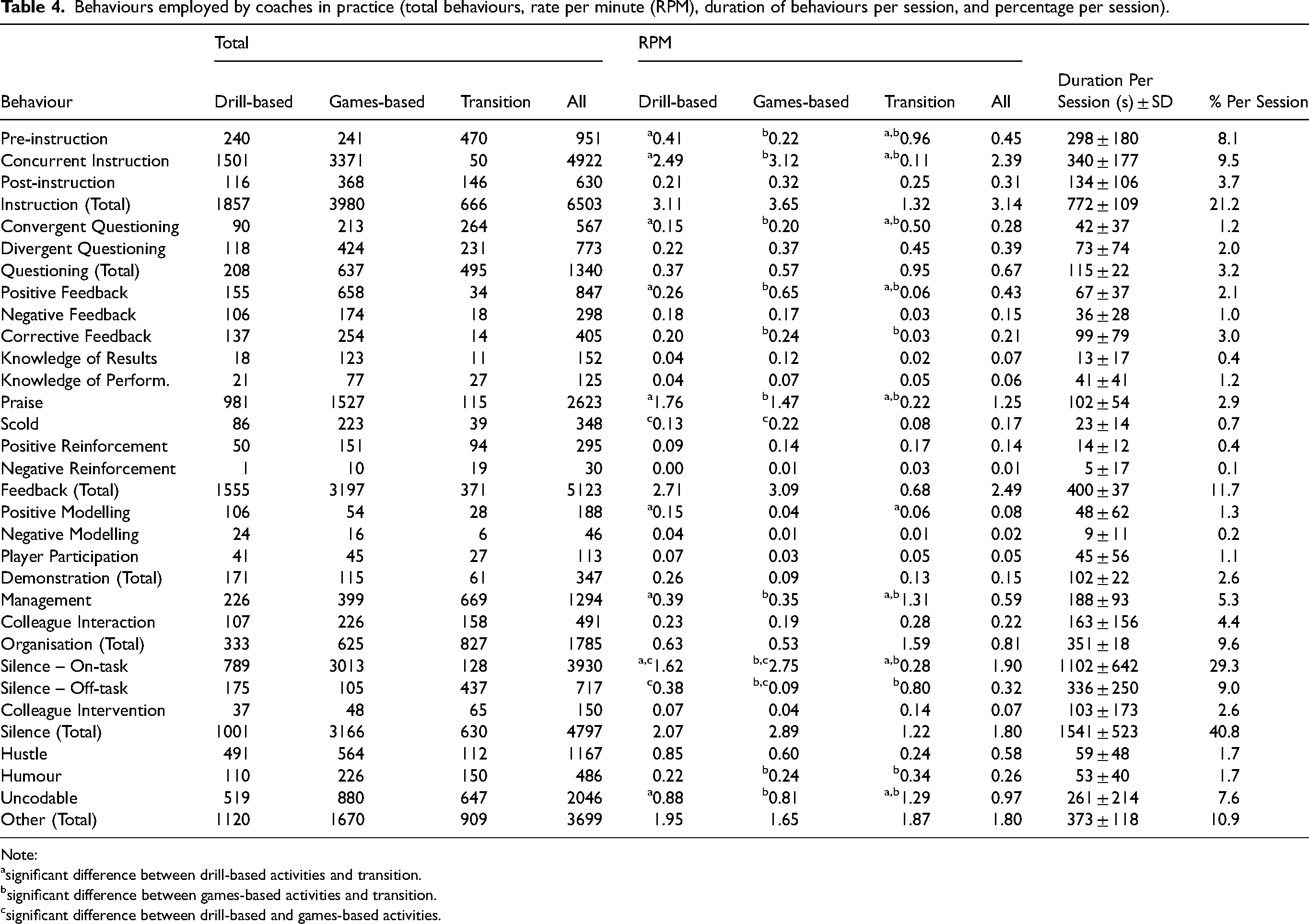
Across 2926 min of practice time, 23,594 behaviours were coded (Table 4). Concurrent instruction was the most frequently employed behaviour, followed by on-task silence, and praise (RPM = 2.39, 1.90, and 1.25 respectively). Of the total behaviours observed, 6245 (26.5%) occurred in drill-based activities, 13,390 (56.8%) in games-based, and 3959 (16.8%) in transition. The frequency of coach behaviours varied significantly by practice state. Repeated measures ANOVAs revealed that concurrent instruction, positive feedback, praise, and on-task silence were all significantly higher in both drill-based (Ps < 0.05; Mdiff = 0.00) and games-based (Ps < 0.05; Mdiff = 0.00) activities than in transitions. In contrast, pre-instruction, convergent questioning, management, and uncodable behaviours were significantly higher during transitions compared to drill-based (Ps < 0.05; Mdiff = 0.00) and games-based (Ps < 0.05; Mdiff = 0.00). Pre-instruction was used frequently in periods before activities and at the beginning of the session before the warm-up, 21 whereas questioning was typically employed during the debrief of an activity, and management was used to allocate players into teams, indicate restarts within activities, and organise the next activity.27,51 Informal conversations between coaches and players made up a large component of uncodable behaviours during transition periods. Between activity types, scold and on-task silence were significantly more frequent in games-based than drill-based activities.
Behaviours employed by coaches in practice (total behaviours, rate per minute (RPM), duration of behaviours per session, and percentage per session).
Note:
significant difference between drill-based activities and transition.
significant difference between games-based activities and transition.
significant difference between drill-based and games-based activities.
Stimulated recall interviews
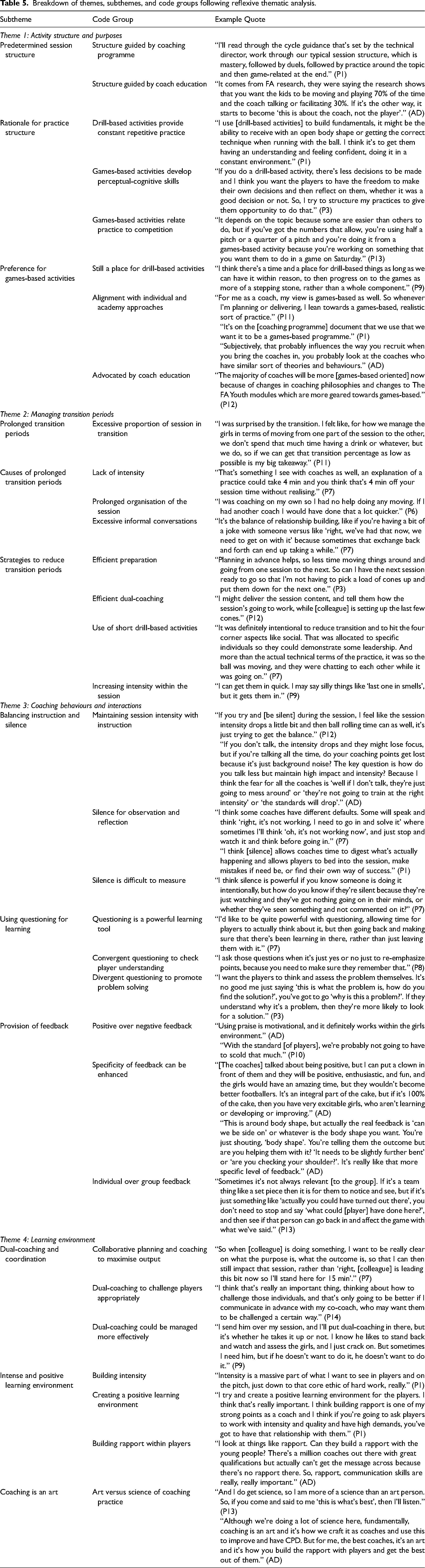
In total, 15 interviews were conducted with an average duration of 51.6 ± 7.1 min. Key themes, subthemes, and example excerpts from the reflexive thematic analysis are presented in Table 5. To support transparency and alignment between the analysis and interpretation, relevant participant codes (e.g., P2) are used throughout the discussion to directly link specific quotes to key points.
Breakdown of themes, subthemes, and code groups following reflexive thematic analysis.
Discussion
This study examined practice structures and coaching behaviours at an English female soccer academy using a mixed-methods approach. Stimulated recall interviews during video feedback sessions complemented systematic observations of practice sessions, resulting in four themes.
Theme 1: activity structure and purposes
Coaches adhered to a structured framework developed by the AD, which offered flexibility in session design while maintaining consistent activity proportions across the academy. This structure was also shaped by coach education programmes delivered by the governing body (The Football Association (FA)), with coaches highlighting that these programmes emphasised the importance of keeping players active for 70% of the session, defined in this context as the percentage of time the ball is rolling. However, observational data revealed that only the U12s coaches surpassed this 70% target, with the average active time across sessions at 63%. High active engagement during both drill-based (75%) and games-based (80%) activities suggest that prolonged transition periods were likely the primary contributor to the observed inactivity.
Across all age categories, coaches consistently prioritised games-based (54%) over drill-based activities (24%), aligning with contemporary findings21,22,51,52 and skill acquisition theory, 18 yet contrasting with earlier drill-centred approaches (e.g.,15,16). Drill-based activities were used selectively to develop and refine specific technical skills within a repetitive practice environment (P114,51), which can yield immediate performance improvements 27 but may lack the complexity needed to replicate the dynamic environment of competition. 16 Instead, coaches valued games-based activities as opportunities for promoting perceptual-cognitive development, with decision-making highlighted in particular (P3). These skills also include visual-scanning, pattern recognition, cue utilisation, and anticipation, which interact continuously and are considered essential for expert performance.15,53 Games-based activities, characterised by random and variable practice and increased contextual interference, have also been recognised to better support skill transfer to competitive scenarios.18,27 However, coaches often lacked detailed understanding of these mechanisms, instead adopting games-based activities primarily to relate practice to competition (P13).
In conjunction with these rationales, coaches indicated a strong preference for games-based activities, suggesting drill-based activities should primarily serve as a progression to more dynamic games-based practices (P9). This aligns with the concept of scaffolding in educational theory, whereby simpler tasks build foundational skills (initial skill-mastery) that support progression to more complex and integrative activities, such as competition.16,18,54 This approach assumes that drill-based activities break down skills into smaller, isolated components to reduce attentional demands during acquisition. As motor-execution becomes more automatic, demands on the learner can be increased by introducing more complex drills or games-based activities via the addition of opponents to challenge skill retention.15,55 Observational data supported this structured progression, revealing that coaches typically started sessions with drill-based exercises, before advancing into games-based formats.
The observed preference for games-based practice appeared to reflect both individual and academy-wide coaching orientations. Observations revealed that all coaches emphasised these activities, citing the academy coaching programme established by the AD as a key influence (P1). Club coaching programmes often play a central role in shaping youth talent development environments, guiding the strategic and pedagogical approaches adopted by key staff. 27 In this case, the AD's emphasis on games-based activities directly permeated through practice via the coaching programme, and indirectly through their targeted coach recruitment strategy that naturally favoured coaches aligned with this orientation. Additionally, the AD noted that the academy's expectations around player skill level shaped these design choices. While technical ability was not systematically assessed in this study, players were expected to demonstrate a baseline of technical competence regardless of developmental stage, thereby reducing the perceived need for isolated drill components.
Coach education programmes now widely advocate a games-based approach, which may also have influenced observed practices. 7 This trend has also been observed in Australian soccer, where the governing body endorsed games-based provision through education initiatives. 21 In England, all coaches in male and female soccer follow the same education programme led by The FA which appears to advocate a games-based approach throughout its curriculum, potentially influencing coaching practices in the female game (P12). Although coach education programmes can be slow to incorporate emerging research into practical training (approx. one to two decades 27 ), their increasing alignment with skill acquisition literature suggests a shift in practice design preferences. Current observations highlight that games-based approaches were clearly dominant within this academy setting, with coaches navigating multiple influences when making decisions on practice activity structure, from personal preferences to coaching programmes and education. This suggests that coaching behaviours are shaped not by a single factor, but by the interaction between individual approaches and broader institutional frameworks.
Theme 2: managing transition periods
Previous studies have often overlooked transition periods within observations of practice sessions, 21 despite these phases occupying a substantial portion of overall session time (22.1%). Observations revealed that coaches used transition periods to explain upcoming activities (pre-instruction), organise players and activities (management), or for debriefing (questioning), whilst providing players with opportunities to hydrate and recover. 56 While sometimes considered as wasted time by coaches, transition periods can support learning by encouraging player reflection and assimilation of coaching points, often through questioning techniques.51,57 Data confirmed that convergent and divergent questioning were most frequently utilised during transition, reinforcing this idea. Despite this, several coaches focused primarily on wanting to reduce their transition duration, often perceiving them as inefficient (P11). This perception may reflect the dominant emphasis on ‘ball-rolling’ time as a marker of session quality. However, a broader conceptualisation is warranted, one that views transitions not only in terms of duration but also considers their quality and purpose. For example, transitions may offer unique opportunities to engage the social and psychological aspects of The FA's Four Corner Model, 58 including peer interaction and coach-player relationships. Additionally, coaches themselves may benefit from brief psychological ‘time-outs’ to regroup and/or observe. When used intentionally, transitions could be reframed as valuable periods for player development, particularly in reinforcing tactical understanding, prompting critical thinking, and building team cohesion. Future research may explore how coaches across different settings can strategically structure and leverage these moments to enhance player learning.
Transition proportions varied across age categories, indicating differences in how efficiently coaches managed this period. For coaches with lengthier transition durations, low session intensity and inadequate session organisation were believed to result in prolonged explanations of upcoming activities, increasing player inactivity. Observations supported this, with pre-instruction alone accounting for 8% of total session time, which coaches may be unaware of (P7). Additionally, activity set up was often time-consuming, particularly exacerbated by a lack of assistance from, or absence of, their colleague (P6). Finally, despite efforts during pilot testing to minimise uncodable behaviours, they comprised ∼8% of a session, with further analysis revealing these behaviours primarily involved informal, non-soccer-specific conversations with either players, other coaches, or parents. These interactions occurred significantly more frequently within transition than during activities, thus contributed to extended transition periods. While informal conversations can build rapport and foster positive relationships, they dominated transition periods for some coaches to the extent that this time could be considered underutilised, or ‘wasted’. 51 Balancing these interactions with the need for efficient transitions remains a challenge for maximising session productivity. Rather than simply reducing transition time, coaches may consider replacing less purposeful behaviours with more intentional practices that promote learning and engagement during these phases. Alternatively, where appropriate, transition durations can be streamlined through the following strategies.
Coaches who managed transitions most effectively applied a range of strategies to minimise player inactivity. Advanced preparation, including thorough session planning and proactive equipment set up, facilitated smoother transitions between activities (P3). Dual-coaching was particularly effective in streamlining transitions, allowing one coach to focus on activity preparation while the other managed players (P12). For more complex set ups, the U16 coaches demonstrated an innovative approach by involving players in managing short drill-based activities whilst they set up the next activity. This strategy simultaneously minimised inactivity and maintained player engagement, reflected by the U16 groups low average transition times and high drill-based activity proportions compared to other age groups. Coaches adopted this method to promote opportunities for autonomous learning, socialisation, and leadership development for their players (P7). Moreover, increasing session intensity through hustle and deliberately limiting opportunities for informal conversations during breaks were adopted to reduce transition durations. These approaches offer practical solutions for optimising transition management in coach-led practice sessions, suggesting that intentionally structured transition periods can become a distinctive feature of high-quality sessions, rather than a gap to be managed. This reframing may be especially valuable in environments with fewer coaching resources, where efficiency and player ownership are crucial. Coach education programmes are encouraged to include explicit training on transition management, demonstrating how to plan, structure, and reflect on these moments to enhance session flow and maximise learning opportunities. Viewed through a broader pedagogical lens, transitions emerge not as gaps in delivery, but as purposeful periods for reflection, relationship-building, and tactical consolidation, representing an underexplored yet essential component of high-quality coaching practice.
Theme 3: coaching behaviours and interactions
Consistent with previous research,22,51,59,60 both instruction and silence were frequently observed, reflecting the diverse coaching styles employed in the academy. High frequencies of instruction typically indicate a more prescriptive approach, whereas extended periods of silence may suggest a more ‘hands-off’ style.15,16,18 Both coaches and the AD expressed uncertainty regarding the optimal balance between these approaches. Excessive instructional interjections can contribute to information overload, which may reduce attentional resources and interfere with the consolidation of automatic motor processes.15,21 Over-instruction can also limit opportunities for players to engage in problem-solving and independent decision-making, which are key components in the development of adaptable performance for dynamic game environments. 9 Conversely, several coaches noted that prolonged silence in place of instruction could reduce session intensity (P12), which was identified as a desirable feature of effective coaching practice. In the present study, coaches were silent for 41% of a session, interjecting intermittently with instruction and praise. This reflects a less prescriptive approach compared to earlier studies, which reported considerably lower rates of silence (10–16%20,45,60). Some coaches described silence as a deliberate technique to observe and reflect on the session without immediate intervention (P1), which can create opportunities for players to reflect, explore, and make decisions independently. 51 Such an approach may promote implicit forms of learning, whereby skills are developed without explicit awareness or step-by-step instruction and can support adaptability and transfer in dynamic and novel environments like competition.9,61 However, the intent behind periods of silence can be difficult to interpret (P7 15 ). While intentional silence can promote reflective thinking and empower players to engage in self-directed learning, 62 unintentional or poorly managed silence has been interpreted as a lack of competence or inexperience on the coach's part. 45 Accordingly, it is important to note that silence is not inherently productive, nor is instruction inherently disruptive; rather, their pedagogical value may be dependent on the timing, purpose, and alignment with players’ needs and developmental stages. Fewer, but more purposeful instructional interjections during periods of silence may enhance learning opportunities without disrupting player autonomy and could offer a more balanced approach to coaches. However, implementing such strategies requires coaches to navigate the maintenance of session intensity with creating the conditions to support independent learning.
Questioning is recognised as a powerful technique for promoting active learning, which involves players actively engaging in the construction of knowledge through exploration, problem-solving, and reflection, rather than passively receiving information.16,22,54 This encourages players to interpret and evaluate knowledge in meaningful ways, enhancing both understanding and retention. Coaches employed convergent questioning to assess player understanding, directing responses towards specific, predetermined answers based on the coach's perceived priorities (P862,63). In contrast, divergent questioning was used to encourage deeper thinking, autonomy, and critical thinking (P3 16 ). Interestingly, a higher ratio of divergent to convergent questioning was observed compared to previous research,16,17,51,63,64 suggesting a deliberate and strategic emphasis on promoting autonomy and critical thinking. 9 However, the overall frequency of questioning was lower than previously reported,21,51,63 potentially limiting its effectiveness as a pedagogical tool. To address this, coaches could benefit from pre-planning questions for activity debriefs during transitions, 63 which are currently dominated by informal exchanges between players and coaches, thus transforming these periods into valuable opportunities for learning and reflection and further embedding questioning as an integral component of the coaching process.
Feedback accounted for 12% of behaviours, with coaches providing a higher proportion of positive over negative feedback. Specifically, the praise-to-scold ratio was 8/1, aligning with previous findings.16,60,62 Praise was a prevalent behaviour, and is recognised for its role in enhancing self-esteem, confidence, and motivation. 21 The AD, also an experienced coach (10 + years), highlighted the strong receptiveness of female youth players to praise, though cautioned that an overly positive approach could inadvertently limit opportunities to provide developmental feedback that challenges players to improve. This concern was reflected by the infrequency of scold behaviours observed, which was attributed to the high quality and standard of players that diminished the need for this behaviour. Previous research supports this perspective, noting that scolding is typically employed to address persistent errors or poor athlete performance.17,59 Instead, coaches predominantly delivered general positive feedback to create a supportive learning environment, yet this is often less effective for performance improvement than specific, targeted feedback.9,21 Future coaching practices may benefit from converting praise into well-timed, constructive developmental feedback (e.g., positive and corrective) to sustain motivation while delivering more meaningful and actionable information.
A central function of augmented feedback is to highlight areas for improvement to enhance performance in subsequent practice attempts. 18 Skill acquisition theory asserts that encouraging players to depend on their own task-intrinsic feedback mechanisms develops problem-solving and self-correction abilities, which are essential during competitive situations where coach input may not always be readily accessible. 18 Consequently, a ‘less is more’ approach to feedback has been recommended to support skill learning and retention. 65 Further, coaches recognised that providing individualised feedback, as opposed to whole-group interventions, may better address specific player needs while preserving active session time (P13). In the present study, coaches paused sessions to deliver group feedback through ‘freeze’ or ‘huddle’ interventions, which contributed to periods of inactivity. 21 Coaches must discern when feedback should target the entire group versus individual players and ensure such input does not unnecessarily disrupt the flow of practice, 63 a strategy now emphasised in coach education programmes. 64 Further, providing immediate feedback can be valuable for correcting errors, reinforcing effective actions and maintaining engagement, especially in younger or less experienced players. 66 However, while this approach supports short-term performance, it may not always promote long-term skill retention and autonomous learning. Delayed feedback, by contrast, encourages players to reflect and process intrinsic cues to evaluate their own performance, reducing the risk of over-correcting mistakes because of immediate augmented input by coaches.9,18,27 Balancing positive interactions with specific actionable feedback and strategically timing these interventions, can better support player development and autonomy.
Theme 4: learning environment
The AD's strategy of assigning two coaches per age category sought to leverage the benefits of dual-coaching, although its effectiveness varied. Efficient dual-coaching involved colleague interaction (discussing session-specific details with coaches), collaborative planning, and alternating lead roles to maximise output (P7). Individual differences within player groups pose a challenge for providing equitable development opportunities, 18 particularly in female soccer, where technical abilities can vary widely. 67 Dual-coaching can help to address both group and individual needs, enabling players to receive appropriate challenges and support. However, some coaches experienced difficulties in managing dual-coach dynamics, particularly when their colleague did not actively engage, underscoring the importance of mutual commitment and proactive collaboration (P9). Without these elements, the potential benefits of dual-coaching may be diminished. Nevertheless, when implemented competently, dual-coaching can be a powerful tool for addressing the complexities of diverse skill levels within groups.
A significant emphasis was placed on creating an intense yet positive learning environment (P1). Session intensity was largely driven through hustling behaviours, yielding a higher observed RPM (0.58) than previous studies.16,17,22,51 Hustling can help maintain intensity and introduces time constraints to players, enhancing their decision-making skills under ‘game-like’ conditions. 22 Many coaches identified intensity as a central component of their coaching practice. Alongside intensity, coaches intentionally fostered a positive learning environment characterised by high praise,16,45 and a supportive coach-player relationship through humour, informal conversations, and positive interactions (P1), which can increase receptiveness to feedback and intensity. 20 These findings reinforce that effective coaching transcends technical instruction; strong interpersonal skills are equally critical in providing engaging, high-intensity environments supporting player performance and development.
The quality of the learning environment is shaped not only by structural factors like dual-coaching and session intensity, but also by the coach's underlying approach to practice. Coaches reflected on the interplay between the science and art of coaching, acknowledging the value of research-informed principles, while also recognising the importance of relationship-building, contextual sensitivity, and authentic coaching styles. This dual perspective underscores the value of evidence-informed practice, which involves the thoughtful integration of scientific knowledge, practitioner expertise and contextual understanding. 68 From this perspective, evidence does not dictate action but informs and shapes decision-making in a way that is responsive to the needs of individual players and the specific coaching environment. Since observable behaviours alone are not holistically indicative of effective coaching practice,27,51 flexible and adaptive coaching styles may be more appropriate than a rigid ‘one-approach-fits-all’ system. Although evidence-informed guidelines can support improvements to practice design and verbalisations during sessions, the optimal frequencies, duration, and timing of these aspects remain context-dependent. Coaches are therefore encouraged to integrate key principles into their practice, such as prioritising the quality of feedback and instruction over quantity, structuring activities to best meet player needs, and managing transition periods strategically to optimise learning. By striking a balance between scientific evidence and the intuitive, relational aspect of coaching practice, coaches can help create an environment conducive to both player development and meaningful coach-player relationships.
Conclusion
This study examined practice activities and coaching behaviours within an English female youth soccer academy. Across all age groups, coaches employed a greater proportion of games-based compared to drill-based activities. 14 While this may reflect a shared pedagogical preference, it also appeared to be shaped by the AD and the overarching coaching programme, which actively promoted games-based learning. Transition management and player engagement emerged as key areas for refinement. Rather than viewing transitions as periods to be reduced, coaches are encouraged to reframe these moments as opportunities for learning. For example, through the integration of divergent questioning, transitions can reinforce key coaching points and offer valuable time for reflection. Strategies such as thorough preparation, dual-coaching, and reducing non-soccer-specific interactions can further enhance the efficiency of transition periods. Notably, the rationales behind observed activities and behaviours were broadly consistent with findings from male soccer research, suggesting that player gender may not be a primary determinant of coaching practices. Instead, coach education, personal coach preferences, and the specific environment modulated by the AD and their recruitment strategy appear to play a more influential role in shaping practice.
Although the case study design limits broad statistical generalisation, findings offer analytical and naturalistic generalisability,69 providing meaningful insights that may resonate with coaches and ADs working in similar youth development contexts across the broader English female soccer pyramid. Further, the potential for behaviour modification due to the overt nature of observations was acknowledged and discussed with the AD, who believed this effect was likely minimal but that any behavioural improvements would ultimately benefit players. This remains an important consideration for future observational research. Similarly, the presence of the AD during interviews may have introduced a degree of social desirability bias, which we attempted to mitigate through interview structure, assurances of confidentiality, and researcher reflexivity.
Overall, this study contributes to understanding contemporary coaching practices in female youth soccer and offers practical recommendations and strategies for enhancing session effectiveness and player development. Future research could explore the impact of these practices in varied contexts, integrate player perspectives, and investigate how coach education can further support the implementation of effective, evidence-based coaching strategies. By addressing these areas, the field can continue advancing toward more effective and inclusive youth development practices.
Footnotes
Ethics approval statement
The Liverpool John Moores University Research Ethics Committee approved this study and procedure (Ref: 22/SPS/066) on November 11, 2022. Participants provided written informed consent before data collection.
Declaration of conflicting interests
The authors declared no potential conflicts of interest with respect to the research, authorship, and/or publication of this article.
Funding
The authors received no financial support for the research, authorship, and/or publication of this article.
