




Abstract
Objectives
The training load practices of triathlon coaches are poorly understood. The aim of this study was to explore and describe these practices to create an opportunity to compare their alignment with evidence-based practices.
Design
The study employs an online survey and descriptive statistical analysis to investigate load practices. Method: 63 Australian triathlon coaches with 12 or more months of experience were surveyed. They held tertiary qualifications (27.7%), were AusTriathlon accredited (25.3%) and coached mainly age-group athletes (94%). Coaches’ use of subjective and objective metrics for prescribing, measuring, and monitoring training load and communication frequency with athletes was examined. The survey investigated use of subjective metrics (e.g., s/RPE) and objective metrics (e.g., Time/Distance/Pace) for prescribing and monitoring load, frequency of monitoring sessions, and communication with athletes.
Results
Most coaches prescribe load using subjective metrics (78% of coaches) and objective metrics (76%). Load is measured/monitored by 81% of coaches using objective metrics, with subjective metrics less commonly used (62%). Less than half (43.5%) monitor every session/day, while most monitor load only weekly (51.6%) or monthly (4.8%). Communication about load occurs mostly every 4 weeks (38.7%).
Conclusions
Coaches’ load practices only partially align with evidence-based recommendations. The use of subjective measures to monitor load is not common, neither is the consideration of acute and chronic loads. Many coaches communicate infrequently with their athletes. The potential consequence is health risks to athletes that could be addressed before they are missed. Coaches can make better use of technology to help them manage load.
Introduction
Load prescription and management are key principles in applying training stress to prompt a physiological response and, produce a targeted adaptation. 1 Coaches may prescribe training load using a range of metrics. Examples include power output, heart rate (HR), rating of perceived exertion (RPE), distance, and time.1,2 The aim is that a resulting physiological adaptation improves the athlete's capacity, and the athlete's performance in training and competition progresses. 1 The challenge in load management, and the risk, is that applying a training load beyond the athlete's capacity for extended periods can lead to non-functional overreaching, overtraining, injury, illness and ultimately, burnout. 3 Sports with a high training load may increase the risk of non-functional overreaching. One such sport is triathlon, a popular multi-modal endurance-based sport consisting of swim, bike and run, performed continuously in a single event. Races vary in length from sprint distance (750 m swim, 20 km bike, 5 km run, around 1 hour for elite athletes) to Ironman (3.8 km swim, 180 km bike, 42.2 km run, around 8 hours for elite athletes). Longer race distances exist, 4 such as double, triple, and deca-Iron-distance races, though they are less common.
The training load (TL) process, described by Jeffries et al., 5 is comprised of training load prescription, measurement of internal and external load metrics in the context of the individual, and monitoring both acute and chronic training effects and their outcomes—improvements, stagnation, or decrements in performance. Acknowledging that this process is continuous and iterative, Jeffries et al. discuss the ‘optimisation’ or ‘adjustment’ of load based on the observed training outcomes. In place of these two terms and to better contextualise the present research, we incorporate the more widely used term load ‘management’.2,6,7 The TL process can be shown as a cycle (Figure 1) and involves four phases: 1) Prescription of TL within a training programme, using objective and subjective metrics. 1 2) Measurement of the actual TL of an athlete, which may vary from the prescribed load. 3) Monitoring the measured load allows an assessment of the degree to which the athlete is adhering to and coping with the prescribed load. 4) Managing load by adjusting the prescribed load based on the assessments made in the Monitoring phase. It has been recommended that coaches use a balanced combination of internal (e.g., heart rate (HR), blood lactate) and external (e.g., pace, power) load metrics as part of a load monitoring process.7,8 Furthermore, the TL process should occur frequently enough (i.e., more than once per week) to avoid the consequences of poor load management. 9
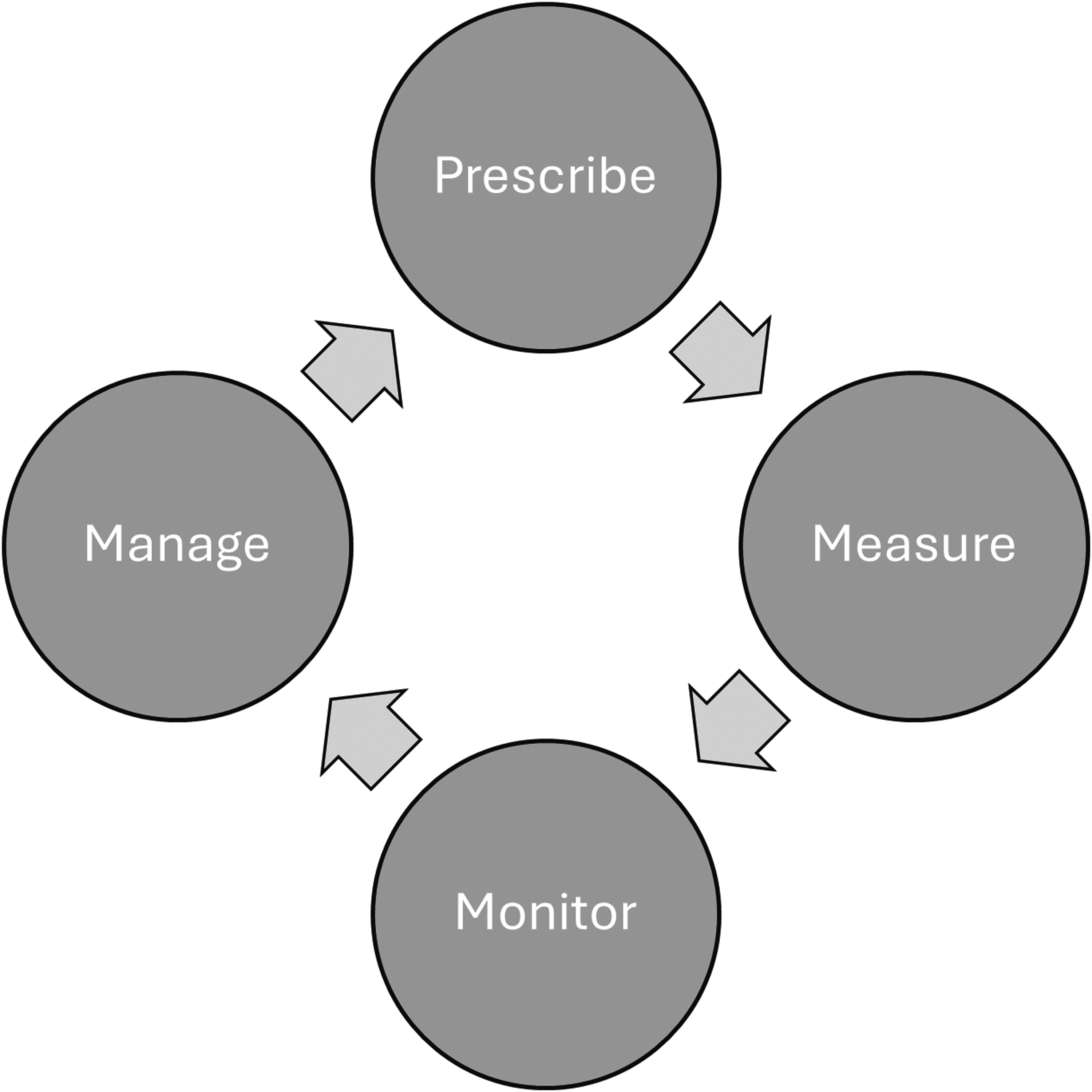
The training load process of prescribing, measuring, monitoring and managing load.
Existing theoretical guidelines for prescribing and adjusting training loads in triathlon are somewhat limited,10,11 but do include an attempt by Cejuela Anta et al. 12 to develop a system to provide different TL mathematical weightings for swim, bike and run modalities. These intervention-based or theoretical based guidelines, while offering useful evidence-based recommendations, are not grounded in the practical methodologies of triathlon coaches, which are yet to be explored and established in empirical research.7,13 It is unclear which TL metrics are used by triathlon coaches or which training management systems (TMS) they use to manage load. 6 Anecdotally, a popular TMS amongst triathlon coaches is TrainingPeaks (TP). This system relies on a load metric called Training Stress Score, 14 which is based on the work of Banister et al. 15 and is a version of training impulse (TRIMP). Descriptions of load metrics used in endurance sports by O’Toole et al., 16 Korkia et al., 17 Gulbin et al., 18 and Knechtle et al. 19 indicate that volume-based load metrics (i.e., distance and time per week) are also in common use by coaches. Triathlon coaches also use the intensity metrics of pace and speed. 20 Other intensity-based metrics, such as HR, blood lactate, power output, and RPE, are probably used in other endurance sports, 13 with limited reports of their use in triathlon by coaches.6,21
Concerning endurance coaching more broadly, Roos et al. 22 have observed that endurance sport coaches consider the addition of training diary comments, comparison of planned versus actual training (adherence), motivation and sleep, as important factors in the TL monitoring process. Gould et al. 23 suggest that communication between the coach and athlete helps coaches maintain relationships, build trust, and improve adherence to prescribed training. These ideals are relevant to triathlon coaching, yet it is unclear whether they use these practices. While a study by Kirkland et al. 24 briefly mentions aspects of this, their study is based more broadly on endurance coaches, of which triathlon coaches are a subset, and their study does not address the entire TL process. Only one recent article 6 presented evidence that triathlon coaches evaluate and interpret objective load data and subjective feedback from athletes, but it did not describe how they do this.
This study aims to describe triathlon coaches’ load prescription and management practices. Specifically, we sought to identify the load metrics used by triathlon coaches, how frequently they monitor and manage load, which TMS they use and their opinions about their role in the load management process. These aims are intended to provide information that allows coaches to reflect on and potentially enhance their support to athletes. More generally, we seek to enhance the performance of triathlon coaches in a way that may aid in optimising athlete health and performance outcomes. It is acknowledged in the present study that the TL process is a subset of broader training programme design, which encompasses aspects such as skills and technique development and concepts such as periodisation.
Methods
Participants
Ethical approval was granted by the university's ethics advisory board (approval number: HEAG-H 200_2022), with participants providing written consent before commencing the survey. Participant recruitment was conducted with the support of AusTriathlon (AT), the national governing body for the sport in Australia, and targeted registered AT coaches at a Development, Performance, and High-Performance level in Australia. 25 The inclusion criteria required coaches to have a minimum of 12 months of coaching experience and to be currently coaching more than one athlete. Coaches were excluded if they were not currently coaching. The survey was not open exclusively to AT coaches, as the intent was to have a broader representation of the practices of triathlon coaches across Australia, not only those influenced by the design and dissemination of coach education content delivered by the country's national governing body for the sport, acknowledging that other coach accreditation courses in triathlon are available to the general public such as those offered by commercial entities such as TrainingPeaks and Ironman Group (Ironman University). 24 AT estimated that there were approximately 370 coaches across the country at the time of data collection. The study used purposive sampling, including promotion through the research team's social media accounts (Facebook, Instagram, Twitter (X) and LinkedIn).
Design
A descriptive survey study was designed to capture quantitative and qualitative (free text) data from eligible triathlon coaches. Questions were designed and selected based on the existing literature on load-related practices in endurance sports1,13,22 and broader commentary on triathlon coaching practices. The research team discussed and agreed upon the survey content to ensure validity, clarity, and conciseness. The survey was pilot-tested with triathlon coaches (n = 2) to cross-check that the target population could understand the content.
Methodology
All data were collected via an online Qualtrics (Qualtrics, Provo, UT) survey, which asked participants to recall their current coaching practices. Before commencing the survey, participants were instructed to think about their athletes in general as a group (i.e., their typical athlete, not a specific athlete) when answering questions. Participants were not asked to consider specific timeframes. The survey consisted of 18 questions within four sections that focused on ‘the profile of triathlon coaches and their squads’, ‘prescription and measurement of load’, ‘monitoring of load, systems, and communication’, and ‘managing load, training program adherence, and role responsibility’.
Responses to questions were indicated using various response formats (e.g., Yes/No, Likert scale, radio-button, and multi-select check box type) appropriate to the question format. Free text response format captured textual data for a subset of (8) questions. The study was promoted via AT's email newsletter and the research team's social media channels to reach additional participants not registered with AT. The survey was open for eight weeks, and all responses were anonymous.
Data analysis
Data were exported to Microsoft Excel (Microsoft, Redmond, Washington, USA) for checking before analysis. There were 63 survey responses (representing 17% of the target population) summarised using descriptive statistics (i.e., means, SD, percentages). Duplicate and incomplete cases were deleted. A research team member (first author) categorised qualitative (free text) data according to content and summarised these data as counts/percentages.
Results
The average number of athletes in each coach's squad was 17.4 (range 2–100). Coaches who worked with two or more skill levels of athletes worked primarily (71%) with intermediate to advanced age-group athletes, followed by beginners and sub-elite (46%) and elite (14%). Athlete levels were defined as Beginner, Amateur age-group athlete - Intermediate, Amateur age-group athlete - Advanced, Sub-elite or State-level competition, and Elite - national or international competition (professional). Almost all participants (94%) coach age-group athletes, with the ‘average’ athlete being an age-group athlete. As coaches were asked to think of their average athlete prior to commencing the survey and as part of responding to each question, the results primarily relate to age-group athletes and do not relate to a specific age, race distance preference, or sex. Some coaches held tertiary Exercise Science qualifications (27.7%), and some were accredited with AusTriathlon (25.3%, n = 8 Development, n = 8 Performance), Athletics Australia (12%), and the Australian Strength and Conditioning Association (7.2%).
Training hours available consistently increased with athlete experience (see Figure 2). Coaches estimated that beginner athletes allocated an average of 7.7 hours per week to training. In contrast, coaches estimated that intermediate age group, advanced age group, sub-elite and elite athletes dedicated 14.3, 18.5, 19.2, and 21.4 hours per week to their training, respectively. Training programme adherence or the ‘percentage of prescribed training completed’ (also referred to as compliance) levels estimated by coaches, were relatively consistent across non-elite athlete subgroups (77.7% to 82.1%). However, the training adherence of elite athletes is higher (95.7%).
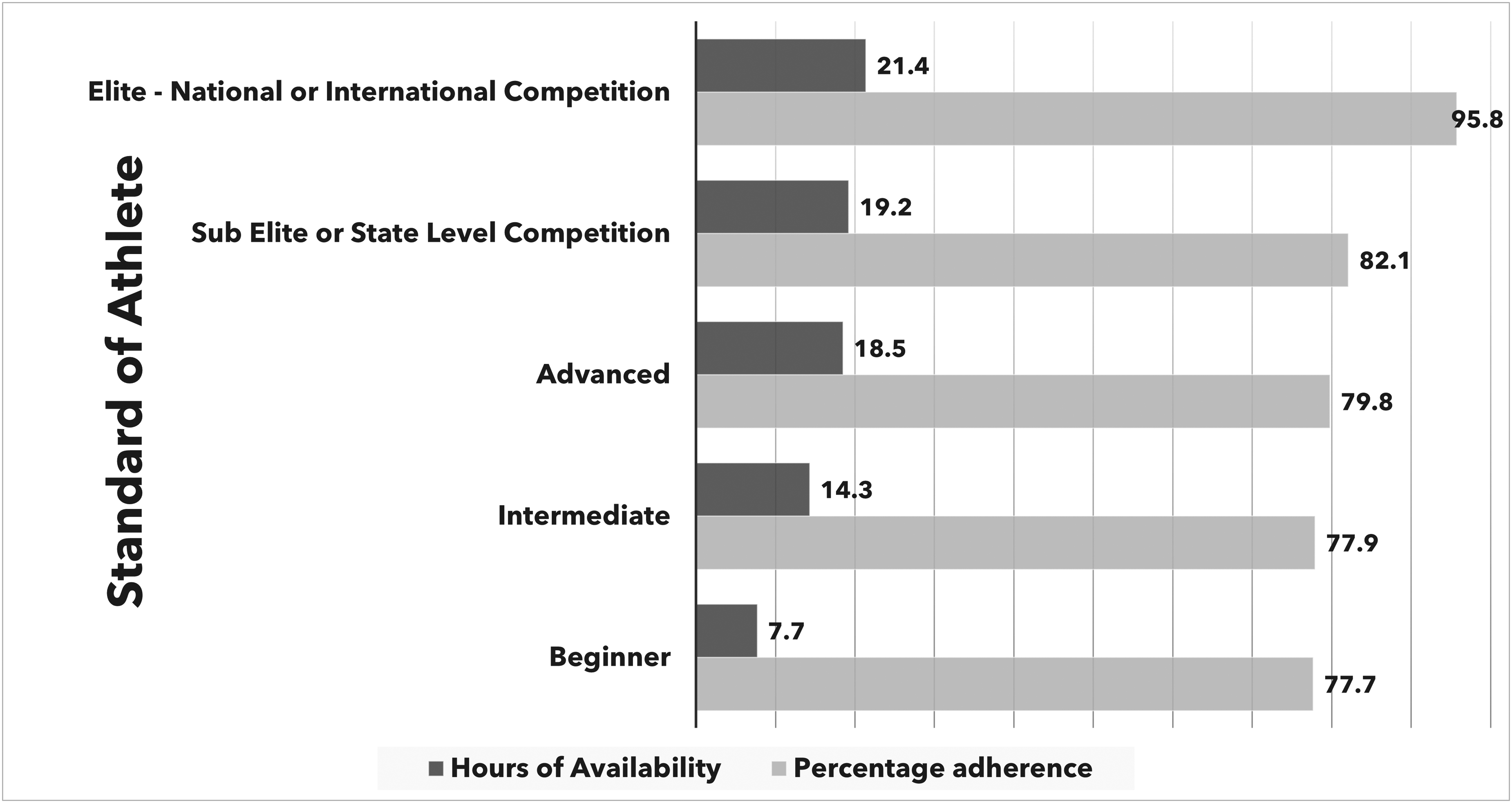
Differences in training availability and training adherence by athlete standards. Availability represents the average hours per week that coaches estimated their athletes were available to train. Adherence represents the coaches’ estimates of the typical proportion of prescribed training that the athlete completes.
Prescription and measurement of load
The most used load prescription metric by coaches was RPE or session RPE (sRPE) (78%) (see Figure 3). The next most frequent metrics include Time/Distance/Pace (76%), physiological metrics (i.e., HR, lactate; 70%) and Qualitative Feedback (63%). For the measurement of TL, the most frequently used metrics were Time/Distance/Pace (81%), measures of load/intensity (i.e., power/TSS/TRIMP, 73%), followed by physiological metrics, such as HR and lactate (67%). Even though RPE was regularly used to prescribe load, it was one of the least commonly used load measurement metrics (62%) along with comments in training diaries (59%). In the ‘Other’ category, coaches reported measuring TL through athletes’ body language, overall health, resistance training, direct conversation, heart rate variability, resting heart rate, appetite levels, and sleep metrics.
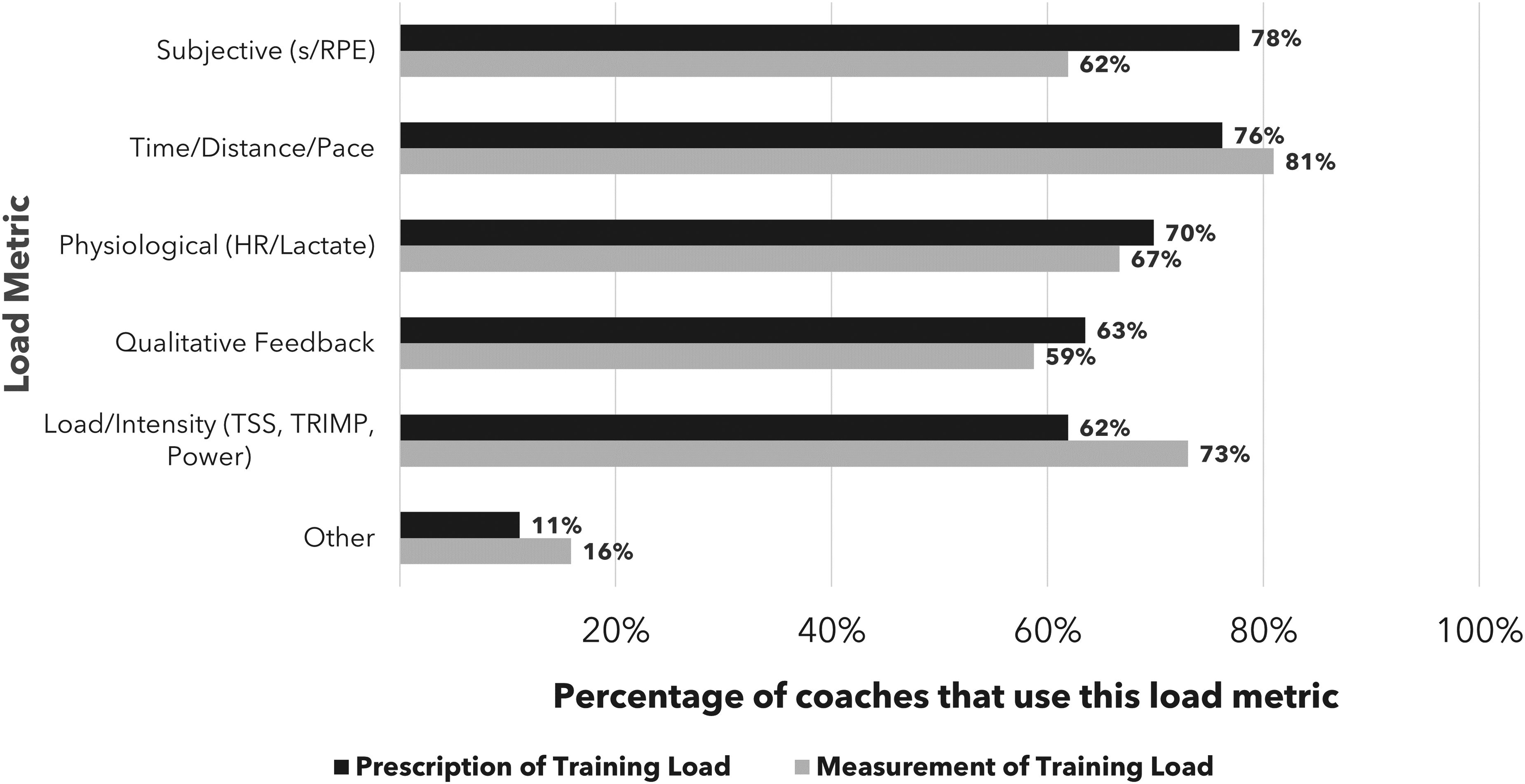
The prevalence of load prescription and measurement metrics used by coaches. The percentages represent the proportion of coaches that use each metric. Participants could select multiple options. Therefore, the cumulative percentage for all combined options exceeds 100%.
The most common timeframes in which coaches viewed and interpreted their athletes’ TL were ‘Weekly’ (51.6%) and ‘Daily’ (43.5%) (see Figure 4). However, in terms of the ‘Frequency of the coach communicating with athletes’, coaches most commonly communicated with their athletes about their TL on a “Monthly” timeframe (37.2%) followed by “Daily” (24.0%) and “Weekly” (15.8%) communication. When coaches assessed ‘Periods of accumulated load’ (the load of multiple training sessions added together over a period of time), the most commonly used timeframes were “Daily” (65%), “Weekly” (67%), and “Monthly” (60%). 33% of coaches considered “accumulated load” as “six weeks” of load. Most coaches (62%) monitor both acute load (typically 1 day to 7 days) in combination with chronic load (monthly or longer), while 27% only monitor acute load, and 10% only monitor chronic load.
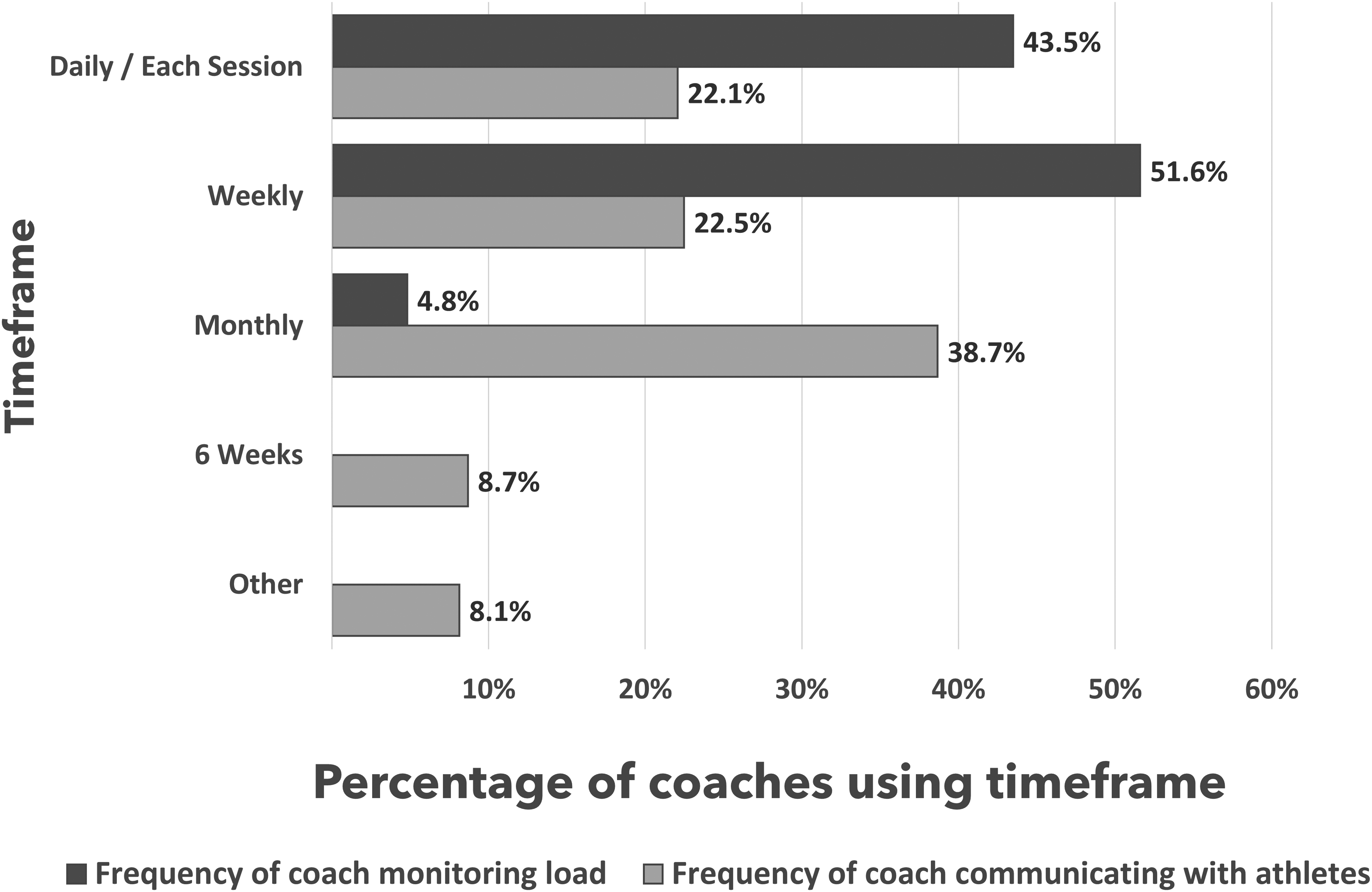
The frequency with which coaches view TL data, communicate about load with their athletes and assess the periods of accumulated load. Participants could select multiple options. Therefore, the cumulative percentage for all combined options exceeds 100%.
Monitoring of load
The most commonly used technologies (TMS) to prescribe TL and to store, analyse and communicate about TL data were TP (55.6%), email, SMS, and phone conversations (42.9%) and spreadsheets (39.7%) (see Figure 5). Less commonly used were written training diaries (19%) and other web-based technology such as Today's Plan (19%), Final Surge (17.5%), custom-made information technology (15.9%), and TriDot (11.1%).
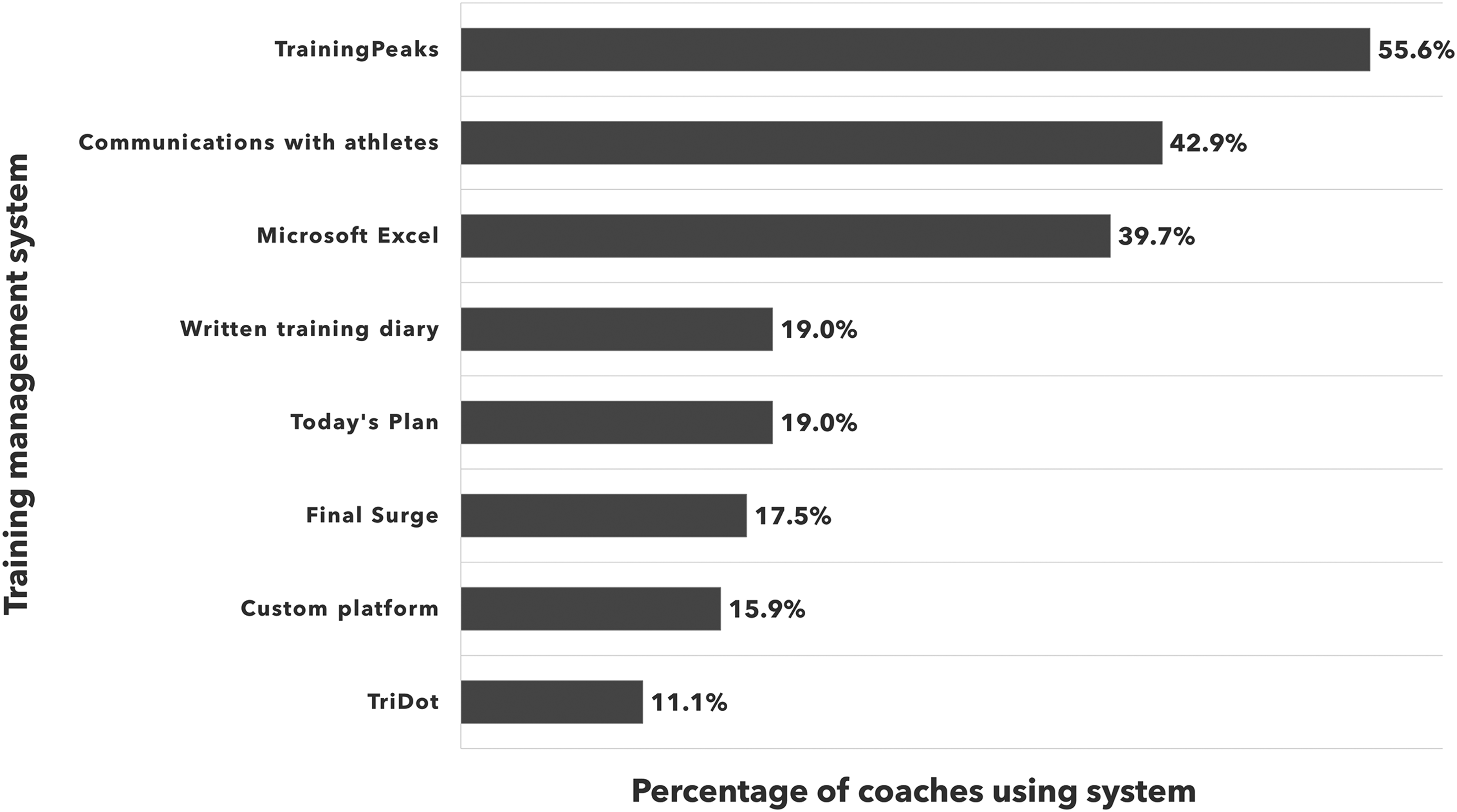
Training management systems (TMS) and other technologies that triathlon coaches use to manage training load and communicate with their athletes. Participants could select multiple options. Therefore, the cumulative percentage for all combined options exceeds 100%.
The training load process and coach-athlete roles
The coaches’ opinion about who is responsible for prescribing TL was that it is the ‘coach’ (39.3%) or ‘mostly the coach’ (39.3%) (see Figure 6), although some coaches (21.3%) consider this role to be ‘shared between coach and athlete’. Regarding their opinions about who is responsible for measuring TL, the most common response (42.6%) was that it is ‘shared between coach and athlete’, while fewer coaches (19.7%) believed it was ‘mostly the athlete’. Regarding load monitoring, 37.7% of coaches saw it as a shared responsibility between the coach and the athlete, while 36.1% viewed it primarily as the coach's role. Finally, coaches considered that managing load (adjusting an athlete's TL in response to the load that is prescribed, measured and monitored) is a shared role (36.1%), mostly the coach's role (32.8%) or only the coach's role (26.2%).
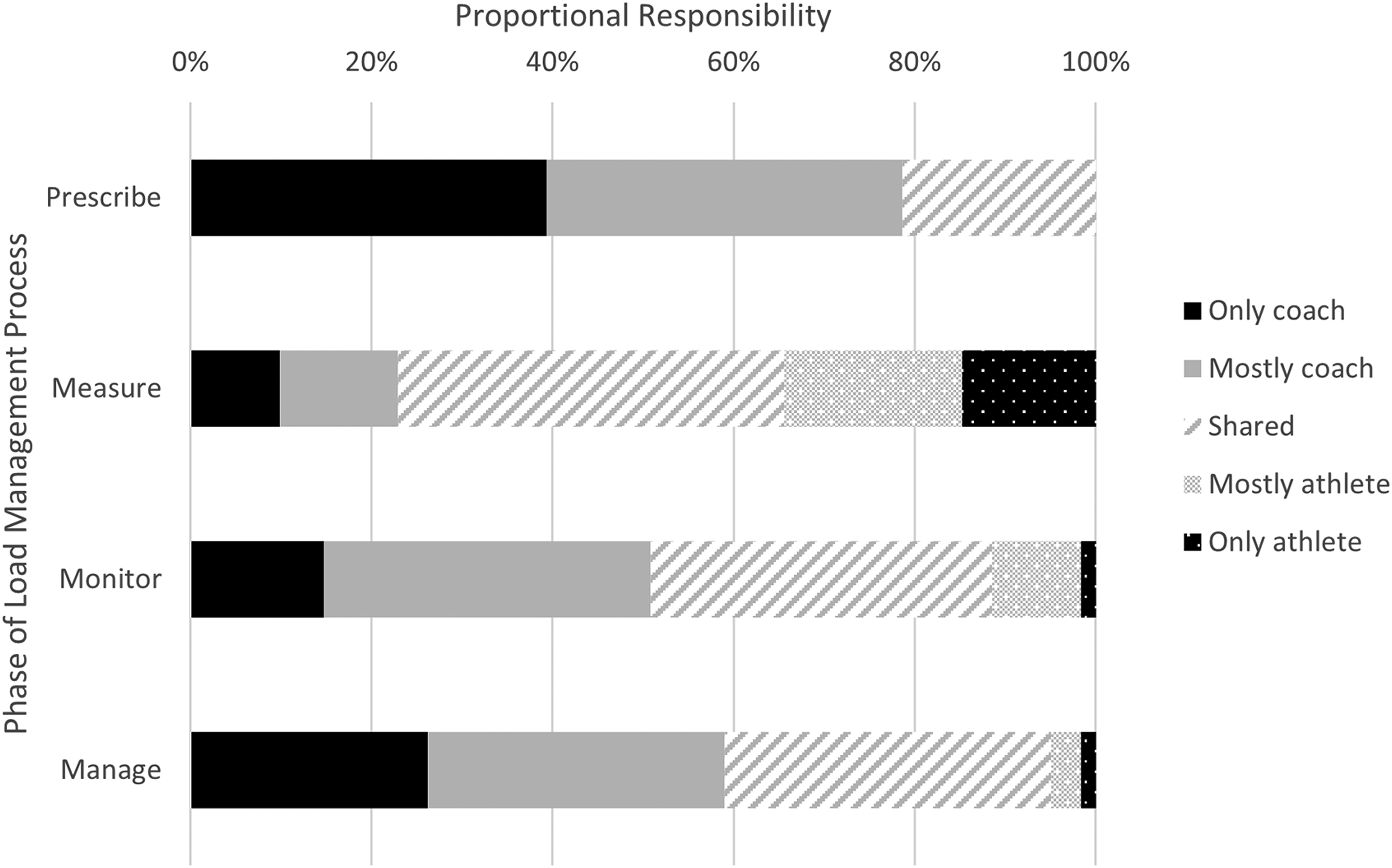
Coaches’ opinions about who is responsible for prescribing and managing training load.
Discussion
The ability of a coach to effectively prescribe and manage athlete TL in endurance sports is important to enhance performance and minimise injury risk. It has been unclear how triathlon coaches manage load or whether their practices align with evidence-based recommendations. This study identifies the load metrics used by Australian triathlon coaches, primarily coaching age-group athletes; how they apply these metrics, and how frequently they communicate with athletes about load management. The study also presents findings about which information technology platforms they use to prescribe and manage load and how the load management process is shared between coach and athlete. These findings provide an opportunity to evaluate an important aspect of triathlon coaching practice and to identify opportunities for education and improvement.
The results indicate that coaches integrated subjective data, like RPE and athlete comments, with objective metrics, such as duration, pace, and power, when prescribing training loads. This practice is consistent with the view that RPE has similar value to objective metrics when evaluating the intensity of sessions, athlete fatigue, and recovery status. 26 However, when looking at how coaches monitored load, subjective metrics appear to be de-prioritised by coaches. The literature contains recommendations about what load metrics should be used. Still, it is not overtly recommended that the metrics used be the same for the prescription and monitoring phases of load management. 1 If prescription and monitoring metrics were the same, it would potentially improve the coach's ability to quantify an athlete's adherence to the training programme objectively. Furthermore, using subjective metrics in the monitoring phase allows coaches to assess the impact of TL over short (acute) and long-term (chronic) periods. Some coaches may not use subjective metrics to monitor load because objective data can be more easily and rapidly interpreted than the more nuanced qualitative athlete feedback. They may not necessarily understand a holistic view of training and, therefore, the complex psychosocial aspects of training. 27 If coaches are overly reliant on objective data, they may not be aware of the subjective feedback that could reveal the athlete's capacity to undertake training. Future research may investigate whether the same or similar metrics used for prescription should be the same as those used to measure and monitor load.
Different coaching approaches are evident in how frequently coaches prescribed and monitored TL. Coaches commonly monitored an athlete's TL daily or weekly, with fewer coaches monitoring load monthly. The coaches in the current study monitored load regularly over acute timeframes - daily and weekly, and chronic timeframes – monthly, and 6-weekly to a lesser extent. It has been suggested that regular load monitoring may represent best practice. 28 Coaches are then positioned to respond quickly if changes need to be made to TL, and this may aid the coach in reducing the risk of an athlete over- or under-training. 29
Most (62%) coaches monitored load using both acute and chronic timeframes, which may mean they compare acute load against chronic load to determine the risk of injury, illness or overtraining. 29 These timeframes may also be used to determine the acute-chronic workload ratio (ACWR), or the training-stress balance (TSB) of an athlete. 30 This latter method has been stated as a preferable method to determine changes in TL when compared with ACWR. 30 Acute-to-chronic workload ratio is a controversial method that is intended to determine the risk of injury.31,32 In contrast to determining a load ratio, TSB is calculated by subtracting acute load from chronic load and may indicate ‘freshness’ or readiness for training. 32 It warrants attention that 27% of coaches only assessed accumulated load over an acute timeframe. 29 A predominantly short-term focus on load and performance improvement raises the possibility that this subset of coaches may not be considering the changes in load by using acute and chronic load timeframes to calculate TSB. This may limit their ability to optimise athlete health performance outcomes if athletes remain fatigued for an extended period and risk being overtrained. 27 The reasons behind such short-term coaching monitoring preferences could include the coach's scepticism towards long-term planning, given the unpredictable influences and impacts of the non-sport lives of age-group athletes. 33
While more than half of coaches used an advanced TMS, some coaches still used methods such as written plans/diaries and spreadsheets. Using non-TMS approaches potentially makes it more difficult for coaches to prescribe, measure, monitor and manage TL data, as data capture and analysis features are key native components of most TMS platforms 14 and do not need to be manually constructed and refined, compared with custom-created spreadsheets. Most TMSs also enable subjective athlete feedback to be captured centrally in conjunction with objective data, which provides immediate context to training, allowing for comparison between the two data types. Coaches can read and respond to athlete comments regarding their subjective responses to training sessions and their broader TL within the TMS. This may be important for appropriately managing TL and maintaining athlete health as the coach does not have to swap between disparate systems to obtain a complete subjective-objective data set. 25 Utilising both objective and subjective metrics may aid coaches in making more informed decisions and support the development of a training environment that is collaborative and adaptable. 34 This observation regarding the use of objective and subjective metrics, combined with the fact that 38% of coaches only communicated monthly, points to potential gaps in coaching practices. Communication with athletes is essential in establishing trust, 26 and athletes wish to see coaches respond to TMS data and act on the collected data in managing training programme design for the athlete to have sufficient motivation to maintain a high level of TMS adherence. 35
It has been suggested that the reason for coaches not using the qualitative features and, therefore, associated metrics of the TMS (Figures 3 and 5) may not entirely be with the coach. Kirkland et al. noted that athletes could provide better qualitative feedback. 24 The findings of McGuigan et al. 34 reinforce this view. They highlight that some athletes feel they need a reminder to enter training information into the TMS. This could reflect the coaches’ wider patterns of using the TMS. Perhaps coaches’ approach to the training load process and their athletes is that they are operating in a more reactive manner with their use of systems, devices and load processes in some cases rather than proactive in response to athlete behaviours and interactions. Regular interactions between coach and athlete are crucial as they allow for the necessary modifications in training prescriptions, preventing the exacerbation of issues that may be mitigated through more informed and responsive coaching strategies. It is important to consider that TMS approaches may not be better than their non-TMS counterparts. Factors such as face-to-face coaching time and the size of the coach's athlete group may affect the overall performance of the coach with respect to TL management.
The allocation of responsibilities between coach and athlete changes throughout the TL process's prescription, measurement, monitoring, and management stages. Most coaches perceived the prescription of TL primarily as their responsibility. In contrast, measuring and monitoring TL were considered a shared responsibility between the coach and the athlete. This division of roles suggests a collaborative approach, perhaps emphasising the coach's greater expertise in prescribing TL comparative to the athlete, and the athlete's involvement in executing and providing qualitative feedback on load prescription, also noting that 44% of coaches communicate with athletes daily or weekly. Frequent coach-athlete communication in the load management phase signifies a dynamic partnership where both parties may contribute distinct yet complementary inputs, fostering a cooperative atmosphere that has previously been noted to increase athlete adherence. 35 This shared responsibility model may facilitate enhanced communication and alignment of expectations and goals between the coach and athlete, thus optimising the effectiveness and adaptability of the training programme.
Limitations
The results are specific to an Australian triathlon coaching context and may not be generalisable to coaches in other countries. A future study may include a more diverse, international sample of coaches, offering a broader range of perspectives and may also compare online coaching to face-to-face coaching. Coaches filled out the survey based on recall, and it has been shown previously that memory is fallible. 36 Future studies may get coaches to log their practices in real-time, potentially providing more accurate data. A limitation of the study, which further research may delineate, is how coaches of different experience levels and types implement a TL process, which may also vary with different athlete standards. There is a possibility that social desirability bias exists where coaches over-report behaviours perceived to be what “good” coaches do; however, the data collection was structured to maintain anonymity, which may minimise this bias. It is acknowledged here that load is not applied to athletes linearly 37 within a training programme, nor do adaptions and performance improvements occur linearly. 38 However, these are beyond the scope of this research. This paper focuses on metrics used in the TL process and the TL practices of coaches. Future research may include interviews with triathlon coaches to better understand the complexities of triathlon coaching and the TL process. This research may determine if there are constraints on coaches that limit the optimisation of their TL practices.
Conclusions
This study demonstrates for the first time that triathlon coaches integrate objective and subjective metrics in training prescription. However, it reveals an underrepresentation of subjective metrics and qualitative athlete feedback within the TL measurement and monitoring phases. Consistent use of subjective metrics throughout the load process is a key area for development in coaching practice education and refinement to foster a more holistic view of load, and an athlete's physiological response to load. Critically, this study also shows that while many coaches may manage the TSB of athletes, a considerable proportion of triathlon coaches tend to favour short-term load management strategies, which may mean that their athletes’ health and performance outcomes are at increased risk. It was also identified that many coaches only communicate with their athletes at a monthly interval. This limits the coach's ability to respond to a non-functional overreaching situation, which could also risk the athlete's health. Finally, the research has identified collaborative role-sharing in the TL process, which may align with suggested best practices. Future coaching education programmes should consider addressing these aspects of triathlon coaching to better support training programme optimisation.
Practical recommendations
Triathlon coaches should ensure that some of the metrics they use to prescribe load are also used to measure load so that adherence to the training programme can be determined. Coaches should include a subjective load measure to monitor how well an athlete copes with training and communicate relatively frequently (e.g., weekly) about load management issues. Coaches should monitor both acute and chronic loads to better understand current fatigue levels and the magnitude of the stimulus that can be prescribed to produce training adaptations. Coaches should consider that load management can be achieved collaboratively with their athletes and that this can be facilitated by using appropriate information technology (i.e., a Training Management System). Organisations that provide educational opportunities for triathlon coaches should emphasise the importance of the above recommendations in their teaching material.
Footnotes
Author contributions
The first author conceived the study design and methods, oversaw data collection, analysed the data, and wrote the manuscript. A co-author assisted with study design, methods, data interpretation, and manuscript review. Other contributing authors provided feedback, assisted in data interpretation, and reviewed the manuscript. All authors read and approved the final manuscript.
Data availability
In accordance with the consent agreement used for this study, emphasising the minimised risk of participant identification, the raw datasets of this study are not accessible outside the research team.
Declaration of conflicting interests
The authors declared no potential conflicts of interest with respect to the research, authorship, and/or publication of this article.
Funding
The authors received no financial support for the research, authorship, and/or publication of this article.
