




Abstract
The purpose of this study was to explore rugby league stakeholders’ perspectives of the tackle event, utilising qualitative approaches to gain further insight into this phenomenon. Nineteen stakeholders, comprising tactical coaches (n = 5), physiotherapists (n = 5), doctors (n = 5) and strength and conditioning coaches (n = 4) from every European 2023 Super League team (ESL), were recruited to participate in an online semi-structured interview, via the Microsoft Teams platform, facilitated by a moderator. Braun and Clarke's (2019) reflexive thematic analysis was performed to code and analyse the transcribed data; this established pattern-based interpretation and reporting from the dataset. The research findings can be divided into five crucial segments that illuminate our understanding of collision in rugby league: 1) simultaneous contact and the three-person tackle, 2) tackle height – calibration is critical, 3) the fundamental factors influencing tackle-related risks. 4) the graded exposure and philosophical approaches to contact training and games, 5) replacing toughness with resilience - the impact of game identity. The themes generated here provide comprehensive insights into stakeholders’ perceptions of the optimal ways to perform collisions. This has implications for the identity of the game, and the subsequent law changes/ behavioural change models that aim to make the game safer, specific to rugby league. In line with previous research, the conclusions underline high-risk events in match play (blind-sided collisions and fatigue), providing a focus for areas of future research. Lastly, psychology in the tackle event is explored, highlighting the need for graded contact exposure from a physical and psychological perspective during tackle technique training.
Introduction
Rugby League is a full-contact collision team sport where match play and training comprise high-intensity (wrestling, sprinting, carrying the ball and tackling) and low-intensity efforts (walking and jogging). 1 Exposure to the tackle event comes from offensive (i.e., ball carries) and defensive actions (i.e., tackles), 2 where the tackle is a technical and physical contest between an attacker and defender to limit opposition territory and point-scoring opportunities. As a crucial component of the game, Woods et al. 3 have demonstrated the importance of tackling on match outcome, as missed tackles were one of the key indicators negatively correlated with final league position, increasing as ranking decreases. Previous research has also demonstrated that greater playing experience and standard positively influence tackling techniques in collision sports athletes, 4 illustrating that tackling techniques are masterable skills. Thus, previous research has aimed to develop tackle technique skill acquisition frameworks in training to enable safer tackling methods translating to on-field behaviours. 5 However, due to the chaotic nature of the tackle and the significant force transferred, executing a skill such as tackling inevitably involves injury risk to the players involved. As such, the tackle has the most significant risk of injury in rugby league, accounting for 47–94% of all injuries at the professional level. 6 Linked specifically to the tackle, concussion is one of the most prevalent injuries in rugby league, with an incidence rate of 15.5 per 1000 match hours in the European Super League (ESL) from 2016 to 2022. 7 The tackle has therefore become the utmost priority for researchers to understand the complexities of reducing concussions across both codes of rugby.8,9 The findings of this research revealed a heightened propensity of HIAs in players when entering and during the tackle in specific actions (accelerating/ high speed) and body positions (upright). To make safe and effective tackling, the recommendations of the World Rugby Expert Group concluded that rugby union should focus on encouraging tacklers to bend in the tackle as a means of reducing concussions. 10 Subsequent investigation has focused on targeted interventions to minimise concussions with some coming in the form of law changes (i.e., reducing tackle height). Consequently, rugby league has followed suit by announcing its own changes in tackle height from 2025. 11 Despite the positive advancements made in recent research and the potential new laws, recent published trials are yet to drive the desired behavioural change in this area. 12 Given the vital role of the tackle event in rugby league on match outcome, their technical execution, and their relationship with injurious events such as concussions, the rugby league tackle is an area that requires further investigation.
A recent method of exploring the tackle in rugby league has been through a qualitative lens. 13 In this study, researchers illuminated ESL players’ perspectives through a series of focus groups, providing pivotal player experiences and advising further inquest into this area from a stakeholder viewpoint. Stakeholders in the current study comprise tactical coaches, doctors, physiotherapists, and strength coaches, all of whom aid in different capacities in the tactical, technical, physical, and rehabilitative preparation of rugby players for match-play and training. The value of stakeholder insights has been well documented in community rugby union. Using qualitative techniques in the form of semi-structured interviews, 14 described stakeholder perceptions and the drivers of the adoption or rejection of injury prevention strategies. The conclusions of this study illustrated the need to bridge the gap between understanding and implementation with a more comprehensive approach. Several other studies have focused on a qualitative inquest in women's and men's rugby union,15,16 yielding valuable perspectives that contribute to future investigations with the potential to influence law change. Yet, Dixon et al. 13 is the only recent qualitative study to present findings in rugby league. Consequently, considering the beneficial nature of experiences already presented by rugby league players, further inquiry is required to bridge the gap between the academic and applied environments specific to the rugby league tackle event from a stakeholder viewpoint.
Qualitative research can take many forms, such as interviews, focus groups, and surveys. 17 Semi-structured interviews are a qualitative research form that relies predominantly on open-ended questions, giving participants the flexibility to express their opinions, feelings and attitudes. 18 A critical methodology that can be used to develop patterns of meaning (themes) in semi-structured interviews is reflexive thematic analysis (RTA). 19 This approach's advantage is its flexibility with different theoretical frameworks to delineate people's experiences, views, and perceptions. As such, a technique like RTA could be essential in discovering patterns from a multitude of stakeholders (tactical coaches, physiotherapists, doctors, and strength coaches). Given the crucial insights and perceptions on law changes and injury prevention strategies documented by the preceding literature, and the paucity of qualitative research in the rugby league tackle space, further research is now necessary. Therefore, the aim of the present study was to conduct semi-structured interviews with current key ESL stakeholders to gain insights into their experiences and understanding of collision.
Methods
Participants
Commensurate with qualitative approaches, purposive sampling was employed to select information-rich cases whilst providing a diverse representation of ESL stakeholders from all 12 clubs. 20 Nineteen participants were recruited by email for this study, comprising head tactical coaches (n = 4), assistant tactical coaches (n = 1), head strength coaches (n = 4) and head medical staff (physiotherapist n = 5, doctors n = 5) representing all ESL clubs during the 2023 season. The mean ± SD ESL coaching experience of all the tactical coaches was 10.0 ± 7.9 years, with three of the five having coached at the international level (3.6 ± 2.5 years) and four of the five having played ESL level or higher (315 ± 157 games). The doctors, physiotherapists, and strength coaches’ mean ± SD experience at the ESL level was 10.8 ± 7.7, 4.6 ± 5.4 and 7.0 ± 5.4 years, respectively, with five of the stakeholders having experience at the international level. Written consent was obtained after all participants were provided with a participant information sheet and an explanation of the study, including the benefits and risks of participation. Institutional ethics approval was granted for this study by Liverpool John Moores University Research Ethics Commitee (22/SPS/070).
Data collection
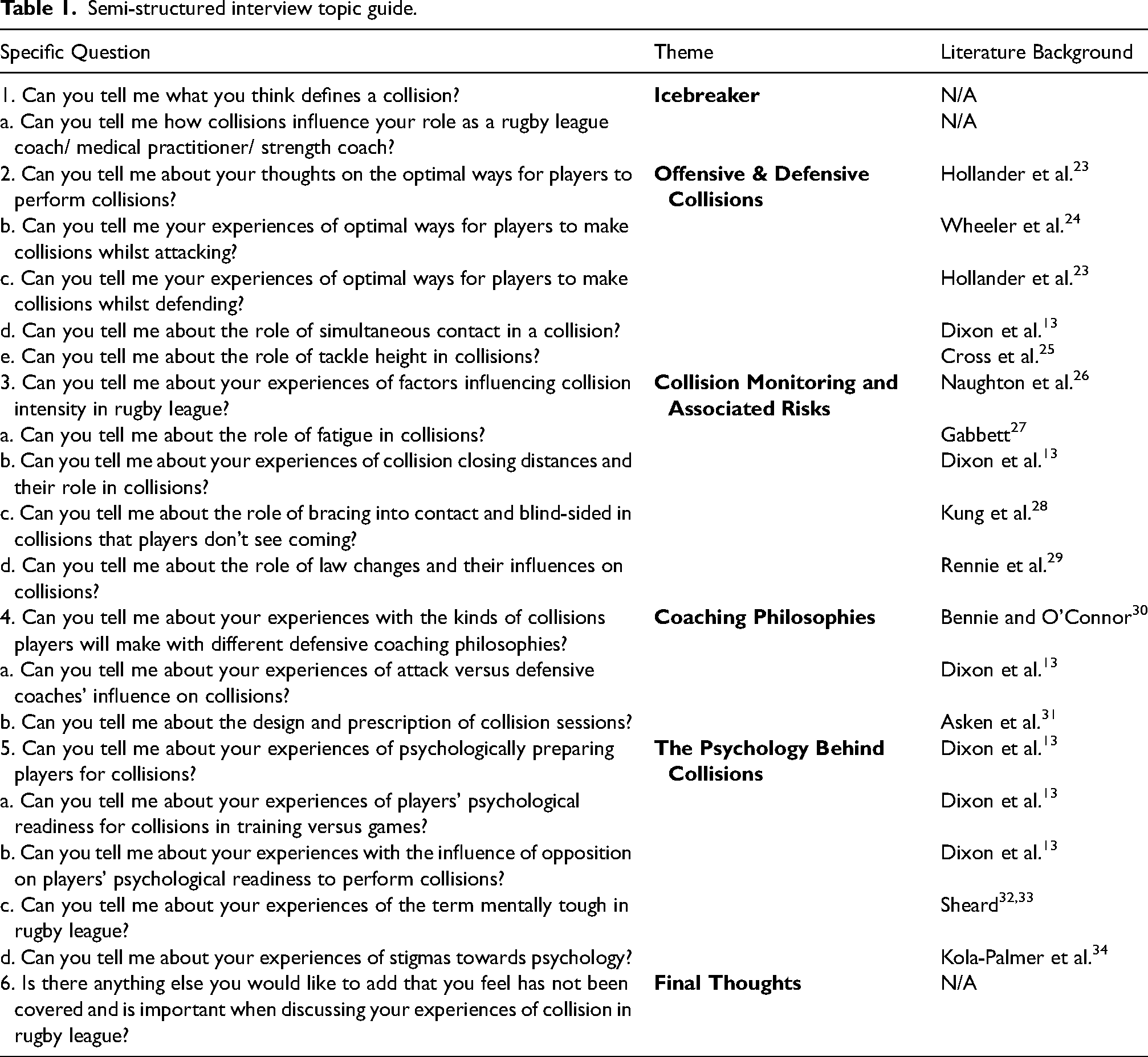
A qualitative enquiry in the form of one-to-one semi-structured interviews was adopted, aligning with previous research designs that aimed to develop or construct knowledge about individuals and their subjective experiences. 18 The semi-structured interview schedule, termed ‘topic guide’ as seen in Table 1, consisted of open-ended questions to facilitate flexibility in participants’ responses. Each interview was performed and recorded online using the Microsoft Team's platform, and the first author utilised a standard verbatim transcription that adhered to the qualities of rigour set out by Poland. 21 All participants’ identifiable information was anonymised, and pseudonyms were used in the transcription process. In line with previous research on elite interviews, each lasted 30 to 60 min, 22 with no interviews repeated and 18 out of the 19 interviews represented in the supplementary file.
Semi-structured interview topic guide.
Theoretical framework & analytical approach
The study was guided by a phenomenological lens to explore the lived experiences of elite stakeholders in rugby league. As a theoretical framework, phenomenology emphasises the importance of understanding lived experiences and, in this context, facilitates a deep exploration of how stakeholders experience the tackle event specific to their sport. To analyse the data, a qualitative RTA was performed, grounded in Braun & Clarke's 35 reflexive systematic approach to organise, identify and report patterns (themes) within the participants’ views and lived experiences. A crucial component of RTA is its flexibility, as such, it can be used within most theoretical frameworks, data sets, and data types. 36 Since little is known about the tackle event in rugby league from a qualitative perspective, the RTA's strengths provide the breadth and detail to identify nuances amongst the datasets. Conversely, some research suggests limitations lay in the lack of analytical rigour behind the systematic process of quantifying patterns. 37 However, utilising the six-step systematic process as a guide ensures a standardised process throughout the analysis. In this process, firstly, once transcribed, familiarisation with the dataset began, and notes were made whilst thoroughly re-reading the transcriptions. Initial codes are systematically generated following this from the features in the data. Potential themes are collated from the gathered data and codes. A review process then took place with research team members over three separate meetings to establish if the themes worked in connection to the coded extracts. Clear definitions and names for each theme were then refined from the specifics of each theme. In the final analysis, extract examples were selected linking to subsequent studies and the research questions. Lastly, a report is produced whereby existing quantitative literature is examined alongside the findings of a qualitative study. This analytical approach was performed manually, and no software was used in processing the dataset.
Rigour
Assuring rigour and trustworthiness of qualitative research is established through the transparency and credibility of the accounts expressed by the participants. The researcher is the study's primary instrument, responsible for collecting, analysing, interpreting, and reporting the findings. It is essential that reflexivity is at the forefront of the research to critically examine one's beliefs and assumptions and how they might affect the interactions with the people and content under study. To this extent, it is best practice to report the backgrounds and contributions of each author to enhance clarity. 38 The first author who collected the data has a degree and postgraduate qualification in sport and exercise science and strength and conditioning, respectively. He has competed in the Championship and European Super League competitions over fifteen years. During his career, he has once finished the season inside ‘Super League's top three tacklers’ with a career-high of 931 across an entire season whilst experiencing six recorded concussions. Utilising these background experiences allowed the lead author to establish rapport and credibly acquire access to an elite population, leading to candid and forthright discourse.
Nevertheless, the other authors were involved in the systematic approach to mitigate the potential possibility of the data analysis being tainted by personal bias. The second author is a distinguished sports psychologist and prominent qualitative researcher. As a senior lecturer, the third author's expertise is entrenched in qualitative research and sports coaching care. The fourth author has a substantial background in rugby league, focusing on monitoring team sports athletes as a sport and exercise science professor. Lastly, the final author emphasises theory to practice, being an ex-professional rugby league player and now a professor of human physiology with over 15 years of experience delivering sports science support to elite rugby players. Following current advancements in RTA, the authors endeavoured to critically question and establish disparities in viewpoints to enrich codes and themes instead of searching for inter-coder agreement. Moreover, participants confirmed this analysis was a credible account of the interviews, as member reflections were undertaken through which each participant was provided with the fundamental outcomes of each theme by email. 39
Findings and discussion
The Findings and Discussion section is divided into five general dimension themes, as set out below. The coded extracts from the raw data were developed into different themes and presented in the supplementary file of Table 3.
Theme 1: simultaneous contact in the three-person tackle
In the initial theme, optimal ways of performing the tackle were explored by participants, as several stakeholders noted simultaneous contact (by two players) as part of a three-person tackle (with the third defender taking the legs) as the most beneficial and efficient way to ‘win the ruck’ (description provided in Table 2 definition of terms). This tackle type was considered one of the safest due to its control during the tackle and a significant reason for the differences in rugby league and rugby union. However, two stakeholders did cite concerns over ‘catching’ tackle techniques and the risk of the numbers in the tackle during simultaneous contact. From a tactical coaching perspective, ‘Ezra’ (P8) documents the optimal strategy below. ‘Ezra’: So perfect tackle as people call it now which you know is a simultaneous contact you know full left shoulder from the right shoulder from the opposite side simultaneous hips together close any space down third man joining in effectively … they're just they are more effective and efficient tackles at times to control the ruck. (P8) Definition of terms. ‘Isaac’: The difference between our sport and rugby union in rugby union you’re wanting to go to ground as soon as you possibly can with the attacker because then it becomes a jackal on the floor and it becomes a fifty-fifty opportunity to get the ball back whereas in league you almost want to keep him in the air as long as you can before you go to ground … a bog standard it's a sim hit so simultaneously hitting two defenders in between two defenders the attacker comes between two defenders and then that third man assist looking to take away the legs of the attacker or any leg drive or momentum. (P2) ‘Grant’: We would call that dual contact and from a medical perspective what I feel about that is where it's well coached and when players execute it correctly. I think it's an extremely safe method of being able to elicit a tackle with the most control considering the chaotic nature of our sport. (P4) ‘Tyler’: there's a lot of catching technique in tackles nowadays there's advantages in two people tackling high catching somebody holding them up and then somebody come in and takes their legs from under him and there's an advantage in that in terms of rugby league tactics I’m not a fan of it for the sake of the sport but I’m also not a fan of it for the sake of preventing injuries and concussions and accidents in collision cause what I’ve learned in recent times from other studies on concussions a lot of our concussions in our sport in rugby union in contact sports are head-to-head injuries … I’m more traditional rugby league tackle bend over and crouch and bend your knees bend your hips and use your shoulder. (P3)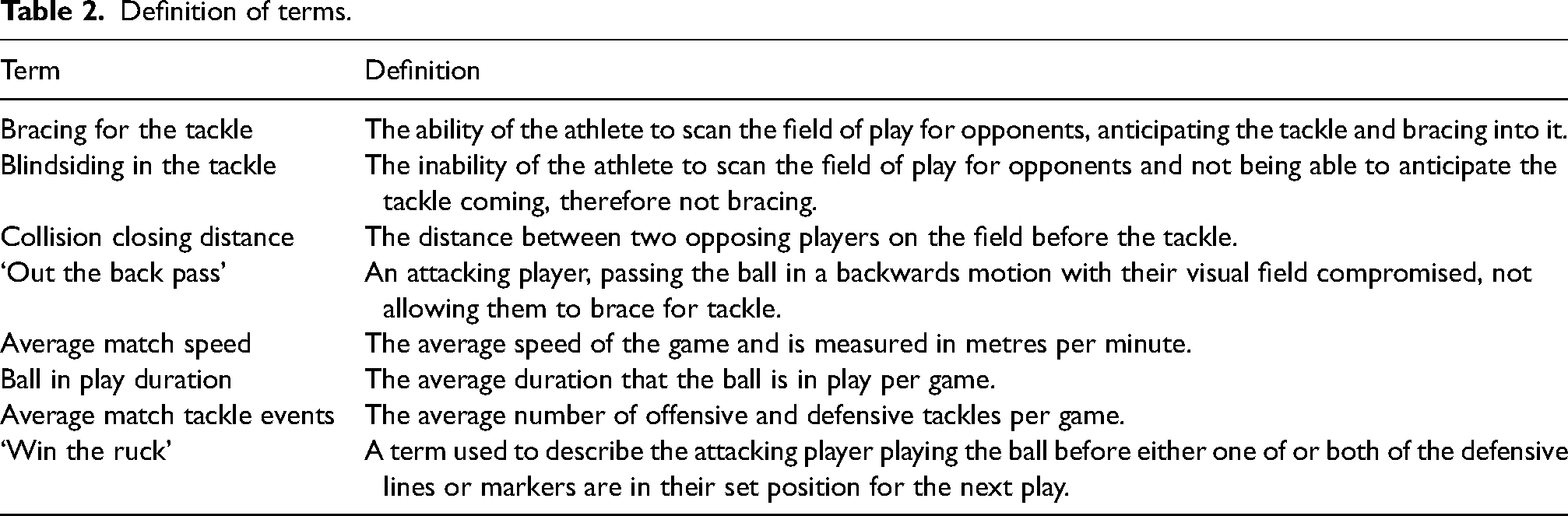
Dixon et al. 13 are among the few studies documenting simultaneous contact in rugby league literature. Here, players described this method as the optimal way to perform a tackle as it reduces the attacker's momentum, with a third player taking the legs away to complete the tackle. Other research in rugby league by King et al. 40 did not mention simultaneous contact but did document most tackles involving two or three tacklers. Nevertheless, a study by McIntosh et al. 41 reported in rugby union a greater risk of injury associated with two or more tacklers and the most significant risk associated with simultaneous contact, something which had yet to be mentioned in the subsequent rugby league literature. Unfortunately, the author did not explain this finding or the injury type caused by this tackle type. However, this inference was featured in a study by Cross et al., 42 where the number of players in the tackle and head-to-head contact ranked as variables in predicting concussion in rugby union. As such, the iterations by ‘Tyler’ and ‘Ralph’ echo some of the conclusions of the rugby union research to remove tackler and ball carrier heads from sharing air space to reduce concussions. Yet simultaneous contact appears coveted in rugby league match play, with the stakeholders’ iterations in this study aligning with that of players in the previous work. Consequently, future research should focus on the prevalence of simultaneous contact in match-play, its influence on match outcome, injury mechanisms, and the consequences of removing this type of tackle from match variables like ruck control.
Theme 2: tackle height – calibration is critical
The second theme explores stakeholders’ viewpoints on tackling height and their outlook on reductions to the armpit and waist regions. This section provided contrasting perspectives from stakeholders, with some noting an increased risk to the defender and how the game's ‘fabric’ could be affected, whilst others felt the need to address it. However, the process was deemed complex. The foundational research supporting the benefits of reductions in tackle height is illustrated, along with the lack of transfer in reducing concussion rates in the two published trials. The final segments assess whether the tackle height research performed in rugby union can translate to rugby league effectively without unintended outcomes. ‘John’ (P16) from the medical cohort and ‘Dexter’ (P15) from the tactical coaching group document this below. ‘John’: I think there still a big risk of getting head injuries or significant collisions when you are tackling below the waist because you know your heads going to be near their feet and knees hips so from my perspective I think those kinds of rules they sound good but whether they reduce head injury rates I'm not sure … I think that's protecting the attacker because you know your kind of you're steering away from the shoulders and the head and chest but I think it puts the defender at risk. (P16) ‘Dexter’: I know other sports going down the line of tackling under the armpit or under the belly button or whatever it is and you know I think that's got huge risks attached to it from a health and safety point of view as well as the whole fabric of their game. (P15)
‘Ralph’: I think that tackle height needs to be addressed I think they are addressing it and I think it's improving but the problem is that the sports there's a lot of moving parts that have to be addressed within that rule change, so the coaches need to understand how to teach it the players need to understand what it looks like and then the refs need to know how to ref it and the match review needs to know how to judge what it is and what it isn’t. (P6)
Tackle-related risk factors have been well documented in rugby league and rugby union literature.8,43 Both studies found a 3.2 and 4.25 higher likelihood of a Head Injury Assessment (HIA) when the tackler is upright or high contact types (tackler head to ball carrier head or shoulder) versus bent-at-the-waist or low contact types (below the shoulder), respectively. Other high-risk elements from the rugby union study comprise active shoulder tackles, front-on tackles, high-speed tacklers and accelerating tacklers. Therefore, recent concussion reduction strategies have aimed to lower the body position of the tackler into the tackle. Nevertheless, the published trials in rugby union of tackle height reduction to armpit height from shoulder height have not produced a conclusive decrease in the incidence of concussion. Despite materialising from established empirical evidence, Tonder et al. 44 showed a statistically non-significant 31% reduction in concussions over two seasons at the community level, and Stokes et al. 12 reported a 30% increase during a 6-week intervention during a championship rugby union season. However, there were several self-documented limitations of the championship trial that may have influenced the lack of reduction in concussions, such as the duration of time given to observe behavioural change, the length of the preparatory period given to stakeholders for the adoption of the laws, the mixed feedback given by stakeholders on the implementation of the laws and the lack of co-laws stopping ball carriers reducing height into contact. This has led to a more recent study applying the diffusion innovation theory (a framework for understanding how innovations are adopted) to examine the effectiveness of the adoption of new injury prevention strategies. 45
Nonetheless, the lack of transfer from theory to the implemented trials denotes the complexity of reducing concussions. Two principal explanations could be that the other high-risk elements take precedence or that armpit-level tackling does not prevent tackler and ball carrier heads from sharing airspace. As a result, further investigation is necessary to comprehend the full application of this law change.
In the previous theme, stakeholders demonstrated the uniqueness of the rugby league tackle and its role in controlling the ruck. Literature in rugby union has not discussed ruck control regarding tackle height; this may be in part due to the lack of significance this has on match play. 46 Consequently, the conclusions drawn from rugby union literature may not translate effectively into rugby league. Therefore, given the potential impact this rule change may inadvertently have on match play and, more specifically, ruck control, the unintended outcomes of reducing tackle height and its effect on ruck control need to be investigated. A further point raised by this theme is the mixed viewpoints of stakeholders. This area was deemed vital in adopting and implementing tackle height laws in the championship trial, along with the preparatory phase. Moreover, Hendricks et al. 47 highlighted the importance of collaboration between stakeholders and how crucial a collective approach is in altering and tackling behaviours positively. Before the 2024 season, the Rugby Football League 48 (RFL) announced changes in a reduction of tackle height to armpit height at all levels of rugby, with changes to the professional game as of the 2025 season.
Given that the stakeholder views in the current study represent the professional game before the announcement of the changes, the RFL has given stakeholders adequate time to prepare for the changes in tackle height in the 2025 season. Therefore, the adoption and implementation that were missing in the rugby union championship trial could potentially be mitigated. The points raised here offer fundamental considerations for policymakers and future work.
Theme 3: the fundamental factors influencing tackle-related risks
Throughout this theme, stakeholders explored tackle-related risks via the role of fatigue, bracing, blind-siding, and collision closing distances. Given the rugby-specific terminology used throughout this theme, a definition of terms is presented in Table 2. The first element, fatigue, consisted of two viewpoints. Firstly, some stakeholders agreed with the proposed match thresholds to reduce season-long match tackle load for players. Secondly, the contribution of match speed/ ball-in-play on fatigue is discussed by some stakeholders feeling the game is at a ‘breaking point’. Here, we display the objective of ESL in removing stagnant time and explore the crucial relationship between fatigue and injury. The next feature of this theme discusses the impact of bracing for collision, as stakeholders discuss the out-the-back pass as one of the most challenging positions for an attacker and some potentially overlooked attacking techniques to reduce concussions. Lastly, collision closing distances and their influence on the tackle intensity are investigated, with some stakeholders considering the distance to injury risk association (i.e., the larger the closing distance, the larger the injury risk). Below is the initial element of fatigue as cited from a medical perspective by ‘Grant’ (P4). ‘Grant’: if I’m being really truthful I would love to see less games I would love to see a Super League with the thing that increases risk is obviously a game and that's the greatest risk a player will be exposed … I think ultimately if we’re looking at a competition which helps player welfare and also assist the product of the sport less games is more of those two things. (P4)
This was followed by a tactical coaching outlook by ‘Ezra’, elucidating fatigue as a consideration from a match-speed position. ‘Ezra’: We're speeding everything up in the game and giving the players less time we’re decreasing the time for drop outs and scrums or we brought those rules in there's a shot clock now for how many seconds you can use this for that now there's a stoppage of 5 min from the end of the half the game has quickened up a set to such an extent for me that it is getting on the point of breaking the players … there's a breaking point for the players so I don't necessarily feel that it's just the collisions that are causing or potentially causing trouble it's the fatigue in the game the general fatigue in the game now. (P8) ‘Grant’ (P3) and ‘Ezra’ (P8) show two different factors of fatigue that influence tackle-related risks in different ways. As of the 2024 season, the rugby league brought significant law changes whereby match play thresholds were addressed.
11
The limits differed for forwards and backs, who will be limited to 25 and 30 full-game equivalents over 12 months in players above 22. As demonstrated here, the recent changes align with some stakeholders’ views to reduce overall collision exposure over a season and aid player welfare.
In the second iteration of this theme, ‘Ezra’ (P8) states that further changes to the in-game rules may prove detrimental by increasing the game's speed beyond players’ capacities. Rule changes removing stagnant time from match-play was a central focus of the RFL from the 2018 to 2020 seasons. This aimed to increase match-play speed to ensure a faster game and reduce COVID-19 transmission during the 2020 season. 29 However, tackle-related amendments increased the average match tackle events players were exposed to (36–42), along with the ball-in-play duration (BIP) (35.6 min to 46.3 min) and reduced the average speed of matches (102.4 m/min to 94.4 m/min). Through a pooled analysis, previous research has exemplified the increased risk of injury during a match versus training and, more specifically, concussion. 49 Yet, during this time period (2016–2022), Eastwood et al. 7 demonstrated no differences in concussion incidences despite a slight increase in the variation from 2019 to 2020, which then decreased from 2020 to 2022. One possible reason for no difference in concussion incidence could relate to the crucial interplay between BIP, average match speed and total match play tackles. The fatigue generated by manipulating total tackles, BIP and average match speed has yet to be investigated. As such, this is an area of considerable interest given the significant impact fatigue has on reducing tackle technique27,50 and the role of poor tackle technique in higher head impacts. 51 Therefore, future research and policymakers should aim to discern the vital interaction of match outcomes and their role in the fatigue they create.
The second dimension of collision-related risk was bracing and blind-siding, as ‘Grant’ (P4) from the medical staff states that an ‘out-the-back pass’ is one of the most dangerous positions to be in as you are blinded from the collision. ‘Grant’: As an outside back in particular half back and the fullback that's the ball-playing fullback that pass when you are blinded from your opposition so an out-the-back pass is one hundred per cent probably the most challenging and potentially dangerous position for a player to be in … they are blinded to when that contact will happen so their reaction time will be different if you’re looking at something and you see it you can brace yourself if you don’t know it's coming. (P4)
Another tactical coach, ‘Tyler’ (P3), reiterated this point, citing that there are some overlooked techniques for ball carriers to help reduce collisions and concussions. ‘Tyler’: It's also some techniques that we need to teach our people carrying the ball and when they’re in offence that can help reduce collisions and concussions as injuries you know so there's techniques there that I think sometimes we overlook. (P3)
The last point was by another tactical coach ‘Ezra’ (P8), relating to spatial awareness and how this can help players avoid collisions. ‘Ezra’: Avoiding collision is obviously another really big art so Player L … was the best avoiding collisions I've ever seen because of his spatial awareness his understanding of where people were coming from. (P8)
Dixon et al. 13 is the only study to acknowledge bracing for impact entering the collision in elite rugby league. Here, players documented their experiences of blind-sided collisions, stating that the highest-risk collisions are the ones they cannot see coming, especially for the ‘adjustable’ position. This experience illustrated by players in the previous study correlates to the experience described by ‘Grant’ (P4) as potentially the most dangerous position for a player. Nevertheless, the RFL has changed the on-field guidance regarding high tackles and dangerous contacts. 52 The stakeholders agree that these types of collisions put players at risk and that rule changes like those already enacted by the governing body can only benefit player welfare and the game's safety. However, it is clear from a coaching perspective that some skills and techniques are potentially being overlooked regarding carrying the ball and avoiding the tackle altogether. Few studies document injury risks in collision sports and the role of vision and spatial awareness. A study by Kung et al. 28 explored the severity of head impacts and the potential role of visual performance, oculomotor behaviours and anticipation. In this instance, dynamic head stabilisation through the anticipation of contact and bracing of the head and neck are suggested to reduce the risk of concussion. Unfortunately, a plethora of current literature assessing visual performance characteristics has examined deciphering this role post-concussion. 53 A systematic review reported a significant relationship between higher neck strength and lower head accelerations in soccer. 54 Unfortunately, this has not translated into a relationship between neck strength and sports-related concussions in rugby union. 55 Given the opinions of stakeholders and the lack of research around vision and bracing, this area warrants further research.
The final element of collision-related risks centres around closing distances and increasing speed into the collision, as Frank (P10) from the strength and conditioning group cites below. ‘Frank’: If you've got a bigger closing distance you know and the same mass of a player coming in can they achieve a greater velocity given a bigger closing distance so obviously that the impact of that collision is going to be is going to be higher so maybe you could infer from that was going to have impact in terms of greater risk but equally if you want some of the most innocuous contact based injuries come from smaller closing distances especially head based ones. (P10)
Collision closing distances have been researched extensively in American football, with mixed results.56,57 Risks associated with large collision closing distances have been attributed to the greater force exerted by the two players increasing their speed into the collision. This relates to two of the four major variables associated with concussion, being a high-speed or accelerating player, which has previously been described in the rugby union literature. 58 Despite the possible connection of collision closing distance to increased risk of injury, it has been proposed by Clark et al. 59 that the greatest proportion of well-anticipated impacts were from kick-offs. The greater anticipation from kick-offs may be due to the increased vision of knowing where the tackle will be made. As documented in the current study around bracing, stakeholders have stated that anticipation is crucial in allowing players to prepare for impact. This would suggest that future research should aim to test the hypothesis of greater risk or anticipation from kick-offs to help reduce tackle-associated risks in rugby league.
Theme 4: the graded exposure and philosophical approaches to contact training and games
The fourth theme pivoted around the coaching philosophies of contact training, exploring the benefits of coordination from tackle training as opposed to the risk of exposure. It also documents the differences in defensive coaching systems and displays how this affects the types and intensities of players’ tackles. It then explores the graded exposure of tackle training and how this prepares players for match-play tackles. Finally, we examine the differences between collision and wrestle training, noting their role in grading exposure and the influence this may have on any future law changes. To start, ‘Michael’ (P17) offers some insights from a tactical coaching perspective into coaching philosophies. ‘Michael’: He was an offensive-based coach loved it we practice for hours and hours of attack and you know I think we practice hours and hours of set plays tap plays and very minimal defensive stuff you know we’d maybe honestly for a year and a bit under him I can't really remember doing too many contact sessions and that shows in our performances though because we used to score 30 and let in 40. (P17)
This iteration was followed by ‘John’ (P16), who provided a medical viewpoint on the role of defensive-based coaches. ‘John’: If you had a coach liked contact sessions you know you're going to be more exposed to it in training so therefore potentially you know collision-related injuries will be higher in training but again you could argue a coach would certainly argue you know the more you do the more we do in training though maybe better coordination technique everything like that is going to be then in match day. (P16)
This point was furthered by ‘Ezra’ from the tactical coaching group, who documented the differences in coaching systems below. ‘Ezra’: When you play against Club T at the minute they were a passive style defence they're not coming at you they've decided to do that so there's a different collision level in games like that there's a different stress because of the way they play an attack on the other side of the game as well it was completely different playing Club T when you are attacking them as it is to Club H or even Club F you know change their style and everything else and more aggressive. (P8)
In the initial assertions of this theme, specific stakeholders from different perspectives feel that the coach can guide the types and intensities of tackles that players make, not only in training but also in match play. Gabbett and Ryan (2009) demonstrated how tackling technique proficiency increases with the number of games played. This could establish a relationship between the number of tackles performed and competency in performing them. Therefore, this adds some validation to the concept mentioned by “Michael’ (P17) and ‘John’ (P16) that doing more tackle training sessions may induce better timing and coordination when performing the tackle and is not something to be avoided. However, what is unclear is the optimal dose of tackles to gain the benefit of coordination and timing whilst attempting to limit injury exposure. The observation of ‘Ezra’ (P8) demonstrates a further standpoint of the influence of coaching systems on match play tackles. It is captivating, given the bearing of completed tackles on match outcomes
60
and how rugby league literature has yet to investigate the impact of contrasting defensive systems on injury incidences and success. Future research should aim to quantify the styles and systems of defences to better understand their influence on tackles and match outcomes. Below documents the next segment of this theme from ‘Phil’ (P15) from the medical group, which discusses wrestle versus collision. ‘Phil’: Wrestle. I don't describe wrestle as contact really because there's no yeah it's different I think it biomechanically it's a different thing it's not a collision (P15)
This was followed by ‘Dexter’ (P5) from the tactical coaching group discussing contact and collision. ‘Dexter’: In the past I’ve used contact, collision and combat as a sort of three-ways and really the only true combat is in the game where there's a real outcome … contact is more skill-based development of technique not overly competitive and certainly not a lot of leg speed or big collision then you can progress in a collision where it's controlled environment but a bit more spice still a bit more intent or energy. (P5)
Here, ‘Dexter’ (P5) discusses three intensities of contact, which resonates with ‘Grant’ (P4) from the medical group, who discusses being able to periodise technique, pad work, and bodies in front. ‘Grant’: From a physio point of view we know that the collisions is not gonna be heavy there's no separation there's no distance between contact everything's close so it's all about technique of movement it's all about making correct contact taking place … the work that we would do with shields bodies in front taking to ground would all be based around players not leg driving for example which would aid the ability of a defender to take the player to ground without having heavy contact so it's an easier way to be able to periodize and plan contact progression without pushing the boundaries. (P4)
Above, ‘Phil’ (P15), ‘Dexter’ (P5) and ‘Grant’ (P4) document the differences between wrestle and collision, the different terminologies applied to the contrasting parts of the tackle, intensities of contact and their utilisation in the periodisation of training programmes. This is a novel theme in rugby league literature as an insight into how tackle training is performed. This also provides insight into the demands stakeholders feel the contrasting sessions may have. Previous literature has documented the variations of exercise-induced muscle damage (EIMD) markers and tackles/high-intensity running during rugby league match play. 61 However, despite the progression of microtechnology in recent years, the validation of such technology to quantify the tackle has presented mixed results. 26 Therefore, subsequent research may apply the current theme and previous works, such as Mullen et al. 62 and Norris et al., 63 where tackle intensities have been altered to understand the methods that may adequately quantify the tackle. This theme also demonstrates a separation in training; as such, some of the risks associated with performing the tackle may be separated into higher and lower-risk tackle training modalities. For example, as ‘Grant’ (P4) discusses, ‘technique-based’ sessions are sooner in the periodised schedule than ‘bodies in front’, which may be deemed higher risk. As of the 2024 season, load guidance for contact is set to be introduced by the RFL. 11 Similarly, other governing bodies, such as World Rugby, have enacted similar guidance for weekly contact loads for controlled contact sessions (40 min) and full contact sessions (15 min). 64 Here, World Rugby has provided guidelines for the volume of sessions in time and differences in intensities between full contact loads and controlled contact loads. However, although the current guidance for the RFL does not state specific loads, the current theme offers insights that may influence rugby league-specific guidance. Given the similarities in stakeholders’ perspectives of how the tackle should be trained, the exposure of drill type to each position, along with the total number of tackles in each drill, should be a focal point of any future load guidance. Moreover, research in American football has shown how drill type can influence position-specific head impacts in contact training. 65 Collectively, this theme offers a further understanding of the graded exposure of tackle training, load guidance for rugby league and the necessity to quantify tackle intensity.
Theme 5: replacing toughness with resilience - the impact of game identity
The final theme considers how a graded exposure to the tackle can assist in mentally preparing athletes for contact, with tackle drill type forming a central point of significance. Given that previous work had not included this area, the collision closing distance of the drill and technical execution in drill type appear crucial. A second key variable emerged in the form of emotional monitoring and the role this has on fatigue that ensues from the highs of elite sport. The final phase of this theme explores the emphasis on mental resilience replacing mental toughness and the advancements in mental literacy amongst ESL players, reducing modern-day stigmas. Here, the game's identity plays a vital role in understanding how to advance research. Firstly, from the medical group, ‘Grant’ (P4) discusses the mental preparation for a collision driven through physical exposure. ‘Grant’: I do believe that coaches physios S and C's are becoming more and more and more aware of the importance of being mentally prepared to play … that mental preparation can be driven through physical exposure. (P4)
The graded exposure articulated by ‘Grant’ (P4) is stated to enhance mental preparation for collision. However, the emotional effect of entering a peak state for collision is unknown, as a strength and conditioning coach ‘Marcel’ (P13) discusses this below. ‘Marcel’: I always said there probably needs to be a bit more research as just the emotional fatigue that comes in. How much it takes you to get up for them games the nervousness before the game that type of thing, so you do tend to see those. Well you'll spot the weeks when they're going to be quite high and the ones where they're going to be quite low. (P13) ‘Marcel’ (P13) conveys collision sports’ emotional highs and lows and the subsequent fatigue that may ensue following an emotionally intense game. The essence of players being able to manage this is resilience, which was an additional part of this theme, shown by ‘Kyle’ (P9) of the medical group. ‘Kyle’: I think to be mentally tough it's probably linked to resilience … I think traditionally people would have looked at mentally tough and gone oh he's picked up an injury here or he's got a concussion but he's mentally tough he's not gonna say something he's just gonna carry on but I think mentally tough to have the bravery and honesty to say something is not right. (P9) ‘Kyle’ (P9) demonstrated this definition, connecting mental resilience to having the bravery to be honest and communicate matters. ‘Dario’ (P19) of the strength and conditioning group reaffirmed this point when verbalising the reduction in mental health stigmas across the game. ‘Dario’: I think there was like we said a long time ago there was a stigma on it especially on male athletes about seeking psychological help and talking to someone … I think it's changing a lot now that speaking and opening up there's a lot of top athletes that are retired now that have come out and talked about mental health issues that they've had not just from collision-based injuries but just being injured in general though it's affected their mental health. (P19)
In the first instance of this theme, ‘Grant’ (P4) demonstrates how rugby league athletes are mentally prepared to tackle through gradual physical exposure. Previous research by Stokes et al. 66 suggested a graded exposure to tackle training following a period of restricted training. Although psychological considerations were explored during the enforced modified training period, the link between the psychological graded exposure was not made. In a previous theme, ‘Grant’ (P4) also discussed a periodisation of contact training as part of the coaching philosophies. This section mentioned technique, pad work and bodies in front, which ‘Dexter’ (P5) conveyed as contact, collision, and combat. Future research should not only aim to decipher the optimal ways to prepare players for the tackle demands of a game from physical respect but, as this iteration demonstrates, from a psychological preparation standpoint. It is not within the scope of the current study to comprehend this; however, the quantification and periodisation of tackle drill type may be of interest to future work. Yet, there is a plethora of research investigating the periodization of return-to-play protocols in other sports combining cognitive and physical loads 67 ; as such, this work may highlight aspects of the control-chaos continuum that may translate to the periodisation of rugby league tackle training.
A supplemental area mentioned above by ‘Marcel’ (P13) is the need to quantify the emotional fatigue of games, an area that has not yet been investigated in elite rugby league. However, most literature discussing emotions and fatigue mentions cognitive workloads, burnout, or positive and negative emotions.68–70 Given the scarcity of literature discussing the emotional highs and lows in elite rugby league and the apparent importance placed on this component by stakeholders, this area warrants further investigation.
Mental resilience and psychological stigmas were central in this theme's third and fourth sub-dimensions. Several studies have explored the role of mental toughness and psychological well-being in rugby league.32,33,71 In this research, they noted the correlation of mental toughness with successful sports performance and the prevalence of depressive and anxiety symptoms amongst Super League players. Similarly, in rugby union and other collision sports, mental toughness has been viewed through the lens of developing it and its associations with successful athletes.72,73 Being mentally resilient as opposed to mentally tough was a term preferred by many participants. Key descriptors of mental resilience by ‘Kyle’ (P9) were the ability to be honest, brave, and confident enough to voice injuries. The means to be confident enough to speak up about issues was a component that stretched across two psychological themes, with current-day stigmas being the second. Green et al. 74 have demonstrated the stigma around players not wanting to be perceived as needing psychological assistance and, therefore, not seeking it out. This belief was echoed by Kola-Palmer et al., 34 who stated that fear and shame act as barriers for players seeking psychological help, but those who did have a greater mental literacy. Stakeholders feel that stigmas towards seeking psychological help are decreasing due to more athletes discussing the subject area, as ‘Dario’ (P19) exhibits. This may be in part due to an enhanced mental literacy among the population of rugby league athletes, specifically in the ESL. This is of the utmost importance and should be considered key for future research as Kola-Palmer et al. 75 found the percentage of ESL players experiencing common mental health disorders in two different surveys to be 45.4% and 38.5%, with 27.3% and 23.7% experiencing severe symptoms.
The final note of this theme recorded the viewpoints of some stakeholders who feel that the identity of rugby league revolves around a fundamental aspect of it as a collision sport. ‘Mason’ (P18) of the medical group demonstrates this below. ‘Mason’: I feel actually the sport of rugby league needs an identity I think we need to differentiate ourselves from rugby union and from other sports and one of the exciting things that I find with rugby league and having played rugby league was the collision aspect and I think the rule changes that are happening currently are I struggle to see how far we can take those rule changes before it has an impact on the identity of rugby league. (P18).
The above exemplifies a common theme discussed by stakeholders, noting the tackle aspect as key in identifying rugby league from other sports. A recent study by Tonder et al. 14 highlighted how ‘rugby culture’ may be perceived by rugby union stakeholders, describing a ‘gladiator effect’, ‘boys’ culture’ and ‘boys don’t cry’ themes with serious injuries, regularly failing to acknowledge or disclose concussions. Whilst these themes may be perceived negatively, the current theme offers a fresh perspective, examining the crucial paradox between rugby league needing to change certain aspects within the sport to aid the safety and spectacle of the game whilst maintaining as much of its identity as possible. The identity in the current context aligns with previous work documenting the masculinity associated with full-contact team sports along with the identity of working-class men in rugby league communities from northern England and south Wales. 76 Allowing them a sense of belonging and solace through their history of unbroken working-class traditions. Therefore, considering the role of stakeholders in adopting and implementing rule changes, the current theme offers further insights into how the game's identity is viewed from a stakeholder standpoint.
Practical applications
The findings from the current study inform future considerations specific to stakeholders in contrasting manners. The study has identified important perceptions of optimal ways to perform the tackle event in rugby league from a tactical coaching standpoint. This may inform coaching education programmes in rugby league (‘Tackle Safe’) 77 and lend some transferability to rugby union education programmes like BokSmart and Rugby Ready.78,79 Furthermore, the study has assisted in highlighting some of the highest-risk events during match play, offering viewpoints that aid in advancing injury prevention strategies (neck strength and bracing). Moreover, from a strength and conditioning and sports psychology perspective, the conclusions present worthwhile accounts of the process required to grade tackle exposure in training. A crucial element here is tackling drill type, the periodised exposure to each level of drill and creating a comprehensive fingerprint for each drill to understand risk association, aiding injury prevention and finding alternatives to high-risk drills.
Strengths, limitations & implications
As with all qualitative research, this study will not have captured all the stakeholders’ views within the ESL and reflect the views of those who took part. Consequently, the experiences and perceptions provided here are not claimed to be discernible to all involved in elite rugby. Notwithstanding this, the accounts described here offer a credible and in-depth perspective of stakeholders’ tackle experiences due to the flexibility of the semi-structured interviews. As with all research, there are limitations to the current study. A primary limitation of the current study could be viewed as the lack of generalisability of the findings due to the limited number of stakeholders that participated, which was 19. However, the study did provide an equal representation of stakeholders across the groups, achieving data saturation through the exploration of diverse perspectives. Therefore, we are confident in our sample size to provide thorough insights gathered through our rigorous methodological approach. Moreover, the stakeholder group in the current study is specific to men's rugby league as no stakeholders from the women's game were recruited. As a result, the findings should be taken within the context of the sample they were taken from with future research endeavouring to seek perspectives from this cohort. Qualitative research aims to bridge the gap between academic research and the applied world. As such, a mixed methods approach, utilising Delphi polls and surveys discussing the themes documented here with further stakeholders, may aid future work in maximising the transferability of findings. Furthermore, experimental and cohort studies may provide additional insights into the themes documented here. Nevertheless, the transferability of the current findings may be considered by readers, as is commonplace with qualitative research. As such, the following areas are encouraged for future research:
The influence of the optimal tackle (simultaneous contact with a third person) on match speed and team success. The influence of altered tackle height in reducing concussions and the subsequent impact on match-related characteristics, e.g., controlling the ruck, match speed, and tackle technique performance under fatigue. The impact of vision and neck strength in ‘bracing’ and tackles from ‘blind spots’ and how this affects the incidence and severity of concussions. The role of collision closing distances and anticipation in concussion incidences and severity. The graded exposure of tackle drills in the return to contact process and the optimal exposure (intensity and volume) for mental and physical performance. The role of tackling drill type on tackle-related injury risk.
Conclusions
The current study was the first of its kind, providing valuable insights into ESL stakeholders’ viewpoints on the rugby league tackle to gain further understanding of this event. This research has contributed several key elements that have moved the literature forward. Firstly, this study has provided a foundation for future work, bridging the gap between theory and practice. It also highlights the complexity and multifaceted nature of the tackle. Overall, the stakeholders’ perspectives offered here feature themes novel to rugby league tackle literature, such as tackle height, match speed, fatigue, and the graded exposure of the tackle for mental and physical performance. While reiterating some themes documented in preceding work, in particular, simultaneous contact, bracing blind-siding and collision closing distances. The final principal facet demonstrated throughout was the importance stakeholders placed on the identity of the game and culture associated with the working-class traditions of rugby league. This may be key when attempting to adopt and implement changes within the game to ensure they align with the identity of the sport to garner the maximum amount of support. To conclude, this research identifies the consequential value of attaining collision sports stakeholders’ perspectives, with the implications of this study transcending rugby league and informing policy and practice for other collision sports.
Supplemental Material
sj-docx-1-spo-10.1177_17479541241296978 - Supplemental material for Physical collisions during elite rugby league match play and training: A stakeholder's perspective
Supplemental material, sj-docx-1-spo-10.1177_17479541241296978 for Physical collisions during elite rugby league match play and training: A stakeholder's perspective by Andrew J Dixon, Martin A Littlewood, Colum J Cronin, Craig Twist and Graeme L Close in International Journal of Sports Science & Coaching
Footnotes
Acknowledgements
This research received no grants or funding from public, commercial, or not-for-profit sectors. The authors thank all participants for taking part.
Confirmation of ethical compliance
This study was performed following national legislation and established ethical standards.
Declaration of conflicting interests
The authors declared no potential conflicts of interest with respect to the research, authorship, and/or publication of this article.
Funding
The authors received no financial support for the research, authorship, and/or publication of this article.

Supplemental material
Supplemental material for this article is available online.
References
Supplementary Material
Please find the following supplemental material available below.
For Open Access articles published under a Creative Commons License, all supplemental material carries the same license as the article it is associated with.
For non-Open Access articles published, all supplemental material carries a non-exclusive license, and permission requests for re-use of supplemental material or any part of supplemental material shall be sent directly to the copyright owner as specified in the copyright notice associated with the article.
