



Abstract
The coaching and performance context in women's rugby is not well understood, despite growing popularity worldwide. The aim of this study was to describe the knowledge, attitudes and tackle training practices of women's rugby coaches in relation to tackle safety and performance. A globally distributed online survey exploring coaches’ knowledge, attitudes and practices towards tackling women's rugby was completed by 357 coaches (mean age 41 ± 0.6 years) from 58 countries. The cross-sectional survey was distributed from March 2023 to June 2023. Survey development was guided by the Health Action Process Approach and informed by coaching experts, research evidence synthesis, and guidelines for international tackle safety programmes. Coaches believed that the risk of tackle injury in women's rugby is high and that proper tackle technique for safety is very important. More than 75% of coaches had never completed a tackle-specific training course, with only 39% aware of the availability of such courses. Time spent on controlled-contact and full-contact activities varied from 0 to 40+ min per week, averaging 10–20 min for both types of training. Barriers to the effectiveness of tackle training related to sociocultural factors, coach knowledge gaps, training environments, and player training considerations. Coach education, improved infrastructures, and physical development were ranked the highest priorities for improving tackle safety and performance. These findings inform future implementation strategies for tackle safety and performance in the context of women's rugby, highlighting the need to involve coaches in providing practical solutions, and the role of education and institutional/organisational support in facilitating such improvements.
Introduction
Women's rugby union (henceforth called rugby) is one of the fastest-growing sports worldwide. 1 Rugby is a highly complex sport requiring a broad skill set, with tackling being the most frequently occurring technical–physical match event (averaging 280 tackle events per match).2 The frequent and dynamic nature of the tackle exposes players to the highest risk (67%) and burden of injury (615 days absence per 1000 h), compared to other facets of play.2–4 Safe and successful participation in rugby is dependent, to a large extent, on players’ ability to consistently execute proficient tackling techniques. 5
The physical, tactical and technical ability to engage safely and effectively in the tackle is largely developed during training, which is led by coaches. 6 Due to the high injury risk, the professional development of coaches to prevent tackle injuries remains an important priority for sport governing bodies such as World Rugby, through tackle law changes and the advancement of tackle safety education programmes including Tackle Ready.7,8 The success of tackle safety programmes when implemented in the context of real-world sport is reliant on coach and player adherence. 9 The coach is considered an interpersonal actor (i.e., an actor closest to the player) in a widely accepted socio-ecological view for implementing interventions. 10 Cross-sectional surveys have been an important research tool for understanding coaches’ knowledge, attitudes and practices towards tackling and have been studied in youth and men's rugby coaching populations,11,12 and have highlighted key determinants in the implementation of injury-prevention strategies in junior sports.13,14 The Health Action Process Approach (HAPA) model 15 has been applied in rugby 16 and football17,18 to help understand the adoption and maintenance of injury-prevention practices. The model proposes two distinct phases: forming an intention (the motivation phase) and when the intention is translated into action (the volitional phase). 15 Coaches tackle training intentions are influenced by their task-self efficacy (belief they can adopt a practice), outcome expectancy (the belief the practice will result in a specific change) and injury risk perceptions. Intentions translate into action through processes of action and coping planning, influenced by perceived maintenance self-efficacy in response to barriers and facilitators. Notwithstanding the assumed advantages of these tackle safety strategies (e.g., coach education and law changes), influential factors like coaching perspectives are frequently overlooked, as well as the broader sociocultural context in which women's rugby is situated. 19 While women's rugby has experienced significant growth in participation and professionalism, the associated research literature still trails behind that of men's rugby, with less than 2% of coaching research in rugby focusing on women. 6 To date, no studies have examined the perspectives of women's rugby coaches towards tackle safety or performance. It is important that tackle safety measures are aligned with the knowledge, attitudes and practices of coaches in women's rugby. 10 Therefore, the purpose of this study is to describe the knowledge, attitudes and perceived tackle training practices of women's rugby coaches in relation to tackle safety and performance.
Method
Study approach, design and procedure
This study was informed by a pragmatic approach. 20 A pragmatic philosophy can often be associated with mixed method research designs, where research questions drive the methods selected and employed in a ‘what-works’ focused approach. 21 Rather than focusing on objective, fixed truths, the current pragmatic approach sees the researcher as a co-constructor of knowledge and focuses on providing contextually relevant solutions to real-world problems in specific contexts. 22 Within this paradigm and given the desire to generate new, comprehensive insights into coaches’ perceptions of tackle safety and performance beliefs and practices, a cross-sectional survey design was conducted to integrate both quantitative and qualitative data. 22 The study was reported according to the Checklist for Reporting Results of Internet E-Surveys. 23 Ethical approval was obtained from the Trinity College Dublin, Faculty of Health Sciences Research Ethics Committee prior to conducting the study (Application number: 20220604).
Participants
The eligible population comprised current coaches of senior women's rugby (≥ 18 years) with the following inclusion criteria: aged 18 years or older, primarily coaching senior women's rugby for at least one year, and legally able to provide consent to participate in the present study.
Survey development
The survey tool was adapted from previous cross-sectional surveys of youth rugby coaches22–24 and an extensive research review of women's rugby.7,27 The survey tool aimed to capture demographic data as well as data on coaches’ self-reported knowledge, attitudes, and practices in relation to tackle training. Constructs of the HAPA model 15 (e.g., injury risk perceptions, outcome expectancies, action self-efficacy, action planning) were used to support question design. The survey included 34 questions regarding: (i) coaches’ demographic information, (ii) coaches’ tackle training education and knowledge, (iii) coaches’ attitudes in relation to tackle safety and performance, and (iv) coaches’ reported tackle training practices. To quantify tackle training practices, coaches were asked about the frequency, duration, and type of tackle training prescribed. Dichotomous responses (yes/no), rank ordering and the ordinal five-point Likert scales were used to quantify reported knowledge, attitudes and practices. This was supplemented by open-ended questions to allow for further feedback (e.g., perceived barriers to tackle training).
To ensure the validity and relevance of the survey with ‘real-world’ coaching practice in women's rugby, an expert panel was established consisting of coaches (n = 2), rugby sports scientists (n = 2), rugby medical practitioners (n = 2) and a coach educator from a national governing body (n = 1) from Australia, Ireland, New Zealand, South Africa and the United Kingdom. The panel was selected based on recommendations from national representative bodies on their knowledge of the field, publications in this area, leading national governing body policy and a spectrum of coaching, playing and professional experiences. Panel members were asked to offer independent assessments on the perceived appropriateness, clarity, and face validity of questions. Items were either accepted, rejected, or modified based on majority opinion. Five questions were modified for wording, three questions were removed for redundancy, with alternative questions added regarding access to additional providers, components of tackle preparation, and barriers to planned training practices. This procedure was based on published guidelines for questionnaire development and mirrored formats used in previous rugby surveys.26,27 Subsequently, in August 2022, the questionnaire was piloted on a convenience sample of current women's rugby coaches at various levels of competition (n = 6) to expose any ambiguities in the questions and to assess how long, on average, the survey took to complete. Based on the suggestions, additional response options were added (e.g., ‘not familiar’) and minor modifications were made to the wording. After revision by the expert panel and piloting, the survey was professionally translated from English into French, Spanish, and Japanese, based on the availability of translators experienced in rugby terminology.
Data collection
Contact with potential participants was made via recruitment email to mailing lists from world and national rugby governing bodies. A promotional e-poster was also shared on rugby social media platforms. 28 The personal Twitter (now renamed as X) accounts of the study authors were used to share a predesigned tweet containing a list of potential high-profile rugby Twitter accounts to target. Across four weeks, 10 tweets were posted. The survey was launched in March 2023 and remained open until June 2023. A participant information sheet was presented at the beginning of the survey, followed by a consent form which participants were required to accept to commence the survey. As all data were confidential, participants were informed that they would not be able to withdraw their responses once submitted. Responses were collected with Qualtrics software (Qualtrics, Provo, USA). The survey is presented in Supplemental Appendix 1.
Data analysis
Data were screened to check for duplicate entries. Survey responses not completed in English were translated into English. Open-ended responses in languages other than English (n = 45) were professionally translated to ensure all qualitative information was fully included in the data analysis. All data were captured in an Excel sheet. Statistical analysis was performed using Excel, STATA 17 (StataCorp, College Station, TX USA) and Prism 6 (GraphPad Software, USA). Categorical variables and Likert scale items were presented as means, medians, interquartile ranges, frequencies and percentages as data are ordinal. 29 Free-text responses were analysed using inductive-deductive, semantic thematic analysis against constructs of the HAPA model.15,30 Thematic analysis involved a six-step process, including data familiarisation, coding, theme selection, refining and defining themes, and finalising the report. 30 Line-by-line coding was applied to the open-ended responses by one author (KD), and reviewed by another author (FW), allowing codes to be labelled, agreed, and refined. Data from responses that covered more than one theme were reported accordingly. Responses that did not contain sufficient information to provide meaning (<1% of responses) were excluded from the analysis. An iterative process was used to compare and organise codes into themes using affinity diagramming. 31 Several iterations of the themes were mapped and reviewed by two authors (KD and FW), and refined to form subthemes. Researchers analysed the data independently and challenged interpretations and assumptions collaboratively with the wider research team. There was a high level of agreement between authors, with only a small number requiring adjustment (<5% of codes). Representative quotes were extracted and presented verbatim for each theme. Numbers shown for open-ended responses refer to the number of codes generated for each theme and subtheme.
Results and findings
Demographic information
The demographic characteristics of the final sample are displayed in Table 1. Of the 357 participants, most coaches were white European (69%, n = 241), men (65%, n = 232), coaching in European rugby playing nations (54%, n = 194), with more than 10 years coaching experience (45%, n = 159).
Demographic characteristics of coaches, n = 357.
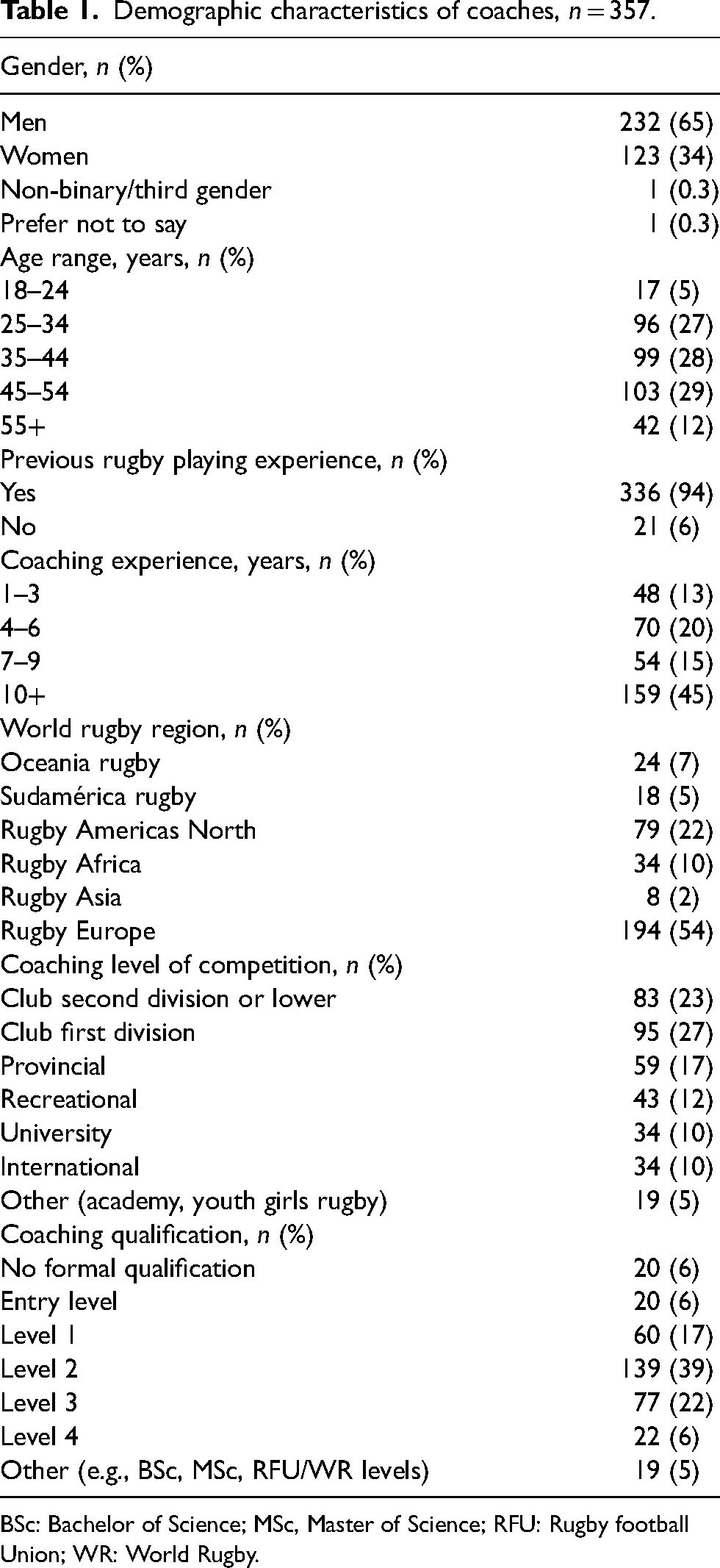
BSc: Bachelor of Science; MSc, Master of Science; RFU: Rugby football Union; WR: World Rugby.
Participant ages ranged between 19 and 68 years (mean 41 ± 0.6 years). Coaches responded from 58 countries. Most participants were from Europe (54%, n = 194) and North America (22%, n = 79), followed by Africa (10%, n = 34), Oceania (7%, n = 24), South America (5%, n = 18) and Asia (2%, n = 8) (Figure 1). Most of the sample identified solely as white (79%, n = 282), 6% as Black and 2% as Asian, with the balance identifying as a different ethnicity, multi-ethnicities or preferring not to disclose. Most coaches had previously played rugby (94%, n = 336) and had completed a form of coaching qualification or education (94%, n = 337). Many participants worked with various levels of competition within women's rugby, with the majority indicating primary involvement at club first division level (27%, n = 95), as well as club second division or lower (23%, n = 83), provincial (17%, n = 59), recreational (12%, n = 43), university (10%, n = 34), and international (10%, n = 34). As well as coaching senior women, 5% of participants (n = 19) worked with ‘other’ groups including the academy, and youth girls teams. Most of the coaches surveyed (79%, n = 281) reported having completed a sport-related first aid/injury prevention course.
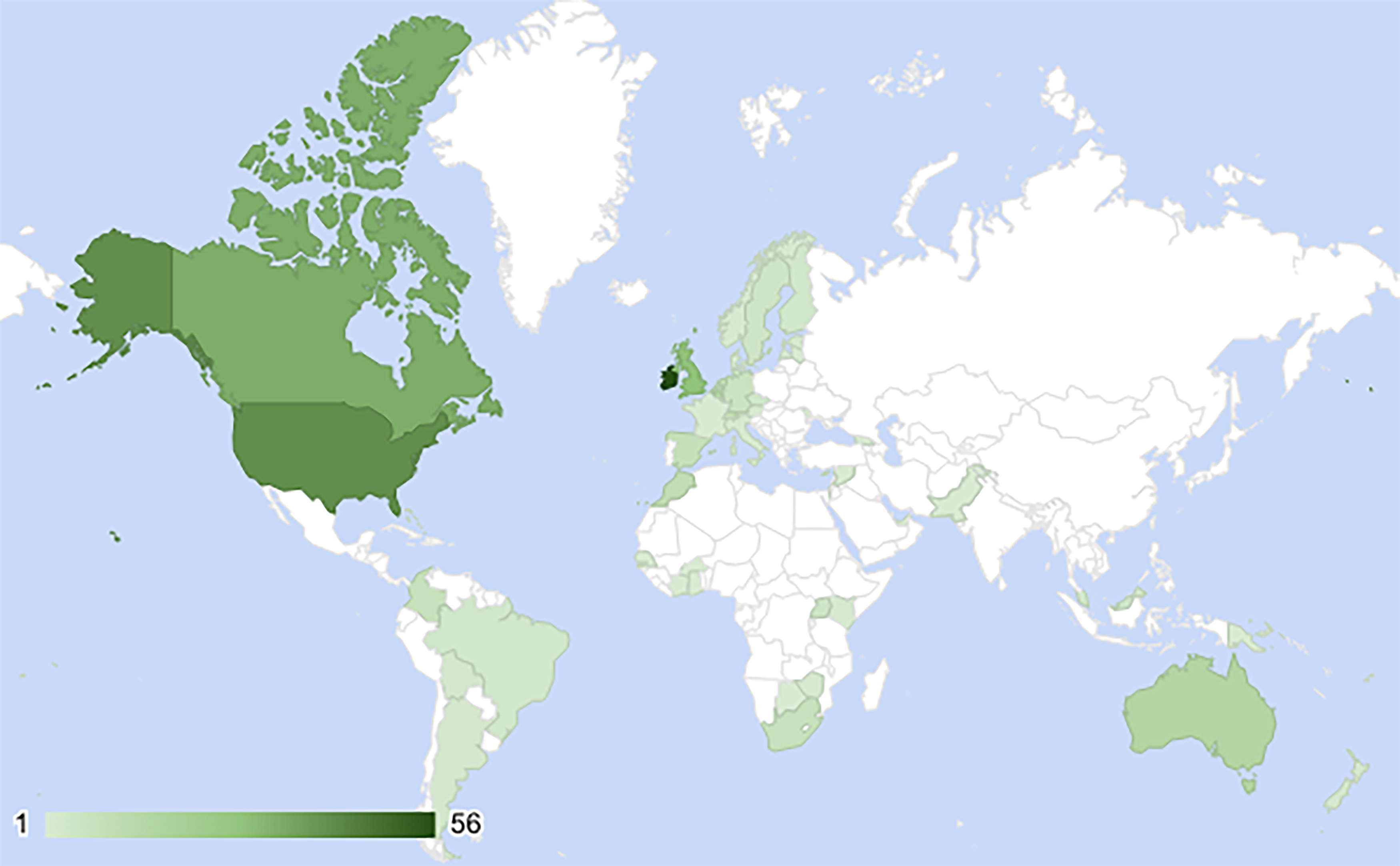
Global distribution of the 357 coaches who were surveyed. A total of 58 countries were included with an increase in colour density indicating an increased number of participants.
Training education and knowledge
Across a playing season, resources most often used to expand coaching knowledge and training methods were coaches’ own playing experience (60%, n = 213), and informal/unstructured learning from other coaches (53%, n = 189). The frequency of use of coaching resources is reflected in Figure 2. Most participants indicated that they had never completed a tackle-specific workshop or course (76%, n = 270) and to their knowledge did not have access to a specific tackle workshop or course (61%, n = 218).
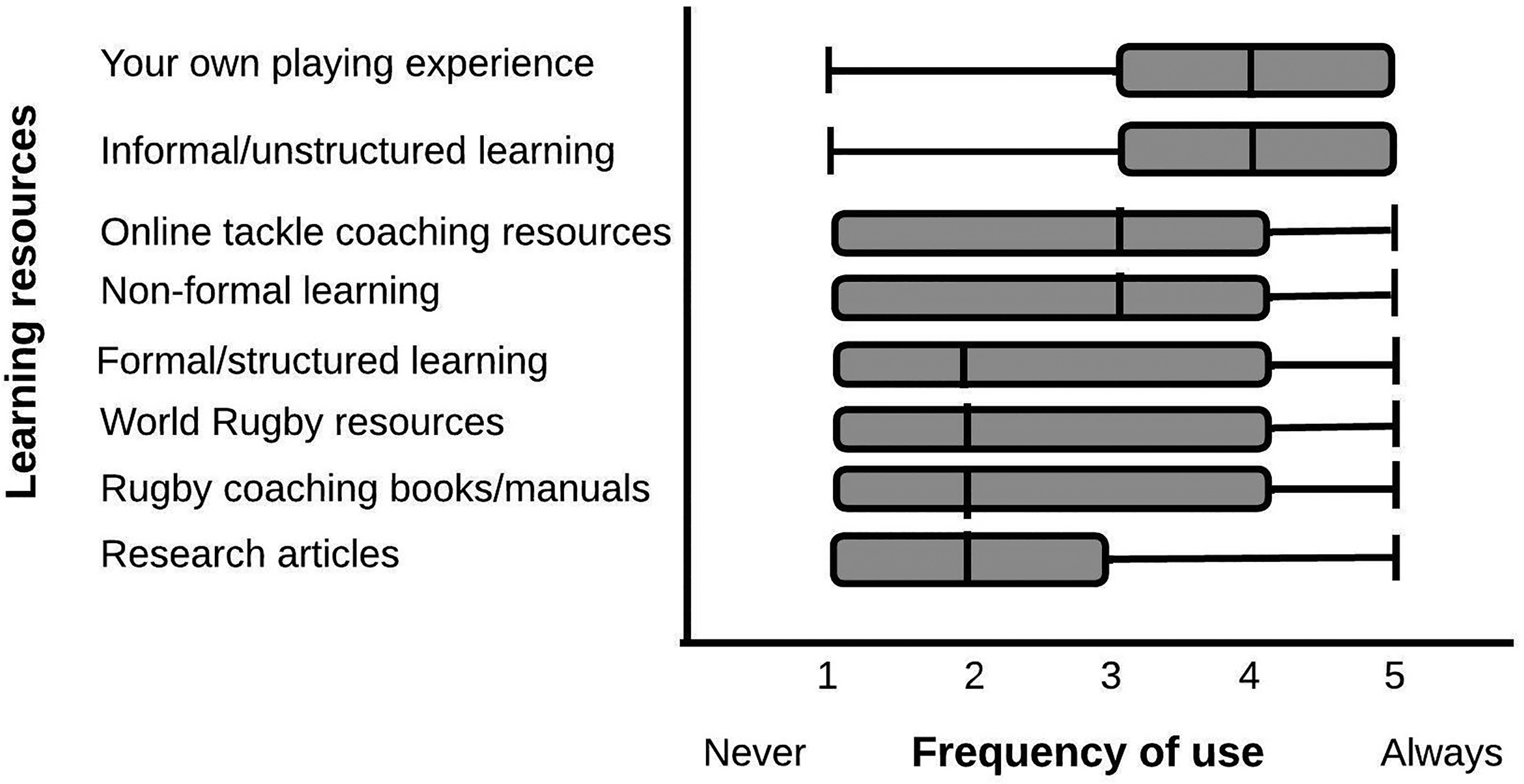
Coaches’ reported use of the different sources of coaching knowledge. 1 = never, 5 = always.
Attitudes in relation to tackle safety and performance
Coach injury risk beliefs
When asked to rate perceived overall injury risk from different phases of play, tackling ranked highest (median 4, IQR: 3 to 5 on a scale of 1 = very low risk to 5 = very high risk), followed by rucking (median 3, IQR: 2–4) and live tackling drills in training (median 3, IQR: 2–4) (Figure 3).
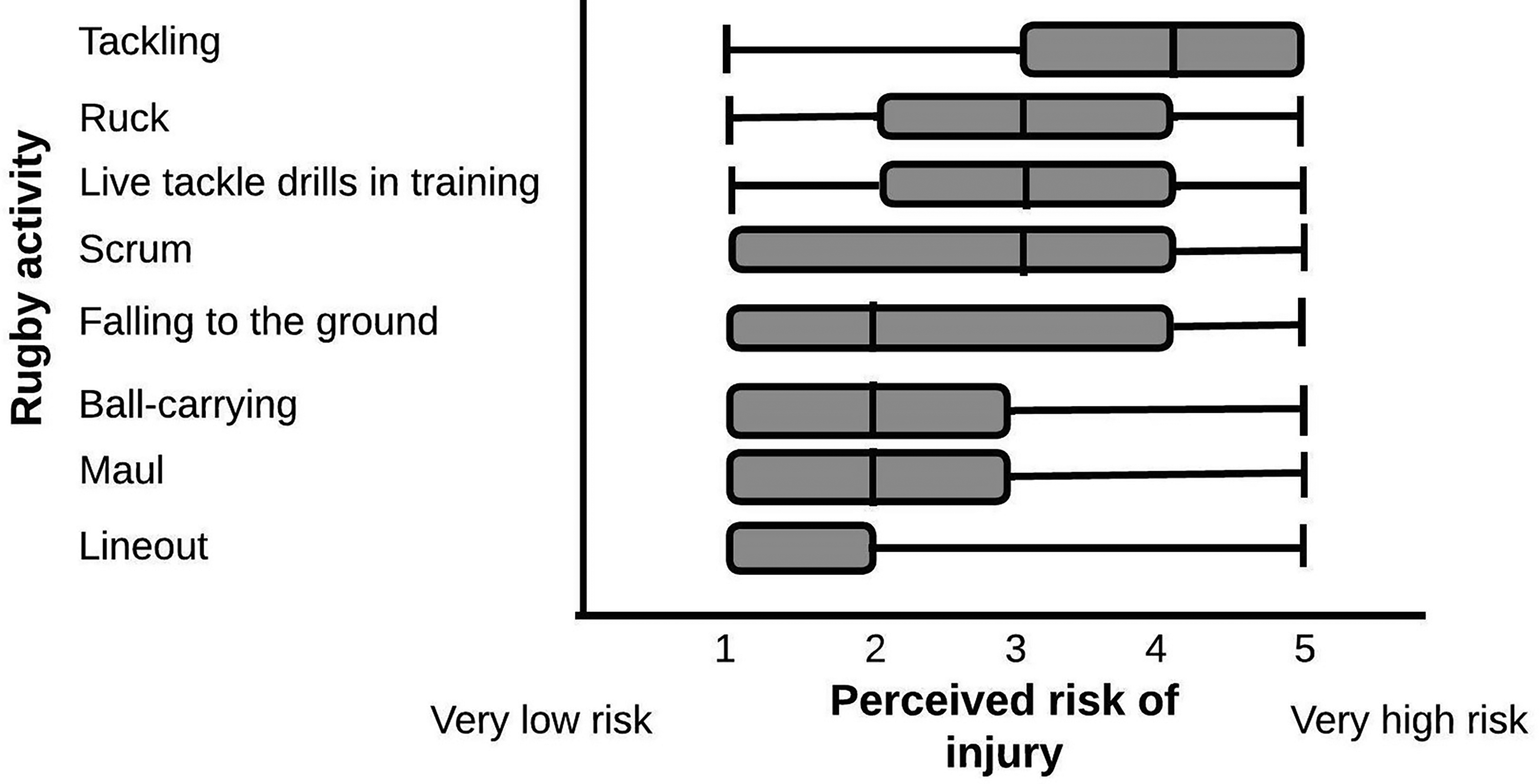
Coaches perceived risks of the different phases of play. 1 = very low risk, 5 = very high risk.
On average coaches rated tackle injuries to have a ‘moderate impact’ on their team (median 3, IQR: 2–4 on a scale of 1 = very low impact to 5 = very high impact) and ‘high impact’ on planned coaching activities (median 4, IQR: 3–5).
Access to additional providers
Of the coaches surveyed, 64% (n = 230) and 62% (n = 221) had access to a physiotherapist/physical therapist and strength and conditioning coach, respectively. Only 10% (n = 34) reported no access to additional providers. On average, pitch-side medical personnel were ‘always’ present at games (median 5, IQR: 3–5, on a scale of 1 = never, 5 = always) and ‘sometimes’ (median 3, IQR: 2–5) present at training respectively.
Coaching attitudes
Coaches reported, on average, that it was more important to learn proper tackle technique for safety (median 5, IQR: 4–5 on a scale of 1 = not at all important to 5 = very important) than improving performance (median 4, IQR: 3–5). During training, coaches placed the greatest importance on technical preparation (median 5, IQR: 4–5) followed by emotional preparation (median 5, IQR: 3–5), physical preparation (median 5, IQR: 3–5) and tactical preparation (median 4, IQR: 3–5). Coaches’ attitudes regarding tackle safety and performance are presented in Figure 4.
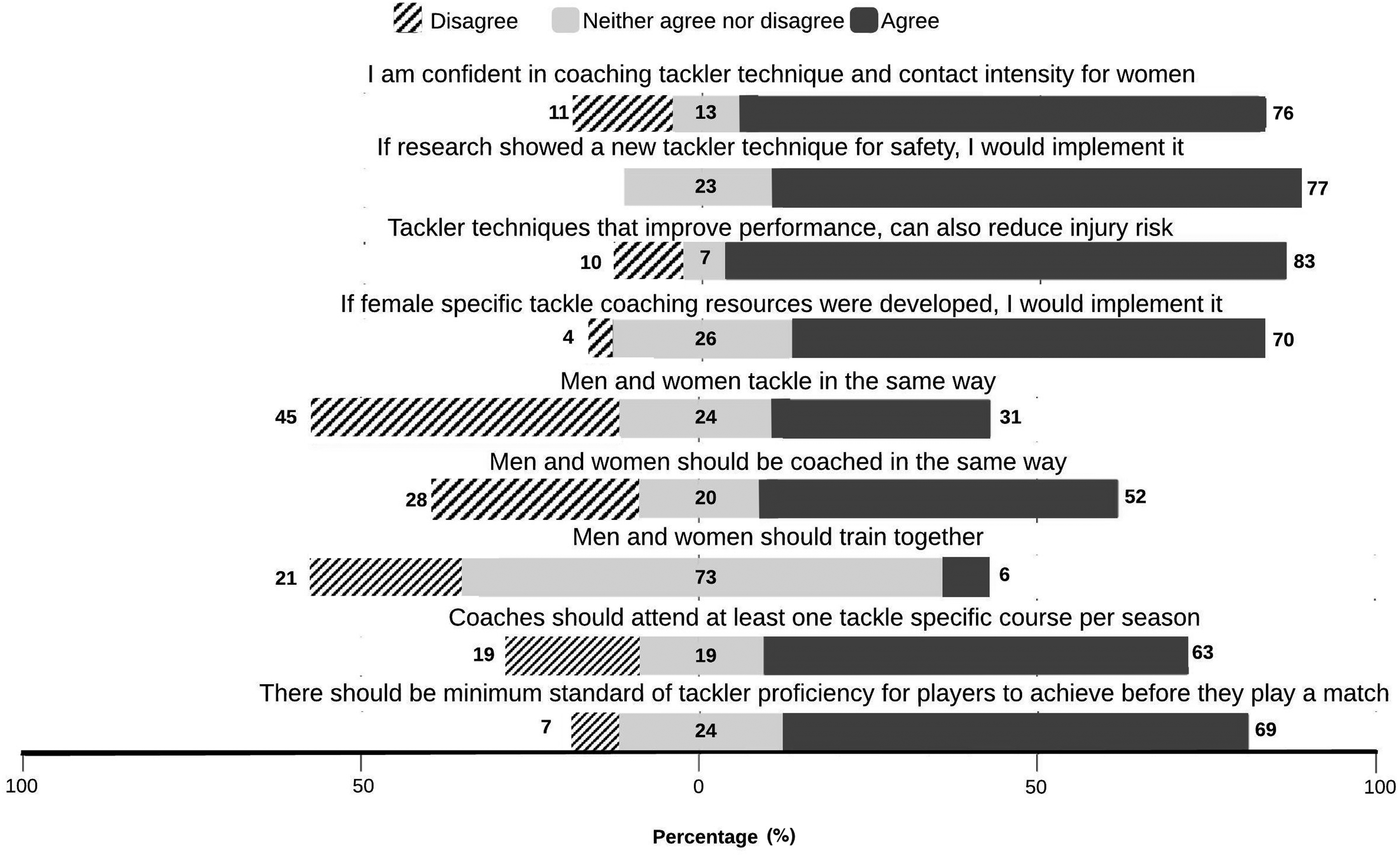
Questions and responses from coaches about their attitudes regarding tackle coaching for safety and performance.
Most participants felt confident in coaching the tackler technique (76%, n = 271). Two-thirds of coaches (66%, n = 234) reported being able to deliver the amount of training as planned. Coaches provided free-text responses (n = 114) regarding barriers to the effectiveness of planned tackle coaching activities (Table 2). The most common barriers reported by coaches were grouped under the theme of player training considerations (n = 61 responses), followed by sociocultural factors (n = 48 responses), the training environment (n = 27 responses), and coaching knowledge gaps (n = 3 responses) (Figure 5).
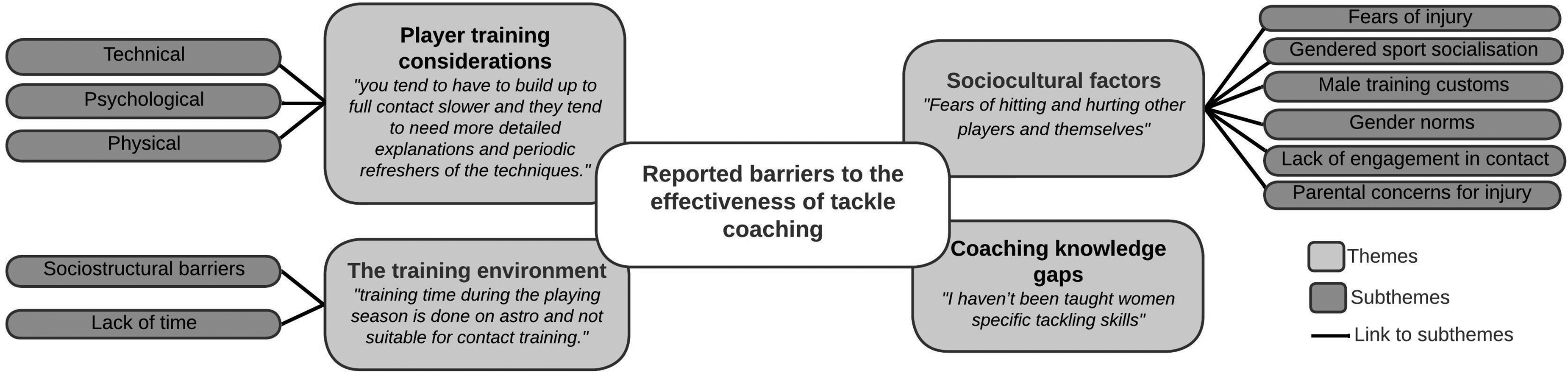
A summary of the themes and subthemes generated from coaches’ open-ended responses about their perceived barriers to the effectiveness of tackle coaching.
Reported barriers to the effectiveness of tackle coaching in free-text responses (n=114) summarised and categorised into themes and subthemes.
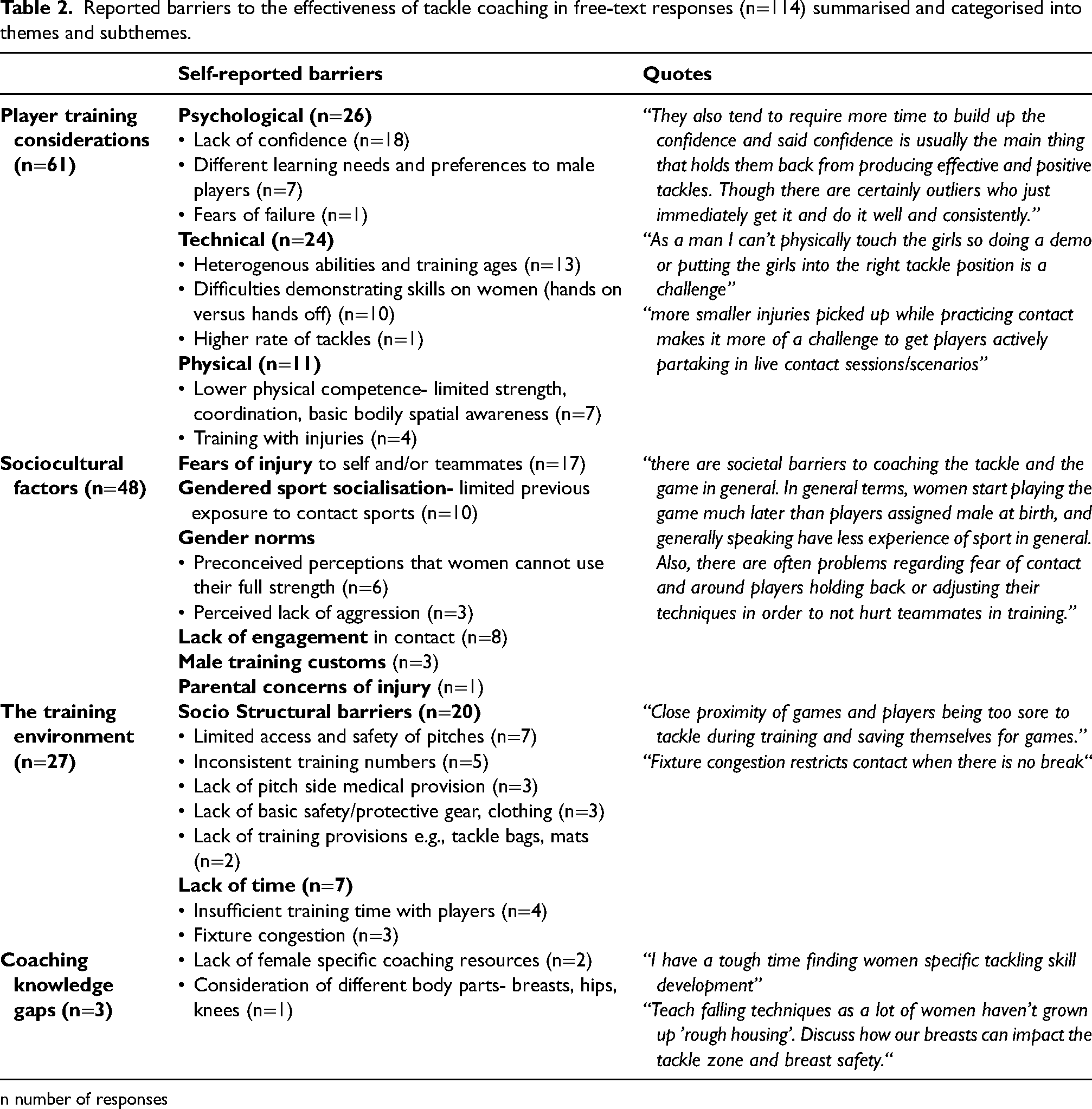
n number of responses
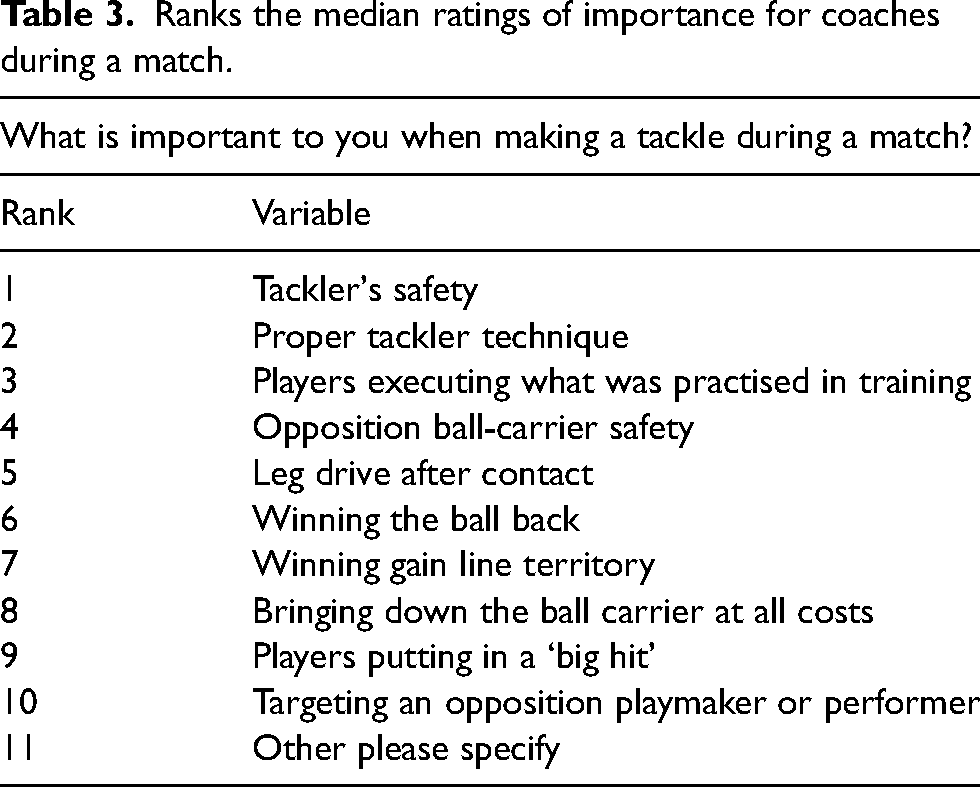
Coaches reported that ‘tackler's safety’, ‘proper tackle technique’ and ‘players executing what was practised in training’ were of most importance to them for players executing a tackle during a match (Table 3). Participants ‘Other’ important factors (n = 14 responses) are shown in Supplemental Appendix 2.
Ranks the median ratings of importance for coaches during a match.
Coaches’ perceived priorities for improving tackle safety and performance in women's rugby are presented in Figure 6.
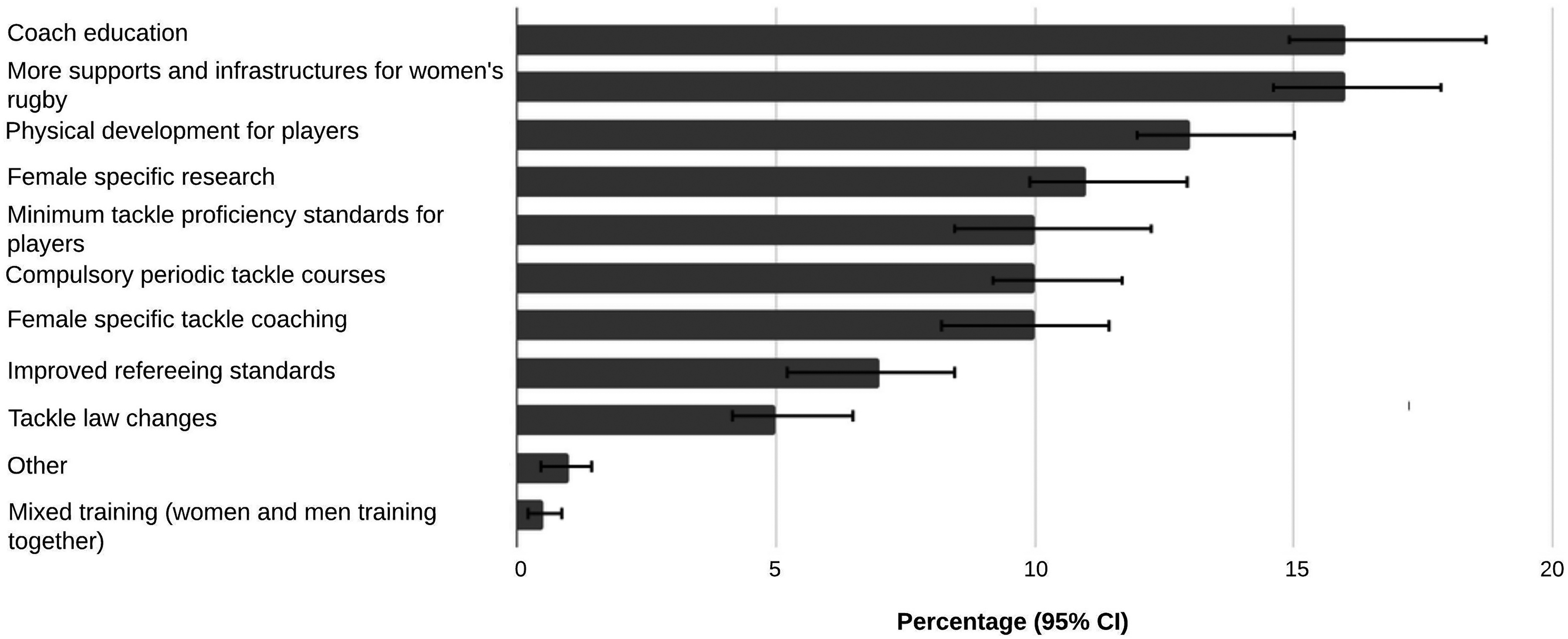
Ratings of reported priorities for tackle safety and performance in women's rugby. Data are reported as percentages with 95% confidence intervals.
Tackle training practices
Pre-season coaching practices
On average, coaches reported three to four weeks of preseason training (n = 106), while one in every 10 coaches (n = 35) reported that training was only ever completed within the season. Pre-season tackle training included tackle drills (82%, n = 264/322), contact conditioning (78% n = 250/322) and other components (11%, n = 35/322) including ball-placement, body management and ground skills, wrestling, and judo principles.
In-season coaching practices
Coaches reported a median weekly controlled contact and full contact duration of 10 to 20 min respectively (Figure 7). Less than half of all coaches (38%, n = 134) reported never using full contact drills during match-day warm-up.
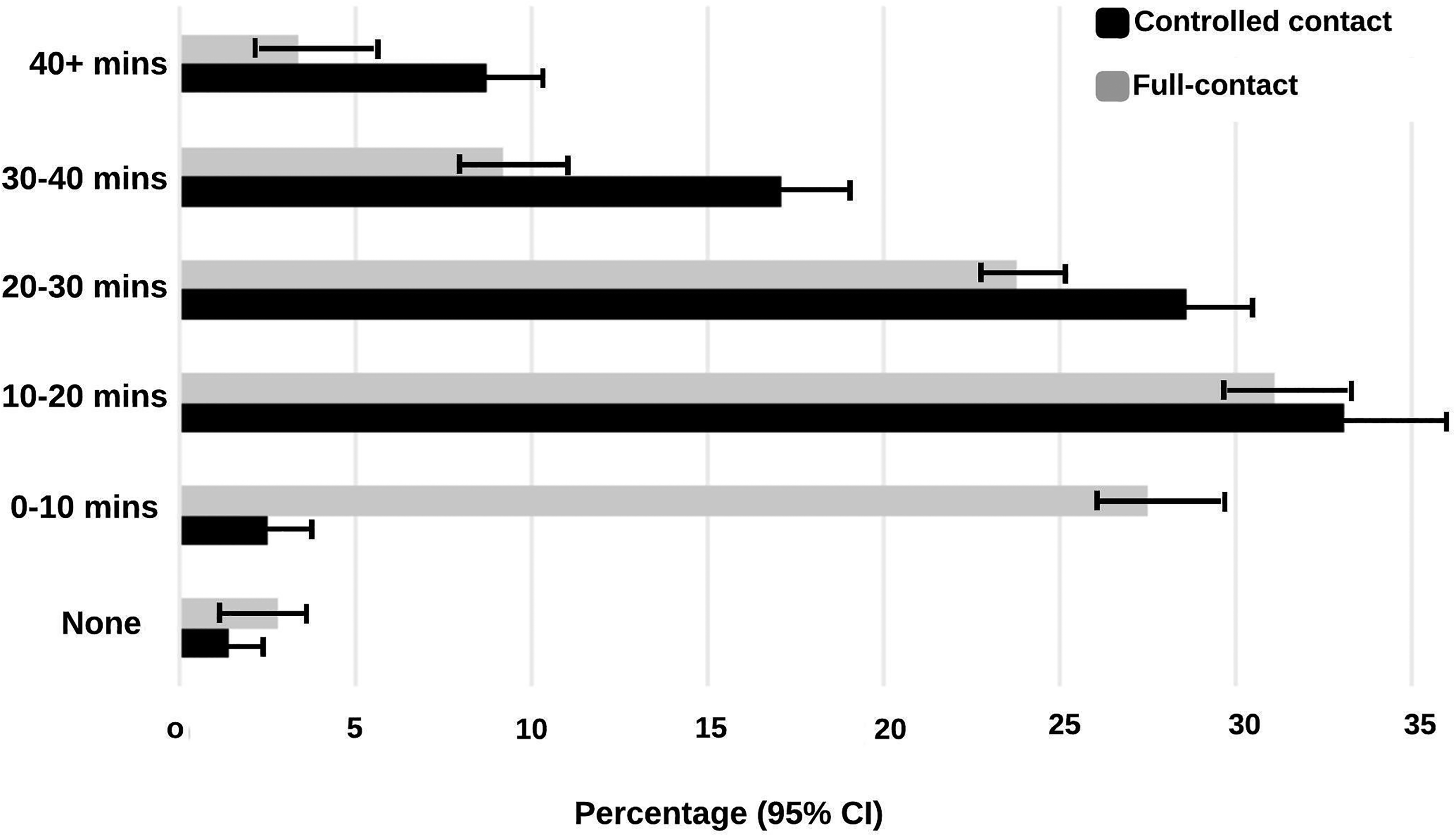
Median weekly duration of full contact and controlled contact activities. Data are reported as percentage with 95% CI. CI = confidence interval.
Most coaches planned training sessions in advance (91%, n = 324) and 55% (n = 195) reported following a tackler training plan for player and team development. Only 17% of coaches (n = 60) reported using female-specific approaches for coaching tackler technique. Coaches provided free-text responses regarding female-specific approaches to tackler training (n = 42) (Table 4). The most commonly reported female-specific approaches involved technical adaptations (n = 21 responses), followed by physical (n = 12 responses), psychological (n = 6 responses), and tactical adaptations (n = 4 responses).
Examples of female-specific approaches to coaching tackler technique reported by coaches in free-text responses (n=42) summarised and categorised into themes
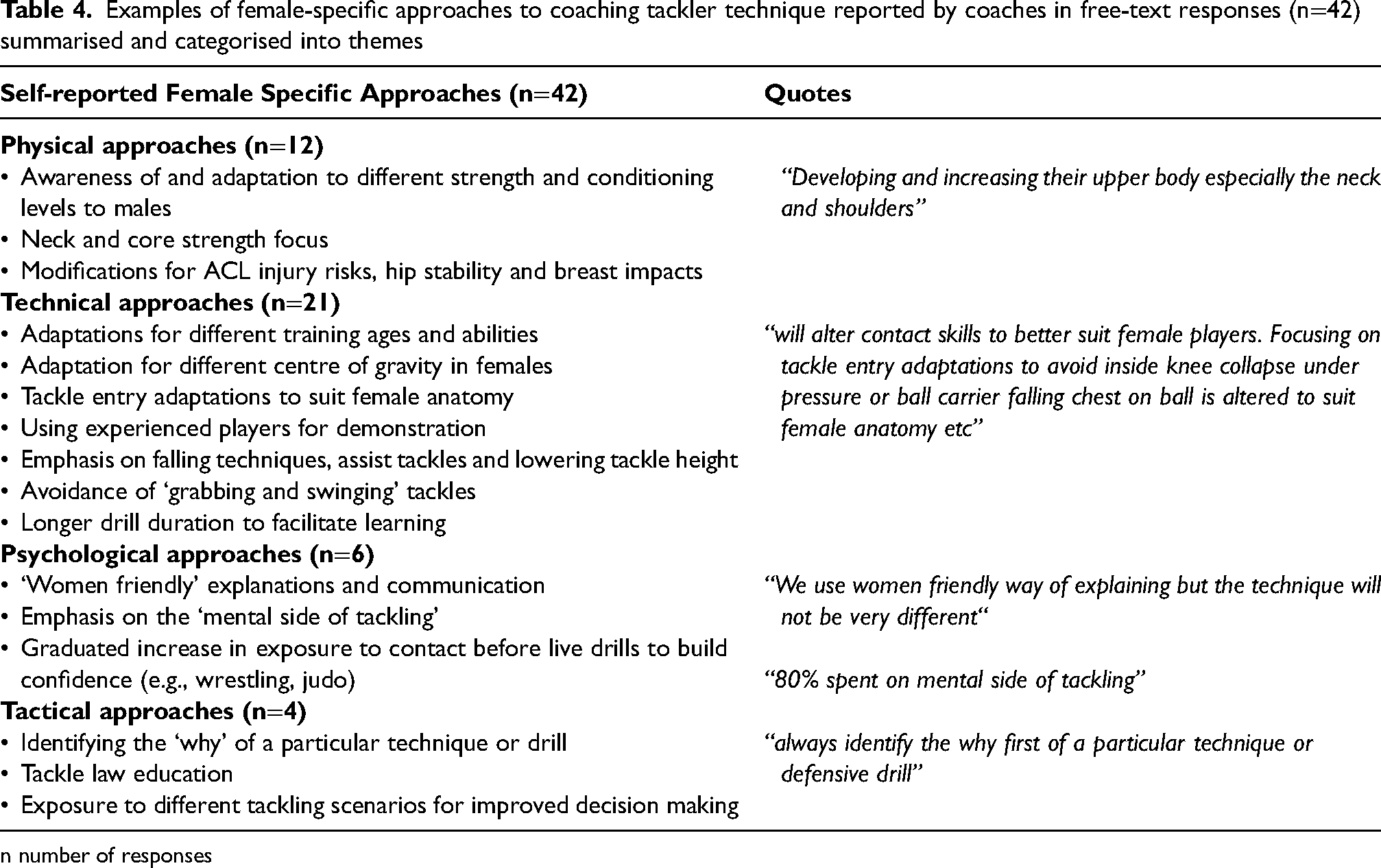
n number of responses
Front-on tackles (median 5, IQR: 4–5) and side-on tackles (median 4, IQR: 3–4) were the most frequently trained tackle types. Verbal instruction (median 5, IQR: 4–5) and demonstration (median 4, IQR: 3–5) were the most frequently used tackle coaching methods. The most frequently used equipment included tackle bags/shields/sausages (i.e., equipment that simulates a ball carrier to facilitate tackler techniques) (median 4, IQR: 3–4). The average frequency of the various coaching methods used in training is shown in Figure 8.
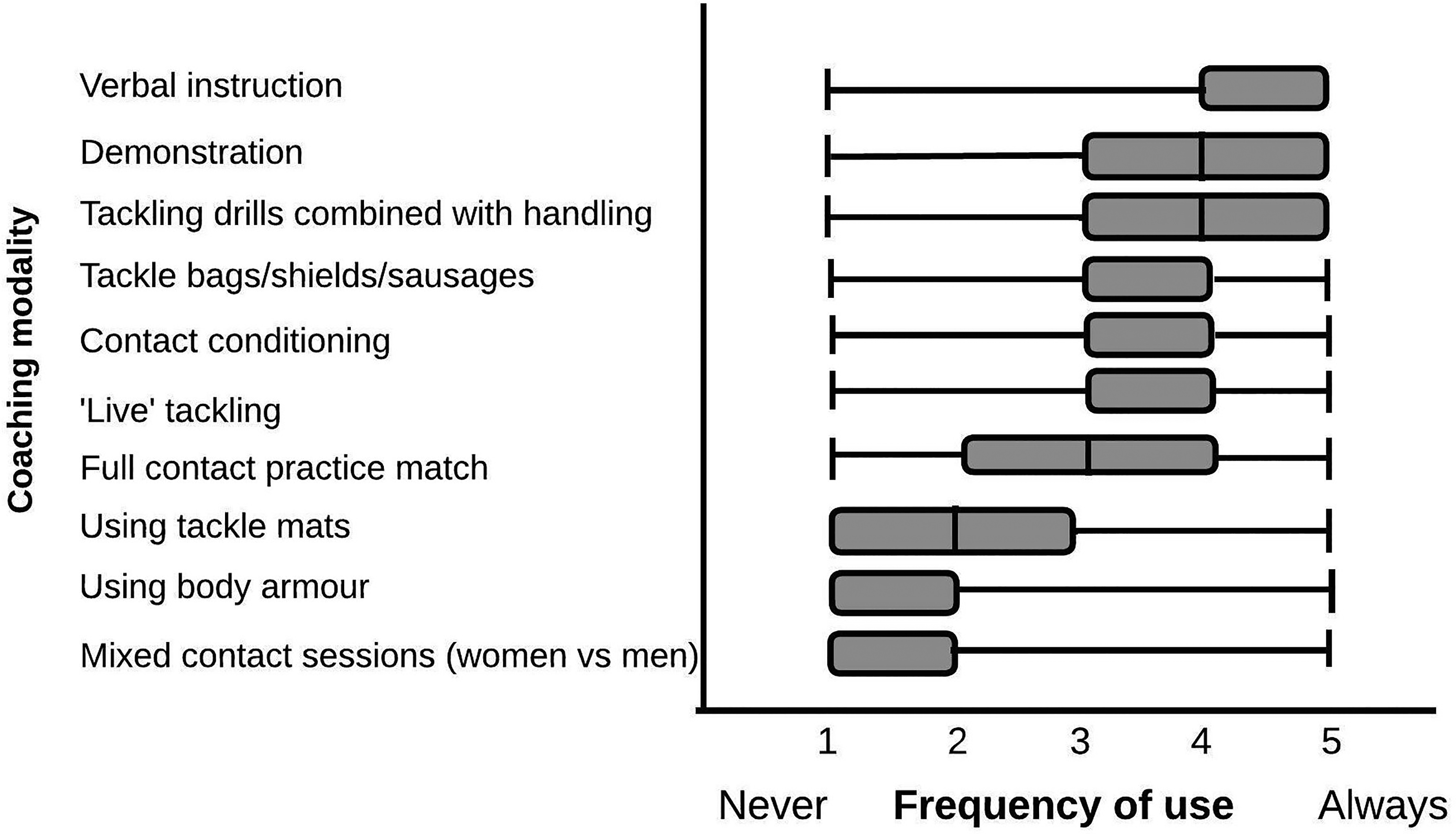
The median frequency of the tackle coaching modalities. 1 = never, 5 = always.
Technical coaching points were most frequently applied for the ‘during contact’ phase of the tackle. Coaches’ reported use of technical coaching points is demonstrated in Figure 9. Participants ‘Other’ tackler technical points (n = 13 responses) are shown in Supplemental Appendix 3.
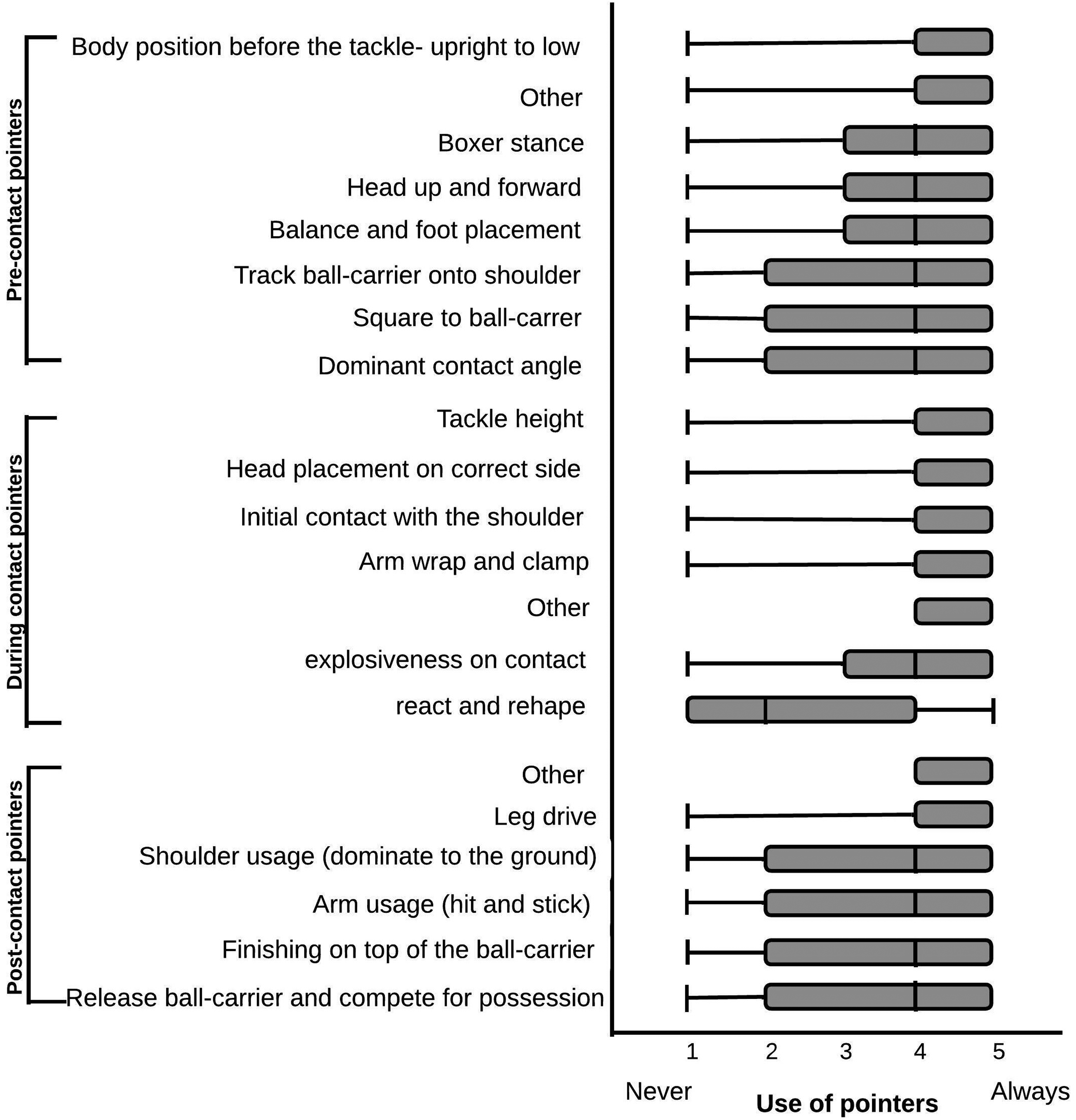
Frequency for emphasis placed on different tackler technical coaching pointers given pre-contact, during contact and post-contact. 1 = never, 5 = always.
Discussion
This study describes the knowledge, attitudes, and perceived tackle-training practices of women's rugby coaches. Coaches agreed that the risk and burden of tackle injuries are high while acknowledging varied access to strength and conditioning and medical provisions. They reported primarily gaining knowledge from informal/unstructured learning resources, and felt confident about coaching tackler technique. Placing greater importance on tackler safety than performance, coaches were receptive to implementing evidence-based and female-specific tackle training programmes and reported the use of female-specific technical, physical, psychological, and tactical adaptations during training. Barriers to effective tackle training included player training considerations, sociocultural factors, the training environment and coach knowledge gaps. Coaches reported large variations in weekly durations of controlled and live contact activities, with just over half of coaches following a tackler training plan.
Tackle coaching knowledge
Mirroring previous research,24,30 informal/unstructured coaching resources (e.g., playing experience and coaching colleagues) and online coaching resources were identified as key target areas to educate coaches about tackle safety and performance. ‘Coach education’ was reported as a top priority and 63% of the respondents in our survey agreed that ‘coaches should attend at least one tackle-specific course per season to meet minimum standards’. However, formal coach education ranks among the least prevalent sources of information in both the current study and prior research. 32 Tackle courses can be available through local clubs, coaching certification programmes, rugby governing bodies, clinics, and online e-courses and resources.8,36 However, tackle courses are traditionally developed for delivery in men's rugby without focused consideration of the biological, sociocultural and environmental considerations of the women rugby player. In addition, the availability of tackle-specific courses in rugby may vary depending on the geographical location and level of rugby. The prioritisation of coach education presents the question; do we need to make existing formal learning resources more accessible or more ‘real-world’ impactful? 32 For example, most coaches had never completed a tackle-specific course (76%, n = 270) and to their knowledge did not have access to one (61%, n = 218). This implies that current efforts by governing bodies to promote tackle-specific courses may not adequately reach the coaching community in women's rugby. Alternatively, the perceived need for coach education could be attributed to heightened media exposure or the significant advancements in the game, for example, professionalisation, tackle height law changes 7 or the barriers related to coaching knowledge gaps detailed by respondents. Player training considerations rated highly as a barrier, with free-text responses indicating the need for tackle coaching that caters to a wide range of player learning styles and encompasses various aspects such as physical, technical, and psychological tackle competencies. As such, the perceived need for coach education may be improved if existing resources were co-created with women's rugby coaches and players to address the current discrepancy, and attention must be paid to different dissemination and promotional strategies for formal learning.9,32
Tackle coaching attitudes
During matches, coaches ranked ‘tackler's safety’, ‘proper tackle technique’ and ‘players executing what was practised in training’ (top three ranked behaviours) more important than ‘players putting in a big hit’ or ‘targeting an opposition playmaker or performer’ (bottom two ranked behaviours). However, good risk perception and intentions for safer tackle behaviours do not necessarily lead to more effective or safer tackle behaviours in practice.25,26 The ‘intention-behaviour gap’ highlighted by the HAPA may explain why coaches with good intentions fail to adopt tackle training safety practices. 15 For example, this gap may be attributed to factors within the volitional phase of the HAPA model (e.g., action planning and self-efficacy to overcome barriers), affecting the translation of intentions into actual coaching practices. For this study, the top-ranked items could be considered to be safety-based behaviours, whereas the least ranked items were considered more performance-based behaviours. Although this does not necessarily mean coaches do not consider performance during matches, these findings could be attributed to their own injury experience or highlight the effectiveness of the media and national injury prevention campaigns (e.g., Tackle Ready, BokSmart) on increasing coach awareness of tackle safety. 8
The sociocultural and training environment barriers reported by coaches in this study were reflective of the ‘gendered training environments’ and ‘gendered structural barriers’ reported in qualitative interviews with senior women's rugby players.19,33 As such, it is unsurprising that the sample of coaches in this study ranked ‘more supports and infrastructures for women's rugby’ and ‘physical development for players’ as top priorities for tackle safety and performance. Coaches in this study also reported varied access to strength and conditioning support (62%, n = 221) and barriers to pitch-side medical provision. Therefore, it appears coaches in women's rugby remain the key facilitators of players' preparedness for match contact demands. However, where available, the role of allied health staff (physiotherapists and strength and conditioning coaches) should be considered to improve the overall picture of players’ safety and performance. These findings support calls for collective socioecological approaches, incorporating active (e.g., education of coaches) and passive (e.g., organisational and institutional change) measures, to overcome the barriers to implementing tackle safety interventions in rugby. 34 Considering the relatively short preseason period of three to four weeks (n = 106, 30%) reported in this study, achieving the prescribed number of sessions may be challenging. As such, it is likely that coaches will need to be supported to be competent to deliver tackle training with limited access to players, training adjuncts, gym or pitch facilities. The emergence of practical female-specific tackle coaching resources (e.g., contact confident) 35 that are reflective of the specific performance context of women's rugby could prove worthwhile.
Tackle coaching practices
Across a week, the reported time spent on controlled-contact and full-contact activities varied from 0 min to 40+ min with coaches averaging 10–20 min for both types of training. World Rugby's contact load guidelines recommend an upper limit of 40 min of controlled contact training and 15 min of full contact training per week for professional athletes. 36 Positively, 82% of coaches (n = 290/355) averaged a weekly controlled contact duration of ≤40 min and 60% (n = 209/349), advocated for a weekly full contact duration meeting the recommended 15 min. It is important to note that these guidelines were developed for the elite game and may not reflect the performance context, training ages or learning needs of amateur women's rugby. Previous researchers have postulated that if players have adequate technical proficiency and physical conditioning, adequate exposure to tackle contact will reduce their risk of injury and improve their tackle performance under match conditions. 37 Women rugby players prefer regular exposure to short and intense bursts of full-contact tackling in training to establish a higher level of contact preparedness.19,33 Given the frequency of the tackle events in matches, 37 and poor tackle technique being linked with higher match injury risk, 38 it has been recommended that a larger portion of the training week should focus on quality progressions of the technical aspects of the tackle adapted through both controlled and full-contact training exposures. 37 Tackler training plans have been recommended with the aim of developing key concepts such as contact readiness (first exposure to rugby), contact capacity (maintaining proper technique under fatigue) and contact efficiency (proficient contact technique). 38 Whilst the majority of coaches (91%, n = 324) planned training sessions in advance, this did not always follow a tackler training plan (55%, n = 195). Most tackle training practices were commendable, however, consistent and quality weekly exposure to full-contact and controlled contact training could be facilitated through the use of training adjuncts (e.g., training mats, resistance bands) and modifying drills to accommodate the requirements of players (e.g., players returning from injury).33,39 Further research is needed to determine contact loads for the amateur game that support optimal skill learning without compromising player safety. While waiting for research to catch up, coaches should continue to work in ‘real-world’ environments to adopt best tackle training practices.
Despite expressing reservations about demonstrating contact skills on women, ‘verbal instruction’ and ‘demonstration’ were ranked as the most frequently employed tackle coaching practices. Coaches preferred using padded equipment such as tackle bags or shields rather than full-contact 1 vs. 1 tackling (which they perceived to carry a ‘moderate risk’ of injury). While the use of padded equipment may help facilitate proper tackle techniques and lower the risk of injury in training compared to full-contact tackling, 37 this should be balanced with full-contact drills to best prepare player(s) for match demands. 39 A recent qualitative study conducted with female rugby players has indicated that tackle bags and shields fail to replicate actual match conditions, and they are not the favoured choice of training modality. 33 As such, it is advisable that coaches’ choice of tackle training modality should consider the needs and preferences of women rugby players. Notwithstanding the technical and physical components of tackling, coaches acknowledged the importance of emotional preparation for optimal player safety and performance. For example, players’ ‘lack of confidence’ and ‘fears of injury’ emerged as barriers to tackle training, which aligns with qualitative research that found women rugby players experience significant fears of injury and failure.19,33 Female-specific approaches reported by coaches during open-ended responses included physical and technical adaptations and modifications for neck strength, falling, breast impacts, diverse training ages, and psychological approaches to build confidence. However, reported adoption of female-specific approaches to tackle training is low (17%, n = 60) despite high intentions to use them (70%, n = 239). A significant portion of rugby coaching practices may be shaped by emulation of historical practices in the sport. 32 For example, despite most coaches disagreeing that men and women tackle in the same way (n = 159, 45%), most agreed that they should be coached the same way (n = 186, 52%). Player concerns around tackle training practices derived from men's rugby have been identified, 33 and ‘male training customs’ emerged as a reported coach barrier to training in the present study. Although the coaches’ perceptions of what is needed align with the literature,19,33,39 they may not be able to implement these insights or pursue further knowledge through the best routes. Evidence-based coaching frameworks designed for safe and effective tackle learning have been developed, 39 and tackle guidelines are offered such as the World Rugby Tackle Ready and Contact Confident programmes.8,35 However, it could be argued that we need to enhance messaging and engagement with existing education resources.
Practical application
Governing bodies can use these findings to better align injury prevention strategies and education resources with the real-world needs and challenges faced by women's rugby coaches. Effective strategies may involve advocating for tailored tackle skill training plans to address discrepancies in the duration and types of contact prescribed in practice. Given the strong intention and self-reported use of female-specific training approaches, there is a compelling need for the application of progressive, and gender-responsive tackle training practices to improve tackle safety and performance for women's rugby players. 40
Limitations and future research
The global nature of the present study was inclusive of coaches from all levels of competition, qualification and ethnic background and the use of both multiple-choice and free-text responses enriched the findings and represented a significant strength of the present study. Despite good global coverage, we could not calculate response rates and there are low responses within some geographical regions (e.g., Asia and Africa). The greater representation of participants from Europe (54%) may limit the wider applicability of findings given potential cultural and socioeconomic differences between rugby settings in the global north and those in the global south. 41 Conclusions and insights primarily drawn from responses in Global North settings may not necessarily translate into meaningful practical or scientific progress in Global South settings. 41 Participants had the option to select from four different languages for survey completion, thereby expanding global participant outreach. Nevertheless, it is recognised that limited resources led to the exclusion of certain languages, like Māori, Samoan or Swahili, which could potentially impact the external (global) validity of the findings. Cross-sectional survey designs have limitations including the potential selection bias since coaches interested in tackle safety or performance could have been more prone to participate. Another limitation was the risk of recall bias. This risk could be increased by the timing of the survey towards the later playing season and off-season periods. The findings from the current study solely examine the self-reported knowledge, attitudes, and practices of coaches therefore future research could also connect player views to those of their coaches, to account for the influence of coach attitudes on player attitudes. Additionally, the self-reporting of tackle training practices is subject to social desirability bias which may inflate the duration and types of training reported. Future research could observe and measure the tackle training practices and/or tackle technical proficiency of coaches and players during training sessions.24,25 Alternatively, future research could use the rate of perceived challenge to get a better understanding of the alignment of coach intentions and player perceptions on tackle training. 42
Conclusions
This study contributes to the understanding of tackle coaching in women's rugby, revealing the pivotal role women's rugby coaches play in shaping tackle safety and performance, alongside barriers that may influence the implementation of effective coaching strategies. While coaches demonstrated a keen awareness of injury risks and a prioritisation of tackle safety, they exhibited disparities between intention and practice, with variability in the duration and types of contact activities. The training barriers, ranging from sociocultural factors to coach knowledge gaps, provide valuable insights for targeted interventions aimed at fostering safer and more effective training environments. Further research should be conducted to understand how best to deliver safe and effective tackle training for improved match tackle technical actions from players and tackle injury mitigation. These findings may be used to inform coach education and implementation strategies to enable the real-world effectiveness of tackle safety programmes in the context of women's rugby.
Supplemental Material
sj-pdf-1-spo-10.1177_17479541241243180 - Supplemental material for A global survey exploring tackle training knowledge, attitudes and practices of women's rugby union coaches
Supplemental material, sj-pdf-1-spo-10.1177_17479541241243180 for A global survey exploring tackle training knowledge, attitudes and practices of women's rugby union coaches by Kathryn Dane, Stephen W West, Sharief Hendricks, Anna Stodter, Caithriona Yeomans, Nicol van Dyk, Steffan Griffin and Fiona Wilson in International Journal of Sports Science & Coaching
Footnotes
Acknowledgements
The authors thank all coaches for their participation in this study. The authors would like to thank Oli Bishop, Tania Rosser, Johnny Garth, Dr Mikio Hiura, Dr Rachel Hoare, the translators, coach and player stakeholders for their advice and consultation throughout this study. A special thanks to Jock Peggie, the IRFU and World Rugby for assistance with disseminating the survey.
Declaration of conflicting interests
The authors declared no potential conflicts of interest with respect to the research, authorship, and/or publication of this article.
Funding
The authors disclosed receipt of the following financial support for the research, authorship, and/or publication of this article: This work was supported by the Irish Research Council (Grant No. GOIPG/2020/1220).

Supplemental material
Supplemental material for this article is available online.
References
Supplementary Material
Please find the following supplemental material available below.
For Open Access articles published under a Creative Commons License, all supplemental material carries the same license as the article it is associated with.
For non-Open Access articles published, all supplemental material carries a non-exclusive license, and permission requests for re-use of supplemental material or any part of supplemental material shall be sent directly to the copyright owner as specified in the copyright notice associated with the article.
