




Abstract
There is growing interest among professional athletes and their support staff in utilising genetic testing to enhance sports performance. However, the perceptions of athletes and coaches regarding genetic testing for training purposes remain largely unexplored. To address this gap, the present interview study investigated the perceptions of athletes and coaches towards genetic testing. Sixteen professional cyclists and triathletes (and their five coaches) participated in semi-structured online interviews after having received their genetic test results. The in-depth interviews were video-recorded, transcribed, translated, and analysed using reflexive thematic analysis by two independent researchers in MAXQDA. Positive perceptions were mainly linked to the potential added value of genetic testing for sports, the importance of counselling, and the necessity for further research. Negative perceptions were mainly linked to incorrect interpretations and conclusions, the use of genetic tests for talent selection, the reliability and usability of results, confirmation bias, fear of stigma, privacy concerns, and costs. Overall, there is a positive perception towards genetic testing among athletes and coaches, emphasising its potential to personalise training programmes. Although some participants highlighted the risks and limitations associated with genetic testing, these concerns were less common. It is suggested that counselling should accompany genetic testing to help athletes and coaches comprehend both the limitations and potential benefits of genetic testing.
Introduction
The development of sports genetics as a distinct area of study has evolved over the past few decades, driven by advancements in genetics, genomics, and sports science. 1 As technology has advanced, particularly with the advent of genome-wide association studies and next-generation sequencing, researchers have gained the ability to scan the entire genome for genetic variants associated with athletic performance. 2 These approaches have allowed for the identification of numerous genetic loci linked to traits such as VO2max (maximal oxygen uptake),3,4 muscle strength, 5 and injury risk.6,7 Recently, the field has expanded beyond mere association studies to encompass functional genomics, epigenetics, and gene-environment interactions. 8 Additionally, the practical applications of sports genetics have extended beyond research labs to areas such as talent identification and inclusion, 9 personalised training programmes, 10 and injury prevention in practice. 11 By the end of 2023, the total number of significant deoxyribonucleic acid (DNA) polymorphisms linked to athletic performance reached 251, among which 128 have been consistently reported across multiple studies, encompassing endurance, power, and strength-related traits. 12 Despite this growing body of evidence, the precise role of genetics in shaping athletic ability remains poorly understood. Importantly, most studies investigating sports genetics are conducted with small sample sizes and many results are not yet replicated. 12
Athletic performance is shaped by the interaction between a multitude of genes and various environmental factors, including training, 13 nutrition, 14 and sleep, 15 among others.16,17 Recognising that athletic performance is polygenic has prompted the development of models such as genotype scores to assess genetic predisposition to athletic traits. These scores, often derived using methods like the Williams and Folland procedure, assign numerical values to different genotypes based on their association with favourable traits. This facilitates the quantification of an individual's Total Genotype Score (TGS). 18 Since the introduction of the first model, TGS has been the subject of numerous studies aimed at modelling and predicting the combined effect of genetic variants on athletic traits.18–24 For instance, a recent study by Varillas-Delgado et al. (2022) proposed genetic profiles tailored to identify talent in professional endurance athletes and football players. 25 Their investigations revealed unique genetic distributions among athletes compared to non-athletes, with a polygenic profile of athletes favouring traits related to liver metabolism, iron metabolism, energy efficiency, and muscle injury susceptibility. In addition, recently the technical capability of youth football players has also been found to be influenced by genetic variants. 26
Despite such advancements, criticisms have been levelled against TGSs. Athletic performance, being a qualitative phenotype, encompasses multifaceted attributes that extend beyond physiological measurements. For instance, while it is common to assess endurance performance through VO2max, 27 it's important to recognise that other traits associated with endurance ability – potentially including anthropological, psychological, and metabolic traits – may also exhibit high heritability and should, therefore, be considered within TGSs. Beyond the heterogeneity of traits, any single trait is likely subject to genetic (different genes) and allelic (different single nucleotide polymorphisms (SNPs) in the same gene) variability. Most TGSs to date, however, do not incorporate weighting factors that account for this variability, placing greater or lesser emphasis on certain genes or alleles.18,28
Recent years have seen the emergence of a market for direct-to-consumer (DTC) tests that claim to offer genetically tailored workouts. Although prior studies indicate a growing interest among professional athletes and their support staff in using genetic testing to customise training programmes and enhance sports performance, its practical application is still limited.29,30 Additionally, surveys among professional football stakeholders in the UK have uncovered a substantial knowledge gap regarding genetic testing, 31 underscoring the need for a deeper understanding of its implications in sports medicine. Moreover, the perceptions of athletes and coaches regarding genetic testing for training purposes remain largely unexplored. To address this gap, the current study aims to explore the perceptions of high-level endurance athletes and their support staff towards genetic testing. Specifically, it seeks to examine the potential added value of genetic testing for professional endurance athletes and coaches.
To achieve this objective, a TGS tailored for endurance athletes has been developed, incorporating various phenotypes such as endurance capacity, recovery, and nutrition, among others, along with genetic variants weighted by their effect sizes. Professional cyclists and triathletes have consequently undergone genetic testing and received personalised reports based on their genetic makeup. These genetic reports could serve as a foundation for athletes and coaches to personalise training programmes, allowing for a more targeted approach to improving performance and recovery.
Methods
Design
This qualitative study was based on in-depth interviews, which were analysed using an inductive approach within a critical realist contextualist framework.32,33 The study's design adhered to the Consolidated Criteria for Reporting Qualitative Research (COREQ) and the Journal Article Reporting Standards for Qualitative Research (JARS-QUAL) guidelines.34,35 Details on the compliance with these standards can be found in supplementary material 1, which includes the completed COREQ checklist. Ethical approval for the study was granted by the Ethics Review Committee of Maastricht University, under the reference number FHML-REC/2019/021(2). Both oral and written informed consent were obtained from all participants prior to their involvement in the study.
Participants
Sixteen professional cyclists and triathletes, along with their five coaches, were recruited for this study, resulting in a total of 21 participants. All athletes underwent genetic testing (Oragene™ DNA collection kit, DNA Genotek, Inc., Ottawa, Ontario, Canada) by self-administered buccal swabs and agreed to participate in interviews conducted 3–4 months following genetic testing. Initial contact with the athletes was facilitated by their support staff, including coaches and embedded scientists, utilising convenience sampling for the support staff reached via email. The inclusion criteria of athletes specified high-level endurance athletes, defined as cyclists or triathletes competing at least at the national level. The athletes were purposively sampled with respect to their performance level by the support staff, employing criterion sampling. Prior to the recruitment, the involved support staff participated in face-to-face meetings with the researcher MK, where they received both oral and written instructions regarding the study and the recruitment process. Additionally, MK provided oral and written information about the study and consent forms directly to the participants. All coaches participated in a training session led by the researcher MK who is a PhD student in sports genetics. Coaches prepared a list of questions for MK prior to the session. MK was also available to be contacted by coaches (and athletes) at any time outside of this session if they had further questions. Moreover, MK was present at the first few explanatory sessions between coaches and athletes, to step in, if necessary
Data collection
Semi-structured interviews were conducted by a single researcher (MK) from May to October 2020. The development of the interview guide underwent several phases to ensure comprehensiveness and relevance. Initially, MK drafted the preliminary version of the guide. Subsequently, this draft was reviewed and feedback was provided by two senior researchers in the second phase. After incorporating their suggestions, the adjusted interview guide (detailed in supplementary material 3) underwent a pre-testing phase by the steering group to evaluate its clarity and comprehensiveness. Where necessary, revisions were made based on this feedback. The interviews were conducted online using Zoom Video Communications Inc., 2016 (version 5.3.2), Maastricht University. Finally, field notes were taken during the interviews and data saturation was reached after 16 interviews with the athletes.
Data analysis
The video-recorded interviews were initially transcribed in Dutch by ARL and MK, and subsequently translated into English by ARL, with a focus on accurately transferring meaning, sense, and context. The translation of key quotations was further refined through discussions with MK. In the manuscript preparation phase, some quotations were abbreviated (indicated by […]) and grammatical corrections were made to improve readability and understanding. The data analysis was performed using MAXQDA (2022), employing a data-driven inductive reflexive thematic analysis.28,29 ARL and MK independently reviewed and double-coded all interviews, with guidance from an experienced qualitative researcher (GG).
The analysis of the transcribed interviews followed an iterative thematic process comprising six phases. In the first phase, two authors (MK and ARL) individually engaged with the data by listening, transcribing, reading, and re-reading the interviews. During the second and third phases, initial codes were applied separately by the two authors, which led to joint coding sessions and collaborative efforts to identify initial themes. In the fourth phase, themes were reviewed, reorganised, and refined to reach consensus. The fifth phase involved moving back and forth between the data, codes, and themes, and between (parts of) the entire text and audio recordings, to validate the connections between themes and interview content. Participant quotes were selected through discussions between the two authors to most accurately represent the findings. The sixth phase was dedicated to writing and reporting the results by ARL, culminating in the identification of themes categorised into positive, negative, and neutral perceptions. The themes represent the key perspectives of athletes and coaches and are presented in the result section. The coding process is illustrated in Figure 1.
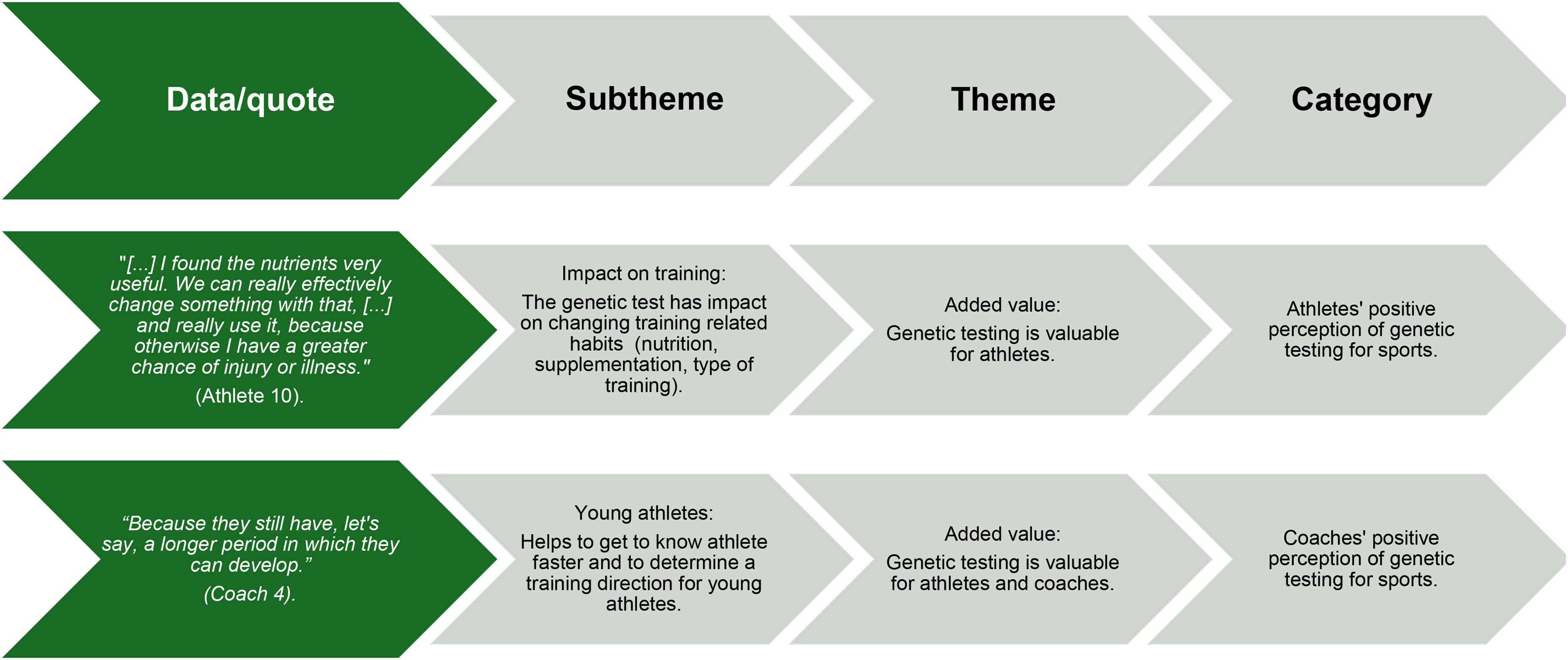
Coding process.
Results
Table 1 gives an overview of the 21 interviews, comprising 16 professional athletes and five coaches. The athletes included 12 triathletes and four road cyclists, with a male majority (n = 10), and an average age of 21.5 years (range: 18–42 years). Educational attainment among athletes varied: six had completed or were pursuing university education, two had HBO (hoger beroepsonderwijs; equivalent to higher professional education or college), five had MBO (middelbaar beroepsonderwijs; equivalent to middle-level applied education or junior college), and three had HAVO (hoger algemeen voortgezet onderwijs; equivalent to higher general continued education or secondary school). Competitively, 11 athletes participated at the national level and five at the international level, including the Olympics and World Championships. All coaches were male, with an average age of 42 years (range: 28–53 years). Their educational backgrounds included two with university degrees, two with HBO, and one with MBO. The average coaching experience was seven years (range: 5–21 years). Most participants had no prior experience with genetic testing, and their knowledge of DNA ranged from non-existent to low.
Participant characteristics.
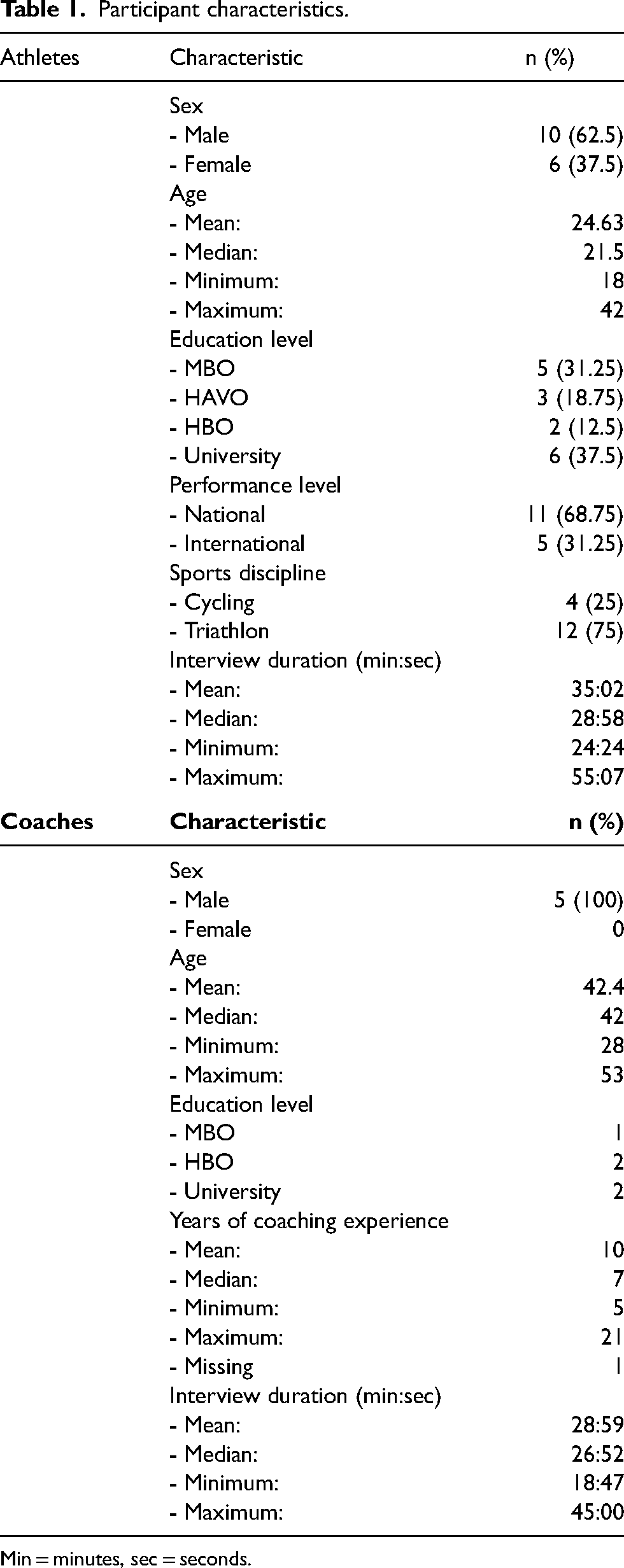
Min = minutes, sec = seconds.
The average duration of athlete interviews was 35:02 min (range: 24:24–55:07 min), while coach interviews averaged 28:59 min (range: 18:47–45:00 min). Technical issues were encountered, resulting in two failed recordings (Athlete 16 and Coach 1) and three interviews being prematurely terminated (Athlete 7, Athlete 8, Athlete 14) due to recording software problems. Handwritten field notes were used for these interviews. Despite these issues, the 21 interviews yielded rich, meaningful descriptions that provided in-depth perspectives aligning with the research question.
Athletes’ perceptions of genetic testing
The main themes and subthemes summarising athletes’ perceptions of genetic testing for sports are illustrated in Figure 2.
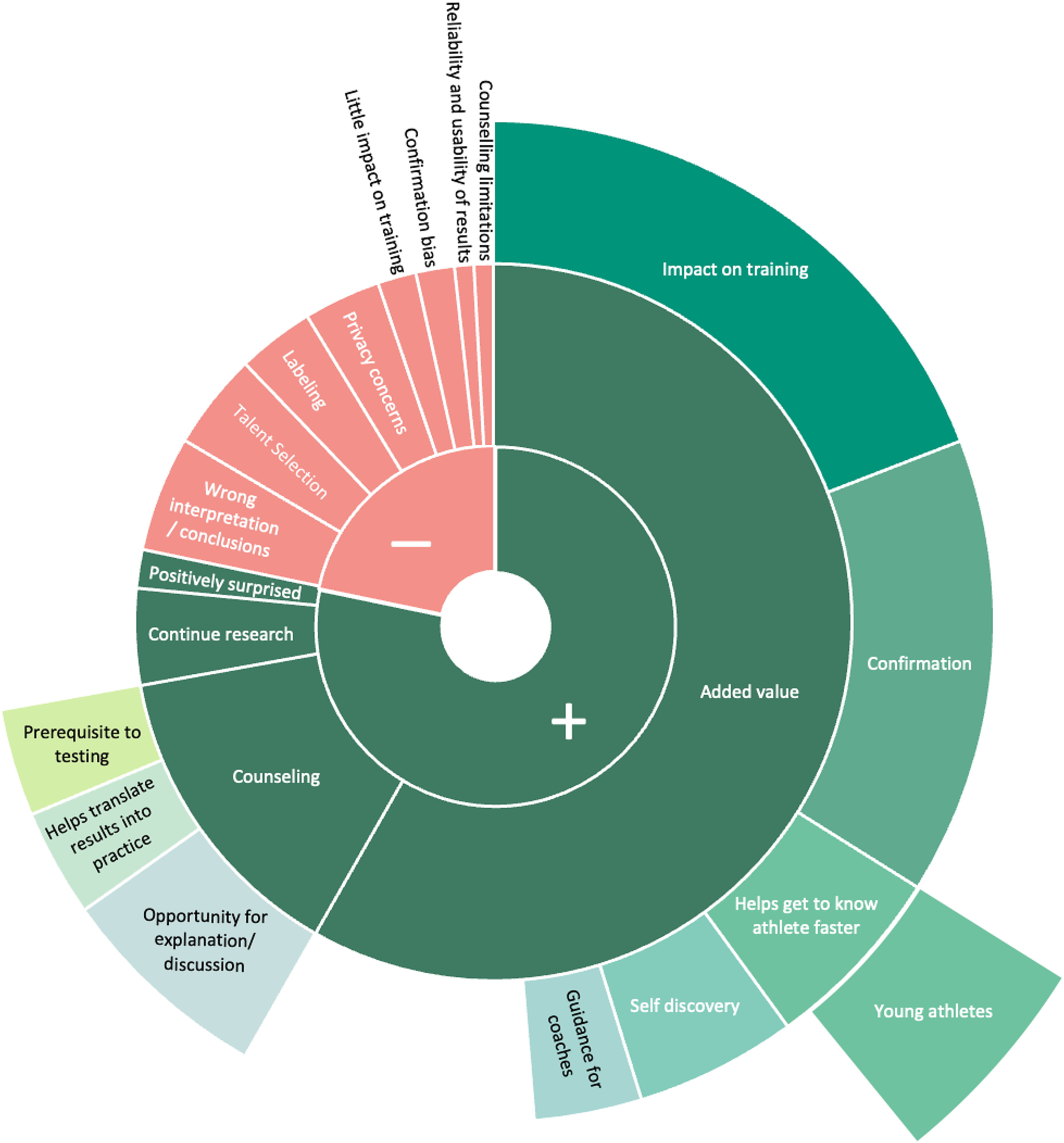
Athletes’ perceptions of genetic testing for sports. The inner circle represents the main categories (positive and negative perceptions) and the outer circle the smallest subthemes. This sunburst graphic is based on 116 statements in total. Green/blue = positive perceptions. Pink = negative perceptions.
Positive perceptions
Main theme: added value
All athletes recognised the potential added value of genetic testing for sports. ‘[…] if this helps maybe half a percent or one percent, then you are already a bit closer, I think. So yes, I am optimistic.’ Athlete 1 ‘[…] I found the nutrients very useful. We can really effectively change something with that, and we can really look at that and say, this and this I have to remember and really use, because otherwise I have a greater chance of injury or illness.’ Athlete 10 ‘[…] in the last few years, I've just learned to listen to myself a lot and learned what's good for me. So even if the report had said […] that I would have to train very differently, I probably wouldn't do that. Because I just know […] what I am doing now works, so I definitely shouldn't stop doing this.’ Athlete 11 ‘[…] caffeine. I had never used that myself. And then this does give you an idea, like okay, you seem to be a normal responder, so just start with what's commonly used. […] it still gives a starting point, I think.’ Athlete 11 ‘[…] you can eliminate those mistakes you make with trial and error. So, you can start working towards a goal a little faster.’ Athlete 4
A recurrent subtheme among half of the athletes was that they used the genetic test to confirm beliefs and knowledge about themselves. The genetic report was perceived as a kind of reference used to help explain their characteristics/feelings and to help athletes convince coaches about their training preferences. ‘I now saw it in black and white. Whereas I have always been told it's in my head. So now I also thought, see, I just can't dig deep twice in one day […].’ Athlete 4 ‘I have struggled for years to make it clear to coaches that a lot of intense track training for running does not work for me. And now (name coach) has said himself, “yes, so this is how a track training looks like for you […]”. And that now completely aligns with what I had in mind. So, in that regard, the biggest gain lies there.’ Athlete 10 ‘[…] you always know your own body pretty well, but this way you have a bit of a better perspective […] Okay, so some things I didn't know so well and some things I was right about.’ Athlete 12
Main theme: counselling (and counselling limitation)
Many athletes highlighted the importance of counselling before and after genetic testing. Four athletes emphasised its necessity, including Athlete 4 ‘I would really keep this as a prerequisite’. Counselling was seen as a chance to have results explained and to discuss results with coaches, improving athletes’ understanding of the genetic report and enhancing its practical application. ‘[…] you can make a plan together and he [the coach] can explain a number of things. This really does add value. It also comes to life much more when you go through it with your coach.’ Athlete 4
Main themes: continue with research; positively surprised
Less common themes included ‘continue with research’ and being ‘positively surprised’ by the amount of information in DNA. A minority of athletes encouraged further research to find more variants associated with sports characteristics and to test other athlete groups. The former was expressed by Athlete 2 as: ‘I saw that for some you had two variations and for others you had many. Of course, that depends on how much is known, I understand that. But in the future, it would of course be great if you could research lots of variations.’ Athlete 2
Negative perceptions
Despite the above predominantly positive views on genetic testing for sports, six athletes voiced concerns, including misinterpretations of results, talent selection, labelling, privacy, confirmation bias, and the reliability and usability of results. In addition, two concerns: little impact on training and counselling limitations, were previously noted.
Main themes: wrong interpretation/conclusions; talent selection; labelling
Misinterpreting genetic results as the ‘whole truth’, possibly leading to wrong conclusions about an athlete's capability, was the most discussed concern. Athlete 5 stressed explaining the limitations of the genetic report to athletes ‘I think it's important to tell athletes to not take it too literally.’ and Athlete 11 made the link between misinterpretation of genetic results and their misuse for talent selection: ‘If it [the report] had said I have absolutely no endurance capacity but a lot of power […] there is a very high chance that the coach would say “then maybe you are not suited for triathlon”’. Athlete 11
‘[…] once people know something, they're not going to forget it. So, once they have seen an athlete's [genetic report], that athlete gets a little bit of a label like “oh yeah, that's a power athlete and not endurance”. And I think precisely because of that, the training might not be as good. Because if a coach thinks “well, that's not an endurance athlete anyway”, then as an athlete you're actually disadvantaged.’ Athlete 11
Main themes: reliability and usability of results; privacy concerns; confirmation bias
Athletes touched on the limited evidence for some athlete characteristics (few known genetic variants), reducing usability of results. ‘For example, for fat it says there are 85 variations, but for lactate elimination there is basically only one. So, if that one [variation] is not present, then you have nothing. While it could be that there are still many others, so to speak. Some things are very accurate, but some things […] then it is quite unclear because that doesn't really say much.’ Athlete 1
Lastly, two athletes pointed out that athletes and coaches used the DNA results to try explaining athletes’ characteristics (i.e., confirmation bias). In Athlete 11's words ‘you're searching for an example that fits’.
Coaches’ perceptions of genetic testing
The main themes and subthemes summarising coaches’ perceptions of genetic testing for sports are illustrated in Figure 3.
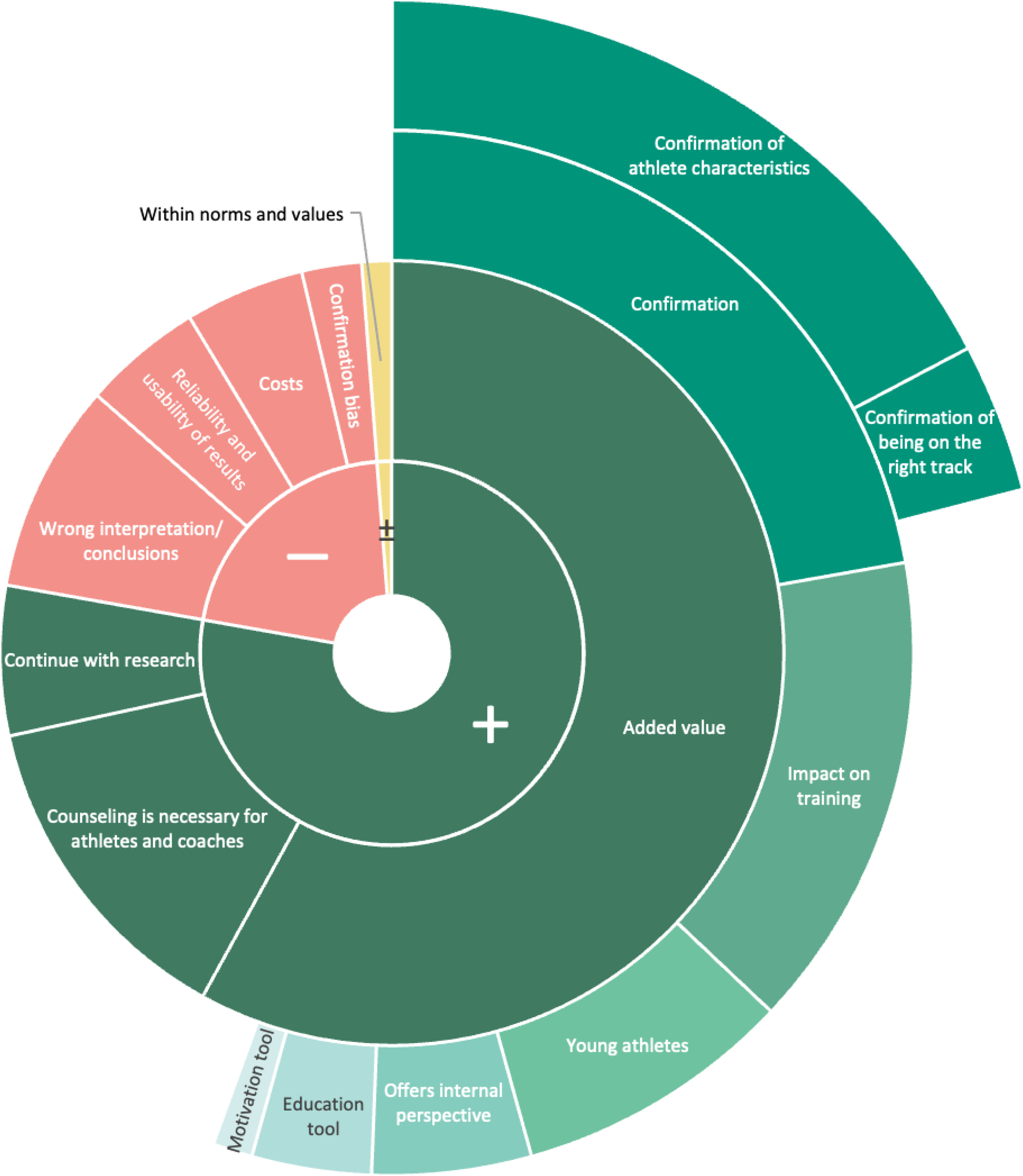
Coaches’ perceptions of genetic testing for sports. The inner circle represents the main categories (positive, negative and neutral perceptions) and the outer circle the smallest subthemes. This sunburst graphic is based on 82 statements in total. Green/blue = positive perceptions, pink = negative perceptions, and yellow = neutral perceptions.
Positive perceptions
Main theme: added value
Similar to athletes, all coaches acknowledged the potential added value of genetic testing for sports. Moreover, coaches focused on similar core topics: confirmation, impact on training, and the value for young athletes. The genetic test validated coaches’ existing beliefs and knowledge about athlete characteristics and training strategies. ‘[…] it's actually kind of a confirmation of what we've learned over the past years.’ Coach 5. Another coach shared that the test increased an athlete's confidence in the training plan. On the other hand, the genetic test also helped coaches understand and accept athletes’ behaviours better. This overlaps with the belief that genetic testing offers an objective internal perspective for both coaches and athletes. ‘From time to time, he says I have a little bit of a sore throat or a little bit of this and that. And then I sometimes say […] he shouldn't whine so much. But the report shows that he can indeed be sensitive to that. So, then you look at it in a different way. […] it's really just the way he is.’ Coach 4.
Moreover, there was consensus about the value for young athletes, ‘because they still have a longer period in which they can develop.’ Coach 4. ‘[…] then you can also really align the training well in the first years.’ Coach 3. All agreed that it could help get to know young athletes faster and help determine a training direction. Coach 4 went a step further by proposing the potential use of genetic testing for talent identification. ‘But perhaps it would also be very interesting to [test] the junior athletes, who can be moulded a bit more and are more malleable […] to see where their areas of improvement lie or where their talent lies.’ Coach 4
Main theme: continue with research
Another main theme was that coaches supported further scientific research related to sports genetics to improve genetic reports, test young athletes, and compare different sports.
Main theme: counselling
Most coaches emphasised the necessity of counselling for both athletes and coaches. The genetic report ‘[…] stands or falls with the explanation provided.’ Coach 5.
Additionally, discussing reports with other coaches helped interpret results and their potential impact on training. ‘[…] I didn't have enough knowledge about that yet. Like what exactly should I do with these findings? But together with [name coach] we very practically [discussed] that instead of that training, you could do those intervals.’ Coach 3
‘[…] I do think that you indeed need somewhat of an explanation, of course. For example, for some things only one SNP was examined, and for others I think it is 85 or so. So, you need to get that explained. If I would get it without explanation […] then you have to take your time with it. Or at least, well, know that you can draw the correct conclusions.’ Coach 5
‘[…] where, so to speak, the risk of the report lies, is that if an athlete gets it without explanation, wrong conclusions can be drawn. You always have to kind of explain the story behind it.’ Coach 5.
Negative perceptions
Main theme: wrong interpretation/conclusions
The risk of drawing wrong conclusions as a result of wrong interpretation of genetic results was repeatedly mentioned by two coaches. They stressed the need for careful interpretation, cautioning that the danger lies in athletes and coaches interpreting results as the absolute truth. ‘I think if you were to send this to the average athletics or swimming club coach, for them this is the truth. And it is less directive, but they're going to blindly rely on this if they don't have the underlying information […] a good explanation. Then of course it can also be misused very quickly. That this is actually the truth, and that this is just how it is […] actually the same way the athletes also think, this [athlete] will become a world class athlete and this [athlete] will not.’ Coach 5
Main themes: cost; reliability and usability of results; confirmation bias
Other concerns about genetic testing in sports included cost, reliability and usability of results, and confirmation bias. Most coached perceived costs as a barrier to the implementation of genetic testing in sports, while the reliability of results was questioned by one coach. ‘How much explained variation are we actually talking about? […] And how sure am I actually of what I'm saying?’ Coach 2 ‘[…] it's a bit of “wishful thinking” sometimes, but it completely confirms how [name athlete] is. But of course, that's tricky, because you want to see things sometimes. It's a bit like reading a horoscope, then you also think, yes, that's right! But of course, that says nothing.’ Coach 3 ‘[…] as a coach or as a trainer I can do anything because the end justifies the means. As long as we win a medal in the end. But I'm not a scientist. As a scientist, I have told a lot of nonsense, I think.’ Coach 2
Neutral perceptions
Main theme: within norms and values
Coach 5 had a neutral view towards genetic testing for sports, stating they had ‘[…] no problem […]’ with it. They perceived it as simply collecting information and distinguished it from doping by indicating that results still need to be translated into practice to have any influence on performance.
Discussion
Athletes’ and coaches’ positive perceptions were mainly linked to the potential added value of genetic testing and the importance of counselling. Athletes’ negative perceptions were primarily associated with incorrect interpretations and conclusions, the use of genetic tests for talent selection, labelling, and privacy concerns. Coaches, on the other hand, were concerned about incorrect interpretations and conclusions, the reliability and usability of results, and costs of testing.
Previous research indicates a wide variability in views surrounding genetic testing.30,36–38 To the best of our knowledge, no qualitative study has been conducted to explore the perceptions of genetic testing within a sporting context. Nevertheless, several survey studies have examined the views on genetic testing among athletes and stakeholders.29–31,39
Practical applications
Three intervention studies have examined the effects of genetic profiling on training improvements, yielding promising results.10,40,41 These findings align with the perceptions of most athletes and coaches involved in the current study, who believe that genetic testing can influence various aspects of training, including recovery and training strategies and diet. This also concurs with the findings from survey studies, which supported the use of genetic testing for individualising training to improve sports performance.29–31,39
Divergent perspectives were shared among current participants regarding the degree of impact, with some athletes indicating a substantial influence on their training routines while others perceived minimal effects. This variation was also reflected in the perceived usefulness of the characteristics tested. Phenotypes like endurance, power, and psychology (stress/resilience) were considered less beneficial by experienced athletes who likely were already familiar with these traits. Conversely, phenotypes perceived as useful for both young and experienced athletes included information related to nutrition (caffeine response and nutrient deficiencies) and injury risk. For instance, athletes adjusted their supplementation regimen when genetic tests indicated an increased risk for vitamin D deficiency. Furthermore, the perception that genetic testing could be used to mitigate the risk of injury corresponds with the findings of some survey studies.29,30,39
Although genetic associations with factors such as injury and nutrition have been demonstrated, these relationships are far from being firmly established. Furthermore, it is unclear how much influence these associations have in a real-world environment. As mentioned in the introduction, many of these studies have small sample sizes, lack replicability, and are not specific to any particular sport. Therefore, the translation to practical applications of DNA testing should be carefully considered for each athlete.
Finally, both the survey data and our study findings suggest that genetic testing is not widely applied in practice.29,30,39 This gap between its recognised potential and actual use highlights existing barriers to adopting genetic testing in sports performance contexts.
Barriers of genetic testing
Two survey studies have identified several barriers to the adoption of genetic testing in sports, including a lack of awareness, the high costs involved, insufficient scientific evidence to support its efficacy, challenges in interpreting the results, time constraints, cultural factors, potential reactions from the media, and ethical concerns such as data privacy.30,39 Similarly, the present interview study has identified barriers including challenges in interpreting results, ethical concerns about privacy such as the sharing of results, dilemmas related to discrimination and talent selection, and doubts regarding the reliability and usability of genetic test results. Additionally, high costs were perceived as a barrier by coaches, a theme not echoed by the athletes. This highlights the pragmatic perspective of coaches, who are often tasked with managing budgets and resource allocation for their athletes’ training programmes.
Reliability/usability of test results
Coaches, in particular, voiced concerns over the current reliability and practical applicability of genetic test results, highlighting apprehensions about the robustness of findings when only a limited number of genetic variations are examined for any given trait. Such scepticism reflects broader doubts regarding the validity and utility of genetic insights for sports performance optimisation.11,37,38 These perceptions are consistent with the views reported in the survey by McAuley et al. (2021), where most stakeholders expressed that genetic testing currently offers limited utility in sports yet holds promise for future applications. 30 To address these concerns and enhance the credibility of genetic testing in sports, it is crucial to undertake additional research aimed at identifying more genetic variants associated with various athletic traits. In fact, this was an important theme brought up by both athletes and coaches.
Wrong interpretation and conclusions
Another theme addressed by participants in the present study centred around the potential for wrong interpretations and conclusions drawn from the genetic results, particularly within the context of coaching and decision-making. Many athletes viewed the genetic results as a gold standard, ‘the absolute truth’, which could be used to understand their external reality. Consequently, athletes may place unjustified confidence in the accuracy of genetic testing outcomes. Many coaches and athletes alike unknowingly fell prey to confirmation bias, selectively interpreting genetic test results to reinforce preconceived notions about athletes’ capabilities, their training requirements or coaches’ training strategies. Particularly concerning was the admission by one coach that they purposely employed confirmation bias to push their training agenda, saying that the end (a gold medal) justifies the means. This highlights that the limitations of genetic testing are not well understood and underscores the challenge of maintaining objectivity in interpreting genetic information. Misinterpretation of genetic findings could lead to misguided training prescriptions that may not align with the athlete's actual needs or potential and to the use of genetic results for purposes they were not intended, such as talent selection. 37 The fear of being labelled or stigmatised based on genetic predispositions became evident among athletes, underscoring the psychological impact of genetic testing.
Talent identification
While two surveys indicated a perceived utility for genetic testing in talent identification,29,30 the perspectives elicited from athletes and coaches in the current study, and the survey by Pickering et al. (2021) reflect a more sceptical stance. 39 However, it is important to note that one interviewed coach expressed a hopeful perspective regarding the potential use of genetic testing as a talent identification tool, particularly in the context of junior athletes. Besides this, the overall negative perceptions towards using genetic testing for talent identification align with two established position statements in the field of sports genetics. These statements emphasise the lack of scientific evidence supporting the use of genetic testing for talent identification and selection.11,37 The current consensus is that it is unethical, immoral, and unlikely to give useful information.36,39,42
Privacy concerns, sharing results and autonomy
In the present study, not all athletes felt comfortable sharing their genetic test results with their coaches, in contrast to the findings by Hercher et al. (2016). 31 This discrepancy may be explained by the different phenotypes investigated in the two studies (concussion risk in Hercher et al. versus a broader range of phenotypes). Athletes’ concerns surrounding sharing results and privacy in the present study may relate to the potential misinterpretation of the DNA results by coaches. Therefore, it is crucial that coaches approach the interpretation of genetic test results with sensitivity, critical thinking, and a recognition of the multifactorial nature of athletic performance.
These concerns expressed by athletes highlight that athletes should have the autonomy to decide whether to share DNA results and whether to undergo genetic testing in the first place, without feeling pressured or obligated to do so. Establishing clear guidelines and ethical standards for the management, storage, and use of genetic information in sports is essential.
Knowledge and counselling
The survey study conducted among professional football stakeholders in the UK, revealed a significant gap in knowledge of genetic testing. 30 Most of the respondents (89%) indicated that their knowledge of genetic research/testing was insufficient. This finding aligns with observations from the current study, where most participants lacked prior experience with genetic testing, and their understanding of DNA ranged from non-existent to low. Athletes were surprised by the wealth of information offered by DNA analyses, underscoring a limited understanding of genetics.
This gap in knowledge paired with high interest in genetic testing, 30 suggests a need for educational initiatives. Interestingly, the interviews suggest a possible correlation between higher levels of education and a greater ability to critically evaluate genetic test results. The importance of education is further supported by the expressed necessity for counselling, both in McAuley et al. and this study. Specifically, 91% of the McAuley et al. survey respondents felt that genetic research was not effectively communicated to coaches, practitioners, and players, and about half expressed a desire for regular access to genetic counselling. 30 This latter approach may help address the limitation of counselling experienced by one athlete in our study that they had already forgotten what the results meant (Athlete 12).
Additionally, to mitigate the potential privacy concerns discussed above, we advocate for the implementation of separate counselling sessions tailored to coaches and athletes. The segregation of these sessions is crucial due to the sensitive nature of genetic information and the risks of data breaches, which could have far-reaching implications for an athlete's career.
Overall, enhancing genetic literacy through counselling and workshops could foster a more nuanced understanding of genetic testing, its methodologies, and its uncertainties among athletes and coaches. Such educational efforts are essential to maximise the benefits of genetic testing while maintaining a critical perspective on its current evidential basis.
Strengths and limitations
To start, this is the first interview study on the perceptions of genetic testing among professional endurance athletes and coaches thereby offering a qualitative perspective of the topic. Second, triangulation was achieved by interviewing both athletes and coaches, and by two independent researchers conducting the data analysis. 43 Third, despite the relatively small sample size, the study achieved data saturation. Fourth, the study included both male and female athletes, with females comprising 37% of the sample, ensuring a diverse representation of perspectives. Fifth, no participants dropped out of the study, ensuring the completeness of the data collection process.
There are also some limitations to this study. First, the interviews were relatively short with a mean length of 35 minutes. Further, some interviews encountered recording problems due to technical issues. However, for the most part, detailed handwritten field notes successfully filled gaps in recording. Second, the expressed perceptions may not fully represent the broad endurance sports ecosystem. Expanding interviews to include different endurance athletes, beyond triathletes and cyclists, could provide more comprehensive insights. Additionally, the inclusion of other stakeholders such as directors, scientists and physiotherapists could offer a more complete view of the ecosystem. Third, in this study, coaches acted as counsellors in explaining genetic reports to athletes, likely contributing to thematic overlap between athletes’ and coaches’ responses. Further, although coaches did not have formal education in genetics, they had sports science qualifications and were trained by the researcher MK, who is familiar with genetic counselling. Fourth, the results of the genetic test may have influenced athletes’ perceptions. For example, an athlete with ‘favourable’ DNA test results may have responded in a more positive way than an athlete who perceived their results negatively. It would be valuable for future research to investigate this issue. Finally, the interviews were conducted in Dutch and later translated into English for analysis, introducing a potential for bias in translating concepts. 44 To mitigate this, the initial translation was reviewed by two researchers to ensure accuracy, with any discrepancies resolved through discussion. However, a backtranslation process was not performed.
Conclusion
Athletes and coaches mostly had positive perceptions towards genetic testing in endurance sports and believed that it can particularly add value for young athletes and in terms of personalising athletes' training. While some participants also brought up the risks and limitations of genetic testing for sports, these perceptions were less common. More research into athletes’ and coaches’ perceptions towards genetic testing is warranted. Their viewpoints can 1) contribute to the improvement of training programmes for athletes and coaches, eventually leading to increased performance and 2) help inform the development of regulations for genetic testing in sports that achieve an equilibrium between athletes’ autonomy and their protection.
Supplemental Material
sj-docx-1-spo-10.1177_17479541241289774 - Supplemental material for Athletes’ perceptions towards genetic testing — an explorative qualitative study among endurance athletes and their coaches
Supplemental material, sj-docx-1-spo-10.1177_17479541241289774 for Athletes’ perceptions towards genetic testing — an explorative qualitative study among endurance athletes and their coaches by Magdalena Johanna Konopka, Anna Roos Leerschool, Gowri Gopalakrishna, Anke Wesselius, Gerard Rietjens and Maurice P. Zeegers in International Journal of Sports Science & Coaching
Supplemental Material
sj-docx-2-spo-10.1177_17479541241289774 - Supplemental material for Athletes’ perceptions towards genetic testing — an explorative qualitative study among endurance athletes and their coaches
Supplemental material, sj-docx-2-spo-10.1177_17479541241289774 for Athletes’ perceptions towards genetic testing — an explorative qualitative study among endurance athletes and their coaches by Magdalena Johanna Konopka, Anna Roos Leerschool, Gowri Gopalakrishna, Anke Wesselius, Gerard Rietjens and Maurice P. Zeegers in International Journal of Sports Science & Coaching
Supplemental Material
sj-docx-3-spo-10.1177_17479541241289774 - Supplemental material for Athletes’ perceptions towards genetic testing — an explorative qualitative study among endurance athletes and their coaches
Supplemental material, sj-docx-3-spo-10.1177_17479541241289774 for Athletes’ perceptions towards genetic testing — an explorative qualitative study among endurance athletes and their coaches by Magdalena Johanna Konopka, Anna Roos Leerschool, Gowri Gopalakrishna, Anke Wesselius, Gerard Rietjens and Maurice P. Zeegers in International Journal of Sports Science & Coaching
Footnotes
Acknowledgements
We express our gratitude to all the athletes and coaches who participated in this study. Their openness and thoughtful engagement were crucial to the successful completion of our research. This work could not have been accomplished without their contributions.
Data availability statement
Data is available on request due to privacy/ethical restrictions.
Declaration of conflicting interests
The authors declared no potential conflicts of interest with respect to the research, authorship, and/or publication of this article.
Funding
The authors received no financial support for the research, authorship, and/or publication of this article.

Supplemental material
Supplemental material for this article is available online.
References
Supplementary Material
Please find the following supplemental material available below.
For Open Access articles published under a Creative Commons License, all supplemental material carries the same license as the article it is associated with.
For non-Open Access articles published, all supplemental material carries a non-exclusive license, and permission requests for re-use of supplemental material or any part of supplemental material shall be sent directly to the copyright owner as specified in the copyright notice associated with the article.
