



Abstract
Understanding of the multidimensional performance characteristics (MPCs) that underlie performance and distinguish athletes of varying performance levels are key for talent development programs. However, in the Olympic combat sport of judo, including MPCs in talent development research is still a recent approach. Hence, little is known about the MPCs of talented youth judoka. Therefore, this study aimed to determine differences in MPCs of talented youth (U18) judoka with varying levels of success in international competition, specified by sex and corrected for body weight. Fifty-two international level judoka (males: n = 28, age: 16.7 ± 0.9 and females: n = 24, age: 16.3 ± 0.9) participated. Multiple linear regressions were performed with performance level as the dependent variable. Performance level was defined as the win rate at international competitions in one competitive season. Anthropometrical (e.g., body height), physiological (e.g., dynamic balance), and psychological (e.g., coping skills) characteristics were used as independent variables. Results showed that win rate of females positively relates to dynamic balance and coping with adversity, and negatively relates to goal setting and mental preparation (R2 = .611, p < .001). Peaking under pressure positively relates to the win rate of males (R2 = .152, p < .05). The extent to which MPCs explain competition performance differs between sexes. However, for both sexes, coping skills seem to be important. Therefore, it is recommended that psychological characteristics are integrated in talent programs of youth judoka next to the judo-specific, physiological and/or technical-tactical trainings whilst taking in consideration the individual differences.
Introduction
Judo is a high-intensity combat sport in which judoka attempt to throw their opponents onto their back or control them during groundwork combat. 1 Actions during a judo competition are highly explosive and require strength and coordination to overcome the opponent through rapid execution of techniques. 2 Competitive judo is organized in weight categories in order to provide some kind of fairness in fight. Besides the physiological differences in these weight categories, unique technical-tactical aspects are observed for each weight category and between sexes.3,4
As in many other sports, and taking the dynamic nature of judo into account, it is not surprising that the development process of talented judoka toward senior competitions is determined by several factors and a complex, non-linear process. 5 Insight into the requirements of high-performance judo can guide and optimize long-term training programs toward world-class sport performance.6,7 High level judo competition success in the cadet (U18) and junior (U21) age category are related to senior success. 8 Yet, it is unclear what development trajectory underlies the success of these high-level judoka. The Groningen Sport Talent Model (GSTM) is a model that can be used to explain the performance development of an athlete over time based on the contribution of person-related, task-related and environmental characteristics. As performance in judo results from different factors, it is important to understand which multidimensional performance characteristics (MPCs) differentiate judoka between and within performance levels. 9 In the GSTM, the MPCs are the person-related characteristics of an athlete which are described according to five domains: anthropometrical, physiological, technical, tactical and psychological. It is assumed that the MPCs can largely explain the development of an athlete. Ideally, the different characteristics that underlie sport performance are monitored by coaches and sport scientists involved in talent development in judo. Thus, if MPCs of successful judoka differ from less successful judoka, these are the characteristics that professionals involved in talent development programs can focus on when monitoring and training their athletes.
Anthropometrical and physiological performance characteristics of senior judoka have been studied extensively.3,10 Judoka with a higher performance level have been found to outscore judoka of lower performance levels on upper and lower body strength. Furthermore, international-level senior judoka have higher upper and lower body dynamic strength than national-level judoka.11,12 In addition, jumping ability and hand grip strength of senior judoka are positively related to competition performance. 13 To unravel what characterizes talented youth judoka, the physiological characteristics of U18 and U21 judoka have been studied before.14–17 Previous research shows that more successful youth judoka are taller and outscore their less-successful peers on: speed, flexibility, strength, and jumping ability.2,15,18–20 However, these studies lack inclusion of youth athletes of high-performance level, both sexes, correction for body weight and/or MPCs. Previous research indicates that the development of males and females differs over the course of a season (e.g., males displayed larger gains in body weight, handgrip strength and jumping performance compared with females).10,21 Hence, performance characteristics to explain the long-term development of male judoka cannot be directly translated to the development of female judoka, and vice versa.
In contrast to anthropometrical and physiological performance characteristics, psychological performance characteristics of judoka (e.g., coping and self-regulation) have been researched less comprehensively.22,23 Coping can be defined as the cognitive and behavioral efforts to manage internal and external demands that are encountered during a specific stressful situation. 24 Additionally, self-regulation can be defined as the extent to which athletes apply control over their own learning to master a specific task and to improve their performance.25,26 The development of coping and self-regulation are considered as important tools to manage challenging situations (i.e., high-level judo competitions) and improve performance. 27 One study showed that elite senior judoka have stable coping skills over a competitive season. 28 Yet, differences in coping within and between judoka of different performance levels of any age category have not been reported to date. Self-regulation is positively related to performance and skills in different domains, including sport.29,30 Youth judoka were included in a study on self-regulation of talented athletes aged 12–16 years. General results showed that international-level competing athletes outscored athletes competing at national level. 29 However, specific self-regulation scores of the judoka were not reported in this study. Hence, the extent to which the reported differences in psychological characteristics such as coping and self-regulation exists in youth judoka remains unclear.
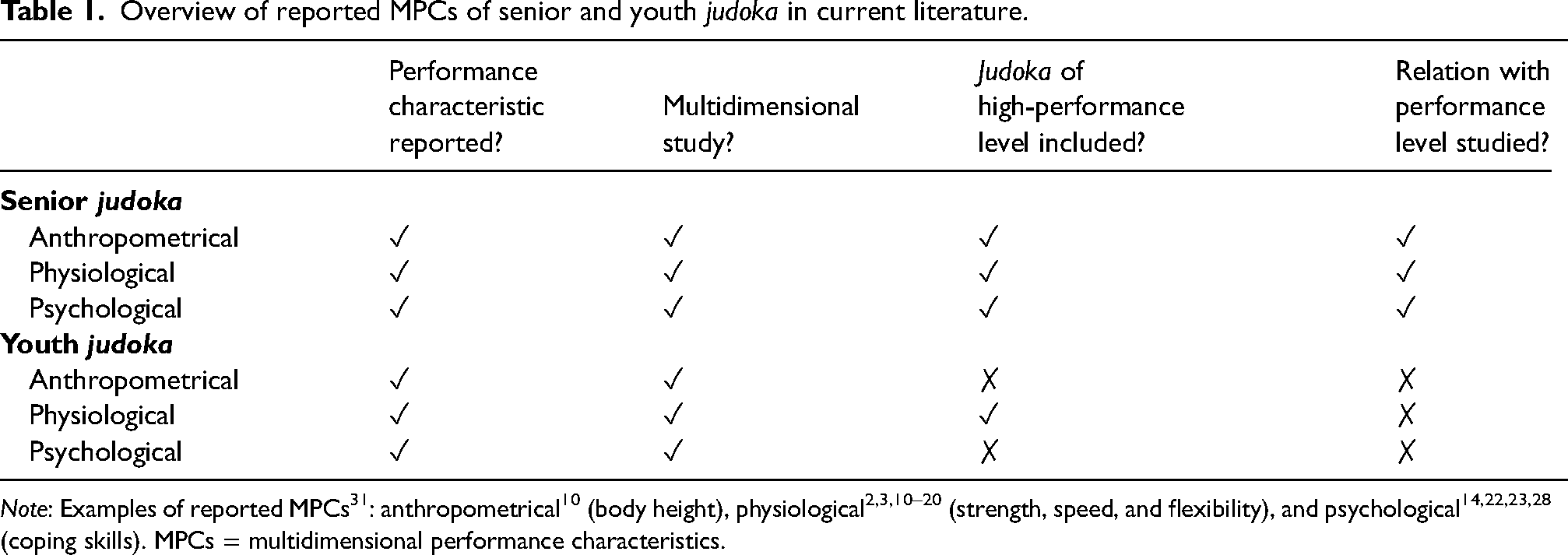
Taken together, quite a bit is known about the MPCs of senior judoka of high performance level. However, current literature is scattered and lacks a multidimensional overview of distinctive MPCs of youth judoka aiming to make it to world-class performance level (see Table 1). 31 Therefore, the aim of this study is to determine differences in MPCs (anthropometrical, physiological, and psychological characteristics) of talented youth (U18) judoka with varying international competition success specified by sex and corrected for body weight. Based on the task requirements for successful judo performance and existing literature on various performance characteristics, it is hypothesized that a combination of anthropometrical, physiological, and psychological tests distinguish judoka of high performance level from judoka of lower level of performance. Moreover, it is hypothesized this combination of tests differs between sexes due to differences in development between males and females at this age.
Overview of reported MPCs of senior and youth judoka in current literature.
Method
Participants
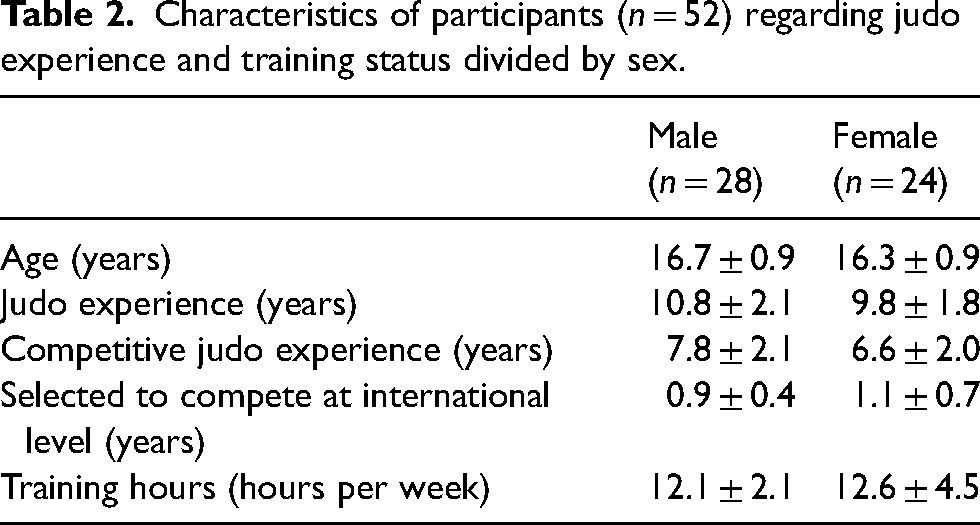
Fifty-two youth judoka in the U18 category participated in this study. Participants were 28 males (Mage = 16.7 ± 0.9 years) and 24 females (Mage = 16.3 ± 0.9 years). The judoka were all selected to represent the Dutch Judo Federation (Judo Bond Nederland) in a series of official international competitions organized by the European Judo Union (so-called: European Cadet Cups [ECC]) in one competitive season. The ECC form the highest competitive level for the U18 age category. Furthermore, the U18 is the first age category in which athletes can be selected for ECC by their national federation. Hence, the maximum number of years of international competition experience participants could have had is three years. Table 2 presents the judo experience, training, and selection status of the participants.
Characteristics of participants (n = 52) regarding judo experience and training status divided by sex.
The University Local Ethical Committee (201800779) approved this study. Prior to participation, all participants received an information letter and informed consent about the aim of the study and use of data. All participants provided written consent for the use of their test scores. If a judoka was younger than 16 years old, both parents or legal representatives also provided written consent. In the Netherlands, written consent of both parents or legal representatives is not required when participants are over the age of 16.
Procedure
An observational study design was used to get insight into MPCs of youth judoka. The anthropometric, physiological, and psychological tests were administered after the international competitive season and before the start of the next competitive season.
Participants completed all anthropometric and physiological tests during one of two testing days organized around national training sessions for U18 judoka. At least one hour of rest was provided between the end of the training session and start of testing to control for fatigue and minimize the effect of the training session. Moreover, intensity of tests was gradually increased in a fixed order, starting with anthropometrical characteristics, and followed by physiological tests. All tests were performed barefoot. In addition, tests were standardized by test protocols that included information about the tests, setup, materials, and score sheets. Tests were conducted by sport science students who were briefed and familiarized with test protocols prior to testing. Every student only conducted one test to control for differences between test leaders. On the testing days, the researchers were present to monitor whether the test protocols were followed correctly. Participants were asked to complete an online questionnaire for psychological characteristics before or after their testing day in their own time. There is no reason to believe that the sequence of testing is influence on the results as the questionnaires focus on psychological characteristics, and the other tests on anthropometrical and physiological characteristics.
Anthropometrical characteristics
Anthropometry measures included body height, sitting height and body weight. Body height and sitting height were measured with a portable stadiometer (SECA 213, Seca Ltd., Hamburg, Germany) with an accuracy of 0.1 cm. The stadiometer has a high interrater and test–retest reliability (Intraclass Correlation Coefficient [ICC] = 0.999) and validity (ICC = 0.997). 32 Body weight was measured with a Soehnle Style Sense Safe 300 scale (Leifheit AG, Nassau, Germany) with an accuracy of 0.1 kg. Reliability and validity of this scale were not reported.
Physiological characteristics
Participants performed three motor coordination and nine physical tests to measure physiological performance characteristics. These tests are part of a non-sport-specific test battery that has been used in previous research on youth judoka.19,33 All test protocols are described in Supplementary File 1. Motor coordination of judoka was assessed with three subtests of the “Körperkoordinations Test für Kinder” (KTK). 34 Namely, the (a) balance beam to assess dynamic balance, (b) jumping sideways to assess faster motor skills, and (c) moving sideways to assess gross motor performance. The KTK is a useful test battery to assess motor competence of talented athletes, including judoka. 35 The KTK has high test–retest (r = .89–.94) and interrater reliability (r = .90–.99), and moderate convergent validity with two other test batteries for motor coordination. 36
Two tests from the Bruininks-Oseretsky Test of Motor Proficiency, Second Edition (BOT-2) were assessed. 37 Upper body strength was determined by the performance of two tests. Sit-ups were used to asses trunk strength and an estimation of shoulder strength was made with knee push-ups. High inter-rater reliability (r > .90), test–retest reliability (r > .80) and content validity (r > .80) for 13–21 year olds have been reported for the two subtests of the BOT-2 test battery. 38
Three tests from the Eurofit test battery were assessed. 39 Flexibility was assessed through the sit-and-reach test, an estimation of horizontal leg power was made using the Standing Broad Jump (SBJ) and the 10 × 5 m shuttle run test was used to evaluate speed and agility. Previous research established reasonable to good test–retest reliability (sit-and-reach: r = .70–.98; SBJ: r = .66–.97; 10 × 5 m shuttle run: r = .62–.96) and reasonable to good construct validity (sit-and-reach: r = .60–.73; SBJ: r = .52–.78; 10 × 5 m shuttle run: r = .62–.85) for these tests. 40
Handgrip strength was measured with a Baseline Hydraulic Hand Dynamometer (Fabrication Enterprises Inc., Irvington, New York, USA). The Baseline dynamometer has a good inter-rater and test-retest reliability (both r > .80), and is a valid instrument (ICC = 0.94) to measure grip strength.41–44
Vertical jumping ability was assessed with the Counter Movement Jump (CMJ) and Squat Jump (SQJ) recorded by the Optojump system. 45 Arm swing was not allowed during both CMJ and SQJ tests so only the lower extremities were tested.46,47 The Optojump is proven to have a strong test-retest reliability (ICC > 0.98) and concurrent validity (ICC > 0.99) to measure vertical jump height of athletes.48,49
Speed was evaluated by two trials of 10 m maximal sprint with split time measured at 5 m. The sprint test times were recorded with photoelectric timing gates (SmartSpeed, Fusion Sports, Australia). The SmartSpeed timing gate system is a reliable measure for straight acceleration such as 10 m sprints with typical error of 0.03 s or less.50,51
Psychological characteristics
Participants completed an online questionnaire to determine their athletic coping skills and self-regulation of learning (see Supplementary File 2). Questionnaires were executed in the web environment of Qualtrics. Participants were allowed to fill in questionnaires either before or after physiological testing in their own time.
Coping was measured with the Dutch version of the Athletic Coping Skills Inventory (ACSI-28).52,53 This questionnaire consists of 28 questions regarding: coping with adversity, peaking under pressure, goal setting & mental preparation, freedom from worry, confidence and achievement motivation, concentration and coachability. Each subscale consists of four items. Small adjustments to the Dutch version of the ACSI-28 were made to make the questionnaire applicable to judo (i.e., “play” and “my sport” were replaced with “judo”). 52 Scores were given on a 4-point Likert scale from 0 (almost never) to 3 (almost always). The original ACSI-28 scale has a reasonable to good test-retest reliability (r = .47–.87) and internal consistency (r = .62–.78) for all subscales. 53
Self-regulation of learning was measured with the Dutch version of the Self-Regulation of Learning Self-Report Scale (SRL-SRS).54–56 Three self-regulation subscales were assessed: evaluation (six items), reflection (nine items), and effort (nine items). Small adjustments to the football-specific questionnaire of Toering et al. 55 were made to use the questionnaire in judo (i.e., “football” and “football player” were replaced with “judo” and “judoka”), comparable as was done previously for competitive swimming. 57 Contrary to the original questionnaire, all items were scored on a 5-point Likert scale from 1 (never) to 5 (always). This way, all measured constructs could be compared to the same scale. The Dutch version of the SRL-SRS was confirmed to be a reliable (ICC = 0.74–0.84) and valid (Cronbach's α = 0.78–0.85) measure. 54 Table 3 shows an example item for each subscale of the questionnaires.
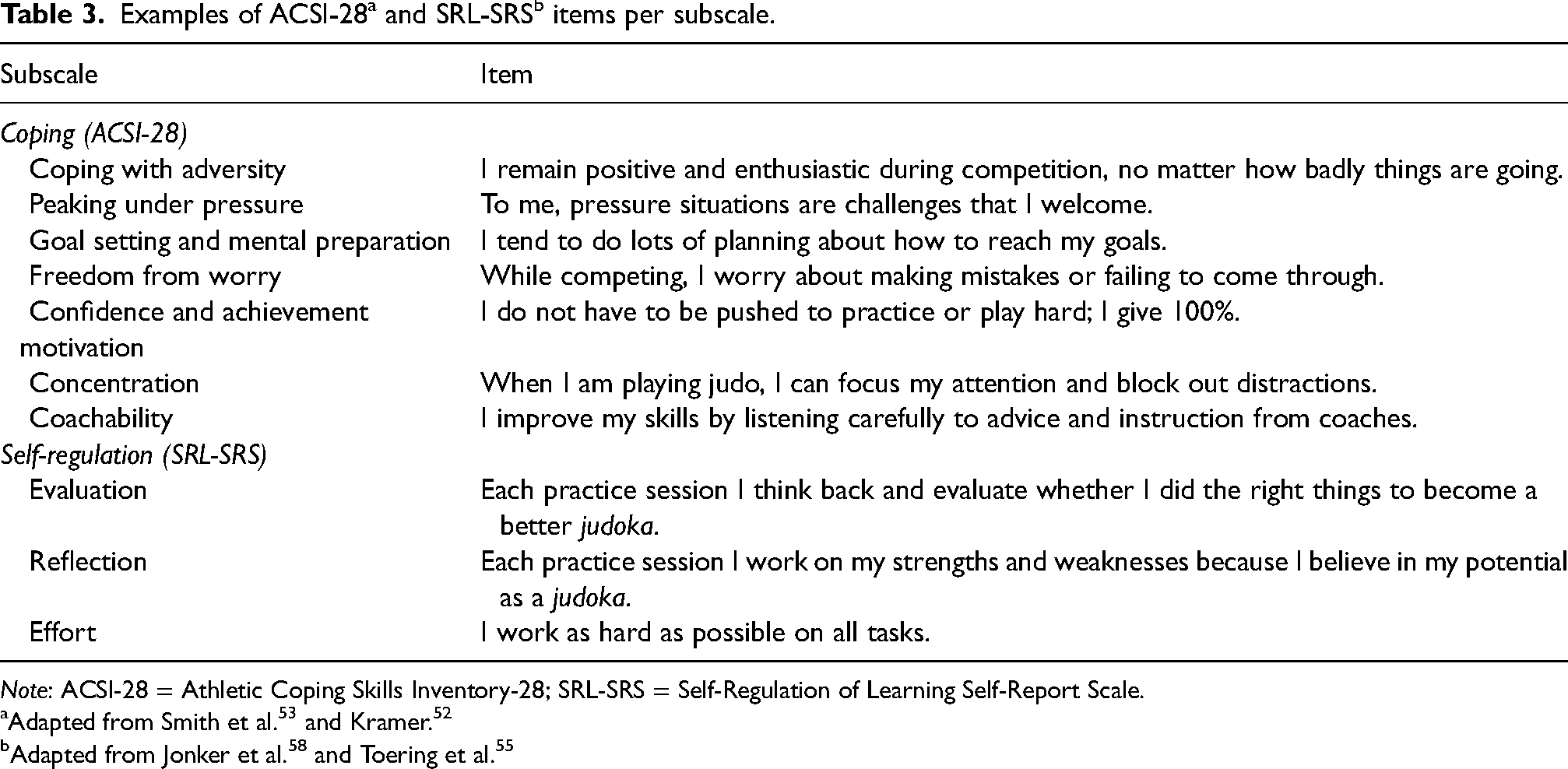
Note: ACSI-28 = Athletic Coping Skills Inventory-28; SRL-SRS = Self-Regulation of Learning Self-Report Scale.
Performance level
Performance level of the participants was defined related to competition outcome in two ways: (a) medal winners vs. non-medal winners at international competitions, namely the ECC in one competitive season and (b) win rate of judoka at the ECC in one competitive season. Win rate of the participants was calculated by the number of matches won divided by the total number of matches fought at ECC.
Data analysis
Mean scores and standard deviations for the MPCs (anthropometrical, physiological, and psychological) of judoka were calculated for each sex separately. Distributions of variables were checked with kurtosis and skewness and variables were considered normally distributed when values were between −2 and 2. If values fell outside this range, the Kolmogorov-Smirnov test was used additionally to show whether data was normally distributed. 59 For the physical tests, the Pearson correlations between test scores and body weight of the participants on the test day were checked to control for the influence of body weight on test outcomes. Hand grip strength (left and right) and body weight significantly correlated for males (left: r = .671, p < .001 and right: r = .725, p < .001) and females (left: r = .473, p = .023 and right: r = .565, p = .006). Therefore, handgrip strength relative to body weight was calculated and used for further analysis. All other correlations between physical tests and body weight were non-significant and had a correlation coefficient of r < .40. Two multivariate analyses of variance (MANOVA) were used to analyze differences between sexes (one for anthropometrical and physiological characteristics and one for psychological characteristics). The MPCs served as dependent variables and sex was used as independent variable. Next, multiple linear regression analysis was used to determine which MPCs are potential predictors of performance level of youth judoka, for males and females separately. The win rate at the international competitions was used as dependent variable. Independent variables were those characteristics that showed a significant (p < .05) or relevant (r > .30 with p < .10) Pearson correlation with the dependent variable (win rate). The variables were entered using the backward method (criteria for entry p < .05 and criteria for removal p < .10). Missing values were excluded listwise from the regression analysis. The assumptions of normality, linearity and multicollinearity were checked and showed no violation of assumptions. Only those independent variables that contributed significantly to the model remained. Effect sizes (Cohen's f2) for multiple linear regression models were calculated and considered as small (<0.02), medium (0.15) or large (>0.35). 60 All analyses were performed in SPSS (IBM SPSS Statistics version 28). For all test, an alpha level of 0.05 was considered significant.
Results
Mean scores and standard deviations of the MPCs (anthropometrics, physiological and psychological) of males and females, are presented in Table 4. One male judoka did not complete psychological questionnaires and one female judoka did not perform the anthropometric and physiological tests. In addition, four participants did not perform all physiological tests due to injury (maximal percentage of missing data: 3.8%). Males and females differ in anthropometrical and physiological characteristics, Wilks's Λ = 1.47, F(19, 27) = 8.274, p < .001, but not in psychological characteristics, Wilks's Λ = .747, F(10, 40) = 1.356, p = .236.
MPCs (anthropometrical, physiological, and psychological) of elite youth judoka (n = 52), divided by sex.
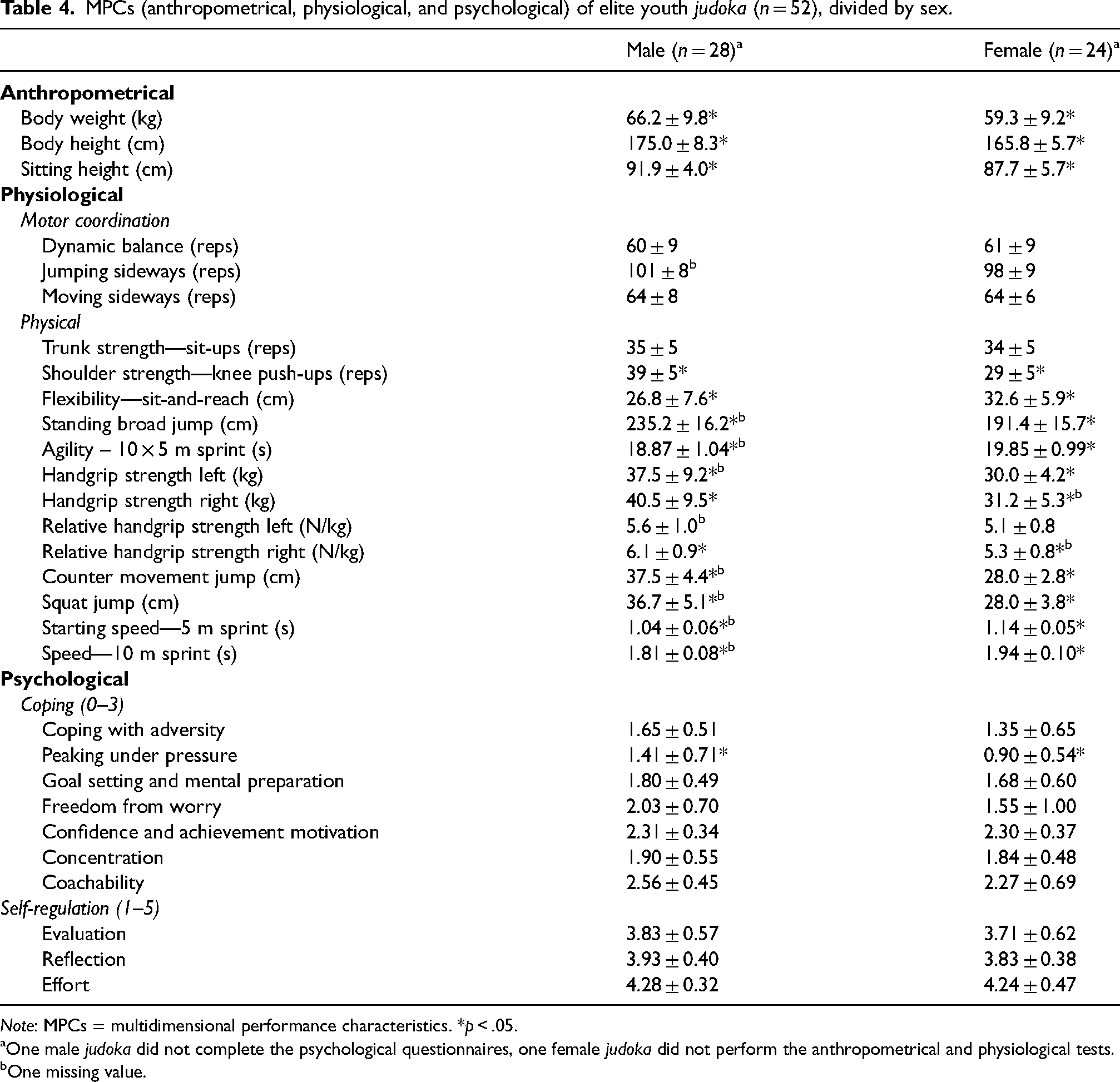
Note: MPCs = multidimensional performance characteristics. *p < .05.
One male judoka did not complete the psychological questionnaires, one female judoka did not perform the anthropometrical and physiological tests.
One missing value.
In terms of performance, males participated in an average of 2 ± 1 (min–max: 1–5) ECC. On average, males fought in 5 ± 4 (min–max: 1–13) judo matches in total at these competitions, of which they won 2 ± 2 (min–max: 0–8) matches. Females participated in an average of 2 ± 1 (min–max: 1–4) ECC competitions in one competitive season. On average, females fought in 7 ± 4 (min–max: 1–15) judo matches in total at these competitions of which they won 4 ± 3 (min–max: 0–12) matches. One male judoka won a medal at the ECC. Seven female judoka won a medal at the ECC. The number of participants who won a medal was considered too small to make group comparisons (medalists vs. non-medalists).
Figure 1 shows the distribution of win rate per sex. Males had an average win rate of 0.260 ± 0.218 (0–0.62). Females had an average win rate of 0.459 ± 0.253 (0–1.0).
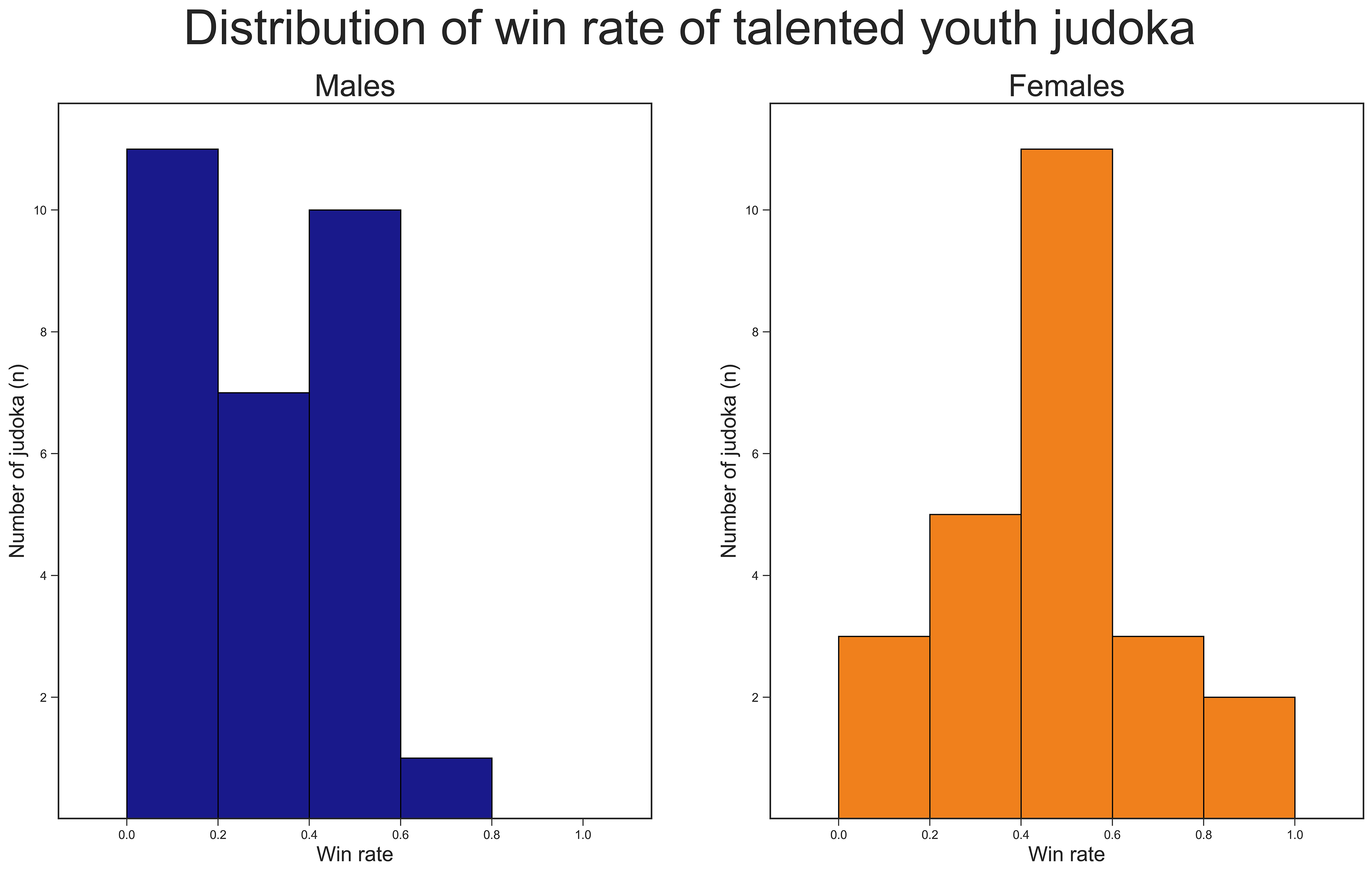
Distribution of win rate of judoka per sex (e.g., 11 males had a win rate between 0.00 and 0.20).
Multiple linear regression
First, Pearson correlations between the MPCs and win rate were calculated. The Pearson correlation matrices for males and females are presented in Supplementary File 3. Based on the correlation matrix, variables were selected for the regression model. For males, peaking under pressure was selected and was included in the final model. For females, the following variables were selected: dynamic balance, sit-and-reach, coping with adversity, goal setting and mental preparation, freedom from worry, and concentration. Multicollinearity among variables was checked with the correlation matrix. The following variables remained in the regression model for females: goal setting & mental preparation, dynamic balance, and coping with adversity. Table 5 gives an overview of the parameter estimates of the predictors of win rate for males and females.
Predictors of win rate of male and female youth judoka.
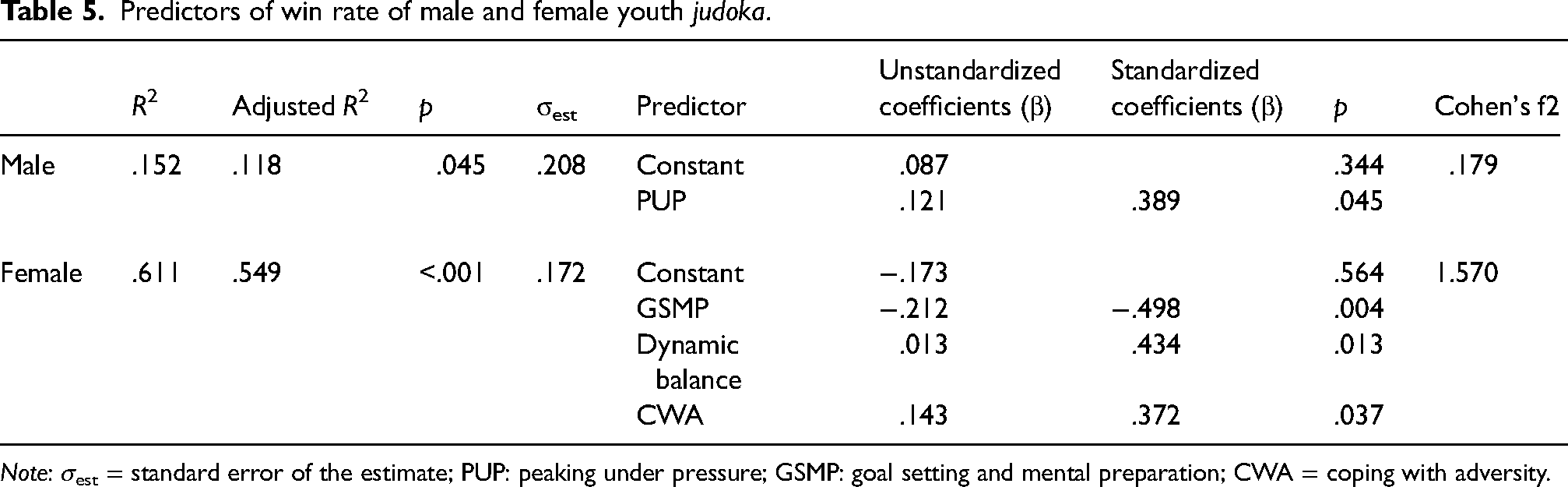
Note: σest = standard error of the estimate; PUP: peaking under pressure; GSMP: goal setting and mental preparation; CWA = coping with adversity.
Peaking under pressure explains 15.2% of the total variance of win rate for males. Peaking under pressure is a positive predictor of win rate of male judoka. This leads to the following equation based on the unstandardized coefficients:

Discussion
This study aimed to determine differences in MPCs (anthropometrical, physiological, and psychological characteristics) of talented youth (U18) judoka with varying international competition success specified by sex and corrected for body weight. The findings of this study suggest that coping skills in particular relate to international competition success of talented youth judoka. As hypothesized, a combination of MPCs (dynamic balance, coping with adversity and goal setting & mental preparation) relates to international competition success for females. Furthermore, peaking under pressure positively relates to the win rate of males.
One of the main findings of this study was that goal setting and mental preparation negatively relates to win rate of females. This is in contrast with literature suggesting that goal setting can increase youth athletes’ likelihood to overcome challenges and, subsequently, achieve athletic excellence. 61 In addition, although goal setting is part of the self-regulation process, no relation between self-regulation and performance was found in this study. 26 It would be reasonable to expect that those judoka who set goals and prepare themselves for competition would manage to achieve higher competition success. This is supported by research on talented gymnast and football players in which high-performing athletes outscore lower-performing athletes on goal setting and mental preparation.62,63 However, in the current study, females who indicate to set training goals and mentally prepare for competition achieved lower competition success. Compared to earlier research in (youth) judoka, females of the current study seem to score relatively low on goal setting & mental preparation.14,28 The low scores could indicate that goal setting & mental preparation is an underdeveloped skill for these judoka. Perhaps at this age, the goals and planning for training sessions are largely determined by the environment (e.g., coaches). Youth judoka may experience relatively little opportunity to set their own goals, and therefore do not apply this skill. In the short term, it could be beneficial to follow the plans of their coach, and possibly unnecessary or even disadvantageous for judoka to set goals themselves if they want to compete at a high level. However, considering further development, it is questionable whether this is still sufficient if judoka want to be successful at senior level. Therefore, it seems wise to develop the skill to set goals and mentally prepare as it may contribute to better future sport performance.64,65 It is up to talent coaches to create a training environment in which they encourage and help athletes to set their own goals for training sessions. Next to that, coaches are advised to involve judoka in preparing their competition plan, to provide athletes the opportunity to develop this skill.
Dynamic balance positively relates to international competition success of female youth judoka. In competition, athletes constantly attempt to disrupt the balance of their opponent, and search for balance disturbances that allow them to throw their opponent. The positive relation between dynamic balance and win rate fits with this. Also, this is in line with earlier research that showed elite judoka have better developed balance capacities than non-elite judoka. 66 In females, leg techniques (so-called: ashi-waza techniques) are frequently used in competition. 67 This choice of technique could explain the importance of balance, as leg attacks ask for the ability to keep one's own balance on one leg while trying to throw an opponent. Compared to other standing techniques that are mostly executed on two legs, it is plausible that the execution of leg techniques requires relatively more balance. If a judoka has a better ability to keep her own balance, the chances of scoring and thus winning competitions will likely increase. Technical-tactical behavior of males differs from females during competitions. For example, males in the cadet age category (U18) demonstrate a higher frequency of sacrifice techniques (sutemi-waza) than females. 68 Hence, dynamic balance might be a less distinctive characteristic for males since sutemi-waza may require less balance ability.
Motor coordination, jumping ability and speed of the participants in this study are comparable to results of talented judoka in earlier research.14,19,33,69 Furthermore, the participants of this study score relatively high on SBJ compared to other talented judoka. 70 Thus, in general, the physiological characteristics of the athletes who participated in this study are of a high level. Current talent programs seem to be designed in such a way that judoka are physiologically well prepared for judo competitions. However, physiological characteristics may not distinguish between good and excellent youth judoka. Besides, the extent to which physiological characteristics of youth judoka relate to future senior competition success is still unknown.15,19
On the other hand, previous research shows that coping skills of athletes play a significant role as predictor of athletic performance. Furthermore, coping has the ability to “level the field” by reducing the influence of physical/technical talent. 71 In the current study, three out of four characteristics related to competition success of participants are coping skills, of which one negatively relates to competition success. Although this is the first study in judo to show the importance of coping related to international competition success, this is an important insight for coaches involved in talent development in judo. Perhaps, at this level of performance, the physiological characteristics are not distinctive between different judoka but rather the psychological characteristics make the difference. Current talent programs seem to include good physiological preparation, but the psychological preparation that is offered to athletes in talent programs may not be optimal yet since less is known about psychological characteristics of youth judoka. 22 Nevertheless, experienced coaches do consider the development of psychological characteristics to be important in the talent development of judoka. 72 Therefore, coaches are recommended to integrate psychological preparation in their programs next to the physiological preparation.
The range of win rate of males and females differed in the present study. This may partly explain why stronger and more relations between MPCs and win rate have been found in females than in males. The average and maximum win rate for males (0.260 ± 0.218 [min–max: 0–0.62]) was much lower than for females (0.459 ± 0.253 [min–max: 0–1.0]). To be successful in the cadet age category (U18) at ECCs, males have to fight through a wide field of international competitors with some male categories on occasion having double the number of competitors compared to female categories. 73 Practically, this means that males have to fight up to eight matches to compete for the medals, compared to a maximum of six matches for females. Possibly, it could be harder for males than females to be successful in this age category. Judoka of both sexes need to adapt to the international level, field of competitors and different fighting styles. This is especially important to keep in mind with this age category, since it is the first age category in which judoka can gain international competition experience at the highest competitive level. More international competition experience affects fighting experience, and consequently, international competition success. 74 Ultimately, the limited range of win rate for males could have caused the relation between competition performance and MPCs of males to be less strong than females in this study. Next to the influence of competition experience on competition success, individual differences in biological maturation should be considered as it influences physical performance of youth judoka.70,75,76 Therefore, it is advised that coaches individualize training programs, and their guidance depends on the performance development of a judoka, even in the same age category.
The strengths of this study are the use of MPCs (anthropometrical, physiological, and psychological characteristics) to determine differences among judoka competing at the highest competitive level. To the best of our knowledge, differences in psychological characteristics of youth judoka within or between varying levels of competition performance had not been researched to date. 22 Thus, results of this study provide valuable insight for professionals involved in talent identification and development in judo. For example, it would be wise to pay attention to psychological characteristics in talent programs. Another strength of this study is the inclusion of both males and females. Talent research in judo often included solely male judoka. However, males and females are not the same and the seasonal judo training effects differ between sexes.10,21 In this study, judoka of both sexes were equally represented, and males and females differed on anthropometrical and physiological characteristics. Thus, when monitoring and training their youth judoka, it is advised that coaches evaluate athletes according to their sex. Thirdly, in this study, we corrected for body weight which is very relevant in sports such as judo where athletes are divided into weight categories. 14 In addition, only judoka who compete at the highest competitive level for their age category (U18) were included in this study and we defined their performance level based on international competition success. From previous research it is known that the definition of high and low performance level can greatly differ in studies. 77 By using the win ratio as a continuous variable, an attempt has been made to do justice to the performance level of the participants without labeling them.
This study comes with its limitations. First, it was not possible to make group comparisons between medal and non-medal winners due to the limited number of medals won by males (n = 1). Therefore, it remains unclear to what extent MPCs differ between youth judoka of high-performance level who perform well internationally (win a medal at ECC) and those judoka who do not have international success yet (selected for ECC, but do not win a medal). However, we did manage to relate MPCs to international competition success within males and females. Although the explained variance for females (61.1%) is relatively high, there is a margin of error of 17.2%. In males, the margin of error is even higher at 20.8%. This means that if based on MPCs of a female judoka, a win rate of 0.5 is predicted the real competition outcome may vary between a win rate of 0.33–0.67. It is not surprising that MPCs cannot fully predict competition outcome since judoka fight against an opponent and the result of a judo match is determined by the interplay of actions between athletes.1–3 Nevertheless, the equations show that psychological characteristics (peaking under pressure for males and goal setting & mental preparation and coping with adversity for females) are most relevant to predict performance of high-performing youth judoka. Possibly, technical-tactical characteristics and/or the environment can account for the remaining percentage of unexplained variance. 78 Moreover, it is reasonable to assume that competition success is influenced by MPCs that are not included in this study. For example, pacing behavior during combats and on competition days may influence competition success since athletes have to decide how to divide their efforts on competition days. 79 Next to that, the MPCs measured in this study seem to fit better with the task requirements for females to be successful in competition than the task requirements for males. Namely, the task requirements for males could differ due to their use of techniques and the larger field of competitors which forces them to fight more matches and divide their efforts accordingly.68,73 Hence, it is reasonable that the explained variance for males is lower than for females as they need a different set of MPCs to be successful than included in this study. Thus, professionals in judo are advised to be cautious if they want to use this model in some kind of way in their own talent programs and encouraged to monitor their athletes multidimensionally. Next to that, caution is needed in generalizing the results of this study too widely to the general population of youth judoka. All examined participants were already selected to compete internationally, and so characteristics were examined that relate to win rate within a group of already high-performing judoka. Those same relations might not hold if the group was less homogenous, for instance, physiological characteristics such as handgrip strength may differentiate between judoka competing at the international level and judoka with a lower level of performance. Finally, as we aimed to gain insight into MPCs that distinguish between youth judoka who compete at the highest level of competition internationally, the number of athletes that the researchers had access to was limited by definition. However, the vast majority of judoka who were invited, participated in the study. Ultimately, this resulted in medium and large effect sizes for the regression model of males and females, respectively.
In the present study, MPCs were related to current competition success. However, the ultimate goal of talent programs is success at senior level. High-level judo competition success in the cadet (U18) and junior (U21) age category are related to senior success. 8 Yet, it is unclear what development trajectory underlies the success of these high-level judoka. Therefore, it is recommended for further studies to follow their athletes longitudinally to unravel the talent pathway in judo.5,7 Current results show that MPCs relate to international competition success of youth judoka, but competition success cannot fully be explained by anthropometrical, physiological and psychological characteristics. Hence, it is recommended to expand the multidimensional approach and add technical and tactical characteristics of youth judoka, as these are important for performing well at the highest competitive senior level.6,31,78 Namely, judo performance is associated with the ability of judoka to execute specific techniques at the right moment in a combat situation whilst quickly adapting to the constantly changing combat environment.78,80 It would be interesting to gain insight into the development of technical-tactical characteristics of youth judoka and the relation with international competition success. Unfortunately, to the best of our knowledge, there are no reliable and valid measurement instruments available that measure technical-tactical characteristics and are feasible whilst maintaining the dynamics of judo. Here lies a challenge for judo coaches, sports scientists and other professionals involved in judo to work together and develop such a test. If the MPCs of youth judoka are known, this can guide coaches in their talent development programs and with performance optimization.
Conclusion
The current study provides insight into what MPCs relate to international competition success within a group of talented youth judoka competing at the highest performance level for their age category. The relations between coping skills (peaking under pressure, goal setting and mental preparation, and coping with adversity) and win rate suggest that psychological characteristics are important for international competition success of youth judoka. Therefore, professionals involved in judo are advised to integrate psychological preparation in their talent programs additional to the judo-specific, physiological, and/or technical-tactical trainings. Furthermore, this study highlights the importance of dynamic balance for judo performance, especially for females. Additionally, findings of this study show that males and females differ in MPCs, and the extent to which competition success relates to MPCs differs between sexes. Hence, the talent trajectory potentially differs between males and females. Therefore, professionals involved in judo are advised to take on an individual approach in monitoring and training their athletes. To conclude, to increase the understanding of long-term talent trajectories in judo, multidimensional and longitudinal monitoring of youth judoka is advised.
Supplemental Material
sj-docx-1-spo-10.1177_17479541241268497 - Supplemental material for Multidimensional performance characteristics of talented youth judoka: Dynamic balance and coping skills relate to international competitive performance
Supplemental material, sj-docx-1-spo-10.1177_17479541241268497 for Multidimensional performance characteristics of talented youth judoka: Dynamic balance and coping skills relate to international competitive performance by Suzan Schoof, Kai Krabben, Maria B. Lojanica, Johan Pion and Marije T. Elferink-Gemser in International Journal of Sports Science & Coaching
Supplemental Material
sj-docx-2-spo-10.1177_17479541241268497 - Supplemental material for Multidimensional performance characteristics of talented youth judoka: Dynamic balance and coping skills relate to international competitive performance
Supplemental material, sj-docx-2-spo-10.1177_17479541241268497 for Multidimensional performance characteristics of talented youth judoka: Dynamic balance and coping skills relate to international competitive performance by Suzan Schoof, Kai Krabben, Maria B. Lojanica, Johan Pion and Marije T. Elferink-Gemser in International Journal of Sports Science & Coaching
Supplemental Material
sj-docx-3-spo-10.1177_17479541241268497 - Supplemental material for Multidimensional performance characteristics of talented youth judoka: Dynamic balance and coping skills relate to international competitive performance
Supplemental material, sj-docx-3-spo-10.1177_17479541241268497 for Multidimensional performance characteristics of talented youth judoka: Dynamic balance and coping skills relate to international competitive performance by Suzan Schoof, Kai Krabben, Maria B. Lojanica, Johan Pion and Marije T. Elferink-Gemser in International Journal of Sports Science & Coaching
Footnotes
Declaration of conflicting interests
The authors declared no potential conflicts of interest with respect to the research, authorship, and/or publication of this article.
Funding
The authors received no financial support for the research, authorship, and/or publication of this article.

Supplemental material
Supplemental material for this article is available online.
References
Supplementary Material
Please find the following supplemental material available below.
For Open Access articles published under a Creative Commons License, all supplemental material carries the same license as the article it is associated with.
For non-Open Access articles published, all supplemental material carries a non-exclusive license, and permission requests for re-use of supplemental material or any part of supplemental material shall be sent directly to the copyright owner as specified in the copyright notice associated with the article.
