



Abstract
Judo is a dynamic and complex sport, and therefore talent programs may benefit from a multidimensional approach to identify clear and reliable performance characteristics in order to monitor and train athletes. However, from both a practical and theoretical point of view, understanding on this topic is limited. This systematic review therefore aimed to (1) identify which multidimensional performance characteristics can discriminate between different performance levels of judoka and (2) find the gaps in literature. To categorize the findings the Groningen Sport Talent Model (GSTM) was applied. A systematic search of MEDLINE, PsycINFO, PubMed, and Web of Science was performed following the PRISMA guidelines. In total 23 studies with good to excellent methodological quality were included. All performance characteristics of the GSTM (anthropometrical, physiological, technical, tactical, and psychological) were represented in the included studies. There is strong evidence to suggest that a broad set of physiological characteristics is needed to manage the demands of judo combats. Additionally, there is strong evidence that performance characteristics related to grip fighting discriminate between judoka of different performance levels and higher performance level judoka are characterized by the ability to throw their opponent and to variate in technique. The findings of this review can be used as a basis for talent development and identification in judo, and to optimize training programs. Future research should focus on increasing the understanding of psychological characteristics of judoka and the multidimensional talent trajectory by conducting longitudinal studies.
Introduction
A dynamic and complex sport such as judo, requires the consideration of a wide variety of variables in order to understand the performance development trajectories of athletes. 1 Identifying performance characteristics for the specific sport is often one of the first steps of researchers.2,3 Based on the identified performance characteristics, benchmarks can be created which are useful for professionals involved in a sport. Ideally, these benchmarks help them identify and develop athletes towards elite performance. Even more than in sports in which performance can be expressed in time (e.g., speed skating, athletics) or other discrete measures (e.g., distance, weight, etc.), talent identification in dynamic and complex sports, such as judo, is relatively difficult and shows the importance of a multidimensional approach.4,5
Judo is a combat sport including high-intensity intermittent actions. 6 Athletes require optimal physical attributes in order to achieve technical-tactical development and success in competition. 7 Judo matches have a 4-min time limit and during a tournament, medallists typically fight five to seven matches. The aim is to score an ippon (full point) to end the match early. This can be done with a variety of tachi-waza (standing techniques) or ne-waza (ground techniques). 8 However, if neither of the athletes score during regular time, the result is decided by a ‘Golden Score’ period without time limitation. Therefore, depending on the points scored, judo matches can last from a few seconds up to 20 min or more. A typical match lasts 3 min, with 5 to 10 s rest periods in between the 20 to 30 s lasting periods of action.9,10 Thus, judoka must be prepared for many competition situations due to the variability in match duration and content.
Next to the dynamic and complex nature of judo as a sport in itself, also the competition format of judo comes with challenges regarding the talent identification process. Previous results in competitions give judoka no guarantee for future success.11–13 In competitions, judoka face their opponents head-to-head in a knock-out system and scores are given by a referee supported by a jury. The outcome can therefore be influenced by the draw, referee as well as by the home advantage.14,15 Interestingly, a loss against the later winner does not necessarily mean a judoka is worse or less talented than the later silver medallist. Therefore, coaches should not identify their talents based on solely competition performance. Taken the requirements of judo into account, professionals involved in talent programs in judo would benefit from a clear overview of performance characteristics that underly judo performance to base their talent identification and development. 16 Such an overview could be used by coaches as guidance for their talent programs and training (e.g., monitor development of judoka).
Researchers have tried to capture the complex nature of judo by identifying anthropometrical and physiological characteristics of (youth) judoka. For example, reference values for coaches to monitor their judoka in training are given for hand grip strength, vertical jump ability and aerobic capacity. 17 In addition, performance characteristics that seem to play a role in judo success of youth judoka (e.g., speed and maximum strength) have been identified. 18 On the other hand, a recent review about the role of psychological characteristics in judo shows that research on this topic is limited. 19 Therefore, the extent to which psychological characteristics play a role in judo is not entirely clear. Furthermore, studies integrating a broader view than solely anthropometrical, physiological or psychological characteristics are scarce. 20
From previous research, it can be concluded that a wide set of performance characteristics is needed to be successful in judo. Talent programs benefit from clear and reliable performance characteristics of judoka. If it is known what characterizes judoka of high performance level, this knowledge will help professionals involved in judo identify, select and develop their athletes in an more evidence based manner. Nevertheless, understanding on this topic is limited, both from a theoretical and practical point of view. A solution is to bring knowledge about diverse performance characteristics of judo together in a systematic review and identify which performance characteristics can discriminate between different performance levels of judoka, and find the gaps in literature. For such a review, the Groningen Sport Talent Model (GSTM), can be used to structure the findings. The GSTM is designed after Newell's constraints-led approach, and is a theoretical model on talent development to describe that sport performance and the development thereof results from the interconnection between the individual (multidimensional performance characteristics), task and environment.21,22 It illustrates how sports performance of a talented athlete develops over time based on biological maturation and self-regulation through learning and training. The multidimensional performance characteristics of the judoka can be divided into five domains: anthropometrical, physiological, technical, tactical and psychological characteristics. It is assumed that these characteristics can largely determine the progression of a judoka. Therefore, if professionals involved in talent programs in judo can use the multidimensional performance characteristics that discriminate between judoka of different performance levels to provide the most optimal environment for their athletes to learn, they can increase the chances of realizing the potential of their judoka.23,24
Thus, to get insight into the multidimensional performance characteristics that distinguish judoka of contrasting performance level, this systematic review aims to (1) identify which multidimensional performance characteristics can discriminate between different performance levels of judoka and (2) find the gaps in literature. It is hypothesized that elite judoka outperform lower performance level judoka on multiple performance characteristics. Moreover, it is hypothesized that most literature is focused on anthropometrical and physiological characteristics, and less research has focused on psychological, technical, or tactical characteristics of judoka.
Method
Study design
The guidelines of the Preferred Reporting Items for Systematic Reviews and Meta Analyses (PRISMA) statement were followed to conduct this systematic review with the focus on multidimensional performance characteristics of judoka of different performance level. 25
Search strategy & eligibility criteria
A systematic search of MEDLINE, PsycINFO, PubMed, and Web of Science was performed (search date: 12-12-2022). The search of MEDLINE and PsycINFO was performed via EBSCOhost. The search strings consisted of index terms and keywords related to: (1) judo, (2) performance characteristics (e.g., anthropometrical, physical, technical, tactical and psychological), and (3) athletic performance (See Table 1 for the implemented search strategy).
Overview of search strategy of this systematic review.
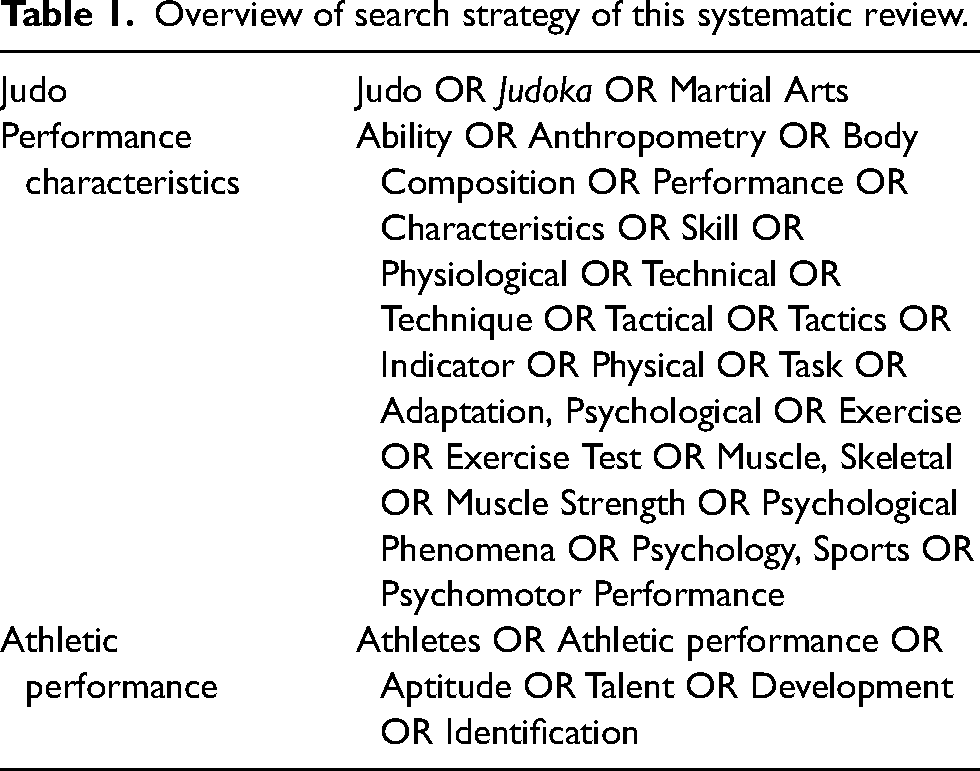
In the first category, the term ‘Martial Arts’ was included to make sure to find all studies related to judo. Martial Arts is a collective term to describe self-defence sports that involve hand-to-hand combat. It includes sports as judo, jiu jitsu, karate, taekwondo, and sambo. Sports other than judo are out of the scope of this review. The third category ‘athletic performance’ was added to exclude studies using the concepts of judo (e.g., fall prevention, self-defence courses) in non-athletes.
The three search strategy terms were applied as keywords in the search engine of the databases. If possible, the categories were applied to all fields in the database search engine. The search terms were combined using the AND operator. If necessary, terms were adapted to fit the index terms of the search engine. For example, to search the PsycINFO-database, terms were adapted to the corresponding index terms of the APA Thesaurus of Psychological Index Terms. An overview of the elaborate search strategy per database can be found in Supplementary File 1.
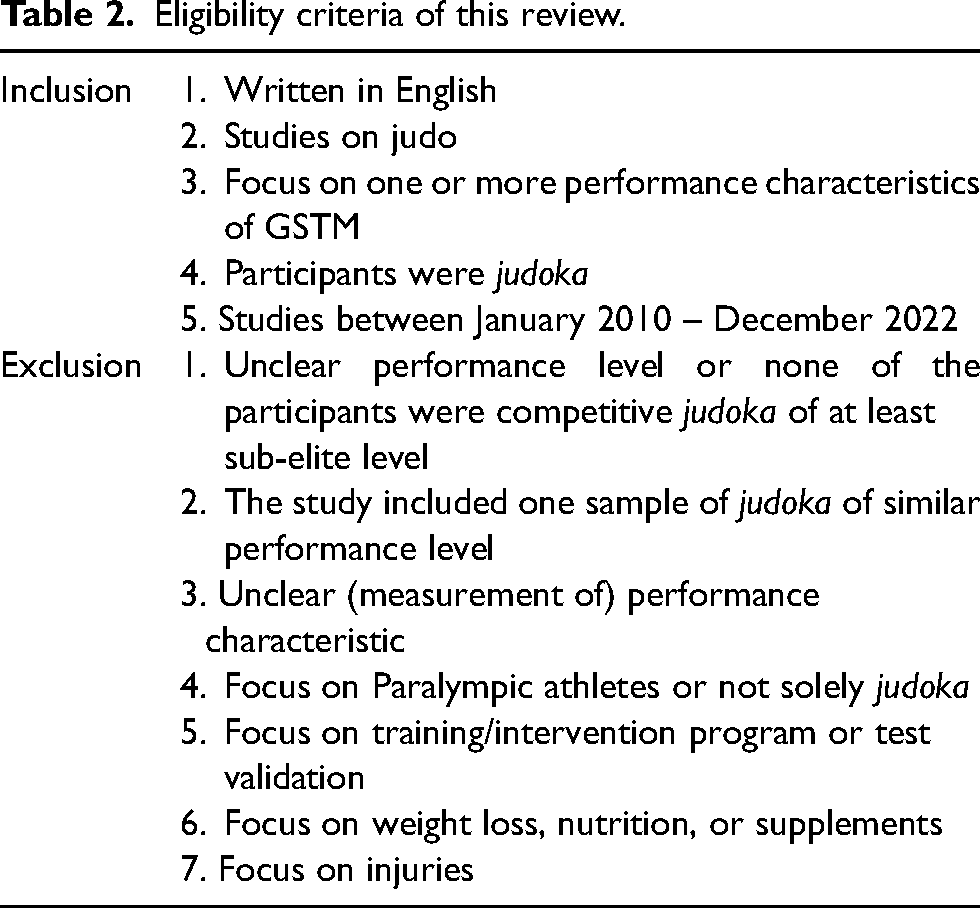
Studies were deemed eligible for this systematic review if they met the inclusion criteria presented in Table 2. Studies were only included if they were dated after January 2010 to adjust for rule changes made by the International Judo Federation (IJF) to promote more ‘positive’ judo. 26 This review focuses on performance characteristics of competitive judoka of at least sub-elite level. Therefore, studies that included only lower level judoka, according to the classification guidelines of Swann, Moran, & Piggott (2015), were excluded. 27 Judoka were divided into semi-elites (e.g., part of talent-development program), competitive elites (e.g., regularly compete at highest level but no success yet), successful elites (e.g., compete and have success at highest level) and world-class elites (e.g., sustained success at highest level). Also, studies on Paralympic judo athletes were excluded since the rules and regulations of Paralympic judo are adapted to visually impaired competitors. These athletes most likely possess highly developed qualities like balance and touch proprioception. 28 Therefore, their performance characteristics potentially differ from regular judoka and a specific review is needed.
Eligibility criteria of this review.
Study selection and data extraction
The study selection and data extraction was conducted in a few phases. First, the results of database searches were exported to EndNote (version 20.2) software. The software of EndNote automatically removed duplicates of imported studies. Secondly, two authors (S.S. & F.S.) independently screened studies on title and abstract structured by the software of Rayyan, using the inclusion criteria as guideline. Third, the same two authors independently performed a full text screening based on exclusion criteria and afterwards discussed conflicting decisions to reach a consensus. If consensus was not reached, a third author (M.E.G.) was consulted to assess the study. During the full text screening phase, relevant data was extracted from the included studies to determine the final in- or exclusion of the study.
Additionally, if screened studies included citation of possible relevant studies, these were screened at the abstract level. When this screening showed the potential of inclusion, full text was retrieved and reviewed. Moreover, studies that were found through secondary search, such as in the reference list of a systematic review on a similar topic, were added to the full text assessment if they met inclusion criteria.
Quality assessment
Two authors independently assessed all included studies on overall methodological quality based on the “Guidelines for critical review form – Quantitative Studies” by Law et al. (1998). 29 All scores were compared, and conflicted scores were discussed among authors until consensus was reached. In case of remaining conflict, a third author assessed the study. The guidelines of Law et al. consist of 16 items that aim to objectively assess a scientific research article on various components (e.g., sample, reliability, validity, data analysis, practical implication, limitations). If the criteria was met, the outcome on an item was identified as 1. If the criteria was not met, the item was scored as 0. Due to ambiguities or items that were not applicable to the studies included in this review, a number of adjustments were made to the assessment tool (see Supplementary File 2). A total score was calculated in percentage to allow for comparison between studies. Total scores below 50% were considered low methodological quality. Total scores between 51% to 75% indicated good methodological quality. An excellent methodological quality was achieved with total scores above 75%. This methodological quality assessment method and corresponding cut-off scores were used in three systematic reviews with similar aims.2,30,31 Studies that were considered of low methodological quality, were excluded from this systematic review. Four categories were used to interpret the level of evidence for the ability of a performance characteristic to discriminate between judoka of different performance levels, according to the categories of van der Fels et al. (2015).32,33 If at least three studies with excellent methodological quality reported consistent results, this was interpreted as ‘strong evidence’. Alternatively, more than four studies of at least good methodological quality and no more than 25% find opposing results, also indicated ‘strong evidence’. Consistent findings reported by two out of three studies, or by at least two studies of good methodological quality were ranked as ‘weak evidence’. There was ‘insufficient evidence’ when more than 25% of studies found opposing/inconsistent results. When only one study was available on a performance characteristic, ‘no evidence’ was considered to be demonstrated.
Results
Search & study selection
The search strategy resulted in 1772 studies identified through the described databases. A total of 556 duplicates were removed before screening. Next, after an extensive title and abstract screening, another 939 studies were excluded. The remaining 227 studies underwent a full text screening, which resulted in 20 that met the eligibility criteria. Four further studies were included through citation searching which resulted in 24 studies assessed on overall methodological quality. One study was excluded based on methodological quality which brought the total of included studies on 23. The PRISMA Flow diagram in Figure 1 shows the process of study selection.
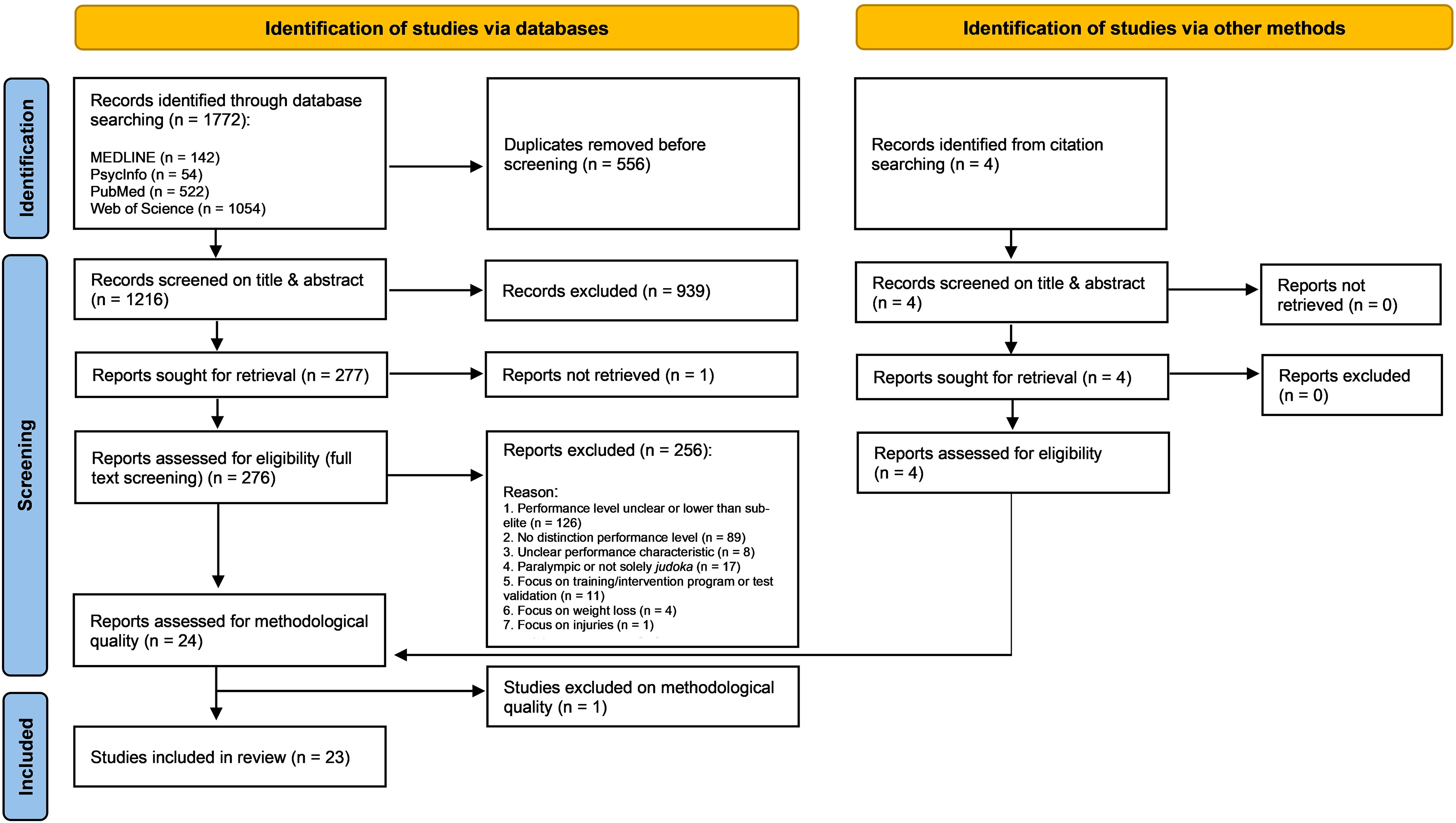
PRISMA flow diagram of study selection. 25
Quality assessment
The results of the overall quality appraisal of studies showed a good level of methodological quality among the included studies (see Table 3). Sixteen of the included 23 studies showed excellent (> 75%) and seven studies showed good (50–75%) methodological quality. Differences among studies were mainly observed with regard to ethical issues (item 6), method of analysis (item 11), clinical importance (item 12), implications (item 15) and limitations (item 16).
Results of the quality appraisal using the Critical Review Form – Quantitative Studies of Law et al. (1998). 29 .
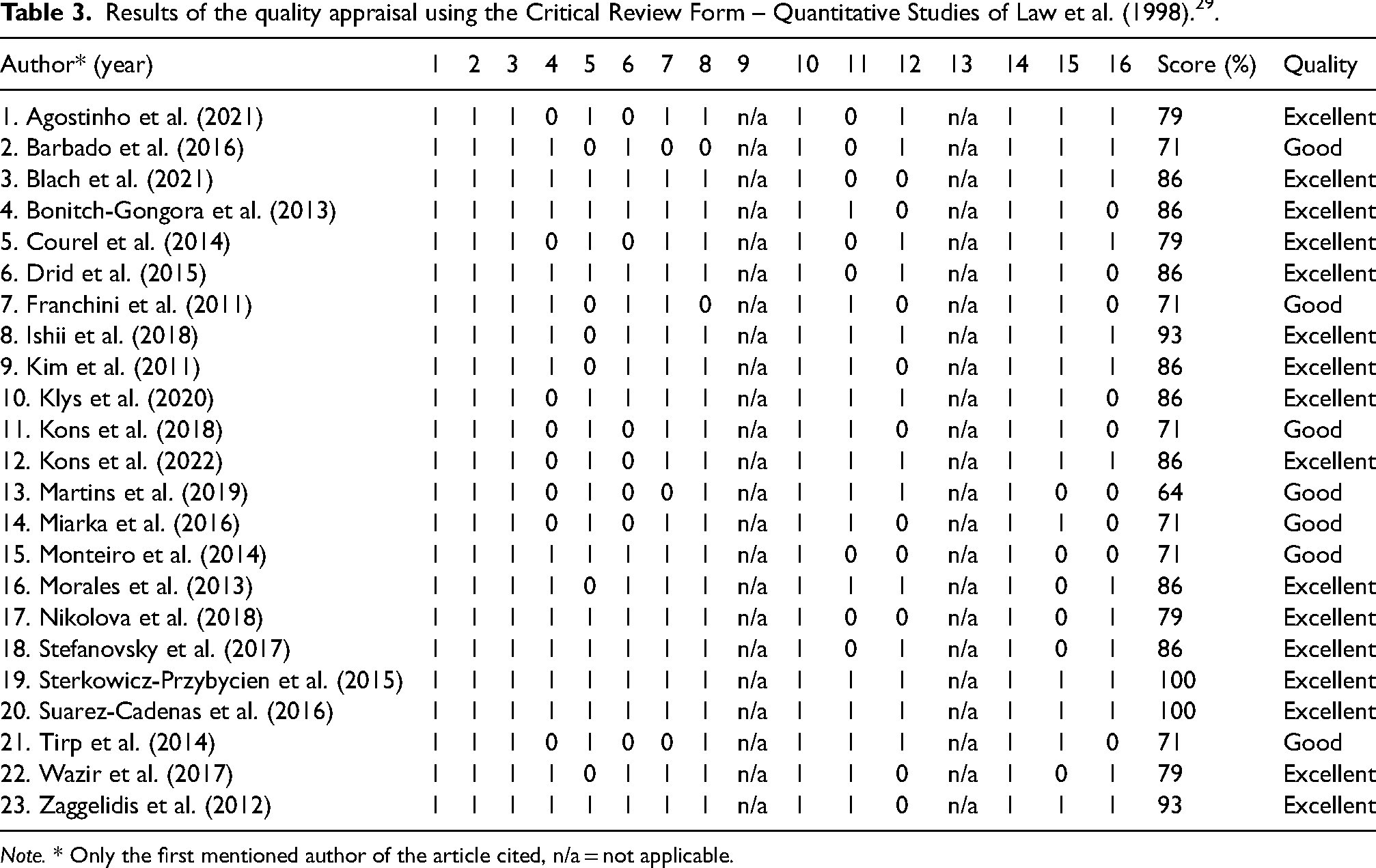
Note. * Only the first mentioned author of the article cited, n/a = not applicable.
Findings
The selected studies are categorized based on the multidimensional performance characteristics from the GSTM. All five categories of the GSTM were included in studies. Figure 2 gives an overview of the number of studies per performance characteristic. Thirteen studies focused on one performance characteristic. Ten studies described two performance characteristics in their study. These studies combined either anthropometrical and physiological characteristics, technical and tactical characteristics or physiological and psychological characteristics. No study measured three or more performance characteristics.
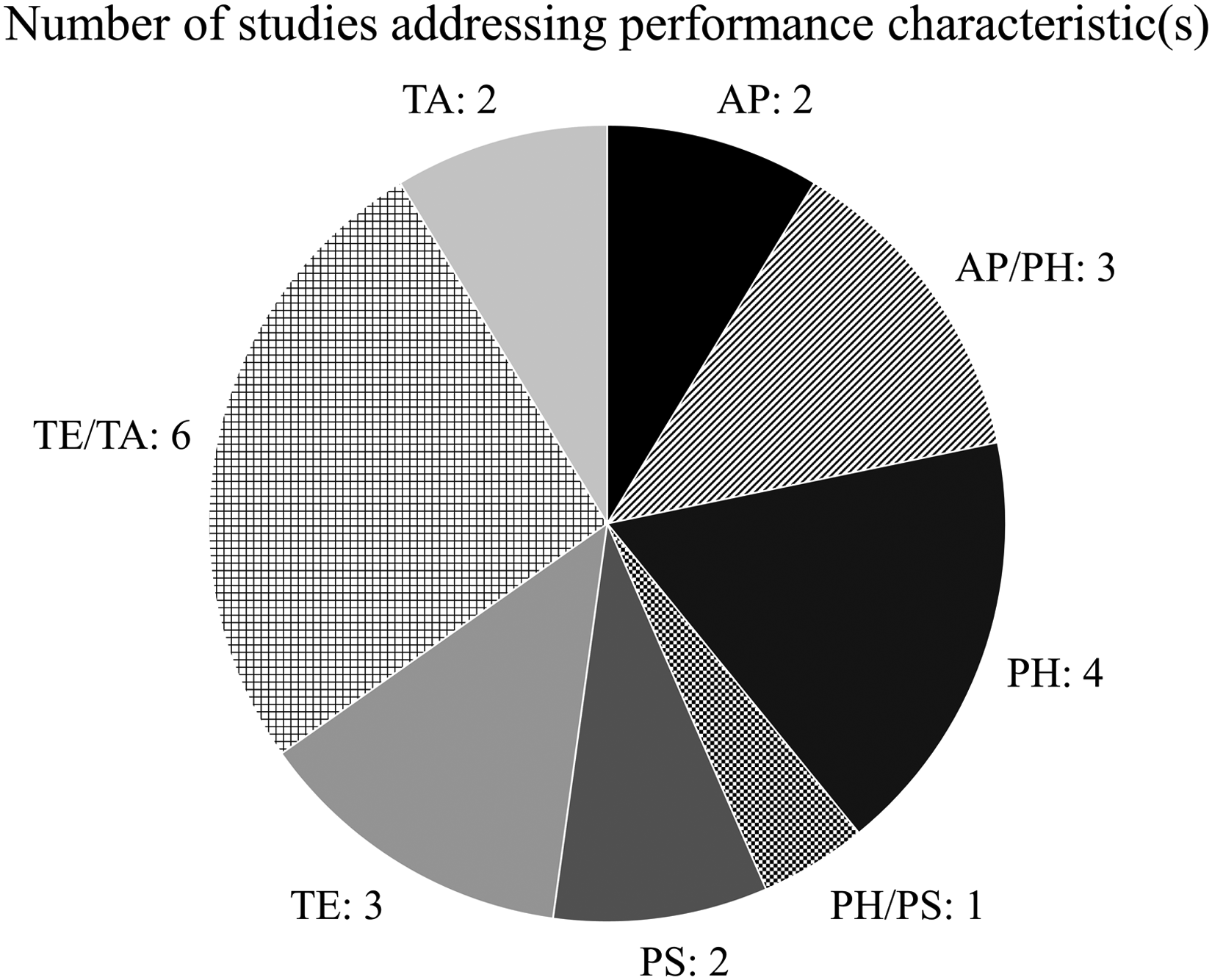
Number of studies addressing performance characteristic(s). AP = Anthropometrical, PH = Physiological, TE = Technical, TA = Tactical, PS = Psychological.
All age categories (cadet (under 18 years, n = 5), junior (under 21 years, n = 3) and senior (over 21 years, n = 20)) were represented in the included studies. One study included solely female judoka and ten studies only males. The remaining studies included both sexes (n = 11) or did not specify the sex (n = 1). Performance levels that could be identified in studies ranged from semi-elite to world-class elite based on previously mentioned performance levels of Swann et al. (2015). Semi-elite judoka were included in 12 studies. Competitive, successful, and world-class elite judoka in eleven, thirteen, and eight studies, respectively.
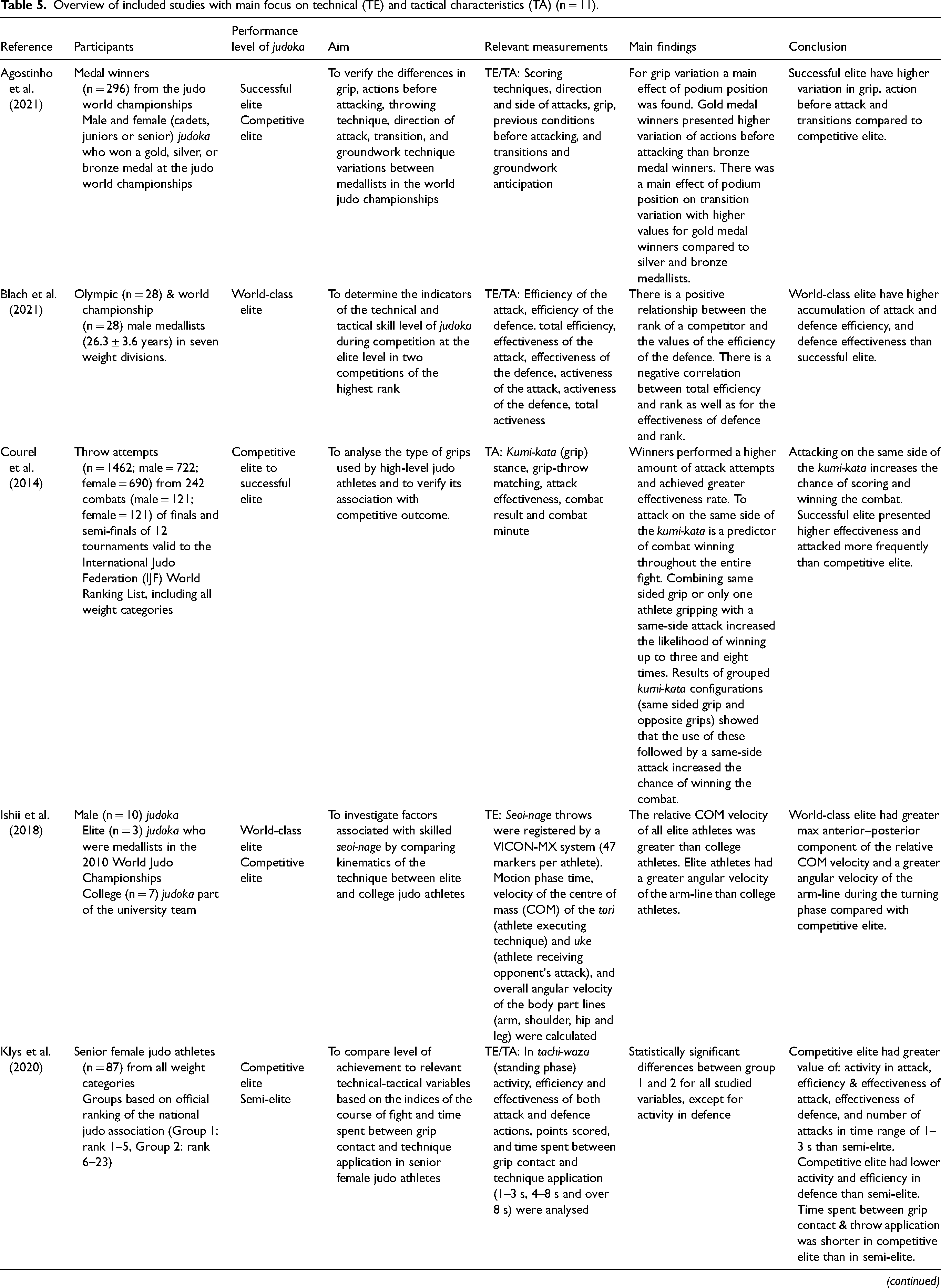
The findings are discussed per performance characteristic of the GSTM. An overview of the included studies with focus on either anthropometrical and physiological, technical and tactical, or psychological characteristics can be found in Tables 4, 5 and 6, respectively.
Overview of included studies with main focus on anthropometric (AP) and physiological (PH) characteristics (n = 10).
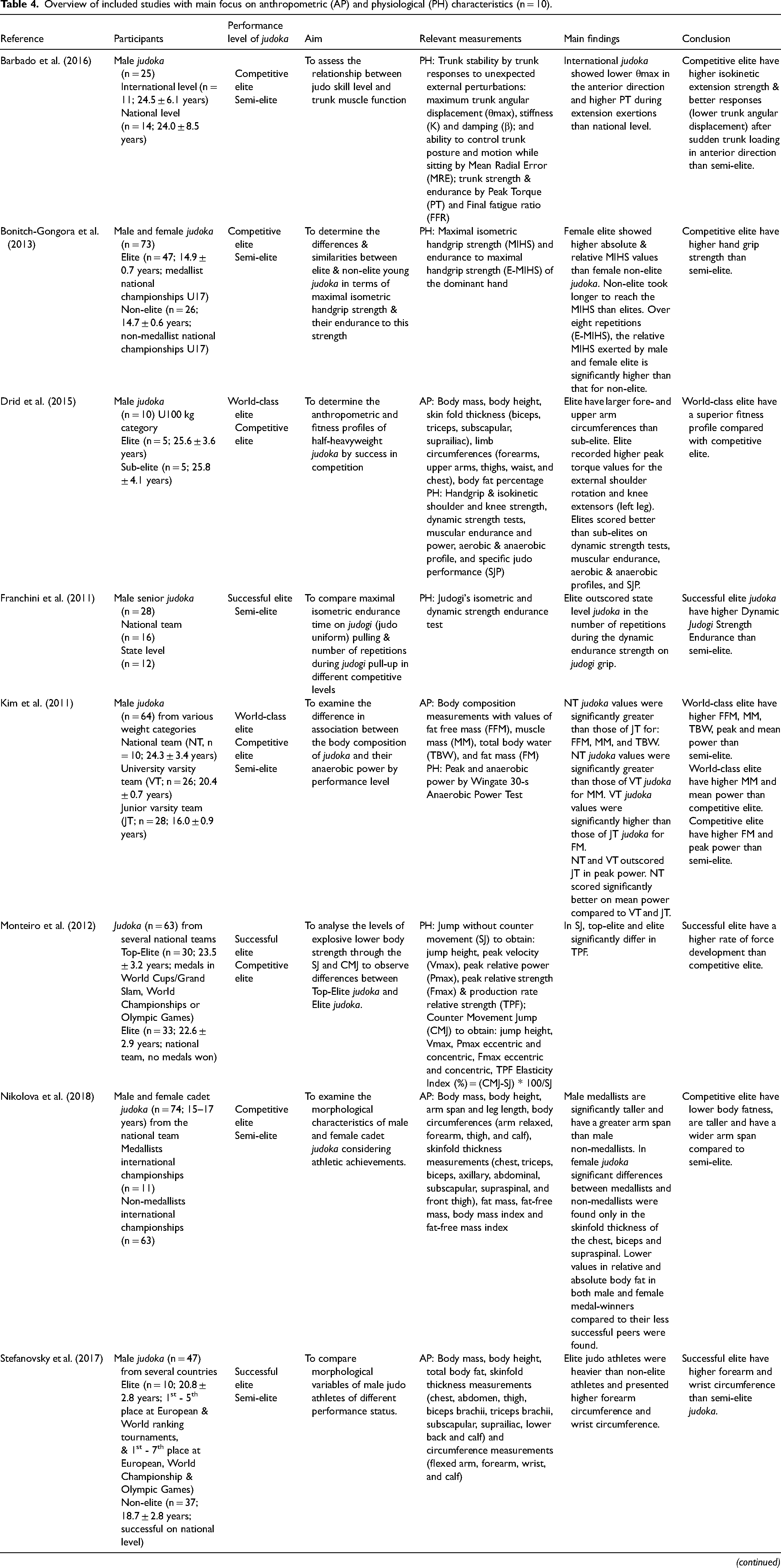
Part II of this article can be found in Table 6.
Overview of included studies with main focus on technical (TE) and tactical characteristics (TA) (n = 11).
Overview of included studies with main focus on psychological characteristics (PS) (n = 3).
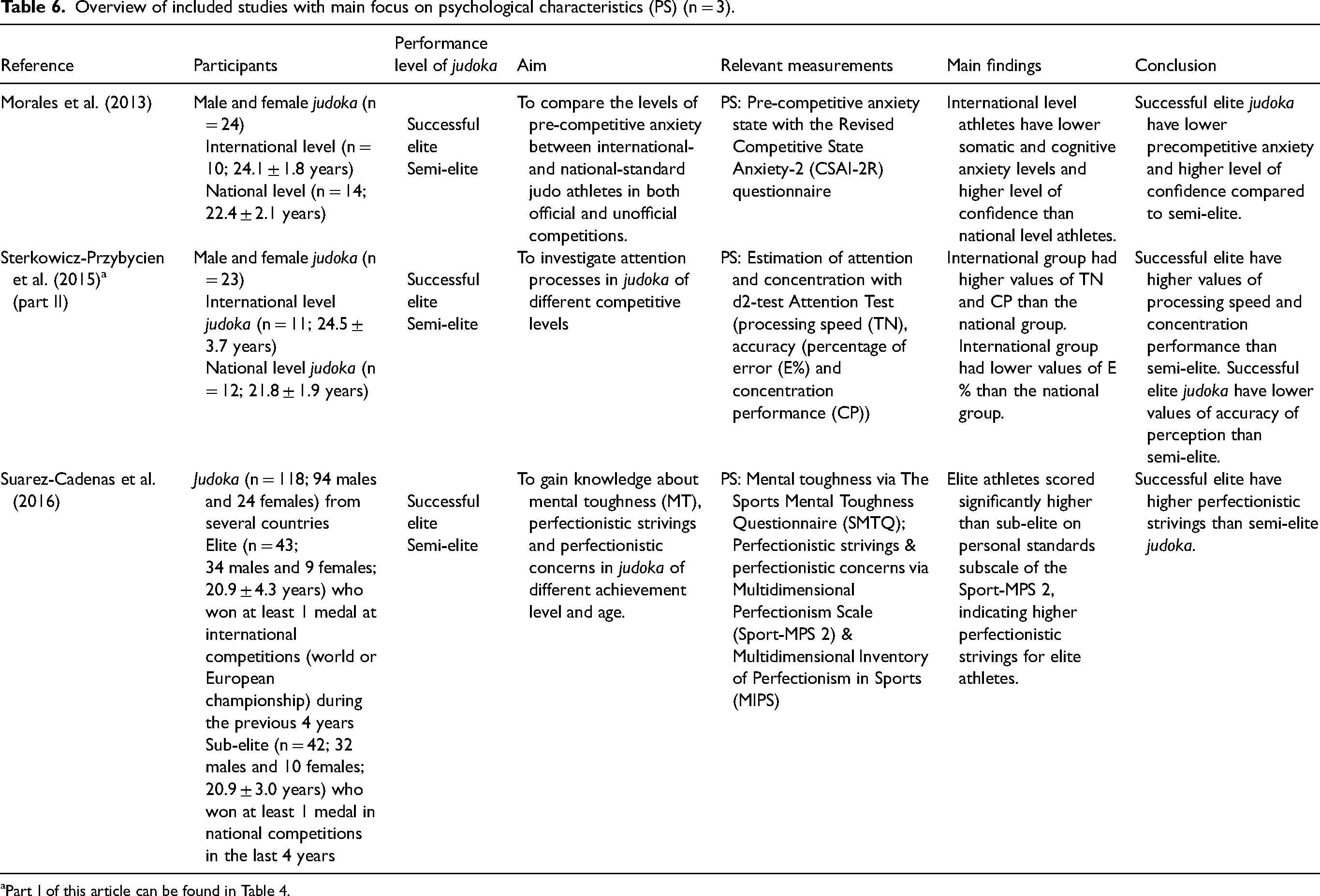
Part I of this article can be found in Table 4.
Anthropometrical
Five studies assessed anthropometrical characteristics of judoka with different performance level. Body mass, body height, limb circumferences, and skinfold thickness were measured by most studies. One study reported that cadet competitive elite are taller and have a wider arm span than cadet semi-elite judoka. 34 Subsequently, another study reported that cadet semi-elite judoka is taller, heavier and have a higher BMI than cadet non-elite judoka. 35 No difference in height is found between senior successful and semi-elite judoka. 36 Several studies measured limb circumferences. In judoka, larger fore- and upper arm circumferences are reported in world-class and successful elites compared with competitive and semi-elites.36,37 No differences in limb circumferences between cadet competitive and semi-elites are reported, but cadet competitive elite reportedly have lower skinfold thickness, body fat percentage and fat mass than cadet semi-elite. 34 In addition, world-class elite had higher values of fat free mass and total body water than semi-elite. In the same study, world-class elite had higher values of muscle mass than competitive and semi-elite. 38 No differences in skinfold thickness and body fat percentage are reported in world-class and successful elites compared with competitive and semi-elites.36,37
Physiological
The measurement of physiological characteristics was included in eight studies. Handgrip strength, lower body strength/power and anaerobic fitness were the most studied characteristics. Competitive elite shows higher hand grip strength than semi-elites. 39 No differences in handgrip strength between world-class elites and competitive elite judoka from the under 100 kg (U100) category are reported. 37 Moreover, handgrip strength seems not to distinguish semi-elites from non-elite. 35 Dynamic judogi pull-ups are a different way to assess grip. Successful elite judoka are able to reach more repetitions with dynamic judogi pull-ups than semi-elites. 40 Another characteristics that was measured, was trunk strength and stability. Competitive elites outscore semi-elites on trunk strength and stability. 41 In addition, other components of strength, namely dynamic strength (bench press, squat, deadlift, pull ups) and isokinetic strength (external shoulder rotators and knee flexors), are able to make a distinction between world-class elite and competitive elite. 37 Lower body power of judoka was quantified in studies by different jump protocols (e.g., Counter Movement (CMJ) and Squat Jump). Successful elite have a higher rate of force development than competitive elites during jumping. 42 This difference in jumping ability was not found between cadet semi-elite and non-elite judoka. 35 Anaerobic fitness of judoka was mentioned by two studies. World-class judoka has better anaerobic fitness compared with successful and semi-elite judoka, with successful elites outscoring semi-elites.37,38 In addition, world-class elite judoka shows a higher level of judo specific and aerobic fitness compared with semi-elite. 37 No differences in judo specific fitness were found between successful and semi-elite judoka. 43
Technical
The technical characteristics of judoka were measured in nine studies. Two studies assessed this characteristic with focus on a specific technique. A kinematic comparison of the seoi-nage technique (shoulder throw) between world-class and competitive elites was made. They found that world-class elites tend to have a greater velocity, especially in forward drive and the turning face, in which they throw their opponent. 44 The second study with focus on specific techniques found that competitive elite judoka has earlier onset of peak ground reaction forces during three different hip throws than judoka of lower performance level. 45 The kind of technique is executed does not distinguish world-class from successful elite.46–48 World-class elite variated more in their tachi-waza (standing) and ne-waza (ground work) actions than successful elites during competitions. 47 In turn, successful elite variated more in their techniques than competitive elite judoka. 48
Tactical
Tactical characteristics were measured in eight studies. Kumi-kata (gripping) is mentioned in several studies. In terms of grip variation, successful elite shows more variation than competitive elite judoka. 48 Competitive elite spend less time between gripping and executing their technique than semi-elite. 49 Attacking on the same side of the kumi-kata increases the chance of scoring and winning the combat in successful and competitive elite. 50 Also, world-class elite discriminate themselves from successful elite on the grip they aim for, such as the left back and right sleeve or right sleeve only. 51 The approach phase before gripping is also described. A shorter approach phase is beneficial for winning the fight. 51 It turns out that in successful elite, there is a higher proportion of left-oriented judoka than in semi- and non-elite judoka. 52 Furthermore, winning successful elite show a more left-oriented approach in gripping during high-level competition than those who lose. 51 The majority of the remainder of the tactical studies included motion analysis during competitions, showing that attack and defence effectiveness and efficiency are able to make a distinction in performance level of judoka.49,50,53 World-class and successful elites show a higher number of total attacks than competitive and semi-elites.50,53 Additionally, a greater transition variation from tachi-waza (standing) to ne-waza (ground work) phase means a better performance in successful and competitive elites. 48 World-class and successful elite can discriminate themselves from judoka of lower performance level by scoring an ippon (full point).47,54 No differences in scoring index were observed between competitive and semi-elites. 49
Psychological
The psychological characteristics that could distinguish between different performance levels of judoka were measured in three studies. Successful elite show higher perfectionistic strivings than semi-elite. 55 In addition, successful elite judoka have higher levels of confidence and lower pre-competition anxiety than semi-elites. 56 Successful elite have higher values of processing speed and concentration than semi-elite, and lower values of accuracy of perception than semi-elite. 43 No differences in mental toughness were found between successful elite and semi-elite judoka. 55
Figure 3 (male judoka) and Figure 4 (female judoka) show an overview of performance characteristics that are measured by the studies included in this review. For every category, it is made clear what performance characteristics can make a distinction between performance levels and what direction is beneficial for judo performance. The performance characteristics for which it has not been proven that there is a difference between performance levels are also mentioned in the figures.
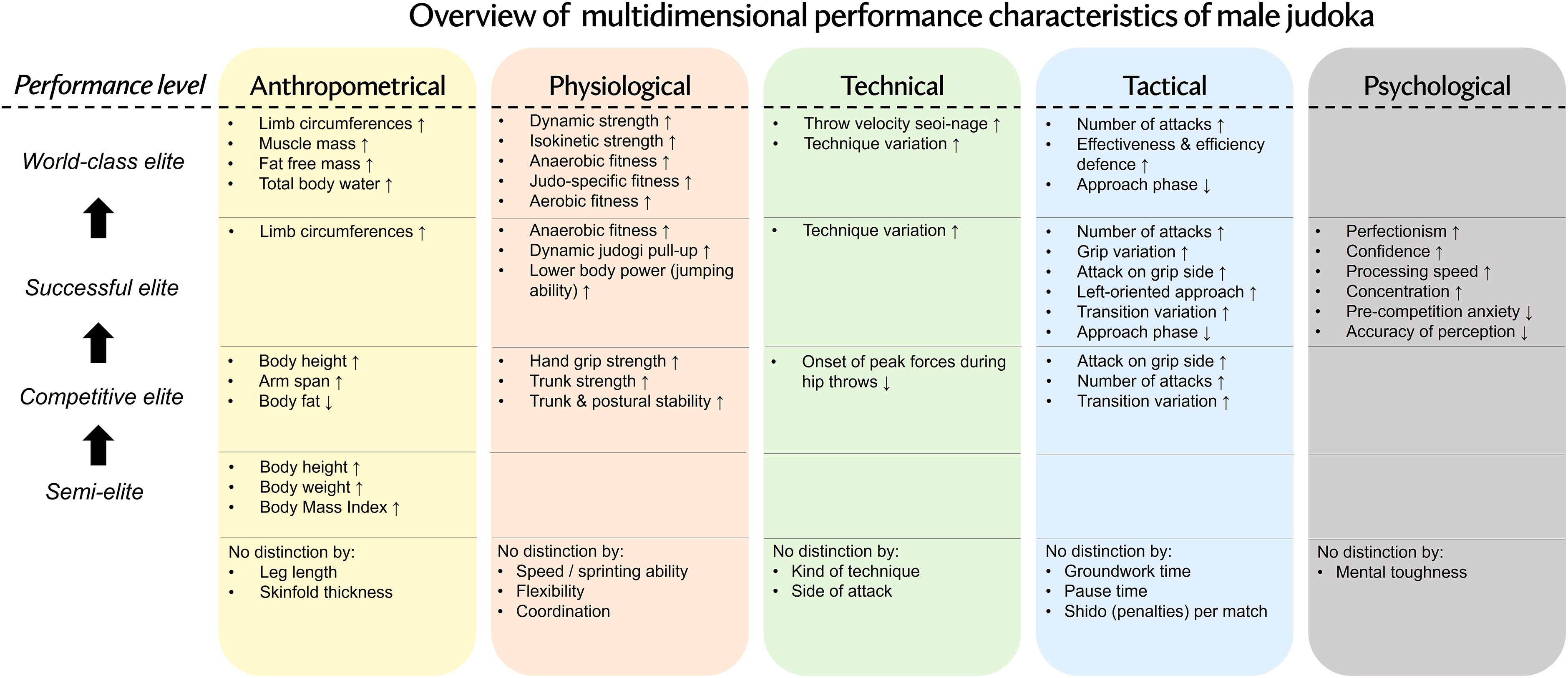
Overview of performance characteristics that are measured by the studies included in this review sorted by performance level. 27 ↑: Male judoka of this performance level show a higher value of the mentioned performance characteristic compared to male judoka of lower performance level(s). ↓: Male judoka of this performance level show a lower value of the mentioned performance characteristic compared to male judoka of lower performance level(s).
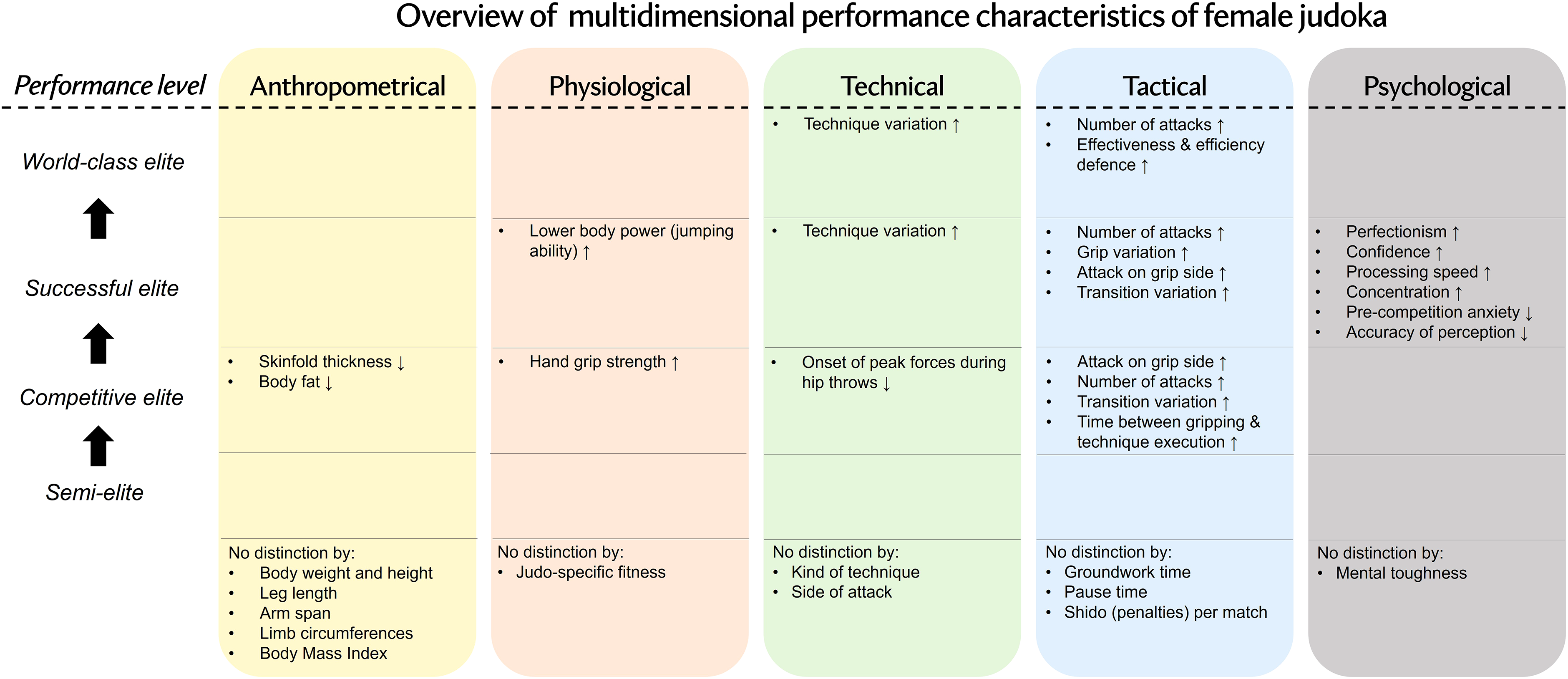
Overview of performance characteristics that are measured by the studies included in this review sorted by performance level. 27 ↑: Female judoka of this performance level show a higher value of the mentioned performance characteristic compared to female judoka of lower performance level(s). ↓: Female judoka of this performance level show a lower value of the mentioned performance characteristic compared to female judoka of lower performance level(s).
Discussion
This systematic review aimed to identify which multidimensional performance characteristics can discriminate between different performance levels of judoka and find the gaps in literature. The GSTM was used to structure the findings. 21 Anthropometrical, physiological, technical, tactical, and psychological characteristics were identified that could distinguish judoka of different performance levels. The results were in line with the first hypothesis. Elite judoka outscore lower performance level judoka on multiple performance characteristics. Contrary to the second hypothesis, most studies that distinguish between different performance levels focused on technical-tactical characteristics. However, a variety of anthropometrical and physiological characteristics are described in studies as well (see Figure 2, Figure 3, and Figure 4). The mean quality of included studies was excellent (81.7%). Sixteen and seven studies were of excellent and good quality, respectively. Differences in quality among studies were observed with regard to ethical issues, method of analysis, clinical importance, practical implications, and limitations.
Numerous studies on judo (n = 10) have assessed anthropometrical (n = 5) and physiological (n = 8) characteristics. It is not surprising that a variety of these performance characteristics can discriminate judoka of different performance levels. Judo matches can last from a few seconds up to 20 min or more and throwing an opponent requires whole body movement.9,10 Hence, having a broad set of physiological characteristics is an important manner to be prepared for the varying demands of judo combat situations. The amount of physiological characteristics that discriminate between performance levels are in line with earlier reviews based on studies conducted in the period 1972 to 2015.17,57 These reviews also described the wide set of performance characteristics that are needed to be successful in judo. Thus, even though there have been rule changes in judo over the last decades, the importance of physiological characteristics remains with strong level of evidence.
Moreover, findings indicate a strong level of evidence for the importance of anthropometrical and physiological characteristics linked to kumi-kata (grip fighting). Judoka of higher performance level shows greater arm span and higher hand grip strength compared to lower level judoka.34,39 In theory these allow a judoka to grip their opponent while keeping them at a distance. Additionally, larger fore- and upper arm circumferences are reported in higher performance level judoka.36,37 This implies that muscles in the arms are frequently used to maintain grip, and therefore, are highly developed. Given that performance characteristics like these have often been measured, researchers in judo see the importance of grip fighting. It should be noted that, in contrast to hand grip strength, an anthropometrical characteristic like arm span cannot be trained. Therefore, it facilitates rather than determines the grip fight. Findings imply that hand grip strength is a relevant indicator of judo performance at the highest level that can be developed. Other measured performance characteristics that distinguish high from lower level performing judoka, are lower body fat and higher muscle mass.34,38 As judoka needs to fit into a weight category, they want to maintain useful body tissue (e.g., muscle tissue) and get rid of body fat. Although the level of evidence is weak, the findings imply that judoka who have the best ratio of useful body tissue and body fat are likely to perform better.
Anthropometrical and physiological characteristics that cannot discriminate between performance levels were also identified (e.g., leg length, speed, flexibility). Therefore, it is not recommended to use them to distinguish judoka of high-performance level. It might be the case that some performance characteristics can discriminate up to a certain level. However, judoka with lower performance levels than semi-elite were out of the scope of this review.
In addition, technical (n = 9) and tactical (n = 8) characteristics have been studied among judoka. These studies only incorporated four out of 68 different throwing techniques separately.44,45,58 Higher performance level judoka are faster in technique execution of the four assessed techniques than judoka of lower performance level. The fact that other throwing techniques have not been studied, could be explained by the finding that the kind of throw that is executed does not matter for judo performance at the highest level. 46 Therefore, it would not make sense to study technique differences between performance levels as judoka are not defined by the technique they execute. However, variation of techniques was found to be key to surprise an opponent and throw them.47,48 This implies that there is strong evidence suggesting that judoka needs to focus on variation in throwing techniques with techniques they can quickly execute, and that suit them well. Besides, to surprise their opponent, it seems wise to train a wide range of techniques. This will result in the ability of a judoka to throw their opponent out of different combat situations. Since technical and tactical performance characteristics of judoka are interconnected and executed in a particular combat situation against an opponent, most studies focusing on tactical characteristics rely on motion analysis during competitions. Interestingly, the importance of grip fighting is again highlighted here with a strong level of evidence. It turns out that grip fighting and active judo distinguish higher from lower level judoka.48–51 Thus, the importance of grip fighting now comes clear from multiple performance characteristics (anthropometrical, physiological, and tactical). Grip fighting and choice of techniques in judo competitions require anticipation on an opponent and fast decision making. Hence for a judoka, it is important to be able to execute different techniques, but performing the right action in a specific combat situation is just as important to be successful.
Where other performance characteristics have been examined extensively, limited studies focus on psychological characteristics (n = 3) that are able to discriminate between different performance levels of judoka. There is insufficient evidence to state that lower levels of pre-competitive anxiety and accuracy of perception, and higher levels of confidence, concentration, processing speed and perfectionistic strivings are able to distinguish judoka of different performance levels.43,55,56 The limited studies involving psychological characteristics that can distinguish between judoka of different performance levels are in line with earlier reviews.19,59 Namely, from those reviews it could be concluded that most studies on psychological characteristics of judoka have either focused on the influence of weight reduction on psychological characteristics, included judoka of low performance level or did not discriminate between performance levels. Hence, there is little insight into the sport psychological profile of elite judoka while it is perhaps very important to have certain psychological qualities to handle the complexity and unpredictability of the sport. 60 In addition, if there is no understanding of the psychological profile of judoka, it also cannot be developed and trained in a targeted manner. Ideally, insight into the psychological profile of elite judoka gives talented young judoka the opportunity to practice and get familiarized with psychological techniques related to important characteristics. Judoka who develop into elite athletes is able to select the sport psychological techniques that fit their needs in future situations. 61 In other sports (e.g., endurance sports), studies found that psychological performance characteristics are essential for success in addition to the physiological characteristics. 16 Thus, it is not unreasonable to think that this is also the case in judo. Therefore, research on psychological characteristics of judoka is advised. Nevertheless, it is recommended that professionals involved in judo integrate the development of psychological characteristics in their talent program.
As can be seen in Figure 3 and Figure 4, gaps in the literature were identified. For one, compared to the distribution of physiological and tactical characteristics over the performance levels, relatively large gaps in literature exists in psychological characteristics. Furthermore, only in successful elite all multidimensional performance characteristics were measured. It would be beneficial for professionals involved in judo to have an overview of the importance of all the performance characteristic per performance level. In addition, another gap in literature that was identified, is the underrepresentation of multidimensional performance characteristics of female judoka compared to male judoka. The results found for male judoka may not be generalisable to female judoka as previous research shows that male and female judoka differ in physiological characteristics (e.g., endurance capacity, strength) and technical-tactical characteristics (e.g., female judoka have more traditional gripping style and spend less time gripping than male judoka, differences in techniques that are most frequently utilized by male and female judoka).57,62–65 Hence, the talent trajectory of male and female judoka possibly also differs and therefore a sex-specific approach may be advised. Taken this all together, future research should aim to fill these gaps in literature. Preferably, the performance development of judoka, from non-elite to world-class elite, can be monitored using evidence-based and sex-specific multidimensional performance characteristics.
A strong point of this review is that it is the first in judo that brings multiple performance characteristics together in a structured way. Secondly, it provides a clear overview of the ability of these characteristics to discriminate in various, concrete and general levels of performance. 27 In other words, this review makes clear that in judo multidimensional performance characteristics are useful for talent identification, selection, and development. Such overview makes it easier to link certain performance characteristics to others based on more than a gut feeling. For example, for the short time between grip contact and technique execution in combination with high throw velocity, anaerobic power is needed. This implies that if one aims for fast gripping, anaerobic power might be important to look at and train simultaneously. A third strength is that results are representative for judoka of high-performance level. All age categories and weight classes were described in studies included in this review. Therefore, the results can be widely used. Furthermore, half of the studies included both male and female judoka. Representability can also be concluded considering the variety of nationalities of judoka in included studies. However, even at the elite level differences in anthropometrical and physiological characteristics of judoka exist. 66 Thus, this review provides an overview of what characterizes elite judoka, but it should be kept in mind that there are always possible differences that could be related to environmental factors.
This review also comes with some limitations. As previously mentioned, weight cutting is an important aspect of judo as athletes are divided into weight classes to compete. It is not uncommon to cut weight before competitions from a young age. 67 However, in this review distinction between categories were not made although several studies compared performance characteristics of different weight categories.20,57 Since final weight classes are not easy to determine early on, it is believed that talented judoka should focus on development of a broad set of performance characteristics. Determining final weight classes could be influenced by the age at peak height velocity (PHV). The PHV refers to the timing of maturity. It estimates chronological age at maximum rate of growth in height during the adolescent spurt. 68 The Long Term Athlete Development (LTAD) model, which consists of different training stages, suggests to use age at PHV as the reference for programming training protocols. 69 The variation in PHV among individuals is considerable and does seem to influence judo performance.68,70 Therefore, it is not desirable to tailor talent programs to performance characteristics of a specific category and have a narrow focus. Instead, young judoka who have not fully matured yet, benefit from general performance characteristics as combat sports like judo are late specialization sports. 69 Later in their career, judoka may focus and specialize on the specific performance characteristics needed for a certain weight class. This is also in accordance with the Athletic Skills Model (ASM). This model describes that a child needs to become an athlete first, only then to specialize as an athlete. 71 Applied to judo this means that an athlete first develops as an all-round judoka, before specializing on qualities for a certain weight category. Long-term adult success in multiple sports is also facilitated by this late specialization. 72 Thus, this seems wise to consider if one aims for a sustainable sporting career in judo. Secondly, this review might be limited because studies without distinction in performance level were excluded. This can result in missed valuable information about performance characteristics within performance levels. However, considering the wide variety of performance characteristics and measurement instruments, it seemed best to create a clear general overview first based on studies which did include information on various performance levels. Lastly, only studies written in English were included which might have limited the findings. Judo is a very international sport, and it is therefore not unreasonable to think that relevant literature is written in another language.
A recommendation for future research is to set up longitudinal studies to gain insight into the development of performance characteristics of talented judoka over time. Unfortunately, only one longitudinal study that met the criteria for this review could be identified. Thus, there is much potential for this kind of research. The mean quality of included studies on judo was excellent, but differed between studies. Future research is advised to include clear practical implications and to maintain good quality for an optimal collaboration between science and practice. Furthermore, considering the dynamic and complex nature of judo, it is suggested to study more performance characteristics that may influence judo performance but are not explicitly mentioned in the GSTM (e.g., sight/perception). These might also be of importance and help complete the current profile of what characterizes elite judoka. In addition, from the findings it is clear that psychological characteristics of judoka have not yet received the attention they may deserve. There are possibilities to further discover the sports psychological profile of elite judoka.
Conclusion
The current systematic review is the first to bring multidimensional performance characteristics of judoka together and showed that a multidimensional set of performance characteristics is necessary for successful judo performance. Therefore, professionals involved in judo are advised to incorporate a multidimensional approach to identify, select and develop talented judoka. Findings of this review give insight into evidence-based performance characteristics that are important to look at in development trajectories or to incorporate in training programs of judoka. Strong evidence was found for the ability of multidimensional performance characteristics related to grip fighting to discriminate judoka of different performance levels. Moreover, a strong level of evidence was found for a broad set of physiological characteristics, the ability to throw opponents and variate in technique characterizes judoka of high-performance level. Furthermore, studies on psychological characteristics were under-represented. Hence, further research is needed in this area to capture the psychological characteristics that describe elite judoka. In addition, before performance characteristics can be used for talent identification and training programs, it is recommended to determine performance benchmarks for different age categories by further research. Lastly, to increase the understanding of development of multidimensional performance characteristics in judo, it is recommended to conduct longitudinal research. In this way, the development of multidimensional performance characteristics is known together with the importance of these characteristics at each point in the talent trajectory.
Supplemental Material
sj-docx-1-spo-10.1177_17479541231223160 - Supplemental material for Throwing it out there: Grip on multidimensional performance characteristics of judoka – a systematic review
Supplemental material, sj-docx-1-spo-10.1177_17479541231223160 for Throwing it out there: Grip on multidimensional performance characteristics of judoka – a systematic review by Suzan Schoof, Froukje Sliedrecht and Marije T. Elferink-Gemser in International Journal of Sports Science & Coaching
Supplemental Material
sj-docx-2-spo-10.1177_17479541231223160 - Supplemental material for Throwing it out there: Grip on multidimensional performance characteristics of judoka – a systematic review
Supplemental material, sj-docx-2-spo-10.1177_17479541231223160 for Throwing it out there: Grip on multidimensional performance characteristics of judoka – a systematic review by Suzan Schoof, Froukje Sliedrecht and Marije T. Elferink-Gemser in International Journal of Sports Science & Coaching
Footnotes
Declaration of conflicting interests
The author(s) declared no potential conflicts of interest with respect to the research, authorship, and/or publication of this article.
Funding
The author(s) received no financial support for the research, authorship, and/or publication of this article.

Supplemental material
Supplemental material for this article is available online.
References
Supplementary Material
Please find the following supplemental material available below.
For Open Access articles published under a Creative Commons License, all supplemental material carries the same license as the article it is associated with.
For non-Open Access articles published, all supplemental material carries a non-exclusive license, and permission requests for re-use of supplemental material or any part of supplemental material shall be sent directly to the copyright owner as specified in the copyright notice associated with the article.
