




Abstract
The purpose of this research was to evaluate the implementation of the novel Irish Rugby Football Union Coach Education Framework (CEF) on coach–athlete interactions and perceptions. Participants were coaches (n = 4) and athletes (n = 54) from two rugby union teams. Coaches were observed pre-intervention and post-intervention of an education workshop based on the CEF and had nine training sessions video-recorded and analysed using the Coach Analysis and Intervention System (CAIS). Their perceptions of their relationship with their athletes were measured using the Coach–Athlete Relationship Questionnaire (CART-Q). Athlete perceptions of their coaches’ behaviours were measured using the Coaching Behaviour Scale for Sport (CBS-S). CAIS results revealed coaches increased the use of ‘Management’ and ‘Feedback’ behaviours (p < 0.05) post-CEF, without altering prominent high-volume behaviours (e.g. ‘Instruction’). Coaches utilised similar time proportions for CAIS ‘Practice’, ‘Playing’ and ‘Management’ states, respectively, with no significant change post-CEF. CART-Q and CBS-S results revealed predominantly positive perceptions between coaches and athletes for both pre-CEF and post-CEF. Coach education is a non-linear learning process requiring consistent application over long periods of time, however, the alteration in coach behaviours post-CEF, coupled with the largely positive perceptions of both agents of the coach–athlete dyad, is an encouraging step forward for the further implementation of the CEF.
Introduction
Coaching is a complex process that operates under differing situational and social constructs where coaches aim to not only develop their athletes sport specific competencies but also maintain functional relationships with their athletes and key stakeholders. 1 Coach education programmes serve as a mechanism for practitioners to upskill through increasing self-awareness relative to their current coaching methods with the goal ultimately to have a positive impact on their athletes’ sporting competencies and personal development. 2 In a report of the developmental preferences of coaches from 30 different sports, informal learning settings (e.g. shadowing other coaches in practice) rather than formal education settings were the preferred method of coaches to improve their competencies as a practitioner with less than 2% of those surveyed holding positive perceptions towards the formal education medium. 3 A more recent study of over 1100 coaches from 47 different sports also showed that coaches relied on their peers (informally) as their preferred means of learning and developmental support, despite also partaking in formal coach education programmes. 4 However, it has been documented in the research that when a formal education setting is integrated with the coaches’ unique informal context (i.e. applied in situ), their (i) perceptions towards the learning process, (ii) athlete bond and (iii) own coaching performance can all be positively altered.5,6
Sports coaches have tended to use a limited array of behaviours within their regular coaching habits with instruction, management, feedback, and in some cases, silence, featuring as the most prominent forms of displayed behaviours irrespective of sport.7–9 Analysis of rugby union coaches have also shown a high proportion of instructional behaviours as well as bouts of observational silence when coaching their athletes. 10 How a coach communicates with their athletes and directs their attention can have a profound effect on how the athlete develops sport-specific competencies 11 with research demonstrating performance improvement through an external focus of attention (i.e. where they focus on the intended movement/skill outcome) in a variety of contexts; the vertical jump, 12 the basketball free-throw, 13 agility performance 14 and the golf chip shot. 15 Instructions and feedback that focus the athlete's attention internally towards a body part during the execution of a sport-specific task tend to be the norm in most coaching settings, despite the literature demonstrating the shortfalls to athlete performance and learning by adopting such an approach.16–18 Coach education has the potential to bridge this application gap for practitioners through the dissemination of appropriate evidence-based content that coaches perceive to function within their own coaching settings. 19
Similar to the communication strategies that they employ with their athletes, coaches frequently recycle and replicate methods of training that could be considered ‘traditional’ relative to their chosen sport. 20 This frequent reproduction of both content and method of application is often passed from one coach to the next without due consideration from the coach whether the content or mode of delivery is suitable to a particular recipient cohort. 21 This often non-critical recycling of content can also contribute to a coach's reluctance to experiment with new evidence-based training methods, due to the fear that it may be met with scepticism from contemporaries, particularly when the novel practices do not align with the traditional paradigm of how their sport ‘should’ be coached. 22 Furthermore, these ‘traditional’ models of coaching often lead to the design of training scenarios that deconstruct a skill or sporting activity into isolated component parts. 23 The resultant training scenarios typically focus on the athlete attaining technical proficiency through high repetitions in the isolated component activity before the coach progresses to executing the skill in a ‘game-based’ activity or a match itself (e.g. executing the catch and pass in rugby union unopposed before executing the same skill with pressure from a defender in an opposed activity or match). 24 The reinforcement of movement and sport-specific actions from isolated training can vary substantially or often bear little resemblance to the sporting demands the athlete will likely encounter in live competition. 25 Thus, it is imperative that coaches are educated to maximise their awareness towards the efficacy of the training scenarios they design to elicit athlete learning in activities/games that accurately represent the sporting challenges of competitive scenarios. 26
A prominent method for coaches to achieve a desired representative training design is to adopt a Constraints-Led Approach (CLA)27,28 to their coaching process. A CLA suggests that motor behaviour emerges as a product of the interaction of the constraints inherent to the athlete's own body, 29 their environment 30 and the task demands. 31 Applying a CLA to coaching involves the coach manipulating selected constraints during a training session to achieve a desired sporting outcome with their athletes.32,33 As with all training scenarios, caution must be paid by the coach in order to avoid any form of naïve constructivism, 34 where the selected constraints should ensure the athlete is learning and developing competencies inherent to their sport and not merely performing a training ‘task’ with limited transferability to the desired sporting domain. 24 The use of coach education and established frameworks for learning can be beneficial for practitioners in this sense as they provide a scaffold for self-assessment of their training sessions regarding how representative they are for their sporting environment. 35 This reflective process facilitates coaches to refine their training sessions and behaviours with each iteration and aid them to create effective learning environments that can maximise their athletes’ sporting competencies and development. 36
Another area that warrants consideration is the ability of the coach to cultivate appropriate meaningful connections with their athletes. 37 The effects of poor coach–athlete relationships have been highlighted in the coaching literature with the benefits of a positive relationships towards both athlete learning and performance clearly evident. 38 As a means to examine this complex coach–athlete relationship, Jowett and Ntoumanis 39 refer to the 3C dimensions of (i) Closeness (the feeling emotionally close to one another in the coach–athlete dyad), (ii) Commitment (the intentions of the participants to maintain their athletic relationship) and (iii) Complementarity (reflects the cooperative actions of the coach–athlete dyad especially during training). Educating coaches on how to cultivate positive relationships could aid in the provision of psychological safety to their athletes within their individual sporting environment, which will further optimise performance potential. 40
The novel Coach Education Framework (CEF) developed Irish Rugby Football Union (IRFU) has the potential to support a coaches’ ability to construct purposeful representative training sessions that will challenge their athletes to develop their core skills and game understanding in an engaging learning environment. The CEF bases its core foundations on the three central tenets of Self-Determination Theory (SDT), Explicit Learning Theories (ELT) and Implicit Learning Theories (ILT) (Figure 1). Research has shown that the implementation of effective coaching practices that incorporate aspects of SDT, ELT and ILT can aid an athlete sporting performance, motivation and their well-being. 41 This novel bespoke CEF was designed to upskill coaches in (i) how they motivate, connect and nurture positive relationships with their athletes using SDT, 42 (ii) increasing the effectiveness of the language they use when communicating with their athletes using ELT 43 and (iii) how they manipulate training constraints in their practice session content to improve athlete learning and performance via ILT. 24 This CEF aims to not only streamline the dissemination of empirically verified content designed to improve athlete performance, but also how said content can be practically applied by the coaches in their individual real world setting (regardless of their chosen sport). There is currently a dearth of research available that examines the effectiveness of coach education on positively altering the behaviours and perceptions of coaches in situ. Therefore, the purpose of this study was to evaluate the impact of the novel multifaceted IRFU CEF on; the behaviours displayed by coaches during a training session, the structure of these training sessions for the proportion of time they spent in differing training type activities, the self-perceptions of the coaches regarding their relationship with their athletes and finally, the athletes perceptions of their coaches behaviours.
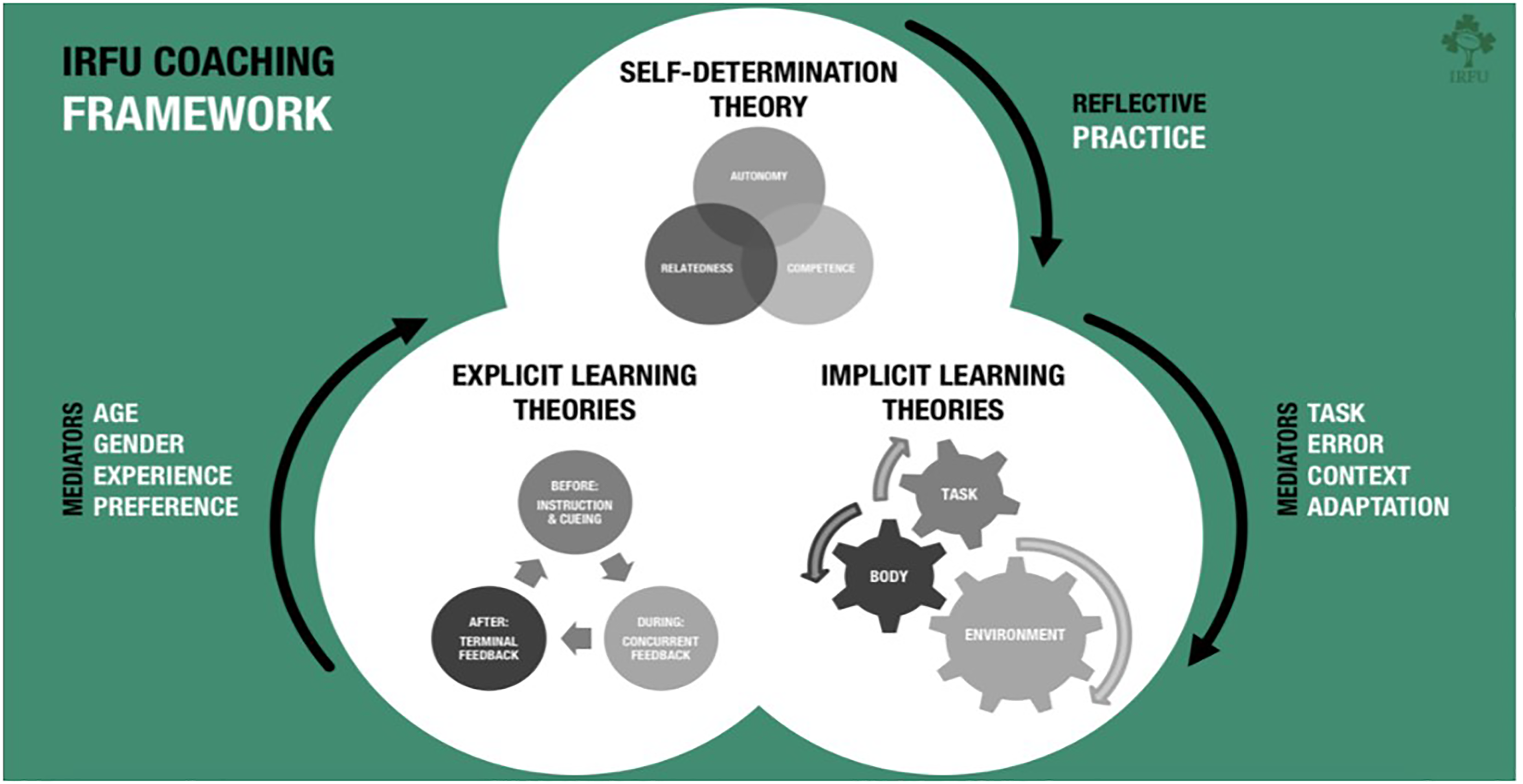
Irish Rugby Football Union (IRFU) Coach Education Framework (CEF).
Methodology
Participants
Participants were male coaches (n = 4) and athletes (n = 54) recruited using a purposeful sampling approach from two amateur rugby union youth teams in the Munster region of Ireland. The participant teams comprised a ‘Child’ club team (n = 20, M = 12.4 years, SD = 0.27) and their two coaches (Coach 1A & Coach 1B), and an ‘Adolescent’ post-primary school team (n = 34, M = 17.9 years, SD = 0.77) with two coaches (Coach 2A & Coach 2B). The inclusion criteria for participation in this research project were; (i) teams needed to be in close proximity to the host institution (< 30 km), (ii) coaches must be adults with a minimum of 5 years coaching experience, (iii) coaches must be willing to consent to video and audio recordings of their regularly scheduled training sessions and (iv) coaches must be willing to participate in a coach education intervention (i.e. the IRFU CEF) upon the conclusion of the initial observation period. Ethical approval was sought and attained from the Host Institution's Research Ethics Committee. All participants were provided with information sheets detailing the study design and related processes, and signed consent forms (parental/guardian where appropriate) prior to the commencement of the data collection process (100% consent rate). All participants (coaches and athletes) were retained throughout the entire data collection period (100% retention rate).
Procedure
Coach observation: Coach Analysis and Intervention System
Data was collected at three time points (TP1-TP3) during an 18 month time period (i) TP1 (January–May 2018): baseline data collection, pre-CEF intervention delivery by the IRFU coach educators, (ii) TP2 (September–December 2018): immediately following post-CEF intervention, and (iii) TP3 (January–May 2019): towards the end of each team's respective playing season post-CEF intervention. At each of these time points three separate training session observations were recorded for each participating coach. Prior to the commencement of these training sessions, the coach was fitted with a lapel microphone (Sennheiser ME 2-II EW-Series), which was synchronised with a camcorder (Sony Handycam 4.0 Series) to record both the audio and visual content during the training session. The camcorders were placed on the outer perimeter of the training area to minimise the potential for the researcher to act as a distraction to the coaches during their training session. Camcorder location was not fixed and shifted as appropriate to accurately capture the coaches’ physical and verbal behaviours throughout the various components of their training session. In cases where both coaches were involved in the same training session, each coach was recorded individually with their own lapel microphone and camcorder, and thus one training session yielded two individual data sets. The recorded training session observations for each coach (n = 9) were then analysed retrospectively using the Coach Analysis and Intervention System (CAIS) tool. 44 Research has shown the CAIS to have face validity in measuring a coaches’ actions and behaviours in real time or retrospectively through video footage. 44 The video footage was coded for displayed behaviours in line with CAIS protocol 44 in its entirety by one experienced coder (lead author). A second experienced coder was utilised for reliability purposes exclusively. The displayed behaviour by the coach was first identified as one of the eight CAIS categories; Physical Behaviours (demonstration behaviours and physically assisting the athlete), Feedback (explicit behaviours providing athletes with details of the quality of a performance episode), Instruction (explicit behaviours to direct athlete performance), Verbal/non-verbal (coach gestures that demonstrate satisfaction/dissatisfaction concerning athlete behaviour), Silence (coach remaining silent during the session), Questioning (coach asking a question to athletes during session), Management (coach behaviour that contributes to the execution of a session) and Other. The displayed behaviour was then classified to one of the 23 CAIS primary coaching behaviours as per the definition of same. For example, the coach may demonstrate to their athletes how to successfully complete a particular skill with/without verbal instruction, thus this behaviour would first be identified in the ‘Physical Behaviour’ category and then classified as ‘Positive Modelling’ for primary coaching behaviour as per CAIS definitions. 44 To ensure intra-rater and inter-rater reliability of the coded behaviours, a random sample of 10% of all video data was re-coded and a reliability coefficient was generated using the following equation: (agreements/(agreements + disagreements)×100). 45 Intra-rater and inter-rater reliability coding occurred 2 weeks after the final session in the initial data analysis was coded. The intra-rater and inter-rater agreement levels were 96.9% and 94.2%, respectively, which conform to both the van der Mars 45 minimum level of 85% for acceptable reliability for an observational instrument, as well as the Cushion et al. 44 minimum level of 80% which is specific to the CAIS given its level of complexity.
Training session time analysis
The training states that coaches utilised during the researcher observed training sessions were defined per CAIS guidelines; (i) ‘Practice state’ (group/individual training activities with a focus on skill development or game simulations with limited or no pressure from opponents during execution), (ii) ‘Playing state’ (game-based training activities that involve cognitive strategies to outsmart opponents during execution) and (iii) ‘Management state’ (time when the coach addresses athletes concerning transitions between training states and/or when athletes are taking a break in training (e.g. water break)). 44 Each training session was time stamped and totalled for the number of minutes spent in each CAIS training state. The proportion of time spent in each of the three training states was then calculated as a percentage of total training session duration.
Coach and athlete perception questionnaires
Coaches completed the Coach-Athlete Relationship Questionnaire (CART-Q), which research has shown to have content, predictive and construct validity and is internally consistent to assess coach perceptions of the quality of their relationship with their athletes. 39 Jowett 46 further notes that as the coach and athlete are locked in a dyadic relationship, assessing its quality can act as a measure towards coaching and its subsequent effectiveness. The questionnaire is comprised of 11 statements, with the coach responding to each statement on a 7-point Likert scale ranging from 1 (strongly disagree) to 7 (strongly agree). Within this tool, related questions are grouped and summed to provide sub-scales scores on three distinct validated constructs relating to the coach-athlete relationship, namely ‘Closeness’, ‘Commitment’ and ‘Complementarity’. The Coaching Behaviour Scale for Sport (CBS-S) was completed by the athletes to assess their perceptions of their coaches’ behaviour. The CBS-S is a tool with high internal consistency and good predictive validity that consists of 47-statements with a 7-point Likert scale for each item ranging from 1 (never) to 7 (always).47,48 Through confirmatory factor analysis and exploratory structural equation modelling Koh et al. 49 previously highlighted the factorial validity of the CBS-S in an athlete cohort of similar age range to this research. The 47 statements are categorised on 7 sub-scales; Physical Training & Planning, Technical Skills, Mental Preparation, Goal Setting, Competition Strategies, Personal Rapport, and Negative Personal Rapport. 47 Furthermore, Jowett et al. 50 highlighted the utility of implementing both the CART-Q and CBS-S in similar athlete populations as this research, concluding that the results support assumptions that good-quality coach–athlete relationships underpin the context within which athletes interact with their coaches and by extension play a key role in promoting effective coaching environments. Participants completed the questionnaires at three separate time points (TP1–TP3). Firstly, questionnaires were completed after the conclusion of the last training session pre-CEF education intervention by the IRFU (TP1). Secondly, the questionnaires were completed at the conclusion of the last observation training session post-CEF intervention (TP2). Finally, participants completed their questionnaires at the conclusion of the last observation training session of the team's respective playing season (TP3). All participants attended an interactive workshop to guide the completion of their respective questionnaire and subsequently completed their respective hard copy questionnaires in a classroom setting with no time limit. All coaches completed the CART-Q in under 5 minutes, while all athletes completed the CBS-S in under 15 minutes.
IRFU coach education intervention
The CEF content was delivered using a facilitated workshop approach. This approach was used as it reflects the interpersonal nature of the coaching process itself.51,52 The workshop was delivered in three separate modules of each of approximately 4 hours in duration across a single weekend (Saturday a.m./p.m. and Sunday a.m.). Each module focused on one of the three principle theoretical constructs of the framework (SDT, ELT and ILT). All of the CEF modules were delivered by the IRFU coach education department and adhered to the following predetermined structure; firstly, coaches were tasked with completing a coaching activity directly related to the subsequent module's content, with the resultant performance solutions being set aside for the coaches’ reference for use in the concluding reflective practice task that closed each individual module (Table 1). Secondly, IRFU coach educators then presented an evidence-based foundation for each theoretical construct and practical examples on how to apply them in situ. Thirdly, the coaches were then allotted time to practice and debate the delivered CEF content with the IRFU coach educators and the rest of the attending cohort. Finally, the concluding task for each module was a reflective practice activity whereby coaches re-visited their performance solutions derived from the initial ‘blind’ coaching activity. The purpose of this was to then utilise and integrate the CEF module content with the aim to improve the initially designed performance solutions for the coaches’ next iteration of same.
IRFU CEF workshop intervention structure of delivery by coach educators.
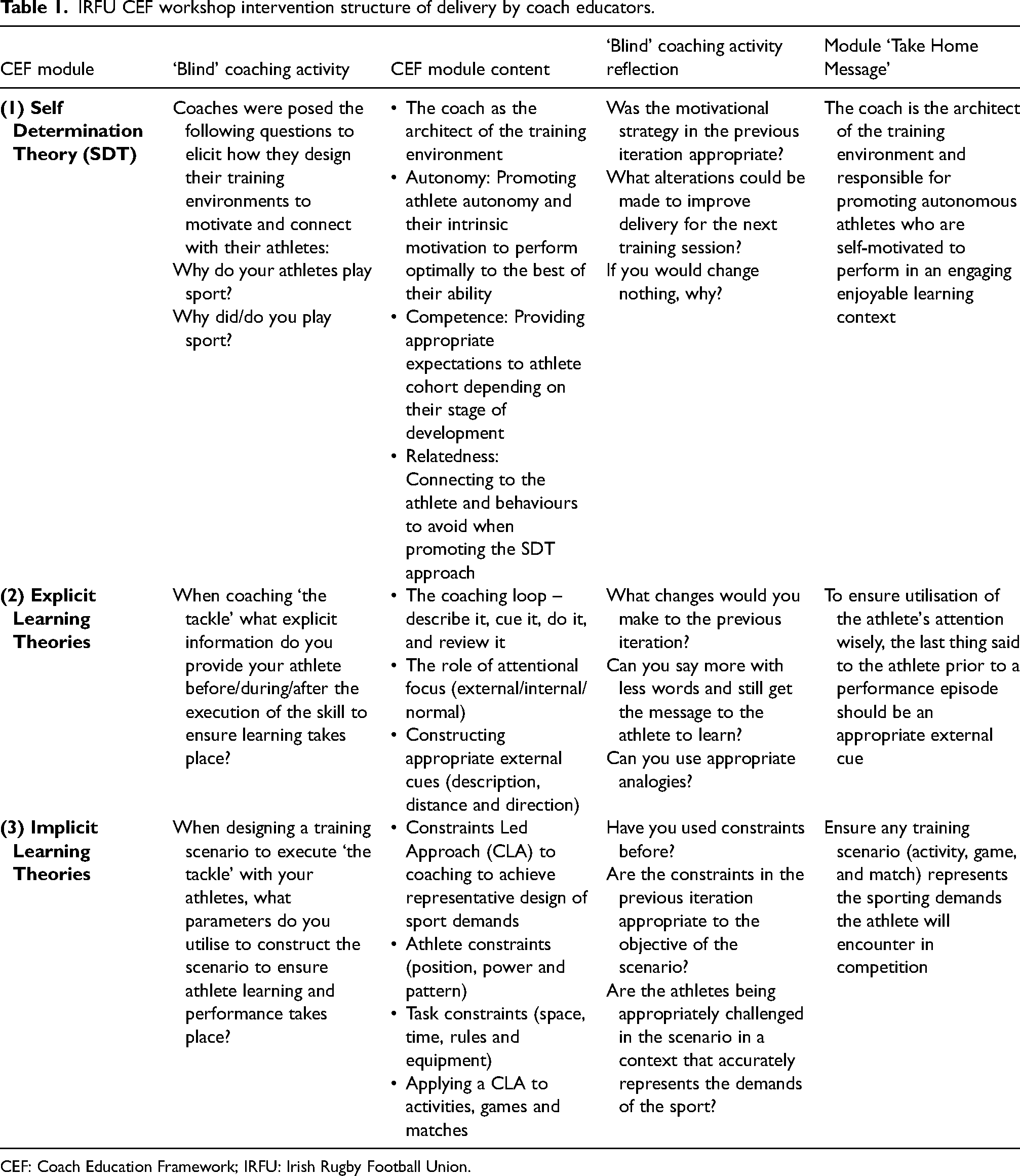
CEF: Coach Education Framework; IRFU: Irish Rugby Football Union.
Data analysis
The CAIS data was exported from SportsCodeTM to Excel (Microsoft, USA) for preliminary analysis. The data was classified as frequency of behaviour and standardised across each of the four coaches as ‘rate per minute’ (RPM) behaviours by dividing the frequency of each behaviour by the duration (minutes) of the training session. The data was then exported from Excel to the statistical analysis software package IBM SPSS (Version 25, IBM, USA). Data were summarised using frequency and descriptive statistics (mean (M) and standard deviation (SD)). Normality of the data was assessed by a Shapiro-Wilk test and following this, a series of one-way repeated measures analysis of variance (ANOVA) tests were performed to investigate whether there were behavioural differences between a coach's behaviour type RPM between TP1 and TP3. Where Mauchly's Test of Sphericity was significant, a Greenhouse-Geisser correction was used. Significance was set at p ≤ 0.05. A significant one-way repeated measures ANOVA was followed by a series of Bonferroni post hoc tests to identify the nature of these differences in coach behaviour RPM. A series of one-way multivariate analysis of variance (MANOVA) tests and subsequent one-way repeated measures ANOVAs were conducted to determine whether there were significant differences for all four coaches in the percentage of time they utilised within their training sessions in ‘Practice’, ‘Playing’ or ‘Management’ states respectively between TP1 and TP3.
CART-Q questionnaire data for all coaches were summarised descriptively. A one-way repeated measures ANOVA was conducted to determine whether there was a statistically significant difference for all coach perception sub-scales of the CART-Q over the course of the multi-season observation at the three distinct time points (TP1–TP3). CBS-S questionnaire data for both athlete cohorts were also summarised descriptively. A one-way repeated measures ANOVA was conducted to determine whether there was a statistically significant difference in athlete perception sub-scales of the CBS-S over the same time period as the CART-Q (TP1–TP3). If a significant main effect was observed for the one-way ANOVA, a subsequent Bonferroni post hoc test was conducted to examine where these differences existed.
Results
Coach behaviour (CAIS)
Across all three time points (TP1–TP3) and coaches (n = 4), a total of 15319 behaviours (M = 3829.8, SD = 1145.47) were observed and coded. These behaviours were extracted from a combined training duration of 2226 minutes (M = 556.5, SD = 72.70) from 36 training session observations. Coaches were observed at the same training session on 15 occasions. All coaches utilised ‘Instruction’ as their most frequent behaviour (M = 88.8, SD = 53.23), while ‘Management Direct’ was the second or third most frequent behaviour (M = 64.9, SD = 33.16) for all four coaches. Table 2 presents frequency and descriptive statistics for CAIS behaviour totals and behaviour RPM for each coach at TP1 baseline data collection, pre-CEF intervention delivery by the IRFU coach educators.
Individual coach CAIS behaviour and RPM behaviour totals and descriptive statistics at TP1 baseline data collection.
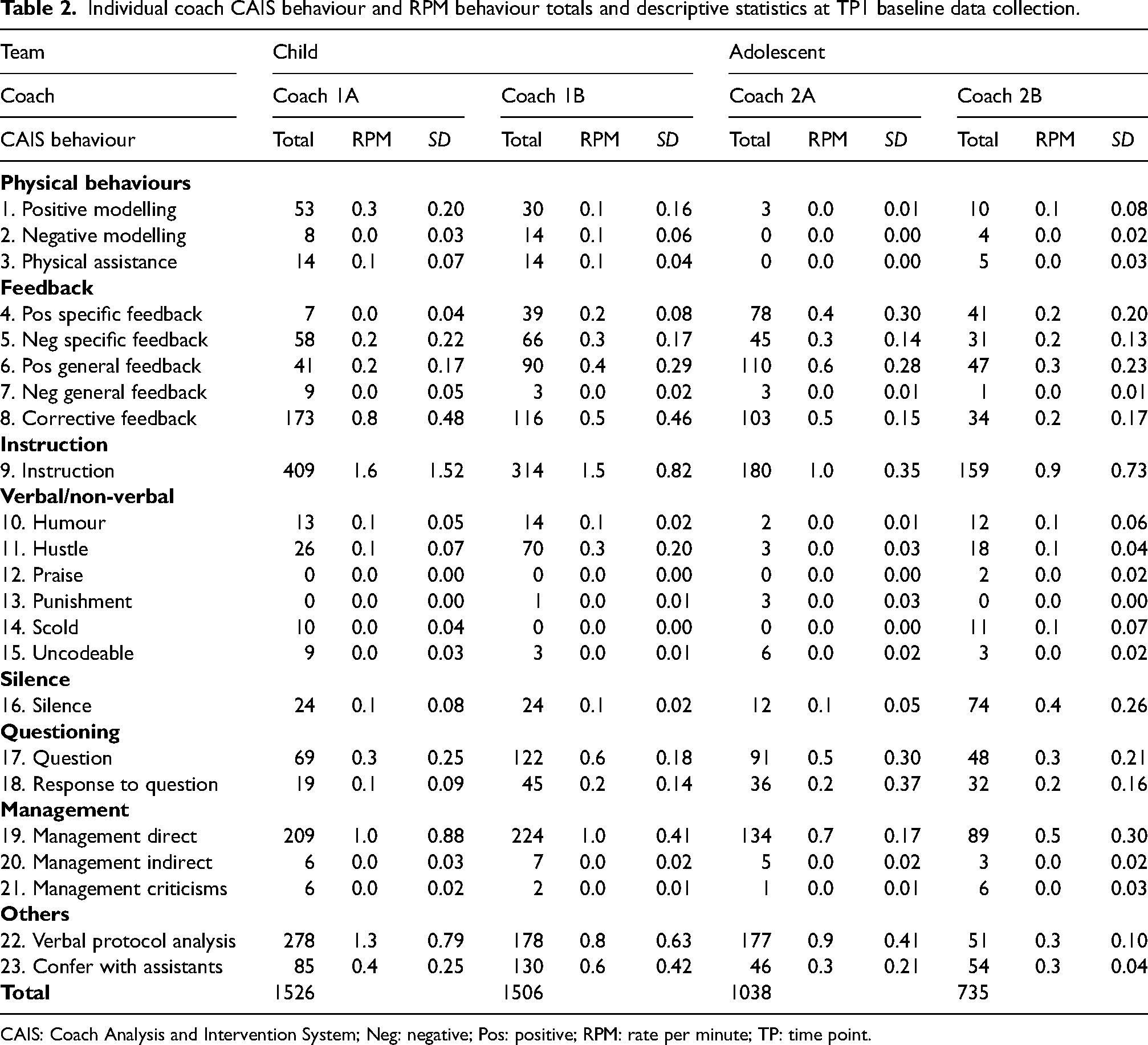
CAIS: Coach Analysis and Intervention System; Neg: negative; Pos: positive; RPM: rate per minute; TP: time point.
Results of the one-way repeated measures ANOVA are displayed in Table 3 and show the mean differences in behaviour RPM totals across the three time points (TP1–TP3). Significant differences post-CEF were evident in seven behaviours; ‘Negative Specific Feedback’ F (3, 32) = 0.45, p = 0.01 which increased from (M = 0.27, SD = 0.13) at TP1 to (M = 0.53, SD = 0.20) at TP2 (p < 0.01), ‘Negative General Feedback’ F (3, 32) = 15.53, p = 0.01 increased from (M = 0.04, SD = 0.07) at TP1 to (M = 0.14, SD = 0.14) at TP2 (p = 0.01) and again increased to (M = 0.25, SD = 0.23) at TP3 (p < 0.01). ‘Silence’ F (3, 32) = 9.98, p = 0.01 increased from (M = 0.21, SD = 0.22) at TP1 to (M = 0.44, SD = 0.31) at TP2 (p = 0.03) and increased again to (M = 0.51, SD = 0.20) at TP3 (p < 0.01), ‘Management Indirect’ F (3, 32) = 9.78, p = 0.01 which increased from (M = 0.04, SD = 0.06) at TP1 to (M = 0.15, SD = 0.09) at TP3 (p < 0.01), ‘VPA’ F (3, 32) = 6.06, p = 0.01 which decreased from (M = 0.72, SD = 0.58) at TP1 to (M = 28, SD = 0.21) at TP2 (p = 0.04) but then increased at TP3 (M = 0.67, SD = 0.49, p = 0.04). ‘Corrective Feedback’ F (3, 32) = 7.18, p = 0.01 increased from (M = 0.46, SD = 0.29) at TP1 to (M = 0.77, SD = 0.27) at TP3 (p = 0.02) and ‘Management Direct’ F (3, 32) = 6.62, p = 0.01 which increased from (M = 0.71, SD = 0.32) at TP1 to (M = 1.21, SD = 0.81) at TP2 (p = 0.05). There was no statistically significant changes observed post-CEF for the coaches’ most frequently utilised RPM behaviour of ‘Instruction’ F (3, 32) = 0.57, p = 0.56.
Combined coach CAIS mean RPM totals and one-way repeated ANOVA results across TP1–TP3.
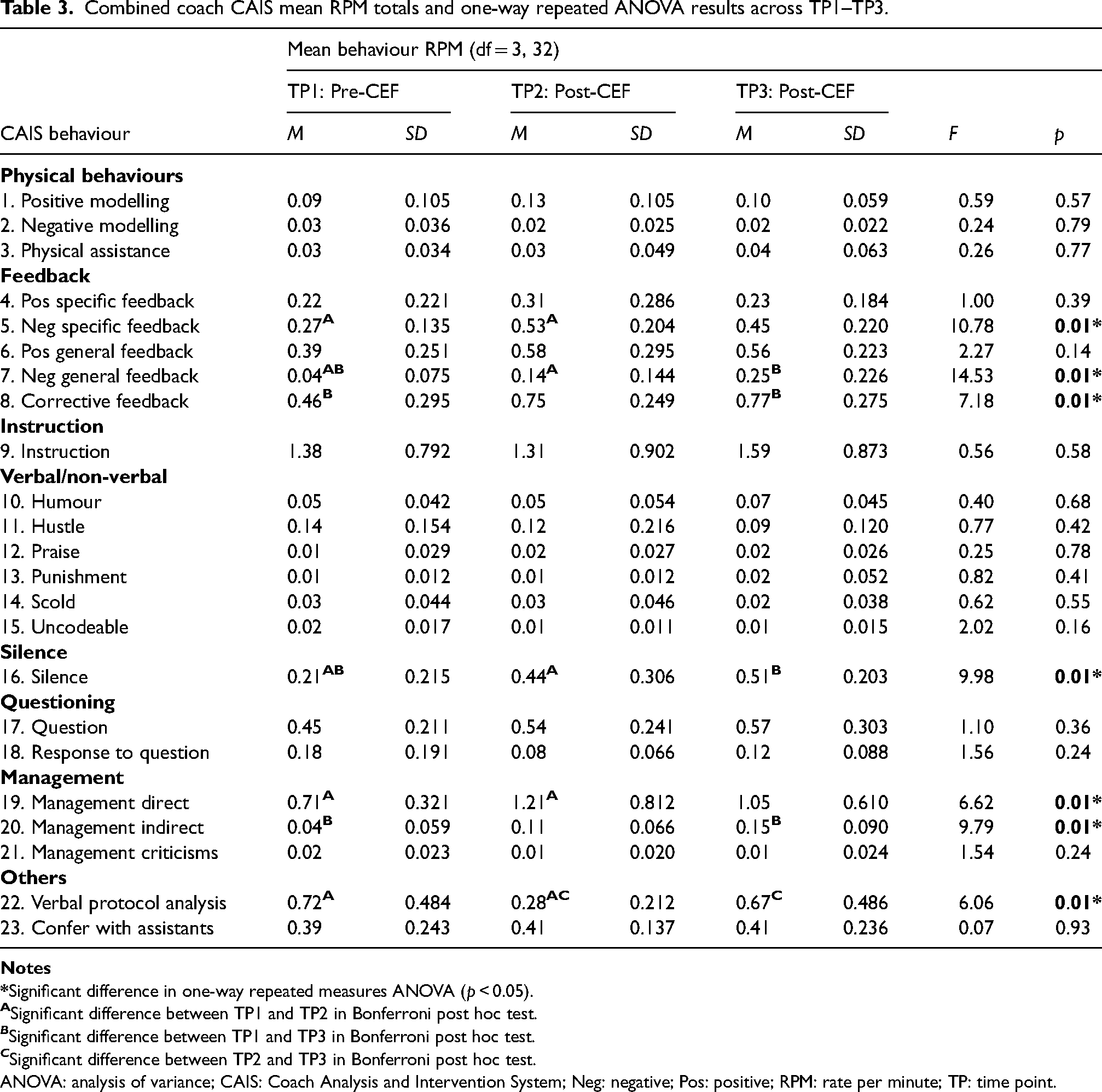
ANOVA: analysis of variance; CAIS: Coach Analysis and Intervention System; Neg: negative; Pos: positive; RPM: rate per minute; TP: time point.
Training state time analysis
Results for the proportion of time that coaches’ spent in the three CAIS training states are displayed in Figure 2. Results from the series of one-way MANOVAs yielded significant results in two of the three training states namely; ‘Practice state’ F (3, 32) = 4.39, p ≤ 0.01 and ‘Playing state’ F (3, 32) = 5.98, p ≤ 0.01. However there was no statistically significant result revealed for ‘Management state’ F (3, 32) = 1.65, p = 0.19. Subsequent one-way repeated measures ANOVAs revealed ‘Practice state’ was the most prominent state utilised by coaches with a total of 46% of their training session time at TP1 compared to 51% at TP2 and TP3 with no significant difference F (3, 32) = 0.19, p = 0.70. A total of 30% was spent in ‘Playing state’ at TP1 compared to 19% at TP2 and 24% at TP3 with no significant difference, F (3, 32) = 0.66, p = 0.46. Finally, coaches utilised 24% of the session time in ‘Management state’ at TP1 compared to 30% at TP2 and 25% at TP3 with a significant main effect F (3, 32) = 4.26, p = 0.04. However, subsequent post hoc analyses revealed no statistically significant differences between any of the three time points but did reveal a difference between TP1 and TP2 that was approaching significance p = 0.06.
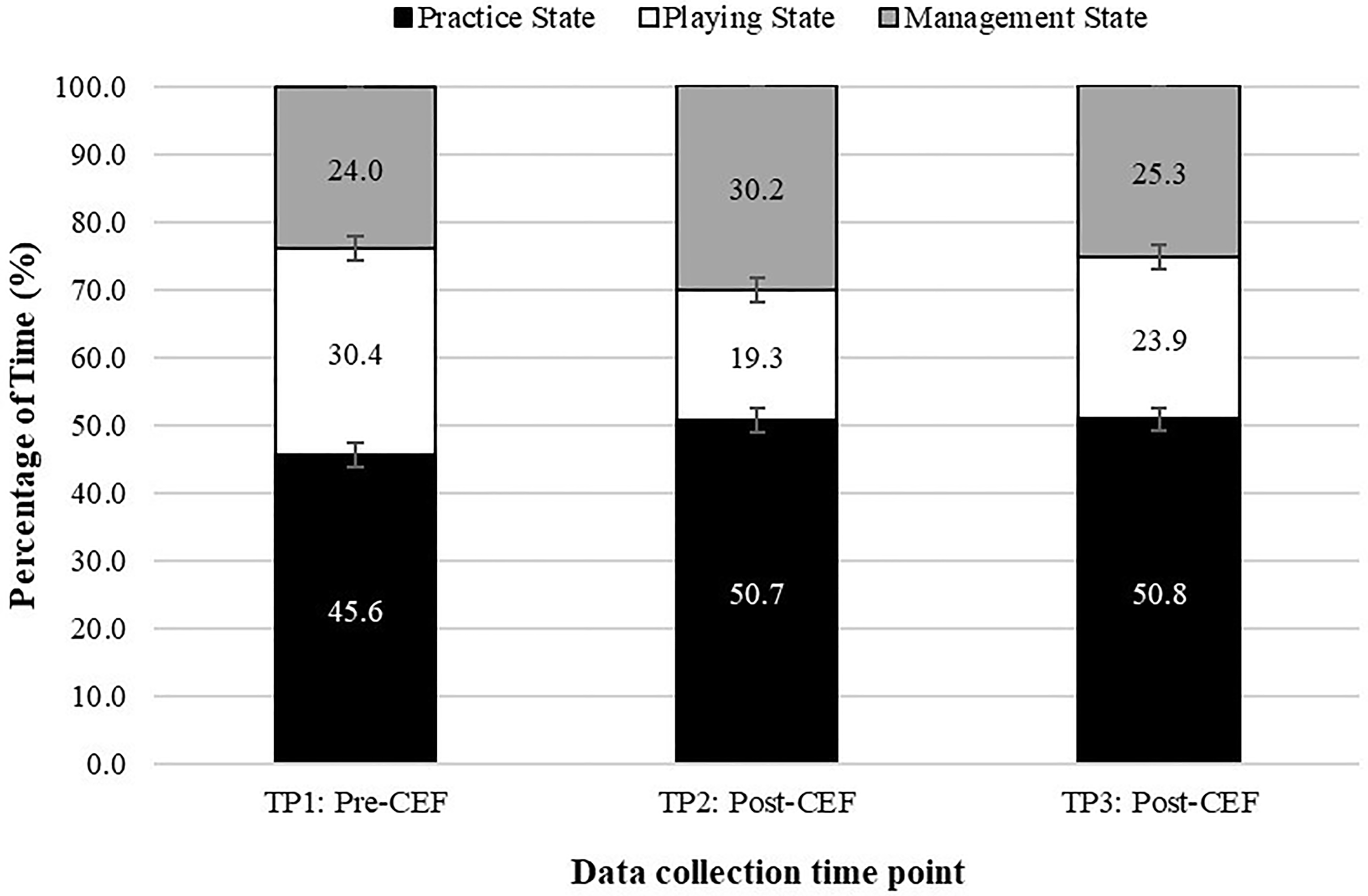
Percentage of time coaches spent in CAIS practice, playing and management states during training sessions across TP1–TP3. CAIS: Coach Analysis and Intervention System; TP: time point.
Coach/Athlete Perception Questionnaires (CART-Q & CBS-S)
Descriptive statistics for the three sub-scales of the CART-Q for all coaches combined over the three data collection time points (TP1–TP3) are displayed in Table 4. The CEF intervention did not elicit any statistically significant changes in coach perceptions for the three CART-Q sub-scales at any of the three observation time points, F (3, 11) = 0.439, p = 0.67.
Descriptive statistics for CART-Q for all coaches.
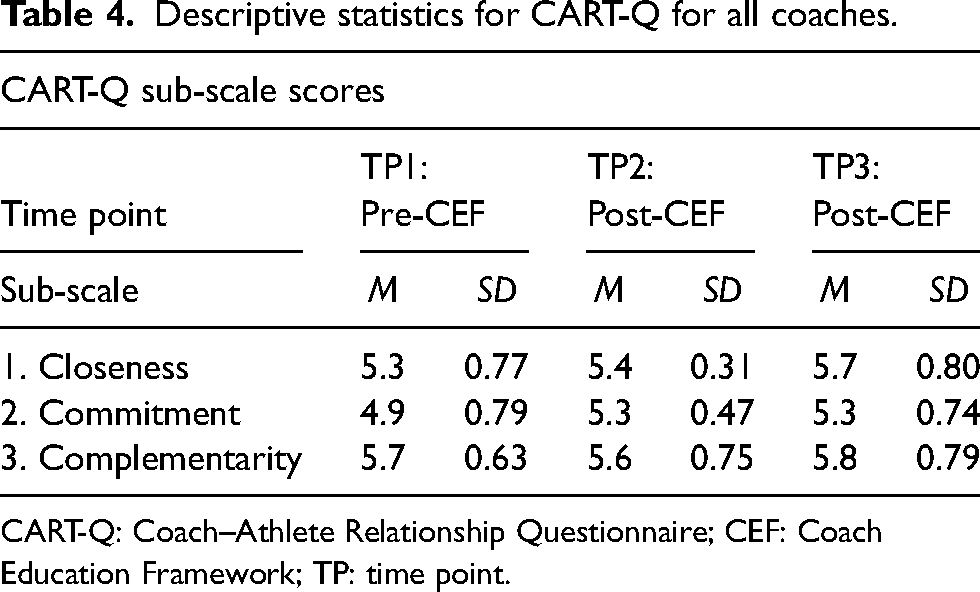
CART-Q: Coach–Athlete Relationship Questionnaire; CEF: Coach Education Framework; TP: time point.
Descriptive statistics for the seven sub-scales of the CBS-S based on the three data collection time points (TP1–TP3) for both teams combined are presented in Table 5. Collectively, the athletes from both teams displayed positive perceptions of their coaches’ behaviours for all CBS-S sub-scales over the three experimental time points. Three of the CBS-S sub-scales revealed significant differences in athlete perceptions of their coaches’ behaviours with respect to time point; Physical Training & Planning F (1.69, 53) = 3.69, p = 0.04, Personal Rapport F (2, 53) = 8.90, p ≤ 0.01 and, Negative Personal Rapport F (2, 53) = 4.99, p ≤ 0.01. Subsequent post hoc analysis revealed the Physical Training & Planning sub-scale scores significantly increased from TP1 to TP3 (p = 0.05). Personal Rapport scores significantly decreased from TP1 to TP2 (p ≤ 0.01) but showed no significant difference when compared to TP3 (p = 0.10). Finally, Negative Personal Rapport sub-scale scores increased significantly from TP1 to TP3 (p = 0.01).
Descriptive statistics for
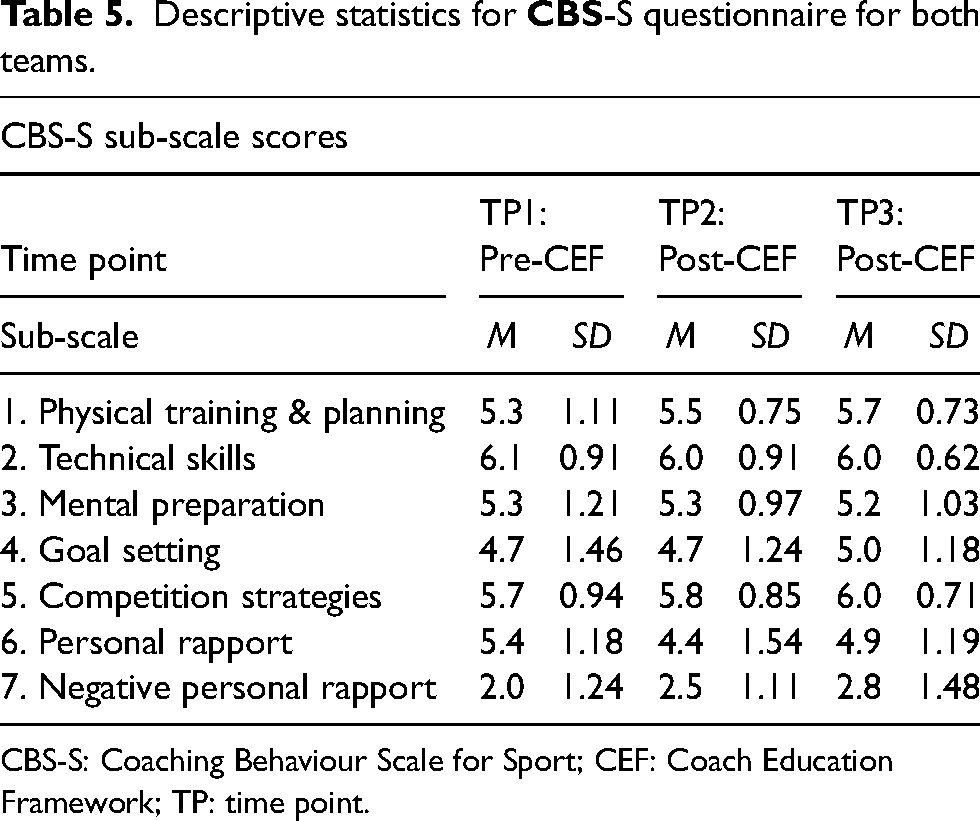
CBS-S: Coaching Behaviour Scale for Sport; CEF: Coach Education Framework; TP: time point.
Discussion
The purpose of this study was to evaluate the impact of the novel multifaceted IRFU CEF on the behaviours displayed by coaches during a training session, the structure of these training sessions for the proportion of time they spent in differing training activities, the self-perceptions of the coaches regarding their relationship with their athletes and finally, the athlete perceptions of their coaches behaviours. The behaviour profiles of the coaches changed post-CEF through increased ‘Management Direct/Indirect’ for RPM which supports the findings of Hall et al. 9 who showed these as the favoured behaviours of coaches in other sports such as soccer and handball. 53 The CEF positions the athlete as a prime contributing agent in their own learning environment through SDT, 42 it is plausible to suggest that coaches may have consciously provided more explicit information to their athletes through ‘Management’ type behaviours during training sessions to facilitate higher levels of engagement in their learning process. Similarly, the coaches’ use of both ‘Negative Specific and Negative General Feedback’ significantly increased despite the shortcomings of this type of reinforcement towards athlete performance being highlighted within the CEF through the SDT, ELT and ILT modules. Interestingly, the significant change in the RPM in three of the five feedback behaviours illustrates that the coaches appeared to have made a concerted effort to increase the volume of their feedback through ‘correcting’ the athletes behaviour during respective training scenarios. However, the coaches did not reinforce the athlete behaviour that they deemed desirable through ‘Positive General and Positive Specific Feedback’, as these were the only two feedback type behaviours that remained unaltered post-CEF. Athletes value positive feedback, but not ‘empty’ praise that is devoid of sporting context or performance standards 54 which can lead to a misalignment between the coaches and the perceptions of their athletes regarding their coaching methods appeared post-education intervention. 55 Coaches need to be cognisant that any form of positive reinforcement is understood by the athlete to contribute to their learning through reciprocal cooperation and not merely generic praise that may potentially be interpreted as hollow and by extension be devoid of contextual meaning. 56 Notably, there was no significant change post-CEF in RPM for the coaches’ use of ‘Instruction’. Considering ‘Instruction’ was the most prominent behaviour for all coaches and they displayed altered behavioural profiles for feedback and management type behaviours, it could be reasonable to assume an expected reduction in the volume and/or proportion of ‘Instructions’ post-CEF. As there appeared to be a focus on increasing explicit information by the coaches through increased feedback and maintaining high volumes of instruction type behaviours, future implementation of the CEF may need to reinforce that it is quality and not simply the quantity of these behaviours that determines their efficacy in relation to their athletes’ learning and sporting performance. 18
Despite the significant increase in ‘Management’ and ‘Feedback’ behaviours coupled with high volumes of unaltered ‘Instruction’, the coaches displayed an increase in the quantity of ‘Silence’ within their sessions for both behaviour RPM. Mirroring the ILT content of the CEF, the coaches seem to have attempted to facilitate their athletes’ learning by not explicitly intervening through increased bouts of ‘Silence’ post-CEF and instead afforded them the freedom to find their own performance solutions. This may be reflective of a self-confliction experienced by many coaches, whereby the coaching process itself can be perceived as intervening and directing athletes through explicit methods exclusively (i.e. instruction) which is contrary to affording the athlete with opportunities for selecting performance solutions through self-discovery. 57 Ironically, this could be interpreted as contradictory in the context of the previously presented results of this study related to increased ‘Management’, ‘Feedback’ and unaltered ‘Instruction’ behaviours. This indicates that during training sessions, the coaches took the diametrically opposed positions of staying silent more, while providing more explicit information to their athletes regarding their performance. Granger and Rhind 10 demonstrated similar findings in rugby union with coach behaviour profiles that utilised high volumes of instruction type behaviours but also favoured large proportions of silence in their training sessions. These similar findings illustrate the challenge that coach education faces as a non-linear pedagogical process where many coaches may find difficulty in changing their behaviours and applying empirically valid content to effectively optimise performance benefits in their athletes. 58 The significant changes within the coaches’ behavioural profiles, through increases in utilisation of ‘Management’, ‘Feedback’ and ‘Silence’ behaviours post-CEF, indicate that the coaches attempted to adopt new empirical content (i.e. CEF) into their regular coaching methods. However, their use of time within training sessions appeared to demonstrate a reversion to type, as they maintained similar time proportions for all three of the CAIS training states (‘Practice’, ‘Playing’ and ‘Management’) pre-CEF and post-CEF. Stodter and Cushion 59 reported similar findings in youth soccer coaches who exhibited minimal changes to their practice habits after participation in a formal coach education course. However, a coach's use of time is heavily context dependent and can often be at the mercy of real-world social obstacles (e.g. availability of facilities) for the execution of a training session. 4 Future delivery of the CEF should aim to highlight the importance of maximising a representative design within training sessions in order to utilise the often limited time and available resources of both the coaches and athletes to its full potential. 24
Coaches continued the trend of a resistance to change in their perceptions of their relationship with their athletes pre-CEF and post-CEF which remained consistently positive throughout. This may be due to the fact that the coaches’ registered relatively high satisfaction perceptions to begin with, which is ubiquitous among the coach education research particularly when coaches are centred in their own learning process. 6 As can also be the case with a coach education experience, participants tend to ‘cherry pick’ and integrate only the content that they perceive to correspond to their existing beliefs and in turn can often disregard anything that does not conform to their ‘individual’ paradigm. 60 The resultant positive self-perceptions from the coaches throughout this research period are perhaps unsurprising. The CEF needs to aim to further raise the self-awareness of the coaches to not only positively affect their behaviours, but also their self-perceptions of the volume and efficacy of their ‘Instruction’, ‘Management’ and ‘Feedback’ behaviours and the wider impact they have on the recipient athletes. 61 Unlike the coaches, the athletes’ significant changes in perceptions indicate they were receptive to the mutable behavioural profiles of the coaches’ efforts as the research observation progressed. While encouraging, and perhaps a direct result of the increased volume of the coaches ‘Management’, ‘Feedback’ and ‘Silence’ behaviours, it should be noted that both teams who participated in the research reached the final of their respective competitions in the second season. Therefore, the team's success on the field could also have acted as a contributory factor to both the positive and negative perceptions of the athletes post-CEF combined with the changes observed in the behavioural profile of the coaches. Forlenza et al. 54 note athletes often desire coaches to be positive and caring but also to set performance expectation standards and motivate them to meet these expectations. As the CEF positions the coaches to appropriately motivate and guide their athletes to achieve their sporting potential, its influence in the positive perceptions of the athletes shouldn’t be understated. Coaches should continue to implement the CEF content in training sessions so as they can be, as dubbed by the Positive Coaching Alliance 62 ‘warm and demanding’ coaches who exert considerable influence in not only the performance and psychological well-being of their athletes 63 but their personal development as well. 64
While the current study aimed to be as comprehensive as possible to the coaching context within which the behaviours and perceptions were extracted from, several limitations did present during the research process. Firstly, due to the multiple data collection methods, 65 the sample size of the participant cohort was relatively small out of necessity, not desire. Secondly, the nature of the coaching process required that observation periods occurred over an extensive time period (i.e. 18 months over two playing seasons) to ensure that the coaching observed was an authentic reflection (or as much as possible) of the participants regular coaching practices and not merely, as Downham and Cushion 66 term, ‘performance theatre’ when the research team was present at training sessions. It should also be noted that the participant coaches may be interpreted as biased to begin with as they were selected from a cohort who willingly agreed to be observed for the purpose of improving their coaching habits in collaboration with the IRFU. Finally, the coaches were exposed to one coach education episode over a single weekend and, while the presence of the research team may have acted as a latent prompt to exhibit CEF content during observation, it is recommended that future delivery of this CEF comprises more frequent bouts of education to reinforce the application of the framework's content in situ.
Conclusion
The purpose of this study was to evaluate the impact that the novel IRFU CEF had on the coach–athlete dyad in amateur rugby union. The results revealed the impact of the CEF in delivering significant changes in the coaches’ behaviours when coaching their athletes in training sessions through increases in juxtaposed behaviours, such as increasing their use of ‘Management’, ‘Feedback’ and also ‘Silence’ behaviours post-CEF. However the coaches most prominent behaviour ‘Instruction’ showed no significant difference from pre-CEF to post-CEF. In contrast to the altered coach behavioural profiles post-CEF, the coaches did not significantly change the use of their time for training session content for all three of the CAIS training states (‘Practice’, ‘Playing’ and ‘Management’) pre-CEF and post-CEF intervention. Similarly for the CART-Q results coaches demonstrated minimal variance throughout the research and maintained positive perceptions of the state of their relationship with their athletes. CBS-S results revealed that athlete perceptions of their coaches where largely positive throughout the research period. The relatively high perception scores of both agents of the dyad indicated a mutual satisfaction of their working relationship. The coaches apparent willingness to attempt integrate CEF content into their regular coaching habits is very encouraging for the future implementation of the CEF and should be explored in another setting in more depth. Coach education and the implementation of a CEF is a non-linear learning process requiring consistent application over long periods so that coaches are afforded sufficient time to improve their coaching behaviours, increase their self-awareness relative to these behaviours and finally cultivate and nurture the relationship bond with their athletes for the benefit of their sporting and personal development.
Footnotes
Declaration of conflicting interests
The authors declared no potential conflicts of interest with respect to the research, authorship, and/or publication of this article.
Funding
The authors disclosed receipt of the following financial support for the research, authorship and/or publication of this article: The work was completed with the support and collaboration of the Irish Rugby Football Union (IRFU).
