




Abstract
The aim of the study was to provide an understanding of current practices and perceptions of strength and conditioning (S&C) training in female touring professionals. A cross-sectional, explorative survey was undertaken and contained 30 questions separated into four sections: (i) general participant information, (ii) S&C practices, (iii) Likert scale questions on S&C for golf performance, and (iv) knowledge and awareness of S&C. A total of 102 players completed the survey with a combination of multiple-choice questions (MCQs), open-ended questions, and Likert scale style questions utilised throughout. Results showed that ≥94% of players believed that strength and power in both the lower and upper body, in addition to flexibility, were the most important physical characteristics to complement golf shot metrics (e.g. clubhead speed [CHS], ball speed, carry distance, etc.). However, 26% of players conducted S&C training only in the off-season, with 21% suggesting that they had a fear of injury from S&C training. When considering the barriers to undertaking S&C training, the most common reasons included time constraints (20%) and players wanting to prioritise golf practice (15%). Finally, 58% of players believed that training in the weight room should replicate the golf swing. Although it is positive to see that the main physical characteristics for golf are well-understood by professional players, it is also evident that further education and knowledge translation is required relating to the application of S&C training for performance enhancement and injury risk mitigation purposes.
Introduction
Golf is traditionally recognised as a skill-based sport that places considerable emphasis on technical and tactical demands, with the primary objective of completing 18 holes in as few shots as possible. 1 Historically, golf does not have a strong tradition of physical preparation; however, recent research has shown there is a growing interest in physical training to enhance golf performance.1–4 This recent evidence has underscored the importance of strength and conditioning (S&C) with professional players, elite amateurs, swing coaches, and support staff practitioners recognising the link between a variety of physical characteristics and golf metrics such as: club head speed (CHS), ball speed and driving distance. 3 With an increased understanding of how to positively compliment a player's physical development, alongside the heightened demands placed on professionals (e.g. longer golf courses, extended practice sessions, travel across different time zones, etc.), there has been a paradigm shift towards prioritising physical preparation for golfers, which in turn, has also been suggested to assist with availability to practice and compete on a long-term basis.1,5
When focused more specifically on the physical attributes required for golf, it is widely recognised that improving upper body and lower body strength and power, are associated with improvements in a golfer's force production, which is a crucial factor in achieving maximum CHS.1,2 For example, Oranchuk et al., 6 reported a large correlation (r = 0.64) between one-repetition (1RM) back squat and CHS. When focused on lower body power, Wells et al.7,8 have repeatedly shown strong relationships between countermovement jump (CMJ) positive impulse and CHS (r range = 0.62–0.79). From an upper body perspective, Keogh et al., 9 found a moderate correlation (r = 0.50) between 1RM bench press and CHS, which is further supported by the work of Torres-Ronda et al., 10 who established stronger correlations between 1RM bench press and peak ball speed (r = 0.61) and average ball speed (r = 0.62). Collectively then, it seems there are consistent moderate to large associations between key physical characteristics and CHS, which supports the development of strength and power training for golfers. However, all of the aforementioned evidence pertains to male golfers, with a distinct lack of comparable data in female players.
Despite the supporting evidence for physical preparation, not all players will engage in S&C training.1,11 That said, previous evidence indicates there is a desire from players and coaches alike, to attain a deeper understanding of all things related to physical preparation. For example, Evans and Thomas, 12 undertook a survey study of Australian golf coaches and reported that 84% expressed a wish for further education surrounding the importance of physical fitness for the sport. More recently, Wells and Langdown 13 conducted a survey to understand current perceptions and practices of physical preparation in highly skilled golfers. Of note, over 40% of golfers believed that S&C may actually increase the risk of injury, and potentially cause a negative effect on their availability to train and compete. However, it should be recognised that this perspective does not align with previous, evidence-based research.1,3,6,14 Secondly, 63.25% of participants reported a misconception that the golf swing should be replicated in the gym environment. Conversely, current evidence suggests that utilising traditional, compound resistance training methods (e.g. squats, deadlifts, presses, rows, trunk strengthening, etc.) are most effective at augmenting force production capabilities, which is a vital element of developing CHS. 3 Finally, among the players who do participate in physical training, many utilised traditional hypertrophy repetition ranges (e.g. 8–12). 13 Whilst hypertrophy training may be a useful strategy for players during the off-season (with the potential for an increase in cross-sectional muscle area, leading to greater force production capabilities), 15 there is also a risk of delayed onset of muscle soreness (DOMS) from high volume resistance training, 16 which is undesirable for golfers, particularly during in-season.
Collectively, the current body of evidence exposes many misconceptions relating to best practice S&C training for golf performance.1,17 Furthermore, and of upmost importance for female golf, the majority of research relating to physical training in the sport has been in male players, and to the authors knowledge, no comparable survey has been carried out in professional female players. This highlights a clear gap in the evidence base for female golf. Therefore, the aim of the present study was to provide an understanding of current practices and perceptions of S&C training in female touring professional golfers. Further to this, the wider (more applied) aim of this study was to enhance the education of female golfers surrounding S&C practice for female golfers.
Methods
Research design
A cross-sectional, explorative survey was designed to highlight and understand the current self-reported perceptions and practices of S&C in professional players on the Ladies European Tour (LET). In addition, it is not uncommon for professional players to compete on more than one professional golf tour; thus, we also managed to recruit some players who primarily compete on the Ladies Professional Golfers Association (LPGA) Tour. The authors collaborated with practitioners affiliated with the LET to achieve the largest possible participant pool across Europe. The survey opened on the 21st January 2023 and closed on the 7th September 2023, which was the time frame agreed by the author team to enable certain tournaments to be attended in-person, during the summer months. Ethical approval was obtained from the London Sport Institute research and ethics committee, at Middlesex University.
Participants
The inclusion criteria for participants consisted of membership on either the LET or LPGA tours. The survey gathered information from 91 LET and 11 LPGA tour players, with all participants providing consent prior to entering the survey. The LET consisted of 316 players, in comparison to the 547 LPGA tour players, registered in 2023. Membership on either the LET or LPGA consists of eligibility criteria to participate in several tournaments across the year. Both tours have different eligibility categories, consisting of full membership, conditional status, past champions, ranking lists, invitees, major champions, and top money earners.
Survey
The survey was developed on Momentive (online survey platform) and created in order to generate knowledge surrounding S&C practices in the female game yet guided by previous surveys carried out for S&C training in golf.11,13 Participants were contacted through social media platforms (e.g. X [formerly Twitter] and LinkedIn), direct communication from support staff who work on the LET, data collection points at two professional LET golf tournaments, and word of mouth. The responses were collected after participants provided written informed consent, and all answers were anonymised for data analysis. The survey contained 30 questions separated into four sections: (i) general participant information, (ii) S&C practices, (iii) Likert scale questions on S&C for golf performance, and (iv) knowledge and awareness of S&C, with a combination of multiple-choice questions (MCQs), open-ended questions, and Likert scale style questions used. The MCQs included an ‘other’ option for respondents to provide additional information or explanations if desired. The survey opened on the 24 January 2023 and closed for responses on the 15 September 2023.
Data analysis
Through implementing manifest content analysis, this approach enhances reliability and accuracy of interpretations of the researchers, providing a more thorough insight to the research. Content analysis is based on the premise that text can serve as a valuable and comprehensive insight into a particular phenomenon,
18
with the primary purpose to analyse the text data collected via ‘Other’ responses. Due to the nature of manifest content analysis, a frequency analysis with percentage of responses was undertaken for ‘Other’ responses (Table 2). Through the employment of frequency analysis, the following categories were developed, prior to the formation of themes:
Player education on S&C training Physical capacities targeted during S&C training Benefits of S&C training Barriers to S&C training Coach selection Training throughout different periods of the year (off-season, in-season or both)
Following this, participant responses were used to develop themes during data analysis. The total number of responses were inputted to Microsoft Excel, whereby the authors analysed, and then developed the subsequent themes. The initial stage was the familiarisation of data, whereby the authors reviewed responses, and themes were developed with the aim of providing a transparent overview of the methods employed. Consequently, the following themes were generated:
General Participant Information. This section provided background information on the players, such as: country of residence, years playing golf, and current playing level (e.g. LET, LPGA or both). S&C Practices. This section of the survey contained answers relating to current S&C training practices within touring female professional golfers (e.g. training history, training frequency, periodisation of training, etc.). Likert Scale Questions on S&C and Golf Performance. This section focused on the perceived influence S&C may have on a player's golf shot metrics. Knowledge and Awareness of S&C Practices. This section focused on information relating to any barriers that may be evident for players engaging in S&C training, their beliefs of S&C training for golf, and whether it was believed that any further education surrounding the benefits of S&C for golf, would be useful to them.
To convey the scale of percentages associated with participant responses, the qualitative terms were assigned: <30% = minority; ∼30% = approximately a third; ∼50% = approximately half; 55–74% = majority; ≥75% = most; 100% = all respondents, as per previous research.
19
Finally, intercoder reliability was calculated at 86.32%, with Cohen's κ calculated for intercoder agreement (κ = 0.924, p < 0.001). This represented ‘almost perfect’ agreement according to previously published descriptors for Cohen's κ interpretation.
20
Results
General participant information
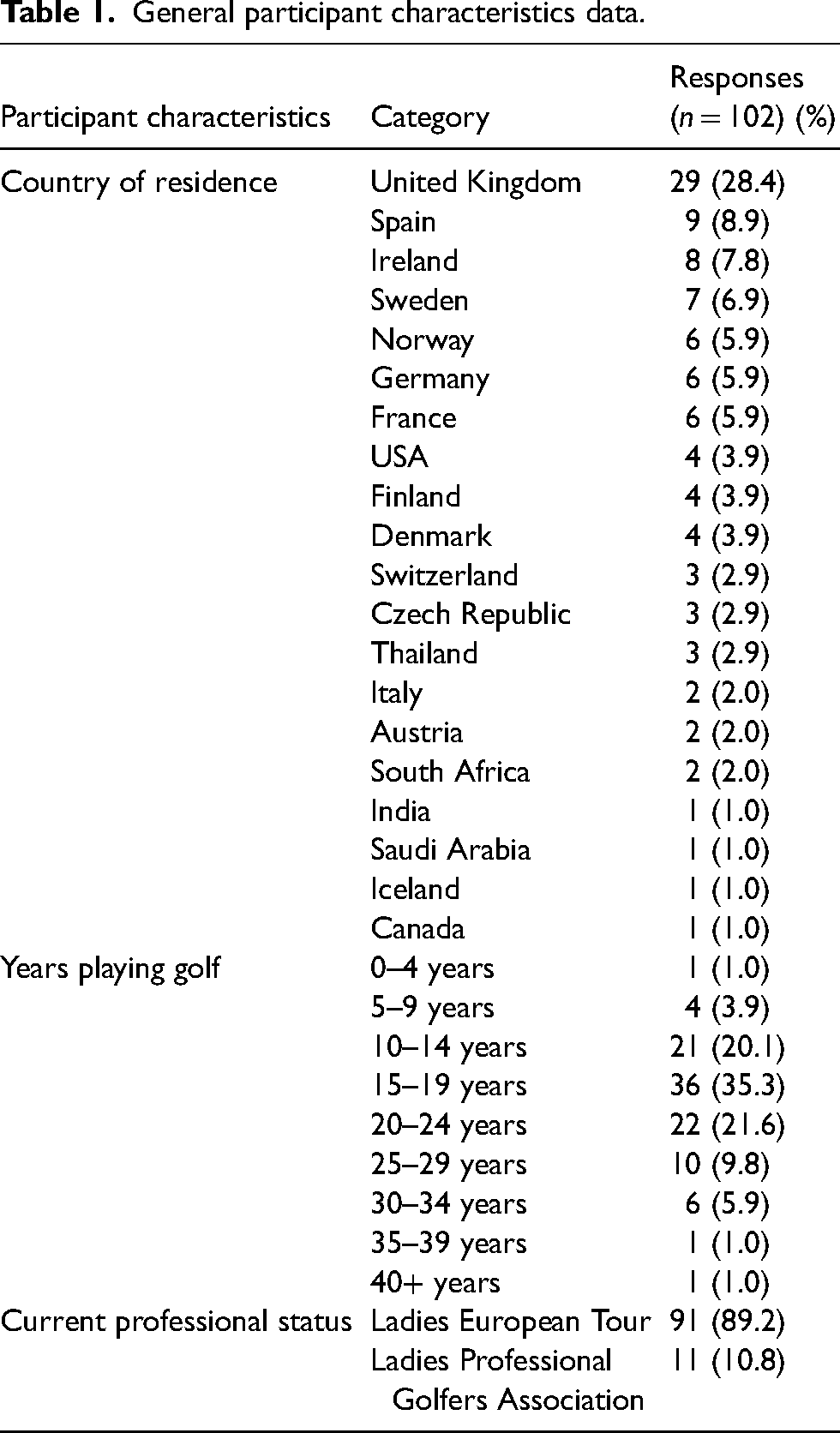
Table 1 provides the results relating to questions in the opening section of the survey, which focused on: (a) country of residence, (b) years playing golf, and (c) current professional status. A total of 102 respondents completed the survey, with 29 (28.4%) in the United Kingdom, nine residing in Spain (8.9%), eight from Ireland (7.8%), seven from Sweden (6.9%), and six respondents from Norway, Germany and France (5.9% each). The remaining countries had four or less (4% or less) respondents populated in Czech Republic, Thailand, Finland, Denmark, South Africa, Switzerland, Italy, India, Saudi Arabia, USA, Austria, Iceland and Canada. The most reported number of years golfing was 15–19 years (n = 36, 35.3%), with LET the most frequent response regarding professional playing status (n = 91, 89.2%), followed LPGA (n = 11, 10.8%).
General participant characteristics data.
Strength and conditioning practices
Figure 1 provides an outline of responses for S&C practices within professional female golfers. Of the 102 respondents, 100 (98%) highlighted they had engaged in some form of S&C training previously, with only two (2%) respondents stating they had never participated in any previous physical training. From a frequency standpoint, training two times per week was most answered (n = 35, 34.3%), followed by three times (n = 26, 25.5%), and four times per week (n = 24, 23.5%). In respect to training throughout the year, the majority of respondents (n = 72, 70.6%) reported training all year round, whilst ‘off-season only’ (n = 26, 25.5%) and ‘in-season only’ (n = 4, 3.9%) received fewer responses. When asked why players trained in the off-season only (Figure 2), the most selected answers were ‘I would rather practice golf’ (n = 34, 31.5%), ‘Time Constraints’ (n = 26, 24.1%) and ‘Fear of Injury’ (n = 26, 24.1%), with ‘Fatigue’ (n = 13, 12%), ‘Lack of Facilities’ (n = 9, 8.3%) and ‘Other’ (n = 3, 2.8%) less frequently reported. Strength (n = 95, 22%), mobility (n = 85, 19.6%), core training (n = 78, 18%) and aerobic capacity (n = 70, 16.2%) were the most commonly trained physical qualities, with power (n = 56, 13%) and speed (n = 43, 10%) reported to a lesser extent.
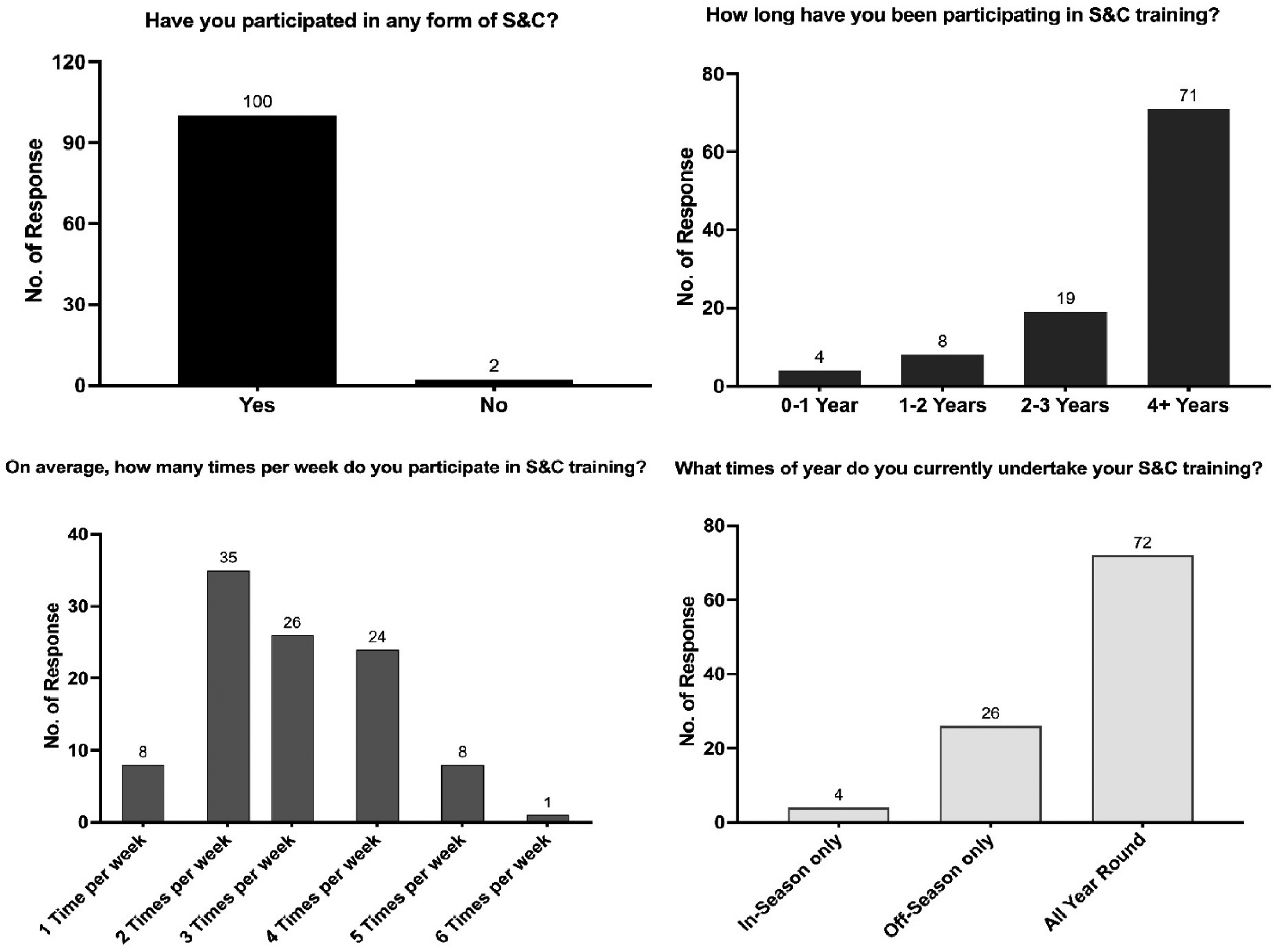
Have you participated in any form of S&C (top left)? How long have you been participating in S&C training (top right)? On average, how many times per week do you participate in S&C training (bottom left)? What times of year do you currently undertake your S&C training (bottom right)?
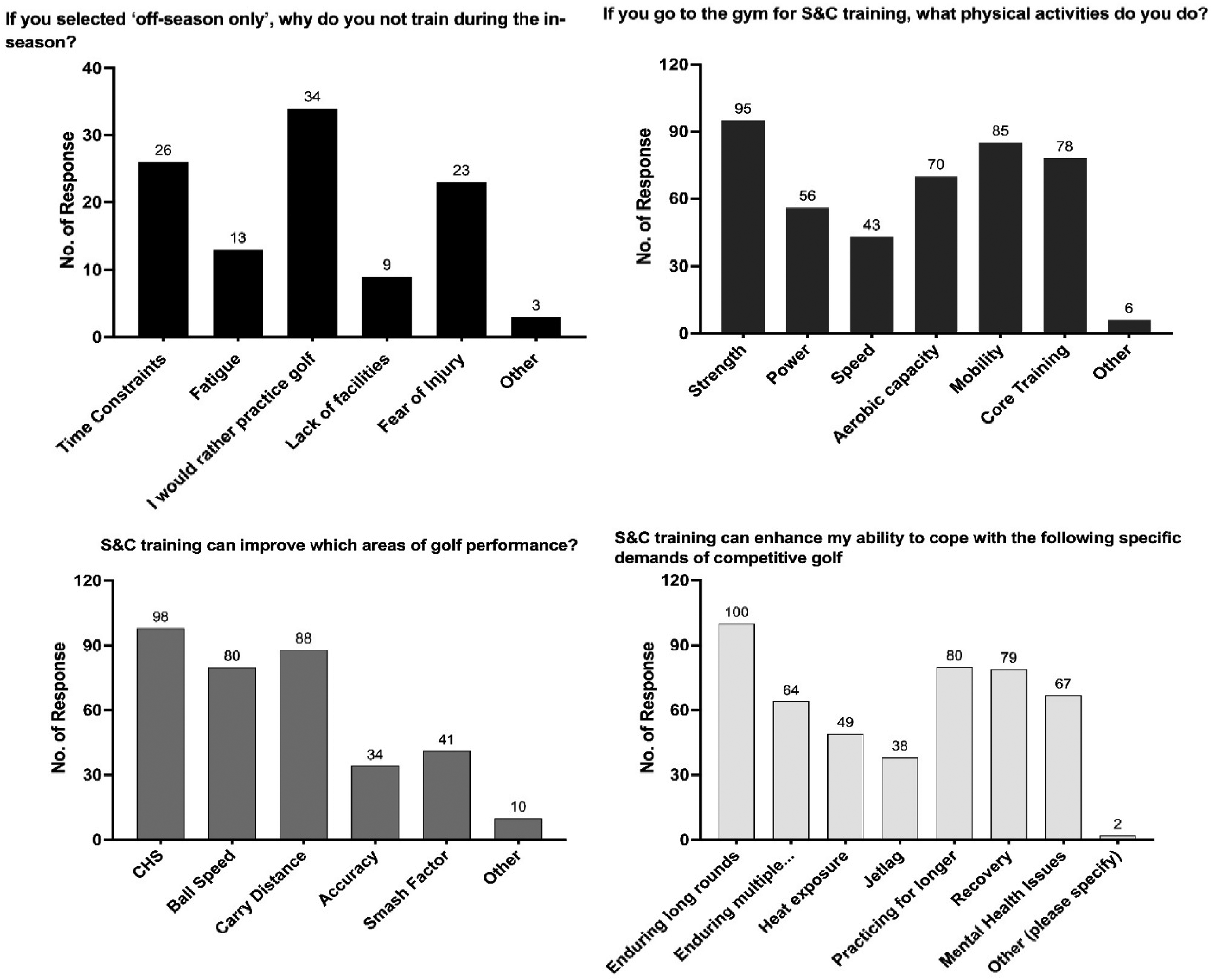
If you selected ‘off-season only’, why do you not train during the in-season (top left)? If you go to the gym for S&C training, what physical activities do you do (top right)? S&C training can improve which areas of golf performance (bottom left)? S&C training can enhance my ability to cope with the following specific demands of competitive golf (bottom right). Note: Respondents had the option to select more than one answer on each question.
When questioned on how S&C training could impact golf shot metrics, respondents felt that CHS (n = 98, 30%), carry distance (n = 88, 25%) and ball speed (n = 80, 22.8%) would be most affected through physical preparation, with smash factor (n = 41, 11.7%) and accuracy (n = 34, 9.7%) also receiving notable responses. Players were asked how they feel S&C may benefit their ability to deal with the high intensity demands of professional golf, of which there was a wide variety of selected responses such as: ‘Enduring Long Rounds’ (n = 100, 20.1%), ‘Practising for Longer’ (n = 80, 16.7%), ‘Recovery’ (n = 79, 16.5%), with ‘Mental Health Issues’ (n = 67, 14%), ‘Enduring Multiple Rounds in One Day’ (n = 64, 13.4%), ‘Heat Exposure’ (n = 49, 10.2%) and ‘Jetlag’ (n = 38, 8%). Finally, a number of ‘Other’ responses were provided for questions relating to S&C practices (in addition to knowledge and awareness of S&C training), with Table 2 showing some example responses that players provided.
Participants ‘other’ responses to areas of strength and conditioning training for golf.
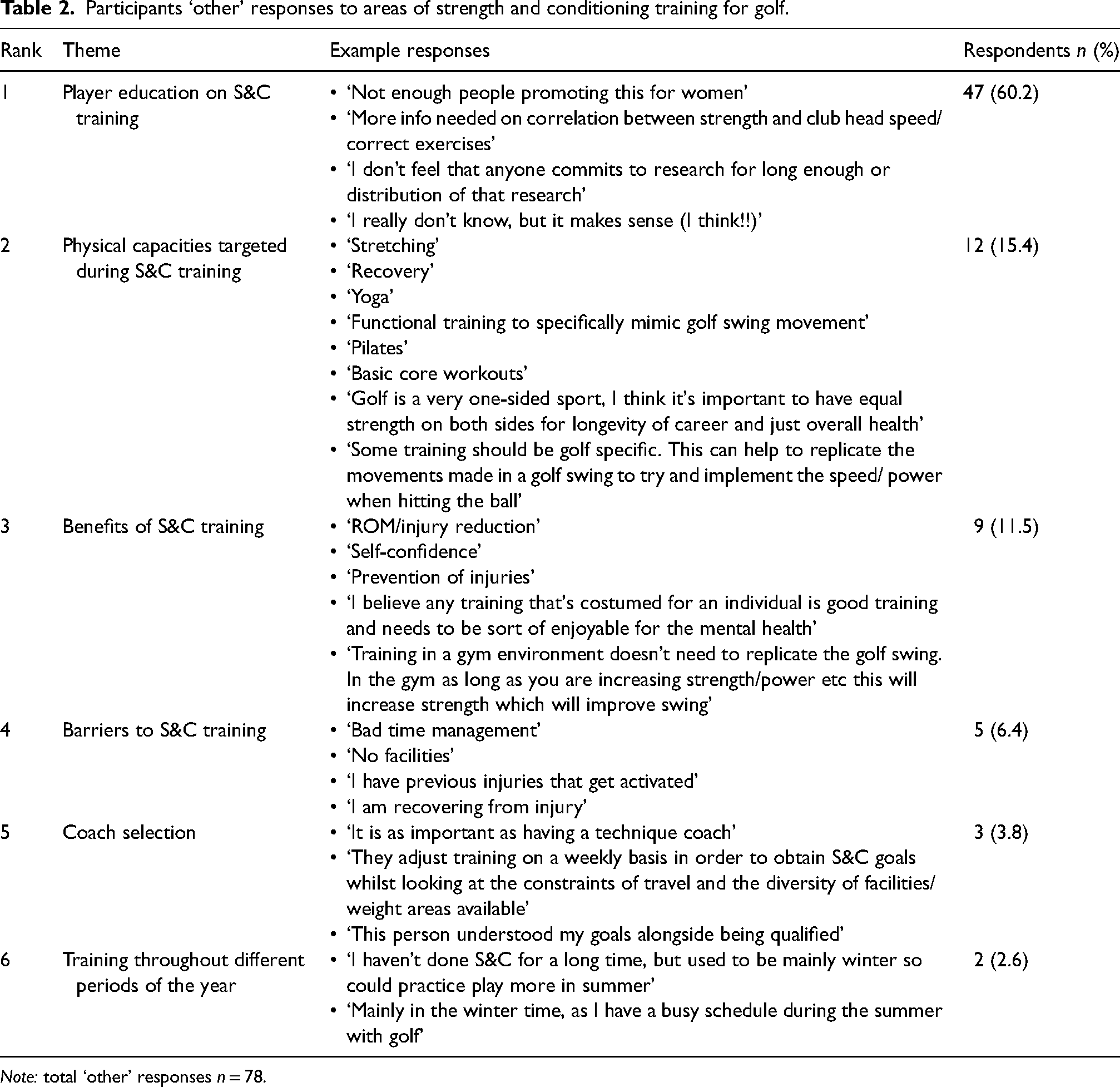
Note: total ‘other’ responses n = 78.
Likert scale questions on S&C and golf performance
Presented in Figure 3, most respondents either ‘Strongly Agree’ (n = 55, 54%) or ‘Agree’ (n = 41, 40.2%) that S&C can enhance both longevity in the game and golf performance in general. However, the following question: ‘Performing S&C training prior to a competition round will harm my performance’ demonstrated an interesting answer set, with the majority answering ‘Neutral’ (n = 62, 49.6%), followed by ‘Disagree’ and ‘Strongly Disagree’ (n = 47, 37.6%) and ‘Agree’ (n = 16, 12.8%). There was an over-arching agreement that strength in the upper body (n = 96, 94.1%, ‘Agree’ or ‘Strongly Agree’) and lower body (n = 101, 99%, ‘Agree’ or ‘Strongly Agree’) can improve golf performance.
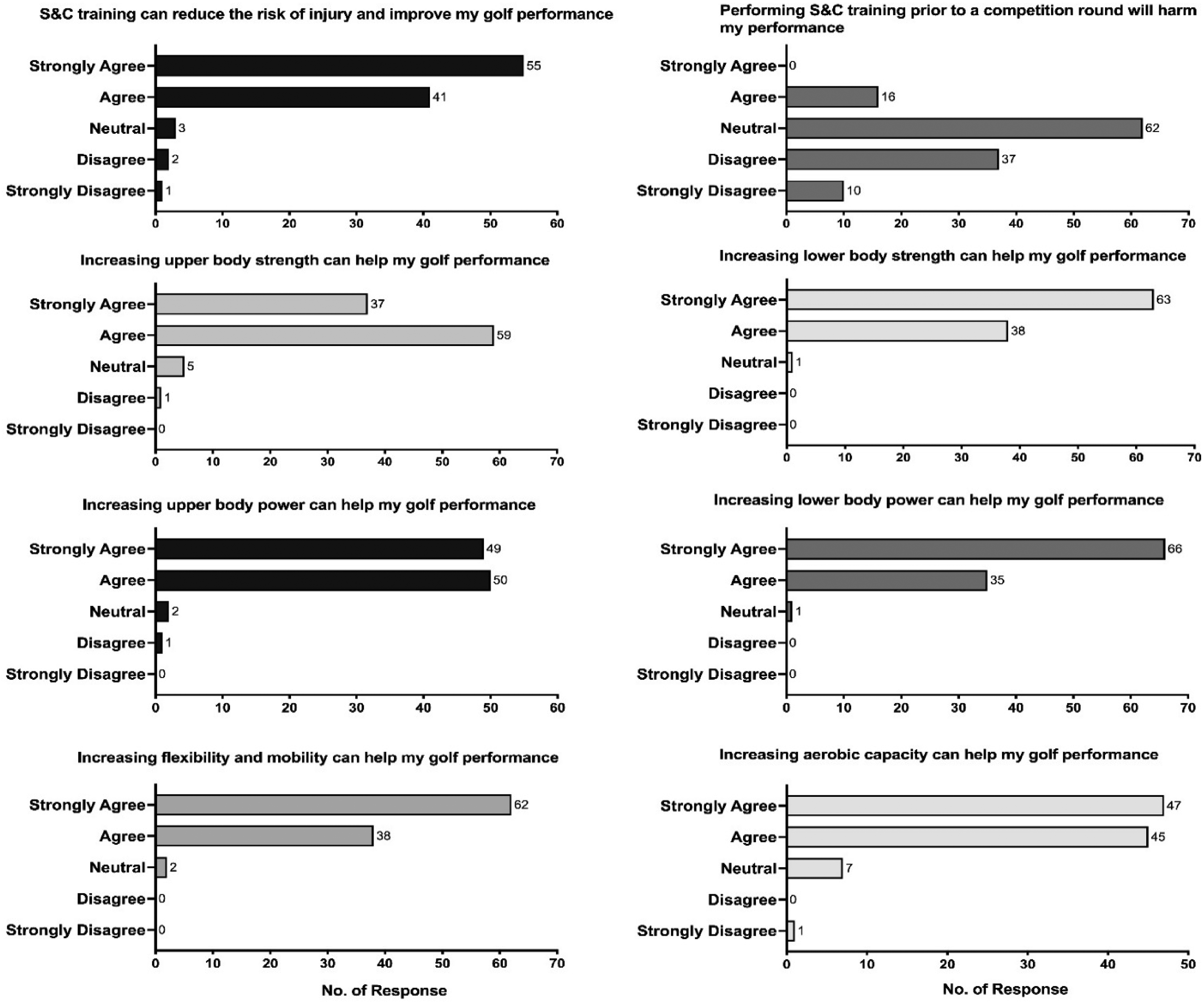
S&C training can reduce the risk of injury and improve my golf performance (top left), performing S&C training prior to a competition round will harm my performance (top right), increasing upper body strength can help my golf performance, increasing lower body strength can help my golf performance, increasing upper body power can help my golf performance, increasing lower body power can help my golf performance, increasing flexibility and mobility can help my golf performance (bottom left), increasing aerobic capacity can help my golf performance (bottom right). Note: Respondents had the option to select more than one answer on each question.
Furthermore, it was widely agreed that ballistic power in the upper (n = 99, 97%, ‘Agree’ or ‘Strongly Agree’) and lower extremities (n = 101, 99%, ‘Agree’ or ‘Strongly Agree’) can benefit golf performance. From a flexibility and mobility standpoint, most respondents selected ‘Strongly Agree’ (n = 62, 60.8%), and ‘Agree’ (n = 38, 37.3%) that these physical characteristics were important for golf. Finally, 94 (92.2%) participants either strongly agreed or agreed that aerobic capacity can aid golf performance.
Knowledge and awareness of S&C practices
Figure 4 presents the results relating to knowledge and awareness of S&C practices for golf. When questioned on what factors contribute to potentially not engaging in S&C training, common selected responses included ‘Time Constraints’ (n = 56, 19.6%), ‘I would rather practice golf’ (n = 42, 14.7%) and ‘Fatigue’ (n = 37, 13%). Interestingly, ‘Fear of Injury’ (n = 30, 10.5%) and ‘I do not know how to do so safely’ (n = 28, 9.8%) had a similar response selection, with ‘Lack of Facilities’ (n = 21, 7.4%), ‘Menstrual Difficulties’ (n = 19, 6.7%) and ‘I am fearful that increasing muscle mass will impact my flexibility for golf’ (n = 17, 6%), receiving fewer, but notable responses regarding factors that contribute to not participating in S&C training. Participants were asked ‘Do you believe you have enough knowledge about the potential benefits of S&C training for golf performance?’, which produced 59 (57.8%) ‘Yes’ and 43 (42.2%) ‘No’ answers. Somewhat linked to this, players were then asked ‘Do you believe that resistance training in a gym environment should replicate the golf swing?’, with the majority of participants selecting ‘Yes’ (n = 62, 60.8%), rather than ‘No’ (n = 29, 28.4%). Interestingly, of the 59 respondents who believed they had enough knowledge about S&C training, 34 of these respondents (representing 33% of the total respondent pool) stated that they believed the golf swing should be replicated in the gym environment. This highlights that despite some professionals suggesting they have enough knowledge on S&C for golf, misconceptions are evident surrounding best practice. In addition, the remaining 11 responses (10.8%) resulted in players manually inputting text answers, that broadly revolved around not being sure. The final question ‘If you work with an S&C coach, can you provide the reason you work this person?’, provided a consistent level of responses across all potential answers, which were ‘They are highly qualified in their field’ (n = 36, 17.6%) and ‘Recommended to me by word of mouth’ (n = 33, 16.1%) were the most common answers, with ‘Provided as part of the tour I play on’ and ‘They worked with a player who has achieved success’ receiving an equal number of responses (n = 31, 15.1%). ‘They are easily accessible to me’ (n = 30, 14.6%), ‘I can afford their services’ (n = 25, 12.2%) and ‘Provided through regional and national coaching’ (n = 16, 7.8%) also had fewer, but a notable level of responses.
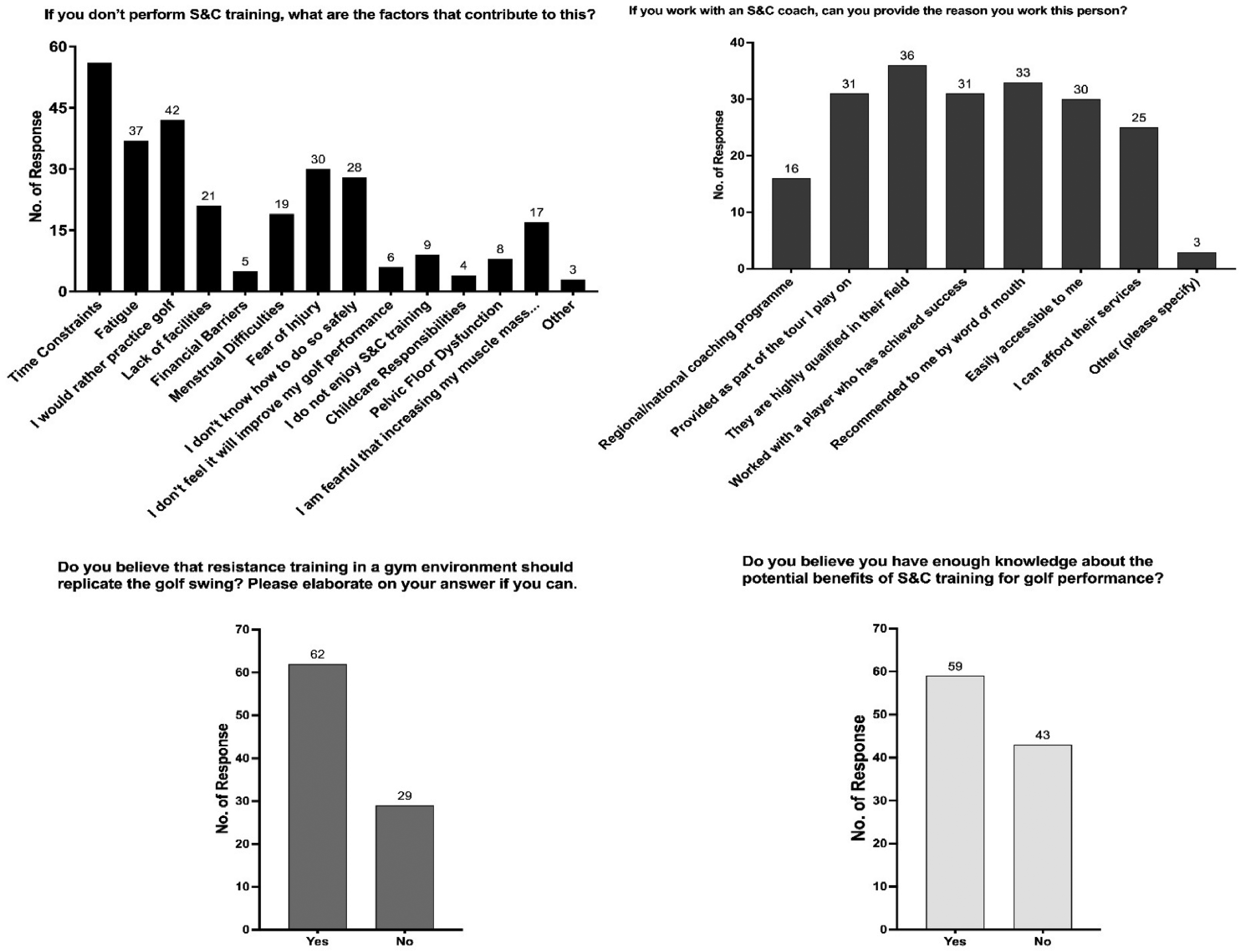
If you don’t perform S&C training, what are the factors that contribute to this (top left)? If you work with an S&C coach, can you provide the reason you work this person (top right)? Do you believe that resistance training in a gym environment should replicate the golf swing (bottom left)? Do you believe you have enough knowledge about the potential benefits of S&C training for golf performance (bottom right)? Note: Respondents had the option to select more than one answer on each question.
Discussion
The aim of this study was to provide an in-depth, innovative understanding of current practices and perceptions of S&C training in touring, professional female golfers. To the authors’ knowledge, this is the first study aiming to understand these issues solely in touring, professional female golfers and help to provide important information on how best to support those players who are looking to develop their physical capacities, whilst on tour.
Strength and conditioning practices
Despite the lack of research on physical preparation in female golf, the findings of this study highlight that a vast number of professional players are engaging in S&C training (98%). Further to this, 70% of players stated they had ≥4 years’ experience of S&C training. From a training frequency standpoint, training two times per week was most commonly reported (34%), which should also be seen as an encouraging finding. Given players often have a demanding schedule on and off the golf course, completing two S&C training sessions per week is likely to be enough to elicit some level of physical adaptation, if programmed appropriately – i.e., in a total body routine, as opposed to splitting workouts via specific body parts. 1
The formation of an annual training schedule is commonplace in most sports, 11 and periodisation has become a vital element in structuring physical training plan for athletes performing at a high level. However, it is interesting to note that 26% of respondents indicated that they only trained in the off-season. With recent research showing the positive effects of physical training on measures such as CHS, ball speed and distance in female players, 4 it appears that just over a quarter of respondents are only taking advantage of these potential benefits for a small portion of time, noting that the ‘in-season’ period for a professional golfer is typically a large proportion of the calendar year (although it should be noted that season length will vary from player to player depending on entries and ranking). The off-season in professional golf typically lies outside busy competitive periods on the professional calendar. During this time, players may choose to rest and recover from the tournament schedule, work on technical issues within their golf swing, in addition to working on their physical fitness. In comparison, the in-season encompasses a demanding competitive period whereby tournaments with the largest ranking points and purses are on offer. The focus during this period is to maximise performance on the course, accumulating high finishes to secure a tour card, and potentially finish within automatic qualification for team events (e.g. Solheim Cup), during the years when they run. To support the need to train strength and power capacities, Alvarez et al. 21 undertook an 18-week study investigating the effects of a strength training programme on low handicap golfers’ performance. Results demonstrated a significant increase (p < 0.05) in physical capacities such as maximal and explosive strength after 6 weeks of training; however, driving performance (as measured by CHS and ball speed), only improved after 12 weeks. Therefore, it seems plausible to suggest that a long in-season period with no physical training may be detrimental to both physical capacity and drive performance for golfers. ‘Other’ responses surrounding not engaging in S&C included: ‘Bad time management’ and ‘I haven’t done S&C for a long time, but used to be mainly in winter so I could play more in summer’. These examples further highlight some of the challenges that S&C practitioners may face, when working with professional female players. Such information is useful though, as understanding the reasons why a professional player may not engage in S&C is paramount, if practitioners stand any chance of changing a player's beliefs and practice.
Interestingly, 21% of respondents felt ‘Fear of Injury’ was one of the reasons for not engaging in S&C training during the in-season. However, if players work with a qualified S&C professional (i.e., with appropriate levels of experience and education), then this perceived risk seems to reduce for players. 17 A vast amount of research now exists, supporting the idea that resistance training may concurrently improve athletic performance 22 and reduce injury occurrence due to increases in the structural strength of ligaments, tendons, and joint cartilage. 14 Furthermore, research from Brearley et al. 5 suggests that avoiding injury can be viewed as one of most likely impacts on golfer's performance, who undertake consistent, structured physical training, owing to their increased availability for both practice and competition. Thus, if professional golfers are fearful of engaging in S&C during the in-season, it seems fair to suggest that they are missing out on some aspects of training which have the capacity to minimise the risk of injury.1,3,4 With this in mind, we would suggest that there is some important education to offer female professional players, and indeed coaches, outlining the negligible risks of injury when working with appropriately experienced and qualified practitioners. Further to this, a year-round approach to S&C training is essential, to ensure that force production capabilities are not detrimentally impacted during the in-season period.
The physical requirements of golf are underpinned by ballistic force production capabilities in both the lower and upper body.3,7,23 Collectively, 64% of respondents indicated that strength, power, speed and mobility were physical capacities included in their S&C training routines. In addition, 76% of respondents reported that they believed physical training could enhance golf performance via improvements in CHS, ball speed and carry distance. ‘Other’ responses included: ‘Recovery’, ‘Functional training’ and ‘Functional training to specifically mimic the golf swing movement’. These responses highlight the broad range of beliefs that professional players have relating to S&C, although as aforementioned, training that mimics the golf swing may not be the most effective use of time for S&C training.
Beyond these somewhat expected benefits, it was also recognised that the effects of S&C training had the potential to benefit with ‘Enduring Long Rounds’ (20.8%), ‘Practising for Longer’ (16.7%), and ‘Recovery’ (16.5%). Thus, although some recognition for these wider aspects of drive metrics is positive, only a small proportion of respondents acknowledged this, further indicating the advantages of enhanced education around the broader health benefits of regular physical training for golf. 24 ‘Other’ responses for ‘S&C training can improve which areas of golf performance’ included: ‘Injury prevention’, ‘Swing stability’ and ‘Availability (decreased injury risk)’. Whilst responses outlining injury prevention and availability to practice and compete seem like logical beliefs for how S&C may positively impact golf, the perception of improved ‘Swing stability’ seems less obvious. It is feasible that players may ‘feel more stable’ as their over-arching physical fitness improves. However, it also seems plausible that feeling improved stability during the swing may also be a possible by-product of technical changes, which an S&C practitioner would likely not be responsible for. As such, these collective responses highlight the importance of working closely with both players, technical coaches, and other members of the support staff, as one multi-disciplinary team, to optimise player performance.
Likert scale questions on S&C and golf performance
There is an over-arching agreement that S&C training is beneficial to golfers, as evident from Figure 3. Most participants (94%) ‘Strongly Agreed’ or ‘Agreed’ that S&C can reduce the risk of injury and increase golf performance. This is further evident through participants selecting ‘Strongly Agree’ or ‘Agree’ on the physical characteristics that can aid golf performance, such as upper body strength (94%), lower body strength (99%), upper body power (97%), lower body power (99%), and flexibility (98%). However, it should be acknowledged that this is somewhat at odds with 21% of players reporting a ‘Fear of injury’ during the in-season from S&C training, once again, highlighting the importance of education surrounding the application of physical training for golfers. This conflicting information aside, there is supporting evidence indicating that the physical qualities that players believe are important, do have a positive effect on CHS, ball speed and distance.1,3,4,6 This can be seen as a positive finding of the current study, as it shows players appear to have an understanding of the main physical capacities which golfers should try to develop.
Finally, 13% of participants ‘Agree’ that performing S&C prior to a round is likely to harm performance. This misperception could potentially be due to golfers having a perceived understanding of S&C training causing DOMS, which would have the capacity to hinder a golfer's ability to perform during practice and competition, if volume and intensity of training were not appropriately planned and delivered. However, it should also be noted that S&C training prior to competition can be micro-dosed, often acting as a priming session, which athletes may yield some small acute benefits from.17,25,26 Following this, half of respondents (50%) answered ‘Neutral’, demonstrating further unclarity around the potential benefits of S&C training for female golfers. Thus, and as has been a consistent message thus far in the present study, providing education and enhanced ‘knowledge translation to practice’ surrounding the importance of long-term planning and application of S&C training would be beneficial for professional players. 11
Knowledge and awareness of S&C practices
The data presented in Figure 4 highlights responses relating to perceived barriers to undertaking S&C training, with ‘Time Constraints’ (20%), ‘I would rather practice golf’ (15%), and ‘Fatigue’ (13%) being the most reported answers. Previous research has stated that golfers may have a somewhat reactive approach to practising golf, which is solely dependent on performance on the golf course. 11 Naturally, if a golfer consistently prioritises their practice on the range at the expense of S&C, this will have a cumulative, detrimental impact on physical capacity, particularly during the in-season. Further data from Figure 4 indicates there is some hesitation surrounding engaging in S&C training. ‘Fear of Injury’ (11%), ‘I do not know how to do so safely’ (10%), and ‘I am fearful that increasing muscle mass will impact my flexibility for golf’ (6%), are responses that point towards an uncertainty or unwillingness to engage in S&C training. However, this is again, a slight contradiction to ≥94% of players indicating that strength, power and flexibility are the key attributes to develop for golf performance, which further highlights the need for a better understanding on how to practically apply S&C training for golfers. ‘Other’ responses to ‘If you don’t perform S&C training, what are the factors that contribute to this?’, included: ‘No facilities’, ‘Injury recovery’ and ‘I have existing injuries that get activated’, outlining a potential fear of undertaking S&C training, for those players who have had a previous injury. With these responses in mind, it again seems apparent that players would benefit from improved knowledge relating to S&C training. However, it also seems prudent to mention that S&C practitioners would benefit from ensuring their skill-set is adaptable in scenarios where players raise concerns. For example, if a player is conflicted on undertaking S&C training for fear of what may happen to an existing injury, practitioners should be able to provide reassurance on the efficacy of supervised S&C training, whilst also modifying training programmes that do not compromise the agreed physical goals. This is an important part of taking an adaptation-led approach as a S&C practitioner, as opposed to being overly focused or biased towards certain methods or specific exercises.
Further ambiguity is evident from the answers in this survey, whereby 58% of players believed they did have enough knowledge on the potential benefits of S&C for golf performance. In addition, 58% of female tour players are of the opinion that resistance training in the gym should replicate the golf swing (with the remaining 42% disagreeing). This perhaps provides the strongest evidence of the need for S&C-based education in female golf. With the golf swing being underpinned by force production, S&C training for golfers should focus on the development, production, and transfer of strength and ballistic force, in both the lower and upper body.1,17,27 With this in mind, exercises such as squats, deadlifts, presses and rows (for strength), and jumps and medicine ball throws (for ballistic strength), can potentially provide greater adaptation and development of these physical capacities, 1 than exercises which mimic the golf swing. Perhaps the only caveat to this, is the inclusion of golf-specific ‘speed training’ or maximum effort swing training, which likely provides both neural and coordinative adaptations, and should be integrated with S&C training, not as a replacement. Broadly speaking though, fundamental strength and explosive strength development could be potentially viewed as the ‘lowest hanging fruit’ for physical preparation in golf.
Finally, the common reasons for players working with an S&C coach were ‘They are highly qualified in their field’ (18%), and ‘Recommended to me by word of mouth’ (16%). ‘Provided as part of the tour I play on’, ‘They worked with a player who has achieved success’ and ‘They are easily accessible to me’ all received an equal number of responses (15%), demonstrating that some female professionals exhibit trust in highly qualified practitioners, who have previously experienced success with similar high-level players. ‘Other’ responses for this question included: ‘I have had a few but it depends on my schedule’, ‘It is as important as having a swing coach’ and ‘They adjust training on a weekly basis in order to obtain S&C goals, whilst looking at the constraints of travel and the diversity of facilities/weight areas available’. The data highlights the reasons players select a practitioner with a background in S&C, which in turn, may provide a reference point for female golfers’ knowledge when selecting an appropriate S&C coach in the future. Regardless, these percentage of responses are small and it is evident from our findings that there is an important opportunity to improve female golfers’ knowledge of the benefits of S&C training, how to plan it appropriately, and in what dosage it should be applied.
Limitations
Despite no comparable study being conducted solely in professional female golf, we must acknowledge a couple of limitations in this study. Firstly, there are currently 316 players registered on the LET, and 547 on the LPGA (containing 20 categories), with some also competing on both tours. Thus, although our sample size was not small (n = 102), it would have benefitted from a larger participant pool. Second, and related to this, our sample was predominantly European based. Whilst this isn’t a limitation on its own, European players likely account for approximately one-third of professional players across the globe, with the remaining two-thirds predominantly coming from America, Australia, South Africa and Asia (noting that this is anecdotal evidence from support staff working on the LET and at The R&A). Thus, our findings may not reflect current practices and perceptions of players from other countries, and where possible, future survey research should aim to coordinate a larger participant pool from all parts of the globe. Finally, it should be noted that selection bias is likely present within this study. Due to the nature of the research surrounding S&C practices, in parallel with the level of golfer within the targeted population, there is a possibility that the subset of golfers who engaged in this research may hold some favourable beliefs towards S&C training.
Conclusion
It is clear from this research that professional female players acknowledge the potential benefits of engaging in S&C for golf performance. However, uncertainty is also evident on how best to integrate this alongside practising for the sport. There is a tendency by the minority of players to prioritise golf practice, with S&C training often being utilised on an ad hoc basis. Whilst practising golf should be a priority, the integration of physical training, which is planned appropriately, also has the potential to enhance golf shot metrics (e.g. CHS and ball speed) and decrease injury risk. Thus, practitioners should consider how best to provide both education and support to players, ensuring appropriate training programmes are provided to optimise physical preparation for the sport.
Footnotes
Declaration of conflicting interests
The authors declared no potential conflicts of interest with respect to the research, authorship and/or publication of this article.
Funding
The authors received no financial support for the research, authorship and/or publication of this article.
