



Abstract
Golfers who want to improve their technical proficiency will undoubtedly hire a swing coach who may also influence and give advice on how the golfer can improve outside of technical enhancement (i.e. strength and conditioning, warm-ups, cool-downs etc.). With research examining the effects of strength and conditioning on youth golfers beginning to materialise, it is important to ascertain golf coaches’ perceptions of strength and conditioning, warm-ups and cool-downs and how they are utilised with youth golfers. Fifty Professional Golfers’ Association Professionals and Assistant Professionals completed an online questionnaire on their perceptions of, and approaches to, strength and conditioning, warm-up and cool-down activities for youth golfers. Data indicated that 84% and 80% of coaches perceived strength and conditioning could enhance golf swing performance and reduce the risk of injury, respectively. Although all coaches agreed golfers aged 18 years and under can take part in strength and conditioning activities, there was no consensus on when a golfer should start strength and conditioning activities, with most coaches unaware of the existing guidelines surrounding youth resistance training. Warm-ups are perceived by coaches to be beneficial for youth golfers with > 75% of coaches stating their players completed a warm-up, however, the modes of exercise coaches deemed suitable for a warm-up were varied. Cool-downs were deemed beneficial for aiding recovery post-round, yet over half of coaches selected their players did not habitually complete one. Findings from the questionnaire highlight that although perceptions towards strength and conditioning, warm-ups and cool-downs are positive, educational solutions to disseminate the underlying contemporary guidelines and practical applications to coaches and players are required.
Introduction
Within the sport of golf, the ability to hit the ball further has been associated with reduced handicaps and lower scoring, which is the ultimate goal of the sport. 1 Providing golfers can maintain technical consistency in their golf swing (e.g. attack angle, dynamic loft, club path, face angle, face to path, spin loft, swing plane, swing direction, low point, impact height, impact offset and dynamic lie), the primary contributing factor for greater golf shot distance is club head speed (CHS). 2 Key physical determinants such as strength and power can positively influence CHS, 3 with strength and conditioning programmes having been shown to enhance those identified determinants.4,5 Strength and conditioning is also an integral part of the long-term athletic development process of young athletes. 6 There are many interacting factors that influence training responsiveness in youth populations (e.g. growth, maturation, nutrition and training dosage) and physical performance trajectories are different in children and adolescents in comparison to adult populations. Despite the acknowledgement that strength and conditioning can positively enhance CHS in adult golfers, 3 and that recent survey data has suggested that strength and conditioning is perceived as beneficial for performance by PGA Assistant Professionals, 7 the awareness PGA Professional and Assistant Professional (assistant to the PGA Professional) golf coaches have about strength and conditioning specifically for young golfers remains unclear.
Multifaceted training programmes including generic and specific strength and conditioning activities enhance muscular strength and motor skill performance in youth to a greater extent than that typically experienced from growth and maturation alone. 8 Programmes of this nature have also been shown to reduce the likelihood of sport-related injury in youth. 9 In order to enhance physical performance and reduce injury risk, strength and conditioning programmes should be constructed and supervised by a qualified professional that is able to tailor training programmes to meet the needs of the child or adolescent golfer, taking factors such as technical competency, training history and maturity status into account. 10
Warm-ups are a mode of exercise to enhance physical and mental performance for a subsequent bout of training or competition. 11 Warm-ups are recognised as an important means to acutely enhance athletic performance via pathways that increase the rate of force development, strength and power which have been highlighted to be key determinants of golf swing performance. 3 For example, research has shown that a dynamic warm-up including a range of strength and power exercises can significantly increase CHS in junior golfers. 12 Previous research has surveyed the warm-up behaviours of mid to high handicap, adult male, amateur golfers.13–19 Within the existing evidence, one study showed that 35–71% of golfers reported to ‘never’, ‘rarely’ or ‘seldomly’ warming-up before a round of golf. 20 Similarly, Fradkin et al., 13 reported that 70% of golfers that ‘never or seldom warmed-up’ expressed that they ‘couldn’t be bothered’ (33.7%), ‘didn’t have enough time’ (36.4%) or ‘didn’t need to’ (38.7%). Research, albeit in soccer, has also highlighted that while young players accept an inadequate warm-up is a risk factor for injury, few players endorse a warm-up as a viable method of reducing injury. 21 Data, once again from youth soccer, has also shown that young athletes’ adherence to a warm-up programme will likely reduce over time, 22 which is concerning given that warm-ups are acknowledged as a valuable opportunity for athletic development and reducing injury risk within a long-term athletic development strategy.23,24 With a large portion of mid to high handicap adult golfers not participating in a pre-round warm-up, it is important to ascertain whether similar trends are evident in youth golfers. Educating coaches about the importance of warm-ups for golf should help encourage player engagement and enhance long-term adherence to warm-ups. However, to date, it is not known what golf coaches’ perceptions are of the importance of strength and conditioning and warm-up activities for young golfers.
The cool-down is defined as a form of exercise(s) that is completed within an hour of competition or training at low to moderate intensity to promote recovery. 25 Previous literature has indicated that cool-downs generally do not improve performance, yet active cool-downs may offer some benefits compared to passive cool-downs. 25 Within golf there has only been one study that has investigated the perceptions and practices of cool-downs using skilled golfers, which found that ∼66% of golfers do not perform a cool-down after a tournament round, despite most of the golfers (37.2%) believing that it can help to increase subsequent performance. 7 Research on cool-downs in youth athletes is limited in comparison to research in adults. In a survey that recruited UK-based coaches who work with adolescent Olympic sports athletes, 26 it was reported that 68% of the athletes conducted static stretching post-exercise, 38% used foam-rolling post-exercise and only 6% used massage.
Young golfers rely on PGA Professionals and Assistant Professionals to assist in their technical development within the sport and to improve their sporting performance. 27 Golfers will often have the same coach for long periods of their playing careers, and it is not unusual for golfers to seek advice on methods to enhance their psychological and/or physiological performance. 27 The current perceptions of golf coaches on approaches to athletic development as well as pre- and post-round strategies of youth golfers remains unknown. Therefore, the aim of this study was to identify the perceptions and approaches of golf coaches towards strength and conditioning, warm-up and cool-down activities for youth golfers.
Methods
Study design
To address the aim of the study, cross-sectional data were collected from a novel questionnaire using Qualtrics software (Qualtrics, Qualtrics Labs, Inc., Provo, USA). Specifically, due to the simplicity and ability to achieve international reach, an online questionnaire was made available to PGA Professional and PGA Assistant Professional golf coaches. Ethical approval for the study was granted by the institutional research ethics committee (ref: PGR-3109). Following preliminary discussions with the authorship team, the principal researcher identified a series of questions to be included in the questionnaire. These questions were reviewed by the authorship team and subsequently grouped into five themes: (1) participant background, (2) perceptions and practical approaches to strength and conditioning, (3) perceptions and practical approaches to warm-ups, (4) perceptions and practical approaches to cool-downs and (5) knowledge and understanding of strength and conditioning for young athletes. The questionnaire consisted of a mixture of multiple-choice questions and questions which required participants to respond using a 5-point Likert scale, set as 1 (strongly disagree), 2 (somewhat disagree), 3 (neither agree nor disagree), 4 (somewhat agree) and 5 (strongly agree). The final questionnaire (Supplemental File 1) was approved by all members of the authorship team and trialled with a small group of three golf coaches prior to being distributed to help validate the appropriateness of language and flow of the questionnaire for the target audience.
Participants
Participants were initially recruited through professional networks and publicly available e-mails, as per methods adopted in previous research. 28 The questionnaire was also advertised with an anonymised web link provided through social media channels, including both Twitter and Instagram. Before progressing to the questions, each participant had to confirm that they were a PGA Professional or Assistant Professional, however, no other inclusion criteria were required. In total, 50 participants (n = 46 male, n = 4 female) completed the questionnaire and responded to all questions. Most respondents being PGA Professionals (88%; n = 44) and residing in Great Britain & Ireland (60%; n = 30). Based on the highest response rate, coaches had been coaching for 16–20 years (22%), with their clientele being category 3 (40%), recreational golfers (44%), and aged 36–60 years old (48%). Combined, the cohort of coaches reported coaching a total of n = 2206 youth golfers, with an average of n = 42 youth golfers per coach.
Statistical analysis
Analyses in the current study were descriptive in nature. Likert scale responses were reported as frequency counts and percentages of total responses. All analyses were calculated in Microsoft Excel for Mac v.16. To characterise the magnitude of the percentages for each response, the qualitative terms were assigned as followed; minority = < 30%; approximately a third = ∼30%; approximately half = ∼50%; majority = 55–74%; most = ≥ 75%; all = 100% of respondents, as per the previous research.28–30
Results
Perceptions and practical approaches to strength and conditioning for young golfers
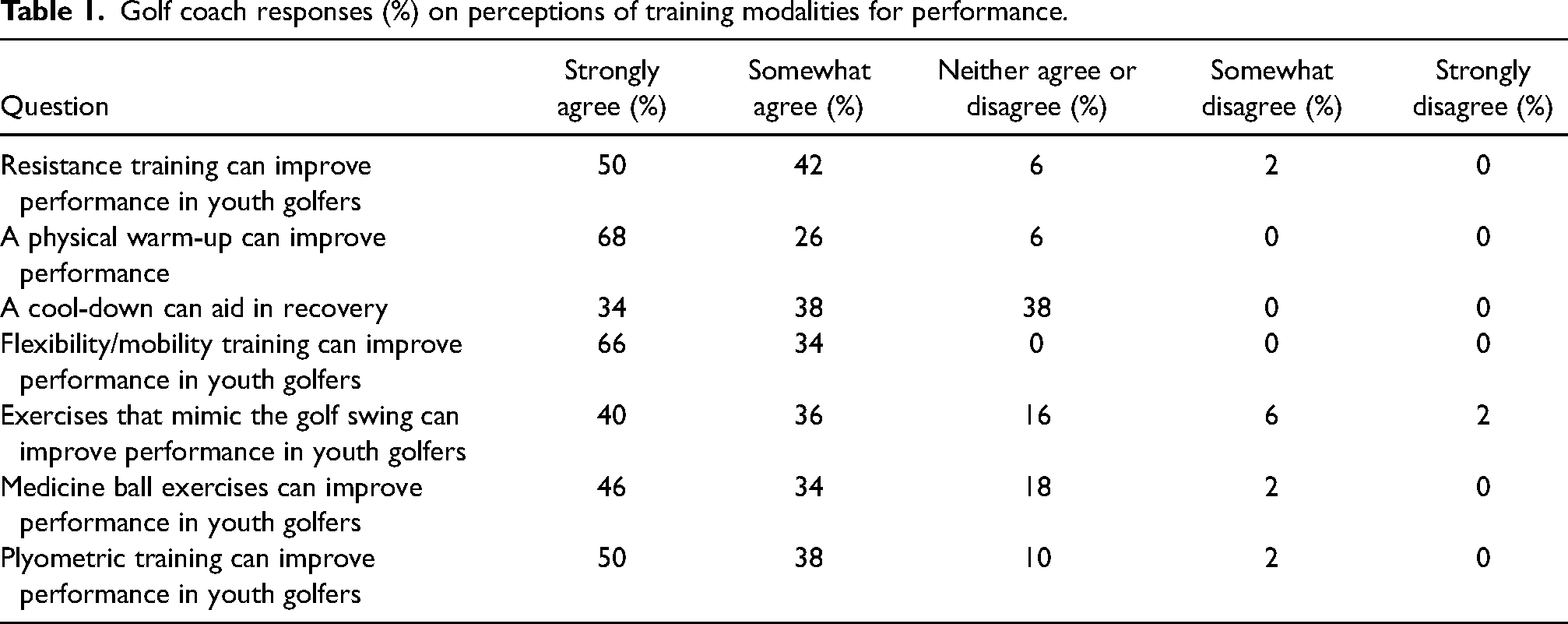
Data indicated that most coaches either strongly or somewhat agreed that strength and conditioning can improve performance (92%) and reduce the risk of injury (80%) (Table 1). Additionally, most coaches (84%) strongly or somewhat agreed that youth golfers should regularly participate in strength and conditioning activities to aid their performance (Table 2). Most coaches strongly and somewhat agreed that plyometric exercises (88%), medicine ball exercises (77%) and exercises that mimic the golf swing (76%) could be used to improve performance in youth golfers. All coaches strongly and somewhat agreed that flexibility/mobility training (100%) can be used to improve performance in youth golfers.
Golf coach responses (%) on perceptions of training modalities for performance.
Golf coach responses (%) on perceptions of S&C.
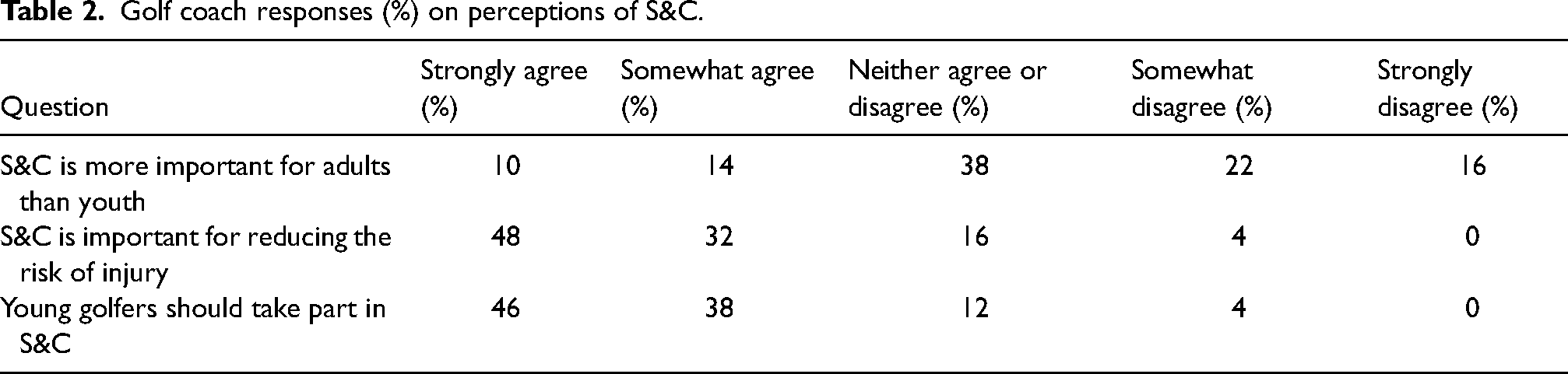
Approximately a third of participants ‘neither agreed nor disagreed’ whether strength and conditioning was more important for adult golfers than youth golfers (38%). Coaches were all in agreement that golfers should begin to participate in strength and conditioning by the age of 18 years or under, with the highest response of coaches (30%) believing engagement should begin at 14–15 years of age (Figure 1). The majority of respondents indicated that there were no reasons as to why a healthy young golfer should avoid resistance training (68%), however, when asked if they were aware (yes or no) of the current guidelines surrounding youth resistance training, the majority of participants answered ‘no’ (70%).
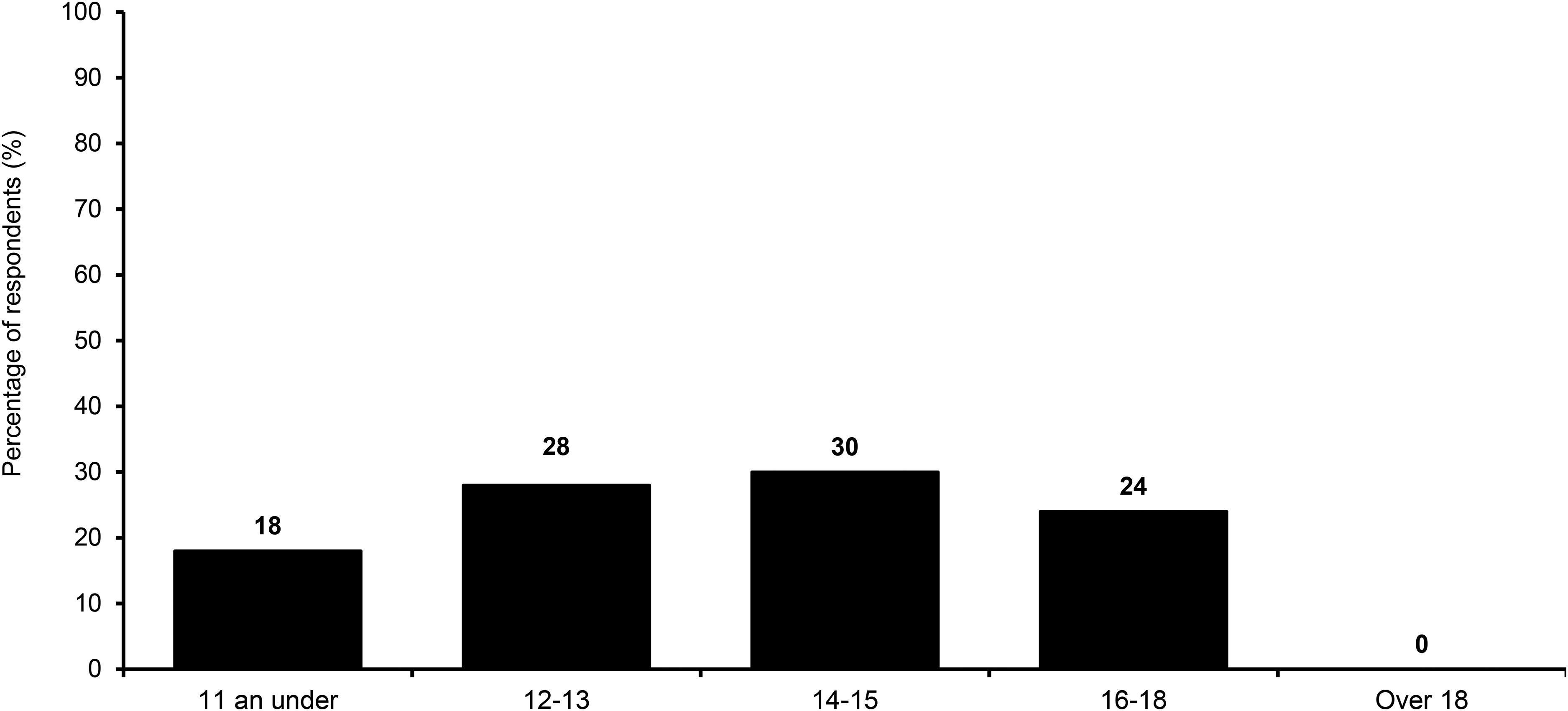
Reported age at which golf coaches believe golfers should begin to take part in S&C.
Of the coaches who responded to the questionnaire, the majority selected that their youth golfers take part in some form of physical training with the aim to improve performance (60%). Coaches also reported their youth golfers to take part in some form of mobility/flexibility and balance/instability training (52%), resistance training (46%), core training (40%), bodyweight training and weighted club swings (34%), plyometric training (28%), yoga/Pilates (16%), forms of endurance training (i.e. running, cycling, swimming; 12%), while 10% of coaches had not discussed with the golfer the details of their training (Figure 2). Of the respondents who selected their youth golfers do not participate in physical training, 43% indicated that they had not discussed the subject with their players, while 21% did not know enough about their training. Other responses indicated that players chose not to participate in strength and conditioning (29%), were too busy to train (5%) or players believed it would negatively affect their performance (2%). When asked if there are any reasons a healthy young golfer should avoid resistance training, 5% selected it can stunt growth and reduces flexibility, 9% responded that a youth golfer cannot make strength gains until after puberty and 13% selected it can increase the risk of injury.
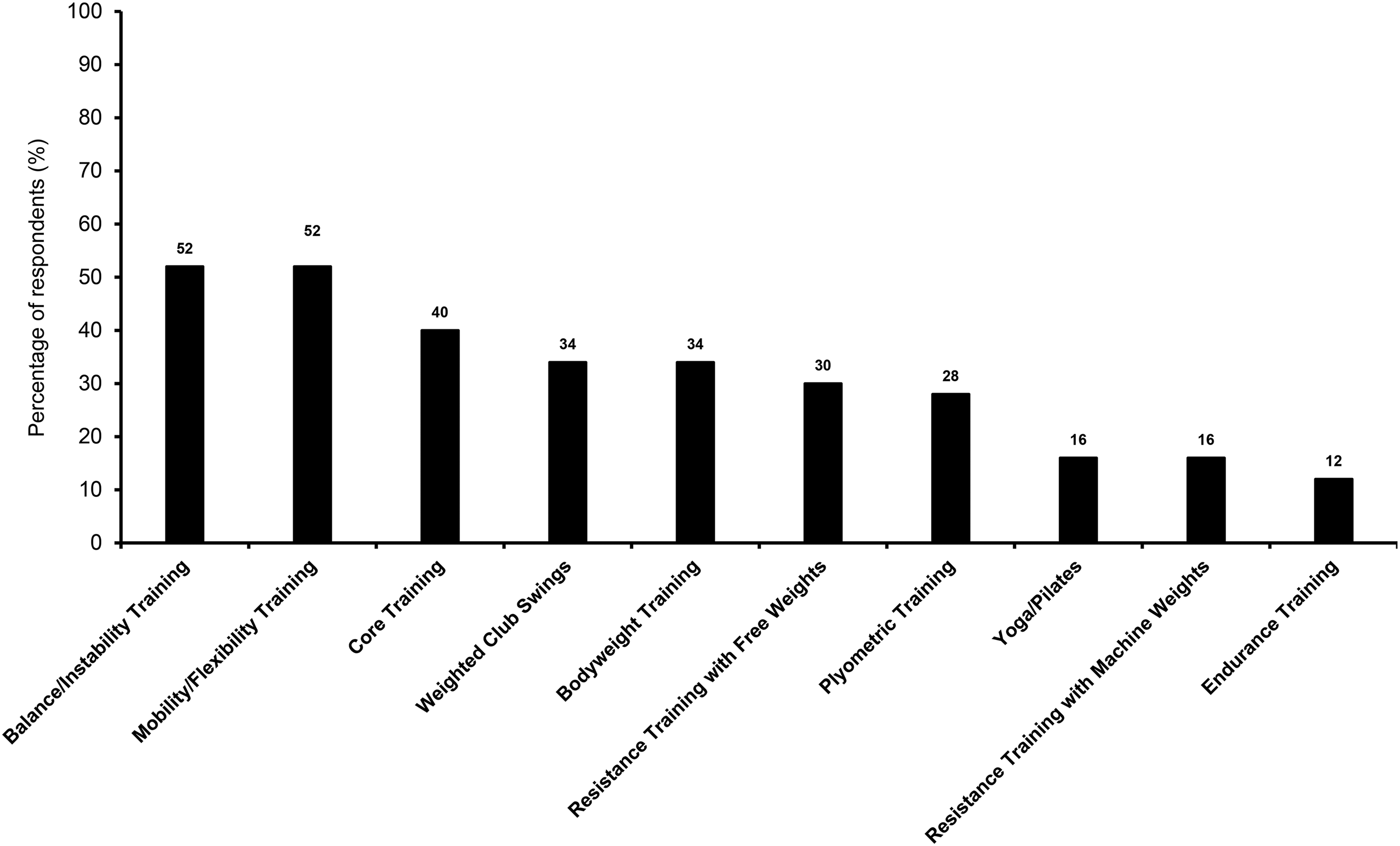
Reported modes of training golf coaches have identified their golfers to partake in to improve golf performance (based on coaches who identified their golfers taking part in some form of training).
Perceptions and practical approaches to warm-ups
The majority of coaches ‘strongly agreed’ that the implementation of a physical warm-up was important for improving performance in youth golfers (Table 1), with the majority of coaches claiming a physical warm-up was equally as important for youth golfers as it is for adult golfers (66%). Seventy-six percent of coaches selected that their youth golfers take part in a physical warm-up before a round of golf, with 94% and 74% of coaches stating that a warm-up should include dynamic stretching and pitching/chipping, respectively (Figure 3).
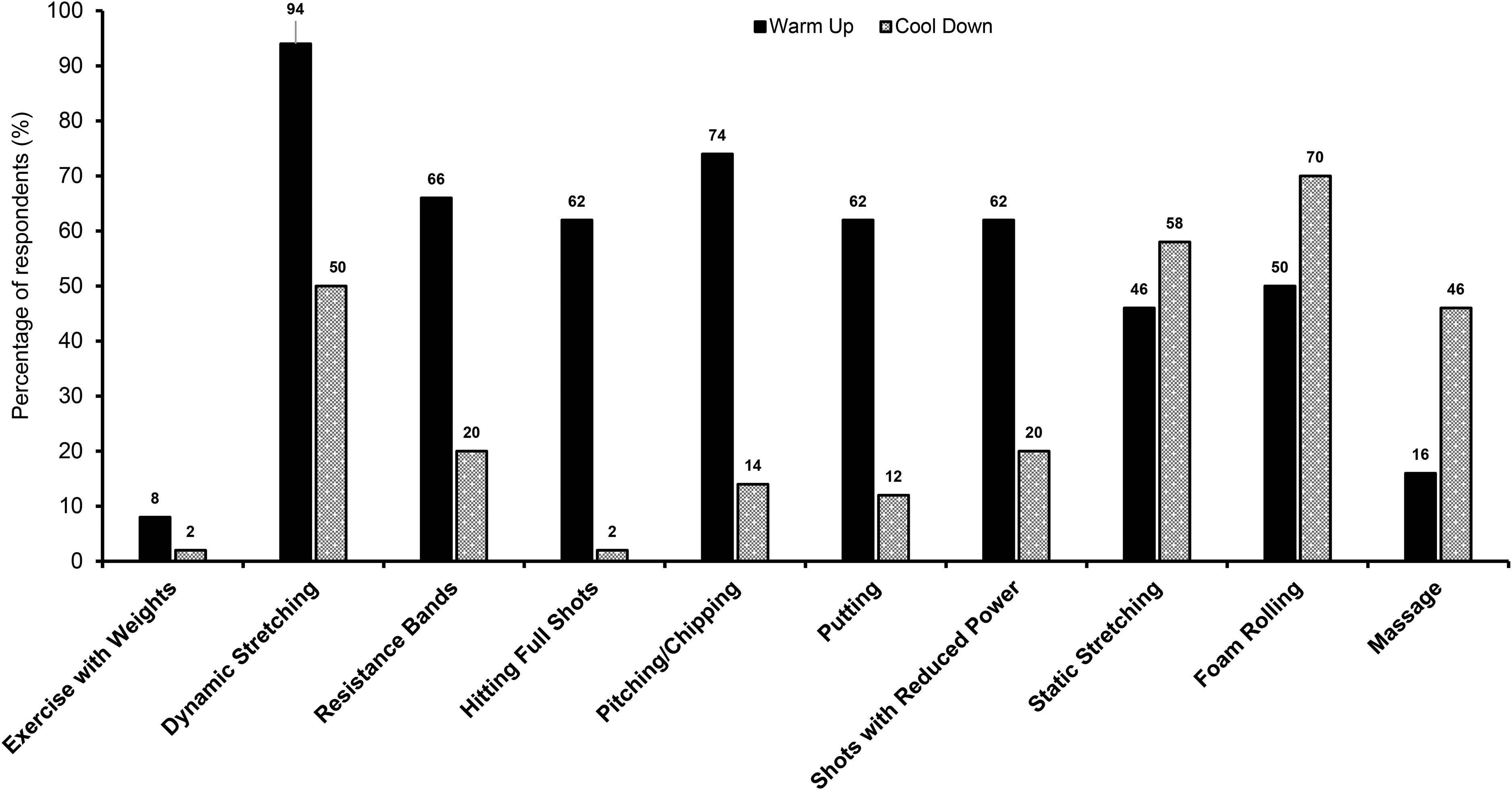
Percentage of respondents who identified, Exercise with Weights, Dynamic Stretching, Resistance Bands, Hitting Full Shots, Pitching/Chipping, Putting, Shots with Reduced Power, Static Stretching, Foam Rolling, Massage to be a part of a Warm-Up or Cool-Down routine.
Perceptions and practical approaches to cool-downs
The majority of coaches (62%) ‘strongly’ and ‘somewhat agreed’ that a cool-down can aid recovery in youth golfers, however, 64% of coaches selected that their youth golfers do not typically take part in a cool-down after a round of golf. When asked why their golfers did not perform a cool-down, approximately half (51%) of respondents indicated that the topic had not been discussed with the golfer, 26% believed the players choose not to, 18% of coaches designated their golfers do not know how to, while 5% identified that their golfers do not have enough time after the completion of their round.
Discussion
The aim of this study was to examine the perceptions and approaches of golf coaches towards strength and conditioning, warm-up, and cool-down activities for youth golfers. The main findings of the current study were that most golf coaches believe youth golfers should participate in strength and conditioning to improve golf performance and reduce the risk of injury. Although this was a commonly held belief (≥ 80%), awareness of existing training guidelines seems to be limited, with the majority of coaches unaware of the contemporary recommendations surrounding strength and conditioning practices in youth, and no clear consensus on what age is appropriate for young golfers to engage in some form of strength and conditioning. Consequently, these findings indicate that while coaches were in favour of young golfers participating in strength and conditioning activities, there is a need to enhance coaches’ understanding of specific practices associated with strength and conditioning for young players.
Perceptions and approaches of strength and conditioning for performance
The benefits of strength and conditioning have been highlighted in scientific research for both adult 4 and youth populations, 6 with an important outcome being the potential reduction of injury risk. 31 Most respondents in the current study agreed with this notion, with 84% believing that youth golfers should be taking part in strength and conditioning and 80% of coaches ‘strongly agreeing’ and ‘somewhat agreeing’ that strength and conditioning can reduce the risk of injury. In a similar study that investigated the perceptions of strength and conditioning programmes for young athletes, albeit in high-school American football, head coaches identified that improving athletic performance and injury prevention (34% and 37%, respectively) were the primary objectives of a strength programme. 32 These findings indicate that while coaches value strength and conditioning programmes for different reasons, the primary benefits will likely align with broader principles of long-term athletic development frameworks. 33 Coach and player education should continue to highlight that strength and conditioning programmes have the dual benefit of improving performance and reducing the risk of injury. In practical terms, strength and conditioning programmes should look to incorporate training modes that target neuromuscular qualities (e.g. coordination, strength and power, dynamic stabilisation), which will simultaneously develop athleticism and physical robustness in young golfers to help them tolerate the physical demands of training and playing and support a lifetime of engagement in the sport.6,34,35
Strength and conditioning programmes have been shown to enhance movement competency, muscle and bone structures, and reduce the number of sport-related injuries in youth populations.36–39 Within the current study, most coaches ‘strongly agreed’ that resistance training, flexibility/mobility training, plyometric exercises, medicine ball exercises and exercises that mimic the golf swing can improve performance, highlighting that coaches value a diverse range of training modalities. This finding reflects recent literature that has highlighted that these training modalities can enhance CHS, ball speed and carry distance when delivered as part of a periodised strength and conditioning programme.3,4,40 Most of the respondents ‘strongly’ and ‘somewhat agreed’ that exercises that mimic the golf swing can improve golf performance in youth golfers. Within the research, exercises such as rotational medicine ball throws have indeed been shown to improve golf swing performance, 41 and these exercises are often used on the grounds of movement specificity. 42 However, despite these findings, when designing a periodised strength and conditioning programme, training specificity can result in an over-reliance on exercise selection that simply mirrors the movements of the sport. This approach can fail to develop well-rounded young athletes and could blunt the motor skill development of the athlete and/or increase the risk of overuse injuries. 43 Instead, consideration should be given as to whether the exercise prescription can stimulate adaptations that transfer to performance based on the principles of dynamic correspondence, namely adaptations to muscle groups, range of motion and direction of movement, prominent region of force production, magnitude and duration of effort, and the regime of muscular work. 42
When working with youth golfers, coaches should focus a large portion of their training time developing general athletic qualities to limit the potential negative effects incurred from specialising at an early age. 6 Early sport specialisation is defined as taking part in year-round (> 8 months) intensive training/competition in only one sport which typically starts in the prepubertal years (∼12 years old). 44 It has been suggested that young athletes may be at a greater risk of overuse injuries, 45 overtraining, 46 reduced motor skill development 46 and early withdrawal from sport 44 due to an accumulation of intensive training schedules and weekly training hours often exceeding the child's chronological age.47,48 Golf has previously been referred to as an early specialisation sport, 39 therefore, coaches should monitor training and competition loads to ensure young golfers are not exposed to excessive volumes of training. 49 Additionally, in accordance with current consensus, 43 strength and conditioning should be viewed by coaches and young players as an opportunity to sample other activities.
Interestingly, only a minority of respondents agreed with some of the previously held myths associated with youth resistance training, including fears of stunting growth (5%), injury risk (13%), reducing flexibility (5%), and an inability of children to realise strength gains until after puberty (9%). Notably, while all coaches agreed that golfers can begin to train from the age of 18 and under, the largest response of coaches (30%) indicated that ‘14-15 years of age’ would be the most appropriate time. Research has shown that prepubescence is an important developmental stage to introduce children to neuromuscular training due to their heightened neural plasticity. 33 Therefore, children should begin participating in some form of resistance training once it is deemed that they are mature enough to respond to coaching instruction and to handle the demands of training. 31 If young golfers are only exposed to strength and conditioning from 14 to 15 years of age onwards, they will arguably be missing out on a crucial stage of their long-term athletic development journey. 6 The erroneous starting age proposed by the respondents in the current study is somewhat unsurprising given that the majority of coaches from this study were unaware of the contemporary guidelines surrounding the physical development of youth athletes. 31 Similar findings from Fröberg et al. 50 also highlighted differences in coaches’ awareness of youth strength and conditioning guidelines based on their experience level of coaching and the competitive level they coach at. Understanding specific guidelines surrounding youth strength and conditioning should be a key element of golf coach education pathways to ensure approaches to athletic development are informed by leading evidence.
Perceptions and approaches to warm-ups
Coaches reported more of their players took part in a physical warm-up than targeted strength and conditioning or cool-down activities. This notion is also reflected by the responses that showed more coaches ‘strongly agreed’ that a physical warm-up could acutely improve performance (68%) in comparison to potentially more chronic exposure to resistance training (50%). Within the literature, multiple studies have highlighted the valued benefits of incorporating a physical warm-up to enhance golf swing performance. 20 For example, Langdown et al. 51 reported significantly greater ball velocities following a dynamic warm-up and resistance band warm-up, in comparison to no warm-up. Only one study to date has investigated the effects of a warm-up on golf swing performance in youth golfers and reported a significant increase (1.1%) in CHS after a dynamic, sport-specific warm-up. 12 It is also worth noting that from the current study, approximately half of coaches suggested that a warm-up should consist of static stretching, which is an effective mode of training for increasing range of motion, 52 which is also a desired characteristic for golf performance. 3 Although a warm-up consisting of static stretching has shown to be better than no warm-up at all,53,54 integrating static stretching within a warm-up can acutely impair CHS and has been shown to have no added value on measures of physical performance (i.e. strength and power).55,56 Therefore, static stretching should be used with caution in a warm-up before golf. The possible cause for the impairment in performance could be due to a decrease in neural activation, a reduction in musculoskeletal stiffness, or a combined effect of muscular and neural factors.57–59 As a result, this can dampen the effects of the stretch-shortening cycle which has been identified as a key mechanism within the golf swing. 3
Cumulatively, our findings indicate that most coaches acknowledge that their golfers are more likely to participate in warm-up routines than engaging in habitual strength and conditioning. This aligns with previous research that showed 97% of PGA Assistant Professionals take part in a pre-tournament warm-up rather than taking part in some form of strength and conditioning (76%). 7 Therefore, it appears that the benefits of more consistent exposure to strength and conditioning beyond that of solely warming-up pre-round, need to be promoted more widely within current golf coach education pathways to ensure coaches fully understand the benefits from more consistent exposure to targeted training.
Perceptions and approaches of cool-downs
Only 10% of coaches reported that their young golfers participated in cool-down routines post-round, with 38% of coaches being unsure as to whether it aids recovery. Previous questionnaire data involving highly skilled golfers found similar results, with a limited number of golfers adopting a cool-down within their own practice, and with the majority of golfers disagreeing that a cool-down was beneficial for subsequent performance. 7 Recently, a review has reported the effects of cool-downs on markers of muscle damage and measures of fatigue to be trivial. 25 Although a full round of golf (18 holes) has been shown to have a limited impact on cardiovascular load, 60 professional tournaments span consecutive days with some amateur tournaments having two rounds on the same day over the course of multiple days. This may have a greater effect on fatigue and perceptions of exertion and may amplify the potential benefits of cool-downs for recovery and subsequent golf performance. It should be noted that more research is needed and that the current lack of engagement in cool-downs may reflect the limited evidence-base of their usefulness.
Despite the novel findings of this study, it is not without limitations. Although this study is quantitative in nature, a greater context of findings could have been garnered through the incorporation of qualitative methods such as open text responses, interviews or focus groups. 61 Additionally, given the inclusion criteria only required respondents to be a PGA Professional or Assistant Professional, the level of experience or expertise in strength and conditioning, and familiarity with different terminology could have differed amongst the sample. Nevertheless, this study provides novel findings on the perceptions and approaches of golf coaches towards strength and conditioning activities for youth golfers and will hopefully serve to stimulate further research involving this unique population of golfers.
Conclusion
Although the results of this study show that golf coaches perceive strength and conditioning and warming-up to be important for performance and reducing injury risk, a greater awareness of evidence-informed strength and conditioning practices and warm-up strategies for young golfers is required. The current study has highlighted a lack of clarity amongst golf coaches as to when a young golfer should begin to participate in strength and conditioning activities and poor awareness of leading guidelines for long-term athletic development. Role clarity and abiding by a clear scope of practice is an important aspect of coaching and it should be recognised that the design and delivery of strength and conditioning programmes should be the responsibility of suitably qualified practitioners. Therefore, to educate golf coaches further, it is recommended that researchers and governing bodies invest in continued professional development opportunities in addition to the core educational materials that golf coaches already receive.
Supplemental Material
sj-docx-1-spo-10.1177_17479541221132371 - Supplemental material for Perceptions and approaches of golf coaches towards strength and conditioning activities for youth golfers
Supplemental material, sj-docx-1-spo-10.1177_17479541221132371 for Perceptions and approaches of golf coaches towards strength and conditioning activities for youth golfers by James Shaw, Zachariah I Gould, Jon L Oliver and Rhodri S Lloyd in International Journal of Sports Science & Coaching
Footnotes
Declaration of conflicting interests
The author(s) declared no potential conflicts of interest with respect to the research, authorship, and/or publication of this article.
Funding
The author(s) received no financial support for the research, authorship, and/or publication of this article.

Supplemental material
Supplemental material for this article is available online.
References
Supplementary Material
Please find the following supplemental material available below.
For Open Access articles published under a Creative Commons License, all supplemental material carries the same license as the article it is associated with.
For non-Open Access articles published, all supplemental material carries a non-exclusive license, and permission requests for re-use of supplemental material or any part of supplemental material shall be sent directly to the copyright owner as specified in the copyright notice associated with the article.
