




Abstract
Objectives
Athletes and coaches rely on their performance support team to optimise training and competition. The specific characteristics of performance support teams that contribute to success in competition from the perspective of athletes and coaches have not been examined. Olympic gold medal winning athletes and coaches were asked about the characteristics they valued in the performance support team members who were with them at the Olympic Games. The insights shared provide important context to the role of the performance support team member, beyond technical skills, in the high-stress environment of elite sporting competition.
Methods
Concept mapping was completed online to collect, analyse, and visually represent insights from 30 Olympic gold medal winning athletes and coaches. The concept mapping focus prompt used to generate insights from participants was ‘When I reflect on my gold medal winning performance, a characteristic that I really valued within my support team was….’. Athletes then brainstormed, sorted, and rated relevant statements.
Results
Multidimensional scaling and hierarchical cluster analysis produced an 8-cluster map – Way of Working, Communication Style, Emotional Management in Competition, Teamwork, Commitment to Athlete Preparation, Professionalism, Embracing the Experience, and Equality – as the best visual representation of the way participants sorted the 49 unique brainstormed statements.
Conclusions
Olympic gold medal winning athletes and coaches prioritised ways of working, communication style, emotional management, and teamwork as the characteristics they valued most in their performance support team. These constructs, when further examined by item, encourage performance support staff to develop emotional management skills to (a) strengthen interpersonal relationships within the team, (b) enhance the working alliance with athletes and coaches, and (c) contribute to team performance overall. Concept mapping provided a structured way of collecting lived experience insights that may compliment other qualitative approaches such as structured interviews.
Keywords
Introduction
Athletes’ performances in sport are multifactorial and require an integrated cohesive support team of coaches and practitioners across medical, sport science, and technology disciplines to achieve results at the highest level of competition, i.e. the Olympic and Paralympic Games. 1 Athletes are engaged in many performance support relationships which contribute to optimal preparation for competition. These relationships include coaches and practitioners such as sport physicians, physiotherapists, strength and conditioning coaches, psychologists, soft tissue therapists, dieticians or nutritionists, biomechanists, physiologists, and engineers. These relationships can be short-term, intermittent, or span many years. Some are clinical in nature, but all are oriented to optimising the athletes’ knowledge and ability to perform in training and competition. How performance support team members build relationships with coaches, athletes, and each other to contribute functionally and positively to team performance at competition has yet to be examined in detail.
Understanding the attributes and characteristics of performance support teams which are valued by athletes and coaches could inform professional development and training of performance support staff across all disciplines. Salcinovic et al. completed a systematic scoping review of literature exploring the factors influencing team function and performance across various industries, including high-performance sport. 2 The review highlighted leadership styles, supportive team behaviour, communication, and performance feedback as the factors that may be most relevant to the context of the high-performance sport support team setting. Their work described leadership styles that established an interpersonal environment characterised by support, respect, trust, and appreciation of staff and athletes which ultimately positively influenced team cohesion and performance. Supportive team behaviours referred to how members in teams learn, store, use, and coordinate their knowledge to accomplish team and organisational goals. High-quality internal communication and feedback about both strengths and weaknesses were identified as characteristics of well-performing teams and poor communication was a marker of dysfunctional relationships. Performance feedback included regular monitoring of team performance and clarity of team members contribution as defined by their roles.
To date, the research examining athletes’ experiences with performance support staff is limited. When interviewed, Olympic, Paralympic, and World championship winning athletes highlighted the importance of support teams and interpersonal relationships to their sporting performance.3,4 A recent survey investigated athlete perceptions of lifestyle practices and support services amongst 135 Australian Olympic, Paralympic, National, and state-level athletes across 25 Olympic sports. The results indicated that athletes perceived psychological skills and attributes, along with strong interpersonal relationships as vital to their success. 5
Burns et al. 4 developed a conceptual model of strengthening interpersonal relationships in elite sport, identifying the relationship between athletes and performance support staff, in the sport context as critical to competition performance. This model (see Figure 1) was proposed to acknowledge and prioritise the potential for interpersonal relationships in sport to contribute to athletic performance in competition. It describes the various capabilities and associated behaviours required to create strong interpersonal relationships with athletes and the likely outcomes of attenuated stress response, increased wellbeing, resilience, and supporting and enhancing performance. Their work coined the phrase 'the performance alliance' to articulate the performance enhancing nature of positive high quality relationships between athletes and support staff. 6
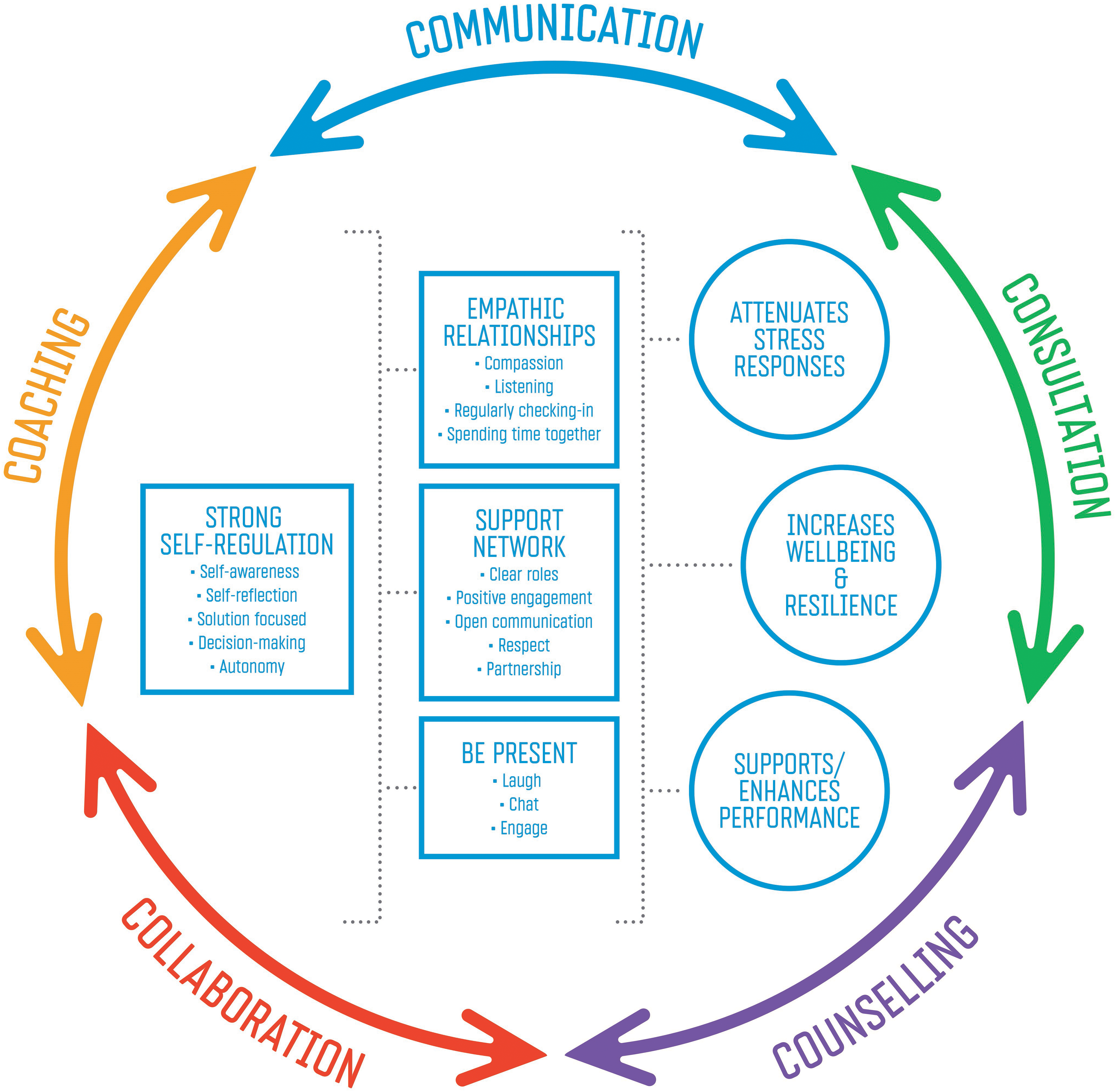
Strengthening interpersonal relationships in elite sport. Burns 4
Strong interpersonal relationships are a protective psychological mechanism for humans and, in turn, athletes. The perceived quality of support by the athlete may underpin the stress–resilience–performance relationship by facilitating situational control leading to higher levels of challenge appraisals in competition which are associated with better performance.4,7–12
To better understand the interpersonal relationships between performance support staff and athletes, we look to the literature on the therapeutic or working alliance which has emerged as a consistent predictor of positive therapy outcomes. 13 Baldwin et al. demonstrated that therapists’ abilities to consistently create a working alliance across all patients predicted patient outcomes. 14 Research examining the relationship between the process and outcome of psychotherapy highlights that non-specific factors, such as the personal characteristics of the therapist and the alliance, positively affect patient outcomes.15–18 The alliance is based on building trust and rapport, over and above therapeutic skills, and requires the therapist to acquire the necessary emotional and interpersonal skills. Horvath et al. concluded that two main aspects of the alliance, measured by several scales regardless of the theoretical frameworks and the therapeutic models were (a) personal attachments between therapist and patient, and (b) collaboration and desire to invest in the therapeutic process. 18 Bordin describes three essential elements of the working alliance in psychotherapy: agreement on the treatment goals, agreement on the tasks, and developing a personal bond consisting of reciprocal positive feelings. 17 The bond involves a network of positive personal attachments between client and therapist such as mutual trust, acceptance, and confidence which are the foundation of interpersonal relationships.
Ackerman et al. described the therapists’ characteristics and actions which obstruct the development of a positive and strong alliance or disrupted the psychotherapeutic process. 19 Therapists’ characteristics included being rigid, uncertain, exploitative, critical, distant, tense, aloof, and distracted. The alliance was strained when the therapist did not respond to feedback from clients and adopted an inflexible adherence to treatment strategies. Also, therapists not recognising or taking responsibility for ruptures in the alliance whilst encouraging patients to behave in ways that can help them manage their interpersonal issues was problematic. Therefore, it was critical for therapists to develop and review their emotional management skills as part of their professional development and supervision goals. Kampf et al. completed a meta-analysis examining the links between emotional regulation, social affect, and cognition. 20 The outcomes highlighted the relationship between emotional management and interpersonal relationships and described how an individual's responses to their own emotions were linked to whether they were able to connect to others or feel stressed by other people's emotions. At Olympic Games, where the stress and expectation to perform best is intensified, the ability of the performance support staff to demonstrate emotional management and maintain strong interpersonal relationships for a long time is critical.
Ultimately, the
The concept of the working alliance can be related to many contexts not just psychotherapy. In the sporting domain, the development of this alliance has been ad-hoc. Although many coaches and performance support members have become highly skilled in this area, this is usually of their own volition, rather than through the structured development of interpersonal skills aligned to theoretical and practical models that are contextually relevant. Research has focussed on the attenuation of the athlete and coach relationships based on self-determination theory and basic psychological needs. 21 Establishing a working alliance with patients is commonplace in medical and clinical training of physicians, physiotherapists, and psychologists who may be involved in sporting teams. Further examination of how the working alliance is included in the training of performance support team members is required. The term'the performance alliance' may be more relevant in the sporting context which includes support staff (such as coaches, managers and administrators), within a sporting environment who are unfamiliar with the working alliance from a clinical setting, 6 yet many of whom are hugely influential in an athlete's inner circle.
There is an opportunity to understand the theoretical and experiential underpinnings of the interpersonal relationships in sport with the aim of practically supporting athletes in the team environment when they experience the unavoidable internal stress, pressure, and expectation to perform in elite competition such as the Olympic and Paralympic Games, and otherbenchmark events. 4 Moreover, interpersonal relationships will contribute to the factors leading to enhanced team performance outlined by Salcinovic et al. 2 A strong and ethical working performance alliance between athletes, coaches, and performance support staff will ultimately act as a protective mechanism and facilitate the athletes’ ability to perform with pressure in competition. Examining the interpersonal dynamics of athletes, coaches, and performance support staff during competition will advance our understanding of team performance in sport.
The current study invited Olympic gold medal winning athletes and coaches to reflect on their gold medal winning performances to identifythe characteristics they valued most in their performance support team using a structured method. 22 The aim was to understand the lived experience of gold medal winning athletes and coaches who described the ways in which performance support staff positively impacted their gold medal performances beyond just contributing their technical expertise. 23 The insights offer a greater appreciation for the additional characteristics and skills performance support team members can contribute to athlete performance and team performance at peak events like the Olympic and Paralympic Games, to attenuate the stress and pressure and facilitate self-determined behaviour.
Method
Participants
Australian Olympic gold medal winning athletes and coaches were recruited from the Australian Institute of Sport's Gold Medal Ready (GMR) Alumni Program. The GMR Alumni consisted of 30 athletes (including one of the authors of this study) and 12 coaches at the time of recruitment. Participants were recruited via direct email with hyperlinks to the online data collection platform embedded at appropriate times. Overall, 30 participants (24 athletes and 6 coaches) contributed data to at least one concept mapping activity.
This concept mapping study was initiated by the Australian Institute of Sport (AIS) and approved by the AIS Ethics Committee (20190602). Concept mapping is a group activity that applies ‘a structured process, focused on a topic or construct of interest, involving input from multiple participants, that produces an interpretable pictorial view of their ideas and concepts and how these are interrelated.’ 22 It is useful for developing conceptual frameworks of complex topics and has been used extensively across many disciplines to plan, evaluate, build theory, translate research, and co-design curriculum. 24 The four key research-related steps of the concept mapping process outlined by Trochim and McLinden were followed: preparation, generation, structuring and representation. 25 All study data were collected and analysed using the Concept Systems Inc groupwisdomTM online platform. 26
Preparation
The focus prompt devised to generate ideas from participants was: ‘When I reflect back on my gold medal winning performances, a characteristic that I really valued within my support team was….’ .The two rating questions used in the statement structuring step to prioritise the ideas generated by participants were (a) Necessity: How necessary is it to have this behaviour/attribute among an athlete’s support team to win gold at the Olympic Games?; and (b) Experience: To what extent did you experience this behaviour/attribute in your support team when you won gold at the Olympic Games?
Generation
Participants were directed to brainstorm as many statements as they could in response to the focus prompt. They were informed that there were no right or wrong statements and asked to contribute one statement at a time. Participants could see the anonymous statements contributed by others. This step remained open for 9 months (July 2019–April 2020). Athlete and coach cohorts completed this activity as separate groups.
After closing the generation step, the research team collated, synthesised, and edited the statements contributed by the athlete and coach cohorts to arrive at a final statement set for the structuring step. During this iterative process, the research team: (a) split compound statements into single ideas; (b) removed redundant statements; (c) identified statements that represented similar ideas and selected one statement to represent the idea; (d) edited statements for grammar and spelling; and (e) cross-checked the final statement set against the original statements to ensure all relevant ideas were represented. Where possible, the original voice of the participants was retained in the content and wording of statements.
Structuring
During the structuring step, participants completed four demographic questions – age, gender, sport, and role (athlete or coach) – before: (a) sorting the synthesised, edited, and randomised statements into groups; and (b) rating each statement for necessity and extent experienced. For the sorting, participants were directed to group the statements based on similarity of meaning (i.e. ‘in a way that makes sense to you.’) and to name each group to reflect the theme or content. They were instructed not to create groups according to priority or value (e.g. ‘Important’) or to group dissimilar ideas together (e.g. ‘Other.’). For both rating questions, we asked participants to use a Likert scale from 1 to 5 where 1 = not at all, 3 = sometimes and 5 = vital (for necessity)/all the time (for extent experienced). Participants were asked to rate each statement relative to the other statements in the list.
Representation
Before conducting any data analysis or representation, participant sorting and rating data were reviewed and any that had not followed the instructions were rejected. During the multi-stage representation step, the groupwisdomTM software was used to: (a) construct a matrix of similarities from the participants’ sorting data; (b) analyse the similarity matrix using nonmetric multidimensional scaling (MDS) to create a two-dimensional representation of the statements (i.e. a point map) based on the statements grouped together most frequently being located more closely in two-dimensional space than those grouped together less frequently; and (c) apply hierarchical cluster analysis (HCA) with Ward's algorithm to the MDS configuration to partition the point map into non-overlapping clusters (i.e. a cluster map). The groupwisdomTM software was also used to calculate: (a) a bridging value for each statement and cluster based on a combination of the participants’ original sorting data and the MDS results, 27 and (b) a stress value indicating the strength of the relationship between the input matrix and the distances between points on the MDS two-dimensional output. The bridging value algorithm built into the groupwisdomTM platform and applied after MDS, considers participant sorting data and map point location, normalised to a 0 to 1 range. Bridging values closer to 0 indicate that a statement was sorted with items that are close to it on the map while values closer to 1 indicate that a statement was sorted with items that are farther away. 27 Statements with lower bridging values are better indicators of the meaning of the part of the map they’re located in than statements with higher bridging values. Clusters with lower bridging values are more cohesive, easier to interpret, and reflect the content well in that part of the map. Clusters with higher bridging values are more likely to ‘bridge’ between other clusters on the map.
Following the guidance of Trochim and McLinden, 25 the range of cluster solutions generated by the HCA was reviewed and the maximum desirable for interpretation in the context of the study (a 12 cluster map) was identified. 25 Lower cluster solutions were then successively examined, carefully considering whether the merging of clusters at each level seemed substantively reasonable, before selecting a cluster solution that preserved the most detail and still provided interpretable clusters of statements. To finalise the cluster map, the statements in each cluster were reviewed. When a statement on the edge of one cluster was considered a better conceptual fit in a neighbouring cluster, – if supported by the bridging value and spanning information (a visual representation of how frequently the statement under examination had been sorted with every other statement on the cluster map) – the relevant cluster boundaries were re-drawn. The research team then named each cluster to reflect the theme that the statements in the cluster represented and the names that participants gave the groups they created during statement sorting.
As has been done in other concept mapping studies, the research team further reviewed the final cluster map with a view to identifying if a higher order organisation of clusters was appropriate. 28 This involved considering the proximity of the clusters and the priorities within them, to provide a meaningful meta-interpretation of the relationship between the clusters.
The rating data were averaged across participants for each item and each cluster and a ‘go-zone’ plot that shows the relationship between the two rating variables was created. The four quadrants in the go-zone are formed by drawing a vertical and a horizontal line at the grand mean for the two rating scales. The statements in the upper-right quadrant of the ‘go-zone’ are above the grand mean on both variables. The standard Pearson product-moment correlation (r) was calculated to assess the linear relationship between the two variables. A flow chart of the method is included in Figure 2.
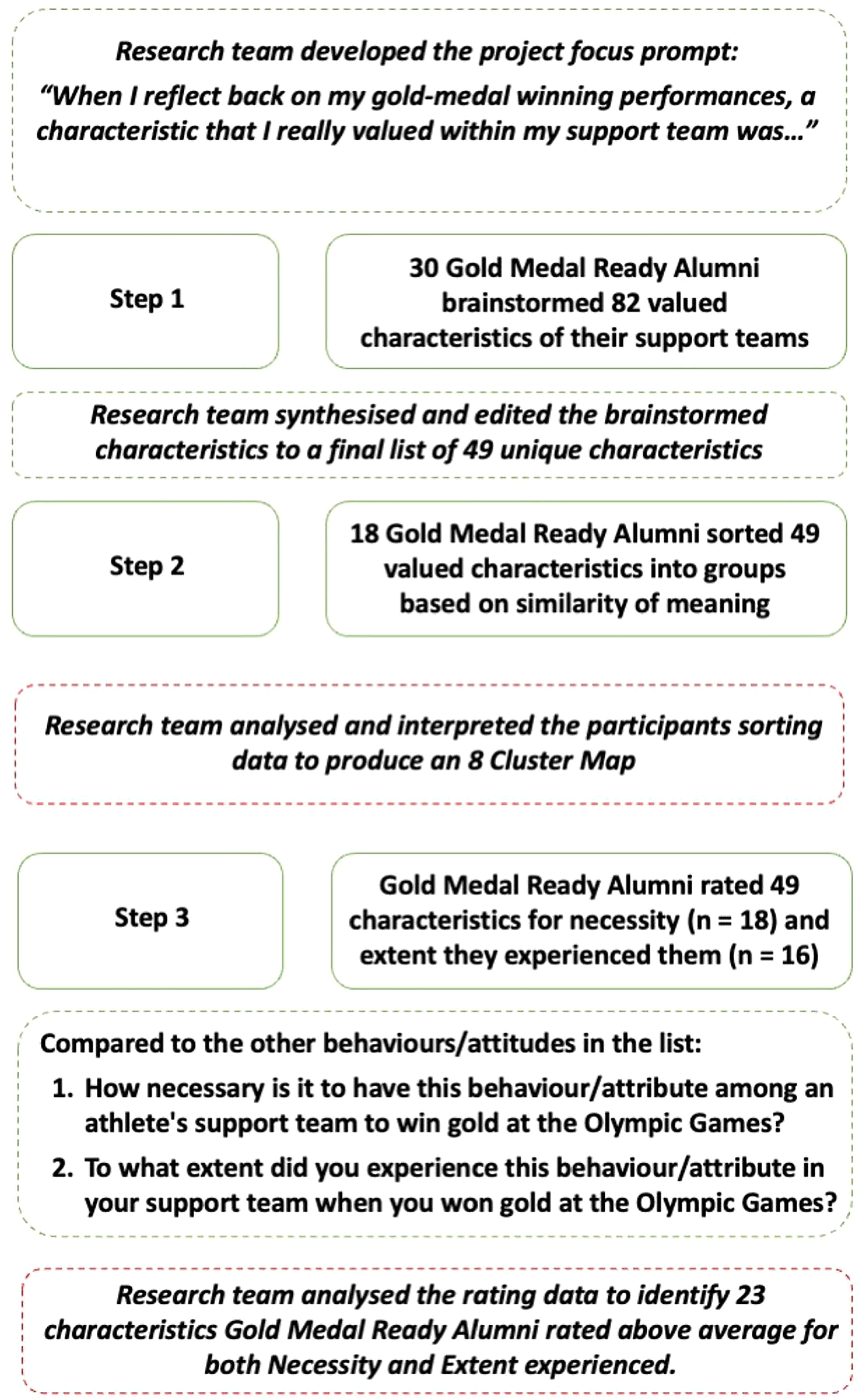
Flow chart of the concept mapping methodology.
Results
Participants and response rates
Thirty participants (71% of the GMR Alumni) contributed 82 statements in response to the focus prompt during the generation step. Following synthesis and editing by the research team, 49 unique statements representing characteristics that Australian Olympic gold medal winning athletes and coaches valued in their support team were available for participants to sort and rate in the structuring step.
Twenty participants – 47% of the GMR Alumni, 11 male/9 female, 14 athletes/6 coaches, mean age 47.05 years (range 31–67 years) – from nine different sports, contributed data during the structuring. Following review, sorting data from 18 participants (12 athletes/6 coaches) were included in the MDS/HCA analysis. Sorting data from two participants were excluded from the analysis because they sorted only 14 of the 49 statements into groups (n = 1) or they created only two groups and included 41 of the 49 statements in a single group (n = 1). Five of the 18 participants left some statements unsorted, but in line with standard concept mapping analysis, their sorting data were included in the analyses as they had sorted ≥75% of all statements into groups. Necessity rating data from 18 (12 athletes/6 coaches) participants and Extent experienced rating data from 17 (11 athletes/6 coaches) participants were included in the analyses. Extent experienced rating data from one participant was excluded because they only rated 4 of the 49 statements on this scale.
Representation
Eighteen participants sorted the 49 statements into an average of 6.33 groups (range 3–12 groups). Following MDA, HCA, and the re-drawing of cluster boundaries to enable seven statements to be located in neighbouring clusters, the research team agreed on an 8 cluster map – Way of Working, Communication Style, Emotional Management in Competition, Teamwork, Commitment to Athlete Preparation, Professionalism, Embracing the Experience and Equality – as the best visual representation of the participants sorting data (see Figure 3). The stress value for the MDS output was 0.34, indicating a 1% chance the arrangement of the objects in the matrix is random or without structure.29 (p. 241) The eight cluster map was then further segmented into three higher order domains of Working alliance, Interpersonal skills, and Personal values.
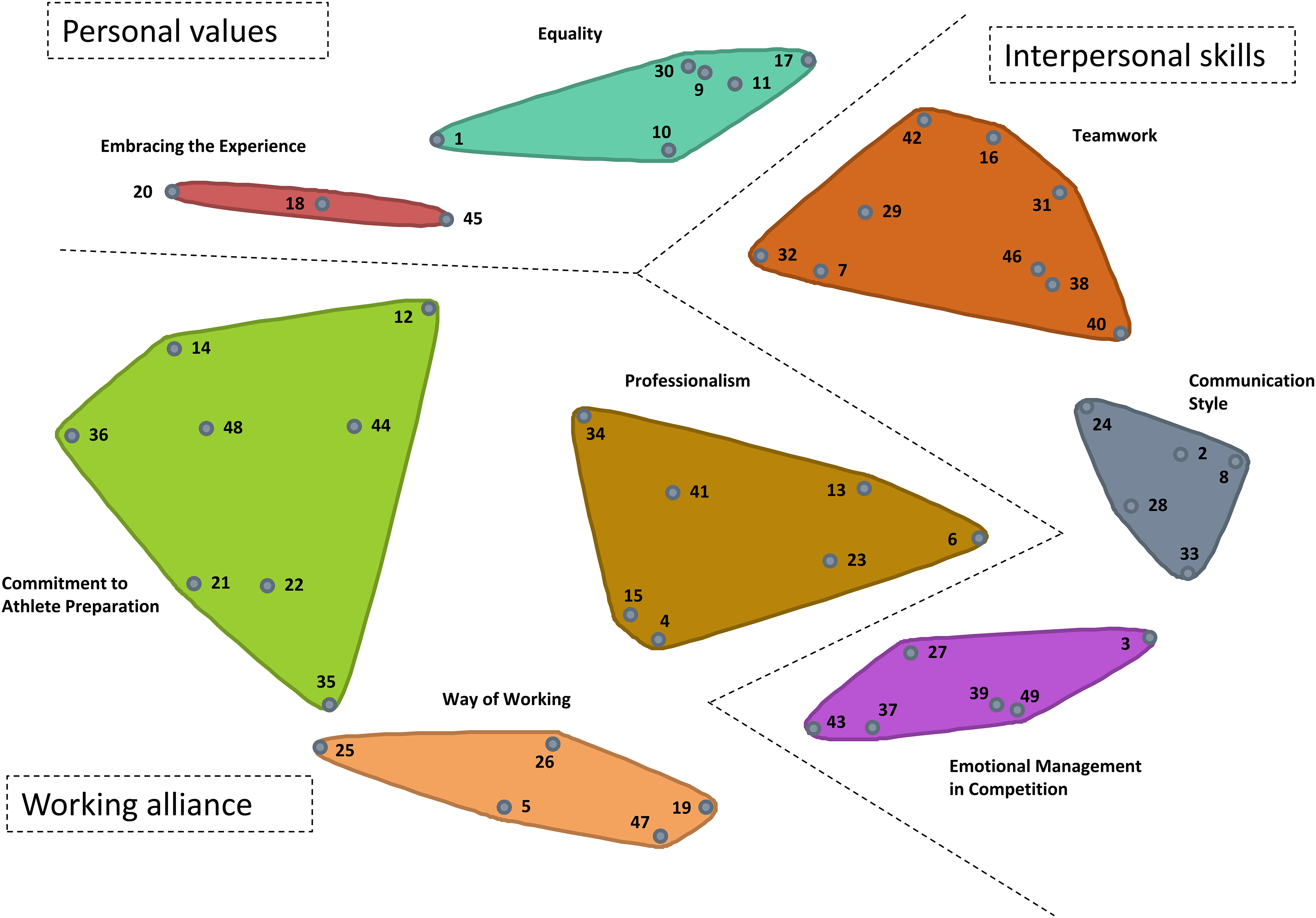
Cluster map of the sorted statements.
The statements within each cluster and the mean bridging value and rating values for each cluster and statement are provided in Table 1
Themes, clusters and statements.
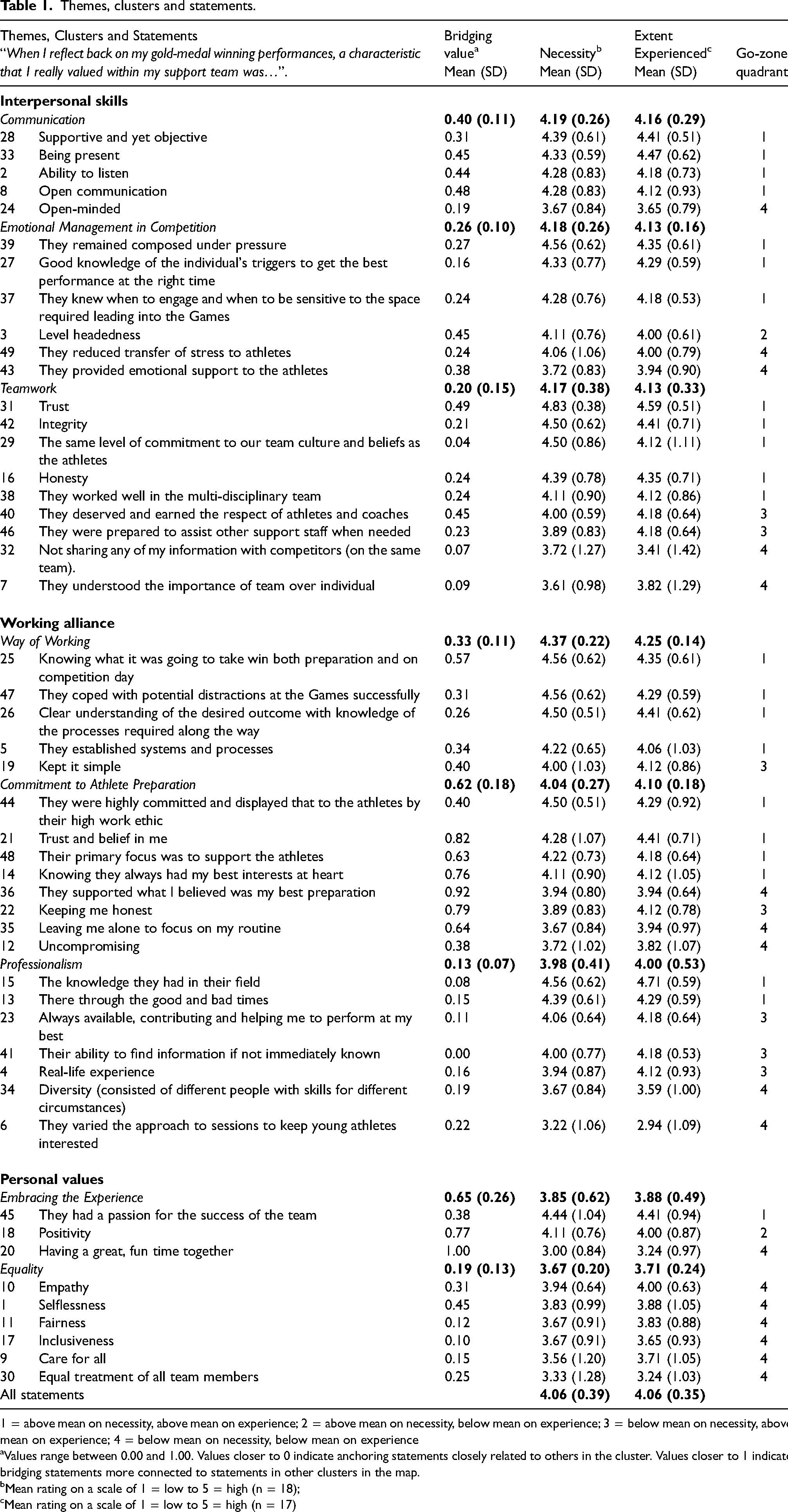
1 = above mean on necessity, above mean on experience; 2 = above mean on necessity, below mean on experience; 3 = below mean on necessity, above mean on experience; 4 = below mean on necessity, below mean on experience
Values range between 0.00 and 1.00. Values closer to 0 indicate anchoring statements closely related to others in the cluster. Values closer to 1 indicate bridging statements more connected to statements in other clusters in the map.
Mean rating on a scale of 1 = low to 5 = high (n = 18);
Mean rating on a scale of 1 = low to 5 = high (n = 17)
Twenty-three statements from seven of the eight clusters were rated above the grand mean for both necessity and extent experienced and are therefore located in the top right hand quadrant of the go-zone (Figure 4). The r value of 0.91 indicates a very strong linear relationship between the two rating scales.
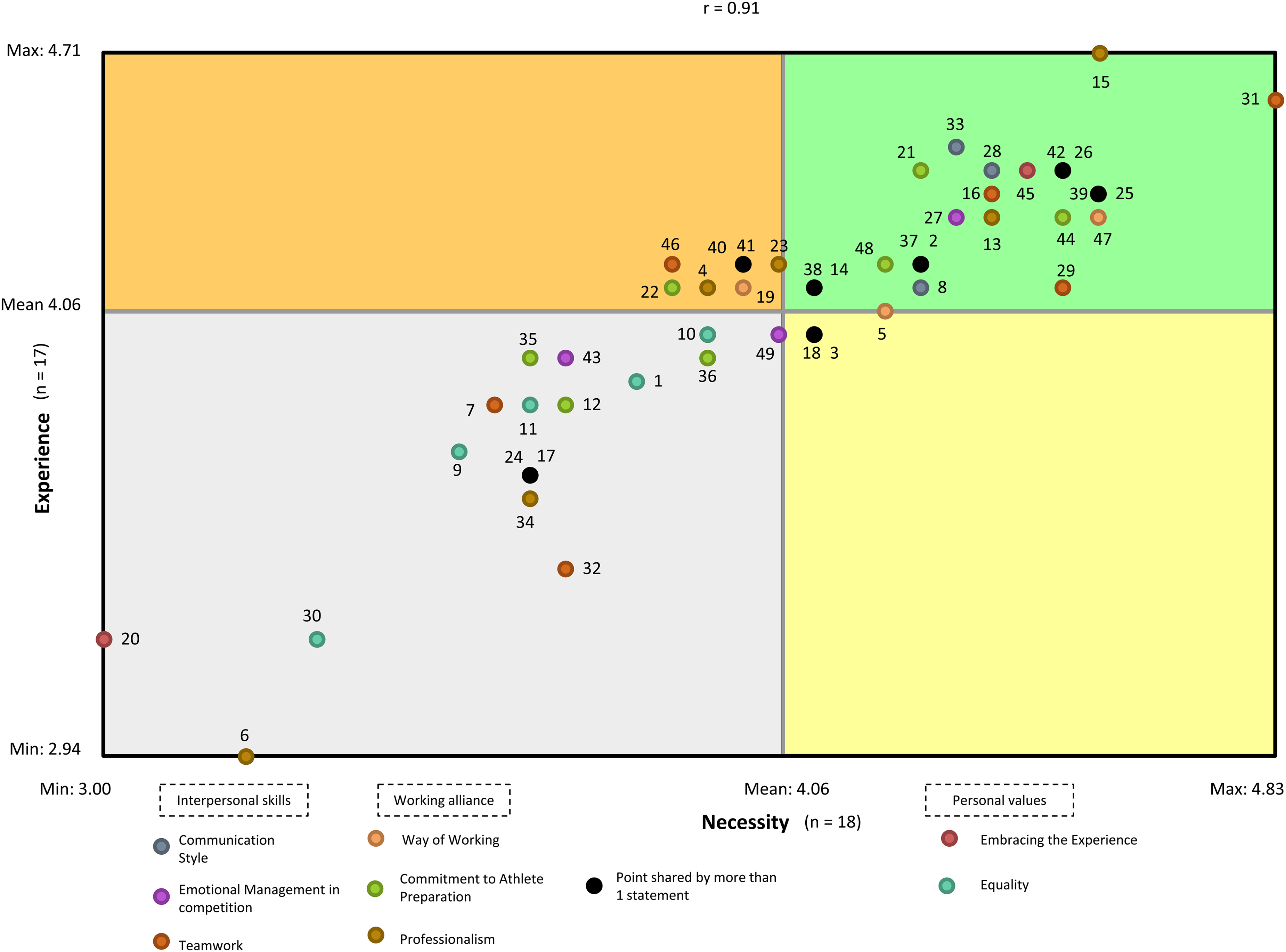
Go-zone of 49 statements based on mean necessity and experience rating scores.
Discussion
Olympic gold medal winning athletes and coaches shared their insights about the characteristics they valued among performance support staff who were with them during their Olympic Games preparation and competition period. Concept mapping was used to gather and analyse insights provided by the participants. The characteristics identified were ways of working, communication style, emotional management in competition, teamwork, commitment to athlete preparation, professionalism, embracing the experience, and equality. The clusters and statements rated as most necessary by the athletes and coaches are reviewed and considered with reference to performance support staff contribution to team performance presented by Salcinovic et al. and a model of strengthening interpersonal relationships in sport conceptualised by Burns et al.2,24
A systematic scoping review completed by Salcinovic et al. identified factors critical to the high-performance support team setting in sport which included leadership styles, supportive team behaviour, communication, and performance feedback. 2 In the current study, the clusters of ways of working and communication style related well to supportive team behaviour and communication. 2 Supportive team behaviours were described by Salcinovic et al. as how members in teams learn, store, use, and coordinate their knowledge to accomplish team and organisational goals. 2 The results of the current study included the cluster ways of working, which described characteristics associated with supportive team behaviours of knowing what it was going to take to win both in preparation and on competition day, successfully coping with potential distractions at competition, clear understanding of the desired outcomes with knowledge of the processes required along the way and establishing necessary processes and systems. Salcinovic et al. also described how well-performing teams demonstrated high-quality internal communication and provided feedback about both strengths and weaknesses. 2 Poor communication was a marker of dysfunctional relationships. Communication was also a cluster in the current study and the associated characteristics were described as supportive yet objective, being present, ability to listen, open communication, and open mindedness.
The model for strengthening interpersonal relationships in elite sport (Figure 1) was based on insights from athletes about the importance of interpersonal relationships with coaches and their performance support team. 4 Strong self-regulation, empathic relationships, support networks, and being present were factors of interpersonal relationships that may lead to attenuated stress responses, improved wellbeing, and enhanced performance. Our study clusters of professionalism, commitment to athlete preparation, emotional management in competition, embracing the experience, and equality align with this model. Bordin provides a framework for the working alliance which is a balance of forming strong interpersonal relationships and therapeutic relationships to achieve patient outcomes in therapy. 2 Bordin's three essential elements of the working alliance in psychotherapy: agreement on the treatment goals, agreement on the tasks, and developing a personal bond consisting of reciprocal positive feelings. Emotional management skills were essential for the therapist to maintain the working alliance and were identified by the athletes and coaches in the current study as necessary in the performance support team members who were with them at the Olympic Games. Emotional management in competition statements included (a) they remained composed under pressure (b) had good knowledge of the individual's triggers to get the best performance at the right time, (c) they knew when to engage and when to be sensitive to the space required leading into the Games, (d) level headedness, (e) they reduced transfer of stress to athletes, and (f) they provided emotional support to the athletes. Eisenberg suggested that we can turn to the needs of others only if we are able to regulate our own emotions successfully. 30 Emotional management in competition may be the characteristic which allows the performance support practitioner to optimise the interpersonal relationships with athletes as well as supportive team behaviours and communication with others in the team (i.e. coaches, and other performance support staff) to contribute to overall team performance throughout their involvement.2,5
Kampf et al. completed a meta-analysis examining the links between emotion regulation, social affect, and cognition which related to the quality of interpersonal relationships. 20 Adaptive emotion regulation was positively related to empathy and compassion for others. Emotion regulation has been characterised as ‘the processes by which individuals influence which emotions they have, when they have them, and how they experience and express these emotions.’ 31 (p. 275). Emotion regulation has been studied from a motivational perspective and a process-oriented perspective. Process-oriented research has focused on how we respond to the specific situation, how we place our attention, and how we respond to an emotion. Emotional experiences are understood in terms of emotional intensity, duration, frequency, and type of emotion.32 Other researchers emphasise that the context and the flexibility of responses to the environment are important for emotion regulation, meaning that an emotion regulation strategy needs to fit the situation to be effective.31–33 Eisenberg proposed that maintaining personal emotional reactions within a tolerable range was necessary to concentrate on the needs of others and support them. 30 In high-performance sport, performance support staff should be aware of the contextual demands of competition above and beyond the delivery of their technical capabilities, and practice how to demonstrate adaptive emotion regulation. The ability to deal with one's own emotions effectively, apply emotion regulation strategies variably and flexibly to suit the various situations that occur during competition, and continue to wisely prioritise the needs of the athletes and coaches are critical in a high-performance environment.
Limitations of the current study are the size of the sample. Rosas and Kane indicate that between 20 and 30 sorters is necessary to maximise the consistency of fit in the concept mapping representation by minimising the variability in the stress value found with smaller groups of sorters. 29 This range is about twice the number recommended by Trochim and Jackson et al.34 (p. 332) Our observation comports with previous card sorting studies examining adequate sample sizes needed to produce high-quality representations. 29 While smaller numbers of sort participants may still yield acceptable stress values, the likelihood of generating a higher stress value is greater with smaller groups. Thus, consideration of the appropriately sized sorting sample in designing concept mapping studies is critical.
The use of concept mapping in the current study allowed for a structured approach to gathering the insights from a cohort of Olympic gold medal winning athletes and coaches to which access can often be unattainable. Inviting insights from a cohort of participants with extensive lived experience in any context is becoming integral to any research examining the optimisation of individual and team performance. Concept mapping is a structured process, focused on a topic or construct of interest, involving input from multiple participants, that produces an interpretable pictorial view of their ideas and concepts and how these are interrelated. 22 The use of concept mapping is a novel and complimentary approach to support data gathered from those with lived experience using other qualitative techniques such as interviews.35–37
Future research may use concept mapping to further examine the experiences of athletes, coaches, and performance support staff and how emotional management and interpersonal relationships impact on team performance outcomes in competition. Training of performance support staff to develop adaptive emotion regulation and facilitate strong interpersonal relationships with athletes, coaches, and the team will be necessary across all disciplines. Applying the skills when travelling with teams to competition, with appropriate mentoring and guidance, is also encouraged as part of the training. Athletes, coaches, and team managers can also benefit from learning these skills.
Future recommendations are for sports to establish well-designed, structured education for support staff to gain proficiency in skills to cultivate the performance alliance to impact and sustain both athlete performance and wellbeing.
Footnotes
Acknowledgements
The authors thank the athletes and coaches who generously gave their time and shared their knowledge and expertise as a part of this study.
Contributors
All authors contributed equally to the original idea for the paper and drafted, revised and approved the manuscript.
Declaration of conflicting interests
The author(s) declared no potential conflicts of interest with respect to the research, authorship, and/or publication of this article.
Funding
The author(s) received no financial support for the research, authorship, and/or publication of this article.
Patient consent
Not required. Participants provided electronic consent at point of first entering the data collection platform.
Ethics approval
AIS Ethics Committee (20190602)
