



Abstract
The aim of this study was to compare the positional dynamics in soccer small-sided games (SSGs) with either greater length (SSGlength) or width (SSGwidth) with official games. Twenty four Brazilian U-20 national-level players participated in six SSGs training sessions with two different SSG configurations: SSGlength (4v4, 40 m length and 26 m width) and SSGwidth (4v4, 26 m length and 40 m width). Positional dynamics variables were monitored and compared to official games. Linear mixed regression model was fitted using the situations as fixed effect, and, when appropriate, player and/or group as random effects. When compared to SSGlength and SSGwidth, official games showed a greater Relative Team Length, LPWratio, Spacial Exploration Index (SEI), and Strech Index, with a large or very large effect size. The SSGlength elicited higher values of Relative Team Width, LPWratio, and SEI when compared to SSGwidth. No significant differences were found between SSGlength and SSGwidth for Relative Team Length (small effect size), and SI (small effect size). Both group and player as random effects showed low variances. We concluded that the tactical behaviours during the 4v4 SSG differed substantially from the competitive tactical behaviour during the official games. In addition, changing the orientation of the playing field did not make the positional dynamics of the SSGs more similar to the official games.
Introduction
Small-sided games (SSGs) are used commonly throughout soccer training sessions to develop players’ physical capacity, technical and tactical skills in a game-like environment.1–3 However, the actual representativeness of soccer SSGs has been questioned. When compared to regular match play, SSGs have shown different total distance covered,4,5 maximal running speed, 4 number of sprints, 6 high-speed running distance,4,7,8 sprinting distance,4,7 frequency of acceleration,4,9 frequency of deceleration,4,9 and number of repeated high-intensity efforts, 6 even when these data are expressed relative to the effective playing time.
A common area of investigation in SSGs research is to analyse how changes in the orientation, width (SSGwidth) and/or length (SSGlength) of the playing field impact playing style and workload.4,5,10,11 Recently we have shown significant differences between official games and both SSGwidth and/or SSGlength for maximum speed, number of high-speed actions, number of sprints, high-speed distances and very high-speed distances covered, number of accelerations and average heart rate. 5 Regardless of differences in workload, proponents for the use of SSGs highlight the advantages of undertaking technical and tactical training in game-like environments,1–3 because of the possibility of stimulating players to perceive specific tactical problems by manipulating the SSG characteristics such as pitch size, number of players, game rules.3,12 However, the question remains as to whether the positional sense and tactics during soccer based SSGs are representative of game play.
According to Caro et al., 13 measures of players’ distribution on the pitch should be used to understand the players’ tactical involvement during SSGs. Using positional data captured by global positioning systems (GPS), it is possible to represent players’ movements by a time series of Cartesian coordinates (x- and y-coordinates). The spatiotemporal patterns of play that emerge from the dynamics of a training drill or a game provide information about tactical performance. 14 Thus, positional dynamics variables such as team's and players’ width, length, length per width ratio (LPWratio), spatial exploration index (SEI), and stretch index (SI) can be analysed and used to evaluate tactical behaviours in SSGs.3,13,15 If the SSG area per player differs from the official game, players may perform under less favourable conditions with non-specific time and space to improve tactical factors. 16 However, SSGs are more often played with reduced area per player than official games.2,16 Therefore, it is crucial that alternative solutions to increase the representativeness of SSGs be investigated.
Usually, SSGs are carried out with lateral lines longer than the back lines. 2 Although the official soccer field has lateral lines longer than the back lines, the dynamics and rules of the game induce an approximation of its players to each other and the ball. The offside rule, for example, constrains the players’ ability to explore the field space along the lateral lines, decreasing the playing area. 3 Caro et al. 13 analysed the width and length dimensions of the relative playing area in all 4v4 situations during regular official games. They reported that the effective playing area size during these events was wider than it is long in all zones of the playing field. Based on this data, Caro et al. 13 suggest that to recreate match-play conditions, the playing area in soccer specific 4v4-SSG should be wider than they are long, which is contrary to the usually investigated SSGs 2 and denotes the need for further research.
While it would appear relatively obvious that SSGs can provide soccer technical skills training in sport representative contexts, the question remains whether the tactical behaviour in soccer SSGs is comparable to conventional soccer match play. Therefore, including positional variables, such as player distribution on the pitch in SSGs analyses, would help to gain insight into their tactical demands, 13 by representing players’ movements and spatiotemporal patterns. This approach provides information about the players’ and teams’ tactical performance in SSG. 14 Being aware of the tactical behaviour during different SSGs, coaches could choose SSG formats or rules that induce a desired tactical behaviour. Coaches would be aware of a potential lack of representativeness in SSGs, when a game rule or field format induce different positional dynamics, when compared to the official games. It would be also possible to design SSGs with a more valid representation of the tactical conditions experienced in full-size matches, and their use may improve the training effect of tactical aspects of match performance in soccer. 16 To the best of our knowledge, no studies reported in the scientific literature have compared the tactical behaviour in SSGs with different pitch orientations (length and width) with the tactical behaviour in official soccer games. Therefore, the aim of the present study was to compare the positional dynamics in SSGs with either greater length (SSGlength) or width (SSGwidth) with the positional dynamics in official 11 per side games. We hypothesized that positions dynamics during SSGwidth would be more representative to football when compared to those from conventional match play.
Materials and methods
Research design
The manipulation of the field orientation was proposed as a possible alternative to increase the similarity to the positional dynamics between SSG training and official games. Soccer players participated in six SSGs training sessions with two different SSG configurations: (a) 40 m length and 26 m width (SSGlength), (b) 26 m length and 40 m width (SSGwidth). Each team comprised a goalkeeper and four outfield players (two defenders, one midfielder, and one forward). This format was chosen because this is one of the most popular SSGs used in training. 13 Players were monitored during 18 matches and 72 SSGs (36 SSGlength and 36 SSGwidth). Positional dynamic variables such as teams’ and players’ width, length, SEI, and length per width ratio were analysed and compared to official games.
Subjects
Twenty-four national-level male under-20 outfield Brazilian soccer players (body mass 72.0 ± 7.8 kg, stature 1.77 ± 0.06 m, age 19.8 ± 0.9 years) participated in this study. Goalkeepers were part of the study but were excluded from the data analysis because of their positioning restrictions and the differences in their game dynamics when compared to outfield players. The study was approved by the local ethics committee and all participants provided written consent before participation.
Procedures
Small-sided games
The 24 players were allocated into six teams. Each team comprised a goalkeeper, two defenders, a midfielder, and a forward. The chosen structure allowed teams and players to explore the physical and technical-tactical specificities of each playing position during the different SSGs. 3 The SSG were carried out with two different SSG configurations: (a) 40 m length and 26 m width (SSGlength), (b) 26 m length and 40 m width (SSGwidth). We assumed that the homogeneity of the sample would not require an intentional team composition by the researchers since all players were part of an elite under-20 team. The SSGs were played in 5-min bouts with 2 min of passive recovery in-between, during six training sessions (totalling 72 repetitions). The SSGs were performed on Tuesdays and Wednesdays for three consecutive weeks during the competitive season. Traditional soccer playing rules, including ball and goal sizes, were used for all SSGs. No verbal encouragement was given. In total, 36 SSGlength and 36 SSGwidth were played with each team competing in the same amount of SSGlength and SSGwidth. Before each SSG training session, a standard warm-up (12 min) was performed consisting of dynamic stretching exercises and soccer-specific movements. The relative pitch proportions of the SSGlength were similar to the length-to-width ratio as an official soccer field.12,17
Official games
Eighteen official games were monitored from the under-20 Brazilian Football League (organized by the Confederação Brasileira de Futebol – CBF, the Brazilian national confederation). There was an average of 6.5 ± 4.2 games per athlete. Official games were played during the competitive season, and official playing rules were applied. Only the first 45 min of each official game were analysed in order to avoid any issues resulting from substitutions.
Positional data
GPS units recorded players’ positional data with a sampling frequency of 10 Hz, and 200 Hz 3D accelerometer, gyroscope and magnetometer (Polar Team® Pro System; Polar Electro Oy, Kempele, Finland). All devices were activated 20 min before the data collection in order to obtain a better acquisition of satellite signals. Latitude and longitude data of each player were synchronized and converted into meters, using GPS Track Editor (v1.15.141) and an R routine. A rotation matrix was calculated for each SSG and official games with the positions of the field vertices, aligning the length of the playing field with the x-axis and the width with the y-axis. The rotation matrix was applied to players’ positional data for alignment using the playing field as a refential. 3 The following variables were analysed: Team Width (distance between the rightmost and leftmost players), Relative Team Width (Team Width relative to the field width), Team Length (distance between the furthest players in length), Team LPWratio (length to width ratio), 18 Relative Team Length (Team Length relative to the field length), the Stretch Index (dispersion of the players from the team geometrical centre [SI]) and the Space Exploration Index (average difference between a player's average position and its actual position at each moment of the game) (Figure 1).
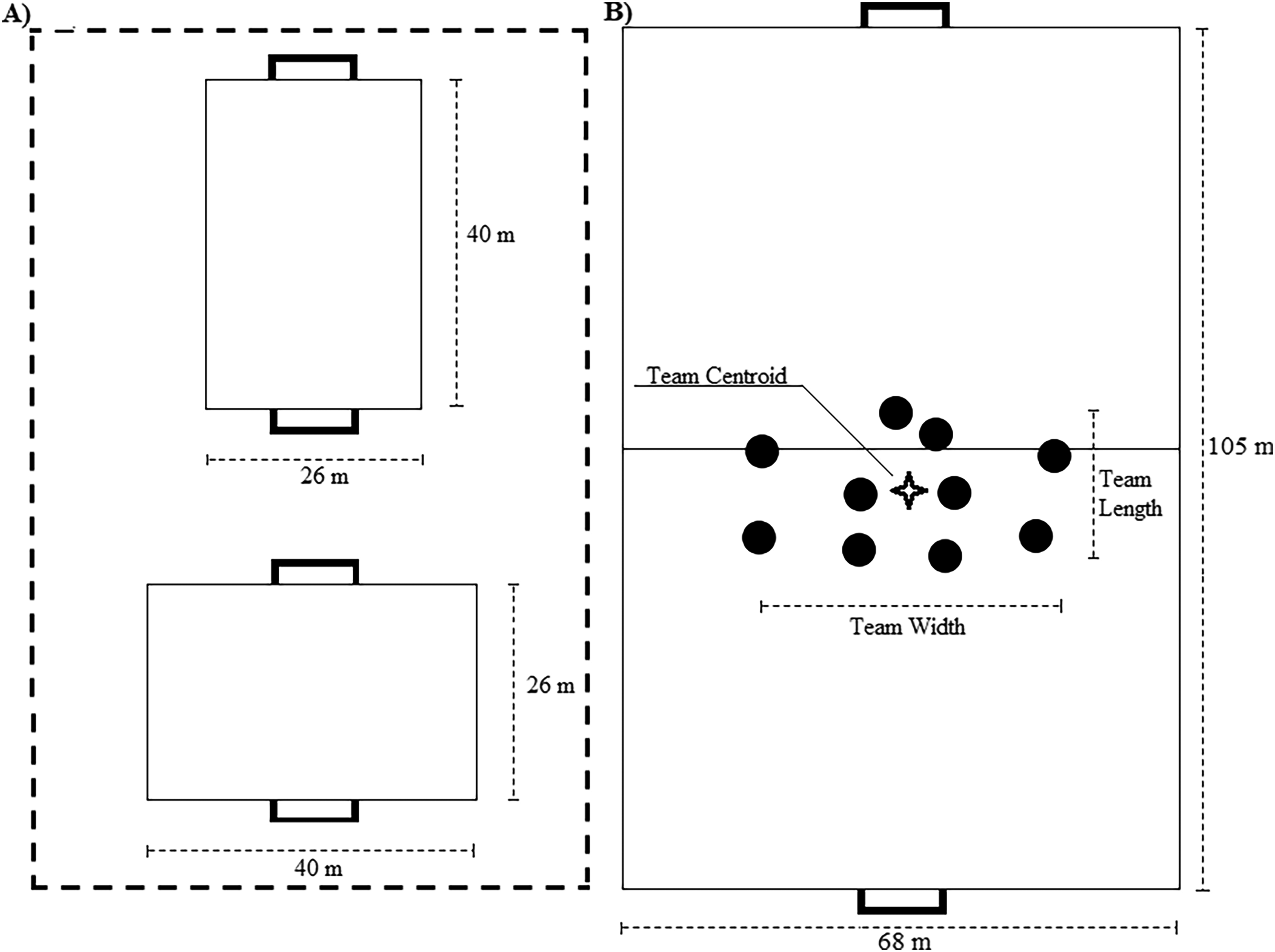
(A) Representation of the side and back lines used in SSGwidth and SSGlength in relation to the full size pitch; (B) schematic representation of the Team Width (distance between the rightmost and leftmost players), Team Length (distance between the furthest players in length), and Team Centroid (team geometrical centre used to calculate the SI).
Statistical analyses
Linear mixed regression model, with Bonferroni post-hoc analysis, was fitted using the situations as fixed effect. When appropriate, player and/or group were used as random effects. The players were coded as 1 to 24 and the groups as 1 to 6. For group variables, only SSGlength and SSGwidth were analysed with group as random effect. For Space Exploration Index, both group and player were analysed as random effects. All continuous outcomes were standardized by subtracting the mean and dividing by 2 standard deviations. 19 Team Length and Team Width were excluded from the analysis because of the large correlation with the Relative Team Length and Relative Team Width respectively. The level of significance was p < 0.05. Effect size (ES) and confidence intervals (CI) were reported based on partial eta squared and Cohen's d for paired comparisons. Threshold Limit values for ES were defined as trivial (<0.2), small (0.2–0.6), moderate (0.6–1.2), large (1.2–2.0) and very large (>2.0). 20 Statistical analyses were conducted in Statistical Package for the Social Sciences (IBM Corp. Released 2022. IBM SPSS Statistics for Windows, Version 29.0. Armonk, NY: IBM Corp.) software.
Results
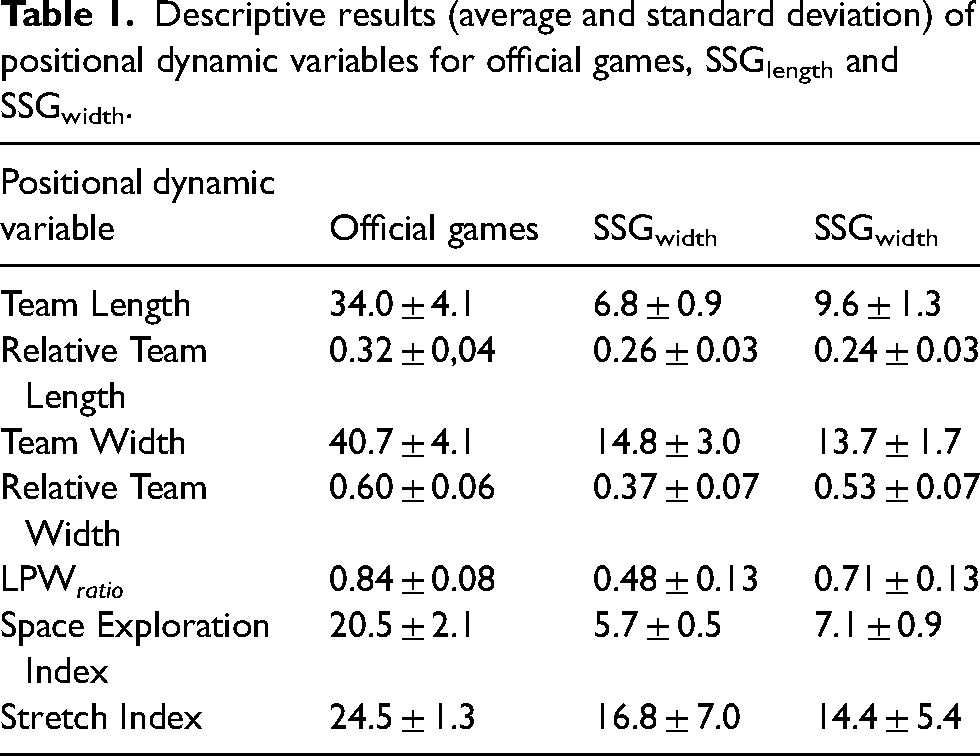
Descriptive results with average and standard deviation are presented in Table 1. Significant differences were found between official games and SSGlength and SSGwidth for all positional dynamic variables (Figure 2). Official games showed a greater Relative Team Length, LPWratio, SEI, and SI, with a large or very large effect size (Figure 3). Relative Team Width was also greater during official games, but with moderate effect size, when compared to SSGlength.
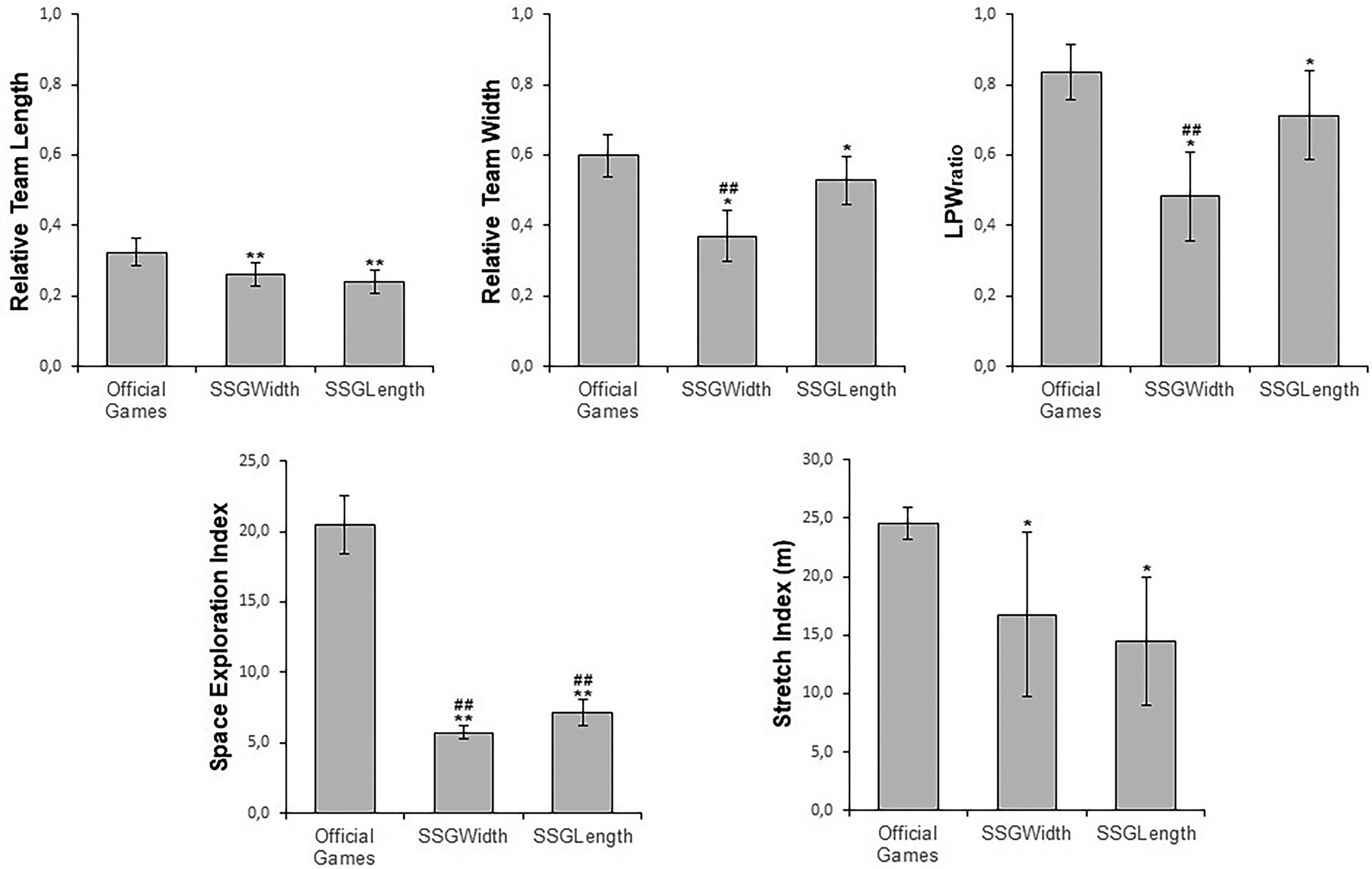
Positional dynamic data from official games, SSGwidth, and SSGlength.
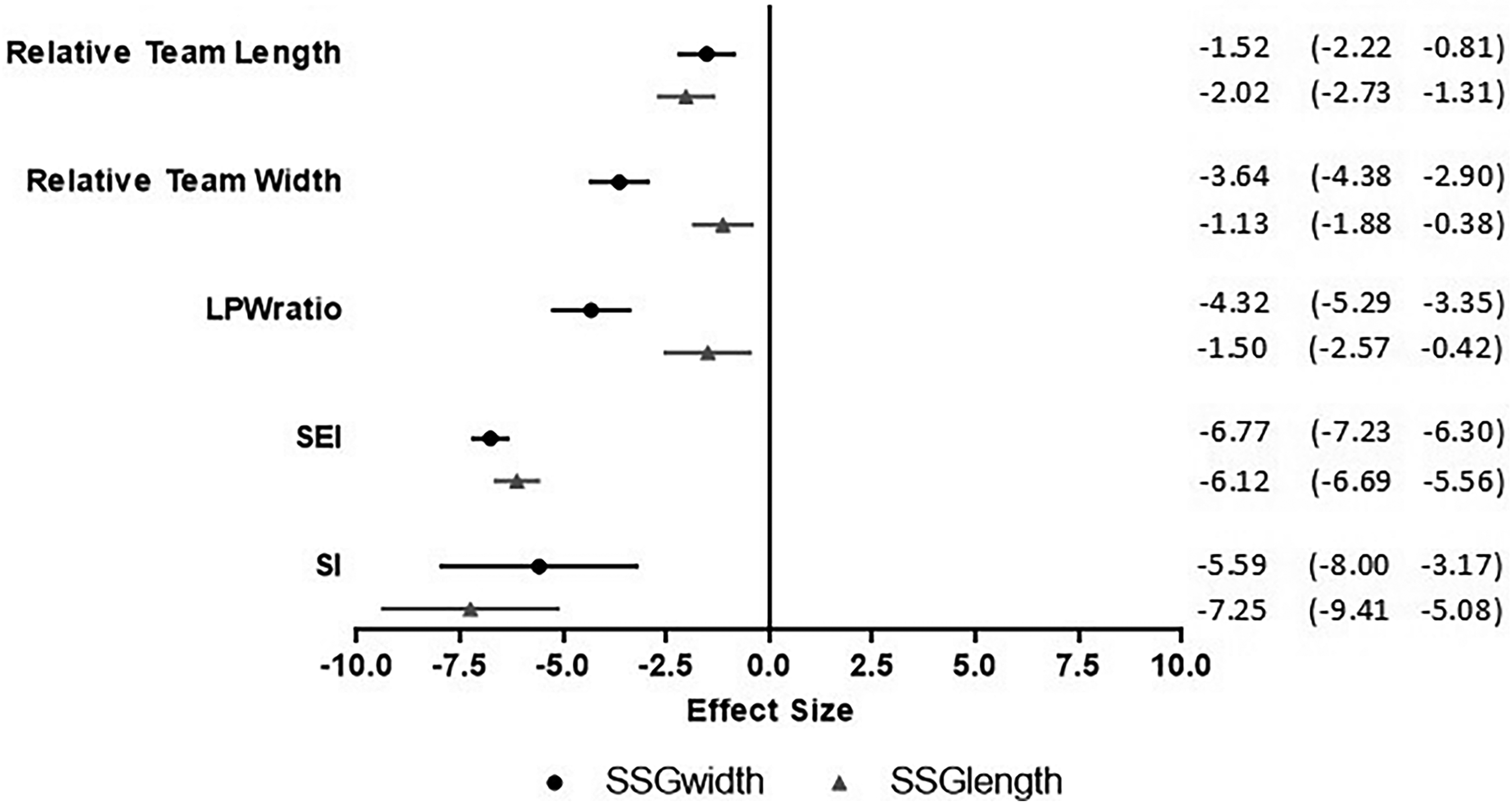
Effect size and confidence intervals of SSGwidth and SSGlength, when compared to official games.
Descriptive results (average and standard deviation) of positional dynamic variables for official games, SSGlength and SSGwidth.
The SSGlength elicited higher values of Relative Team Width (large effect size), LPWratio (large effect size), and SEI (very large effect size) when compared to SSGwidth. No significant differences were found between SSGlength and SSGwidth for Relative Team Length (small effect size), and SI (small effect size). Figure 3 shows the effect size and confidence intervals of SSGwidth and SSGlength, when compared to official games. Figure 3 shows the effect size and confidence intervals of SSGwidth and SSGlength, when compared to official games.
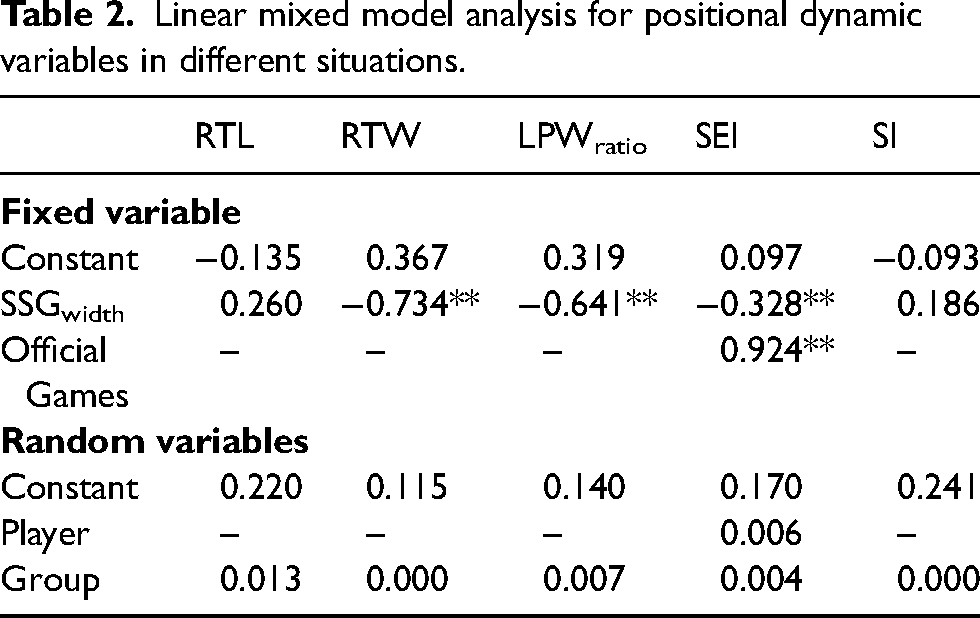
Table 2 shows the outcomes from the linear mixed model analysis for the positional dynamic variables using player and/or group as random effects. Significant effect of situation was observed in Relative Team Width, LPWratio and SEI (p < 0.001), and no significant effect was observed in Relative Team Length (p = 0.159) and SI (p = 0.259).
Linear mixed model analysis for positional dynamic variables in different situations.
Discussion
The aim of this study was to compare the positional dynamics of SSGs involving greater length (SSGlength) and greater width (SSGwidth) and official games in soccer. The results showed that all absolute and relative positional dynamic variables during official games were significantly greater than both SSG field configurations. In addition, the use of a field with a greater width, rather than length, did not make the positional dynamics of the SSGs more similar to the official games, but rather increased the differences in Relative Team Width and LPWratio. The influence of the group and player as random effects showed low variances. We believe that the homogeneity of the sample may have influenced this result, since all players were part of an elite under-20 team. Besides, each team comprised a goalkeeper, two defenders, a midfielder, and a forward. This fact may have generated a greater similarity between the six groups.
Our results for LPWratio during official games indicate that the examined teams played with a Team Width greater than Team Length. These data are consistent with research suggesting that wider pitches should be used in SSGs and the resulting pitch sizes are potentially valuable for ensuring training specificity of tactical factors.13,16 Although the LPWratio is not a variable to calculating an area, it gives a representation of team shape, with larger and smaller values of LPWratio representing elongated and flattened playing shapes, respectively. 18 Thus, these values indicate the preferential displacement axis of the team. A LPWratio value lower than 1 indicates a more in-width positioning, while values higher than 1 indicate a more in-length positioning. 3 The LPWratio found during SSGwidth and SSGlength are significantly lower than the LPWratio during official games. These results indicate a different playing shape during 4-a-side SSG in relation to the official game.
The effect of the field orientation on players’ positional dynamics has been demonstrated previously. 21 These authors analysed positional dynamics in regular pitch (36 m length×25 m width) and sided pitch (25 m length × 36 m width) during 5-a-side SSGs. Players reduced their in-length spatial exploration when the movements on this longitudinal axis were constrained. Frencken & Lemmink 22 have also investigated the effect of changing pitch length and width of 4-a-side SSGs on players’ tactical behaviour. These authors compared the effect of four different field configurations (reference game – 30 × 20 m; length manipulation – 24 × 20 m; width manipulation – 30 × 16 m; combination – 24 × 16 m) on the team surface area, finding that manipulations of pitch length and width result in changes in team measures in those directions. Similar results were found in the present study, with SSGwidth displaying a lower Team Length when compared to SSGlength. Indeed, both SSGwidth and SSGlength showed a lower Relative Team Length than official games. Our data suggests that irrespective of field orientation team length is compromised during SSG. The SSGs in this project were carried out using the official rules and so it would appear that the combination of a shorter pitch length and the offside rule in SSGwidth generated a double constraint in team length. These findings are consistent with research by Praça et al. 3 who found that players during 3v3 SSGs reduce their in-length spatial exploration as a function of the offside rule. The fact that we did not find a significant difference in the Relative Team Length between SSGwidth and SSGlength reinforces the idea that shortening of the field inhibits displacement along this axis.
The Relative Team Width was also affected by the field orientation with SSGwidth showing a significantly lower Relative Team Width when compared to both SSGlength and official games. The wider pitch in SSGwidth created an unexplored and not advantageous in-width space. On one hand, defensive teams could prefer to position themselves in the central corridor, avoiding the progression towards the most dangerous areas in the pitch. 23 On the other hand, offensive teams were not willing to circulate the ball through the whole width as this would increase the distance to the opposing goal. From a training perspective, Coutinho et al. 21 suggest that coaches could use SSG pitches with higher width than length to expose players to these situations to become more aware of perceiving and use this available lateral space. It has been shown that a match-derived relative pitch area per player facilitates the physical 24 and tactical 25 representation of SSGs for official soccer matches. However, from a practical perspective, a training session comprised of SSGs with match-derived relative pitch needs a huge area to be carried out. Due to the necessary space for positioning the goals, the side and back lines of each SSG pitch, and their respective escape areas, one official field would fit less than 20 outfield players. Possibly, this is one of the reasons why SSGs are more often played with reduced area per player than official games.2,16 Therefore, different alternatives to increase the representativeness of SSGs with reduced relative area per player should be explored. In both situations of the present study (SSGwidth and SSGlength), the area per player was lower than official games, and this fact may have affected our results. The proportion of width per player (6.5 m/player) and length per player (10.0 m/player) during SSGlength were kept similar to the official field. However, the Relative Team Width and Relative Team Length were different when compared to official games. During SSGwidth, the proportion of width per player (10.0 m/player) was greater, and the length per player (6.5 m/player) was shorter than the official field. In this case, the Relative Team Width and Relative Team Length were also different when compared to official games.
The SI indicates the team dispersion from the team centroid (geometrical centre). 14 In our study, SSGwidth and SSGlength showed similar SI values but lower than official games. Castellano et al. 24 also found similar SI values when comparing SSGs with different pitch lengths. According to Low et al., 14 increasing the pitch size could lead to the teammates playing further from each other and the opposing teams competing further apart. It is important to note that we rotated the SSG pitch, changing its length and width, keeping the same area per player. Besides that, in both SSGs the area per player was lower than in official games. This is possibly the reason why the team dispersion was similar in both SSGs and higher in official games. Clemente et al. 12 found that during 4v4 SSGs, with a pitch 30 m long and 20 m wide, U18 soccer players showed a higher SI (9.50 ± 3.87 m) when compared to U15 (8.86 ± 2.50 m) and U13 players (7.76 ± 2.34 m). These results are compatible with our data since we have found a higher SI (14.4 ± 5.4 m) using U20 players and a pitch with a higher area per player.
The SEI was used to analyse the athletes’ exploratory behaviour. A higher SEI value indicates a greater difference between a player's average position and their actual position at each moment of the game. 3 Accordingly, these authors suggest a high SEI is an indication of a more exploratory behaviour, while a lower value indicates a lower exploratory behaviour. We found a greater SEI in official games compared to both SSGwidth and SSGlength. These results show how the configuration of the 4-a-side SSG, which is one of the most used SSG, 13 can constrain the players’ behaviour. Castellano et al. 24 state that the variation of simple factors such as pitch size can be used by coaches to explore the flexibility of collective tactical behaviour and identify desirable co-adaptations. Similarly, the significantly higher SEI values during SSGlength indicate a more exploratory behaviour during this pitch orientation than in SSGwidth. It is again possible that the double constraint in-length (the combination of the offside rule and the shorter pitch length) reduced the spatial exploration during the SSGwidth. Increasing the relative area per player can increase the total distance covered, 24 which may explain the substantially higher spatial exploration observed in the official games.
According to Olthof et al., 25 SSGs are a learning environment and should closely replicate the official game to transfer skills from training to competition. To improve teams’ performances, coaches need to understand the effect of the game constraints and the manipulation of practice tasks to potentiate the transfer from training to competition. 26 Usually, SSG are carried out with the side lines longer than the back lines, simulating the shape of the official soccer field. However, according to Caro et al., 13 the effective playing area size in all 4v4 situations during regular official games are wider than it is long in all zones of the playing field. These authors suggested that, to recreate match-play conditions, the playing area in soccer-specific 4v4-SSG should be wider than they are long. Thus, we have used positional variables to analyse the 4v4 SSG tactical demands, expecting a low representativeness in SSGlength and higher representativeness in SSGwidth. If this were confirmed, coaches would design SSG with a more valid representation of the tactical conditions experienced in full-size matches, by using wider fields rather the longer. However, in our study, the tactical behaviours during both SSGlength and SSGwidth differed substantially from the competitive tactical behaviour during the official games. Coaches who use 4v4 SSG in training need to understand how variables such as playing field size and area per player impact on the nature of the players’ and teams’ positional dynamics.
The main limitation of the present study is the fact that, in both SSG configurations, we used a smaller area per player, when compared to the official games. We accept that 4v4 SSG with a match-derived relative pitch area per player may provide stimuli specific for developing soccer tactical skills. Further research in larger formats of SSGs is recommended to confirm such assumption. We also recommend for future studies to investigate the effect of changing the field orientation without the off-side rule and with different number of players. Regarding the 4v4 SSG with a lower area per player, as a representative tactical preparation for official games, should be reconsidered and may be used only in order to replicate some match situations. Despite the apparent representativeness of these drills for traditional match play, our research highlights a relatively poor representativeness in all positional dynamic variables. In addition, changing the orientation of the playing field, by increasing its width, did not make the positional dynamics of the SSGs more similar to the official games.
Footnotes
Declaration of Conflicting Interests
The authors declared no potential conflicts of interest with respect to the research, authorship, and/or publication of this article.
Funding
The authors received no financial support for the research, authorship, and/or publication of this article.
