



Abstract
The purpose of this research was to determine if the training design of an elite Australian Rules football team replicated match conditions for inside-50 entries. Notational analyses of one professional Australian Rules football club's training and match footage were conducted for every disposal that entered the inside-50 during either game-based training or matches. Analysed variables included how the ball was received, time in possession and location. Statistical analyses were undertaken using Mann–Whitney tests, a multivariate analysis of variance and a decision tree analysis. Significant differences were identified between game-based training and competition matches for 34 of the 54 inside-50 entry variables. Of these 34 variables, 10 showed a strong effect between session types. When examining the efficiency of inside-50 entries, only effective disposals produced a significant difference between training and matches, with no differences for neutral and ineffective disposals. The session type, how the ball was received, decision (e.g., kick vs. handball) and pressure acts were the most important contributors to effective inside-50 entry disposal efficiency. The results suggest this professional Australian Rules team does not participate in training sessions that reflect inside-50 match conditions. This study may provide a framework for elite Australian Rules teams on which to structure their inside-50 training.
Introduction
Successful sports performance, particularly at the elite level, is concerned with consistently producing one's best performance, especially at critical times of an event or match. Elite-level athletes train to improve both fitness and technical skill execution, and to perform consistently at the elite level. Previous research has suggested that the more closely training can represent the competition environment, the greater the skill and/or behavioural transfer from training into competition.1–3 This is particularly the case in invasion-style team sports, whereby actions from teammates and opponents may dictate the most appropriate actions to take during a match. Australian Football (AF) is a sport whereby the interactions between teammates and opposition players are critical to deciding the most appropriate actions to be executed.
Practice scheduling has progressed from a repetitive drill-based blocked practice focused on controlled skill execution to increased levels of variability and randomised practice designs that utilise small-sided and modified games more regularly.4–6 A more recent approach to practice design simulates the interaction of constraints that players and teams encounter during competition.1,7,8 Manipulation of constraints within the learning environment presents different affordances to athletes to execute sports-specific actions. The constraint manipulations need to be designed to adequately represent the performance environment to enable athletes to detect the affordances for action and couple this with their perception. 8 A framework that can be used to assess if the practice of a particular skill replicates the match conditions is representative learning design (RLD).8,9 Unlike traditional training styles that aim to reduce uncertainty in skill execution, RLD advocates that training activities represent key information movement couplings experienced by players in competition.8,9
Game-based training (GBT) 4 provides an environment for the integration of RLD into the training design of team sports. GBT can be designed to replicate the fitness demands, alongside technical and tactical requirements of the sport. However, constraints can be manipulated within the game design to isolate or emphasise particular elements of performance. For example, an AF coach wanting to improve an athlete's set shot at goal should ensure there is a player on the ‘mark’ and players on the goal line to replicate the scenario from a match. Developing decision-making skills for more dynamic situations requires the use of teammates and opposition players to enable the ball carrier to perceive and act in the environment to determine the best outcome in each given situation. For example, the ball carrier may choose to run at a defender to draw them away from a teammate to create an easier pass rather than pass early when the defender is able to hover between them and their teammate. Through training within representative environments, particularly game-based activities, it is believed that athlete learning and transfer are enhanced through exposure to higher amounts of decision making. 9
Examination of the representativeness of training environments within AF has increased in recent years with multiple studies now available exploring tactical and technical representativeness.10–15 Bonney et al., 11 and Ireland et al., 12 analysed each disposal within GBT, but did not classify where the disposals occurred on the field. Understanding where on the ground a disposal occurs (e.g., forward or defence) and the context surrounding the disposal (e.g., team is attacking or rebounding) is vital knowledge for both players and coaches, as disposals can vary in different areas of the ground depending on the desired outcome. Furthermore, depending on the scenario a disposal occurs in, technical and tactical performance elements, such as pressure acts, will differ, so comparing a disposal that occurs in the forward 50 m to a defensive 50 m disposal may not produce relevant or accurate conclusions. When rebounding the ball from the defensive 50 m, it is important to try and maintain possession to stop the opposition from scoring. Whereas, when a team enters their forward 50 m arc (known as an inside-50 (I-50) entry) they have a greater opportunity to score. I-50 entries are one of the most prominent predictors of final match score margin and match outcomes.16–19 In addition to understanding the location of the skill performed, teams may have different playing styles that can affect the style of disposal they may execute in each field area. It is important to understand whether teams are experiencing similar conditions in training to those they experience in matches, and thus adequately preparing for competition. Further, it is important to consider performance and match outcomes in relation to the training design, as it would be pertinent to ensure successful outcomes (i.e., goals scored) in both training and matches. If differences exist between training and competition (e.g., pressure applied to the ball carrier) then the effectiveness of disposals may differ as well (e.g., effectiveness may be higher in the lower pressure situation).
This study examined whether GBT replicated match conditions for I-50 entries in elite AF football. Specifically, this research explored how closely training replicated the match characteristics for each I-50 entry, whether the disposal efficiency outcome differed between training and matches, and if there were characteristics of I-50 entries that led to a higher effective disposal efficiency. Investigating the effectiveness of an AF team's training program could guide coaches to improve their activity prescription, focusing on the execution of technical skills in the context of different tactical situations.
Methods
Study design
Data analysis was conducted retrospectively to determine whether AF training replicates match performance at the elite level. The data was collected via a notational analysis of official match footage and training vision provided by one elite Australian Football League (AFL) club from the 2019 AFL Premiership season. Ethical approval was obtained from the Deakin University human research ethics committee. Organisational consent was provided by the club and a waiver of consent was approved for individual athletes.
Participants
Thirty-five male AF players (age = 26.2 ± 3.74 y) participated in the study. Only players who participated in a minimum of one AFL training session or match during the 2019 season (average of 13.8 ± 7.86 matches played per player) had their I-50 data included in the analysis.
Data collection
Every match (n = 22) from the 2019 AFL season and all training sessions (n = 62), including both pre- and in-season sessions that involved GBT were analysed. Only training activities that were considered GBT, with at least 6 versus 6 players involved, were included in the data collection as this was considered representative of game-based situations by the club. Static skill execution drills, or those with less players were deemed not to be representative of match situations. 20 GBT activities accounted for approximately 43% of total training time for both pre- and in-season training, with the remaining time consisting of warm-ups, strength and conditioning, and non-GBT drills. All bar one GBT activity was conducted using a reduced field size and reduced player numbers (minimum 6 versus 6). One activity was designed to replicate match simulation and was conducted on a full field with match playing numbers (i.e., 18 versus 18). Overall, there was 815 min of GBT during pre-season and 581 min of in-season GBT video available for coding (1396 min total). A total of 27 different GBT activities were included in the analysis and on average, each GBT activity lasted 9 min. A total of 1784 I-50 entries were recorded (1048 in matches and 736 in training). On average there were 47.6 I-50 entries per match, 11.9 I-50 entries per training session and 6.4 I-50 completed within each GBT activity (total number of GBT activities = 115). Match vision was provided by the official broadcaster to the club, which consisted of four angles; broadcast, side view, and behind the goals from both ends of the ground. Training vision was collected from up to four angles: an equivalent of the broadcast perspective, one side, behind the goals, and from a drone. All training and match footage was then coded using a customised code window on SportsCode (version 11.2.14, Sportstec, Sydney, Australia).
During matches, only I-50 entries for the club participating in the research were used. In training sessions, I-50 entries were only captured for the offensive team (i.e., if the defending team won back possession of the ball, and it was transferred out of defence, no subsequent I-50 entry was captured due to the reduced ground dimensions used in the activities). Only handball and kick entries into the forward 50m arc were included. This meant that running entries (whereby the player in possession of the ball carries the ball over the 50 m arc line) were excluded to maintain consistency of the I-50 entry variables as a number of variables could not be coded (e.g., land zone). Every disposal (kick or handball) that entered the I-50 at training and matches, was coded for how the possession was received, location (launch and landing zone), time, pressure, decision, distance of entry, outcome of the disposal, chain end, and disposal efficiency. See Table 1 for a full list of variables and definitions. Kicking entries during training sessions that did not replicate match conditions (e.g., stationary players without opposition pressure or kicking entries to an empty forward 50 m) were not included in the analysis as they were deemed too static and not representative of match conditions. In addition, match I-50 entries that were not able to be played out due to the end-of-quarter siren were excluded. Drone footage and behind the goals vision (at training and matches, respectively), allowed for estimations of launch and landing zones and the distance of the entry.
Variable names and definitions used for coding of training and matches.
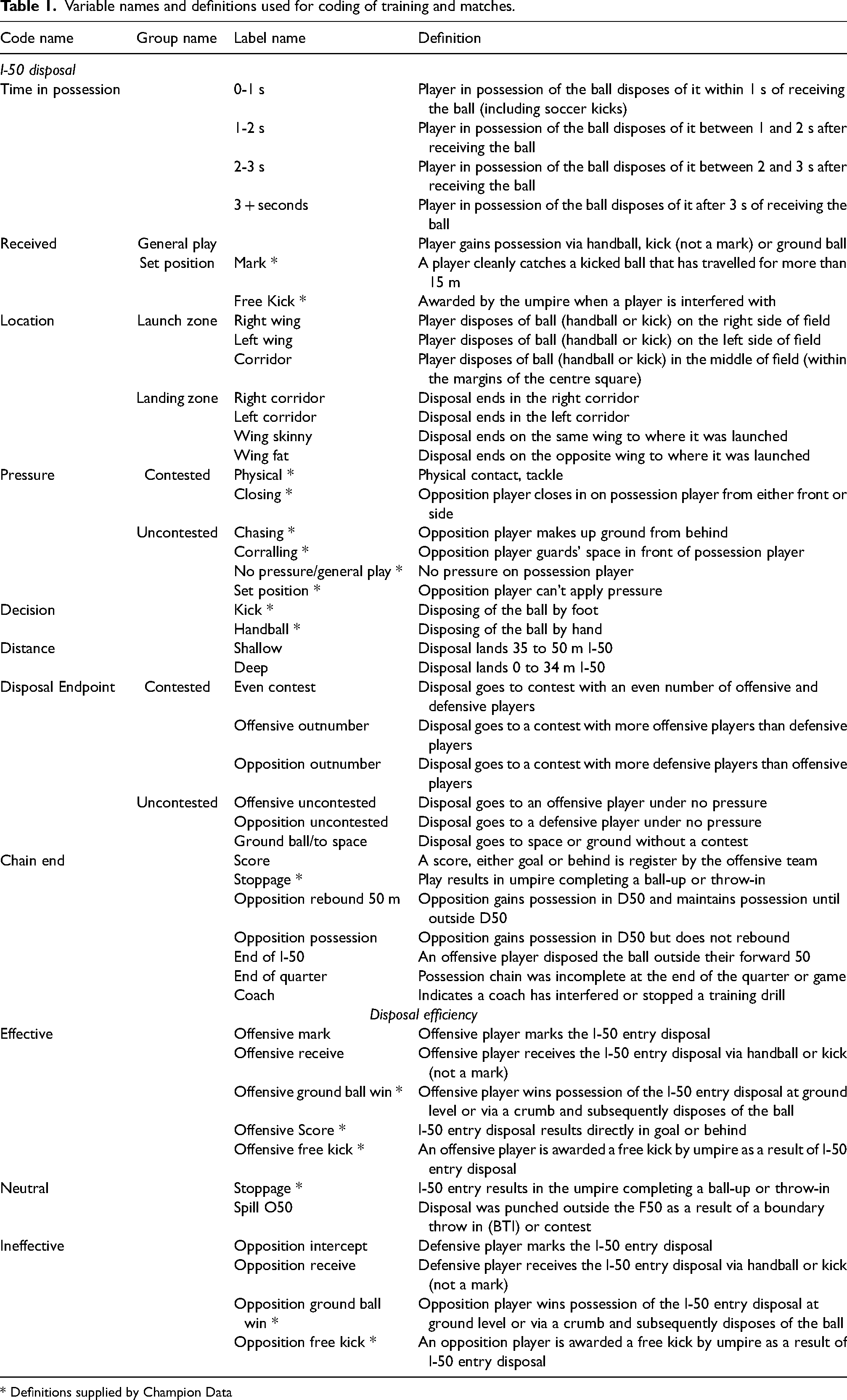
* Definitions supplied by Champion Data
Data analysis
At the completion of coding, data from each training session and match was exported into Microsoft Excel (version 16.16.25, Microsoft) for data processing. Data was checked for errors through sorting and filtering, then all files were incorporated into one spreadsheet. The data were transformed into two datasets, the first comprised the original data, with all variables listed as categorical data. The second dataset was created to account for the different number of sessions (matches = 22, training = 62) and number of entries occurring in matches (n = 1048) and training (n = 736). This dataset standardised the absolute number of entries to the number of occurrences per 60 min to enable comparisons between training and matches. Within the first dataset, some variables were also collapsed for analysis and ease of interpretation. Landing zone variables were condensed into either wing or corridor (see Figure 1), pressure acts were re-categorised as physical, implied (chasing, corralling, and closing), or open (set position and no pressure) and disposal efficiency was also condensed into effective (including neutral) or ineffective.
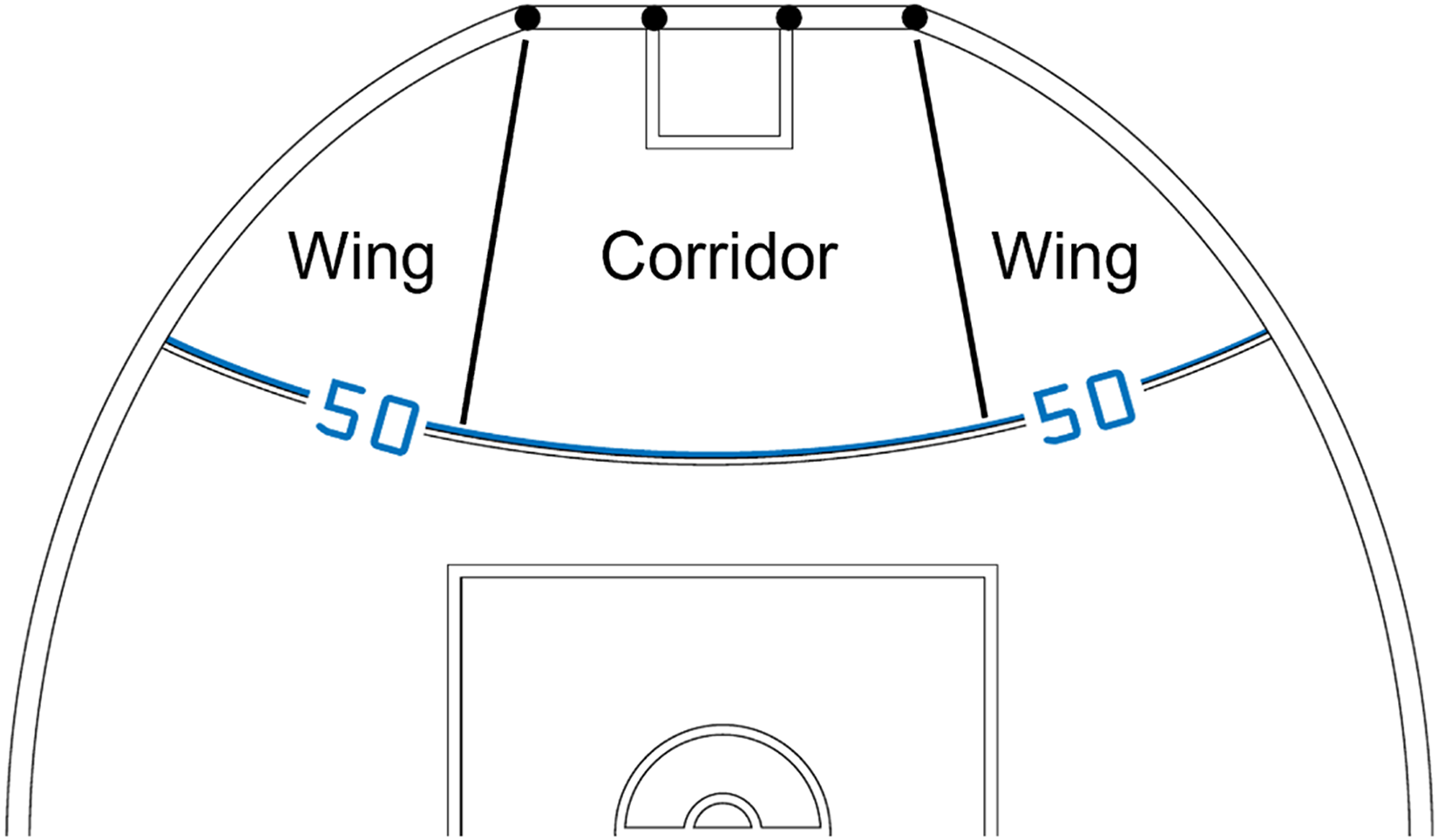
Landing zone variables for inside-50 (I-50) entries.
Statistical analysis
Data was analysed using Statistical Package for Social Science (version 26, IBM Corp, Armonk, NY), Stata Statistical Software (release 16, Stata Corp) and Orange (Orange, version 3.26.0, Bioinformatics Lab, Slovenia). Descriptive statistics (mean ± standard deviation (SD)) were generated for all standardised variables within both session types. Normality of data was assessed using a Shapiro-Wilk test and consequently non-parametric analyses were performed. To examine for differences between training and matches for all variables, Mann Whitney U tests were performed using dataset two (relative values). Effect sizes are reported for the Mann Whitney U tests and are interpreted as follows; r = 0.10–0.30 small, 0.30–0.50 medium and 0.50–1.0 large. 21 To calculate whether the disposal efficiency differed for training and matches, a multivariate analysis of variance (MANOVA) was completed. Alpha was set to p < 0.05 for all analyses unless otherwise stated.
To examine which variables contributed to disposal efficiency, dataset one was used. Chi-Square tests were conducted between each I-50 entry variable and the I-50 outcome (disposal efficiency) to determine any significant associations. As multiple comparisons of disposal efficiency were conducted, a Bonferroni correction was applied to the alpha level of 0.05, therefore the corrected alpha level to achieve significance was set at p < 0.006. Statistically significant variables were then used to complete Decision Tree Modelling to explore which I-50 entry variables contributed to effective disposal outcomes in both training and matches. Disposal efficiency (effective, ineffective) was the target variable and significant variables from the Chi-Square analysis were included as the features. Results of the model were averaged across 10-fold cross-validation and displayed using a tree visualisation and confusion matrix.
Reliability
An intra-rater reliability test was conducted approximately a month after initial data collection using 5% of each of the training (n = 4 sessions) and match (n = 1.5 matches) sessions. The intra-rater reliability tests were conducted for each I-50 entry variable, using Cohen's Kappa. All variables produced Kappa values between 0.83 and 1.0, indicating almost-perfect agreement between trials. 22
Results
Descriptive statistics were generated for all I-50 entry variables and are presented in Table 2. The Mann–Whitney tests revealed a significant difference between training and match characteristics for 34 of the 54 variables (see Figure 2). The number of I-50 entries occurring during training (Mdn = 45.99 per 60 min) were significantly higher than I-50 entries in a match (Mdn = 22.78 per 60 min), U = 265.5, z = −5.82, p < 0.001, r = −0.51. Of the 34 significant variables, 10 I-50 entry variables showed a strong effect size between training sessions and matches. Values were higher in training (than matches) for the number of I-50 entries, entries received via free kick, kick entries, uncontested possessions, effective I-50 entries, and offensive marks. Whilst values were higher in matches (than training) for offensive outnumber in a contest, offensive free kick, spill from the contest outside 50 m and defensive free kick (see Supplemental Table 1 for full statistical output).
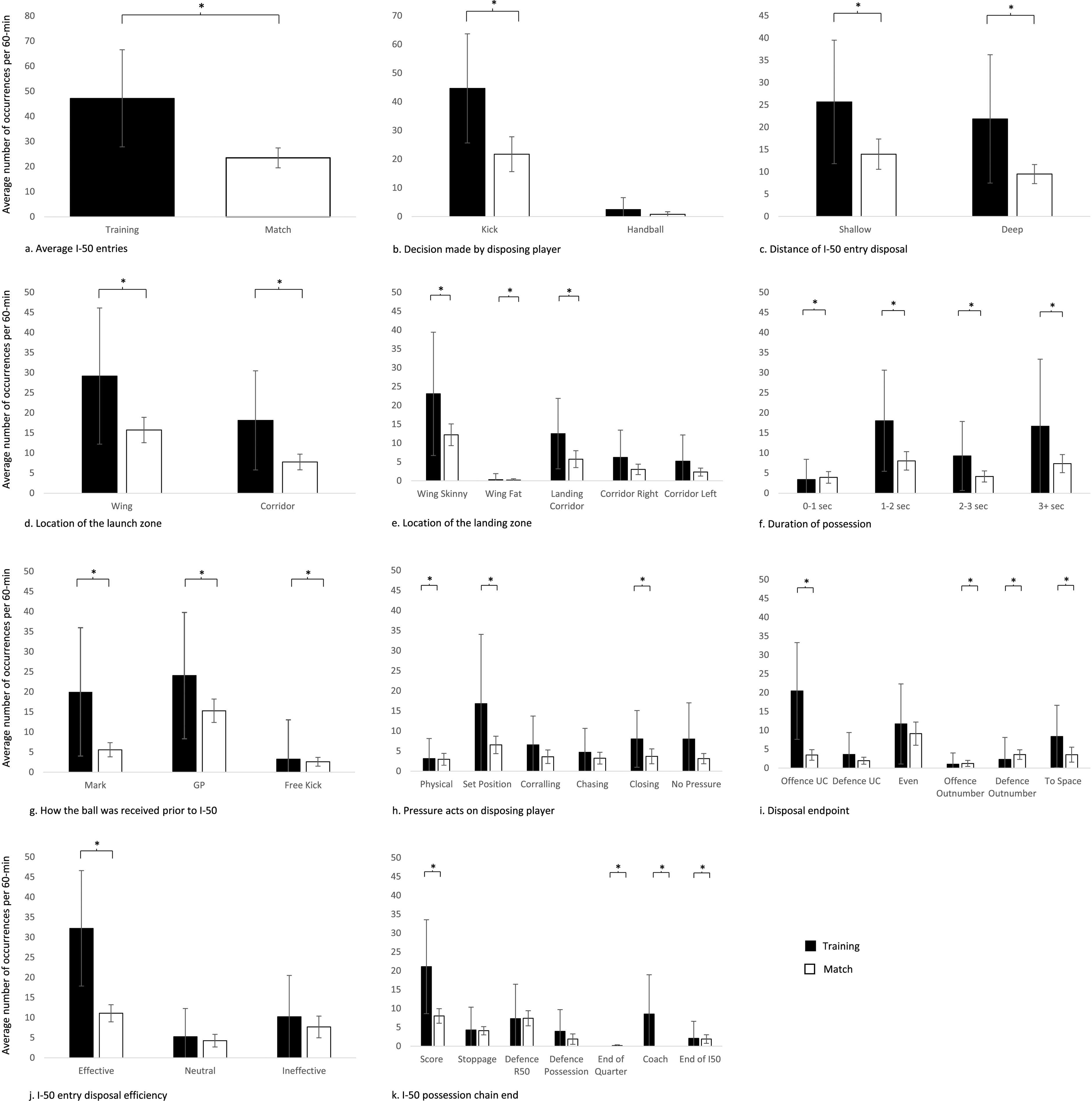
Average number of inside-50 (I-50) entry variable occurrences per 60 min. * = significant at p < 0.05.
Summary table of I-50 entry variables.
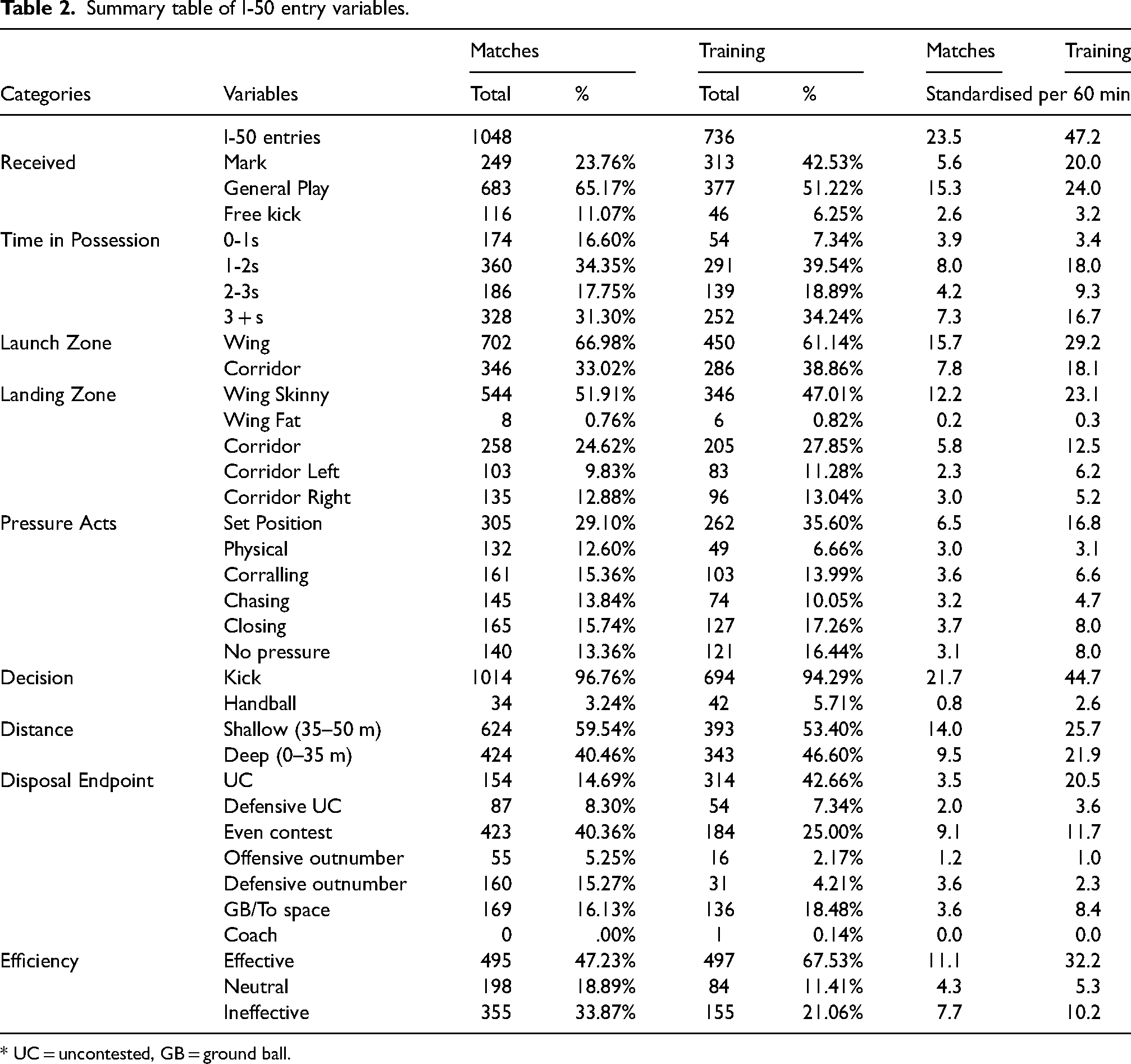
* UC = uncontested, GB = ground ball.
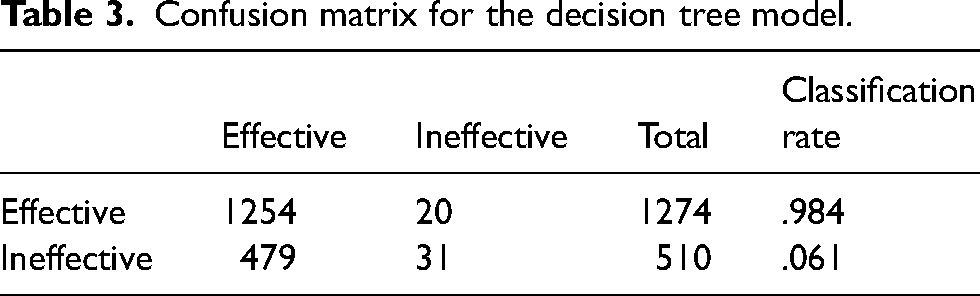
The MANOVA revealed a significant difference between session types, V = 0.27, F (3, 128) = 15.75, p < 0.001. Separate univariate tests revealed that there was a significant difference for effective disposals, F (3, 128) = 8188.56, p < 0.001, but not for neutral or ineffective disposals (p > 0.05). During training, there were a greater number of effective I-50 entries (32.23 ± 14.37 per 60 min) compared to matches (11.09 ± 2.14 per 60 min). However, there were no differences in the number of entries for neutral (training 5.26 ± 7.02 per 60 min, matches 4.26 ± 1.57 per 60 min) and ineffective I-50s (training 10.22 ± 10.3 per 60 min, matches 7.69 ± 2.7 per 60 min). The Chi-Square tests revealed that four of the eight I-50 entry variables were significant, including how the ball was received (X2 = 21.26, p < 0.001), session type (X2 = 34.15, p < 0.001), the decision (X2 = 22.36, p < 0.001) and the pressure (X2 = 14.54, p = 0.001). Landing and launch zone, time in possession and distance were not significant (p > 0.05). The four significant variables were included in the decision tree model. The overall classification accuracy of the decision tree model was reported at 72% with an area under the curve of 62%. The confusion matrix is presented in Table 3. The final decision tree model is presented in Figure 3 and shows that all variables contributed to the model. The most important variable for match disposal outcomes was the decision, with handballs resulting in more effective outcomes than kicks. Comparatively, for training sessions, the most important variable was how the ball was received prior to entry. General play or mark entries were most likely to contribute to an effective outcome, while free kicks were more likely to result in an ineffective outcome irrespective of the pressure applied.
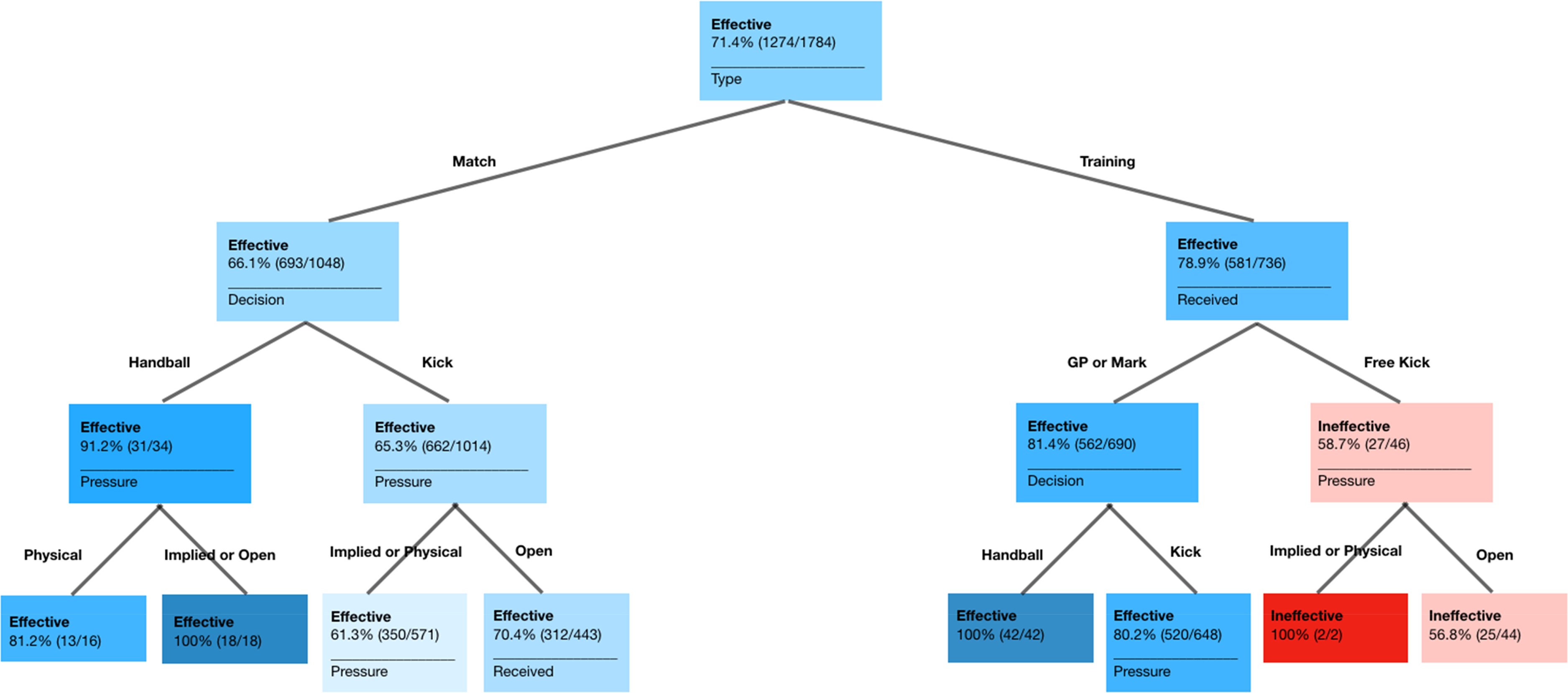
Decision tree model.
Confusion matrix for the decision tree model.
Discussion
This is the first study to determine whether match characteristics of I-50 entries are replicated during training at an elite AF club. Results from this study highlighted that more than half of the I-50 entry variables used for analysis were significantly different between training and matches. When examining I-50 efficiency, only effective disposals were significantly different between session types, with more effective disposals occurring at training, while no differences were identified for neutral and ineffective disposals. The decision type was revealed as the most important variable for match I-50 entries, with handballs leading to more effective outcomes than kicks. Whilst the way in which the ball was received prior to I-50 entry was identified as the most important variable for training entries.
I-50 scenarios occurred more frequently at training than in matches, although, on average, the training drills only lasted 9 min each. Consequently, the majority of the I-50 entry variables occurred much more often in training than they were performed in matches and did not necessarily replicate the same conditions experienced in a match. Future training should aim to replicate the match characteristics of I-50 entries more closely as previous literature suggests transfer of skill is enhanced when training is representative of matches. 9 This may allow for a more productive use of time at training whilst also improving I-50 outcomes in matches, rather than having more relative entries that do not replicate game demands. It is unlikely that the context is the same for each match I-50 entry, therefore, it is important to add an element of unpredictability to the training environment, as would typically occur in a match to help prepare players. A variety of explanations exist explaining the benefits of increasing variability within training including Schmidt's schema theory, 23 elaboration hypothesis, 24 and dynamical systems theory 25 (see Williams & Hodges 26 for an overview).
Previously Ireland et al. 12 examined the replication of match task constraints at training for all disposals in AF. One key finding of this study was that physical pressure on kicks was more prominent in matches. This is contradicted in the present study whereby physical pressure occurred more at training. It is important to note, however, that Ireland et al. 12 analysed disposals across the entire playing area, whereas the current study only collected data on the I-50 entry disposals. Therefore, there is likely a difference in the characteristics of disposals depending on where and under what context they are occurring. Moreover, both Ireland et al. 12 and the current study only analysed one elite-level AR team, and, therefore, the clubs likely used varying practice designs and have different playing styles. Despite the differences observed between the two studies, 8 both reported that many aspects of the training design did not replicate match characteristics. Both studies infer that the theoretical concepts of RLD are not being effectively utilised by coaches as both the frequency of key performance indicators and the context in which they occur are not representative of match-play. This may limit the learning process and transfer of skills from training into a match, leading to poorer match outcomes.1,27
Extensive research has justified using the RLD framework for developing training sessions to improve match outcomes.1,2,7,28 As an example, Miller et al., 29 found that decision-making and support skills in game play improved relative to a control group after athletes undertook a 9-week intervention with an increased focus on activities that represented match play. Despite the support for RLD the findings of the present study indicate that training design is not representative of match outcomes, specifically regarding I-50 practice within this specific AFL team. In examining whether the effectiveness of I-50 entries differed between training and matches it was found that only effective disposal outcomes were significantly different between training and matches, with a much higher number of effective disposals occurring at training. Although achieving effective I-50 entries may be considered a positive training outcome, these performances are not being translated into match-play.
One possible contributor to the high proportion of effective outcomes during GBT activities is the disposal endpoint. Evidence from the current study suggests that in matches, defensive players often outnumber offensive players, whilst in training the opposite is true, with the offensive team having more players at the landing of the ball than the defending team. Coaches should consider increasing the number of defenders in a training activity to replicate match situations. Another potential reason for more effective entries occurring in training compared to matches is whether the I-50 entries are coming from effective chains of possession and/or the result of different defensive structures (e.g., opposition playing styles, number of defensive players relative to offensive players). Further research should look to examine the interaction between different variables and their influence on efficiency as well as different offensive or defensive structures (e.g., zone-based defence or floating defender situations).
Handball entries in matches were far more effective than kick entries, however, there were far fewer handball I-50 entries (matches = 34 and training = 42) than there were kick I-50 entries (matches = 1014 and training = 694). I-50 entry preference in the AFL is towards deep entries (e.g., 0–35 m within their forward 50 m) due to the belief that it provides greater opportunities for forward 50 defensive pressure should a turnover occur. A deep entry also provides a greater opportunity to create repeat I-50 entry opportunities, enabling better defensive structures to be set up by the attacking team behind the ball. As a result, handballs are often not a preferred entry method due to their inability to result in a deep entry and the ease at which the opposition can rebound the ball. Whilst the results suggest that handball entries may be a more successful strategy for achieving effective I-50 entries, it would be necessary to first consider whether these effective entries are being translated into effective I-50 outcomes (e.g., leading to a score). Additionally, the events leading up to and surrounding handball entries need to be considered in relation to the entry itself and when comparing matches to training. It would be important for the coaching staff to understand how effective handball entries are occurring to accurately replicate the scenarios at training.
When designing training sessions, coaching staff need to determine whether being highly effective at training when compared to matches (i.e., achieving a high number of successful I-50 entries), outweighs the potential consequences of not replicating match characteristics (e.g., lack of specific preparation for opposition defensive styles). In addition to the technical and tactical advantages of a match representative training environment, another potential impact is an increase in self-confidence, which may contribute to better performances. 30 The Challenge Point Hypothesis is a framework coaches can use to help design training drills and guide the level of error while maintaining specific desirable outcomes during training.31,32 Hodges and Lohse 32 extend the notion of challenge point and contend that player motivation can be impacted if an activity is too easy or too challenging. Coaches need to try and balance the challenge point of training to ensure learning occurs, whilst keeping motivation for improving high, all while accounting for individual player variations. Given training design that is more representative of match conditions is believed to improve transfer and learning there is a need to balance the representativeness of the environment with producing desirable outcomes (i.e., successful performance) during training to achieve player development.
Within most professional training environments, GBT requires players from the same club to play against each other in opposing teams. Consequently, players clearly know the strengths and weaknesses of their training opponents (who are teammates) and in many cases know how their opponents are trying to move the ball I-50. To increase the representativeness of training and remove some of the knowledge of opposition performance, constraint manipulation by coaches to blind teams to opponent structure and strategy should be implemented. For example, the defensive team could be encouraged to defend like an upcoming opposition, however, the offensive team should be unaware of the specific strategy the defensive team is using. Coaches should assess the strengths and weaknesses of their team and upcoming opposition teams and determine what variables are most important to match outcome. They can then use this information to manipulate specific constraints to increase representativeness in training. For example, knowing that an opposition team may sit defenders back near the goal square, the coach may look to manipulate constraints to increase the number of handball entries that occur shallow into the I-50 area to exploit the opposition defenders for the upcoming week.
The methodology and analysis design used in this study is a novel approach to understand training representativeness and one that other practitioners may wish to consider using. The measure of representativeness can be explored through measures of central tendency as well as frequency counts. There are benefits to using multiple measures to gain a complete understanding of the training design, especially when many variables need to be considered. It is also important to consider both absolute and standardised values given a drill may primarily focus on I-50 entries, whereas matches have no guarantees regarding the regularity of I-50 entries. The use of decision tree analysis also allows practitioners to evaluate the factors which lead to effective (or ineffective) outcomes and evaluate whether it is plausible or sensible to try and increase (or decrease) the occurrence of those factors that lead to positive (or negative) outcomes. This is where the skill of the practitioner (or the art of coaching) can come to the fore to make informed decisions about practicalities of what the data output is suggesting. In future research it would be pertinent to examine the frequency of situations that individual athletes are exposed to. Whilst they may be involved in training activities such as those in the current study, it is unlikely that all athletes will have equal opportunity to perform an I-50 entry.
This study provides novel insight into the GBT requirements of an elite AR club to replicate match characteristics, however, it is important to note the limitations pertaining to the present study. The study investigated one AF club competing in the AFL, which means the findings are dependent on their specific game plans and training design. Additionally, AF is a highly complex sport, where players are required to utilise information from their environment to produce movement, consequently, decision-making processes are an important aspect of performance. It was not feasible to collect data on every factor that influences I-50 entry efficiency and future research should consider other factors, such as whether players are making the best decision in the moment based upon the information available. Nonetheless, this study provides empirical support to help improve practice design.
The current study revealed that training practices used for I-50 entries had significant differences in the match performance of the same key performance indicator. The relative total number of I-50 entries, as well as I-50 entry variables, such as the disposal type and how the ball was received, were significantly higher in training than during matches. Additionally, I-50 entries at training were more effective than during matches, suggesting that the training scenarios were not representative of match conditions. The current study suggests that practice designs of AF teams are unlikely to be representative of match conditions, especially for I-50 entries.
Footnotes
Declaration of conflicting interests
The author(s) declared no potential conflicts of interest with respect to the research, authorship, and/or publication of this article.
Funding
The author(s) received no financial support for the research, authorship, and/or publication of this article.
