



Abstract
Sleep is vital for optimal mental and physical health. For athletes, optimizing sleep is becoming a popular strategy to enhance athletic performance. Athletes often complain of sleep problems including insufficient sleep and insomnia symptoms and are also at a higher risk for sleep disordered breathing. Sleep disorders and insufficient sleep can contribute to excessive sleepiness, daytime dysfunction, and performance problems. In contrast, better sleep provides benefits for physical health and athletic performance. For athletes, multiple factors can contribute to insufficient sleep. Sport-specific factors include frequent travel across time zones, competition and training schedules, high training loads, and sleeping in an unfamiliar environment. Non-sport-related factors include work, social, and family commitments; attitudes and sleeping beliefs; individual characteristics, such as chronotype or preference for morning or evening; and lifestyle choices. Fortunately, there are strategies that can be implemented to improve sleep in athletes including (a) education and emphasis on the importance of sleep; (b) sleep screening; providing extra sleep opportunities like (c) banking sleep and (d) napping; improving sleep hygiene like (e) proper light exposure; (f) a good pre-sleep routine; (g) a conducive sleep environment; (h) a strategy for supplementation; (i) utilizing circadian timing adjustments; and (j) jet lag management. Increased recognition of the importance of sleep from sport professionals and screening for sleep disorders and disturbances will be key for future athlete health, well-being, and performance.
Introduction
Sleep is an important behavior that can be prioritized for athletes to optimize health and performance. While there are recent reviews highlighting different strategies that will assist athletes in improving sleep, the current review provides a brief comprehensive guide that covers each of these subject areas1–5 while also providing actionable recommendations that are missing in other literature. Challenges with sleep may be particularly prevalent in athletes, making improvement of sleep especially topical.
Many elite athletes report daytime sleepiness (28%), poor sleep quality (50–52%), and long sleep onset latency and display risk factors for obstructive sleep apnea (OSA; 38%).6,7 In elite rugby players, 24% had OSA confirmed on a polysomnogram, and 12% had periodic limb movements. 8 The high prevalence of OSA in rugby players may be related to greater body mass index (BMI) and skinfold thickness in sports where physical size is emphasized. 9 Additionally, compared to controls, athletes take longer to fall asleep, spend more time awake, have reduced sleep efficiency, have greater use of sleep medication, and have greater sleep fragmentation.10,11 Athletes are more likely to report a morning chronotype, and those with an evening chronotype report greater dissatisfaction with sleep quality. 11 Considering the lack of flexibility in training schedules based on individual sleep need, athletes may be misaligned with their preferred sleep schedules. The prevalence of sleep complaints in athletes highlights sleep as a key area of concern.
For athletes, both sport-specific factors and non-sport-related factors can contribute to the insufficient sleep this population receives. Non-sport-related factors include work, social, and family commitments, attitudes and beliefs, individual characteristics, and lifestyle choices. 1 However, athletes experience additional factors that contribute to insufficient or poor-quality sleep beyond those present in the general population. These factors include travel fatigue and frequent travel across time zones resulting in jet lag, competition and training schedules which sometimes occur at high altitude (e.g. Mexico City), high training loads, and the necessity of sleeping in an unfamiliar sleeping environment. 1 All these factors combined provide an opportunity for improvement in sleep behaviors that could lead to potential performance benefits.
When considering the role of sleep improvements for athletes, it is important to consider the interaction with circadian factors. Both sleep pressure (Process S) and circadian influences (Process C) interact with each other in sleep regulation and timing of both sleep and wake periods. 12 As time since awakening increases, the need and pressure for sleep increases, but this pressure dissipates over the course of the subsequent sleep period (Process S). This process interacts with the circadian rhythms of the body, which oscillate on an approximately 24-hour cycle and are typically synced with the external environment (Process C). As part of the circadian system, there are three main chronotypes. Morning-type individuals who prefer to go to bed and wake up early, evening-type individuals who prefer to go to bed and wake up late, and intermediate types who prefer bed and wake times in between. Awareness of how circadian factors can impact the athlete is important for obtaining peak performance. In the implementation of the following strategies, it is important to consider the athlete as an individual with sleep challenges that could arise due to an interaction of both sleep and circadian factors.
Strategies to improve sleep in athletes
There are several strategies that can be implemented by coaches or athletes to improve sleep or mitigate the impacts of poor sleep. This review aims to provide a brief comprehensive guide to the strategies that have shown promise in athletes and the general population to improve sleep.
Education
Given the prevalence of myths about sleep, the first step in improving the sleep of athletes is identification and education of the problem. 13 This goal can be achieved through sleep hygiene education for athletes, their teams, and their managers and through additional sleep screening to target vulnerable individuals for further intervention. Even following a brief sleep education workshop, student–athletes increased their sleep knowledge, and half of athletes reported modifying a sleep behavior as a result of the workshop. 14 The most common behavior that was modified was maintaining a more consistent and regular sleep routine. While scoring worse on measures of sleep hygiene after the workshop, the athletes did have reductions in sleepiness and daytime fatigue. This apparent reduction in sleep hygiene measures was theorized to result from increased awareness about sleep hygiene and self-awareness of their own behaviors. Several other programs have shown improvements based on sleep hygiene education in athletes when comparing short pre- to post-intervention periods.15,16 However, these short measurement periods may not be sufficient to understand how long effects last. Another sleep hygiene education program revealed initial successes, with earlier bedtimes, more time in bed, and a greater sleep duration; however, the program failed to lead to sustained changes in sleep behavior at a 1-month follow-up. 17 The short-term improvements after education highlight initial promise, but repeated emphasis on the importance of sleep may be required for more sustained changes in behavior.
Sleep screening for sleep disturbances
It can sometimes be challenging to figure out who has a sleep problem; therefore, sleep screening helps identify those athletes with sleep issues which may require additional intervention beyond education to improve their sleep. For detecting athletes at risk, the frequently implemented Pittsburgh Sleep Quality Index (PSQI) 18 has not been well validated in this population, with overestimation of sleep problems and poor agreement with clinical assessments from a sleep specialist. 19 The Athlete Sleep Screening Questionnaire (ASSQ) has been developed and clinically validated to screen specifically in athletes.19,20 The ASSQ provides a sleep difficulty score which classifies athletes into a clinical category (none, mild, moderate, or severe) and provides specific intervention strategies for different levels of sleep disruption, such as education or referral to a sleep medicine physician. Additionally, it includes recommendations based on individual modifiers, such as travel, risk of sleep apnea, and having an evening chronotype. Using this questionnaire, approximately 25% of athletes are identified as requiring intervention. 20 Given the interventions for diagnosing and treating sleep disorders can be quite intense, it is recommended that sleep screening occurs outside of the competitive season. Once athletes are identified with sleep screening, referral to a sleep specialist who can facilitate proper sleep testing (e.g. polysomnography) for diagnosis is recommended.
Providing extra sleep opportunities
At times, it is not practical to completely avoid periods of poor sleep, but to mitigate the effects of poor sleep on performance, it is necessary to promote additional sleep opportunities.
Banking sleep
Banking sleep can include extending sleep in preparation for insufficient sleep or as recovery after poor sleep. In ultramarathon runners, 55% report trying to increase their sleep to prepare for a race; 21 similarly, 52% of offshore solo sailors employed this strategy pre-race. 22 Sleep extension to 10 hours of sleep over a 3-week period in rugby players improved sleep quality and total sleep time, while also reducing measures of physical stress. 23 As expected, multiple studies have confirmed that attempts to extend sleep leads to increases in total sleep time.24–27 Even in training camps, a single night of extended sleep can result in improved recovery and stress. 28
Besides improvement in sleep, sleep extension can also benefit performance across multiple sports and metrics. After four nights of sleep extension, military tactical athletes had improvements in reaction time, standing jump distance, and motivation. 25 Even after only three nights, it resulted in faster time trials in endurance athletes and lower intensity ratios suggesting less athlete fatigue.27,29 In tennis players, 1 week of 9 hours of sleep a day resulted in an increase in serving accuracy. 26 While in college basketball players, 5–7 weeks of sleep extension resulted in faster sprints, greater shooting accuracy, faster reaction time, and less sleepiness. 24 Overall, banking sleep allows for more sleep and increases in speed and accuracy across sport disciplines, further echoing the value of sufficient sleep duration in athletic performance. Considering that many athletes struggle with falling asleep before competitions due to pre-competition apprehension, banking sleep can mitigate the impacts of one poor night of sleep and ease anxiety about receiving insufficient sleep. 30
Napping
Some athletes may employ napping as a strategy to sleep on demand or to supplement poor nighttime sleep.31,32 There is a wide range in napping frequency reported across studies, with 17–72% of athletes habitually napping.5,33,34 Previous unpublished data has indicated 80% of Canadian National Team athletes (n = 199) were napping less than twice a week. Taken together, these studies highlight an inconsistent use of napping as a strategy to increase sleep.
Napping can have benefits for multiple areas of performance in athletes, including physical and cognitive performance, physical recovery from fatigue and muscle soreness, alertness, and mental health. 5 In a systematic review, Lastella et al. 5 had several recommendations for naps, including limiting duration to 20–90 minutes and keeping the timing between 1:00 and 4:00 p.m. to minimize the negative impact on subsequent sleep quality. Additionally, at least 30 minutes should be provided after the nap opportunity for a reduction in sleep inertia, or grogginess, which could have negative impacts on performance. 5 Long naps (90 minutes) may be particularly beneficial for athletes with poor sleep quality and can have more of a benefit for athletes on measures of executive function. 35
Naps provided on the game day can be beneficial for subsequent performance. In female netball players, a short nap (<20 minutes) on the game day was associated with greater jump velocity and an improvement in subjective performance ratings by their coaches. 36 Karate athletes experienced faster reaction times and improved mental rotation after receiving a 30-minute nap opportunity after a full night of sleep. 37 Faster reaction time was additionally found in partially sleep-deprived judokas alongside greater physical power after a 20-minute recovery nap, with additional improvements in sprinting after a 90-minute nap opportunity. 38 However, not all studies have found improvements in performance after a nap; a study by Petit et al. 39 found that a 20-minute post-lunch nap did not affect physical performance and extended nighttime sleep onset latency. While napping is generally helpful to athletes, consideration of both nap timing and duration is important to maximize positive outcomes.
Improving sleep hygiene: managing evening light exposure, pre-sleep routines, and the sleep environment
No matter what sleep environment the athlete is in (e.g. home or hotel), there are sleep hygiene techniques that can be implemented to achieve better sleep quality.
Managing evening light exposure
Being aware of evening exposure to bright and/or blue light is important for sleep quality as both can suppress melatonin secretion. 40 There are tools that are easy to implement and can protect against the negative impacts of light on melatonin. 41 In athletes, blue light–blocking amber glasses reduced subjective sleep onset latency and improved sleep quality and morning alertness as compared to no treatment. 40 Similarly, a combination of blue light–blocking amber glasses in the evening and light-emitting goggles in the morning reduced self-reported sleep onset latency. 42 In a sample of teenagers, blue light–blocking amber glasses, even with exposure to devices, reduced the suppression of melatonin and made participants less alert before bed. 43 For people with insomnia, wearing blue light–blocking amber glasses for 2 hours before bedtime resulted in greater sleep duration and quality. 44 For glasses, it is also possible to download applications for smartphones that reduce the blue light emission at the source. 45 With evening competitions typically under bright lights, it is challenging to avoid exposure entirely, but strategies to decrease exposure after the competition (e.g. putting on blue light–blocking amber glasses) are beneficial. It is important to note that more daytime light exposure, especially in the morning, can help mitigate the negative impact of light at night. 46 So, for example, an endurance runner who has been training a lot outside may not see a strong benefit for blue light–blocking amber glasses. Relatedly, research has shown that with receiving plenty of external light during the day, an e-reader can be used without impacting subsequent sleep. 47
Pre-sleep routine
Emphasis of a good pre-sleep routine and promoting good sleep hygiene can help with winding down for both naps and nighttime sleep. Managing stress can improve sleep, so techniques to increase relaxation are beneficial. 48 In a study on elite youth athletes, many reported poor sleep hygiene, including pre-sleep behaviors that were stimulating, such as large meals in the evening and using devices before bed. 49
Preparing for the next day and spending 5 minutes writing a specific to-do list for the upcoming days can shorten sleep latency; more specific lists are associated with more rapid sleep onset than journaling about the day's events. 50 This technique can reduce worry before bedtime, making it easier to fall asleep. In contrast, compulsive social media usage, driven by a fear of missing out, can contribute to poor sleep quality and longer sleep latency. 51 Athletes report frequent usage of electronic devices in the last 30 minutes before sleep and report subsequent difficulty in falling asleep, 52 but not all studies have found that using electronics in the 2 hours before bed impacts subsequent sleep quality in athletes. 53 Consequently, disengagement from social media usage and electronic devices can be important in falling asleep and getting good quality sleep. A better alternative is to exchange an electronic device for a paper book. Reading before bed has been associated with better sleep quality. 54 When compared to completing puzzles, reading before bed is associated with greater sleepiness in athletes. 53 When done on a tablet, reading was associated with more melatonin secretion than puzzles, supporting a role for being a sleep-inducing bedtime activity in athletes.
Another technique that can be included in a bedtime routine is a warm bath or shower within 2 hours before sleep. Warm baths can improve sleep quality, sleep efficiency, and shorten sleep latency. 55 Warm water increases blood flow to the hands and feet, where heat can easily escape from the body, which results in a decline in body temperature. 55 In preindustrial societies, timing of sleep onset is dictated by declines in temperature instead of darkness, with sleep typically occurring several hours after sunset and ending before sunrise. 56 This natural sleep timing with decreases in temperature can be simulated by cooling off after a bath and can naturally promote sleep. As expected, heat maintained throughout sleep can lead to worse sleep quality, so more research is needed to determine if this effect is maintained in hot climates. 57
Stretching in the evening can improve symptoms of insomnia, reduce sleep onset latency and wake after sleep onset, and increase sleep quality, sleep efficiency, and sleep duration. 58 For athletes who experience leg cramps during the night, stretching of the hamstrings and calves immediately before bed can improve symptoms which will improve subsequent sleep. 59 For stretching, deep and slow breathing can facilitate the onset of sleep, including after a night awakening when combined with other sleep hygiene techniques. 60 Deep breathing can assist with relaxation through interactions with the autonomic nervous system.60,61 Following a 30-minute breathing exercise before bed, increases in delta power during stage 3 sleep have been recorded. 62
When lying in bed, to assist with falling asleep, additional strategies, such as the cognitive shuffle, can prevent insomnia. The cognitive shuffle is an engaging cognitive task where one thinks about a neutral target and switches between topics. An example of this could be thinking of a word (e.g. bedtime) and imagining objects that start with each letter of that word. Using this strategy can interfere with worry and thinking that can perpetuate insomnia. 63 The use of the 4-7-8 breathing technique, where one inhales for 4 seconds, holds for 7 seconds, and exhales for 8 seconds, might also provide benefits and can reduce anxiety. 64 While all these strategies can prepare the body and the mind for sleep, managing the sleep environment also plays a role in achieving good quality sleep.
Sleep environment
Overall, the aim for the sleep environment is for it to be cave-like by being dark, cool, and quiet. Approximately half of homes have lights that are of sufficient brightness to reduce melatonin secretion by half. 65 Also, higher exposure to neighborhood artificial light at night (ALAN) has been associated with a greater tendency to report short sleep and later bedtimes, particularly in low-income areas. 66 Greater artificial light can reduce sleep duration by an average of 12 minutes while also increasing reported sleep difficulties. 67 Affecting the overall length of sleep, light exposure between 5 and 10 lux during sleep can increase time spent awake after sleep onset, time spent in stage 1 sleep, and time spent in rapid eye movement (REM) sleep but reduce time spent in stage 2. 68 Additionally, sleeping exposed to 10 lux light affects brain activity during subsequent working memory tasks. 69 Even sleeping with a bedside light on can affect the structure of sleep, including reduced slow wave sleep, greater arousals, and alterations to electroencephalography (EEG) oscillations. 70 Thus, it is important to prevent light in the sleeping environment, by turning off lights, covering light sources, and implementing blackout curtains to prevent intrusion of outside light.
The next component of the cave-like sleep environment is temperature. As already discussed, cold temperature is associated with sleep in preindustrial societies. 56 Even in individuals with undiagnosed sleep apnea, sleep duration and efficiency were better when sleeping at 16°C than 20°C and 24°C, although the apnea hypopnea index (AHI) did tend to be worse at the cooler temperatures. 71 In fact, insomnia symptoms can also increase when temperature gets too warm (>20°C) or too cold (<5°C), as evidenced by increases in prescription of sleeping pills at those ambient temperatures. 72 This evidence places an ideal sleeping temperature between 16 and 20°C. Ideally, the sleep environment will also be as quiet as possible, including minimizing environmental noise such as road noise. 73 High environmental noise areas can be associated with later bedtimes, and greater amounts of road noise can reduce sleep duration by 18 minutes and increase reported sleep difficulties.67,74 Reduction in noise can lead to increases in the amount of deep sleep, 75 and ear plugs are a useful technique to reduce the impacts of noise and to improve the perception of sleep. 76 If ear plugs are not available, the use of white noise can reduce wake after sleep onset and sleep latency in high environmental noise environments. 77
In summary, there are multiple tools that can improve sleep hygiene, including managing evening light exposure and promoting a good pre-sleep routine and a sleep-conducive environment. Reducing social media or blue light–emitting device usage, promoting a relaxing routine before sleep, and creating a “cave-like” sleep environment could improve athlete sleep hygiene and benefit sleep. When traveling and experiencing jet lag, these tools can be particularly useful for assisting in the shift in circadian rhythms, particularly through managing light exposure.
Utilizing circadian timing adjustment strategies
Managing jet lag
For numerous elite athletes, managing performance while jet-lagged is common. Jet lag occurs when there is a desynchrony between internal circadian rhythms and the external environment after traveling across multiple time zones.1,78 Jet lag is separate from the travel fatigue due to spending time traveling, and both factors can influence athletes. Research on travel fatigue mitigation is currently lacking in athletes, but allowing time for recovery is important. 78 Traveling across time zones to compete at a high level requires a rapid shift in circadian rhythms to be able to maintain peak levels of performance, but resynchronization only occurs at a rate of 1 hour a day for easterly travel and 2 hours a day for westerly travel. 78 For performance, disruption can be seen in other biological systems, including blood pressure, cortisol, melatonin, body temperature, and grip strength, for several days after travel. 79 Travel can lead to large disruptions in sleep patterns, with western travel leading to difficulty waking up too early and eastern travel leading to difficulty initiating sleep. 80 Whenever possible, athletes should optimize their travel schedules to facilitate their circadian shift; for example, if flying east, they should have early morning flights. 78 For very short trips, maintaining the home rhythm is recommended, based on a potential greater disruption for attempts to shift and for the avoidance of jet lag when returning home. 80 For longer trips, best results will occur if there are attempts to shift circadian rhythms and banking of sleep before the onset of travel. 81
Synchronization to a new time zone can be facilitated by being aware of several factors used by the circadian system as cues, including light and meal timing. An athlete should shift their sleep schedule to adjust to the new time zone. When traveling west, light should be avoided in the morning and sought in the evening to promote a delay in circadian rhythms, while an advance when traveling east requires morning light exposure and avoidance in the evening. 80 Managing natural light exposure can be difficult during travel, but artificial light can be substituted. In Olympic swimmers, providing exposure to bright light for 30–45 minutes in the evening before travel shifted their sleep and wake cycles, allowing them to compete in the late evening when they would normally be preparing for sleep. 82 Combined with blue light–blocking amber glasses after their evening training sessions, athletes had improved reaction times in the morning compared to pre-therapy. Also, consideration of meal timing promotes the desired circadian shift in non-athletes. 83 However, it seems that meal timing shifts peripheral clocks, as evidenced by shifts in plasma glucose with variations in meal timing but not markers of the master clock. 84 Shifting meals, therefore, helps reduce gastrointestinal distress, one of the main symptoms of jet lag. If performance is immediately required, napping can increase attention in jet-lagged athletes. 85 Supplementation with melatonin is also a tool that can shift the circadian rhythm when experiencing circadian misalignment.
Melatonin is a naturally occurring hormone released from the pineal gland with a strong circadian rhythm, and its high nighttime concentrations can be suppressed by light. 86 Typically, supplemental melatonin should be taken in the evening of the new time zone, a couple of hours before the desired onset of sleep. 86 Previous research has suggested that the combination of melatonin supplementation, management of light exposure, and exercise can be effective in shifting the circadian clock. 87 For example, a team of soccer players flying west ingested melatonin at their destination bedtime upon leaving their home country and had scheduled periods of outdoor exercise at their destination. These efforts reduced the time zone adjustment to 2 days for a 12-hour shift. After sleep deprivation, melatonin may be beneficial for improving balance and decreasing reaction time. 88 For eastward travel, melatonin should be taken in the evening and taken in the early morning for westward travel. 78 However, in well-rested participants, melatonin can negatively impact cognitive performance if taken during waking hours. 86 Thus, timing, previous sleep, and dosage of melatonin should be considered carefully for the individual, as there are individual differences in response. 89
Maximizing chronotype and time of day
Alongside adjusting circadian rhythms during travel, synchrony with circadian rhythms can be maximized on the home court. Time of day seems important for performance, with best performance generally occurring between 16:30 and 19:00, particularly for aerobic activity and individuals of intermediate chronotype. 90 For example, the fastest Olympic swim times occurred around 5 p.m. 91 Time of day can play such a strong role that differences in performance are greater than the time difference between gold and silver nearly half the time, between silver and bronze, or bronze and no medal more than half the time in Olympic swimming. Consideration of training schedules and the chronotypes of individual athletes becomes important when preparing for scheduled competitions, particularly those where athletes may be on different circadian rhythms. 92
Chronotypes are important to understanding an individual's best schedule for performance. As expected, those with a morning chronotype have their best performance in the late morning, intermediate types in the afternoon, and evening types in the evening. 93 Unsurprisingly, athletes at the elite level tend to select sports with schedules more aligned with their chronotype. 94 Requiring peak performance at times of day opposite to one's chronotype may result in poor performance. For instance, individuals with an evening chronotype can have reduced vigilance, cognitive performance, and grip strength when required to perform in the morning, alongside greater amounts of sleepiness and reduced sleep satisfaction. 11 For individuals with an evening type, there is greater variation in performance based on time of day than morning and intermediate types. 93 Part of this variability is explained by controlling for the time since waking, but for evening types, there are additional factors involved, such as hormones. Considering the variability in performance in evening chronotypes, it is unsurprising that more elite athletes tend to be morning types than seen in the general population. 11
As much as possible, it is beneficial to adjust training schedules to align with an athlete's chronotype, and due to the likelihood of multiple chronotypes on one team, opting to avoid early morning training will allow for better alertness and performance for evening types. In the instance when a competition or training time is out of alignment with an athlete's chronotype, strategic light can be incorporated. For example, an evening chronotype can get light therapy in the morning with blue light–blocking glasses at night in the days approaching a morning competition, whereas a morning chronotype can block light in the morning with blue light–blocking glasses and get bright light in the evening in the days approaching an evening competition. Future research should assess whether applying these interventions would better align circadian rhythm peak performance time with competition time.
Caffeine use and supplementation
Caffeine use is frequently seen in athletes to improve performance. 95 However, it is important to consider how caffeine usage can impact subsequent sleep quality. For instance, although triathletes had better exercise performance with caffeine, they also had increased sleep onset latency and lower REM sleep, sleep efficiency, and sleep duration. 95 The timing of caffeine consumption can also play a role with research in super rugby players demonstrating that post-evening game caffeine concentrations were greater than pre-game levels in 85% of the athletes. In this study, athletes went to bed on average 3 hours later, slept 1.5 hours less, and had an increase in sleep latency and lower sleep efficiency, and 20% of the athletes studied did not report going to sleep at all after an evening game. 96 Given the time it takes to recover from that level of sleep deprivation, it could be argued that these athletes may have benefitted more without caffeine consumption. Additionally, caffeine may not always improve performance and additionally be associated with poor sleep outcomes. In total, 4 mg/kg of body mass of caffeine can improve endurance cycling times but actually reduced performance by 14% in those that had slow caffeine metabolism compared to placebo. 97 A study on trained runners found no effect on 800 m sprint performance when consuming caffeine compared to placebo; however, caffeine was associated with poor sleep efficiency, more time spent awake, and more awakenings that night. 98
To benefit sleep, there are other substances that can be used by athletes, including magnesium and tart cherry juice. Magnesium supplementation is associated with a reduced likelihood of falling asleep during the daytime in women and may reduce sleep latency and insomnia symptoms while increasing sleep time and sleep efficiency in older adults with insomnia.99–102 Magnesium supplementation, paired with melatonin and vitamin B, has also shown promise as a treatment for insomnia.
103
While the mechanisms underlying the effect of magnesium are under investigation, a deficiency in magnesium can be associated with dysregulation of the sleep cycle based on its impact on neurotransmitters, such as N-methyl-
Conclusions
While there has been a recent surge in studies on sleep in athletes, there is a need for more rigorous studies on the use of specific sleep improvement strategies in athletes. For instance, as highlighted by a recent systematic review, 83 this issue is prevalent in studies of jet lag, where studies are difficult to conduct in real-world scenarios, and factors like light exposure are difficult to control. With many lifestyle factors present influencing the quality of sleep, long-term monitoring in studies and more personalized sleep recommendations may be needed. Also, health professionals are faced with barriers to implementation of sleep strategies for athletes. For instance, there may be limited flexibility in selection of training, or game times, and personalization of schedules for individual athletes may not be practical. There is also a cultural component surrounding the time of some activities or sports, such as early-morning swim times due to pool availability or late-night practices. Based on chronotype, this schedule may not maximize the performance of all athletes in training or competition. Other barriers include the need for many high-level athletes to travel for competition, but these instances of unavoidable poor sleep can be partially mitigated by adopting the strategies outlined. A continued emphasis on the importance of sleep and assistance in planning for travel can help the athletes maintain a focus on prioritizing their sleep health. However, for maximum benefits on the individual athlete, personalization of schedules and sleep recommendations is necessary where possible.
Athletes are a population that may be uniquely impacted by poor sleep and sleep complaints, based on frequent travel and other sport-related factors. To improve sleep in athletes, there are strategies that can be applied to help players get back on the field well rested and ready to play.
The following are the top 10 practical recommendations to improve sleep in athletes (see Figure 1):
Educate athletes on the importance of sleep and how it affects performance on a frequent basis. There are many sleep myths (e.g. polyphasic sleeping), and it is important for athletes to understand the true basics of sleep. One session may not be enough, as research has shown beneficial changes in sleep after a sleep education session, but the effect was not maintained 1 month later. Frequent check-ins on sleep and linking benefits with performance should help facilitate positive sleep behavior change that can be maintained. Sleep screen athletes for clinically relevant sleep disturbances. Previous research reports clinically relevant sleep disturbances in 25% of athletes, where intervention from a sleep medicine professional is required. It is important to use questionnaires validated in athletes (e.g. ASSQ) to accurately identify these individuals. Since intervention may require further sleep testing and treatment, sleep screening should occur during a time that is least disruptive to the athlete such as pre- or post-season. Bank sleep prior to important competitions and travel. Getting more sleep can improve reaction time, sprint times, and even sport-specific skills. Aside from these benefits, it can ease anxiety the night before the competition if the athlete does not sleep well because they have “banked” sleep in advance. The amount of time to bank sleep has varied in the literature, from a single day to weeks. Provide nap opportunities for athletes and schedule naps like it is a part of the training schedule. Napping can provide physical and cognitive benefits and help recovery from high training loads, yet not many athletes are taking advantage of this strategy. Limiting nap duration to 20–90 minutes and timing the nap between 1 and 4 p.m. are advised to lessen impact on nighttime sleep. Athletes should leave at least 30 minutes after a nap for grogginess to dissipate. Scheduling in naps as part of the training schedule can emphasize the importance and promote napping habits. Reduce evening light exposure. Exposure to bright light, especially blue light within 2 hours before bedtime, can suppress melatonin, delay circadian rhythms, and decrease sleep quality. Wearing blue light–blocking amber glasses can preserve melatonin and improve sleep quality. Dimming overhead lights, transitioning to amber colors of light at night, and using blue light–reducing applications on electronic devices can reduce arousal and improve sleep quality. Implement a good pre-sleep routine about an hour before bedtime. It is not just light exposure from electronic devices that is problematic but also stimulating content from the device. Putting away electronic devices and substituting with relaxing activities can prepare the mind and body for sleep. Taking a warm bath or shower, writing a to-do list, reading a paper book, stretching, and breathing techniques are supported by research to reduce the time to fall asleep and improve sleep quality. Strive to keep the sleep environment like a cave—dark, cool, and quiet. Nearly 50% of homes have lights in the evening bright enough to reduce melatonin secretion by half. Turn off lights in the bedroom, cover light sources, use blackout curtains and blinds, and wear an eye mask to prevent the intrusion of light at night. Keep the temperature cool, when possible, at around 16–20°C. Reduce environmental noise, preferably with ear plugs and if not possible, potentially with a white noise machine. Optimize timing of training to align with circadian rhythms. Athletes who are evening types have more sleep disturbances likely due to delayed melatonin release and less or poorer quality sleep if there is early-morning training. Research has shown benefits of later training times resulting in more sleep and better performance. Whenever possible, schedule training times after late morning to allow plenty of opportunity for sleep. Utilize strategies for jet lag and travel fatigue. If feasible, shift schedules in the 3 days prior to departure in preparation for travel.
For travel west. Adjust sleep later (e.g. wake up later and go to bed later), get light later (e.g. block light in the morning and seek light in the evening), potentially use melatonin in the early morning, and shift meals later. For travel east. Adjust sleep earlier (e.g. wake up early and go to bed early), get light early (e.g. seek light in the morning and block light in the evening), potentially use melatonin in the evening, and shift meals earlier.
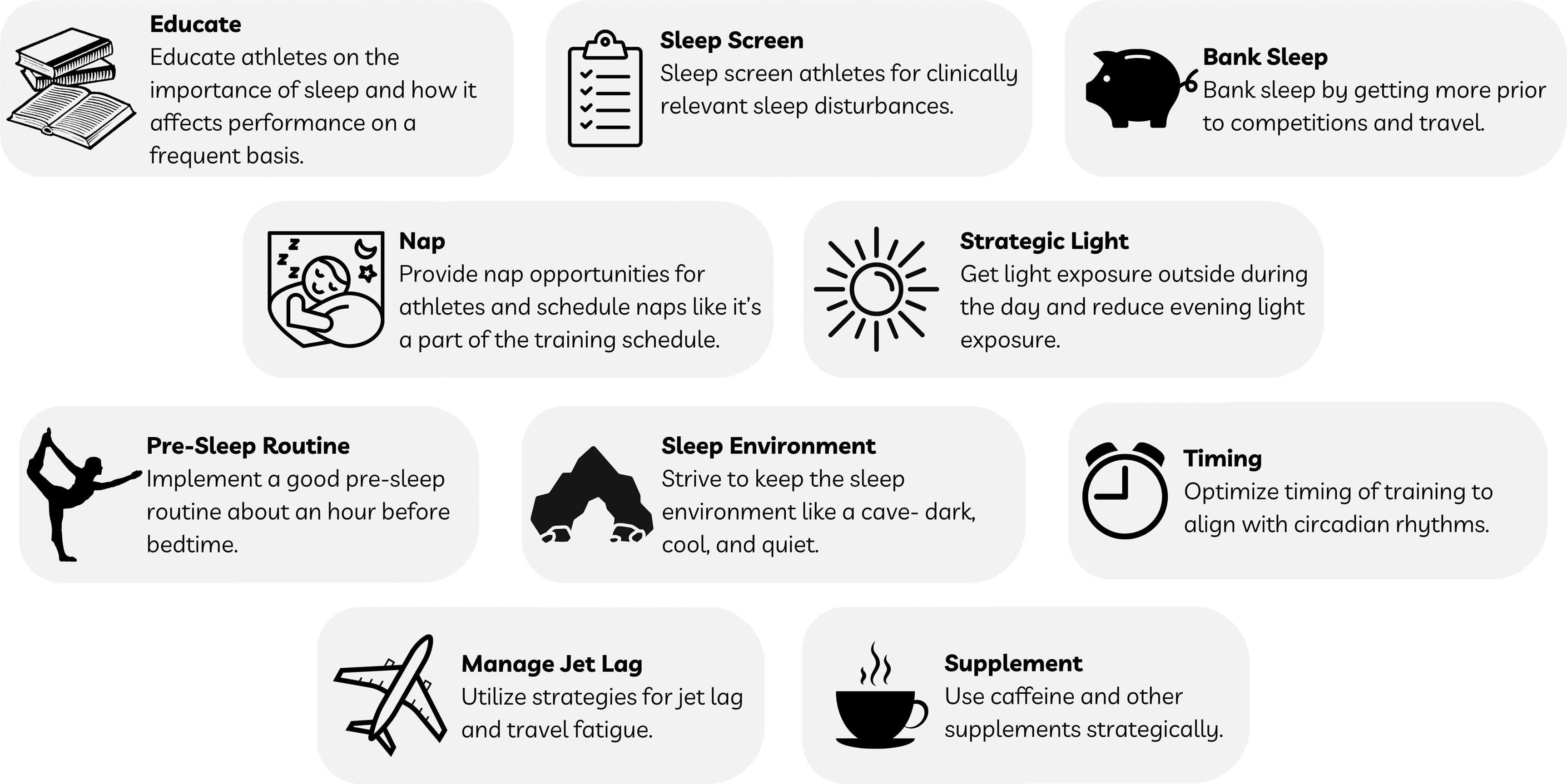
Infographic of the top 10 practical recommendations to improve sleep in athletes.
If shifting pre-trip is not feasible, follow this advice at the destination but base it on your internal time.
10. Use caffeine and other supplements strategically. Caffeine is widely used, so many athletes use caffeine during evening training and competition without considering the consequences on subsequent sleep quality. Instead of using caffeine automatically, it should be used strategically, considering an athlete's individual metabolism of caffeine and the time to recover from poor sleep if another competition is upcoming. Magnesium and tart cherry juice supplementation can improve sleep quality, especially in instances where athletes are deficient (e.g. magnesium).
Future directions
While sleep in athletes has been identified as a key area of improvement for sleep health and performance, more research is needed to produce lasting sleep changes. The strategies outlined could become more specific with additional research to better inform personalized sleep improvement plans for a particular team or athlete. Understanding the psychology of behavior change in athletes and how to maximize adherence to sleep improvement strategies is important. For example, sleep education programs have demonstrated short-term improvements, but the timing and frequency of information needed to produce lasting behavioral change have not yet been investigated. Additionally, understanding the timing and frequency of sleep screening during the season to be most effective at diagnosing and intervening in sleep problems is currently uninvestigated.
There has been substantial research into sleep hygiene for the public, but there is a need for more research in athletes that can inform more athlete-specific recommendations. This need is particularly the case for supplements, to understand best practices for adding supplements to an athlete's regime. Trials should also be completed on the impact of adjusting training schedules to an individual's chronotype and shifting circadian rhythms to align with competition times. Finally, exactly how each of these above strategies covered in this review translate to actual changes in performance across different sports needs to be addressed in future research.
Footnotes
Authors’ Contributions
AB was responsible for initial conceptualization, outline of content, and revisions of original manuscript and provided the practical recommendations. KL wrote the original draft of the manuscript and completed revisions of the original manuscript. All authors read and approved the final manuscript.
Declaration of Conflicting Interests
The author(s) declared the following potential conflicts of interest with respect to the research, authorship, and/or publication of this article: Amy Bender is a member of the Scientific Advisory Board of Gainful Nutrition, has presented at conferences and received honoraria from Gatorade Performance Partner, and is an employee of Absolute Rest, but none of those conflicts are relevant to the content of this article. Kari Lambing is an employee of Cerebra, but that is not relevant to the content of this article.
Funding
The author(s) disclosed receipt of the following financial support for the research, authorship, and/or publication of this article: This article is based on a presentation by Amy Bender to the GSSI Expert Panel in October 2021. Funding for attendance at that meeting together with an honorarium for preparation of this article was provided by the GSSI. No other sources of funding were used to assist in the preparation of this article.
