



Abstract
The game of cricket is played at various times of the day and no studies have investigated the time of day effects on perceptual, physical and performance measures of cricketers. Therefore, the purpose of this study was to focus on adolescent fast bowlers and their responses when bowling at different times of the day. First team, adolescent male fast bowlers (N = 5, Mean age 17.00 ± 0.55 years; stature 185.2 ± 6.5 cm and mass 86.06 ± 17.56 kg) were required to complete a fast-bowling simulation protocol whereby perceptual, physical and bowling-specific performance measures were tested at three different times of day (10:30, 14:30, 18:30). Over all the spells over one was significantly slower than all the other overs. There were no significant changes in bowling speed between the time intervals. However, there was a large increase in bowling speed at 14:30 compared to 10:30 (ES – 1.25) and a moderate increase in bowling speed (ES = 0.67) between 10:30 and 18:30. There was no significant change in accuracy at the different time intervals although it was best at 10:30 followed by 18:30 although the latter had a greater variance. In conclusion, this investigation found time of day did not significantly impact the responses, but the effects sizes show that bowling accuracy was worst at 14:30 despite the other parameters, such as speed of delivery, being best at this time, which may suggest a speed-accuracy trade-off. Additionally, both 10:30 and 18:30 were found to be times conducive to bowling performance with regards to accuracy.
Introduction
There is limited research investigating the physical demands of cricket and, in particular, the various factors that influence bowling success, 1 particularly in adolescent cricketers.2,3 Of the research that has been done, it is clear that fast bowlers are placed under the greatest physical workload compared to other cricketing disciplines.2,4 Match format can affect the demands and movement patterns of cricket players, with limited over cricket placing the greatest demands on individuals.2,4,5 Furthermore, in terms of playing disciplines, fast bowlers are placed under the greatest workload in all formats.2,4 Specifically, they cover 20–80% greater total distance than other cricketing disciplines, sprint 1.4–8 times more frequently while experiencing 35% less recovery time between high intensity efforts. They also cover 1.8 to 7-fold greater distance during high intensity movements. 4 Additionally, fast bowlers also perceive the greatest workload during limited over cricket matches. 1 In terms of bowling performance, there are a number of components that need to be considered (for success) including accuracy, ball release speed, lateral deviation, length bowled and bowling action. From a performance/success aspect, bowling speed and accuracy are important for fast bowlers who are required to limit run rates and take wickets. 6 Bowling accuracy refers to where the ball passes in relation to the batter's stumps during each delivery. 7
Bowling can be impacted by physical and perceptual stressors, making these factors important to consider.1,8 One factor that could impact bowling success is the effect of time of day. Cricket games comprise different formats, and each of these start at different times of the day.2,4,5 This may lead to diurnal variation in performance as certain times of day may not ‘match’ the athlete's internal biological rhythm which could impact their performance; a phenomenon which has been shown in other sports.9–12 As cricketers have the potential to experience diurnal variation in their performance, an understanding of circadian rhythmicity in performance is important, which is yet to be investigated. This understanding is important when considering the scheduling of training and matches particularly in a school setting which comprise academics, cultural and sporting activities. Elite and sub-elite players can often train/practice at any time of the day.
This circadian rhythmicity is the product of the circadian clocks’ interaction with changes in the external environment. The body's circadian clock runs an approximately 24-h circadian rhythm in humans that has been shown to affect physiological, behavioural, and performance functions at different times of the day.12,13 Thus, playing cricket at different times of the day through the different formats could lead to a change in cricket performance. School-level cricket practices and matches must be integrated into the school programme and are usually scheduled for the afternoon, which could affect cricket performance based on how a cricketer's circadian rhythmicity affects their physiological, behavioural and performance functions at this time of day. Games are often played on a Saturday as a one-day game or day night game and so include playing at all times of the day.
Broader literature has found that time of day impacts sporting performance and is influenced by factors such as habitual training time,14,15 circadian rhythm,11,16–18 and various other factors. Because many components of sports performance fluctuate with time of day, examining circadian rhythms in performance parameters is a useful way of measuring when different performance components may peak.11–13,19 Components such as flexibility, muscle strength, speed and power for instance have been found to fluctuate with time of day11,17 all of which are components required in bowling performance whether during the run-up or actual ball release. Generally, a peak in performance has been found in the late afternoon and early evening period (16:00–20:00), coinciding with the time close to body temperature reaching its daily maximum in sports such as soccer, swimming, tennis and cycling.10,11,20–24 Post-lunch dips in variables such as muscle strength have also been noted in some studies but not all.11,25,26 For instance, it has been shown that although short-term maximal performance varied with time of day, no time of day effect on muscle fatigue was observed, which plays a large role in performance variation and can affect when an athlete may peak. 12
One mediating factor that may play a role is chronotype which can result in interindividual differences in circadian rhythmicity and consequently performance.9,14,16 Certain individuals present extreme chronotypes where their performance and behaviour show an inclination to morningness or eveningness.16,27 They experience peaks and troughs in accordance with their own circadian physiological markers as opposed to environmental triggers, and so may experience peaks in performance at different times of the day.16,27 Best performance times have been found to differ significantly between chronotypes.14,16,28 Perceptions of effort are also impacted with a study on cyclists showing that morning-type cyclists reported higher ratings of perceived effort during evening cycling sessions compared to morning and afternoon sessions. 29
It is evident that circadian rhythm affects performance, responses and perceptions of effort and examining whether there is a link between time of day and bowling performance in adolescent cricketers is important. It may assist in providing strategies to improve performance and optimise training. Thus, the purpose of this study was to determine whether there were any time of day effects on the perceptual, physical and performance measures of adolescent fast bowlers. Adolescents were chosen as they have a more regulated training/practice schedule and as there is limited research on this sample.
Method
Experimental design and protocol
The study was designed to assess the impact of different times of day on selected perceptual, physical and performance measures in adolescent fast bowlers. Players completed a fast bowling protocol at 10:30, 14:30 and 18:30 to imitate the one-day match format of international day and day/night matches, which also take place at school level. All five bowlers completed the bowling protocol at each different time and thus all players completed all conditions. Players were allocated to one of three groups (of ‘testing order’) as they signed up for the study, and testing conditions were permutated by different times, in different orders, to reduce the learning or order effect.
Bowling protocol
A four over bowling spell (standard 163 g cricket ball used) was completed by two bowlers per session, rotating over by over. The protocol (eight overs in total, four overs bowled by each bowler), took approximately 15–17 min to complete. Players were requested to maintain their most natural bowling technique during bowling spells and were given three to five days rest between testing sessions, for recovery purposes. They were required to bowl four overs, with ‘recovery’ between each ball (approximately 40 s) as they walked back to their run-up mark, and between overs (1 min20 s) as the second bowler bowled. 30 Additionally, a four over bowling spell was decided on to allow the bowlers to become familiar with the task, and the bowlers were aware of the length of the bowling spell they would bowl. A run-up length of 15–30 m could control for interindividual variability in run-up distance. They then bowled their four overs with the recovery of 40 s between each ball and 1 min20 s between each over. Perceptual, physical and performance measures were reported before, during and after the bowling protocol. Perceptual measures included ratings of perceived exertion using Borgs 10-point scale. 7 The physical measures used were overhead medicine ball throw (weight: 2 kg) and standing broad jump distance. Ball release speed (SR3600™ Sports Radar Gun) and accuracy were used to assess bowling performance. The accuracy of the radar gun is dependent on the location of both the radar gun and the ball itself – in this case the radar gun was placed behind the bowler's stumps to ensure the angle at which it pointed was in line with the direction the ball was travelling and that it was the same for each player. 7 An accuracy board developed by Portus et al. for right handed batters, was used to measure bowling accuracy (Figure 1). 7 Three different scoring zones (100, 50 and 25) were marked in white borders on the black fabric sheet. Balls passing in line with the middle stump to just outside (25 cm) off stump were classified as landing in the maximum scoring zone (100 points). Fifty and 25 points were awarded to deliveries based on their impact point on the target, with 25 points being given to deliveries furthest away from the stumps in the target area. Deliveries that did not hit the target or black sheet received 0 points. Deliveries impacting the target on a line between 2 zones were awarded points from the higher score zone. There were no batters used during the bowling spell as we needed to see where the ball passed in line with the scoring zones on the accuracy board.
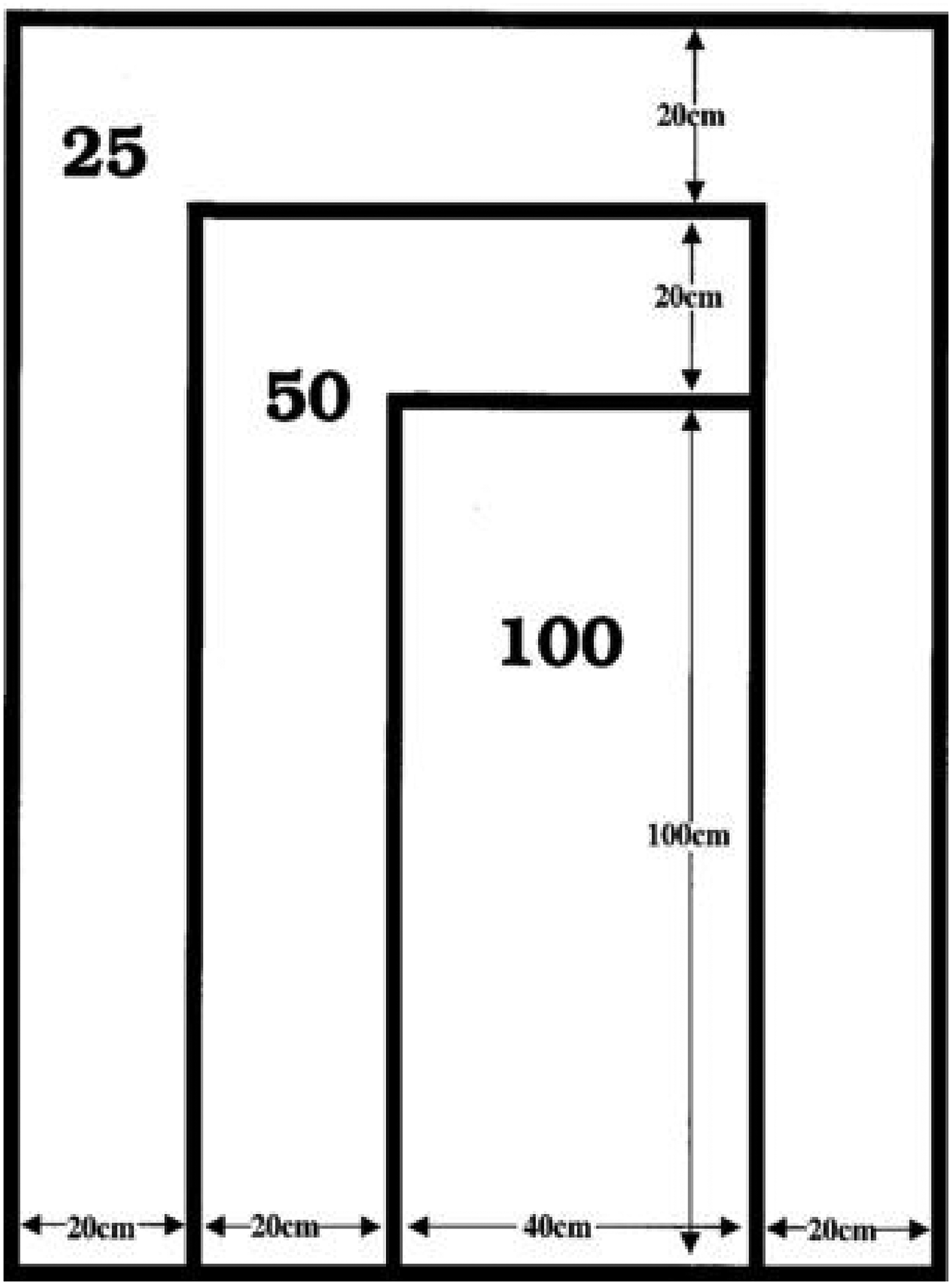
Dimensions and scoring zones of the performance accuracy target. 7
Testing took place over a 2 to 3 -week pre-season period leading up to a school cricket tour. This was to ensure all players were conditioned for the fast bowling spells.
Testing environment
Testing was conducted in outdoor cricket nets at a local school in Grahamstown (Makhanda), South Africa. The grass surface allowed for an accurate representation of the cricket pitches on which the bowlers would be expected to play. However, factors such as light and weather, and in particular, ambient temperature, could not be controlled for and could subsequently have affected bowling performance.
Players
A sample of convenience was used as there was only one cricket team training at the time of testing. The players were recruited from an independent school in Grahamstown (Makhanda), South Africa. The sample comprised of five first team, adolescent male fast bowlers (mean age 17.00 ± 0.55 years; stature 185.2 ± 6.5 cm and mass 86.06 ± 17.56 kg) who were all right-handed. Ethical approval was obtained from the Department of Human Kinetics and Ergonomics and Rhodes University ethical committees (HKE-2018-04). All participants were informed of the risks and benefits of participating; and informed consent and player assent were obtained from the participants prior to the study, and from parents/legal guardians of those under the age of 18 years.
Procedure
The first phase of the experimental procedure involved an introduction and habituation session. Individual chronotypes were assessed at this session using the Morningness and Eveningness Questionnaire (MEQ). 31 The participants were also familiarised with the purpose of the research, the equipment that would be used, the bowling protocol and the various perceptual, physical and performance measures, as well as the potential risks and benefits associated with participation. Consent and assent were also obtained during this session. Additionally, this session was used to collect anthropometric and demographic data. Ball release speeds were measured, following a standardised warm-up selected by the bowlers’ coach, to ensure all participants were able to bowl above 100 km.h−1 (players were excluded if this speed was not reached). The original bowling speed selected was 130 km.h−1 but the players varied between 100 and 115 km.h−1 during the habituation session. Therefore, 100 km.h−1 was chosen as the delivery speed above which bowlers were classified as ‘fast bowlers’ in this sample, by the coach who has the highest Cricket South Africa coaching accreditation, level three, and has coached the first team at the school for seven years. It was not stated whether the ball should hit the pitch or not although most deliveries did hit the pitch. This must be considered a limitation of the study.
For the three testing times, prior to the arrival of each participant, the testing area and assessment parameters were set up. This included stumps being placed at both ends of the pitch, a measuring tape and medicine ball being laid on flat ground for the standing broad jump and medicine ball stations. The best positioning of the sports radar gun was determined to be on a tripod, about 0.5–1 m behind the bowler's stumps, and the accuracy board was tied up behind the batter's stumps. The scale for ratings of perceived exertion was kept accessible to be shown to the bowlers following the protocol.
During a data collection period, participants were required, on arrival, to perform a cricket specific warm-up, completed to reduce the risk of injury during the protocol. This warm-up was designed by the coach and included a variety of static and dynamic stretches and movements, and approximately two or three practice run-ups and deliveries without a ball. Following the warm-up, upper and lower body power was measured through the standing broad jump and overhead medicine ball throw (as the pre-bowling spell measure). Participants were then asked to mark a run-up between 15–30 m, with which they felt most comfortable, and would maintain throughout the protocol. On completion of these tasks, the protocol commenced.
Each testing session facilitated the testing of two participants. They alternated over by over, allowing for recovery of a period of an over between overs. At the beginning and end of each bowling spell players did the standing broad jump and the medicine ball throw. The bowling performance measures were recorded as each ball was delivered. The bowlers were not given any speed or accuracy scores during their spell. On completion of the bowling spell bowlers were given the opportunity to perform a cool-down. Session RPE was taken 20–30 min after the bowling spell.
Statistical analyses
All descriptive statistics were shown as means ± SD unless stated otherwise. R i386 3.5.1 and RStudio software were used to analyse measures. A Shapiro-Wilk test tested for normality. Repeated measures analyses of variances (ANOVA) explored the mean differences (for each dependent variable) at 10:30, 14:30 and 18:30. Tukey pairwise post hoc comparison tests were used to investigate the impact of time of day. The significance threshold was set at 0.05. Cohen's d effect sizes (ES) were used to establish the magnitude of difference in bowling performance at different times of day. The categories used to interpret effect size were <0.2 trivial, 0.2–0.6 small, 0.6–1.2 moderate, 1.2–2.0 large, and >2.0 very large (Hopkins, 2004).
Results
Performance parameters across time of day
Bowling speed
There was no significant change in bowling speed across the three time conditions. However, there was a large (ES = 1.25) increase in bowling speed at 14:30 compared to 10:30 (Figure 2) and a moderately (ES = 0.67) faster bowling speed at 14:30 compared to 18:30. The change in effect between 10:30 and 18:30 was small (ES = 0.39). The greatest variance was observed during the evening session (6.6 km.h−1).
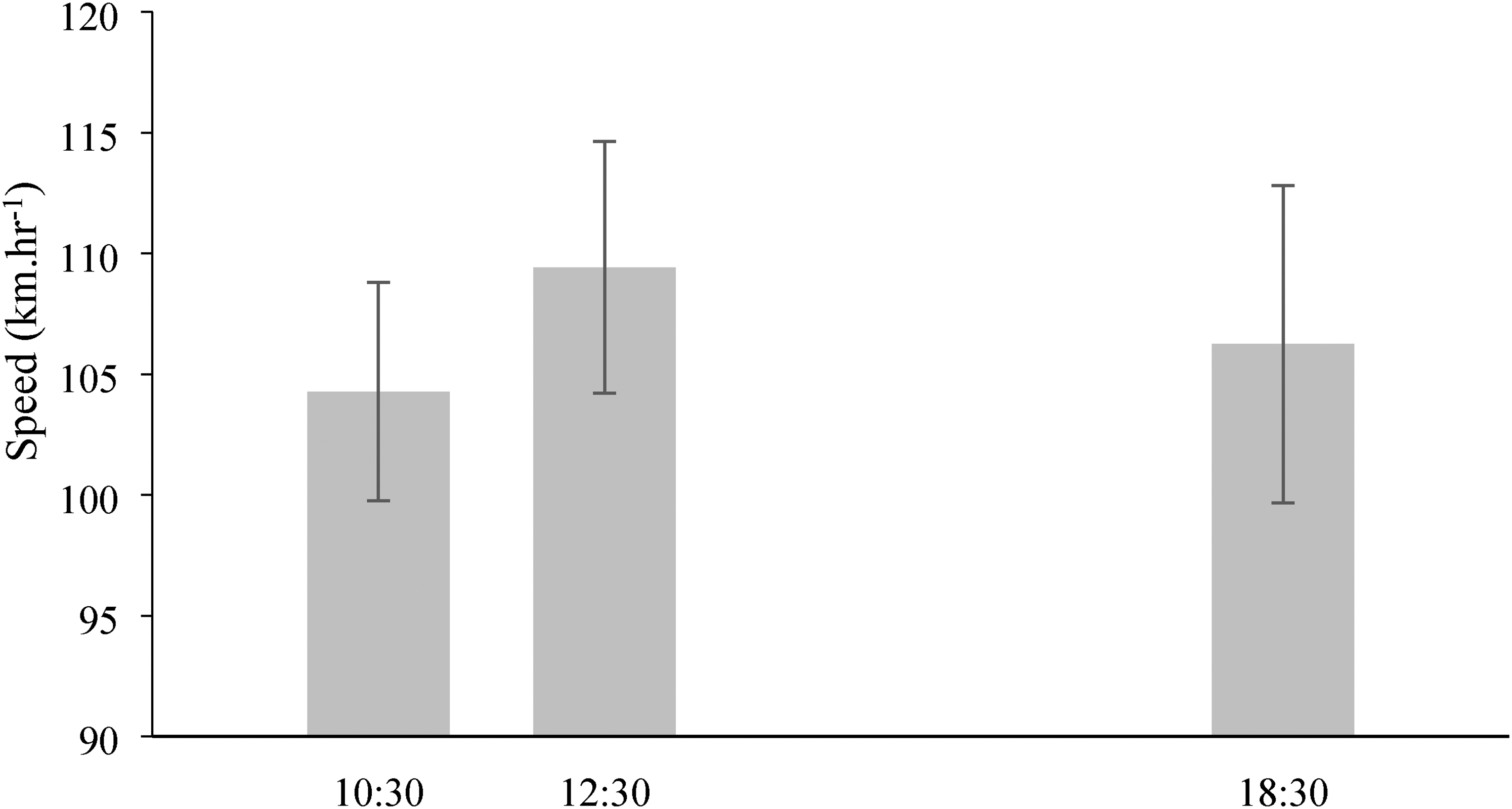
Mean (±SD) bowling speed for the three times of day.
There was a significant effect of overs bowled where bowling speed increased during the four over spell (p < 0.01). Posthoc analyses revealed that bowling speed was significantly slower during over one compared to all other overs (Figure 3). All other time effects were similar.
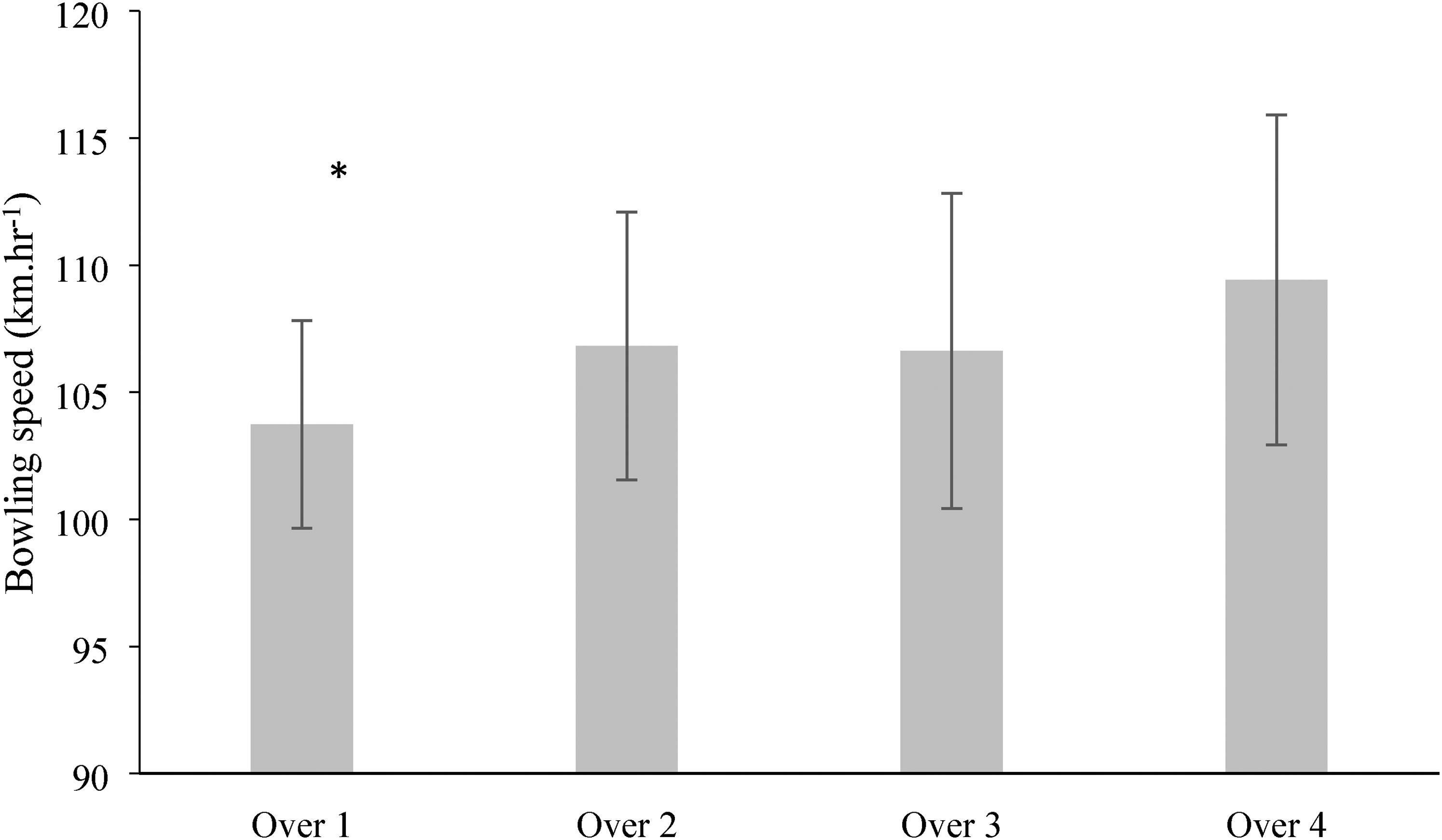
Mean (±SD) bowling speed over the four over spell (* refers to significant difference between over one and all other overs).
Bowling accuracy
Accuracy of delivery remained similar at all three times of day with small effects (Figure 4). The worst score (49.9) was observed at 14:30 and the best at 18:30 (59.9). The greatest variance was seen at 18:30 (SD ± 18.7).
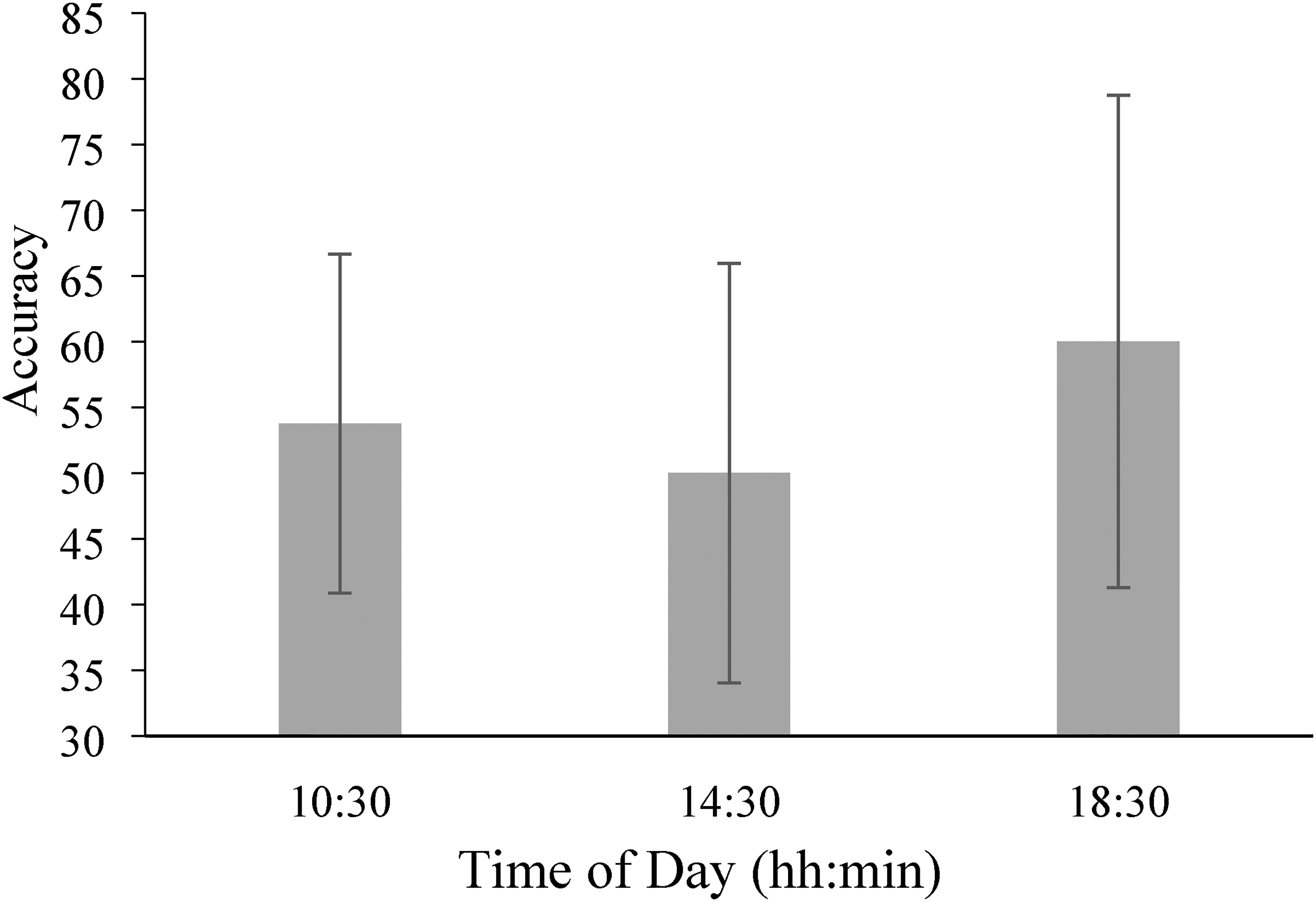
Mean (±SD) bowling accuracy for the three times of day.
Physical parameters
There were no significant changes in standing broad jump measures across different times (Figure 5). However, at 14:30 there was a large increase in jump distance post-protocol compared to before the protocol (ES = 1.57).
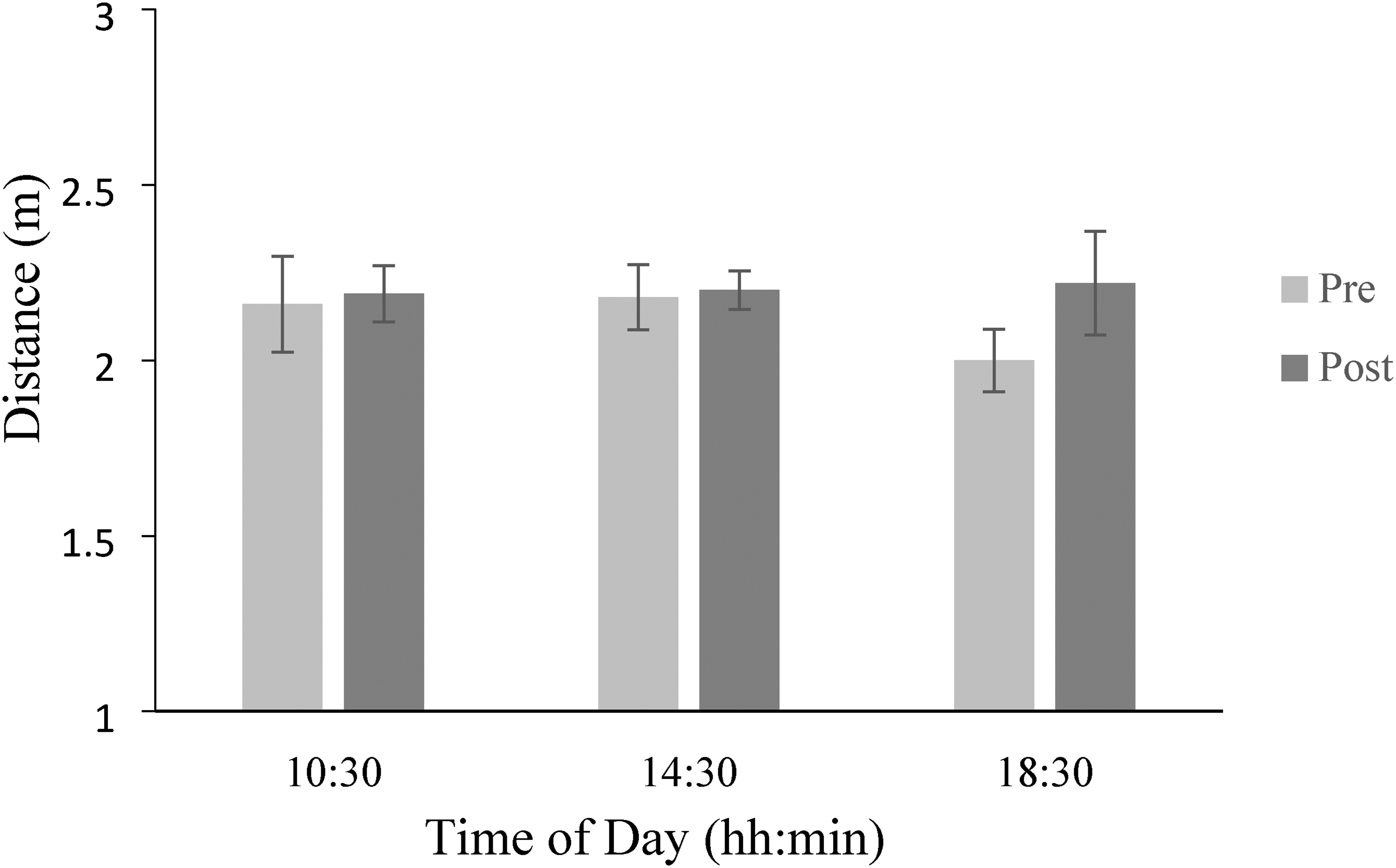
Mean (±SD) standing broad jump measures pre- and post- bowling spells.
Overhead medicine ball throw was not significantly different (p = 0.146) pre- and post-the bowling spell or at different times of day with small effects (Figure 6).
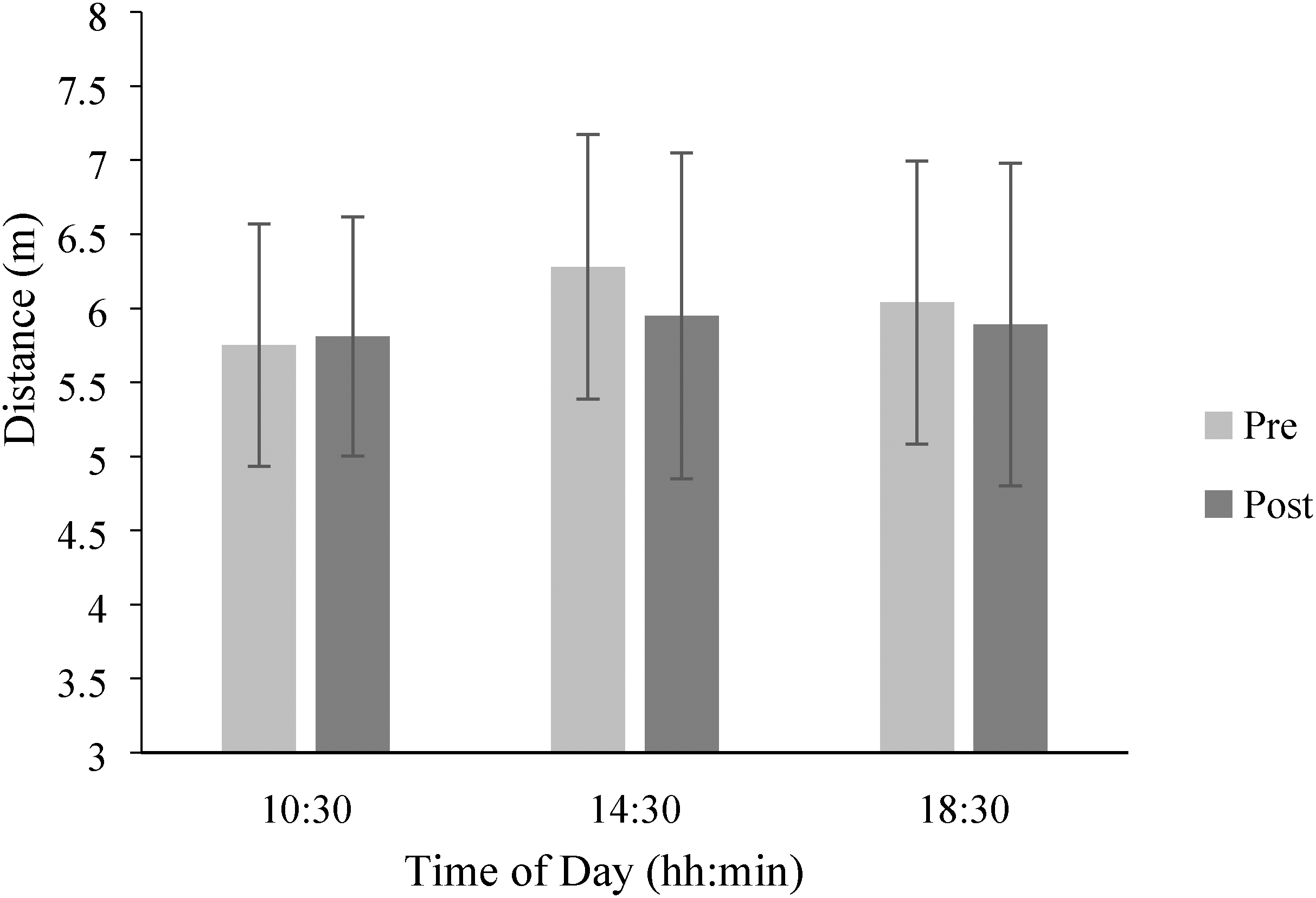
Mean (±SD) overhead medicine ball measures pre- and post- bowling spells.
Perceptual measures
There were no significant changes in session ratings of perceived exertion 20–30 min after the bowling spell, at the three different times of day with small effects (Figure 7).
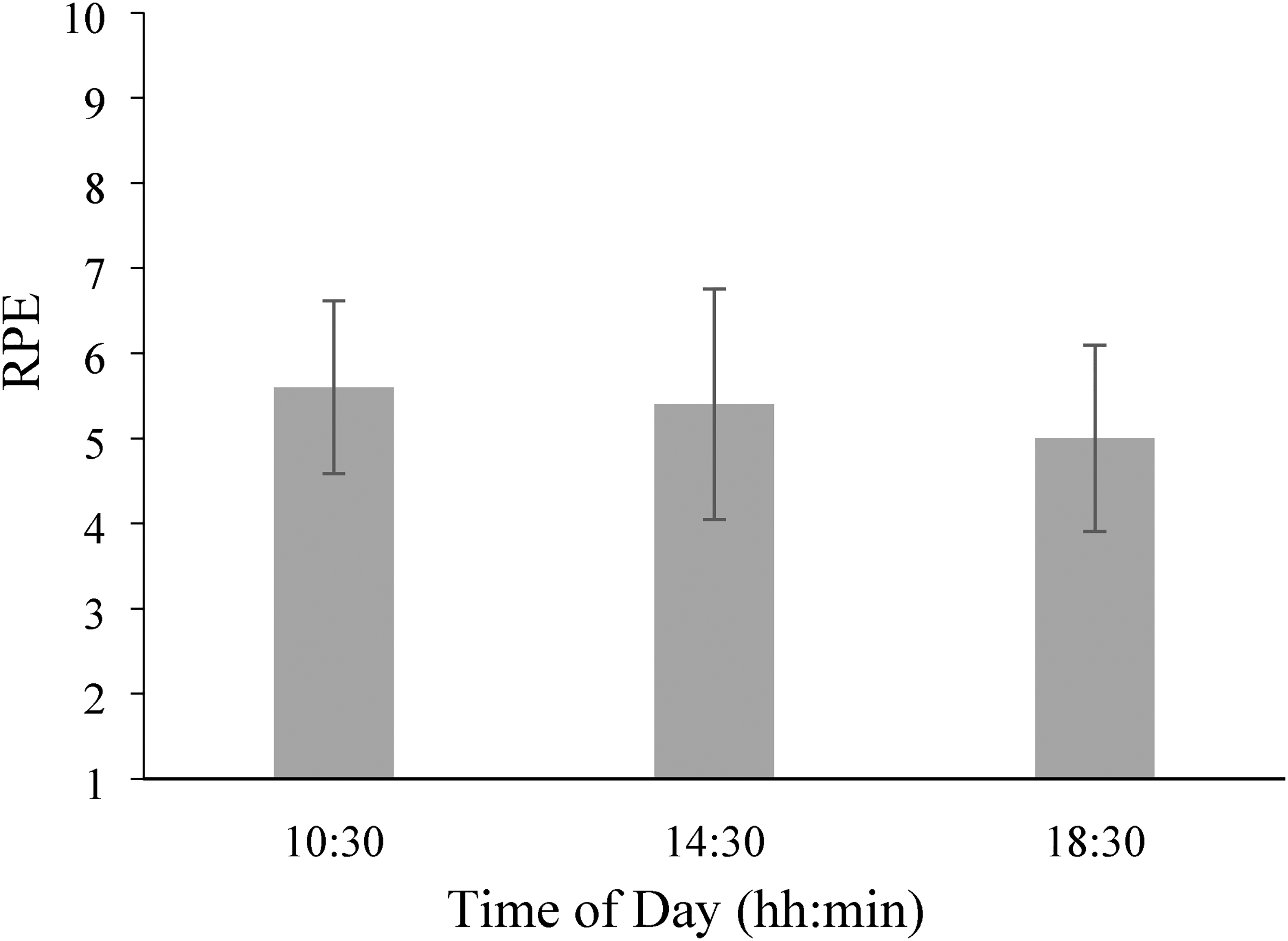
Mean (±SD) session ratings of perceived exertion following the bowling spell.
Discussion
This is the first study to show that bowling accuracy is less successful in the afternoon compared to the morning or evening, indicating potential diurnal variation in a small adolescent sample. This corresponds with findings of diurnal variation in other sports such as soccer (Reilly 2009), 23 swimming 24 and cycling.10,11,15,17,32 It is a combination of high ball release speeds and accuracy that limit the batter's run rate and increases the chance of wicket-taking. It is therefore interesting that there was a speed-accuracy trade off at 14:30 where the compromised accuracy was offset by faster bowler speeds (which increased across overs as the bowling spell progressed). However, further studies are needed to determine the importance of the speed/accuracy trade-off and how this impacts bowling performance particularly as a limitation of this study was a small sample size. Further studies need to look at other levels and times of play as well as other formats. A study done on tennis players found similar findings where accuracy of serve was better, but serve speed lower, in the morning, relative to other times of day 20 so this is worth exploring further in a cricketing context. From this study it can be tentatively suggested that fast bowling speed is best at 14:30 while accuracy is best at 18:30. However, it is important to acknowledge that there was also the greatest variance in bowling speed and accuracy at 18:30 and the accuracy effect was small. Future studies on larger, diverse samples within different contexts are needed.
There are various reasons possibly underlying the trade-off between delivery speed and accuracy at certain times of day. The increase in speed at 14:30 could be due to familiarity with training at that time. Habitual training time has been shown to be an important predictor of performance.14,15 Usual start time for training for this cohort is between 14:30 and 15:30 coinciding with the afternoon testing time, and thus potentially increasing the familiarity of performing at this time. Higher level players may be able to train/practice at different times of the day and the impact this has on adaptation to training and practice would be important to investigate further. Additionally, by 14:30 the players would have experienced a passive warm-up effect of the day, in part because of ambient temperature, and with the afternoon session occurring further from their entrained waking time than the morning session. This has previously been shown to be a reliable predictor of performance. 16 The participants were all found to be ‘neither type’ chronotype with previous findings showing that performance peaks mid to late afternoon for this chronotype. 16 The occurrence of a learning effect may provide another reason as to why speed was fastest at 14:30. This is a potential contributing factor as at a school level the team is likely to train at a similar time each day, and the afternoon session is often when sports practice is scheduled, following the academic school day. Although the bowlers will have been aware of the testing protocol and the presence of the radar gun measuring speed of delivery in all sessions, these factors in combination with others occurring specifically at 14:30, discussed above, could have added to the faster speeds being bowled at this time. However, this is unlikely due to the permutation and randomisation of conditions. These reasons also constitute possible masking factors; making it difficult to distinguish whether this change was mediated by an interaction between the circadian rhythm and time of day, or by these factors.9,33 Accuracy did not reflect a learning effect and was worst in the afternoon, possibly indicating a post-lunch dip, which has been shown more broadly.11,17,25 This dip occurring mid-afternoon is superimposed only on some variables and in some individuals, which is perhaps why the decrement was seen in accuracy and not speed (or any other variables). 25 These results suggest the circadian effect was greater than the learning effect for accuracy of delivery, because even though the bowlers train at 14:30, their bowling accuracy was still worst at that time. Although the changes in accuracy were small, they can be a ‘game changer’ in a cricket game. Any slight swing or deviation of the ball can affect how a batter responds to the delivery and can decrease the efficiency with which they hit the ball or increase the chance of a wicket being taken. An old ball usually used in training sessions was used for testing which creates a limitation as it may have affected swing and accuracy. A further masking factor was environmental factors, for example a strong side wind may have affected swing of the ball possibly affecting performance (particularly accuracy) at the different testing times, which presents a limitation. Due to testing taking place outside, it was difficult to control for these factors, making them confounding variables. However, this testing environment did increase the ecological validity in that the bowlers would usually perform in an outdoor environment, exposed to these factors.
There could be a psychomotor mechanism playing a role in the fact that the worst accuracy scores were measured in the afternoon. An impairment in psychomotor performance may coincide with the post-lunch dip, and as a result, possibly affect aspects of performance. It has been reported in cognitive literature more broadly that there is diurnal variation in speed and accuracy of psychomotor performance. 33 Linked to this could be time awake; so, where accuracy was better in the morning there is the possibility that this was linked to reduced time awake and higher levels of alertness than compared to the afternoon or evening. 16 However, this needs to be investigated further within a cricketing context to show whether this is true or not. Certain psychomotor processes are particularly vulnerable to diurnal variation through an interaction between time of day and the internal circadian rhythm. 34 Cognitive components such as strategic thinking, attention and memory are necessary for bowling performance and linked to psychomotor performance. Time of day effects on psychomotor performance would be an imperative direction for further research.
Although there were diurnal variations in performance, these were not driven by physical or perceptual changes as these measures remained unchanged. Unchanged perceptions at different times of day may be due to the familiarity of playing cricket at all times of the day. In terms of the unchanged upper and lower body power, this contradicts other studies which have observed diurnal variations in physical performance (such as power), with peaks in the late afternoon/early evening.10,11,21–23 Diurnal variations are dependent on the nature and requirements of the specific sport. 35 These results emphasise the importance of context when examining time of day, in this case, adolescent cricketers. Further, bowling is more complex, and additional measures of performance are probably needed and, in particular, a coach's own evaluation of their players’ performance. The importance of understanding the impact of these results on adolescent (school-level) bowlers is related to the practical implications for scheduling training and matches. Training and matches must be integrated into the school programme, so they are expected to perform at times that may not be conducive to safe or optimal performance based on their internal biological clock.10,11,32 This presents a limitation in that perhaps the tests are not cricket-specific enough and other tests may need to be used to best measure power relative to cricket.
There are practical considerations when interpreting the findings. School level cricket is different to professional cricket where cricketers at the professional level can focus on themselves and the game and train at various times of the day. With school children, cricket must fit into a full school day. This may explain why their performance was better in the morning and early evening. The session in the morning took place following a night of sleep so the bowlers may have been more rested, improving performance. The body's circadian clock runs an approximately 24-h circadian rhythm which can affect performance through certain biochemical, physiological, and behavioural responses at different times of the day.11,13 Following a night of sleep the circadian rhythm may be causing a biological upturn in the body which will result in different, and possible improved, performance. If circadian rhythm affects performance, playing cricket at different times of the day could lead to a change in cricket performance. By the afternoon, they were required to go to cricket practice after a full day of academic time plus a lunchtime meal. Following an afternoon of sport, the bowlers could have experienced recovery from academic work and thus an improvement in cognitive performance. This could potentially add to why accuracy, when bowling in the evening session, was better. However, this needs to be investigated further. It must be noted that this team was preparing for a tour of Sri Lanka so all their sports practices, at the time of testing, were cricket.
A limitation of this study was the lack of cricket-specific studies for which to compare. Evidence suggests time of day is an exogenous factor only partly related to the circadian physiology of individuals; and measurements of diurnal performance as a function of time of day may have limited value, 16 so this could present another limitation. Furthermore, the small sample size may have increased the likelihood of a type II error occurring. Requiring the bowlers to carry out a longer bowling spell will probably impact performance differently and is a consideration for further work. The addition of measurements of ambient temperature and body temperature, and how that may link with peaks and dips in performance, would also enhance the results of this study.
In conclusion, this investigation found time of day did not affect physical or perceptual responses of fast bowlers, but that bowling accuracy was worst in the afternoon (14:30), and speed was best at this time. Additionally, both 10:30 and 18:30 were found to be times conducive to bowling performance with regards to accuracy.
Practical recommendations
Coaches need to educate adolescent players on the importance of accuracy, and maintaining accuracy, in bowling performance. Therefore, it would also be useful for coaches to develop ways of preparing bowlers to bowl quickly and accurately as they start, perhaps through including some bowling as part of the warm-up, bowling both at a batter and not. While this is often done, some coaches do not emphasise this enough particularly with younger teams and amateur coaches.
Coaches need to be aware that bowling performance can change at different times of day and understand that changing training times on different days can allow bowlers to get used to bowling at all times. Furthermore, training at times when bowling performance is not naturally best will result in greater performance benefits, as bowlers will adapt to bowling well under constraints. This will ensure adequate preparation for any time of day requirements.
With the knowledge of how bowling is affected at different times of day coaches can organise specific conditioning and recovery work after their players bowl at these different times. They can also adequately prepare bowlers to perform at different times of the day.
Footnotes
Declaration of conflicting interests
The author(s) declared no potential conflicts of interest with respect to the research, authorship, and/or publication of this article.
Funding
The author(s) received no financial support for the research, authorship and/or publication of this article.
