



Abstract
This study sought to: (1) document the multifaceted training practices of soccer officials in relation to their role and officiating category; and (2) explore the association between the officials’ training practices and perceptions of the attributes pertinent to optimal performance. Field referees and assistant referees at officiating categories 1–3 (n = 173) with the Scottish Football Association were invited to participate in this national cross-sectional study. Using the Referee Training Activity Questionnaire (RTAQ), officials reported the volume and type of training engaged in during a 2-week in-season period. Respondents’ perceptions of the skills pertinent to performance were also explored using a 7-point Likert scale (1 = not at all important; 7 = extremely important), with the frequency in which they trained these skills assessed using a 5-point Likert Scale (1 = less than once a month; 5 = more than once a week). Ninety-one responses were received, representing a 52.6% response rate. Irrespective of their role or level of professional attainment, the officials’ training was focused mostly on physical conditioning, with significantly less time apportioned to decision-making (P < 0.001; ES = 1.28), psychological (P < 0.001; ES = 1.47), and technical (P < 0.001; ES = 1.23) skills training. Meanwhile, although decision-making and psychological skills were rated as “very important” to “extremely important” amongst both field referees and assistant referees, officials purposefully trained these skills “less than once a month.” The present study provides important new insights into the training practices engaged in by soccer officials. As accurate decision-making is at the forefront of soccer officiating, enhancing the exposure of match officials to match-related decision-making during training should be considered a priority for future research.
Introduction
Soccer officials are tasked with ensuring that match play is contested in accordance with the laws of the game. 1 Whilst such objectives appear relatively straightforward, the challenging psycho-physiological conditions that characterise match play render the officials’ task an immensely difficult one. For instance, alongside their duty to undertake complex decision-making processes, field referees (FRs) cover total distances of 9–11 km; considerable proportions of which incorporate high-intensity actions such as high-speed running and sprinting.2,3 Conversely, with their movement limited to half the length of the field, assistant referees (ARs) cover ∼5 km during match play. 3 The psychological demands imposed upon soccer officials are also vast, with their decisions being routinely scrutinised by players, managers, and spectators alike. 4 Finally, sufficient technical knowledge (knowledge of the laws of the game etc.) is an important pre-requisite of successful soccer officials, with game management skills (body language etc.) underpinning the ability of interactor officials to “manage” the game effectively.5,6 Thus, to cope with the breadth of demands encountered during match play and facilitate optimal performance, soccer officials require a multifaceted skill profile encompassing well-developed physical, decision-making, psychological, and technical attributes.6,7 While the most appropriate methods of developing such skills remain open to debate, research has long argued the role of deliberate practice—that is, effortful and structured activity with the intention of enhancing performance. 8 As contended by the theory of deliberate practice, between-group differences in skilled performance relate predominantly to differences in the volume of training accumulated over extended periods of time. 9 Accordingly, the long-term commitment of soccer officials to training and practice appears crucial if the skills and attributes necessary to officiate at the top level of the game are to be acquired.
The magnitude and direction of adaptations achieved in response to training are dependent upon a multitude of variables. Firstly, within physical training, we know that the training load imposed over a given time plays a key role in shaping the training response. 10 Careful adjustments to the volume and intensity of training are therefore necessary in order to maximise training-performance potential. 11 Quantifying the volume and intensity of training performed by soccer officials therefore represents an important aspect of effective training management. 12 The specificity of training, or the extent to which the stimulus reflects the demands of competition, also warrants consideration. In the context of soccer officials, the principle of specificity holds that their training programs should reflect the multidimensional nature of the role. 13 It would therefore appear important to monitor each aspect of a soccer official's training and preparation, with attention paid not only to the time engaged in physical training, but that apportioned to decision-making, psychological, and technical skills training also. Equipped with such information, coaches and practitioners working with match officials may be able to better prescribe and diversify training, with the intention of optimising performance.
In contrast to the volume of literature pertaining to the players, the training practices of soccer officials have gone largely unexplored. Previously, Weston et al. 14 provided an account of the training engaged in by an elite English Premier League official over an 8-year period. Notwithstanding the value of such data in detailing the longitudinal training practices of an elite FR, these data were limited to physical training sessions only, and did not consider the time apportioned to other activities pertinent to soccer officials. In a series of other studies, an amended version of the deliberate practice questionnaire was administered amongst elite Belgian and English officials to document the time engaged in various on-field and off-field training activities.15,16 Respondents’ training was found to be largely focused on physical conditioning with less time devoted to skills practice.15,16 It was also noted that officials invested large volumes of time in the development of their declarative and procedural knowledge through lecture-style meetings, with practical decision-making experience being limited to competitive matches. 15 The applicability of the deliberate practice questionnaire used within this research with soccer officials has however been questioned. 17 In particular, as the deliberate practice questionnaire was initially developed and validated for use with soccer players, a large emphasis remained on physical training activities, with little detail provided surrounding the activities unique to soccer officials, such as specific decision-making, psychological, and technical skills training. It is therefore unclear whether previous observations simply reflect the limited scope of the measurement tools utilised.15,16 Meanwhile, considerable developments have been made since these early observations, with researchers investigating the efficacy of a range of video-based training methods to expedite the acquisition of decision-making expertise. Methods that have been explored include video-based decision-making with immediate feedback,18,19 variable video speeds, 20 blurred footage, 21 and more recently, 360° virtual reality. 22 Little is however known about the extent to which such decision-making training methods have transferred into the applied setting. Additional research is therefore necessary to expand upon the early findings and to document engagement in the wider spectrum of activities pertinent to performance. Previous research has also largely focused on elite FRs, with little data currently available for ARs or those officials of lower levels of professional attainment.15,16 Given the differing demands imposed on FRs and ARs, 3 and the varying levels of training support provided to officials at different stages of their careers, training practices may well differ amongst different types and levels of officials. The aim of the current study was therefore to provide an updated account of the training practices engaged in by soccer officials in relation to their roles (FRs or ARs) and officiating category. A secondary aim was to explore the association between the perceptions of soccer officials and the training practices they engaged in.
Methods
Participants
Soccer officials listed in Categories 1–3 (n = 173) with the Scottish Football Association were invited to participate in this national cross-sectional questionnaire study. An overview of the career pathway for match officials within Scotland is presented in Figure 1. Briefly, Categories 1 and 3 Specialist Assistant Referee (3SAR) are the highest categories of FRs and ARs, respectively, and can officiate at the highest levels of the Scottish Professional Football League (SPFL). Category 2 represents the second tier of FRs within Scotland and includes FRs who can officiate within lower-level national competitions such as the SPFL Development Leagues. Category 3 consists of lower-level FRs who may be promoted to Category 2 as FRs or transition to Category 3SAR and specialise as ARs. All officials within Categories 1–3 receive ongoing support from referee coaches and observers. Invitations were circulated during the in-season via email between September 2018 and December 2018, and no incentives to complete the questionnaire were offered. Informed consent was obtained electronically on the first page of the questionnaire and the study received institutional ethical approval.
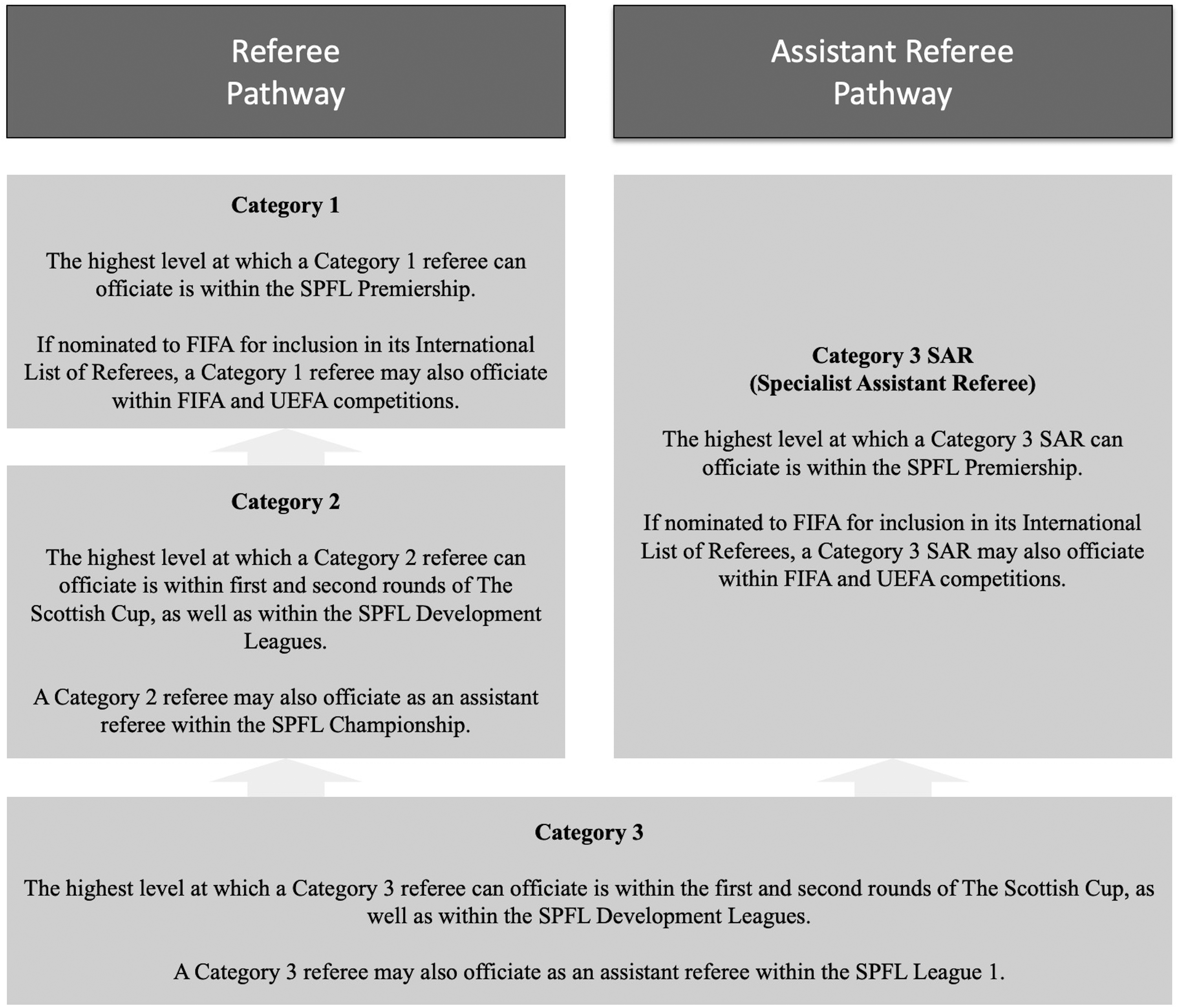
Overview of the elite career pathway for match officials within the Scottish Football Association.
Questionnaire
The training practices and perceptions of respondents were assessed using the Referee Training Activity Questionnaire (RTAQ). Briefly, the RTAQ was previously developed and validated for specific use with soccer officials through a systematic, multi-stage process that comprised: (1) item generation and questionnaire development; (2) assessments of the face and content validity; and (3) assessments of criterion validity. Crucially, stages 1 and 2 were undertaken with an expert panel comprising elite soccer officials (FRs and ARs) and their coaches, with stage 3 comparing the responses of officials on the RTAQ to 7-day training records using diaries and heart rate monitors. The results showed that the RTAQ possessed excellent levels of face, content, and criterion validity. 17
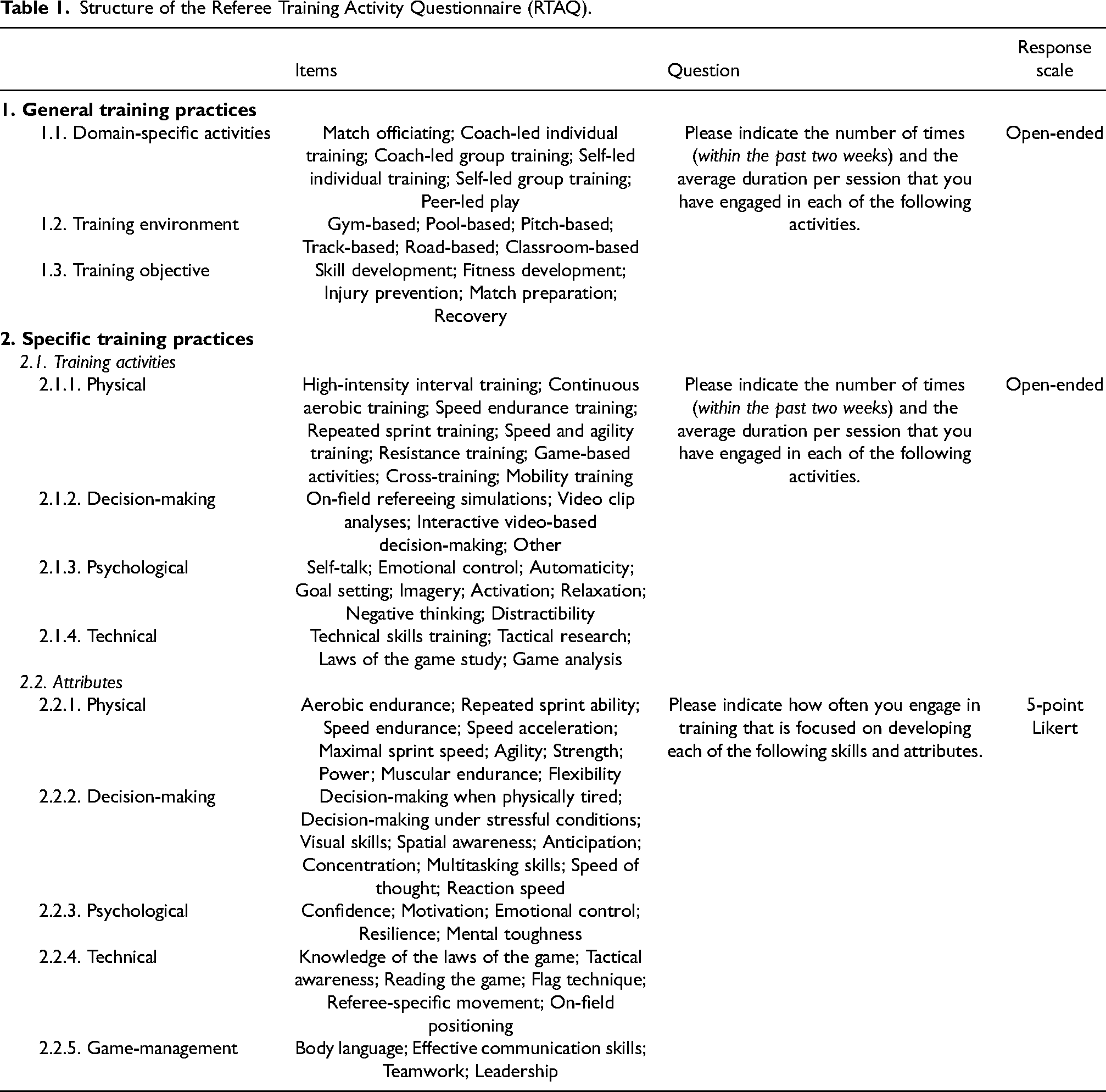
In the current study, the questionnaire was created using an online survey tool (Online Surveys, Jisc, UK) and was distributed to participants in the form of a web link. Prior to completing the RTAQ, participants provided demographic information such as their date of birth, an estimation of when they first became a match official, their officiating category (i.e. Category 1, 2, 3, or 3SAR), and the highest level at which they have officiated (i.e. intercontinental, continental, national, regional). The RTAQ then comprised of two primary sections: (1) general training practices; and (2) specific training practices. To examine general training practices, officials used open-ended response scales to “Indicate the number of times (within the past two weeks) and the average duration per session (mins)” that they engaged in various activities belonging to the following categories: domain-specific activities (e.g. self-led individual training); training environment (e.g. pitch-based); and training objective (e.g. skill development). To examine specific training practices, officials used open-ended response scales to “Indicate the number of times (within the past two weeks) and the average duration per session (mins)” that they engaged in activities categorised as physical training (e.g. high-intensity interval training); decision-making training (e.g. on-field refereeing simulations); psychological skills training (e.g. self-talk); and technical skills training (e.g. laws of the game study). In this section, officials were also asked to “Indicate how often” they engaged in training focused on developing specific skills and attributes belonging to the following categories: physical attributes (e.g. aerobic endurance); decision-making attributes (e.g. anticipation); psychological attributes (e.g. emotional control); technical attributes (e.g. on-field positioning); and game management attributes (e.g. body language). Responses were provided using a 5-point Likert scale (1 = less than once a month; 5 = more than once a week), with response anchors fully labeled as per previous recommendations. 23 An overview of the structure of the RTAQ is presented in Table 1, with the RTAQ and definitions used for each item available as Supplemental Files.
Structure of the Referee Training Activity Questionnaire (RTAQ).
In addition to the RTAQ, the perceptions of officials and the importance they attributed to these various skills and attributes were obtained. 24 In doing so, mismatches between the perceptions and practices of officials could potentially be highlighted. Accordingly, a supplementary section was completed following the RTAQ whereby respondents used a fully labeled 7-point Likert scale (1 = not at all important; 7 = extremely important) to indicate the level of importance they attributed to a range of physical (n = 10), decision-making (n = 9), psychological (n = 5), technical (n = 6), and game-management (n = 4) skills. The constructs listed in this section of the questionnaire were identical to those of the RTAQ, which were found to possess excellent levels of face, content, and criterion validity. 17 In total, the questionnaire took 16 ± 7 min to complete.
Statistical analyses
Demographic information derived from multiple-choice questions were converted into a proportion of the total number of responses per category, with descriptive statistics reported as mean ± SD. Measures of training volume were ascertained by multiplying the frequency and duration of training. Prior to the use of parametric statistical test procedures, Shapiro-Wilk's tests were used to verify that the data were normally distributed. Between-category differences in the volume of training engaged in were analysed using factorial ANOVAs (two-way mixed), with referee category (e.g. Category 1, 2, 3, and 3SAR) adopted as the between-participants factor and training activity (e.g. match officiating, coach-led individual training, coach-led group training, self-led individual training, self-led group training, peer-led play) as the within-participants factor. Separate ANOVAs (n = 9) were conducted for each category of general (i.e. domain-specific activities, training environment, training objective) and specific (i.e. domain-specific activities, training environment, physical training, decision-making training, psychological skills training, technical skills training) training activity. Any violations to sphericity were corrected using Huynh-Feldt procedures when the Greenhouse-Geisser value was greater than 0.75. When the Greenhouse-Geisser value was less than 0.75, any violations to sphericity were corrected using the Greenhouse-Geisser procedure. Mean standardised differences are reported as Cohen's effect sizes (ESs) with the following criteria used to interpret the practical significance of findings: trivial, < 0.2; small, 0.21–0.6; moderate, 0.61–1.2; large, 1.21–1.99; and very large, > 2.0. 25 Likert scale responses concerning the ratings of importance and frequency of training are presented in a descriptive manner as the mean response expressed as an integer, with no inferential analyses performed on this data. 26 Statistical procedures were performed using Statistical Package for Social Sciences (SPSS 22.0, IBM, USA), with significance set at P < 0.05.
Results
Respondents
A total of 91 responses were received, representing an overall response rate of 52.6%. Five responses were excluded from the final analyses due to incomplete answers. Subsequently, a total of 86 responses were included in the final analysis. An overview of respondents’ demographic information is presented in Table 2.
Demographic information of participants (n = 86) who completed the Referee Training Activity Questionnaire (RTAQ).
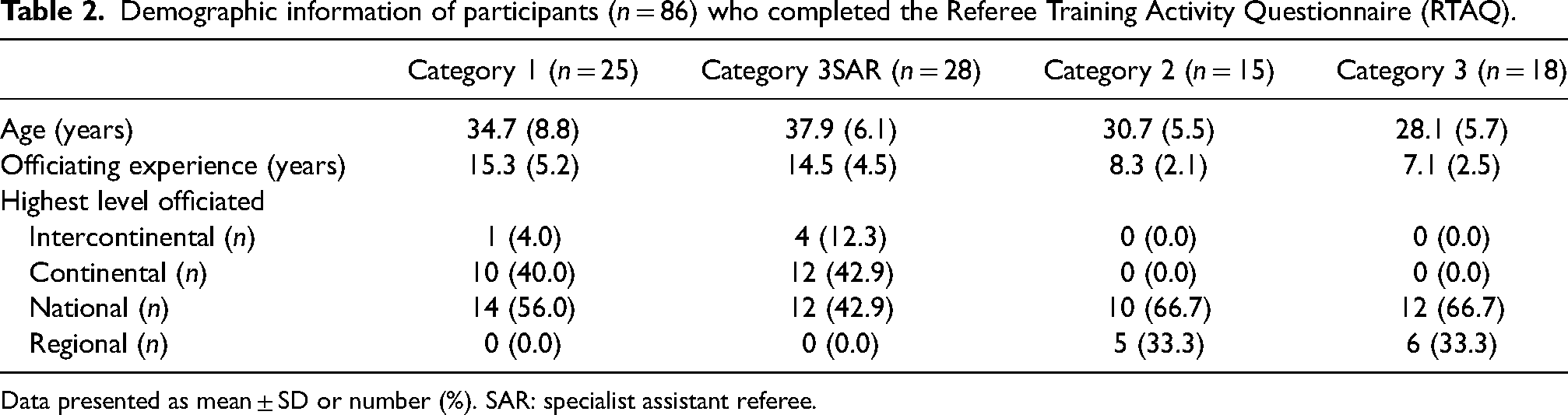
Data presented as mean ± SD or number (%). SAR: specialist assistant referee.
General training information
Domain-specific activities
There was a significant main effect for activity (F(2,172) = 137.25, P < 0.001) with more time apportioned to self-led individual training than match officiating (P = 0.001; 95% CI, 26–157 min, ES = 0.46), coach-led individual training (P < 0.001, 95% CI, 223–367 min, ES = 1.34), coach-led group training (P < 0.001, 95% CI, 134–276 min, ES = 0.95), self-led group training (P < 0.001, 95% CI, 298–378 min, ES = 1.43), and peer-led play (P < 0.001, 95% CI, 239–374 min, ES = 1.48) (Table 3). More time was apportioned to match officiating than coach-led individual training (P < 0.001; 95% CI, 166–239 min, ES = 1.81), coach-led group training (P < 0.001; 95% CI, 74–153 min, ES = 0.93), self-led group training (P < 0.001, 95% CI, 183–248 min, ES = 2.17), and peer-led play (P < 0.001; 95% CI, 182–248 min, ES = 2.11). Time spent in coach-led group training was greater than time spent in coach-led individual training (P < 0.001, 95% CI, 57–122 min, ES = 0.90), self-led group training (P < 0.001, 95% CI, 71–134 min, ES = 1.06), and peer-led play (P < 0.001, 95% CI, 72–131 min, ES = 1.14). A significant activity × group interaction (F(6,172) = 3.18, P = 0.005) was observed. Post-hoc tests revealed Category 1 officials to take part in significantly more self-led individual training (P = 0.013, 95% CI, 30–368 min, ES = 0.34), but less coach-led group training (P = 0.003, 95% CI, 24–159 min, ES = 0.40), than Category 2 officials.
Total time (min) apportioned by soccer officials to general training practices across a 2-week in-season period.
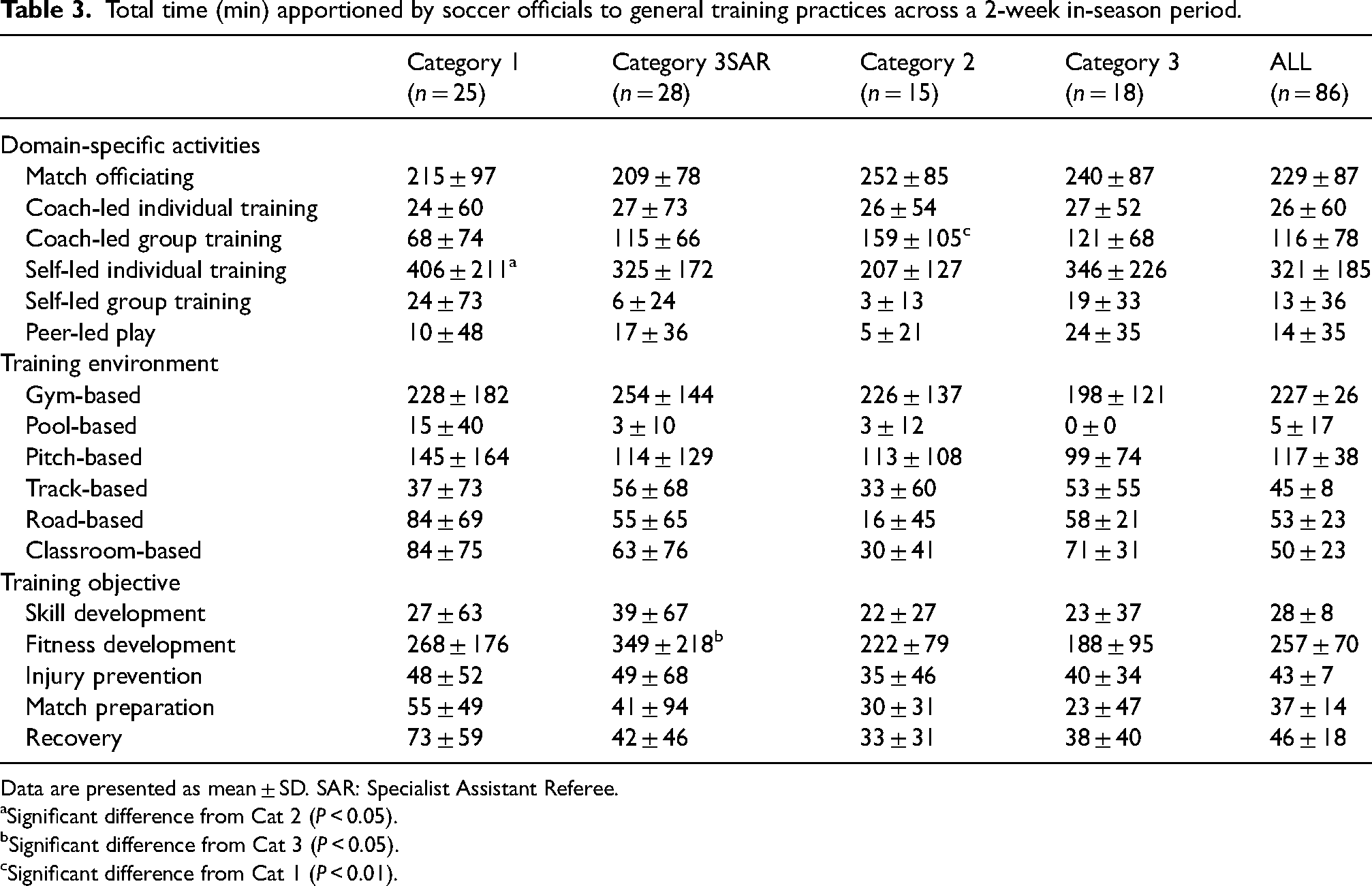
Data are presented as mean ± SD. SAR: Specialist Assistant Referee.
Significant difference from Cat 2 (P < 0.05).
Significant difference from Cat 3 (P < 0.05).
Significant difference from Cat 1 (P < 0.01).
Training environment
There was a significant main effect for activity (F(3,219) = 56.05, P < 0.001) with more time apportioned to gym-based training than pool-based (P < 0.001; 95% CI, 170–274 min; ES = 1.39), pitch-based (P < 0.001; 95% CI, 39–179 min; ES = 0.51), track-based (P < 0.001; 95% CI, 126–239 min; ES = 1.05), road-based (P < 0.001; 95% CI, 109–238 min; ES = 0.88), and classroom-based (P < 0.001; 95% CI, 127–226 min; ES = 1.16) training (Table 3). Time spent in pitch-based training was greater than that apportioned to pool-based (P < 0.001; 95% CI, 67–158 min; ES = 0.81), track-based (P < 0.001; 95% CI, 25–120 min; ES = 0.50), road-based (P = 0.002; 95% CI, 15–114 min; ES = 0.43), and classroom-based training (P < 0.001; 95% CI, 22–113 min; ES = 0.49). Time apportioned to pool-based training was less than track-based (P < 0.001; 95% CI, 16–63 min; ES = 0.55), road-based (P < 0.001; 95% CI, 26–70 min; ES = 0.71), and classroom-based (P < 0.001; 95% CI, 23–67 min; ES = 0.68) training. The activity × category interaction was not significant (F(8,219) = 0.63, P = 0.751).
Training objective
There was a significant main effect for the training objective (F(2,138) = 116.76, P < 0.001) with significantly more training focused on fitness development than skill development (P < 0.001; 95% CI, 174–284 min; ES = 1.30), injury prevention (P < 0.001; 95% CI, 162–266 min; ES = 1.28), match preparation (P < 0.001; 95% CI, 171–269 min; ES = 1.40), and recovery (P < 0.001; 95% CI, 158–263 min; ES = 1.24) (Table 3). The activity × category interaction was significant (F(5,138) = 3.08, P = 0.011) with category 3SAR officials engaging in more fitness development than Category 3 officials (P = 0.011; 95% CI, 25–297 min; ES = 0.35).
Specific training practices
There was a significant main effect for activity (F(2,126) = 132.05, P < 0.001) with officials engaging in significantly more physical training than decision-making (P < 0.001; 95% CI 251–399 min; ES = 1.28), psychological skills (P < 0.001; 95% CI, 290–434 min; ES = 1.47), and technical skills training (P < 0.001; 95% CI, 213–346 min; ES = 1.23) (Figure 2). Participants reported greater engagement in technical skills training than decision-making (P = 0.002; 95% CI, 13–78 min; ES = 0.41) and psychological skills training (P < 0.001; 95% CI, 49–116 min; ES = 0.75), whilst time spent in decision-making training was greater than that apportioned to the development of psychological skills (P = 0.004; 95% CI, 9–65 min; ES = 0.39). The activity x category interaction was not significant (F(5,126) = 1.13; P = 0.350).
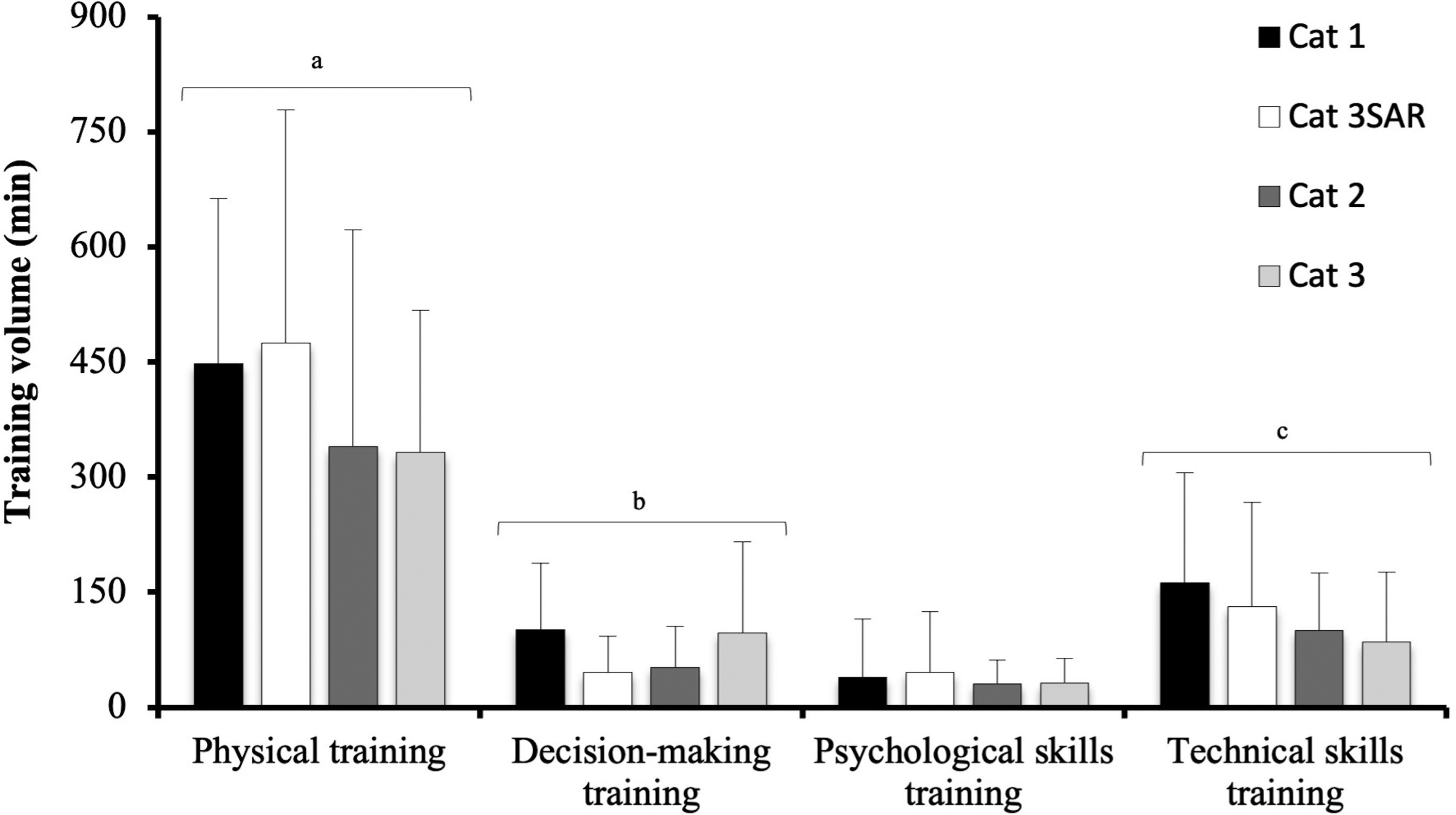
Total time (mins) apportioned by soccer officials to physical, decision-making, psychological, and technical skills training across a 2-week in-season period (mean ± sd). aSignificant difference from decision-making, psychological, and technical skills training (all P < 0.001). bSignificant difference from psychological skills training (P < 0.01) cSignificant difference from decision-making (P < 0.01) and psychological (P < 0.001) skills training.
Physical training
There was a significant main effect for activity (F(5,382) = 18.05, P < 0.001) with more time apportioned to high-intensity interval training, continuous aerobic training, and resistance training than speed endurance (P ≤ 0.028; ES ≥ 0.38), repeated sprint (P < 0.001; ES ≥ 0.51), speed and agility (P < 0.001; ES ≥ 0.55), game activities (P ≤ 0.016; ES ≥ 0.40), cross-training (P ≤ 0.029; ES ≥ 0.38), and mobility training (P < 0.001; ES ≥ 0.53) (Table 4). Post-hoc tests also revealed more time to be apportioned to speed endurance than repeated sprints (P = 0.026; 95% CI, 1–26 min; ES = 0.38) and speed and agility (P = 0.004; 95% CI, 3–33 min; ES = 0.44) training. The activity × category interaction was not significant (F(14,382) = 0.77, P = 0.705).
Total time (mins) apportioned by soccer officials to specific training practices across a 2-week in-season period.
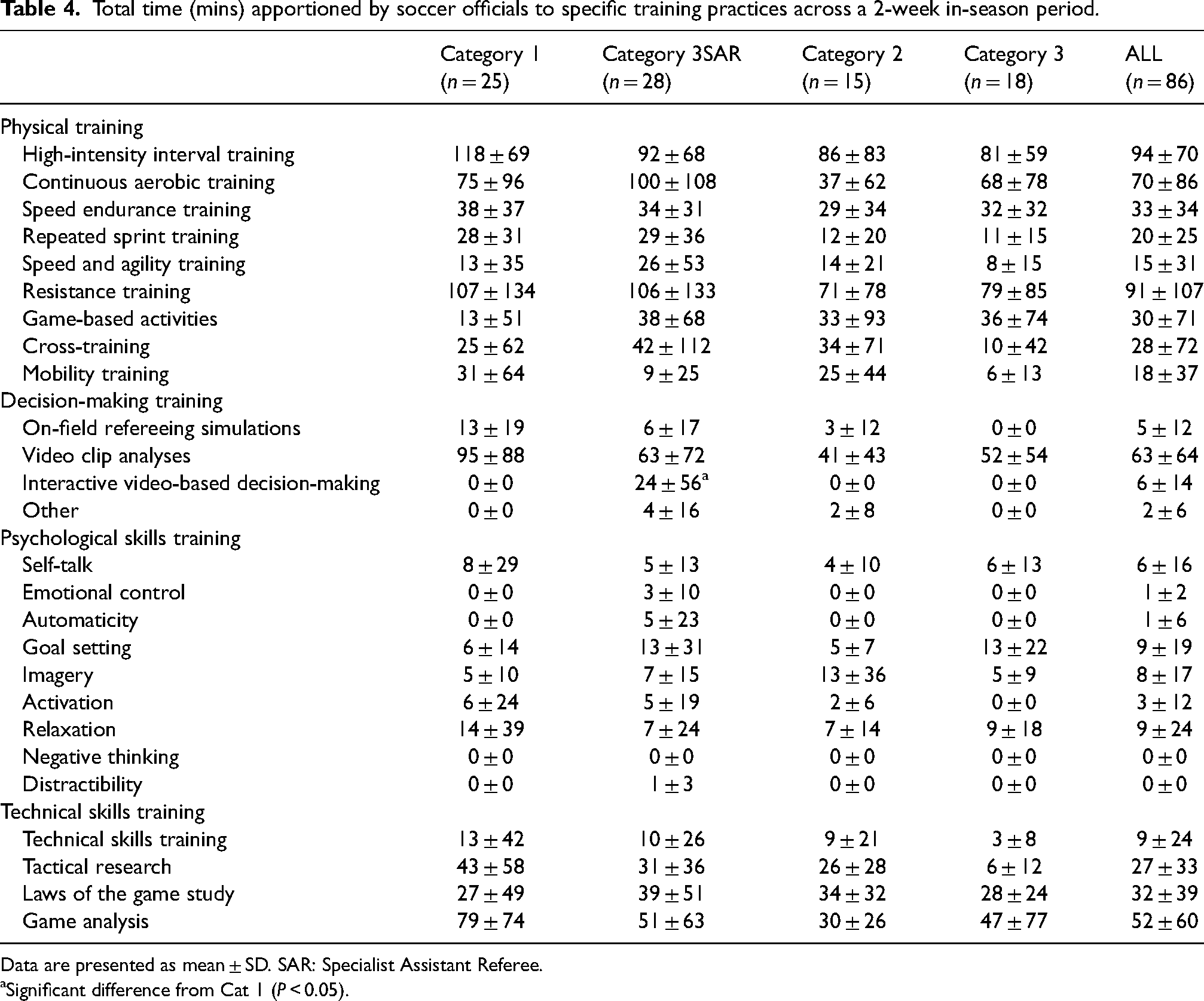
Data are presented as mean ± SD. SAR: Specialist Assistant Referee.
Significant difference from Cat 1 (P < 0.05).
Decision-making training
There was a significant main effect for activity (F(1121) = 50.28, P < 0.001) with post-hoc tests revealing more time to be apportioned to video-clip analyses than on-field simulations (P < 0.001; 95% CI, 39–79 min; ES = 0.85), interactive decision-making (P < 0.001; 95% CI, 36–78 min; ES = 0.78), and other types of decision-making training (P < 0.001; 95% CI, 40–82 min; ES = 0.86) (Table 4). A significant activity × category interaction (F(4121) = 2.63, P = 0.033) was observed with category 3SAR officials spending more time in interactive decision-making than category 1 officials (P = 0.049; 95% CI, 0–48 min; ES = 0.29).
Psychological skills training
There was a significant main effect for activity (F(5,374) = 4.85, P < 0.001) with more time apportioned to goal setting than emotional control (P = 0.011; 95% CI, 1–15 min; ES = 0.41), negative thinking (P = 0.019; 95% CI, 1–17 min; ES = 0.39), and distractibility training (P = 0.023; 95% CI, 1–17 min; ES = 0.38) (Table 4). More time was apportioned to imagery than negative thinking training (P = 0.016; 95% CI, 1–14 min; ES = 0.40) and distractibility training (P = 0.017; 95% CI, 1–14 min; ES = 0.39). The activity × category interaction (F(14,374) = 0.63, P = 0.838) was not significant.
Technical skills training
There was a significant main effect for activity (F(2198) = 15.92, P < 0.001) with officials apportioning more time to game analysis than technical skills training (P < 0.001; 95% CI, 23–63 min; ES = 0.63) or tactical research (P = 0.003; 95% CI, 7–43 min; ES = 0.40) (Table 4). Significantly less time was apportioned to technical training than tactical research (P = 0.003; 95% CI, 4–31 min; ES = 0.39) or laws of the game study (P < 0.001; 95% CI, 12–34 min; ES = 0.60). The activity × category interaction (F(7,198) = 1.69, P = 0.109) was not significant.
Associations between perceptions and training practices
Physical attributes
Physical attributes were rated as moderately important to very important amongst FRs and were trained once a week to once every two weeks (Figure 3). Physical attributes were rated as moderately important to extremely important amongst ARs and were trained more than once a week to once every two weeks.
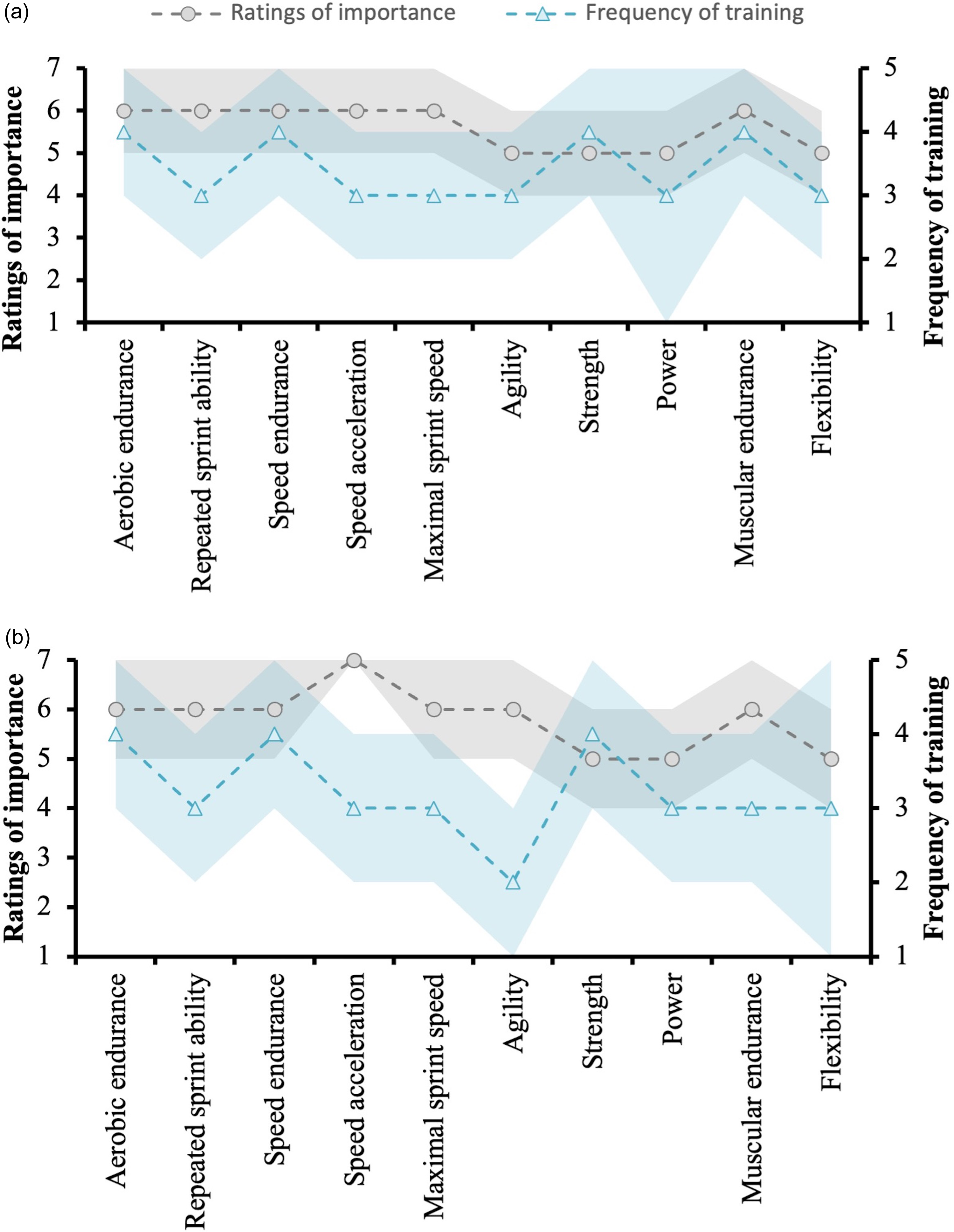
Perceptions and practices of field (a) n = 58 and assistant (b) n = 28 soccer officials in relation to physical attributes. Perceptions were assessed using a 7-point Likert scale (1 = not at all important; 7 = extremely important). Practices were assessed using a 5-point Likert scale (1 = less than once a month; 5 = more than once a week).
Decision-making attributes
Decision-making attributes were rated as very important to extremely important amongst both FRs and ARs (Figure 4). However, FRs reported training decision-making attributes less than once a month, whilst ARs trained less than once a month to more than once a month.
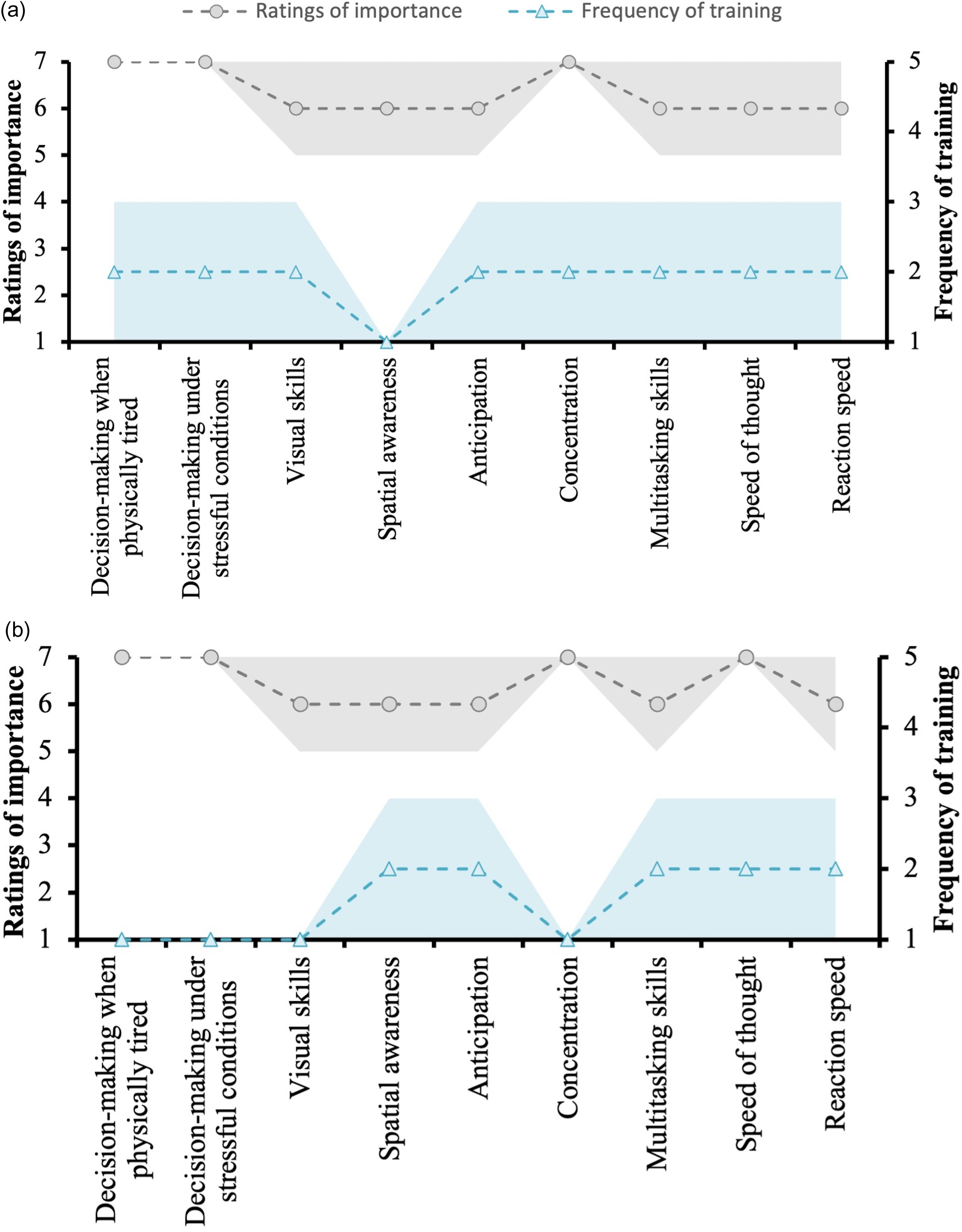
Perceptions and practices of field (a) n = 58 and assistant (b) n = 28 soccer officials in relation to decision-making attributes. Perceptions were assessed using a 7-point Likert scale (1 = not at all important; 7 = extremely important). Practices were assessed using a 5-point Likert scale (1 = less than once a month; 5 = more than once a week).
Psychological attributes
Although psychological attributes were rated as very important to extremely important amongst FRs, respondents reported that they engage in psychological skills training once a month (Figure 5). Similar observations were reported amongst ARs whereby psychological attributes were rated as very important to extremely important but trained at a frequency of less than once a month.
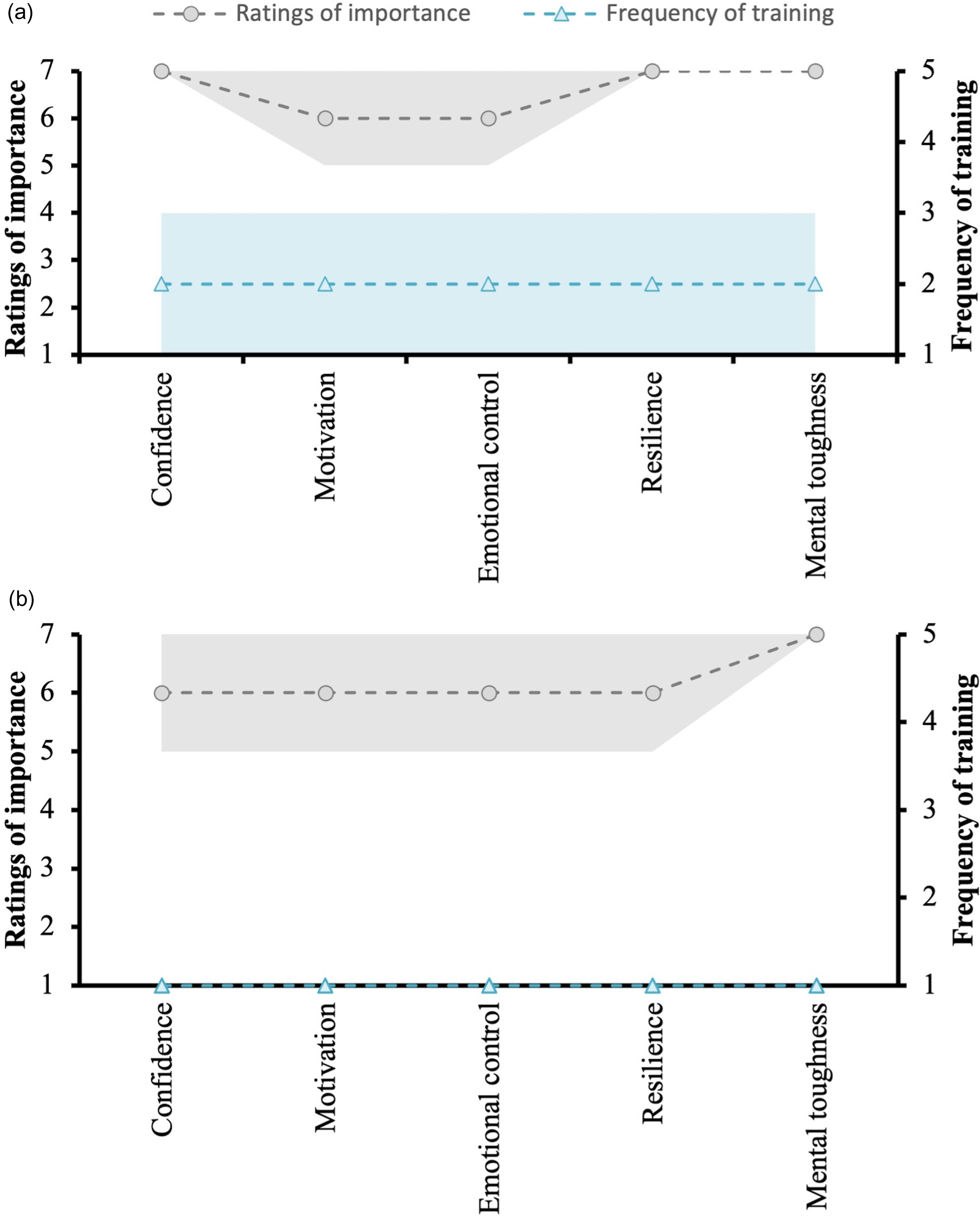
Perceptions and practices of field (a) n = 58 and assistant (b) n = 28 soccer officials in relation to psychological attributes. Perceptions were assessed using a 7-point Likert scale (1 = not at all important; 7 = extremely important). Practices were assessed using a 5-point Likert scale (1 = less than once a month; 5 = more than once a week).
Technical attributes
With the exception of flag technique whereby FRs rated it as moderately important and trained this skill less than once a month, FRs rated technical attributes as very important to extremely important and trained these once every two weeks (Figure 6). Technical attributes were rated as very important to extremely important amongst ARs and were trained once a month to once every two weeks.
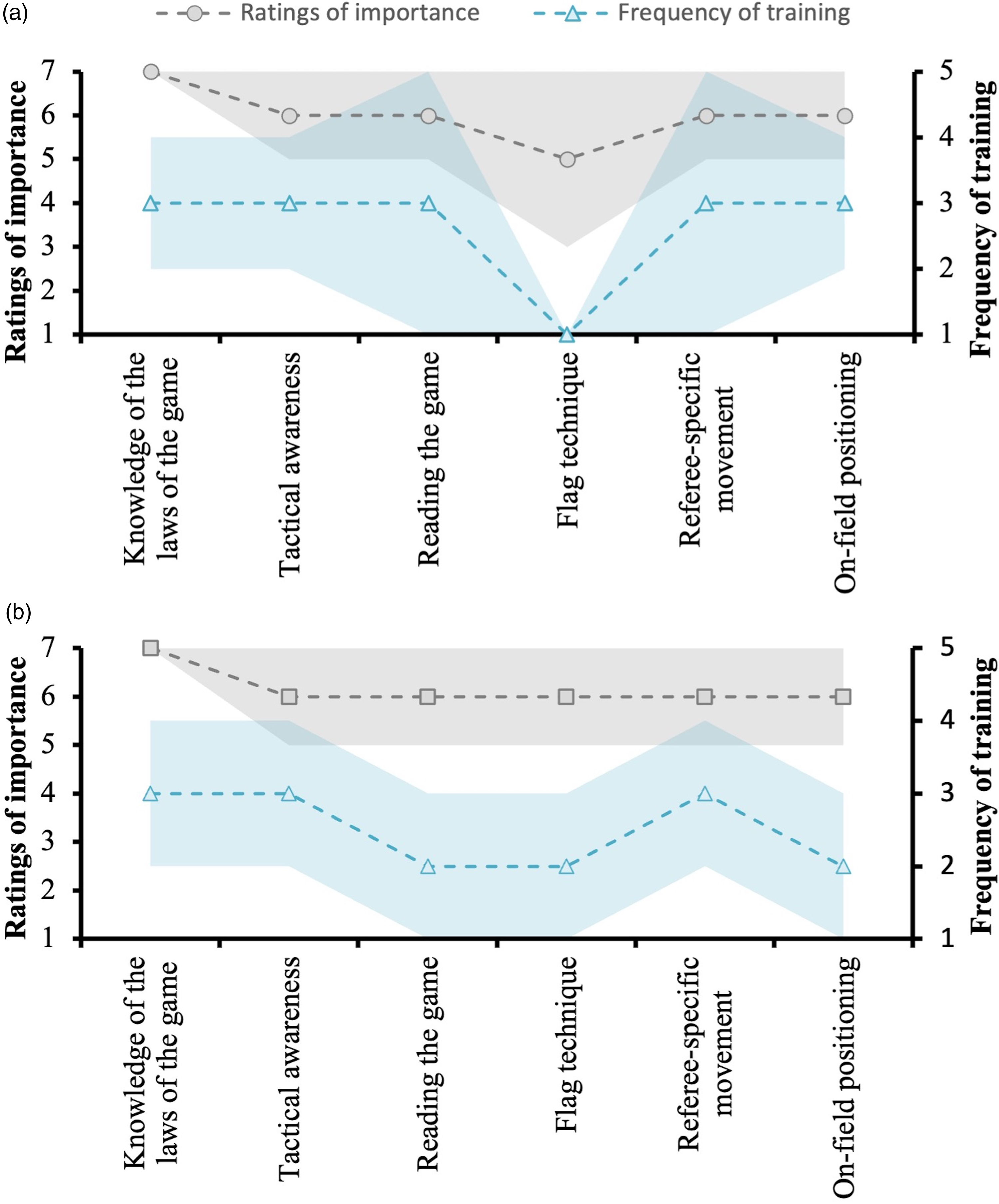
Perceptions and practices of field (a) n = 58 and assistant (b) n = 28 soccer officials in relation to technical attributes. Perceptions were assessed using a 7-point Likert scale (1 = not at all important; 7 = extremely important). Practices were assessed using a 5-point Likert scale (1 = less than once a month; 5 = more than once a week).
Game-management attributes
Game-management attributes were rated as extremely important amongst FRs but were trained less than once a month (Figure 7). Similar findings were observed amongst ARs, whereby game-management attributes were deemed very important to extremely important but trained less than once a month to once a month.
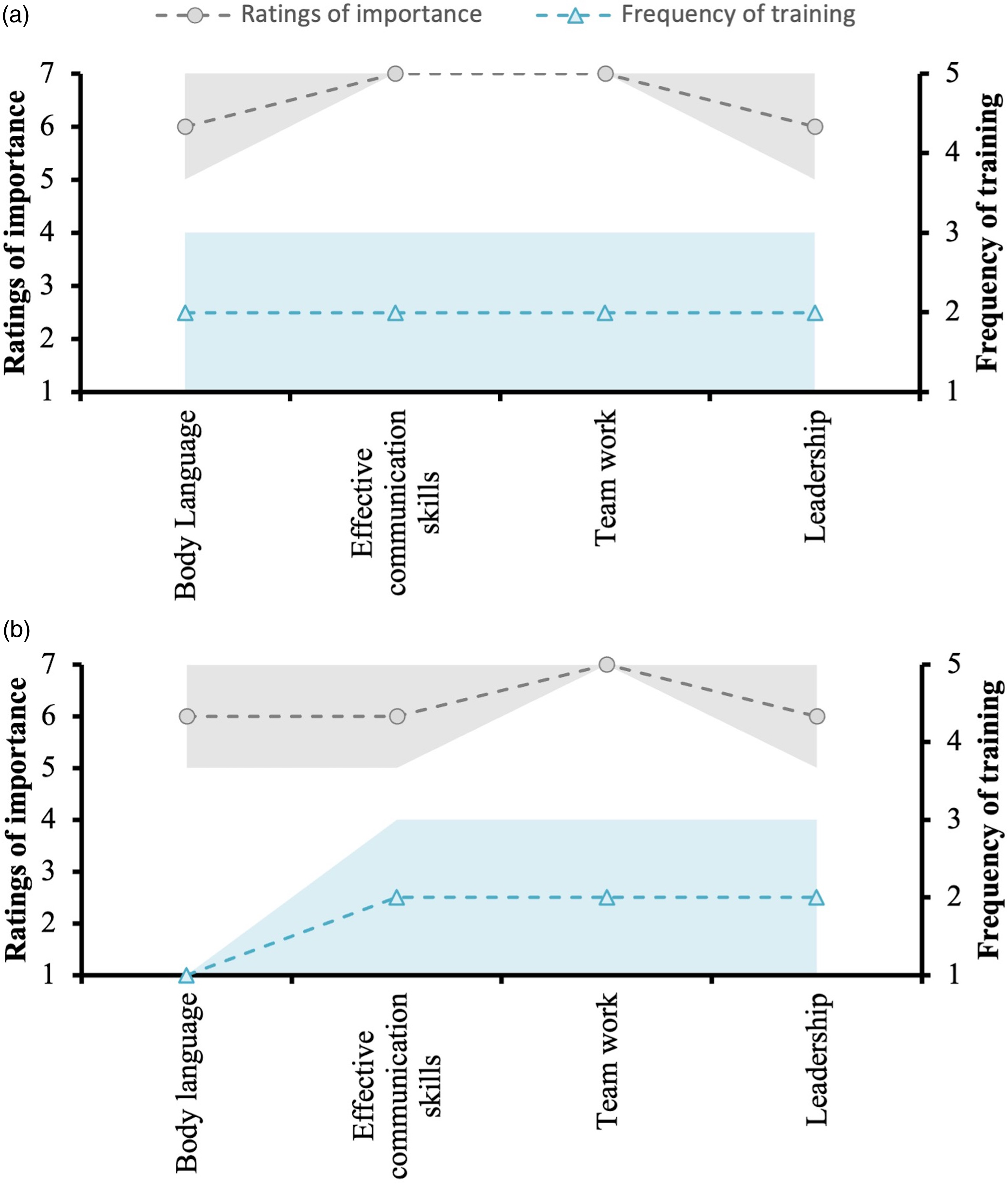
Perceptions and practices of field (a) n = 58 and assistant (b) n = 28 soccer officials in relation to game-management attributes. Perceptions were assessed using a 7-point Likert scale (1 = not at all important; 7 = extremely important). Practices were assessed using a 5-point Likert scale (1 = less than once a month; 5 = more than once a week).
Discussion
This national cross-sectional study sought to examine and document the training practices of soccer officials. Our findings broadly highlight that soccer officials, irrespective of their role or officiating category, largely focus on physical conditioning with relatively little attention directed towards other facets of performance, such as decision-making, psychological, and technical skills training. We also sought to explore relationships between respondents’ perceptions of the skills and attributes pertinent to optimal performance, and how frequently they engaged in training that targeted the development of these skills. Whilst decision-making, psychological, and game management skills were rated as “very important” to “extremely important” amongst both FRs and ARs, training that targeted the development of these skills was engaged in less than once a month. In considering the multidimensional nature of soccer officiating, such findings are likely to have important implications for both the development of soccer officials and their preparedness to meet the demands of match play.
Relatively low volumes of decision-making training were recorded in the present investigation, with significantly more time apportioned to the development of physical fitness. Considering the progress that has been made within decision-making training research in the last decade, 22 it is surprising that referee training practices do not appear to have changed since previous observations.15,16 With that said, the propensity of officials to engage in high volumes of physical training is likely an artifact of the increasing physical and physiological loads imposed during match play.7,13 Indeed, as soccer has become a progressively faster and more dynamic game, growing attention has been directed towards the physical conditioning of soccer officials, with routine fitness testing becoming an integral component of the match selection criteria adopted by national and international referee governing bodies.27,28 Additionally, as match officials generally reach elite status at an age where physical capacities begin to decline, the emphasis placed on physical training may reflect their necessity to ensure that levels of physical fitness, and therefore their ability to meet match demands, are maintained.29,30
Notwithstanding the importance of physical fitness, well-developed decision-making skills are central to the successful performances of soccer officials. 31 Interestingly, although decision-making attributes were perceived as “very important” to “extremely important” amongst both FRs and ARs, respondents targeted the development of these skills “less than once a month.” Thus, despite the significant scientific efforts that have been made in recent years to develop strategies for improving the decision-making of sports officials,18–22 such research does not yet appear to have transitioned successfully into applied practice. Although speculative, the present findings may reflect the current absence of naturalistic training methodologies that provide officials the opportunity to develop their decision-making abilities under match-like conditions. 13 In the context of soccer players, small-sided games are often employed as a means of enhancing decision-making skills in unison with the tactical, technical, and physical aspects of the game. 32 In contrast, our data demonstrate that the decision-making and technical skills training of soccer officials are largely limited to video clip and game analyses. Whilst video-based training may result in improved performance during video-based decision-making tasks, 19 concerns have been raised over the fidelity and ecological validity of existing methods as they often use match broadcast footage that is presented from a third-person or exocentric perspective. 22 Alternatively, emerging virtual reality technology may offer a potential solution, with recent studies demonstrating 360° virtual reality to be rated as significantly more game-like than traditional match broadcast footage.22,33 It has been noted, however, that 360° virtual reality is not without its own challenges; namely, the limited ability to individualise training, incorporate perception–action coupling, and the associated risks of motion sickness. 34 Such methods are therefore typically performed within controlled off-field environments during which officials remain seated in a rested state. 34 However, such conditions do not reflect the realities of competitive matches whereby decisions are made in combination with elevated levels of physiological and psychological stress. It has therefore been suggested that to prepare officials for the multidimensional nature of match play and to support the transfer of improvements in off-field tasks to on-field performance, such conditions should be reproduced within training.13,35 Whether such approaches would improve the accuracy of the in-match decisions made by soccer officials remains to be seen however and represents an important avenue for future research.
To create additional opportunities for soccer officials to make decisions under elevated levels of physiological stress, referee governing bodies occasionally program on-field simulations during training whereby players are recruited to recreate game-like scenarios. 1 Although the value of specific match practice is clear, such methods necessitate substantial amounts of organisation and compliance from clubs. On-field simulations are also typically guided by referee coaches during scheduled technical training sessions. As our data demonstrate, however, the training of Scottish officials is largely self-led with a relatively small proportion of their training being performed under the supervision of coaches. With this in mind, it is perhaps unsurprising that officials in the present study apportioned relatively little time to on-field simulations, with in-situ decision-making experience being limited to official matches. Such findings may have important implications for the long-term development of soccer officials. The primary concern being that by limiting their decision-making experience to the finite number of match appointments per season, it will take significantly longer to accrue the hours of deliberate practice required to attain decision-making expertise. 16 In addition, competitive match play represents a practice-poor environment as the opportunity to receive feedback and engage in reflective practice is delayed. Thus, a key challenge facing those responsible for the development of soccer officials is to create novel training methodologies that facilitate the more rapid acquisition of decision-making expertise. A potential avenue in which this may be achieved is through the continued development and refinement of video-based simulation protocols that provide soccer officials with the opportunity to engage in decision-making under match-like conditions.
Officials engaged in significantly more gym-based than pitch-based training, with a large emphasis placed upon resistance training. These findings are consistent with those of Weston and colleagues 14 who reported gym-based strength training to predominate the training schedule of an elite English Premier League FR. In keeping with the large aerobic demands imposed during match play, officials also engaged in large volumes of high-intensity interval training and continuous aerobic training. Conversely, relatively little time was apportioned to on-field speed and agility training, with these observations remaining consistent across refereeing categories. As officials occupy an age bracket of 10–15 years greater than that of their playing counterparts, 30 and given the progressive declines that occur in speed and power performance with increasing age, 29 this latter finding may have particular implications for older officials. Firstly, as isolated and repeated bouts of high-speed running frequently precede crucial moments during match play, 36 the ability of officials to keep up with play and position themselves appropriately is vital. Additionally, as part of the match selection criteria introduced by FIFA, officials must attain minimum standards during a repeated sprint test comprising six 40-m sprints interspersed with 90-s recovery. 27 As the fastest and mean sprint times achieved during this test are related to an official's match-related running capacity, repeated sprint ability has been identified as an important discriminator amongst soccer officials. 27 The time allocated to repeated-sprint training, however, was relatively low. To ensure that soccer officials can meet the demands of match play and fitness testing, greater attention should perhaps be paid to the development of speed and repeated sprint ability. Repeated sprint training may have particular appeal for soccer officials, as such training represents a time-efficient method of enhancing several components of match-related fitness, such as speed, power, and high-intensity running performance. 37
To elicit an optimal training stimulus and enhance their readiness for competition, the training of soccer players is typically periodised in relation to match day. 38 In practical terms, this involves the deliberate manipulation of loading patterns to incorporate periods of high-intensity training and low-intensity recovery. 39 As the match activities and competitive schedules of soccer officials mirror those of the players, 2 it may be expected that similar strategies are adopted amongst officials. However, relatively little training was apportioned to low-intensity activities such as injury prevention, match preparation, and recovery activities. In contextualising these findings, it is perhaps important to acknowledge the part-time status of the studied cohort whereby officials combined their refereeing careers with additional occupations. Indeed, whereas soccer players are heavily programmed by coaches, the training of officials in the present study was largely self-led and performed autonomously within the confines of their unique daily schedules. It is therefore conceivable that when faced with limited opportunities to train, officials may have deemed high-intensity activities to be of more immediate importance, with less time subsequently apportioned to activities of lower intensities. This does however remain speculative and additional research is required to identify the barriers to training for part-time officials. Regardless, such findings are likely to have important implications for soccer officials as mismatches between loading and recovery processes, particularly during periods of fixture congestion, may impair physical capacities and predispose officials to a heightened risk of injury and illness. 11 Nonetheless, it is important to acknowledge that the data presented relates to self-reported training volumes only, and no measures of training intensity were obtained. Although previous studies have shed light on the training loads of soccer players,39,40 the training loads exhibited by soccer officials remain largely unexplored. Future research may therefore wish to examine the loading patterns and intensity distribution of soccer officials across a competitive season.
Although contingent upon the appraisal mechanisms employed by the individual, excessive increases in stress and anxiety is associated with the impaired decision-making of soccer officials. 41 Thus, given the challenging psychosocial environments in which they operate, calls have been made for psychological skills training to become an integral component of the training and preparation of match officials.4,42 Interestingly, whilst psychological skills were rated as “very important” to “extremely important,” our findings suggest that soccer officials, irrespective of their officiating category, currently engage in little training focused on the development of such skills. Although speculative, such observations may reflect the very nature of psychological skills training whereby heightened levels of motivation and trust are required in its methods. That is, as psychological skills training may not yield immediate or tangible results, such training necessitates higher levels of motivation than physical training which produces more quantifiable results that are more regularly measured. 43 It is therefore possible that when faced with limited time to train, officials may have deemed physical training to be more desirable than psychological skills training. Moreover, as psychological skills training benefits from mediated learning directed by qualified personnel, previous investigations have found the successful application of sports psychology within the applied environment to be impeded by factors such as a lack of funding and time.44,45 Indeed, as sport psychology support programs have traditionally been delivered on an ad hoc and consultancy basis, 44 the implementation of such programs may prove challenging within the context of smaller football associations with limited resources. As the training of officials within the present study was largely unmediated and self-led, the low volumes of psychological skills training accrued by this cohort are perhaps unsurprising.
Amongst the key limitations of the present study are the retrospective recall of activities, the self-reported nature of the data, and that the data is limited to the total time engaged in different activities. Whilst such information is indeed important, it is largely the intensity and effort of training that govern the training response.10,11 Training volume therefore reflects only one piece of the puzzle. We must also acknowledge that not all training activities are equivalent in the physical and cognitive strain they impose and that such differences will determine what constitutes an appropriate volume for each type of training. Thus, although the present data provide an important overview of the breadth and volume of training engaged in by soccer officials, more detailed investigations are necessary to ascertain the intensities, from both a physical and cognitive perspective, associated with each type of training. Likewise, very little is currently known about the extent to which different training activities translate to improved performance on the pitch, with only a handful of studies exploring the efficacy of training interventions amongst match officials.19,20,22 We are therefore hopeful that the present data provides a foundation from which future research may build and address such questions.
A response rate of 52.6% was achieved in the present investigation; a rate that is higher or comparable to previous surveys exploring the perceptions and practices of those working within elite soccer.46–48 As is often the case with descriptive studies of a cross-sectional nature, it does however remain a possibility that the current findings may have been subject to self-selection or non-response bias, wherein responses would be limited to more motivated individuals at higher officiating categories. The relatively large levels of variation evident within our data would suggest however that this is not the case within the present study. We also believe our data provide a fair and accurate reflection of current practices within Scottish match officials, given the diversity of the studied cohort whereby responses were received from both FRs and ARs of different ages and levels of experience. This notwithstanding, readers should remain cognisant that our findings reflect the practices and perceptions of soccer officials from a single football association. Likewise, our data pertain to a 2-week period during the first half of the in-season. The ability to generalise these findings to other contexts is therefore limited, as different training practices and perceptions may well be present within different sporting cultures and at various stages of the competitive cycle (i.e. pre-season and during periods of fixture congestion). It should also be noted that whilst the current data relate exclusively to the perceptions of the officials, it would be of value to obtain an insight into the attributes and training practices deemed important by their coaches. Indeed, we hope that the current findings fuel debate about referee training practices and highlight the need for a wide range of research to drive improvements in the training provision and support afforded to soccer officials in their highly challenging and ever-evolving roles. 49
Conclusion
The present study has provided a comprehensive and up-to-date account of the training practices of Scottish soccer officials and has helped highlight the specific areas of their training that warrant improvement. Irrespective of their role or officiating category, officials were found to engage in large volumes of physical training, with considerably less time apportioned to decision-making, psychological, and technical skills training. Meanwhile, although decision-making and psychological skills were rated as “very important” to “extremely important” amongst both FRs and ARs, officials purposefully trained these skills “less than once a month.” Considering the breadth of demands encountered during match play and their potential impact on successful decision-making, these observations may have important implications for the development of soccer officials and their ability to fulfill their duties on the field of play. A more balanced approach therefore appears necessary if soccer officials are to acquire expertise within each facet of performance. Moreover, as the demands of soccer officiating are intricately linked and imposed concurrently, greater time should perhaps be apportioned to holistic training methods that target the development of several areas of performance simultaneously. Whilst better reflecting the multidimensional nature of match play, such approaches may present a more time-efficient means of developing the wide-ranging and multifaceted skill profile necessary for optimal performance. The development and refinement of holistic training methods (e.g. video-based decision-making in combination with elevated levels of physiological and psychological stress) should therefore be considered a priority for future research and practice.
Supplemental Material
sj-docx-1-spo-10.1177_17479541221110707 - Supplemental material for Training practices and perceptions of soccer officials: Insights from the Referee Training Activity Questionnaire
Supplemental material, sj-docx-1-spo-10.1177_17479541221110707 for Training practices and perceptions of soccer officials: Insights from the Referee Training Activity Questionnaire by Gary P McEwan, Viswanath B Unnithan, Chris Easton and Rosie Arthur in International Journal of Sports Science & Coaching
Supplemental Material
sj-pdf-2-spo-10.1177_17479541221110707 - Supplemental material for Training practices and perceptions of soccer officials: Insights from the Referee Training Activity Questionnaire
Supplemental material, sj-pdf-2-spo-10.1177_17479541221110707 for Training practices and perceptions of soccer officials: Insights from the Referee Training Activity Questionnaire by Gary P McEwan, Viswanath B Unnithan, Chris Easton and Rosie Arthur in International Journal of Sports Science & Coaching
Footnotes
Acknowledgements
The authors would like to thank each of the participants for their time and contribution to this study.
Author note
Rosie Arthur, Division of Psychology, Sociology and Education, Queen Margaret University, Edinburgh, UK.
Declaration of conflicting interests
The authors declared no potential conflicts of interest with respect to the research, authorship, and/or publication of this article.
Funding
The authors received no financial support for the research, authorship, and/or publication of this article.

Supplemental Material
Supplemental material for this article is available online.
References
Supplementary Material
Please find the following supplemental material available below.
For Open Access articles published under a Creative Commons License, all supplemental material carries the same license as the article it is associated with.
For non-Open Access articles published, all supplemental material carries a non-exclusive license, and permission requests for re-use of supplemental material or any part of supplemental material shall be sent directly to the copyright owner as specified in the copyright notice associated with the article.
