



Abstract
Collaborative and open research combined with influential technological advancements and geopolitical tensions allow Higher Education Institutions (HEIs) and Research Performing Organisations (RPOs) to become prone to Research Security (RS) risks. Despite its recent conceptualisation, RS has been swiftly recognised as a critical issue globally, highlighting the need to quickly adopt policy actions. To this direction, the CHANGER consortium recommends policy actions particularly relevant to the European context. Policy actions are informed by the accumulated experience generated through established research ethics and integrity frameworks, in order to build resilience to RS risks, while ensuring freedom and openness of research. Adaptions to existing training programmes on research ethics and integrity programmes in order to embed RS considerations in the research culture, as well as the cultivation of professional expertise and capacity building in RS, are among these policy recommendations. Leveraging experience and insights from research ethics and integrity infrastructure offers valuable opportunities to raise awareness and establish procedures for safeguarding RS. The proposed policy actions offer flexibility to meet specific research needs of each HEI and RPO, and are proportionate to related risks rising from each research project. They foster capacity-building for researchers and cultivate a culture of awareness, shared responsibility and proactive responsiveness, facilitating the responsible internationalisation of research.
Keywords
Problem identification
International, interdisciplinary and open research has been promoted for decades by research funding organisations, due to its significant value in accelerating scientific knowledge and global innovation. However, the landscape of international research is changing due to rising geopolitical tensions, foreign interference and the use of influential technological advancements for strategic, geopolitical, or economic objectives (European Commission JOIN 20, 2023). In support of this, the European Commission (EC) has identified Artificial Intelligence technologies, Quantum technologies and Biotechnologies as 3 out of 4 critical technology areas with the highest likelihood of presenting the most sensitive and immediate risk related to technology security and technology leakage (European Commission C 6689, 2023). These three technologies are extensive and intensive areas of funded research in Higher Education Institutions (HEIs) and Research Performing Organisations (RPOs) at a global scale, with research aiming to provide insights on pressing needs and challenges that beset the society. Hence, funding organisations, HEIs and RPOs become prone to Research Security (RS) risks that threaten national security, the ethical conduct of research and fundamental human rights. Several cases of research projects and international collaborations, which generated a lot of public attention, have exemplified this vulnerability of higher education (Lewis, 2020) and scientific research (Snetselaar, 2023) to RS risks.
With this manuscript the CHANGER consortium (CHANGER Project, 2024) aims to identify challenges raised by RS, discuss policy implications and recommend policy actions aiming to build resilience to RS threats.
The concept of research security and what is at stake
RS is a relatively recent concept with no clear consensus on its definition. Although a conceptual analysis of RS is beyond the scope of this manuscript, Table 1 presents indicative examples that highlight the uniform underlying concept across definitions, but also the variation in the terms used and their particular aspects.
Indicative terms related to RS across countries and organisations.
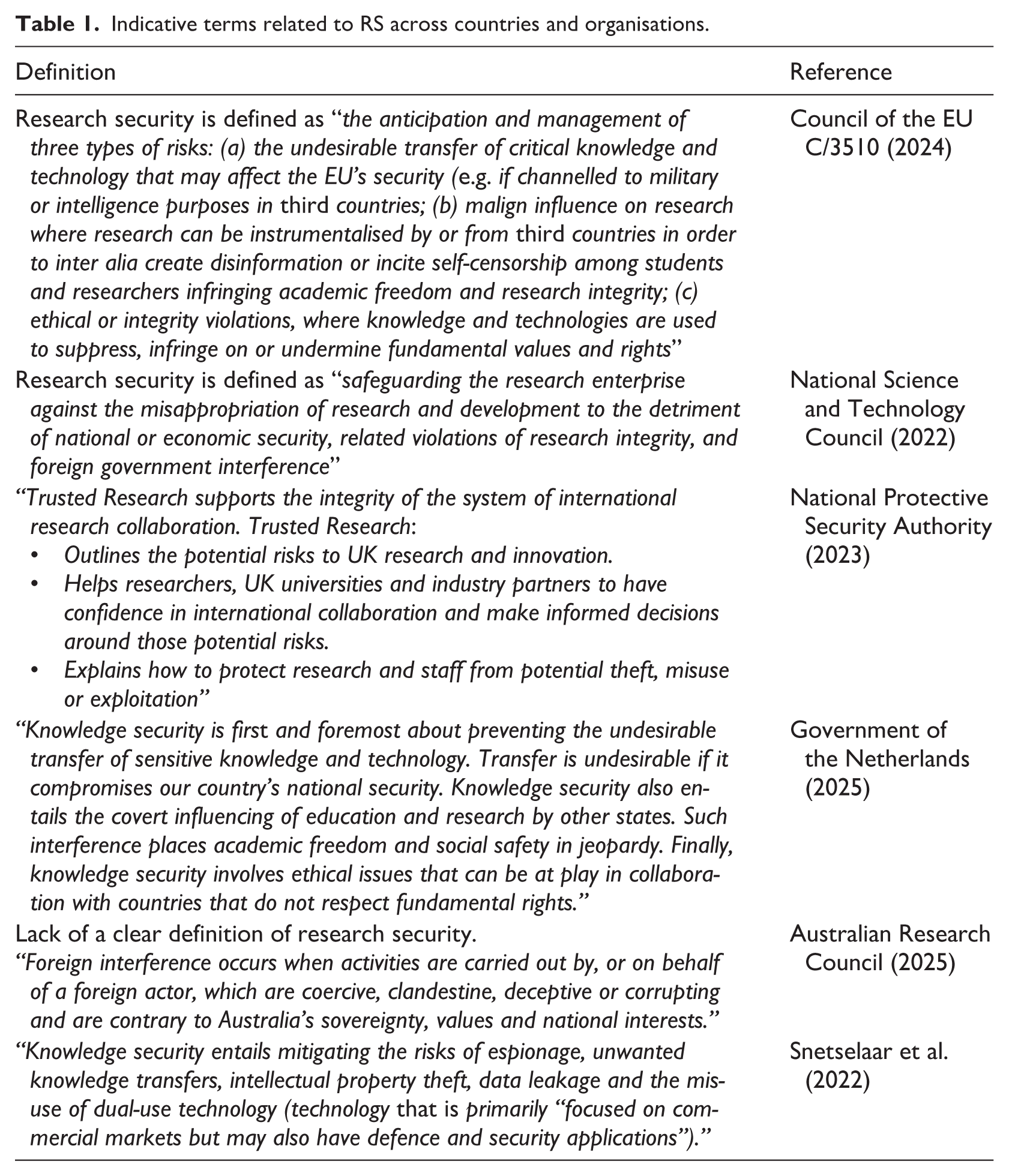
These definitions overlay -to a certain extent- with established concepts in research, such as dual use, misuse, data protection, intellectual property, ethical conduct of research and research integrity, causing further variations in the interpretation of what RS is. In addition, some definitions adopt a narrow perspective, focusing primarily on risks related to misappropriation, espionage, intellectual property theft, and dual-use technology. Herein, the definition given by the Council of the European Union (EU) has been adopted (Council of the EU C/3510, 2024), because it not only addresses the risks of foreign interference, knowledge and technology transfer but also explicitly foregrounds violations of ethics, integrity and fundamental rights.
Why does RS demand policy attention? On one side, inadequate safeguards may expose research to malign influences, misuse, and applications that threaten security, violate human rights, or undermine ethical standards. On the other side, openness and international collaboration that drive scientific progress and innovation must be preserved. The challenge lies in striking a careful balance between protecting research from foreign interference and maintaining collaboration, which essential for a vibrant and globally connected research ecosystem.
Methodology
The study employed a two-stage qualitative methodology combining an integrative review of the literature with expert consultation. Existing RS initiatives were initially identified from the scientific and grey literature through a non-systematic, integrative review, aiming to assess, critique and synthesise the literature on RS as an emerging topic (Snyder, 2019; Torraco, 2005). An integrative review was chosen because the aim of the manuscript was not to cover all articles ever published on the topic but rather to identify and combine information-rich documents to generate new policy recommendations.
Articles and reviews written in English were identified through a search in the Scopus bibliographical database in December 2024. The Scopus search used the keywords [TITLE] “research security” OR “knowledge security” OR “foreign interference AND research” OR “trusted research”. Exclusion criteria were “food security,” “cybersecurity,” “data security,” “network security,” “energy security,” “water security”. Titles were initially screened for 1574 articles, which were identified by the Scopus search. After screening, 11 full papers were downloaded for review and analysis, 6 of which were informative for the topic of RS (Supplemental Table S1).
The grey literature included searches on information produced on all levels of government, academia, business and industry in electronic and print formats not controlled by commercial publishing (Third International Conference on Grey Literature, 1997). Search queries were conducted using the keywords “research security,” “knowledge security,” “foreign interference,” “trusted research,” “international cooperation,” “international collaboration,” AND “guidelines,” “recommendation,” “statement,” “position paper,” “regulation,” “legislation,” “declaration,” “policy.” Titles and, subsequently, executive summaries were screened for relevance. The screening resulted in 54 information-rich documents, which were critically analysed (see next Section Existing Initiatives Tables 2–3 and, Supplemental Table S2).
An overview of existing initiatives relevant to research security at the international level, in chronological order.
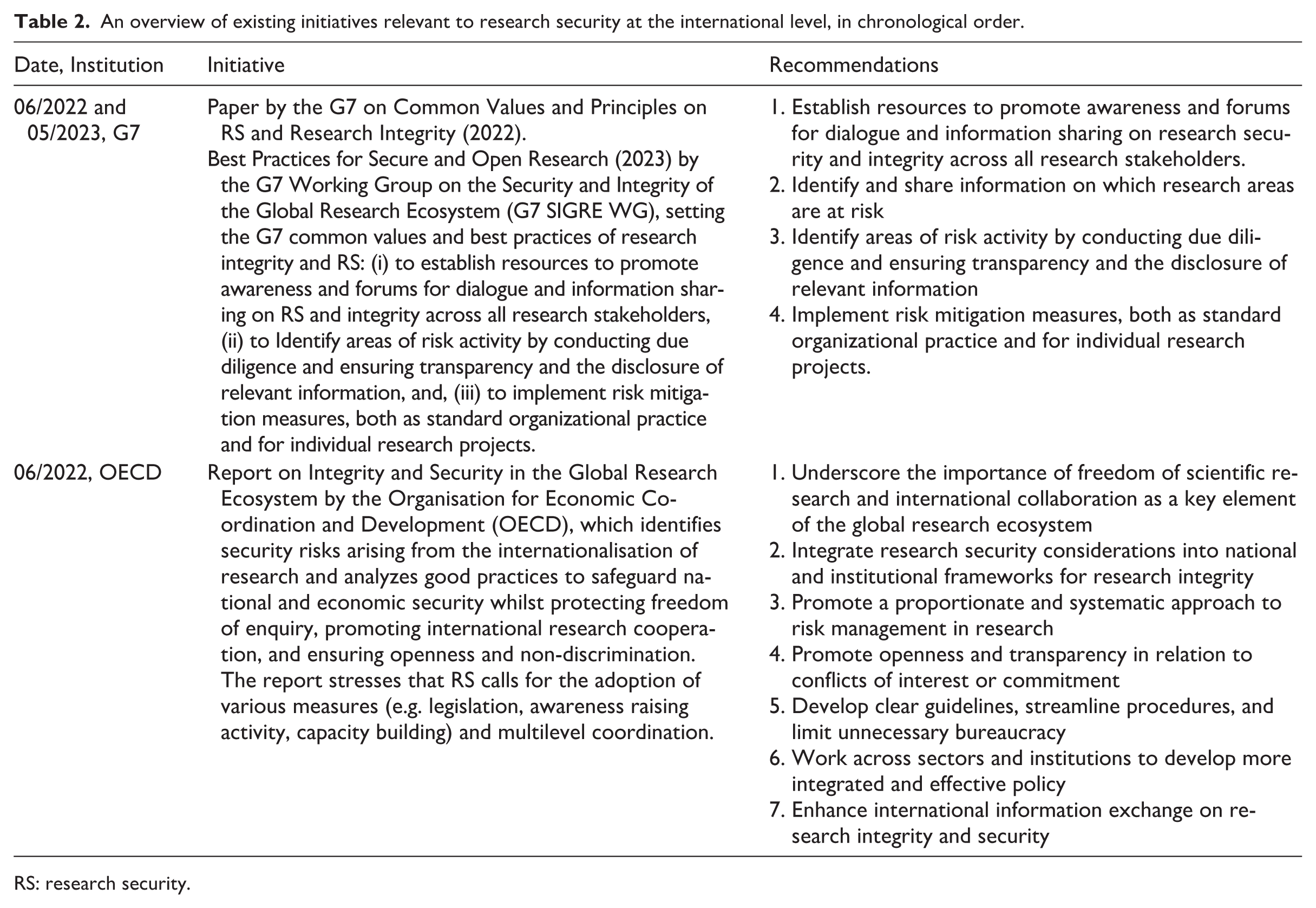
RS: research security.
An overview of existing initiatives relevant to research security at the European level, in chronological order.
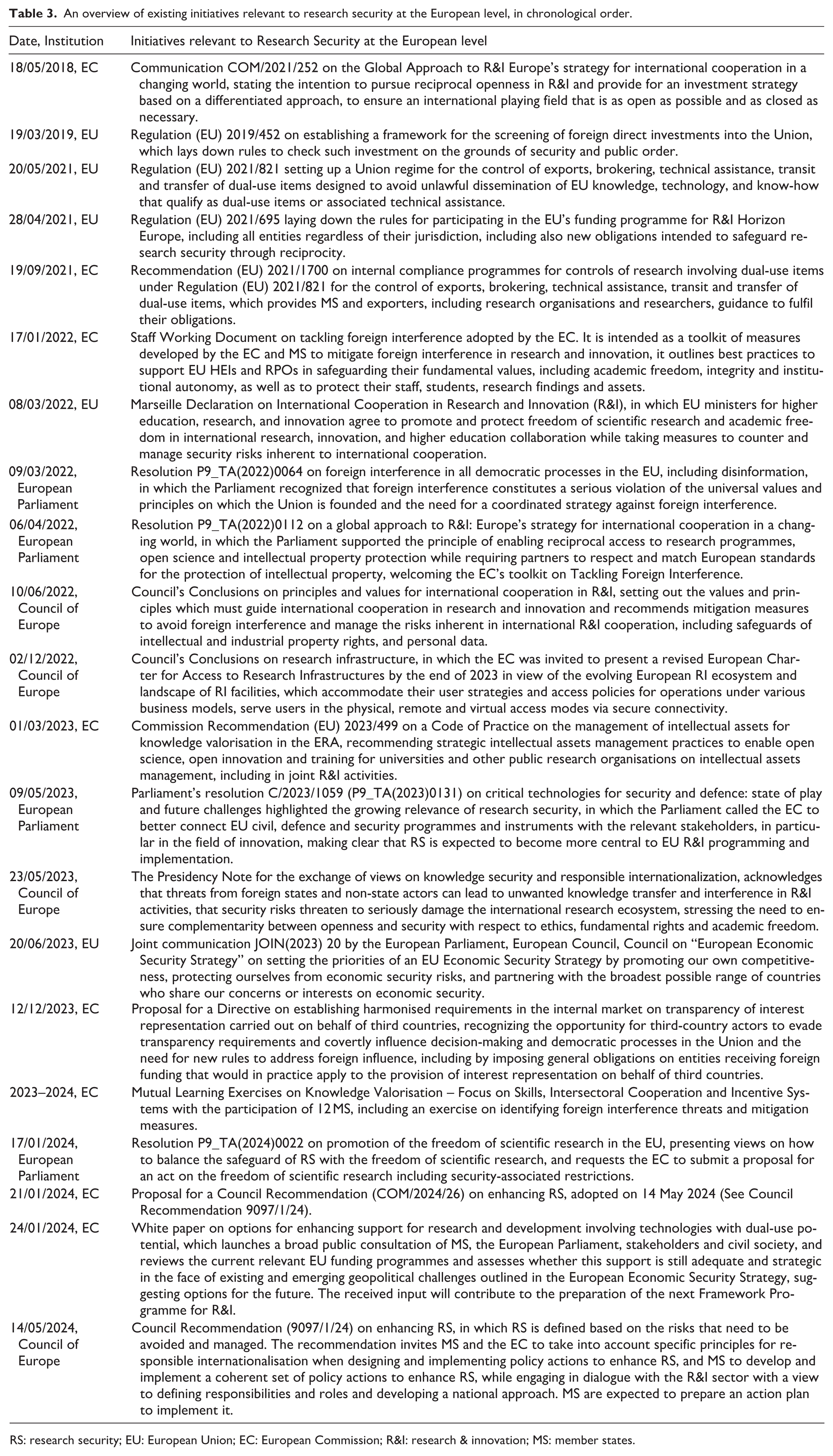
RS: research security; EU: European Union; EC: European Commission; R&I: research & innovation; MS: member states.
An overview of the Council Recommendation on enhancing research security (Council of the EU C/3510, 2024).

MS: Member States; RFOs: Research Funding Organisations; RPOs: Research Performing Organisations; EC: European Commission; R&I: Research & Innovation; SMEs: Small and Medium Enterprises; ERA: European Research Area.
A critical analysis of the identified literature and a critique of existing policy-papers and legislative framework on RS followed, using a mixed “research agenda” and “alternative conceptual framework” approach (Torraco, 2005) to synthesise new knowledge and perspectives on the topic of RS. For the critical analysis and synthesis, the interdisciplinary CHANGER project consortium was convened. CHANGER is a 3-year EU-funded project (January 2024 to December 2026), aiming to identify challenges in ethics reviews in a changing research environment, particularly in light of emerging technologies and transdisciplinary research and develop new methodologies, training materials, guidelines and policy changes to embed ethics-by-design in research (CHANGER project). The project promotes capacity building and reflexivity in both the ethics expert and researchers’ community. The consortium is consisted of ethics experts, research integrity experts, members of ethics committees, law and human rights experts, some of whom are also involved in policy advising. Consortium members were well-versed in established concepts in research, such as dual use, misuse, data protection, intellectual property, ethical conduct of research, research integrity and human rights protection, which often overlay with the concept of RS. In a series of online and in-person meetings conducted between January to May 2025, we drew on collective expertise and knowledge from the interdisciplinary CHANGER consortium to facilitate deliberative discussion, employing iterative feedback and consensus building on policy recommendations to address the challenges identified by the literature analysis.
Existing initiatives
Despite its recent conceptualisation, RS has been swiftly recognised as a critical issue at a global scale, as evidenced by relevant policy-related initiatives at multiple levels (Tables 2, 3 and 6 and, Supplemental Table S2). Nevertheless, the academic literature on the subject remains notably sparse, as indicated by the Scopus search which revealed only a limited number of scholarly publications explicitly engaging with RS (Supplemental Table S1). This underscores a significant gap between policy discourse and academic inquiry.
At the international level, the Organisation for Economic Co-operation and Development (OECD) has produced an extensive report on good practices to safeguard national and economic security while protecting international research, and the G7 Working Group on the Security and Integrity of the Global Research Ecosystem has published best practices for secure and open research (Table 2).
At the European level there are numerous initiatives including communications, recommendations, but also regulations, such as export control and screening of foreign direct investments into the EU, some of which are not specific but relate to RS (Table 3). Among these initiatives reflecting complementary approaches to RS, particular attention should be drawn to the Council Recommendation on Enhancing Research Security (Council of the EU C/3510, 2024), formulating a comprehensive list of actions on enhancing research security (Table 4), and the Toolkit on Tackling R&I Foreign Interference (European Commission, 2022; Table 5), because these policy instruments specifically address the issues of foreign interference and RS and offer mitigation strategies aimed at multiple stakeholder groups. Among the mitigation measures to tackle foreign interference, the EC Toolkit suggests the establishment of a foreign interference Committee integrated with existing institutional structure, responsible for awareness raising, monitoring of risks, management of research data and intellectual assets and providing advice and support to research groups (Table 5).
An overview of the mitigation measures described in the EC Toolkit on Tackling R&I Foreign Interference (European Commission, 2022).

Although non-binding, the Marseille Declaration on International Cooperation in Research and Innovation, is equally important because it sets the pace for a common strategy in the EU, according to which EU ministers for higher education, research, and innovation agree to promote and protect freedom of scientific research and academic freedom in international research, innovation, and higher education collaboration, while taking measures to counter and manage security risks inherent to international cooperation (Table 3).
The number of existing policy-oriented initiatives highlights that RS is being recognised as an urgent issue, which needs to be handled at different levels in a complementary way. But it also highlights a difference in the pace of development, adoption and implementation of frameworks between continents but also between European countries (Table 6). By now, a relevant legislative framework on national security strategy for government-supported research is already in place in the UK, and USA; France has a Decree on Protecting the Nation’s Scientific and Technical capabilities; the Netherlands have set up a National Contact Point for Knowledge Security; Germany has established a Competence Centre for international academic cooperation, with other countries in Europe lagging behind in setting up framework components for RS.
An overview of existing initiatives relevant to research security at the national level, in chronological order.
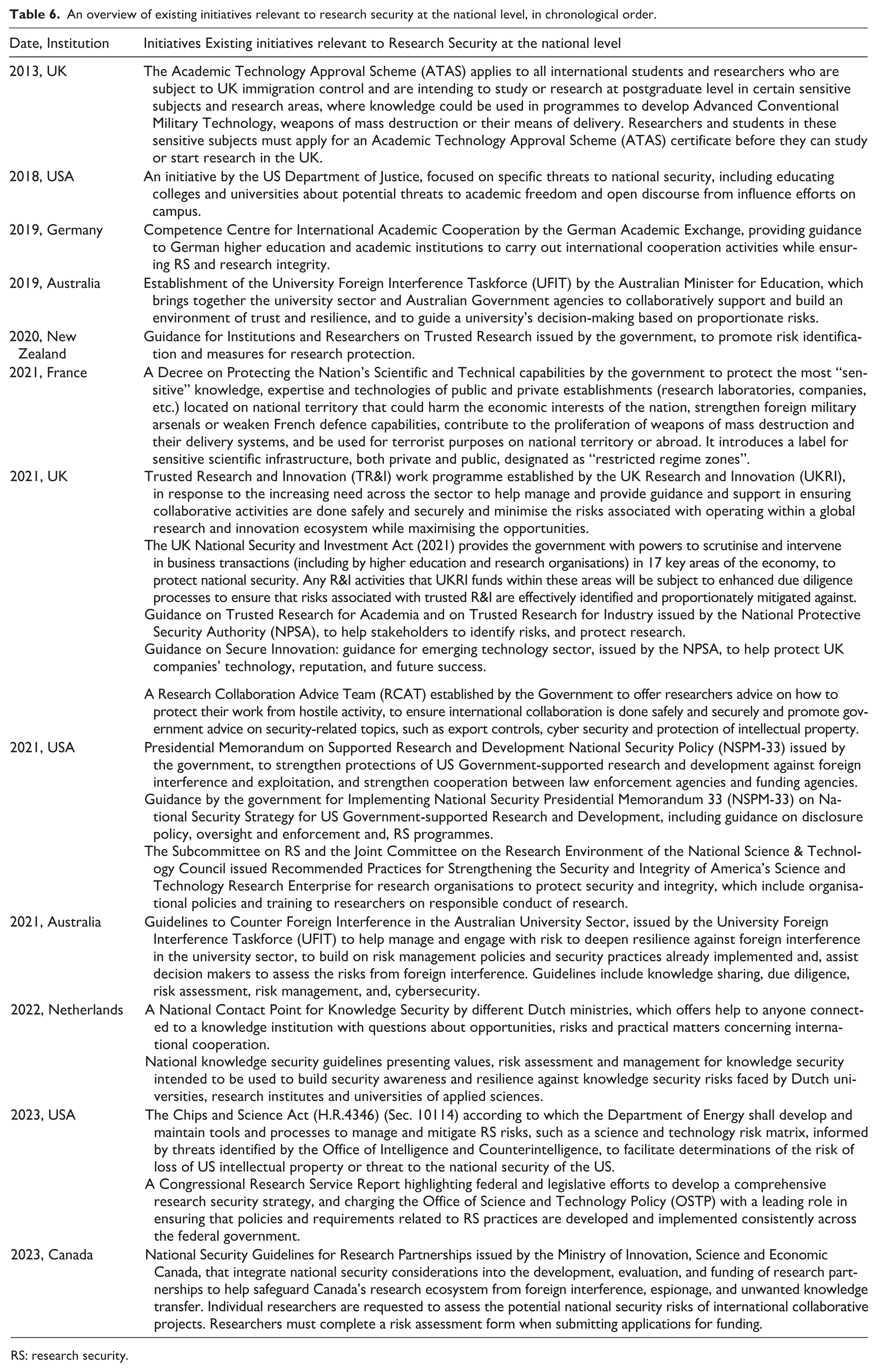
RS: research security.
Differences in national policies are also evidenced by the available academic literature. Pinna investigated how the EU “narrative” of knowledge and research security has been materialised at the national level in Hungary, Italy and the Netherlands, in relation to their collaboration with Chinese counterparts. The Netherlands has been proactive and created national guidelines for RS, Italy has adopted more cautious approaches, whereas Hungary lags behind (Pinna, 2025). This highlights that at the EU Member State level, the pace and depth of implementation vary significantly, with countries following different approaches to balance between benefitting from international research collaborations and safeguarding their academic sectors from potential security risks (Pinna, 2025). Although a country’s approach for RS is mainly related to its economic interests, the formulation and implementation of knowledge security policies in some countries has been catalysed by specific events. The proactive RS policy in the Netherlands was partially propelled by cases of research projects with China collaborators that generated a lot of public attention (Snetselaar, 2023). In the case of Canada, a case of visa refusal for a Chinese national, due to his apprehended risk of engaging in espionage, partially drove RS discussions in the country (Walker-Munro, 2024). Despite a close case of visa refusal in Australia, where a PhD student was deemed “a person whose presence in Australia may be directly or indirectly associated with the proliferation of weapons of mass destruction,” Australia has focused on foreign interference rather than RS, by setting guidelines for its universities (Smith and Walsh, 2023), which have been criticised (Lewis, 2020).
National funding agencies can also provide directions for managing responsible internationalisation of research and RS considerations, because they are tasked by their governments to consider national interests as well as global challenges (Shih, 2024). Finally, the need to address RS considerations has been acknowledged by numerous Associations, Societies, and Academies, that have published position statements stressing mainly the importance of maintaining institutional autonomy and academic freedom (Supplemental Table S2).
Challenges
The implementation of RS presents a broad array of challenges for HEIs, RPOs and the research community at large. This manuscript focuses specifically on a subset of these challenges, those identified as foundational and most urgent to address, based on their critical intersections with established principles and practices of research ethics and research integrity. These challenges were deliberately selected because they represent essential entry points for policy development.
Research security understanding varies between members of the research ecosystem
RS remains a relatively nascent concept, and thus, members of the research ecosystem (e.g. researchers, academics, industry actors, funding bodies and policymakers) acting at diverse levels do not necessarily have a common, precise and clear understanding of what RS is, the risks involved and their implications. Even among members of the research ethics and research integrity community, who acknowledge values and principles that need to be respected and are familiar with good research practices, the concept of RS may have diverse interpretations, with several questions requiring clarifications, such as: a) Does RS apply to communities within physical borders (e.g. a nation or the EU) or those within social borders (e.g. ethnicity) or both? Could protecting from foreign interference overly focus on the former at the expense of the latter? b) At which level should RS risks be assessed and managed, e.g. at the researcher-, project- or community-level and which level policy should be focused on? c) Are risks external e.g. utilisation of research findings by third parties for their own malign purposes, and/or internal e.g. improper leakage of findings by researchers themselves? d) How does RS differ between research and innovation in the public and private sector? e) Most importantly, do existing ethics and integrity infrastructures, as well as existing legislation on data protection, intellectual property, cybersecurity, dual use and misuse suffice to tackle RS risks?
Different terminologies related to RS have been used in various guidance and regulatory documents by countries and organisations (Tables 1–3 and 6): Foreign interference; Security-relevant research; Risks related to international R&I cooperation; Knowledge security; Responsible internationalisation of research; Trusted research; Secure innovation. Such diversity in terms can cause further ambiguity and misinterpretation of what RS is, can hinder the establishment of a unified framework for discussion and/or action and, result in inconsistencies in the implementation of RS measures by various stakeholders, complicating alignment efforts across nations, regions, organisations or sectors. At the same time, the concept of RS is not static, and requires to be versatile enough to respond to the changing research environment, the emerging technologies and the increasing geopolitical tensions. These highlight a critical gap in coherence and, therefore, the need for conceptual clarity.
Balancing institutional autonomy with research security considerations
In order to address and mitigate RS risks, institutions will need to adapt existing policies or develop new ones. This may inadvertently impose significant administrative burden and delays for institutions and, subsequently, for researchers. Such burden could be disproportionate to the scale or nature of research conducted within certain HEIs and RPOs, potentially hindering international collaboration, institutional autonomy and academic freedom. Paradoxically, delays and complex procedures to prevent and manage RS risks may result in reduced vigilance and oversight during research implementation. Indeed, lessons from the ethical oversight of research teach us the importance of maintaining a balance between procedural shortcomings and maintenance of the highest ethical standards in research (Ng et al., 2015). Accordingly, any policies and procedures for RS which will be implemented at the national or institutional level, need to provide sufficient flexibility to HEIs and RPOs, as well as autonomy to tailor their procedures to context-specific research, by leveraging existing infrastructures, rather than imposing uniform requirements horizontally that may exacerbate compliance and procedural challenges.
Lack of research security expertise
Most HEIs and RPOs are currently in the early steps of engaging with the complex and evolving landscape of RS. As they begin to develop institutional strategies to address RS considerations, these organisations face significant uncertainty. At present, there is limited institutional experience to draw upon, and a notable scarcity of expertise in RS capable of offering informed guidance and practical support. This lack of a well-established knowledge base and expert community hampers the ability of HEIs, RPOs and individual researchers to proactively identify and manage potential risks. Drawing from experience in research ethics, the role of ethics experts, either as members of institutional Research Ethics Committees (RECs), Framework Programme ethics appraisal scheme experts, Ethics Advisors or Mentors in research projects (European Commission, 2023), have highlighted the value of having a critical mass of specialised professionals that provide advice and recommendations to researchers, which can be used as a lesson.
Lack of capacities and tools
At present, there is a remarkable absence of established models or best practices to systematically and effectively integrate RS considerations into the research lifecycle. Researchers across disciplines lack necessary capacities and institutional support to adequately identify, assess, and mitigate RS-related risks. This capacity gap is further intensified by the unavailability of practical, fit-for-purpose tools for RS risk assessment and management, limiting researchers in addressing the complex RS challenges. The current situation underscores a critical need to actively involve researchers to take RS considerations in the research design with the support from context-specific tools.
Knowledge from the ethics review process, could be helpful for RS in this case. RECs alone cannot ensure the ethical conduct of research in the changing research environment, unless ethical reflections are introduced upstream (i.e. well before finalising the research design and/or applying for approval to RECs). This presupposes that researchers are actively involved in the ethical design of their own activities.
Policy recommendations
Building upon the guidance provided across various levels (Tables 2–4 and 6), a coherent set of policy recommendations is presented herein, aiming to strengthen efforts to tackle RS risks in the short and medium term. In this context, “short term” refers to actions that could be implemented within a period of 2 years, and “medium term” refers to actions that could be implemented within a period of 4 years.
Policy recommendations for RS were developed with full consideration of Europe’s long-term strategic vision, which underscores the fundamental importance of maintaining integrity, openness and ethics in research. In the European setting, research ethics and integrity infrastructures are composed of diverse yet complementary elements, all working in synergy to ensure responsible and ethical research and innovation: principles, values, codes of conduct, educational programmes, administrative procedures, management mechanisms and coordination structures, as well as relevant policies and legislation at various levels. Although adaptations are necessary to some of the elements of research ethics infrastructures and ethics review process (CHANGER project, 2024), ethics has long been an important factor influencing the “epistemic identity” of the EU inducing policies in science and technology (European Commission, 2007), while ethical principles have been fundamental in cultivating research integrity and an ethical mindset within the European research community (All European Academies (ALLEA), 2023). The notion of RS is very much different from research ethics and research integrity. Research ethics can be defined as the moral principles that guide researchers carry out their work and take judgements about the ethical permissibility, or acceptability of research, whereas research integrity can be understood to connote a commitment to live in accordance with a certain set of rules or principles to govern one’s conduct (Kolstoe and Pugh, 2024).
Herein, it is argued however, that in order to tackle RS, Europe needs to strategically capitalise on existing know-how and infrastructures, and integrate RS considerations with the existing research culture of ethical conduct of research and research integrity – with the necessary support. Nevertheless, this argument should not be interpreted as advocating the transfer of responsibility for RS risk identification and management to RECs or Research Integrity Boards. These bodies already shoulder the critical and demanding task of providing ethical oversight for research activities -often relying on the voluntary commitment of their members. In their current state of play, RECs and Research Integrity Boards do not possess the necessary capacities, resources or systemic support at either the organisational or national level to assume such an expanded mandate in the domain of RS. We rather argue that accumulated expertise and operational experience embedded in research ethics and integrity provide a valuable foundation for enhancing RS. This expertise can be leveraged either by strengthening existing practices and building capacities in established structures (such as RECs and Research Integrity Bodies) which, of course, demands support and resources, or by developing new structures designed to support specifically RS objectives, such as a foreign security Committee as proposed by the Staff Working Document of the EC (European Commission, 2022).
On one hand, research ethics and integrity are both based on fundamental values and principles (ALLEA, 2023; UNESCO, 2005). Research ethics relies on a balance between promoting scientific advancements and innovation with risks for research participants and their rights, societal benefit, respect of animals and the environment, as well as anticipating and mitigating potential harms that emerging technologies might pose. On the other hand, RS concerns responsible research and ethical behaviour aiming to safeguard democratic values and ensure that research is protected from malevolent interference and utilised for the benefit of society (Figure 1). RS seeks to ensure that collaborative research and open science co-exist in equipoise with security considerations. Finally, research ethics operate through joint actions and collective engagement of diverse members of the research ecosystem, without which the balance of scientific progress and protection of human rights would be unattainable. Likewise, addressing RS risks requires cooperation of all involved parties. Therefore, the long-standing infrastructures of ethics and integrity (European Network of Research Integrity Offices (ENRIO), 2025) offer a valuable model of how RS could be coordinated and addressed at different levels. Research ethics, research integrity and research security all require researchers to demonstrate responsibility and responsiveness to emerging challenges, while institutions are expected to provide support mechanisms for the assessment of research practices and the implementation of risk management procedures.
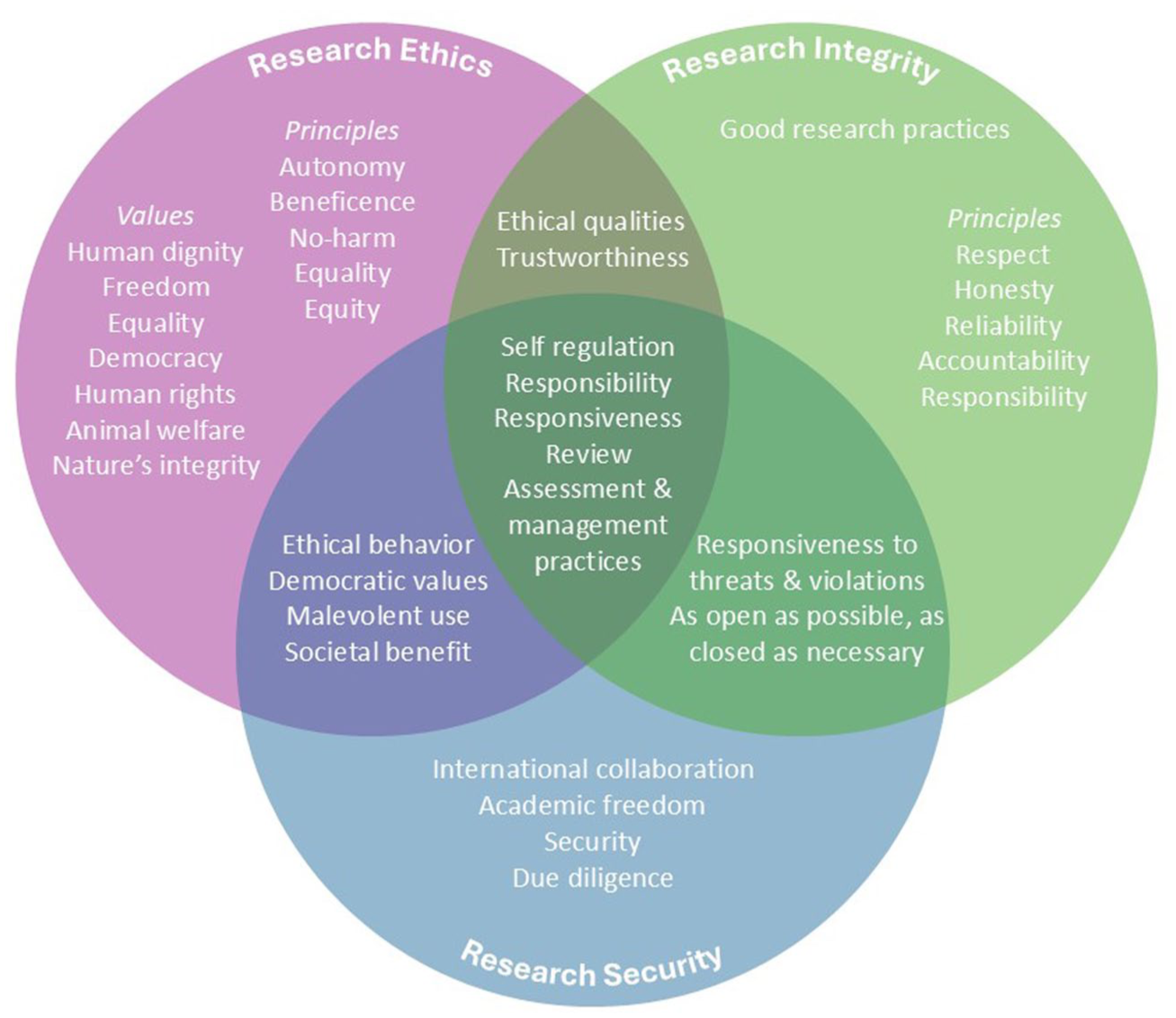
Empirical similarities and distinctions among research ethics, research integrity and research security.
This approach is aligned with the relevant policies at the European level and particularly the Staff Working Document on tackling foreign interference (Table 5), the Marseille Declaration on International Cooperation in Research and Innovation (Table 3), and the Council Recommendation (C/3510, 2024) on enhancing RS (Table 4), in which it is evident that RS considerations should be integrated in the EU’s research culture. In contrast, the USA model has evolved towards a compliance-oriented framework driven by national security rules, such as the Chips and Science Act and the Presidential Memorandum on Supported Research and Development National Security Policy (NSPM-33; Table 6). These measures are primarily aimed at mitigating risks related to intellectual property theft, espionage and foreign influence, particularly in sensitive technological fields and rely on restrictive controls and enforcement mechanisms that prioritise security and geopolitical protection over openness. Europe’s RS approach integrates ethical reflection, proportionality and trust-building as central elements of policy. Rather than imposing restrictions, EC initiatives seek to balance openness with responsibility.
Insights from the CHANGER project offered additional basis for the critical analysis and synthesis of policy recommendations. Findings highlight the need to build capacities in both the researchers’ community and the ethics expert community, the need for researchers to be supported by ethics experts to promote reflexivity and embed ethics-by-design approached in research, as well as the need for continuous training on the risks arising from emerging technologies for both communities (CHANGER D2.3, 2025).
Reflecting upon the European approach and findings of the CHANGER project, the proposed policy actions in this manuscript focus on awareness-raising, capacity-building and measures that enable the empower the research community to address RS risks, without undermining international collaboration or scientific freedom. RS, research integrity and research ethics are framed as complementary and integral components of responsible research, by cultivating a culture of responsibility rather than through top-down control.
Establish a common understanding and shared responsibility
A common understanding of RS should be established by: (a) using clear definitions and articulations of RS, to promote standardised terminology in all relevant documents, (b) developing training material to educate all members of the research ecosystem on the concept of RS and provide clarifications on potential (misapprehended) overlaps with other notions, such as dual use, misuse, intellectual property, data protection, cybersecurity etc. (see also policy recommendation 2) and, (c) creating channels for stakeholders to provide feedback on their interpretations, enabling iterative refinement of the shared understanding, as new insights, technologies or geopolitical tensions may emerge.
Similarly to the ethical conduct of research which is a collective responsibility of all parties involved, RS should be conceived as a shared responsibility, merely because risks cannot be addressed unless all parties of the research and innovation ecosystem take joint actions. In order to promote RS as a shared responsibility it is required to: (a) identify relevant stakeholders in an inclusive manner (HEIs, RPOs and their researchers both from the public and private sector, national and European research funding agencies, policy makers at the national and European level, scientific associations and bodies, intergovernmental organisations), and stakeholders that share not only the same concerns -as an assemblage of actors referred by Snetselaar (2023) - but also the same interests, resulting in alliances among European and non-European actors to design and adopt comprehensive strategies against RS risks; (b) invite all identified actors to a continuous and versatile dialogue, in order to foster communication and support joint actions to effectively tackle the global challenges (Box 1).
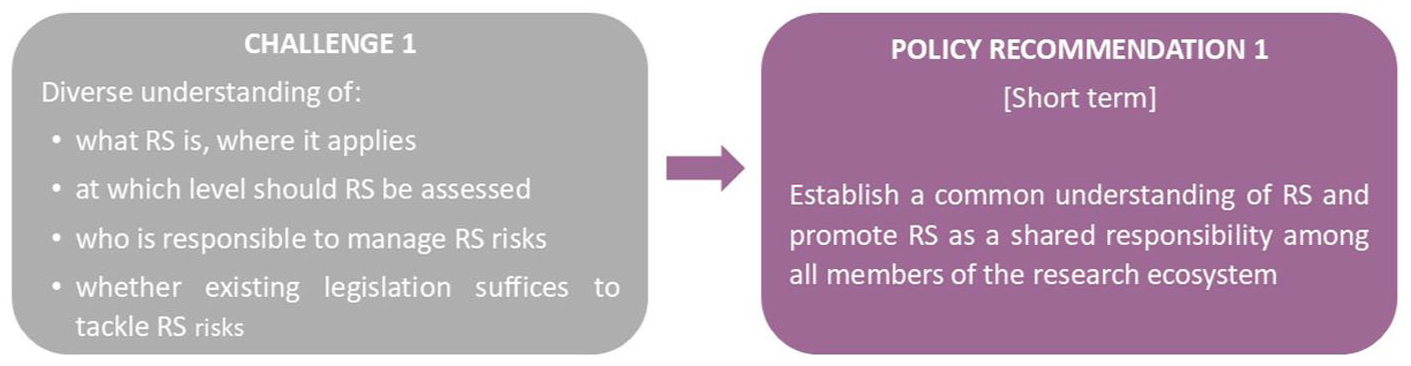
Challenge and policy recommendation 1.
The EU is invited to establish a common understanding of RS by leveraging the ERA governance structures and the European Centre of Expertise on Research Security to be established at the Union level and is expected to contribute to the creation of an EU-wide community of practice and a structural dialogue with stakeholder organisations (Council of the EU C/3510, 2024). HEIs and RPOs are also invited to establish a common understanding of RS and promote RS as a shared responsibility at the institutional level, through appropriate training material/programmes at the institutional level (see also Policy Recommendation 2).
Foster institutional autonomy by leveraging existing procedures
In order to tackle RS risks and at the same time avoid resource-intensive and excessive administrational burden, HEIs and RPOs should use procedures and practices already in place at the institutional level. As a first step, existing training programmes on research ethics and research integrity could be utilised and further enriched to include aspects of dual use, export control, misuse, cybersecurity, intellectual property, conflict of interest, and RS aspects, such as responsible internationalisation of research, foreign travel security, insider threat awareness and identification, and due diligence, as well as the importance of protecting academic freedom and values. This is particularly critical for institutions dealing with research in novel and disruptive technologies, where all researchers and staff should receive mandatory training not only on research ethics and integrity but also on RS considerations (Box 2). This approach will allow HEIs and RPOs to adopt context-specific training programmes, which are tailored to their research activities and embed RS considerations in the culture of ethical conduct of research and research integrity. Subsequently, HEIs and RPOs can gradually assess whether the establishment of new practices and/or structures, such as new institutional Committees, are deemed necessary to tackle RS risks.
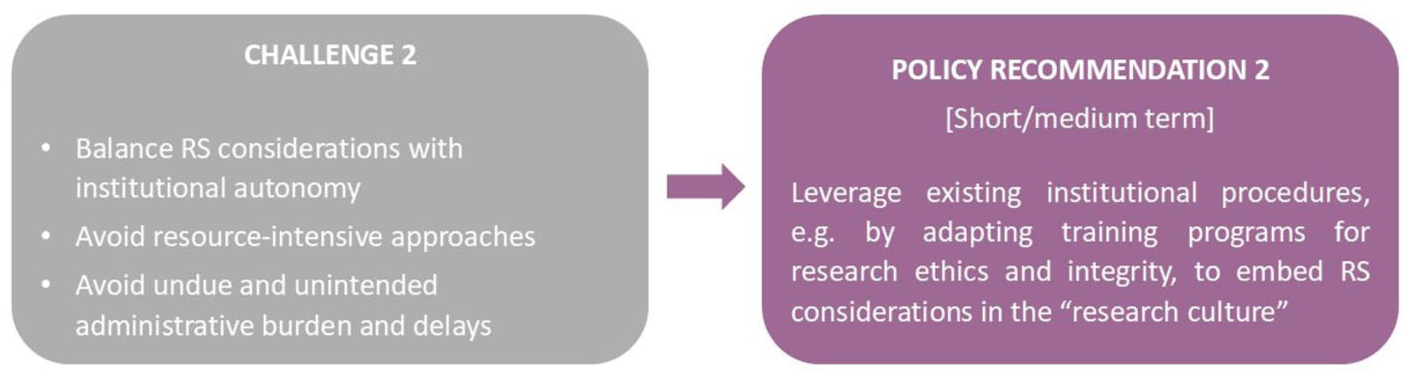
Challenge and policy recommendation 2.
HEIs and RPOs are invited to adapt existing resources, such as training programmes on research ethics and integrity, in the short term. Additionally, national and European funding organisations are invited to support such educational programmes through funding in the medium term. Some HEIs and RPOs in the USA, Sweden and Norway, already provide courses on research ethics including topics of research integrity, conflict of interest, dual use research, misuse of research (OECD, 2022) but this should be extended particularly to RS considerations in more countries, more HEIs and RPOs. The identification of RS risks and their management should be integrated into the “research culture”, where elements of ethical conduct of research and integrity of researchers are complemented by RS aspects.
Cultivate professional expertise
Developing a robust base of professional expertise in RS is critical in ensuring that national authorities, HEI and RPOs have access to reliable, context-specific advice and guidance. The establishment of a dedicated cohort of RS experts will be instrumental in supporting the implementation of effective and proportionate RS mechanisms. Such expertise can be cultivated through targeted capacity building efforts to bridge current capacity gaps, and should include: (a) up-skilling of professionals currently working in adjacent domains. such as research ethics, research integrity, (cyber)security, critical knowledge in emerging and disrupting areas and legal compliance, and (b) re-skilling of existing members of the research ecosystem, such as research managers and compliance officers (Box 3).
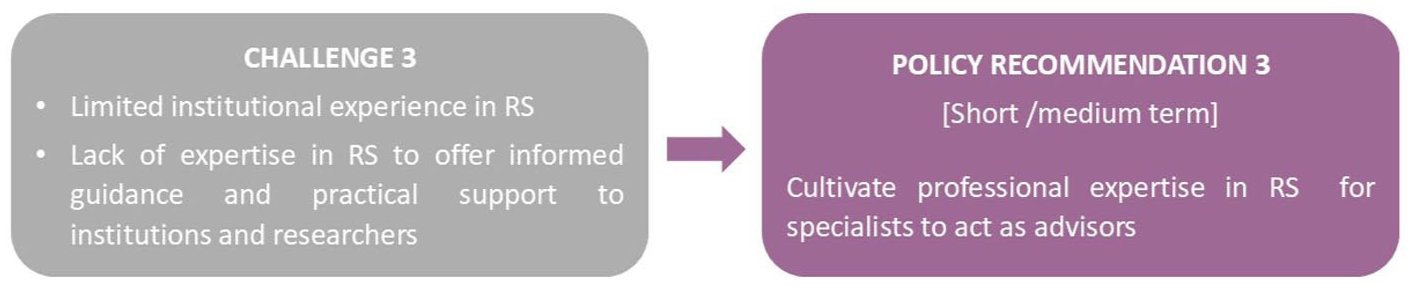
Challenge and policy recommendation 3.
The EU is invited to promote training of experts in the short/medium term, for example through the European Centre of Expertise on Research Security (Council of the EU C/3510, 2024) which will be established and is expected to contribute to the creation of an EU-wide community of practice. This community of practice could be further strengthened by the inclusion of expert RS Advisors who have received appropriate training and have acquired the necessary competences to provide their insights and offer evidence-informed policies to countries, HEIs and RPOs.
Policy Recommendations 2 and 3 align with the Council Recommendation to support HEIs and RPOs to develop training programmes for practitioners and new staff members, as well as curricula aimed at training the next generation of security advisors and policy-makers (Council of the EU C/3510, 2024). We further support this by recommending that existing infrastructures for research ethics and integrity should be utilised to provide such training, and existing programmes should be adapted to include RS aspects and the value of safeguarding academic freedom and values.
Support capacity building
Funding should be provided to explore innovative approaches that build capacities in researchers and their institutions, as well as to develop risk assessment tools for RS. As an example, we propose the novel concept of “research security-by-design,” which is based on the principle of “ethics-by-design” as implemented in the CHANGER project (CHANGER project, 2024). Research security-by-design is based on the idea that RS risks should be identified and mitigated already from the initial phase of the project design (Box 4). Researchers and RS experts should be engaged in reflection and dialogue during research design to effectively minimise RS threats in international, complex research projects. It can include certain “checkpoints” implemented into the project design, such as the research domain/technology involved, a plan of international collaborators and their institutional reputation, potential conflicts of interest and conflicts of commitment, plans of which research aspects should be “as open as possible and as closed as necessary,” potential cybersecurity risks etc. Such a procedure ultimately results in capacity building, because it aims particularly to support researchers who have limited prior exposure to RS aspects, to identify and minimise RS risks in their work. It creates situational awareness for researchers who are called to understand and effectively respond to potential RS risks in their research. It empowers freedom of scientific research and allows for informed choices that will be implemented in the project design. It recognises the need for adaptations to the severity of security risks for different types of research at different institutions and at different research projects, ensuring institutional autonomy. In order to explore “research security-by-design” or other innovative approaches, appropriate funding is necessary to develop RS risk assessment tools to be used by researchers but also by HEIs and RPOs, as well as to develop benchmarking tools for HEIs and RPOs to assess their capacities for risk identification and management (Box 4). This approach can be enhanced if researchers have received previous training on RS (policy recommendation 2), and if RS has been cultivated as a professional expertise for RS advisors who are able to provide their expert insights (policy recommendation 3).
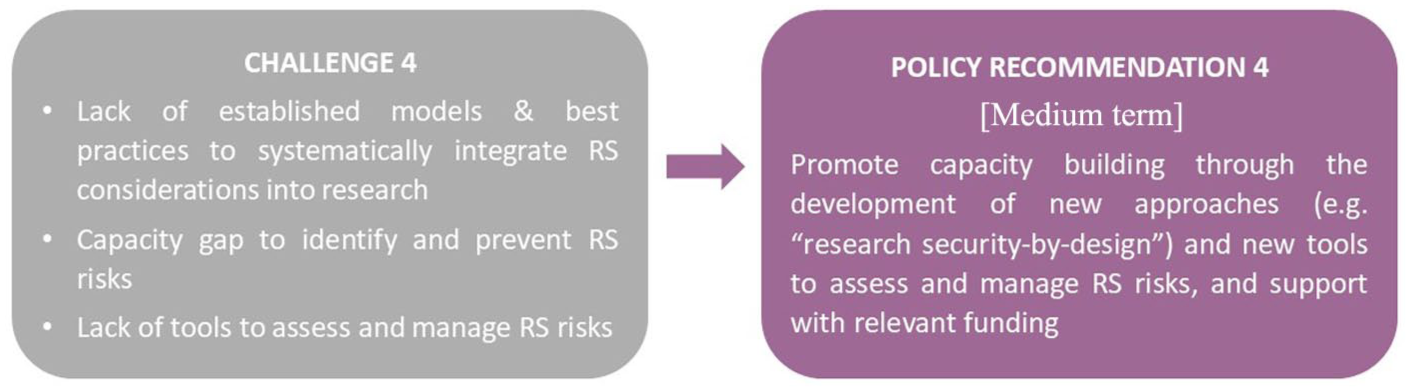
Challenge and policy recommendation 4.
The EU and national funding agencies are invited to embrace this critical policy recommendation, that will support research in RS and provide novel tools to manage RS threats. Such initiatives can be covered by existing EU framework programmes and national funds.
Policy recommendation 4 aligns with the Council Recommendation on enhancing research security, encouraging Member States (MS) to: (a) strengthen the evidence base for research security policymaking, through conducting or commissioning policy-relevant research, among others and (b) proactively contribute to the EU’s one-stop-shop platform on tackling R&I foreign interference by sharing tools and resources developed through public funding with the aim to facilitate their cross-border uptake (Council of the EU C/3510, 2024). The proposed policy recommendation of research security-by-design approaches can be an inherent part of RS risk identification and management procedures, as described in various guidance documents including the Toolkit on Tackling R&I Foreign Interference (European Commission, 2022) the Council Recommendation (Council of the EU C/3510, 2024) and the OECD (OECD, 2022), while fully respecting academic freedom and institutional autonomy. As a starting point, such an approach can be first explored in research involving emerging and disruptive technologies in the three critical technology areas (AI, Quantum technologies and Biotechnologies), as recognised by the EC (European Commission C 6689, 2023).
Figure 2 provides an overview of the identified challenges, the corresponding policy recommendations, the research actor(s) invited to implement the policy actions and the anticipated outcomes (targets achieved).
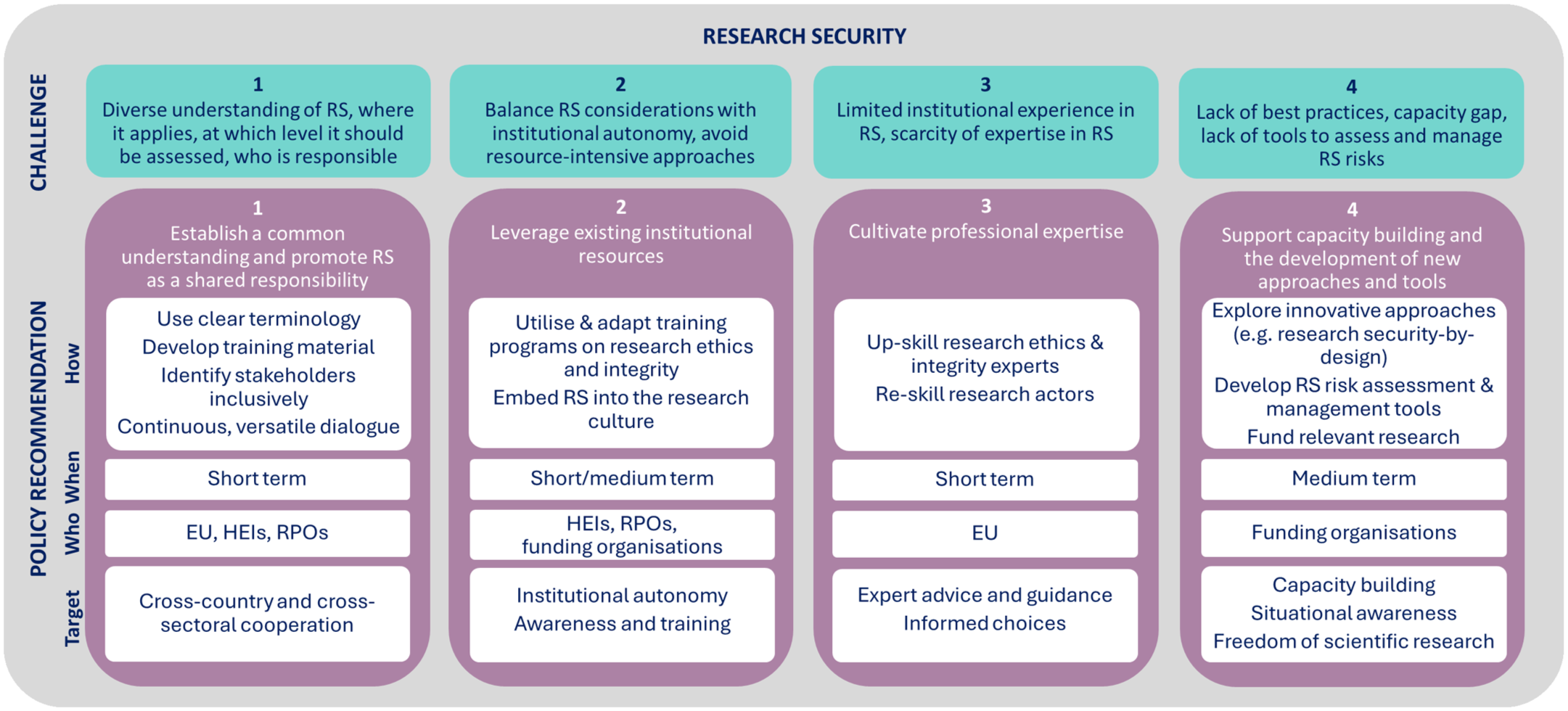
Overview of the challenges and policy recommendations for RS.
Why these policy recommendations?
First of all, the proposed policy recommendations are guided by insights from the experiential and empirical knowledge emerging from research ethics and integrity governance systems. Because these systems have been refined over many years of practical application in diverse research contexts, they provide an evidence-based foundation for anticipating risks and managing compliance.
Secondly, the proposed policy actions can be implemented in short and medium term, without encompassing the creation of new structures, such as new national or institutional RS Committees. The advantage of this approach is two-fold: (a) firstly and most importantly, it cultivates the integration of RS considerations in the existing culture of ethical conduct and integrity in research. This enables all members of the research ecosystem to have direct access to adapted training programmes designed to also raise awareness on RS, fostering a seamless integration of common principles and values; (b) it avoids the imposition of excessive procedural compliance compared to the application of uniform requirements horizontally for all HEIs and RPOS and all their research projects; horizontal measures would exacerbate compliance and could be perceived by researchers as an administrative burden, risking questioning and detraction from understanding the importance of safeguarding RS; (c) they require less resources than the development of new training programmes and (d) facilitate the early identification and mitigation of RS risks during project design, rather than addressing such risks only after they occur.
Additionally, these policy recommendations support grassroots initiatives on RS, encouraging dialogue and reflection among researchers. This approach fosters awareness, shared responsibility and a proactive responsiveness to the risks associated with international collaboration, while maintaining freedom of research. Even more importantly, these policy recommendations are instrumental in building capacity for researchers, HEIs and RPOs to address RS challenges effectively. Finally, policy recommendation 4 facilitates context-specific adaptations at the project design phase, enhances researchers’ situational awareness, and strengthens both capacity building and sustainability in building resilience to RS risks. By respecting institutional autonomy, it allows researchers and institutions to implement measures proportionate to the specific risks associated with individual research projects, ensuring a balanced and effective approach to address RS risks.
Concluding remarks
Leveraging experience and insights from existing research ethics and integrity infrastructure offers valuable opportunities to raise awareness and establish procedures for safeguarding RS in the long term. Besides, the Council of the EU definition of RS inherently includes ethical and research integrity considerations. The proposed policy recommendations should be considered as complementary to existing guidance and policy recommendations, particularly in relation to the Council of the EU recommendation supporting that EU MS should continue to promote academic freedom, institutional autonomy and international collaboration while ensuring ensure proportionality of measures (Council of the EU C/3510, 2024). In alignment with this recommendation, the proposed policy actions in this manuscript can be readily integrated into national RS policies, because they provide sufficient flexibility to accommodate the specific research needs of each HEI and RPO, and are proportionate to the related risks rising from each research project, respecting the autonomy of HEIs and RPOs and protecting freedom of research, while reaping the benefits of joint collaborations. We propose that by fostering capacity-building for researchers and cultivating a culture of awareness (as in the case of ethics reviews in the changing research environment), shared responsibility, and proactive responsiveness, the responsible internationalisation of research can be effectively realised. In this effort, funding agencies, HEIs and RPOs need to act as stewards of secure research, demonstrating commitment to support the research community. This way, RS policies can be recognised as an opportunity to research and development, to protect research outcomes and ensure that they are being used for the benefit of society.
Supplemental Material
sj-docx-1-rea-10.1177_17470161251404962 – Supplemental material for Challenges and recommendations for research security: Learning from research ethics and integrity
Supplemental material, sj-docx-1-rea-10.1177_17470161251404962 for Challenges and recommendations for research security: Learning from research ethics and integrity by Vasiliki Mollaki, Xenia Ziouvelou, Konstantina Giouvanopoulou and Vangelis Karkaletsis; and the CHANGER Consortium in Research Ethics
Footnotes
CHANGER Consortium
Alexander Bagattini, Karlsruhe Institute of Technology, Germany
Alexandra Zorila, University of Bucharest, Romania
Alfonso Alfonsi, K&I Knowledge and Innovation, Italy
Ana Gaudêncio, University of Coimbra, Portugal
Ana Marušić, School of Medicine Split, Croatia
André G. Dias Pereira, University of Coimbra, Portugal
Anna Huber, Ludwig Maximilian University of Munich, Germany
Antonija Mijatović, School of Medicine Split, Croatia
Carla Barbosa, University of Coimbra, Portugal
Constantin Vică, University of Bucharest, Romania
Ellen-Marie Forsberg, Norwegian Institute for Sustainability Research, Norway
Eva Van Steijvoort, Department of Public Health and Primary Care, KU Leuven, Belgium
Georgia Rina, University of Macedonia, Greece
Hella von Unger, Ludwig Maximilian University of Munich, Germany
Ioannis Manos, University of Macedonia, Greece
Jeanne Mifsud Bonnici, University of Groningen, Netherlands
Joana Günther, University of Bonn, Germany
Jonas Pfister, Vienna University of Technology, Austria
Kamiel Verbeke, Department of Public Health and Primary Care, KU Leuven, Belgium. Disclaimer: KV contributed in his personal capacity and his contribution should not be seen as representing the perspective of the ERC or the European Commission.
Lana Barać, School of Medicine Split, Croatia
Ljupco Risteski, Cyril and Methodius University in Skopje, North Macedonia
Luciano d’Andrea, K&I Knowledge and Innovation, Italy
M. Teresa Berliri, K&I Knowledge and Innovation, Italy
Margaux Reckelbus, Department of Public Health and Primary Care, KU Leuven, Belgium
Marina Markellou, University of Groningen, Netherlands
Marjo Rauhal, Vienna University of Technology, Austria
Matthias Kaiser, Norwegian Institute for Sustainability Research, Norway
Michael W. Schmidt, Karlsruhe Institute of Technology, Germany
Nevien Kerk, Ludwig Maximilian University of Munich, Germany
Pascal Borry, Department of Public Health and Primary Care, KU Leuven, Belgium
Phaedra Locquet, Department of Public Health and Primary Care, KU Leuven, Belgium
Rafaela Hillerbrand, Karlsruhe Institute of Technology, Germany
Tade Spranger, University of Bonn, Germany
Tina Garani-Papadatos, University of West Attica, Greece

Ethical considerations
Ethical approval was not required for this type of research.
Funding
The authors disclosed receipt of the following financial support for the research, authorship, and/or publication of this article: This work has received funding from the European Union’s Horizon WIDERA under Grant Agreement No 101131683. Views and opinions expressed are those of the author(s) only and do not necessarily reflect those of the European Union or the European Commission. Neither the European Union nor the granting authority can be held responsible for them.
Declaration of conflicting interests
The authors declared no potential conflicts of interest with respect to the research, authorship, and/or publication of this article.
Supplemental material
Supplemental material for this article is available online.
References
Supplementary Material
Please find the following supplemental material available below.
For Open Access articles published under a Creative Commons License, all supplemental material carries the same license as the article it is associated with.
For non-Open Access articles published, all supplemental material carries a non-exclusive license, and permission requests for re-use of supplemental material or any part of supplemental material shall be sent directly to the copyright owner as specified in the copyright notice associated with the article.
