




Abstract
Despite advancements in human research ethics and the growing significance of Research Ethics Board (REB) members, educational opportunities specifically tailored to their needs remain lacking in many countries. In response to this gap, our research aims to understand the demographics, needs, and preferences for educational opportunities of REB members in Canada. We conducted a survey that found REB demographics to be diverse and have different perceptions of their roles on topics such as the evaluation of the scientific merit of studies and responsibilities to stakeholders. We found that REB members in general prefer online tutorials and webinars for their education. Educators interested in facilitating the development of future training programs should consider the needs and preferences of REB members outlined in this publication.
Keywords
Introduction
Human participant research represents a significant proportion of the academic research enterprise, involving a wide range of disciplines and methodologies in health sciences, social sciences, and humanities. A large number and variety of ethical issues can be present in the design and execution of human participant research projects, such as criteria for informed consent, risks to participants’ privacy, confidentiality, and coercive potential in the use of financial/personal incentives (Yip et al., 2016). Best practices are constantly evolving due to new research methods and associated risks (King and Perrin, 2014; Kosinski et al., 2015). Historical violations of the safety and rights of human participants in research evoked instituted mechanisms of human participant protection (White, 2020) whereby human participant research is now mandated in many countries across the world to undergo review by an independent body before commencing to ensure that proposed research meets ethical standards set by national policies (e.g. National Statement on Ethical Conduct in Human Research (Australia), Tri-Council Policy Statement (TCPS) (Canada)).
The Tri-council is constituted by the three federal research funding agencies in Canada, including the Canadian Institutes of Health Research (CIHR), the Natural Sciences and Engineering Research Council (NSERC), and the Social Sciences and Humanities Research Council (SSHRC) (Canadian Institutes of Health Research, Natural Sciences and Engineering Research Council of Canada, and Social Sciences and Humanities Research Council, 2022: 2). Bodies of research ethics oversight are frequently affiliated with and organized by research institutions to review research conducted under the auspices of the institution. Different countries have different names for these bodies, such as research ethics boards (REBs) (Canada), institutional review boards (IRBs) (United States), research ethics committees (RECs)/independent ethics committees (IECs) (Europe), and human research ethics committees (HRECs) (Australia). Institutions, funding agencies, and publishing journals may also impose ethics review requirements to further institute requirements for research ethics review or affirm values toward research ethics.
Excessive inconsistencies in REB processes: Causes and outcomes
Significant variation exists in REB processes across countries (Taljaard et al., 2014), within countries (Dudi-Venkata et al., 2021; Khan et al., 2014; Stephenson et al., 2020; Trace and Kolstoe, 2017), and within institutions or REBs (Grinnell et al., 2017; Klitzman, 2011). REB processes and review outcomes have been found to differ in ethics application system submission methods (e.g. different online platforms or word/pdf submission over email), application forms and data required, requirements for externally approved research (e.g. accept external approval, short form, full review), assessment of risks, classification of on-campus versus off-campus survey research, standards for consent (e.g. language, appropriate use of opt-out consent), and time to process applications (Dudi-Venkata et al., 2021; Khan et al., 2014; Stephenson et al., 2020; Taljaard et al., 2014; Trace and Kolstoe, 2017).
Although some degree of inconsistency in REB review may reflect moral and contextual complexity in the ethics deliberation process (Friesen et al., 2019), drastic inconsistencies denote the interference of morally irrelevant individual factors such as different degrees of REB members’ knowledge of regulations (Egan et al., 2016), different levels of understanding of clinical research methodology (Mhaskar et al., 2015), and/or different understanding of what the responsibility of an REB is in relation to research participants and investigators (e.g. protectionism, expedition, and ambivalence 1 ) (Klitzman, 2011; Sayers, 2007). Inconsistencies may also result from institutional factors such as local REB culture/ethos involving how ethics issues are handled (e.g. precedents) (Cox et al., 2020; Stark, 2012), institutional histories (e.g. past federal audits and “shutdowns” of research), REB group dynamics, and REB chairs and/or the personalities of vocal REB members (Klitzman, 2011). Lastly, ambiguities embedded in REB policies and regulations (Friesen et al., 2019; Stephenson et al., 2020) also set the basis for inconsistencies.
These inconsistencies are against the interest of REBs and stakeholders, as they can reflect a gap in REBs’ application of guidelines, negatively impact the quality of ethics review, and delay/discourage multi-jurisdictional research in countries, such as Canada with a decentralized process (Friesen et al., 2019). This results in increased human resource spending for researchers and REBs, and creates a perception of unfairness in REB review that leads to negative researcher-REB dynamics and unethical behaviors such as dishonesty within research protocols and REB shopping (Friesen et al., 2019).
Education as a solution to inconsistencies
One of the ways inconsistencies can be resolved is by improving education for REB members. Training for REB members ensures their content and operational knowledge of guidelines (Page and Nyeboer, 2017; Guillemin et al., 2012). Standardizing REB training according to current best practices is an important aspect to achieve consistent, quality decision-making (Friesen et al., 2019). When compared with other methods to mitigate review inconsistency (e.g. decentralizing or centralizing the ethics review of multi-disciplinary research), developing educational opportunities may be associated with fewer costs, fewer liability concerns, more local control of the ethics review, and more consideration of local context and different ethical perspectives that can improve REB review quality (Corneli et al., 2021; Stephenson et al., 2020).
REB education/training can occur in different formats (e.g. case-based, lectures, and discussions) (Watts et al., 2017) with different instructional content (e.g. ethical codes, principles, decision-making, cognitive processes) (Torrence et al., 2017), and evaluation approaches (e.g. simulation-scenarios, organizational outcomes) (National Academies of Sciences, Engineering, and Medicine; Policy and Global Affairs; Committee on Science, Engineering, Medicine, and Public Policy; Committee on Responsible Science, 2017). The appropriateness of these educational approaches will depend on the specific challenges faced by REB members that need to be further characterized (Stockley et al., 2017). For example, Cox et al. (2020) found that Canadian REB members tend to over rely on distal strategies (e.g. local REB practice and ethos, use of resident authorities, and protective imagination) to assess the impact of research on human participants. Hence, education entailing workshops or informal conversations that facilitate direct sharing of experience between research participants and REB members and emphasize the practice of reflecting on gaps in knowledge about participants’ experience may enhance members’ knowledge and assessment of harm. Certain educational modes of delivery (e.g. online training and webinars) are also more versatile than others and may be more suitable for standardized uptake across geographical and institutional boundaries. This research seeks to inform future design and selection of educational approaches for REB members by surveying a large sample of REB members on their needs and preferences for further education. Specific questions of interest, as informed by the literature, include:
What are the current REB demographics and trends?
What are the needs of REB members in education?
What educational approaches do REB members prefer?
Methods
Study participants
Study participants include REB members who have participated in an online research ethics training tutorial entitled Course on Research Ethics (CORE) between 2013 and 2021. CORE is recognized by the Panel on Research Ethics and Secretariat on Responsible Conduct of Research, which is the Canadian federal governing bodies of research ethics. Completion of CORE is mandated for researchers and REB members at many Canadian research institutions.
Data collection
An electronic survey was embedded in the CORE training portal and distributed to all participants of the training program before they participated in the training. REB members could opt out of participating by choosing to skip ahead over the survey.
The survey included a combination of closed and open-ended questions. REB members were provided multiple-choice questions where they could indicate their demographic status, including age, geographic location, and institution of employment; and questions specific to their REB role including if they are a current member of REB, the number of applications they have reviewed, the type(s) of applications they review, the type of REB they are affiliated with, and their preferences for different research ethics training methods. They had the opportunity to further explain or clarify their answers via an open-ended selection. They were also provided with open-ended questions that examined their understanding/perspectives about the research ethics review process. Of which, responses to the question “What are the responsibilities of a Research Ethics Board?” were analyzed for this study to understand potential differences in REB members’ perception of their roles that may influence review decisions.
Ethical considerations
This study received full ethics approval from the Queen’s University General Research Ethics Board (ID:6005641) [Approval Date: 2011-01-30]. Study participants provided written informed consent to take part in this research.
Data analysis
Quantitative data (French and English responses) was analyzed using SPSS (v28.0.1.1). Outcomes were first analyzed descriptively by frequency count to answer our research questions regarding demographics and REB members’ preferences. Inferential statistics (chi-square, multivariate ordered logit regression) were then conducted to (1) highlight trends in the demographic status of training users, and (2) investigate if REB members’ preferences for educational approaches vary by demographics. Demographic groups are aggregated logically on a question-by-question basis to enable inferential comparison when required by the chosen statistical test. Missing data or incomplete responses, given that participants had a choice to skip any questions, were removed from the inferential analysis on a question-by-question basis to maintain a powered sample size. The sample size associated with each analysis is indicated with each question. Some questions received significantly fewer responses than others because they were added a few years after the survey commenced.
Qualitative data (English only), including the demographic questions’ open-ended responses and the outcome question of interest (responsibility of REB), were analyzed using NVivo 12 via a thematic analysis approach. The analytic procedure followed that described by Braun and Clarke (2019). A coder first familiarized themselves with the data, then iteratively coded the data. The codebook was then reviewed by two independent researchers after 5%, 10%, 15%, and 50% of coding was completed to establish consensus/agreement and interrater reliability; conflicts were resolved over discussion. Reflective memos of uncertain interpretations were noted throughout the coding process to be discussed and/or assist in the development of themes. Mind maps and literature both helped define the themes.
Results
REB member demographics
A total of 752 REB members responded to the CORE pre-training survey; however, it is important to note that not all responded to each question. Training participants’ general demographic statuses, including age, residence status, and institutional affiliation are included in Table 1.
Distribution of general demographic characteristics among respondents.
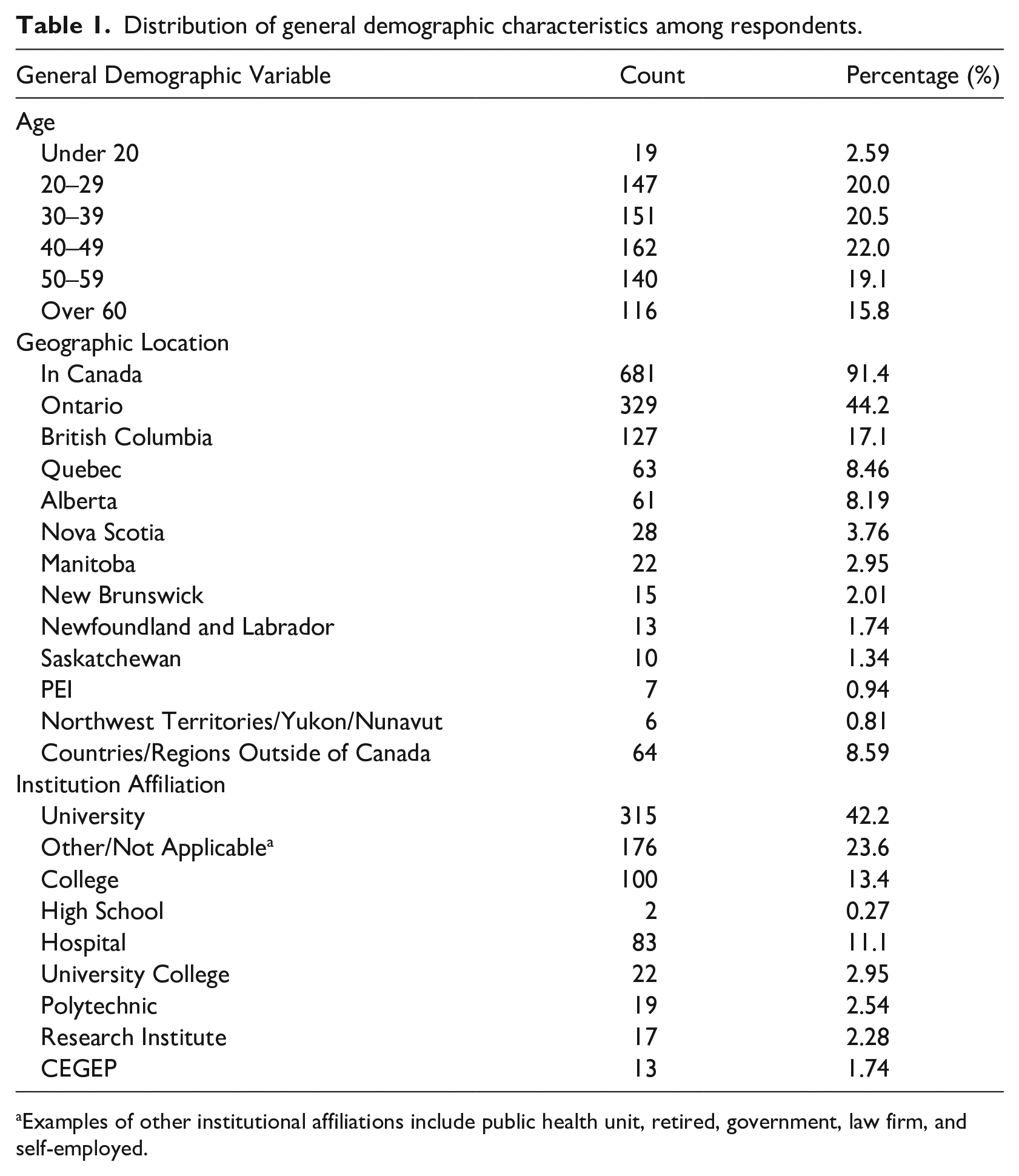
Examples of other institutional affiliations include public health unit, retired, government, law firm, and self-employed.
Participants’ REB-role-specific demographic statuses, including REB affiliation, types, and numbers of types of disciplines of research reviewed (as identified within the Tri-Council), and the number of studies reviewed before completing the survey are included in Table 2 and Figure 1.
Distribution of REB-role-specific characteristics among respondents.
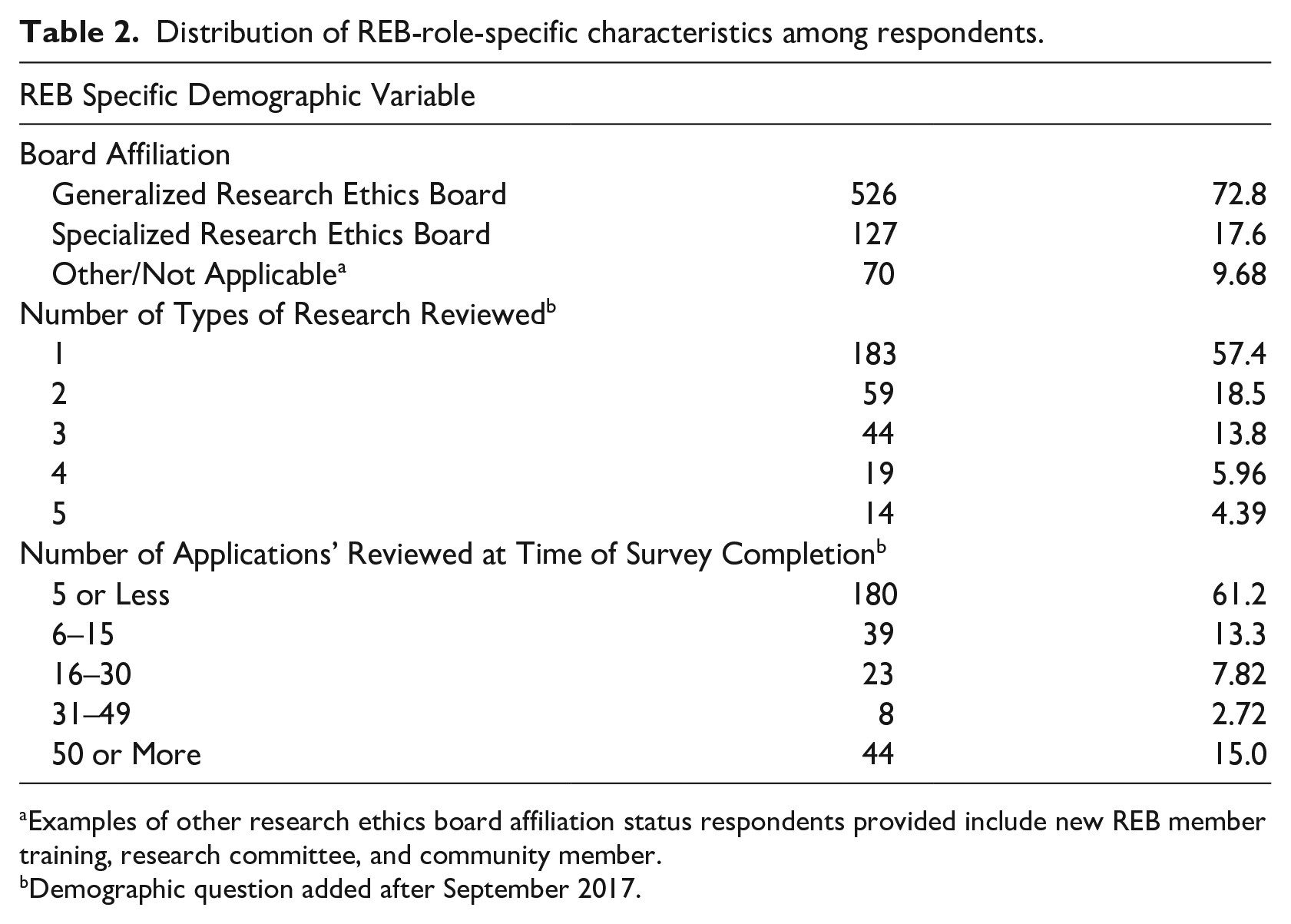
Examples of other research ethics board affiliation status respondents provided include new REB member training, research committee, and community member.
Demographic question added after September 2017.
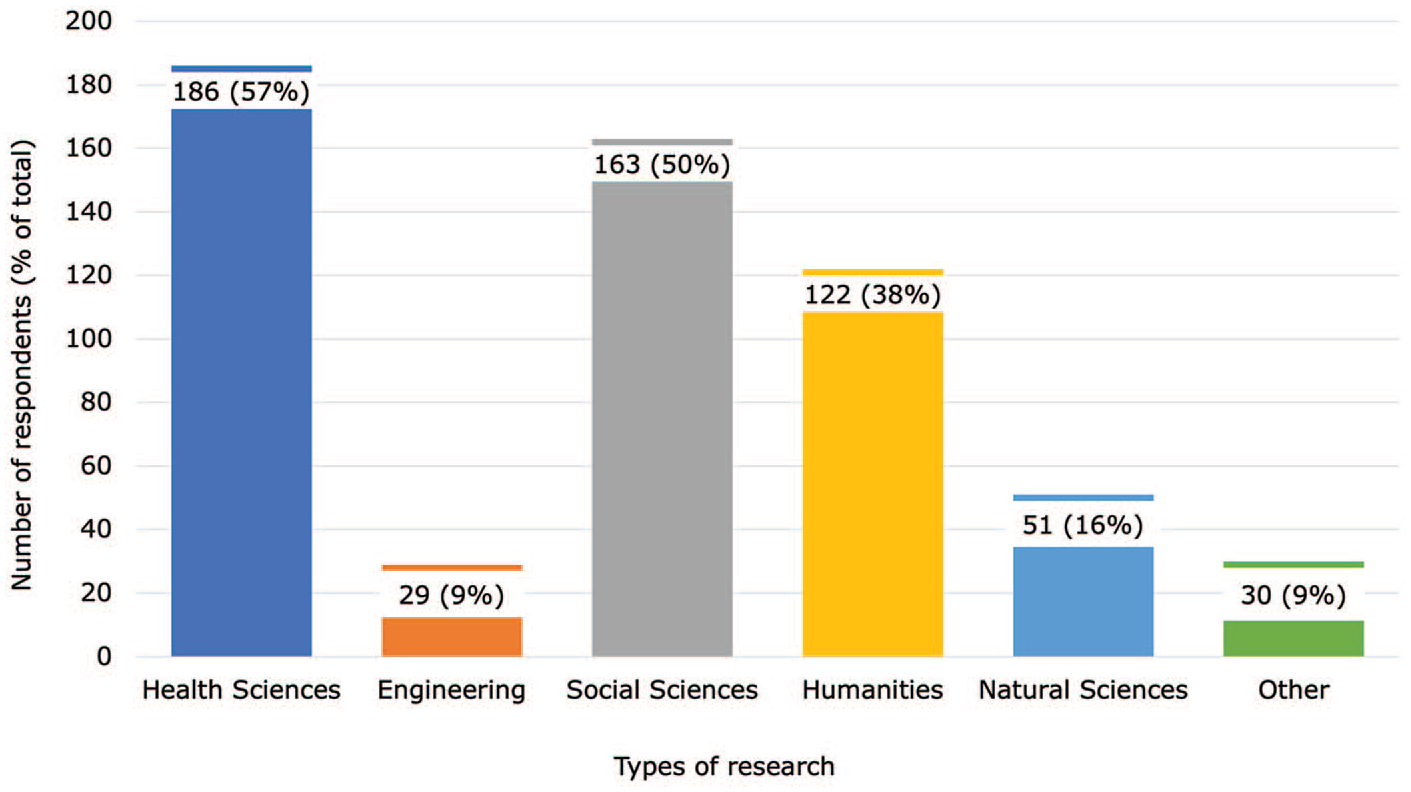
Types of research involving humans REB members review (multi-select) (n = 325).
Demographic trends
From 2013 to 2021, there were no significant changes in age, institution affiliation, research ethics board affiliation, number of applications reviewed, types of applications, and number of types of applications reviewed by respondents. There were only significant changes overall in the geographic distribution of the respondents, particularly, a large drop in the percentage of Ontario-based respondents and a large increase in the number of respondents based-outside of Canada (Figure 2).
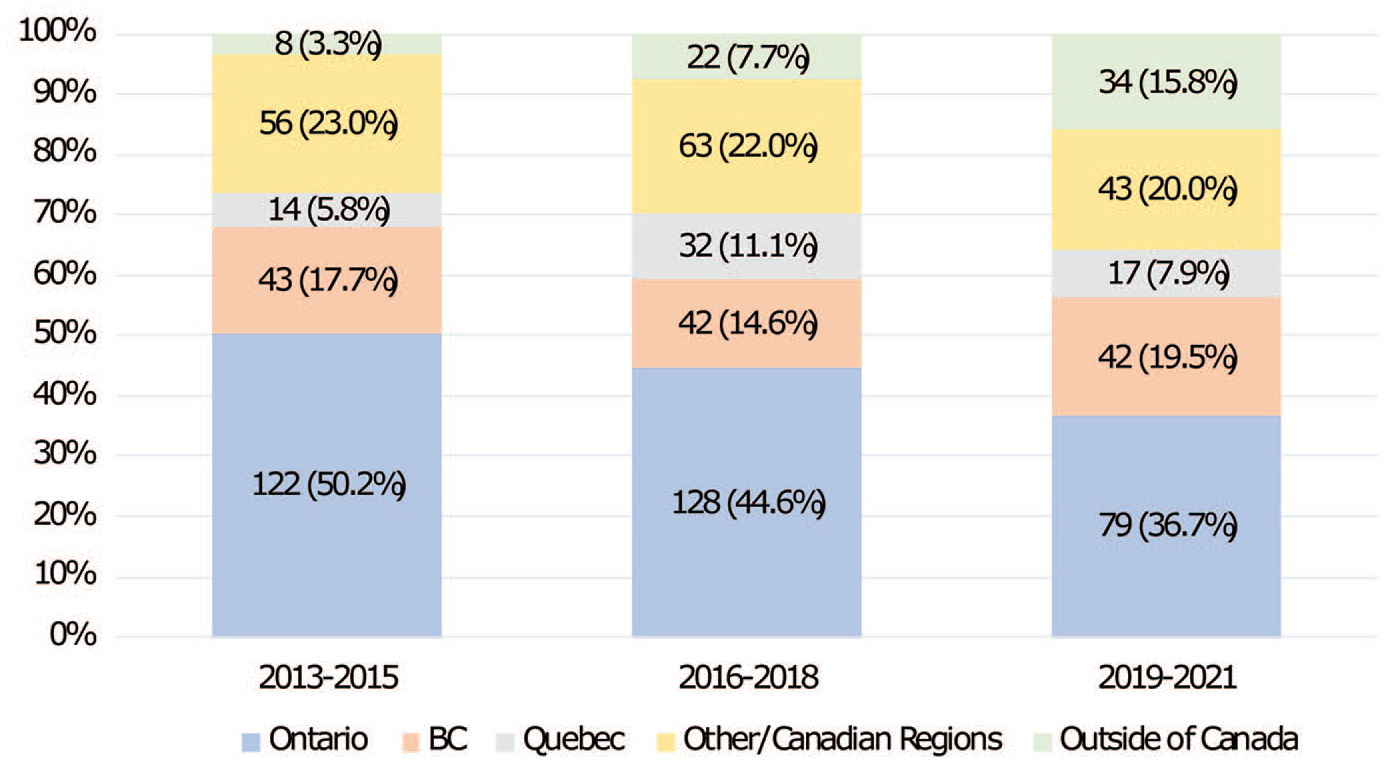
Province and/or territory of residence of respondents. X2(14, N = 745) =39.774, p < 0.001.
REB members’ needs for education
Different interpretation of REB responsibility
Ethical or scientific merit
A wide variety of differences in the interpretation of REB responsibilities were identified. Almost all respondents stated that the REB is responsible for reviewing/assessing/ensuring the ethical merit of an application. Examples of representative quotes include “to consider the ethical implications of research” and to “ensure the ethical treatment of research participants.” In addition, some respondents also discussed that the REB is responsible for assessing the “scientific merit/validity” of the proposed studies, such as the “quality of research and methodology.” These comments were made not just by REB members who review health sciences research, which may be required to evaluate the scientific aspects of certain studies under other regulations to consider in conjunction with the TCPS (e.g. the International Conference on Harmonization Good Clinical Practices Guidelines). Scientific merit was rarely suggested as the sole purpose of ethical review, although some participants suggested that REB members perceive the scientific merit of studies reviewed as the end goal, while others thought ethical merit is perceived as a means to scientific advancement (i.e. the responsibility of an REB is to “avoid some scientific obstacles related to ethical problems”). Respondents did not specify the context in which a scientific review of proposals would be appropriate. Instead, they commented on their general responsibility of ensuring the validity and value of studies.
Responsibility to stakeholders
Respondents also referenced different stakeholders whose perspectives they thought should be prioritized by REBs. Most respondents described REB’s duty/responsibility to protect participants and their rights, by explicitly stating that being the REB’s purpose. They also discussed specific ethical duties of REBs including the following, ranked by the prevalence of responses:
- “ensure that the
- “support an
- “Maintain
- “help in the
- “ensure that there is
Of note, participants also mentioned that ensuring the ethical treatment of participants “can be tricky, when there is a conflict between ethical principles.”
REB responsibilities to protect the researchers and institutions were also mentioned (e.g. “ensure protection of the [participants], researchers, and integrity of the institution,” “ensure the proper use of research sources and funding,” and “protect liability of involved institution”). REBs’ responsibility to researchers and their institutions was rarely mentioned alone but more often discussed in conjunction with their responsibility to research participants.
Relationship/interaction with researchers
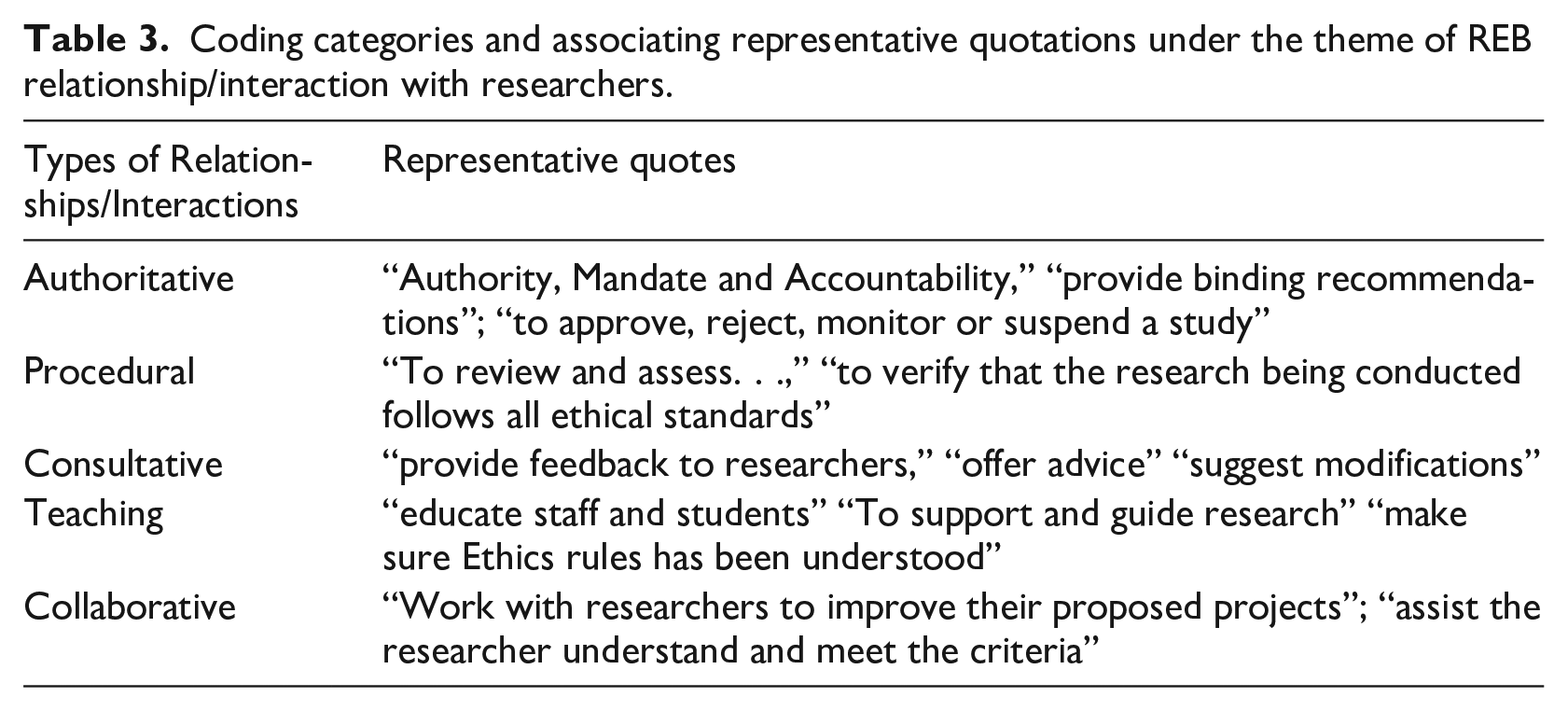
Respondents used different types of language to describe tasks that infer a relationship/interaction between the REB and researchers. The language/types of relationships inferred can be categorized as authoritative, procedural, consultative, teaching, or collaborative (Table 3). Authoritative and procedural terms/language were most commonly used.
Coding categories and associating representative quotations under the theme of REB relationship/interaction with researchers.
Ongoing and institutional responsibilities
Respondents were inconsistent in acknowledging the ongoing responsibilities of REBs (“continuous follow-up and monitoring of the ongoing research”) as only a handful of respondents made such comments. Most only remarked on the various responsibilities of the REB such as reviewing, vetting, and/or approving proposals.
Similarly, respondents seldom discussed the REB’s overarching responsibility in relation to the institutional community (“to create and foster a community of learning re: research ethics in home institutions”; to “promote greater awareness and understanding of TCPS2 standards”) compared to the everyday tasks REB members perform (e.g. review ethics applications).
Relationship to ethical guidelines
Finally, respondents varied in their comments as to their role pertaining to federal/national ethical standards/guidelines. Respondents were divided in acting/explaining their main responsibilities as gatekeepers to “ensure [applications] meet the ethical standards set by my university and the wider research community in Canada,” while others emphasize that the policy/guidelines provide a context/framework but the REB exercises a degree of judgment based on community context (the “REB should reflect the ethical values of this Policy [(TCPS)] in the context of the society within which it operates”; the REB should “ensure that [applications] meet the guidelines of the TCPS as well as the moral beliefs of groups involved with the research”). In contrast, some respondents suggested that REBs should “establish ethical standards” or “setup ethical policies” at their institutions.
REB members’ preferences for different educational approaches
A total of 645–658 REB members provided their preferences for the different educational approaches asked, which are shown in Figure 3. From 2013 to 2021, preference for certificate programs have significantly increased (X2 (16, N = 606) =30.660, p = 0.015), whereas preference for other educational approaches did not vary significantly from year to year.
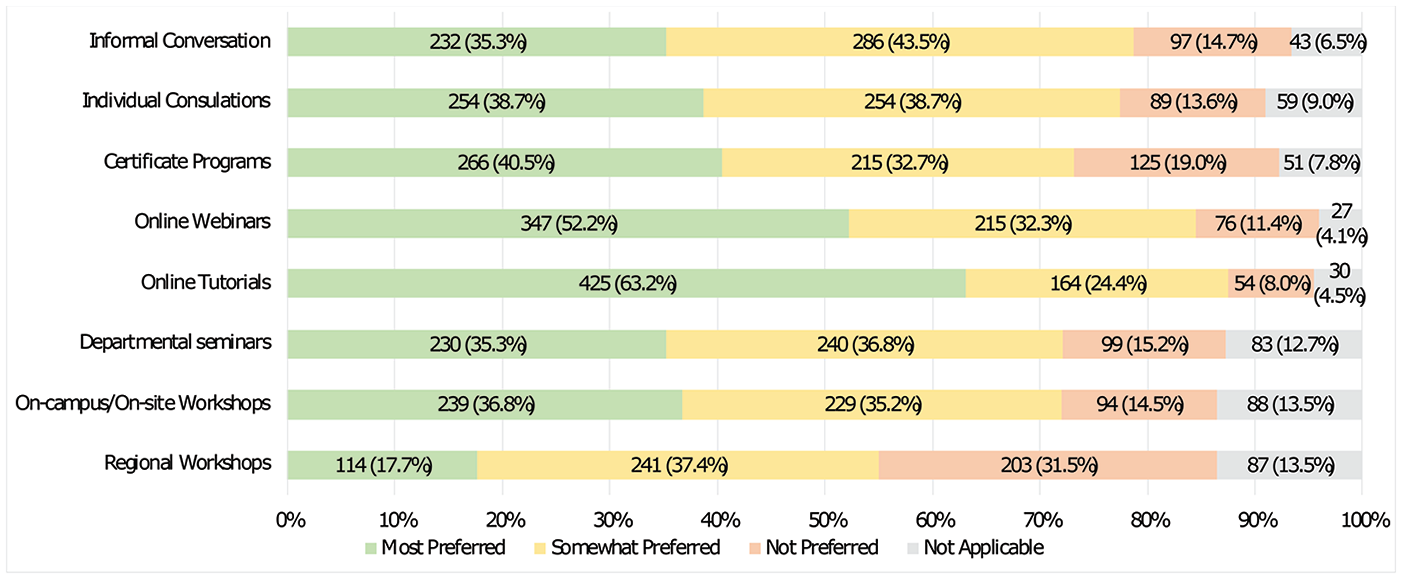
REB participants’ preferences for different educational approaches.
We further examined whether REB members’ preferences for modes of education change depend on demographic factors through bivariate chi-square analysis. Preferences for approaches remain mostly stable across demographics, with a few exceptions (Table 4).
Significant difference(s) in the preference for each educational intervention across REB demographic groups.
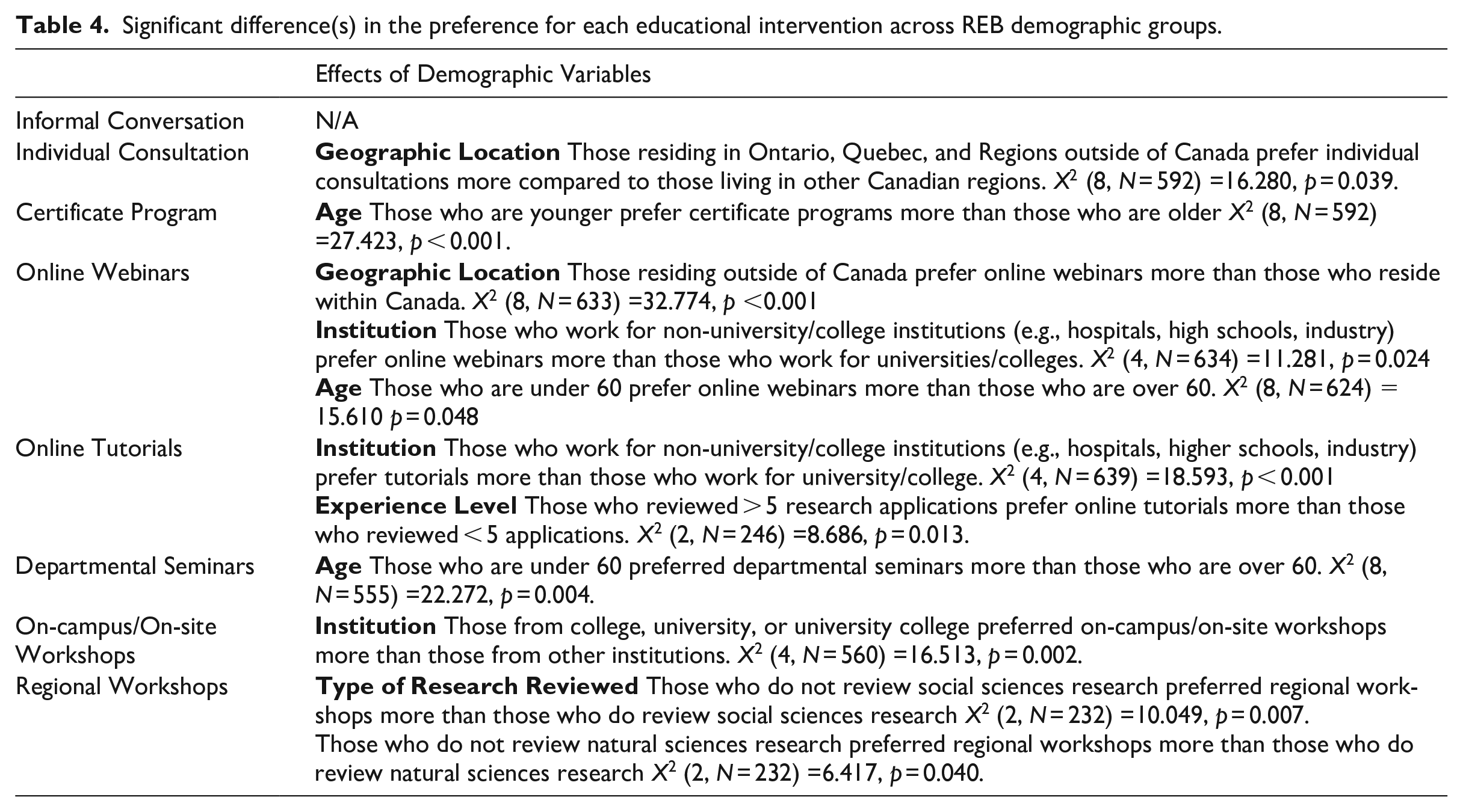
We also conducted a multivariate analysis that examined the independent effects of all the covariates in the analysis (year and demographic variables of interest) (see Appendix A). In the analysis regarding preference for certificate program, the effects of year observed in the bivariate chi-square analysis were attenuated in the multivariate context, possibly due to a restricted sample size and interactions or mediations among variables in the model. Similar attenuation was observed on the effects of institution and age on preference for online webinars, the effects of institution and experience level on preference for online tutorial, the effects of institution on preference for on-campus or on-site workshops, and the effects of type of research reviewed on preference for regional workshops.
The rest of the associations found in the bivariate chi-square analysis remain stable in the multivariate context.
Discussion
Educational opportunities tailored to REB members remain lacking in Canada. Despite the presence of several elective educational resources specific to REB members (e.g. Canadian Association of Research Ethics Boards (CAREB) and Public Responsibility in Medicine and Research (PRIM&R) events), CORE remains the only standardized training for REB members across the country specific to the Canadian context. Our research characterizes the REB members’ demographics in Canada and their needs and preferences for future educational opportunities. This information can support interested educators in the development of future training opportunities for REB members.
Through our study of users of CORE, a nationally recognized research ethics/TCPS training program, we found that the need for TCPS education is in demand by REB members across diverse demographics of age, region, institution, discipline, and experience level. Given that only slightly more than half of the respondents reviewed less than 5 studies by the time of taking this survey, it can be inferred that CORE has been used both as an onboarding material and as a refresher for existing REB members. There were no significant changes in educational needs/demographic over the years, except that more REB members residing outside of Canada are taking CORE. Our data does not provide insights on whether they are members affiliated with REBs outside of Canada, or members affiliated with Canadian institutions or REBs to assist in the review of transnational/cultural research. This finding may suggest that CORE/TCPS has been used as an international standard or an increase in international representation at Canadian REBs respectively. More research is needed to understand this subpopulation of users.
Needs for education
We looked at REB members’ perception of their roles and responsibilities as a known potential source of review inconsistencies and variation (Sayers, 2007). We were able to identify specific differences in perceptions of attentiveness when trying to improve the consistency of the research ethics review process. Firstly, we found that respondents affirmed their responsibility of ensuring both the ethical and scientific merit of proposed studies, although the latter was mentioned significantly less frequently than the former. This observation partially aligns with the conditional provision outlined in the TCPS 2 that allow REB members to apply scholarly review to studies under certain circumstances. Assessing the scientific validity of proposals must be done with great care to prevent mission creep, where appraisals drift beyond ethical codes and concerns to reflect REB members’ personal scholarly and sociopolitical orientations (Sharpe and Ziemer, 2022), or mission lapse, where no organizational body becomes clearly responsible for ensuring the scientific rigor and scientific and/or societal benefits of the research being conducted (Waltz et al., 2023). These risks are cautioned in the TCPS 2 guidelines (Canadian Institutes of Health Research, Natural Sciences and Engineering Research Council of Canada, and Social Sciences and Humanities Research Council, 2022: 21–22) and can result in compromise in review quality, inconsistencies, and delays (Sharpe and Ziemer, 2022; Waltz et al., 2023). Our results consist of a preliminary investigation into how Canadian REB members understand their responsibilities concerning ethics and related scholarly review, revealing that some but not all REB members perceive the evaluation of scientific merit of proposals directly applicable to their role. Further research is required to explore how members conceptualize the appropriate conditions and processes for scholarly review of proposals, which we were not able to ascertain with our study, to determine whether this should be an educational focus in the training of REB members.
REB members conveyed their different responsibilities to participants, researchers, and institutions in the survey. Most respondents are vocal about their responsibilities to protect research participants while fewer acknowledge researchers and institutions. REBs help researchers and participants strike a balance between the goals of scientific advancement and the protection of participants by acting as advocates for participants’ perspectives. Thus, it was not surprising that most responses concerned REB’s responsibilities to participants. Although ensuring ethical standards of research are also of interest to researchers and institutions, there is an existing tension as REBs should be independent of their institution in the ethics review decision-making process to fulfill its primary goal of ensuring high ethical conduct in research (Canadian Institutes of Health Research, Natural Sciences and Engineering Research Council of Canada, and Social Sciences and Humanities Research Council, 2022: 95–96).
Certain REB protective duties to participants were discussed less than others. There was a heavy focus on minimizing risks and ensuring an informed consent process was in place and less on considering cultural differences and the vulnerable status of participants, which was described vaguely and with few actionable details such as ensuring fair participation and minimizing power imbalance. This pattern reflects the conduct of ethics review as criticized in some literature, which is heavier on consent, rather than the nature of research and associating ethical or philosophical nuances (Stephenson et al., 2020). Similarly, respondents rarely commented on REB responsibilities in the face of conflicts of interest. Further research should investigate REB members’ understanding and competence in reviewing these more nuanced and complex ethical topics where differences in ethics review decisions may be present.
The language used to describe researchers and REB relationships is predominantly authoritative and procedural, which aligns with REB responsibilities outlined in the TCPS (Canadian Institutes of Health Research, Natural Sciences and Engineering Research Council of Canada, and Social Sciences and Humanities Research Council, 2022: 96); however, the research ethics review process has been increasingly viewed by researchers as unsympathetic and unhelpful to their research (e.g. when REB members’ suggested revisions to research methods are unrealistic to research discipline or tangentially related to ethical concerns) (Head, 2020; Sharpe and Ziemer, 2022). To effectively improve the ethical conduct of research, REB members need to continuously reflect on and develop their expertise (Page and Nyeboer, 2017), which was seldom mentioned by our survey respondents. REB members may need to increase recognition for the collaborative and educational dimensions of the research ethics review process for both REB members and researchers. Enhancing the quality of communication between REB members and researchers, such as in dimensions of transparency, contextualization of decisions reasoning, modesty and respect, can help facilitate researchers’ competence in applying ethical considerations to the design of their research and confidence in the review process (Friesen et al., 2019; Page and Nyeboer, 2017; Sharpe and Ziemer, 2022). Through this lens, it may be argued that the research ethics review process in practice cannot be solely procedural or authoritative to be efficient and effective and may be something REB members should more uniformly recognize.
Preferences for educational methods
Overall, online tutorials and online webinars are the most strongly preferred educational methods by REB members. Preferences for these approaches are relatively stable with some differences by region, age, and experience. Higher preferences for these approaches are perhaps due to the accessibility and versatility of their format that enable participation by individuals outside of Canada or for those who are affiliated with smaller institutions and can be used for both REB member onboarding training and their review of ethical guidelines. On the other hand, REB members who are over 60 years of age rated their preferences for these online educational approaches lower than participants from other age groups. This observation may warrant further investigation and consideration when delivering new educational opportunities.
The certificate program, individual consultations, and informal conversations are the more preferred educational approaches. It is interesting to note that certificate programs had the highest number of individuals who highly preferred them compared to informal conversations and individual consultations, but also a higher number of individuals who did not prefer them. Further analysis revealed a decrease in interest in certificate programs as an educational method among older REB demographics. This decline in interest could be attributed to the impact of certification on career advancement or mobility, which may matter less to more senior REB members. Nonetheless, we also found that preference for certificate programs has significantly increased over the last few years. The support received for individual consultations and informal conversations may suggest a potential role for personalized and informal learning opportunities for REB members that should be further studied.
It is also worth noting that, overall, the majority of the suggested educational approaches received over 70% positive ratings (70% of respondents rated these approaches as most or somewhat preferred). This indicates that REB members are generally receptive to learning more about research ethics. Therefore, providing additional educational opportunities to address the needs identified by this study and others would likely be beneficial for REB members, researchers, participants, and stakeholder institutions.
Conclusion
As human participant research expands in number and complexity, there is a need to better equip REB members to conduct consistent and high-quality reviews. Education opportunities can be instrumental in boosting the confidence and competence of REB members in ethics review, particularly when tailored to their specific needs. Our research found that REB members differ in their perception of the relevance of scholarly review in their role and sense responsibility to their institution. Further, REB members were more attentive to their duties on minimizing risks and ensuring consent, rather than considering research participants’ cultural differences and vulnerable status, managing conflicts of interest, and engaging in reflective and collaborative practice. Through education, best practices in these areas can be shared with REB members to ensure consistent and high-quality review.
When considering the format of educational initiatives, it is crucial for educational initiatives targeting REB members to take into account the diversity within the membership, considering factors such as age, geographic location, institutional affiliation, ethics review discipline, and level of experience. Online tutorials and webinars are generally favored by REB members as effective educational methods. This preference can be attributed to the accessibility and flexibility offered by these formats, which accommodate individuals with varying geographic and institutional limitations, as well as different experience levels. By leveraging these digital platforms, educators can reach a wider audience and cater to the diverse needs of REB members, ultimately contributing to their ability to fulfill their responsibilities in the research review process.
Supplemental Material
sj-docx-1-rea-10.1177_17470161231218173 – Supplemental material for Needs and preferences of REB members in the development of a new TCPS 2 training program in Canada
Supplemental material, sj-docx-1-rea-10.1177_17470161231218173 for Needs and preferences of REB members in the development of a new TCPS 2 training program in Canada by Jiale Xie, Denise Stockley, Amber Hastings Truelove, Susan Marlin, Rachel Zand, Jennifer Payne, Miranda Miller and Eleftherios Soleas in Research Ethics
Footnotes
Acknowledgements
We thank Dr. Nicholas Cofie from Queen’s University for advising on the statistical analysis of this project.
Declaration of conflicting interest
The author(s) declared no potential conflicts of interest with respect to the research, authorship, and/or publication of this article.
Funding
All articles in Research Ethics are published as open access. There are no submission charges and no Article Processing Charges as these are fully funded by institutions through Knowledge Unlatched, resulting in no direct charge to authors. For more information about Knowledge Unlatched please see here:  . We thank the Queen’s University Office of the Vice-Principal Research and the Queen’s Undergraduate Student Summer Research Fellowship (USSRF) program for funding the first author (Jiale Xie) in her completion of this project. This research received a grant from the Tri-Council Agencies, made up of the Canadian Institutes of Health Research (CIHR), the Natural Sciences and Engineering Research Council of Canada (NSERC) and the Social Sciences and Humanities Research Council (SSHRC).
Ethics approval
This study received full ethics approval from the Queen’s University General Research Ethics Board (ID:6005641) [Approval Date: 2011-01-30]. Study participants provided written informed consent to take part in this research.
Supplemental material
Supplemental material for this article is available online.
Notes
References
Supplementary Material
Please find the following supplemental material available below.
For Open Access articles published under a Creative Commons License, all supplemental material carries the same license as the article it is associated with.
For non-Open Access articles published, all supplemental material carries a non-exclusive license, and permission requests for re-use of supplemental material or any part of supplemental material shall be sent directly to the copyright owner as specified in the copyright notice associated with the article.
