



Abstract
Central Asian researchers are underrepresented in the global research production in social sciences, resulting in a limited Central Asian perspective on many social issues. To stimulate the production of local knowledge, it is important to develop strong research cultures, including knowledge of ethical practices in research with human participants. There is currently scarce evidence about research ethics regulations used by social science researchers working in the Central Asian region. This article reports findings from an online survey conducted in Kazakhstan, Kyrgyzstan, and Uzbekistan (n = 296) from October 2021 to January 2022. Focusing on three Central Asian countries, this article addresses the following research questions: What are the attitudes and practices of social science researchers based in Central Asia toward research ethics regulations and research ethics committees (RECs)? Is research ethics training associated with improved attitudes and practices in relation to research ethics among social scientists based in Central Asia? Is research experience associated with improved attitudes and practices in relation to research ethics among social scientists based in Central Asia? Regression analyses results demonstrate that locally based social scientists with prior research ethics training implement ethical procedures in their empirical research practice more often compared to researchers without any prior research ethics training. The preliminary findings indicate that research ethics training is positively associated with Central Asia-based social science researchers’ engagement in ethical research, thus potentially increasing the amount and quality of empirical social science research produced in the region.
Keywords
Introduction
The former Soviet Central Asian republics—Kazakhstan, Kyrgyzstan, and Uzbekistan—inherited a tradition of limited empirical research in the social sciences (Adambekov et al., 2016; Collins et al., 2022; Veldwisch, 2008). During the Soviet period and post-independence, applied-hard sciences were prioritized and there was a lack of state-level research funding for the social sciences (Collins et al., 2022; Tomohiko, 2003). Because the governments of Kazakhstan, Kyrgyzstan, and Uzbekistan set goals to increase their research outputs and their presence in the global research arena, it is timely to examine potential barriers to social science research and its dissemination internationally. For instance, in 2021 the Kazakhstani government introduced a national project “Technological breakthrough through digitalization, science and innovation” that put emphasis on increasing the number of scientists and researchers, modernizing the infrastructure of research institutes and higher education institutions (HEIs), reducing bureaucracy, and improving administration in science (Amirbekova et al., 2022: 6; Official Information Source of the Prime Minister of the Republic of Kazakhstan, 2021). In 2018, the government of Kyrgyzstan presented its National Development Strategy for 2018-2040, among the objectives of which were increasing the quality of higher education as well as competitiveness of local HEIs in the international market, producing research “focused on obtaining scientific and practical results,” and improving “the system of training for highly qualified scientific and pedagogical personnel” (The Government of the Kyrgyz Republic, 2018: 16). A 2019 Presidential Decree in Uzbekistan stated the importance of stimulating scientific research production, increasing the number of young researchers in the country, as well as increasing the competitiveness of Uzbekistani higher education system with an end goal of positioning at least 10 national universities in the first half of the Top-1000 world universities ranking (National Database of Legislation of the Republic of Uzbekistan, 2019: paragraph 9).
A possible strategic barrier is the limited awareness of human participant research ethics, especially in the social sciences. While all three countries refer to ethical codes of conducting research in biomedical fields consistent with international standards, there are currently no national standards for ethical research involving humans which apply to the social sciences (Eurasian Economic Union Council, 2016; Ministry of Health of the Republic of Uzbekistan, 2018). Some higher education institutions (HEIs) in these three countries occasionally refer to “Western” codes of research ethics and a small number of HEIs have their own research ethics committees (RECs); however, the majority of HEIs in the region do not use any codes of research ethics and do not have any institutional bodies corresponding to an REC (Sharplin et al., 2023: manuscript submitted for publication).
In the absence of formal national or institutional regulations, this empirical study explores the attitudes to and practices of ethical human participant research among social science researchers working in three countries of Central Asia. It is conducted within the framework of a research project entitled “Co-creating Culturally Relevant Social Science Research Ethics in Central Asia: Mediating Local and Global Influences” (CARE) in Kazakhstan, Kyrgyzstan, and Uzbekistan. The present study examines whether attitudes toward research ethics standards and RECs, as well as practical use of ethical regulations vary significantly depending on the completion of research ethics education and prior research experience among social science researchers based in Central Asian higher education institutions (HEIs). In particular, this article investigates the following research questions:
RQ1: Is research ethics education generally associated with improved attitudes toward (a) research ethics, (b) RECs, and (c) increased use of ethical procedures in social science research involving human participants among social science researchers based in Central Asia?
RQ2: Do Central Asia-based researchers with more years of research experience tend to have (a) more positive attitudes toward research ethics, (b) RECs, and (c) implement ethical procedures more often in practice?
The article reports the findings of an online quantitative survey of 296 social science researchers working in HEIs in Kazakhstan, Kyrgyzstan, and Uzbekistan. From the findings, an understanding of current attitudes and practice to research ethics can inform the development of institutional and national policies and the development of further education to support ethical research in the social sciences. These policy directions may be an effective strategy for increasing the quality and quantity of empirical social science research produced in the Central Asian region. The findings may have relevance to other post-Soviet contexts.
The problem
The absence of established ethical guidelines for empirical social science research in Central Asia generates a number of difficulties. Most importantly, local Central Asian researchers who are unfamiliar with internationally accepted standards of research ethics may cause psychological or other types of harm to the well-being of research participants. Additionally, local scholars may lack an understanding of international expectations for ethical human participant research which may decrease researchers’ opportunities for publication in high-ranking international academic journals, presentation at international conferences, and access to international research funding (Than et al., 2020). As a result of this and other factors, local Central Asian researchers tend to be underrepresented in the global research production, a fact leading to a limited Central Asian perspective on many social issues in the world. As an example, a very recent review of educational research in Central Asia, based on an examination of Web of Science journal articles, identified that research institutions in Kyrgyzstan and Uzbekistan only contributed 13 and 12 journal articles (respectively) since the fall of the Soviet Union (Hernández-Torrano et al., 2021). Note that in comparison, Kazakhstani research institutions produced 243 journal articles (Hernández-Torrano et al., 2021).
It is currently unknown what attitudes social science researchers working in Central Asia have toward “Western” ethical regulations in empirical research and to what extent these ethical regulations are actually used in practice. Measuring their attitudes and practices is a first step toward understanding what elements of “Western” research ethics may be compatible with local cultures and what further steps should be taken to ensure a better fit of ethical practices into the Central Asian context.
Literature Review
The issue of “fit” of research ethics procedures to a local context is often discussed in the context of decolonizing research and research methods, finding a balance between ethical universalism and ethical relativism (Datta, 2018; Robinson-Pant and Singal, 2013). While certain ethical principles such as respect for research participants and doing no harm to their well-being (nonmaleficence) are universal for many cultures, “Western” ethical practices such as obtaining written informed consent may not suit the Central Asian ethical environment due to cultural and contextual differences (Collins and Sharplin, 2023: manuscript submitted for publication; Collins et al., 2023; Datta, 2018; Robinson-Pant and Singal, 2013; Whitsel and Merrill, 2021). As Sleeboom-Faulkner et al. (2017) point out, Anglo-American ethical procedures, such as obtaining approval to conduct field research from institutions and written informed consent, create a sense of formality, which leads to increased suspicion and anxiety from research participants. Research privacy and confidentiality issues may also need increased attention in post-Soviet authoritarian countries where people are generally unwilling to disclose personal information and opinions on socially and politically sensitive topics (Collins et al., 2023).
Previous studies that examined issues of implementing ethical regulations in research involving humans in developing research contexts (Azakir et al., 2020; El-Dessouky et al., 2011; Kandeel et al., 2011; Than et al., 2020; Torabi et al., 2021) also explored associations between researchers’ awareness of and attitudes toward research ethics and RECs and a number of baseline demographic and socio-economic characteristics (e.g. gender, prior research ethics training, research experience). For example, El-Dessouky et al. (2011) found that faculty members with prior research ethics training were more knowledgeable about research ethics and functions of RECs compared to those without any research ethics training in the Middle East region (p. 4). Similarly, respondents with previous human participant research experience were more likely to be aware of research ethics and functions of RECs compared to faculty members without such research experience (El-Dessouky et al., 2011: 5). Kandeel et al. (2011), who conducted their study among Egyptian medical faculty members, reported similar findings where respondents with prior research ethics education obtained through courses and workshops were more likely to know about research ethics standards and functions of RECs (p. 101). Lebanese physicians with prior research ethics training or previous research experience were also more likely to have a better knowledge of research ethics principles compared to physicians without any prior research ethics training or research experience (Azakir et al., 2020: 6).
Conversely, recent research from Myanmar revealed that outcome value scores corresponding to post-graduate students’ attitudes to research ethics and RECs as well as their use of informed consent in practice were not significantly different across respondents with and without prior research ethics training (Than et al., 2020). Torabi et al. (2021) studied knowledge and attitudes toward research ethics among Iranian dental students and found that respondents who previously participated in medical research ethics workshops did not report enhanced knowledge of research ethics but, at the same time, held more positive attitudes toward research ethics principles (p. 7).
There are no studies that focus on attitudes to research ethics in Central Asia. The results of this study will provide insight into whether completion of research ethics training (e.g. independent/degree-required courses, face-to-face/online workshops) is associated with improved attitudes toward research ethics and RECs and increased use of ethical procedures in social science research involving human participants in three countries of Central Asia. However, it is important to note that types of research ethics training completed by researchers in our sample may vary by their length, focus, and other parameters. This stage of quantitative analysis only aims to explore the general associations between completion or any research ethics training and research ethics-related attitudes and practices among Central Asian social science researchers. Further, the planned qualitative stage of the CARE research project will explore ways to adapt international ethical practices to the local context and elaborate on developing an educational program in research ethics for local social science researchers (Datta, 2018).
Methods
This study made use of a cross-sectional design and an online survey to obtain individual-level researcher/faculty data from the three countries of interest. Response data from the participating faculty members were analyzed quantitatively. The survey was approved by the Nazarbayev University Institutional Research Ethics Committee (no. 433/07082021) and the data were collected from October 2021 to January 2022.
Participants
Participants were recruited using a non-probability purposive sampling strategy (Etikan et al., 2016). Recruitment emails with a link to the survey were distributed to university gatekeepers, specifically the heads of social science departments and administrative members at higher education institutions in the three countries. The lists of higher education institutions from each country were revised to include only institutions with at least one department or faculty focusing on social sciences. The lists of all relevant social science universities with approximate sample size from each university can be provided upon request. Gatekeepers were requested to share the survey recruitment letter with social science researchers and faculty members at each institution (Etikan et al., 2016). Social science researchers were encouraged to share the online survey link with their colleagues from local research centers and other higher education institutions. Thus, the data were collected also using an online snowball sampling recruitment technique (Emerson, 2015).
It is important to note that due to the chosen recruitment approach, some respondents in our sample could be of non-Central Asian origin (i.e. originally not from Kazakhstan, Kyrgyzstan, or Uzbekistan). In other words, our sample of social scientists may include a proportion of foreigners who currently work at institutions in Kazakhstan, Kyrgyzstan, and Uzbekistan.
The respondents constituted 296 faculty members engaged in teaching and research (n = 186), research only (n = 19), teaching only (n = 55), academic administrators (n = 19), and other institutionally affiliated individuals (n = 17) employed at HEIs in three Central Asian countries (Kazakhstan: n = 212, Kyrgyzstan: n = 39, Uzbekistan: n = 45). All responding individual participants were eligible based on their involvement in the social science fields.
Data collection instrument
The survey instrument was developed based on the Knowledge, Attitudes, and Practices (KAP) framework, widely used in previous studies focusing on understanding of research ethics in other countries (El-Dessouky et al., 2011; Kandeel et al., 2011; Mallela et al., 2015; Rababa’h et al.’, 2020; Than et al., 2020). The data collection process was completely anonymous: the survey was distributed through an anonymous link via the Qualtrics platform. The online survey was available to respondents in five languages: Kazakh, Kyrgyz, Uzbek, Russian, and English. The structure of the survey instrument was also adapted from the aforementioned studies. After being presented with information about the research, participants gave their consent.
The survey instrument consisted of 53 items organized in four parts: (1) background information, (2) knowledge of research ethics, (3) attitudes to research ethics, and (4) research ethics practices. Part 1 “Background information” recorded respondents’ demographic information (e.g. age, gender, academic role, field of specialization, previous research experience), using open-ended (e.g. What is your age?), and multiple-choice (e.g. What is your highest degree earned: a) Bachelor b) Master c) PhD d) Candidate of sciences e) Doctor of sciences f) Other, specify:) questions.
Part 2 of the survey focused on respondents’ knowledge and understanding of research ethics based on open-ended and multiple-choice questions. Questions investigated respondents’ sources of knowledge about research ethics (e.g. Who provided the course/training you attended (please write place/s and name/s of the courses attended)?) and participants’ knowledge about ethical principles and practices of research involving humans (e.g. What are the ethical practices you are familiar with: a) Consent form b) Confidentiality procedures c) Anonymity d) Ethical clearance e) All of the above f) None of the above g) Other, specify:).
Part 3 measured individuals’ attitudes toward research ethics practices and research ethics committees (RECs). Respondents indicated their extent of agreement with seven statements about research ethics practices (e.g. “Data obtained from participants should be carefully protected”) by choosing one option on a six-point Likert-type scale (5 = Strongly agree, 4 = Mostly agree, 3 = Moderately agree, 2 = Slightly agree, 1 = Mostly disagree, 0 = Strongly disagree) for each statement. Thereafter, respondents evaluated their extent of agreement with six statements related to functions of research ethics committees (e.g. “Research with human participants must be reviewed by a research ethics committee”).
Part 4 first evaluated respondents’ overall level of engagement in empirical research and their practical use of ethical procedures in human participant research. Thereafter, Part 4 required participants to indicate (Yes/No) whether they used six ethical procedures while conducting their empirical research (e.g. “Have you obtained informed consent for research studies from potential participants?”).
Outcome variables
Three composite score variables were constructed based on Parts 3 (“Attitudes”) and 4 (“Practices”) of the survey instrument.
Attitude to research ethics practices
This is a composite score based on respondents’ assessment of seven statements related to research ethics practices (e.g. “Data obtained from participants should be carefully protected”) on a Likert scale (Strongly disagree = 0, Mostly disagree = 1, Slightly agree = 2, Moderately agree = 3, Mostly agree = 4, Strongly agree = 5; max score for each respondent = 35; Cronbach’s alpha = 0.68, considered questionable; DeVellis, 2012: 109–110; note alpha bias against scales with low numbers of items, Tavakol and Dennick, 2011).
Attitude to RECs
This is a composite score based on respondents’ assessment of six statements related to functioning of RECs (e.g. “Research with human participants must be reviewed by a research ethics committee”) on a Likert scale with response options equivalent to the “Attitude to research ethics practices” variable detailed above (max score for each respondent = 30; Cronbach’s alpha = 0.75, acceptable; DeVellis, 2012: 109–110).
Practice of research ethics procedures
This is a composite score based on participants’ responses to six items, indicating whether they used ethical procedures while conducting their empirical research, on a dichotomous scale (Yes/No). One point was assigned per each answer “Yes” and 0 per each answer “No.” The outcome variable “Practice of research ethics procedures” is based on the sum of points per six statements (max = 6) and measures each respondent’s overall use of ethical procedures, where a higher score indicates a higher use of research ethics procedures in practice. While Cronbach’s alpha = 0.66 is considered questionable, this may have been an artifact of the low number of items in the scale (DeVellis, 2012: 109–110; Tavakol and Dennick, 2011). Nonetheless, all items functioned positively with item-total correlations all positive, that is, r = 0.34–0.52 (see Willse, 2018).
Data preparation
The survey dataset was downloaded as an Excel file and uploaded into RStudio software (Version 1.1.456) for data cleaning and further statistical analysis. The initial data from 454 respondents were cleaned in two steps. First, participants responding to less than 20% of all questions were eliminated from the dataset (reducing the sample to n = 337). Second, non-social science respondents who completed the survey, despite it being targeted at social science researchers, were excluded from the sample (reducing the sample to n = 302). Respondents who did not provide information about their field or discipline of specialization (n = 6) were also eliminated, leaving the final sample size at 296 individuals. The descriptive statistical analysis was performed on the final non-imputed dataset (n = 296).
Prior to imputing missing data in the sample for further regression analysis, the pattern of missing quantitative data was inspected to ensure that the data were missing at random. Little’s Missing Completely at Random Test (see Tierney and Cook, 2023) was conducted on the dataset, which included a total of 296 participants and 39 numeric variables. The analysis revealed that missing data in the sample were missing completely at random with Chi-Square = 1143(df = 2166), p = 1.00. Therefore, missing quantitative data (21.9% of total responses) were computed with assistance of the “bnstruct” package’s (Franzin et al., 2017) “knn.impute” function. As a consequence, the final imputed dataset had no missing data and was prepared for regression analysis. However, due to the larger number of missing values imputed for the outcome variable “Practice of Research Ethics Procedures,” a sensitivity analysis approach was used for the regressions based on this outcome (National Research Council (US) Panel on Handling Missing Data in Clinical Trials (2010). For this, regression analysis with the outcome “Practice of Research Ethics Procedures” was performed on both the original and imputed datasets.
Statistical analyses
Regression analysis was used to investigate the relationship between social science researchers’ previous training in research ethics (Independent variable 1) and previous research experience in years (Independent variable 2), and the following outcome variables: (1) Attitude to research ethics practices, (2) Attitude to RECs, and (3) Practice of research ethics procedures.
In order to select an appropriate regression model, it was necessary to account for possible across-country variability in all three outcome variables. A non-parametric Kruskal-Wallis rank sum test indicated that Attitude to research ethics practices (p-value = 0.07435, α = 0.05) and Attitude to RECs (p-value = 0.1406, α = 0.05) outcome scores did not differ significantly between Kazakhstan, Kyrgyzstan, and Uzbekistan. Thus, a simple linear regression model was used to assess the statistical relationship between researchers’ previous training in research ethics and previous research experience in years and these two outcome variables of interest.
However, there was a significant difference in Practice of research ethics procedures outcome scores across the three countries (Kruskal-Wallis rank sum test: p-value = 0.02891, α = 0.05). Thus, a linear mixed-effects regression modeling was used to estimate the association between researchers’ previous training in research ethics and previous research experience in years and their use of research ethics procedures in practice (Outcome 3). A random intercept and slope model was, therefore, used to allow for different effects of the predictor variables on outcome variable (Practice of research ethics procedures) in each given country (Roux, 2002).
Control variables inclusive of the age and gender of survey respondents were added to both simple linear and mixed-effects (random intercept and slope) regression models. Statistical significance for the coefficients were interpreted as follows: ***p < 0.001, **p < 0.01, p < 0.05, with °p < 0.010 considered of potential interest.
Results
Descriptive statistics on sample population
Overall, 296 survey responses were included in further statistical analysis. More than 70% of survey respondents were based in Kazakhstan, while only 15.2% (n = 39) and 13.2% (n = 45) of respondents were based in Uzbekistan and Kyrgyzstan, correspondingly. Table 1 provides demographic and descriptive information on respondents from each given country and in total based on the final non-imputed dataset (n = 296). The mean age of study participants was 42 years. On average, they had 12.8 years of prior research experience.
Descriptive statistics on sample population.
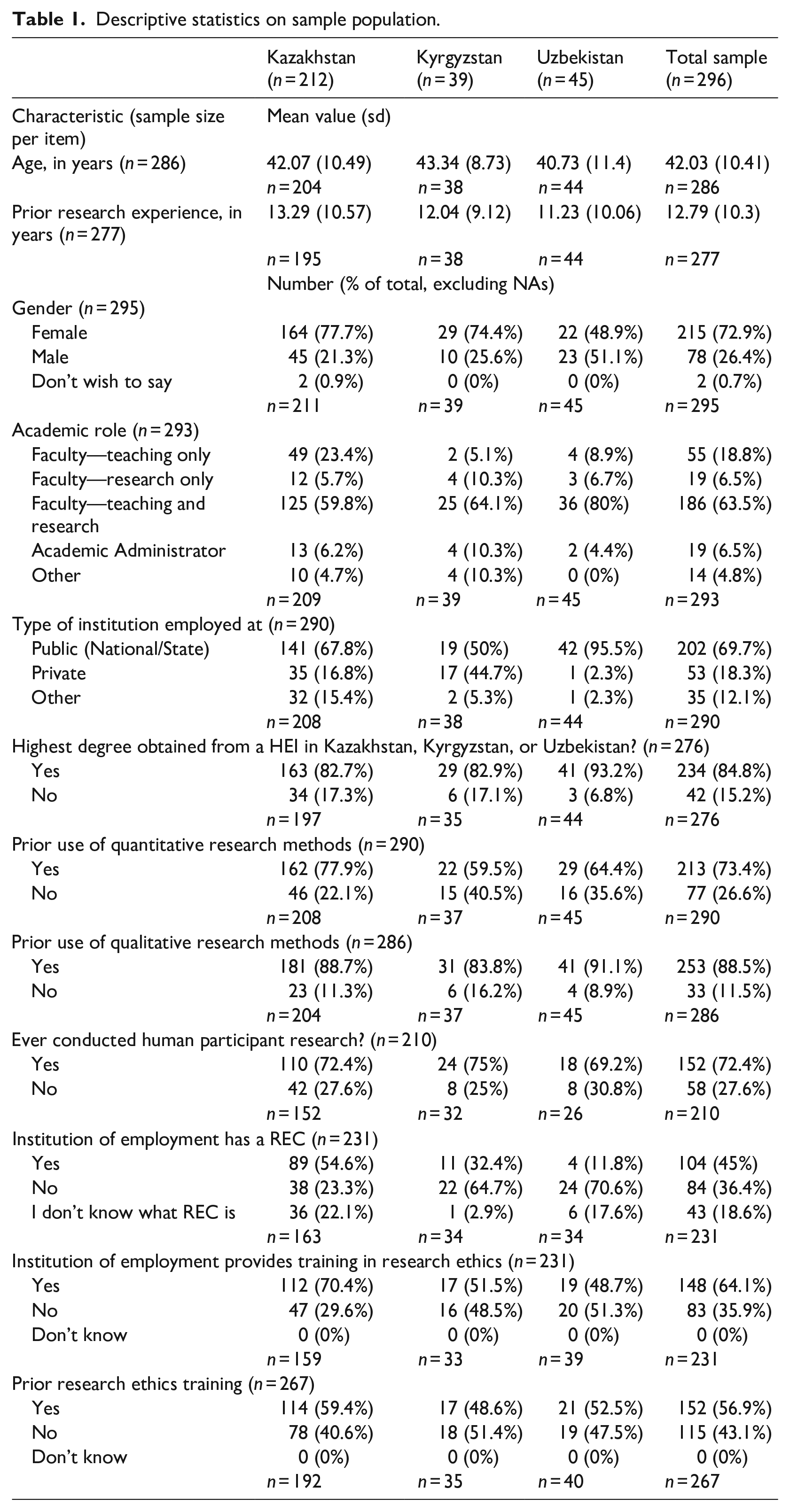
The following reported percentages are based on proportions from a total number of valid responses provided to each question, excluding missing responses (i.e. NAs), which are not reported in the Table 1. More than 70% of survey respondents (i.e. 215 out of 295 valid responses) were female. The total sample consisted of faculty members involved in teaching and research (n = 186), faculty members involved in teaching only (n = 55), faculty members involved in research only (n = 19), academic administrators (n = 19), and individuals engaged in other academic roles (n = 14). Most respondents (69.7%, 202 out of 290 valid responses) worked at public (national or state) institutions, while the remaining individuals were employed at private (18.3%) or other type (12.1%) of institutions. Most social science researchers in each given country received their highest degree from a higher education institution based in either Kazakhstan, Kyrgyzstan, or Uzbekistan. For example, 163 out of 197 respondents from Kazakhstan (82.7%) obtained their highest level of education in Kazakhstan, Kyrgyzstan, or Uzbekistan. Similarly, 29 out of 35 respondents from Kyrgyzstan (82.9%) and 41 out of 44 respondents in Uzbekistan (93.2%) obtained their highest degree in one of three countries. Overall, around 15% of social science researchers in total sample received their highest level of education outside of Kazakhstan, Kyrgyzstan, or Uzbekistan. High proportions of sample population used quantitative (73.4%) and qualitative (88.5%) methods of conducting social science research. A significant proportion of researchers (72.4%, 152 out of 210 valid responses) conducted research with human participants at some point in their research experience. Around 45% of employing institutions across three countries had research ethics committees (RECs) and 64% of institutions provided some training in research ethics. The reported number of institutions with a REC varies significantly across countries: 4 institutions with a REC in Uzbekistan (out of 34 valid responses), 11 institutions with a REC in Kyrgyzstan (out of 34 valid responses), and 89 institutions with a REC in Kazakhstan (out of 163 valid responses). However, 18.6% of survey respondents (43 out of 231 valid responses) across three countries did not know what a REC was. Around 57% of researchers in the sample (152 out of 267 valid responses) received prior research ethics training, while 43% of researchers (n = 115) never attended any research ethics training.
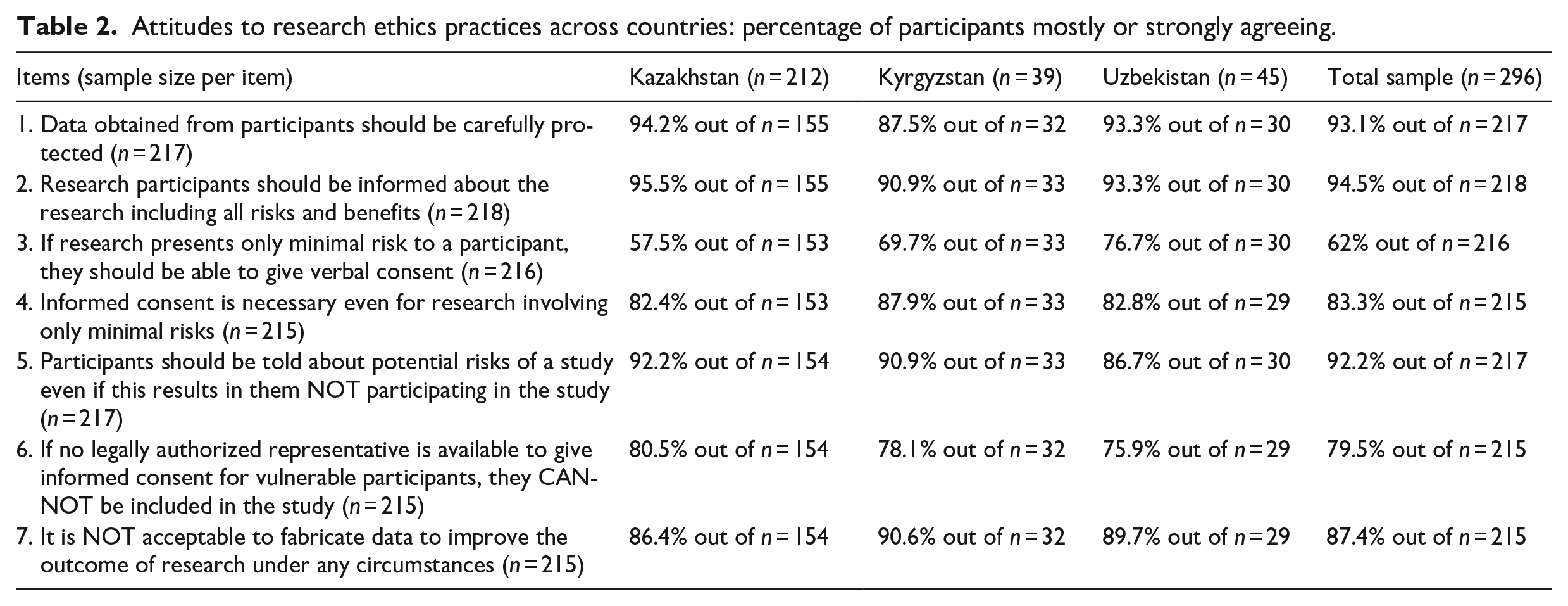
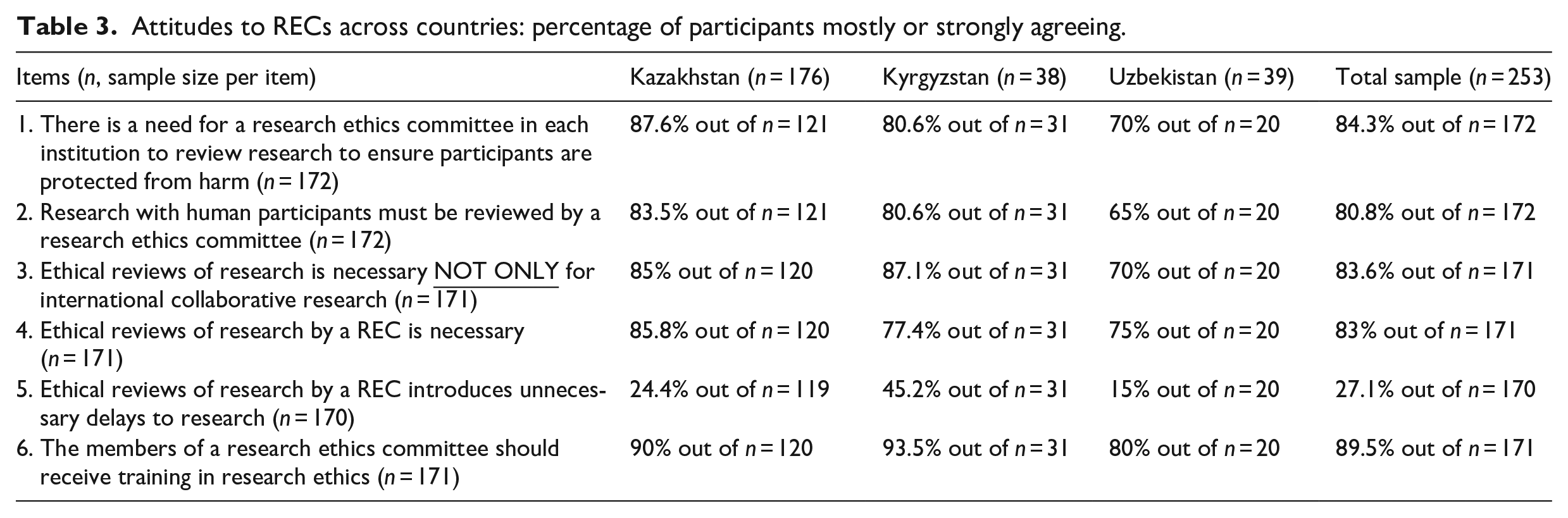
Social science researchers’ attitudes to research ethics practices and RECs and their functions are summarized in Tables 2 and 3.
Attitudes to research ethics practices across countries: percentage of participants mostly or strongly agreeing.
Attitudes to RECs across countries: percentage of participants mostly or strongly agreeing.
Attitudes to research ethics practices
The majority of respondents from all countries agreed that research data cannot be fabricated to affect study outcomes (87.4%) and that data obtained from research participants should be protected (93.1%). Most researchers agreed that research participants should be properly informed about research, as well as its risks and benefits (94.5%), and that research participants should be informed about all potential risks even if it results in them withdrawing from research (92.2%). Many respondents in our sample believed that informed consent procedure was necessary, even for research with minimal risks to research participants (83.3%). Around 80% of survey respondents also realized that vulnerable participants (e.g. children) could only be included in research if legally authorized representatives provided informed consent on their behalf. Interestingly, only 62% of respondents across three countries believed that research participants should be able to give verbal informed consent in the case of research involving minimal risks. Only 57.5% and 69.7% of researchers working in Kazakhstan and Kyrgyzstan correspondingly were aware of the possibility of obtaining verbal informed consent in case of research presenting minimal risks to research participants.
Attitudes to RECs
Survey participants, who did not know what exactly a REC was (18.6%, 43 out of 231 valid responses), were excluded from descriptive and regression analyses related to the Attitudes to RECs outcome variable. As a result, the total sample used for descriptive and regression analyses based on the Attitudes to RECs outcome variable was reduced to 253 individuals.
Overall, researchers in this sample had positive attitudes toward the functions of a REC. The majority of social science researchers across three countries believed that a REC should be present in each research-focused institution (84.3%) and that members of a REC should be properly trained in research ethics (89.5%). Significant proportions of researchers based in each country agreed that ethical review by a REC was a necessary practice. Although the Table 6 reports higher proportions of researchers based in Kazakhstan (83.5%) and Kyrgyzstan (80.6%), compared to Uzbekistan (65%), believing that research involving humans must be reviewed by a REC, it should be noted that there were significantly less respondents from Kyrgyzstan (n = 31) and Uzbekistan (n = 20) compared to Kazakhstan (n = 120). Most of the total sample (83.6%) agreed that ethical review by a REC was necessary not only for international collaborative research. Around 27% of respondents across all three countries believed that ethical review of research by a REC introduced unnecessary delays to research.
Ethical practices
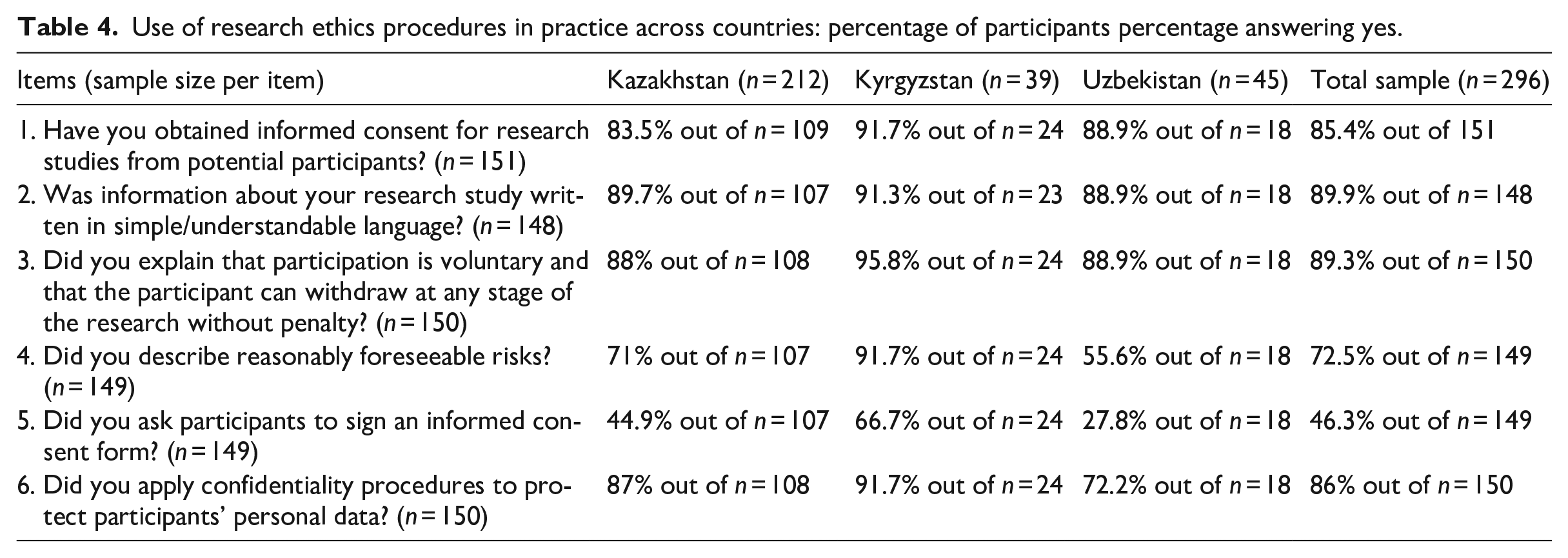
Table 4 demonstrates respondents’ use of ethical procedures in their research practice. It is important to mention that only researchers who reportedly had experience of conducting research involving human participants were able to provide answers to Part 4 of the survey. Thus, the total sample of survey respondents to research ethics practices questions varies around n = 150 (see Table 4). Most researchers in the sample had experience of obtaining either verbal or written informed consent from potential research participants (85.4% out of 151 respondents). At the same time, only 46.3% of researchers across three countries had obtained written informed consent from research participants by asking them to sign a form. Around 90% of researchers reported that information about their research was conveyed to research participants in a simple and understandable manner. The same percentage of researchers explained that participation in their research was voluntary and that research participants could withdraw at any stage of research. Many researchers (72.5% out of 149 respondents) described reasonably foreseeable risks associated with research to potential research participants. Confidentiality procedures for protecting personal information of research participants were also applied by a large majority of researchers in this Central Asian sample (86% out of 150 respondents).
Use of research ethics procedures in practice across countries: percentage of participants percentage answering yes.
Regression analyses results
Regression analysis was used to explore the statistical associations between the composite outcome variables (1. Attitude to research ethics practices, 2. Attitude to RECs, 3. Practice of research ethics procedures) and independent variables such as (1) researchers’ prior training in research ethics and (2) researchers’ prior research experience in years. In other words, the aim of regression analysis was to find out whether (1) researchers’ prior training in research ethics and (2) researchers’ prior research experience were strong predictors for improved attitudes toward research ethics practices, RECs, and increased use of ethical procedures in their research practice.
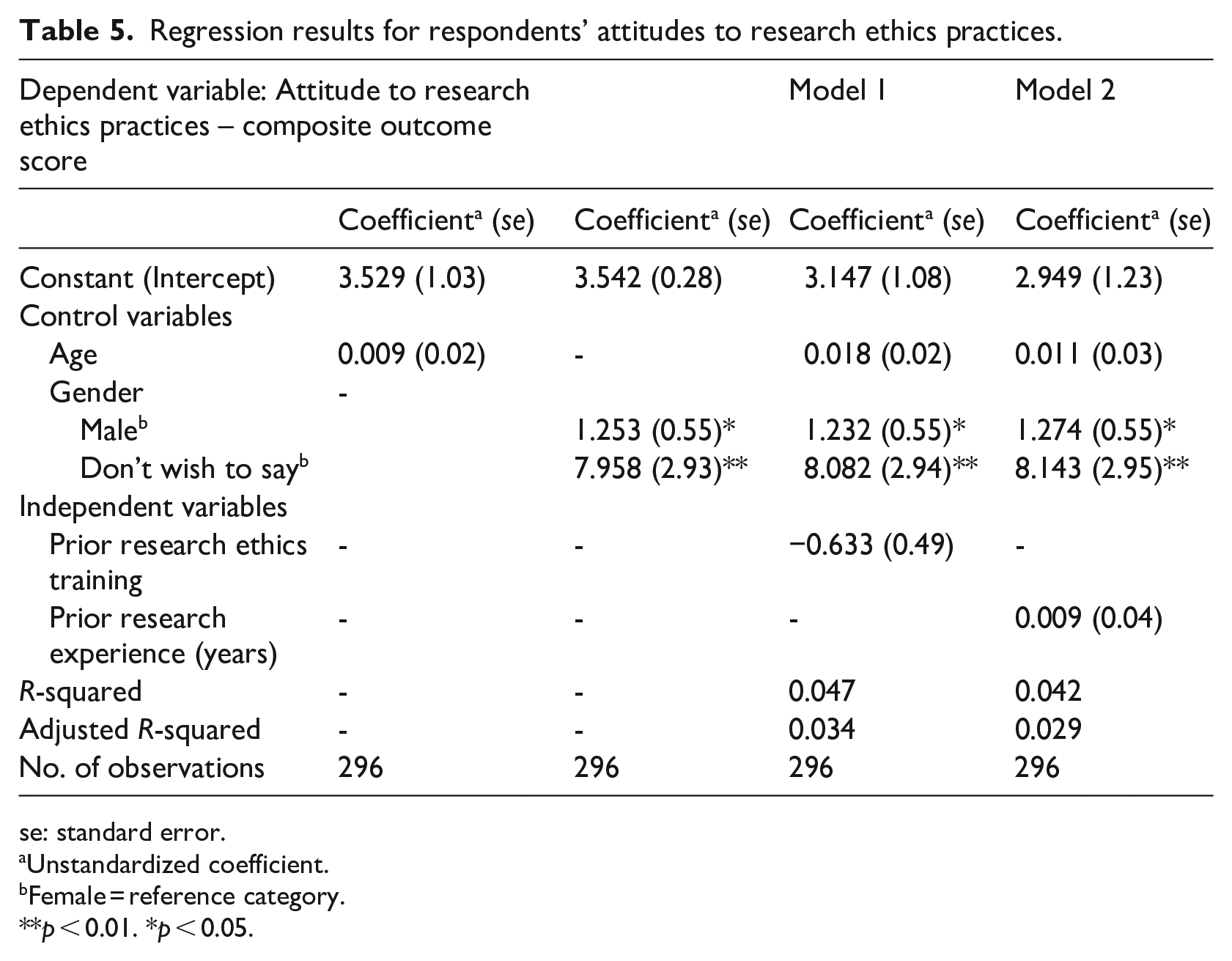
Table 5 demonstrates the linear regression results for respondents’ attitudes toward research ethics practices. It was found that the “Attitude to research ethics practices” composite outcome score was not statistically different among researchers with and without prior research ethics training (see Model 1 in Table 5). There was also no statistically significant difference in the “Attitude to research ethics practices” composite score among researchers with more or less years of research experience (see Model 2 in Table 5). Both the presence of prior research ethics training and the length of previous research experience (in years) were not found to be strong predictors of Central Asia-based researchers’ attitudes toward research ethics practices.
Regression results for respondents’ attitudes to research ethics practices.
se: standard error.
Unstandardized coefficient.
Female = reference category.
p < 0.01. *p < 0.05.
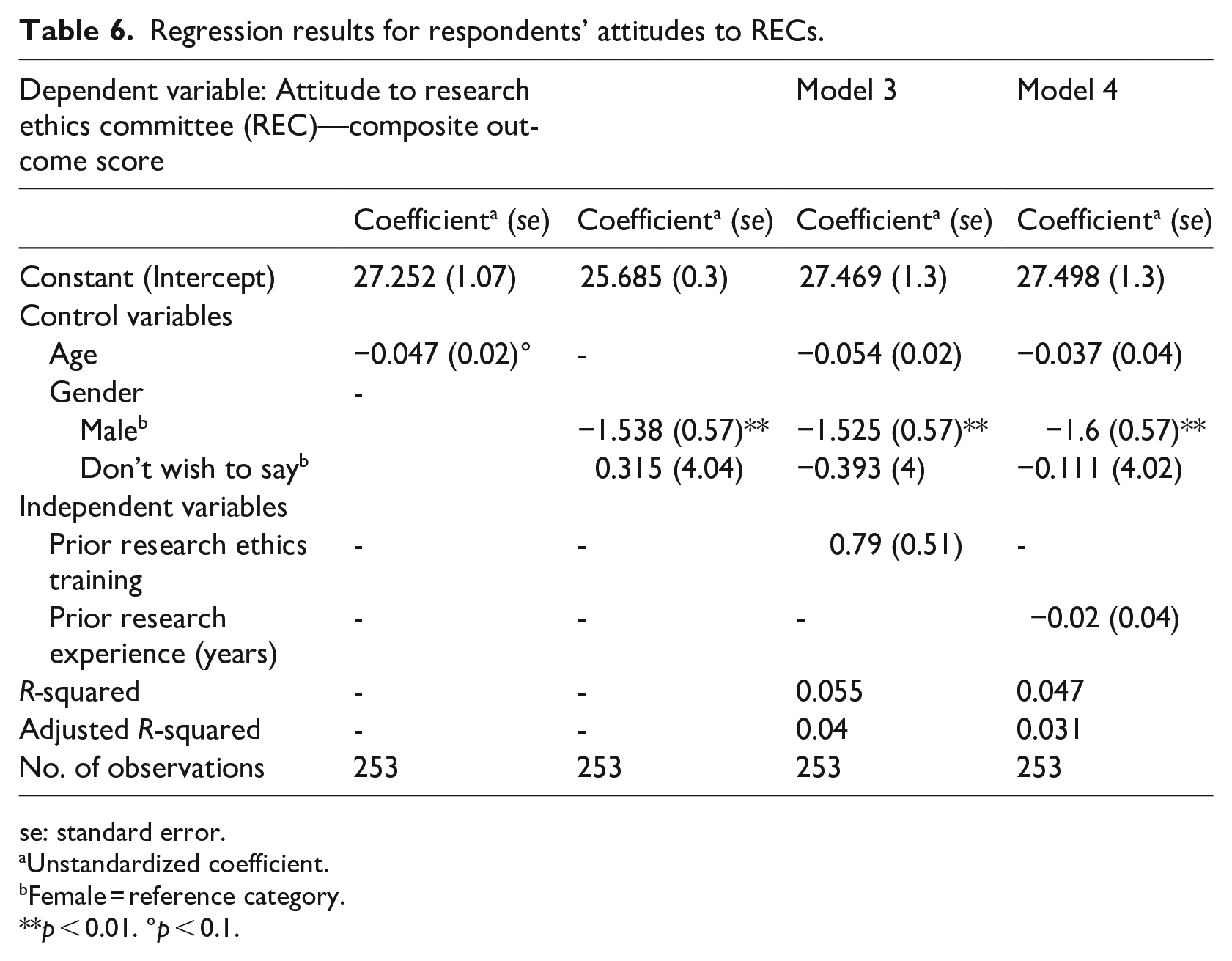
The linear regression results for researchers’ attitudes toward functions of a REC are summarized in Table 6. As mentioned before, the total sample for regression analyses based on the Attitudes to RECs outcome variable was reduced by 43 individuals, who reportedly did not know what exactly a REC was, leaving the final sample size at 253 individuals.
Regression results for respondents’ attitudes to RECs.
se: standard error.
Unstandardized coefficient.
Female = reference category.
p < 0.01. °p < 0.1.
The “Attitude to RECs” composite score was not significantly different across researchers with or without prior research ethics education (see Model 3 in Table 6). Thus, researchers with prior research ethics training were not more likely to have positive attitudes toward the functions of a REC compared to researchers without any research ethics training. No statistically significant association was detected between the “Attitude to RECs” composite score and researchers’ years of research experience (see Model 4 in Table 6). In other words, researchers’ attitudes toward RECs could not be predicted by the length of their prior research experience (in years).
Table 7 provides mixed-effects (random intercept and slope) regression results for respondents’ practical use of research ethics procedures. The “Practice of research ethics procedures” composite score was, on average, 0.555 points higher among individuals with prior research ethics education (see Model 5 in Table 7; note that this coefficient was slightly higher at 0.563 for the smaller non-imputed data, though statistical significance was lower at p < 0.10). Nevertheless, researchers with prior research ethics training were significantly more likely to use ethical procedures in their research practice compared to researchers without any research ethics training. There was no statistically significant change in the “Practice of research ethics procedures” composite score associated with increased years of research experience in this sample of researchers based in Central Asia (see Model 6 in Table 7). The length of prior research experience (in years) was not found to be a strong predictor of respondents’ use of ethical procedures in their research practice.
Regression Results for Respondents’ Practice of Research Ethics Procedures.
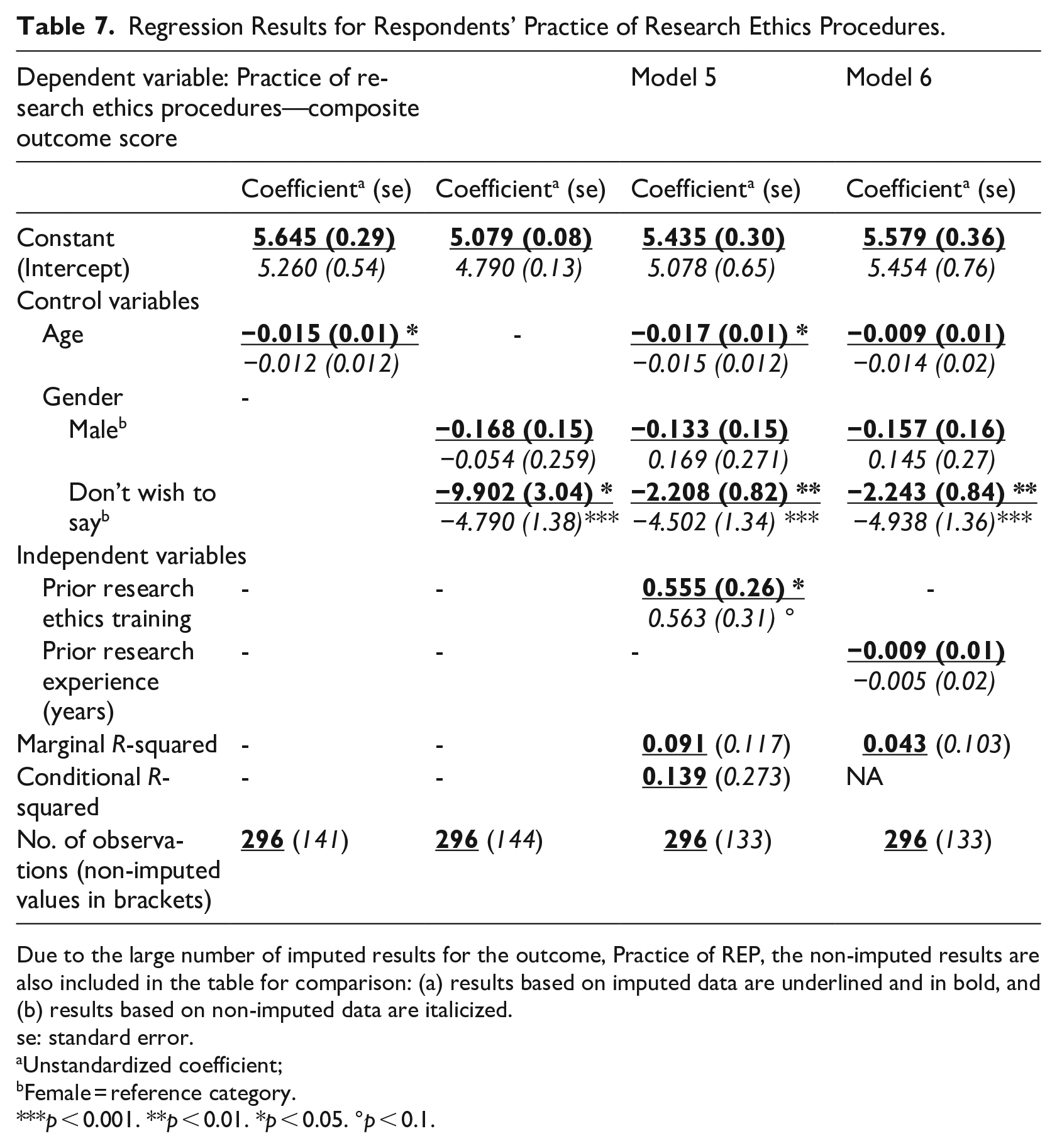
Due to the large number of imputed results for the outcome, Practice of REP, the non-imputed results are also included in the table for comparison: (a) results based on imputed data are underlined and in bold, and (b) results based on non-imputed data are italicized.
se: standard error.
Unstandardized coefficient;
Female = reference category.
p < 0.001. **p < 0.01. *p < 0.05. °p < 0.1.
Discussion
This study presents the current attitudes to and practices of research ethics standards among social science researchers working in three Central Asian countries. Around 72% of researchers based in Kazakhstan, Kyrgyzstan, and Uzbekistan (152 out of 210 valid responses) had previous experience of conducting research with humans and around 57% of researchers (n = 152 out of 267 valid responses) attended a course on research ethics. Reportedly, 64% of researchers’ employing institutions provide some type of training in research ethics and only 45% of employing institutions have RECs. While this is the case regionally, these percentages tend to vary substantially between different countries. These overall percentages indicate that, in general, higher education institutions (HEIs) and research-focused institutions in Central Asia do not currently prioritize the provision of research ethics education for social science researchers, though Kazakhstan tends to provide some leadership in this field. As a result, a considerable proportion of social science researchers currently working in Central Asia (43.1%, 115 out of 267 valid responses) lack education in research ethics, and consequently have a limited understanding of ethical practices in research with human participants. Moreover, a considerable number of social science researchers based in the region (18.6%, 43 out of 231 valid responses) lack understanding of what a REC is.
While the majority of researchers from our sample have positive attitudes toward the described research ethics practices (e.g. importance of research data protection, importance of informed consent procedure), fewer researchers mostly or strongly agree with the procedure of obtaining verbal consent in research involving minimal risks to research participants. Perhaps researchers working in the Central Asian region would rather obtain a written proof of participants’ consent to participate in their research for bureaucratic or other context-specific reasons (Lawton et al., 2017: 8). As Lawton et al. (2017) suggest, a written consent form may serve as a “tangible proof,” especially if consent documentation is later requested by local grant funders or other authorities (p. 8). Janenova (2019) reasonably mentions that ethical issues and safety concerns are of big importance for both research participants and researchers in post-Soviet authoritarian contexts like Kazakhstan (p. 6). Another explanation could be that locally based social science researchers are not fully aware of the legitimacy of verbal consent, especially in case of research imposing minimal risks to participants.
Overall, Central Asia-based researchers hold positive attitudes toward the mentioned functions of a REC. For instance, a large proportion of them (84.3%) strongly believe that a REC should be present in research-oriented institutions and that members of a REC should be properly trained in research ethics (89.5%). At the same time, some social science researchers based in the region (27.1%) are convinced that an ethical review of research by a REC introduces unnecessary delays to research. Perhaps, the process of obtaining a REC’s approval is associated with bureaucratic procedures imposed on researchers by employing or state-level institutions (Jonbekova, 2020; Whitsel and Merrill, 2021). Interestingly, the practical experience of social scientists in our sample shows that less than half of those who ever conducted research involving human participants (n = 149) asked for research participants’ signatures on consent forms. Despite the relatively low percentage of researchers (62%) in the total sample who believed that verbal consent was possible in case of research with minimal risks (see Table 2), the current finding shows that locally based researchers who engage in research involving human participants can use the verbal consent procedure in practice. Jonbekova (2020) suggests that obtaining verbal consent could be a more effective strategy for building trust between researchers and research participants (p. 367). Such findings indicate that researchers working at Central Asian institutions should be better informed about verbal consent and its procedures. This highlights the importance of adapting research ethics practices such as obtaining informed consent to local political and cultural contexts (Collins et al., 2022).
Our regression analyses findings provide some evidence that completion of research ethics education (e.g. independent/degree-required courses, face-to-face/online workshops) is associated with increased use of research ethics procedures in this sample of social science researchers. However, no statistically significant relationship was detected between completion of research ethics education and researchers’ attitudes toward research ethics practices and RECs. Previous studies, which explored associations between prior research ethics education and knowledge about research ethics and functions of a REC, reported similar findings (Azakir et al., 2020; El-Dessouky et al., 2011; Kandeel et al., 2011). Specifically, medical faculty members from Saudi Arabia and Egypt and physicians from Lebanon, who received prior research ethics education, were significantly more knowledgeable about research ethics and functions of a REC compared to individuals without any research ethics training. However, studies that focused on researchers’ attitudes to research ethics and RECs reported mixed findings. Attitudes toward research ethics and RECs did not differ significantly across Myanmarese post-graduate medical students with and without prior research ethics training (Than et al., 2020). Torabi et al. (2021), on the contrary, found that completion of a research ethics workshop was a significant predictor of dental students’ attitudes to research ethics principles in Iran. Iranian dental students who previously attended medical research ethics workshops were more likely to have positive attitudes toward research ethics principles compared to students who did not attend such workshops.
Our regression findings also suggest that the length of research experience is not a significant predictor of social science researchers’ attitudes toward research ethics practices, RECs, and their practical use of research ethics procedures. Several similar studies conducted in the context of Saudi Arabia, Egypt, and Lebanon, on the contrary, reported that individuals with prior research experience were likely to have significantly better knowledge about research ethics compared to individuals without prior research experience (Azakir et al., 2020; El-Dessouky et al., 2011). The variation in findings across countries can most likely be attributed to differences in methodology (e.g. sample size, variable classification) or analysis approaches (regression vs chi-square test).
There are also some incidental findings of note. Gender appeared to play a substantive role for the three outcomes of interest. Those participants who did not wish to report their gender (n = 2) were far less likely to have a positive attitude toward research ethics practices, committees, and procedures. Research has suggested that non-binary individuals more often experience discrimination (Truszczynski et al., 2022). Therefore, while speculative, it may be that such participants may not be integrated socially or academically and, consequently, may have a less favorable view of research and research ethics in general (see Courtney, 2018 on relationship between institutional integration and commitment). Of course, follow-up qualitative research would be necessary to explore these initial results.
Limitations
There are several limitations to this study. First, our survey sample is imbalanced. The majority of survey respondents in our sample came from Kazakhstan (71.6%), while less than 30% of respondents came from Kyrgyzstan and Uzbekistan. Such disparity in number of respondents across countries could be attributed to overall higher research production in Kazakhstan compared to Kyrgyzstan and Uzbekistan (243 vs 13 and 12 journal articles produced by researchers in Kazakhstan, Kyrgyzstan, and Uzbekistan correspondingly in the post-Soviet period, according to examination of Web of Science; Hernández-Torrano et al., 2021). Since authors of the current study were primarily based in Kazakhstan and had more professional connections locally, the sample imbalance could also be attributed to the snowball sampling technique. Therefore, any across-country comparisons with regard to descriptive statistics or researchers’ attitudes and practices in relation to research ethics and RECs should be treated with caution. The predominance of Kazakhstan-based researchers in our sample might have somehow distorted the current understanding of research and research ethics in the designated Central Asian region.
Since a non-probability purposive and snowball sampling technique was used for recruiting survey participants, results of our statistical analysis cannot be extended to a population beyond our sample of social science researchers working in three Central Asian countries. It is important to note that our sample of social science researchers includes a proportion of foreign social science researchers who currently work at local Central Asian institutions. In other words, not all respondents in our sample are of Central Asian origin. Although there was no measure of nationality in the survey instrument, the data regarding participants’ highest level of education (see Table 1) indicates that most social science researchers in the total sample (84.8%, 234 out of 276 valid responses) obtained their highest degree from a higher education institution (HEI) in either Kazakhstan, Kyrgyzstan, or Uzbekistan. Since foreign researchers employed at local internationalized HEIs usually have degrees from foreign universities, it can be estimated that up to 15.2% of survey participants (42 out of 276 valid response) could be of non-Central Asian origin. Thus, outcomes of the current study should be interpreted with some caution. Future research needs to address this methodological issue by clearly differentiating between local and foreign scholars in the sample.
Third, although we extensively referred to previous research that likewise measured the awareness, attitudes, and practices of survey respondents in relation to research ethics and RECs (El-Dessouky et al., 2011; Kandeel et al., 2011; Mallela et al., 2015; Rababa’h et al.’, 2020; Than et al., 2020), all these studies targeted medical workers and faculty members of medical institutions. Therefore, any comparison of research findings across our and previous studies should also be regarded with caution.
Another limitation of our regression analyses based on researchers’ previous training in research ethics is that types of research ethics training obtained by social science researchers in the sample varied widely. Specifically, respondents in our sample could have attended in-person workshops on research ethics, ethical training as part of research methodology course in their academic studies, or online training courses in research ethics. Since this study aimed to conduct a preliminary quantitative analysis of survey findings, no distinction was made between different types of research ethics training received by researchers in our sample. This information should be considered while interpreting the results of regression analyses in this paper. A more in-depth analysis on types of research ethics training obtained by respondents of the survey is planned to be included in a forthcoming article focusing on research ethics education for social science researchers in Central Asia.
Despite these limitations, our survey and subsequent data analysis revealed important information about the attitudes to research ethics practices and RECs as well as practical use of research ethics procedures among Central Asia-based social science researchers. The results of regression analyses indicate that completion of research ethics training is indeed associated with increased use of ethical procedures among Central Asia-based social science researchers. These findings highlight the need for increasing research ethics training capacity at HEIs and other research-focused institutions in Kazakhstan, Kyrgyzstan, and Uzbekistan. The provision of access to research ethics education for social science researchers by their employing institutions might be an effective strategy for increasing the overall quality and quantity of empirical social science research produced in the Central Asian region. The following qualitative stage of the CARE research project will research ways to adapt internationally accepted ethical practices to the Central Asian context and elaborate on developing an educational training in research ethics for local social science researchers.
Conclusion
The findings from our quantitative cross-sectional online survey of 296 social science researchers based in Kazakhstan, Kyrgyzstan and Uzbekistan have revealed that undertaking training on human participant research ethics is significantly associated with increased practical use of research ethics procedures. At the same time, there is no statistical evidence to claim that the length of prior research experience is associated with researchers’ attitudes to research ethics practices, RECs, or their practical use of research ethics procedures. These findings have implications for HEIs and national policy makers aiming to increase research production and dissemination within these countries. Increased educational opportunities will be necessary to further develop the understandings of social science researchers about human participant research ethics. Increasing availability and accessibility of research ethics trainings could be associated with improved practices in ethical human participant research among social science researchers working in Central Asia. Local institutions should also consider the development of processes to ensure research involving humans is being undertaken in an ethical manner. Further exploration is needed to understand the principles and processes which may be best suited to the protection of research participants in these authoritarian contexts. Specifically, what cultural adaptations would be needed to adjust the “Western” ethical norms to the Central Asian context and what type of research ethics training (e.g. face-to-face vs online, institution-based vs independent) would best suit social scientists working at local institutions.
Footnotes
Funding
All articles in Research Ethics are published as open access. There are no submission charges and no Article Processing Charges as these are fully funded by institutions through Knowledge Unlatched, resulting in no direct charge to authors. For more information about Knowledge Unlatched please see here:  The research was funded by Nazarbayev University Collaborative Research Grant No. 021220CRP0922 for which the authors are grateful.
Ethical approval
The survey used for collecting data was approved by the Nazarbayev University Institutional Research Ethics Committee (no. 433/07082021). The data were collected from October 2021 to January 2022.