




Abstract
The purpose of this study was to map the distribution of publications on plagiarism among higher educational institutions in sub-Saharan Africa (SSA). Studies reviewed were based on 171 plagiarism related publications within a decade (2012–2022). Findings revealed that most plagiarism related articles were published in 2016. Additionally, a majority of the studies (53) were from Nigeria and Ghana (23). Most of the articles focused on students’ and faculty’s awareness of plagiarism, and institutional prevention of plagiarism, but were rather marginal on challenges involved in preventing plagiarism, as well as effects of plagiarism. Dominant forms of plagiarism were self-plagiarism, branded plagiarism and commission plagiarism. However, major causes of plagiarism comprised easy access to digital information and resources; poor supervision of students; pressure on academics to publish for promotion; and insufficient skills development regarding ethical academic writing. Additionally, plagiarism preventive software and policies on plagiarism were the main ways of preventing plagiarism. Finally, in fighting plagiarism, higher educational institutions in SSA encountered challenges such as lack of well-trained academic experts to detect and report plagiarism cases; reluctance on the part of technical administrative staff to investigate works for traces of plagiarism; and low plagiarism detection skills from project supervisors. Based on the findings, recommendations are made to stakeholders for future research, policy and practice.
Background
Plagiarism is widely acknowledged as a severe danger to the integrity of academic research (Rohwer et al., 2017). Indisputably, the severity of plagiarism has become an extremely irritating tradition in literary, political, entertainment, digital and research fraternities of modern societies. As a result, numerous approaches and mechanisms have been developed to reduce plagiarism or if possible, eliminate this dishonesty from the research and academic arenas. The spread of plagiarism has increased tremendously in higher educational institutions mainly due to the invention of the World Wide Web aided by easy access to internet (Yende Raphael et al., 2022; Singh and Remenyi, 2018). The above assertion is supported by Sisti (2007), who indicated that the practice of students and faculty copying and pasting online content into their assignments or research papers has been made easier by the internet and electronic devices (Shanmugasundaram et al., 2012). Research and academic institutions all over the world continue to search, and punish staff and students, for plagiarised documents because the generation of fresh ideas is becoming increasingly rare (Tümen Akyıldız, 2020). Observably, most of scientific journals are now using a variety of technology-assisted techniques to detect plagiarism. For example, publishers and many other research institutions have now developed a number of plagiarism detection software such as Turnitin, Dupli Checker, PaperRater, Copyleak, Plagiarisma and Plagium, among others, to screen research papers for plagiarism prior to review and publication (Endong, 2019). Within the sub-Saharan African terrain, Batane (2010) listed some compelling reasons why higher educational institutions are working hard to combat plagiarism. First, the resurgence of plagiarism in the region’s universities and other higher educational institutions has the tendency to dent individual and institutional scholarly image (Bertram and Drinan, 2010; Salleh et al. 2013). Second, if not checked on time, plagiarism in most cases will lead to duplication of information that are not based on new findings (Mitchell et al., 2020).
Sub-Saharan Africa is a term used to describe the region of Africa located south of the Saharan desert. This region includes 46 countries (Baloch et al., 2020). In sub-Saharan Africa (SSA), most higher educational institutions formulated institutional policies and started using Plagiarism Detection Software (PDS) in the assessment of assignments, dissertations, and theses about 5 years ago (Kavulya et al., 2022, Khaled and Al-Tamimi, 2021). The aforementioned authors further indicated that the newly developed PDS are sophisticated, most of them work online, and are easy to be accessed for use (Olutola, 2016). Even though such policies and mechanisms have been put in place, faculty and students still seem to plagiarise in their works (Onuoha, 2016).
The problem of plagiarism continues to spread among SSA educational institutions, which means that more attention needs to be given to the phenomenon. More so, there is lack of evidence of a study that has synthesised literature on the depth of issues on the subject. While we have systematic review studies on the phenomenon in Australia (De Maio et al., 2019), Western Europe and North America (Flowerdew and Li, 2007; Foltynek and Glendinning, 2015), Europe (Glendinning, 2014) as well as in Asia (Rodrigues et al., 2023) to provide highlights, trends, causes, implications, remedies, etc. in projecting future research into grey areas on the phenomenon, the same cannot be said of the SSA concern. More so, since there are cultural differences and contexts of plagiarism (Rodrigues et al., 2023), it will be unscholarly to tow along with the unified views expressed separately from the European, American, Asian and Australian perspectives; even though some similarities may overlap, some degree of uniqueness also may be inherent or apparent. In this regard, the dimensions and the evidential facts on the phenomenon are scattered within SSA, and this has necessitated a systematic review of this nature to agglomerate the studies involved. This will enable stakeholders to project a better view of study patterns and various results to be abreast of the current state of the literature. This will go a long way to inform policy and practice in higher education in SSA and provide future directions for further research.
In light of the above, it is assumed that grasping the distribution levels (according to author contribution, yearly publication, country contribution and patterns of spread, forms of plagiarism, parties involved and journal outlets of plagiarised documents, etc.) of plagiarism will be helpful to every higher educational institution to deal with its spread. In addition, it might help prevent the emergence of new trends and forms in the spread of plagiarised materials. It is in light of this critical assessment of the need to halt plagiarism that this study attempts to map out published studies on the phenomenon among higher educational institutions in SSA. Hence, the main objective of this current study, is anchored on the following questions:
What are the distribution patterns of plagiarism related publications from 2012 to 2022 in higher education in SSA?
What are the foci areas that have been discussed in plagiarism related articles published spanning 2012–2022 in higher education in SSA?
What are the most impactful journals and articles that have focused on the occurrence of plagiarism in higher education in SSA?
Literature review
The concept of plagiarism
Plagiarism is widely understood to be the unethical use of other people’s publications, by claiming the content or parts thereof as one’s own work, without rendering acknowledgement, or recognising the sources from which the information was obtained (Ocholla and Ocholla, 2016). The above authors argued further that the definition of plagiarism extends beyond publications. According to them, the occurrence of plagiarism describes unethical behaviour that involves ‘the act of taking another person’s writing, conversation, song, or even an idea, and presenting it as one’s own work’ (p. 1). Based on the several definitions of plagiarism by Clarke (2006) and others (Lukashenko et al., 2007; Purdy, 2005; Martin, 1994; Singh and Remenyi, 2018), the thrust of the definitions of plagiarism can concisely be put as the reuse of one’s work, or another person’s work following the same structure, argument, text or idea without proper citation or acknowledgement.
Forms of plagiarism
According to Khaled and Al-Tamimi (2021), there are different ways of plagiarising other people’s works. The authors indicated that presenting an entire text by someone else as your own work, rephrasing someone else’s ideas, directly copying a passage of text, and combining text and ideas from different sources without citation are the main types of plagiarism. These are different from the broader forms of plagiarism. Whereas the types of plagiarism refer to the specific severity of the act of plagiarism, the forms of plagiarism are the ways in which plagiarism occur (Cabe, 2003; Streefkerk, 2023). Accordingly, Khaled and Al-Tamimi (2021) discussed some forms of plagiarism to include the following:
• Self-plagiarism in the view of Khaled and Al-Tamimi (2021) occurs when a student or an academic submits their previous work, or mixes parts of previous works, without citing the original works. Sometimes, students are tempted to reproduce their prior works without fully recognising themselves, or to resubmit a previously utilised and graded assignment in a different context (Jjuuko, 2017). However, faculty are also prone to such tendencies (Ison, 2014). This behaviour is considered a kind of plagiarism and a breach of academic integrity (Ison, 2014).
• Direct plagiarism is the word-for-word transcription of a section of someone else’s work without attribution and or without quotation marks (Lamptey and Atta-Obeng, 2012). Without any personal input from the offender, the work or idea of another is stolen verbatim. The perpetrator takes full credit for another person’s work. Shah (2018: 463) supported Khaled and Al-Tamimi (2021) by stating that ‘the deliberate plagiarism of someone else’s work is unethical indicating academic dishonesty, and justifying grounds for disciplinary actions such as expulsion’.
• Branded plagiarism is a form of ‘pick and use’ behaviour that involves using someone else’s ideas or works without giving credit to the original author. It is a method for intelligently copying or plagiarising. To detect this kind of plagiarism one must use a smart and intelligent investigative approach. This form of plagiarism happens when students or faculty repackage and re-edit the work of people without properly citing them. To make the work seem original, the offenders change sentences, rewrite paragraphs, remove one or more elements, or delete a few words. Nedelcu and Ulrich’s (2013) citation of Wan et al. (2011) fits into a description of the repackaged or the branded plagiarism form.
• Cyber or digital plagiarism is the form of theft of academic knowledge that happens online. Students or faculty who utilise text, videos, messages, music, files, photographs and ideas from the internet for academic work without properly citing the sources is known as cyber plagiarising. Cyber plagiarism is the term for cheating or plagiarising through internet use (Nedelcu and Ulrich, 2013). Digital plagiarism, internet plagiarism and electronic cheating are some common names for cyber plagiarism.
• Cooperative plagiarism is a novel form of plagiarism in which students of faculty voluntarily copy one another’s work. This type of plagiarism made feasible by ‘cooperative cheating’ is known as cooperative plagiarism. According to Heckler et al. (2013), who cited Igbokwe (2016), cooperative cheating is when ‘students try to help themselves whilst helping others through the sharing of resources via the internet’. In cooperative plagiarism, students share informational items among one another, particularly through online avenues.
• Shadow plagiarism is another prevalent form of plagiarism among students or faculty. In this case, the offenders completely display another person’s work as their own instead of copying any part of it. Asking or paying someone to complete a research project or assignment on your behalf, whether they are nearby or far away, is another instance of shadow plagiarism where the contractor’s name appears on the research written by another person (Igbokwe, 2016).
• Unintentional plagiarism occurs when students and faculty plagiarise without realising how risky and wrong it is. Igbokwe (2016) made a compelling case that people occasionally forget to cite sources, or are unaware of the right attribution practices. It is also beneficial to be aware that university students and faculty occasionally plagiarise without intention to do so. Students who do not understand plagiarism or its repercussions are the ones who engage in this form of plagiarism (Selemani et al. 2018, Igbokwe, 2016). Even when they are aware of proper citation and reference practices, some students and faculty nevertheless inadvertently practice this form of plagiarism.
• Institutionalised plagiarism: This form of plagiarism occurs when older students contract younger students to complete assignments on their behalf. In other words, older students submit papers that were not written by them. This form of plagiarism occurs in political organisations and corporate settings when personal assistants and employees produce papers for their superiors. This is also prevalent among faculty where younger faculty write and just add the names of their older colleagues. Politicians also who use personal assistants, subordinates, or ghostwriters to complete their papers and have their own names printed on such documents commit institutionalised plagiarism (Balingit, 2008).
• Commission plagiarism. This form of plagiarism results when students buy papers or contract commercial thesis writers to compose their work for them without properly acknowledging them (Curtis et al., 2022; Orim, 2017). In the case of faculty, papers can be either bought or payment made for article publication charges (APC) for publication of papers that they never contributed to the content.
Methodology
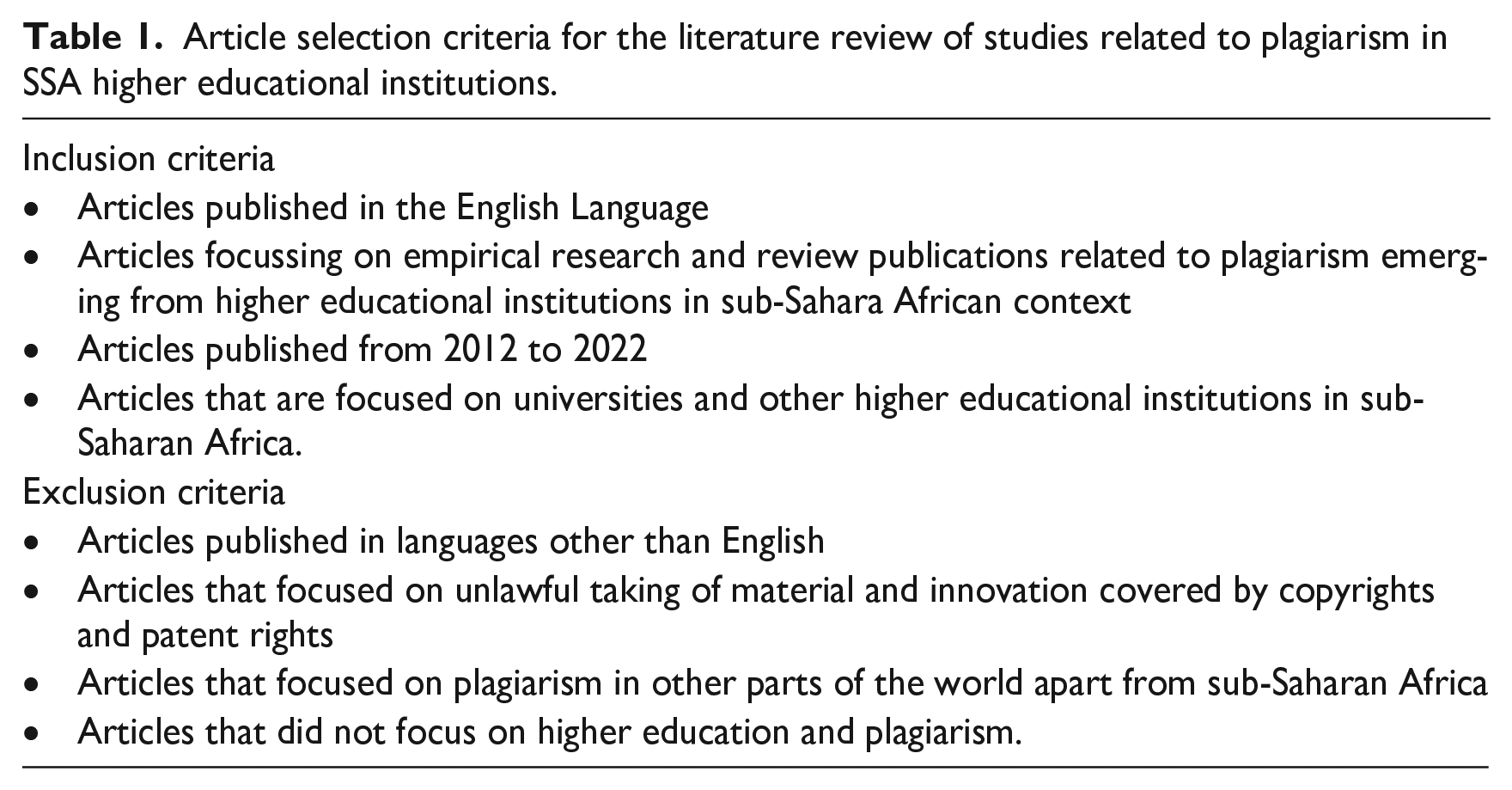
This study followed the systematic literature review approach by first, mining data from databases such as Scopus, Google Scholar, and PubMed to obtain the requisite publications. We developed a set of article inclusion and exclusion criteria, and followed the Preferred Reporting Items for Systematic Reviews and Meta-Analyses (PRISMA) protocol prescribed by Moher et al. (2009) and Abusaada and Elshater (2022). The PRISMA protocol is a sequential process followed to search, identify, collect, analyse, synthesise and report findings from published articles. We searched databases for articles that focused on ‘Identifying and managing plagiarism in Higher Education in sub-Saharan Africa. We used search terms such as (TITLEABS-KEY (‘Plagiarism AND higher education AND forms of plagiarism AND Higher AND Education’) AND TITLE-ABS KEY (‘higher AND education’ OR ‘higher AND education AND institutions AND copying of works) AND TITLE-ABS-KEY KEY (‘PHEA’) AND TITLE-ABS (‘sub-Saharan Africa’) AND PUBYEAR >2012–2022. We also used Boolean functions to search the databases. The reference pages of retrieved articles were also chain searched (through the snowballing technique) for relevant articles. The articles were then sorted and organised based on the predetermined criteria. During the selection of articles for the study, a number of steps were followed. Table 1 showcases the criteria for inclusion and exclusion of the articles whereas Figure 1 depicts the article selection process.
Article selection criteria for the literature review of studies related to plagiarism in SSA higher educational institutions.
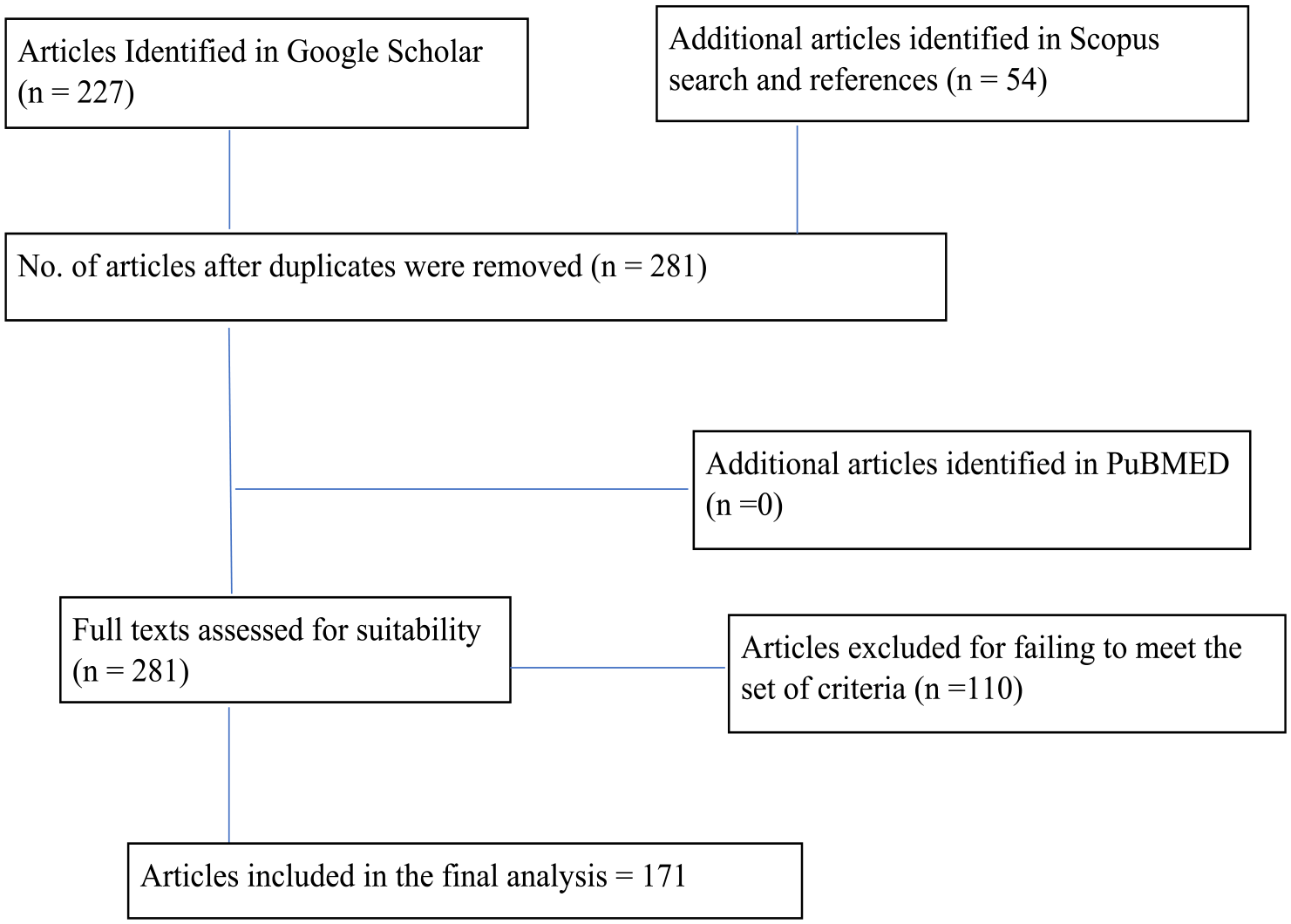
Articles selection process.
Next, we used the VOSviewer clustering and visualisation software (Van Eck and Waltman, 2009) to cluster and map the authors identified within the review based on authorship and yearly trend of article distribution. Figure 2 shows the author and year visualisation of the articles on Plagiarism in Higher Education (PHE) context in sub-Saharan Africa, and the keyword strings within the literature review. Some of the strings – words or phrases – that guided the search for key identifiers or indicators pointing to the incidence of plagiarism are ‘copying of entire text and presenting it without citation’, ‘rephrasing someone’s ideas without citation’, ‘direct passage copying without citation’, ‘combining text and ideas without citation’, ‘reusing personal passages and ideas without citation’.
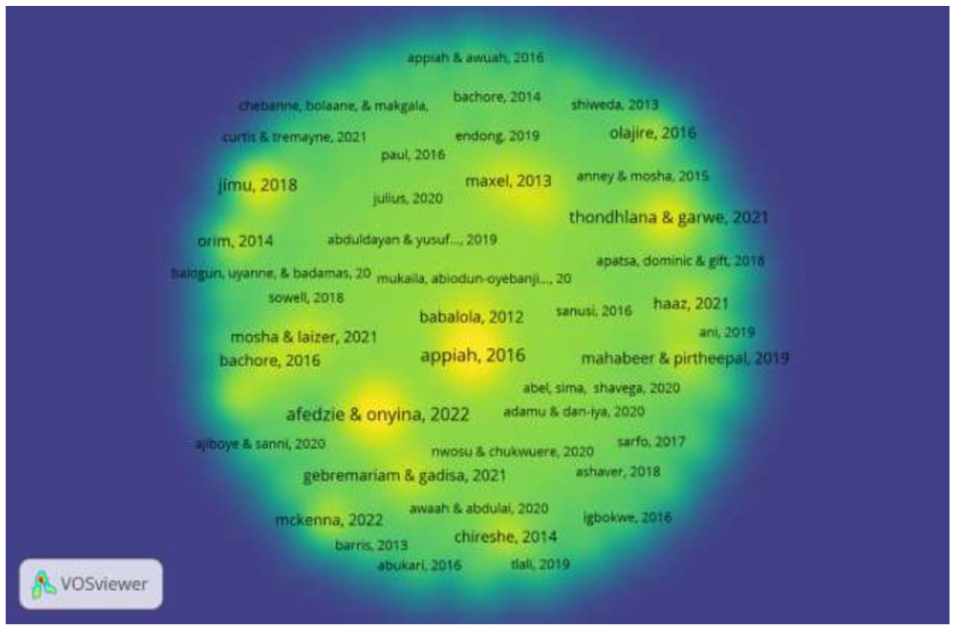
Author and year visualisation of articles published on plagiarism in higher education in SSA.
The study also applied Wilczewski and Alon’s (2022) criteria for identifying the most relevant journals and articles, as determined by the number of times they have been cited by others. Wilczewski and Alon (2022) theorised several issues relating to impactful journals and authors. One of the terms established by the authors are Author Productivity on citation score (AP/cs). They used the formular: (AP/cs) = number of citations/number of authors. The Average Citations from publication data or time (AC/tp) = number of citations a paper attracts/number of years after publication’ was another formula discovered by the authors. Following these above parameters, the study listed a number of articles that could be considered as most impactful. Towards assessing the methodological approaches adopted by authors, the study categorised the research approach into quantitative, qualitative, mixed or desk top paper review, and also grouped the sample sizes identified in the study into small (⩽150 respondents), medium (>150 ⩽ 250 respondents), and large (>250 respondents) according to the recommendation by Bervell and Umar (2017).
Analysis and results
The findings of the study have been presented following the research questions formulated. The first part is on the distribution patterns of plagiarism-related publications. The patterns of plagiarism related publications were discussed based on authorship contributions and methodologies employed in the studies reviewed. The yearly and country contributions of publications related to plagiarism among higher educational institutions have also been presented as part of the patterns. The first part of the presentation of results also includes patterns in the methodological issues. The second part presents the foci of plagiarism related articles found within 2012–2022, while the third section covers discussions on the most impactful journals and articles discussing plagiarism among higher educational institutions in SSA.
Distribution patterns of plagiarism related publications from 2012 to 2022 in higher education in SSA
Authorship contributions to articles related to plagiarism
Towards identifying the authorship contributions to articles related to plagiarism within 2012–2022, the study used the VOSviewer clustering and visualisation software (Van Eck and Waltman, 2009) to cluster and map the authors based on co-occurrence. To give a good visual impression of the authorship and yearly distributions of articles published within the review period, a VOSviewer clustering density map of studies on plagiarism is presented in Figure 2.
Methodological approaches of reviewed studies
Table 2 shows the methodological approaches adopted by the authors identified in the review.
Methodological details of plagiarism related articles.
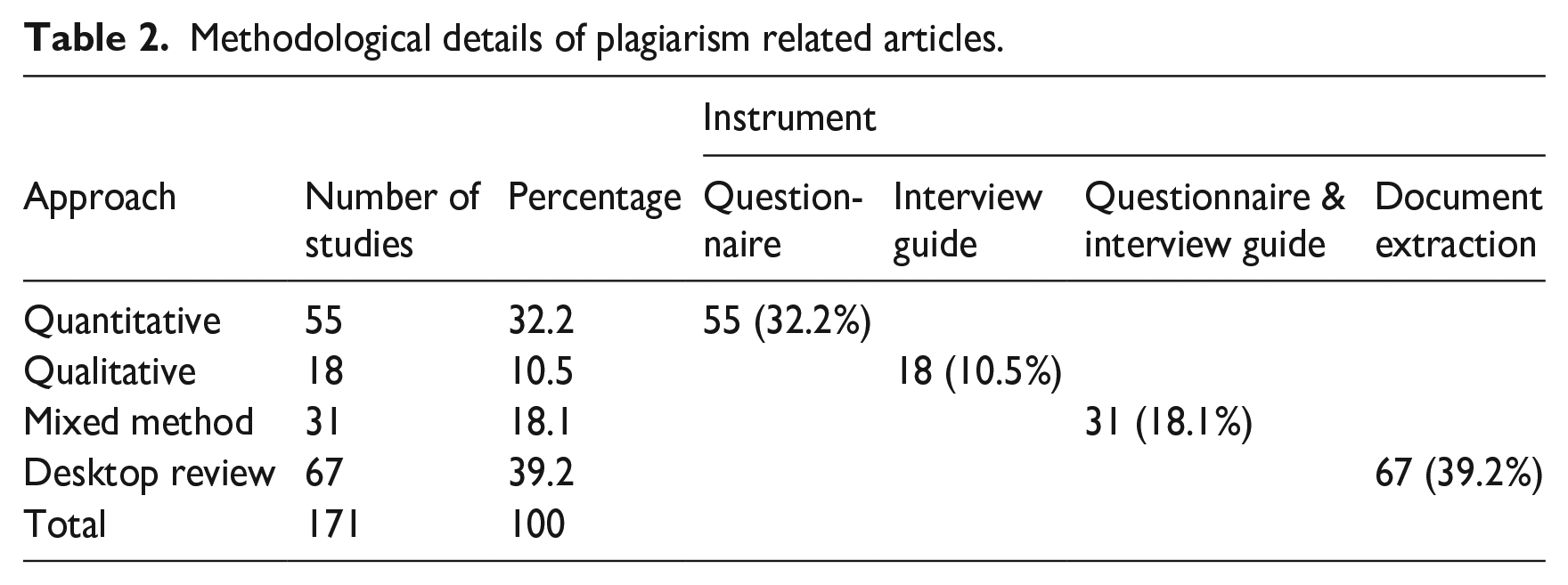
First, in terms of the approach used for collecting data, Table 2 shows that the use of desktop paper review approach dominated in the approaches used by authors of the reviewed studies. This is underpinned by the fact that 67 representing 39.2% out of the total studies reviewed, employed this approach to extract information. This was followed by the use of the quantitative approach recording 55 (32.2%) studies, with the qualitative approach 18 (10.5%) being the least used. In terms of the instruments utilised for data collection, the questionnaire was the most frequently used instrument appearing in 55 studies representing 32.2% followed by a mix of both questionnaire and interview guides found in 31 (18.1%) studies.
The subjects and the sample sizes used in the reviewed articles are indicated by Table 3.
Subjects and sample sizes used in articles related to plagiarism in SSA.
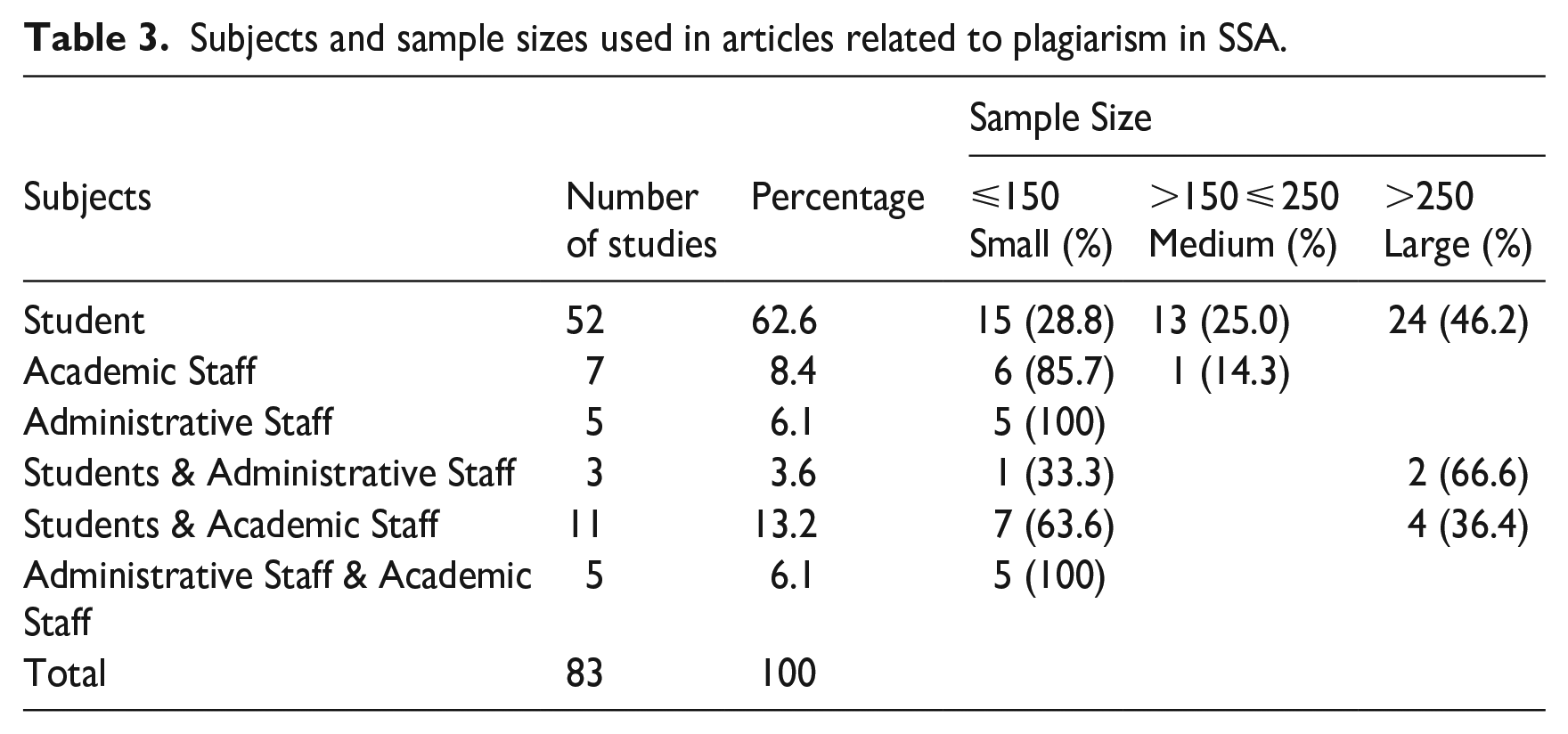
Details from Table 3 illustrates that out of the 83 studies that relied on respondents as subject to gather information on plagiarism, 52 of them representing 62.6% used university students. For the remaining studies, seven (8.4%) and five (6.1%) used academic staff and administrative staff respectively as their subjects to elicit information about plagiarism. With regards to the use of multiple or diverse respondents, 3 (3.6%) and 11 (13.2%) of them made use of both students and administrative staff, and students and academic staff as respondents, respectively. Five of the studies, representing 6.1%, focused on the views of academic staff and administrative staff alone to obtain information on plagiarism. With respect to sample sizes, the range was between small (⩽150 respondents) for 39 studies, medium (>150 ⩽ 250 respondents) size for 14 studies, and large size (>250) for 30 studies. In all, the total number of studies that used respondents for data collection were 83 studies, representing 48.5%.
Yearly publication trends of plagiarism related articles in SSA
In terms of yearly publication trends of the articles, the review showed that studies on plagiarism in SSA higher education increased gradually from 2012 to 2014 by seven articles (see Figure 3). Between 2015 and 2016, there was a sharp increase in article publications by 21. Just a year after 2016, the publication of articles on the phenomenon decreased by 16 articles. Nonetheless, there was resurgence in article publications related to plagiarism in 2020, with an increase from 14 to 27 articles, and by the end of 2022, it had again decreased to 16 articles. Comparatively, the articles published from 2012 to 2022 increased by 10, an indication that over the 10-year period, the discussions on plagiarism among higher institutions in the region has seen a marginal increase.
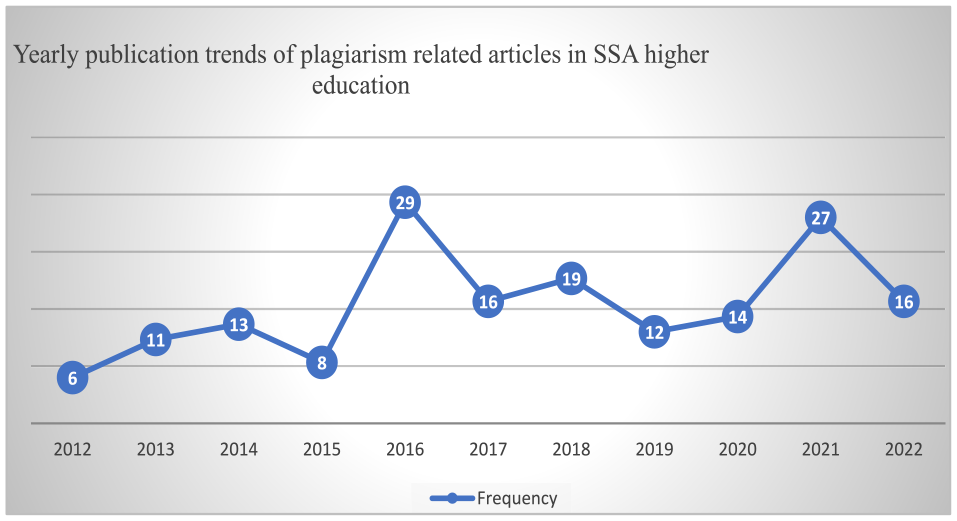
Distribution of yearly publication trends of plagiarism related articles in SSA.
Country-based publication of articles related to plagiarism
The visual distribution of scientific publication trends of articles based on countries that contributed to publications on plagiarism in SSA is depicted by Figure 4.
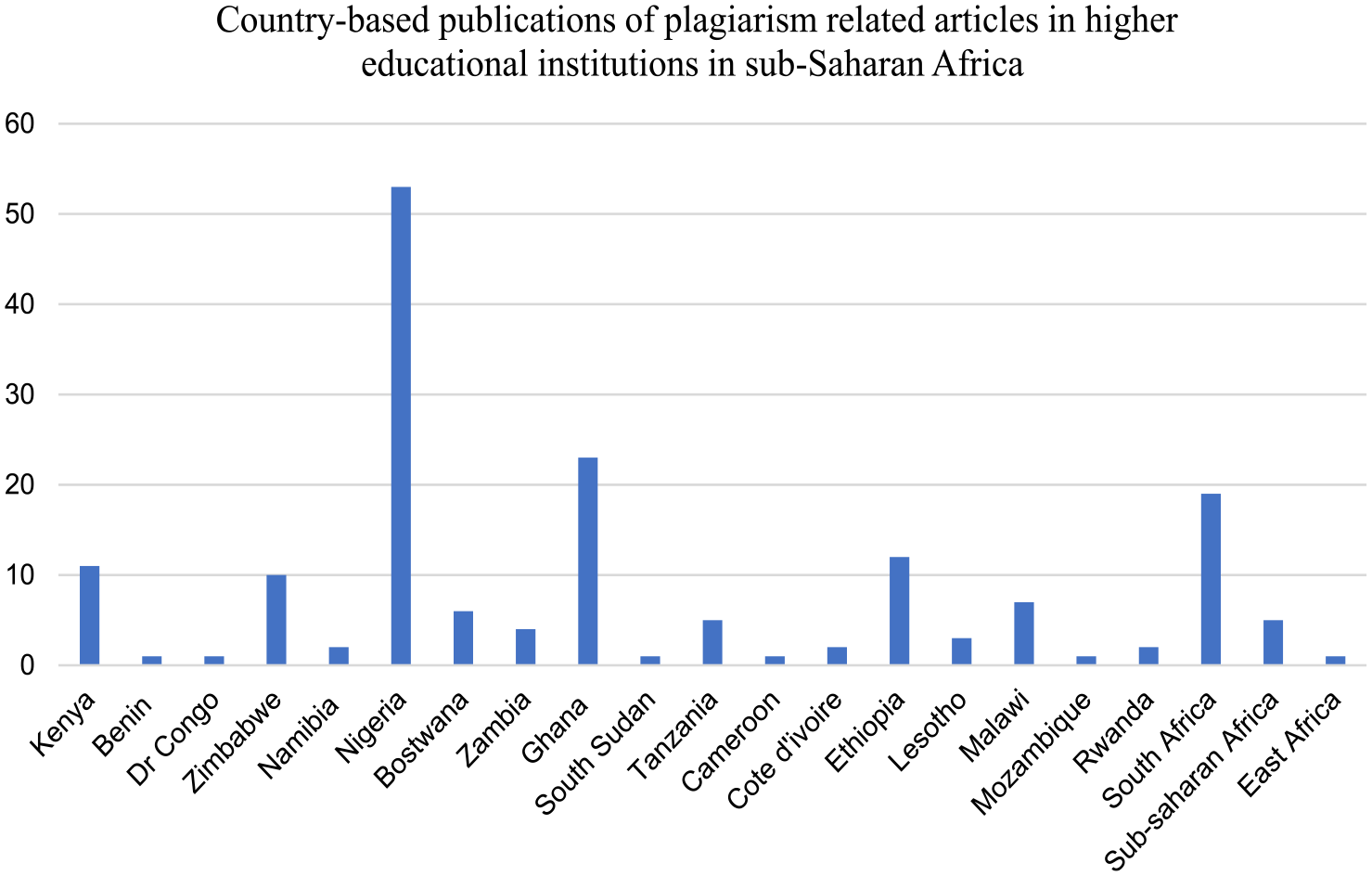
Country contribution to articles related to plagiarism in higher education institutions in SSA.
From Figure 4, it can be observed that some countries have contributed to discussions on plagiarism among higher educational institutions in SSA. For example, Nigeria tops with a publication output of 53 articles on plagiarism, followed by Ghana with 23 articles. South Africa produced 19 articles, Ethiopia had 12, and 11 articles emerged from Kenya. Ten articles came from Zimbabwe, followed by Malawi that produced seven articles on plagiarism among higher learning institutions. The distribution of articles on plagiarism for the other SSA countries, though were not much, is worth reporting, as it constitutes some amounts of discussions on plagiarism. For instance, Botswana, Tanzania and Zambia produced six, five and four articles, respectively. Evidently, from Figure 4, Benin, DR Congo, South Sudan, Cameroon and Mozambique produced one article each whereas Namibia produced two articles on the phenomenon. Five articles, however, focused on the broader sub-Sahara African context while an article focused on how to tackle plagiarism in East Africa as a sub-region.
Focus areas that have been discussed in plagiarism related articles published spanning 2012–2022 in higher education in SSA
What is the focus of plagiarism related publications in SSA? To answer the above question, content analysis was done to draw out any activities, strategies, or actions (see Figure 5) indicating the main focus of the articles when they were grouped into categories. These categories are: (i) awareness or knowledge of academic researchers and students about the act of plagiarism, (ii) effects and consequences of plagiarism, (iii) causes of plagiarism or reasons why academics/students plagiarise, (iv) forms of plagiarism, (v) perceived challenges in dealing with plagiarism and (vi) preventive measures against the spread of plagiarism (see Supplemental Appendix A for details).
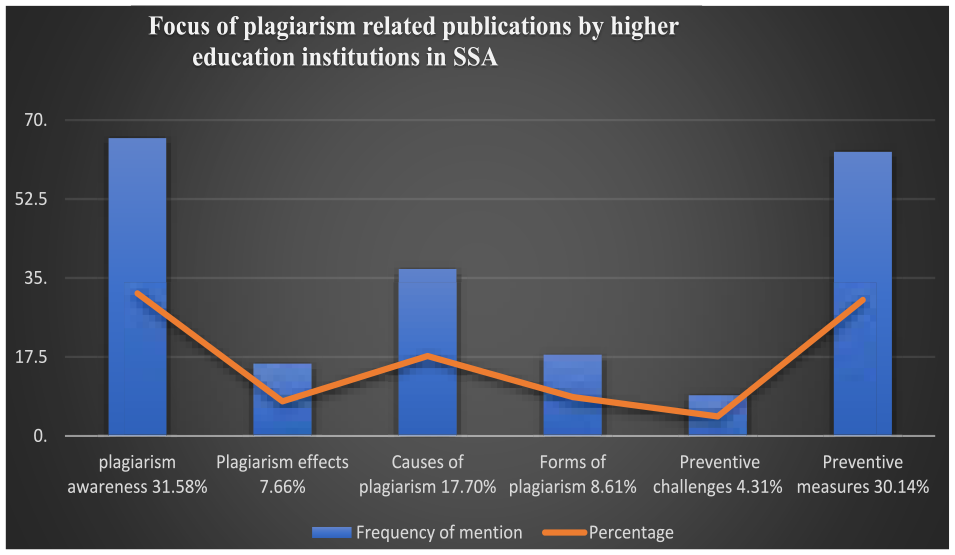
Group distribution of the main focus of articles on plagiarism in higher educational institutions in SSA.
As depicted in Figure 5, the awareness of students and staff of higher educational institutions about plagiarism emerged as the dominant focus with 31.58%, n = 66 articles. Measures for preventing plagiarism (with 30.14%, n = 63 articles) was the second focus area on plagiarism. Moreover, the third thematic area was on ‘causes of plagiarism’ where n = 37 articles constituting 17.70%. Effects or consequences of plagiarism (with 9.71%, n = 17 articles) followed as the fifth focus of the reviewed studies. Finally, ‘forms of plagiarism’ was the least focus area of the articles (with 8.61%, n = 18 articles) in this study.
In terms of awareness, results from the reviewed studies revealed that a majority of both students and faculty in SSA higher educational institutions were aware of the phenomenon. This emphasises the fact that both faculty and students were not ignorant of the existence and occurrence of the phenomenon within their parlance of academic activities in the region. Rather, they had knowledge and understanding of what constitutes plagiarism.
Relatedly, our review unravelled dominant forms of plagiarism in SSA higher education to be self-plagiarism, branded plagiarism and commission plagiarism. However, the causes of plagiarism in SSA higher education, according to the findings from our review, were mainly easy access to digital information and resources; poor supervision of students; pressure on academics to publish for promotion and insufficient skills development regarding ethical academic writing.
Reviewed studies also provided exposure on the effects of plagiarism on higher education institutions in SSA. The dimensions of the effects were: defeat of the purpose of research enterprises; loss of quality research outputs; loss of academic and national integrity; loss of credibility of higher educational certificates and loss of research funding opportunities.
In order to prevent plagiarism, higher educational institutions in SSA mainly adopted approaches such as: usage of plagiarism detection software; policy formulation; as well as intervention against the spread of plagiarism. However, these approaches were confronted with key challenges, ranging from lack of well-trained academic experts to detect and report plagiarism cases; reluctance on the part of technical administrative staff to investigate works for traces of plagiarism; low plagiarism detection skills from project supervisors; to lack of, or no punitive measures against, students and researchers who have been involved in plagiarism.
Most impactful journals and articles that have focused on the occurrence of plagiarism in higher education in SSA
The study addressed the fourth research question regarding the most impactful journals and articles on plagiarism by scholars in higher education in SSA through the identification of journals and articles that attracted high citations. Table 4 shows the top 10 journals that published studies on plagiarism among higher institutions in the region. The 10 most influential journals in terms of the number of citations were: the International Journal of Higher Education (115 citations), South African Journal of Science (85 citations), African Journal of Library, Archives and Information Science (68 citations), Library Philosophy and Practice (61 citations); South African Journal of Libraries and Information Science (56 citations); BMC Research Notes (54 citations), Journal of Education and Practice (53 citations), South African Journal of Higher Education (39 citations), International Journal for Educational Integrity (39 citations) and International Journal of Information Management (33 citations) (see Figure 6).
Ranking indicating the 10 most impactful articles and journals on plagiarism as at 1st November 2022.
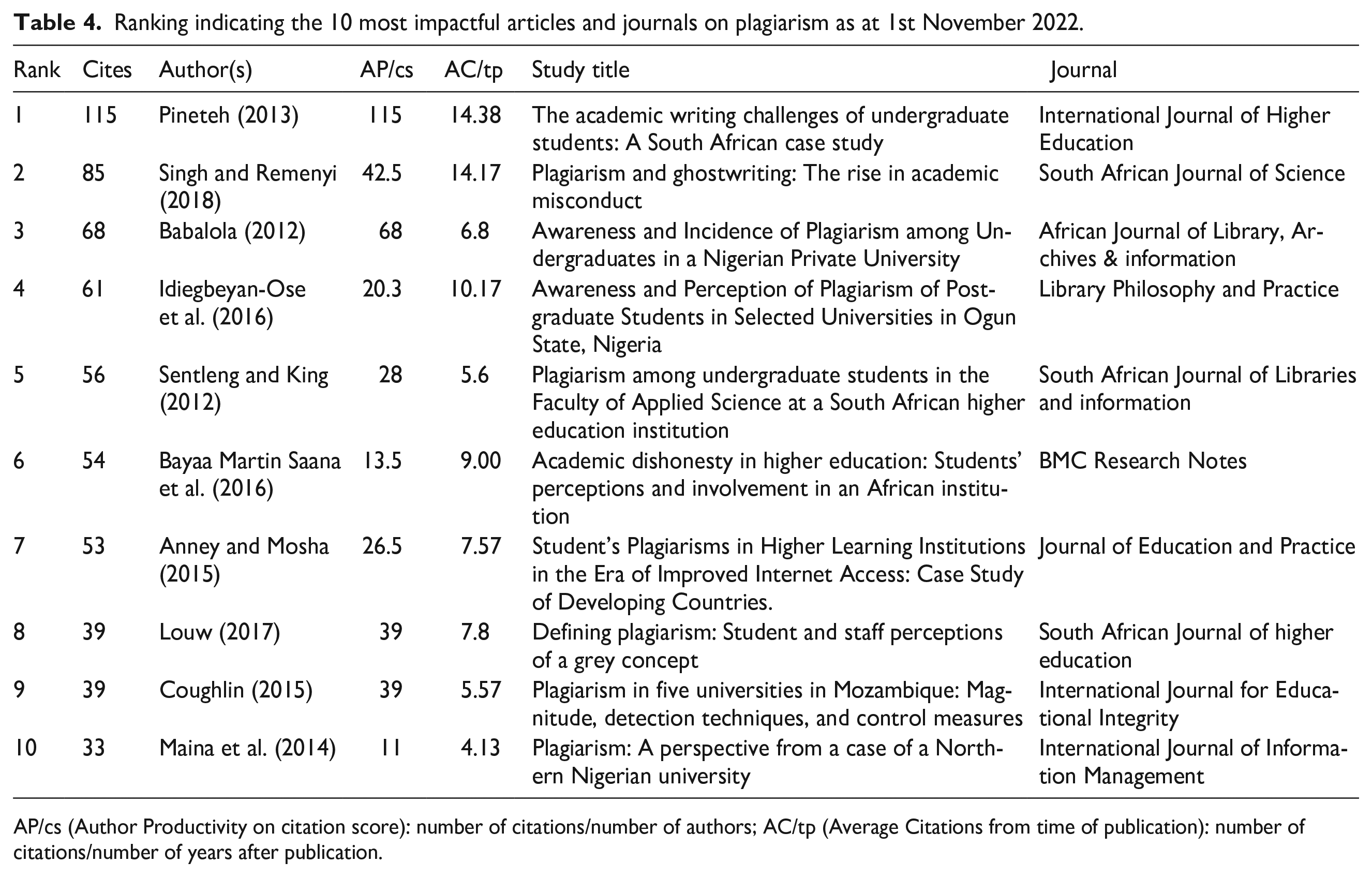
AP/cs (Author Productivity on citation score): number of citations/number of authors; AC/tp (Average Citations from time of publication): number of citations/number of years after publication.
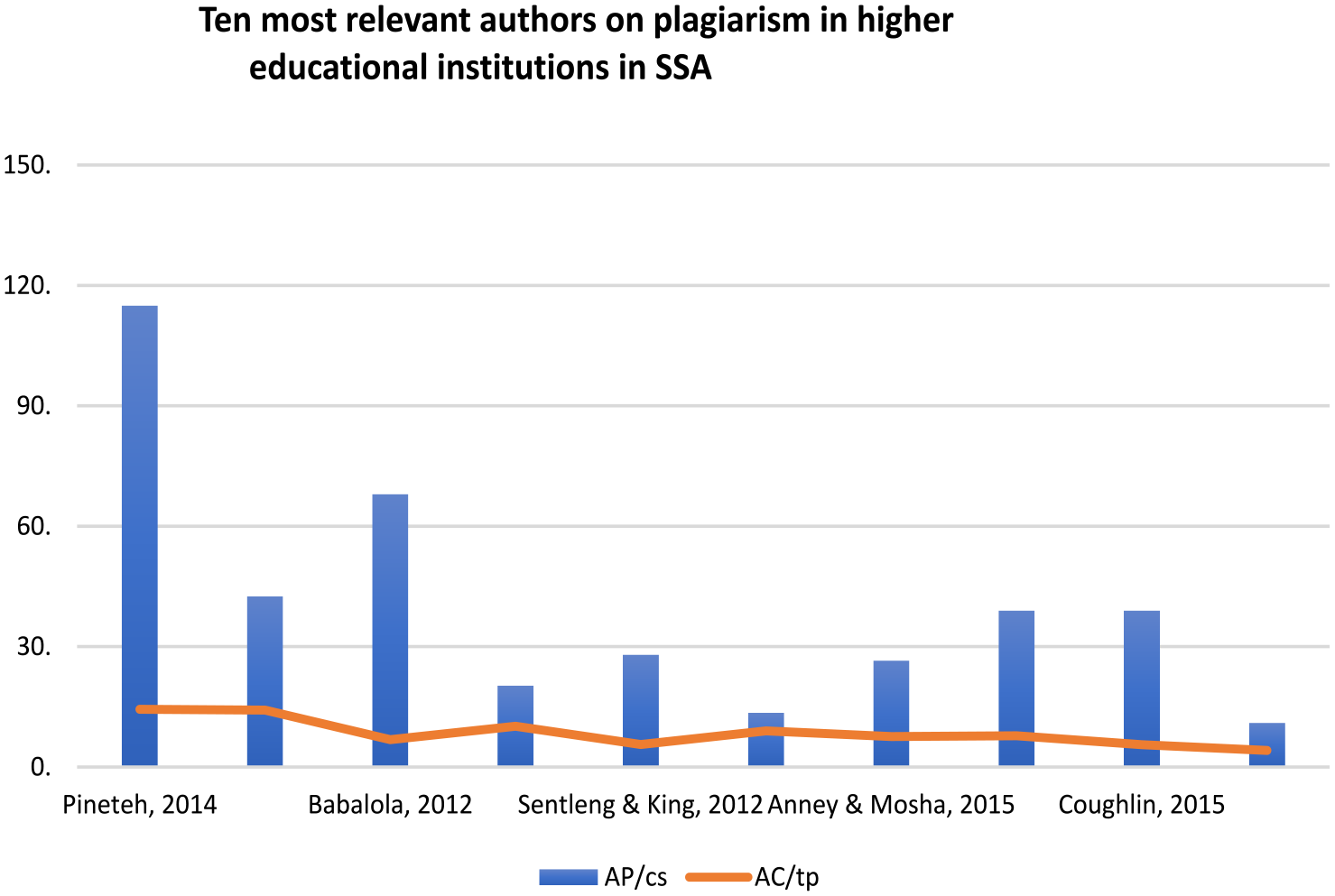
Distribution of the cited authors of plagiarism related publications within higher educational institutions in SSA.
From Table 4, Pineteh’s (2013) article titled, ‘The academic writing challenges of undergraduate students: A South African case study’, with a total citation of 115, was the most cited article, followed by Singh and Remenyi’s (2018) article that focused on the rise in academic misconduct and ghost citations in research, which had a total citation of 85. The third most visible or impactful article was by Babalola (2012), who assessed the awareness and the rate of occurrence of plagiarism among students in a private university in Nigeria. Among the first 10 most impactful articles, Maina et al.’s (2014) was the last, since it attracted a total citation of 33 coming in the order after Coughlin’s (2015) study. Even though Singh and Remenyi’s (2018) article attracted a total citation score of 85, their author productivity citation score was rather 42.5, a score which is lower than that of Babalola’s (2012), though Babalola’s (2012) had more author productivity citation score of 68 (see Table 4). Table 4 provides information on the top 10 journals publishing studies related to plagiarism among higher educational institutions in SSA.
Discussions
The findings from the review showed a gradual increase in yearly (from 2012 to 2014) publications about plagiarism in SSA. The observed phenomenon could be in a period when the interest of researchers about the phenomenon seemed to have heightened. Observably, from 2016 to 2017, attention was given to how plagiarism among higher institutions in the SSA sub-region could be reduced to strengthen the integrity and trustworthiness of research published from the region. Particular reference was paid to some of the efforts made by the management of higher educational institutions in countries such as Nigeria and Ghana to tackle the high incidence of plagiarism in the sub-region (Gotora and Nleya, 2016; Igbokwe, 2016; Oladeji et al., 2016; Olajire, 2016; Oyewole and Abioye, 2016). The review showed that not much effort was made to utilise models and frameworks designed to tackle the phenomenon (Bertram and Drinan, 2010). Meanwhile, academic integrity models or frameworks such as the Model Statement of Commitment to Academic Integrity and the National Academic Integrity Development Framework, have been designed by Celik and Razı (2023) respectively, to help detect and deal with any incidence of academic dishonesty such as plagiarism. Added to the challenges of poor utilisation of models and frameworks to clamp down plagiarism was the fast growing of the internet and modern ICT facilities which seemed to open easy access for students and lecturers to falsify information (Appiah, 2016b).
After the review, it was noticed that most of the articles focused on ‘preventive measures’ for reducing the spread of plagiarism among the higher educational institutions in the sub-region (Buraimo et al., 2019; Curtis and Tremayne, 2021; Omonijo et al., 2017; Orim, 2014). Following the attention given to the ‘preventive measures’ against plagiarism is the documentation of ‘forms of plagiarism’. Nevertheless, awareness of the forms of plagiarism could provide academic management authorities the opportunity to detect and halt the occurrence of all these forms. Typical of these forms were self-plagiarism, branded plagiarism and commission plagiarism. If these forms of plagiarism were under-emphasised by authors in the field, then probably most of the higher educational institutions in the sub-region will have a difficulty in devising application software and other measures for detecting and reporting these forms. That is, though much attention was paid to detection and preventive measures against the spread of plagiarism, which probably means that most of the higher educational institutions in the sub-region desired to mitigate the problem, little was achieved. Perhaps the tertiary educational institutions in the sub-region were aware of the benefits that they will get if they dealt with the problem, and benchmark their research publication activities against international standards, but the review results showed that not much was achieved (Feday, 2017). This could be deduced from the review that amidst the efforts to deal with plagiarism as a menace destroying the fabric covering quality of publications, were constraints to administrative operations among the educational institutions in the sub-region. Largely, the challenges that these institutions encountered while tracing and dealing with plagiarism were institutional capacity-based, including insufficient funding for purchasing software for tracking the frequency of plagiarism, lack of efficient academic library staff, poor implementation of educational policies and unstructured programme for training and re-training of staff to support projects for handling (detecting and reporting) plagiarism cases among academics in the sub-region (Asiyai and Oghuvbu, 2020; Rahayu and Rasto, 2020).
Regarding the distribution of articles based on year and focus, the findings of the study showed that earlier in 2016, much of the discussions were on causes of plagiarism. However, 2 years after, that is, in 2018, the attention was shifted to attitudes, perceptions, and awareness of students and faculty about the phenomenon. Again, in 2018, little attention was also given to approaches of laying bare the consequences and effects of plagiarism on individuals, staff, and faculties of the tertiary institutions in the sub-region. Observably, in 2021, most of the authors discussed the challenges encountered by the higher educational institutions to control the growing rates of plagiarism in the region. This trajectory suggests that the current focus of articles on plagiarism in SSA is targetted at the inhibitions encountered by higher educations in dealing with plagiarism in response to the increasing numbers of the occurrences of the phenomenon within the sub-region. This creates an avenue of unravelling these challenges and annexe them to be able to deal with the plagiarism menace.
In terms of impact of studies on plagiarism (as determined by how visible or the number of citations attached to the articles or documents), only a few were obtained in the literature. The implication of the above is that the visibility of studies in the field is limited in the plagiarism-literature space for SSA. Thus, plagiarism seems not well discussed and documented for the higher educational institutions to know its effects and punch, as far as denting the images of tertiary institutions is concerned. Meanwhile, Asiyai (2013) has advised that to improve the quality of research works by higher educational institutions in the SSA region, challenges that are likely to offset the optimal achievement of research goals must be brought out for authorities to find amicable solutions beforehand. The results of the review again showed that the most visible topic on plagiarism was ‘Academic writing challenges of undergraduate students’ by Pineteh (2013). This article provided information on strategies to train undergraduate students to improve their writing skills. Since this was a major cause of plagiarism within this review, it is apt for higher institutions in SSA to make due reference to this article to understand these challenges and find antidotes to them. This is because improving the academic writing abilities (especially original writing) has a potential to resolving one of the major causes of plagiarism in the SSA region.
In respect of the methodological approaches used in the reviewed studies, it came to light that more than half of the authors discussed issues on plagiarism from existing documents such as policy documents, students’ theses, and existing publications on plagiarism. Once the studies including those by Sarfo (2015), Olajire (2016), Orim (2017), Nwosu and Chukwuere (2020), Afedzie and Onyina (2022) and Jeske et al. (2018) concentrated heavily on secondary data sources to report issues on plagiarism, they limit the opportunity for respondents to share their real-life experiences about plagiarism. This warrants qualitative studies anchored on the phenomenological design to elicit such discourse in order to have an in-depth information on respondents’ personal accounts or narratives about their plagiarism tendencies as well as indulgence. However, their narratives on the possible causes of plagiarism and effects should be subjected to quantitative verifications and thus, quantitative designs are apt to fill this chasm. Ultimately, mixed method approaches such as sequential designs of either Quantitative + Qualitative, Quantitative + Qualitative or the reverse, are necessary. By implication, there is the need for more studies to be conducted following mixed method approaches, making use of the views (qualitative accounts) of multiple subjects for quantitative empirical verifiability of variable relationships of interest.
Recommendations
After synthesising and analysing studies related to plagiarism, the following recommendations are worth considering by all stakeholders of higher educational institutions in SSA:
• Our review showed that the yearly distribution of published articles discussing plagiarism increased over the period (2012–2022), but saw a decline at the end of 2022. It is therefore suggested to ethicists in the field of quality research promotion to increase their efforts in searching and reporting plagiarism cases.
• In terms of geographical distributions of plagiarism related publications, the review revealed only nine studies that concentrated on how plagiarism can be dealt with on the entire sub-Sahara African region, though focussing on individual and institutional strategies in the first place might produce quicker results. There is a need for institutions to devise a more-encompassing approach for holistically eradicating the problem of plagiarism in the sub-region. Furthermore, it will help in the design and implementation of all-country-inclusive policies to deal with the plagiarism causal factors similar across higher educational institutions in the countries within the sub-region.
• Our review showed that only three forms of plagiarism (direct, branded and commission plagiarism) have been discussed adequately. This suggests a possibility that other forms of the phenomenon may be under-researched. There is, therefore, the need for more studies to be conducted to unearth all newer kinds of the phenomenon paving way into the academic fabric of higher educational institutions in the region.
• Additionally, authors are encouraged to conduct more studies based on the views of academics, students, and administrative staff, rather than documentary desktop analysis, in order to report more on the phenomenological experiences that could also be verified quantitatively by way of variable relationships (cause and occurrence) of plagiarism among faculty and students. Findings from such studies will help in the formulation and implementation of appropriate policies towards reducing the phenomenon in tertiary education in SSA.
• Again, the review found that most of the authors were more pronounced on the influx of digital devices, the abundance of internet resources, lack of adequate and proper supervision of students and young faculty, and the excessive desire of students and faculty to publish for promotion to be the major causes of plagiarism. However, they were silent on the causes that were more scientific based. Therefore, it is suggested that more research involving modern innovative methods should be conducted to bring out fresher causes of the phenomenon to direct the formulation of comprehensive policies against the phenomenon.
• An assessment of the perceived challenges in dealing with the causes of plagiarism revealed recurring factors such as a lack of well-trained academic experts to detect and report plagiarism cases, reluctance on the part of technical administrative staff to investigate works for traces of plagiarism, low plagiarism detection skills from project supervisors and lack of or no punitive measures against students and researchers who have been involved in plagiarism. Against this backdrop, academics and technical administrative staff should be well-trained and motivated in the use of software in identifying plagiarism cases and reportage. Nonetheless, punitive measures should be well-spelt out and meted out to culprits of plagiarism.
• Most of the articles reviewed were mainly on students’ awareness and perception about plagiarism; causes of plagiarism; and preventive measures to reduce plagiarism among higher educational institutions in the region. The above findings imply that there were three foci areas – forms of plagiarism; implications or consequences of plagiarism and challenges in the prevention of plagiarism – that have not been pronounced visibly enough in the research studies in SSA. The implication of the above is that the key issues surrounding how plagiarism can be reduced in the educational management landscape of SSA are only half discussed and highlighted. This is a signal to research departments and institutions to increase awareness, educate, and discourage the forms surfacing and the causes of plagiarism among researchers and students in SSA higher institutions. More so, preventive measures and strategies against plagiarism among students of higher educational institutions have been well documented and thoroughly discussed. In light of this finding, we are suggesting to authorities of higher educational SSA to take practical steps to implement those preventive approaches already found to nip the problem in the bud.
• Finally, our review revealed that there was no standardised framework for detecting, documenting and reporting the incidence of plagiarism. Hence, the study recommends to future researchers to develop a standard quality assurance framework for assessing and communicating plagiarism cases among higher educational institutions in SSA.
Limitations
Our review did not find issues on gender, age and subject area specialisations regarding plagiarism in the studies. Therefore, we suggest that future studies look into these aspects of the phenomenon in higher education in SSA in order to fill this gap and inform policy and practice.
Conclusion
This paper has provided valuable insights into the discussions on plagiarism by examining articles that detail the steps taken by higher educational institutions in the SSA sub-region between 2012 and 2022. The Harzing Publish or Perish literature search and management software, along with the Scopus database, were used to identify 171 articles based on the authors’ set criteria. The choice of the time for the review was premised on the time most countries in SSA started giving attention to the issue of plagiarism within the academic work of higher institutions in the region. This study revealed the knowledge and awareness, causes, forms, effects, preventive measures and challenges in dealing with plagiarism to promote quality teaching, learning and research.
The study thus advances an argument that the quality of teaching, learning and research will improve if the key forms of plagiarism and factors or conditions that open opportunity for students’ plagiarism as well as academics, lecturers, or researchers are resolved. Drawing upon the findings, this paper provides exposure to the forms of plagiarism and publication trends in term of years, authorship and countries that have produced relevant articles on plagiarism. Quality teaching, learning and research matter when it comes to producing evidence-based research output for the implementation of policies, projects and programmes towards solving social problems (Achoka, 2018). However, many of the causes of plagiarism in higher educational institutions to promote quality teaching, learning and research were anchored on proliferation of information on the internet, pressure on academics to publish for promotion, insufficient skill development regarding ethical academic writing and citations and ignorance of some students and faculty about the issue of plagiarism. To meet expectations of industries, academic and research institutions must ensure that the research findings they produce are relevant, applicable and original. However, the literature review showed that the institutions were besieged with several challenges that prevented them from producing quality teaching, learning and research. Developing strategies and structures to deal with the challenges encountered in reducing plagiarism is important to make teaching and learning effective in higher educational institutions in the sub-region. Rathore et al. (2015) recommend that all higher education institutions should focus on eliminating the factors that contribute to the high prevalence of plagiarism. Indeed, our view is that this will lead to comprehensive and high-quality teaching, learning and research output.
Supplemental Material
sj-docx-1-rea-10.1177_17470161231189646 – Supplemental material for Plagiarism in Higher Education (PLAGiHE) within Sub-Saharan Africa: A systematic review of a decade (2012–2022) literature
Supplemental material, sj-docx-1-rea-10.1177_17470161231189646 for Plagiarism in Higher Education (PLAGiHE) within Sub-Saharan Africa: A systematic review of a decade (2012–2022) literature by Dickson Okoree Mireku, Prosper Dzifa Dzamesi and Brandford Bervell in Research Ethics
Footnotes
Acknowledgements
The authors acknowledge the contributions of all the scholars whose works were reviewed for this study.
Ethical approval
This study was purely a literature review and did not include human subjects or involved animals for experiments. Hence, no ethical clearance was needed.
Declaration of Conflicting Interests
The author(s) declared no potential conflicts of interest with respect to the research, authorship, and/or publication of this article.
Funding
All articles in Research Ethics are published as open access. There are no submission charges and no Article Processing Charges as these are fully funded by institutions through Knowledge Unlatched, resulting in no direct charge to authors. For more information about Knowledge Unlatched please see here: 
Supplemental material
Supplemental material for this article is available online.
References
Supplementary Material
Please find the following supplemental material available below.
For Open Access articles published under a Creative Commons License, all supplemental material carries the same license as the article it is associated with.
For non-Open Access articles published, all supplemental material carries a non-exclusive license, and permission requests for re-use of supplemental material or any part of supplemental material shall be sent directly to the copyright owner as specified in the copyright notice associated with the article.
