




Abstract
Global challenge-led research seeks to contribute to solution-generation for complex problems. Multicultural, multidisciplinary, and multisectoral teams must be capable of operating in highly demanding contexts. This brings with it a swathe of ethical conflicts that require quick and effective solutions that respect both international conventions and cultural diversity. The objective of this article is to describe the process of creating a toolkit designed to support global researchers in navigating these ethical challenges. The process of creating the toolkit embodied the model of ethical research practice that it advocates. Specifically, at the heart of ethical decision-making is consideration of the following: Place, solutions must be relevant to the context in which they are to be used; People, those impacted by the outcomes must be partners in co-creation; Principles, ethical projects must be guided by clear values; and Precedent, the existing evidence-base should guide the project and, in turn, the project should extend the evidence-base. It is the thesis underlying the toolkit that consideration of these 4Ps provides a strong basis for understanding ethical conflicts and allows for the generation of potential solutions. This toolkit has been designed in two phases of collaborative work. More than 200 researchers participated from more than 30 countries and more than 60 different disciplines. This allowed us to develop a model for contextual, dynamic analysis of ethical conflicts in global research that is complementary to traditional codes of ethics. It emphasizes the need to consider ethical analysis as an iterative, reflective, process relevant at all stages of the research journey, including, ultimately, in evaluating the legacy of a project. The toolkit is presented as an open access website to promote universal access. A downloadable “pocket guide” version is also now available in 11 languages.
Introduction
In the past 20 years, the rate of globalization t has affected all aspects of society and brought the global village together in search of solutions to complex challenges affecting the health and wellbeing of people, communities, and the planet (Horton and Lo, 2015). In the research community, global problems have required the formation of international, multidisciplinary, and multicultural teams, which has brought with it the challenge of ensuring adherence with ethical standards in highly complex contexts (Bukusi et al., 2019).
In global research, it is common to see projects involving partnerships between higher income countries and countries on the Development Assistance Committee (DAC) list of Official Development Assistance (ODA) recipients, largely referred to as countries of the global south (Morrison et al., 2018), and also with countries experiencing war or political conflict (Habib, 2019). This presents a range of power differentials between partnering countries (Orr et al., 2019) as well as significant resourcing demands which impacts the feasibility of different research methodologies (Bukusi et al., 2019). Rohwer et al has suggested that the lack of resources in low- and middle-income countries (LMICs) is also reflected in a lack of institutional structures and systems to support and promote research integrity, which is associated with a high prevalence of research misconduct (Rohwer et al., 2017). COVID-19 has highlighted the need for ensuring ethical systems and processes remain fit-for-purpose as an ongoing, worldwide challenge (Ma et al, 2020). Different ethical and legal regulations can also generate conflicts between researchers from different cultural contexts (Morrison et al., 2018). Bosch and Titus (2009) emphasize that in global research these ethical challenges are present throughout the research project, from its planning and its execution to the dissemination of the results and beyond. These challenges increase the need for responsive and versatile ethical guidelines and systems that consider the cultural differences between the actors involved in different aspects of the project (Harrowing et al., 2010; Morrison et al., 2018).
The need to establish mechanisms or tools that enable recognition and resolving of ethical conflicts in global research is evident (World Health Organization, 2015). However, for Drydyk (2014) the concept of “global ethics” is controversial in itself, since it can derive from a colonialist vision and privilege the generation of globally imposed rigid Western ethical criteria. Others have suggested that the incorporation of Western principles in global research may not be suitable in non-western, low-income countries and may be harmful and disrespectful (Harrowing et al., 2010). Dunford (2017) goes further and resists the conceptualization of global ethics as universal stating that to decolonize global ethics, it is necessary to adopt “pluriversality,” understood as the product of inter-cultural dialog. In this way, it is considered that ethic can be multi-universal if “it is constructed in a manner that takes seriously, shows respect for, and emerges from, communication and exchange across multiple places, cultures and cosmovisions” (Dunford 2017: 9). However, others believe that this relativist view has the risk of accepting certain cultural practices that violate human rights (Fischer, 2001; Healy, 2007). The challenge of ethical practice in global research is to achieve a balance between the valuing of cultural diversity and the respect for human rights.
In response to these challenges and our own experiences in complex research settings, the authors of the current paper initiated a project exploring leadership in ethics, integrity, and research conduct in complex LMIC-UK partnership projects (Reid et al., 2019). We aimed to identify the challenges and ethical dilemmas being experienced in global research projects as well as investigating the conditions that can best support ethical practice. Our most ambitious objective was to develop a toolkit to support researchers in addressing these challenges. To this end, two processes were carried out in parallel: a scoping review of the existing literature, and consultation with researchers from around the world. Our review of the literature has been previously reported (Calia et al., 2020; Guerra et al., 2019). In that review, 2272 papers were found and 65 papers analyzed, which identified a series of ethical issues and curated useful solutions.
The objective of this paper is to describe the second process – consultations with global researchers from around the world to create an online, open-access toolkit for the global research community. This process was driven by an implicit (at that stage) appreciation of the importance of both People and Place in understanding ethical dilemmas – bringing together the “global academic village” to help distil key shared issues and to identify points of difference. This process followed a bottom-up approach in two stages. In the next sections, we describe both phases as a case study in confronting ethical challenges when working in a global research context.
Phase 1: Workshop events and creation of a first draft of the toolkit
Primary data collection activities were a series of workshops carried out at The University of Edinburgh from May to July 2019. The objective was to engage key researchers and partner stakeholders in a robust, facilitated process of distillation of key ethical issues, and then further formulating positive pathways for ethical conduct including innovations in policy and practice. In the first instance, this process was undertaken with a local aim in mind: to strengthen and enhance current partnership projects involving researchers from the University of Edinburgh and partners from the global south. It grew far beyond our intentions as researchers from around the world indicated an interest in becoming involved.
Participants
Phase 1 participants included 114 (42 male, 70 female, 2 unknown) researchers from 32 countries 1 and 41 disciplines. 2 Most of the participants were in Edinburgh temporarily, attending the 2019 European Conference on African Studies. Participants gave their informed consent to be part of this research process.
Procedure
A total of five workshops were held and adopted a Delphi design. Each workshop involved sequential rounds of small group work in which participants identified, discussed and shared experiences of ethical challenges they had confronted in their work, and considered distilled propositions about ethical challenges in global research. Each group generated materials (posters, papers, group notes) for sharing with the larger group.
Some examples of questions analyzed in these workshops were: 1. What’s the first thing that comes to mind when someone says “research ethics” or “ethical research”? 2. What was an ethical challenge you have experienced? 3. At what point of the research journey would you encounter that ethical challenge? 4. What happened? What made it challenging? 5. What are the things that help ethical actions? What helped or would have helped ethical action in your situation? 6. What is one thing everyone must know, remember or do (to behave ethically)? Thematic analysis was applied to notes, documents and posters produced during the workshops (Braun and Clarke, 2006).
Results
It was clear that the process of bringing together diverse researchers from around the world elicited collegial sharing, robust conversations, and also relief as participants revealed shared concerns and experiences. The consensus seemed to be that this was a valuable if not an all too rare experience that was not generally encouraged by regulatory frameworks, cultural sensitivities and a culture of academic competitiveness. This was expressed by one participant in the following way: Now I know that I am not alone. It is reassuring and liberating to know that others have had the same experiences. It is empowering to hear their solutions and to talk about mine. Now I know that there is not one right answer, but there is a strong process that will help me find the best answer for my project, for now (Workshop participant, Edinburgh)
In sharing research stories, it was clear to participants that different ethical issues emerge throughout different stages of the research journey, from the generation of the idea to the analysis of results, and even after in the implications or legacy of the research (please see Figure 1). The official process of securing ethical approval was identified as one small part of the ethics journey, but many researchers believe that this bureaucratic hurdle is perceived as being synonymous with “doing ethical research.” It was clear in these conversations that it was often the unexpected developments in research projects that posed the greatest ethical dilemmas and highlighted the complexities that exist in global research. Hence, a strong point of agreement was that an ethical approach to research goes beyond the formal approval process and is a process that must be driven by the researcher and research team throughout the life of the project.
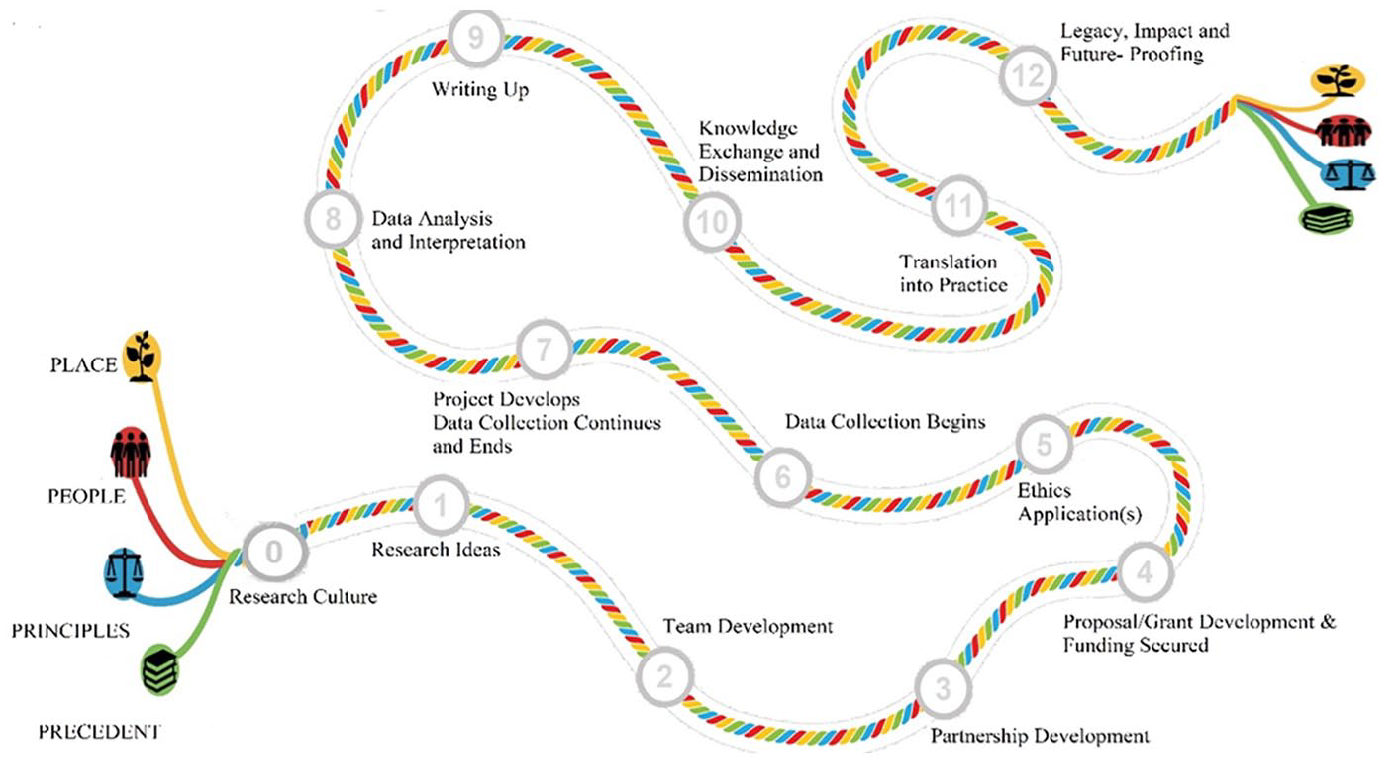
Key elements of the global ethics toolkit: Considering place, people, principles, and precedent throughout the research journey.
Four major thematic considerations emerged as underpinning research integrity and ethics: Place, People, Principles, and Precedent (the 4Ps). Notably, these themes were consistent with those found in the scoping review.
“Place” refers to the importance of considering the context in which the ethical dilemma is occurring and where the solutions must be applied. This raises a series of ethical issues associated with cultural differences between the place where the research is conducted and the different origins and customs of the research team. The challenge of conducting research in contexts affected by war, natural disasters, political instability and economic needs raises particular issues. For our participants, considering the place where the research is carried out – and respecting culture and legislation, while considering local resources and vulnerabilities – is key in conducting global research ethically.
Some of the questions highlighted by participants of the workshops were: “How can we be respectful of cultural values? How can we ensure cultural ‘safety’ or security of the work? How do we ensure that participants understand informed consent? How do we ensure that researchers do a good analysis of the data in another language (e.g. in interviews)? When is it appropriate to work with a translator? What is the structure of power and how does that affect research? What are the risks for participants and researchers in this context? How can we recruit the most appropriate participants (avoid biases)? How will the results of the research be used? Who do they benefit or harm? What is the general state of the population (traumatized, angry people)?”
“People” referred to the different parties involved in the research investigation. Ethical conflicts are often associated with human relationships between participants and/or the research team. These include the researcher as an individual and his or her ethical conflicts, the research team biases and positionality, the participants in every study, beneficiaries and stakeholders and the establishment of ethical partnering relationships. This is not easy in multi-disciplinary, multi-cultural and multi-sector research groups, with different expectations and visions of what is ethical or correct and what is not. Study participants, including those who play an active role in the research, and the local community that may be affected by the research determine ethical decision-making. Finally, there was discussion of conflicts arising from the relationships with different entities such as funding agencies, formal or informal authorities in the field 3 who may have conflicts of interest, as well as with ethics committees who are not always well prepared for supporting global research.
Additional questions highlighted by workshop participants were: “When is payment for participation ethical or unethical? Concerning the expectations of poor people participating only to receive the money: How does that affect the voluntary nature of participation and the validity of the data? Which dynamics of power in the community influence informed consent (forced to participate or not to do so)? It is possible to ensure anonymity and confidentiality in small communities? How can we manage power relations between partners from different disciplines, languages and cultural context? What is the emotional impact on the research team (e.g. who work with a highly traumatized population)? What are the interests of the funding agency? Should we pay for ethics approval? Are we respecting the leaders of the community and the community ways? Does the research team have the necessary cultural sensitivity?”
“Principles” referred to the worldview and values that influence decision making. It was highlighted that ethical challenges can be triggered by differences in principles that underpin and shape a research project, the culture(s) and the people involved. Within these complex environments, our task is to recognize these differences and then find pragmatic, values-informed solutions. Some of the challenges at this level are: being aware of the values that are important in this research; balance in the equation “need - benefit - impact”; the challenge of ensuring methodological rigor and goodness-of-fit in highly complex contexts; and relating to different stakeholders with transparency and accountability. On the other hand, workshop participants highlighted the need to balance the expectations of the community with the risks of participating in the study, and the need to consider both vulnerabilities and opportunities. Some of the questions at this level were: “Is this research necessary? For whom is it necessary (community, participants, the scientific community, politicians)? How do we make the results accessible to the participants? Are there tensions between different principles (e.g. transparency vs honesty vs risk vs do no harm)? Is it risky? For whom is it risky (participant, the community in general, researcher)? What is the political and social cost of the investigation? Who defines what is risky?”
“Precedent” refers to how history is shaping current and future challenges, including how we conduct research. When things go wrong, what has been done before can be a great place to start in finding a solution. Enabling ethical outcomes requires us to be alert to these precedents so that we can discern when to draw on, and when to challenge, established ways of working. Understanding the strengths and limitations of previously used research methods and traditional approaches can help avoid making the same mistakes and re-inventing the wheel. Each project also presents the opportunity to establish new precedents – these acts of future-proofing and advocacy were also explored. Sub-themes at this level were associated with previous research policy and publications that can help to prevent ethical mistakes and orient us toward possible solutions. Precedent also refers to being attentive to previous research methods, traditional ways of knowing in the community, and previous research experience and outcomes, which can guide us in our research journey. The main question that arose from the workshops was “What do we need to follow or challenge in our established ways of working?”
Conclusions from the workshops
The foundational message from the workshops is that ethical considerations are present throughout the research journey, well beyond the simple process of applying for project approval from the institutional ethics committee. Notably, the categories of ethical conflicts and solutions distilled in the workshops were similar to those found in the scoping review, strengthening our confidence in the key elements required for the toolkit.
The second message from the workshops is that ethical challenges can be best understood by considering the 4Ps: Place, People, Principles, and Precedents. Further, that ethical solutions can also be found here.
The third message is that in a global research context, ethical problems and solutions are dynamic, multidimensional, complex, and therefore ethical solutions require flexibility and creativity. Thus, a useful toolkit must be able to guide reiterative reflection rather than offering rigid regulations for ethical action.
Informed by these findings, we created the first draft of the toolkit. It was a 40-page document that reflected the issues raised in the workshops and provided case analyses, problem-solving rubrics and reflection guides.
Bringing together more than 100 researchers from more than 30 countries and 40 discipline areas was critical in ensuring a rich and robust discussion and was a unique feature of this project – it inspires confidence that the emergent findings are relevant to a broad range of contexts. The strong coalescence around core ideas was unexpected and a powerful driver in the decision to continue with an additional phase of the project which will be discussed next.
However, we were mindful that conducting these conversations in Edinburgh, in an unfamiliar environment for many of our research partners, may also have created demand characteristics that influenced the way conversations unfolded. It may have created a social pressure to agree or a power differential that privileged some voices over others. Addressing this would require a counterpoint, an opportunity for deep discussion in each participant’s “home territory” and away from the context of The University of Edinburgh.
Phase 2: Expert roundtables and creation of the first version of the toolkit (website and pocket guide)
The objective of the second phase of this study was to validate ideas emerging from the workshops in Phase 1 and to validate the content and format of the resultant toolkit with participants of the initial workshops and with other relevant global research experts. Perhaps most importantly, aside from one, all of these roundtables were to be undertaken in the countries of origin, away from Edinburgh. An email was sent to the previous participants requesting further involvement. A total of 17 researchers participated, leading a group discussion of experts in their respective countries in October 2019.
Participants
Participants included 109 researchers (47 women and 62 men) resident in 11 countries 4 and working across 52 disciplines. 5
Whilst roundtable leaders were former participants in Phase 1 of the project, the roundtable participants extended to include other local experts. Participants gave their informed consent to be part of this research process.
Procedure
A total of 17 roundtables were held in the 11 countries. Roundtables were led by people who attended the original workshops in Edinburgh. Each host was in charge of inviting relevant local experts on global research and also organizing the session such as booking the venue and catering. During the session, each host was responsible for leading and taking notes on the discussion with their colleagues and then summarizing the group’s feedback. Reimbursement for expenses associated with hosting the events was provided.
One week before each of the roundtables, a copy of the first draft of the toolkit (a 40-page document) was sent to hosts for distribution to researchers in their network. Each host then led the expert discussion at face-to-face meetings (between 1 and 3 hours). During the roundtables, experts were asked to discuss and provide feedback on the draft toolkit. An online survey (through the Qualtrics platform) was developed to facilitate capture of the feedback by each of the 17 hosts.
The online survey had 21 questions (15 open questions and 6 closed questions). Answers to the open questions were themed (Braun and Clarke, 2006) and closed questions were described in terms of frequency. Examples of questions: Is this toolkit needed? Is this toolkit understandable? Why? What is the most useful or valuable aspect of this toolkit? What feels problematic, hard to understand or unnecessary? Are there any aspect of the toolkit about which you (or your colleagues) have concerns?
Results
The response to participating in the expert roundtables was very positive and has established what we hope will be an ongoing community of participants. All the expert groups made positive general comments about the toolkit: 94.1% agreed that this toolkit is needed and useful, and 85.7% agreed that the toolkit is understandable. Participants highlighted several positive characteristics of the toolkit, with comments like:
Instructive to guide us, this is going to be a significant asset and support to educational institutions, researchers, supervisors and research students, recognition of global heterogeneity, interesting, informative and motivational, accessible across discipline.
Helps me to see and understand what really this ethical research means, opened our eyes to different blind spots on ethical challenges of conducting research in Africa, provides a much-needed coherent way of approaching international research.
The most valuable parts of the toolkit (100% agreement) were: the 4Ps approach, the idea of considering ethics across the complete research journey, and the case studies section. There was an appreciation that this document does not seek to mirror or replace guidelines or national standards that support the completion of ethics applications, but rather takes a broader view of ethics. It encourages reflective conversations and rich decision making by research teams and partners. One group of experts remarked: The approach of situating ethics within the context of the 4 Ps (i.e. People, Place, Principles, and Precedence) offers an innovative but holistic approach that cuts across disciplinary confines.
However, the experts also critiqued the usefulness of the toolkit in the field. All expert panels considered the toolkit to be very long, making it difficult to use in a challenging context with comments like: The document is very bulky, very abstract and very voluminous to easily grasp its contents.
To improve the toolkit, it was suggested that we make a freely accessible web page and a short version of the toolkit (59% of the groups). Furthermore, 24% of the groups suggested the need to clarify some concepts (e.g. to better explain how we define global research) and 24% highlighted the importance of translating the toolkit into different languages (the first draft was only in English). Others suggested potential case analyses that may be helpful to users of the toolkit.
Conclusions from the expert roundtables
The research team identified common themes from the 17 expert roundtables and incorporated them into the new version of the toolkit which now includes: (i) a website with updated content; (ii) a “pocket guide” short version: 4 pages pdf (2 pages of infographics); (iii) translations of the pocket guide into 11 languages: Arabic, Chichewa, English, Hindi, Italian, Malay, Portuguese, Russian, simplified Chinese, Spanish, and traditional Chinese; and (iv) several exemplar case analyses and a case analysis template. All materials are available as open-access, on a publicly available website (www.ethical-global-research.ed.ac.uk). Two coordinated teams worked together on finalizing the project in Edinburgh, UK, and also in Zomba, Malawi. A team situated in Edinburgh worked on the short version of the toolkit and on the website, and a Malawi situated team worked on the case analysis (Figure 2).
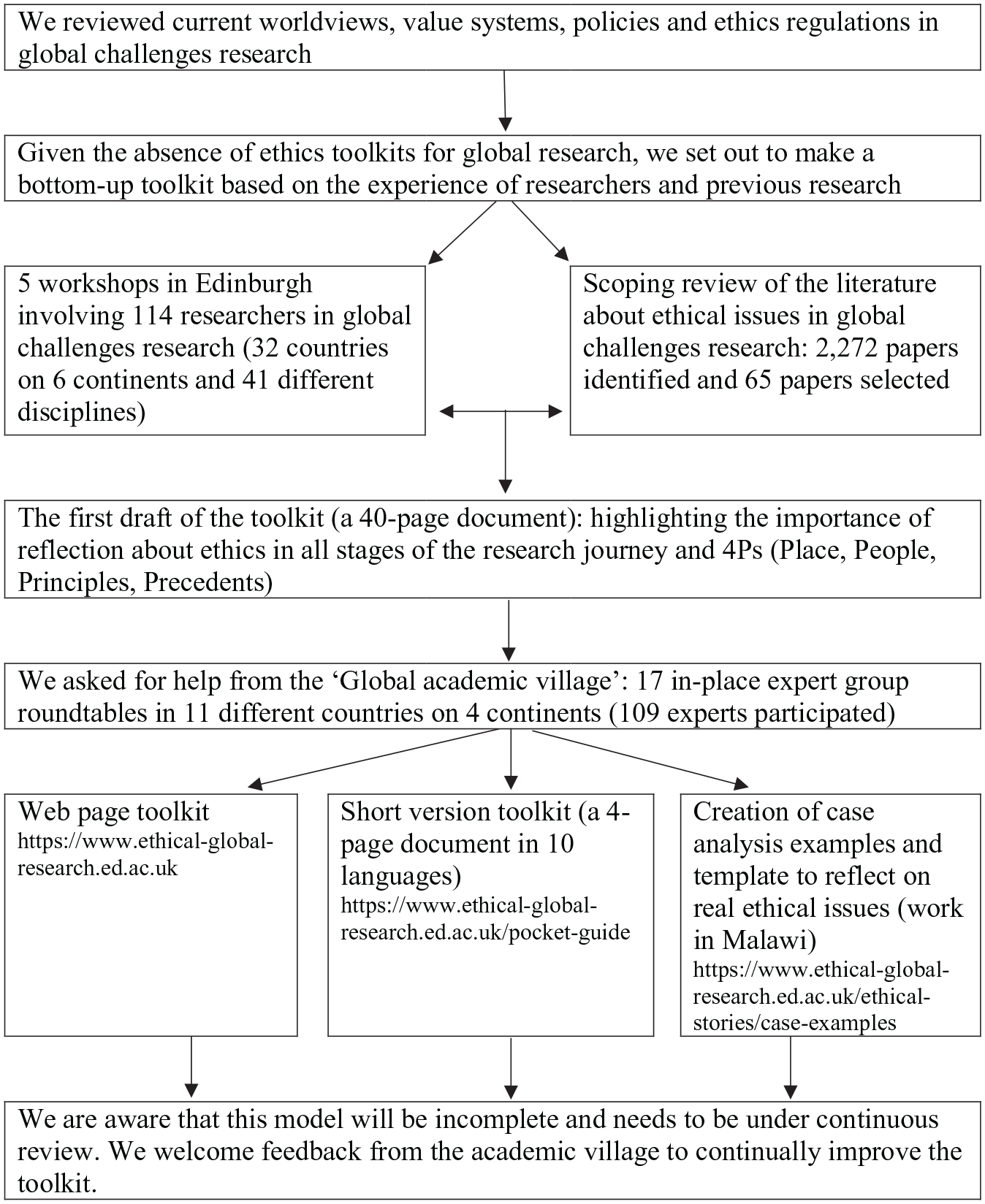
The process to develop the toolkit.
Reflections and future directions
Global research has the potential to profoundly affect communities in situations of vulnerability, for better or for worse (Bosch and Titus, 2009; Bukusi et al., 2019). This project developed a tool to highlight ethical conflicts and to share possible solutions through conversations with the global research community. We were overwhelmed with the response that ultimately drew together more than 200 researchers from more than 30 countries, 45 universities and representing more than 60 disciplines. It is clear from these rich and robust conversations that there is an appetite for collegial opportunities to share, discuss and debate the complex ethical challenges in a safe space, and is focused on prevention, finding solutions and creating a supportive global ethics community.
Our objective for this paper was to describe this unique consultation with global researchers from around the world and the important process of co-creating an ethical toolkit through the application of the “Place, People, Principles and Precedent” framework throughout our project. Specifically, the toolkit reflects the perspectives of more than 200 people, reflecting experiences from diverse contexts and countries, and distilling shared principles and values. This process was challenging in many ways. It required careful listening and reconciliation of views, as well as honoring points of difference amongst participants. Indeed, it was this process of honoring points of difference that led us to the methodological decision to create a process-based toolkit rather than a set of global ethical guidelines. We believe that taking the time and care to hear and incorporate these voices have, uniquely, contributed to the generation of a practical, flexible and accessible tool that can be a useful aid to reflection upon ethical challenges and solutions across many contexts. It alerted us to a gap in more formal, institutional, ethical processes, and the need for a self-directing tool to support researchers throughout the research journey.
This tool does not replace traditional research and professional ethics codes, and regulatory requirements (e.g. Council for International Organizations of Medical Sciences, 2002; World Medical Association, 2013). On the contrary, it is proposed as a complement to them.
The model rests upon two foundational assumptions:
That research teams should consider ethics through the lens of the whole research journey, and not just for ethics approval. It was clear from this community of researchers that ethical reflection and accountability is needed from the germination of a research idea through to the research legacy (Bosch and Titus, 2009).
That the analysis of ethical issues and possible solutions is best served by considering the 4 axes of Place, People, Principles and Precedents.
For ethical global research, it is not enough to review the current ethical, legal or methodological regulations (Precedents). The complexity of the ethical and humanitarian issues facing global researchers requires a deeper analysis which considers important aspects of context (Place), the actors involved (People) and the values that guide, or should guide, ethical research (Principles). Notably, this was consistent with the results of the scoping review that coalesced on the same four thematic clusters relevant to both identifying ethical issues and finding ethical solutions (Calia et al., 2020). Our experience in this project has made us aware of the challenge and the benefits of achieving a balance between the 4Ps. There will be conflicting views and sometimes irreconcilable perspectives. Knowing what they are is a helpful step toward ethical decision making.
As well as highlighting our findings, in this paper, we are sharing our experiences as an example of the toolkit creation process in action. In our own research journey for this project we experienced many of the ethical challenges described by our colleagues in our workshops, first-hand. For instance, we faced challenges in deciding who to include in the project, in ensuring equitable contributions, in coordination with partners from different parts of the world, with reconciling different cultural perspectives on ethical dilemmas, navigating multiple and complex administrative systems, and so on. It was heartening that we found our own 4P model helpful in recognizing and defining these ethical challenges and for finding solutions.
Many workshop participants indicated that they would like to stay involved with this project as the development of the toolkit unfolds. Our plan is to form a research ethics reference group that specializes in global research. At the end of each workshop, we asked for expressions of interest in being part of a Research Ethics Reference Group. Initial indications are that there is strong interest. Some showed interest in developing ethics training in global research.
We are aware that this toolkit is dynamic and more can be added. As a research team, we will strive for continuous improvement. We have ambitions to increase the number of languages into which the code is translated from what is available currently, to enhance access for researchers in different parts of the world. We are also working to improve the friendliness of the website that will allow for interaction between global researchers. We welcome the ongoing involvement of the global research community in the development of this site and in our ongoing conversation about how to ensure that we continue to work with all communities in the most ethical way.
Footnotes
Acknowledgements
We would like to acknowledge the valuable contributions of the following colleagues who supported this project – Wendy Ball, Lisa Boden, Alinafe Chibwana, Mark Hoelterhof, Charles Marley, Susannah Johnston, Paul Mekani, Geoff Simm and Emily Taylor.
Funding
The author(s) disclosed receipt of the following financial support for the research, authorship, and/or publication of this article: This project was funded by SFC ODA Global Challenges – GCRF University of Edinburgh Internal Funding Scheme (College of Arts, Humanities and Social Sciences).
