




Abstract
As part of citizenship education, the prevention of radicalization and extremism through education (PVE-E) is an urgent initiative of global educational policy. According to research, radicalized individuals, despite the ideology held, have mindsets that challenge equality and social justice. In this light, this study examines the intergroup mindsets of Finnish students aged 16–19 in vocational institutions through a mixed methods research survey (n = 383). Three distinct intergroup mindsets were found in a profile analysis. The findings demonstrate that the intergroup mindsets of the students are predominantly egalitarian, open-minded, and inclusive. However, there are also students whose mindsets are anti-egalitarian and pro-dominance, and for whom Finnishness is a marker of borders and social exclusion. If intensified and manipulated, the views of these youth may become radicalized with serious implications for national security and societal cohesion.We argue that in PVE-E, the focus on critical thinking must be complemented with transformative approaches that support the development of mindsets based on social justice and equality.
Keywords
Introduction
Radicalization into violent extremism is a global phenomenon that may well threaten equality and social justice – the core values on which citizenship in democratic societies is founded (Kennedy, 2019). Individuals and groups viewed as ‘radicalized’ typically hold strong ideological visions of social justice and citizenship in an ‘ideal society’ in which the alleged injustices would be rectified (e.g. Berger, 2018; Borum, 2014). Indeed, without ‘radical’ ideas and movements, many advances in social justice would not have taken place. However, one of the core challenges in countering radicalization into extremism comes from the underlying pressure to recognize it among individuals and groups and distinguish it from activism and the pursuit of justified change. These challenges are especially marked in the context of education (Benjamin et al., 2021a; Sjøen and Mattsson, 2020; Vallinkoski et al., 2021), which has been given a central role in the prevention of violent radicalization and extremism (Niemi et al., 2018; European Commission, 2020; Sukarieh and Tannock, 2015), but which is simultaneously commissioned to promote societal change for more socially just futures (OECD, 2021; UNESCO, 2021). Recognizing the problematics embedded in these ambitious endeavors and aiming to develop educational policy and practice in this regard, this article examines the potential value of an educational focus on mindsets in preventing and responding to extremism in and through education.
Radicalization and education
Reacting to increasing societal polarization, violent attacks on democracy, and the threat of terrorism, governments internationally have drafted national action plans and policies for the prevention of violent radicalization and extremism, many of which also involve the education sector (Niemi et al., 2018; European Commission, 2020; Finnish Ministry of the Interior, 2020; Grossman et al., 2017; Sukarieh and Tannock, 2015; Weine et al., 2015). This relatively novel task administered to educational institutions also adds a sense of urgency and an additional layer of complexity to education on global citizenship (GCE) (Biccum, 2018; Kennedy, 2019).
The national strategies for the prevention of radicalization and extremism through education (PVE-E) vary roughly from security-driven risk assessment of individuals to broad-based approaches focusing on fostering students’ resilience against extremist narratives and recruitment (for the different approaches, see European Commission, 2020). However, both approaches can be problematic from the perspective of global citizenship education that encourages young people to participate in the transformation of society (e.g. Biccum, 2018; Johnson and Morris, 2010; Kennedy, 2019; UNESCO, 2021). The focus on risk assessment easily leads to unequal treatment of students and increased stereotyping and limits the scope of educational discussions and freedom of expression (e.g. Davies, 2016; Sian, 2015; Sukarieh and Tannock, 2015). Portraying resilience as a counterforce to extremism in turn risks overlooking the reasons that make the extremist narratives appealing in the first place, such as perceived social injustices (Kruglanski et al., 2019; Stephens and Sieckelinck, 2020; Sukarieh and Tannock, 2015). PVE-E strategies focusing on monitoring students’ worldviews and aspirations, or those proposing critical thinking or media literacy as a solution may both cloud the motivational needs and aspirations that stem from the student’s own lived experiences (e.g. Kruglanski et al., 2019; Stephens and Sieckelinck, 2020; Zembylas, 2022).
Studies have shown that while reasons behind radicalization into extremism are complex and multiple, they often relate to various grievances and unsatisfied needs, such as uncertainty (Hogg, 2021), perceived threats (Ozer et al., 2020), or experiencing a lack of autonomy, belonging or significance, which may trigger a motivation for rectification in some people (e.g. Kruglanski et al., 2019; Womick et al., 2019). Obviously, there are millions of people with grievances and unsatisfied needs, and the examination of the reasons why some people become radicalized, and others do not, is ongoing. This important question cannot be set aside. Still, if we want to develop PVE-E work in educational contexts, we need to be able to discuss extremism in more practical ways. One way to do this is to consider the psychology and epistemology of radicalized individuals. Extremism researchers (Berger, 2018; Borum, 2014; Cassam, 2022; Kruglanski et al., 2019; Zmigrod, 2020) have concluded that the individuals or groups that have been identified as extremists do share some psychological characteristics regardless of the ideology supported. Berger writes that their views can be ‘diametrically opposed with respect to the content of their beliefs, yet they are remarkably similar with respect to the structure of what they believe and how they justify their views’ (Berger, 2018, Kindle location 729). Cassam (2022) argues that being an extremist is less about what one believes than about how one believes what one believes. In this light, extremism can be viewed as a mindset, as a way of seeing the world and others that cuts across ideologies and methods of achieving them (Cassam, 2022). More complex than beliefs or mere concepts, Cassam holds that mindsets are closer to the idea of worldviews through which the world is viewed, perceived, and interpreted (2021). Dealing with assumptions, identities, attitudes, and power relations, and thus allowing for a critical reflection and (de)construction of these (Andreotti, 2014), we explore the potential value of the focus on mindsets as a novel educational approach in PVE-E and critical global citizenship education.
Mindset associated with extremism
Mindset can be defined as ‘the basic assumptions, beliefs, core values, goals and expectations shared by a group of people who are committed to a specific field, and what they will use as rules to guide their attitudes and practice in the field’ (Fang et al., 2004; see also Rissanen et al., 2019; Zhang et al., 2017). Mindset can have adaptive–maladaptive and normal–abnormal psychological characteristics (Borum, 2014), thus it determines how a person interprets and responds to situations (Dweck and Yeager, 2019; Markovic et al., 2021; Yu et al. 2022). Borum argues that ‘an individual’s mindset and worldview establish a psychological “climate”, within which various vulnerabilities and propensities shape ideas and behaviors in ways that can increase the person’s risk or likelihood of involvement in violent extremism’ (Borum, 2014: 287). Previous research on radicalized individuals suggests that there are many commonalities between their mindsets, regardless of their ideological stance (Borum, 2014; Cassam, 2022). In the following, we will present the most typical characteristics of this type of mindset.
According to Cassam, being an extremist means having a certain mindset through which the world is viewed, perceived, and interpreted. Through various real-life examples of persons identified as extremists, Cassam typifies ‘the extremist mindset’ (Cassam, 2022), and provides a synthesis of the elements inherent in it. The extremist mindset refers to certain psychological characteristics that typically defy equality and social justice. It consists of preoccupations about purity – whether it be religious, ideological, or ethnic – and about persecution and victimhood related to this purity (Cassam, 2022). The second element is attitudes that are typically hostile toward compromise because compromises downplay purity. Attitudes are prejudiced and indifferent to the negative consequences of one’s (typically violent) actions in the pursuit of maintaining or safeguarding purity. The third element is emotions, namely, anger, and resentment toward the outgroup, but also self-pity stemming from the experienced victimhood. The fourth element is the ways of thinking that are typically prone to dogmatism and conspiracies, distorting and obstructing the ways knowledge is accessed and interpreted (Cassam, 2022).
A way to describe an extremist mindset is to view it as fixed with certain beliefs and judgments (Dweck and Yeager, 2019; Zhang et al., 2017), and closed to new information and views (Cassam, 2022). In a distorted way, extremists are deeply concerned about issues of social justice, but solely concerning the status and wellbeing of their own ingroup – at the core of extremism is a belief in which an ingroup’s success is inseparable from negative acts against an outgroup (Berger, 2018). Totally disregarding human rights and notions of egalitarianism, extremists have clear, albeit dubious, ideas of who is responsible for their alleged grievances and how the situation should be resolved, often by means which entail violence (Berger, 2018; Kruglanski et al., 2019).
The propagation of this type of mindset risks paving the way for new societal norms where social segregation, discrimination, and violence toward outgroups becomes more acceptable (Maynard, 2014.). Drawing on the elements of the extremist mindset, but shifting the focus away from extremism, we are particularly interested in exploring the ways in which intergroup attitudes, preoccupations, and ways of thinking are manifested in the mindsets of Finnish youths. With this aim in mind, we next present the theoretical underpinnings underlying our study.
Preoccupations and intergroup attitudes stem from group identities
The hard-wired tendency to favor and ascribe more positive characteristics to the groups one identifies with (ingroups) and derogate those groups one does not belong to (outgroups) (Brewer, 1999; Dunham, 2018) underlies all intergroup discrimination and conflict (Tajfel and Turner, 2004; Turner et al., 1987), as well as extremism (Berger, 2018). Social identity theories postulate that when an outgroup is perceived as challenging to the well-being or goal attainment of one’s ingroup or viewed as competing over similar resources, ingroup solidarity and the endorsement of negative attitudes toward the outgroup increase (Riek et al., 2006; Sherif and Sherif, 1965). Convictions about outgroup threats, often reinforced by conspiracies, may have notable societal consequences in terms of social trust and justice (Riek et al., 2006; Rudman, 2004; van Prooijen, 2022). Outgroup threat is taken to the extremes in violent extremism, wherein extremists, preoccupied with purity, persecution, and oppression, perceive the outgroups as fundamentally different from the ingroup both in status and worth, to the extent that they are dehumanized (Maynard, 2014).
Empirically, intergroup attitudes can be measured using social dominance orientation (SDO). Social dominance orientation relates to a person’s attitudes toward group-based hierarchies and inequalities, and proneness to prejudices (Perry and Sibley, 2011; Schmitt et al., 2003; Sidanius et al., 2017). Studies on SDO have shown that prejudices exist beyond the more traditional group identities, such as ethnicity and religion. For example, SDO has been associated with homophobia (Poteat et al., 2007), hierarchy-enhancing ideologies, policies, and social roles, as well as with patriotism, nationalism, and conservatism (Pratto et al., 1994). SDO is also related to increased outgroup threat (Hadarics and Kende, 2017). Comparable to the attitudinal element in the extremist mindset, SDO thus indicates an attitude that endorses and maintains distance and hierarchy between social groups, and to an extent, a willingness to accept the consequences that may result from these seclusions.
Ways of thinking – closed versus open-mindedness
The ways in which extremists typically think and reason can be described as dogmatic, closed-minded, and even irrational (Cassam, 2019, 2022). Rigid and inflexible beliefs are also related to what is called a ‘fixed mindset’, referring to a deterministic view of the world and one’s qualities (Dweck and Yeager, 2019). Contrary to the SDO, which is associated with the acceptance of social injustices, inequality, and hostility, open-mindedness refers to people’s cognitive disposition to show a willingness to engage with intellectual and alternative options, and to switch perspectives if needed (Fowers and Davidov, 2006; Metz et al., 2020). Already Dewey (1933) referred to open-mindedness as ‘freedom from prejudice, partisanship, and other such habits as close the mind and make it unwilling to consider new problems and entertain new ideas’ (p. 30). This type of open-mindedness goes beyond the mere acceptance of the other and refers to ‘epistemic empathy’, that is, ‘the ability to understand the intellectual position and internal logic of someone with whom one disagrees’ (Metz et al., 2020, 769). Open-mindedness allows us to consider and challenge our beliefs (Song, 2018), and have constructive dialogues, which are both essential to transformative learning (Mezirow, 2009). Research has also recognized open-mindedness as a factor in dampening the adverse effects of perceived group injustice on violent extremism (Dhali et al., 2022; Rottweiler and Gill, 2022). In this light, open-mindedness, reflecting a ‘growth mindset’, the belief that one’s qualities are cultivatable (Dweck and Yeager, 2019; Zhang et al., 2017), can be regarded as antithetical to extremist ways of thinking (Benjamin et al., 2022a; Cassam, 2019, 2022).
The Finnish context
As intergroup identities and the attitudes of citizens are formed within local contexts, some contextualization for the study presented in this paper is needed. During its over a century of independence, Finland has gone through major changes related to membership in the European Union, increased immigration, and globalization. However, the strong efforts invested in building the nation and its identity at the end of the 18th century are still reflected in the national hegemony and the depictions of Finnishness (Saukkonen, 2018; Tervonen, 2017). Finnishness was a primary group identity of Finnish youth in 2018 when compared to other local or global identities, although its significance has been decreasing (Pekkarinen and Myllyniemi, 2019). At the same time, recent studies indicate that Finnish youth’s attitudes toward immigrants have become more positive over the last few years (e.g. AMIS, 2019; Pekkarinen and Myllyniemi, 2019). Shifts in affiliations and national identities were also visible in our previous study where Finnish youth (n = 2873) indicated more appreciation for universal, human rights-based values than for nationality (Koirikivi et al., 2021). Moreover, our studies on Finnish youths’ prejudices (survey n = 2200) and their justifications of othering (N = 45 interview accounts) showed that their negative attitudes are not based on traditional social categories, such as ethnicity or religion, but on individual differences between lifestyles and behaviors that they perceived as threatening their feelings of safety and social harmony (Koirikivi et al., 2021; Benjamin et al., accepted, 2022c). However, there is still a notable gap in research on Finnish youth’s intergroup mindsets as well as their own definitions of ingroups and outgroups. This is especially evident when it comes to the youth studying in vocational institutions: both Finnish and international research suggest that compared to youth in academic educational tracks, youth in non-academic educational tracks report less tolerant attitudes toward migrants and ethnic minorities (Koirikivi et al., 2021; Weber, 2022; see also An, 2015; Henry and Napier, 2017), making it important to pay special attention to these youth in the framework of PVE-E.
In our exploratory study, we aim to contribute toward filling this gap by studying the mindsets of Finnish youth in vocational education through a mixed-method research design (Cohen et al., 2018). Participating in the scholarly discussions on how education could contribute to the prevention of radicalization and the extremism of youth while enabling their potential to act as activists, or catalysts for societal change (Freire and Ramos, 1970; UNESCO, 2021), we suggest that understanding extremism in the psychological sense as a mindset (Borum, 2014; Cassam, 2022) can be particularly helpful. Theoretically drawing on the notion of the extremist mindset but recognizing that extremism denotes an ultimate outcome of the radicalization process, we shift the focus onto intergroups and explore young people’s preoccupations, attitudes, and ways of thinking related to them.
Aim of the current study
Our aim is, on the one hand, to explore the intergroup mindsets of contemporary young people, and on the other, to contribute to developing efficient PVE-E strategies to counter the extremist mindset in education by investigating how students’ mindsets may stand in the way of promoting social justice and active citizenship in education. To do this, the main research question of the article, ‘What are the intergroup mindsets of Finnish students in vocational institutions like?’, is here targeted through the following sub-questions:
How are intergroup attitudes, preoccupations, and ways of thinking displayed in the mindset profiles of Finnish students (16- to 19-year-olds), and how do the profiles differ from each other?
Which variables explain belonging to the identified mindset profiles?
How are the students distributed among the profiles?
How could the mindset approach contribute to PVE-E?
Data and methods
Participants
This study is part of a larger research project ‘Growing up radical? The role of educational institutions in guiding young people’s worldview construction’. The here analyzed data was collected during the autumn of 2020 through an online survey of Finnish students (ages 16–19) studying in upper secondary schools, and vocational institutions located in different provinces across Finland. Out of the total of 410 responses, 7% were from general upper secondary schools and 93% from vocational institutions. Hence, the proportions are not directly corresponding with the actual around 54 percent of Finnish youth attending upper-secondary schools and 40 percent in vocational institutions (situation in 2019). For the purposes of this study, only the responses from the vocational institutions (n = 383) were analyzed, as they represented most of the respondents and thus constituted a well-defined cohort. Most of the respondents (approx. 87%) were between 16 and 19 years old (born in or between 2000 and 2005). Geographically, approximately every third respondent (32%) resided in the Helsinki capital area, and two-thirds in other parts of the country. Of the vocational school respondents, 46% identified as female, 48% as male, and 6% as ‘other’, or did not want to specify their gender.
Procedure
Ethical approvals for the project were obtained from the University of Helsinki and the University of Oxford. Additionally, research permissions were applied from and granted by the municipal education sector authorities and/or the individual educational institutions depending on each institution’s requirements. In this study, all respondents were ‘competent youth’ over the age of 15, so no parental consent was needed (Kennan, 2015). All responses were anonymous. In autumn 2020, the school headmasters or individual teachers distributed to the students the link to the survey. The voluntary nature of responding was emphasized in the survey instructions. The survey design was optimized for participation by either a mobile, tablet, or computer. At the beginning of the survey, the purpose of the study and the use of data and findings were explained to the respondents, and they were reminded of the right to withdraw from responding at any time. In the following, we will present the measures we used for operationalizing social orientation and open-mindedness.
Measures
The online survey consisted of questions concerning the background information of the respondents (gender, year of birth, strongest language, school type – general upper secondary or vocational – the geographical location of the school, parents’ level of education, and the respondent’s highest desired degree of future education) and of established and psychometrically validated scales, as well as open-ended questions that were designed specifically for the purposes of the study. The survey was piloted with eight young people, including those with Finnish as a foreign language, and edited according to their feedback.
Intergroup attitudes were measured with the social dominance orientation (SDO) scale (Pratto et al., 1994). In this study, we used the two-sub-scale version of SDO developed by Jost and Thompson (2000), which differs from the original scale in that it distinguishes group-based dominance from general opposition to equality, and views these as two related ideological factors. Jost and Thompson’s SDO scale embeds two sub-scales, namely, dominance (SDO-D) and egalitarianism (SDO-E), both of which contain eight items. The SDO-D sub-scale items refer to the need to dominate or control ‘other groups’ in society (Jost and Thompson, 2000). This implicates a social hierarchical stance whereby one’s own ingroup is placed higher than the other groups (Jost and Thompson, 2000). The SDO scale (Jost and Thompson, 2000) was used to measure the students’ views about group-based discrimination and inequality, and the extent to which they consider their ingroup to be superior to outgroups in the society. One item example from the SDO-D sub-scale is ‘If certain groups stayed in their place, we would have fewer problems’. The SDO-E sub-scale items refer to the desire to see all groups as equal in society and are based on the idea that all humans are equal in fundamental worth and should be accorded equal rights (Jost and Thompson, 2000). One item example from the SDO-E sub-scale is ‘All groups should be given an equal chance in life’. A 7-point Likert scale was used for each item; participants rated their agreement or disagreement with the statements from 1 (strongly disagree) to 7 (strongly agree). One item was removed from the SDO-D scale as our research team considered it unethical, bearing in mind the sensitive age of the respondents. The removed item was ‘Sometimes other groups must be kept in their place’. The remaining 15 items were translated into Finnish by the authors.
Ways of thinking were measured by using two sub-scales, namely, those on dogmatism and liberalism, from the shortened version (Svedholm-Häkkinen and Lindeman, 2018) of the original actively open-minded thinking scale (AOT, Stanovich and West, 1997). The dogmatism sub-scale included six items tapping orientation to knowledge, one of which is ‘I believe that loyalty to one’s ideals and principles is more important than “open-mindedness”’. The liberalism sub-scale included three items tapping attitudes toward other people and their opinions, one of which is ‘I believe that the different ideas of right and wrong that people in other societies have may be valid for them’. Both sub-scales tap the (un)willingness to consider alternative options and perspectives, which is an essential characteristic of open-mindedness (Fowers and Davidov, 2006; Metz et al., 2020). The items were translated into Finnish by the researchers, supported by the previous translation made by Svedholm-Häkkinen and Lindeman (2018). In this study, the original 6-point Likert scale was transformed mathematically into a 7-point Likert scale. In this way, it was easier to compare the SDO scales to the open-mindedness scales.
Group identity, underlying all extremism (Berger, 2018), was examined through the following question that we drafted for the purposes of this study: How important to your identity are the following things? The list contained items relating to personal and social identity, namely Finnishness, cultural or ethnic community, religious community, spirituality/life philosophy, family in Finland, and family abroad. The latter was included to yield information about a respondent’s affiliations outside Finland, which would be of interest to analyze in terms of profile belonging. The subjective meaningfulness of these for each respondent was measured on a Likert scale from 1 to 4 with the rating 1 standing for ‘not important at all’ to 4 standing for ‘extremely important’. The scale also contained an option to state the personal insignificance or the non-applicability of the item, which was rated as 5 ‘does not apply to me’.
To explore the students’ preoccupations, the things they held as the most meaningful and important for them also needed to be discovered. Therefore, the preoccupational element of the mindset (Cassam, 2022) was examined qualitatively through two open-ended questions that we created for the purposes of this study: What things are the most important or valuable to you in your life? and What do you see as the biggest threat to losing the things you mentioned? The questions were followed by an empty text box in which the respondents were able to record their answers. The open answers in each profile group were examined using thematic analysis (Guest et al., 2011), in which common topics and patterns of meaning were identified and categorized into groups of themes. Themes typical for each profile group enabled the creation of a qualitative description of the characteristics of each profile group.
Results
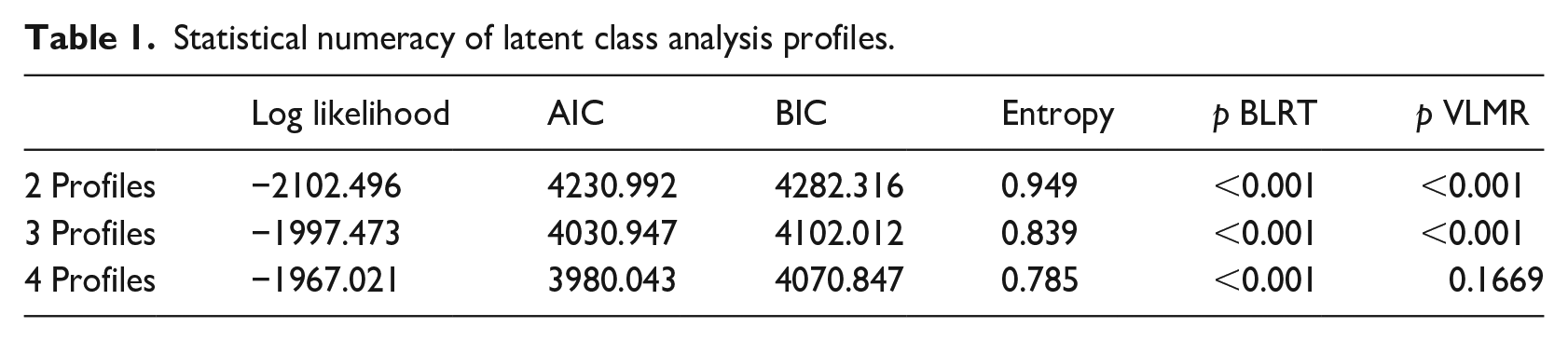
Statistical analysis was made by IBM Statistic software for Windows version 25.0 and for profile analysis MPLUS 8.6. In profile analysis, we used mean variables of SDO scales and open-mindedness scales. Several models were fitted to the data using latent class analysis to minimize information criteria’s BIC, AIC, and passing (p < 0.05) the Vuong-Lo-Mendell-Rubin likelihood ratio test (VLMR). The best-fitting model yielded three classes, even though AIC and BIC were a little better in a four classes solution. However, a VLMR likelihood ratio test failed in a four-class solution and the entropy was considered too low, which indicates that the results are not expected to behave similarly in other samples. Also, the visual analysis of profiles supported the three-classes solution based on theory (Table 1).
Statistical numeracy of latent class analysis profiles.
The three mindset profiles
As a response to the first research question (How are intergroup attitudes, preoccupations, and ways of thinking displayed in the mindset profiles of Finnish students and how do the profiles differ from each other?), the profile analysis yielded three distinct mindset profiles among the students. The profiles were labeled according to the dimensions measured and the qualitative thematic analysis of the open-ended questions.
The Status Quo oriented group
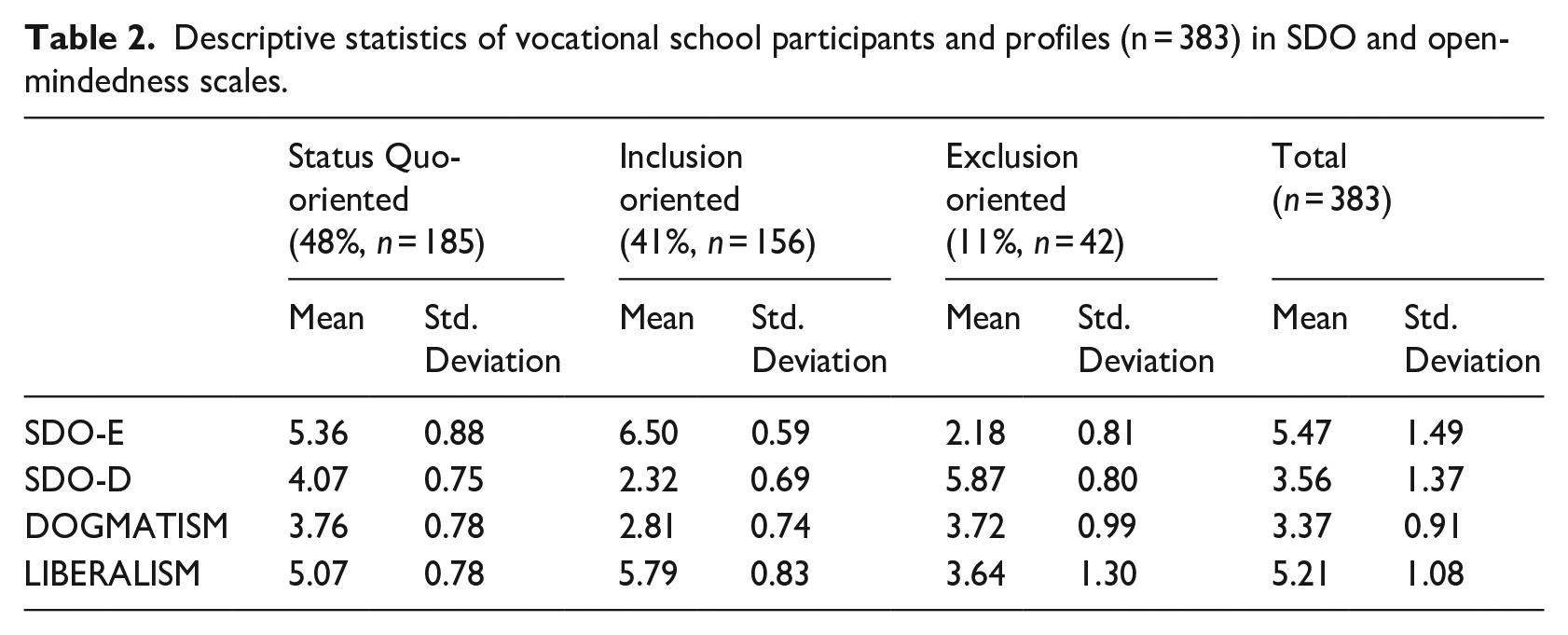
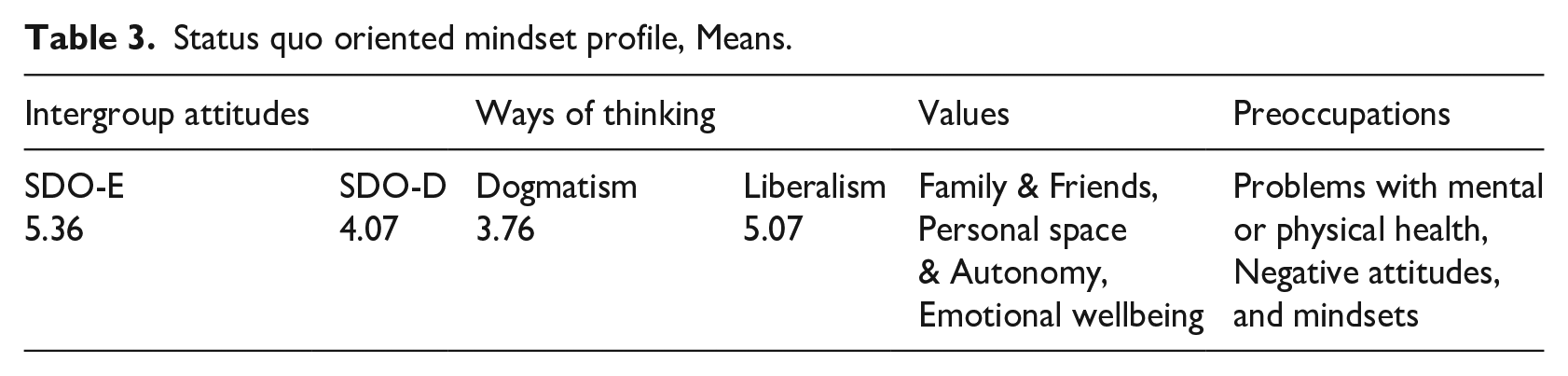
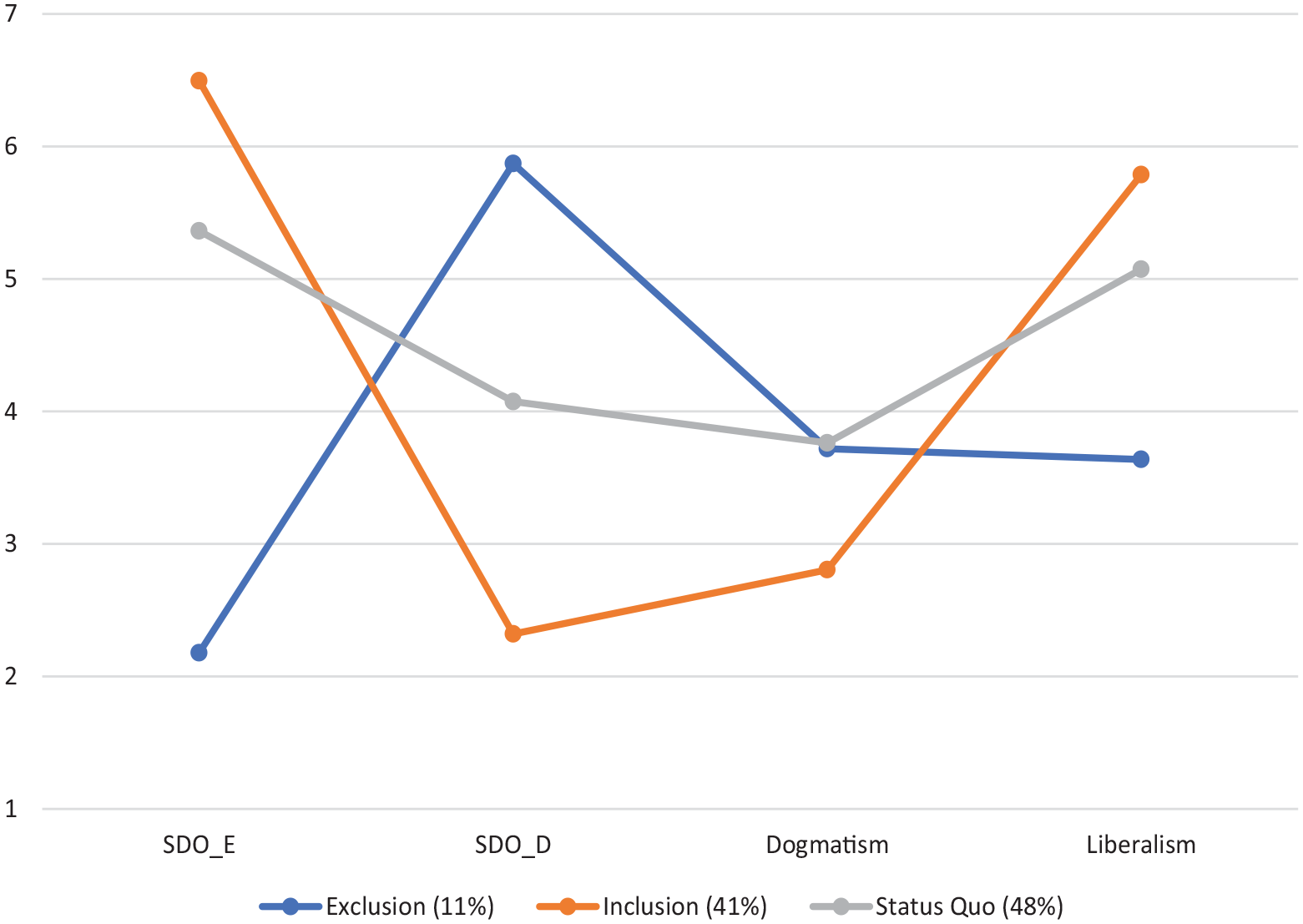
The biggest profile group was the ‘Status quo oriented’ (48% of respondents) of which 52% identified as boys, 43% as girls, and 5 percent as other or did not want to say. The Status quo oriented group’s mindset profile was the most stable one of the three groups showing average or slightly above-average scores in all the measured dimensions (see Table 2). Analysis of the answers to the two open-ended questions about preoccupations showed that the personal values of the students in the Status quo oriented group are intensively focused on significant relationships, namely close family, extended family, parents, siblings, and friends, which were mentioned by most of the respondents. Second, this group also highly valued personal space and autonomy, as values like freedom, peace, integrity, and independence were common. The Status quo-oriented group also embraced emotional well-being, as values related to happiness, hope, love, and subjective wellbeing were typical, closely followed by health. As with the perceived threats, the students in the Status quo oriented group viewed issues related to physical health or their own mental well-being as the biggest risks for losing the above-mentioned things they considered valuable. Inversely related to the values of personal space and autonomy, the Status quo-oriented group saw negative attitudes and mindsets as threats to losing these things, such as intolerance, racism, and narrow-mindedness, closely followed by stupidity and laziness. In addition, wars, death, and lack of money were often mentioned, as well as immigration and Islam. It can be concluded that the Status quo-oriented group valued stability and normative everyday life, which showed in their ways of thinking expressing both dogmatism (M = 3.76) and liberalism (M = 5.07). Also, in terms of intergroup attitudes, it can be deduced that they appreciated the current societal status quo in Finland, which was demonstrated in the paradoxical preference for both equality (M = 5.36) and hierarchy (M = 4.07) between social groups, as both SDO means were relatively high (Table 3).
Descriptive statistics of vocational school participants and profiles (n = 383) in SDO and open-mindedness scales.
Status quo oriented mindset profile, Means.
The Inclusion oriented group
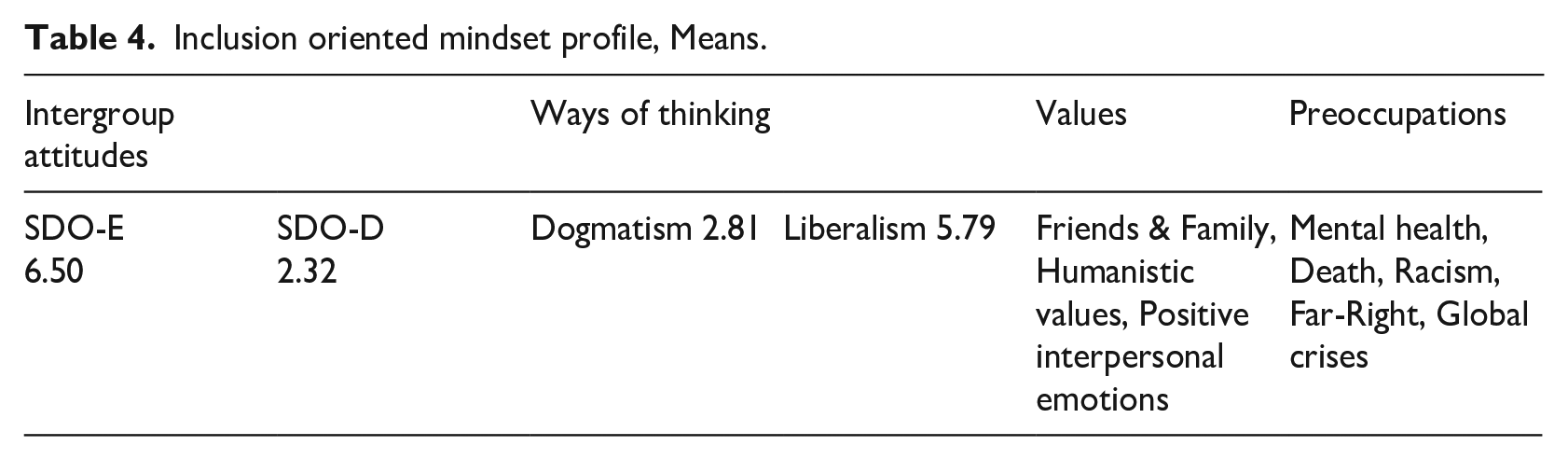
The second largest profile group was entitled ‘Inclusion oriented’ (41% of respondents) of which 32% identified as boys, 59% as girls, and 9% as other or did not want to disclose their gender. The Inclusion oriented group showed high openness to others both locally and globally. Analysis of their preoccupations showed that the strongest values were related to their closest communities, such as family, friends, and home, closely followed by the humanistic values of equality, respect, human rights, freedom, and beneficence. Mental and physical well-being were also highly valued, as well as positive interpersonal emotions, such as happiness, love, enjoying life, and communality. Work, studies, and hobbies as major aspects of everyday life also received many mentions. As with the biggest threats for losing these meaningful things, the Inclusion oriented youth reported their own mental health problems and death, closely followed by racism, discrimination, and the far right. Moreover, global crises, such as wars, conflicts, and climate change were often mentioned as threats. The qualitative answers revealed that their ingroups were loosely defined and inclusive of various groups, except for people whom they perceive as self-centered and racist, and whose values seem to be in strong contradiction with their own and threaten the things they hold meaningful. The very high mean in egalitarianism (M = 6.5) and the low mean in social dominance (M = 2.32) supported these characteristics. Thus, in terms of intergroup attitudes, both quantitative and qualitative analysis disclosed a strong focus on equality and non-partisan, prosocial attitudes for the Inclusion oriented group. As with ways of thinking, the low mean in dogmatism (M = 2.81) and the high mean in liberalism (M = 5.79) indicated that the Inclusion oriented youths had high levels of epistemic empathy for different people (Metz et al., 2020), and that they were very open-minded to alternative ideas and opinions (Table 4).
Inclusion oriented mindset profile, Means.
The Exclusion oriented group
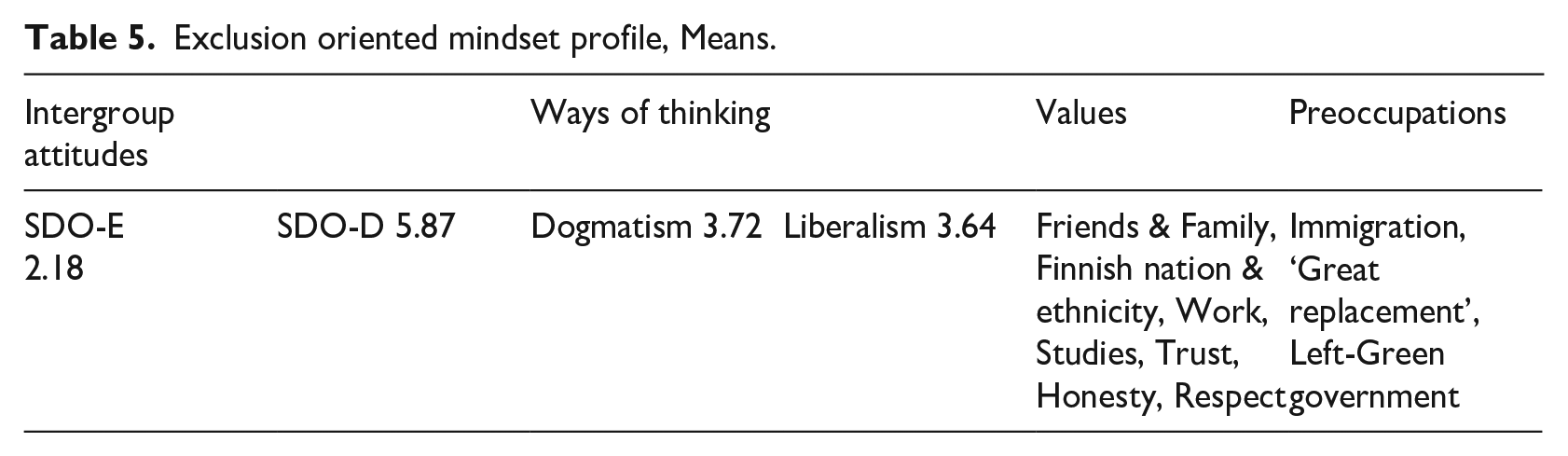
The third profile group that the analysis yielded was entitled ‘Exclusion oriented’, representing the smallest group (11% of respondents), of which 88 percent identified as boys, 12% as girls, and none as other or did not want to disclose their gender. The analysis of their preoccupations showed that the values held important and meaningful by the Exclusion oriented youths were predominantly focused on significant reference groups, such as family and friends, but equally on more abstract and broader depictions of ingroups, such as the Finnish nation, the Finnish people, and Finnish ethnicity. Work, studies, and hobbies, important elements of everyday life for all youth, also emerged as valued, as well as moral values like trust, honesty, and respect, which are traditionally considered to be part of the ‘national values’ in Finland (Helkama and Portman, 2019). In terms of threats to losing the above-mentioned meaningful things, the Exclusion oriented group saw first and foremost immigration and the ‘great replacement’, 1 a term increasingly used in political right-wing debates highlighting a preoccupation with Islam and fears of immigrants ‘invading’ Finland (e.g. HS, 2019). Another significant threat to their values was seen to come from the current left-green government. 2 The content of the answers to the open-ended questions of the Exclusion oriented group was rather congruent within the profile. In terms of intergroup attitudes, the Exclusion oriented group demonstrated a strong predisposition for inequality and hierarchy among social groups, as the mean in SDO-D was very high (M = 5.87) and the mean in SDO-E (M = 2.18) was very low. In terms of ways of thinking, their disposition for open-mindedness was the lowest of all profile groups, as they showed the least tolerant attitudes toward different people and worldviews. However, while their mean score in liberalism (M = 3.65) was the lowest, it needs to be noted that the group’s mean score in dogmatism (M = 3.72) was just slightly above average and rather like the other groups, which indicates some willingness to consider and engage with facts that are alternative to one’s prior beliefs (Table 5).
Exclusion oriented mindset profile, Means.
Explanatory factors for belonging in a profile
The three distinct mindset profiles revealed that there were differences among vocational school students in terms of their intergroup attitudes and ways of thinking. However, to know which student belonged to each profile, we needed to look at the predictors that explain belonging to a given profile. To answer research question 2. Which variables explained belonging to the identified mindset profiles? we used various background information to predict group belonging in a latent class analysis (Table 6). As predictors, we used the self-reported measures on gender, strongest language, the highest desired degree of education, and parental education, as well as the respondents’ evaluations of the importance of given factors to their sense of identity, namely Finnishness, cultural/ethnic or religious community, spirituality or a life philosophy, and family/relatives in Finland or abroad. We used odds ratios to compare the significance of predictors to separate the groups from each other. The odd ratios smaller than one imply that there is a lower odd ratio of association between the predictor and group belonging, and above one means greater odds of association. We found that the only significant predictor among all groups was the experienced importance of Finnishness to one’s group identity (Table 6). The higher the importance of Finnishness was for one’s identity, the more probable it was to belong to the Exclusion oriented group, and the less likely it was to belong to the Inclusion oriented group.
Profile belonging, odds ratio [Beta/Odd ratio (S.E.; Confidence interval)].
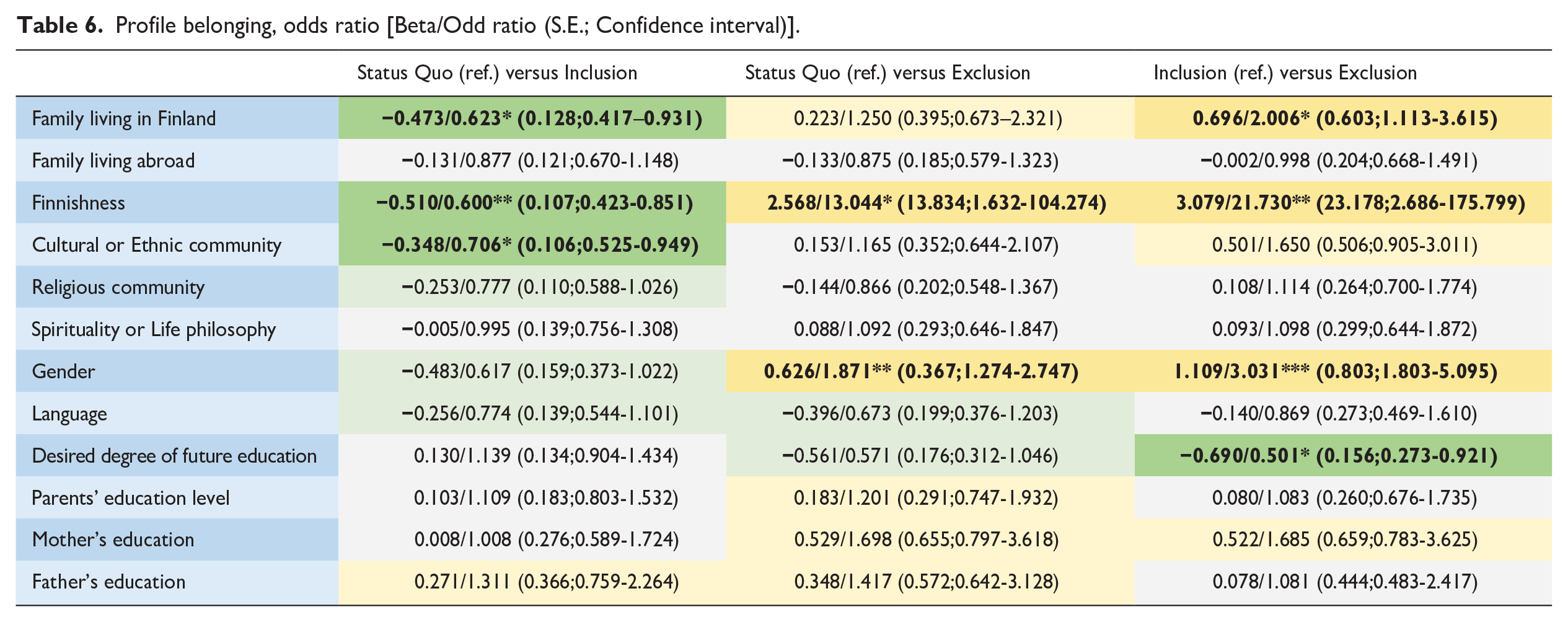
The predictor of the importance of having Family/relatives in Finland separated the Inclusion oriented group from the other groups statistically significantly but having Family/relatives abroad did not predict belonging to any of the groups. Gender (male) was a significant predictor for belonging to the Exclusion oriented group but not for the other groups. This reflects previous findings on Finnish adolescents that found boys to be less open-minded and tolerant (AMIS, 2019; Kuusisto et al., 2016) and less interculturally sensitive than girls (Holm et al., 2009; Kuusisto et al., 2015). Parents’ education did not predict belonging to any of the groups, but the higher the desired degree of future education was, the more probable it was to belong to the Inclusion or Status quo-oriented groups, and less likely to the Exclusion oriented group. This is in line with previous studies, which have shown that a low level of education is associated with less positive attitudes toward foreigners (Haavisto, 2019) and has highlighted the relation between youths’ low academic achievement and prejudice (van Houtte et al., 2018) and lower intercultural sensitivity (Holm et al., 2009; Kuusisto et al., 2015).
Distribution of respondents
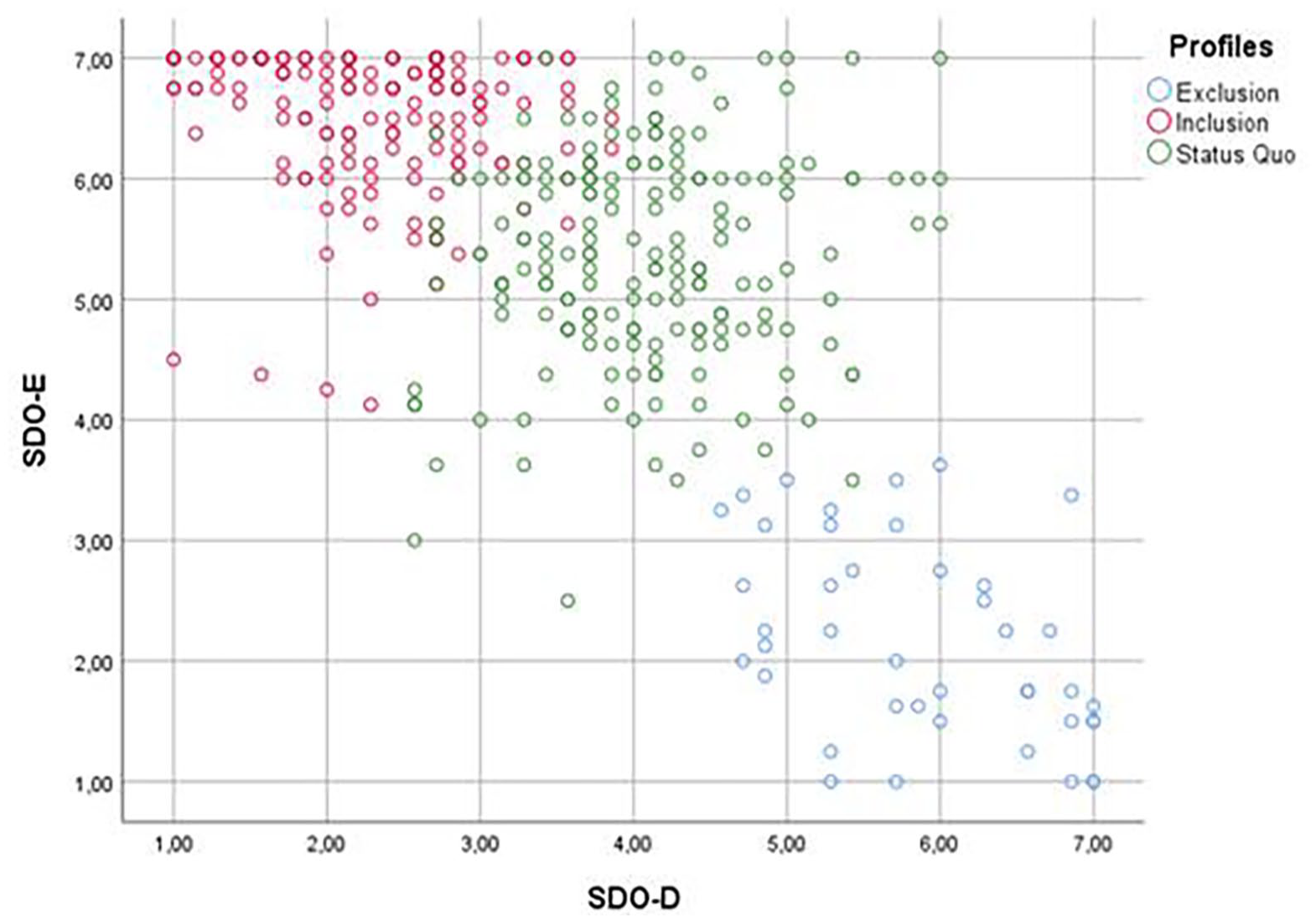
In the previous research literature, such as Jost and Thompson’s study (2000), the two dimensions of social dominance orientation, SDO-D and SDO-E, are presented as opposite to each other. To answer research question 3. How are the students distributed among the profiles? we investigated whether the relationship between SDO-D and SDO-E was linear and whether the individual respondents within the profiles differed from each other in their orientations. To this end, we placed the two sub-scale SDO measures in a scatter plot. In a one-dimensional analysis of the profiles, we noticed that the variance between the views of the respondents remained latent. However, when placed in a scatter plot, the internal variance within the profiles was uncovered. The Scatter plot (Figure 1) reveals the distribution of respondents in SDO scales. The SDO-E and SDO-D correlate (r (383) =
Interpretation for the group variation.
Three profile solution.
Limitations of the study
In terms of the limitations of our study, we acknowledge the limited size of our sample. This becomes especially tangible in the Exclusion oriented group (n = 42), where it weakens the robustness of conclusions we can make about this group. We also realize that there is substantial heterogeneity among the students in the different fields of vocational education from technology to agriculture to social studies. However, as the data is collected from various geographical areas in Finland, and as there are very few studies on the intergroup mindsets of students in vocational institutions in Finland, we believe that our study can shed some light on this topic and this youth cohort more generally. Further, while the findings reveal that a minority of students have profound aspirations for social dominance over social groups, we cannot know whether these desires extend to all outgroups (or societal minority groups) or if they are group specific. We also acknowledge the lack of previous studies operationalizing ‘intergroup’ or ‘extremist’ mindsets the way we do here, which is why our study is exploratory in nature.
Discussion
Three distinct mindset profiles
Analytically and empirically drawing on the concept of the extremist mindset that depicts extremism in the psychological sense, this study set out to examine the intergroup mindsets of Finnish students (n = 383) in vocational institutions. The combined quantitative and qualitative analyses disclosed three distinct mindset profiles among the students, although there was a lot of internal variation within the profiles. The profiles were named the Status quo oriented (48%), the Inclusion oriented (41%), and the Exclusion oriented (11 percent) according to their orientation toward group-based equality and open-mindedness. Overall, our findings demonstrate that most respondents (89%) desire social equality between groups and share a disposition for open-mindedness toward new ideas and perspectives. This is in line with our previous studies that have demonstrated the importance of values of self-transcendence and openness to change, and equality and peace promotion (Koirikivi et al., 2021) for Finnish youth. All respondents placed family and friends as matters that they valued the most, but their preoccupations and ways of thinking varied considerably from one group to the other.
Preoccupations, intergroup attitudes, and ways of thinking
The Inclusion oriented group demonstrated the highest open-mindedness toward alternative opinions and facts, and their values were human rights oriented. They perceived outgroups as part of a broader ingroup based on shared humanity. In this sense, however, Inclusion-oriented students may be prone to be ideologically prejudiced toward more conservative worldviews (e.g. Henry and Napier, 2017). It was remarkable that 9 percent of youth in this group did not specify their gender and only every third identified as boys. The Status quo-oriented group showed ambivalence in their ways of thinking, as they were quite liberal and somewhat dogmatic at the same time, which we understood as an indication of a motivation to ‘keep things as they are’. While they showed appreciation and respect for humanistic, universal values, in theory, it is possible that they may be cautious in putting these values into practice without certainty of how their lives could be affected.
The Exclusion oriented group showed closed-mindedness to different ideas and views. This was demonstrated also at the level of their preoccupations that focused on immigrants and Islam as the biggest threats to the Finnish ‘nation’. We interpreted these findings as an indication of a willingness to ‘keep Finland for the Finns’. These findings are in line with studies from other European countries where national identification and an ethnic conception of nationhood are increasingly common and associated with a perceived ethnic threat (e.g. Lubbers and Coenders, 2017). Consequently, no respondents in this group identified their gender as other – which can be considered a category per se – but 88 percent identified as boys. While dogmatism and social dominance usually go hand in hand (e.g. Ekehammar et al., 2004), the fact that dogmatism was not higher in this group probably illustrates the emphasis on critical thinking in the Finnish school system and the internationally high level of general knowledge of civics of Finnish youth (Mehtäläinen et al., 2017; see also Benjamin et al., 2021b). This finding is in line with a study on Finnish youths’ views on immigrants (Nshom and Croucher, 2017) that found that while the youths’ stereotypes of immigrants decreased from early to late adolescence due to the development of cognitive skills and exposure to diversities, their prejudices toward immigrants remained high. This is explained by the fact that while the societal norms in Finland do not encourage negative stereotyping of immigrants, some public and political debates tend to bring forth the potential economic and symbolic threat that immigrants pose to Finnish society (Nshom and Croucher, 2017). This type of public rhetoric has an impact on the youths’ intergroup attitudes (Jasinskaja-Lahti et al., 2011) and may have an especially powerful impact on students in vocational institutions, many of whom are on the verge of entering professional life after their studies, as indicated by the low educational target levels reported by this group. While it would be an exaggeration to liken the mindset of these students to that of the extremists, we argue that there are, however, some worrying similarities in the way they disregard social justice and equality between social groups.
The importance of Finnishness to one’s identity was the most significant predictor of profile belonging and was positively related to social dominance, inequality, and closed-mindedness, which were especially pronounced in the Exclusion oriented group. Moreover, the male gender and a lower educational target level increased the probability of belonging to this profile. Finnishness was not, in turn, at all important for the identity of the Inclusion oriented group, for whom human rights-based values were placed higher in significance. The (un)importance of Finnishness needs to be observed with caution, however, because perceptions of Finnishness are deeply embedded in the national hegemony and in national values. Considering that for 90% of Finnish adults Finnishness is one of the most important aspects of identity (Pitkänen and Westinen, 2018), it is curious that for more than 40% of youth in this study Finnishness was not an important part of their identity. It may be that other types of social identities are replacing nationality as the primary group identification for contemporary youth. In any case, the variant meaning of Finnishness – the geophysical and ideological determinants thereof – seems to be a critical constant across all groups in determining broader preoccupations, intergroup attitudes, and ways of thinking.
Overall, it can be argued that girls showed stronger aspirations for equality between social groups than boys, and boys indicated a greater desire for group-based dominance than girls, although their means in SDO-D were not relatively high. However, based on our analysis, we could observe that when egalitarian views (SDO-E) increased among the students, it also increased their liberalism and reduced their dogmatism. Therefore, it could be more impactful to focus on promoting egalitarian views – the idea that all humans are equal in fundamental worth and should be accorded equal rights – among students instead of focusing on countering their possible aspiration for social dominance. We will further elaborate on research question number 4. How could the mindset approach contribute to PVE-E? in the conclusive remarks on the study.
Conclusion
Radicalization is a global concern that strongly challenges the core objectives of global citizenship education, democratic participation, and social justice that education is set to promote internationally (e.g. UNESCO, 2021). However, previous studies have pointed out the possible pitfalls of the current PVE-E strategies (Davies, 2016; Stephens and Sieckelinck, 2020; Sukarieh and Tannock, 2015) that may undermine the transformative potential of education. To overcome some of the pitfalls, this study offers novel insights into PVE-E by proposing an approach that focuses on students’ mindsets. Drawing on ‘the extremist mindset’, illustrated by Cassam (2022), which depicts extremism in the psychological sense, the mindset approach helps understand the psychology and epistemology of radicalized individuals. Description of the typical characteristics of the extremist mindset enables the elaboration of educational antidotes to the development and countering of such a mindset.
The findings of our study on Finnish vocational students’ mindsets indicate that most of them are open-minded to different views and opinions, and value equality and social justice between social groups. However, our findings also bring forth that there is a minority of Finnish youth, for whom Finnishness is a marker of borders, and exclusion, and provides a justification for social injustices. If intensified or manipulated, the views of these youth may become radicalized with serious implications for national security and societal cohesion. Based on our findings, we believe that examination of the students’ mindsets enables unearthing the preoccupations, attitudes, and ways of thinking that underlie students’ intergroup orientations, especially when these are tinted with hostility. The focus on mindsets allows for critical reflection on the students’ lived experiences and the possible needs, beliefs, and emotions stemming from these, thus shifting the attention of PVE-E from the alleged ‘risk factors’ associated with ‘at risk’ students to the cognitive processes that affect the students’ propensity for involvement with violent extremist groups and actions (e.g. Borum, 2014; Davies, 2016; Sian, 2015; Sukarieh and Tannock, 2015). This type of critical (self) reflection offers opportunities for dialog and exploration of new perspectives and views, which are central elements in transformative learning (Mezirow, 2009) and support the objectives of global citizenship education to promote socially just and peaceful futures, while also responding to the calls for PVE-E.
Footnotes
Declaration of conflicting interests
The author(s) declared no potential conflicts of interest with respect to the research, authorship, and/or publication of this article.
Funding
The author(s) disclosed receipt of the following financial support for the research, authorship, and/or publication of this article: This work was supported by the Academy of Finland, grant 315860.
