




Abstract
Impairment of mental health is the most important risk factor for female sexual dysfunction. Women living with psychiatric illness, despite their frequent sexual difficulties, consider sexuality to be an important aspect of their quality of life. Antidepressant and antipsychotic medication, the neurobiology and symptoms of the illness, past trauma, difficulties in establishing relationships and stigmatization can all contribute to sexual dysfunction. Low sexual desire is strongly linked to depression. Lack of subjective arousal and pleasure are linked to trait anxiety: the sensations of physical sexual arousal may lead to fear rather than to pleasure. The most common type of sexual pain is 10 times more common in women with previous diagnoses of anxiety disorder. Clinicians often do not routinely inquire about their patients’ sexual concerns, particularly in the context of psychotic illness but careful assessment, diagnosis and explanation of their situation is necessary and in keeping with patients’ wishes. Evidence-based pharmacological and non-pharmacological interventions are available but poorly researched in the context of psychotic illness.
Keywords
Introduction
Psychiatric disease is the most important risk factor for women’s sexual dysfunction.1–4 This remains true in the context of chronic diseases known to interrupt the neurovascular basis of sexual physiology. Thus, depression, rather than the burden of physical disease or severity of complications, is the independent factor determining presence or absence of sexual dysfunction in women living with diabetes, 5 multiple sclerosis, 6 renal failure 7 or rheumatic disease 8 as well as those with a history of past childhood sexual abuse. 9 A recent study of older women aged 50–99 years of age suggested that sexual health is linked more strongly to mental health than to physical function, stress or age itself. 10 Nonetheless, poor mental health does not necessarily reduce the importance of sexual experience: a recent survey found that 43% of 1200 American women, including those with poor mental health, confirmed sexual health to be an important component of their quality of life, rating it as 4 or 5 on a 5-point Likert-type scale. 11
The literature confirms that depression, anxiety and sexual dysfunction in women are related; however, the causal pathway is debated. Do depression and anxiety precipitate sexual dysfunction or is sexual dysfunction a frequent cause of mood disorder? The third possibility is that sexual dysfunctions, depression and anxiety disorders all result from an underlying vulnerability to both psychiatric disease and sexual dysfunction. Recent research studying this comorbidity over time showed results consistent with the last possibility, namely a shared underlying latent psychological vulnerability. 12 This suggests that the presence of any one of the three risk factors will increase the odds of current or future symptoms of one or both of the other two, thus screening for all comorbidities needs to become routine.
The relationship between sexual dysfunction and psychotic disease in women is poorly understood. As with women experiencing depression and anxiety, women with schizophrenia and schizophrenia spectrum disorders have a very high burden of sexual dysfunction, with 60%–80% of women being affected.13–18 Antipsychotic medications, the symptoms of psychosis, institutionalization and societal stigma are all likely contributory factors. In comparison with women suffering from depression and anxiety, women with psychosis tend to have less social integration, more difficulty finding intimate partners and an overall lower level of functioning. This greater level of impairment has implications for both diagnosis and treatment of sexual dysfunction.
An additional challenge in addressing the sexual function of women with psychotic illness is that many clinicians may not feel comfortable speaking about sexuality with this patient population. Studies have shown that clinicians tend to underestimate the importance of the sexual aspects of their psychiatric patients’ lives and often do not inquire directly about sexual matters.18,19 A survey of British psychiatrists found that two-thirds do not inquire regularly about sexual function and only 17% of respondents felt competent assessing sexual concerns in their schizophrenic patients. 19 Patients with psychotic illness feel this is an unmet treatment need and a cause for decreased quality of life.17,20–23
This review will identify the common sexual dysfunctions associated with depression, anxiety and psychosis as well as dysfunctions linked to their pharmacological treatment. We will outline evidence-based treatments of women’s Sexual Disorders including the management of medication-associated dysfunction. We will then discuss directions for future research.
Sexual response cycle
Research confirms women (and men) have many reasons to engage (or decline) partnered sex: 24 the current model is often labeled an incentive-based sex response cycle. 25 The two largest groups of reasons to be sexual are found to be those associated with a couple’s emotional intimacy and second, those to do with the expected pleasurable reward from the sexual event such that there need not necessarily be an initial sense of sexual urging/drive/innate desire. 24 Instead, desire for sex itself can be experienced once arousal has occurred. This has been termed “responsive” or “triggered” desire. But to become aroused and desirous, there is need for appropriate sexual stimuli and context and the ability to pay attention to the stimuli and the sensations that follow. 26 There is also a need to find the physical sensations and mental sexual excitement/arousal pleasurable. This will allow the intensity of sexual arousal to increase and ultimately lead to orgasm(s) on some or many occasions. Figure 1 shows the sexual response cycle in a diagrammatic form.
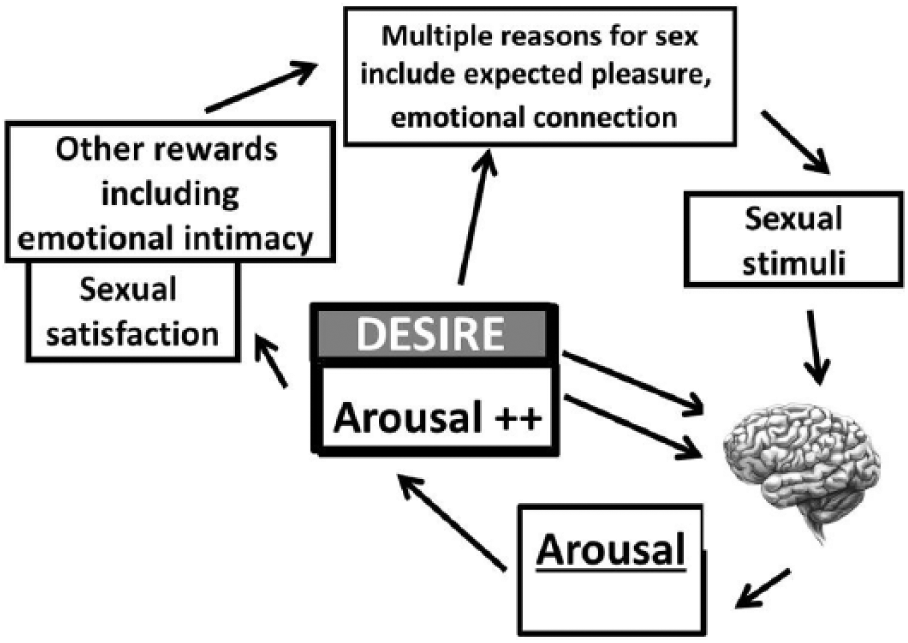
Incentive-based model of sexual response.
Female Sexual Disorders
Long standing concern and criticism of definitions of female Sexual Disorders as identified in the American Psychiatric Association’s Diagnostic and Statistical Manual Fourth Edition (DSM-IV) led to revised definitions published in 2013. 28 Whereas previously sexual desire was deemed necessary prior to healthy sexual response in both men and women there is now acceptance of research confirming desire may follow and accompany a healthy sexual response of arousal from sexual stimuli. 29 As well, arousal is now appreciated as a subjective excitement/pleasure—not only as a physical genital phenomenon. Thus, the definition of disordered female desire/interest and arousal has changed considerably: see Table 1. Due to lack of clear distinction between “vaginismus” and other causes of sexual pain on attempted or completed vaginal penetration, Diagnostic and Statistical Manual of Mental Disorders, Fifth Edition (DSM-5) uses the umbrella term of genito-pelvic penetration pain disorder. These other causes include not only provoked vestibulodynia (PVD) which typically overlaps with “vaginismus” 30 but other “more gynecological” entities, for example, lack of lubrication associated with estrogen lack, which often invoke the reflex pelvic muscle tightening response. There are now three criteria for diagnosing a Sexual Disorders: symptoms need to have persisted for a minimum of 6 months, be experienced in all or almost all (75%–100%) sexual encounters or have been persistent/ recurrent, and to have caused clinically significant distress. Unfortunately, validated questionnaires for diagnosing Sexual Disorders as per Diagnostic and Statistical Manual of Mental Disorders, Fifth Edition (DSM-5) are not yet available and so the prevalence of Sexual Disorders as currently understood is as yet unknown. A recent large British survey study, using proxy measures of DSM-5 Sexual Disorders found that while 22.8% of women reported one or more sexual difficulty including problematic orgasm, low sexual interest and arousal or painful sex, 3.6% of women met all three criteria for disorder. 31
Definitions of Sexual Disorders in women, American Psychiatric Association’s Diagnostic and Statistical Manual of Mental Disorders, Fifth Edition (DSM-5). 28

Notwithstanding the limitations of previous research into the epidemiology of female sexual dysfunction in light of the new definitions, its brief summary may still be helpful. The larger surveys conducted during the last 10 years found approximately 10% of women reported ongoing sexual dysfunction that caused them distress, while a further 20% reported less disturbing sexual problems.1,4,32 A general muting of response—low desire, low subjective arousal along with infrequent or absent orgasm was the most common presentation in many surveys. 33 Seven year longitudinal study of Australian women showed desire to decrease with age and with menopause. 34 Studies of sexual function after natural and surgical menopause suggest desire is similar32,35 but distress about lowered desire is greater after surgical menopause. 32 Although desire was seen to lessen with older age, women’s associated distress decreased such that the prevalence of DSM-IV “hypoactive sexual desire disorder” was thought to vary little with age. 36
Postmenopausal vaginal dryness and associated dyspareunia was found to affect some 15% to 30% of women with marked cultural differences to the extent that this lead to bothersome sexual difficulties. 37 Lack of lubrication and associated dyspareunia was reported by 5%–25% of younger women again with marked cultural differences leading to resulting sexual distress Leiblum et al. 37 Dyspareunia from PVD, the most common cause of dyspareunia in premenopausal women, is thought to affect some 15%–18% of women. 30 Isolated lack of orgasm despite high arousal is of uncertain prevalence because studies generally include women with low arousal alongside their lack of orgasm.
Recent reviews conclude that the lessening of sexual activities during pregnancy, 38 especially during the third trimester, and postpartum 39 are due to many psychological and physiological factors, are logical and not indicative of ongoing Sexual Disorders.
Critique of the various survey instruments used in clinical sexual research is beyond the scope of this review. However, the most widely used survey instrument, the Female Sexual Function Index (FSFI) 40 which asks about sexual experience in the previous 4 weeks has some limitations. Although the FSFI’s internal consistency is good with a Cronbach’s alpha coefficient 0.82, and a test–retest reliability of 0.79–0.86, the questionnaire does focus on initial sexual desire and thus penalizes women with mostly responsive desire triggered along with arousal. 29 Moreover the appropriateness of relying only on the past 4 weeks which for many reasons, including partner absence, may not represent a woman’s usual experiences, has been highly criticized. 41
Depression
In addition to consistently identifying the strong link between depression and women’s reduced interest or desire for partnered sex, epidemiological studies confirm depression’s negative effects upon orgasmic experience, 42 and its strong association with increased sexual risk behaviors. 43
A recent British survey of 6669 women using proxy measures of DSM-5 items found current depression to increase the risk of sexual dysfunction with an odds ratio of 3.12.4 The anhedonia of depression has been shown to be particularly linked to muting of desire and response as well as to the risk of sexual pain. 44 The most common form of chronic dyspareunia, (chronic dyspareunia now being subsumed under the more broad DSM-5 nomenclature of “Genital Penetration Pain Disorder”), namely PVD, is three times more common in women with a premorbid diagnosis of depression. 45 Even in the absence of a clinical depression, negative mood has been found to impair sexual function, 33 while positive or negative sexual experiences were found to modulate mood the day after the sexual engagement.46,47 Studies which control for current mood (as well as for medications, marital state and substance abuse), such as the Study of Women’s Health Across the Nation (SWAN), confirm a history of recurrent depression to be associated with reduced sexual arousal and reduced sexual pleasure. 48
Review of the currently accepted model of human sexual response cycle clarifies its potential major disruption in the presence of depression, see Figure 2.

Sexual response cycle is potentially weakened by depression at all points in an incentive-based model of sexual response.
Many of the factors involved in partnered sex, including the relationship itself, the need to communicate sexual needs, the need to take care of the partner’s sexual satisfaction, concern about outcome and dealing with feelings of inadequacy, do not apply to sex alone. Self-stimulation/masturbation may continue in the presence of depression. 48
Patients with bipolar disorder may have a different profile of sexual dysfunction than patients with unipolar depression. Research has found that patients with bipolar disorder experience difficulties with desire, arousal and achieving orgasm, but they also have increased risky sexual behaviors and more frequently changing partners as compared to patients with unipolar depression. 49 This same study also found that all types of sexual dysfunction in bipolar men and women were associated with suicide plans, attempts and thoughts of death. 49 The link between sexual dysfunction and suicidality was more subtle in patients with unipolar disease: impaired desire was related to thoughts of death.
Anxiety disorders
Epidemiological studies confirm anxiety disorders to be risk factors for low sexual desire and arousal50–54 with more recent research strongly linking aspects of anxiety with orgasmic difficulties42 and with sexual pain. 45 The increased sympathetic nervous system activity of sexual arousal, while increasing women’s genital congestion, involves non-genital sensations which could be misinterpreted as threatening by an anxious woman, thereby negating any potential sexual pleasure. 50 Laboratory studies confirm that women’s subjective arousal from an erotic film decreases if there is a preceding anxiety-evoking film, while genital congestion may increase. 55 This is in keeping with the generally poor correlation between women’s genital sexual arousal/congestion and subjective arousal. 56 These physical sensations from increased sympathetic drive, including shortness of breath, increased temperature, muscle tension and palpitations, have been termed “anxious arousal.” Trait anxiety is linked to anxiety sensitivity, that is, fear of the anxiety response itself and misinterpretation of these sensations: thus, it is postulated that a highly anxious woman is unlikely to experience pleasure from the physical sensations of sexual arousal. 50
Keeping in mind the sexual response cycle, it is understandable that both sexual and nonsexual worries can be potent distractors when women with anxiety disorders are attempting to be sexual, limiting their arousal 57 (and therefore frequency of orgasm) and likelihood of triggering desire. Brain imaging, albeit mainly focused on men, confirms marked deactivation to remove tonic sexual disinhibition, that is, necessary for orgasm to take place. 58 Thoughts of potential harm from letting go of control and becoming vulnerable would logically preclude orgasm as would compulsive thoughts of orderliness and tidiness. Research confirms the inhibitory effect of trait anxiety on women’s subjective arousal in a laboratory setting but more strongly with partnered sexual experiences. 50 Longitudinal study of women from age 21 to 50 years showed orgasmic difficulties to be associated with obsessive-compulsive features. 42 Also noted was a detrimental effect on desire and orgasm from phobic anxiety, somatization and panic disorder. 42 Obsessive compulsive disorder has been shown to be likely more detrimental than social anxiety or generalized anxiety disorder.52,59
Importantly, the experience of “anxious arousal” has been shown to be linked to women’s sexual pain, reduced subjective arousal and impaired lubrication. 46 PVD is some 10 times more common in women with a premorbid history of anxiety disorder. 45 A recent twin study confirmed a strong association between women’s sexual pain and anxiety sensitivity. 60 PVD is a chronic pain syndrome associated with both peripheral and central sensitization of the nervous system and typically co-morbid with other chronic pain conditions including temporomandibular joint pain, irritable bowel syndrome, fibromyalgia and interstitial cystitis. As well as clinically diagnosed anxiety disorders, certain personality traits also appear to be risk factors. These include overly conscientiousness, hypervigilance to pain, fear of negative evaluation by others, and pain catastrophizing, the latter being significantly correlated with pain intensity during intercourse. 61 It is thought that these internal stressors may modulate pain circuitry and be involved in central sensitization of the nervous system. 62 The resulting damage to self-image and sexual self-confidence and the increased burden of guilt and responsibility for deterioration of relationships 63 from the inability to have penetrative sex only add to the woman’s stress, and maintain the vicious cycle.60,64
Antidepressant induced sexual dysfunction
The frequency of sexual dysfunction due to antidepressant medications is difficult to assess, given that the adverse sexual effects of anxiety and depression are comparable to the side effects of antidepressant medications. Patient surveys may not be able to differentiate between these two etiologies. 65 Many studies also rely on spontaneous patient report, and research has shown that incidence of sexual side effects is higher when patients are directly asked and a validated scale is used. 66 Another methodological problem is that many studies record the responses of patients who have no sexual life as indicating that they have no sexual disturbances from their medications. 67 With these limitations in mind, it is worth noting that self-reported sexual dysfunction among patients using antidepressants is extremely common. One recent study of long-term users of antidepressants found that 71.8% of respondents reported adverse sexual effects. 68 A meta-analysis from 2013 reported prevalence rates ranging from 50% to 70%. 69
Medication-associated sexual dysfunction is a serious concern in both the initial treatment of depression and anxiety and in longer term maintenance therapy. 69 Unfortunately, the sexual side effects tend to occur within the first 3 weeks of treatment before benefit on mood is obtained, thereby risking early discontinuance. In the longer term, women whose mood disorder is in remission may find they are balancing continuing the medication to sustain their mood with discontinuing medication so as to improve their sexual lives. Fortunately, there are now choices and therapeutic interventions to limit the muting of women’s sexual response from antidepressants.
Studies suggest that sexual dysfunction is most likely when the mechanism of drug action is focused on the blockade of the reuptake of serotonin at 5-HT receptors—especially 5HT2 subtypes, whereas 5-HT1A receptor activity appears to be is pro-sexual.69,70 Medications that focus on increasing the uptake of norepinephrine or dopamine or blocking 5-HT2 receptors tend to have minimal negative sexual side effects. 71 Suppression of sexual desire and arousal is commonly reported as is delay or absence of orgasm. 69 Impaired lubrication and subsequent pain and discomfort are less frequent complaints.
Mechanisms of action and risk of antidepressant induced sexual dysfunction
Table 2 indicates presumed mechanism of interference with sexual response with different classes of antidepressants as well as approximate risk of medication-associated dysfunction.72–83
Mechanisms of action and risk of antidepressant induced sexual dysfunction.

AISD: antidepressant induced sexual dysfunction; MAOI: monoamine oxidase inhibitor; SNRI: serotonin-norepinephrine reuptake inhibitor; SSRI: selective serotonin reuptake inhibitor.
Comparative studies of SSRIs have not consistently shown any statistical difference in their potential to cause sexual side effects. 69
Case reports of increased desire, spontaneous orgasms and orgasms provoked by exercise from fluoxetine. 72
Reports are conflicting, some consensus that there are fewer sexually negative effects from SNRIs than from SSRIs, particularly in the case of duloxetine. 73
A recent formulation of transdermal selegiline is reported to be comparable to placebo in terms of sexual side effects. 74
Clayton et al. 75
Montejo et al. 76
Pereira et al. 77
Boyarsky and Hirshfeld. 78
Baldwin. 79
Clayton et al. 80
Jacobsen et al. 81
Fava et al. 82
Grover et al. 83
Psychotic illness
Women with psychotic illness experience a variety of dysfunctions, including impaired arousal, delayed or absent orgasm, low frequency of sexual activity and decreased sexual satisfaction.13,17,22,84,85 In contrast to previous assumptions, recent research suggests that both partnered and individual desire may be similar in women with psychotic illness and age-matched healthy women. 86
The pathophysiology of sexual dysfunction in psychotic illness remains poorly understood, particularly with regards to psychosocial factors. Potential etiologies of sexual dysfunction include antipsychotic medications, positive and negative symptoms of psychosis, interpersonal difficulties, stigmatization, institutionalization, sexual trauma and somatic concerns. Most studies examining sexual function in psychosis have limited their focus to the effects of anti-psychotic medications. Studies have also largely been conducted using male patients, despite evidence that women with psychosis experience a higher prevalence of sexual dysfunction than men.14,16 Given the differences between male and female sexuality, these under-studied psychosocial factors likely play an even greater role in women’s dysfunctions than in men’s.
A number of investigators have found higher than average levels of sexual dysfunction in un-medicated psychotic patients,21,87 signifying that the causes of sexual dysfunction extend beyond those related to medication. Marques et al. 88 found a high prevalence of sexual dysfunction among prodromal, un-medicated psychotic patients, as well as a correlation between symptom severity and the degree of sexual dysfunction. Several studies have corroborated this association between higher scores on the Positive and Negative Symptoms Scale (PANSS) and decreased interest in and enjoyment of sex.85,89 These studies provide further evidence that the symptoms of psychotic illness itself may play a role in the pathophysiology of sexual dysfunction: low motivation, cognitive impairment, poor judgment and hallucinations and delusions, may all play a role in preventing women from forming intimate relationships. Multiple studies have found that women with psychotic illness site “lack of a partner” as a cause for low sexual satisfaction.18,23 Rates of marriage are lower among women with schizophrenia than the general population. 15
Societal stigmatization and hospitalization may also play roles in preventing women with psychosis from forming intimate relationships and attaining sexual satisfaction. Stigmatization can be a major source of poor self-esteem and negative self-concept. Research by Segalovitch et al. 90 found a correlation between internalized stigma and decreased capacity to form intimate relationships among outpatients with schizophrenia. Several small studies have also shown the impact that stigmatization can have on sexual self-concept and perceptions of sexual competence.23,91,92 In their study of women with psychotic illness, Huguelet et al. 86 found that 65% of women had impaired sexual self-esteem (vs 29% of healthy controls). This same study found that desire for solitary sexual activity was intact for women with psychosis. Research also suggests that rates of masturbation are higher among women with schizophrenia than controls, indicating that solitary sexual activity may have modest potential to offset the difficulties posed by having multiple barriers to intimacy.93,94
Women with psychotic illness are more likely than members of the general population to have experienced childhood sexual abuse and intimate partner violence. 95 – 97 Childhood sexual abuse is a well-recognized risk factor for later re-victimization. Due to social and cognitive impairments, psychotic patients may also be more likely to engage in high-risk sexual behaviors. The potential link between sexual trauma and sexual dysfunction in patients with psychotic illness has not been well studied.
Somatic concerns associated with both antipsychotic medications and psychotic illness, such as metabolic syndrome, acne, extrapyramidal symptoms (e.g. abnormal movements, muscle stiffness, restlessness), excessive salivation and abnormal leakage of breast milk almost certainly contribute to impaired sexual function. This topic has not been well documented in the literature, although an association has been found between certain extrapyramidal symptoms and decreased sexual desire and arousal.98,99 In women without psychotic illness, metabolic syndrome is a well-recognized risk factor for sexual dysfunction. 100
Antipsychotic induced sexual dysfunction
As is the case with antidepressant medications, it is difficult to evaluate the prevalence of antipsychotic induced sexual dysfunction due to the high rates of sexual dysfunction seen in non-medicated patients with psychotic illness. Sexual dysfunctions associated with antipsychotic medications include impairment of libido, arousal and orgasm. These side effects do not appear to subside over time.89,101
The pathophysiology of antipsychotic induced sexual dysfunction is poorly understood, but appears to be mediated by a combination of the effects of dopamine, prolactin, serotonin, acetylcholine, histamine and the action of noradrenaline at the alpha-1 adrenergic receptor. Dopamine blockade likely affects sexual function by modifying the reward circuitry, thereby negatively impacting sexual motivation and desire. Dopamine (D2) blockade may also have an indirect effect by causing a sustained elevation of serum prolactin. Hyperprolactinemia has been well-documented to cause menstrual irregularities and galactorrhea. Some authors classify these iatrogenic reproductive disturbances as sexual dysfunctions, which has led to confounded results.102,103 With regard to the effects of hyperprolactinemia on female libido, arousal and orgasm, there have been conflicting results, with several studies suggesting an association89,104,105 and others finding no link.16,98,106 Antipsychotics variably cause alpha-1 blockade, which has been associated with impairment of erection and ejaculation in men, as well as potential impairment of lubrication in women. 84 Agonism at the 5-HT2 serotonin receptors causes delay of orgasm. The anticholinergic effects of antipsychotic medications may cause decreased lubrication and the antihistaminic effects are theorized to indirectly impact sexual function through sedation. The extent to which each of these neurotransmitters is implicated in sexual dysfunction is not clear. 107
The research comparing the adverse sexual effects of different antipsychotic medications has been plagued by conflicting results and methodological problems. Many studies use different surveys to assess sexual function, making it difficult to compare data. Taking into account this paucity of robust evidence, it appears that all antipsychotics cause some degree of sexual dysfunction, with the worst offenders being first generation antipsychotics and risperidone, followed by olanzapine and clozapine. The superior antipsychotics are ziprasidone, quetiapine and aripiprazole.101,107,108 The largest study to date on this topic, which surveyed 3838 schizophrenic patients from 27 countries, found lower rates of self-reported sexual dysfunction for olanzapine (56%) and quetiapine (60%), as compared to risperidone (68%) and haloperidol (71%), although these results were not statistically significant. 102 A Japanese study of 352 patients also found no significant difference between haloperidol, risperidone, olanzapine and aripiprazole. 109 The EUFEST study, which followed 498 patients with first episode psychosis for one year of treatment found no significant difference in sexual side effects between haloperidol, amisulpride, olanzapine, quetiapine and ziprasidone. 89 The most consistently replicated finding in this literature is that aripiprazole, a partial dopamine agonist with agonism at 5-HT1A, is the most sexually neutral antipsychotic. 110 The conflicting results in this area of research are due in part to variations in methodology, although they also highlight the important role of psychosis itself in the pathogenesis of sexual dysfunction.
Management of sexual dysfunction associated with psychiatric illness
Given that disturbed mental health is the major risk factor for women’s sexual dysfunction, the initial essential step is to ensure remission of the psychiatric condition. This is applicable to women with depression, anxiety and psychosis. If pharmacotherapy is required to achieve remission, then every effort should be made to use the lowest possible dose and to choose sexually neutral drugs. Once medications have been optimized, psychological therapies can address the distracting thoughts, low self-image and the fear of the physical sensations of increased sympathetic nervous activity found in patients with depression and anxiety. Both cognitive behavioral therapy (CBT) and mindfulness-based cognitive therapy (MBCT) have proven benefit on depression and anxiety disorders and are basic to the treatment for women’s sexual dysfunctions of arousal and desire. As well, cognitive therapy, especially MBCT, has recently been shown to benefit many types of chronic pain 111 including sexual pain. 112 Patients with psychotic illness, who are more likely to have cognitive impairment, may not be able to participate in CBT or sex therapy for their sexual dysfunction, requiring instead a more supportive therapeutic approach. Recent qualitative research in sexually active mid-life women who mostly reported sexual problems, found that the participants considered behavioral and psychological treatments more likely than medication to be of benefit for both their physical and emotional sexual concerns. 113
Psychological therapies
CBT
CBT has been the mainstay of treatment for women’s concerns with low sexual desire/arousal and was recommended by the 2015 International Consultation on Sexual Medicine: the evidence of benefit was graded as moderate—there being a number of small studies but further research needed. 114 CBT can target women’s biased thoughts both during and outside of sexual activity including inaccurate negative self-critical thoughts about their sexuality, teach relaxation skills, address avoidance behavior and to then improve or restore sexual functioning. Recent meta-analyses have reviewed the benefit of CBT for women with low sexual desire/arousal: findings included a large effect size on sexual desire and also a moderate effect on improving sexual satisfaction. Including the male partner in CBT treatment for low desire led to better outcome.115,116
There is evidence of benefit from CBT for sexual pain. PVD is likely the end result of a number of different pathophysiological mechanisms, and there are no official guidelines for optimal therapy. As with other chronic pain conditions, cognitive therapy can be recommended.117,118 When women hear about the complex brain activity during pain, the ability of thoughts and emotions to modulate the physical sensation of pain becomes understandable. Brain areas activated during a painful stimulus include areas involved in regulating emotions (prefrontal cortex-PFC), motivation (anterior cingulate cortex), thoughts (dorso lateral and ventro lateral PFC) and areas processing the sensory aspects of pain (posterior insula). 119 With cognitive therapies, catastrophic thinking, so common in women with PVD, can be usefully targeted. Reduction of allodynia as detected by using a non-noxious touch stimulus from a cotton swab, and increased frequency of intercourse has been documented for up to 2.5 years after 10 weeks of CBT. 120
MBCT
Mindfulness-based therapies are now increasingly included in Western medicine, notably for depression, anxiety disorders, chronic pain, attention deficit disorder and cognitive decline. In addition to improved attention and focus and ability not to follow distracting thoughts, mindfulness skills include acceptance, non-criticism and non-reaction to the sensations (and thoughts and emotions), of the present moment. Thus, as mindfulness skills increase, the cognitive distractions have less effect, women’s awareness and acceptance of their physical sensations increases and the negative judgments that they harbor, are no longer believed and ruminated upon. Benefit against a waitlist control and against pre-treatment levels of sexual function has been recently shown for women with low desire and arousal. 121 Reduced avoidance of sexual interaction and a new focus on the sexual sensory experience rather than on any goal has been observed in a number of sexual dysfunctions including reduced sexual interest and arousal. 122
Sexual pain has recently been shown to benefit from MBCT. Mindfulness has been described as “uncoupling” the physical sensation from the emotional and cognitive experience of pain, 123 leading to a reduction in catastrophizing. 124 To investigate meditation’s means of diminishing pain intensity and its associated unpleasantness, research is beginning to clarify the multiple brain networks involved when interactions between meditation and pain-related brain activation are studied. 111 Studies are also suggesting that meditation may alter brain morphology in meditation practitioners. 125 In a study comparing MBCT to a wait-list control group in 85 women, researchers found significant reductions in genital pain intensity, rumination, helplessness, magnification, hypervigilance, sexual distress and negative mood, and an increase in feelings of self-efficacy for managing pain. 112 Qualitative study identified acceptance to be a major means of benefit to mood and anxiety. Women spoke of feeling less abnormal, developed a stronger sense of self-efficacy and expressed appreciation for their newly acquired mindful skills. 126 Recently submitted for publication is an 8-week program to compare 8 weeks CBT versus 8 weeks of MBCT with follow-up for a year.
Sex therapy
Sex therapy typically involves sensate focus exercises127,128 —a series of planned progressive non-demand pleasuring exercises whereby each partner takes turns giving and receiving sensual and later on, sexual touches, caresses, and kisses. Guiding verbally and non-verbally as to what feels most pleasurable is encouraged. Women learn to slow down instead of rushing through a sexual experience sometimes “to get it over with.” Initially, genital areas and breasts are off-limits. The idea of any goal or expectation of arousal or orgasm is discouraged. Usually, each session lasts 15–20 min and two or preferably three sessions occur each week for 3–6 weeks. The clinician and the couple decide when to include breasts and genital areas. As sessions are planned, touches may often be sensual rather than specifically sexual. However, when sexual touches are wanted, oral and manual genital stimulation or the use of a vibrator can be considered. Ultimately, the act of intercourse (or vaginal penetration with dildo) may be included but not be the major focus. Focusing away from intercourse can alleviate anxiety, decrease self-monitoring and cognitive distractions considered to promote women’s sexual dysfunction. 129 More low-key sensual pleasuring may be more acceptable to women with poor mental health. Encouragement of exploration of erotica is often a component of sex therapy as are skills to improve couple communication. 128
Medical therapies
Vaginal dehydroepiandrosterone (DHEA): initially trialed to confirm benefit for dryness and discomfort post menopause, research in mentally healthy women confirms generalized sexual benefit in terms of easier orgasm and increased sexual desire without any increase in mass spectrometry measured serum levels of either testosterone or estrogen. 130 Serum DHEA levels increase modestly, staying in the normal range for age-matched women. Recently Food and Drug Administration (FDA)-approved, 6.5 mg DHEA vaginally is an alternative to local estrogen for menopausal vaginal dryness and pain and has the advantage of more general sexual benefit—at least in women recruited primarily for their vaginal symptoms. Thus, menopausal women reporting antidepressant-associated muting of sexual response who also require local vaginal estrogen may benefit more from using estrogen’s precursor i.e. vaginal DHEA.
Medications for sexual pain
PVD. The medications used for chronic pain including tricyclic antidepressants and anti-seizure drugs have not shown benefit in the few small randomized controlled trials conducted for PVD. However, individual women may nevertheless benefit particularly from the TCA’s or the serotonin-norepinephrine reuptake inhibitor (SNRI) duloxetine.
Genitourinary syndrome of menopause (GSM). A woman whose depression is associated with menopause may also be dealing with GSM. Often the symptoms require local estrogen in pill, cream or sialastic ring formulation to restore vaginal cell health, decreasing pH, and increasing vulvar and vaginal blood flow. When systemic estrogen is used for nonsexual reasons, additional topical vaginal estrogen may still be required. 131 Vaginal hyaluronic acid has been shown to be non-inferior to 0.5 mg estriol twice weekly with both treatments showing benefit within 2 weeks. 132 For women with both depression and GSM associated with past breast cancer treatment, topical lidocaine applied to the vestibule for 10 min before penetration is another non-estrogen product and has been shown to significantly lessen dyspareunia. 133
Physical therapy
Pelvic muscle physiotherapy is often helpful to lessen sexual pain both by means of addressing concomitant hypertonicity of pelvic muscles which in itself can be painful 134 and also as a form of desensitization 135 as physiotherapy-associated pain becomes more familiar and non-threatening. Incorporating a mindfulness approach to the physical therapy has recently been encouraged. 136
Management of antidepressant induced sexual dysfunction
Although sometimes dose reduction can continue to benefit mood and lessen sexual side effects, and for some 10% sexual side effects may lessen with time, 76 other interventions are often necessary to address antidepressant–associated sexual dysfunction. A number of specific strategies will be outlined, but the overall stance is often to accept the sexual side effects and use evidence-based psychotherapy. Both CBT- and MBCT-based therapies are effective for women with sexual dysfunction caused at least in part by antidepressants.115,116,121 Unlike most trials of pharmacological agents, studies of psychological treatments tend not to exclude women with mood and anxiety disorders currently in remission, and thus a number of women in those studies of cognitive therapy–based programs would have been taking antidepressants. Outlining the sexual response cycle and explaining to women that because of the drug’s effects, more attention is needed on the sexual circumstances (not unduly fatigued, surroundings private, conducive to sensual feelings, positive feelings for the partner in that moment), the sexual stimuli- that they are optimal for her (e.g. that there is sufficient non-genital and non-breast caressing, sufficient non-penetrative genital sex and time to enjoy subsequent emotional closeness) and to focus on pleasure not performance can be helpful. 137
In addition one or more of the following interventions can be chosen:
Switching antidepressants. With the choice of some medications with fewer sexual side effects, switching medication is an option. Thus, switching to vortioxetine, vilazodone, moclobemide, bupropion or desvenlafaxine can all be considered see Table 1
Additional psychotropic agent. A number of “antidotes” have been suggested, but only three have evidence in the form of randomized control trials using approved medications: adding bupropion can reverse SSRI induced dysfunction, 138 as can the addition of aripiprazole. 139 Recently, vortioxetine has been shown to improve sexual dysfunction from SSRIs in patients in remission from depression, to a greater degree than did escitalopram. 140
One study suggests the use of transdermal testosterone for treating SSRI-/SNRI-induced loss of sexual desire in women showed some benefit. 141 However, testosterone supplementation in women is controversial given the need for supplementing estrogen also, the lack of benefit in premenopausal women, of long-term safety data, of FDA approval and of any formulation for women.
There is also some evidence of improved lubrication and desire in women with the use of acupuncture. 142
Two small recent placebo-controlled trials have shown improvement in antidepressant-associated dysfunction in women first from saffron 143 and second from maca root. 144
In contrast to clinical experience with investigational use of sildenafil in women, one study with strict recruitment criteria and extended recruitment period, reported benefit to orgasm dysfunction from the addition of sildenafil to treat antidepressant-associated dysfunction. 145
Acute exercise. There is some evidence that exercise, by increasing sympathetic nervous system drive might combat the sexual side effects of serotonergic antidepressants given serotonin has an inhibitory effect on noradrenaline and women’s genital sexual arousal is sympathetically-driven. Laboratory studies of women reporting SSRI or SNRI-induced sexual dysfunction have been conducted. 146 Women watched an erotic film while their genital congestion was measured, their subjective sexual arousal recorded and their sympathetic nervous system activity recorded by means of heart rate variation. Women using SSRIs were found to have increased genital arousal when they exercised for 20 min either 5 or 15 min prior to the films. However, there was no increase in their subjective arousal and thus the usefulness of this intervention (in addition to its relative impracticality), limits its use.
Management of antipsychotic induced sexual dysfunction
Options for the pharmacologic management of antipsychotic induced sexual dysfunction in women are limited. Recommended treatment approaches include reducing the dose of medication or changing to a more sexually neutral antipsychotic, such as quetiapine or aripiprazole.101,107 In a study of 27 patients with psychosis, Mir et al. 147 found that libido was significantly improved after switching to aripiprazole or adding on aripiprazole. There is little evidence to support waiting for spontaneous remission of sexual symptoms or taking a drug holiday. 148 In addition to optimizing the antipsychotic regimen, it is important to target modifiable risk factors that may be impacting sexual function, such as metabolic syndrome, hyperprolactinemia and substance use.
Many women with psychosis will be on antipsychotic medications lifelong and even patients on optimal medical management experience significant sexual dysfunction, thus it is important to incorporate non-pharmacologic strategies to alleviate this distressing persistent side effect. Regular, non-judgmental inquiry into patient’s sexual function in order to reduce stigma and understand the particular circumstances of each woman’s difficulties is advocated. Multiple studies have demonstrated that patients wish to speak more openly about sexuality and intimate relationships with their psychiatrists.22,84,92 Based on the barrier(s) present and the level of functioning of the patient, clinicians may then find it helpful to pursue an individualized approach, providing either psychoeducation, relationship counseling or more cognitively challenging therapies such as MBCT or sex therapy. A small qualitative study by Östman and Bjorkman 149 found that patients with psychotic illness who are in relationships would like to have their partners participate more actively in clinical discussions of sexual function. Given that many women with psychosis cite lack of intimate relationships as a source of sexual impairment, this population would also likely benefit from interventions aimed at reducing hospitalization, improving social skills, decreasing stigma and enhancing integration into society.
Directions for future research
The prevalence of DSM-5 defined Sexual Disorders in psychiatric conditions using validated assessment tools needs to be identified. When researching the sexual effects of antidepressant and antipsychotic medications, greater care needs to be taken to compare pre-treatment sexual dysfunction with treatment-emergent sexual dysfunction, as the problem of causal attribution of sexual dysfunction among patients taking psychotropic medications is a major problem within the literature.
Second, when new treatments, including pharmacological choices, are trialed, women with psychiatric conditions (in remission) need to be included since they are the main cohort requiring treatment. To date, pharmacological studies in particular have excluded women with treated psychiatric conditions. This is true for recent studies of controversial medications:
Transdermal testosterone. Neither accurately measured (by mass spectrometry) serum levels of testosterone nor total androgen metabolites to reflect ovarian and adrenal sources of androgens are linked to women’s sexual desire disorder. 150 Nevertheless, there is a long history of using off-label often supra-physiological testosterone supplementation. Using lower hormonal dosage via a transdermal patch releasing 300 μg testosterone daily, a series of studies beginning in 2005 showed modest benefit, whereas a second series using an equivalent gel, failed to show benefit. The latter has only been published in abstract form. 151 Prior to the failed gel studies, the “patch” was approved in Europe but due to low sales is no longer available. It was not approved in the United States. Importantly neither series recruited women with Sexual Disorders as currently defined. Recruited women reported 2–3 sexually satisfactory experiences at baseline, that is, the participants did not have sexual interest arousal disorder since absence of arousal and pleasure are two key criteria for the diagnosis. 28 The long-term safety of testosterone supplementation is unknown. 152
Flibanserin. Women with treated psychiatric conditions were again excluded in trials of flibanserin—an agent initially studied as an antidepressant and inconsistently found to have very mild benefit to desire, albeit with major risk factors. Two meta-analyses based on both published and unpublished randomized controlled trials showed that flibanserin led to a mean increase of 0.49 satisfying sexual events per month. 153 There was an increase of 0.3 (range 1.2—6.0) on the desire subscale of the validated questionnaire: the analysis concluded that the magnitude of that increase did not differ from placebo. 154 As with the testosterone studies, the women in the trials reported 2–3 rewarding sexual experiences each month at baseline. Although approved for limited prescription in the United States sales are extremely low given the serious risks, doubtful benefit, daily dosage and contraindications, including alcohol and hormonal contraceptives.
Finally, more research needs to be conducted to understand the complex pathophysiology of the sexual dysfunction seen among women with psychosis. It is likely multifactorial, with contribution from medications, the symptoms of psychosis, somatic illness and the sociocultural effects of severe mental illness; however, until we understand the etiology of the dysfunction, we will be limited in our ability to develop effective treatment strategies. Were this knowledge more readily available, clinicians would also feel more comfortable making the needed inquiries and treatment recommendations: currently, this remains a documented but unmet need.
Footnotes
Declaration of conflicting interests
The author(s) declared no potential conflicts of interest with respect to the research, authorship, and/or publication of this article.
Funding
The author(s) received no financial support for the research, authorship, and/or publication of this article.