



Abstract
In response to the critical shortage of foreign language teachers internationally, school districts around the world are employing a variety of recruitment strategies, including conducting international searches. While these strategies may help to fill foreign language teacher vacancies, they lack a strong research base, as little is known about what motivates someone to pursue a career as a foreign language teacher, and how these motivational influences vary across nations. To address this void in the research, and to guide and inform recruitment initiatives, the researchers used a mixed methodology to investigate and compare the motivational influences and perceptions that drew pre-service foreign language teachers in the United States, Germany, and China to the profession. The findings contribute to an emerging consensus with respect to motivational influences for all teachers, while also pointing out unique motivational draws associated with foreign language teaching. School administrators, teacher recruiters, and foreign language stakeholders should consider these motivational influences when determining where to focus their recruitment effort, time, and funds.
Keywords
Reports spanning multiple decades have drawn attention to a longstanding shortage of qualified foreign language teachers in US K-12 classrooms (ACTFL, 2017; Boe and Gilford, 1992; Murphy et al., 2003). Recent accounts have suggested this shortage has reached a critical stage. A study initiated by the United States Congress reported, “one of the biggest obstacles to improved language learning is a national shortage of qualified teachers” (Commission on Language Learning, 2017: ix). Further, the professional association for foreign language teachers in the USA, the American Council on the Teaching of Foreign Languages (ACTFL, 2017), reported the shortage to be the worst in over 25 years of record-keeping.
Unfortunately, the persistent shortage of foreign language teachers is not unique to the USA. Foreign language teachers are in short supply in Canada (Alphonso, 2018), the UK (Nuffield Foundation, 2000), New Zealand (Richards et al., 2012), Australia (Weldon, 2015), Slovenia (Kyriacou and Kobori, 1998), Germany (Spiegel, 2016), and China (Gamlam, 2016; Lin et al., 2012), where it is estimated that at least 100,000 English as a foreign language (EFL) teachers are needed (Gamlam, 2016).
To fill foreign language teacher vacancies, school districts around the world are employing a variety of recruitment strategies. In Canada, for example, districts have begun paying moving expenses for French immersion teachers (Alphonso, 2018). China continues to increase salaries and benefits in order to recruit EFL teachers (Gamlam, 2016), and school districts in the USA, and in other countries, have resorted to conducting international searches to recruit and hire foreign language teachers (Gamlam, 2016; Kissau, 2014; Kissau et al., 2011; Millman, 2010).
While these strategies may help to fill foreign language teacher vacancies, they lack a strong research base. Little is known about what motivates someone to pursue a career as a foreign language teacher, and how these motivational influences vary across nations. What motivates someone in China to teach a foreign language could be quite different from what motivates someone in the USA or Germany. Before investing time, effort, and funds to recruit foreign language teachers, school districts need to better understand what motivates individuals from countries around the world to pursue a career as a foreign language teacher. With a better understanding of what motivates individuals from different countries to pursue this career, school districts and foreign language teacher training programs could launch more targeted recruitment initiatives that help to address shortages. With this in mind, the researchers sought to investigate and compare the motivational influences of foreign language teacher candidates in the USA, Germany, and China.
Review of related literature
To guide and inform this study, the researchers first conducted a broad analysis of the literature pertaining to what motivates individuals to become classroom teachers. The analysis then narrowed to focus specifically on studies that compared motivational factors among pre-service teachers from different nations, the motivational influences of foreign language teacher candidates, and the need for further research.
Motivation to be a teacher
Studies investigating what motivates individuals to pursue a teaching career date back more than 30 years. Yong (1995), for example, found that teacher candidates in Brunei were highly motivated by status, community respect, and salary, and aspiring teachers in Cyprus were drawn to the profession by its long vacations and job security (Papanastasiou and Papanastasiou, 1997). Extrinsically-oriented reasons for becoming a teacher were also found to be strong motivational influences in Zimbabwe (Chivore, 1988).
Differing from the above-mentioned research, the more recent work of Richardson and Watt (2006) and Watt and Richardson (2007) has emphasized intrinsic reasons among thousands of aspiring teachers in Australia. In their seminal study introducing the Factors Influencing Teaching Choice (FIT-Choice) scale, Richardson and Watt (2006) reported that 1653 teacher candidates from Australia were most influenced by factors such as intrinsic career value (i.e. I like teaching), perceived teaching ability (i.e. teaching is a career suited to my abilities), positive prior teaching experiences (i.e. I have had inspirational teachers), working with children (i.e. I want a job that involves working with children and adolescents), and contributing to society (i.e. teaching enables me to give back to society).
The above-mentioned studies have laid the groundwork for further research. Fokkens-Bruinsma and Canrinus (2012), for example, implemented the FIT-Choice scale in a study involving 151 aspiring teachers in The Netherlands. Similar to the earlier work of Watt and Richardson (2007), the researchers found perceived teaching ability to be highly influential. On the other hand, societal influences, time for family, prior teaching experiences, and enhancing social equity (i.e. teaching will allow me to benefit the socially disadvantaged) were found to be least influential. Also similar to earlier findings (Richardson and Watt, 2006; Watt and Richardson, 2007), the participants in the study did not perceive teaching to be a career that enjoyed high pay or social status, but they were, nevertheless, satisfied with their career choice.
More recent work investigating motivational influences to become a teacher using the FIT-Choice scale has examined differences in sub-groups (Fokkens-Bruinsma and Canrinus, 2014). In their study involving 163 secondary and primary school teacher candidates in The Netherlands, Fokkens-Bruinsma and Canrinus (2014) found that while both groups were most influenced by the opportunity to work with children, the factor was found to be significantly more important for the primary than the secondary school teachers. The high school teachers, on the other hand, reported to be significantly more influenced than the primary school teachers by the perceived expertise needed to be a teacher, their love of the subject, and the challenge of the job. Social influence (i.e. my family thinks I should become a teacher) was found to be the least influential factor for both groups.
International comparisons
In recognizing that motivational influences may vary across cultural contexts, researchers have investigated and compared the motivational profile of classroom teachers in a variety of countries. In a summary of related studies, the Organization for the Economic Co-operation and Development (OECD, 2005) reported that intrinsic reasons, such as a desire to work with children and adolescents, the potential for intellectual fulfillment, and a chance to make a social contribution, are primary motivational factors in pursuing a teaching career in France, Australia, The Netherlands, Canada, and the UK. Several common motivational influences were also reported in a study to validate the FIT-Choice scale beyond its original context in Australia (Watt et al., 2012). The researchers administered the instrument with teachers in Australia (1438), Germany (210), Norway (131), and the USA (511). Teachers from each of the participating countries rated highest among all motivational factors intrinsic value (i.e. I’m interested in teaching), perceived teaching ability, desire to make a social contribution and to work with children, and having positive prior teaching and learning experiences.
While acknowledging common motivational influences, studies have also pointed out interesting differences. In the above-mentioned study by Watt et al. (2012) involving teacher candidates in four countries, the 511 Americans rated perceived teaching ability, intrinsic value, and making a social contribution significantly higher than participants from the other countries. Working with children was also reported to be a significantly stronger draw to the profession for the American and German participants. In this same study, differences were also noted with respect to perceptions of teaching. Whereas participants from all four countries shared the perception that teaching is a demanding career, and one that requires expertise, the Americans perceived it to be the most demanding (Watt et al., 2012) and to have the highest social status. In contrast, the Germans perceived teaching to have the lowest status among participants from the four nations. A study by Lin et al. (2012), comparing what motivated pre-service teachers in China and the USA to pursue a career in teaching also revealed both similarities and differences. The 257 American and 542 Chinese teacher candidates in the study both reported to be strongly influenced in their career choice by the same factors (making social contribution and shaping the futures of children), but the Americans gave each of these factors, as well as a host of others (ability, job transferability, enhance social equity, intrinsic career value, and prior teaching and learning experiences) significantly higher ratings than their Chinese peers. The researchers found the Americans to be strongly enticed by altruistic reasons for becoming a teacher, whereas the Chinese expressed greater reticence about their career choice, as demonstrated by their significantly higher score for fallback career and significantly lower score for career satisfaction.
Interesting motivational differences among teacher candidates from different cultural backgrounds also surfaced in research using a different instrument (The Teachers’ Ten Statements Test). In a study by Klassen et al. (2011) that asked 200 aspiring teachers in Canada and Oman to list 10 reasons why they chose to become a teacher, both groups expressed many of the same strong motivational influences reported in previous studies using the FIT-Choice scale (i.e. intrinsic career value and perceived teaching ability), but some support was noted for factors not previously emphasized in the related research. Canadian participants, for example, expressed some agreement that they were drawn to the profession due to uncertainty as to what career path to follow (fallback career), its job security, and transferability (i.e. teaching would be a good job to have while traveling). Also straying from previous findings, Omani participants reported to be strongly influenced by societal influences such as gender roles and religion.
Motivation to be a foreign language teacher
Little research has been conducted to investigate the motivation to be language teachers (Dörnyei, 2003; Kyriacou and Benmansour, 1999; Subasi, 2009). While the findings of many of the above-mentioned studies may also apply to foreign language teachers (i.e. desire to work with children), foreign language instruction is a unique discipline that may involve unique motivational influences. In support of this claim, multiple studies have suggested that foreign language teachers are drawn to the profession by their love of the language and culture (Kyriacou and Benmansour, 1999; Nott, 1992; Sali, 2013). In their study investigating what motivated aspiring French teachers in the United Kingdom and EFL teachers in Morocco, Kyriacou and Benmansour (1999) found that love of the language and interest in promoting intercultural competence were the primary motivational factors that influenced the 152 participants to become foreign language teachers. Love of the language was also mentioned as a strong motivational pull when deciding to become a foreign language teacher in a study by Sali (2013) involving 100 EFL teachers in Turkey.
Need for research
The above-mentioned studies present a large body of research suggesting a core set of strong motivational factors that draw individuals to the teaching profession. However, analysis of the much smaller number of studies that have drawn international comparisons or involved foreign language teachers suggests that the influence of motivational factors may vary based on context (i.e. nation or subject matter). In their study investigating the motivational influences of 95 aspiring EFL teachers, Kyriacou and Kobori (1998) concluded that while their participants shared some of the same motivational influences reported in other related studies (i.e. love of teaching, perceived teaching ability, desire to work with children, and prior teaching and learning experiences) “there are likely to be some differences between studies conducted in different countries, which will, in part, be a reflection of the different social and cultural context in which teaching and learning occurs” (p.350). Citing the possibility of revealing interesting cultural similarities and differences that may guide and inform the recruitment of teachers, researchers (Fokkens-Bruinsma and Canrinus, 2014; Klassen et al., 2011) have called for additional research comparing what motivates individuals to pursue a career in teaching in different cultural contexts. Understanding the motivational influences of aspiring teachers in different cultural contexts is particularly important and relevant in the field of foreign language instruction, a field that is experiencing an unprecedented shortage of qualified teachers, and where prospective teachers are often recruited internationally and from a multicultural pool. To address this need for additional research, the researchers compared data collected from American teacher candidates (see Kissau et al., 2018) with data collected from aspiring foreign language teachers in Germany and China in order to answer the following questions.
To what extent are the motivational influences similar for aspiring foreign language teachers in the USA, Germany, and China?
To what extent are the perceptions of foreign language teaching similar for aspiring foreign language teachers in the USA, Germany, and China?
To what extent is the career satisfaction of foreign language teacher candidates similar in the USA, Germany, and China?
Method
To address the limitations of strictly quantitative research in studies of teacher motivation (see Klassen et al., 2011), the researchers employed an explanatory mixed methods design (Creswell, 2002) to investigate what motivated aspiring foreign language teachers in the USA, Germany, and China to pursue the profession. Quantitative data were first collected from a large number of participants via an online survey. Next, qualitative data were collected via semi-structured interviews to gain the perspectives of individual teacher candidates and to help better understand the quantitative findings.
Setting and participants
The study involved teacher candidates enrolled in initial licensure programs for aspiring foreign language teachers. Data collection was initially limited to aspiring French, German, and Spanish teachers across the United States in fall 2017 and spring 2018 to guide and inform recruitment efforts (see Authors, XXXX), but was expanded to include prospective EFL teachers in Germany and China to allow for international comparisons. To reach American teacher candidates, one of the researchers contacted foreign language teacher educators across the USA via email and a listserv maintained by the professional association for American foreign language teachers, and asked them to distribute the survey to their teacher candidates. German participation was sought from all teacher candidates enrolled in a seminar, taught by two of the researchers, for aspiring primary and secondary school EFL teachers at an institution of higher education (IHE) in southern Germany. The IHE prepares educators to teach in all school types except vocational schools (Berufsschule) and high schools for the most academically advanced students (Gymnasium). Time provided in class to complete the online survey led to a 100% response rate from the German teacher candidates. To gain the perspective of teacher candidates in China, a link to the online survey was sent to all aspiring EFL teachers in the English department at one major university in China where one of the researchers served as Department Chair. A follow-up email was sent two weeks later reminding these Chinese students to complete the survey, resulting in a 60% response rate.
While the choice of teacher candidates from these three countries represented a convenience sample, it was nevertheless strategic. As documented earlier, there is a critical shortage of foreign language teachers in each of the three countries. This study, thus, has the potential to help better understand what motivates individuals from each country to pursue a career as a foreign language teacher in hope of informing recruitment initiatives and alleviating reported teacher shortages. Further, offering North American, European, and Asian perspectives helps to expand the generalizability of the findings and allows for interesting cultural comparisons.
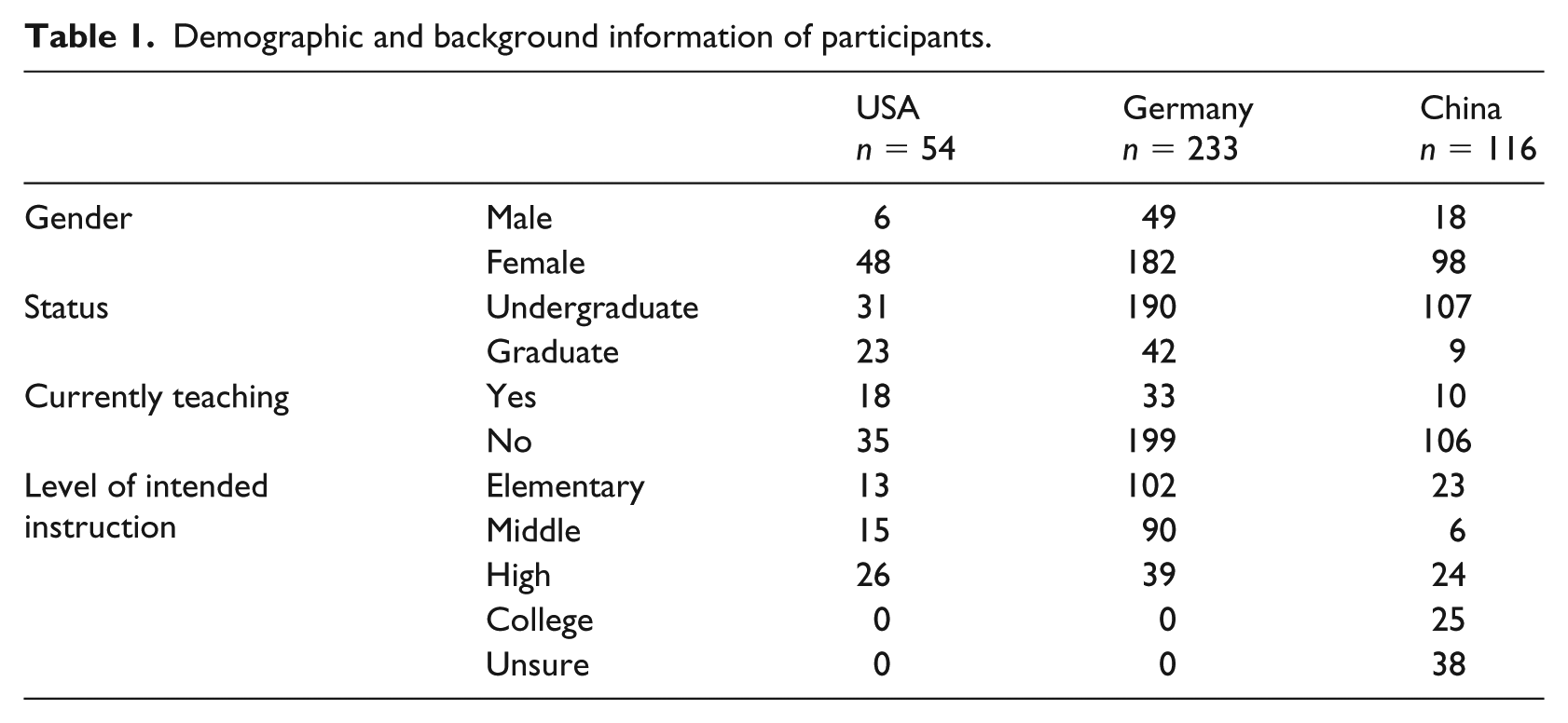
A total of 403 participants completed the survey: 54 were American, 233 German, and 116 Chinese. As illustrated in Table 1, the large majority of participants was female (81%). Most were pursuing an undergraduate degree (81%), not currently teaching (84%), and planning to teach at the primary school level (34%). Whereas all of the American and German participants indicated their intent to teach at the primary, middle, or secondary school level, more than half (54%) of the Chinese teacher candidates reported either to be unsure of their intended level of instruction or that they planned to teach at the college level. More detailed demographic information on the participants is provided in Table 1.
Demographic and background information of participants.
From the 403 teacher candidates who completed the survey, a total of 12 (four from each country), were selected to participate in a follow-up interview conducted in English. Strategic random sampling was used when selecting the interview participants to ensure a variety of perspectives and a strong command of the English language. While all of the German and Chinese interviewees were female, one of the four Americans was male.
Procedures
Aligning with the characteristics of an explanatory mixed methodology, quantitative data were first collected from teacher candidates in the three participating countries to shed light on the extent they were drawn to the foreign language teaching profession by a variety of motivational factors (research question #1), their perceptions of the career (research question #2), and their commitment to the profession (research question #3). The quantitative data were collected via use of an online survey that was administered at the beginning of the fall 2017 and spring 2018 semesters. Given that the intended participants were either native or near-native speakers of English living in the USA, or aspiring EFL teachers in Germany or China, the researchers decided not to translate the original English survey into German or Chinese. Instead, they piloted the survey with a small group of teacher candidates in China and Germany to detect and modify any challenging language that might be confusing to, or misinterpreted by, non-native speakers of English. Following the quantitative phase of the study, teacher candidates from each country were randomly selected to participate in semi-structured interviews to offer individual perspectives and to help the researchers better understand the quantitative results.
Survey
A slightly modified version of the FIT-Choice scale (see Supplementary Material online) was administered electronically to the 403 participants via surveyshare.com. Addressing concerns related to cultural bias, the FIT-Choice scale is a valid and reliable instrument that has been used in multiple studies comparing the motivation and perceptions of teachers in various cultural contexts, including the USA, China, and Germany (see Lin et al., 2012; Watt et al., 2012). As described by Watt and Richardson (2007: 170), the FIT-Choice scale is based on the expectancy-value motivation theory (Eccles, 2005) which proposes that “success expectancies and task valuation [are] major determinants of motivation for academic choices, with more distal influences consisting of socialization and perceptions of previous experience” (Watt and Richardson, 2007: 170). Put more succinctly, individuals are motivated when they anticipate success, when the task is perceived to be of value, and not too demanding. The scale consists of three main sections. In alignment with the first research question, the first section of the scale includes 38 items organized under 12 constructs that address motivational factors that influence the decision to pursue a career in teaching (ability, intrinsic career value, work with children and adolescents, enhance social equity, job transferability, social contribution, time for family, shape futures of children/adolescents, fallback career, job security, prior teaching and learning experiences, and social influences). Given reports of unique motivation influences that draw aspiring foreign language teachers (see Kyriacou and Benmansour, 1999; Kyriacou and Kobori, 1998; Sali, 2013), six additional items, falling under two constructs (love of the language and cultural connection), were added to the original 38 for a total of 44 items. Aligning with the second research question, the scale also includes a section with 14 items that explore perceptions about the teaching profession relating to task demands (expertise and difficulty) and task return (social status and salary). Addressing the third research question, the FIT-Choice scale includes a final section that contains six items. Three of the six measure career satisfaction and three measure the degree to which individuals were discouraged from pursuing the teaching profession. In regard to all items in the online survey, participants were asked to respond using a seven-point Likert scale, with a score of 1 indicating strong disagreement (not at all) and 7 strong agreement (extremely).
Interviews
Intending to help better understand and build upon the quantitative data, the researchers also collected qualitative data via semi-structured interviews with a random sample of foreign language teacher candidates from each of the three participating countries. The Chinese and US interviews were conducted in person by one of the researchers, and the German interviews were conducted via teleconference. All interviews were conducted in English, audio-recorded, and lasted between 10 and 15 minutes each. In alignment with the major components of the survey (FIT-Choice scale), interview questions were constructed to elicit qualitative data pertaining to teacher candidate motivational influences, perceptions of language teaching, and commitment to the profession. More specifically, the participants were asked to explain their motivation for pursuing a career as a foreign language teacher, what factors they felt were most influential in making this decision, what discouraged them from deciding to pursue this career, what could be done to further enhance their motivation to become a foreign language teacher, and how satisfied they were with their career choice. They were also asked to describe how their teacher training program enhanced or decreased their desire, and what could be done to encourage others to pursue the profession. Similar to the protocol used with the survey, interview questions were piloted on a group of Chinese and German EFL teachers to detect and modify any challenging language that might be confusing to, or misinterpreted by, non-native speakers of English.
Data analysis
Cronbach’s alpha was used to examine the internal consistency of participants’ responses to the survey items. Descriptive statistics and multivariate analysis of variance with post hoc multiple comparisons were employed to investigate mean differences between participants from the three countries. In order to avoid Type I error, Bonferroni adjustments were used at an alpha level of .003 to keep the family-wise alpha of .05.
Interview data were transcribed and uploaded into Dedoose, a web-based application that allows for computer-assisted content analysis. After reading through all transcripts, a coding scheme was developed based on emergent themes corresponding to the interview questions. Parent codes included influential factors in decision to teach, discouraging factors, and ways to increase appeal of teaching. Each parent code had various child codes; for example, subthemes of influential factors in decision to teach included encouragement from others, desire to make a social impact, and a recognition of the importance of knowing multiple languages. Codes were triangulated with survey data to provide depth to the findings for each research question.
Results
Motivational influences
With respect to the 14 total constructs used to gauge the motivational influences of the teacher candidates from the three participating countries (research question #1), the analysis revealed one (Fallback Career) to have weak reliability (less than .70). As such, this variable was removed from further analysis. As demonstrated in Table 2, the 54 American teacher candidates reported to be most strongly influenced to become foreign language teachers by their love of the language (6.47), followed by the perceived social contribution (6.36) afforded by a career as a foreign language teacher, the ability to shape the futures of children (6.34), their perceived ability to teach (6.09), and their prior teaching and learning experiences (6.07). In contrast, they reported to be least drawn to the profession by the time it allows for family (4.04), societal influences (4.32), and job transferability (4.69). While less emphatic, the 233 Germans expressed similar draws to the profession as their American counterparts. They also reported to be most influenced by their love of the language (6.14), the opportunity to work with children (5.93) and shape their futures (5.78), and least influenced by job transferability (3. 91) and time for family (4.11). The Chinese participants, in turn, were most drawn to the profession by the perceived social contribution (4.55), the ability to shape the futures of children (4.51), and their love of the language (4.46), and least motivated by social influences (3.08), job transferability (3.57), job security (3.93), and time for family (3.94).
Motivational influences.
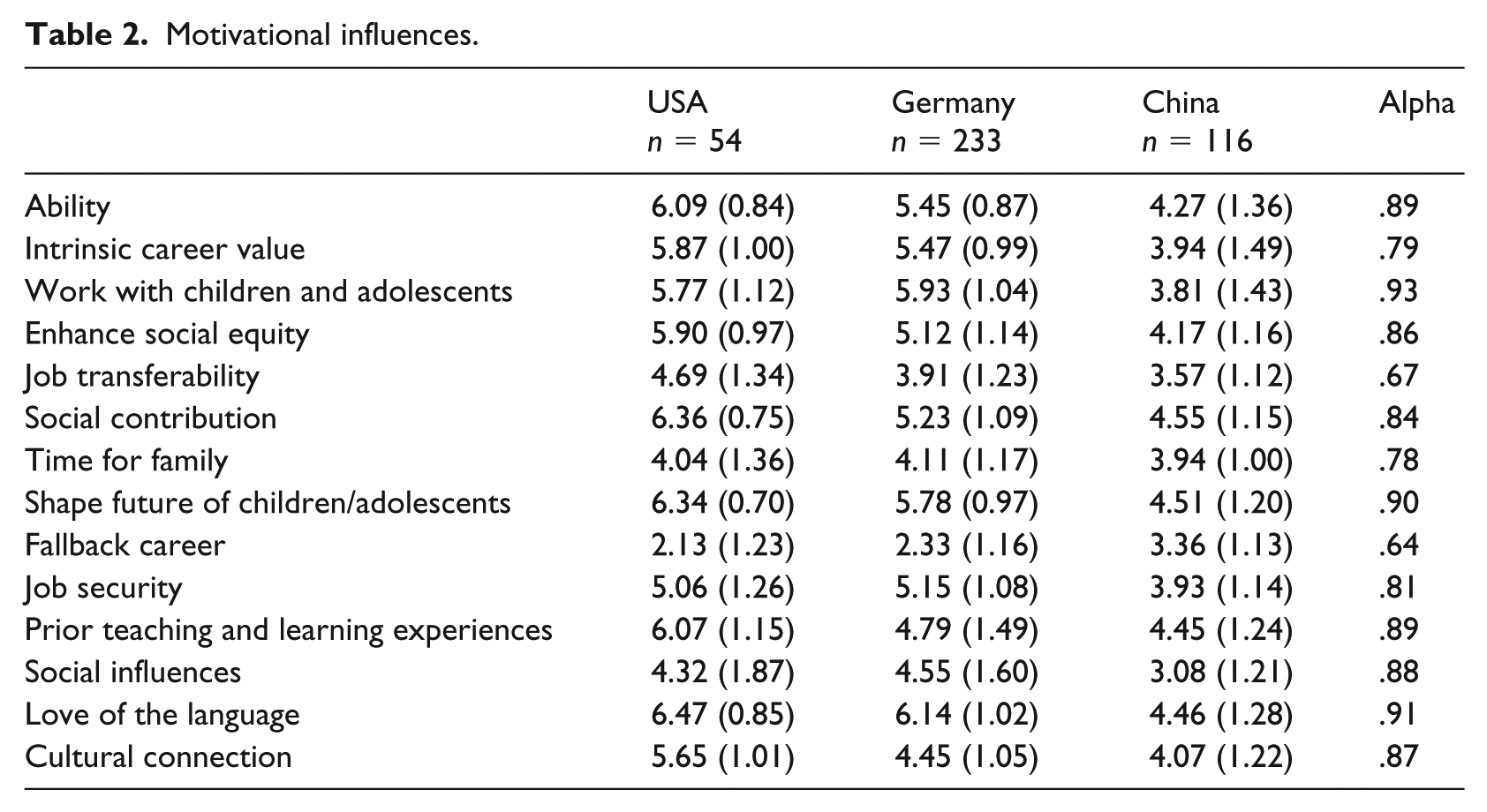
With respect to inter-group comparisons (research question #1), analysis of variance for each of the motivational subscales revealed a trend. The Americans tended to report the highest scores and the Chinese the lowest. Teacher candidates in the USA reported to be significantly more influenced than their German or Chinese peers to become foreign language teachers by the following motivational factors: Intrinsic Career Value, Enhance Social Equity, Social Contribution, Shape Future of Children, Prior Teaching and Learning Experiences, and Cultural Connection. However, there were no statistically significant differences between American and German students with respect to the influence of working with children and adolescents (p = .64), job security (p = .86), social influence (p = .59), and love of language (p = .12). Moreover, there were no statistically significant differences between Chinese and German students pertaining to the motivational draw of job transferability (p = .04) and prior teaching and learning experiences (p =.08). With respect to Time for Family, there were no statistically significant differences between the teacher candidates from all three countries (p > .05).
Among the American teacher candidates, corresponding to survey data regarding motivational factors, the most commonly coded theme during the interview was the importance of multilingualism and the love of languages, mentioned by two of the four candidates. One candidate reported that Spanish was “the most useful/practical subject in secondary school that students do not already know.” Another added, “I knew that if students in the United States became more fluent in Spanish there would also be long-term benefits, so I made the decision to become a Spanish teacher with the goal of having a long-term impact on my students.” This statement illustrated the value that this candidate placed on multilingualism, but also displayed the second most common survey theme among the teachers, the perceived social contribution.
As with the American candidates, the most commonly coded theme related to motivation to teach by the German candidates was a love of the language. All four German candidates spoke about their love of learning languages or their love of English. These candidates had been exposed to English through family members that worked for English-dominant companies, through travel to English-speaking countries, and, to a lesser extent, through classes in school. One teacher candidate explained, “I was raised with both English and German, and I’ve always loved learning new languages.” Another stated, “I just love [English] and it’s been always like I wanted to share my love for…I think the language itself. Because, I’ve met so many people who said to me that they didn’t like studying English in school, and I was just like…[that’s] just crazy.” Two of the four teachers spoke about how they enjoyed working with children, the second highest survey factor for the German teachers, and wanted to share their love of language with kids. For example, one explained, “Now that I am studying English, learning everything about it, I just love to be able to pass that passion about English and about really studying another language. Pass that on to children”. Another described how she originally wanted to pursue a career in medicine, but instead chose “to become a teacher because I can work with people, work with children, and because I like the subject, and I because I like children.”
Like the American and German teacher candidates, two of the four Chinese interviewees spoke of their passion for teaching. One candidate explained that her father was a teacher and had impressed upon her the importance of teaching. She described how her father told her that, “The knowledge you teach may change the future of a student. Your teaching method may make a student who doesn’t like studying find his or her pleasure in learning, but also may cause a student’s dislike for studying.” As a result she stated that, “Since I was a child, I believed that [teaching] is a sacred profession. I dreamed of becoming a member of teaching staff.”
In sum, the interview data largely supported survey data. The most common theme across the interviews of each group of candidates corresponded to the highest rated motivational subscales from the survey. However, two distinct findings emerged from interviews not prominent on the survey. Two of the four German teacher candidates emphasized how an inspirational teacher had motivated them to become teachers. They indicated that these teachers had fostered their love of English and inspired them to teach. Among the Chinese candidates, two of the four reported that they decided to pursue teaching because it is a stable career with high demand. This was an interesting trend because job security was one of the lowest rated factors for this group.
Perceptions of language teaching
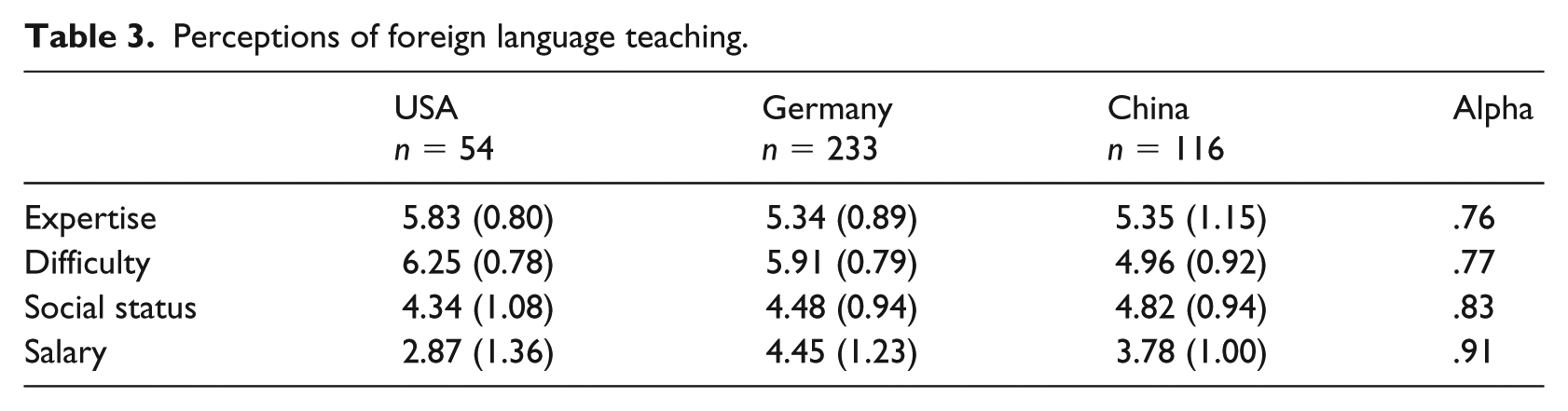
The analysis of data also revealed interesting differences among the participants from each country with respect to their perceptions of language teaching (research question #2). As shown in Table 3, American teacher candidates (5.83) reported stronger conviction than the German (5.34) and Chinese (5.35) in their belief that foreign language teachers need to have expert knowledge, F (2, 396) = 6.09, p = .002, partial η2 = .03 (small effect size). The American teacher candidates (6.25) also expressed stronger belief than the Germans (5.91) that teaching is a difficult job, and the Germans (5.91) expressed stronger belief than the Chinese (4.96), F (2, 396) = 64.35, p < .001, partial η2 = .25 (large effect size). The Chinese (4.82) expressed greater agreement than the Americans (4.34) and Germans (4.48) that teachers have high social status, F (2, 396) = 6.29, p = .002, partial η2 = .03 (small effect size). Lastly, the Germans (4.45) agreed more strongly than the Chinese (3.78), and the Chinese more strongly than the Americans (2.87), that teachers have a high salary, F (2, 396) = 42.64, p < .001, partial η2 = .18 (large effect size).
Perceptions of foreign language teaching.
While the themes of expertise and difficulty were not prevalent in interviews with any of the three groups, the themes of social status and salary were present. In regard to social status, one of the four Germans and two of the four Americans spoke of the lack of respect for teachers—a finding supported by the survey data. When asked if anything had discouraged her from becoming a teacher, a German teacher candidate replied, “Maybe the fact that people do not like their English teachers very much here. I don’t know why.” In the US context, candidates’ comments focused more on society’s perception of foreign language teaching. When asked what could enhance her motivation to teach, one American teacher candidate explained, “To feel that foreign language is valued within the school systems and to be supported…. I feel left out as a foreign language teacher and that my class is not as valuable in comparison to others.”
Regarding salary, only two of the 12 candidates, one American and one Chinese, indicated that the low salary of teachers was a discouraging factor in their decision to teach—a finding that mostly aligned with the survey data. However, four teacher candidates, one American and three Chinese, suggested that raising the salary might encourage others to become teachers. When asked about how to recruit others to teaching, the three Chinese candidates responded simply, “improve teachers’ salary”, “raise teachers’ salary”, and “teachers’ salary should be increased”. The American candidate offered her own analysis related to the economic principle of supply and demand. She explained: An increase in demand for foreign language teachers would bring more jobs and higher pay in order to entice more people to become foreign language teachers, but in a strongly monolingual society like ours, getting more students to sign up for foreign language classes would be a tall order.
Career satisfaction
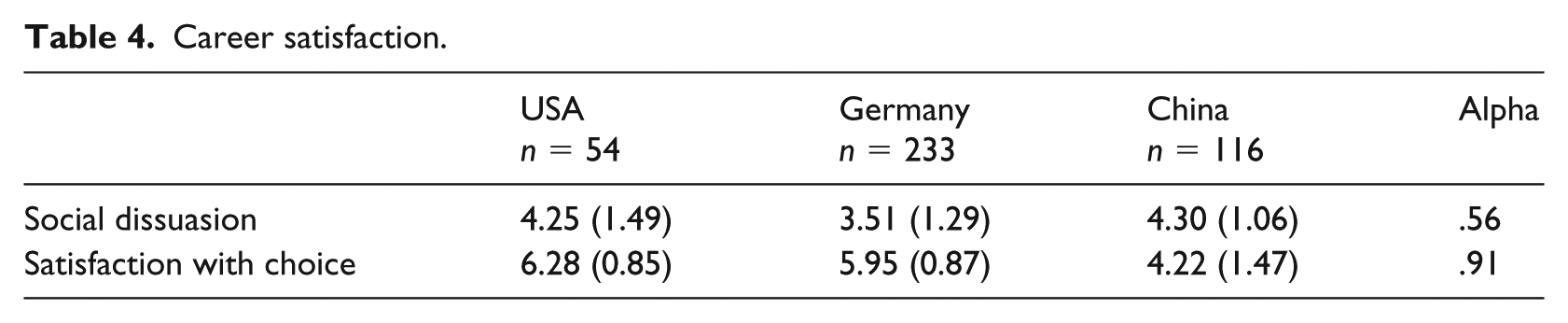
With respect to inter-group differences in career satisfaction (research question #3), data analysis revealed that of the two related constructs in the survey, one (Social Dissuasion) had weak reliability (less than .70), and thus was removed from further analysis. As demonstrated in Table 4, American (6.28) and German (5.95) foreign language teacher candidates reported greater job satisfaction than their Chinese counterparts (4.22), F (2, 393) = 113.00, p < .001, partial η2 = .37 (large effect size).
Career satisfaction.
Qualitative data related to satisfaction with choice offered insights into these quantitative data. Of the American teacher candidates, three of the four were relatively satisfied with their decision and one was very satisfied. The very satisfied candidate reported that she was “grateful for this experience and excited for the endless possibilities that will come from pursuing this career”. Of the relatively satisfied candidates, one simply responded, “On a scale of one to 10, eight.” Another stated, “I am relatively satisfied. At times I am very excited about the prospect of teaching German, and other times I feel overwhelmed.” The third candidate’s response offered critical insight into her feelings. She explained: I am still enthusiastic about pursuing a career as a foreign language teacher but that is based on my personal convictions, love for teaching, and love for the language…My morale is dampened by the feelings I am getting from the field about teachers’ welfare. Also, the stuff teachers in training have to go through before getting into the career is overwhelming…I do not also think the program was meant for people like us who do not already have a classroom and with a family…I really do not see myself working for free for four whole months and still keep a family and pay my bills.
When she referred to “working for free”, this candidate was referring to the four-month student teaching internship required by most US teacher preparation programs in which teacher candidates pay tuition but spend the semester in a classroom working with a licensed teacher. This experience, which has similar time requirements to a full-time job, is prohibitively expensive for some candidates, especially those with families to support.
While survey data indicated American candidates to be the most satisfied with their career choice, interview data indicated the greatest satisfaction from the Germans. Three of the four reported that they were “very happy” or “really, really happy” with their decision and one reported that she was “quite happy”. The candidate who was only “quite happy” explained: There are a few things that don’t make me 100% confident about choosing this subject, though…there are so many English students at my university that courses are often full and can’t take on any more students, so it happens frequently that I don’t make it into an important seminar. This can be very frustrating when I’ve planned my semester a certain way and things don’t work out, resulting in me having to study longer.
Aligning with the survey data, the Chinese candidates were the least satisfied with their decision to become teachers. Two of the four reported relative satisfaction with their career choice. One explained that teaching is “a glorious and noble profession”. Interviews with the other two candidates revealed some insecurity about their ability to teach, which might have contributed to their lowered satisfaction. One explained that their English proficiency had entered a “bottleneck period”, which, she stated, would “impair [her] enthusiasm for becoming a foreign language teacher”. Another indicated that she was “puzzled” by all of the tasks of a teacher. She explained, “I believe, if I could get one-to-three-month pre-job training, I would get prepared to become an outstanding English teacher.”
Discussion
The present study sought to compare the motivational influences, perceptions, and career satisfaction of foreign language teacher candidates in the United States, Germany, and China using the FIT-Choice scale. As the first to make an international comparison among these countries related specifically to foreign language teachers, the present study confirmed the validity and reliability of the FIT-Choice scale for this population, with just one of the 12 motivation constructs (Fallback Career) and another pertaining to career satisfaction and commitment (Social Dissuasion) failing to demonstrate sufficient reliability.
Findings from the present study confirmed many of those from studies involving general classroom teachers and supported the seminal work by Watt and colleagues (2012) that the motivational influences that draw candidates to the profession are “more similar than different” (p.804). As was reported in existing research (Fokkens-Bruinsma and Canrinus, 2014; OECD, 2005; Richardson and Watt, 2006; Watt and Richardson, 2007; Watt et al., 2012), the teacher candidates from each country in this study reported being drawn to the profession by the opportunity to work with children and to make a social contribution. Also similar to results in other studies involving teacher candidates in a variety of countries and disciplines (Fokkens-Bruinsma and Canrinus, 2012; Watt and Richardson, 2007; Watt et al., 2012), the pre-service foreign language teachers in this study were not strongly enticed to the profession by the time it provides to spend with family, its job transferability, or societal influences. These results contribute to the emergence of a possible core set of motivational influences that draw individuals to the teaching profession regardless of nationality or content area. They also lend support to a common set of motivational factors that are not strong draws to the profession.
However, this study also revealed motivations unique to foreign language teacher candidates. Six additional items were added to the FIT-Choice scale that fell under two constructs—love of the language and cultural connection. While cultural connection was neither one of the highest or lowest rated factors, love of the language was found in both the survey and interview data to be one of the strongest motivational influences for teacher candidates from all three of the participating countries.
Findings suggested that just as there are unique motivations for pursuing a career as a foreign language teacher, there may also be unique detractors. Participants from all three countries perceived foreign language instruction to be a low status career. While this finding is similar to reports in previous studies involving teacher candidates in a variety of content areas (Richardson and Watt, 2006; Watt and Richardson, 2007), the qualitative data, particularly from the American participants, suggested that foreign language instruction is especially undervalued. While this negative perception did not appear to impact the career satisfaction reported by the American pre-service teachers, which was the highest among the three countries, it could be deterring potential candidates from pursuing the profession.
Findings confirmed earlier reports that extrinsic rewards (i.e. high salary and social status) are not strong motivational factors among pre-service teachers (Watt and Richardson, 2007). While the perception of low pay and little prestige may deter some from choosing to pursue the profession, the study’s data do not suggest it was a determining factor among those who decided to enroll in a teacher training program and ultimately become foreign language teachers. Interestingly, Americans reported the strongest conviction in their perception that a career in teaching offers a low salary, yet reported the highest job satisfaction. The Germans, on the other hand, rated the perception that foreign language teaching is a well-paying career almost two points higher (on a seven-point scale) than the Americans, but were less satisfied with their career choice. The Chinese, in turn, perceived teaching to have the highest status, yet they reported to be the least satisfied with their career choice. These findings suggest that individuals motivated to become language teachers by more intrinsic variables might be more satisfied with their career selection than those motivated by factors such as salary or status.
Implications for future research and practice
To recruit more foreign language teachers, teacher training programs and school districts should consider the results of the study. School administrators would be wise to focus their recruitment efforts, time, and funds on the motivational factors that were not only shared among the teacher candidates from the three participating countries, but that were also reported as influential in other studies involving general classroom teachers. The results suggest that perceived teaching ability is one of those strong motivational factors, and, in fact, among the top five most influential factors for the foreign language teacher candidates in all three of the participating countries. In light of this finding, foreign language teachers in K-12 classrooms should emphasize and celebrate the talents of their students in hope of building their perceived competence as future foreign language teachers.
On a similar note, love of the language was also reported to be one of the strongest motivational influences for the teacher candidates in all three countries. In light of this finding, K-12 and post-secondary foreign language instructors are encouraged to promote foreign language teaching as a career among their students who demonstrate a genuine passion for the language. Foreign language instruction as a career provides such individuals with the opportunity not only to continue to use and enhance the language, but also to share their love of the language with others.
Survey results indicated that positive prior teaching and learning experiences was another strong motivational influence reported in other studies, and among the foreign language teacher candidates from all three countries in this study. Supporting this quantitative finding, two of the four Germans mentioned in their interview that they were motivated to become a foreign language teacher by an inspirational teacher. With this in mind, foreign language teacher training and foreign language and literature programs would be wise to arrange for classroom observations in extraordinary and/or inspirational K-12 foreign language classrooms not only among new teacher candidates, but also among undergraduate foreign language majors, with the hope that this positive experience may draw them to the teaching profession.
The study’s findings are particularly relevant for administrators responsible for recruiting teachers both domestically and abroad. While offering financial incentives appears to be a common recruitment strategy (see Alphonso, 2018; Gamlam, 2016), the results of the study provide evidence that extrinsic rewards may not be a strong motivational draw for aspiring foreign language teachers. Such recruitment dollars might be more wisely spent on emphasizing the altruistic factors associated with teaching that were consistently reported by the American, German, and Chinese participants as strong motivational draws to the profession.
While tapping into the above-mentioned motivational influences may be effective strategies in recruiting foreign language teachers in all three countries, the study’s results also suggest that some recruitment strategies might be more beneficial in some countries than others, and thus need to be taken into consideration when attempting to recruit abroad. For example, while emphasizing the opportunity to be involved with or share the target language culture with others may be an effective strategy to recruit aspiring foreign language teachers in the USA (5.65), it may be less effective when recruiting German teachers from Germany (4.45) or Chinese teachers from China (4.07). Likewise, while the notion of job security may be intriguing to foreign language teachers in the USA (5.06) or Germany (5.15), the survey data suggest that it is not as enticing to foreign language teachers in China (3.93).
Limitations and directions for future research
There are limitations to consider when interpreting the study’s results. The researchers treated teacher candidates from each of the three participating countries as three distinct and homogenous groups, when in reality there may be many unique inner-group differences that influence what has drawn them to pursue foreign language teaching as a profession. Some may, for example, have spent significant time abroad in the target language community, have direct lineage to that community, or come from a long line of former teachers. All of these variables may have an impact on the extent they are motivated by various factors. Klassen et al. (2011) cautioned about connecting beliefs and perceptions to nationality, but also acknowledged that cultural beliefs have been found to be consistent within nations. Additional research involving the three countries in this study, and others, would help to strengthen its findings.
The study involved only three countries, all of which have reported a shortage of foreign language teachers. To uncover possible interesting differences that may help to address this shortage, future research should include participants from a greater number of countries, including those where no shortage of foreign language teachers has been reported. Related studies might investigate how foreign language instruction is perceived in such countries, and what motivates its aspiring foreign language teacher candidates.
The study investigated the motivational influences of pre-service teachers who decided to pursue a career as a foreign language teacher. To gain a more complete understanding to guide and inform teacher recruitment initiatives, future research should also include individuals who have decided not to pursue this profession. For example, a study investigating why linguists majoring in a foreign language were not interested in becoming foreign language teachers could help the field better understand career deterrents and what can be done to address them.
Conclusion
The study used a mixed methodology to provide confirmation that the many altruistic and perceived ability-related reasons for choosing to become a teacher, as reported in previous research, also apply in the context of foreign language teaching. The foreign language teacher candidates from the USA, Germany, and China were strongly drawn to the profession by their desire to make a social contribution, work with children, and shape the futures of children, and by their perceived ability to teach, and expressed little interest in the job transferability, family time, and extrinsic rewards offered by the profession. These findings contribute to an emerging consensus with respect to motivational influences for all teachers. Unique to foreign language instruction, love of the language was among the strongest motivational factors for participants from all three countries. To address the critical shortage of foreign language teachers in many countries, school administrators, teacher recruiters, and foreign language stakeholders should consider these motivational influences when determining where to focus their recruitment effort, time, and funds.
Supplemental Material
supplementary_material_pdf – Supplemental material for Recruiting foreign language teachers: An international comparison of career choice influences
Supplemental material, supplementary_material_pdf for Recruiting foreign language teachers: An international comparison of career choice influences by Scott Kissau, Kristin Davin, Chuang Wang, Helga Haudeck, Marion Rodgers and Lixia Du in Research in Comparative and International Education
Footnotes
Declaration of conflicting interests
The author(s) declared no potential conflicts of interest with respect to the research, authorship, and/or publication of this article.
Funding
The author(s) received no financial support for the research, authorship, and/or publication of this article.
Supplemental material
Supplementary material for this article is available online.
Author biographies
References
Supplementary Material
Please find the following supplemental material available below.
For Open Access articles published under a Creative Commons License, all supplemental material carries the same license as the article it is associated with.
For non-Open Access articles published, all supplemental material carries a non-exclusive license, and permission requests for re-use of supplemental material or any part of supplemental material shall be sent directly to the copyright owner as specified in the copyright notice associated with the article.
