



Abstract
Liberal education as a form of higher education is increasing globally even as it struggles for support and legitimacy in the USA. Its emergence and spread are only partially attributable to the growth in the tertiary sector worldwide: although the sharpest spike has been in Asia, new programs have opened in Western Europe, Russia and the Middle East. Why now? Why in a particular locale? What forms do these programs take, and why? This article uses concepts from organizational theory to argue that such programs are decoupled from economic ‘needs’, challenging the predominant explanations for the global growth. Complexity theories explain the uneven expansion and variability in approach, and offer insights for replication and/or critique. This theoretical analysis allows insight into the interplay and explanatory power of isomorphism and complexity, and suggests that studies of convergence should assess not only the form, but also the processes and substance of educational innovations.
Introduction
Liberal education, also referred to as liberal arts, liberal arts and sciences, and liberal studies is on the rise internationally, with a sharp increase in such undergraduate programs since the turn of the century. Liberal education has always had a global presence, though its emergence as a global phenomenon is recent. The philosophy has been traced to the ancient Greeks and Romans, and was popularized in medieval Europe as universities began to proliferate. Its aims also resonate with Confucian, Hindu and ancient Islamic values (Altbach, 2016), though the model has not endured elsewhere as it has in the West, particularly in the USA. As ‘education designed to be liberating’ (Orill, in Rothblatt, 2003: 12), this model has increased globally both because and despite of its associations with the USA (Kirby and van der Wende 2016; Purinton and Skaggs 2017). Largely untheorized, the spread of liberal education offers a unique opportunity to consider why and how change occurs in the global tertiary sector.
Defined as providing a broad, multidisciplinary foundation with subsequent specialization, liberal education also develops skills such as problem solving, written and verbal communication, qualitative and quantitative analysis, and critical thinking. It typically incorporates ethical, personal, and social responsibility. Using these criteria, an ongoing inventory has identified over 200 programs in 58 countries outside of the USA (Godwin, 2018). Although still small in scale compared to specialist and/or professional post-secondary degree programs, global liberal education merits scholarly attention because it is resource-intensive, associated (correctly or not) with particular ideologies, and potentially disrupts the conventional approaches. Four recent edited volumes attest to its significance (Jung et al., 2016; Kirby and van der Wende 2016; Marber and Araya 2017; Purinton and Skaggs 2017).
Scholars, policy makers, and pundits have attempted to explain the rise in liberal education as follows: (a) the current and future economy needs workers who are broadly educated and adaptable; (b) the complexity of global problems is such that schools (and nations) must educate thinkers who can engage beyond narrow areas of expertise; (c) the consequences of modernity oblige higher education to address ethical, individual and social responsibility as well as to offer knowledge and skills; and (d) students should be given choices about their future direction, and not be forced into often unsuitable vocations or professions at too young an age. But these rationales are flawed, in part because they do not account for the particularistic responses to universal pressures; that is, if the conventional explanations were entirely persuasive, then liberal education would be more widely embraced, replicated and/or adapted, at least in countries with the financial capacity to do so. The geographic disparities must be accounted for: why have new schools espousing liberal education emerged in Singapore, China and Ghana (to name a few), but not in Thailand, South Africa, or Bahrain (considered an education hub)? Why are national policy changes that support liberal education being implemented in the Netherlands and Hong Kong, but not in France, Japan, or countries with similar economies and demographics? At the same time, a robust explanation must account for the ostensible decline in liberal education in the USA, arguably being buffeted by these same global changes.
A corollary set of questions relates to the variety of liberal education programs. Differences are observed in mission, learning objectives, curriculum, pedagogy and setting as well as in structure (e.g. private, public, partnerships, autonomous). The typical explanations, rooted in national differences, do not adequately account for the variability that has emerged. What determines such a range of interpretations? What does replication entail, if so many elements can vary? In the USA, liberal education is known for being ‘at once the most enduring and changeable of academic traditions’ (Axelrod et al., 2001: 52). What are the consequences of attempting the cross-border transfer of such a mutable tradition?
The aim of this article is to offer theoretical perspectives on the emergence and variability of global liberal education. The first section reviews regional trends in program development, and describes substantive and organizational differences. In the second section, the taken-for-granted explanations are debunked. In their place, institutional theories illuminate the global rise and convergence (such as it is), and concepts from complexity theory explain what appears to be capricious timing and arbitrary geographical locations. Variability in curriculum, pedagogy, philosophy and organization can also be understood from the perspective of complexity theory. Finally, the third section revisits the US case to further probe the theoretical perspectives. Sources include the bourgeoning secondary literature on global liberal education, artifacts from schools and programs, meetings with academic leaders and observations across multiple settings. Because this is a theoretical article, the empirical data will be used to illustrate the analysis, rather than to offer a full account of the phenomenon.
Describing emergence and variability
Growth
Baseline facts and figures were established through Godwin’s ‘Global Liberal Education Inventory’ (GLEI), created in 2013. The GLEI has been updated as new data emerge, specifically from the database of the European Liberal Arts Initiative (https://liberal-arts.eu/database/). The GLEI shows the growth in liberal education outside of the USA, and establishes the spike in new programs over the past two decades. The oldest is Oxford, England, founded in 1096; the newest, started in 2017, are also in England. The continental distribution, excluding the USA, is illustrated in Figure 1 (Godwin, 2017: 89).
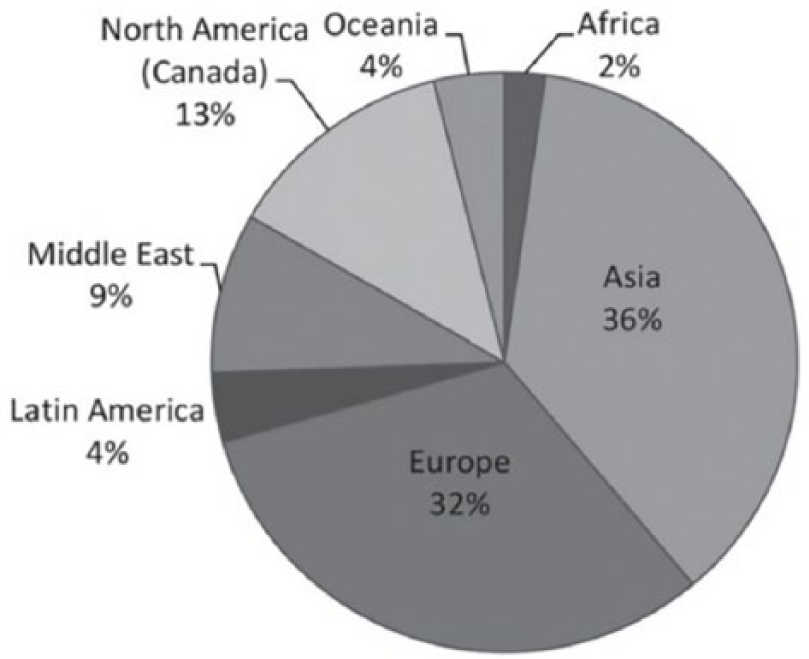
Continental Distribution of Liberal Education Outside of the United States.
Much of the growth over the past two decades has been in Asia, though start-ups are found on every continent but Antarctica. Most Asian schools are in India and Japan, with recent growth in China, explained by the government’s interest in critical and creative thinking (Godwin and Pickus, 2017). Several of the educational hubs in the region (Singapore, Malaysia and Hong Kong) have offered fertile ground and financing. The European presence varies between Eastern Europe, where experiments are emerging in post-communist countries, and Western Europe, where the Bologna alignment efforts are encouraging system-wide diversity as well as coordination across the EU. Canada accounts for the next largest percentage, though few programs have been added during this century. The relatively low numbers in the Middle East, Latin America, Oceana and Africa are thought to have been influenced by levels of English use, religiosity and government regulations (Godwin, 2015a).
Substantive and structural variability
The GLEI offers a glimpse into the diverse approaches to liberal education through the data on location, year founded, public/private status, language and affiliated institutions. It also tracks religious association, gender of students, US accreditation and whether graduate degrees are offered. From this list it is apparent that operational variety is wide-ranging and that geographic location is but one variable. See Godwin (2017) for a summary. However, the GLEI does not catalogue the substance of the educational experiences, nor the rationale for adopting the liberal education model. Field work and secondary research allow insight to substance and rationale, and the secondary literature contains a number of in-depth case studies useful to parse the similarities and differences.
Substantive differences
Though the overarching goals of liberal education are considered ‘enduring’, the substance and experience vary considerably. Each school offers a seemingly distinctive interpretation, expressed through its curriculum, pedagogy and ancillary elements. Becker ([2003] 2014) suggests that liberal education at the school/program level operates as a system, not as a set of discrete activities. The system includes the goals, what is taught in the classroom (curriculum), how it is taught (pedagogy), and how it is administered (requirements, co-curricular activities, etc.). Underlying this system is the philosophy that outlines the goals, characteristics, and desired outcomes of this particular approach. That being said, not all programs ascribe to such a systemic perspective, asserting instead that they offer liberal education because they include one or two of the elements, usually curricular. In their comparative study, Detweiler and Axer (2012) add the category of ‘context’ to the systemic elements identified by Becker, defining context as that which surrounds and influences learning, such as residential setting or flattened organizational hierarchy. In summary, differences in substance can entail philosophy, curriculum, pedagogy, administration and learning context.
As described by programs themselves, substantive differences in philosophy are classical, global, American-style, European-style, global citizen-focused, and/or faith-based. The curriculum can focus on STEM (science, technology, engineering, math), humanities (languages and culture), Great Books, common core, entrepreneurship, big questions and/or inter-, cross-, trans-disciplinary topics. The pedagogy may include experiential learning, professional practice, primary research, project-based learning and/or dialogue. Certain programs place a high value on the residential experience, while others oblige sports or community service, and a few eschew any such requirements beyond classes. These descriptors are illustrative rather than exhaustive, showing the range and diversity that exists.
For example, Ashesi University College in Ghana asserts the goal of ethical leadership for Africa, offers majors in engineering, computer science and business, and teaches using project-based learning, design thinking and dialogue. In contrast, the American University of Rome emphasizes the ‘tools’ needed to succeed in the 21st century: critical thinking, problem solving, writing and intercultural communication; its majors are primarily in the humanities, with the city of Rome as an essential topic. Both schools explicitly espouse a liberal education philosophy, though appear to have little in common otherwise.
Though such substantive differences can be linked to culture and location (i.e. leadership for Africa, Rome as setting and topic) the variability extends beyond their respective geographic settings and reflects distinct values, resources and opportunities (engineering v. intercultural communication; STEM v. humanities). Variability is evident within countries, too, not only where liberal education has been long established as in the USA, Canada, Japan and the UK but also where it is emergent, such as in the Netherlands and Hong Kong.
Organizational differences
Three main organizational types are evident: partnerships among tertiary education institutions, system-wide endeavors and independent schools. Hybrid structures also exist, and organizational forms can be fluid, especially as funding sources evolve over time. Funding relates to structure, though does not always determine it.
At the time of the GLEI, approximately one third of the schools were partnered with an established university or college, as either branch campus, satellite program, or new entity. Formalized international branch campuses offer funding, technical assistance and faculty/student exchanges. Satellite schools may use the partner name, but develop independently. Occasionally a partner will offer technical assistance but no formal organizational connection, typically through faculty and administrator placements such as those supported by the US Fulbright Programs. Sometimes, a partner is silent regarding educational substance, but active in fundraising and organizing, as in the case of Harvard University and the nascent Fulbright University Vietnam.
System-wide endeavors are relatively few, though appear to be growing. In Hong Kong, a year was added to the tertiary program to accommodate the change to Liberal Studies at the eight state-run universities. Each school designed its own curricular reform under the liberal education umbrella (Kochhar-Lindgren, 2017). In the Netherlands, existing research universities added ‘university colleges’ to undergraduate program offerings, aimed at the most talented and international students (van der Wende, 2011). Several recently established schools are pilot projects of national systems, notably in China (Godwin and Pickus, 2017)
Despite the customary practice of state funding for higher education outside of the USA, half of the schools in the GLEI are private and autonomous. This includes the oldest schools in the inventory, Oxford and Cambridge, as well as the self-identified ‘American’ universities abroad, a loosely affiliated group of independent schools offering liberal education. The independent schools may have informal ties to established institutions and a rotating core of faculty from elsewhere. Some rely upon study-abroad fees to support their global efforts, while others use private sources to augment tuition revenue. A handful of independent schools receive philanthropic support, from foundations including Soros Open Society, Teagle, Johnson Endeavor, Luce, MasterCard and Mellon.
In summary, the emergence and variability in global liberal education has been established across continents, though the differences in substance and structure call into question the elasticity of the definition and the actual nature of the phenomenon. The level of analysis may be part of the explanation for this conundrum – similarities at the macro level of educational systems may not translate to similarities at the micro program level. In other words, by adding what is called ‘liberal education’, countries can increase the array of globally-recognized options available to their post-secondary students, even though what is experienced in the classroom will vary considerably in philosophy, curriculum, pedagogy, organization and context. Another perspective is that liberal education is being transferred across borders in form but not substance, decoupled from its traditional interpretation. Theories of isomorphism and complexity take on these possibilities and offer additional explanations for emergence and variability.
Theorizing emergence and variability
Why now? Taken for granted explanations
As noted previously, explanations for the global emergence of liberal education are numerous. Van der Wende, reflecting on the European experience, conceptualizes three overlapping ‘drivers’: epistemological, economic and social/moral (2014). Epistemological drivers come from new categories of knowledge and ways of knowing, thought to result from technology and the need for creative solutions to complex social problems. Economic influencers are familiar, resulting from late capitalism and the knowledge economy. Social/moral drivers result from the decline in religious norms and subsequent expectation that education should address issues of right and wrong. However, given the ubiquity of these drivers, it is surprising that liberal education is not emerging energetically elsewhere. Scholars also assert that the prestige and spread of US models (Godwin, 2015b; Jung et al. 2016; Kleypas and McDougall, 2011; Purinton and Skaggs 2017). Another explanation, rooted in stage of economic development, is that once a certain level of wealth is reached, a country will be ready to incorporate the supposedly riskier liberal education model (Grove, 2015). This does not account for the geographic incongruence, however, since not all countries at the same developmental level include liberal education in their tertiary sector.
Global emergence can also be explained by changes in demand: the increasing numbers and wealth of college-aged populations are more able to support often private liberal arts schools, and families appreciate having choices in their home countries as well as elsewhere. The development of new schools in China and Vietnam supports this hypothesis, since the middle class is growing. However, it does not explain the growth in Europe, Russia, or Korea where population is declining and the middle class is either stable or shrinking. Furthermore, the rise of liberal education seems counter to other major trends affecting higher education around the world: massification, scarce resources and technology (Altbach, 2016
Why now? Isomorphic explanations
The concept of institutional isomorphism can advance understanding of the liberal education phenomena, at both macro and micro levels. Isomorphic pressures exist within any organizational field, and are thought to be particularly influential in global higher education (Meyer et al., 2007), contributing to a ‘growing convergence among advanced nations’ (Bok, 2003: 19). Three types of pressures have been identified: normative, coercive and mimetic (DiMaggio and Powell, 1983). Organizations respond to these pressures as they search for legitimacy (Suchman, 1995), suggesting that liberal education may be particularly susceptible to isomorphic pressures since it is an uncommon and often controversial organizational alternative (Godwin, 2018).
In normative isomorphism, professional standards and networks move organizations towards similarity. Probably most influential with respect to liberal education are the informal networks that result from the global flows of university students and faculty. Many of these cosmopolitan students eventually become faculty and academic leaders, and therefore support liberal education because of their personal experiences (Purinton and Skaggs, 2017). Such a network is evident at Ashesi University in Ghana, whose founder, staff and board members include graduates of US-based Swarthmore College. With regard to the Smolney College effort by Bard College in Russia, Gillespie confirms, The most important factor for the success of our joint ventures has been the participation of a large number of interested and engaged faculty on both sides. Through a combination of face-to-face meetings and long-distance exchanges, the faculty have brought their knowledge, experience, and considerable ingenuity to bear on curriculum and course development, faculty/program governance, and the creation of mechanisms for evaluation. (2003: 6)
Though individual practitioners may not be aware that they are part of a global liberal education trend, they have many opportunities to be connected through six global associations and several web-based networks. The largest association, the American Association of Colleges and Universities (AAC&U), offers publications aimed at elevating quality and creating standards in the liberal education field, including topics such as assessment, STEM and the liberal arts, diversity and inclusion, and international education. Approximately 67 schools from 32 countries outside of the USA are members of the AAC&U. Other associations, much smaller, are continent-based (Asia and Europe) or derived from partnership arrangements (Bard and the Great Lakes College Association). Networking is stimulated by the fact that English is the language of 81% of programs catalogued in the GLEI.
Thus, normative isomorphism acts at the system level, when national policy makers design tertiary education that is in line with the peers with whom they network professionally and perhaps shared international education experiences. Normative forces are at work locally, too, where those responsible for program design rely upon advice from other professionals to create curriculum, establish pedagogical approaches and structure the learning environment.
Coercive isomorphic pressures, impelled by governmental and regulatory bodies, are relatively weak in this field. Governments have directed liberal education reforms in only a few locales. The coercive pressure was gentle in the cases of Hong Kong and the Netherlands, because the state mandated the form (liberal studies) but allowed each school to create their own curricula and pedagogical approach. The Bologna process pressured European systems towards convergence, though not overtly towards liberal education (Bog and van der Wende, 2016; Gaston, 2012). In fact, some assert the rise of liberal education in Europe is to counter the homogenization of Bologna (Kontowski, 2016). Accreditation does not force similarity, either, since there is no category specifically for liberal education. Only 23 schools in the GLEI had attained US accreditation, nearly all prior to 2000. Regulations pertaining to US financial aid for studying abroad have convinced more schools to apply for accreditation, so these numbers are expected to increase in the decade ahead.
Since higher education is not compulsory, little at the programmatic or classroom level has been codified, offering a possible explanation for the variability in substance and structure. An interesting exception is Ashesi in Ghana, which was denied an initial license because of its unwillingness to proctor final exams. Such proctoring was in violation of the Ashesi honor code, a key aspect of its commitment to teaching ethics and individual responsibility and at the heart of its approach to liberal education (Grant, 2017). In this case, a school resisted rather than responded to the coercive pressure, their effort buttressed by the legitimacy accorded to liberal education around the world.
Mimetic isomorphism postulates that one organization might copy another as a safe way to proceed when goals are unclear. This is most evident at the programmatic level. For example, a school in China was heavily influenced by Harvard’s curriculum, essentially mimicking the US model as it struggled to articulate a Chinese version of liberal education (Xin, 2004). Programs in Argentina also report relying upon Harvard and Oxford in developing their liberal education models. The formal partnerships found among providers of global liberal education offer ample opportunity for transferring and copying ideas, and serve to mitigate uncertainty associated with the liberal education alternative. Others explicitly do not want to mimic, preferring to create a new model. As explained by the Prime Minister of Singapore,
It (Yale/NUS (National University of Singapore)) is not a replica of Yale, but a bold effort to create something new and different’ where the College ‘takes the best of US liberal arts education from Yale, New Haven, adds NUS’ distinctive Asian and global strengths, adapts this mix to our different social and cultural contexts, and creates an experience which is more relevant to students. (Tan, 2017: 3)
Finally, mimesis can be in form but not substance, as schools may want the brand of US-style liberal education, but do not implement structures such as tenure or academic freedom needed to fully replicate the model (Noori, 2017
Isomorphic forces plausibly influence the liberal education field at the system and local levels, as illustrated above. Yet scholars also assert that isomorphism is not always desirable, nor is it static. Xin (2004) ends his critical analysis of Chinese efforts emphasizing the importance of ‘remolding’, rather than isomorphic adoption of liberal education, a theme found throughout East Asia
In sum, given that organizations in the educational field tend to take on similar structures and goals (Meyer et al., 2007), the variability in liberal education is noteworthy. Where some observers simply see enthusiastic experimentation (Kochhar-Lindgren, 2017), deeper patterns can be identified. Comparative educators often assert that differences in tertiary education are national, as epitomized by the book title National Differences, Global Similarities (Baker and LeTendre, 2005). However, this article argues that nationality is among several salient variables explaining heterogeneity in the liberal education field. Critiques of isomorphism suggest non-institutional forces must also be considered – local, political and/or symbolic. Even taking this into account, the variety of global liberal education is still undertheorized, given the puzzling irregularities to the convergence/isomorphism hypothesis, most obviously the suggestion that level of economic development determines isomorphism. The uneven geographic distribution of liberal education around the world, and the range in substance and form, suggest that forces other than isomorphism are at work. Examination of the complex processes of emergence and development, rather than simply the discursive type of liberal education, will allow further understanding. Complex systems theory offers a lens.
Complexity theory
Complexity theory, also known as complex systems theory (CST), is considered a promising and underutilized approach in the comparative education field (Jacob et al., 2011). CST attempts to explain the change processes within a complex system, in contrast to institutional theory’s concern with structures and legitimacy. CST is derived from physics, where it is concerned with seemingly chaotic events. Social scientists have used CST to explain change processes in entrepreneurial ventures (Lichtenstein, 2000), business strategy beyond rational choice and ecology (Anderson, 1999; Brown and Eisenhardt, 1998; Stacey, 1995), human resource management (Colbert, 2004), and broad organizational dynamics (Thietart and Forgues, 1995).
Schools are suited to consideration by CST, given the fact that they are highly complex, loosely coupled (Weick, 1976), and difficult to predict or control (Reigeluth, 2004). This theoretical approach is given credence by the academic journal Complicity: An international journal of complexity and education, which focuses on classroom dynamics and small scale reform. The lens of CST is also useful at the system level of analysis, where change processes are dynamic and often appear chaotic. At this macro level, an OECD report used CST to describe global educational reform attempts and to suggest improved processes such as feedback, iteration, collaboration and stakeholder involvement (Snyder, 2013).
Applied to an educational reform or innovation such as liberal education, CST suggests that system-wide change will not necessarily follow linear path, nor will the outcome be predictable. Though nonlinear, the process is not random: CST identifies a web of causation that creates patterns amidst the apparent chaos (Lichtenstein, 2000). At its core, complexity theory is about relationships in this web, particularly patterns of interaction that emerge among elements in the complex system (Jacobson and Wilensky, 2006; Stacey, 1995). An exploration from the perspective of CST can show patterns across what appear to be idiosyncratic histories, explaining decisions such as adding a new building or revising an academic major. The three phases of educational change: preconditions, practices and outcomes, correspond to key concepts in CST: (a) sensitivity to initial conditions, (b) self-organized order, and (c) tailored solutions. Within these three categories are additional concepts that will be applied to questions of the emergence and variability of liberal education.
Sensitivity to initial conditions
In complex systems, the first phase of any change – the initial condition – matters, although initial conditions will differ. Initial conditions cannot be controlled or predicted, yet their influence on the process is significant. A small change in one aspect of the initial condition can have an unpredictably large impact on the entire system, leading to the notorious butterfly effect (Theitart and Forgues, 1995). The preconditions for liberal education in any particular setting become part of each school’s creation story, and are often called upon to rationalize future decisions. Particularly important are three seminal and often interrelated elements of founding, funding, and autonomy:
Founding
Founding refers to the inspiration and leadership that instigated the liberal education school/program. The founder can be one person, a team, or other collaborative structure. Sensitivity to the initial condition of a school’s founding can allow better understanding of later developments in substance and form. To illustrate, Shalem College, in Israel, began as a humanities-based research institute devoted to Jewish identity, then disbanded and reorganized itself as a school offering liberal education. Building on their organizational and intellectual history, they offer a core curriculum in philosophy and political theory, emphasizing the study of the great texts of Western and Jewish thought. Alternatively, in China, the experiment with general (liberal) education has been attributed to The Ministry of Education, and is influenced by China’s Confucian past and totalitarian present (Mohrman et al., 2012). The Chinese goal is a curriculum designed to foster creativity and innovation, thereby advancing the national development agenda. If there are particular individuals inspiring and leading the change, they are not named, not surprising in a collectivist culture. A Russian example shows lateral forces at work, with faculty connections between Bard College in the USA and Smolney, creating the initial conditions for what has eventually become a Faculty of Liberal Arts and Sciences at St Petersburg State University (Becker, 2014). Students come from Bard and elsewhere to study in English at Smolney. Faculty led the first such exchange, and that influence is evident in the broader degree and program design.
Funding
Funding clearly relates to founding, since resources are essential in order to start a new school or redesign an existing program, whether public or private. Ashesi in Ghana is privately financed, by tuition and philanthropy. A number of donors worked for Microsoft (as did the founder), and they funded the original school that operated out of a rented office building in Accra. These donors, through the Ashesi Foundation, have since helped build an entire suburban campus, including an engineering lab building, and have provided seed money for student run social enterprises. The Microsoft connection was a key initial condition, unique to Ashesi. On the other hand, Hoa Sen University in Vietnam started 25 years ago as one of the first private schools in the country, teaching languages and information technology, funded by wealthy families and the Lotus Association of France. It was established as a non-profit in 2006, the first and only private university of its kind in Vietnam. As a non-profit, it invested in liberal education through the US Fulbright program, retitling their general education department as liberal education in 2015. However, a hostile takeover occurred in 2016, purging the academic leadership and promising profit to its investors. Here the initial funding conditions, private and for-profit, prevailed over the new liberal arts orientation and the official non-profit status. Funding in the public sector appears to be less volatile than the above examples, and the initial condition of state monies suggests political acceptance and offers a degree of longevity to these liberal education efforts.
Degree of autonomy
This is the third important initial condition, intertwined with founding and funding. Autonomy relates directly to structure – a partnership or state-driven change to liberal education will have less autonomy than an indigenous effort. Independent structures are freer to make decisions about educational content and processes. Nonetheless, even in private schools, autonomy can be constrained through accreditation, rules regarding international exchanges, and the reputational risk of partnering with elite universities. Yale/NUS, for example, has relatively low autonomy since its curriculum and faculty appointments are influenced by its high profile partners. Hoa Sen University struggled to align itself with liberal education as described by the AAC&U even as it fulfilled the requirements of the Vietnamese government. Hoa Sen students take mandatory general education courses such as political ideology and physical education, like every other college student in Vietnam, and choose from critical thinking, gender studies and research courses unique to Hoa Sen’s vision of liberal education. Ashesi, among the most indigenous and autonomous of the schools studied, had the freedom to require all students to take courses in African history and culture as well as a course called ‘Giving Voice to Values,’ an ethics approach from the USA. Ashesi also had the freedom to create the Ashesi Foundation, which provides financial support.
In addition to founding, funding and degree of autonomy, several other initial conditions may be consequential. One is the group of faculty involved in the liberal education effort at the outset, since their academic fields will determine what majors are offered, and their experiences with liberal education abroad will likely bring idiosyncratic expectations to the endeavor. The first group of students also can be understood as a key initial condition, since they will have demographic and intellectual characteristics that will set the direction for future cohorts, and, as alumni, they will determine the reputation of the school among family, friends, employers and the broader community. Sensitivity to the initial conditions can reveal much about the eventual substance and form of any particular program/school, and initial conditions play a large role in explaining the geographic incongruences evident in the field of global liberal education. But preconditions are not fully determinative. Complexity theory proposes that the next phases of evolution are also influential.
Self-organization
As a complex system develops, it evolves from one dynamic state to another in a non-linear manner, through a process referred to as self-organization. In this dynamic state, what may appear abrupt and paradoxical can be made understandable by examining the various points at which stability emerges, as well as by envisioning the shape that stability may take, however temporary. Since the dynamism and stability occur by interacting with the external environment, stakeholders are influential.
Lichtenstein identifies three stages of self-organization in his study of transformation in entrepreneurial firms: increased organizing activity (that may appear chaotic), a period of tension and apparent resistance to change leading to a critical threshold, and emergence of a new configuration (2000: 132). Similar processes can be identified in the evolution of educational programs and in the implementation of educational reforms. Upon emergence, liberal education will undergo a surge in organizing activity, as faculty and administrators work to solidify the curricular and co-curricular offerings, learn how to work with any external university partners or funding sources and manage details such as student housing, payment and admission requirements. Tensions among stakeholders are inevitable: within the faculty as they decide what and how to teach; between the administration and the board or state with regard to strategic direction and short-/medium-/long-term priorities; and among students, families, and communities as they attempt to understand and engage in the unfamiliar practices of liberal education. Eventually these conflicts settle down, as classes get underway and the academic year unfolds in its inevitably linear fashion. Yet challenges continue to erupt, as any experienced academic administrator can attest, and stability is elusive, notwithstanding the self-organization that has occurred.
With respect to the importance of stakeholders to the self-organization of liberal education, the CST concepts of distributed authority, strange attractors and critical events are useful.
Internal stakeholders and distributed authority
Self-organization differs from developmental growth theories in that the process is not incremental and the end result is not predictable. Self-organization cannot, by definition, be top-down – a challenge to policy makers in particular. Rather, authority is shared, primarily among internal stakeholders such as faculty, administration and students. Such distributed authority is a familiar concept to educators and educational theorists, since shared governance is a norm, though it differs in degree around the world. Beyond overt governance, self-organization is augmented by the fact that school systems are loosely coupled, that is, parts of the organization can change independent of others to which they are connected (Weick, 1976). To illustrate, one department at Hoa Sen taught critical thinking while another resisted it, despite administrative efforts at consistency. Thus the result can be considered both self-organized and non-linear, leading to uneven implementation of liberal education at any one point in time. Another example of stakeholder influence can be found in the Smolny-Bard partnership where strong student advocacy eventually allowed the experimental program to evolve into a full Faculty of Arts and Sciences at the University of Saint Petersburg.
External stakeholders and strange attractors
A strange attractor is a pattern that occurs in a dissipative system, that is a system which exchanges energy with its environment (Thietart and Forgues, 1995: 26). The pattern that occurs is an organizational configuration that on the surface appears to tame the complexity, even while internal processes may remain discordant. A strange attractor permits freedom while limiting unpredictability. An example within a dynamic organization would be the creation of ad hoc teams, the hiring of temporary employees, or perhaps a merger or acquisition (Cohen, 1999: 374). In global liberal education, partnerships with other universities can be considered strange attractors. Approximately 30% of schools in the GLEI have formal partnerships, and many have informal arrangements. The partnership appears to tame complexity, offering stability in the form of guidance, resources and legitimacy, even as the school may be turbulent within. In the case of Yale/NUS, the partnership functioned both to create and manage turbulence during the time that Yale alumni agitated about the lack of speech freedoms in Singapore. This agitation spurred the school to clearly articulate its values with respect to academic freedom, and to design a curriculum that would satisfy both Yale University and the Singapore government. The unpredictability was mediated by the formal partnership agreement and the commitment to shared decision making.
Critical events
Critical events challenge stability and planning, and can arise from external stakeholders, from nature in the form of a disaster, or from a political or social incident. Often considered as threats to organizational stability, they can also be construed as opportunities. CST suggests that critical events are inevitable, neither good nor bad, and will result in further self-organization. CST also challenges simple cause and effect reasoning with respect to critical events. An important tenet of complexity theory is that there is no clear correlation between the magnitude of the event and the size of the change. In other words, in a complex system, a tiny event can lead to a significant change while a large event can also lead to a large change – or not. Whatever the magnitude, the responses to the significant event will be self-organizing activity, and at times a new organizational configuration. With respect to the development of a new liberal education school, or the reform of an existing system of higher education in order to incorporate liberal education, a critical event may be significant, such as a new president or donor, or seemingly small, such as a decline in history majors leading to an entire curriculum redesign requiring history as part of a liberal studies core, as was observed at one school studied.
Considered together, the elements of distributed authority, strange attractors and critical events inform self-organization, and can explain some variations in form and substance found among global liberal education providers. Initial conditions set the path for uniqueness, and complex interactions with the external environment further shape the evolution. The end result, inasmuch as an ‘end’ is possible in such dynamic systems, is best understood as ‘tailored’.
Tailored, path-dependent solutions
The theory of complex systems suggests that because development is dynamic and unique, outcomes will be unpredictable and tailored rather than routine. Furthermore, the adaptation of complex systems is irreversible, and steps cannot be retraced – the outcome depends on the path and the path cannot be controlled (Colbert, 2004). The end configuration is emergent and path-dependent, rather than controlled, and its uniqueness is attributed to the system’s sensitivity to initial conditions and the dynamic interactions that characterize its existence. Yet variety is not endless. The emergent, ever-evolving patterns and routines will fall within a standard range, in part, because similar ‘control parameters’ (McQuillan, 2008) will influence how the elements in the path interact (Davis and Sumara, 2006).
The crucial control parameters in higher education evolve from the local context, specifically from the culture. The idea that culture is a control parameter allows understanding of variance in global liberal education, but does not give culture the prominence often ascribed to it. Culture does not determine the path of development or the different types of schools found around the world, but is one factor that influences the ‘tailored’ solution. As McQuillan states, relying upon Geertz to define culture, When a complex adaptive system involves humans, one control parameter that maintains ‘order and form’ is
Cultural consideration allows practices to be adapted to actual needs in a particular setting, such as a liberal education program in China that highlights both STEM and creativity, or the prevalence of philosophy majors in a religious country such as Pakistan.
The concept of a tailored solution, within the parameter of culture, can explain the substantive and structural variety in liberal education worldwide. McQuillan goes on, ‘In this conception, culture does not determine social action, nor is it predictive, but it defines the possible, the logical. It can lead to developing norms that, when internalized, ‘regulate not through fear of consequences but through the belief that some actions are right and others wrong’ (Axelrod and Cohen, 1999: 150). These norms can also be understood as creating the isomorphism evident in institutional perspectives on organizational development. From this perspective, complexity theory and institutional theory intersect, allowing a more nuanced explanation for the processes that result in similarity as well as variance.
The explanations offered by complexity theory and institutional theory also intersect with respect to social policy, considered both a control parameter (Byrne, 1998) and a source of coercive isomorphic pressure (DiMaggio and Powell, 1983). Within policy parameters such as the Bologna agreements, liberal education emerges and joins the ranks of similarly labelled efforts in the EU and worldwide. However, with few exceptions, policy does not prescribe the substance of liberal education – just the form. Rather, the development of purpose, curriculum and pedagogy has been organic, driven by individual faculty, global partnerships and philanthropic support as well as the other elements described as contributing to self-organization. The tailored solutions seen in the global variety of liberal education are influenced by policy, as well as by numerous other factors resulting in a unique path to a recognizable but distinctive outcome.
The contributions and contradictions of CST
In its emphasis on process and anticipation of variance, CST shines new light on existing explanations of global liberal education. It considers a web of stakeholder influences (as opposed to linearity), patterns across difference, and the view that cultural adaptation is but one factor in emergence and variety. CST underscores the dynamism of the model, suggesting that there will be further evolution by each school. At the same time, CST makes the dynamism in the system comprehensible, by predicting inconsistency and surprise, and, paradoxically, by seeking patterns and noting paths. CST thus offers a necessary corrective to isomorphic explanations and the expectation of convergence. CST also offers contours to the adaptation and reinterpretation of the traditional model: liberal education – anywhere – is shaped by initial conditions derived from the founders’ goals and funding opportunities. Then, it develops by way of a self-organizing process that gives shape to the goals, within limits defined by stakeholders and by unforeseen events, eventually resulting in a custom-made model, unique to circumstances but tailored around the original inspiration, and dependent upon the subsequent path.
Still, much about liberal education is not explained by CST. First, how much tailoring of solutions is too much? In other words, at what point does what is called ‘liberal education’ no longer offer any recognizable model? Observers wondering about the lack of freedom of expression at Yale/NUS or the inability to major in humanities at Ashesi, have asked, ‘is this still liberal education?’ Such adaptations have resulted in an interesting liminal zone for liberal education, especially for programs that want to avoid US hegemony and encourage local utility. Yet where are the boundaries? Indeed, ‘the tent housing the enterprise has become a very big one’ (Peterson, 2012: 8). Second, does the dynamism of the process transfer to the substance and structure? Stability in educational endeavors is needed for the sake of student achievement and the integrity of the degrees offered. How does the dynamism affect the legitimacy of such an educational innovation/reform? Finally, what are theoretical explanations for school failure? Resources are the typical explanation, but organizational theorists assert that other factors matter too. CST does not fully address the power dynamics that might lead to failure, despite attention to strange attractors, stakeholders and control parameters. Several liberal education programs have failed, and further study is needed to determine the extent to which this might be explained by the dynamism of the model, or the complexity of the implementation process.
Theorizing changes in US liberal education
Controversy has intensified surrounding higher education in the USA, with implications for the perceived vigor and legitimacy of the liberal education model, along with perplexity about its growing acceptance globally. The purpose of liberal education is one concern, with debates about the economic pay-off in terms of employment versus its value for citizenship and individual development (Deresiewicz, 2015; Roth, 2014; Zakaria, 2015). As far as who should be allowed to benefit, access is receiving renewed attention, though charges of elitism persist (Pasquerella, 2016). Questions of affordability pervade discussions of purpose and access. The relevance of the curriculum is another debate, occurring among various external constituencies but primarily occupying the faculty. Some researchers assert that US liberal arts colleges have not retained their original focus, instead becoming ‘professional colleges’ with broader goals diluted (Baker et al., 2012); yet others cite evidence that liberal education outcomes can be achieved in applied as well as academic majors (Colby et al., 2011; Miller et al., 2017).
These controversies have led to the perception that liberal education is on the decline. Kimball (2017) interrogates this ‘declension narrative’, arguing that the narrative falsely equates liberal education with liberal arts colleges. He determined that while the number of separate liberal arts colleges has declined, this has occurred over the past 125 years (not just recently), and that numbers of liberal arts majors have held steady. More importantly, the philosophy and practices of liberal education have been integrated into the general curricula of numerous private and public universities, community colleges and especially to honors colleges associated with large universities. Even business and engineering programs include a liberal arts and sciences core (Colby et al., 2011). As further evidence for its integration, liberal education is no longer a separate category in the Carnegie classification system (2018). Rather, Carnegie asserts that high-quality liberal education now exists across the higher education spectrum in the USA. Though a US undergraduate student can follow a purely technical or professional path, it is unusual. At this point in its trajectory, liberal education can be considered embedded in US higher education, albeit to differing degrees in different schools. It is not in decline, but it has been restructured.
With respect to restructuring, institutional theories and CST can be illuminating. Especially persuasive is the convergence thesis, since it explains why professional and specialist education, dominant around the world, has gained prominence in the USA, too, at the expense of the separate liberal arts colleges. Many undergraduate programs have added professional and technical foci over the past several decades, a change supported by the predominant advocate for liberal education in the USA, the AAC&U: ‘A liberal education helps students develop … strong and transferable intellectual and practical skills such as communication, analytical and problem-solving skills, and a demonstrated ability to apply knowledge and skills in real-world settings’ (2006). In other words, it appears that the USA, once an outlier in its approach to higher education, is evolving to become more like that of other world-class national systems. The higher education mix in such countries includes research institutions, professional and specialist schools, vocational programs, and, increasingly, liberal education either incorporated into existing degrees or standing alone at the undergraduate level. To the extent that US liberal education suffers from a legitimacy crisis, when considered at the system level, it appears that isomorphic forces are influencing the overall organizational field so that the USA will be perceived as less of a global anomaly.
CST emphasizes processes rather than outcomes, so might explain the complex paths that led to closure of a few US liberal arts schools, as well as the revitalization of others. The primary reason given is financial – that is small, non-elite schools face rising costs and a dwindling pool of applicants with the means to pay (Hartocollis, 2016). However, since not all US liberal education is suffering despite a shared external environment, deeper explanations must be sought. As CST suggests, scrutiny of the initial conditions of founding and autonomy can be important. Analysis should also seek to understand how stakeholders influenced subsequent development and inquire into the factors at work in the particular tailored solution. Complexity theory offers no simple explanations for school or reform failures, but can call attention to otherwise unrecognized processes influencing the fate of schools and programs over time.
The variability that pervades US liberal education has confounded scholars for decades. Individual schools have a great deal of leeway with regard to curriculum and pedagogy, resulting in a range of philosophical interpretations over time and place. Categorization has been challenging. A 2015 Harvard faculty committee found three approaches: classical ars vivendi model, in which students are exposed to courses that teach them how to live a meaningful life; a medieval model, in which students gained knowledge in each of the liberal arts (or in an era of numerous such arts, a broad selection); and a Romantic model, in which student choice and self-cultivation were paramount (Flaherty, 2016). Another analyst summarized, ‘The typologies are… character formation, leadership, breadth, personality development, critical thinking, and general education’ (Rothblatt, 2003: 22). The diverse array of approaches has been explained as particular to the US, arising from the independent and often private nature of higher education (Koblik and Graubard, 2000). However, the fact that this diversity is also evident outside of the USA poses a challenge to that explanation. The global variety could be the result of the diversity of US influence on liberal (and higher) education abroad, or may signal that theoretical understanding of educational transfer is still incomplete.
Conclusion
This article has argued that the current status of liberal education – global emergence, alleged decline in the USA, variability everywhere – can be explained by overt and subtle pressures pushing towards convergence in global systems of higher education, though these pressures do not result in similarity in curriculum or structure. Convergence is in form, not necessarily in substance. And this convergence is incomplete, since liberal education is found in fewer than one-third of national systems of higher education. Its emergence in any particular setting is asserted to result from the interplay of several complex factors, and this complexity also explains the geographic inconsistency. Explanations for variability extend beyond cultural and national differences to such considerations as the founder’s passion, funding sources, faculty networks, stakeholder-driven adaptations, critical events and alliances with other universities. These complex and idiosyncratic processes have resulted in a dynamic set of institutions, rich in diversity even as they share the legacy and label of liberal education.
Practitioners and policy makers attempting to replicate or scale liberal education efforts should realize the range of possibilities inherent in the model, as well its nonlinear processes of development and the possibility (if not certainty) of unintended consequences. Tailored solutions are not the usual domain of policy makers, though lack of uniformity must be recognized as a reality in global liberal education. Additional theoretical analysis is needed, to continue to follow this global uptick in liberal education, to understand emergence and variability more deeply, and to grasp how US trends fit into the larger picture.
Footnotes
Declaration of conflicting interests
The author(s) declared no potential conflicts of interest with respect to the research, authorship, and/or publication of this article.
Funding
The author(s) received no financial support for the research, authorship, and/or publication of this article.