



Abstract
As a response to scholars’ growing calls for new and more cross-cultural perspectives in the study of educational technology acceptance, this study examined the moderating effect of Moroccan (n = 200) and American (n = 200) university students’ psycho-cultural values, as conceptualized by Hofstede’s multidimensional matrix, on their acceptance and use of Web 2.0 for learning. Data were collected using an extended version of the unified theory of acceptance and use of technology (UTAUT). The findings, in addition to validating the UTAUT in two culturally divergent higher education contexts, have uncovered how students’ cultural values of individualism/collectivism and power distance significantly affect their Web 2.0 acceptance profiles. Thus, for example, while Moroccan students’ acceptance of Web 2.0 is determined by social influence, performance expectancy and behavioral intention were the primary determinant factors for their American counterparts.
Introduction
With the growing recognition of the educational potential of Web 2.0 technologies and the subsequent calls for their integration in the educational sphere, some serious concerns have started to be voiced about the potential effect students’ cultural values may exert on their acceptance and use of this technology. Gobbin (1998), for example, argued that technological tools are initially cultural artifacts and hence their suitability to a given cultural group is detrimental in their acceptance and successful use. In this respect, Speece (2012) described online learning material as being an “undifferentiated commodity” that is oriented mainly towards the Western world and therefore unresponsive to cultural particularities. Likewise, Edmundson (2007) questioned the theoretical foundations of e-learning especially in this globalized environment where the majority of e-learning producers are Westerners while the largest growing consumers are Easterners. These arguments suggest that educational technology acceptance may not be a culture free zone and that understanding the link between cultural variables and technology adoption is primordial for its successful integration in a given cultural context.
In spite of all these arguments, very little empirical cross-cultural comparative research, particularly unraveling the ways in which cultural values can influence students’ technology acceptance and use, can be found in the literature globally, let alone in the Moroccan higher education context, which remains a virgin territory with respect to such undertakings. This study is therefore an attempt to contribute to empirical knowledge by comparing Moroccan and American university students’ Web 2.0 acceptance and use for learning purposes, from the lenses of Venkatesh et al.’s (2003) unified theory of acceptance and use of technology (UTAUT). Interestingly, from a cross-cultural perspective, Morocco and the US is a very interesting context for comparative research because people in these two countries subscribe into two entirely dissimilar cultural mindsets. Thus, unlike Americans who are individualistic, low in power distance and uncertainty avoidance, their Moroccan counterparts are collectivistic, high in power distance and uncertainty avoidance (Hofstede’s Center, n.d.). Accordingly, the findings will not only contribute to a cross-cultural understanding of technology acceptance but also provide useful theoretical and practical implications for both international technology providers and higher education policy- makers in Morocco and the US.
In more operational terms, this study attempts to answer the following questions:
Do Moroccan and American students accept to use Web 2.0 for educational purposes?
What determines their acceptance of this technology?
Do cultural factors have any effect on students’ acceptance profiles?
Given the theory driven assumptions put forward in this study, the hypotheses are placed in the third section providing a conceptual framework.
Review of the literature
Educational affordances of Web 2.0
Although research on Web 2.0 use in higher education is still in its embryonic stage, there seems to be a consensus among scholars and educators that, if appropriately exploited, Web 2.0 applications such as social networks, blog and wikis can provide learners with new avenues to a multiplicity of active, motivating and participatory learning opportunities which can foster active and responsible lifelong learning. Specifically, Redecker et al. (2009) suggested a number of ways in which social networking can account for a more engaging and purposeful approach to learning such as allowing for the production of dynamic learning resources, supporting individualized learning processes, enhancing knowledge exchange and collaboration, and overcoming the limitations of face-to-face instruction as well as providing learners with new and innovative formats to creatively articulate their thoughts and ideas. Likewise, Shih (2011) argued that the use of social networks can promote learners’ autonomy by allowing users to manage their own interactions, share their ideas, negotiate meaning and get feedback from various people including teachers and experts. Other scholars have highlighted the educational affordances that blogs can account for especially in terms of supporting a more purposeful and reflective approach to learning. Collins, for example, explained that blogging can enhance critical thinking skills by allowing learners to “access to contradictory and supporting opinions” (Collins, 2010: 162). In this respect, Dunlap and Lowenthal (2011) explained that in order to create and maintain a blog, users first need to identify and define a focus for their blog, to establish goals and objectives for how and when they will contribute to it. They also have to identify, find, use, and critique content and ideas to include in it. These mental processes will eventually enable them to develop the necessary dispositions for self-directed and lifelong learning. In addition to social networks and blogs, the literature has shown that the use of wikis in educational settings is capable of providing learners with a number of active and motivating learning opportunities. In fact, it was reported in a number of studies that the use of wikis cannot only improve students’ writing skills but also promote collaborative knowledge construction as students actively interact with one another to create content. For example, it was suggested that when it comes to the collaborative production of content, wikis have much to offer to learners as they enable anyone “to co-create and add and delete to the document”, and more importantly, “enable contributors to discuss and co-create as well as to track revisions” (Dunlap and Lowenthal, 2011: 11–12). Besides, Ehlers asserted that thanks to wikis, “learning is no longer the transfer and consumption of content and knowledge but also an independent production” (Ehlers, 2009: 298). Some researchers believe that the use of wikis can play a major role in helping learners assume more responsibility for their learning. Dron (2007), for example, noted that wikis can lead to some surprising and very learner-centered outcomes as they can provide innovative ways for students to co-create content for a course, enable them to evaluate and analyze the work of others, and foster their sense of responsibility as they feel responsible for the content they contribute to the wiki.
Technology acceptance and use in higher education
To date, the UTAUT (Venkatesh et al., 2003) is one of the most dominant and influential conceptual frameworks underpinning the study of technology acceptance and use (Chang, 2013; Cheng et al., 2011; Göğüş et al., 2012; Marchewka et al., 2007; Nassuora, 2012). According to Venkatesh et al. (2003), three constructs namely, performance expectancy, effort expectancy, and social influence determine directly user behavioral intention to accept a given technology. Facilitating conditions and behavioral intention determine users’ use behavior. These determinants are moderated by four other key moderators namely gender, age, voluntariness, and experience. Venkatesh et al. (2003) defined performance expectancy as the degree to which using the system will result in better or greater performance. Effort expectancy captures the easiness associated with the use of the system. Social influence, as another direct determinant of behavioral intention, is defined as “the degree to which an individual perceives that important others believe he or she should use the new system” (Venkatesh et al., 2003: 451). Facilitating conditions is defined in terms of the extent users of the system believe that technical support is available and accessible when needed.
Since its development and validation in 2003, UTAUT has been widely used in the study of technology acceptance in various disciplines such as information systems, management and banking (Al-Gahtani et al., 2007; Chiu and Wang, 2008). However, as argued by Göğüş et al. (2012), its use in the field of education is still very limited. Nevertheless, the findings from the few published studies undertaken in the field of educational technology acceptance (ETA) in different countries largely support the construct validity and reliability of UTAUT. For example, in a study of American university students’ acceptance of course management software, Marchewka et al. (2007) reported that effort expectancy and social influence had a significant impact on behavioral intention to use the course management software. In a similar study, Giannakos and Panayiotis (2011) found that social influence and effort expectancy had a significant influence on Greek students’ behavioral intention to use webcasts (audio or video broadcast on the internet). Similar findings have also been reported by Nassuora (2012), who examined Saudi Arabian university students’ acceptance of mobile learning. The results have shown that performance expectancy and effort expectancy had a significant influence on Saudi Arabian students’ behavioral intention to use mobile learning. In a more recent study, Chang (2013) examined higher education students’ acceptance and use of library mobile applications in Taiwan and reported that performance expectancy, effort expectancy and social influence did have a significant influence on students’ behavioral intention to use these applications. Additionally, in one of the few studies which examined the moderating effect of age and gender on behavioral intention to use mobile devices for learning in Taiwan, Cheng et al. (2011) have revealed that social influence has a positive impact on behavioral intention and that this influence is higher for females than for their male counterparts, which is highly consistent with the findings of the study by Venkatesh et al. (2003).
Cultural values and Web 2.0 acceptance
Despite all the heralded benefits associated with the use of web-based learning, some serious concerns have started to be voiced about the potential effect users’ cultural values can have on their acceptance and use of this technology. Thus, as pointed out by Gobbin (1998), technological tools are initially cultural artifacts and hence their suitability to a given cultural group is detrimental in their acceptance and successful use. In line with this argument, Speece (2012) has recently described online learning material as being an “undifferentiated commodity” that is oriented mainly towards individualistic, small power distance, uncertainty accepting, and low-context cultures, which makes it culturally biased and therefore unresponsive to cultural particularities.
The results from the few studies which have empirically examined technology acceptance and cultural variables indicate that users’ psycho-cultural values play a major role in influencing their acceptance and use of technology (Hasan and Ditsa, 1999; Olaniran, 2007; Veltri and Elgarah, 2009). What is even more worth noting is that the majority of these studies have used Hofstede’s (1980) multidimensional paradigm as a basis for cross-cultural comparison. Historically, Hofstede proposed his model in his book Culture’s Consequences: International Differences in Work-Related Values published in 1980. In this seminal work, Hofstede posited that the most important cultural differences between nations can be identified by exploring the extent to which they differ along a set of cultural dimensions, namely power distance, masculinity/femininity, individualism/collectivism and uncertainty avoidance. According to Hofstede’s paradigm the power distance dimension captures the extent to which an unequal distribution of power is accepted in a given society. The masculinity/femininity dimension measures the extent to which a given culture is “dominated by masculine values such as orientation towards achievement, competition and independence and career versus the extent to which a culture is dominated by feminine values and behavior such as modesty, tolerance and solidarity” (Kaasa and Vadi, 2008: 10). The uncertainty avoidance dimension captures the extent to which people feel threatened by uncertain and ambiguous situations (Hofstede, 1980). Individualism is used to describe societies where interpersonal relationships are characterized by detachment and looseness. Collectivism, as its opposite, is used to refer to cultures where interpersonal relationships are characterized by connectedness and interdependence.
Among these dimensions, individualism/collectivism, power distance, and uncertainty avoidance have been found to have some particular relevance to the understanding of educational technology acceptance. For example, Peng et al. (2001) comparatively examined the adoption of a frame relay, a type of telecommunication service, in Japan and the US and found that the Japanese uncertainty avoidance tendency negatively influenced their adoption of this technology. These scholars concluded that high uncertainty nations, Japan in this case, are less likely to adopt technological services compared to more uncertainty accepting cultures. In support of this, Van Dam and Rogers (2002) explained that users from high uncertainty avoiding cultures may view online learning as something uncertain and risky while it is more likely to be seen as something fun and interesting in low uncertainty avoidance cultures. Likewise, Olaniran added that high uncertainty avoiding individuals “tend to see a technology system as threatening to their traditional learning methods” (Olaniran, 2007: 22), noting that this perceived “threat” creates anxiety which, in its turn, results in negative attitudes towards technology use.
With regard to the implications of power distance on acceptance and use of web-based learning, Van Dam and Rogers (2002) suggested that e-learning is best suited for low power distance cultures, where power (knowledge) is distributed equally. However, in a high power distance culture, where status is important and where people accept an unequal distribution of knowledge, students expect to be told what is to be learned by the teacher rather than seeking knowledge online. Similarly, Devereaux and Johansen (1994) stressed that it might be difficult to get people to use certain technologies such as computer-mediated communication in high power distance cultures, where status dictates every aspect of interpersonal communication. In line with these arguments, Straub et al. (2001) investigated the impact of power distance on the adoption of information technologies in Saudi Arabia and reported that Arab cultural beliefs, sampled in high power distance, are a strong predictor of resistance to information technology adoption and use.
The individualism/collectivism cultural orientations have also been found to influence an individual’s perceptions and use of technology. Thus, as stated by Olaniran, “above all, the need to be part of a group rather than an independent person is imminent when different cultures view or use e-learning” (Olaniran, 2007: 24). A particular good way of thinking about the effect of individualism and collectivism on the use of technologies, according to him, is how “people from collectivistic cultures tend to seek the connections or look for signs or symbols that provide them with a general sense that they connect with others” (Olaniran, 2007: 24). In simple terms, while collectivists tend to rely on face-to-face interaction, it is however lacking in e-learning environments. This lack of interaction will consequently affect collectivist learners’ willingness to participate in e-learning environments. In support of this argument, Henning reported that some of her e-learning participants expressed their disappointment for not having someone on the other side to physically interact with. These students, she explains, faced confusion about who was in charge of their learning as all they could see was web pages full of words and graphics. One of her participants stated that “I still dream of a book and a neat study guide and I am not happy with professor…she thinks we are Americans who breathe through the lungs of the Web” (Henning, 2003: 310).
More recent scholarly attempts have used Hofstede’s multidimensional paradigm to specifically investigate the effect of cross-cultural differences on Web 2.0 use patterns (Mandl, 2009; Qiu et al., 2012; Singh et al. 2003; Veltri and Elgarah, 2009; Yoo and Huang, 2011). The results from these studies have shown that cultural differences, as measured by Hofstede’s dimensions, do influence individuals’ use of Web 2.0 across cultures. For example, in a study on the effect of individualism and collectivism on blogs’ use patterns among the Chinese and Germans, Mandl (2009) reported that the Chinese bloggers expressed more emotional and positive comments on their blogs compared to the Germans, who posted more negative comments. This, according to the researcher, reflects the impact of collectivism on Chinese users who avoid posting negative comments to maintain harmony with others. Similar findings were reported by Pfeil et al. (2006) who found that wiki users from collectivistic cultures were more reluctant to delete others’ contributed content despite their knowledge that it was incorrect (cited in Yoo and Huang, 2011). Moreover, in a comparative study examining American and Korean people’s use of social networking, Cho (2010) found that while Korean users of social networks have fewer but more intimate friends, tend to keep their public profile anonymous, and exhibit lesser but more personal self-disclosure, American users have more friends, exhibit more frequent self-disclosure, and rely more on direct text-based communication (Qiu et al., 2012). These findings are very consistent with Triandis (2001) and Stewart’s (1972) description of social relationship in collectivistic and individualistic cultures. Interestingly, in one of the few studies undertaken in the Moroccan context, Veltri and Elgarah (2009) compared the use of social networking in Morocco and the United States and reported that while American users expressed themselves openly and provided detailed information about their personality, Moroccan users, on the contrary, kept their profiles modest. This according to them reflects American users’ tendency and desire to stand in the crowd, and Moroccan users’ tendency to avoid uniqueness and differentiation.
Conceptual framework and hypotheses’ development
This study attempted to contribute to empirical knowledge by examining the cross-cultural dimensions of Web 2.0 acceptance and use for learning purposes in the Moroccan and American higher education contexts through the lenses of an extended version of the UTAUT. As can be seen in the proposed conceptual model (Figure1), the effect of performance expectancy and social influence on behavioral intention to use Web 2.0 are expected to be moderated by the individualism/collectivism scores. However, the effect of effort expectancy on behavioral intention is hypothesized to be moderated by uncertainty avoidance. Power distance, as a third moderator, is expected to moderate the effect of social influence on behavioral intention. However, it is worth noting that these hypothesized moderating effects are based on a few theoretical assumptions synthesized from relevant literature.
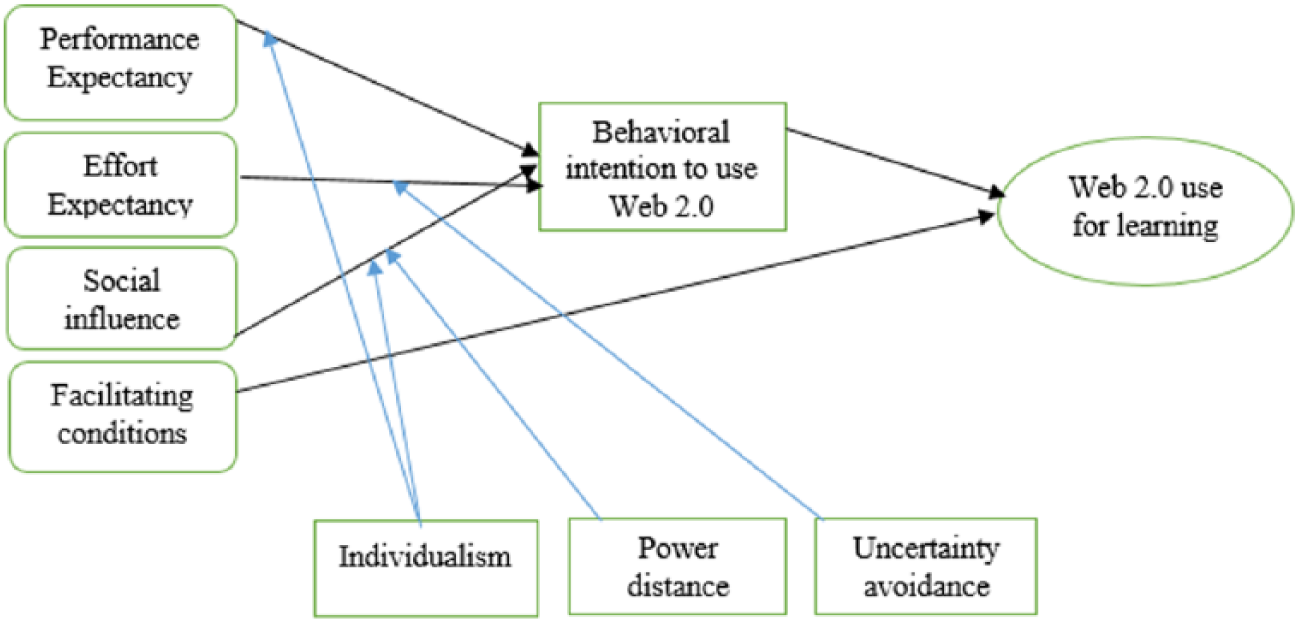
The cross-cultural dimensions of Web 2.0 acceptance and use for learning.
Before embarking on making any theoretical inferences between the individualism/collectivism dimension and UTAUT’s social influence and effort expectancy constructs, it is worth reiterating that the main difference between collectivists (Moroccans) and individualists (Americans) is that while the former give paramount importance to the social context and shape their behaviors in accordance with its norms, individualists tend to base their behaviors more on their own internal attributes such as abilities, motives, and personal values, and give minor attention to the social context (Markus and Kitayama, 1991; Srite and Karahana, 2006).
Applied to the context of technology acceptance and use, these different cultural orientations of individualism and collectivism are expected to have some strong implications on students’ acceptance and use of technology. A particular good way of thinking about the effect of individualism and collectivism on the use of technologies, according Olaniran (2007: 24), is how people from collectivistic cultures tend to seek the connections or look for signs or symbols that provide them with a general sense that they connect with others. For him, “the need to be part of a group rather than an independent person is imminent when different cultures view or use e-learning” (Olaniran, 2007: 24). That is, while collectivistic students rely on direct contact and social interaction for learning, it is lacking in e-learning contexts which may influence their willingness to use it. Moreover, Im et al. pointed out that “it is obvious that users in a more collectivistic and higher power distance culture will be affected by others when making decisions on technology adoption” (Im et al., 2010: 11). This means that collectivists are more likely to adopt technology as a result of social influence compared to individualists who tend to give minor importance to their social surroundings. In another study, Zakour (2007) as cited in Nistor et al. (2014) expected individualism to negatively moderate the effect of social influence on behavioral intention to use technology. Based on these arguments and on Hofstede’s classification of Moroccan and the American cultures as collectivistic and individualistic respectively, it can be inferred that Moroccan university students are more likely to be influenced by the social context compared to their American counterparts. This reasoning leads us to the following hypothesis:
In relation to the moderating effect of individualism and collectivism on performance expectancy, Im et al. (2010) indicated that the impact of performance expectancy on behavioral intention to use technology is more likely to be greater in individualistic cultures than collectivistic ones. According to them, individualistic people tend to adopt things easily if they see that they will bring about recognizable benefits such as better performance. In support of their assumption, these scholars referred to an empirical study by Straub et al. (1997) in which they examined technology acceptance in Korea (collectivist) and the US (individualist) using the technology acceptance model. The results have shown that the effect of perceived usefulness, which is the equivalent of performance expectancy in UTAUT, was stronger in the US than in Japan. These arguments lead us to the following hypothesis:
The power distance dimension in its turn is expected to moderate the effect of social influence on behavioral intention to use Web 2.0. This assumption is based on the arguments made by Srite and Karahanna (2006) and Im et al. (2010) who pointed out that when it comes to technology acceptance, higher power distance people are more likely to be influenced by the social context. Srite and Karahanna explained that power distance exerts its influence through the notion of compliance which, according to them manifests when a person accepts influence from another individual because he “hopes to gain some favorable reaction from the other and avoid punishment” (Srite and Karahanna, 2006: 687). That is, individuals from higher power distance cultures are more likely to be affected by others when making decisions about technology adoption (Im et al., 2010). This reasoning leads us to our third hypothesis:
As applied to the context of technology acceptance, this dimension is expected to moderate the effect of effort expectancy on behavioral intention to use web-based learning. This assumption is based on relatively legitimate arguments made by a number of researchers. For example, Olaniran et al. (2010) indicated that since e-learning is believed to involve a certain level of uncertainty and effort, it is more likely to be avoided in high uncertainty avoidance cultures compared to low uncertainty avoiding cultures, where it may be seen as something fun and interesting. Similarly, Veltri and Elgarah (2009) pointed out that intention to use technology is directly influenced by the level of uncertainty, noting that users from high uncertainty avoiding cultures would show less use intention. Likewise, Im et al. (2010) added that people from high uncertainty avoiding cultures are less likely to experiment with or adopt new technologies. A similar point was made very recently by Nistor et al. (2014) who emphasized that uncertainty avoidance can push users to reflect more on the effort needed in the usage of educational technology. Based on these arguments and on the Moroccan score of uncertainty avoidance, which is significantly higher than that of the US, it can be hypothesized that:
Method
A total of 400 questionnaires were completed by Moroccan (n =200) and American (n =200) students from Sidi Mohamed Ben Abdullah University and the State University of New York, (SUNY Buffalo). As was asserted earlier, from a cross-cultural perspective, Morocco and the US constitute an interesting context for comparison. Thus, studying Web 2.0 acceptance among these two samples not only allows the researcher to understand technology acceptance in two different cultural contexts but also to test the cross-cultural generalizability of ETA models, which are often criticized for being Westernized or context-bound at best.
The questionnaire used in this study consisted of two major sections composed of closed-ended questions. The first is based on UTAUT (Venkatesh et al., 2003) and is composed of 19 items, on a 5-point Likert scale assessing the effect of the determinant factors of behavioral intention to use Web 2.0 for learning. These factors include performance expectancy (4 items), effort expectancy (4 items), social influence (4 items) facilitating conditions, and behavioral intention (3 items). Use behavior (4 items). The items on this section were adapted to the context of Web 2.0 acceptance and use for educational purposes in higher education. Examples of these include: “using Web 2.0 increases my chances of getting a good grade” (performance expectancy); “people who influence my behavior think that I should use Web 2.0” (social influence); and “I plan to use Web 2.0 in the next semesters” (behavioral intention).
Importantly, it is to be noted that because Hofstede’s Values Survey Module was initially designed to measure cultural values in organizational settings, and due to the absence of a pre-defined instrument for measuring cultural values in education, the researcher adapted the questionnaire items used in this study from Yoo et al. (2011). After getting an official approval from these scholars to use their questionnaire items, they were slightly altered to suit the aims of this study. Examples of items included in this section include: “my personal identity, independent of others, is very important to me” (individualism/collectivism); “teachers should make most decisions without consulting students” (power distance); and “I prefer to work with methods that I know are sufficient rather than trying new methods” (uncertainty avoidance).
Importantly, this study is based on the assumption that there is a correlation between cultural differences, as measured by Hofstede’s cultural dimensions, and Moroccan and American university students’ Web 2.0 profiles. In order to test these assumptions, the researcher opted for a combination of correlational and causal comparative designs. The correlational research design was used to examine the association between Moroccan and American university students’ cultural values scores and their Web 2.0 acceptance profiles. The causal–comparative design was used to investigate the potential causal relationship between the independent variable (Moroccan and American students’ cultural values as measured by Hofstede’s dimensions) and the dependent variable (their Web 2.0 acceptance profiles).
As for the data analysis procedure, the Pearson correlation coefficient r was used to examine the relationship between the independent variables (performance expectancy, effort expectancy, and social influence) and the dependent variable (behavioral intention to use Web 2.0 for learning). This process was repeated to examine the relationship between facilitating conditions and behavioral intention (independent variables) and students’ use behavior as the outcome variable. Regression analysis was then used to examine the effect and predictive power of the aforementioned independent variables on the dependent variables. Importantly, regression analysis was further undertaken to examine the moderating effect of Hofstede’s dimensions (moderating variables) on the association between the four determinant factors of Web 2.0 use (independent variables) and behavioral intention to use Web 2.0 (dependent variable).
By revisiting the hypotheses put forward, it can be said that they are all based on three major assumptions. First, each hypothesis assumes that the moderating variables (i.e. the cultural dimensions scores for power distance, collectivism, and uncertainty avoidance) are significantly different between Moroccan and American respondents. Second, each hypothesis expects that these moderating variables will influence the relationship between the independent and the dependent variables (i.e. Web 2.0 acceptance determinant factors and behavioral intention to use Web 2.0). Third, each hypothesis assumes that, due to this influence, the dependent variables, that is, students’ Web 2.0 acceptance profiles will significantly differ between Moroccan and American university students. An alpha level of 0.05 was set as a standard for accepting or rejecting the hypotheses put forward in this study.
Results
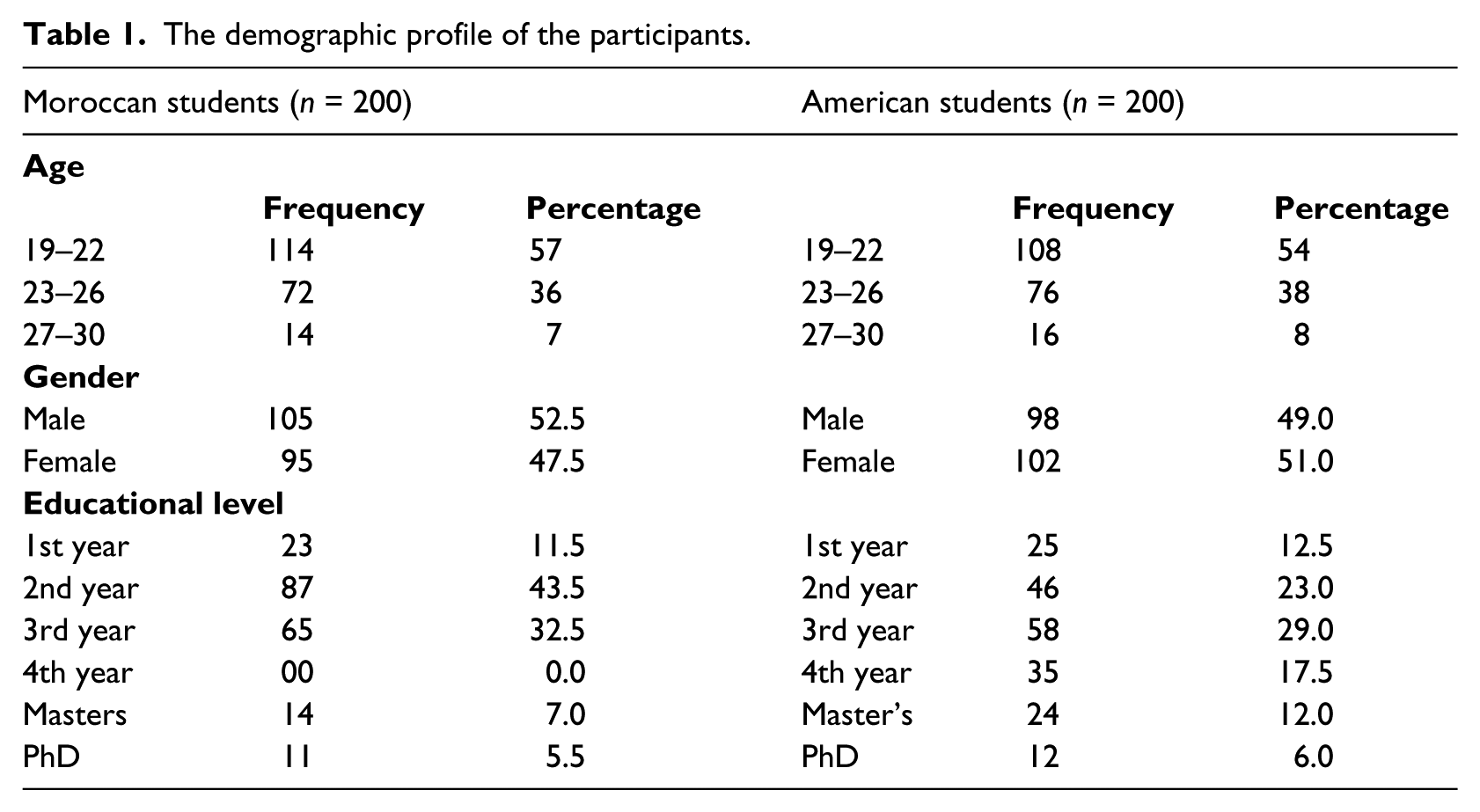
As reported in Table 1, the participants’ age ranged between 19 and 30 with the majority of them being between 19 and 22 years old. As for the gender, Moroccan male participants (52.5%) slightly outnumbered their female counterparts while it was the opposite for the American participants as female participants constituted (51%) of the total sample. Concerning the educational level, the majority of the respondents in both samples (87.5% of the total Moroccan sample and 82% of the American sample). Master’s and PhD students together constituted only 12.5% of the Moroccan sample and 18% of its American counterpart. This relatively small number of graduate students is due to their rather limited number and hence inaccessibility.
The demographic profile of the participants.
Web 2.0 acceptance and use in higher education
Generally, the findings support and hence cross-culturally validate the UTAUT in the Moroccan and American higher education contexts. Thus, as theorized by Venkatesh et al. (2001), the constructs of performance expectancy, effort expectancy, and social influence were found to impact significantly students’ behavioral intention to use Web 2.0. Behavioral intention and facilitating conditions in their turn were found to have a significant influence on students’ use behavior for both samples. More specifically, as can be seen in Tables 2 and 3, the results have revealed the existence of a positive and statistically significant relationship between performance expectancy, effort expectancy and social influence (independent variables) and behavioral intention (dependent variable) for both samples. With regard to the Moroccan students, for example, the correlation coefficient r = 0.493**, p < 0.001 revealed a moderately strong and statistically significant relationship between performance expectancy and behavioral intention to use Web 2.0. Effort expectancy and social influence also positively correlated with behavioral intention with an r = 0.423** and r = 0.499**, p < 0.001, respectively. The correlation coefficient r = 0.465**, p < 0.001 for the Moroccan sample shows the existence of a moderately strong and statistically significant relationship between facilitating conditions and students’ Web 2.0 use behavior. Relatively similar results were found in relation to the American group. Thus, the correlation coefficient r = 0.508**, p < 0.001 indicated a moderately strong positive relationship between performance expectancy and behavioral intention to use Web 2.0 for learning. Effort expectancy and social influence also positively correlated with behavioral intention with respective correlation coefficients r = 0.581** and r = 0.394**, p < 0.001. Relatively similar results were found in relation to the American respondents. Thus, facilitating conditions r = 0.448**, p < 0.001 and behavioral intention r = 0.477**, p < 0.001 were found to have a strong and statistically significant relationship with students’ use behavior.
Examining the relationships between performance expectancy (PE), effort expectancy (EE), social influence (SI), and behavioral intention (BI) to use Web 2.0.
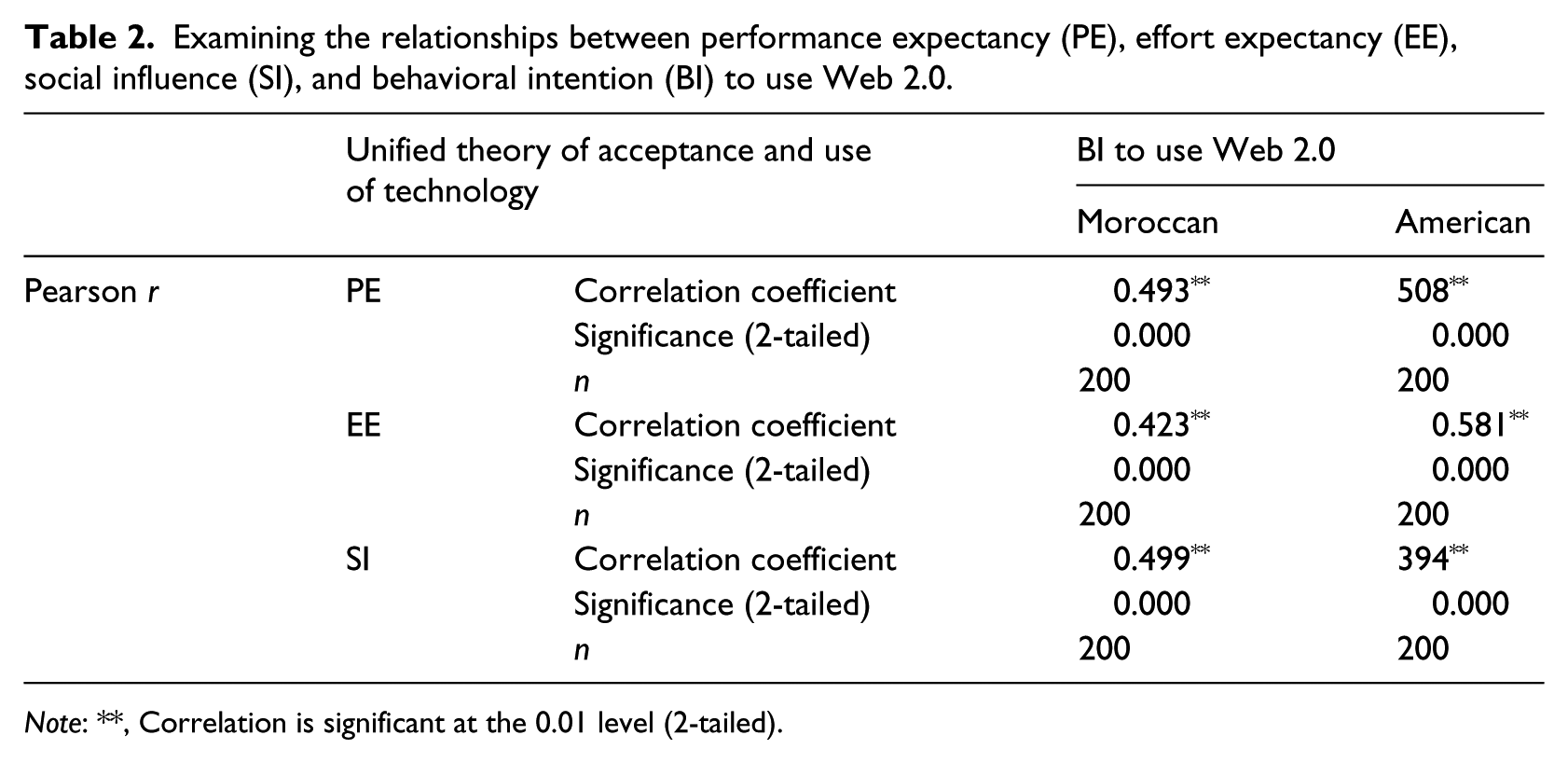
Note: **, Correlation is significant at the 0.01 level (2-tailed).
Analysis of the effect of facilitating conditions and behavioral intention on Web 2.0 use for learning.
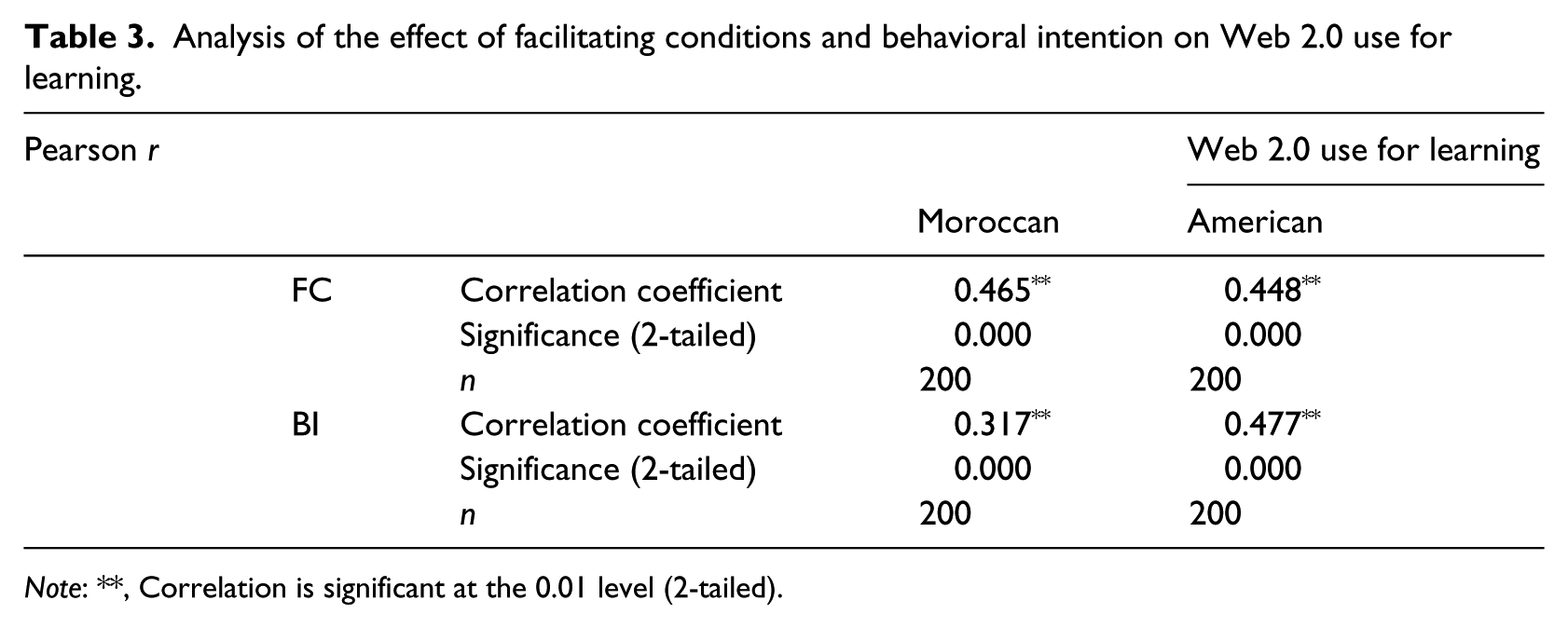
Note: **, Correlation is significant at the 0.01 level (2-tailed).
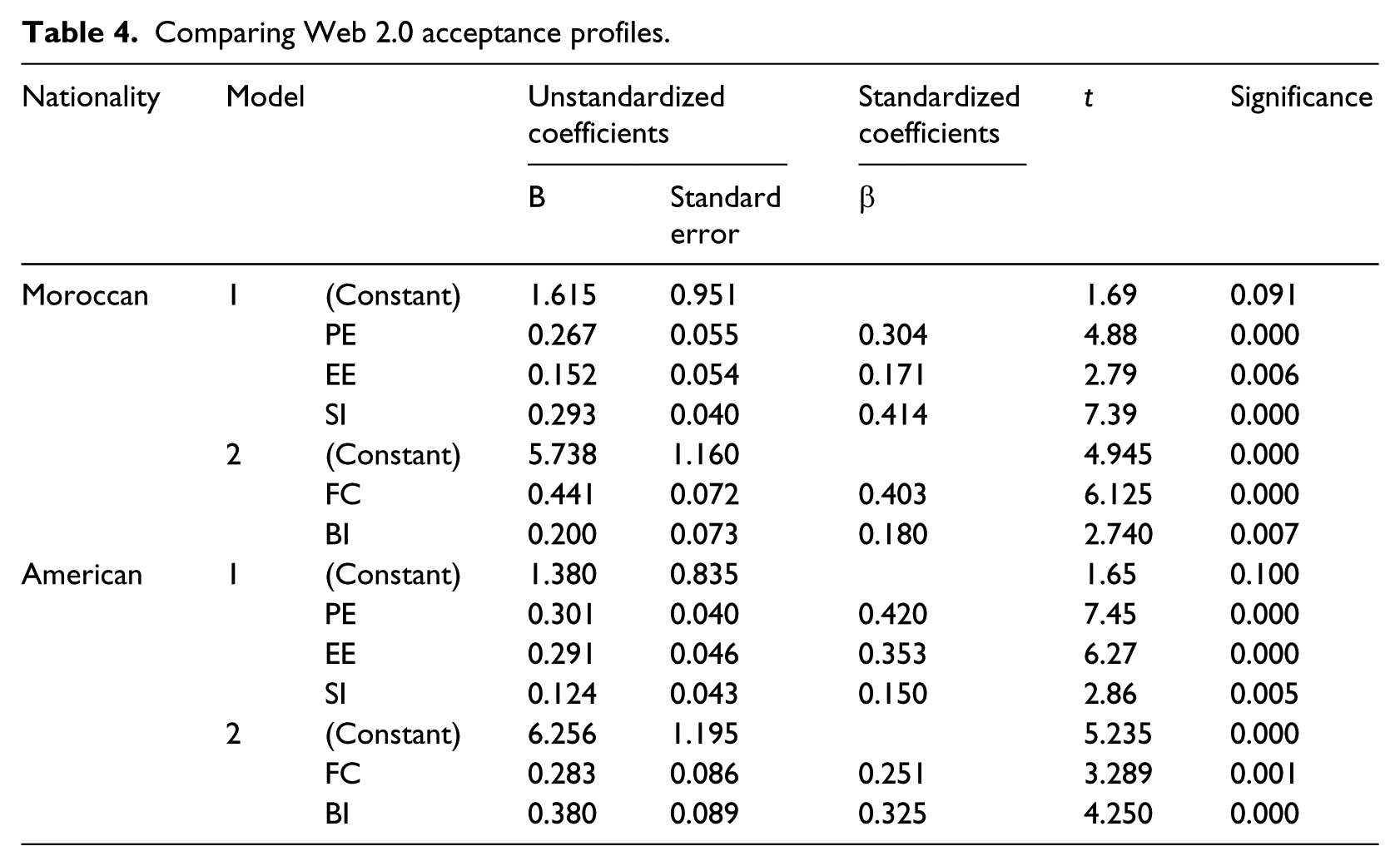
Comparing Web 2.0 acceptance profiles.
Comparing the impact of the UTAUT determinants on Web 2.0 acceptance.
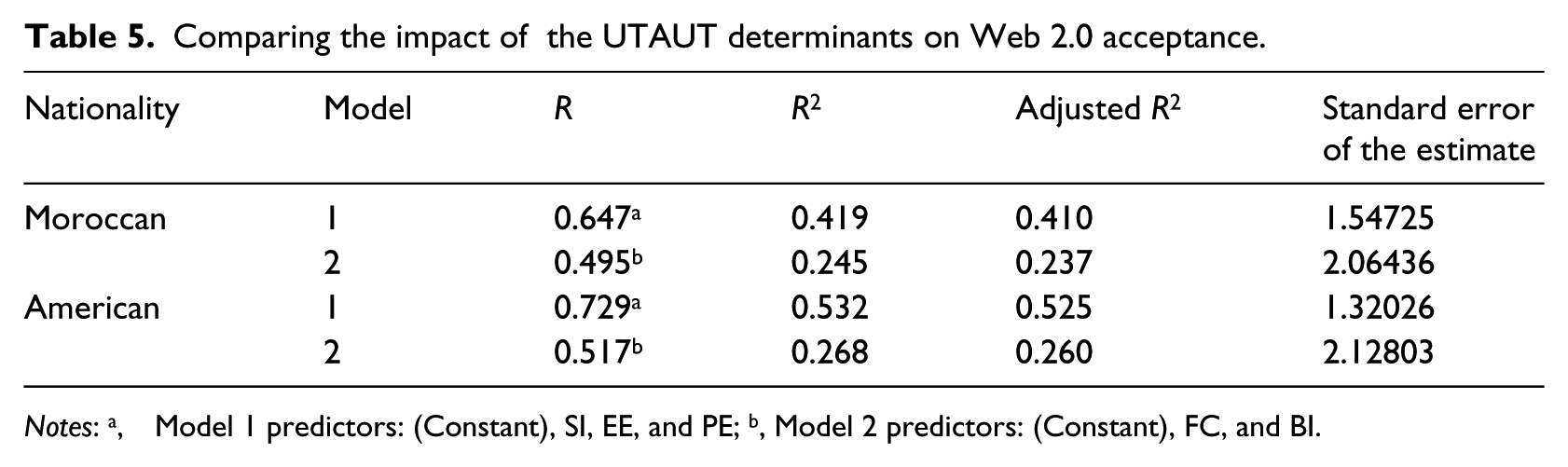
Notes: a, Model 1 predictors: (Constant), SI, EE, and PE; b, Model 2 predictors: (Constant), FC, and BI.
The results from the regression analysis (summarized in table 4), having behavioral intention to use Web 2.0 as the dependent variable and performance expectancy, effort expectancy, and social influence as three independent variables, have shown that the effect of social influence was the strongest (β = 0.414, p < 0.000) for the Moroccan sample, followed by performance expectancy (β = 0.304, p < 0.000), while effort expectancy had a relatively week impact on behavioral intention (β < 0.117, p = 0.006). As can be seen in table 5 providing the mode summary, the model was able to account for an adjusted R² = 0.410 (41%) of the variance in Moroccan students’ behavioral intention to use Web 2.0. For the American sample, performance expectancy was the strongest (β = 0.414, p < 0.000), followed by effort expectancy (β = 0.304, p < 0.000) while social influence had the lowest impact on behavioral intention (β < 0.117, p = 0.006). The model was able to account for an adjusted R² = 0.525 (52%) of the variance of behavioral intention to use Web 2.0 for the American sample.
A regression analysis test (see table 4) was also used to examine the impact of behavioral intention and facilitating conditions. The data have revealed that the effect of facilitating conditions was stronger (β = 0.403, p < 0.001) for Moroccans than for Americans (β = 0.251, p < 0.001), while it was the other way around for behavioral intention as its effect was stronger for American (β = 0.325, p < 0.001) than for their Moroccan counterparts (β = 0.180, p = 0.007). This means that Moroccan students pay attention more to the facilitating conditions in their use of Web 2.0 compared to Americans who seem to take facilitating conditions for granted and focus more on their behavioral intention. The model was able to account for 23% (adjusted R² = 0.237) of the variance of students’ use of Web 2.0 for learning for the Moroccan sample, while it was able to predict 26% (adjusted R² = 0.260) of the variance for the American respondents.
Examining the moderating effect of culture
As was discussed earlier, this study addressed the moderating effect of Hofstede’s cultural dimensions between UTAUT’s determinant constructs and behavioral intentions to use Web 2.0. Moderation models test if the effect of a predictor variable X (e.g. performance expectancy) on an outcome variable Y (e.g. behavioral intention to use Web 2.0) differs as a result of a third moderating variable M (e.g. individualism). Moderator variables, as Fairchild and MacKinnon explain, “affect the strength and/or direction of the relation between a predictor and an outcome: enhancing, reducing, or changing the influence of the predictor” (Fairchild and MacKinnon, 2009: 89). According to these scholars, to test moderation the researcher must first run a free model predicting the outcome variable Y from the predictor variable only (referred to as Model 1 in Tables 6 –13 below). The effect of the predictor on the outcome variable as well as the R2 must be significant. Then, the researcher has to run another regression model (model 2) by adding the moderator variable and then checks for a significant change in the R2 as well as a significant effect (β) of the new moderating variable. More precisely, if there is a change in R2 and the effect of the main predictor becomes insignificant, then complete moderation has occurred. Moreover, if both the predictor and moderator are significant, then moderation has taken place but the main effect is also still significant.
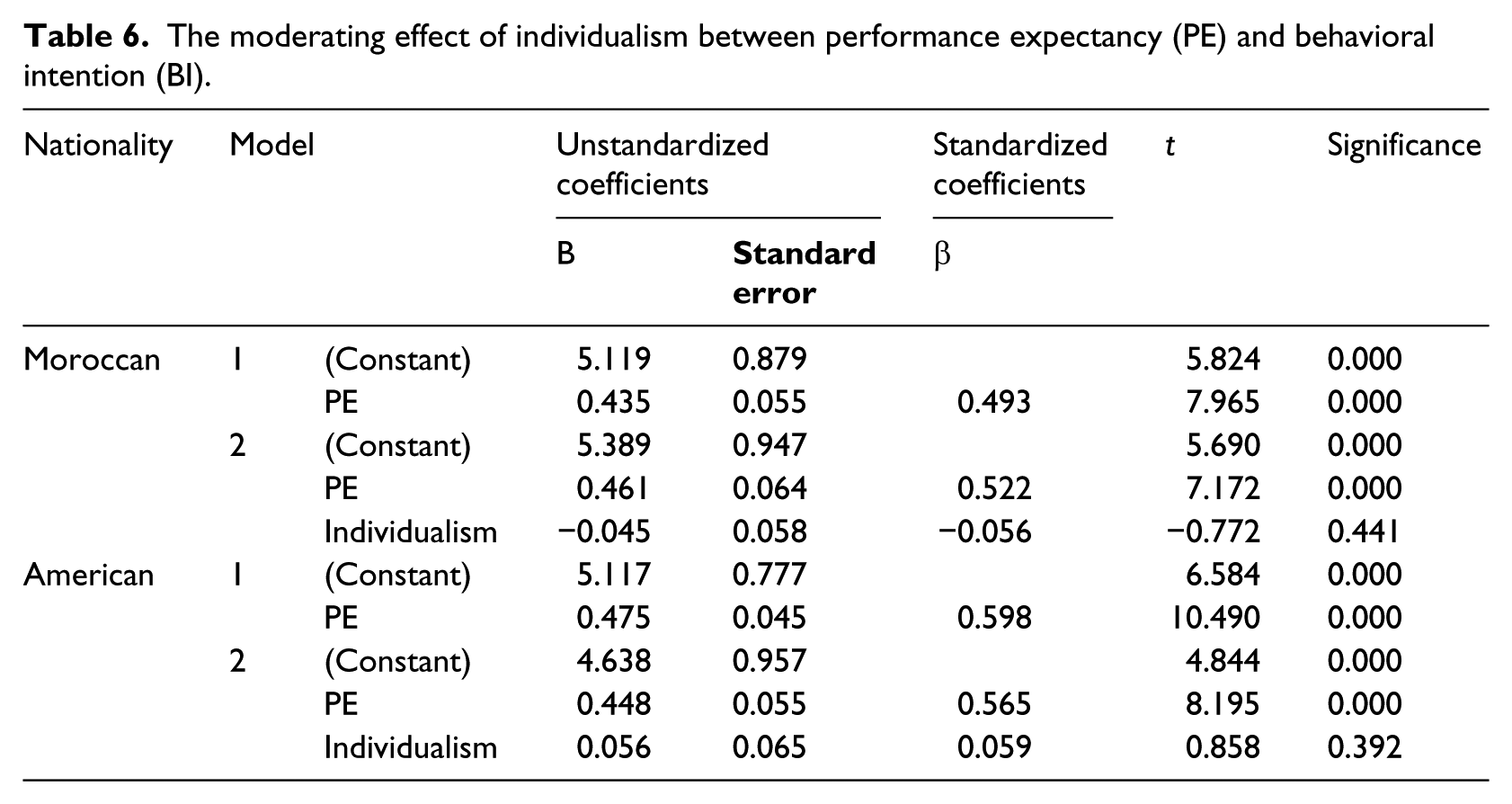
The moderating effect of individualism between performance expectancy (PE) and behavioral intention (BI).
Measuring the moderating effect of individualism between performance expectancy and behavioral intention.
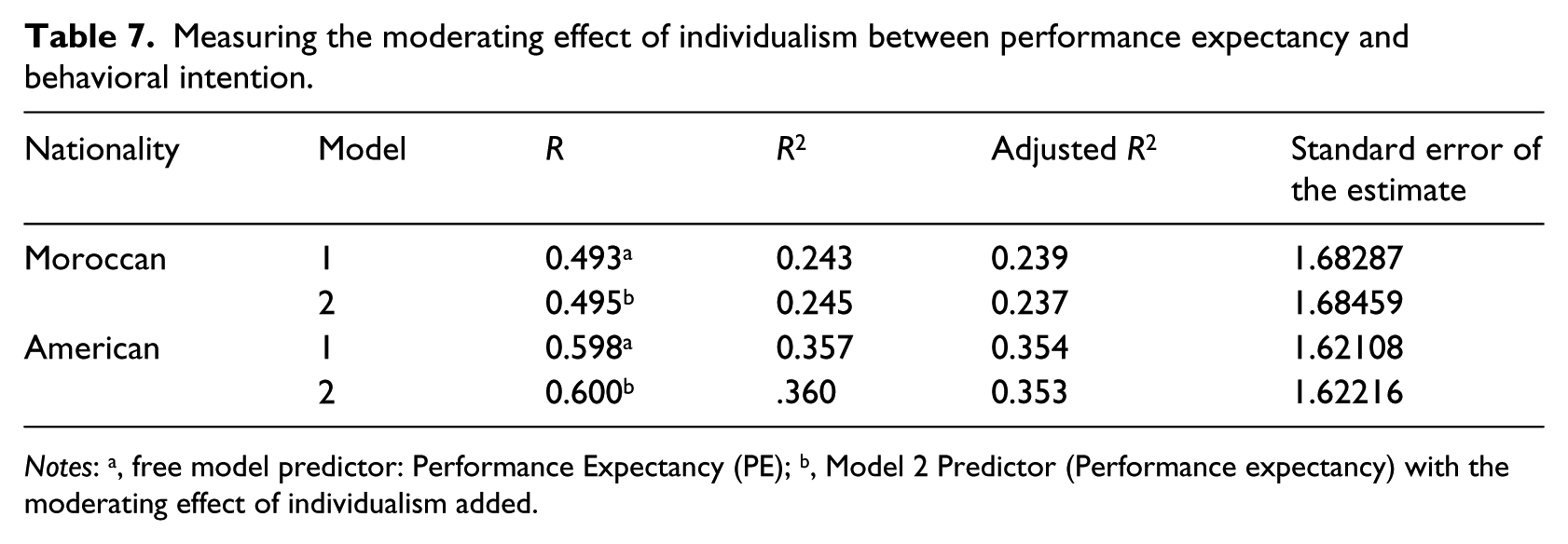
Notes: a, free model predictor: Performance Expectancy (PE); b, Model 2 Predictor (Performance expectancy) with the moderating effect of individualism added.
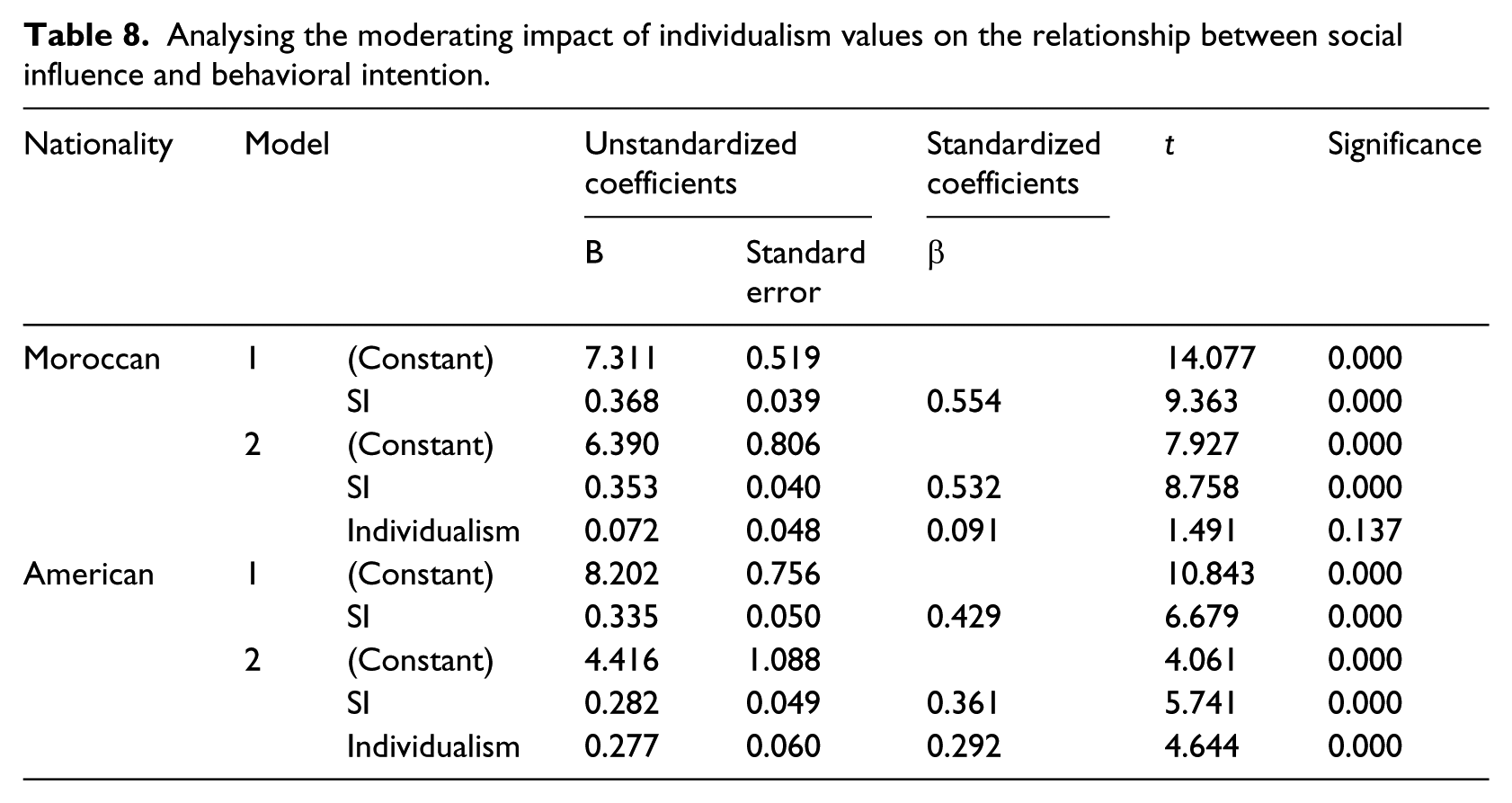
nalysing the moderating impact of individualism values on the relationship between social influence and behavioral intention.
Measuring the moderating impact of individualism values on social influence.
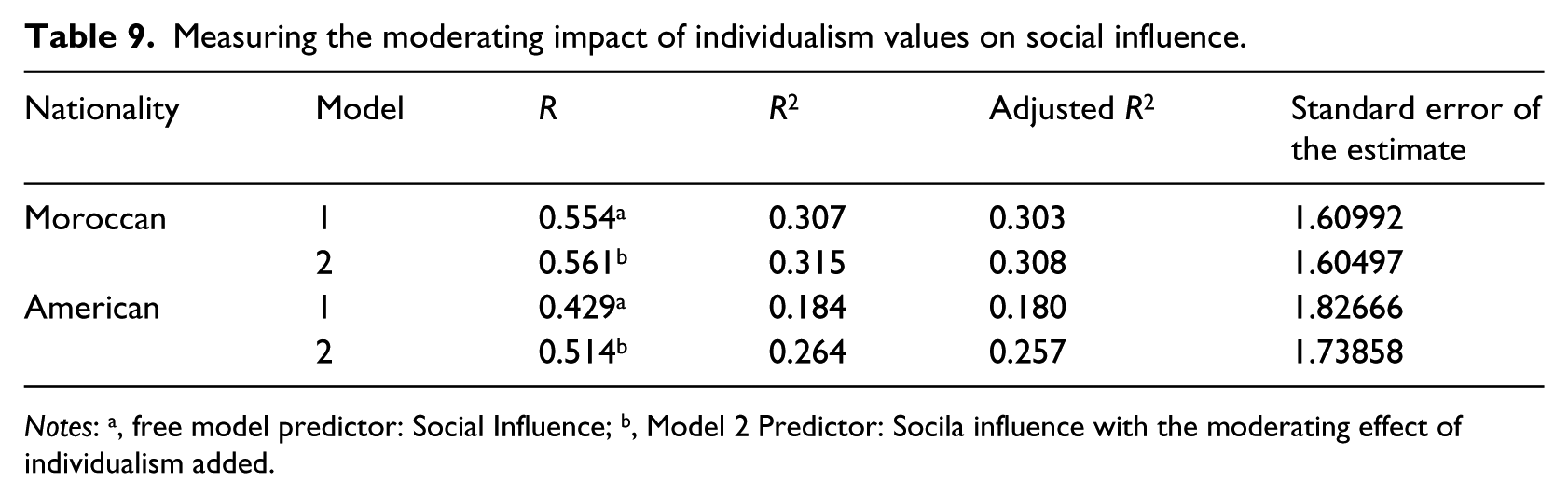
Notes: a, free model predictor: Social Influence; b, Model 2 Predictor: Socila influence with the moderating effect of individualism added.
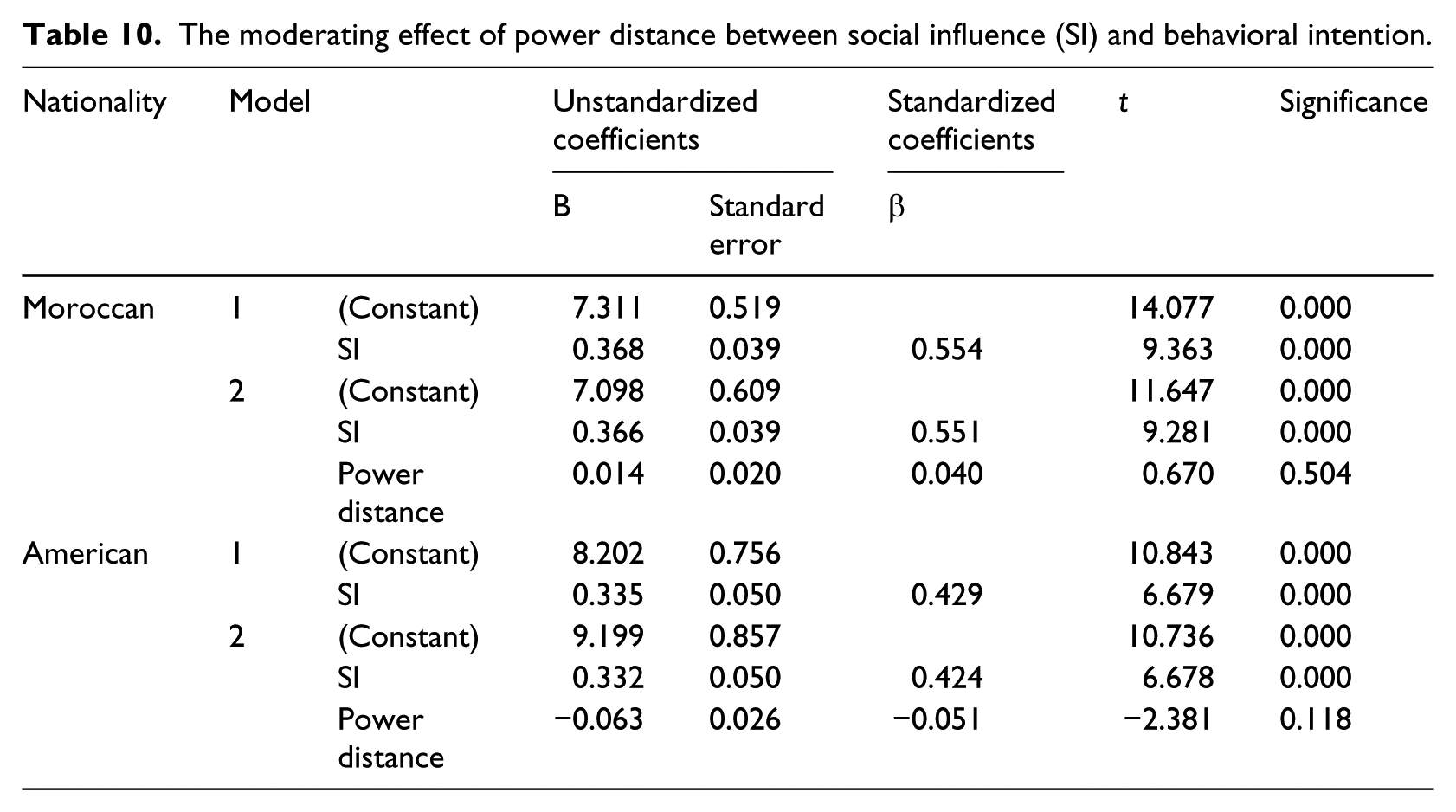
The moderating effect of power distance between social influence (SI) and behavioral intention.
Measuring the moderating effect of power distance values on the relationship between social influence and behavioral intention.
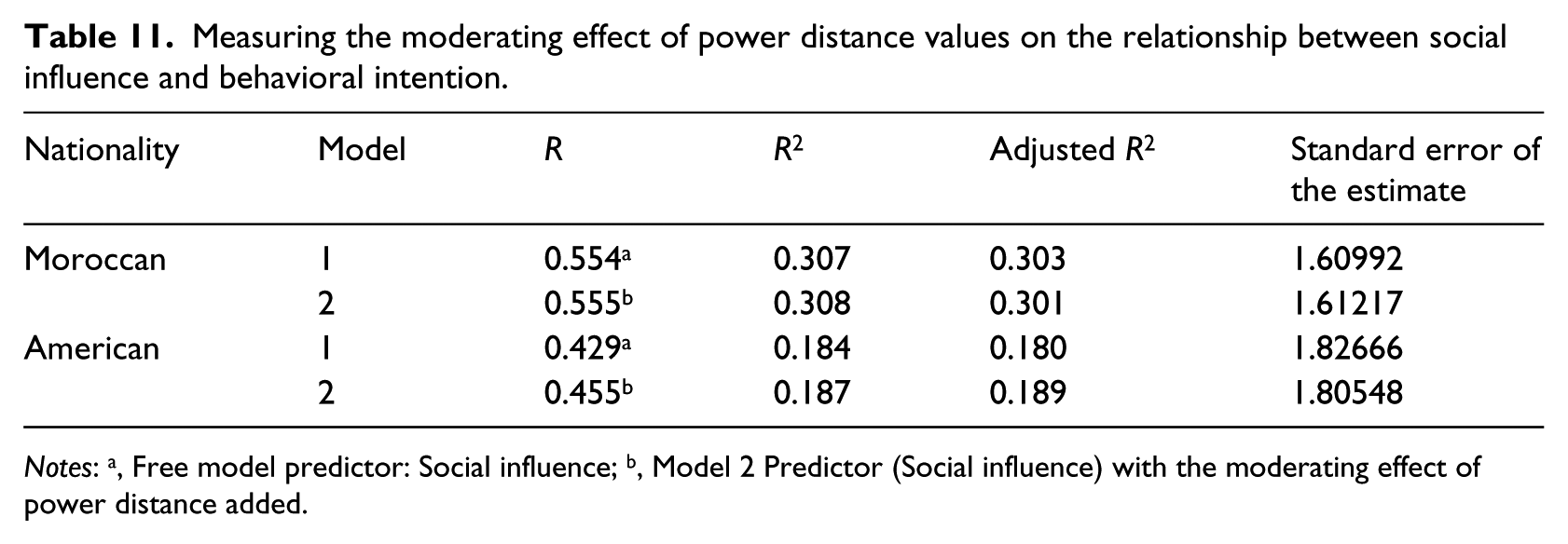
Notes: a, Free model predictor: Social influence; b, Model 2 Predictor (Social influence) with the moderating effect of power distance added.
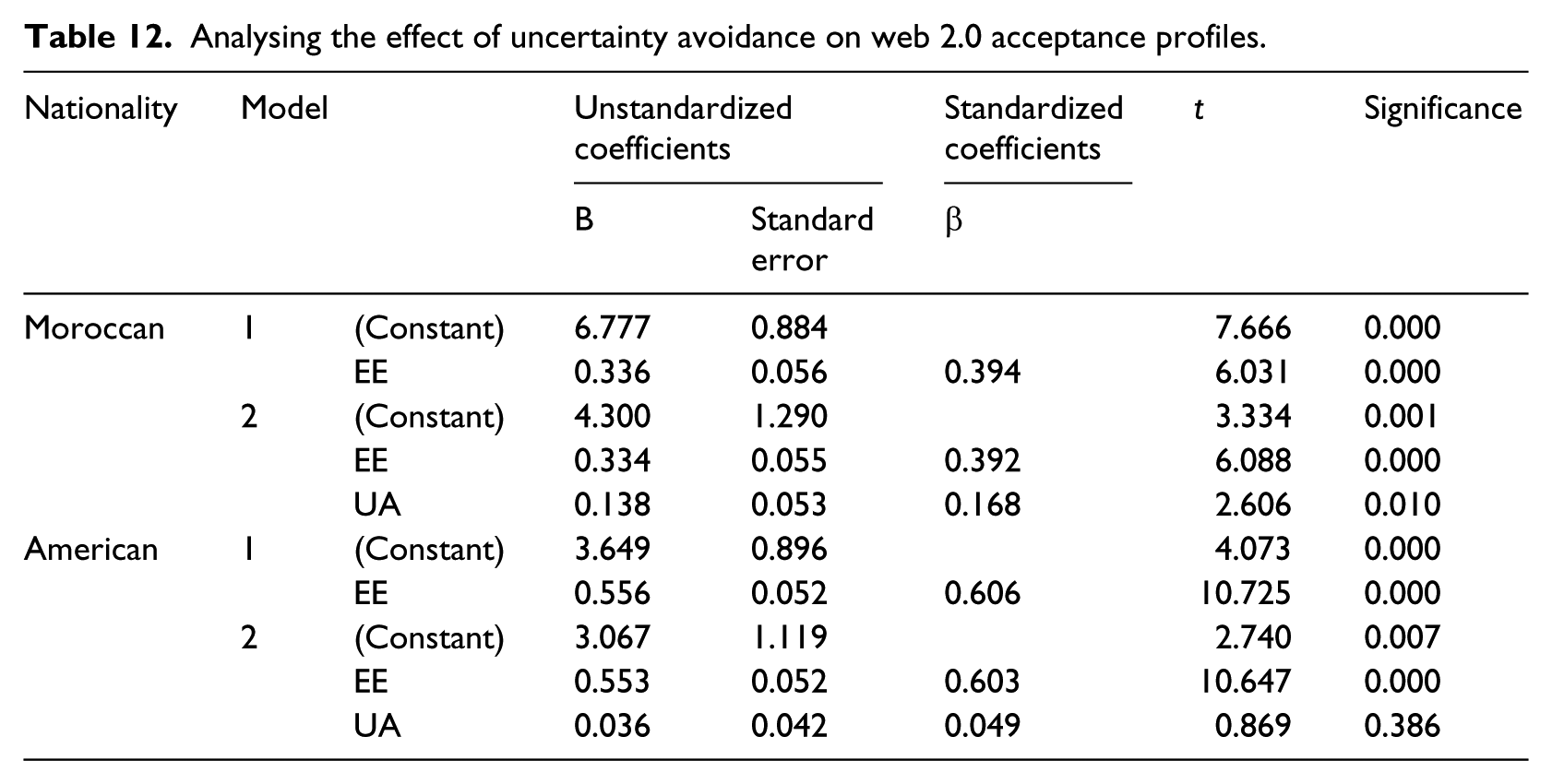
Analysing the effect of uncertainty avoidance on web 2.0 acceptance profiles.
Measuring the moderating impact of uncertainty avoidance values on effort expectancy.
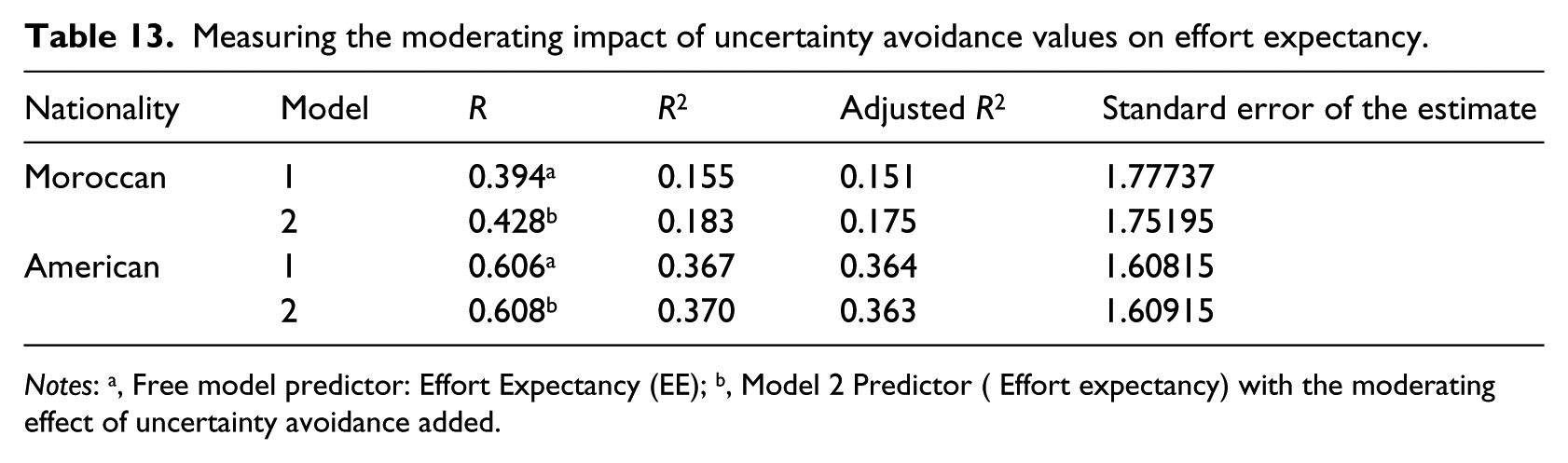
Notes: a, Free model predictor: Effort Expectancy (EE); b, Model 2 Predictor ( Effort expectancy) with the moderating effect of uncertainty avoidance added.
Testing the moderating effect of individualism
To test the first hypothesis, stating that the effect of performance expectancy on behavioral intention will be significantly moderated by individualistic values, a linear regression model was used. In the first step, performance expectancy (predictor) and behavioral intention (outcome variable) were interred in the model. Performance expectancy accounted for a statistically significant amount of variance in behavioral intention. Thus, the adjusted R2 for the Moroccan respondents was R² = 0.239, β = 493, p < 0.001 while it was R2 = 0.354, β = 598, p < 0.001 for their American counterparts. This means that the free model was significant as it was able to account for 23% and 35% of the variance in the Moroccan and American samples respectively. Then, individualism (moderator) was added to the regression model. However, the results (see tables 6 and 7) have shown that the moderating effect of individualism was trivial and statistically insignificant as there was no change in the R² for both samples. The main effect (model 1), however is still significant with no major change. These results refute the above hypothesis assuming that there is a moderating effect between performance expectancy and behavioral intention.
To test the second hypothesis, stating that the effect of social influence on behavioral intention will be significantly moderated by individualistic values, a linear regression model was used (see tables 8 and 9). In the first step, social influence and behavioral intention were interred in the model. Social influence accounted for a statistically significant amount of variance in behavioral intention with an adjusted R² = 0.303, β = 554, p < 0.001 for the Moroccan respondents and R² = 0.180, β = 0.429, p < 0.001 for their American counterparts. Then, individualism was added to the regression model. The results have shown that while the main effect is still significant with no major change in the R2 for the Moroccan sample, the effect of individualism β = 0.091, p = 0.137 was statistically insignificant which means that moderation did not occur. For the American sample, however, moderation has taken place as there was a statistically significant increase in the predictive power of the model which increased from R² = 0.18 to R² = 0.257, β = 0.292, p < 0.00. This means that moderation has occurred for the American sample. This partly confirms the above hypothesis that individualism would moderate the relationship between social influence and behavioral intention to use Web 2.0. As will be seen in the Discussion section, this may be attributed to the supportive role others play in the adoption of Web 2.0 in the US.
The moderating effect of power distance
To test hypothesis 3 assuming that the effect of social influence on behavioral intention will be significantly moderated by power distance values such that it will be greater for Moroccan students, a linear regression model was used. In the first step (see tables 10 and 11), social influence accounted for a significant amount of variance in behavioral intention, with an adjusted R² = 0.303, β = 0.554, p < 0.001 for the Moroccan respondents and R² = 0.180, β = 0.429, p < 0.001 for their American counterparts. Put simply, the free model was able to account for 30% of the variance in students’ behavioral intention to use Web 2.0 for the Moroccan sample and 18% in the American sample. As was discussed earlier, this means that the effect of social influence on behavioral intention is stronger for Moroccans than for Americans. In the second step, the power distance dimension (moderator) was added to the regression model and the results have shown that while the main effect has not changed, the effect of power distance was statistically insignificant with no major change in R² for both samples. More precisely, the moderating effect of power distance for the Moroccan and American samples were β = 0.040, p = 0.504 and β = -0.0511, p = 0.118, respectively. Accordingly, moderation did not take place which in turn refutes the above hypothesis.
The moderating effect of uncertainty avoidance
To test hypothesis 4, stating that the effect of effort expectancy on behavioral intention will be significantly moderated by uncertainty avoidance values such that it will be greater for Moroccan students, a linear regression model was used (see tables 12 and 13 below). In the first step, effort expectancy accounted for a significant amount of variance in behavioral intention with adjusted R² = 0.151, β = 0.394, p < 0.001 for the Moroccan respondents and R² = 0.364, β = 604, p < 0.001 for their American counterparts. This means that the free model was able to account for 15% of the variance for the Moroccan sample and 36% of the variance in the American sample. In the second step, uncertainty avoidance was added to the regression model. The results have shown that moderation has taken place for the Moroccan sample. Thus, both the main effect β = 0.392, p < 0.001 and the moderating effect of uncertainty avoidance β = 0.168, p = 0.010 are statistically significant. In addition, there was an R² increase from 0.15 to 0.17. This means that the predictive power of the model increased with 2% thanks to the moderating effect of uncertainty avoidance. For the American sample, however, the effect of uncertainty avoidance was found to be statistically insignificant β = 0.049, p = 0.336 with no major change in R² and thus moderation has not taken place. These results partly confirm the above hypothesis stating that the relationship between effort expectancy and behavioral intention will be moderated by uncertainty avoidance.
Discussion
Comparing Web 2.0 acceptance among Moroccan and American university students
The findings, in addition to providing further support for the robustness of UTAUT, have shown that Moroccan and the American university students differ substantially in their educational acceptance of Web 2.0. Interestingly, social influence was the strongest Web 2.0 acceptance predictor for the Moroccan sample, followed by performance expectancy and effort expectancy. For the American sample, performance expectancy was the strongest, followed by effort expectancy while social influence had the lowest impact on behavioral intention. These findings align largely with Im et al.’s argument that “it is obvious that users in a more collectivistic and higher power distance culture will be affected by others when making decisions on technology adoption” (Im et al., 2010: 11). This means that collectivists are more likely to adopt technology as a result of social influence compared to individualists who tend to give minor importance to their social surroundings. In line with this reasoning, Srite and Karahanna pointed out that when it comes to technology acceptance, higher power distance people are more likely to be influenced by the social context explaining that power distance exerts its influence through the notion of compliance which, according to them manifests when a person accepts influence from another individual because he “hopes to gain some favorable reaction from the other and avoid punishment” (Srite and Karahanna, 2006: 687). Based on these results and on earlier analysis of the Moroccan and American psycho-cultural backgrounds, it can be inferred that American university students are less likely to be influenced by the social context compared to their Moroccan counterparts, who are expected to give major importance to the social context and to strive to conform to the opinions of their group.
Interestingly, the results from the multiple regression analysis have shown also that the effect of facilitating conditions was stronger for Moroccans than for their American counterparts, while it was the other way around for behavioral intention as its effect was stronger for Americans than for Moroccans. In line with this finding, Veltri and Elgarah (2009) pointed out that intention to use technology is directly influenced by the level of uncertainty, noting that users from high uncertainty avoiding cultures would show less use intention. This means that Moroccan students pay more attention to facilitating conditions in their use of Web 2.0 compared to Americans who seem to take facilitating conditions for granted and focus more on their personal intention to use Web 2.0. This finding was also reported by other Moroccan scholars. For example, in her study, Azrar (2013) mentioned the lack of necessary equipment and training as two major reasons that affected Moroccan university students’ use of the web for educational purposes.
The cross-cultural dimensions of Web 2.0 acceptance
As was noted earlier, this study has responded to scholars’ ongoing emphasis on the relevance of Hofstede’s paradigm in understanding cross-national differences in technology acceptance levels and use. In so doing, it has taken the risk of unraveling the intricacies of educational technology acceptance in the Moroccan and American higher education contexts by examining the moderating effect of three of Hofstede’s cultural dimensions between UTAUT’s determinant constructs of performance expectancy, effort expectancy, and social influence as predicting variables and behavioral intentions to use Web 2.0 as the outcome variable.
As was previously reported, the findings from the first moderation analysis refuted the hypothesis assuming that individualism will have a moderating effect between performance expectancy and behavioral intention to use Web 2.0. Interestingly, despite failing to support this hypothesis, the results are still highly consistent with Im et al.’s (2010) argument that the impact of performance expectancy on behavioral intention to use technology is more likely to be greater in individualistic cultures than in collectivistic ones. These scholars explained that individualistic people tend to adopt things easily if they see that they will bring about recognizable benefits such as better performance. In support of these arguments, the findings from the current study have shown that performance is a more important predictor of technology acceptance among Americans than among Moroccans as it was able to predict 35% and 23% of these respective samples’ intention to use Web 2.0.
Unlike the case with performance expectancy, the results from the moderating effect of individualism between social influence and behavioral intention yielded conflicting results. Thus, while individualism did not account for any additional effect on social influence for Moroccan students beyond the 30% (R² = 0.303, β = 554, p < 0.001) accounted for by the free model, moderation, however, took place for the American sample. Thus, the moderator was able to account for a statistically significant 7% increase in the predictive power of the model from 18% (R² = 0.180, β = 429, p < 0.001) originally accounted for by the free model to 25% (R² = 257, β = 0.292, p < 0.000). In fact, while these results contradict Zakour’s (2007) expectation that individualism would negatively moderate the effect of social influence on behavioral intention to use technology (cited in Nistor et al., 2014), they resonate strongly with Im et al.’s assertion that effect of social influence on behavioral intention to use technology will be stronger for collectivists than for individualists. As these scholars put it, “it is obvious that users in a more collectivistic and higher power distance culture will be affected by others when making decisions on technology adoption” (Im et al., 2010: 11). These results, despite their inconsistencies, still partly confirm the second part of the fourth hypothesis stating that the impact of social influence will be stronger for Moroccans than for Americans as it predicted 30% and 25% of the behavioral intention to use Web 2.0 for these respective samples.
Interestingly, the results also refuted the third hypothesis assuming that the effect of social influence on behavioral intention will be significantly moderated by power distance. Thus, as was reported earlier, no major additional effect was accounted for by the power distance dimension (moderator) beyond the 30% and 18% accounted for by social influence for the Moroccan and American samples, respectively. As stated above, even though no moderating effect was found between the constructs of social influence and behavioral intention, the results are still interesting in the sense that they align with many scholars’ arguments that when it comes to technology acceptance, higher power distance people, Moroccans here, are more likely to be influenced by the social context (Nistor et al., 2014; Srite and Karahanna, 2006; Straub et al., 1997). Srite and Karahanna, for example, explained that power distance exerts its influence through the notion of compliance which, according to them manifests when a person accepts influence from another individual because he “hopes to gain some favorable reaction from the other and avoid punishment” (Srite and Karahanna, 2006: 687). That is, individuals from higher power distance cultures are more likely to be affected by others when making decisions about technology adoption which the results proved true for the Moroccan sample, as it predicted 30% of their intention to use Web 2.0 compared to only 18% of that of their American counterparts.
As for the moderating effect of uncertainty avoidance, the results partly confirmed the fourth hypothesis stating that the effect of effort expectancy on behavioral intention will be significantly moderated by the uncertainty avoidance dimension Thus, as was reported earlier, while effort expectancy accounted for 15% (R² = 0.151, β = 394, p < 0.001) of the variance in behavioral intention to use Web 2.0 for the Moroccan sample and 36% (R² = 0.364, β = 604, p < 0.001) of that in its American counterpart, a slight moderation has taken place for the Moroccan sample with an R² increase from 0.15 to 0.17. This means that the predictive power of the model increased with 2% thanks to the moderating effect of uncertainty avoidance. For the American sample, however, the effect of uncertainty avoidance was found to be statistically insignificant β = 049, p = 0.336 with no major change in R². Aside from the moderation effect, these results indicate that effect of effort expectancy is stronger for the American students than for their American counterparts which implies that the US students’ intention is affected more by how easy it is to use Web 2.0 compared to their Moroccan counterparts. Even though these results are somewhat contradictory with what was hypothesized in this study, they are highly consistent with those reported by Im et al. (2010), who also found that effort expectancy had a greater impact on behavioral intention in the US than in Korea which are respectively classified as low and high uncertainty avoiding.
Conclusions
Based on these findings, Hofstede’s cultural dimensions have shown a limited effect as moderating variables between the determinant factors and intention to use the Web 2.0 for educational purposes in the Moroccan and American higher education settings. However, the results do suggest that students’ cultural values of individualism/collectivism and power distance have a direct influence on some of UTAUT’s determinant factors, namely social influence, performance expectancy, and behavioral intention. Thus, for example, while social influence was found to be the most important predictor of technology acceptance for Moroccan students, behavioral intention had a little effect on them. Conversely, social influence had a little effect on American students whose adoption of technology is primarily determined by performance expectancy.
The effect of behavioral intention on use behavior is greater in the US sample than in the Moroccan sample and thus indicating that American students’ decision to use Web 2.0 is based on their own intention rather than on other external factors or pressures. These differences, as many scholars argue, can be attributed to the effect of the collectivism/individualism and high/low uncertainty avoiding tendencies characterizing the Moroccan and American students, respectively. In relation to social influence, for example, Im et al. (2010) asserted that effect of social influence on behavioral intention to use technology will be stronger for collectivists than individualists, which was proved true in this study. Similarly, in relation to behavioral intention, Veltri and Elgarah (2009) pointed out that the intention to use technology is directly influenced by the level of uncertainty noting that users from high uncertainty avoiding cultures would show less use intention compared to low uncertainty avoiding cultures. These results provide a comparative picture of the current state of Web 2.0 acceptance and use among Moroccan and American university students. The findings have not only further validated the UTAUT in the Moroccan and American higher education context, but also revealed that Moroccan and Americans differ significantly in their Web 2.0 acceptance profiles.
Implications of the findings
This study is one of first undertakings which have attempted to cross-culturally decipher the linkage between students’ cultural values (as moderating variables) and the different key determinant factors of technology acceptance (UTAUT’s constructs) in the Moroccan and American higher education settings. The findings bear some important theoretical and practical implications relevant not only for educational technology providers, but also for higher education stakeholders in Morocco and the US. Theoretically, the results added further support for the robustness and applicability of the UATUT in two economically and culturally divergent contexts (the developed individualistic West, sampled in the US, and the ‘developing’ collectivistic East, sampled in Morocco), and thus alleviates scholars’ concern about the cross-cultural applicability of UTAUT especially in the educational sphere.
At the practical level, the considerable variances in the magnitude of the effect of the direct determinants of UTAUT between the two samples suggest that any attempt to incorporate Web 2.0 technologies in the Moroccan and American higher education contexts should be based on a careful study of cultural specificities of Moroccans and Americans. For example, the results have shown that while social influence was the strongest predictor of technology acceptance among Moroccan students, it had a little effect on their American counterparts, whose acceptance of Web 2.0 is primarily determined by performance expectancy. This finding implies that, while planning to advertise their products, technology providers should consider different marketing strategies when targeting these two groups. Thus, when targeting Moroccans, marketers should focus more on contextual motives such as peer pressure and/or teachers’ influence. This can be done by addressing the benefits associated with enhancing users’ self-concept (as a result of technology use) or encouraging teachers to make technology use mandatory. On the contrary, as Americans tend to rationalize their decision to adopt technology (often based on a cost–benefit analysis) it is important to focus more on the usefulness of the technology itself – such as resulting in better performance – rather than on other external contextual variables. For higher education policy-makers, this means that any effort to invest in promoting technology use among Moroccan students should be coupled with investment in contextual factors (Moroccan students are more likely to use it because the relevant others think they should) for neglecting this aspect and emphasizing only educational affordances of technology may not be enough. Conversely, focusing on the social context for Americans and overlooking the tangible educational gains associated with the use of technology such as better performance is doomed to failure (American students pay little attention to social influence and use technology primarily because they find it useful). Another important finding relates to Moroccan students’ Web 2.0 use behavior. Thus, unlike Americans whose use behavior is mainly determined by their own intention, Moroccans’ educational use of this technology is primarily determined by facilitating conditions. This has some managerial implications for Moroccan higher education policy-makers in that providing an adequate educational infrastructure, such as a reliable internet connectivity and technical support within the campus, is detrimental in enhancing levels of technology acceptance among Moroccan students.
Limitations of the study
Despite the researcher’s effort to rigorously adhere to the regulations that govern scientific inquiry, this piece of research, like any other piece of scholarly endeavor in the social sciences, is not free of some shortcomings and limitations. The sample size used in this study somewhat confines the generalizability of its findings. Thus, the data collection was limited to two universities and hence the results may not be representative of all the population under study which includes all Moroccan and American university students. Another inevitable methodological limitation of this study relates to the adoption of a cross-sectional design and it is therefore necessary to acknowledge the fact that the participants’ perceptions of the issues under investigation may change over time.
Recommendations for future research
This study has attempted to examine how psycho-cultural values relate to and manifest in the educational sphere by unraveling the relationship between students’ psycho-cultural values and Web 2.0 acceptance. This multidisciplinary issue is incredibly complex, and hence providing a comprehensive understanding of its various aspects should be addressed from both positivist and constructivist perspectives. Additionally, the findings from this study could have been more comprehensive if the population was extended to include teachers. Thus, getting their perspectives on this issue could have added more depth to the results and hence future researchers are advised to expand their samples to include the faculty.
Footnotes
Author(s) note
Oulaid Amzaourou is now affiliated to Moulay Ismail University, Meknes, Morocco.
Declaration of conflicting interests
The author(s) declared no potential conflicts of interest with respect to the research, authorship, and/or publication of this article.
Funding
The author(s) received no financial support for the research, authorship, and/or publication of this article.