



Abstract
In this study, it was aimed to examine the adaptation processes of individuals with intellectual disabilities and their mothers to COVID-19 restrictions. The research was designed in qualitative research method and focus group interview technique was used. The mothers of individuals with intellectual disabilities constitute the participant group of the study. A semi-structured interview form consisting of eight questions prepared by the researchers was used as a data collection tool. Data were collected through two focus group interviews via Zoom link. The data obtained were analyzed by content analysis method. As a result of the research, four themes were reached: “Life Before the Pandemic”, “Encountering the Pandemic”, “Effects of the Pandemic”, and “Facilitation in the Adaptation Process to the Pandemic”. As a result, although COVID-19 restrictions led to the regression of some skills of individuals with intellectual disabilities, it created an opportunity for them to develop new interests. In addition, although there were supports that facilitated the pandemic process, it was determined that mothers needed even more psychological support during this period.
Introduction
The coronavirus (COVID-19), which has affected the entire world, first appeared in Wuhan, China, in late December 2019. The World Health Organization (WHO) first announced that the new type of coronavirus (2019- nCoV) was the cause of symptoms such as fever, cough, and shortness of breath on January 12, 2020, and the pandemic was declared shortly thereafter. In Turkey, after the discovery of the first case, some restrictions were imposed to prevent the outbreak in areas such as health, social, educational, and economic (Vieira et al., 2020; Ministry of Health, 2020). In this direction, travel was canceled in most countries, curfews were imposed in cities, and restrictions were imposed on common living spaces where people gather (Gumusgul & Aydoğan, 2020). For this reason, the pandemic affected the way of life of many people and caused their lives to change. Businesses have closed, mothers and fathers have switched to working from home, and children have switched to distance education. The pandemic process has caused families and children to experience great uncertainty as it is a situation that is not known when it will end (Daniel, 2020).
One of the groups affected by the change in living conditions and uncertainty during the pandemic is individuals with intellectual disabilities and their families. The World Health Organization, 2019 emphasized the special sensitivity of individuals with intellectual disabilities to COVID-19, as they are more likely to experience social disadvantage, health problems, and psychiatric disorders (Courtenay & Perera, 2020). Intellectual disability is defined as a disability characterized by significant limitations in both intellectual functioning and adaptive behaviors, including daily social and practical skills, and an IQ score of 70-75, which occurs before the age of 22 (AAIDD, 2023). While all families with children have been affected by COVID-19, the transition to distance learning alongside preventative measures such as social distancing and self-isolation has been particularly challenging for families caring for a child with intellectual disabilities given their dependence on professional support (Summers et al. 2021). For example, research results are showing that the closure of social spaces and schools due to the pandemic has led to an increase in the time spent at home by individuals with special needs, disruption of their daily routines, and regression of their existing skills (Turk & McDermott, 2020; Esenturk, 2021; Yıldırım et al., 2020). In addition, it has been stated that failure to meet the educational and physical activity needs of individuals with special needs during the pandemic period may cause psychological and physical problems (Courtenay & Perera, 2020; Narzisi, 2020; Toy & Kesici, 2020). In this process, it has been revealed by various researchers that keeping individuals with intellectual disabilities away from their friends and social environment leads to the emergence of problem behaviors and an increase in stress and anxiety levels (Wing Ka Lo et al., 2022; Kim et al., 2021; Pavlopoulou et al., 2020).
The caregivers of individuals with intellectual disabilities in the family are mostly mothers. Research shows that mothers with children with intellectual disabilities are mostly housewives and assume the main responsibility for both caring for their children and meeting the needs of the family. Therefore, the experiences of mothers with children with intellectual disabilities during the pandemic period and their needs during this period have been the focus of researchers' attention (Rogers et al., 2021; Embregts et al. 2021).
Research has shown that there is a need to reveal the experiences of more mothers from culturally diverse backgrounds in various countries during the pandemic period (Embregts et al. 2021). The current study provides valuable insights into the experiences and needs of mothers with a child with an intellectual disability in Turkey during the COVID-19 pandemic around the world. At the same time, the study will provide important information for future preparedness against potential pandemics. Therefore, the information obtained from this study will contribute to the development of remote education, care, and support provision opportunities, especially in the foreseeable future (Wind et al., 2020). Thus, understanding and addressing the concerns of families, individuals with intellectual disabilities, and healthcare professionals can help develop targeted education and resources for this population to improve their quality of life in the community (Kim et al., 2021). In this direction, it was aimed to examine the adaptation processes of mothers and their children with intellectual disabilities to COVID-19 restrictions.
Method
Research model
A qualitate method was adopted for this study
A qualitative method is a research approach used to understand events, situations, or phenomena in depth. The qualitative method was preferred in this study to obtain detailed information to understand the perspectives and experiences of the participants and to explore the reasons and meanings of the events in depth. In this direction, the focus group interview technique, one of the qualitative research techniques, was used in the study. A focus group interview can be defined as “a series of carefully planned discussions to obtain perceptions on a predetermined topic in a moderate and non-threatening environment” (Yıldırım & Şimşek, 2016). Therefore, the main purpose of a focus group interview is to understand what the participants think and feel about a topic. In focus group interviews, there is usually a moderator and a rapporteur. A focus group study can be examined in seven stages: • Determining the purpose of the research in terms of methodology, • Development of research and focus interview questions, • Location and technology planning for the interview, • Pilot testing of the whole process, • Identification of participants, • Realization of the study, • Organization and analysis of data (Yıldırım & Şimşek, 2016). Focus group interviews were conducted by following each item above in order
Participants
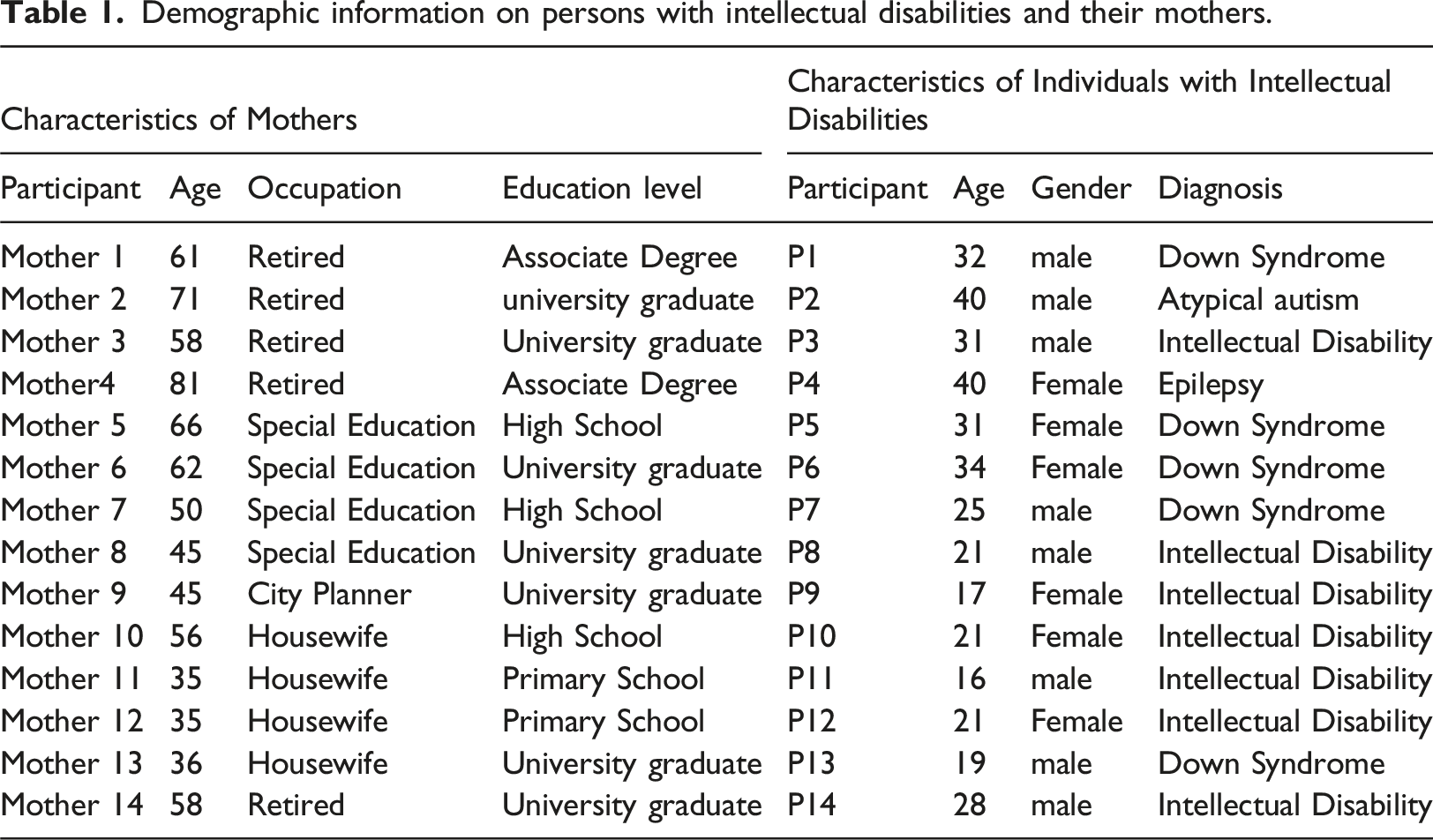
Demographic information on persons with intellectual disabilities and their mothers.
Data collection instruments
In this study, a semi-structured interview form consisting of eight questions prepared by the researchers was used as the data collection instrument. This method is advantageous in asking in-depth questions about a specific topic and providing the opportunity to supplement the questions by asking follow-up questions if the given answer is not clear enough (Cepni, 2009). In order to explore the adaptation processes of mothers and their children with intellectual disabilities to the COVID-19 pandemic, the following questions were asked in the interview format, “(a) How has the pandemic affected your life? Can you explain? (b) “Have your responsibilities at home increased in the process? (c) How has the pandemic process affected your family relationships? (d) How did this process affect your child, did you observe any changes in his behavior? (e) How were you meeting your child's educational needs during this time? (f) Did you and your child need support during the pandemic? Did you receive support for your child and yourself during this time? (g) What support would have made the process easier? (h) What difficulties did you face during this process? How did you cope with the stress caused by these difficulties?” were asked the mothers.
Data collection and analysis
Data were collected through two focus group interviews with 6-8 participants. Interviews were conducted with a Zoom connection. The interviews were recorded after obtaining consent from the participants. Later, the recording was viewed again by the researchers and converted into written text. The content analysis method was used to analyze the data. This method aims to find concepts and relationships that can explain the collected data. To this end, the collected data must first be conceptualized and then logically organized according to the concepts that emerge. Accordingly, the themes that explain the data should be identified. In this sense, similar data were grouped within the framework of specific concepts and themes. Furthermore, these were organized and interpreted in a way that the reader could understand (Yıldırım & Şimsek, 2016). For this purpose, the data were analyzed in four steps in the content analysis process: a) coding the data b) finding themes c) organizing codes and themes d) defining and interpreting the results. Moreover, in the research process, the data were created independently by the researcher and an expert in a clear and detailed manner, and themes and subthemes were determined by consensus.
Results and discussion
The purpose of this study was to examine the adaptation processes of individuals with intellectual disabilities and their mothers to the COVID-19 pandemic. From the thematic analysis of the focus group interviews with the mothers, four main themes emerged regarding their experiences during the pandemic. These main themes are: “Life Before the Pandemic,” “Encountering the Pandemic,” “Effects of the Pandemic,” and “Facilitation in the adaptation process to the Pandemic” are the themes. Under the main theme of Encountering the Pandemic, the sub-themes of “Shock, panic, and anxiety” and “Understanding the pandemic and following its rules” were reached. Under the main theme of Effects of the Pandemic, the sub-themes of “Effects of the pandemic on individuals with intellectual disabilities” and “Effects of the pandemic on mothers” were reached. The sub-themes obtained under the main theme of “Facilitation in the Adaptation Process to the Pandemic” are “Family and Close Environment Support” and “Online education programs”. The main theme of Life Before the Pandemic in Figure 1 is shown separately in the figure as it represents the pre-COVID-19 period. Adaptation processes of Individuals with intellectual disabilities and their mothers during the COVID-19 pandemic.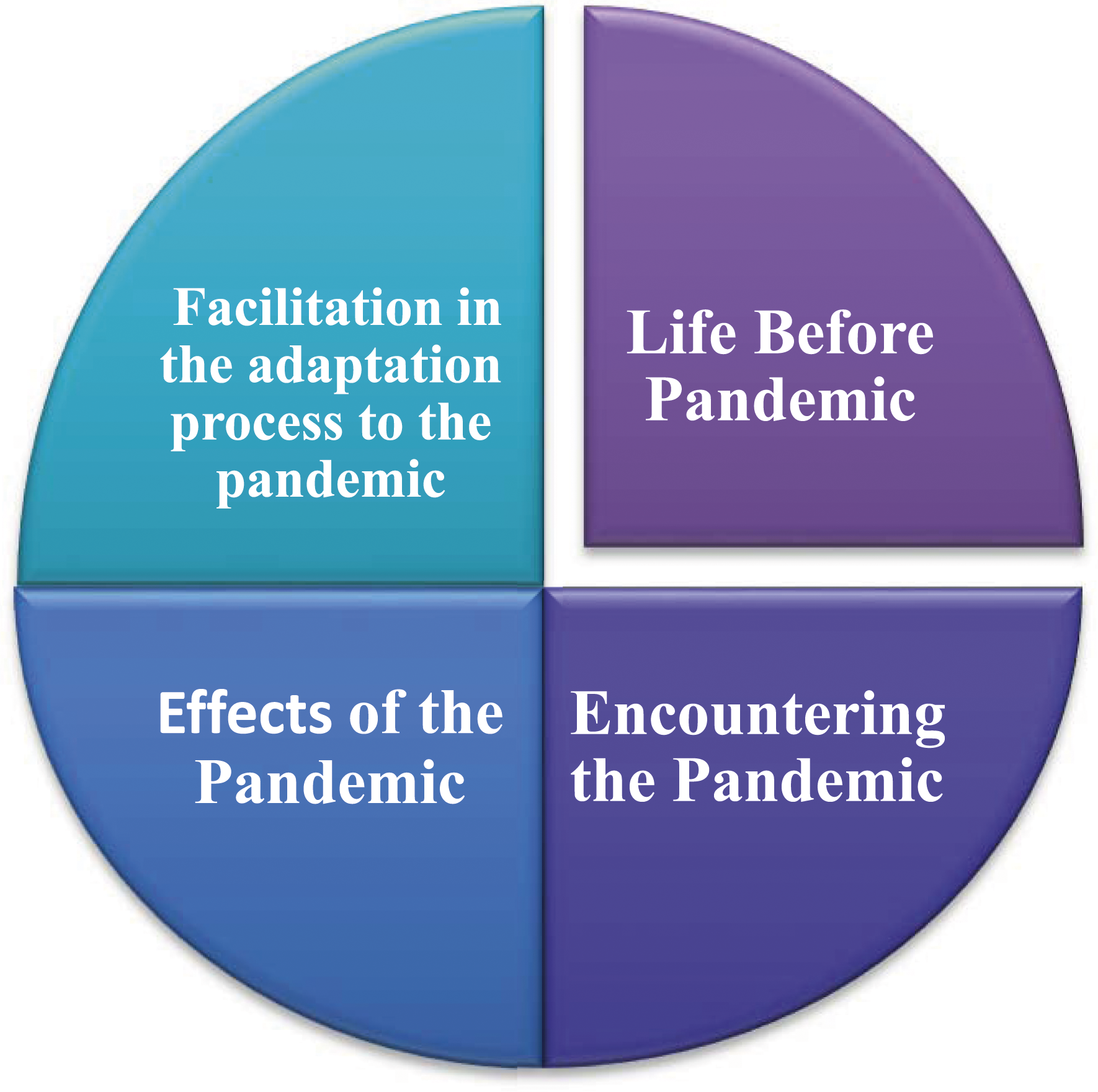
Life before pandemic
The main theme of “life before the Pandemic” shows that both mothers and their children had active social lives. Data collected from mothers show that mothers had active lives before the pandemic. For example, one mother said, “I am a very social person in our retirement years. My husband was going to play an instrument, he plays and sometimes we listen to him. I attended public education courses (Focus group 1, P3)” Another mother expressed her social life as follows: “I started playing guitar at the age of 59 to learn it, I took dance classes, I had a very active life, that was a morale booster, the conversations we had, the activities (Focus group 2, P14).”
The results also show that mothers' active social lives are to some extent due to their children's participation in social and sports activities. For example, one mother explained this situation as follows: “Our children are definitely very active children, I mean we are the mothers who carry their children to swimming, to rhythmic gymnastics, to sports, we are the mothers who are always on our feet, of course, I also took time for myself from time to time. (Focus group 1, P1).”
Mothers indicated that before the pandemic, their children spent a lot of time with their peers with special needs, participating in activities such as basketball, volleyball, music, drama, mandala, and swimming. For example, one mother said, “Because Ozgur is an active child. He spends almost every week in swimming, sports, and community activities in Kadıkoy (Focus Group 2, P8).” Another mother also commented on her child's social life before the pandemic: “Elif has always been a social child. We have always tried to encourage her socially since she was born. Her social aspect has improved a lot. She loves basketball and volleyball and likes to listen to music (Focus Group 2, P10).”
In the literature, studies examining the lives of individuals with intellectual disabilities and their mothers before the pandemic are quite limited (Marcone & Borghese 2023; Das-Munshi et al., 2021; Karahan et al., 2021). Accordingly, some of the studies support the findings of the current study. For example, in the study conducted by Karahan et al. (2021), it was stated that mothers with individuals with intellectual disabilities had an active and social life before the pandemic period, but they lost this social life with the pandemic. Another study analyzed the stress and anxiety levels of parents with children with intellectual disabilities before and after the pandemic and the levels of support perceived by these families (Marcone & Borghese 2023).
However, in contrast to these findings, some studies on the pre-pandemic period show that the participation rate of individuals with special needs and their mothers in social activities and social life is quite low (Okanlı et al., 2004). In another study, it was found that the participation of individuals with special needs in social life is quite limited (Groff et al. 2009), so individuals with special needs lead more inactive lives than the general population (Fernhall et al., 2008). In the present study, it is hypothesized that the findings that mothers and their children had active social lives before the pandemic may be because many of the mothers took a role in planning and organizing social and cultural activities within the nongovernmental organization for people with special needs. The social, sporting, and cultural opportunities that mothers create for their children become a social activity in which they participate themselves and which makes them socially active. In this way, both the mothers and their children become involved in social life.
Encountering the pandemic
In the context of the main theme of Encountering the Pandemic, the sub-themes of “Shock, panic, and anxiety” and “Understanding the pandemic and following its rules” were reached
Shock, panic, and anxiety
One mother expressed the emotions they experienced with the onset of the pandemic as follows, “Of course, the shock was great at first. We were faced with something we did not know what it was at first (Focus Group 1, P1). With the advent of news about the pandemic, the dissemination of various uncertain information led to information contamination that triggered feelings of fear, anxiety, and panic in families. For example, during the interview, one mother described her experience at the beginning of the pandemic period as follows: “Mrs. Sevda had a conversation with the parents about the issue. She informed us and eased our fears. If you had had this conversation in March or early April 2019, we would have all panicked because we were faced with a situation we had never experienced before. Also, because there was a lot of information pollution on the Internet, we naturally panicked. But in the process, we learned how to behave and what to look out for (Focus Group 1, P3).”
Understand the pandemic and follow its rules
As they began to recognize and understand the process of the pandemic, mothers learned how to protect themselves and taught their children hygiene rules. For example, one mother described the process of learning these rules as follows: “He always wears his mask, up to his eyes, and when we go out, do you have your mask on? Did you take your mask with you? He warns us by saying, we can not forget this. Also, we made a rule that if we come from outside, we can not approach the person for 3 hours. Ali is a child who loves to hug me. If I come from outside, when will it be crowded? If I come at 4, he does not want to hug and kiss me until 7. When we set rules, we keep them very well (Focus Group 2, P13).” At the same time, a mother working in a private institution stated, “The children always wore their masks and were very careful (Focus Group 2, P11).” Another mother said, “When we became very social, we suddenly had to stay at home. At first, I did not understand the seriousness of the situation so much, I even attended the classes, but when it became serious, we had to take our precautions and stay at home. (Focus group 1, P4)” and explained how individuals with intellectual disabilities responded by recognizing and understanding this process.
Research findings revealed that when they first encountered the pandemic, individuals with intellectual disabilities and their mothers initially showed shock, panic, anxiety, and fear reactions, and especially information pollution exacerbated these reactions. However, research findings show that as the transmission routes of COVID-19 became clearer, individuals with intellectual disabilities and mothers understood the pandemic and developed adaptive behaviors by adopting habits by its rules.
In parallel with these findings, there are various research results that individuals with special needs and their families first experience fears about their health when they encounter the pandemic (Narzisi, 2020; Yıldırım et al., 2020; Embregts et al. 2021). Accordingly, in a study, mothers stated that they were afraid of their children getting infected and getting sick (Embregts et al. 2021). In another study, it was stated that the high prevalence of multiple diseases in mental and physical health in individuals with intellectual disabilities (Kinnear et al., 2018) increased concerns about the health of individuals under care during the pandemic (Gulati et al., 2020).
Effects of the pandemic
Within the main theme of the Effects of the Pandemic, two sub-themes were reached: “The effects of the pandemic on individuals with intellectual disabilities” and “The effects of the pandemic on mothers”.
The effects of the pandemic on individuals with intellectual disabilities
Within the scope of the sub-theme of “The effects of the pandemic on individuals with intellectual disabilities”, it was observed that individuals with intellectual disabilities had both positive and negative effects such as behavioral and adaptation problems, regression in their skills, development of new interests and increase in taking responsibility.
Accordingly, mothers reported that their children started to show some behavioral and adaptation problems, regression in language skills, and changes in body weight, but also developed new interests and took more responsibility at home. The results show that behavioral and adjustment problems are manifested in the form of dependency on the mother and computer, depression, obsessive behaviors, anger outbursts, and defiance. One mother expressed the adjustment and behavioral problems she observed in her child during the pandemic period as follows, “Ahmet stayed at home when he could not go to the training and became very dependent on me. He was already addicted, but now he started doing everything with me. Now he wants everything from me and his dependence on me has become even greater (Focus Group 1, P3).” Another mother said, “The behavioral problems have increased a lot. September has become even more dependent on me during this time. She even started to go to the bathroom with me. This situation became boring after a while. It makes us sad that this is happening while we are trying to make our children independent (Focus Group 2, P9).” It was noted that the current performance of individuals with intellectual disabilities declined during the pandemic process. In this sense, one mother said, “During the pandemic, there was a time when my child's movements and speech regressed. He gained some weight (Focus group 2, P11),” expressing the effects of the pandemic on her child.
As the time spent with their children at home increased during the pandemic period, the mothers were constantly on the lookout, directing their children to do different activities at home and handing them new tasks. Thus, while mothers witnessed their children's behavioral and adjustment problems, they also observed positive developments, such as their children developing new interests and taking on responsibilities. One mother explained this as follows: “We do stone painting together, and he likes it very much. Before, he was not very fond of it. Our interest in cooking has increased. He has learned how to make menemen. The feeling that I made it is good for him. We went on a diet and walked a lot in the woods. We lost 9 kilograms. We ate gram by gram and did a serious diet. Our activities were always like this (Focus Group 2, P7).” Another mother said, “My daughter loves the kitchen. She comes running when she hears the sound of the machine loading and unloading. She loves vacuuming. She especially helps me a lot with that. She's very good when it's just the two of us. He is very good with technology. She turns on what she wants at the time (Focus Group 1, P 4).”
According to the results of the research, the pandemic has had negative effects on individuals with intellectual disabilities such as behavioral and adaptation problems and regression in skills, as well as positive effects such as developing new interests and taking responsibility. Undoubtedly, these positive effects emerged with the interest and support of mothers.
The results obtained in our study regarding the negative effects are similar to other studies conducted during the pandemic period. Accordingly, studies have shown that individuals with intellectual disabilities stay at home for a long time and their participation in physical activities decreases (Brown et al., 2020; Chen et al., 2020; Narzisi, 2020), resulting in physical and psychological problems (Brown et al., 2020; Chen et al, 2020; Srinivasan et al., 2014), increased screen addiction, use of technological devices, weight gain, problem behaviors (Cluver et al., 2020; Courtenay & Perera, 2020) and dependence on their parents (Jiao et al., 2020). However, a study conducted by Kim et al. (2021) revealed that although some difficulties (e.g., change in daily routine, isolation, regression in skills, behavioral difficulties) occurred in the lives of adult individuals with intellectual disabilities during the pandemic process, they adapted to it and were hopeful about the future. In our study, it is in parallel with the research finding (Kim et al., 2021) that individuals with intellectual disabilities adapted to the pandemic and were hopeful about the future. Accordingly, it emphasizes new gains such as developing new interests and taking responsibility that emerged with the support of mothers during the pandemic.
The effects of the pandemic on mothers
Within the sub-theme of the effects of the pandemic on mothers, it is noteworthy that there are anxiety and sadness, an increase in workload, and psychological difficulties.
The results obtained from this sub-theme of the research reveal that the main concern of the mothers is getting COVID-19. One mother expressed this concern as follows: “It is a very long process and we feel more and more stuck every day. The circle has become very narrow and we hear it everywhere (Focus Group 1, P1)”. Another mother said, “I feel so stuck, I am so overwhelmed now. It hit my waist as I received the sad news. The sadness of some of my friends. They affected me a lot. We have already lost our doctors and people, it is a very sad process. We still haven't recovered (Focus group.1 P12)” and explained the negative effects of psychological difficulties during the pandemic on physical health.
One of the effects of the pandemic was that it kept people away from even their closest ones and prevented them from touching and hugging them. One of the mothers, who stayed away from her parents and siblings due to the restrictions imposed by the pandemic period, made the following statement: “This situation makes me sad because I cannot see my family and I hope we will get rid of this situation, we are trying to get through these days (Focus group 2, P10)”.
Mothers stated that their responsibilities and workload increased with the pandemic process and that they could not spare time for themselves. For example, one mother said, “My workload has increased considerably because I live at home alone with my two daughters because Meryem continues from the Zoom and constantly says not to make noise. Irem performs very loudly in class, so I take care not to make noise. It was a difficult process for me. The time I allocated for myself decreased even more, but I still tried to continue this process (Focus group2, P9)”. Another mother said, “We also spend a lot of time in the kitchen at home. Our workload has increased a lot, of course, in the morning, noon, and evening, our men also want lunch. In the morning, breakfast, coffee, and lunch, we started to make bread, and I have been making whole wheat bread at home for about 2 years. I love the kitchen, I am not complaining, but when I am at home all the time, cleaning makes me a little tired and bored. We are also hesitant to hire someone from outside. My husband also helps me sometimes (Focus Group 2, P8).
In parallel with the results of this research, studies reveal that with the closure of educational institutions, mothers' responsibilities at home increased, they needed more time for themselves and rest (Yarımdağ & Erciyes, 2021; Pfefferbaum & North, 2020; Umamaheswar & Tan, 2020), and they experienced more mental health problems (Willner et al., 2020). In another study, it was stated that the stress levels of mothers increased due to the increased needs of children with special needs depending on their developmental levels during the pandemic process (Cluver et al., 2020) and insufficient support from spouses (Ueda et al., 2020). During the pandemic process, the increase in behavioral problems of individuals with special needs, having to deal with their education and economic difficulties negatively affected families (Kaya, 2020).
In addition to the anxiety and sadness caused by the pandemic and the increase in workload, mothers stated that they experienced psychological difficulties during this period. One mother described the psychological difficulties they faced during the pandemic period: “I think we always need completion and psychological support. This feeling of suffocation is always an anxiety, and that's why I wanted to get support. Sometimes you need to explain yourself to a stranger as you wish. We go through difficult things. We make an extra effort for this (Focus Group 1, P7).'' Another mother expressed the need for psychological support during the pandemic process with the following statement: “I did not receive any support for my child and myself during the pandemic. We would have liked to get psychological support and relaxation during this period. I always tried to get through this process by calming myself, we were a little lonely, frankly (Focus Group 2, P10)”.
Research shows that even before the pandemic period, parents with individuals with intellectual disabilities were negatively affected both physically and psychologically due to the problems they often experienced in terms of meeting the care and education needs of their children and their concerns about their children's future (Willner et al. 2020). In many studies focusing on the pandemic process, it has been emphasized that parents experience psychological problems such as depression due to stress and that families need expert support in health, psychology, and education (Toseeb et al., 2020; Brown et al. 2020; Cluver et al., 2020). In a study, it was reported that parents of individuals with special needs did not receive face-to-face psychological support and therapy services during COVID-19, which exacerbated problems at home (Narzisi, 2020). In addition, it was stated that mothers caring for individuals with intellectual disabilities need time for themselves (Tekindal & Özlem, 2021). In the United Nations Report (2020), it was stated that the importance given to family education during the coronavirus period was insufficient, families had difficulty accessing materials and learning gaps occurred. When our study is considered together with the results of these studies, it reveals that the need for psychological support of families has increased due to the addition of new problems brought by the pandemic to the problems experienced by parents before the pandemic (anxiety, increased workload and sadness related to the pandemic for mothers) and aggravating the existing problems (increase in behavioral problems related to the child and regression in skills).
Facilitation in the adaptation process to the pandemic
Within the main theme of Facilitators in The Adaptation Process to The Pandemic, the sub-themes of “Family and close environment support” and “Online education programs” were reached.
Family and close environment support
The results of the study indicate that family and close environment support plays an important role as a facilitator of the pandemic adaptation process. At the same time, this situation shows how a challenging process such as a pandemic turns into a benefit. One mother expressed the importance of this as follows: “Family members spent more time together and we can tolerate each other more easily now and they learned this. My husband has always helped me in the kitchen. I never had any problems in cooking, or setting the table (Focus Group 1, P3)''. A mother explained the support of other members of the family as follows: “Her grandmother was with us during this process. She supported us (Focus Group 2, P12)''. Another mother stated, “Of course, we needed a lot of support, we wanted to get an idea and her sister in Istanbul helped us (Focus Group 1, P1)”.
According to the information obtained within the scope of this sub-theme, this process had many negative effects as well as positive effects in terms of strengthening the relationships between mothers, fathers, and children. By spending more time at home, fathers had the opportunity to get to know their children better and took the initiative to support family members. In this regard, a mother said, “The father started to get to know our daughter better. Previously, I was always taking care of her and she was taking care of the household chores. Since they started spending time together, her father has become more interested (Focus Group 2, P11)”. This process also strengthened the relationship ties between the siblings and positively affected their communication with each other. One mother expressed this situation as ''As an advantage of this process, the two siblings started to bond more with each other. That was very good for us (Focus Group 1 P7)”.
This result reinforces our belief that positive experiences are always possible even under adverse conditions. One mother said, “The pandemic actually helped us because we spent a lot of time together at home, we managed to read, and we tried to spend it efficiently because we studied together. We did activities together on special days. We taught songs on Mother's Day, we made videos with his older sisters. His relationship with his older sisters is very good. She also loves them very much and misses them if she doesn't see them for a week (Focus group 2, P10)” is a good example of this.
Mothers also tried to facilitate the challenges of the pandemic process by exchanging ideas and collaborating with other mothers. In addition, the second important sources of support for mothers were educational institutions and teachers. One mother described their solidarity with other mothers as follows: “As mothers who have known each other for years, we are like a family. Since we all have children with disabilities, we always talk among ourselves about what we can do, what they need, and how they can be happy. We never broke this bond during the pandemic (Focus Group 1, P6)”. Another mother said, “Our teachers supported us a lot. They provided support during this period thanks to video calls and the teachers in the disability cage who always called and asked (Focus group 2, P14)” and gave information about the supportive approaches of the teachers.
Consistent with the current research results, studies reveal that the pandemic process brings family members together and leads to positive interactions (Brown et al., 2020; Cahapay 2020; Majoko & Dudu, 2020; Toseeb et al., 2020). In other studies, it was stated that spending more time at home during the pandemic process increased the interaction between family members and strengthened the bonds, common needs such as housework were done together, and family members supported each other (Başaran & Aksoy, 2020; Szabo et al., 2020). Another study shows that families value the time they spend together more (Neece et al. 2020). This situation can be said to facilitate the pandemic process by contributing positively to the development of family relationships.
The results of the study by Rogers et al. (2021) provide different information about the experiences of individuals with intellectual disabilities and their families during the quarantine process. It was stated that less social expectations and the absence of daily pressures had a positive effect on children with intellectual disabilities and their mothers. This situation contributed to the facilitation of the pandemic adaptation process.
Online education programs
“Online education programs” have also been expressed as one of the facilitators of the pandemic period. In this process, different ways were tried by educators to make the education of families and individuals with intellectual disabilities more efficient. For example, a mother said, “We participate when there are training and activities that suit our minds. The online programs of the special education institution have been very successful and we are very satisfied. I think it would be better if more training was provided (Focus Group 1, P1)”. Similarly, another mother said, “He did not go to school, but we were happy with distance education. He was happier over Zoom. I think his teachers provide a full education (Focus Group 1, P11)”. However, one mother stated that the education via Zoom was not effective and did not meet the expectations of the special education institution and that they provided healthier education at home with their own means. One mother expressed this situation as follows: “We only tried to do activities at home, we tried to teach the letters, otherwise I don't send them to special education because I don't like the education given. I sent them to a few, but they gave me very bad feedback. I haven't sent them for 2 years or so, they were going to and from school, and when the schools were closed, I tried to make them work at home as much as I can. We don't participate in activities via Zoom (Focus group 2, P9)”.
The results obtained from the research show that although some mothers have negative experiences with their children, online lessons and meetings offer a way out for individuals with intellectual disabilities, whose communication with their entire social environment has been cut off due to the pandemic, to keep their friendships dynamic. Regarding her child's online education, a mother said, “We are inclusive students, we were always followed by Zoom. Also, the connection between him and his friends was not broken (Focus Group 2, P13)''. A mother's statement that “In addition to academic programs, we try to keep our children in life by participating in online courses such as daily life skills, self-care skills, environmental cleaning (Focus group 2, P8)” reveals the importance of online program diversity in terms of addressing multidimensional developmental needs.
Similar to our results, studies conducted during the pandemic reveal that online education positively affects individuals' academic achievement and motivation (Tarigan & Stevani, 2020). In one study, it was stated that online education enables individuals with special needs to socialize with the safe and interactive learning environments it offers and that their perceived disability status decreased significantly compared to previous learning environments, thus helping to support both learning difficulties and problems related to interpersonal relationship skills (Heiman & Shemesh, 2012; Graham & Harris, 2013).
However, as in our study, some studies draw attention to the negative aspects of online education. For example, in one study, it was stated that the online education process was not easy for individuals with special needs and that they had behavioral and attention problems (Kaya, 2020). In other studies, it was reported that parents had difficulty motivating their children to learn at home and that they learned less than in face-to-face education, and that they had difficulties accessing and using technology (Nusser, 2021; Canning & Robinson, 2021).
Conclusion
The themes of “Life Before the Pandemic”, “Encountering the Pandemic”, “Effects of the Pandemic”, and “Facilitation in The Adaptation Process to The Pandemic” obtained in this study enabled us to understand the adaptation processes of themselves and their children with intellectual disabilities to COVID-19 restrictions from the perspective of mothers. Although COVID-19 restrictions caused some behavioral and adaptation problems in individuals with intellectual disabilities, it created an opportunity for them to develop new interests and take more responsibility at home. In addition, fathers spent more time at home and got to know their children better. In this process, the relationship between siblings and family ties strengthened. Fathers' support for household chores, mothers' close relationships with other mothers with children with special needs before the pandemic, online education applications, educational institutions, and teachers played a facilitating role in adapting to the COVID-19 process.
The results of this study revealed that mothers experienced anxiety and sadness due to the risk of illness, social isolation, and losses, had to carry a heavy workload, could not spare time for themselves, and occasionally faced health problems. These results underline that mothers bear the burden of the pandemic even though they receive support from family and a close environment. The psychological difficulties previously brought by mothers increased even more in this period and led to the need for services in this regard to be voiced loudly. In line with these results, it is recommended that the online educational support provided by institutions to individuals with intellectual disabilities during challenging life events such as the pandemic period should be expanded to include psychological support services for mothers.
Footnotes
Acknowledgement
We would like to thank the individuals with intellectual disabilities and their mothers for their contribution to this study.
Author contributions
1st author's contribution rate is 40%, 2nd author's contribution rate is 30%, The 3rd author's contribution rate is 15%, The 4th author's contribution rate is 15%.
Declaration of conflicting interests
The author(s) declared no potential conflicts of interest with respect to the research, authorship, and/or publication of this article.
Funding
The author(s) received no financial support for the research, authorship, and/or publication of this article.
