




Abstract
An online survey on experiences of 47 caregivers of persons with intellectual disability during COVID 19 pandemic was carried out to find out their experiences, with the aim to understand the focus areas of challenges, so as to organise need-based support systems. A validated questionnaire was used to collect data. The participants belonged to different states of India with varied socio-economic backgrounds. The results revealed that most of them experienced challenges in supporting persons with intellectual disability. Many found online classes beneficial, while some caregivers had difficulty in keeping the person occupied or managing challenging behaviour. Some caregivers were happy to get more time to spend with the person with intellectual disability at home. The outcome of this study suggests that irrespective of the background, the families faced challenges, the needs were varied and therefore specific efforts are to be taken to support the families so that they are prepared.
Introduction
COVID 19 pandemic has brought devastating effects on people all over the world affecting, the socio, economic, educational, cultural, spiritual and in fact, basic living style of people. The reports on media constantly illustrate the effect of COVID 19 on people in general, and on vulnerable and marginalised population in particular. While having a disability probably does not by itself put someone at higher risk from Corona virus, many persons with disabilities do have specific underlying conditions that make the disease more dangerous for them. (UNDESA, 2020). This statement highlights the risk factor due to underlying condition such as intellectual disability. Persons with intellectual disability, most of whom are dependent on others for certain supports, and some having associated health conditions have faced many challenges. In turn, the family members and caregivers too have had stressful days, not knowing how to manage the situation.
Education of children in general has been adversely affected in spite of the efforts taken by the government departments and private sector and the teachers getting ready to meet the challenge. As rightly observed by Manoharan (2021), gains in enrolment, school completion, and learning must not get eroded due to the combination of schools being closed and socio-economic hardships related to COVID-19. In the case of individuals with intellectual disability, the challenge is further compounded with the complexity of the situation and the linked issues related to health, education, welfare and daily living conditions requiring teachers and parents/caregivers to work together.
Willner et al (2020) in a study of caregivers of persons with intellectual disability and those without intellectual disability found that caregivers of person with intellectual disability had significantly higher levels of anxiety and depression. They also reported that the stress levels were two to three times greater than the reports of the pre-pandemic studies. While discussing the support system for the caregivers of persons with intellectual disabilities, the study further reported that they received less social support from various sources. Further, the coronavirus-induced lockdown, isolation and quarantine encourage psychological distress among those already suffering from psychiatric syndromes in general. (Agoramoorthy, 2020).
Both, parents/caregivers and the teachers play key roles in meeting the challenges posed by the pandemic on persons with intellectual disability. Further, as rightly observed by Courtenay and Perera (2020) with regard to persons with intellectual disability, their limited capacity to understand the effect of the pandemic and to protect themselves, can result in their being more vulnerable to the condition
In the past year considerable number of studies related to COVID 19 pandemic have been published from the medical, psychological, financial, sociological dimensions. A few studies have focussed on impact of COVID 19 on the caregivers of persons with disabilities (Linehan et al 2020; Turk and McDermott, 2020; Singh, 2020). Murthy et al (2020) conducted a study using mixed methods of qualitative and quantitative approaches on analysis of Impact of COVID-19 on persons with disabilities in India that involved 403 persons with disabilities from 14 states of the country and among the respondents 10.9% had intellectual disability. The analysis showed that the lockdown led to difficulty accessing medical services, rehabilitation services, education, daily living activities, livelihood and psychosocial supports. Among others, the study recommended telerehabilitation services and internet facilities to persons with disabilities, in addition to involving person with disabilities in making policy decisions for them.
It is evident from the literature that considerable number of documents are produced to describe the challenges that persons with intellectual and developmental disabilities face and ways to support the caregivers in helping them. Grier et al (2020), rightly observed that persons with intellectual and developmental disabilities experience significant distress due to confusion and disruption in their daily lives; their voice is notably absent from current discussions; that some adults with mild intellectual and developmental disabilities living independently in the community are at risk of not understanding or adhering to public health guidelines. In addition, the authors have provided guidelines including proactive communication and support (e.g. by phone) from knowledgeable social and health care providers to help them adhere to guidelines and manage during this difficult time. Further Berger et al (2020) have elaborated on the rippling effects of the lockdown due to pandemic stating that governments and institutions implement social distancing measures, including closures and stopping mass gatherings, the school and university closures disproportionately affecting vulnerable groups, in particular students with disabilities. Narzisi (2020) referring to persons with autism spectrum conditions rightly noted that changes in routine due to COVID 19 restrictions such as frequent disinfecting of hands, not to touch eyes and nose, covering the mouth and not meeting people can cause profound suffering in them and has provided tips to the caregivers in helping them. WHO (2020) has further produced material to help meet the challenges that persons with disability face due to COVID 19, detailing on the role of the caregivers, governments, health care workers, service providers and the community.
Tummers et al (2020) analysed the COVID-19 Open Research Dataset (CORD-19) and using text mining technique, identified 259 full-text articles containing terms related to the intellectual disability that included mental health, viral diseases, diagnoses and treatments, maternal care, paediatrics, and genetics. They have recommended that researchers use the CORD 19 data as it contains valuable information on persons with intellectual disability and the COVID 19.
Kim et al (2021) studied the concern of parents about their grown-up children with intellectual disability through qualitative research methods. This study focused on the experiences of caregivers of persons with intellectual disabilities in South Korea to provide support to them. The in-depth interview of the parents led them to conclude that the parents were worried about the possibility of their son/daughter with intellectual disability getting infected, their ability to cope with COVID 19 related protocols, not having adequate physical activities, increase in behavioural challenges, regression in skills and also expressed hopes and desired community support in meeting the psychosocial challenges. Embregts, Tournier and Frielink (2020) explored the experiences and needs of direct support staff during the initial stage of the COVID-19 lockdown in the Netherlands. They found four areas of concern namely, emotional, social, practical and professional areas.
All of these studies reflect the difficulties that the caregivers and professionals have faced due to the pandemic and a number of studies are in progress to find ways to meet the challenges and to be prepared for such disasters in future. In India, irrespective of the age of the persons with intellectual disability, they stay with their families and therefore, the caregiver is likely to be a family member and in most cases the mother. As a primary step, understanding and analysing the experiences of caregivers is found essential as it may lead to preparedness in such challenging situations. With this end in view, the current study aims to find out the experiences related to COVID19 pandemic among primary caregivers.
Objective
To document the experiences of caregivers of persons with intellectual disabilities during COVID 19 pandemic and to compile their suggestions in terms of preparedness to face such disasters in future.
Operational definition
Intellectual disability: Significantly reduced ability to understand new or complex information and to learn and apply new skills (impaired intelligence). This results in a reduced ability to cope independently (impaired social functioning), and begins before adulthood, with a lasting effect on development. (WHO, 2015).
Persons with intellectual disability: In this study, those who are certified as having intellectual disability, by the specific certifying board set up in each district by the government of India are included, ranging from early childhood to adulthood. The level of intellectual disability includes mild to profound and also those with additional conditions such as vison impairment, hearing impairment or other disabilities along with intellectual disability, called as ‘multiple disability’.
Caregiver: Any person who takes care of the person with intellectual disability at home is considered as caregiver. It can be a parent, sibling, grand parent or a relative if they are the ones to provide the primary care to the person with intellectual disability.
Method
The research method adopted was a mixed method involving quantitative and qualitative methods.
Participants
Participants for the study included primary caregivers of person with intellectual disability. A total of 47 primary caregivers (parent or a family member) participated in the study. Selection of participants was on voluntary basis. Due to the pandemic, with all the schools and work places were closed. When there was a total lockdown, the special educators were contacting the parents/caregiver on a regular basis on mobile phones with videos, showing them how to impart skills at home to those with intellectual disabilities. Predominantly mobile phones were used as they were more accessible to parents than the laptops. Observing the difficulties the families were facing, the present study was designed to elicit information from the parents and caregivers on their experiences. The purpose of the study was explained and those who volunteered to participate were included. Their informed consent was taken on video/audio recording. Out of the 78 caregivers contacted, 62 were willing to participate in the study and out of them 47 participants responded to the questionnaire.
Ethical considerations
The purpose of the study was explained to the participants and their role as a respondent. They were informed that the information would be kept confidential and that anonymity would be maintained at all times. Their concerns were clarified and only those who volunteered to participate were included in the study. The discussion was in the Indian language, namely, Hindi or the regional languages or English that the participant found comfortable to communicate.
Tool
Based on the observations and the narrations provided by the care givers with whom we were working we got a general idea of the struggle that the parents and caregivers were going through. We pooled the information gained thus, to prepare the questionnaire. As the pandemic was an unprecedented situation, the questionnaire was developed based on the experiences rather than following any existing formats. A closed ended questionnaire was developed, that had content related to the experiences that the care givers had during the pandemic situation such as following protocols (social distancing, mask, hand washing, sanitizing), impact of lockdown, online schooling and so on. A total of 39 questions were included with the multiple choice responses. The participants had to pick the response that they found suitable. The last question was open ended that gave scope to type in the answer. The question was worded as “Any thing else you wish to share”. The questionnaire was converted to google form to elicit responses online.
Validation
To establish face validity, the questionnaire was given to 10 professionals in the field of disability rehabilitation residing in three different states of India. The responses showed 95% agreement. The points where there was no agreement, the comments of the respondents were considered and the questionnaire was modified suitably.
Limitation in using this tool: As the tool was constructed for the purpose of the study based on the prevailing COVID 19 situation and the need to collect experiences of the participants, and not based on any existing tool, though validated, its usage is restricted. As in any closed ended questionnaire, the options of responses are limited to given choices. To delimit this condition, an open ended question was provided at the end.
Procedure
Online survey was selected as the mode to collect data as it was collected during the lock down period or restricted and limited movement outside home. After receiving the informed consent, the questionnaires were sent to the participants with a request to respond within two weeks. Reminders were sent twice to those who had not responded after one week, and before two days of the scheduled final date of receipt of the responses respectively to ensure maximum responses. Care givers who were not competent to respond online took the help of someone to record their responses. In the open ended responses, those caregivers who had expressed experiences that were unique, or where more detail was needed on what they were experiencing, they were contacted on phone and interviewed.
Data analysis
The questionnaires were sent to 62 participants out of whom 47 (75.8%) participants responded. The responses were analyzed using descriptive statistics. The open ended question on additional information was grouped and analyzed. The data was analysed by two persons independently identifying the key responses and later comparing both to find the common items thus ensuring objectivity.
Results
Back ground information about the persons with intellectual disability who were cared for
The participants included those who were providing care to persons with intellectual disabilities in the age range of eight to 35 years. Out of them, 63.8% were male and 36.2% were female with intellectual disability. Majority were in the age range of 8 to 16 years. About 10% were attending vocational training. About 42% had mild intellectual disability, about 40% had moderate, 9% with severe/profound intellectual disability. About 9% had multiple disability, that is, having other disabilities in addition to intellectual disability such as vision, hearing or mobility related issues.
About 67.4% lived as nuclear family having parents and their children, 30.4% in joint family, which included the grandparents, parents and children and the rest (2.2%) as extended families including parents, children and any other relatives such as uncle or aunt. Participants’ family income ranged from Rs. 15,000 (USD 200) to Rs. 1,00,000 (USD 1335 ) per month as seen in Figure 1. Family income of the respondents.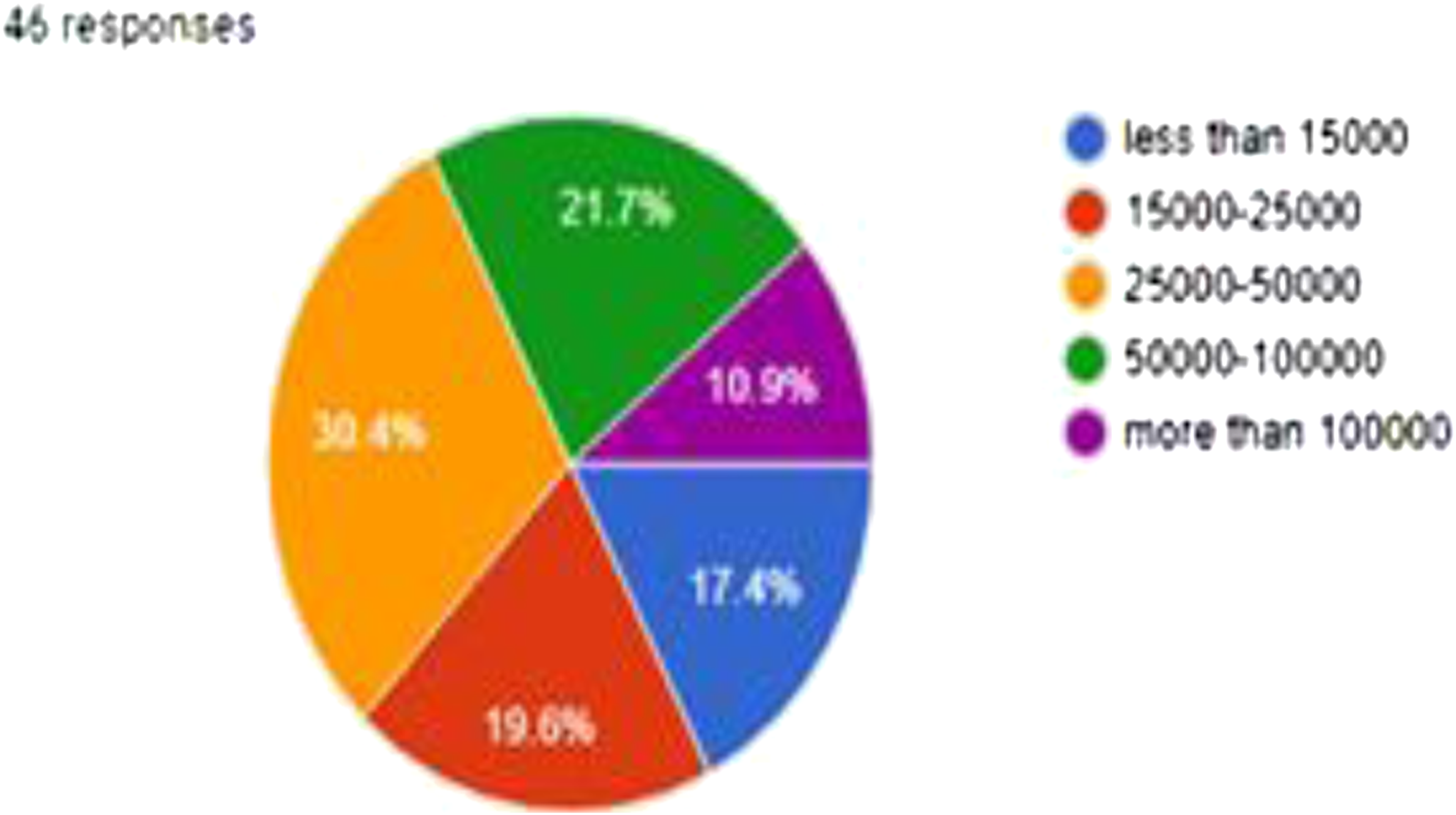
In situation such as COVID 19, with strict protocols to follow and to stay home most of the time, it was essential to find out the type of homes where the families lived. It was seen that the majority (58.7%) lived in homes having more than two rooms, while 26% lived in two rooms and about 15% lived in single rooms. Participants were from 10 states of India, including New Delhi, Punjab, Haryana, West Bengal, Telangana, Andhra Pradesh, Tamilnadu, Chandigarh, Jammu & Kashmir and Manipur. About half of the participants were from urban towns (52%), about 33% from metropolitan cities and about 15% from rural areas with predominantly agriculture for livelihood, participated in the study. Most participants were mothers (67%), some were fathers (25%), a few were sisters (4%), uncles (2%) and aunts (2%).
About 43% were employed in private companies, 24% in government jobs, 22% were self-employed or had their own business and about 11% were working for daily wages. About 47% of the participants reported financial difficulties during the COVID 19 lockdown period.
Educational / vocational status of the persons with intellectual disabilities
It was essential to find out the educational /vocational status of persons with intellectual disabilities as their routine was affected markedly during the pandemic, impacting the role of the caregivers too. The status of those with intellectual disability is seen in Figure 2. As it can be seen most were at home due to the pandemic situation. Educational/vocational status of persons with intellectual disability.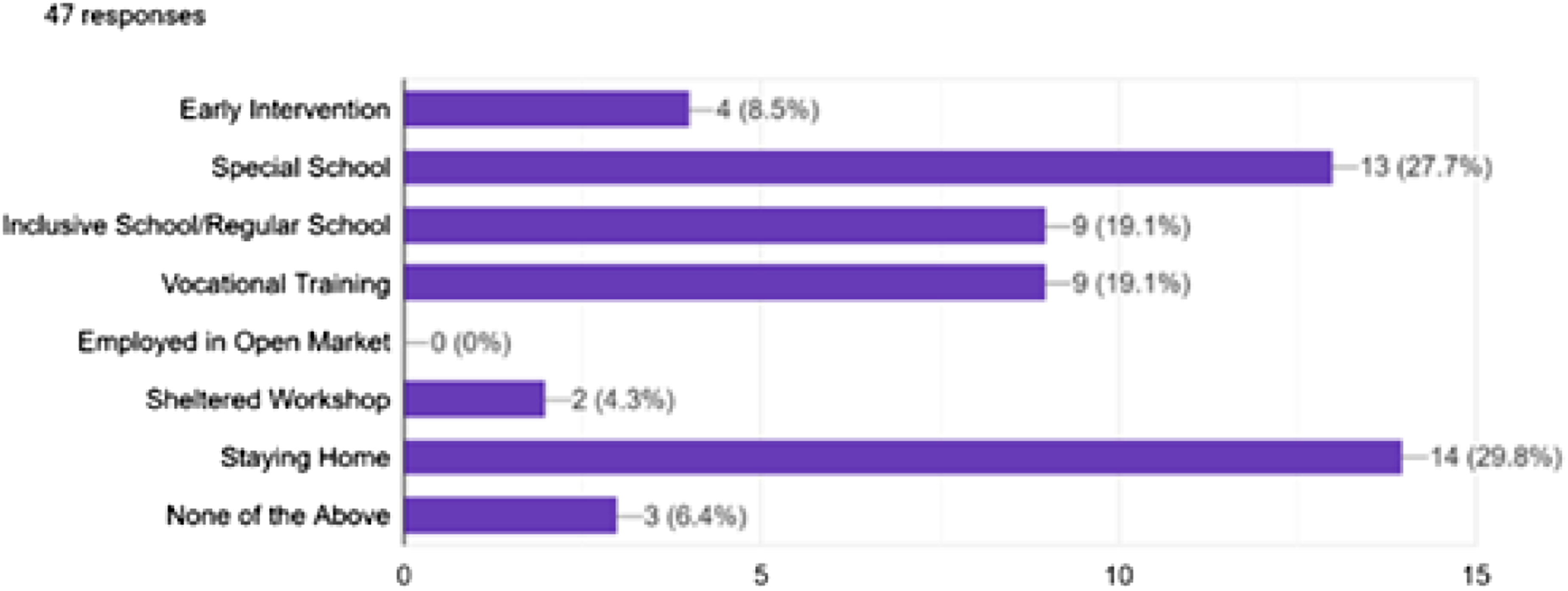
Online classes
About 80% of the respondents reported that the individuals with intellectual disability that they were taking care attended online classes. Figure 3 shows the extent of access to online classes. The class duration ranged from 30 to 60 minutes per class, and in a few instances 90 minutes. Data on involvement of the caregivers during the teaching sessions, revealed that about 35 % were always involved and about 28% participated whenever needed. About 20% never involved themselves while the rest participated occasionally. Extent of access to online classes for persons with intellectual disability.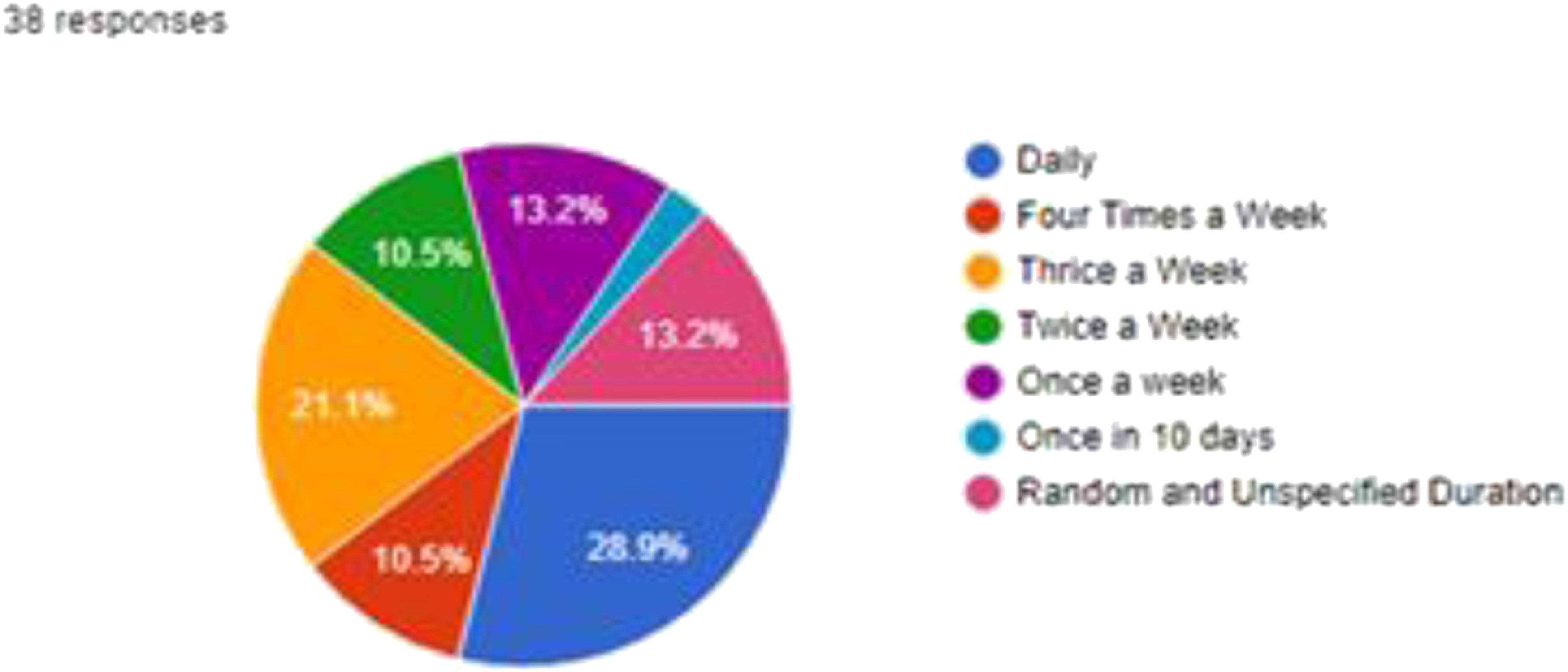
About 21% of the participants reported that the persons with intellectual disability that they were taking care always enjoyed the online classes while 40% reported that they were sometimes happy, about 24% demanded that caregivers sit along with them while 11% did not like to attend online classes.
Behavioural challenges
Staying home during the lockdown period had an impact on the behaviours of the persons with intellectual disability. Around 51% of the participants informed that during pandemic challenging behaviours increased, around 37% of them informed that there was no change in the behavioural challenges while 11% reported that the challenging behaviours decreased. Among those who had behavioural challenges, around 50% exhibited restless movements within their house, around 23% refused to comply with what is being said to them, 14% threw temper tantrums if prohibited from going out of the house (due to lockdown) and around 13% exhibited shouting and screaming behaviours.
Daily living activities
About 51% participants said that the eating habits of the persons with intellectual disability remained the same while around 34% reported excessive eating since the pandemic and 15% were reported to be eating less or refusing food. When probed further by phone call on over eating, it was found that junk food like chips and chocolates were consumed more. In addition, since all family members were staying at home, the food prepared at home had more varieties which also led to over eating. Around 29% of the participants shared that the daily living activities and personal care were better than before the pandemic, but around 27% respondents informed that the person with intellectual disability refused to perform the routine daily living activities related to personal care and hygiene.
General health condition
About 80% of the participants informed that during pandemic the person with intellectual disability fell ill with stomach infections, and common viral infections frequently and were on medication in addition to those medicines that they were taking before the pandemic (such as the ones for epilepsy). Around 83% informed that the person with intellectual disability suffered with COVID-19 infection. This indeed is a large number. The reasons can be low resistance to diseases, not complying with safety protocols such as wearing masks, maintaining social distance and washing hands
Remembering School/work place
Around 55% participants said that the person with intellectual disability was frequently recalling and talking about his/her friends and school/work place, 25% reported that this habit has increased during the lockdown period. On the other hand, 20% reported that talking about friends and school had decreased. The type of school or work place, the level of intellectual disability and the involvement with the friends or the extent of their memory can be factors influencing this aspect.
COVID 19 experience at home
The families have had difficult times during pandemic that had caused significant stress among them. About 32% of the caregivers said that they had no additional support system at home. Most families used to have maids to help at home before pandemic , but due to lockdown, the families could not get that support. About 23% of the participants found it very stressful as a lot of time had to be devoted to the person with intellectual disability, difficult to get them to follow the safety protocols during pandemic; many reported that getting them to wash hands frequently was a difficult task, some reported financial crisis. A few care-givers also reported no access to online classes as they had no data or poor internet connections. Many had a single mobile or a laptop at home that had to be shared for classes of all children at home. Some of the care-givers lost job during the pandemic that resulted in significant stressful situation.
Positive aspects of lockdown
Many respondents found positive aspects of the lockdown period too as seen in Figure 4. ( multiple responses by participant) Positive aspects of Lockdown.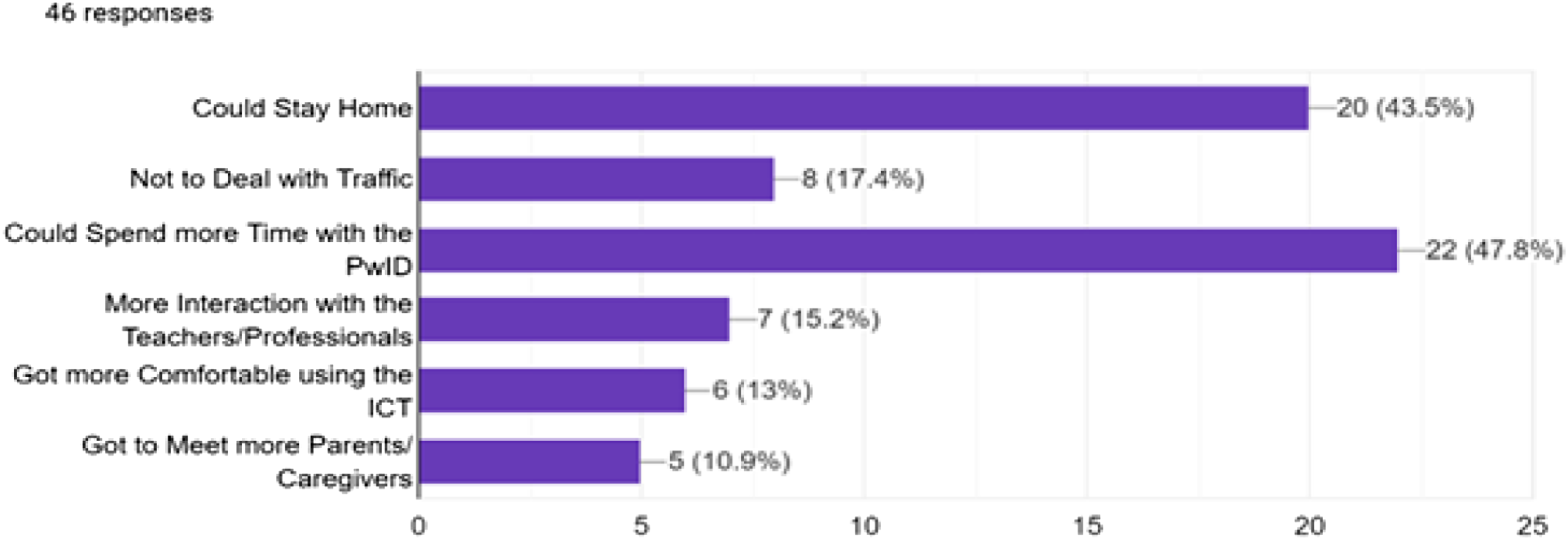
Staying home and getting an opportunity to spend more time with their child with intellectual disability is seen as a positive aspect of lockdown by many respondents (47.8%). Getting to interact with more parents and learning to use gadgets such as mobile phones and laptop for online classes and interactions with the teachers and not to deal with traffic too was considered as an advantage of lockdown by some parents/caregivers.
Death in the family due to COVID 19
During COVID 19 pandemic the families of six respondents had lost a family member due to the Corona virus infection. The caregivers reported that the person with intellectual disability were found to be sad/weeping and asking questions about COVID 19 (2), refusing to eat food (1), preferred to be alone (1) and no reaction (2). When the researcher telephoned the families to get more details, the family member reported about behaviours like holding picture of departed person close to self, refusing to eat, and weeping. The participants reported the helplessness they felt during this period when they observed that the person with intellectual disability is upset and is not able to express the grief.
Support of the person with intellectual disability during pandemic
About 40 % of the respondents noted that the person with intellectual disability was helpful at home. Around 31 % agreed that there was better relationship among the family members with the person with intellectual disability as all stayed at home. About 15% said that they did not have to drop the person with intellectual disability at school and pick up and that online classes were beneficial.
Qualitative data
The responses to the open-ended questions asking the participants to provide ‘Any other information that they wish to share’ was analysed. The responses were independently analysed for key messages by two researchers. The key words picked by both the persons were included for reporting. For example, “ it was difficult to make my son understand to maintain distance….stay away… don’t come too close….” were classified as issues related to social distancing. “restless… does not listen …. insists on going out….adamant….throw objects” were classified under challenging behaviour. Thus the codes were developed and independently classified by two researchers and the where there was disagreement, it was discussed and resolved. The results generally revealed that the participants were happy that they were asked for these details so that they could share their feelings and grievances and most of them had thanked the researchers for the opportunity to share.
A few parents expressed that there could be more support from the government in the form of financial support, as many had lost jobs or working on unstable jobs with less income and it was difficult to survive. As one parent mentioned’ “ I am a taxi driver and with lockdown there is no work and zero income…”
Many were happy to have spent more time with their child. One respondent informed “We were relaxed and so the child was enjoying quality time with the family and did very well academically “
Another one said, “the child spent time learning art and craft from the mother….”
The participants were also comparing the different lockdowns. One respondent observed, “ During the first lockdown, he was very helpful and enjoying but during the second lockdown he wanted to go outside, wanted to go shopping, not happy at home… .wanted to do some job ….feeling depressed at home .Feeling bored with online classes …”
Another respondent reported in similar lines, “ first lock down was ok… but in second lockdown the kids were really out of hands……”
Most of the parents had expressed in different way how difficult it was to help the person with intellectual disability understand and follow the protocols of washing hands, wearing mask, maintaining social distance and staying home. One parent of a ten year old youngster with intellectual disability had noted, “ … he would not only refuse to wear a mask but would quickly dash to remove the masks of all those who were wearing masks……it’s extremely difficult to manage him…. and all in the family get exhausted dealing with him.”
Discussion
The study included participants from different parts of India with varied educational and socio-economic status. The experiences were similar among the participants irrespective of their back ground. All having to stay home all the time and getting the persons with intellectual disability to follow protocols was found to be stressful. The caregivers also reported challenging behaviours exhibited by the persons with intellectual disabilities. This finding concurs with the observations made by Courtenay & Perera (2020) in their study on people with intellectual disability as they too have noted that the persons with intellectual disability are vulnerable to the physical, mental and social effects of the pandemic and restrictions on usual activities are likely to induce mental stress especially among those who are autistic, leading to an escalation in challenging behaviours and increased use of psychotropic medication.
In families where there was unstable jobs and financial crisis, the burden was felt more with higher stress levels. Most of the respondents found it very stressful as a lot of time had to be devoted to the person with intellectual disability. Similar observation is noted in the study by Zahaika, Daraweesh, Shqerat, (2021) who conducted a cross-sectional study on challenges faced by family caregivers of children with disabilities during COVID-19 in Palestine involving 130 caregivers and found that majority of the caregivers felt physically exhausted and indicated that caregiving was taking away their strength. Online classes were found to be a welcome effort and the caregivers were appreciative of it. Finding positive side of lockdown such as spending more time with the child, improvement in activities of daily living, not having to travel, and such other perceived benefits are to be taken as advantages and more systematic blended learning environments need to be created. This finding concurs with that of Rogers et al (2021) who interviewed mothers of children with intellectual disabilities who coped during the first 2020 lockdown period. The results showed that all the mothers experienced increased burden and stress while some described some positive impact of lockdown conditions on them as well as on their child’s well-being and behaviour.
Helping the person with intellectual disability to cope with death and bereavement was found to be difficult. The parents themselves expressed that they need to know how to deal with their child in such situations. There is a need for professional help to the family. Help lines can be set up for the families to access during such crisis. Government support and the efforts of corporate social responsibility (CSR) can result in more sustainable systems to help those with intellectual disability and their families.
Conclusion
Caregivers of persons with intellectual disabilities, irrespective of their socio economic and cultural factors, are one of the groups that is most stressed-out during the COVID 19 pandemic. Keeping the persons with intellectual disabilities at home throughout the day, expecting them to adhere to the health and safety protocols, and helping them with online classes were reported to be stressful by the care givers. The tolerance levels of the caregivers are reflected in their comparison of coping during the different waves of the pandemics. As the pandemic itself was an unprecedented event in the recent past, parents, professionals, governments and the health systems have to struggle to keep pace with the demands caused by the pandemic in the day to day living. Specific focus on families having persons with intellectual and developmental disabilities is needed on priority to help them cope with the situation.
Governments and voluntary organisations should reach out to rural, urban and all living conditions with ecologically viable support systems that is inbuilt in every community so that families work together to meet the challenge. Organizing self-help groups among the caregivers will help them share ideas on how to manage specific situations. More studies on emotional status of persons with intellectual disability, their behaviors, interpretation of anxiety, restlessness, depression and such less explored areas are needed.
In addition, during such disasters, the stress levels and burden on the professionals too increase and it needs to be studied to understand the extent of support systems to be developed to face such unforeseen circumstances. We have a long way to go. But the fact that efforts are on to study the effect of such an unforeseen disaster on humanity as a whole, including those with intellectual and developmental disabilities is heartening and more studies are needed to fill the gaps, leading to preparedness to face such challenges.
Limitations of the study
As the study was conducted at a time with limited access to meeting people, it could not be a face-to-face data collection. The few telephonic interviews revealed the extent to which the caregivers were stressed out and the kind of day to day problems they were facing. An in-depth detailed study is essential to get more information, particularly the qualitative data focusing on experiences of caregivers of persons with different severity levels of intellectual disabilities.
The number of participants could have been more but perhaps due to the stress levels or disturbed routine due to the pandemic, not many consented to participate in the study. We realise that we have only seen the tip of the ice berg. There is a need for more detailed studies in this regard.
ORCID iDs
Mousumi Bhaumik https://orcid.org/0000-0002-6550-8548
Yashvinder Kapil https://orcid.org/0000-0001-8315-8724
Jayanthi Narayan https://orcid.org/0000-0001-5125-0227