




Abstract
Introduction
Inhibitory control and attention are cognitive functions that play an essential role in human autonomous functioning (Cohen, 2017) and are crucial in many aspects of life, such as mental and physical health and learning (Diamond, 2013).
There are multiple definitions of inhibitory control, one widely accepted refers to the suppression of responses that are no longer relevant to a goal to allow us to override an intrinsic predisposition or extrinsic temptation in our behaviour or thoughts (Diamond, 2013). Friedman and Miyake (2004) distinguished three inhibitory control functions a) inhibition of a prepotent response (i.e., an automatic behaviour is suppressed in response to a stimulus), b) resistance to distractor interference (i.e., resisting distraction from external stimuli when performing a task) and c) resistance to proactive interference (i.e., resisting the memory traces that may obstruct effective information processing). Attention control plays a critical role in these functions and in prioritising processes to achieve task goals (Cohen, 2017). Attention control includes the information selection from different sensory events (orienting), vigilance to an imminent stimulus over an extended time (alerting), and the resolution of conflicts between different mental processes during information processing (executive) (Posner and Fan, 2008).
Attention and inhibitory control deficits in persons with intellectual disabilities are well-recognised in the literature (e.g., Bexkens et al., 2014; Lanfranchi et al., 2010; Menghini et al., 2010; Traverso et al., 2018). However, findings regarding these deficits are mixed, and it is acknowledged that the wide range of aetiologies and the heterogeneity of groups with intellectual disabilities contribute to variance outcomes. For instance, Spaniol and Danielsson (2022) performed a meta-analysis including inhibitory control and attention functions showing that participants with intellectual disabilities performed significantly more poorly than the mental aged-matched control groups, with great variability among the effect sizes and high variance across data. Further, the outcomes revealed that the aetiology (i.e., non-specific cause, Down syndrome, Williams syndrome and Fragile X syndrome) was the only significant effect size moderator. Thus, analyses of different developmental trajectories across aetiologies may significantly improve our understanding of the within-group differences (Burack et al., 2012).
Nevertheless, research on the cognitive benefits of physical activity interventions showed promising results suggesting a facilitative effect on these cognitive functions in children with intellectual disabilities. Javan et al. (2014) explored the effects of a three-month rhythmic and play intervention on attention functions in twenty participants with mild intellectual disabilities (9-16 years). Results from questionnaires showed improved attention functions. Similarly, positive outcomes were demonstrated by Fotiadou et al. (2020) when performing a 16-week psychomotor education program focused on balance activities. Participants included twenty children with moderate intellectual disabilities (8-12 years), and the data from a behavioural assessment scale revealed program-related improvement in children's school behaviours associated with attention and inhibition. Despite these encouraging outcomes, the results should be taken with caution due to weaknesses in methodology, documentation, or statistical analysis. The need for more well-designed physical activity interventions that promote cognitive development in individuals with intellectual disabilities is highlighted in the literature (St. John et al., 2020).
Therefore, the present study explored the effects of a 6-week enriched physical education program on inhibitory control and attention functions in Ecuadorian children with non-specific mild intellectual disabilities (i.e., non-syndromic, without atypical neurological development). To our knowledge, this is the first physical activity intervention study using an experimental design and computer-based cognitive tasks to examine the effects on the above-mentioned cognitive functions in this population. We formulated the following hypotheses regarding the outcomes of the intervention group compared to the controls: 1) larger improvement in accuracy and reaction time (RT) between pre-and post-intervention testing in vigilance was expected for the intervention group (based on attention findings by Javan et al., 2014); 2) higher accuracy scores but no significant differences in RT were expected in resistance to distractor interference and response inhibition following intervention (based on accuracy and RT outcomes by Chang et al., 2014 and inhibition findings by Pesce et al., 2016).
Methods
All participants' parents provided written informed consent, and participants gave oral assent before the study began. Parents' permission to publish non-identifiable data from this research was obtained. Children's participation was voluntary, and they could withdraw from or refuse to participate in the study at any time.
Study Design and Participants
Thirty children with intellectual disabilities participated in this parallel-group design study based on previous research sample sizes (e.g., Chang et al., 2014). Recruitment strategies were flyers, scripted presentations, referrals from teachers and parents, direct person-to-person contact, existing records and databases.
Participants' inclusion criteria included non-specific mild intellectual disabilities (i.e., non-syndromic, without atypical neurological development), and chronological age between 10-14 years. Although IQ scores were not available, verification of the severity of participants' intellectual disabilities was based on children's official disability cards issued by the Health Ministry. The age group was selected based on the student population of the educational institution and developmental criteria. We found in our pilot study that the tasks were too difficult for younger children. Younger children, particularly those with intellectual disabilities, may not be able to sustain their attention and may exhibit impulsive behaviours during testing (Davidson et al., 2006). The exclusion criteria were physical/sensory limitations for participation and developmental or psychiatric comorbidities (e.g., autism).
Prior to group assignment, short-term memory and verbal fluency tests were individually administered to verify participants’ basic memory and language skills. Short-term memory was measured using lists of two-syllable words, and the lists varied in length (between two to five words). The words were selected from three semantic categories (professions, colours, food). Participants had to repeat the words in the same order as presented. The task continued until they could repeat at least two categories out of three at a particular length. The short-term memory span was determined by the length of the longest list that they recalled correctly.
In the verbal-fluency task, participants had to say as many words as possible from a given semantic category (animals, body parts, fruits) within 60 seconds. The final score was the total number of correctly generated words across the three categories. These tasks were administered to ensure that the intervention and control groups did not differ in basic memory and language skills that could have affected the outcomes of the experimental tasks. We chose tasks that have been widely used in previous studies with populations with different developmental trajectories, including individuals with intellectual disabilities (e.g., short-term memory test: Henry and MacLean, 2002; Henry and Winfield, 2010; Vicari et al., 2004; verbal fluency test: Danielsson et al., 2012; Lanfranchi et al., 2010; Stavroussi et al., 2016).
Children were randomly assigned to the Intervention Group (n=15) or the Control Group (n=15) using a simple randomisation web service by an independent person not associated with the study. See the study structure in Figure 1. CONSORT flow diagram of participants through the study.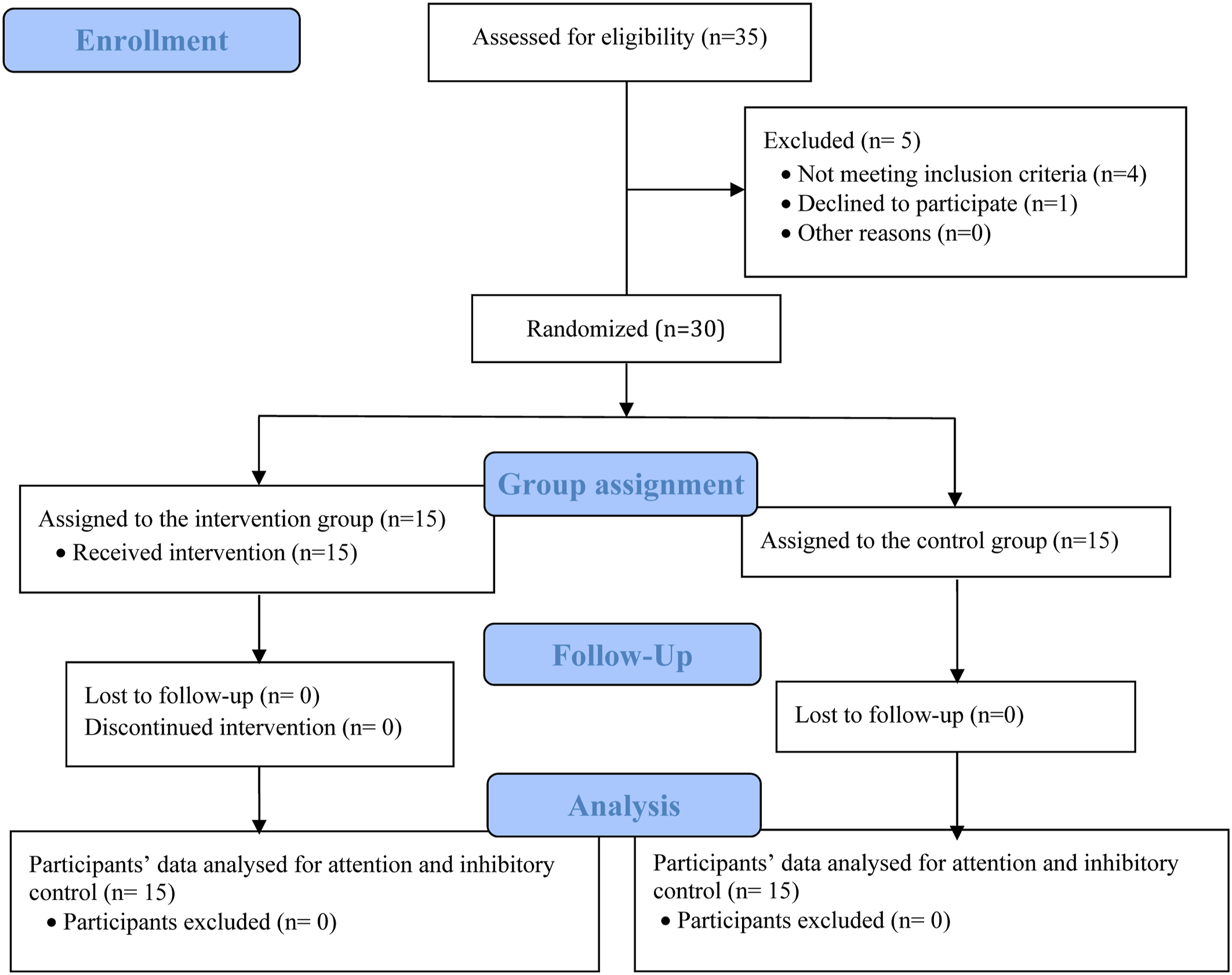
To retain participants throughout the study, the following efforts were made: effective communication with stakeholders, involvement of motivated and well-trained intervention teachers, prompt identification of participation barriers, tracking attendance, and using parents/teachers approved contact methods for absences.
Stimuli and Procedures
Intervention
The physical activity program consisted of twelve face-to-face group sessions (60 minutes per session, twice a week) for six consecutive weeks. The length and the frequency of intervention were based on the study by Schmidt et al. (2015), which included a cognitively engaging physical activity program that promoted cognitive improvement in typically developing children, and on the time availability of the educational institution. The intervention was carried out in the institution's sports facilities and conducted by the first author, an experienced physical education teacher in special education, who was assisted by two trained senior physical education bachelor students.
The intervention incorporated physical activity games to enhance cognition as published by Tomporowski, McCullick and Pesce (2015) for children between 3-6 years old. This content was aligned with the first block of the Ecuadorian physical education curriculum, “Playful practices: games and playing” (Ecuador Ministry of Education, 2016). A description of the games is available in Appendix Table A1.
Each session was organised by the following structure: warm-up (7-8 min.), cognitive enhancement games (45 min.), and cool-down (7-8 min.). The sessions were organised with flexible structures, gradually increasing the games' difficulty levels in rule complexity, intensity, and duration.
Children in the control group were not involved in any intervention during the study and were required to continue their regular school activities. However, for ethical reasons they also received the same intervention program following the completion of the study.
Cognitive Tasks
Prior to and post intervention, we individually administered the Nonverbal Attention, Inhibition, and Distractor Interference Tasks (Szöllősi and Marton, 2016) (test duration: 15-25 minutes). Children performed three computer-based tasks using E-Prime 2.0 software by pressing coloured jellybean buttons in front of the computer (15.5-in screen size) in response to target and distractor items. In the vigilance task, children had to press the black button on the corresponding side (left or right) when the target stimulus (green circle) appeared on the screen. In the distractor interference task, besides the target stimuli, a distractor item (blue circle) was presented simultaneously. The distractor item had to be ignored to assess participants’ resistance to distractor interference. In the response inhibition task, only one stimulus appeared on the screen: target or distractor. Participants had to respond only to the target and withhold their response when the distractor item was shown. Instead, they had to press the start (red) button to move on to the subsequent trial. Each task included five practice and twenty experimental trials. All participants received the same stimuli but with a randomized presentation order. For examples of trials, see Figure 2. Nonverbal attention, distractor interference and response inhibition tasks: Presentation of three sample trials in each condition.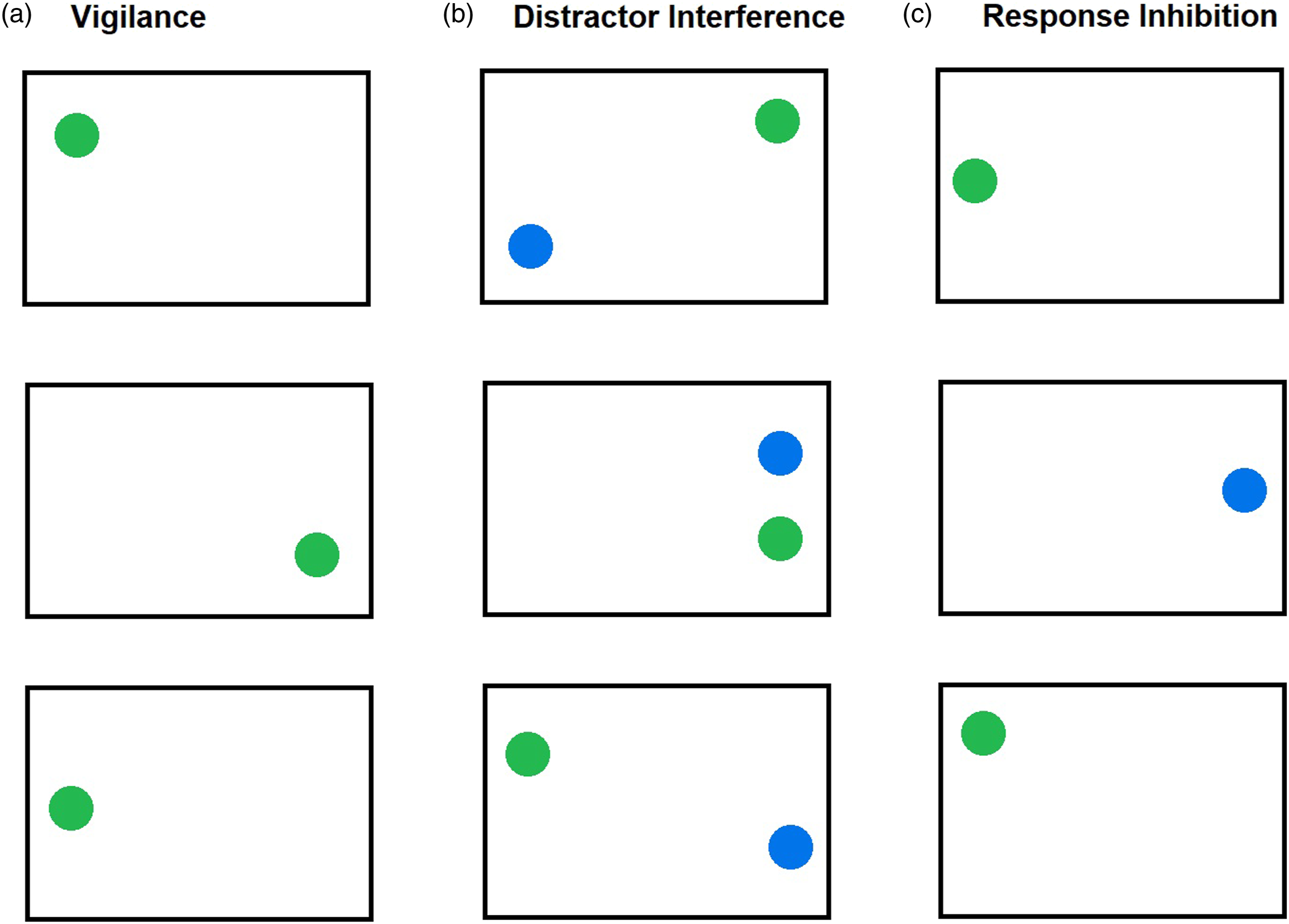
Data Analysis
Statistical analyses were carried out using R version 4.0.3 and IBM SPSS version 26. Dependent variables included both accuracy (0 or 1) and RT. In the accuracy analysis, missed trials were considered inaccurate. RTs were analysed only for accurate responses. RTs shorter than 300 msec and those that exceeded 3 SD from participants’ individual means were excluded as outliers. Based on these criteria, we excluded 19.19% of the trials in the attention and inhibitory control tasks. This would be a relatively large proportion of trials in typically developing children but is not exceptional in children with intellectual disabilities. RTs were log-transformed prior to the analysis.
The binary accuracy data were analysed using mixed-effects logistic regression models. For each cognitive task, a series of models that decreased in complexity were estimated using the lmerTest package in R (Kuznetsova et al., 2017). Fixed factors included group (control/experimental) and session (first/second). We used subject as a random factor. A significant intervention effect is present if the group x session interaction reaches level of significance. The final model was determined using Akaike Information Criterion (AIC). Log transformed RT data were analysed using robust linear mixed models with the DASvar method (R package robustlmm; Koller, 2016) since the criterion of residual normality was violated. Fixed and random factors were the same as in the case of accuracy. Since information criteria like AIC are unavailable for this method, we used the standard error of the Session x Group interaction estimate to choose the best model. When the standard errors of the two models were equal, the less complex model was chosen; p values were calculated for each effect. For model building see Appendix Table B1.
The Figures depicting the research results were created in R using the ggplot2 library.
Results
Participants
There was no significant difference between the groups in age (U =113.5, p = 0.967; Mexperimental =12.733 years, SDexperimental =1.438 years; Mcontrol =12.600 years, SDcontrol =1.298 years), gender distribution (χ 2 =0.536, p =0.464; 8 females in the experimental, 6 in the control group), short-term memory (U =107.0, p =0.917; Mexperimental =2.143 level recall lists, SDexperimental =0.864; Mcontrol =2.000 level recall lists, SDcontrol =0.864), and verbal-fluency performance (t(27) = -0.903, p = 0.374, Mexperimental =22.78 words, SDexperimental =7.924 words; Mcontrol =20.333 words, SDcontrol =6.683 words).
Cognitive tasks
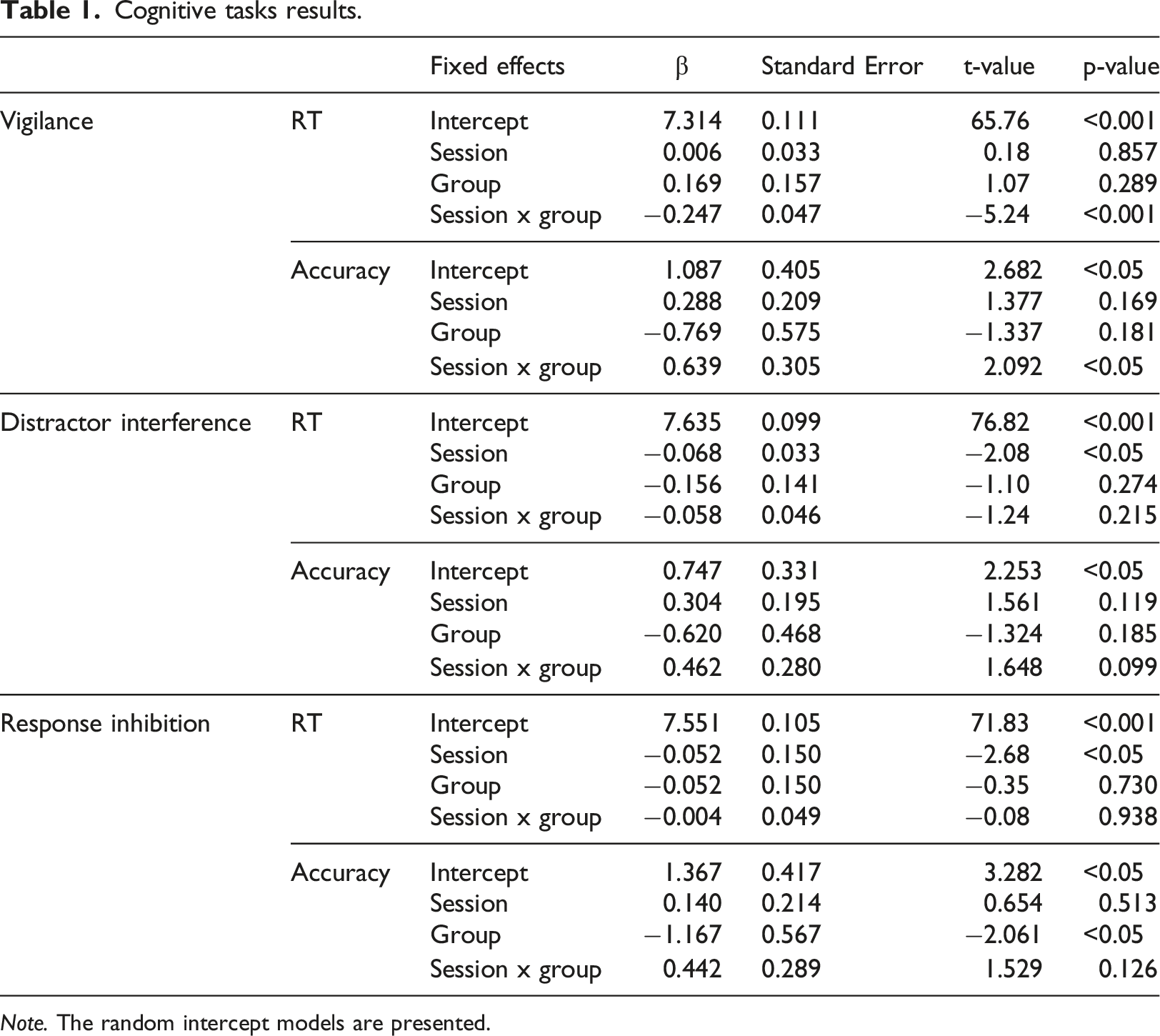
Cognitive tasks results.
Note. The random intercept models are presented.
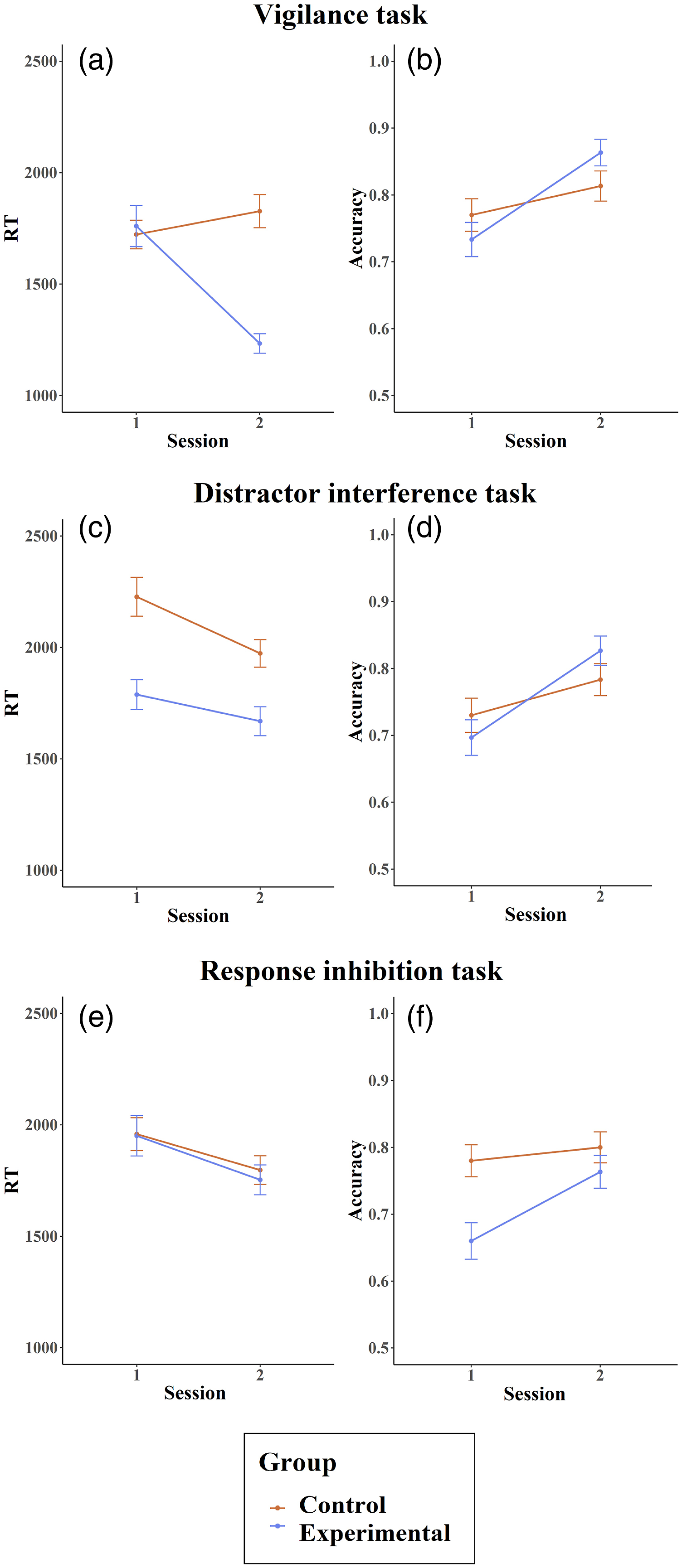
Mean results of the vigilance attention (a-b), Distractor interference (c-d) and response inhibition (e-f). Error bars represent standard errors of the mean.
In the Distractor interference task, none of the interactions in RT or accuracy were significant, except for the Session main effect on RT; thus, children, regardless of group assignment, performed significantly better in the second session compared to the first one.
In the Response inhibition task, the random intercept model fitted to RT showed a significant session main effect, indicating an improvement regardless of intervention. The group main effect and session x group interaction were nonsignificant. In accuracy, there was a group main effect indicating that the intervention group showed lower performance from the beginning than the control group.
Attendance
The overall average intervention attendance rate was 90.56%, calculated as the arithmetic mean of the individual attendance rate (attended/total sessions).
Discussion
We examined the effects of a 6-week enriched physical education program on inhibitory control and attention functions in Ecuadorian children with non-specific mild intellectual disabilities. The results supported our first hypothesis about the effect of the intervention on participants' vigilance. Children in the intervention group showed significant improvement compared to the control group, with more accurate and faster responses indicating better focus of attention, which is consistent with the outcomes of other physical activity intervention studies (Javan et al., 2014). These results also revealed that participants understood the instructions, paid attention to the task, and used the response buttons appropriately.
Our second hypothesis was about intervention-related improvements in accuracy in inhibitory control. This hypothesis was partially supported. All children became faster, indicating a practice/learning effect. Accuracy results showed tendencies toward more improvement for the intervention group, but results did not reach significance. Interestingly, the intervention group demonstrated significantly lower pre-intervention accuracy in response inhibition than the controls, but there was no difference in RT, suggesting a speed-accuracy trade-off phenomenon when considering the covariance between the two dimensions. In this sense, Heitz (2014: 4) pointed out that the trade-off is a characteristic of the decision-making process; when actions are performed faster, they tend to be less accurate because there is less sensory accumulated information to be analysed while making a decision. After the intervention, the accuracy gap diminished between the groups without compromising the RT performance, indicating greater improvement in the intervention group.
Our results contradict those of Pesce et al. (2016), who found improvements in inhibition but not in attention skills using a similar intervention program (games from Tomporowski et al., 2015) with typically developing children between 5-10 years of age. Pesce's study and ours differed in population characteristics (i.e., the presence vs. absence of intellectual disabilities, age ranges), intervention duration (6 months), cognitive tasks employed, sample size (they included 460 children) and, consequently, statistical power. These differences are noteworthy because they might affect the outcomes of similarly designed intervention studies.
Overall, the intervention group's tendencies for greater improvement in accuracy across the inhibitory control tasks may be related to these children's improvement in attentional skills. The inhibitory control tasks required attentional control to avoid responding to irrelevant stimuli. The lack of significant intervention effects in inhibitory control could be related to the relatively small sample size and the heterogeneous nature of the groups. We could also consider that the physical activity program's characteristics may not sufficiently induce exercise-related changes in inhibitory control. St. John et al. (2020) pointed out that even though findings indicate that physical activity is beneficial for persons with intellectual disabilities, there is not enough evidence in the literature to determine the best practices (e.g., frequency, length, intensity).
Our study was the first to explore the efficiency of physical activity intervention on inhibitory control and attention functions in children with non-specific mild intellectual disabilities using computer-based cognitive tasks, contributing to a growing line of research on the Physical Activity-Cognition relations in this population. Our study provides preliminary findings on the potential of this intervention method to enhance children's attention control, which finding is particularly relevant, given the attentional difficulties in children with intellectual disabilities and their implications for everyday life. Attention plays an essential role in learning, academic achievements, regulating emotions and behaviours, and developing more complex cognitive abilities (Posner and Rothbart, 2005). Further, the participants’ high attendance rate and the lack of any withdrawal indicate that the children were motivated and engaged in the physical activity program of the study.
Therefore, this study highlights educational implications for professionals working with children with mild intellectual disabilities. This intervention offers a suitable educational approach to improve children's attention functions, in line with the suggestions of the Ministry of Education of Ecuador (2016) to prioritize the needs of students in each context while selecting physical education content and adjusting the curriculum accordingly. This study supports the notion that teachers and educators should become familiar with research on the relationship between cognitive and motor functions, particularly with the role that physical education may play in integral learning and development in children with intellectual disabilities. Moreover, this intervention may be replicated in other special education schools throughout the country because it is easy to implement in an open and secure environment. Alternatively, it may be used as a complementary physical therapy program within the community.
There were inherent limitations to the current study. First, the relatively small sample size limited generalizability. Second, we had to exclude nearly 20% of trials as outliers. Performance on cognitive control tasks frequently shows large individual differences even in typically developing children (Cepeda et al., 2013; Katz et al., 2021). Children with intellectual disabilities may get even more easily distracted or may become fatigued. Although none of these issues were noticeable in children’s behaviours, reaction time measures are more sensitive. Third, participants' IQ scores were not available and they could have contributed to the individual differences seen within the groups. Fourth, the study was conducted in a single special education centre and social interactions between the comparison groups could not be controlled; this might have affected the findings and limited their interpretability. Fifth, there were only a few previous research studies with populations with intellectual disabilities that were relevant to this work. Therefore, some of the current study’s theoretical and methodological foundations were based on research with children with different developmental patterns.
Future research may replicate this study with larger clinical samples to ensure more statistical power and generalizability. Individual factors such as IQ, fitness level, and lifestyle should be considered, as these might impact the efficiency of physical activity on cognitive performance (Pesce et al., 2016). More studies are needed in low and middle-income countries to investigate the best practices (e.g., frequency, cognitive challenge, movement type) in physical activity interventions in these contexts.
Footnotes
Acknowledgements
The authors would like to express their gratitude to the children who participated in this study and the teachers, parents, and intervention assistants for their support.
Declaration of conflicting interests
The author(s) declared no potential conflicts of interest with respect to the research, authorship, and/or publication of this article.
Funding
The author(s) disclosed receipt of the following financial support for the research, authorship, and/or publication of this article: This work was partially supported by a Doctoral Student Research Grant from the Faculty of Education and Psychology of Eötvös Loránd University, Hungary awarded to Angélica Liseth Mero Piedra and by a Research Programme for Public Education Development grant from the Hungarian Academy of Sciences, Klara Marton, P.I.
Ethical statement
The study was independently reviewed and considered under the requirements of the Scientific and Research Ethical Regulations of the Bárczi Gusztáv Faculty of Special Needs Education of Eötvös Loránd University (Hungary). Ethics committee permission No. KEB/2019/003. Authorization to carry out the study in an Ecuadorian specialised educational institution in Manabí province was obtained from the Ecuadorian District Directorate of Education 13D02, official letter No. 276-13D02-DD-2019.
Trial register
The trial is registered as ISRCTN17079009.

Data availability statement
This research obtained informed parental consent for the children with intellectual disabilities, in which they gave their permission for using the data collected only for this investigation. Therefore, the datasets used for this study cannot be made publicly available. Thus, datasets will be available in the future and uploaded to the ISRCTN17079009 study repository only if we receive further approval from the ethics committee of Bárczi Gusztáv Faculty of Special Needs Education of Eötvös Loránd University and if the parents sign additional informed parental consents. For further information, kindly reach out to the corresponding author.
Appendix
Playful practices of the intervention. Source: Games adapted from Tomporowski, McCullick and Pesce's (2015) book: Enhancing Children's Cognition With Physical Activity Games (ISBN 1450441424, 9781450441421).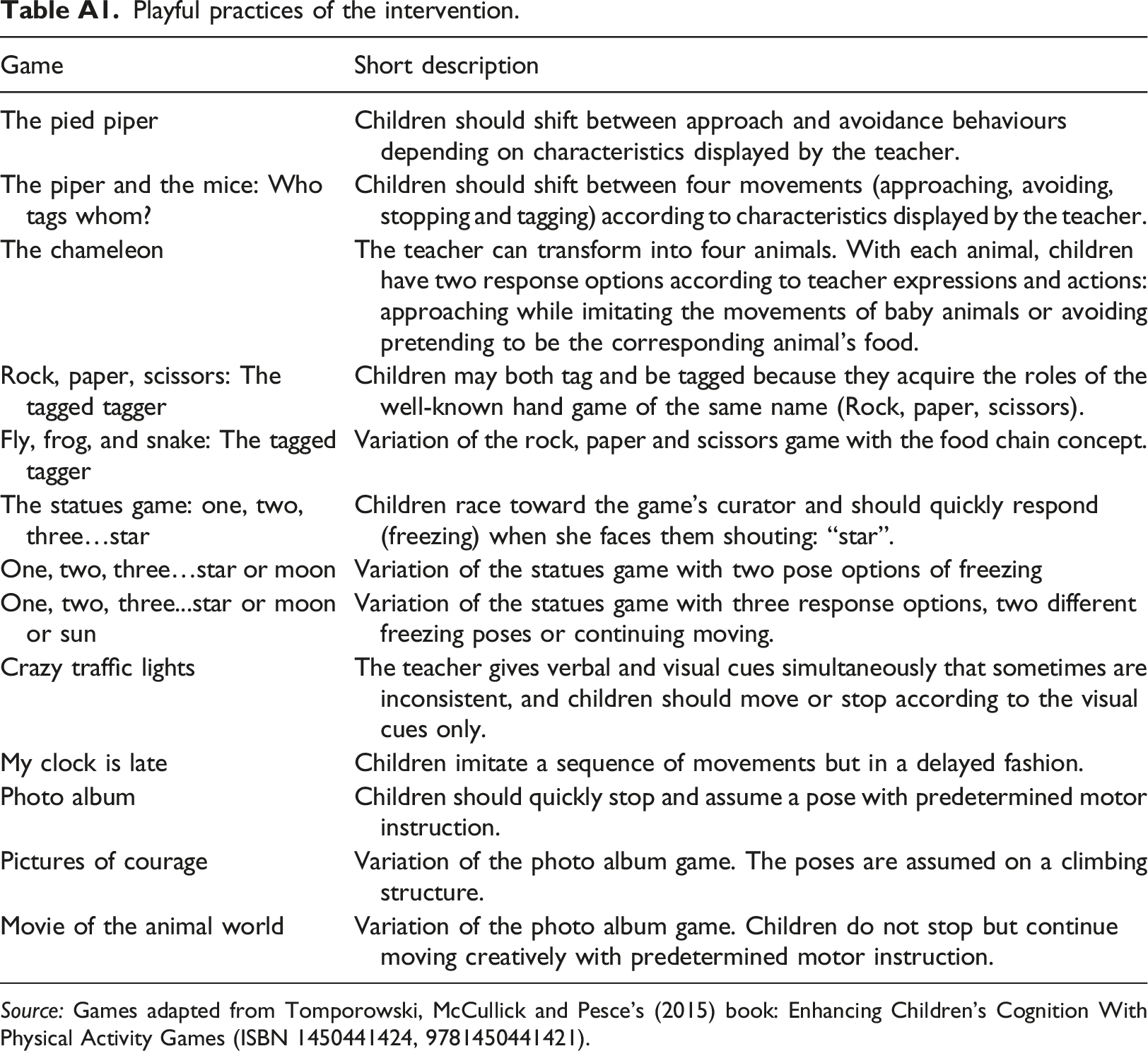
Game
Short description
The pied piper
Children should shift between approach and avoidance behaviours depending on characteristics displayed by the teacher.
The piper and the mice: Who tags whom?
Children should shift between four movements (approaching, avoiding, stopping and tagging) according to characteristics displayed by the teacher.
The chameleon
The teacher can transform into four animals. With each animal, children have two response options according to teacher expressions and actions: approaching while imitating the movements of baby animals or avoiding pretending to be the corresponding animal’s food.
Rock, paper, scissors: The tagged tagger
Children may both tag and be tagged because they acquire the roles of the well-known hand game of the same name (Rock, paper, scissors).
Fly, frog, and snake: The tagged tagger
Variation of the rock, paper and scissors game with the food chain concept.
The statues game: one, two, three…star
Children race toward the game's curator and should quickly respond (freezing) when she faces them shouting: “star”.
One, two, three…star or moon
Variation of the statues game with two pose options of freezing
One, two, three...star or moon or sun
Variation of the statues game with three response options, two different freezing poses or continuing moving.
Crazy traffic lights
The teacher gives verbal and visual cues simultaneously that sometimes are inconsistent, and children should move or stop according to the visual cues only.
My clock is late
Children imitate a sequence of movements but in a delayed fashion.
Photo album
Children should quickly stop and assume a pose with predetermined motor instruction.
Pictures of courage
Variation of the photo album game. The poses are assumed on a climbing structure.
Movie of the animal world
Variation of the photo album game. Children do not stop but continue moving creatively with predetermined motor instruction.
Model Building
We chose the best models fitted to the reaction times (RT) of each task based on the Akaike Information Criterion (AIC) values of the models shown in Table B1.
AIC values of the models fit to RT of the nonverbal attention, inhibition and distractor interference tasks. Note: Random factor was Subject, fixed factors were Session × Group.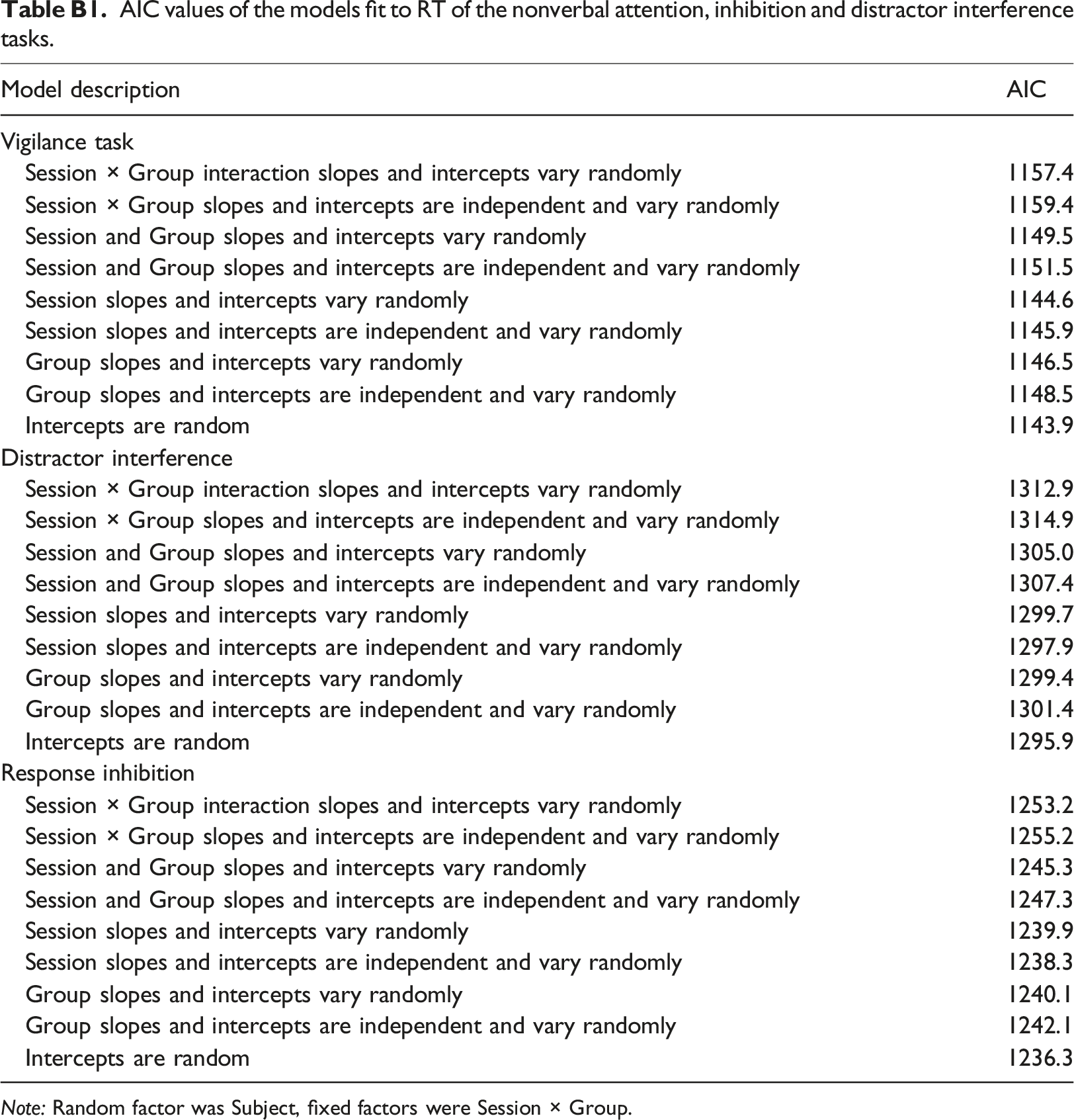
Model description
AIC
Vigilance task
Session × Group interaction slopes and intercepts vary randomly
1157.4
Session × Group slopes and intercepts are independent and vary randomly
1159.4
Session and Group slopes and intercepts vary randomly
1149.5
Session and Group slopes and intercepts are independent and vary randomly
1151.5
Session slopes and intercepts vary randomly
1144.6
Session slopes and intercepts are independent and vary randomly
1145.9
Group slopes and intercepts vary randomly
1146.5
Group slopes and intercepts are independent and vary randomly
1148.5
Intercepts are random
1143.9
Distractor interference
Session × Group interaction slopes and intercepts vary randomly
1312.9
Session × Group slopes and intercepts are independent and vary randomly
1314.9
Session and Group slopes and intercepts vary randomly
1305.0
Session and Group slopes and intercepts are independent and vary randomly
1307.4
Session slopes and intercepts vary randomly
1299.7
Session slopes and intercepts are independent and vary randomly
1297.9
Group slopes and intercepts vary randomly
1299.4
Group slopes and intercepts are independent and vary randomly
1301.4
Intercepts are random
1295.9
Response inhibition
Session × Group interaction slopes and intercepts vary randomly
1253.2
Session × Group slopes and intercepts are independent and vary randomly
1255.2
Session and Group slopes and intercepts vary randomly
1245.3
Session and Group slopes and intercepts are independent and vary randomly
1247.3
Session slopes and intercepts vary randomly
1239.9
Session slopes and intercepts are independent and vary randomly
1238.3
Group slopes and intercepts vary randomly
1240.1
Group slopes and intercepts are independent and vary randomly
1242.1
Intercepts are random
1236.3