




Abstract
Compared to the European Union (EU), Latin American (LA) countries are much slower in implementing policies to improve energy performance and thermal comfort in the residential building stock. This comes at a time when cities in developing countries are experiencing faster growth than in the developed world. Understanding that the morphological characteristics of the built environment are a key issue in improving the energy performance and thermal comfort of buildings allows for better decision-making in urban planning and design. However, this field has been relatively unexplored in LA. Therefore, this study proposes a workflow that integrates two urban models adapted to the particularities of LA cities (A+TUF): building archetypes (A) and typological urban forms (TUF). This will provide valuable information to architects, engineers, urban planners, and policymakers, to enhance decision-making processes. Considering the available information and the importance of the different parameters analyzed in the context of LA, 3 parameters are proposed for the definition of A and 9 for TUF. Additionally, 4 performance indicators are determined to assess energy performance (prioritizing passive design strategies) and indoor thermal comfort. Furthermore, the proposed workflow allows the incorporation of additional evaluation objectives related to other environmental aspects for holistic assessment. This will contribute to more sustainable urban planning in LA.
Keywords
Introduction
One aspect that characterizes current global urban development is that more than half of the world’s population lives in cities, and some regions such as Africa, Asia, LA, and the Caribbean have the highest population growth rates (UNEP, 2012). In the long term, population growth is expected to decline as countries develop. However, in the short term this translates into housing needs, and new and improved urban infrastructures with the accentuated challenges of sustainability, especially in the energy and climate aspects (Johari et al., 2020). Thus, the International Energy Agency forecasts that, by the year 2040, global energy demand will increase mainly due to these regions; while much of Europe, Japan, Korea, and North America will present a flat trend (IEA, 2014). In this sense, so that urban planning can adapt to new challenges, energy planning must be integrated from the early stages, that is, from the configuration of the urban forms (Cajot et al., 2015).
Optimal urban forms can control urban sprawl, enhance building solar exposure, support energy production, positively impact energy demand, or even influence public health (Duque et al., 2019). This is why there is a growing interest in this field. Even more so in developing countries, where urbanization continues to accelerate and urban forms with weak structures hinder the construction of sustainable and productive cities with energy-efficient buildings and comfortable environments (Cárdenas-Jirón et al., 2023). For this reason, several studies emphasize the need to conceptualize site-specific design parameters such as the distance between buildings, orientation, urban texture, and building form, among others (Mangan et al., 2021). In LA cities, the lack of tools to analyze how these parameters affect thermal comfort and energy performance has led to decisions being made in the regulatory field without clear evidence of their impact.
Generally, research on this topic focuses on improving the energy performance of a single building (Serghides and Georgakis, 2012), and even more so in LA cities (Guillén-Mena and Quesada, 2019). However, the analysis should extend to the urban level, as the cumulative effect of multiple buildings can be significant. To this end, urban energy use modeling has been developed as a predictive tool to analyze various aspects of the overall energy performance so as to better guide policy decisions (Kavgic et al., 2010). One of the first studies to address this issue classified the energy use of the operational phase of buildings into two approaches: top-down and bottom-up (Swan and Ugursal, 2009).
The shape and constructive characteristics of buildings significantly influence the energy impact in urban environments. However, to apply this on a larger scale, it is necessary to know the energy demand at a disaggregated level (Salvati et al., 2020). Bottom-up modeling allows building information to be disaggregated and extrapolated to the required urban level. In particular, the archetype technique has the potential to support the analysis of the existing residential stock (Famuyibo et al., 2012). Additionally, it enables assumptions to be made about changes in buildings with energy efficiency measures and identifying areas with a potential for improvement. In this way, it provides a solid foundation for evidence-based decision-making.
These characteristics point to the applicability of this method and to a better adjustment of the requirements for efficient urban planning in LA cities; as well as in developing countries overall. However, the parameters used for their conformation and evaluation may vary from one context to the other due to the particularities of each place and the scale of analysis. Generally, studies based on this technique often lack arguments or evidence to support the selection of building parameters intended to classify and characterize the residential stock (Ghiassi and Mahdavi, 2017). Furthermore, parameters commonly used in developed countries are not necessarily applicable to the LA context because these cities have developed differently.
The main limitations of archetypes are that they do not allow an understanding of how urban design parameters affect the energy performance of the building stock or how buildings impact the environmental performance of urban areas. The urban context is only considered when archetypes are used as part of the building-by-building aggregation method, but without controlling over it, because the modeling considers the heterogeneous characteristics of a real context. This method is commonly used to assess changes in energy consumption before and after refurbishments, or to identify groups of buildings with the potential to become energy-efficient neighborhoods (Yang et al., 2022). Studies of this type are usually common in cities with a consolidated building stock, as is the case in European countries. On the contrary, in new urban developments or in cities with neighborhoods undergoing consolidation processes, where there are still plots without building or single-family houses being replaced by high-rise buildings (as occurs in LA cities), it is more relevant to address the relationship between energy use in buildings and urban form while maintaining control over it. In this way, it is possible to identify how design parameters affect energy performance at building and urban levels. This evidence would serve as support in decision-making processes or the formulation of energy efficiency policies in LA countries.
The direct link between energy performance and indoor thermal comfort underscores the need to achieve a balance between the two (Ortiz et al., 2017). A study in LA reveals that 67.5% of buildings are perceived as uncomfortable, mainly due to thermal aspects, evidencing the need to enhance envelope thermal properties and adjust regulatory standards (Valderrama-Ulloa et al., 2020). Furthermore, urban transformations, such as an increase in building height, reduced green coverage, and population density growth, impact both indoor thermal comfort and outdoor space. Therefore, it is essential to analyze these changes using performance indicators appropriate for this context in order to understand their current state and compare them with different scenarios.
In this sense, the main objective of the research is to integrate archetype (A) and typological urban forms (TUF) to assess the energy performance and thermal comfort of residential buildings through their contextualization in LA cities. This involves the selection of parameters of interest specific to the Latin American context based on evidence of their impact documented in scientific literature. To achieve this objective, the following steps are carried out:
Analyze the application of urban energy models in the context of LA to justify the integration of two urban models (section 2.1).
Identify specific parameters that reflect the particularities of the residential stock in LA cities to create archetypes, finding a balance between the maximum representativeness of buildings and limiting the number of archetypes to be defined (section 2.2.1).
Conceptualize urban design parameters and identify their impact on energy performance to support a selection of suitable parameters (section 2.2.2).
Integrating these two urban energy models through a workflow proposal based on design parameters, evaluation objectives, and performance indicators (section 2.3).
Given the limited attention to this field in the LA context, the main novelty of this work consists of a proposal to integrate urban energy models for assessing the residential stock in LA cities, considering urban morphology, and local constructive particularities.
Background and workflow proposal
Contextualization: Urban energy modeling in Latin America
Two fields of knowledge have been identified from which energy use modeling in urban buildings can be studied. The first is based on energy modeling that considers two approaches: bottom-up and top-down (context is not necessarily considered; Kavgic et al., 2010; Swan and Ugursal, 2009). The second is based on methodologies that incorporate urban form (context is considered), primarily considering two schools: simulation and empirical (Quan and Li, 2021). A paper mentions a third school based on experimentation (Ko, 2013), but its application is very limited, so it has not been considered in this study.
Regarding the first field of knowledge, these approaches are commonly applied at national level, and several studies show that, given the increasing importance of the city scale, the same classification is also used on an urban scale (Li et al., 2017; Reinhart and Cerezo Davila, 2016). The top-down approach examines cities from the macro scale, that is, at the sectoral level, without concern for the end uses, or differences that could exist between buildings (Li et al., 2017). Its advantage is simplicity when estimating urban energy consumption, since it only requires aggregated historical data (Swan and Ugursal, 2009). In contrast, the bottom-up approach treats energy use estimates from the micro-scale, that is, it focuses on individual buildings with their end-use and then aggregates them to the urban scale (Li et al., 2017). This method offers advantages by allowing the identification of improvement areas through its detailed disaggregation and by evaluating cost-effective options to reduce carbon based on the best available technologies and processes (Kavgic et al., 2010).
Based on research articles (Langevin et al., 2020; Li et al., 2017; Swan and Ugursal, 2009), the top-down approach is classified into two categories: “Statistical analysis” and “Others” (each with its respective subcategories (Feng et al., 2013), as illustrated in Figure 1. Meanwhile, the bottom-up approach is classified into “Data-driven,”“Engineering model” (also called physic model), and “Hybrid model” (representing the combination of both models; Kavgic et al., 2010; Swan and Ugursal, 2009; Yang et al., 2022). Likewise, each has its respective subcategories.
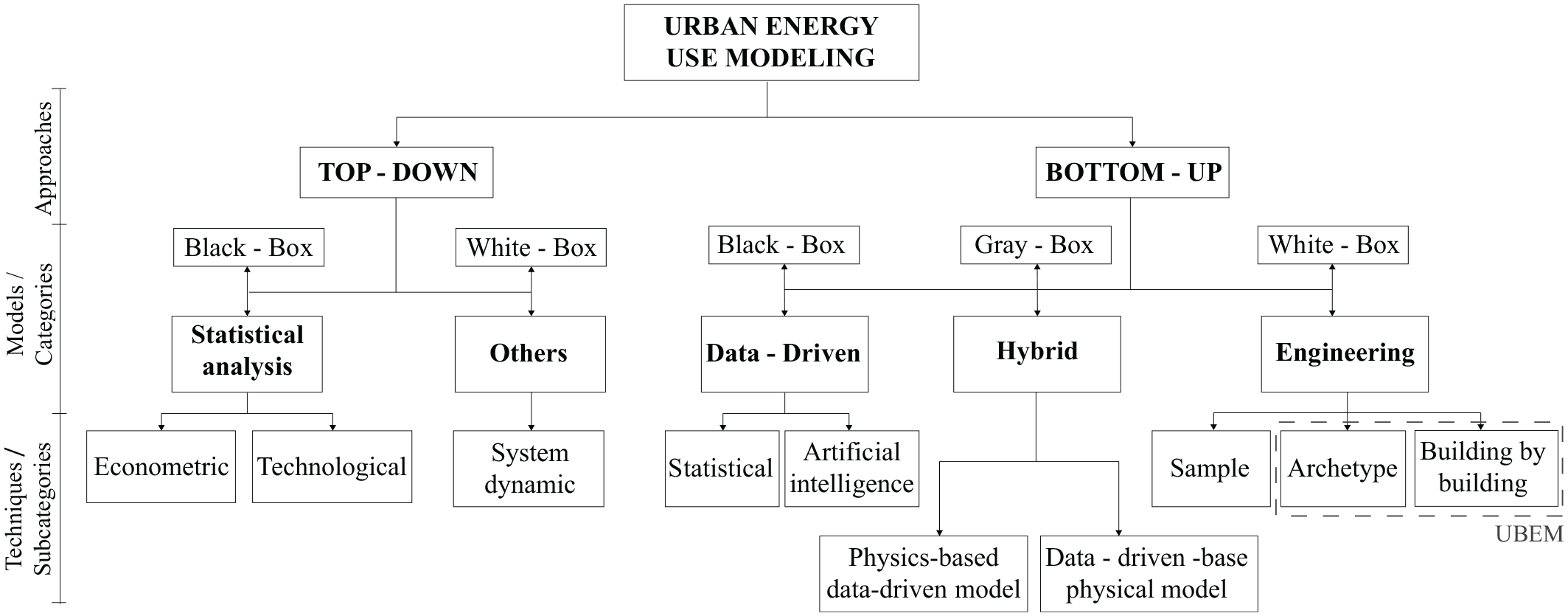
Urban energy use modeling approaches.
Regarding the second field of knowledge, concerning the methodologies that incorporate urban form, the empirical school applies analytical methods, which are principally statistical models (require a large amount of data). The usual data sources are residential energy consumption surveys, meter data, and aggregated energy data. A limitation is that detailed end-use data (heating, cooling, and lighting) are generally not available, only as energy sources (electricity or gas). They are also not appropriate when intended to estimate the energy implications of the design in the initial stage of the building or when modifications have been made (Nutkiewicz et al., 2018). The simulation school generally adopts physics-based equations and building energy simulation tools. The input and output data are like those applied in bottom-up physical models. The difference is that controlled parameterizations are often used in this field to understand how the built environment influences the energy use of buildings (Quan and Li, 2021). It is, therefore, a method that presents fewer limitations for its application.
Considering these methodologies (Figure 2), Quan and Li (2021) identified that these studies typically adopt one of the following types of urban form representations: “urban canyon,”“urban block or typology group,”“urban grid + typology,” or “real form.” However, we have identified an additional group consisting of an “idealized sample” in a given area (Rode et al., 2014). The first three representations of urban form seek to simplify the complexity of urban structures and building forms, through simple and repeatable features to improve the understanding of the interactions between the built environment and buildings. The remaining two, however, use real patterns to generate models with a higher degree of complexity.
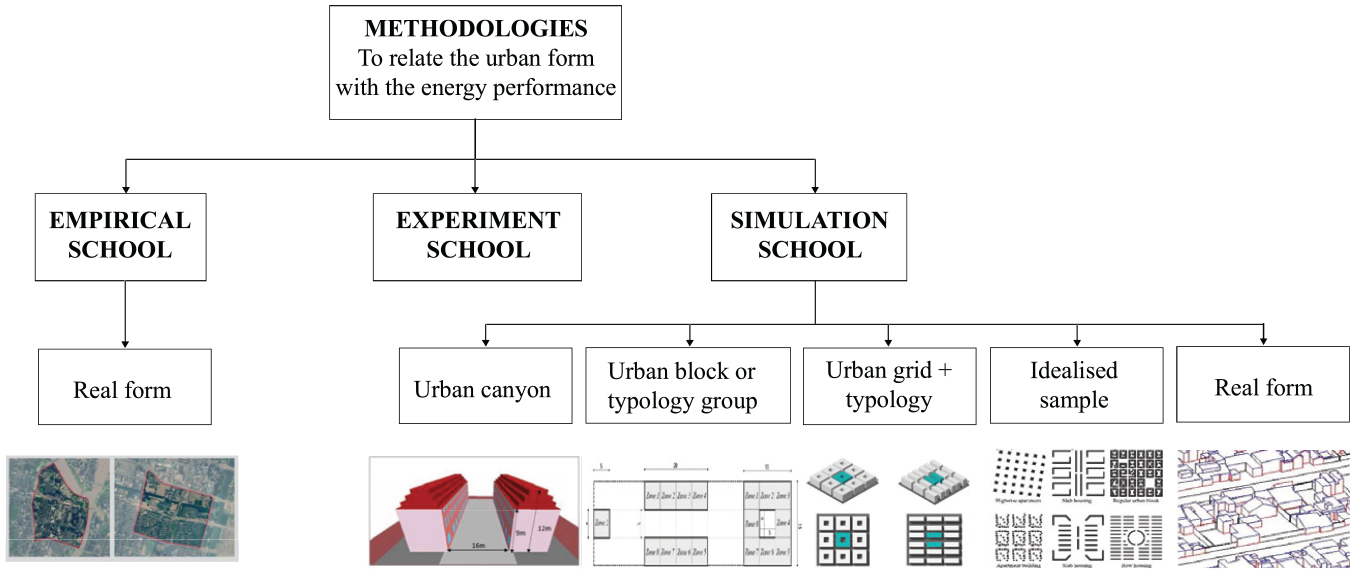
Methodologies and urban form representations (Arboit et al., 2008; Ibrahim et al., 2021; Li et al., 2018a; Rode et al., 2014; Salvati et al., 2022; Taleghani et al., 2013).
To apply these approaches and methodologies, understanding the challenges confronting LA is crucial. For example, there is a notable lack of access to information, including data on infrastructure (fixed assets within a city) and primary services such as energy (Marchetti et al., 2019). This information gap significantly hinders the planning process in developing countries. In terms of infrastructure, the region faces a significant qualitative deficit in residential buildings, attributed to the lack of thermal comfort and the state of the materials. Hence, evaluating each physical aspect of buildings, linking energy use to design characteristics, becomes crucial. This applies not only at the building level but also at the urban level, considering constant changes and growth in LA cities. Therefore, decisions made in the land use and occupation plans will condition the environmental behavior inside the buildings and the outdoor spaces shaping neighborhoods. Regarding the information on the energy aspect, historical data on building end-uses is not freely accessible, as it belongs to services-providing companies. Additionally, the information on energy consumption related to the thermal aspect is not necessarily quantified due to energy poverty (Mazzone, 2020). Another reason to consider is that in low-latitude localities, heating or cooling systems are uncommon in households.
Taking into account these conditions and the purposes of this study, limitations are identified in the application of the top-down approach, since it does not allow for detailed technological analyses of present and future energy production or conservation from observations made about the past. Therefore, it is evident that, to assess the energy performance of urban buildings considering their physical aspect, linking energy use to design characteristics in the LA context, and promoting energy policies, the bottom-up approach is more effective.
However, within the bottom-up approach categories, the utility of data-driven models is constrained for cities in developing countries, such as those in LA, due to the lack of information or access to it, especially energy bills and surveys (Zhao and Magoulès, 2012). In LA localities where this model has been applied, the primary focus is on identifying the participation of household appliances in electricity consumption and fuel usage. Nevertheless, the study mentions limitations, including insufficient data on the physical design aspects of buildings. For instance, a higher demand for cooling energy could be associated with comfort requirements (Daioglou et al., 2012; Maçaira et al., 2020). Another category within this approach comprises engineering models consisting of three techniques or subcategories. The techniques called “Sample” and “building-by-building” (known in recent literature as Urban Building Energy Modeling, UBEM) have the disadvantage of requiring quality information and extensive computational times (Reinhart and Cerezo Davila, 2016). In the first case, it requires a large database that represents a variety of dwellings and models individual homes. In the second case, it involves constructing physical models of buildings within a specific area (from a block to an entire city). This process requires the footprint and building height, obtainable from the cadaster or extracted from GIS data. However, in many cities, this information is either outdated or not publicly available (Li et al., 2018b; Yang et al., 2022), a situation common in LA. In such cases, even though the context is considered, there is no control over it and the simplifications in each building are greater. Additionally, as mentioned in section 1, its application differs from the interest of the present research.
Concerning the “Archetype” technique, it is deemed appropriate since it does not depend on historical information about energy use. Representative virtual homes share similar characteristics like geometry, materials, occupancy, and operation patterns of the building stock under study (Akin et al., 2023). Therefore, they require quantitative data measurable in buildings, such as the efficiency of heating systems or the U-value of construction components. Together with additional information from surveys or assumptions, this enables the estimation of the energy demand (Kavgic et al., 2010). Furthermore, archetypes have the potential to facilitate simulations in various scenarios, considering building characteristics and strategies related to passive solar gain or blocking (Monteiro et al., 2018; Yang et al., 2022).
However, to consider the impact of urban form and have control over how the urban design parameters affect buildings, this research proposes integrating this model with the simulation school (A+TUF). The empirical school is discarded since, like data-driven bottom-up models, it necessitates large volumes of information. Furthermore, it does not allow for detailed data on end uses to be obtained nor does it allow the degree of improvement from the application of urban-level design strategies to be estimated.
Parameters used to classify archetypes or urban forms vary from study to study, so it must be concluded that there is no standardized method (Borges et al., 2022). In particular, concerning archetypes, this diversity generates significant differences in the number of archetypes found in the scientific literature. Although archetype reduction is valuable for scenario planning, it is crucial to avoid oversimplifications (Mastrucci et al., 2017). However, the work of Sousa et al. (2016) has demonstrated that detailed characterization is not necessary for consistent results. Furthermore, parameters commonly used in developed countries for defining building archetypes and urban forms may not be directly applicable to LA due to different urban development trajectories. To the authors’ knowledge, no bottom-up engineering studies have been conducted to assess energy performance and indoor thermal comfort of urban-scale residential buildings in LA; except for one study in Chile that defines archetypes, but does not evaluate them (Molina et al., 2020). Additionally, no studies based on the empirical school have been found for this purpose, only one study based on the simulation school (De la Paz Pérez et al., 2023). Other studies in LA using these two schools focused on solar potential and urban heat islands (Arboit et al., 2008; Ramírez-Aguilar and Lucas Souza, 2019; Salvati et al., 2020; Viegas et al., 2018). Therefore, the following section presents the stages addressed for defining and integrating these two simulation-based models (A+TUF) for their application in LA cities.
Design parameters for the definition of archetypes and typological urban forms
This section outlines a process to contextualize and integrate two simulation-based models (A+TUF) for application in LA. One focuses on representative buildings, called “archetype,” while the other concentrates on the development of “typological urban forms.” The process consists of 3 stages detailed in Figure 3. The third stage is developed in section 2.3.
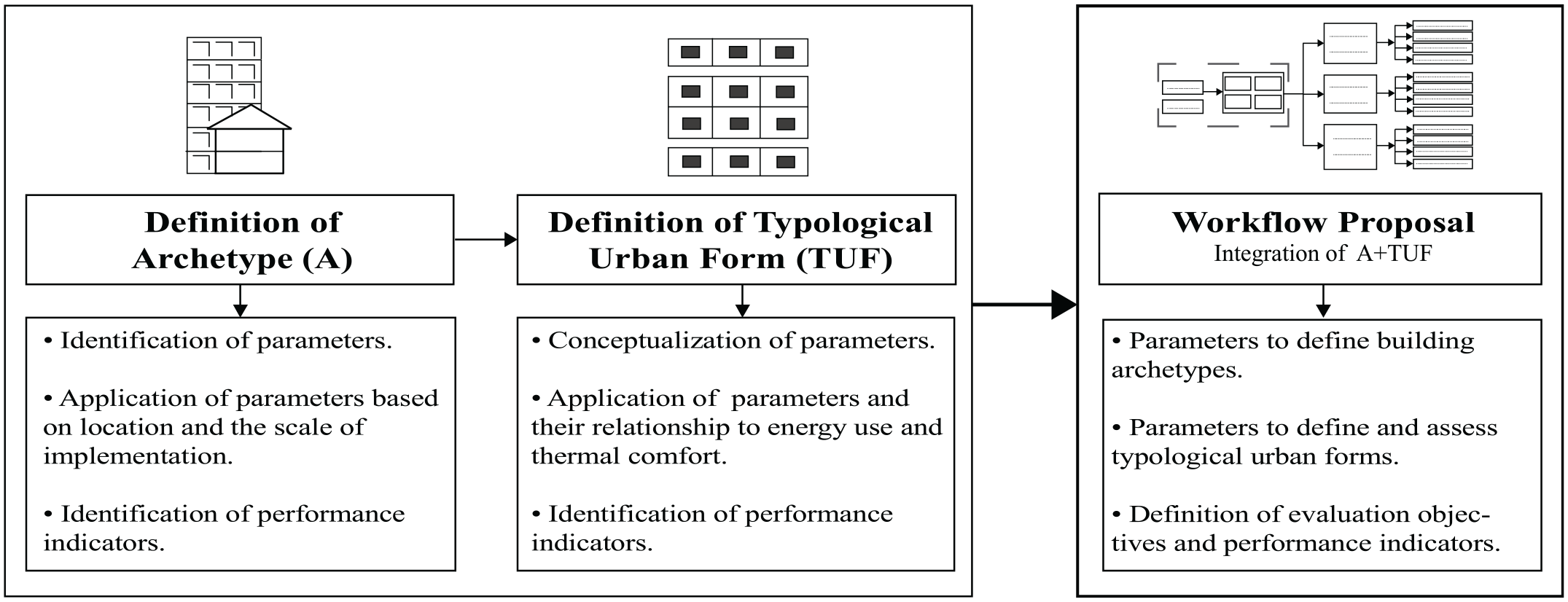
Flow chart of the research process.
The first stage consists of obtaining sufficient information to define archetypes in the study’s context. As a first step, parameters for the definition of building archetypes are identified, followed by an analysis of their application in different locations and scales of implementation so as to understand the relevance of their use in each context. This is because the parameters used in cities in other regions may not necessarily apply in LA. Finally, performance indicators are identified to assess archetype buildings.
The second stage involves conceptualizing urban form design parameters and identifying their impact on energy performance to define appropriate urban forms in LA cities. Firstly, a list of parameters is identified to conceptualize and classify them into design parameters at the building and urban levels. As a next step, the application of these parameters is analyzed in different study cases, considering the latitude due to the contradictions about how the parameters act in different locations. Then, performance indicators commonly used to assess its application in LA are identified.
Finally, in the third stage, a workflow is proposed in which TUF integrated in A are established. For this integration, a set of parameters considered suitable to the LA context are proposed at both the A and TUF levels. The chosen parameters are selected based on evidence of their impact on the outcomes documented in the scientific literature.
Definition of archetype
The steps to follow for archetype conformation are mainly classification or segmentation (Molina et al., 2020) and characterization (Reinhart and Cerezo Davila, 2016).
Classification or segmentation: This consists of classifying the building stock into subgroups of representative buildings. The number of archetypes depends on the parameters considered, such as climatic zone, building type, and construction period, among others (Reinhart and Cerezo Davila, 2016). The deterministic approach is the most common way to classify archetypes. Nevertheless, the study of Johari et al. (2020) has also identified probabilistic classifications, but they require historical data on energy demand as an auxiliary indicator. This improves the categorization of buildings, but access to such information or the availability of measured energy use data are the main challenges.
Characterization: This refers to the definition of a complete set of thermal properties, including building materials, infiltrations, building systems, and occupancy patterns for each archetype. Obtaining these data is often more difficult, as access to the information is often limited by privacy considerations or legal restrictions (Kristensen et al., 2018). Modelers often have to draw on different sources of information and frequently even have to rely on a sample building or expert opinions (Gonzalo et al., 2014; Reinhart and Cerezo Davila, 2016). Although the characterization of archetypes is generally carried out deterministically, that is, a single value is assigned to each parameter, a probabilistic characterization can be chosen if data are available, as recent studies have done (Johari et al., 2020). This is to deal with the uncertainties of the input data, which, for the most common parameters, are those related to occupant behavior and preferences (Sokol et al., 2017).
Identification of parameters
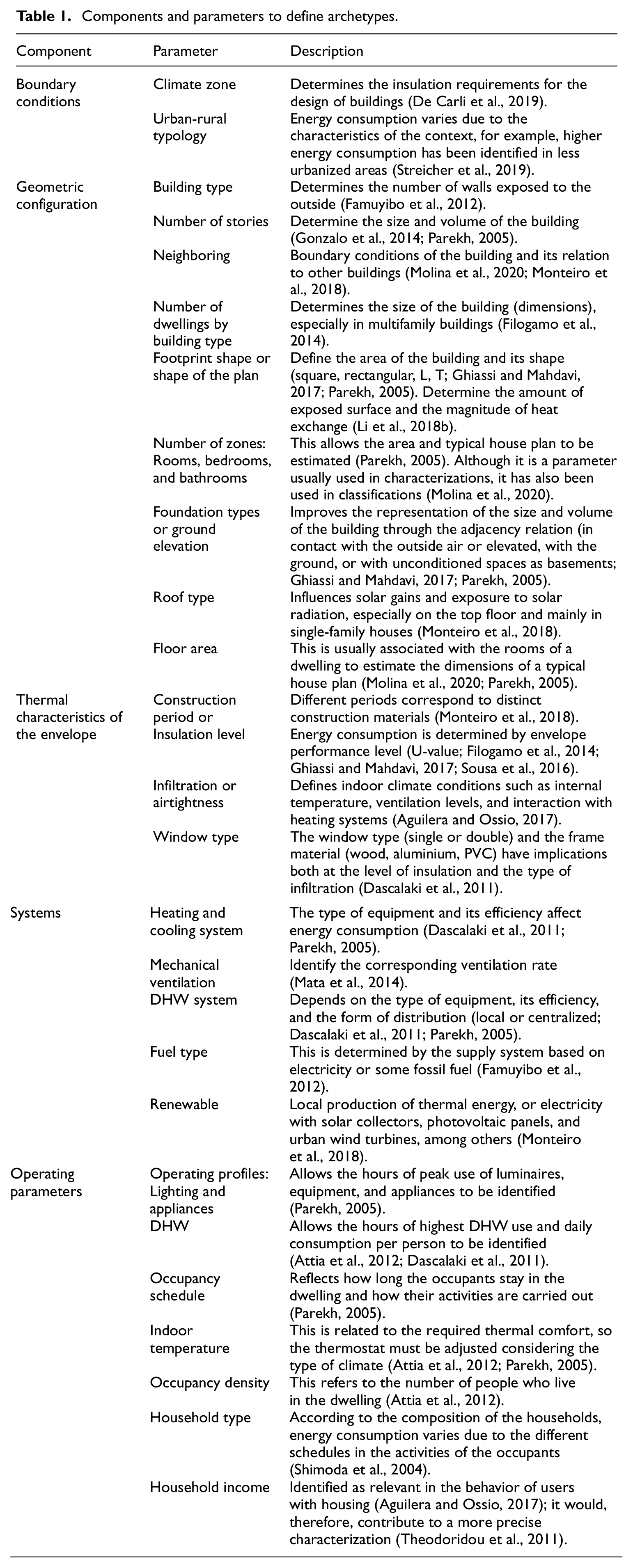
The parameters that classify and characterize archetypes can be grouped into different components. This research, drawing from several studies (Aguilera and Ossio, 2017; Ghiassi and Mahdavi, 2017; Parekh, 2005), categorizes them into five components. Table 1 identifies the components and their parameters. In addition, the incidence for each parameter on energy consumption is described, which makes it possible to clearly justify their selection in a specific residential park for the archetype classification stage.
Components and parameters to define archetypes.
Application of parameters in previous studies
Since there is no consensus on which parameters should be used to classify archetypes, the following is a review of several studies from different locations to determine the most used parameters. In addition, considering that LA cities present many difficulties at the time of accessing detailed information on the energy consumption of buildings or such information simply does not exist, archetypes with deterministic classification have mainly been considered. In Table 2, several investigations with applications on different spatial scales are analyzed to determine the most appropriate parameters to classify archetypes at the city level.
Parameters used in building archetypes classification.
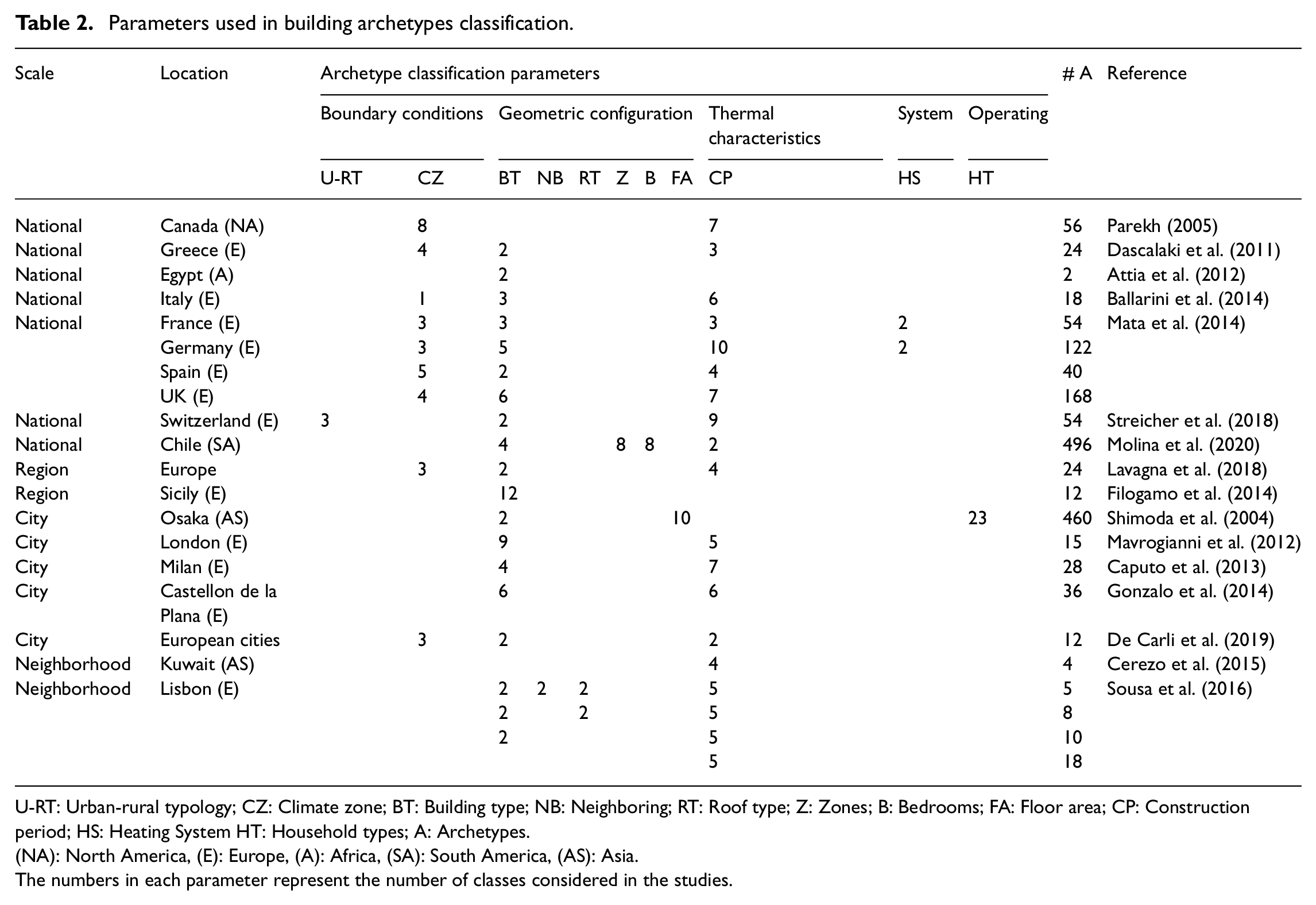
U-RT: Urban-rural typology; CZ: Climate zone; BT: Building type; NB: Neighboring; RT: Roof type; Z: Zones; B: Bedrooms; FA: Floor area; CP: Construction period; HS: Heating System HT: Household types; A: Archetypes.
(NA): North America, (E): Europe, (A): Africa, (SA): South America, (AS): Asia.
The numbers in each parameter represent the number of classes considered in the studies.
The papers reviewed consider archetypes at the national, regional, city, and neighborhood levels. The investigations that propose a classification of archetypes at the national and regional levels are based mainly on the boundary conditions, geometric configuration, and thermal characteristics components; while at the city or neighborhood levels, they omit the first component.
The application of one or several parameters from Table 1 has allowed them to develop from two to many archetype units (496). Thus, it is evident that there are no fixed parameters, nor a certain number of units that guarantee an adequate classification that can be generalized worldwide. However, European countries use at least three parameters in building classifications at the national level: climatic zone, building type, and construction period. On minor scales, however, they usually use at least two parameters (building type and construction period). Concerning the studies reviewed from other regions of the world, such as North America, South America, Asia, and Africa, it is not possible to generalize a minimum number of parameters for classification because only a few studies based on archetypes have been identified and these are not coincident.
Additionally, the parameters used in the archetype classifications are applied differently in each locality, since this depends on the characteristics of each housing stock. The following describes how some of the most common parameters are applied:
Concerning the building type parameter, at least two classes must be considered: single-family and multi-family dwellings, to define size. Some research works consider these two classes but take into account the number of households (Streicher et al., 2018) or the number of floors (Filogamo et al., 2014; Mata et al., 2014). In other studies, the building type is defined considering the position of the typologies in the context (Attia et al., 2012) or the dwelling in relation to the neighboring buildings (isolated or contiguous; Filogamo et al., 2014; Gonzalo et al., 2014; Sousa et al., 2016). A study based on a European project (TABULA) defines building size according to the number of dwellings (or apartments) and floors (Ballarini et al., 2014). Works are also identified in which the buildings are subdivided into more options to better determine their shape, such as the semi-detached house or the simple terraced house with attic (Caputo et al., 2013; Mavrogianni et al., 2012).
Regarding the construction period parameter, most of the research reviewed proposes groupings that reflect changes in construction practices, historical events, technological changes, and energy requirements of the standards. Other studies classify the construction period according to the level of thermal insulation (Dascalaki et al., 2011), the state of the buildings (Cerezo et al., 2015), and even if they are historic or modern buildings (De Carli et al., 2019). Finally, it has also been identified that some investigations consider temporary periods of 10 years, taking into account changes in building codes (Caputo et al., 2013; Streicher et al., 2018). After each period has been defined, the average U-values of each building element are considered (De Carli et al., 2019; Lavagna et al., 2018).
The building’s age also allows us to know other characteristics, such as the construction materials, the type of frame and glazing (Gonzalo et al., 2014), the level of airtightness, hot water equipment, and space heating and cooling systems (Parekh, 2005). This review shows that, in this parameter, European countries use between 3 and 10 classes (Dascalaki et al., 2011; Mata et al., 2014); while South America requires few classes, as is the case of Chile (Molina et al., 2020; the only study), which requires 2 (before and after the year 2007). This is because the regulations that require better thermal performance of dwellings have emerged recently, for example, 2015 in Colombia (Minvivienda, 2015), 2018 in Ecuador (MIDUVI, 2018), and 2021 in Peru (MVCS, 2021).
The climatic zone and urban-rural typology parameters are not analyzed because they are not applicable to the city scale. Concerning the other parameters used, their application responds to the specific characteristics of each housing stock and the specific objectives of each study. For example, one work of research considers the heating system for the classification of archetypes in four European countries, because heating continues to be the most relevant energy demand in residential buildings (between 59%–82%; Mata et al., 2014). However, this information is not always available, so its use in the classification of the housing stock is not usual. In another work, the estimated floor area parameter is used through the number of zones and the number of bedrooms for the classification of archetypes, considering it relevant due to its correlation with energy demand (Molina et al., 2020). Nevertheless, this has given rise to many archetypes, making it difficult to apply any kind of evaluation. In addition, it has been shown that its incidence in the energy demand is mainly for lighting rather than for heating or household appliances (except in the case of large families; Shimoda et al., 2004). The study by Shimoda et al. (2004) considers floor area and household type as significant to assess the effects of national policies on envelope improvement and the energy efficiency of equipment and appliances at the city scale. Finally, the paper of Sousa et al. (2016) considers the roof type (flat or pitched) as one of its classification parameters, because they present different thermal coefficients that particularly influence the thermal behavior of the top floor, mainly in single-family dwellings (Monteiro et al., 2018). Therefore, in cases where the roof is sloping with habitable space, its volume must be considered (Ghiassi and Mahdavi, 2017).
Performance indicators
The performance indicator represents a measure of predefined variables aimed at quantifying and communicating information to determine the direction and evaluation of ongoing processes (Rajabi et al., 2022). Table 3 analyzes the components of energy performance addressed in various studies that develop archetypes in order to identify those commonly used in residential buildings with their respective metrics. In some cases, these aspects are analyzed individually and in others they are grouped.
Performance indicators for energy performance analysis.
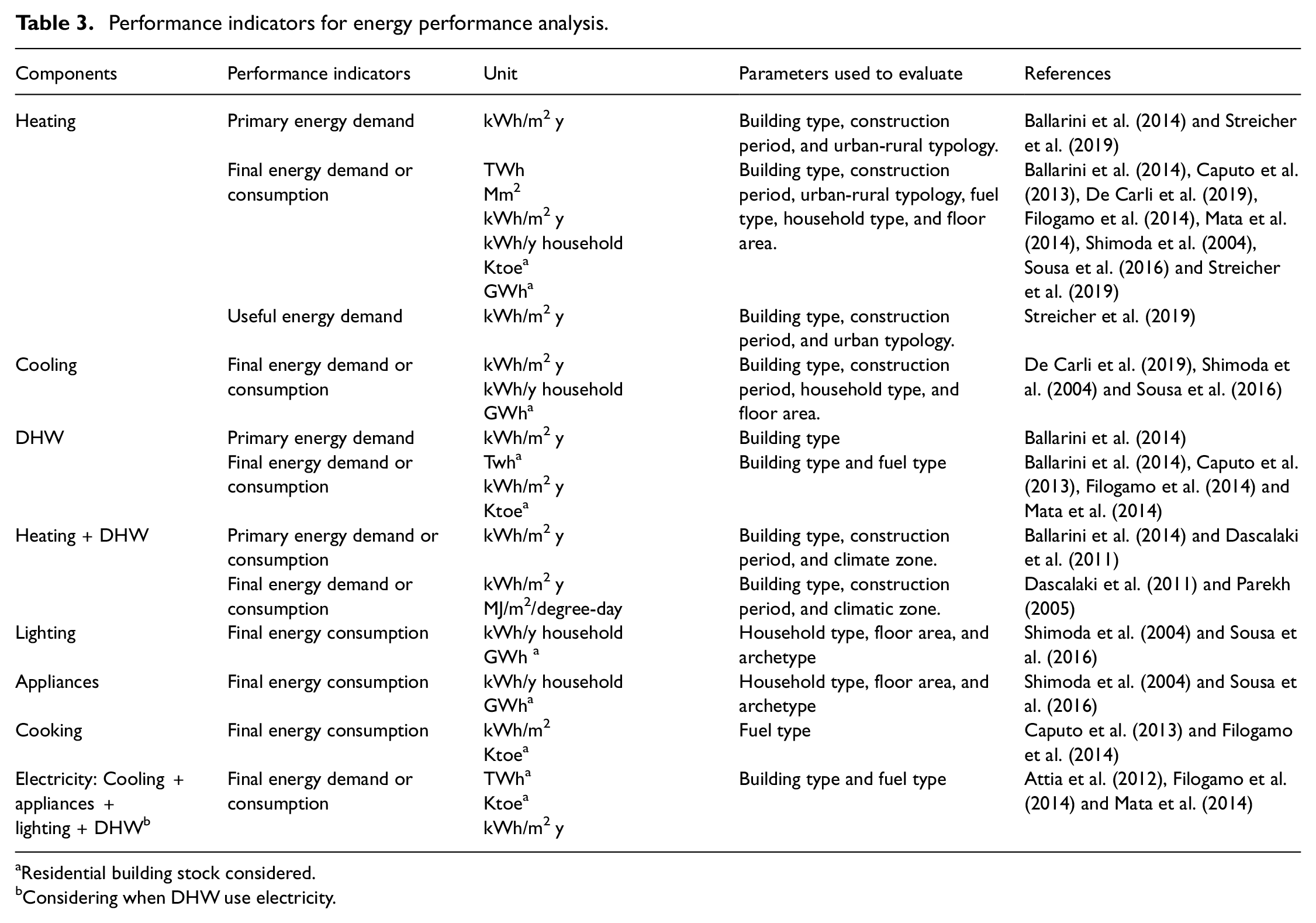
Residential building stock considered.
Considering when DHW use electricity.
It has also been identified that the temporal resolution used is 1 year, and although some research works express residential energy values for each building (Shimoda et al., 2004), archetype (Sousa et al., 2016), neighborhood (Sousa et al., 2016), city (Caputo et al., 2013), or region (Filogamo et al., 2014), it is common to normalize by floor area (m2), especially in indicators of thermal energy or by cooling. In addition, some parameters are considered to evaluate the performance indicators, since they provide a greater level of detail. For example, it is usual to disaggregate the results by building type in most components. Other parameters used correspond to the construction period, climatic zones, and urban-rural typology. The construction period parameter is common for thermal purposes, while for electrical components, it is less usual for them to be disaggregated by some type of parameter. However, some studies have considered the household type, the floor area, and the fuel type in addition to building type; the latter especially in the cooking and DHW components.
Definition of typological urban form
Identification and conceptualization of parameters
The design parameters of urban form are used in two areas, the first to develop urban typologies and the second to determine their impact on energy use in buildings or other environmental aspects, such as solar potential, daylight availability, and indoor and outdoor thermal comfort, among others. The development of urban typologies requires the simple and repeatable characteristics of a context (parameters) to reduce complexity and allow a more systematic comparative analysis of the built form (Ratti et al., 2003). Regarding the second aspect, the design parameters are chosen according to the study scale, objectives, and approach.
Urban form design parameters can be classified into two types: 1. Urban parameters and 2. Building parameters. Three and two categories are identified, respectively (Table 4). In most of the studies reviewed, urban form parameters are considered without making a distinction between building or urban. However, we consider it relevant to make this distinction due to the scope that each one could present in the decision-making process.
Parameters to define urban forms - simulation school.
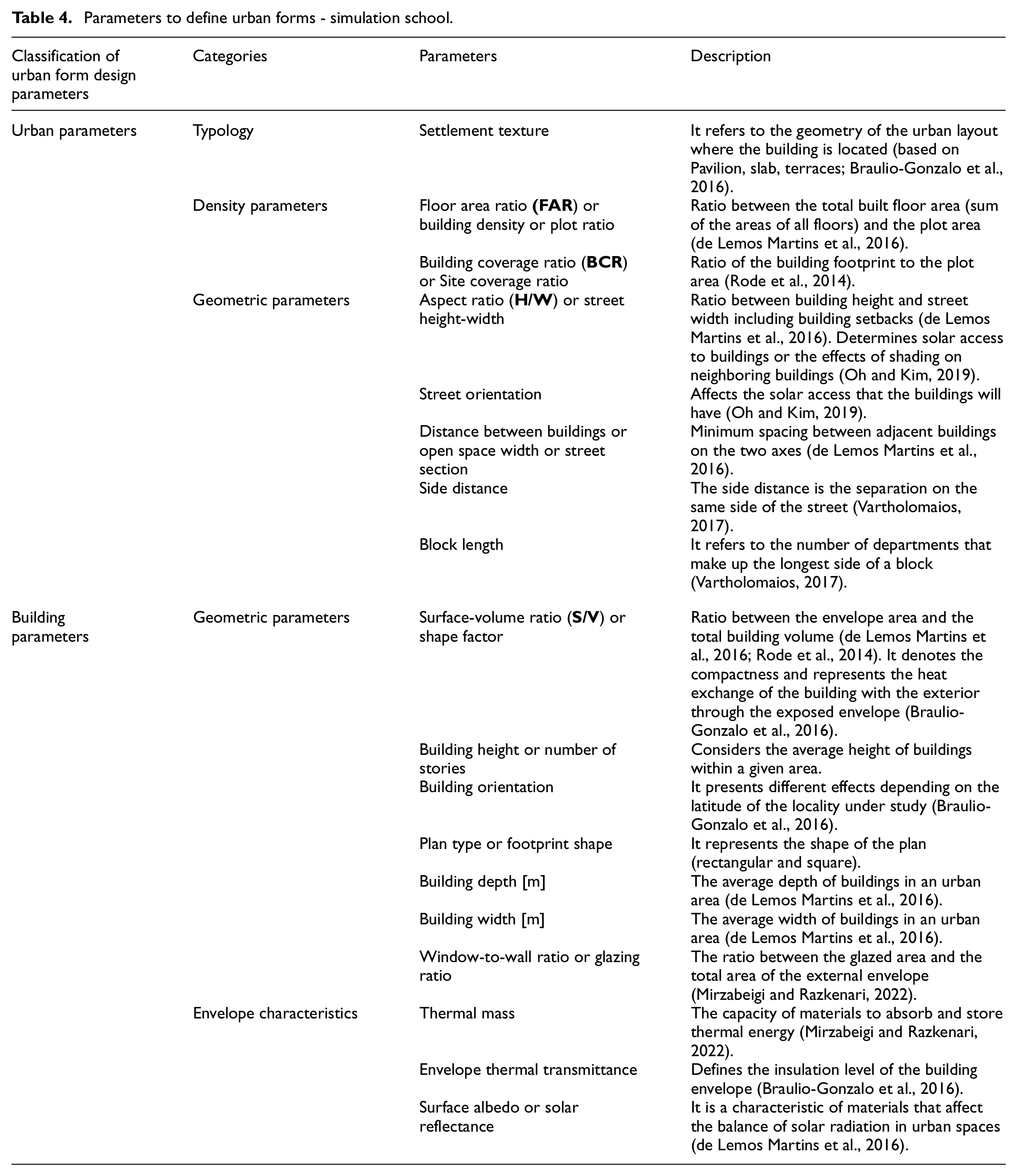
Table 4 presents the parameters of each category and a description that conceptualizes each one to support an adequate selection of parameters to define urban typologies.
Application of parameters in previous studies
There is no consensus on which parameters should be used to create urban typologies and to evaluate their relationship with energy performance and thermal comfort, but there is evidence that some of them have a significant impact. For this reason, Table 5 reviews several studies from different locations to determine the most used parameters and to understand their application. The frequently employed parameters to define urban forms include settlement texture type, building height, and aspect ratio (H/W). Orientation, for both the façade and streets, also stands out as a common parameter. Others, such as FAR, S/V, and thermal transmittance are common but limited to specific studies. The less explored parameters detail building characteristics, such as floor type, glass ratio, thermal mass, and surface albedo. Parameters defining street width on both axes are usually employed to outline scenarios, and the assessment of energy performance is conducted using parameters that include them, such as H/W.
Common urban form parameters.
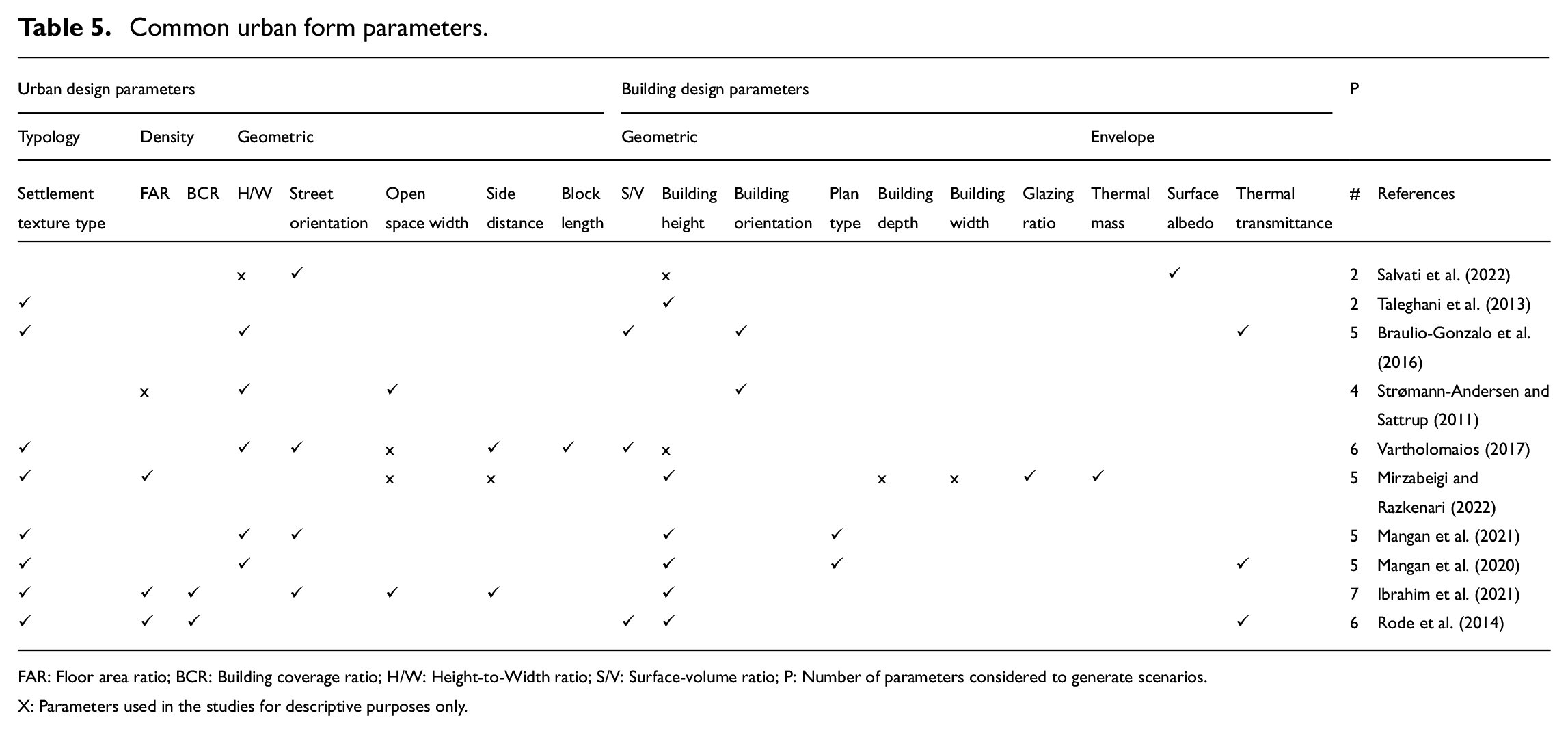
FAR: Floor area ratio; BCR: Building coverage ratio; H/W: Height-to-Width ratio; S/V: Surface-volume ratio; P: Number of parameters considered to generate scenarios.
X: Parameters used in the studies for descriptive purposes only.
Based on the reviewed studies, it is evident that the majority focus on the analysis of energy performance and indoor thermal comfort is rarely considered (Braulio-Gonzalo et al., 2016; Salvati et al., 2022; Taleghani et al., 2013). To evaluate these aspects, each study employs between two and seven parameters. The investigations that considered two parameters correspond to the studies of the urban canyon, while, at the block or matrix level, studies have considered between four and seven parameters. For the construction of scenarios, additional urban form parameters are usually considered. The number of scenarios depends not only on the number of parameters used, but also on the iterations performed with each one. For example, street orientation considers at least two scenarios: north-south and east-west. However, it can generate up to 7 different scenarios by considering orientations every 15° (Ibrahim et al., 2021). Therefore, defining the minimum parameters and the number of iterations for each is relevant.
Regarding the relationship between design parameters and energy performance and thermal comfort, it is evident that the settlement texture “courtyard” contributes to lower energy consumption in different climatic zones such as arid, temperate, and mild climates (Braulio-Gonzalo et al., 2016; Ratti et al., 2003; Taleghani et al., 2013). Compactness also plays a significant role in reducing energy demand, especially for heating (Braulio-Gonzalo et al., 2016; Vartholomaios, 2017), contributing to achieving better levels of indoor thermal comfort. However, the energy demand for lighting may increase (de Lemos Martins et al., 2016; Taleghani et al., 2013). Regarding orientation, Vartholomaios (2017) identifies the fact that buildings perform better when oriented toward the South for the passive use of winter solar gains in a Mediterranean climate. Meanwhile, Ibrahim et al. (2021) identifies better levels of energy performance in 45° orientations in a hot, arid zone. Likewise, de Lemos Martins et al. (2016), suggests avoiding a west orientation to reduce solar gains in a tropical climate.
According to the study by (Mangan et al., 2021), building height and H/W play a more important role than the orientation in a temperate-humid climate. The study by Braulio-Gonzalo et al. (2016) found that a higher H/W implies worse thermal comfort conditions; while Vartholomaios (2017) considers this parameter shows a limited effect on total consumption, although its seasonal influence on energy is very strong. A low H/W supports solar access throughout the year, which is beneficial in winter but detrimental in summer. The same happens with the side distance parameter. These parameters, along with albedo, are also identified by de Lemos Martins et al. (2016) as relevant because intense solar radiation in tropical climates significantly impacts building surfaces such as roofs and façades, producing undesirable heat gains.
From the reviewed studies, it has been demonstrated that research relating urban form to residential indoor thermal comfort is limited. Some studies, in addition to analyzing the energy performance, addressed other environmental aspects, such as solar potential (Marques et al., 2016; Strømann-Andersen and Sattrup, 2011), daylight (Strømann-Andersen and Sattrup, 2011), and outdoor thermal comfort (Ibrahim et al., 2021; Mangan et al., 2020; Mirzabeigi and Razkenari, 2022; Salvati et al., 2022). Moreover, it has been observed that a significant number of the reviewed studies were conducted at high latitudes (approximately 30°N and 55°N). No studies about urban form related to energy performance or indoor thermal comfort were found in LA. However, in this region, studies of urban form related to other environmental aspects were identified, such as solar potential (Arboit et al., 2008; de Lemos Martins et al., 2016), and urban heat islands (Ramírez-Aguilar and Lucas Souza, 2019).
The lack of consensus on the parameters that should be minimally used in urban-scale studies added to the debate that, in some cases, remain contradictory, which has led to the conclusion of the importance of assessing urban form parameters in different climates and progressing toward multi-objective evaluations. This is because the trade-offs among various environmental aspects can explain certain contradictions.
Performance indicators
Table 6 shows the indicators for energy performance and indoor thermal comfort with their respective metrics.
Performance indicators for energy performance and indoor thermal comfort.
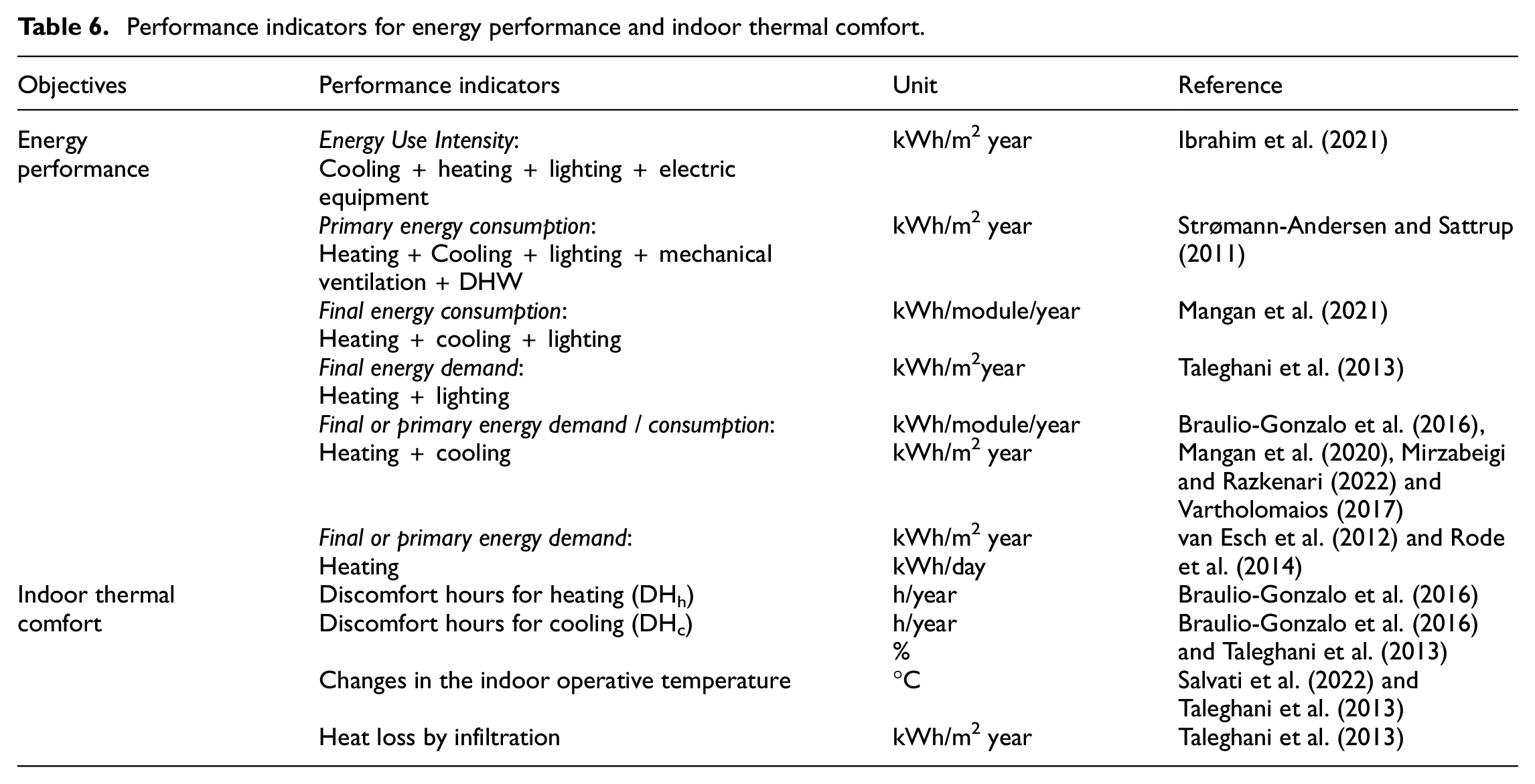
As for energy performance, although studies that consider heating and cooling loads predominate, various combinations of these components were also identified, such as space heating + lighting, heating + cooling + lighting, etc. Regarding other environmental aspects, most of the studies found in the scientific literature address them in isolation. In other words, several studies relate the urban form with outdoor thermal comfort (Perini and Magliocco, 2014; Yasa, 2017) or with solar potential (de Lemos Martins et al., 2016). In addition, a few studies relate urban form to energy performance and any additional aspect (Braulio-Gonzalo et al., 2016; Ibrahim et al., 2021; Mangan et al., 2020; Mirzabeigi and Razkenari, 2022; Salvati et al., 2022; Strømann-Andersen and Sattrup, 2011; Taleghani et al., 2013). However, in recent years, greater importance has been given to holistic evaluation (Mirzabeigi and Razkenari, 2022), since it has been identified that the effect of performance trade-offs between energy and other environmental aspects can help urban designers and decision-makers to achieve more comfortable and healthy spaces (Natanian and Auer, 2020). Therefore, taking them into account in LA cities is essential for new urban developments and existing ones that are growing.
Workflow proposal
In this section, the third stage is presented, which consists of the proposal of a workflow that aims to integrate two simulation-based physical models, defined through optimal parameter selection. Specifically, we propose the integration of archetypes within typological urban forms (A+TUF). Additionally, evaluation objectives are established with their respective performance indicators (Figure 4). As a first step, from the analysis carried out in section 2.2.1, a set of parameters is derived, considering the particularities of LA buildings for the definition of A. Likewise, as a result of the analysis in section 2.2.2, a set of design parameters is established for defining TUF. In neither case are the selected design parameters repeated. Finally, performance indicators are defined for the initially established evaluation objectives (passive energy and indoor thermal comfort), considering the research purposes and the LA context. It is possible to include additional evaluation objectives of other environmental aspects, such as energy consumption, solar potential, and outdoor thermal comfort, for a holistic assessment.
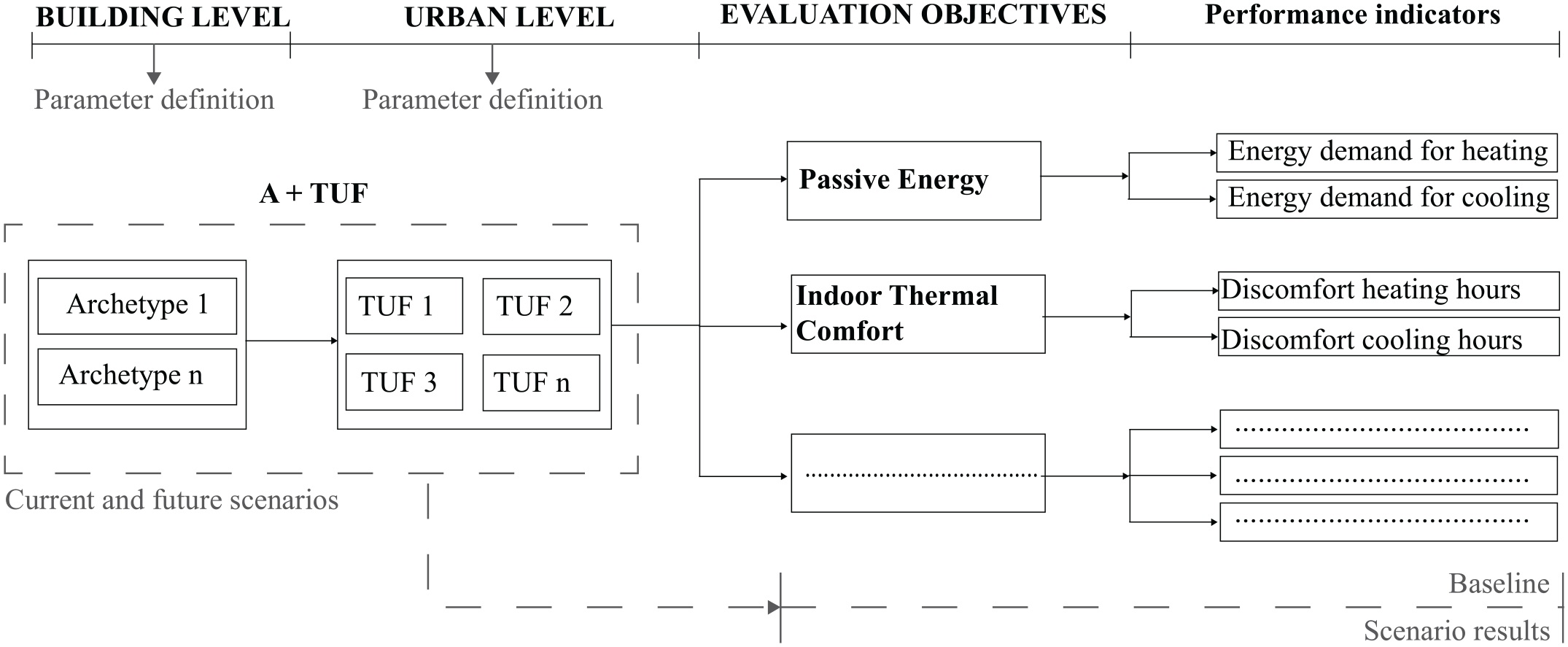
Workflow to integrate methodologies for application in Latin America.
The final output of the A+TUF model is an integrated urban energy model that can be used to predict and understand the energy performance and indoor thermal comfort of buildings in various scenarios (present and future). This workflow will contribute to evidence-based decision-making, allowing the development of sustainable urban neighborhoods with efficient buildings in LA.
Parameters to define building archetypes
Concerning the first step, based on section 2.2.1, it has been found that for the classification of archetypes on a city scale, two components are often used: geometric configuration and thermal characteristics. The other components are mainly employed for the characterization stage.
The suggested parameters for classifying archetypes in LA cities are limited to the geometric configuration component (Table 1). The thermal characteristics component is excluded because, in general, buildings of LA residential stock exhibit high thermal transmittance due to the absence of insulating materials, as evidenced in (Palme et al., 2017). The most significant differences in insulation levels, considering different construction periods, are mainly found in rural buildings (outside the scope of this study) that use vernacular materials such as adobe, rammed earth, bahareque, among others (Baquedano et al., 2021), and in the earliest urban constructions. However, the representation of these buildings in urban residential areas is generally low, as they have been replaced by modern or quickly installable materials despite their high thermal transmittance. These materials include concrete blocks or bricks for walls, concrete slabs for floors, and concrete slabs or metal sheets for roofs, as evidenced by studies conducted in cities in Ecuador, Chile, Peru, and Argentina (Arboit et al., 2008; Palme et al., 2017; Torres-Quezada et al., 2022).
This means there is no variation in the thermal transmittance values of the building envelope that can be associated with construction periods that, through regulations, present significant changes. In addition, mandatory thermal conditioning regulations are recent in some LA countries. Consequently, little or nothing has been implemented due to the lack of the mechanisms that allow municipalities to effectively monitor compliance, as in the case of Ecuador (Silvero et al., 2019). Other reasons include the limited scope of energy efficiency regulations does not cover residential buildings, as in Peru (MVCS, 2021);or because minimum requirements for thermal transmittance are not established, because energy reduction targets are established, as is the case in Colombia (Minvivienda, 2015). Regarding the remaining parameters within this component, such as window type and infiltrations, the use of simple glass and carpentry without a thermal break predominates. Therefore, these parameters should be used to characterize the buildings and not to classify them. In a study conducted in three cities of a developing country in another context (Egypt), the thermal characteristics component was also not considered for archetype classifications because their reality with respect to buildings is very similar to that mentioned in LA (Attia et al., 2012). However, considering different U-values in the building envelope may be relevant for the scenario analysis (Shimoda et al., 2004), in which the effectiveness of regulations or new proposals are evaluated.
Within the geometric configuration component, we suggest considering three parameters: building type, number of stories, and roof type (Figure 5). According to the scientific literature, these parameters define the shape, size, and volume of the buildings to determine the exposed envelope area, and therefore, the incidence of heat gains and losses.
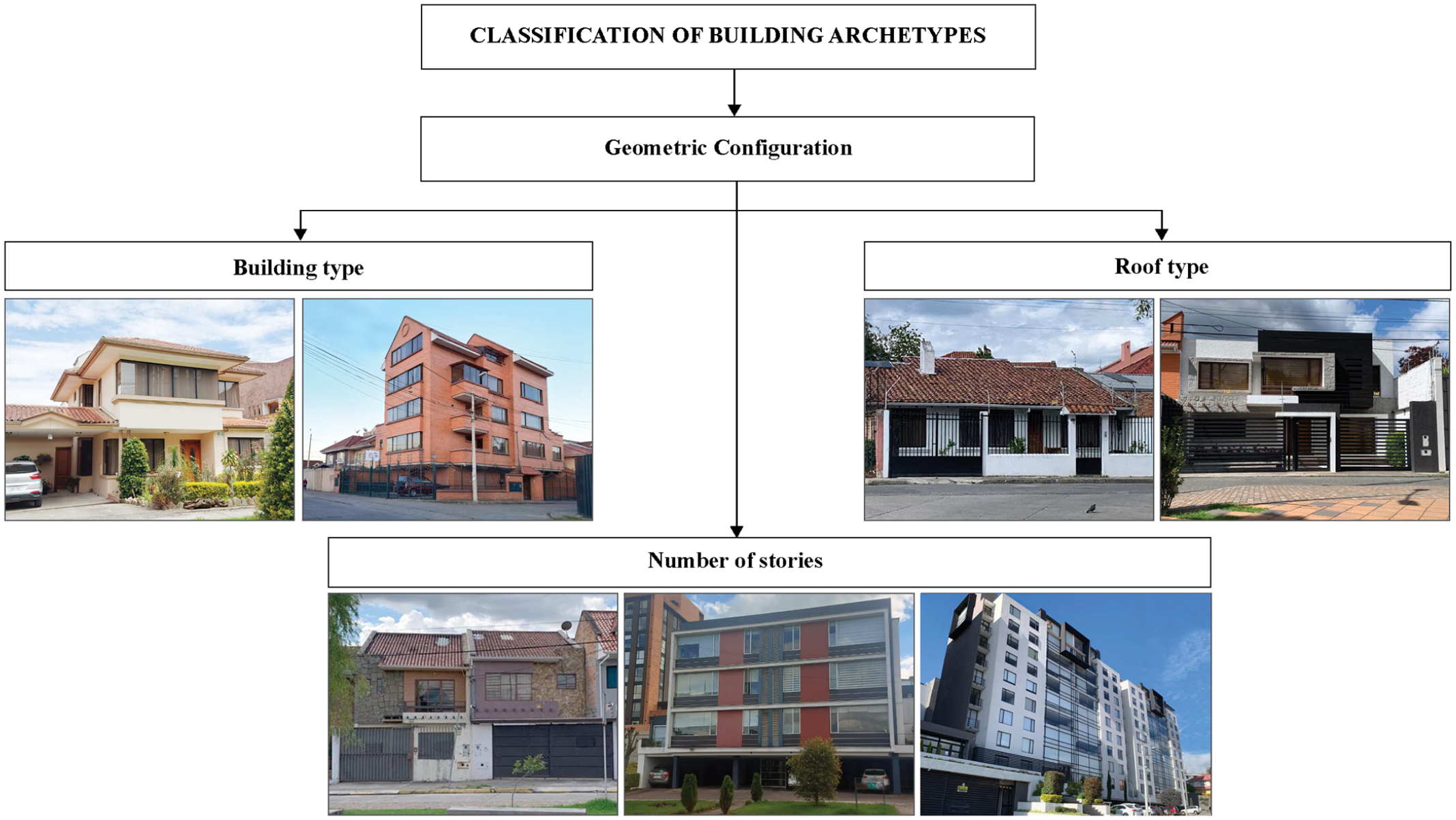
Proposal of crucial parameters to classify archetypes in Latin America.
Regarding the building type, the predominant houses in LA are single-family, low rise (1 –3 floors depending on the city), as evidenced by some studies in different countries (DANE, 2018; Molina et al., 2020; Palme et al., 2017; Torres-Quezada et al., 2022). However, in recent years, there has been a trend toward an increase in apartments in medium- or high-rise buildings, impacting energy demand and thermal comfort in urban developments. Consequently, the number of stories becomes an important aspect. One of the studies that shows this variability in energy demand was conducted by Palme et al. (2017) for four cities on the South American Pacific coast. Regarding the roof type, its importance lies in low-latitude regions (a substantial part of LA) where the incidence of solar radiation is almost perpendicular, at least once a year. In low-density urban areas, the roof becomes the most exposed part of the envelope, receiving more solar radiation than sun-facing façades (Mendoza, 2005). This emphasizes the significant role of the roof in a building’s energy balance. Moreover, indoor comfort conditions are also affected, especially in naturally conditioned buildings (Cárdenas-Rangel et al., 2022). Despite many LA cities being in the tropical zone, the presence of the Andes Mountains results in cold climates in certain locations. Consequently, there may be heat gains or losses through the roof depending on its altitude. However, they also depend on the roof shape (Tang et al., 2021), which, at this latitude, if sloped, promotes solar reflection. Likewise, the materials are associated with the roof shape, identified in this part of the world as reinforced concrete for flat roofs and Eternit with tiles or metal plates on sloping roofs (Palme et al., 2017; Torres-Quezada et al., 2019, 2022). Metal roofs are usually used for their low installation cost. However, they offer low resistance to heat flow, especially at peak solar radiation and in its absence (Torres-Quezada et al., 2019).
The parameters not included, such as the number of dwellings by building type, the number of rooms, bedrooms or bathrooms, or the floor area, are not practical for classification because the number of archetypes would increase significantly, as shown by some studies (Mavrogianni et al., 2012; Molina et al., 2020; Shimoda et al., 2004). However, they are useful for characterizing representative buildings. We do not consider the relationship of buildings with the environment (detached, isolated) because it is more appropriate to take into account in the TUF classification. The foundation type may be a relevant parameter to consider. However, it has been shown that, while ground elevation is usually common in warm climates, its application is more frequent in rural areas than urban ones.
Parameters to define typological urban forms
Concerning the second step, based on section 2.2.2, it has been determined that specific design parameters should be excluded. For example, street width is already incorporated into the aspect ratio parameter, and the block length lacks relevance in terms of energy performance. Additionally, parameters that can be omitted are those used in the classification and characterization of building archetypes, such as height, plan type, width and depth of the building, thermal mass, and thermal transmittance. Therefore, the design parameters to consider, either for defining TUF or scenario analysis, are as follows (Figure 6).
Settlement texture: The rapid urbanization and city expansion in LA have caused a need to promote densification, which means changes in the settlement’s textures. The impact on energy performance and thermal comfort are significant (Gonzalo et al., 2014; Ibrahim et al., 2021; Mangan et al., 2020), as it determines the relationship of buildings with the neighborhood.
FAR and BCR: These are density indicators provided by local urban regulations. They must be analyzed together to obtain accurate interpretations. Building density can lead to various urban typologies that affect energy performance, thermal comfort, or other environmental aspects. In some cities in LA, it has been identified that BCRs are related to the predominant building typology (Palme et al., 2018).
H/W: The incidence of this parameter on energy performance and thermal comfort is closely related to orientation, as it relies on the solar trajectory (Gonzalo et al., 2014; Vartholomaios, 2017). In warm climates, it is more convenient to have narrow streets to limit solar exposure on façades (de Lemos Martins et al., 2016). However, this measure may affect natural lighting and ventilation (Ko, 2013). In cold climates, this criterion would affect solar gains, increasing heating demand. Therefore, it is relevant to identify a balance between various objectives so as to avoid contradictions.
Street orientation: Its impact varies depending on the latitude (Braulio-Gonzalo et al., 2016). In much of LA, situated in the intertropical zone (low latitude), temperatures exhibit minimal annual variation, with a significant daily thermal amplitude. The sun’s path is almost vertical the closer it is to the equator; hence, in cities with a warm climate, streets facing East-West are desirable to improve their energy efficiency (de Lemos Martins et al., 2016; Palme et al., 2017). Conversely, for cold climates (such as in presence of the Andes Mountains), the criteria are reversed in order to ensure solar gains.
Side distance: A lateral distance between neighboring buildings generates urban forms that correspond to the pavilion or slab typology. Local building codes typically set the minimum distance to plot boundaries (Vartholomaios, 2017). Its incidence is mainly related to solar access and natural lighting.
S/V: It is known that low values reduce heat exchanges with the environment (Vartholomaios, 2017), thereby enhancing energy performance. This parameter is commonly used for interpretations (Taleghani et al., 2013).
Glazing ratio: its impact on energy consumption and indoor thermal comfort largely depends on window orientation, distribution, and shading elements, especially in naturally conditioned buildings (Vartholomaios, 2017). There is evidence that, in recent decades, there has been a trend to increase the size of glazed surfaces in LA cities (Cárdenas-Rangel et al., 2022; Torres-Quezada et al., 2022), resulting in greater thermal discomfort due to the use of windows with high thermal transmittance (Cárdenas-Rangel et al., 2022).
Surface albedo: Its impact on energy performance and thermal comfort is more significant in warm climates (Salvati et al., 2022). Given the solar trajectory in cities at low latitudes, this parameter becomes more important for horizontal surfaces. For example, a high albedo in roofs generates a substantial reduction in energy demand (Cárdenas-Rangel et al., 2022).
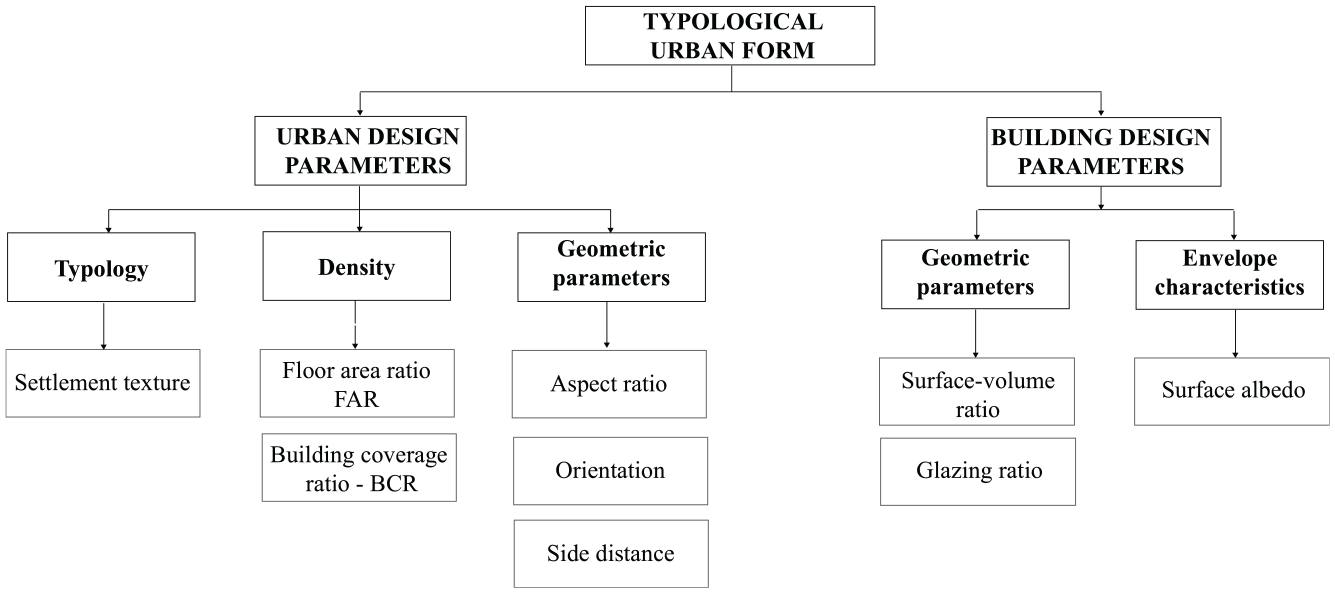
Proposal of parameters to define typological urban forms in Latin America.
Evaluation objectives and performance indicators
In several reviewed studies, the models focus on indicators that require the consideration of active thermal systems to estimate energy consumption. This highlights a lack of research addressing energy performance from a passive perspective (Braulio-Gonzalo et al., 2016). Given that, in most LA cities, homes are commonly naturally conditioned, either due to moderate climatic conditions or socioeconomic limitations, there is significant interest in enhancing the energy efficiency of buildings through passive strategies to ensure thermal comfort. In this context, prioritizing performance indicators to assess the passive energy performance and indoor thermal comfort is crucial to provide an accurate diagnosis. At the level of archetypes and urban forms, our research has identified several performance indicators, which we have classified into three evaluation objectives: passive energy, indoor thermal comfort, and energy consumption.
Passive energy: It is assessable by quantifying the energy demand for heating (EDh) and cooling (EDc) necessary to maintain occupant comfort in a building. The identification of the energy demand in a building does not necessarily entail energy consumption, but it does indicate the possibility for motivating occupants to use a heating, ventilation, and air conditioning (HVAC) system to improve thermal conditions. Considering that many LA cities have a non-extreme climate, quantifying passive energy reveals a potential to improve building performance. These values are expressed in kWh/m2year.
Indoor thermal comfort: Within the limited studies combining energy performance and indoor thermal comfort, indicators such as discomfort hours (DHh and DHc, heating and cooling, respectively) quantify the duration in which spaces fall outside the range deemed comfortable. They are expressed in h/year.
Energy consumption: Although studies that consider heating and cooling loads predominate, as mentioned above, not all LA cities have HVAC systems installed in homes. However, other components such as lighting, appliances, mechanical ventilation, cooking, and DWH are also considered within energy consumption. They are expressed in kWh/m2year.
For the purposes of this study, which is primarily focused on the incidence of geometric parameters at the building and urban levels, the first two evaluation objectives were considered within the proposed workflow. However, for holistic evaluations, additional objectives can be included.
Discussion
Two fields have been identified in the scientific literature to analyze the energy performance of buildings at the urban scale. The first focuses on buildings using bottom-up models, while the second focuses on urban form. There is evidence from only one study, conducted by Braulio-Gonzalo et al. (2016), that attempts to integrate these two areas of knowledge to leverage the potential of each. However, the referenced research is conducted for a city in a developed country (Spain) utilizing GIS, cadastral information, and statistical models, as the technique employed is the building-by-building bottom-up model. As mentioned above, this information is not always available for cities in developing countries, such as those in LA.
One of the main contributions of this research is the proposal of integrating archetypes and typological urban forms (A + TUF), which involves both areas of knowledge employing the archetype technique instead of the building-by-building technique. In this way, the required information does not depend on cadastral data, and it is possible to rely on expert participation in the absence of disaggregated urban-level databases or when the available information is unreliable. Furthermore, by using simulation-based models, the lack of access to energy consumption data is no longer a limitation.
Another contribution of this study is the identification of the minimum parameters necessary for defining A and TUFs in urban areas, based on the impact of their results in the scientific literature (section 2.2) and considering the particularities of the LA context (section 2.3). To define A, the crucial parameters are three: building type, number of stories, and roof type. And to define TUF, nine suitable parameters were identified: Settlement texture, FAR, BCR, aspect ratio, orientation, side distance, surface-volume ratio, glazing ratio, and surface albedo.
The three parameters identified as the minimum necessary for developing A in LA are related to the geometric configuration component. Their relevance lies in the ability to define the shape and size of buildings, which in turn determines the exposed envelope area and, consequently, the heat gains or losses. Furthermore, the scientific evidence presented in this document has demonstrated that considering additional parameters would increase the number of archetypes, complicating scenario planning without necessarily improving result accuracy. Regarding the parameters related to the thermal characteristics of the envelope, commonly used in developed countries, do not show significant variations in terms of insulation or thermal transmittance. This is because energy efficiency regulations for the residential buildings in LA have recently emerged, as described in section 2.2.1.2. However, in the future, when urban residential buildings in LA meet minimum envelope requirements and there are significant differences in construction methods across various climate zone, it will be necessary to include parameters related to the thermal characteristics of the envelope.
Regarding the parameters established as suitable to define TUF, these correspond to a flexible framework that can be adapted to include other relevant parameters. These may arise from the analysis of a specific locality, or from the urban transformations occurring in LA cities, as they are constantly changing. At the moment, the proposed parameters respond to a comprehensive analysis of the scientific literature and are complemented by the parameters defined in A for LA. For example, in the verticalization processes of LA, the generation of models that results from integrating A and TUF will allow the evaluation of the energy performance and thermal comfort of residential buildings under different scenarios. The results will provide evidence to improve city planning in terms of defining appropriate building heights, aspect ratios, and side distances, among other aspects that promote passive design in buildings.
Once the models are generated, their accuracy depends on the quality of the input data. To ensure that the developed archetypes are representative of the residential stock in LA, the minimum parameters defined in this study must have a statistically significant representation. For example, it has been found that Census and Building Permits databases in countries, such as Ecuador and Chile, contain disaggregated city-level information regarding the three required parameters (building type, number of stories, and roof type), and the data quality is good enough to derive archetypes (INEC, 2022a, 2022b; Molina et al., 2020). Once the archetypes are generated, they must be calibrated and validated after the energy simulation process to reduce prediction errors.
Model validation requires available information on actual energy consumption to make comparisons with the generated simulations. However, this information is not usually disaggregated by end-use type. In LA cities, thermal information is not necessarily included in total energy consumption data. This is because the use of HVAC system is uncommon in the residential sector, as mentioned in section 2.1. Therefore, for model validation, it is suggested to use available in-situ measurements, as in the case of Chile (Molina et al., 2020), or to perform in-situ measurements on a sample of buildings representative of the defined archetypes (Balaras et al., 2016). Generally, in-situ measurements consider at least air temperature and relative humidity, while energy simulations use simulation software such as DesignBuilder, which is an interface for the EnergyPlus simulation engine used in various studies (Akin et al., 2023; Braulio-Gonzalo et al., 2016; Mangan et al., 2020). The results can be compared for the performance indicators defined in this study: energy demand and discomfort hours for heating and cooling.
Concerning data availability, Census databases contain information on the parameters building type and roof type. The roof type is derived from the materials used. For instance, buildings using reinforced concrete can be considered to have a flat roof, while those using metal sheets, fiber cement sheets, and tiles correspond to a pitched roof. The Census databases of LA countries, where this information is collected, are available from CEPAL (2020). As for the parameter number of stories, this information can be found in the Building Permits databases registered by each local government. It is important to integrate databases from multiple years to ensure the information is representative of the residential stock. It is also suggested to refer to land use and occupancy plans, as these establish the type of density planned for each city. This parameter is important because it helps identify the verticalization processes occurring in various LA cities.
Regarding the parameters for the development of TUF, access to representative statistical information is more limited, as it primarily pertains to urban morphology characteristics. However, some parameters related to building design and the plot can mainly be obtained from Building Permits databases. These databases usually contain detailed information such as the number of stories, total construction area, plot area, construction material of the envelope, and the type of implantation of the building (attached, detached, semi-detached, etc.). This information can be used to derive values for surface-volume ratio, surface albedo, FAR, and BCR. For example, this information is available in the Building Permits database in Ecuador (INEC, 2022b).
Other sources of information to consider are cadastral records, scientific literature, and experts’ assumptions. As mentioned throughout the document, cadastral records are generally not available in LA. Scientific literature can be another option, provided there is sufficient research on a specific locality. Lastly, for localities that lack reliable databases, it is valid to define representative values for the required parameters based on expert consensus and minimal local regulatory guidelines to fill any information gaps. This approach can be useful for parameters such as orientation, aspect ratio, side distance, or glazing ratio, for which no databases have been identified, as in the case of Ecuador. This option is applicable not only for defining TUF but also for defining archetypes. An example of this is presented in a recent study (Akin et al., 2023). However, if this missing information is collected in future censuses, building permits, or any other databases, that information would be prioritized to avoid making assumptions.
In fact, local and national governments are expected to promote the collection of new information in their databases to reduce uncertainty in certain parameters and obtain useful data for the construction and characterization of models for energy simulations. For instance, data such as ground floor area, building volume, window area, type of glazing and carpentry, year of construction, orientation, type of fuel used in case of having a heating system, and insulation levels (considering the internal and external finishes).
Conclusions
Compared to the European Union (EU), Latin American (LA) countries are much slower in implementing policies to improve energy performance and thermal comfort in the residential building stock. This field has been relatively unexplored in LA, especially considering the influence of the urban context. Therefore, this study proposes a workflow proposal that integrates building archetypes (A) and typological urban forms (TUF), two simulation-based models adaptable to local constraints. The integration of A into TUF will allow us to comprehend the impact of building design on the surrounding environment and, reciprocally, how urban design affects buildings.
For the conformation of A and TUF, this research proposes a selection of parameters specific to the LA context, based on evidence of their impact in scientific literature and local particularities. It has been identified that the minimum parameters required for the development of A are three, and for TUF are nine. However, as more information or data collection techniques become available, these parameters could increase, enhancing the representation of local particularities. Consequently, the development of the models could achieve a statistically significant representation, thereby improving their reliability.
The prediction of energy performance is carried out by the chosen energy model. The model selected by this study is simulation-based. For this purpose, the A and TUFs are developed by the modeler according to their needs. This will allow identifying deficiencies in recent energy efficiency regulations, while also taking into account relevant aspects of land use and occupancy plans. Likewise, it will also provide solid evidence to influence public policies and decision-making by urban planners and building designers can be influenced to improve the quality of living spaces in LA by taking advantage of passive design strategies. To evaluate passive energy performance and indoor thermal comfort, four performance indicators have been proposed along with their respective metrics. These indicators include the energy demand and discomfort hours (heating and cooling).
The proposed workflow can be applied to any city in LA and even to cities in other developing countries located at low latitudes. Furthermore, the proposal can encompass additional evaluation objectives to investigate further environmental aspects and their relationship with the energy performance of buildings, thus enabling holistic assessments.
The future goal is to implement the workflow in a city in LA. Consequently, the next phase will involve defining A for a specific case and then integrating them into TUF. In this stage of the research, it will be necessary to address the process of model validation and calibration to ensure reliability and applicability. Once the models are developed, the simulation stage will enable the assess of not only the current state of the residential stock in a city, but also exploration of different scenarios. This will facilitate the creation of more efficient urban models and promote sustainable urban planning for the region.
Footnotes
Appendix
Declaration of conflicting interests
The author(s) declared no potential conflicts of interest with respect to the research, authorship, and/or publication of this article.
Funding
The author(s) disclosed receipt of the following financial support for the research, authorship, and/or publication of this article: This work was supported by the Spanish Ministry of Science and Innovation and the European Regional Development Fund through the SMARTECH project “Towards Smart Buildings, research of energy monitoring techniques for the evaluation, certification and optimization of control,” project reference: PID2021-126739OB-C22 (MCIN/AEI/FEDER, UE). Open Access funding provided by University of the Basque Country.
