




Abstract
Current energy and climate policies are formulated and implemented to mitigate and adapt to climate change. To inform relevant building policies, two bottom-up building stock modelling approach: 1) archetype-based and 2) Building-by-building have been developed. This paper presents the main characteristics and applications of these two approaches and evaluates and compares their ability to support policy making. Because of lower data requirements and computational cost, archetype-based modelling approaches are still the mainstream approach to stock-level energy modelling, life cycle assessment, and indoor environmental quality assessment. Building-by-building approaches can better capture the heterogeneous characteristics of each building and are emerging due to the development of data acquisition and computational techniques. The model uncertainties exist in both models which may affect the reliability of outputs, while stochastic archetype models and timeless digital twin model have the potential to address the issue. System dynamics modelling approach can describe and address the dynamics and complexity of often-conflicting policies and achieve co-benefit of multiple policy objectives.
Practical applications
This paper aims to provide comprehensive knowledge on building stock modelling for modellers and policymakers, so they could use a building stock model with an appropriate user interface without having to fully understand the underlying algorithms or complexities.
Keywords
Introduction
Climate change is the greatest challenge facing humanity in the 21st century. Having achieved 20-20-20 targets, EU (European Union) recently adopted a 55% net emissions reduction target by 2030, paving the way to achieve climate neutrality in the EU by 2050. 1 As one of the largest greenhouse gas emitters, the building sector is crucial in addressing warming climate, responsible for approximately 40% of the energy consumption and 36% of greenhouse gas emissions across the European countries. 2 EU members have introduced a range of building energy efficiency directives or regulations to mitigate climate change by reducing greenhouse gas emissions from buildings.3,4 Adapting to climate change also requires urgent action because a warming climate could alter the thermal behaviour of buildings resulting in adverse effects on occupants’ health, comfort and wellbeing.5,6 This could result in a shift in energy use patterns in winter and summer, 7 which requires reconsideration of building energy efficiency strategies. Climate change mitigation and adaptation should, thus, play equally important roles in the global energy and environmental policy efforts.
The building standards and regulations that address climate change aim to promote a comfortable indoor environment for existing and newly constructed buildings while simultaneously reducing building energy consumption and associated carbon emissions. 8 This requires a good understanding of the present and future performance of the building stock. 9 Building stock modelling is a powerful tool for policymakers to evaluate the impact of a wide range of design and retrofit strategies at the building stock level. This could facilitate the development of effective energy efficiency policies to achieve national energy efficiency and environmental targets. 10
Existing building stock modelling approaches are divided into three categories: (i) top-down, (ii) bottom-up statistical and (iii) bottom-up engineering approaches. The top-down building stock modelling approach works at an aggregated level whereby energy consumption is modelled by establishing relationships between building energy use and macro-economic or other variables (technological or climatic ones). Both bottom-up approaches (statistical and engineering) work at a disaggregated level. More specifically, the bottom-up statistical approach estimates building energy consumption based on empirical and measured data, while the bottom-up engineering approach estimates building performance through building physics-based calculations or simulations. The bottom-up engineering approach consists of two major types: (a) archetype-based and (b) building-by-building.
Several review papers10–15 have summarized the typical characteristics of building stock modelling in the past few years. However, these review papers do not have a comparative analysis of archetype-based and building-by-building approach in terms of model development and applications. The aim of this paper is to present the state-of-the-art review on: (a) how the building stock models are developed to represent and characterise a group of buildings (building stock); (b) how the building stock models are used to simulate the various performance aspects of building stock.
This paper will also evaluate and compare the two approaches in terms of the reliability of model outputs, data availability and computational cost, and present their strengths and drawbacks. Lastly, this paper will discuss how building stock modelling can better inform policy decision making.
Methods
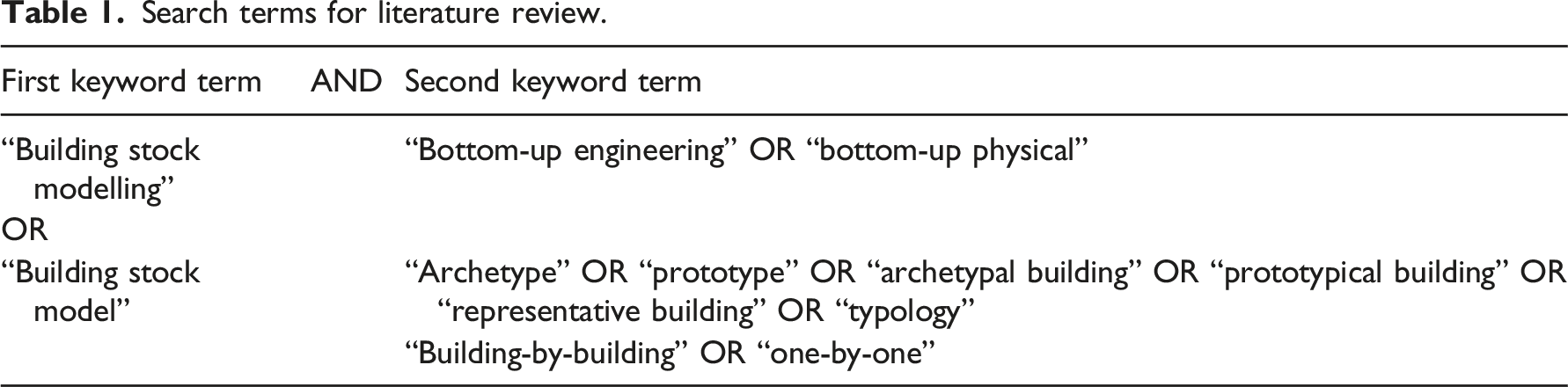
Search techniques
Search terms for literature review.
Inclusion and exclusion criteria
Since the aim of this review was to cover the state-of-the-art knowledge on bottom-up engineering building stock modelling, the following was used as eligibility criteria for inclusion and exclusion: (1) Studies published in peer-reviewed journals (e.g., Energy and Buildings, Building and Environment, Building Services Engineering Research and Technology) (2) Studies published from 2010 onwards (3) Studies that used archetype-based modelling or building-by-building modelling approach (4) Studies that applied archetype models and building-by-building models to conducting analyses for policy making
Archetype-based modelling
Archetype-based approach
Building stocks are heterogeneous, commonly containing a large number of diverse buildings. The description of a building stock through the archetype-based approach is the most commonly used approach for reducing modelling efforts. The archetype-based approach identifies representative building types (“archetypes”) to represent the whole building stock. This approach is feasible for residential and non-residential building stocks, and for different scales, ranging from neighbourhood level to multi-national level. There exist national and European studies that have been carried out to define building typologies and their main characteristics (e.g., TABULA projects 16 and English House Survey), 17 laying the foundation to develop archetype models, while many studies need to develop the archetype models from scratch.
To develop detailed archetype models for a building stock, the following procedures should be carried out (Figure 1). Typical archetype-based modelling approach framework.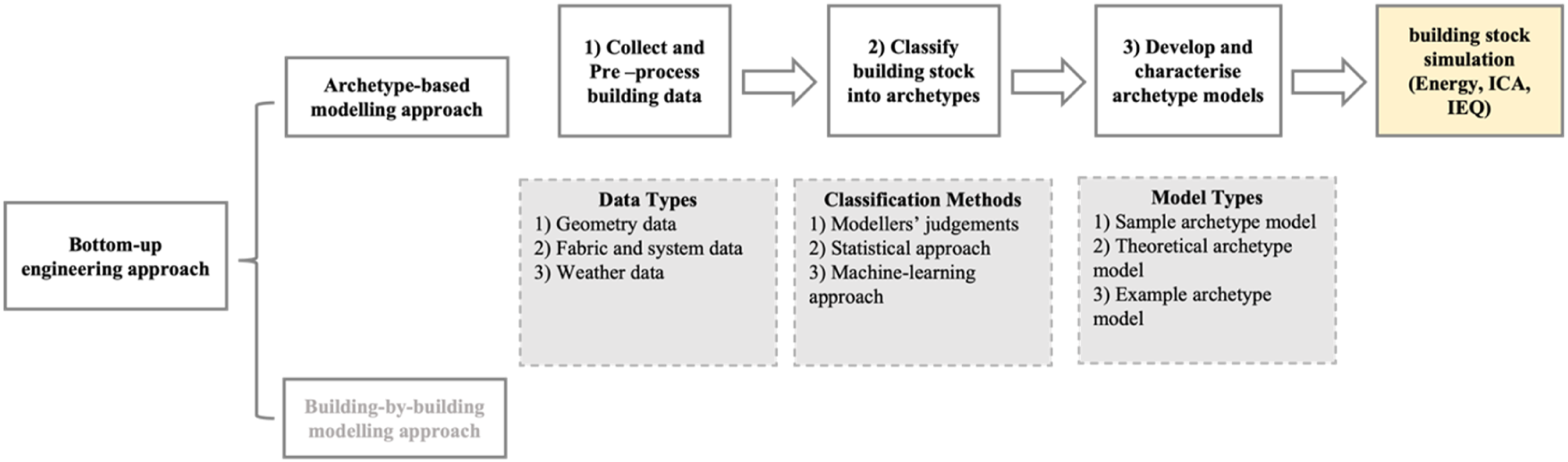
Data collection and pre-processing
To develop building models, a full set of parameters typically include building geometry data (e.g., shape, floor area, orientation, height) and building fabric and system data. 18 For most regions and countries, the available datasets of building stocks can be derived from census data or on-site surveys. 19 Census data, which are usually reported in national statistics, give a basic information on the building stock (e.g., the use of the building, the number of buildings or floor area);20,21 Survey data are collected through a number of selected buildings and provide post-occupancy information about building’s technical characteristics, fuel usage and occupant behaviors. In most regions and countries, statistics and knowledge of residential buildings are generally more plentiful than those of non-residential buildings. Energy Performance Certificates (EPCs) and information related to Geography Information System (GIS) have emerged as additional means of building stock data collection, since they record information about building form and construction age for different types of buildings. 22 In addition, building standards, design guideline and scientific literature are also the main data sources for the inputs of archetype models.
There is a number of dynamic building simulation software requiring weather datasets as inputs for building performance evaluation. 12 Typical weather variables consist of air temperature, wind speed and direction, solar radiation and humidity. Weather data are standardised into “weather files” and created from hourly historic observations at a specific location. The most representative weather year files include: TMY (Typical Meteorological Year), TRY (Test Reference Year) and IWEC (International Weather for Energy Calculations). 23
Classification
Classification is a process of introducing criteria to the analysed building stocks and split the buildings into several categories. 24 This process not only allows building archetypes to be defined as representative of buildings with similar properties, but also determines the distribution frequency (or number) of every archetype. The conventional approach to classification is dividing the building stock according to the indicators determined by modellers. The most commonly used indicators include age, use and type of HVAC system, which inherit energy-related properties of the buildings. Spatial features (climate zone, location) and use patterns can also be incorporated for further differentiating archetypes. 18 Despite its relative simplicity, this approach heavily relies on modellers’ subjective judgement, with some decisions often considered arbitrary. 14 To mitigate this, statistical methods are often implemented to identify indicators that are important for building energy use.14,25 Famuyibo et al. 26 conducted multi-linear regression analysis to identify a new set of key energy-related variables as classification indicators, using only 13 archetypes to represent the Irish residential building stock. In this study, the measured energy use demand by individual building was used to statistically identify indicators with the strongest correlation with energy use in order to more accurately represent the overall building stock variability. In recent years, the development of machine learning techniques allows for increasingly automated statistical segmentation. For example, clustering techniques, as an unsupervised machine-learning approach, have been applied in several studies.27–29 In this approach, clustering algorithms are used to identify hidden structures in datasets of building characteristics based on similarities and representative elements and allow simultaneous analysis of various indicators. However, data completeness is typically a key challenge of clustering algorithms. 29 With the continuous improvement of algorithms, the classification of building stock can achieve a better balance between the number and representability of the archetypes. Therefore, it is possible to describe the building stock as completely as possible with fewer models.
Model development and characterisation
To investigate the performance of building stock, computer-based models are developed to characterize the defined archetypes. The modelling approaches are dependent on data completeness and the characterization methods of the shared characteristics of archetypes. Thus, the approaches can be further broken down into three different sub-categories: sample, theoretical and example archetype approach.
Sample archetype approach
Sample archetypes models are developed based on real buildings. Statistical analysis is performed to determine average geometric and construction features of each specific category, 30 and real buildings showing characteristics similar to the average characteristics are selected. As the sample archetype models can reflect the high degree of heterogeneity within building stocks,11,31 sample archetype approach have been applied to develop archetype models for both residential building stocks,32,33 and non-residential building stocks.34,35 However, sample building approach requires a large amount of building information on the real buildings, which may not be applicable to building stock with scarce data.
Theoretical archetype approach
Theoretical archetypes, also referred to as synthetical average buildings,30,36 are a statistical composite of the features found within a category of buildings in the stock. The theoretical archetype approaches extract building characteristics of different classified building categories as input parameters based on statistical analysis. The result is a “virtual” building characterised by a set of properties statistically detected in a building category. Geometrical parameters are determined through statistical analysis, such as using average floor area and storeys per building of each category as geometrical parameters for the models. 36 Clustering techniques were used in one study to extract geometrical features from satellite images to define representative parameters for archetype models. 27 Non-geometry data, such as construction details or building systems, need to be derived from literature and building codes, or assumed according to modelers’ expertise. 27 The most commonly used building materials and systems are often assumed to be the model parameters.
Example archetype approach
Example building models are developed entirely based on experts’ experience. The example building approach is suitable when no statistical data are available. All input parameters are derived from handbooks, design manuals, standards and codes, so the example buildings are also virtual buildings. The example buildings approach can be applied in all types of building stocks, especially non-residential buildings with more diverse characteristics in terms of built form, construction, occupancy and activities. For example, Korolija et al. 37 analysed typical UK office building design based on a comprehensive literature survey. The authors developed a number of archetype models that represent typical office building built forms and parameterized other energy-related parameters, including window ratio, building construction and activity features to generalise the characteristics of the UK office building stock.
It has been noted that most archetype models are time-constrained “snapshot” models, which represent the stock at a certain point in time. In fact, the building stock evolves over time, so a few number of studies Refs.35,38,39 have developed “transient archetype models” (i.e., timeless models) and forecast change in the stock by assuming fixed rates or using probability functions of retrofit, demolition and new construction. The transient archetype models aims to reflect the long-term development of the stock size and composition.
Applications of archetype-based models
Energy modelling
Studies on energy modelling by archetype-based models.
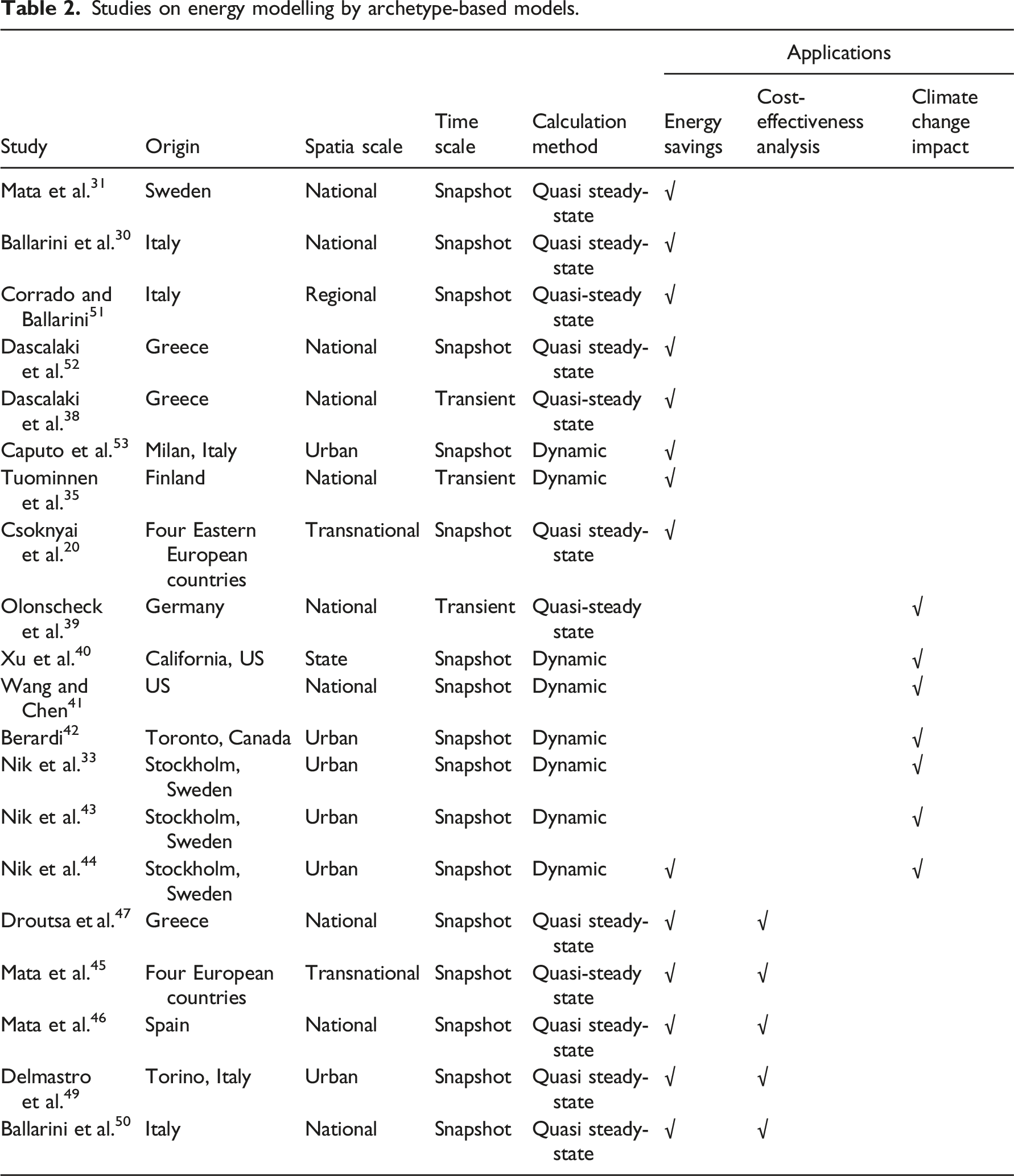
The likely changes in energy use of building stocks due to global warming have also been investigated, by comparing the energy use under current and future climate scenarios. A German study 39 used the degree-day approach to model the heating and cooling demand of German residential buildings under future climate, considering the influences of future changes of the building stock, retrofit measures and heating systems. Many studies downscaled General Circulation Model (GCM) to generate hourly weather data for predicting energy use of building stocks at multiple temporal and spatial scales. Based on the regional weather data, two studies40,41 estimated future energy demand of residential and commercial building stocks in the US. Xu et al. 40 focused on the energy use of different types of buildings in the different regions of California, while the focus of Wang et al. 41 is on the general impact of climate change across the building types in the whole country. Similarly, Berardi and Jafapur 42 assessed the impact of climate change on different types of buildings in the city of Toronto, by using future weather files generated by statistical and dynamical downscaling methods. In addition, there are also studies taking into account the climate change and climate uncertainties and the effectiveness the proposed energy retrofit measures are evaluated under different climate scenarios.33,43,44
Some studies incorporate cost-effectiveness assessment in retrofit analysis, as the willingness of local authorities and building owners to implement energy efficiency measures is often driven by investment cost and payback period. The Energy, Carbon and Costs Assessment for Building Stocks (ECCABS) model was developed by Mata et al. 45 The cost benefits of energy efficiency measures were evaluated and compared in two studies based on investment costs and payback period.45,46 Droutsa et al. 47 prioritised energy efficiency measures proposed for residential buildings in Greece by two ranking criteria: primary heating energy savings and payback period. A comparative methodology framework proposed in Directive 2010/31/EU 8 have been applied to conduct cost–benefit analysis of the energy retrofit measures of existing buildings. This methodology uses global cost as the criterion for a cost–benefit analysis. The global cost is the sum of the present value of the initial investment costs, and the present value of annual costs and disposal costs. A measure is considered as “cost-optimal” with the lowest cost and a measure is considered as “cost-effective” when the difference between the global cost after and before the retrofit of the building is negative. Delmastro et al. 49 and Ballarini et al. 50 also used the framework to identify cost-optimal and cost-effective energy efficiency measures and packages of measures for different archetypes in Italy.
Life cycle assessment (LCA) modelling
Studies on LCA by archetype-based models.
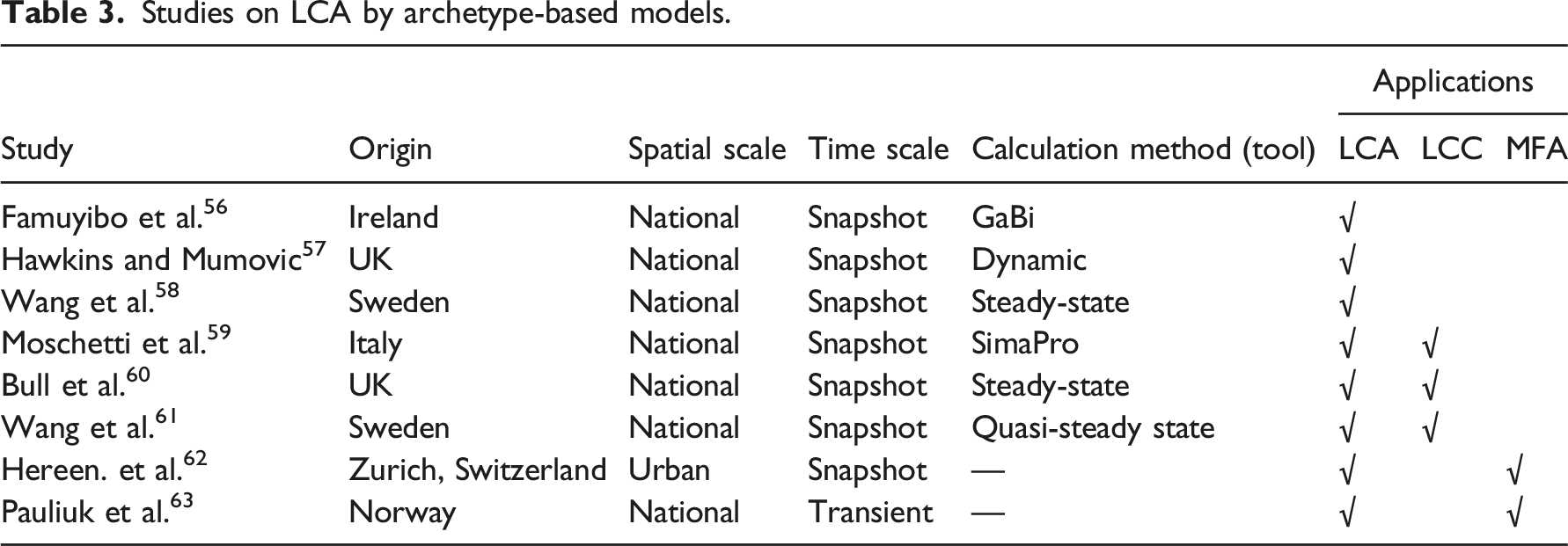
According to ISO 14040, LCA methodology follows four main steps: 64 (1) goal and scope definition, (2) inventory, (3) impact assessment, and (4) interpretation. The energy efficiency measures can be evaluated through full LCA approach which include all stages of building life cycle, or simplified LCA which include production, replacement and operational stage. 65 A full LCA approach was proposed and applied by Famuyibo et al., 56 where Irish housing archetype models were employed to calculate primary energy use and global warming potential over the life of the building (assumed 50-years life span) under different retrofit scenarios using GaBi software. 66 In this study, the combination of input–output (I-O) analysis and process techniques was adopted to calculate energy and carbon emissions for each retrofit option along the entire lifecycle of buildings. Wang et al. 58 presented a simplified LCA approach to assessing the effectiveness of retrofit options for the Swedish housing stock, by comparing the reductions in their operational energy demand and the increase in embodied energy. Hawkins and Mumovic 57 also analysed the trade-off between the operational and embodied carbon impact of retrofit scenarios for university building archetypes by a simplified LCA approach. Moschetti et al. 59 performed Life-Cycle Cost (LCC) analyses to evaluate cost-effectiveness of retrofit options during the whole life cycle of buildings. SimaPro 65 (a LCA software) and LCC models were adopted on Italian archetype buildings to define reference values linked to energy, environmental impacts and global costs. In Sweden, Wang et al. 61 integrated energy-demand modelling with LCC analyses to examine and rank the retrofit options. In the UK, Bull et al. 56 developed school archetype models educational building archetypes to rank energy efficient refurbishments by marginal life cycle cost and marginal life cycle carbon footprint.
Another group of studies incorporates the building material quantities of building stocks in LCA. Heeren et al. 62 developed a modelling approach to investigate the impact of energy efficiency measures on Swiss building stocks based on Life Cycle (LC)-based archetype models. This study incorporated the life cycle approach, building components and energy supply sector, with the consideration of the dynamics of building fabric and systems on the building stock. Pauliuk et al. 63 combined dynamic Material Flow Analysis (MFA) with LCA for identifying buildings with the highest energy saving potential within Norwegian dwelling stocks. Dynamic MFA was used in this study to model and analyse the dynamic evolution of the entire building stock until 2050, with the given rates about demolition and renovation.
In summary, the use of archetype-based models in LCA pave the way for more holistic evaluation of policy measures, avoiding overestimation of their true environmental contributions. However, there exists a number of challenges in terms of data availability and methodology standardisation, which have been pointed out in previous review papers.55,67
IEQ and occupant’s health impact assessment
Studies on IEQ and health assessment by archetype-based models.
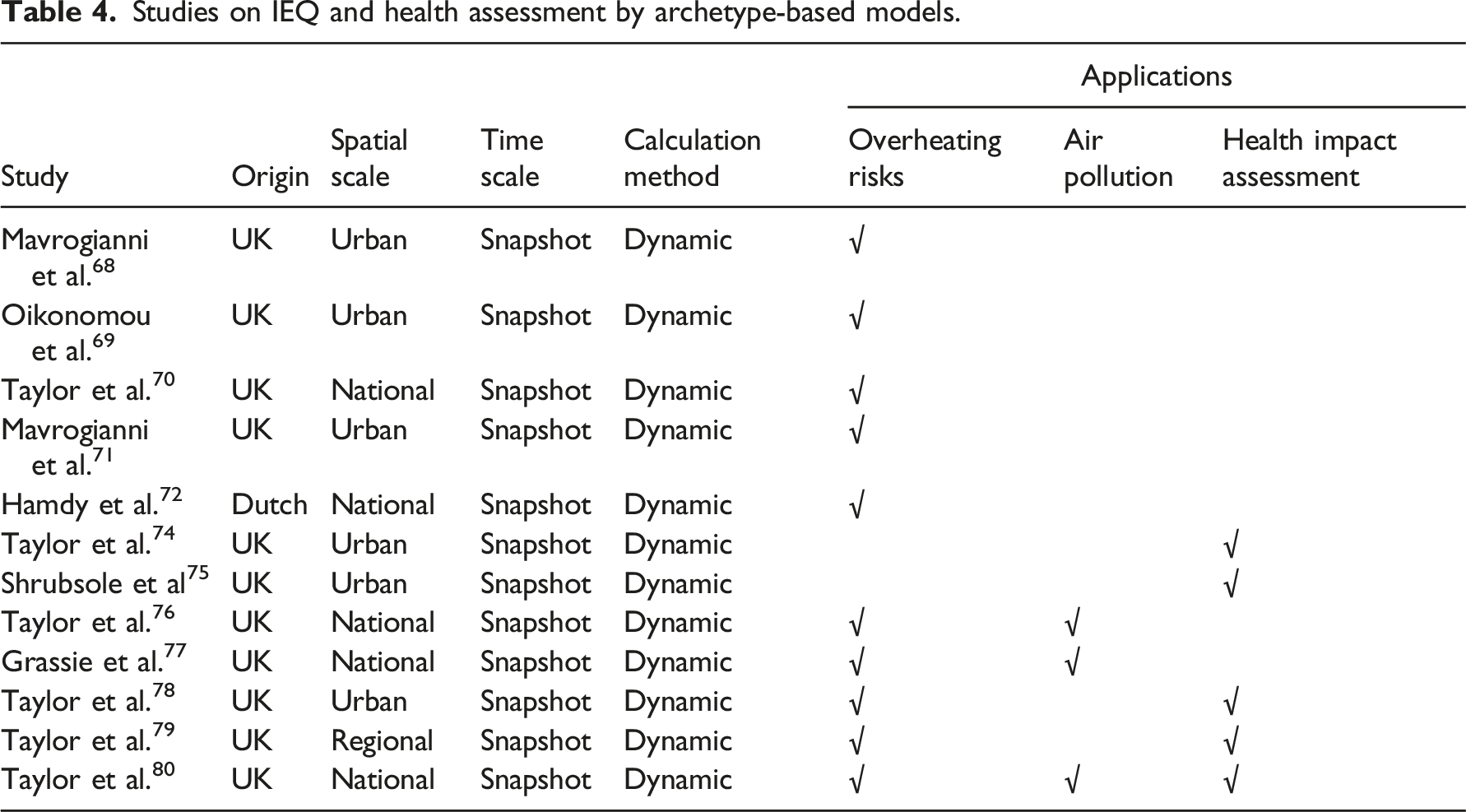
In addition to thermal environments, indoor air quality is also key aspect in IEQ assessment 73 and has also been studied at the building stock level. Taylor et al. 74 modelled indoor/outdoor (I/O) ratios of PM2.5 for housing archetypes to investigate the concentrations of indoor air pollutants from outdoor sources due to different building characteristics of London dwellings. Shrubsole et al. 75 modelled PM2.5 concentrations from both outdoor and indoor sources and compared their differences to quantify the impacts of different housing types and occupant behaviours (e.g., smoking and cooking) on PM2.5 exposure. Two UK studies76,77 examined the change of PM2.5 concentrations and overheating risks following different retrofit levels under current and future climates, in dwelling and school buildings respectively.
Indoor overheating and air pollution are often considered as environmental hazards that lead to adverse health effects and increased mortality risks. Some UK studies quantify heat-related health risks at the population level during summer heatwaves using the function between indoor temperature and mortality risks. The function is derived from existing evidence based on epidemiology studies, which establish the relationship between mortality and different dwelling types, tailored by regional climate scenarios. Taylor et al. 78 linked region-specific temperature-mortality functions to indoor temperature of dwelling archetypes. By using the functions, the authors were able to explore the change of heat-related mortality risk at population level following heat adaptation measures implemented in dwelling archetypes. Based on the same function, the variation in heat mortality risk across building types in the West Midlands region of the UK was investigated in another study, 79 where the effectiveness of shading and ventilation in heat mortality reduction was examined. One study 80 mapped the overheating risks and PM2.5 concentrations of UK dwellings at the postcode level across the UK. The primary objective of this study is to estimate the spatial variations of housing-related modifiers of mortality risk due to heat and air pollution.
Building-by-building modelling
Building-by-building approach
Recent years have seen the rapid advancement of Geography Information System (GIS) technologies and computational capability, which makes modelling individual buildings on a large scale become practical.
81
This building stock modelling approach is termed building-by-building or one-by-one building approach and allows the creation of models for every single building on a large scale and visualisation of their geometrical and spatial features in digital maps. A typical building-by-building approach framework is presented in Figure 2. Typical building-by-building modelling approach framework.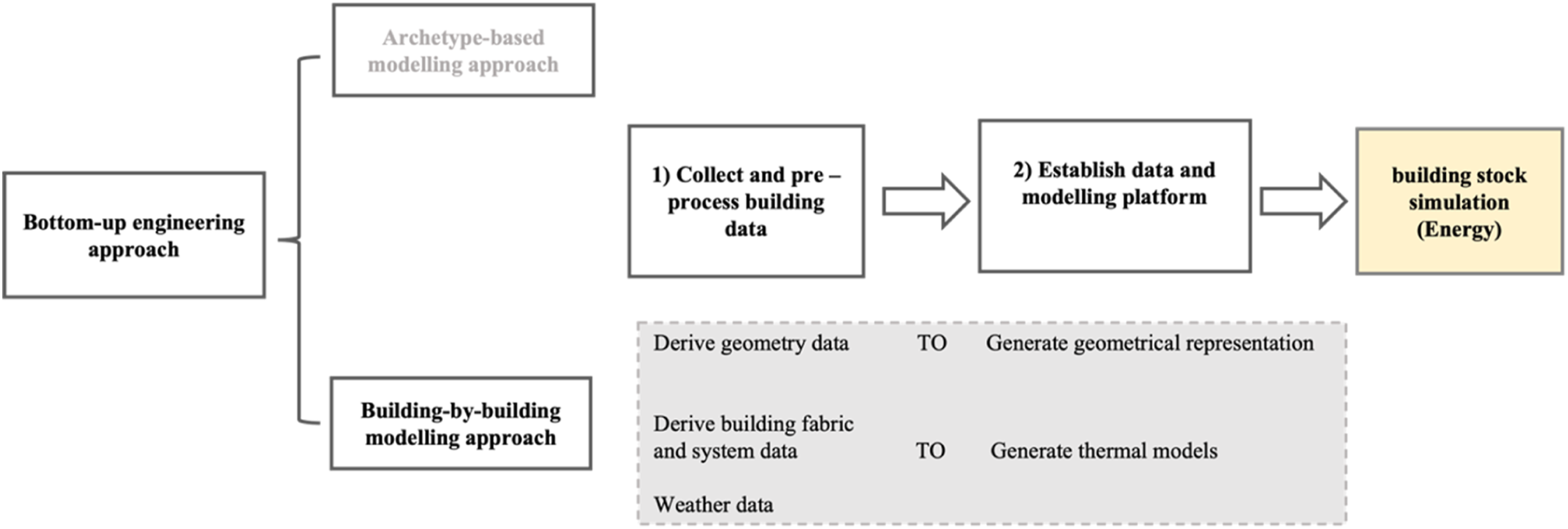
Similar to archetype models, building-by-building models also require building geometry data and fabric and system data for model generation. 82 GIS databases are widely used for building-by-building modelling worldwide, as they are increasingly accessible to the public.12,83 An open and editable GIS database - OpenStreetMap (OSM) is created and maintained by a large community of volunteers. 84 OSM offers maps and information about roads, stations, buildings and their usage. 85 By leveraging Applications Programming Interfaces (API), the building footprint can be automatically extracted. 86 In addition, OSM data could also provide information about building heights. The information about building height can be also acquired through Light Detection and Ranging (LiDAR) surveys and photogrammetric techniques. Compared to geometrical data, the acquisition of non-geometrical data such as construction properties (e.g., U-values) and non-physical information (e.g., internal gains and occupant behaviour) for every single building in a region requires significant effort and becomes impractical. In terms of building fabric and system data which are often unavailable at individual building levels, archetype-based approaches are implemented. Representative constructions and system types for buildings in the same category are set up according to building age, literature and local building codes, or assumed based on statistical analysis (e.g., probability distributions calculation). 87
Several modelling tools have been developed to generate building-by-building models, mostly on urban contexts.85,88,89 All types of datasets are integrated and processed into a 3D standardized format, such as CityGML, Shapefile and GeoJSON. These 3D data formats are semantic models which not only include geometrical information for 3D geospatial visualization of the real-world environment, but also include additional semantics and attributes, which can be enhanced by a wide range of data. In these modelling tools, CityGML format is widely used because it represents the 3D models at various levels of details to reflect the level of building parameter availability. 48 Based on CityGML, an urban energy simulation platform - SimStadt was developed and integrated with a 3D city model to automatically model every single building at several scales within the city of Rotterdam, Netherland. 90 An American web-based platform - City Building Energy Saver (CityBES) was developed, which generated individual office and retail building models at the district level in the US. 91 In CityBES, workflow for urban building energy model generation and simulation are fully automated. Remmen et al. 89 developed a framework (TEASER) that includes a ready-to-use interface for CityGML and provide individual, dynamic models for multiple buildings on different spatial scales. TEASER is an open structure that enable researchers to enrich building data in the framework for different applications. Urban modelling interface (UMI) was released by MIT Sustainable Design Lab based on Rhinoceros as a Computer-Aided Design (CAD) modelling tool. 92 UMI allows the evaluation of energy use of buildings on neighbourhood and city scale.
Two recent studies presented building-by-building models at a national scale. An on-going modelling program, 3DStock, is presented by Evans et al., 93 who developed a multi-zone buildings stock model for domestic, non-domestic and mixed use buildings in England and Wales. A novel contribution of this work is that the model represents the spatial relationships between “premises” and “buildings” explicitly and breaks down occupant activities by floor level and within each floor of every building. Schwarz et al. 94 developed a Modelling platform for schools (MPS) in 2022, in which each school in England and Wales can be automatically generated.
Applications of building-by-building models
Studies on the applications of building-by-building models.
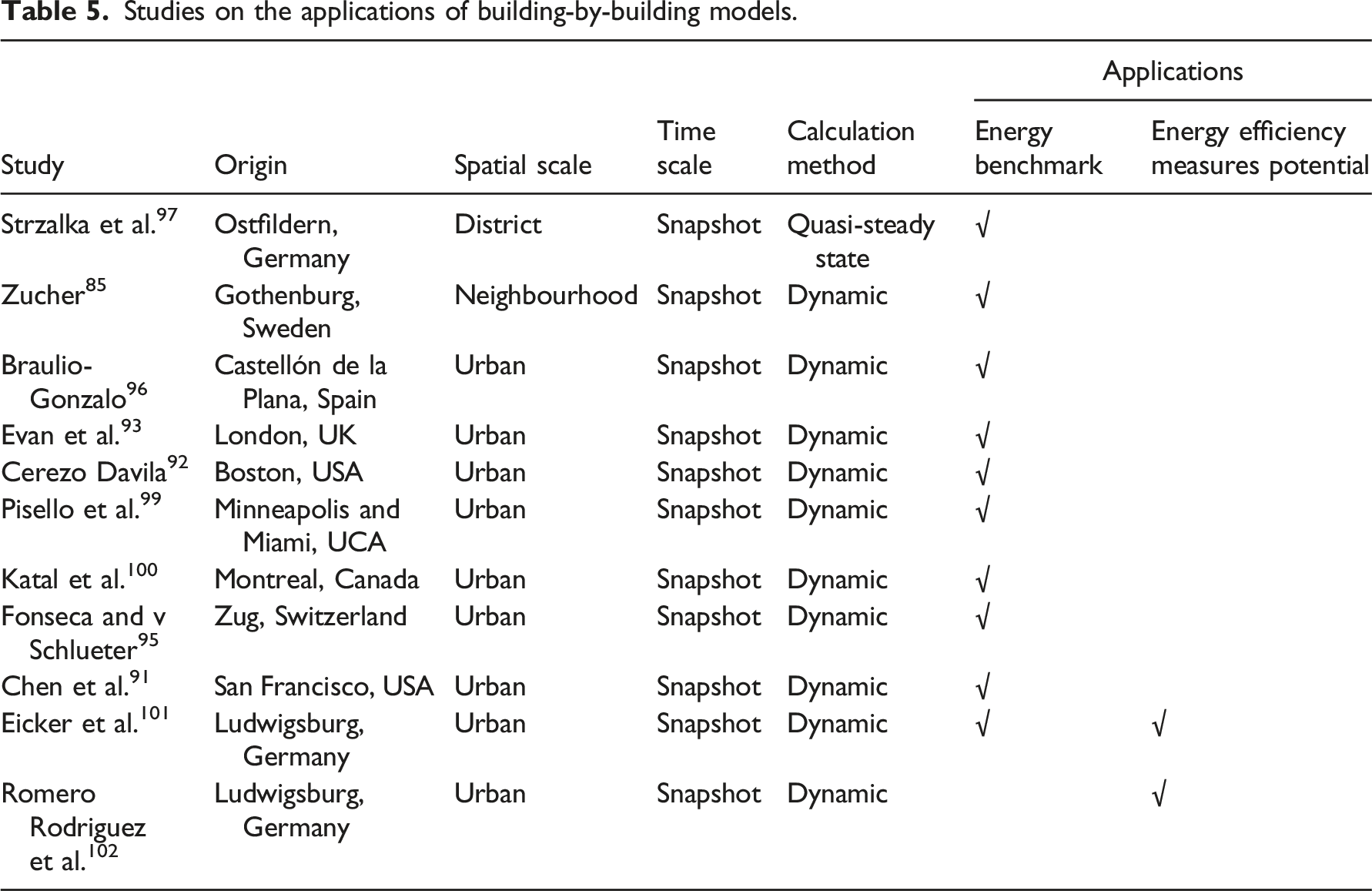
The spatial information also allows 3D city models to provide and visualise spatial and temporal demand data for all buildings and facilitate the evaluation of Energy efficiency measures. Fonseca and Schlueter 95 introduced an integrated model for characterisation of spatiotemporal building energy consumption and created spatiotemporal energy maps of space heating demand for the city of Zug in Switzerland. Through digital map, energy modelling results offer the possibility to put energy savings and costs into a spatial context, and explicitly shows energy deficit and surplus areas. For example, CityBES has been leveraged to simulate the potential energy and cost savings of energy efficiency measures of the buildings in San Francisco, USA. 91 In this study, the annual site energy savings and CO2 reduction for each building type and payback year were calculated for individual energy efficiency measures and packages.
The exact size and orientation of each building surface is available in 3D city models and, therefore, accurate simulations of renewable electricity generation from photovoltaics can be performed. Two studies101,102 analysed the potential for photovoltaic electricity generation of all buildings in Ludwigsburg county. Based on a building-by-building roof surface analysis, the fraction of the electricity demand that can be covered in each municipality and the whole region was determined.
Building stock modelling approaches for policy decision-making
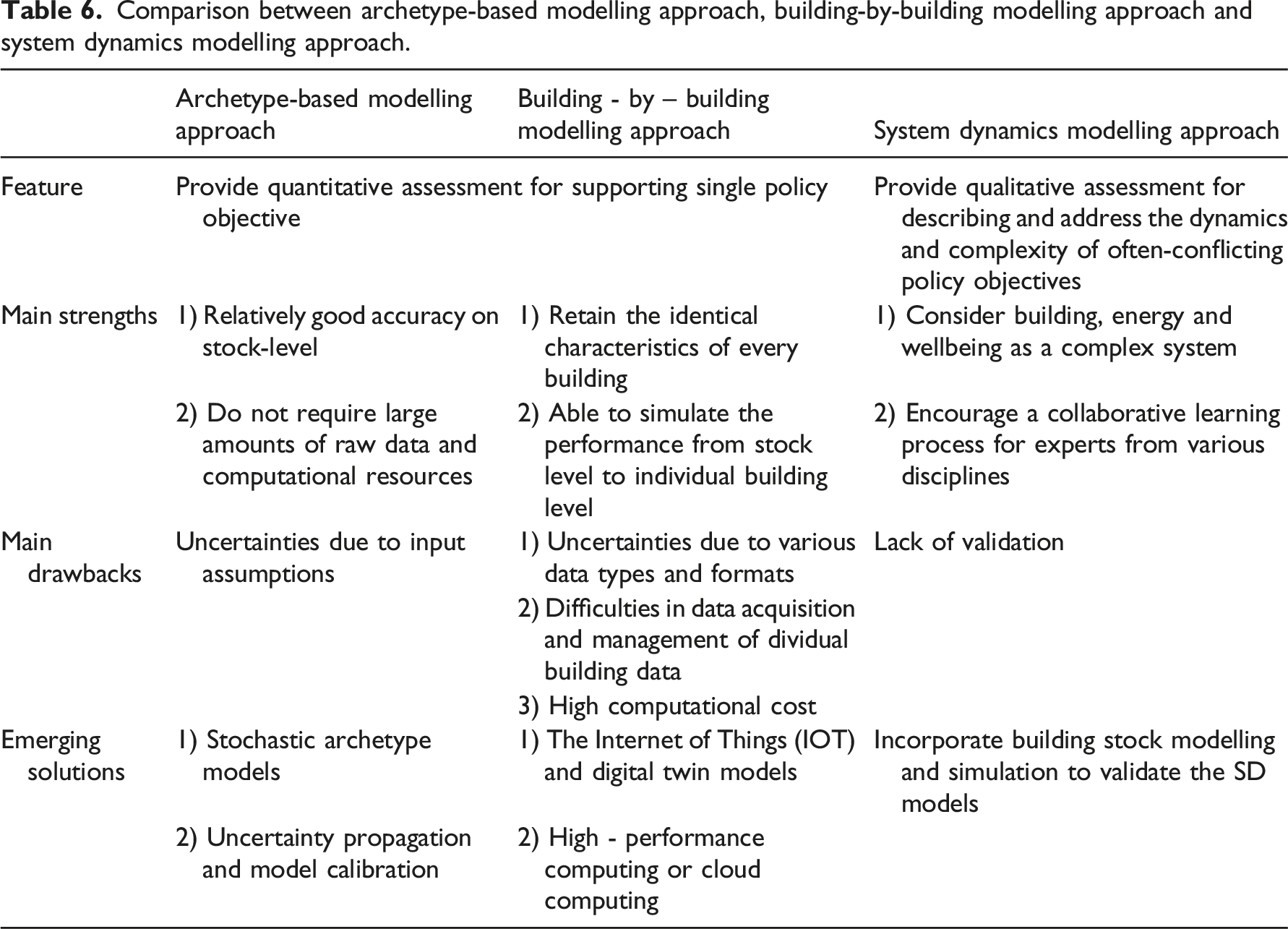
Comparison between archetype-based modelling approach, building-by-building modelling approach and system dynamics modelling approach.
The reliability of model outputs
The ability of models to inform building design and policy decision depends on how reliable the model outputs are 14. Since computational building model is an abstraction of the real building and not yet able to fully capture the characteristics of real-world environment, there is inevitably deviation between simulation results and measured data. To identify the gap, several modelling studies validated their models by comparing the simulation results against measured energy data of building samples. Österbring et al. 83 compared calculated and measured energy use of space heating and domestic hot water of 433 buildings in the city of Gothenburg. The calculated energy use on stock level shows 3% difference from measurement values. A model developed by Nageler et al. 103 was validated with measured energy data from 69 buildings in Gleisdorf in Austria. The validation results show only .98% deviation of the annual heating and domestic hot water demand. The national stock models for four countries developed in Mata et al. 19 show the difference between the resulting final energy demand and available statistics from 6% to −2% as depending on country. In Ren et al., 104 the predicted electricity consumption of New South Wales and Victoria in 2006 by the models was validated against national statistics and the error was within 10%. In these studies which used archetype models for energy prediction, their simulation results generally show relatively low errors with measured energy use data at the stock levels. This has been explained by,82,105 that the errors on a building level tend to average out when aggregated into the stock levels. However, because the errors may become greater on smaller scales, 25 uncertainty analysis is still needed.
For the archetype-based modelling approach, most studies characterise archetype models in a deterministic way, assigning single values to each parameter to represent the means of building classes. Due to this, uncertainty in input parameters such as weather data, building envelope, building systems and occupant behaviours will arise. These parameters are either inherently uncertain or relying on subjective assumptions. 105 Thus, a stochastic archetype modelling approach is proposed, 106 where the input parameters are described by probability distribution. Base on stochastic models, uncertainty in input parameters can be addressed by two major approaches: 107 uncertainty propagation and model calibration. Uncertainty propagation is performed to quantify the uncertainties in the model outputs from input parameters through mathematical models. The Monte Carlo method, as a commonly-used method of uncertainty propagation, has been employed to specify probability distributions of uncertain input parameters and present probability distributions of results using descriptive statistical measures or visual graphs (e.g., 108–112). Since occupant behaviours in buildings are often attributed to model uncertainty leading to the differences between simulated and measured energy consumption in buildings, 108 Monte Carlo methods have been used to represent the behaviours of all occupants on a studied building stock. In the study by An et al. 111 the stochastic occupant behaviour method (the SOB method) was applied to represent different types of behaviours in housing archetypes including thermostats, the control of lighting and plug-in appliances, window operation in a residential district in Wuhan, China. The cooling loads were calculated based on their archetype models and the results agreed well with the measured data. A stochastic model was developed for Portuguese housing stock by using Monte Carlo methods. 110 The models that described the variability of climate and building characteristics. Compared with other uncertainty propagation methods, the proposed method is very intuitive and easy to use. The main drawback of MC methods is high computational cost, because of the slow convergence rate with a large number of function evaluations. 107
Model calibration is performed to determine the unknown parameters from measurement data at multiple temporal and spatial scales. Bayesian methods are often used for calibrating stochastic models, in that the distributions of the dominant model inputs affecting building performance can be inferred by inverse analysis. Sokol et al. 113 developed stochastic archetype models for residential houses in Cambridge, Massachusetts. The distribution of occupant behaviour parameters was defined by using a training dataset of the homes with monthly electricity and gas consumption data and updated by Bayesian method. Another model was developed for London secondary school buildings, 114 where the distribution of the main parameters affecting energy consumption were identified by sensitivity analysis and Bayesian methods.
The major advantage of building-by-building approach is that it aims to retain the identical characteristics of every building and describe the heterogeneity of the building stock, which can ideally provide more accurate simulation results at different levels. However, additional uncertainties could be introduced into the models because the model inputs are often a combination of data sources with different types and formats, and data quality are diverse among the databases. Additionally, merging data from different sources will also lead to mismatch issue, A simple validation method is visual inspection of a sample of models to identify their quality, and the low-quality models are calibrated manually, 94 while as a more sophisticated approach to validating and calibrating models against actual buildings is recommended. 106
Data availability and computational cost
Archetype-based modelling approaches do not require large amounts of raw data and computational resources, which makes them still the dominant approach. In contrast, capturing, analysing and storing data of every single building is a challenge of building-by-building approach. 115 The Internet of Things (IOT) has changed the way of building data acquisition and management and led to the emergence of the digital twin - a virtual model of a real-life actionable entity. A timeless digital twin stock model can not only comprehensively represent each building but can be also continually kept up-to-date using crowd-sourced energy, building and indoor air quality data, 116 which also theoretically reduces the model uncertainties. High computational cost is also highlighted as the main drawback of building-by-building approaches. Advanced computing techniques, such as high-performance computing 117 or cloud-based computing, 14 which allow batch runs of large numbers of models can significantly save simulation time. However, such techniques are still in their infancy in most countries.
Archetype-based approach is often considered to be a trade-off between accuracy and speed. Whether it is necessary to simulate the performance of the building stock by building-by-building approach at the cost of high computational cost is worth further research. The capability to stimulate the building performance down to individual building levels means this approach can also provide insight into the impact of new technologies or policies on building stocks at different scales. Nonetheless, if decision makers mainly need to capture the general trends of building stock performance at aggregate level assessment purposes, the building-by-building approach is not necessarily advantageous over the archetype approach due to relatively good performance of archetype models at aggregate level, as mentioned above.
Support for multiple policy objectives
Current climate change mitigation policies are a strong driver for the retrofit of building stocks by energy efficiency measures. 118 Existing studies using bottom-up engineering models to evaluate design and retrofit strategies often aim at a single policy objective (e.g., reduced energy use or carbon emissions or improved thermal comfort). These single focus measures result in negative unintended consequences on IEQ and population health if they are inappropriately implemented. 118 For example, buildings may have a low heating energy demand in winters after introducing thermal insulation and improving air tightness while having a higher overheating risk in summer. Furthermore, Eker et al. 119 pointed out that if considerations of non-technical aspects, such as psychological, social and economic barriers are inadequate, and there may be strong resistance to promoting energy efficiency measures. Since there may be inevitable trade-offs between different objectives, it is crucial to understand the complex and dynamic interrelationships between technical aspects and non-technical aspects that influences the upgrade of building stock. 120 A more integrated approach to decision making, that ensures co-benefits of multiple policy objectives, is needed. 121
To deal with the complexity and minimise building performance gaps, systems thinking has been proposed for both academic research and policy decision-making.119,122 This integrated approach can develop a qualitative causal relationship between a broad range of policy outcomes as well as provided initial quantitative results. 123 Several studies123,124 utilised participatory system dynamics (SD) modelling approach to map causal loop diagrams between building, energy and wellbeing as a complex system. Such studies aim to capture the complexity and gain better understanding of the effects of different proposed policies over a chosen time scale. SD modelling allows a truly multi-objective review so offers an opportunity to improve a building’s energy and IEQ performance without compromising the wider aspects of the building performance. This approach also encourages a collaborative learning process for experts from various disciplines and brings together different kinds of knowledge and view. In the future, bottom-up building stock modelling and simulation may be needed to validate SD models. 124
Conclusion
This paper presents the main characteristics and applications of archetype-based and building-by-building modelling approach and evaluates and compares their ability to support policy making. Key findings can be summarized as follows: • Typical archetype-based modelling approach includes three steps: data collection and pre-processing, classification of building stock as well as model development and characterisation. Because of lower data requirements and computational cost, archetype-based modelling approaches are still the mainstream approach to 1) energy modelling for assessing the impact of energy efficiency measures and climate change on building stock; 2) LCA modelling for understanding the global environmental impacts of building stocks; 3) IEQ and occupant’s health assessment modelling for understanding the indoor environment impacts on occupants at stock levels. • Building-by-building stock models that move away from the use of archetypes better capture the heterogeneous characteristics of each building. By considering these unique characteristics, such approach provides a step-change in the identification of the best strategies for improving building performance. Building-by-building approach are emerging in recent years due to the development of data acquisition and management and computational techniques. • Uncertainty issues remain a key challenge for both archetype-based approaches and building-by-building approach, which may affect the reliability of outputs. Stochastic archetype models have been developed to probabilistically represent the model inputs, and the input uncertainties can be addressed by uncertainty propagation and model calibration. In addition, the concept of timeless digital twin stock model is proposed, which have the potential to address model uncertainties by comprehensively representing each building and being continually kept up-to-date using crowd-sourced energy, building and indoor air quality data. • Lastly, as a supporting tool for policymaking, bottom-up engineering modelling and simulation may require a multi-objective view, moving from a single energy/IEQ lens to a wider aspects of building performance. With the systems dynamic modelling approach, the dynamics and complexity of often-conflicting policies can be described and addressed to achieve the co-benefit of multiple policy objectives.
Footnotes
Declaration of conflicting interests
The author(s) declared no potential conflicts of interest with respect to the research, authorship, and/or publication of this article.
Funding
The author(s) disclosed receipt of the following financial support for the research, authorship, and/or publication of this article: This work was partially funded by an Engineering and Physical Sciences Research Council (EPSRC) grant: Advancing School Performance: Indoor environmental quality, Resilience and Educational outcomes (ASPIRE, EP/T000090/1).
