




Abstract
The requirement for functional scaffolds made from hydroxyapatite-based materials is gaining importance in bone tissue engineering (BTE) due to their ability to provide mechanical behaviour similar to that of native tissue. Additive manufacturing (AM) via vat photopolymerisation (VPP) has been demonstrated to be a superior choice for fabricating FS, as it offers enhanced mechanical strength to support intricate structures with high printing resolution compared to other 3D printing methods. The current work presents a detailed review of different VPP AM processes to manufacture hydroxyapatite-based scaffolds for bone tissue engineering. The roles of various monomers, photoinitiators, and dispersants, as well as their impact on printability and the resulting scaffold properties, were elucidated. In addition, the debinding and sintering processes of scaffolds are elaborated. This review helps researchers and practitioners understand the latest advancements in VPP AM processes, photocurable resin technologies, and selection strategies for developing HAp scaffolds for BTE.
This is a visual representation of the abstract.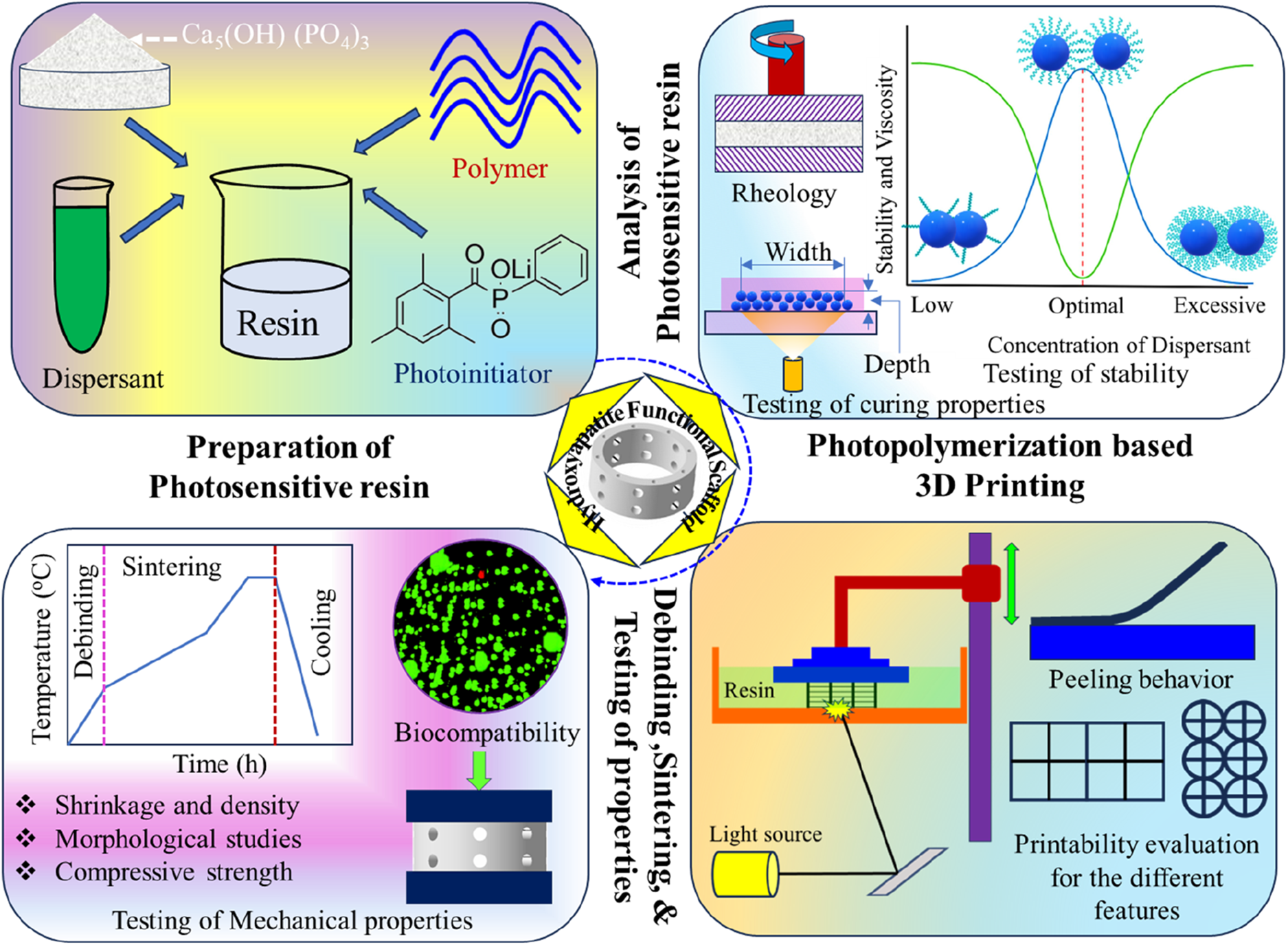
Get full access to this article
View all access options for this article.