




Abstract
The rise of the incel (involuntary celibate) subculture has garnered significant academic, policy, and media scrutiny in recent years. However, critical gaps persist in understanding how misogynist incel ideology permeates mainstream digital spaces. This paper contributes to our understanding of online radicalisation and dissemination of digital subcultural groups and extremist ideologies through the development of Digital Subcultural Diffusion Theory (DSDT) and its application to misogynistic incels. DSDT outlines and expands upon three interrelated processes: (1) the migration of niche beliefs and artefacts from fringe communities to mainstream platforms (normiefication); (2) the mechanisms enabling their diffusion and popularisation (mainstreaming); and (3) the possible implications for the normalisation of these ideologies across online and offline spaces. In this context, we apply DSDT to demonstrate how incel ideology is strategically rebranded through the pseudoscientific constructs of the PSL scale (a hierarchical framework used to assess facial attractiveness) and looksmaxxing, which cloak misogyny and scientific racism under the guise of self-improvement. This reframing targets susceptible audiences and exploits platform affordances to amplify and justify male and white supremacist narratives. Drawing on data from TikTok, looksmax.org, and Incels.Wiki, our analysis reveals how platform interconnectivity facilitates the proliferation of inconspicuous, incel-adjacent terminology and trends. Significantly, these processes legitimise extremist, misogynist, and racist views through ostensibly neutral or scientific rhetoric, masking their underlying harms. The study underscores the urgent need to address how digital ecosystems enable the mainstreaming of hateful ideologies, with broader implications for research on online radicalisation and platform governance.
Keywords
Introduction
Scholars, practitioners, and policymakers are increasingly concerned about online subcultural communities with deviant and extremist beliefs (Benkler et al., 2018; Holt et al., 2017; O’Malley et al., 2022). Such groups are mainstreaming their ideologies by modifying their narratives to appeal to larger audiences (Rothut et al., 2024). The digital world facilitates the spread of hateful ideologies, fostering opposition to mainstream culture and resentment towards perceived societal enemies (Bratich and Banet-Weiser, 2019). As their visibility grows, niche, conspiratorial, and extreme discourses from these groups are disseminated more widely (de Zeeuw et al., 2020). A key example is the manosphere – a network of online anti-feminist men’s groups promoting masculinity, misogyny, and opposition to feminism (Ging, 2019). Concern about the rising influence of these groups and associated manosphere figures like Andrew Tate, has become prominent in both academic and public discourse (Baker et al., 2024; Ging et al., 2020; Haslop et al., 2024; Solea and Sugiura, 2023; Sugiura, 2023). Misogynist incels, 1 a portmanteau of “involuntary” and “celibate,” are a subgroup within the manosphere. They have drawn growing attention due to their associations with mass-casualty acts of violence and terrorist incidents (DeCook and Kelly, 2022). While research on incels is expanding, there is a notable gap in studying how their ideology – the blackpill – spreads on mainstream social media and reaches wider audiences on platforms like TikTok. 2 Most research on incels has focused on their communities and ideology within isolated, and often defunct spaces like incel-specific forums (e.g. Baele et al., 2021; Chan, 2023) and subreddits (e.g. Helm et al., 2024; Hintz and Baker, 2021). Few studies have explored their presence on mainstream platforms like YouTube (Papadamou et al., 2021) and TikTok (Solea and Sugiura, 2023), or provided multi-platform overviews (Baele et al., 2024; Ging et al., 2025). Whilst niche incel spaces are important, prior studies often overlook the “dynamism and heterogeneity of different incel formations” (Baele et al., 2024: 3) impacted by diverse platforms and their respective affordances. A broader understanding requires cross-platform analyses to trace content from fringe spaces to mainstream platforms and capture the diversity of different incel formations.
Addressing this gap, this study examines and provides evidence of the diffusion of the misogynist incel subculture, along with its terms, tropes, and theories, on TikTok – a mainstream video-sharing platform. To achieve this, Digital Subcultural Diffusion Theory (hereafter DSDT) is introduced, drawing on Post-Subcultural Theory and the processes of normiefication, mainstreaming, and normalisation in the context of digital social media. DSDT is then applied to explore how misogynist incel-specific content migrates from fringe forums to TikTok, through processes of normiefication and mainstreaming, leading to its broader dissemination. To do this, the findings section fulfils the following two aims. First, it examines and explains two emerging incel adjacent trends – “PSL scale” (a hierarchical framework for assessing facial attractiveness, originating from three defunct forums: Puahate.com, Sluthate.com, and Lookism.net.) and “looksmaxxing” (portmanteau of “looks” and “maximizing”), drawing on a collection of TikTok videos and accounts, guides from the looksmax.org forum, and Incels.Wiki 3 pages. Second, it explains how the processes of normiefication and mainstreaming are employed as mechanisms for transferring and spreading misogynist incel-specific subcultural artefacts from fringe online spaces to TikTok, illustrating how the blackpill ideology is popularised on social media. This paper contributes to our understanding of online radicalisation and the spread of digital subcultural groups, deviant masculinities, and extremist ideologies by mapping the mechanisms that facilitate the mainstreaming of such discourse, both shaped by and reinforcing the broader socio-political environment in which networked misogyny and racial prejudice are becoming increasingly prevalent and normalised.
Incels, Looksmaxxing, and the PSL scale
Manosphere communities are generally divided into two groups: those aligned with redpill ideology and those aligned with blackpill ideology. Redpill groups, such as Pickup Artists (PUAs), promote exaggerated displays of masculinity, asserting dominance over women (see Dayter and Rüdiger, 2022; O'Neill, 2018; Wright et al., 2020) to defend and/or regain hegemonic masculinity (see Connell and Messerschmidt, 2005). They argue that unattractive or undesirable men can elevate their status by improving their appearance, confidence, and “pick-up” skills, thereby reasserting their dominance and becoming high-value men (Sugiura, 2021). Redpill communities promote looksmaxxing – referring to practices aimed at optimising physical appearance through better hygiene, style, posture, and, most importantly, building a muscular male physique.
While some misogynist incels were previously involved in PUA communities, their failure to attract women using PUA techniques gave rise to anti-PUA communities like the PUAhate forum, where men voiced their anger over their lack of success with women (Kelly et al., 2021; Rothermel et al., 2022). Key to the incel worldview and in contrast to redpill communities, misogynist incels adopt the blackpill ideology. Blackpill beliefs maintain that unattractive men are trapped in a sociosexual hierarchy where attractive men and women hold privilege, while unattractive men, particularly incels, are relegated to subordinate status (Baele et al., 2021). Blackpilled incels contend that physical attractiveness is genetically fixed and largely immutable, leading them to believe that men deemed unattractive are destined for perpetual rejection, which they attribute to women’s perceived privilege and lookist nature (Halpin, 2022; Papadamou et al., 2021). Therefore, within the traditional blackpill worldview, efforts like looksmaxxing are viewed as pointless, setting blackpilled individuals apart from redpill communities (Ging et al., 2025). This perceived absence of self-determination contributes to a broader male victimhood narrative, which is subsequently weaponised to legitimise misogynistic discourse and, in some cases, justify violence against women and girls (Boyle, 2019; Dickel and Evolvi, 2023; Halpin, 2022). The construction of incel identity around marginalisation and grievance subsequently plays a central role in what Ging (2019) terms hybrid masculinity, whereby misogynistic incels strategically adopt a position of subordination to reassert hegemonic masculinity in digital spaces.
Nonetheless, incels and adherents of blackpill ideology are not a homogeneous group, and opinions on looksmaxxing vary, with some embracing it more than others. Existing literature on the looksmaxxing phenomenon has predominantly focused on the techniques promoted by redpill-aligned misogynistic groups, or overlooked the intricate variation of blackpilled-aligned looksmaxxing (Andersen, 2024b; Daly and Laskovtsov, 2021; Gheorghe, 2024). Drawing on this study’s TikTok dataset and supporting evidence from other incel fringe spaces, we find that engagement in looksmaxxing is more accepted and, at times, recommended by certain fractions of the incel subculture. We argue that this reconceptualisation of looksmaxxing, along with the PSL framework, facilitates the rebranding and mainstreaming of misogynist incel ideology. These mechanisms reframe overtly toxic, misogynistic, and extremist rhetoric into socially palatable discourses of self-improvement and biological essentialism, enabling its diffusion into broader digital spaces.
Furthermore, the PSL scale – defined here as a systematic pseudoscientific framework that codifies the incel hierarchical worldview by ranking individuals through a racialised and gendered hierarchy based on perceived genetic “value” – remains unexamined in academic scholarship. The foundational belief system underlying the PSL and looksmaxxing ideology originates from three now-defunct forums, which contributed to the development of the PSL acronym (
We argue that the PSL scale is a foundational yet understudied component of misogynist incel discourse, emerging directly from early incel communities. Though concepts such as lookism (discrimination based on appearance) and the sociosexual hierarchy (a looks-based caste system) have been recognised as central to incel ideology (e.g. Halpin, 2022), the recent resurgence of PSL-linked rhetoric signals a deliberate rebranding effort.
This shift warrants critical examination for two interrelated reasons. First, it demonstrates how exclusionary ideologies are strategically adapted to circumvent moderation, exploiting platform affordances to disseminate harmful content under the guise of self-improvement or scientific inquiry (Won, 2023). Second, the PSL scale’s veneer of pseudoscientific legitimacy obscures its role in perpetuating structural harm, including the normalisation of gender-based violence and racial essentialism. By interrogating these mechanisms, this study addresses a critical gap in research on misogynist incel ideology’s evolving strategies for mainstream acceptance and its implications for digital culture.
Digital Subcultural Diffusion Theory (DSDT)
The Internet plays a key role in spreading extremist ideas and the influence of fringe online groups on public discourse (Benkler et al., 2018; Brown et al., 2023). Radical ideas originating from isolated communities frequently migrate to mainstream, highly visible platforms, where they disseminate more rapidly and have the potential to achieve widespread recognition (see Liang, 2018; Ylä-Anttila et al., 2020; Zannettou et al., 2017). To unpack the process of digital diffusion of subcultural ideologies, tropes, and discourse, the concepts of digital subcultures and diffusion will be outlined.
The Internet serves as a central point for social convergence via computer-mediated communications, ranging from text to forms of multimodal communication, such as images, videos, and the use of vernacular internet humour, including trolling and memes (Holt et al., 2019; Marwick and Lewis, 2017). This facilitates ongoing digital communication and the proliferation of digital subcultures as well as their influence on public discourse (Benkler et al., 2018). We conceptualise digital subcultures as post-subcultures, a term introduced by Redhead (1990) and further refined by Muggleton (2000) and Bennett (2011). Post-Subcultural Theory emphasises the more fluid, fragmented, and individualistic forms of identity and group affiliation that have emerged in postmodern and later digital societies, particularly in contrast to the more fixed, cohesive youth subcultures of the past (like punks, goths, or mods; Muggleton, 2000). Digital subcultures can therefore be framed as post-subcultural expressions of identity, community, and ideological construction, allowing for fluid memberships, hybrid and/or multiple identities, and pick and mix approaches to style and ideological stances (Bennett, 2011). Digital (post)subcultures are further reinforced through networked communication, allowing for global, instant, and continuous connection, consumption, and production of online content, which is used to signal one’s style, identity, and group membership.
We define diffusion as the process by which information, ideas, behaviours, trends, or digital content spread across the internet and through online communities, akin to Reisigl and Wodak’s (2017) explanation of spread. Within the context of digital subcultures, we argue that niche, fringe, and at times extremist ideas, theories, and content can be diffused to the general public via their migration to mainstream online spaces, such as popular social media. Therefore, in this study, we frame and examine the process of diffusion through the iterative sub-processes of normiefication, mainstreaming, and normalisation.
Normiefication describes how niche communities, terminologies, and beliefs expand beyond their native subcultural context into mainstream media, especially social media (de Zeeuw et al., 2020). Normiefication does not necessarily result in fringe ideas or artefacts becoming widely popular; rather, it refers to their migration from niche online spaces to more mainstream platforms, thereby increasing their visibility (Åkerlund, 2022; Solea, 2024). For these ideas to achieve widespread popularity, they must undergo mainstreaming, defined by Brown et al. (2023) as “the process by which parties/actors, discourses and/or attitudes move from marginal positions on the political spectrum or public sphere to more central ones, shifting what is deemed to be acceptable or legitimate in political, media and public circles and contexts” (p. 170). This process is emboldened by online communication and connectivity, leading to the spread of radical ideas to wide audiences (Conway, 2020). Rothut et al. (2024) propose the division of mainstreaming into content positioning – repackaging ideas for broader appeal – and susceptibility – drawing in vulnerable audiences by influencing cognitive processes, attitudes, or biases. We introduce platform affordances to this model, defined as “the perceived actual or imagined properties of social media, emerging through the relation of technological, social, and contextual, that enable and constrain specific uses of the platforms” (Ronzhyn et al., 2023: 3178). In this study, TikTok affordances will be examined to underscore how specific social media characteristics and design can be exploited to distribute and popularise fringe beliefs and ideologies.
We contend that normalisation follows the processes of normiefication and mainstreaming and involves the acceptance of previously unacceptable views, leading to shifts in societal norms and bridging the online-offline divide (Brown, 2006; Conway, 2020; Wodak, 2020). We propose DSDT as a concept explaining the diffusion of specific subcultural artefacts from fringe areas of the internet to mainstream, highly visible, and regulated social media platforms. DSDT further aims to clarify the pathways between normiefication, mainstreaming, and normalisation, in the context of social media communication and diffusion of extremist subcultural practices and ideas (see Figure 1). In this study, DSDT is applied to the misogynistic incel subculture, yet we argue DSDT has wider applicability for tracing the diffusion of niche, fringe, and extremist ideologies, tropes, and discourses beyond misogynistic communities.
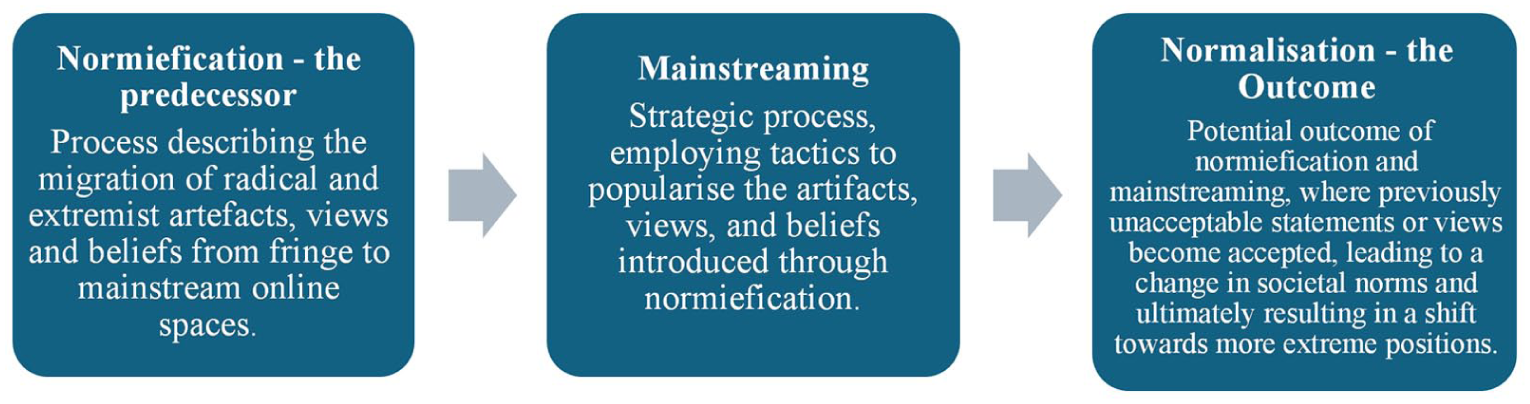
Digital Subcultural Diffusion Theory.
Importantly, we do not claim that the mainstreaming of misogynistic discourse is something unique or new. Rather, the diffusion of incel-specific subcultural artefacts must be situated within the broader cultural and structural entrenchment of misogyny and male supremacy, which manifest across both digital and offline spheres (Henry and Powell, 2015). Drawing on Banet-Weiser and Miltner’s (2016) concept of networked misogyny, which emphasises how digital platforms actively reproduce and amplify patriarchal norms, we argue that the diffusion of incel tropes is not isolated but integrally linked to this wider ecosystem. Rather than seeking to displace established conceptual frameworks such as networked misogyny or analyses of the widespread normalisation of misogyny, this study is designed to build upon them by illustrating how incel-specific rhetoric migrates across digital spaces, facilitated by subcultural evolution, online interconnectivity, platform affordances, and systemic patriarchal structures that reinforce, maintain, and reproduce male supremacy and violence against women and girls.
Data and methodology
Data selection
This study used a primarily qualitative mixed-method, exploratory, cross-platform approach to analyse data from three online spaces. It began with a netnographic study (Kozinets, 2019), observing misogynistic incel videos and accounts on TikTok by searching for three key terms – “incel,” “incels,” and “blackpill” – along with variations in their spelling. The netnography spanned 25 months, from September 2022 to July 2024, with the primary researcher immersed in the incel TikTok space, monitoring accounts, videos, and comments. This process led to the exploration of related terminology and spaces, including the looksmax.org forum and Incels.Wiki.
Consequently, while the initial dataset originated from TikTok, additional data was gathered through snowball sampling (Parker et al., 2019) of related online sites. As such, the data for this analysis is divided into three datasets: (1) the fringe incel blackpill sample, comprising forum posts from looksmax.org and pages from Incels.Wiki; (2) the mainstream incel blackpill sample, consisting of TikTok accounts and videos from self-identified incel/blackpill content creators; and (3) the mainstream non-incel sample, consisting of TikTok metric data related to incel-adjacent terminology. For clarity, the data analysed in this study includes four looksmax.org posts and eight Incels.Wiki pages (see Appendix 1); 23 accounts and 332 videos from TikTok; and a selection of hashtags and their views metrics from TikTok.
Data analysis
A qualitative inductive Multimodal Thematic Analysis (MTA) was first employed to explore the terminology, theories, and visual aspects of the PSL ideology and looksmaxxing. The MTA focused on understanding what is being communicated (the ideology and its themes) and how this is communicated (the delivery style and mechanisms used to disseminate this information on TikTok). Following Braun and Clarke’s (2021) reflexive thematic analysis (RTA) process, a sample of five TikTok accounts was selected, and all their videos were analysed (N = 332) to create overarching thematic and stylistic categories.
Mainstreaming content: The final framework, based on these 332 videos, identified four key thematic categories: PSL and Looksmaxxing, Women and Misogyny, Men and Victimhood, and Dating and Relationships. This study focuses exclusively on data and concepts related to the PSL and Looksmaxxing thematic category. While this study is primarily qualitative, prioritising depth, meaning, and interpretative insight over numerical prevalence, the frequencies of sub-themes within the PSL and Looksmaxxing category are provided in Appendix 2.
The PSL and Looksmaxxing category, and its encompassing sub-themes and codes, were used as a framework to deductively organise 19 additional incel-blackpilled TikTok accounts and their videos, the content of selected posts from looksmax.org, and the selected Incel.Wiki pages. The PSL and Looksmaxxing framework is divided into two main themes including (1) the PSL scale and its theoretical foundations, and (2) Looksmaxxing.
Mainstreaming mechanisms: The mechanisms used to deliver this content were analysed, accounting for the multimodal nature of TikTok videos, examining textual, visual, and audio elements. The categories devised from this step were then deductively organised based on Rothut et al.’s (2024) mainstreaming model and divided into three stylistic categories: content positioning and susceptibility (from Rothut et al., 2024), and platform affordances (addition to Rothut et al.’s, 2024 model).
Additionally, quantitative metric TikTok data was collected and analysed, to complement the qualitative findings. The metrics include views of specific PSL and looksmaxxing-related hashtags on TikTok to illustrate engagement with blackpill/PSL/looksmaxxing content.
By using data from three sources, we show how niche misogynist incel-specific vernacular, theories, and tropes migrate from fringe platforms (looksmax.org and Incels.Wiki) to gain popularity on TikTok. In the following sections, we introduce and explain the PSL ideology and the looksmaxxing trend, trace the dissemination of content from looksmax.org to TikTok, and explain the mechanisms used to mainstream this content on TikTok. Through the analysis, we integrate information from Incels.Wiki to provide context and triangulate our results.
Ethical considerations
This research received ethics approval from our institutional Faculty Ethics Committee and adheres to General Data Protection Regulation (GDPR) principles. To prevent individuals from being identified, usernames of the accounts and commenters are anonymised, and direct quotations were reformulated to mitigate the risk of backtracking them to their original source (Sugiura et al., 2017). The study involved non-participant covert netnography, therefore being unobtrusive and protecting the researcher’s privacy and safety. All data was collected from publicly available and open forums and social media websites.
While direct quotes were modified to reduce traceability, visual content is provided in its raw form except for censored usernames. The current study adopts Emma Jane’s (2016) stance in favour of including unexpurgated content when documenting online misogyny (and in this case, racist imagery) to accurately represent the severity and brutality of misogynistic abuse online. This ensures harms and violence are not minimised and convey the raw reality of digital misogyny and racism. Additionally, this paper aims to raise awareness of the type of terminology and visual elements present on both mainstream social media and fringe forums frequented by young people and those interested and/or engaged in the misogynist incel community and ideology. These findings and the supporting data might therefore be of interest to practitioners and teachers in navigating the complex ecosystem of the internet and incel-specific discourse.
Findings and analysis
Through the lens of DSDT, the findings contextualise the PSL and looksmaxxing concepts and examine their migration from fringe online communities to TikTok. The analysis demonstrates the origins of PSL and looksmaxxing discourse on niche platforms (e.g. looksmax.org, defunct PSL forums) and traces their migration onto TikTok, exemplifying the process of normiefication. Subsequently, the process of mainstreaming is demonstrated via three lines of evidence: (1) qualitative examples of terminology adoption on TikTok; (2) quantitative trends in the popularity of PSL and looksmaxxing-related terms on TikTok; and (3) mechanisms enabling this cultural diffusion through the application of DSDT. Throughout, findings triangulate data from looksmax.org posts, TikTok content, and Incels.Wiki pages, with the origin of evidence explicitly cited.
The PSL scale and its theoretical foundations
Our analysis defines the PSL scale as a systematic hyper-conformist framework for evaluating human attractiveness (IW1, IW6, L1). Rooted in evolutionary psychology, biological determinism, and medical aesthetics, the scale prioritises facial features over bodily characteristics. Alleged “scientific findings” including dating application surveys, misinterpreted academic research, and pseudoscientific graphs or data of questionable origin and accuracy, are employed to justify the scale’s validity, thereby presenting it as a “scientific ideal” (L1).
The PSL scale employs a truncated numerical range (1–8, or 0–8 in some iterations), diverging from the conventional decile scale (1–10) used within the wider incel subculture and society in general to quantify attractiveness (IW7). This distinction is framed as a corrective mechanism accounting for women’s supposed heightened criticality in evaluating male attractiveness (IW1). In effect, PSL ratings are positioned as an interpretation of women’s subjective evaluations, while decile scales reflect an “objective” reality deemed futile in the alleged current gynocentric social order.
Therefore, the PSL scale is ostensibly designed to interpret how women perceive men, aiming to cater to and understand the “female gaze” – a concept reinterpreted here as a form of aggressive scrutiny targeting men’s appearance. This diverges sharply from Mulvey’s (1975) original critique of the cinematic “male gaze,” instead aligning with Long’s (2023: 47) definition of the “female gaze” as a performative, retaliatory practice observed in social media contexts, where women ostensibly objectify men to mirror and subvert patriarchal norms. The PSL scale is used by its proponents to operationalise this gaze, by quantifying male attractiveness through a framework that assumes female hypercriticality. In doing so, it overlooks the broader patriarchal standards that control and scrutinise how both men and women look and present themselves (hooks, 1992).
Supporters of the PSL scale (men active on blackpilled TikTok accounts, the looksmax.org forum, and Incels.Wiki) use it to rate individuals, primarily men, to provide appearance reviews and identify areas for improvement. The rating process involves a convoluted and pseudoscientific assessment of genetics, phenotypes, and various facial characteristics, discussed in the following sections.
“Face matters” – A dysmorphic view of facial attractiveness
The PSL scale adheres to a strict collection of Eurocentric heteronormative beauty standards and cis-gender stereotypes based on which the PSL ratings are ascribed (L2). Facial aesthetics are categorised into specific features – eyes, nose, jaw, lips, and cheekbones – as well as broader assessments of facial harmony, skin, hair, and overall health (see Appendix 3 for a detailed breakdown). These features and their respective combinations add to or detract from one’s overall PSL rating. This classification is reproduced on TikTok, where idealised standards of male beauty are predominantly facial and most commonly exemplified by white men (Figure 2).
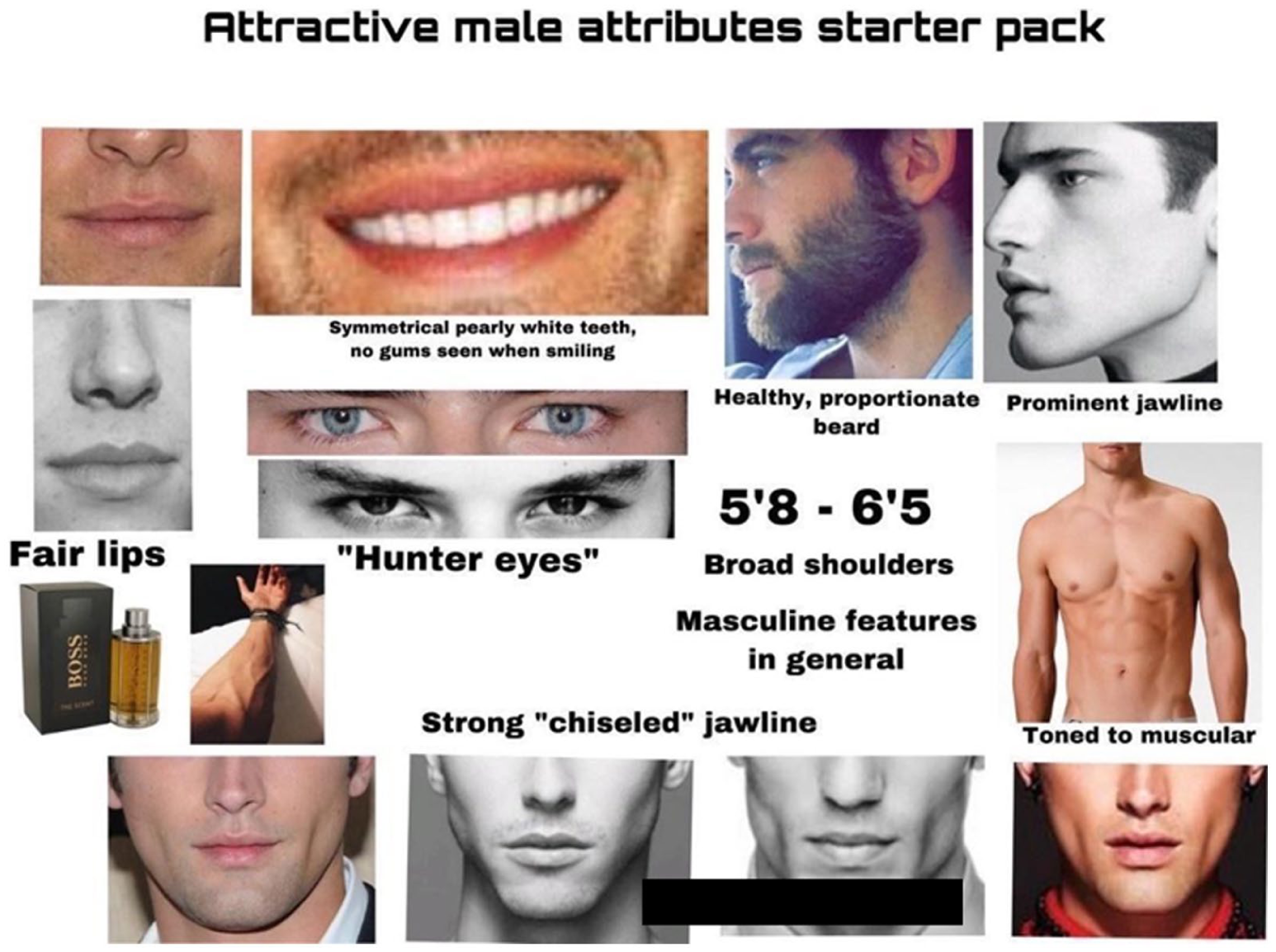
TikTok – Attractive male attributes starting pack.
Within facial aesthetics, the jaw and eyes are frequently regarded as the most critical features. 6 The jaw, in particular, has been extensively highlighted in both community discourse and academic literature as a central concern (Heritage, 2023). A sharp distinction is drawn between the prominent, well-defined “Chad” jaw, associated with sexual success and stereotypical manliness, and the recessed or underdeveloped “Incel” jaw, which is viewed as a marker of genetic inferiority (L2). Similarly, eye shape is divided between hunter eyes – attractive male eyes which “emanate a compelling and intense gaze” and prey eyes – unappealing in men due to their delicate, rounded appearance, which is said to project vulnerability (L2). This terminology aligns with broader gendered evolutionary narratives, explicitly exploiting rigid binary gender stereotypes by framing idealised men as strong, predatory, and dominant, while casting less attractive men and women as weak, passive, and subordinate.
These facial attractiveness standards are replicated on TikTok, exemplifying the normiefication process, with various aspects considered essential for an attractive male jaw and eye area reinforced through images with celebrities, male models, wild animals, medical diagrams as well as before and after pictures with explanations justifying the importance of strong jawlines and dominant eyes (Figures 3 and 4).
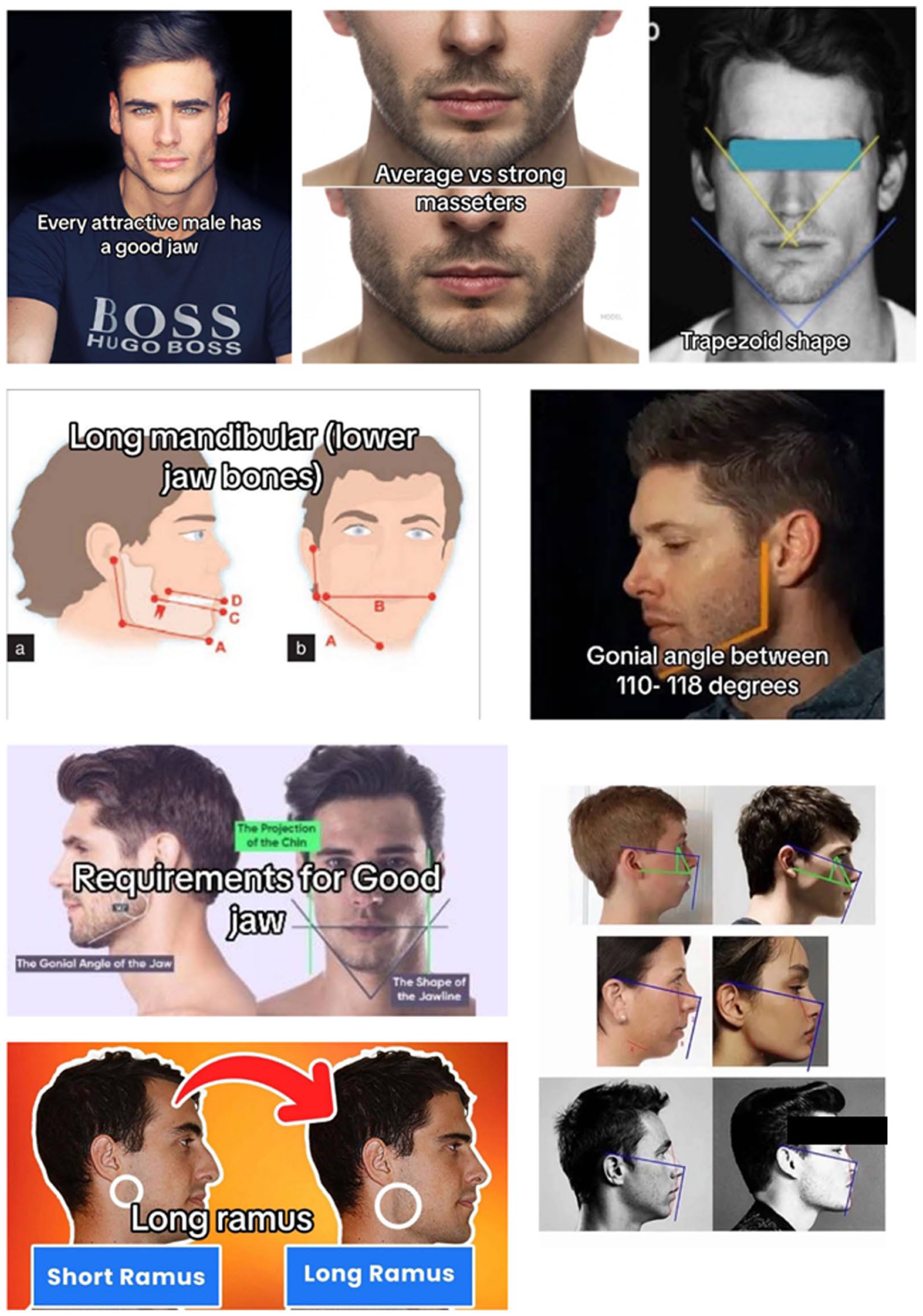
TikTok – The importance of a strong male jaw examples.
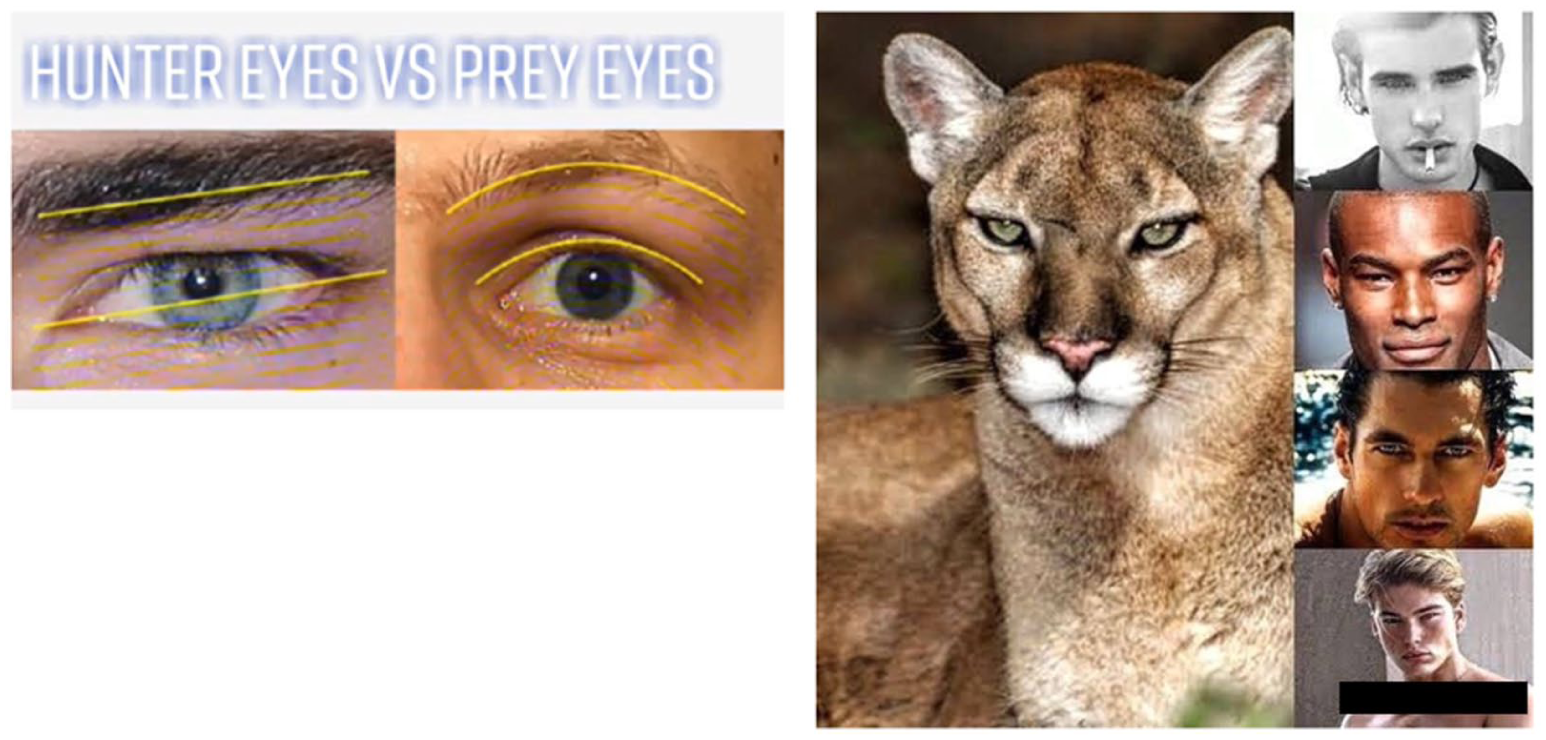
TikTok – Examples of eye shapes, comparing hunter eyes (desirable) and prey eyes (undesirable).
“Don’t skip genetics days” – Racial essentialism, eugenics, and the superiority of the white race
As with the traditional misogynistic incel blackpill ideology much of one’s attractiveness is dependent on genetic composition, therefore being grounded in biological determinism and often racial essentialism (Heritage, 2023; Rothermel et al., 2022). A key component is the phenotype which represents the observable physical characteristic of an organism, determined by the interaction between its genetic makeup (genotype) and the environment. (“Phenotype,” n.d., para. 1). 7 Phenotypes are seen as significantly influencing one’s appearance as they reflect characteristics associated with one’s racial and ethnic genomic makeup (L4). A white phenotype is positioned as superior to mixed or racially diverse phenotypes, reinforcing scientific racist notions that attribute non-white men’s perceived unattractiveness to racialised features such as facial structure, eye colour, and hair type (IW8).
Therefore, the PSL scale employs a “scientific” veneer aimed at demonstrating that certain phenotypic traits, often associated with white individuals and Eurocentric beauty standards, are superior, rather than overtly claiming racial superiority. Individuals with a mixed ethnic background, are explained in definitive racial terms, implying the existence of a “pure race.” Persons with non-white genetic compositions and associated phenotypes are claimed to have diminished attractiveness, while “white-passing” individuals, who exhibit predominantly white phenotypic traits, are deemed more attractive regardless of their actual genetic or ethnic background. On TikTok, this classification is operationalised through eugenics-adjacent comparisons that frame higher proportions of European ancestry as indicators of genetic and social value, thereby reinforcing white supremacist ideologies (see Figure 5).
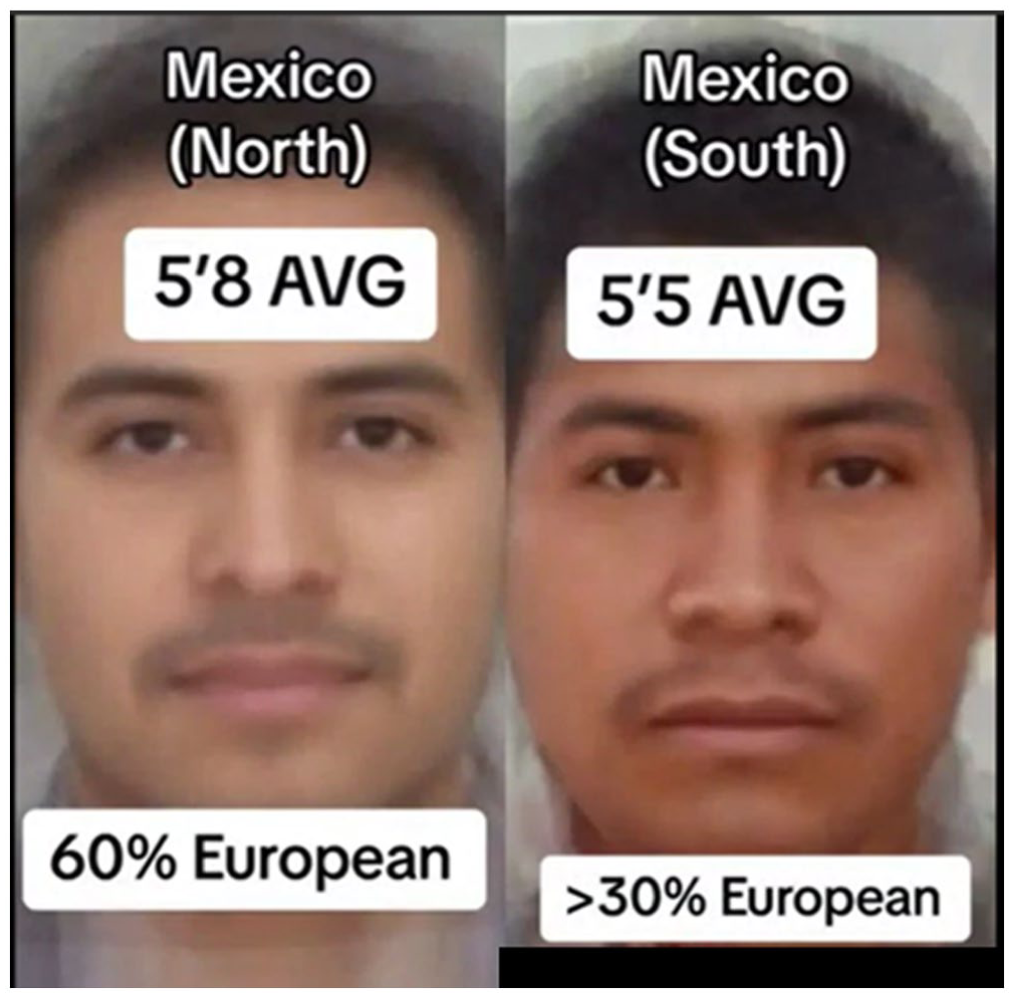
TikTok – Phenotype comparison.
The co-optation and strategic misuse of genetic concepts align PSL’s discourse and ideology with far-right, alt-right, and white supremacist movements. These groups have a documented history of distorting and exploiting scientific research and genetic theories to legitimise racial essentialism, promote eugenics, and reinforce notions of white racial superiority (Panofsky et al., 2021, 2024). Mirroring previous findings from online incel forums (Gheorghe, 2024), data from TikTok and the looksmax forum argue that racial differences in attractiveness and associated phenotypes are shaped by women’s preferences, fuelling the male victimhood narrative. Various statistics, drawn from (unsourced and potentially fabricated) research studies and dating site metrics, are used to illustrate women’s supposed racialised preference for white men and white phenotypes over other ethnic groups (see Figure 6).
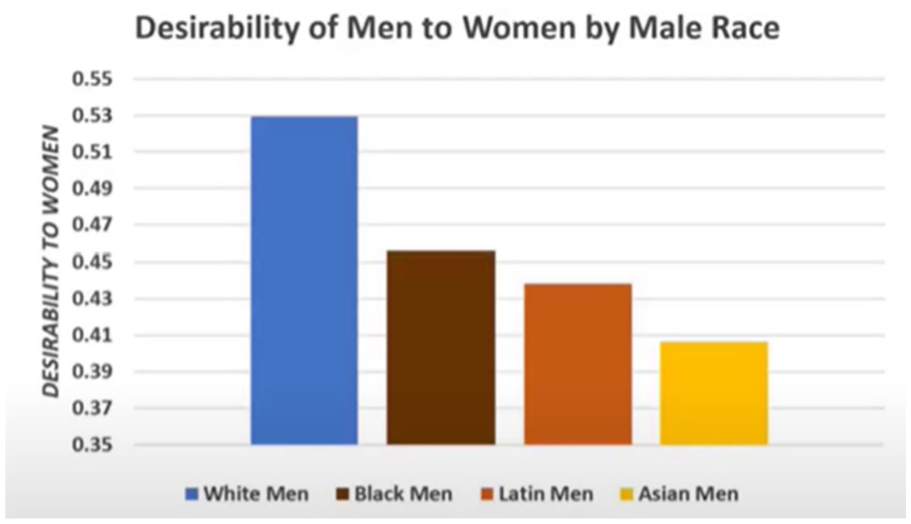
TikTok – Graph “evidencing” the desirability of men to women by male race and white men preference.
The PSL hierarchy
To understand the PSL hierarchy within the context of incel/blackpilled ideology, we compare it with the established incel hierarchy developed by Baele et al. (2021). Baele et al. (2021: 1674) present a schematic representation of the incel worldview, which categorises people into three main groups: (1) Alphas (or Chads and Stacys, attractive men and women), (2) Betas or normies (average men and women), and (3) incels, exclusively men and the most physically unattractive category.
While Baele et al.’s (2021) categorisation is significant and reflects established information on misogynistic incels, we identify and explain the PSL incel-blackpilled hierarchy which both overlaps and diverges from Baele et al.’s (2021) categorisation. This scale is representative of incel-blackpill accounts and videos observed on TikTok and pages/posts from the Incels.Wiki and the lookmax.org forum. 8
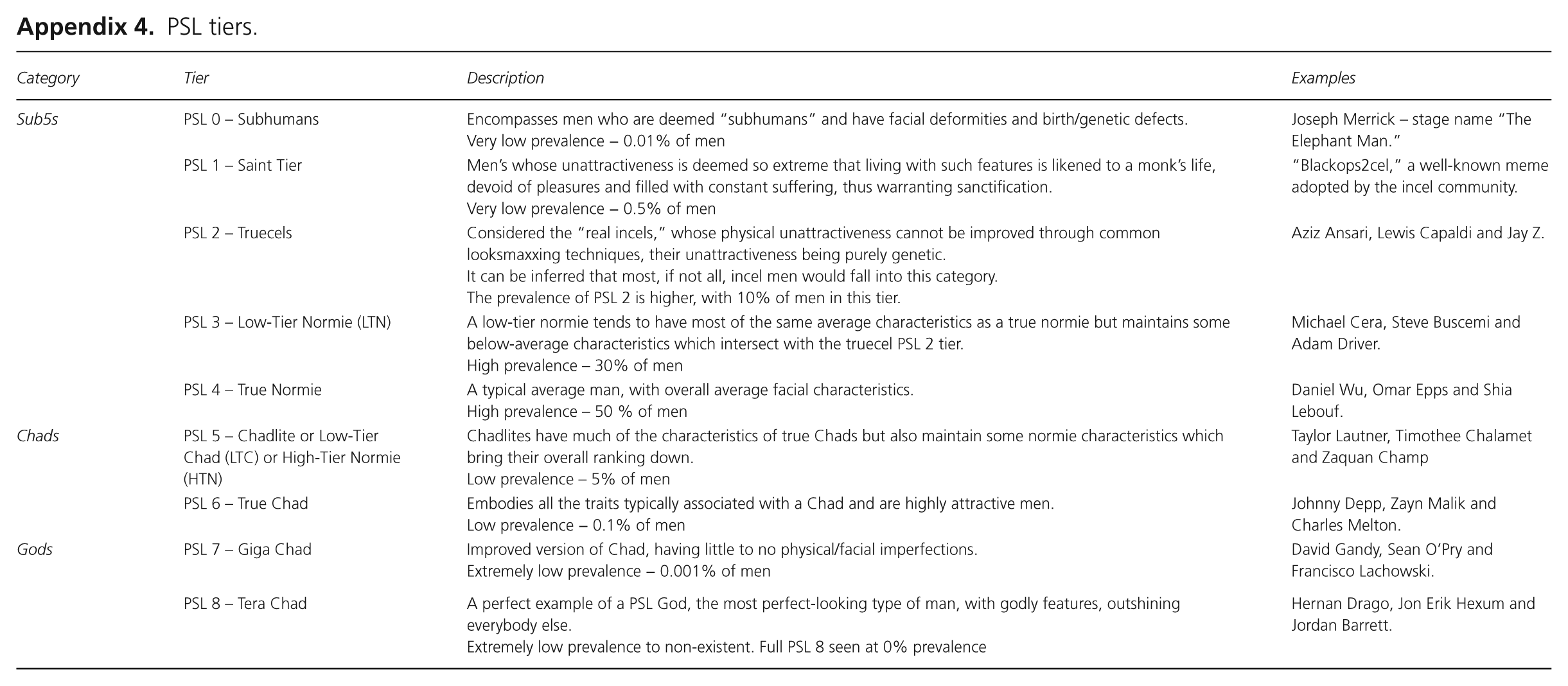
The PSL social hierarchy comprises several tiers with the three main categories encompassing Sub5s, Chads and PSL Gods (see Figure 7). Compared to Baele et al.’s (2021) categorisation, it is noteworthy that Betas are absent from the PSL classification, and Alphas or Chads no longer constitute the epitome of male attractiveness, with PSL Gods classed as the ideal representation. The tiers are exemplified with images of celebrities, male models, and notorious internet memes, across the three platforms.
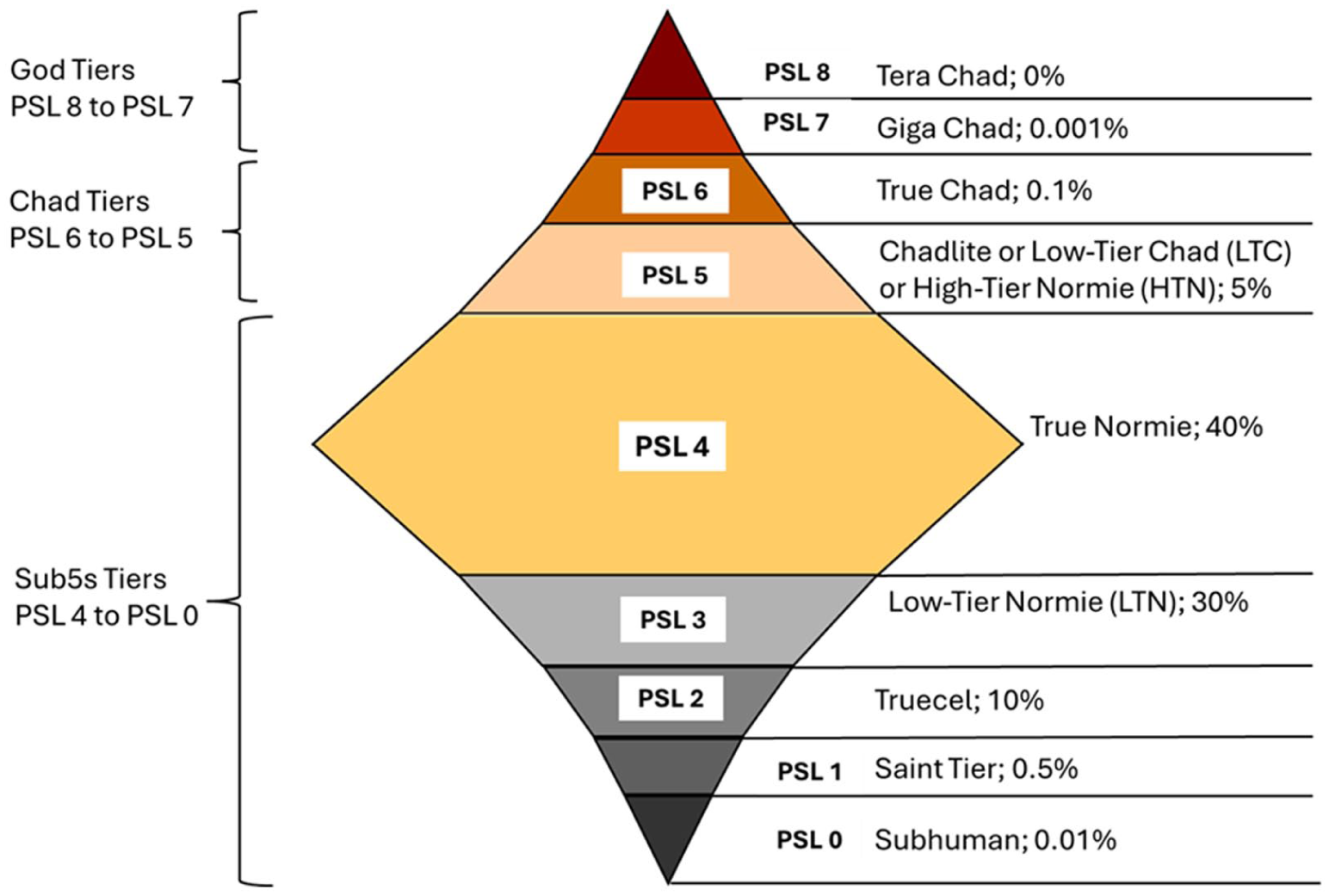
The PSL incel hierarchy and associated prevalence (%) per tier.
Sub5s
The Sub5 classification constitutes the lowest tier within the PSL framework. Here, individuals are categorised as exhibiting minimal aesthetic appeal based on facial characteristics. Individuals rated between PSL 0 and 4 are classified as aesthetically deficient, with gradations reflecting the perceived severity of divergence from conventional attractiveness standards. At the extreme threshold (PSL 0), subjects are characterised as demonstrating profoundly non-normative (at times termed “subhuman”) facial features, while PSL 4 denotes median facial characteristics. Notably, even median-rated individuals are theorised to incur systemic marginalisation in romantic marketplaces, as facial averageness is framed as insufficient to meet women’s perceived hypergamic 9 mate selection preferences. A PSL 4 would most accurately embody the stereotypical “Beta male” otherwise absent from the PSL hierarchy.
The Sub5 tiers function as an inclusive identity construct, consolidating men across lower PSL tiers. This marks a departure from historical intracommunity exclusion practices distinguishing “truecels” (considered genuinely victimised and unattractive) from “fakecels” (those with moderate aesthetic capital accused of appropriating involuntary celibacy status; Andersen, 2024a). The emerging formulation constitutes a key mainstreaming factor, synthesising perceived biological disadvantage, systemic victimisation, and collective resentment among contemporary masculinities, reflecting an evolution in blackpill discourse towards broader solidarity predicated on shared grievances.
Chads and Gods
The Chads and Gods tiers introduce a notable departure from the traditional incel hierarchical framework by redefining standards of male attractiveness. In earlier iterations of incel ideology, the term “Chad” denoted men occupying the apex of the sociosexual hierarchy. However, the contemporary PSL worldview reconfigures this structure, subdividing attractiveness into distinct categories. The two Chad tiers (PSL 5–6) represent conventionally attractive men, constituting a small minority (5.1%) of the male population. While Chads retain their association with physical appeal, the PSL framework postulates them as exhibiting significant deficiencies in their appearance. Reserved for the most exceptionally attractive men, the God tiers (PSL 7–8; often termed “PSL Gods”) are characterised as “gods among men,” embodying an idealised standard of beauty deemed worthy of admiration or “worship” from both women and men.
God tiers are occupied by a minute fraction of men, typically exemplified by internationally recognised male models, actors, and celebrities. PSL Gods are framed as refined or “perfected” versions of traditional Chads, surpassing them in both aesthetic quality and rarity. This reconceptualisation elevates the God tiers to the pinnacle of the hierarchy, displacing Chads from their former position of absolute dominance.
God tiers are central to understanding the divergence between the PSL scale and the traditional incel worldview, and play a significant role in the mainstreaming of blackpill ideology. Unlike the traditional incel framing of “Chads” – often associated with negative traits such as aggressiveness and hypersexuality (Baele et al., 2021; Heritage, 2023) – PSL “Gods” are idealised as embodiments of perfection: successful, genetically superior, and almost mythologised. This reconfiguration shifts the focus away from resentment against attractive men, towards the aspirational aesthetics embodied by the PSL Gods, broadening the appeal of blackpill beliefs. While the PSL hierarchy is fundamentally grounded in white supremacist ideals, it superficially presents a more racially inclusive framework by occasionally featuring non-white God-tier individuals – most often Black or Latin men, particularly on TikTok. However, such inclusion tends to be conditional upon proximity to Eurocentric beauty standards, with phenotypic whiteness remaining the benchmark of desirability, and the most celebrated PSL Gods (such as David Gandy, Sean O’Pry, Francisco Lachowski, and Jordan Barrett) remaining overwhelmingly white. By centring models, actors, and celebrities – figures already embedded within mainstream popular culture – the PSL framework facilitates a more socially acceptable gateway into incel-adjacent beliefs and discourse. It promotes a culture of attractiveness glorification rather than marginalisation, encouraging users to aspire to such idealised standards of beauty and actively work to ascend from sub5 denominations through looksmaxxing practices.
Looksmaxxing
“Looksmaxxing,” or “looksmaxing,” refers to improving one’s appearance through various methods (e.g. Ging et al., 2025; Rosdahl, 2024). Traditional incel blackpill ideology holds that attractiveness is entirely determined by genetics, rendering any attempt at self-improvement futile as looks and physical features are deemed unchangeable (Sugiura, 2021). According to this view, incel status is fixed, with no possibility of advancing to a “normie” or “Chad” level (Baele et al., 2021). However, due to the complex and contradictory nature of incel ideology, some adherents may still see looksmaxxing as a legitimate way to enhance their appearance.
In contrast, PSL ideology views hierarchical boundaries as more flexible, considering looksmaxxing a valid method for advancing within the PSL hierarchy and essential for participation in the PSL community. Unlike the traditional looksmaxxing promoted by redpill communities, which emphasise the need for muscular and athletic physiques for enhancing attractiveness (Tebaldi and Burnett, 2025), PSL incels adopt a more nuanced perspective. They argue that while gym workouts might offer modest improvements for some, those with unattractive faces experience limited benefits. Therefore, while PSL proponents view gymmaxxing as acceptable and at times necessary for a comprehensive looksmaxxing process, a cap exists on how much men can improve their appearance and ascend through the PSL scale based on physical fitness alone. Men who are facially unattractive and focus solely on their athleticism will encounter a ceiling where further improvement is unachievable, as their issues are attributed not to their physique but to their facial features and genetic disadvantages. This is illustrated in the comparison between the men in Figure 8, emphasising the belief that attractive facial features far outpace muscular bodies when it comes to attracting women. Therefore, alternative facial enhancement looksmaxxing techniques are needed for those with undesirable facial features.
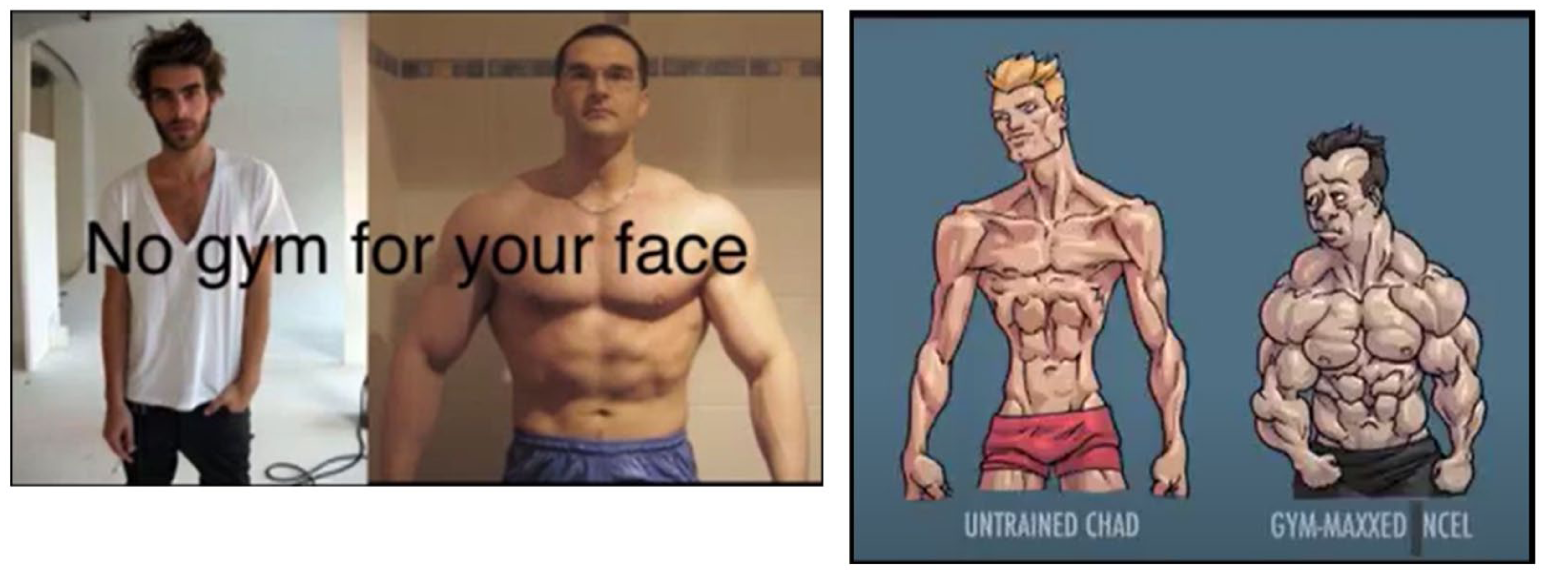
TikTok – Limitations of gymmaxxing.
Those interested in looksmaxxing are advised to be strategic and focus on improving their most undesirable areas first, especially when considering undergoing surgery (L2, L3). The primary goal for men in the sub5 category is to reach a 5 and be seen as attractive by women, thereby leaving the sub5 designation. PSL looksmaxxing, therefore, occupies a middle ground, differing from traditional redpill looksmaxxing by being more limited in its scope, while also standing apart from the typical incel nihilist view of looksmaxxing by offering the possibility of improvement (see Figure 9). PSL looksmaxxing is possible, but through more invasive and at times dangerous procedures that attempt to target the supposed inferior phenotypes and genetic aspects of one’s attractiveness such as recessive hairline, “emasculate” jaw line, or inferior eye area.
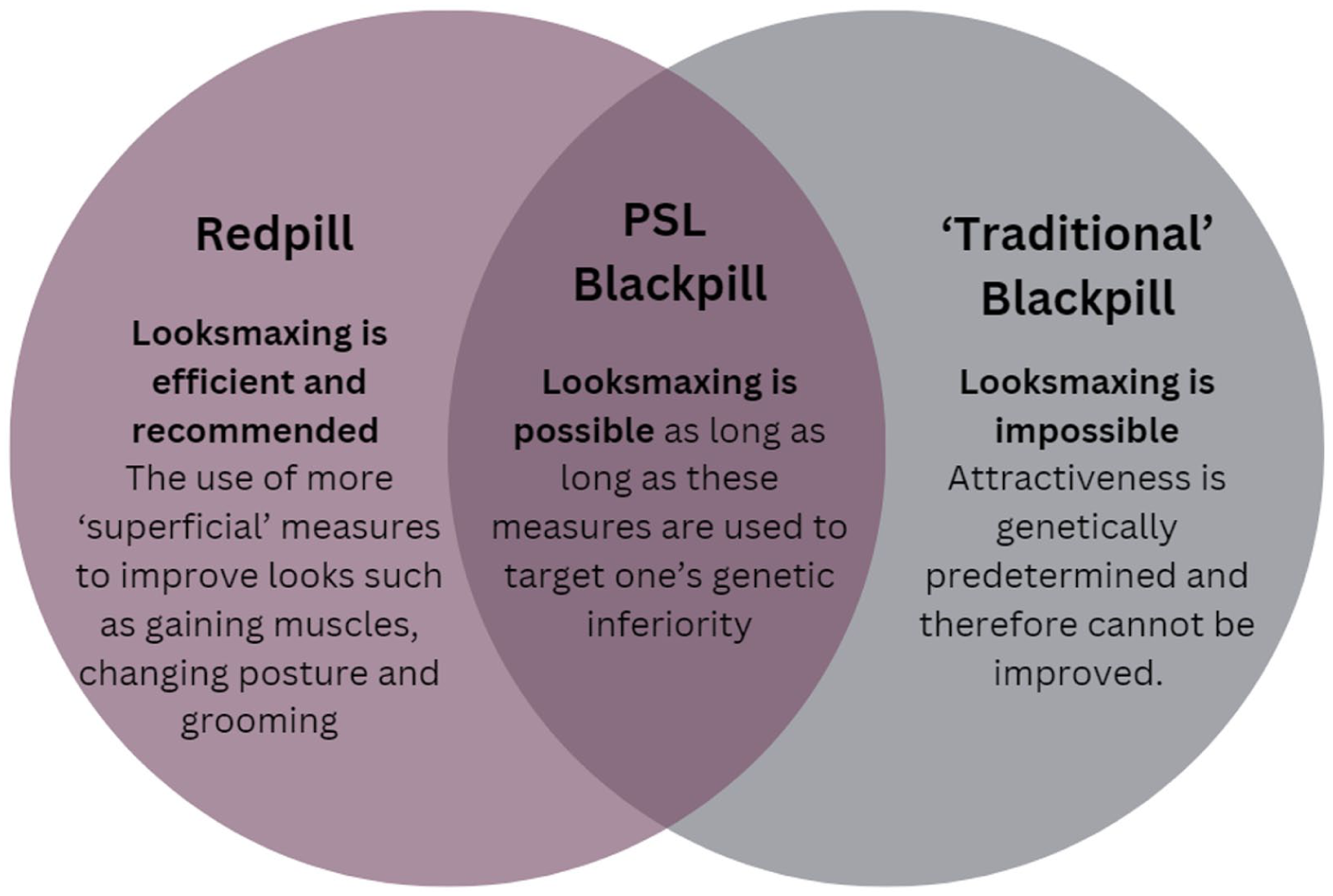
Perceptions of Looksmaxxing.
Looksmaxxing can be divided into softmaxxing and hardmaxxing. The former involves improving facial appearance through non-invasive or less extreme methods, such as following a skincare routine, using hair growth treatments, and weight loss to reduce facial buccal fat (L3, IW2). Some controversial yet commonly recommended softmaxxing practices include mewing (jawline exercises; Won, 2023), masseter muscle training using mouth devices (e.g. Figure 10), and eye-pulling exercises to achieve “hunter eyes.” 10
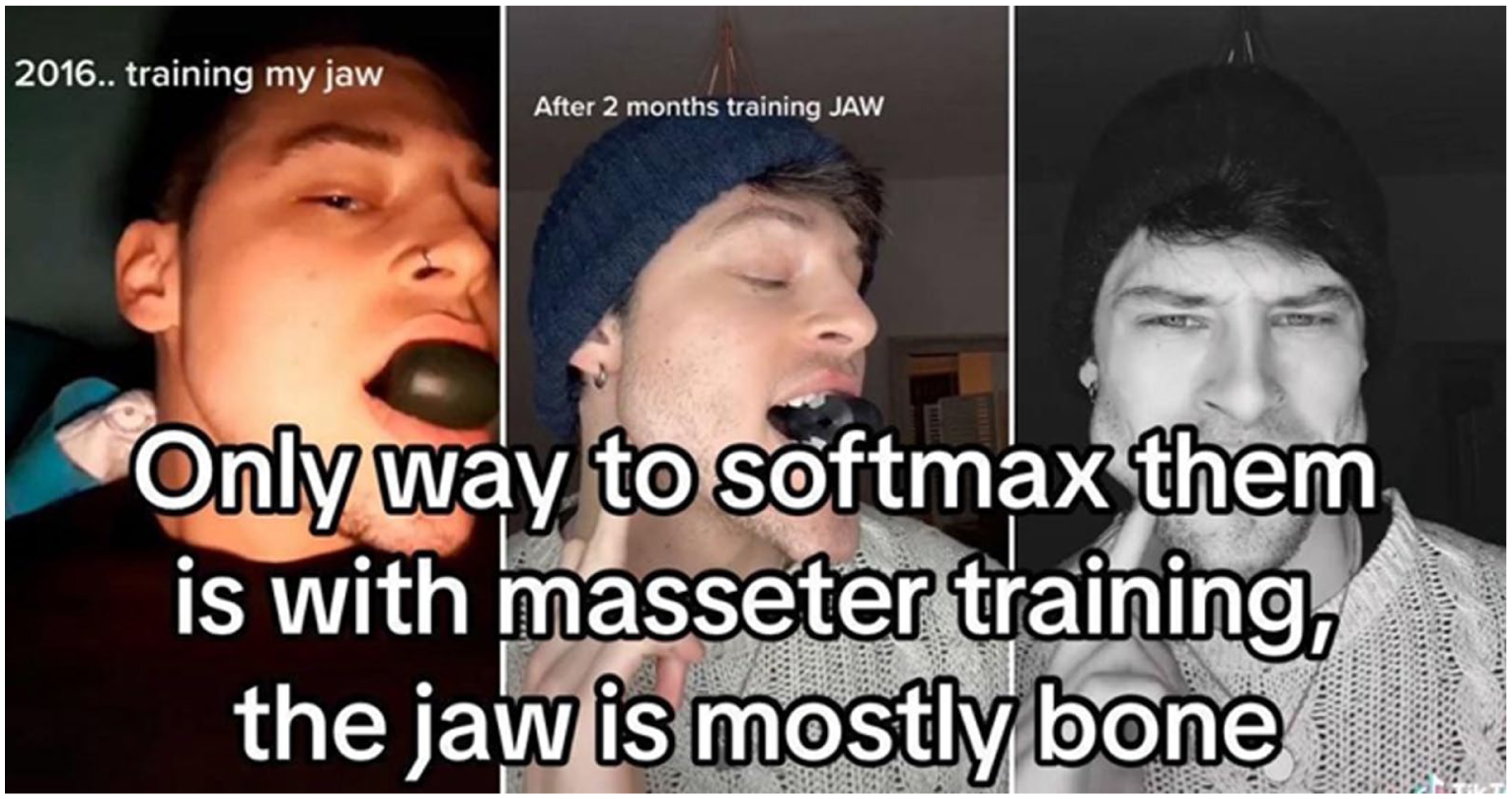
TikTok – PSL softmaxxing, jaw masseter training.
Hardmaxxing refers to invasive, often risky methods to enhance appearance (IW2). This can include procedures like anabolic steroid use, skin bleaching, and cosmetic procedures like fillers and Botox. A defining feature of hardmaxxing is “surgerymaxxing” or the advocacy for plastic surgeries such as rhinoplasty, double jaw surgery, hair transplants, and even limb lengthening surgery to ascend to higher tiers (L2, L3). Exemplifying the normiefication of these beliefs, on TikTok, various collages of such procedures, surgeries, and their associated are provided (Figure 11).
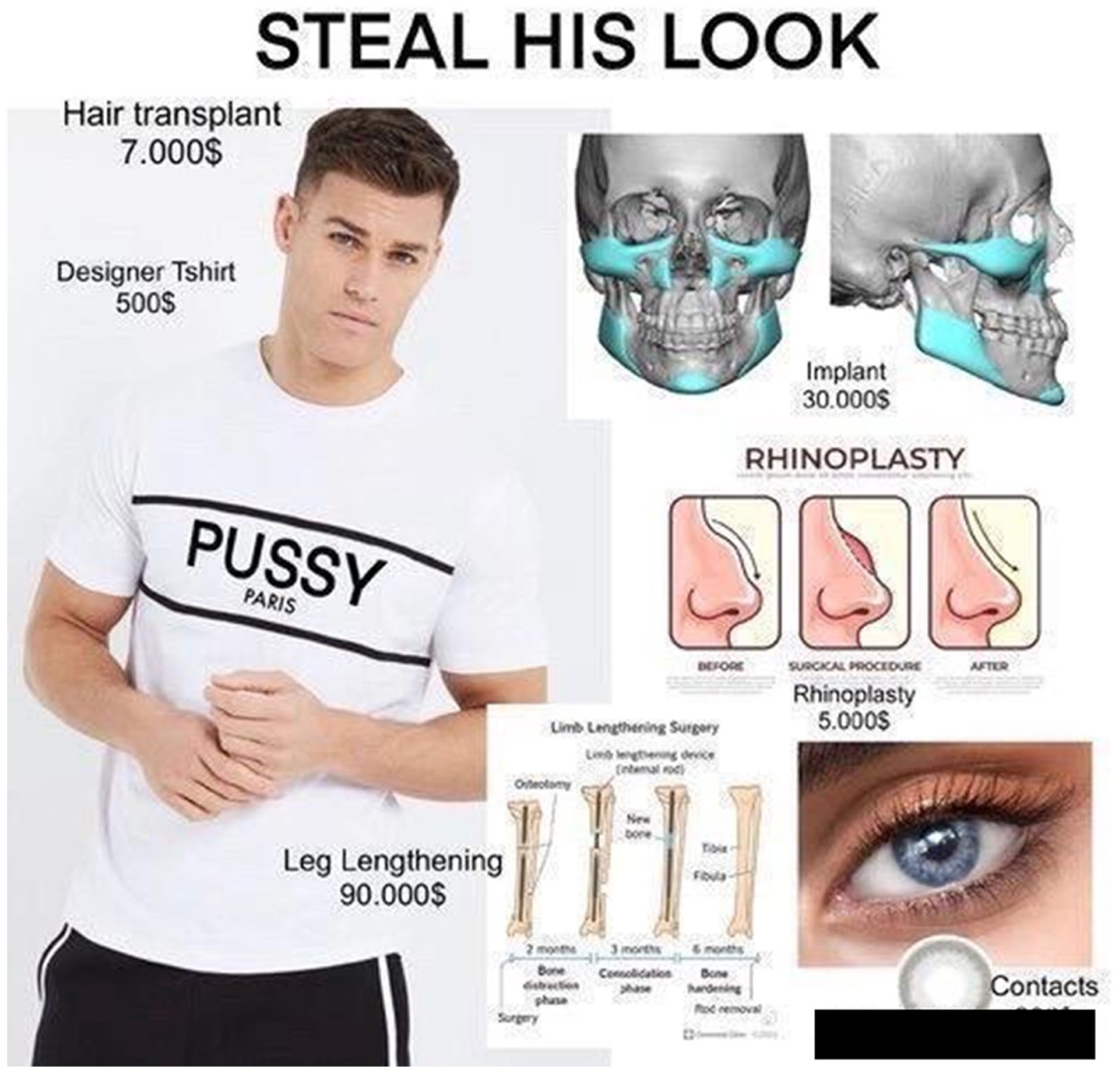
TikTok – PSL hardmaxxing kit.
Due to the high cost of these procedures, alternative at-home “do-it-yourself” (DIY) methods are frequently shared and discussed on both TikTok and the looksmax forum. Dangerous alternatives include the purchase of unregulated steroids and growth hormones, and perhaps the most controversial practice – bonesmashing. Bonesmashing, or hammersmashing, represents a trend within the PSL community, gaining popularity on TikTok. It involves using a hammer or fist to strike one’s face, targeting the jawbones, in an attempt to reshape facial features. In the incel TikTok dataset, this is often showcased through meme-styled “before and after” transformation videos, depicting “inspirational” facial improvement of sub5 men (Figure 12).
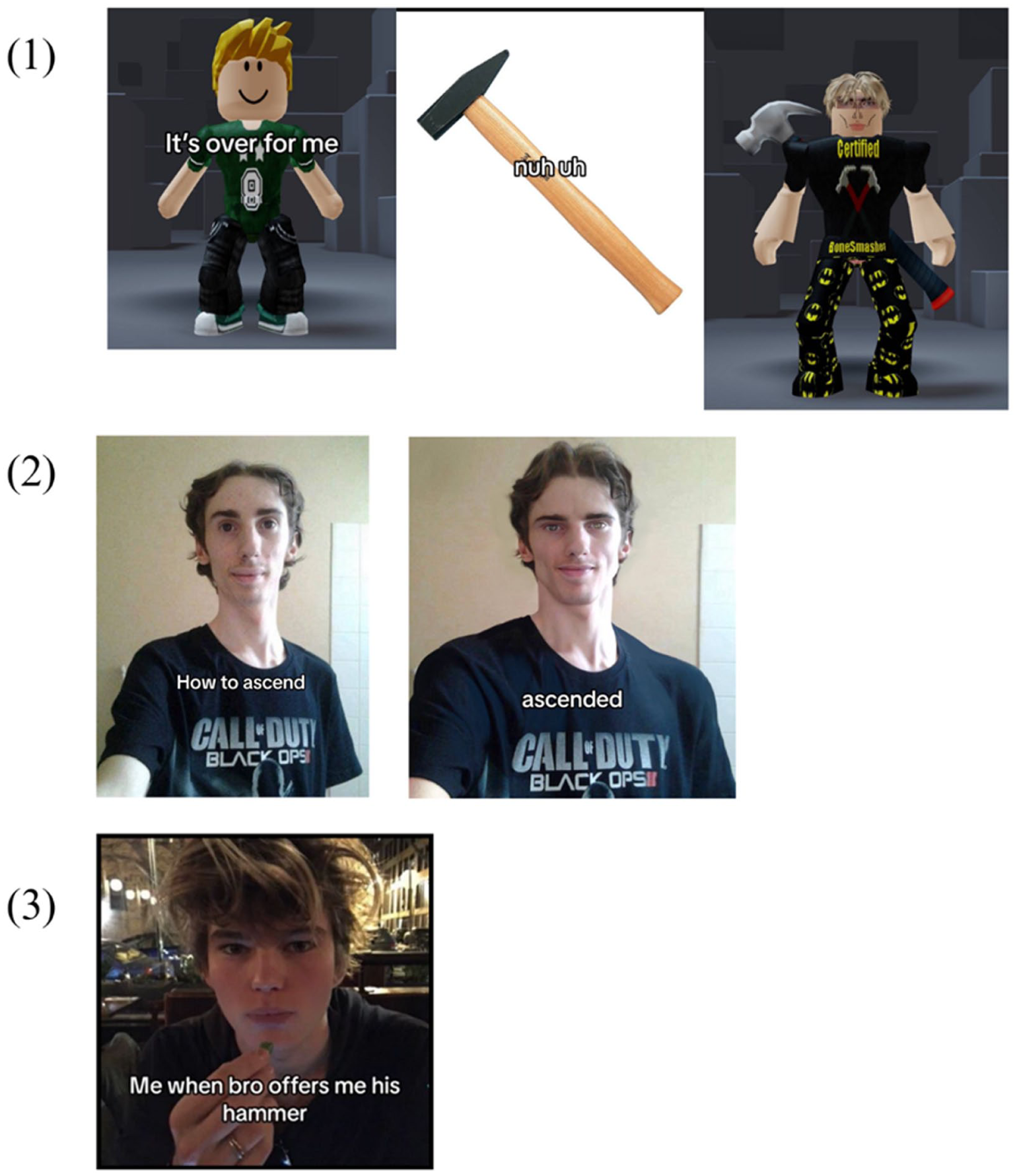
TikTok – Bonesmashing and hammersmashing.
The incel community is well known for its use of trolling and shitposting, frequently employing in-group humour, ironic memes, and coded language to communicate shared beliefs (Heritage, 2023; Sugiura, 2021). Consequently, while recommendations such as bonesmashing may at times appear exaggerated, fantastical, or humorous, and perhaps not intended to be taken literally, they nonetheless have the potential to cause harm. Humorous content and memes, in particular, have been widely recognised as effective vehicles for the reproduction and dissemination of (sub)cultural ideologies due to their relatability, comedic appeal, and ease of circulation, reaching beyond the communities they originated from (Knobel and Lankshear, 2007).
This dynamic raises concerns in the context of platforms such as TikTok, where the user base is disproportionately young and potentially more impressionable. It remains unclear to what extent such content is interpreted critically, understood as ironic, or taken seriously and normalised by viewers (Merrill, 2020; Shifman, 2013). The ambiguity between satire and sincerity within incel-related TikTok content complicates efforts to assess its ideological impact and raises important questions about how harmful or extreme ideas may bypass moderation and be normalised through ostensibly humorous formats.
Mainstreaming on TikTok
We have established that the PSL scale and its associated categories are rooted in blackpill ideology, emerging from both active and defunct misogynist incel communities showcasing their normiefication – through the migration of terms, concepts, and theories from fringe online spaces onto mainstream ones. To highlight the PSL scale’s growing popularity on TikTok and its entry into the mainstream, we focus on key PSL-related terms demonstrating their widespread use. The following terms along with their derivatives have been searched on TikTok to showcase their popularity – “PSL scale,” “PSL gods,” “mogging,” “looksmaxxing,” “looksmaxing,” and “bonesmashing.”
Data on hashtag views reveals that PSL and looksmaxxing terms are trending and viral on TikTok, highlighting their widespread appeal (see Table 1). Some hashtags like PSL, pslgod, mogging, 11 looksmaxing, lookmaxing, and mewing have billions of views. Others reach hundreds of millions (e.g. pslgods) and hundreds of thousands (e.g. pslscale).
TikTok hashtags and views.
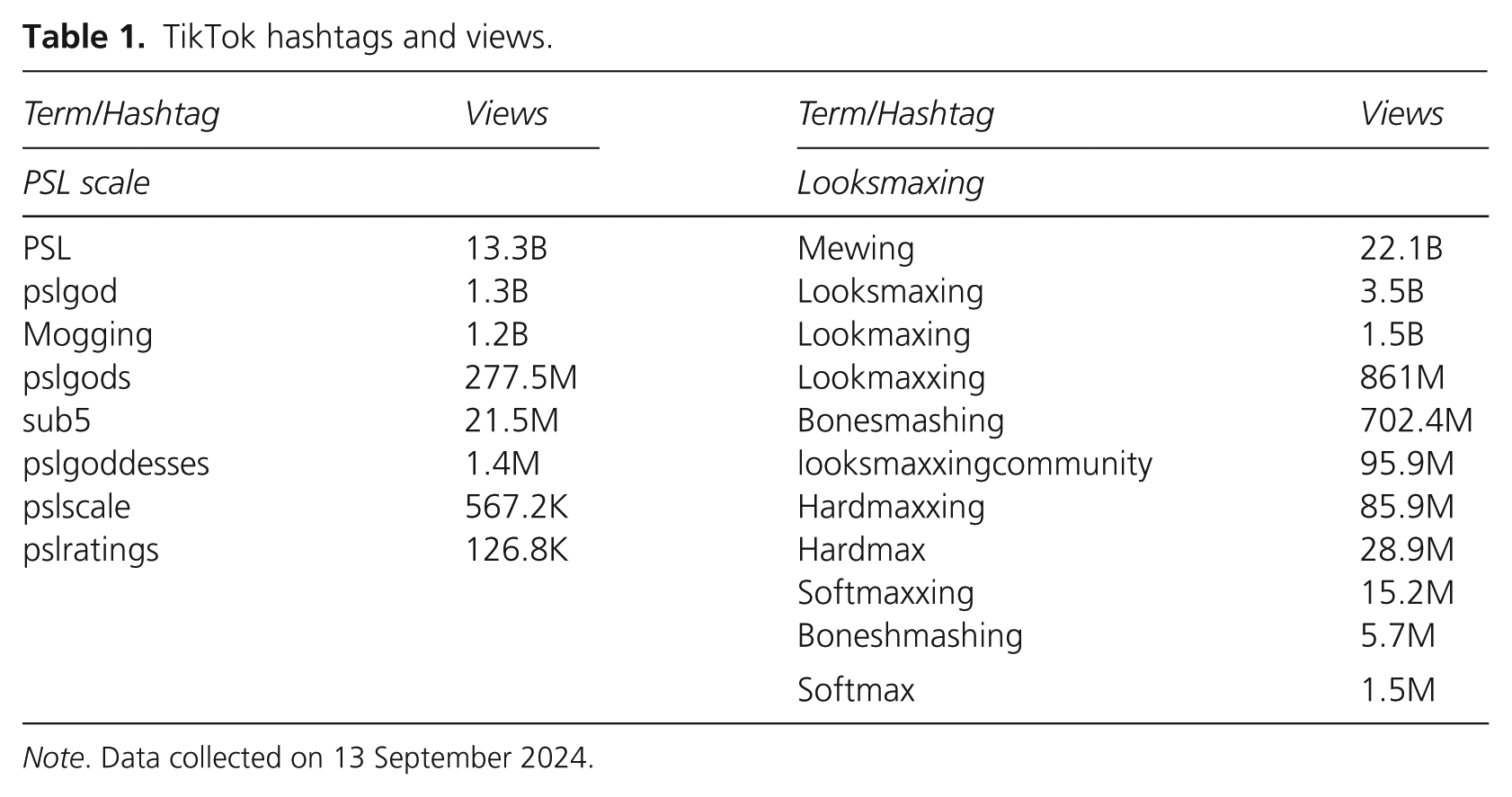
Note. Data collected on 13 September 2024.
It is important to acknowledge that while the above hashtags may be used by individuals affiliated with incel communities or adherents of PSL ideology and looksmaxxing practices, these same hashtags may also be appropriated for counter-speech purposes, employed to critique, parody, or undermine the ideologies they are associated with. Moreover, given their visibility and popularity on TikTok, it is likely that many users engage with these hashtags without any ideological affiliation, using them instead to participate in trending content and to increase virality and viewership.
Despite these interpretive limitations, we argue that the widespread adoption and diffusion of these hashtags beyond incel-specific spaces underscores the normiefication and mainstreaming of these terms. Their use by ideological opponents, casual users, and content creators for comedic or performative purposes illustrates how once-niche incel-adjacent terminology has entered broader discursive circulation, becoming part of the vernacular of TikTok trends and digital youth culture more generally.
Application of DSDT
In this section, the subcultural diffusion of incel specific artefacts, discourse, and tropes will be discussed with a focus on the mainstreaming mechanisms employed to popularise the incel ideology, underpinned by DSDT.
First, the fringe-mainstream content and stylistic similarities and differences will be briefly outlined. The looksmax.org forum posts closely mirror those found on Incels.Wiki in terms of content, particularly concerning PSL and looksmaxxing-related knowledge, descriptions, and illustrative examples. In terms of presentation, Incels.Wiki entries provide detailed explanations grounded in historical incel knowledge and discourse reflecting the site’s role as an encyclopaedic archive of incel knowledge. In contrast, the content examined on looksmax.org is structured more succinctly, resembling a tutorial format. Posts typically define key terms and provide actionable strategies for progressing along the PSL scale and engaging in looksmaxxing practices. Furthermore, the tone differs markedly between the platforms. Incels.Wiki adopts a relatively neutral – and at times even critical – stance towards PSL and looksmaxxing, seemingly acknowledging the internal diversity and contradictions present within incel theories, beliefs, and norms. Conversely, looksmax.org tends to present its content more authoritatively, framing information as objective fact and endorsing both the PSL framework and looksmaxxing practices as valid tools for understanding and improving one’s socio-sexual status.
These differences are reflective of each platform’s respective function and audience. Incels.Wiki operates as a canonical knowledge repository within the incel subculture, aiming to serve a broad incel readership. In contrast, looksmax.org, although emerging from incel-related online spaces, is more ideologically diverse, incorporating a range of “redpilled” perspectives and promoting looksmaxxing strategies aligned with these beliefs.
On TikTok, although much of the content aligns ideologically with that found on looksmax.org and Incels.Wiki, it is communicated through a more dynamic and multimodal format that incorporates visual, auditory, and textual elements. Unlike the relatively structured and linear presentation of information on the forum and wiki, TikTok content is fragmented and delivered in short, digestible segments. The five accounts observed longitudinally illustrate this diversity in style and content. Posts often alternate between carousel slides presenting scientifically framed explanations of blackpill theory or looksmaxxing strategies, humorous or ironic memes, and videos featuring fashion show clips of international male models. This multimodal and non-linear format contributes to a more affective and engaging mode of ideological dissemination, suited to the platform’s algorithmic logic and user engagement patterns.
Mechanisms to mainstreaming
Once in the mainstream (in this context on TikTok), we argue that the following mechanisms are used to influence the popularisation and mainstreaming of the PSL scale and blackpill ideology on TikTok. Drawing from the above findings section and Rothut et al.’s (2024) model of mainstreaming we present these mechanisms as threefold: (1) content positioning; (2) susceptibility; and (3) our addition of platform affordances.
Content positioning
Content positioning refers to the repackaging of content to appeal to a broader audience (Gallaher, 2021). In the case of misogynist incels on TikTok, we divide this content adaptation into rebranding and ideological adaptation. We conceptualise rebranding as a mere change in nomenclature, lacking an authentic conceptual modification, and ideological adaptation as a genuine alteration of a belief system.
Rebranding
The shift from using the term “incels” to the more general and inconspicuous term “sub5s” highlights the rebranding of the misogynist incel blackpill ideology. This change in nomenclature may be influenced by several factors, including TikTok’s 2022 decision to make “incel” unsearchable (Solea and Sugiura, 2023). However, we argue that the distancing from the name incel is in part strategic and driven by a desire to separate from the stigma attached to it. In recent years, the term has come under increased and justified scrutiny across academia, media reporting, social media, and society in general (Andersen, 2023). Incels are often portrayed negatively, and the word incel itself is frequently used as an insult aimed at men who may not necessarily adhere to the misogynistic incel ideology.
The rebranding under the sub5 identity aligns with the concept of “dog whistling,” where the true meaning of messages is disguised to gain mainstream acceptance and avoid opposition (Rothut et al., 2024). This tactic helps avoid de-platforming, distances the community from the stigma of incel, and makes the ideology more appealing to those who are hesitant to associate with the incel label but are more receptive to PSL and looksmaxxing. By masking the blackpill ideology, this approach increases its visibility while allowing blackpilled concepts to go unnoticed and be circulated by casual social media users due to their subtle, concealed presentation (Åkerlund, 2022; Saul, 2018; Solea, 2024).
Ideological adaptation
Traditionally, incel ideology maintained rigid boundaries, viewing genetics as the unchangeable factor in attractiveness and rejecting the possibility of moving up the attractiveness hierarchy. The strict “us versus them” mentality (see Schwartz et al., 2009) categorised men as either incels or not, with those not “incel enough” labelled as beta or normies, thereby excluding them from the community (Andersen, 2024b). However, the PSL categorisation has broadened this stratification by including a wider typology of men within the sub5 tiers, encompassing the majority of men (80.51%). As such, the adoption of the sub5 denomination is not merely cosmetic but rather reinforces the misguided belief that most men are routinely, systematically, and unfairly marginalised by women. This framing encourages men to unite under a broader, more inclusive label that reflects the perceived struggles of those deemed unattractive in contemporary society.
Consequently, and as observed on TikTok, the sub5 category encompasses individuals who may not traditionally identify as incels but are nonetheless positioned as victims of women’s rejection. Central to this ideological shift is the practice of looksmaxxing. While earlier incel discourse viewed self-improvement efforts as futile or delusional, the PSL framework reframes looksmaxxing as both attainable and essential for community participation. Together, the widened inclusivity of the sub5 identity and the aspirational promise of looksmaxxing make the blackpill ideology and adjacent iterations appear more accessible, relatable, and – on the surface – less extreme.
Susceptibility
Content can be presented in ways resonating with particular cognitive processes, attitudes, and (unconscious) biases of the targeted audiences. This can be done by appealing to specific audiences’ grievances, presenting ideologically framed, false, or misleading information (Marwick and Lewis, 2017), and blaming outsiders for those grievances.
We argue that the incel-PSL ideology primarily targets young people, expressly adolescent and young adult men. This demographic is especially vulnerable to appearance-based insecurities, which tend to intensify during formative developmental stages. Simultaneously, content centred on male self-improvement has been shown to resonate strongly with young men in digital environments (Fisher et al., 2025). This focus aligns closely with TikTok’s core user base – predominantly Gen Z – although the platform’s reach increasingly extends across age groups (Poinski, 2023). Capitalising on young people’s appearance-based concerns, social media platforms, and TikTok in particular, have been found to allow and promote content that reinforces unattainable beauty standards, body dissatisfaction, and eating disorders, affecting both young women and men (Blackburn and Hogg, 2024; Centre for Countering Digital Hate, 2022; Young et al., 2022).
PSL blackpill ideology strategically exploits these appearance-based insecurities, presenting the PSL scale as a reflection of women’s purportedly unattainable and entitled standards – particularly privileging white male beauty – positioning men, especially those deemed unattractive or racialised, as victims of an unjust sexual hierarchy (Solea and Sugiura, 2023). Drawing on narratives of male victimhood and hybrid masculinities, it constructs a worldview in which the majority of men are subordinated due to their lack of perceived aesthetic capital (Ging, 2019; Halpin, 2022). This sense of injustice fosters identification with the PSL community, where women are depicted as gatekeepers of desirability and men as systematically excluded. Within this logic, looksmaxxing emerges as the primary solution: a means to reclaim hegemonic masculinity by conforming to the very standards allegedly imposed by women. Crucially, looksmaxxing not only offers a seemingly actionable path to self-improvement, but also facilitates community-building through performative engagement, particularly on platforms like TikTok, where algorithmic affordances such as visibility, virality, and interaction (e.g. stitches, likes, reposts) actively promote the circulation of PSL and looksmaxxing content. As such, blackpilled looksmaxxing functions as a central mechanism in the mainstreaming of blackpill discourse. Rather than advocating passive nihilism or resignation (as per traditional blackpill ideology), it offers an accessible entry point into perceived aesthetic self-improvement, community affiliation, and participation in an actionable social media trend.
Adding to the audience’s susceptibility, racialised anxieties are put at the forefront of blackpilled looksmaxxing. As Heritage (2023: 159) notes, “race and ethnicity are central aspects of incel’s collective ideology,” and this emphasis persists within the PSL framework. However, in an effort to render the ideology more socially palatable and defensible, PSL discourse frequently adopts pseudoscientific language to shift attention from explicit racial categories to phenotypic markers, such as bone structure, claimed to be responsible for aesthetic undesirability. This reframing allows the community to present its views as apolitical or even objective, while continuing to pathologise non-white features, akin to other racist online communities (see Panofsky et al., 2024). Crucially, this rhetorical manoeuvre facilitates the ideology’s mainstreaming by distancing it from overt racism and deflecting blame onto women, who are depicted as the agents of these aesthetic hierarchies through their alleged racialised sexual preferences (Gheorghe, 2024). In this way, both racism and internalised racism are instrumentalised to justify race-based aesthetic interventions reinforcing the intersection between male and white supremacist logics (Gheorghe, 2024).
This process is embedded in a broader socio-political context in which racial prejudice has become increasingly normalised. The rightward shift of the Overton Window (see Conway, 2020), alongside the rising popularity of far-right parties, extremist influencers, and reactionary media ecosystems (Barnett, 2019; Cammaerts, 2018; Nagle, 2017; Rothut et al., 2023), provides fertile ground for the dissemination of racialised incel ideologies to susceptible audiences, particularly young men navigating identity, marginalisation, and belonging in a digital age.
Platform affordances
TikTok’s functionality, designed to promote viral and engaging content, plays a key role in mainstreaming the PSL scale and incel ideology, as extremist actors leverage these features to amplify their reach (Whittaker et al., 2021). The popularity of PSL and looksmaxxing terminology is further amplified by TikTok’s short-form content format, which enables rapid creation, dissemination, and collaboration. This is reinforced by the platform’s addictive design features, some of which can be accounted for through the concept of gamification. Gamification – the incorporation of game-like elements such as badges, points, and competitive challenges into non-game contexts (Deterding et al., 2011) – enhances user engagement and contributes to the widespread diffusion of these terms.
In the context of PSL and looksmaxxing, gamification encompasses both active and passive participation. Active participation includes self-rating on the PSL scale, seeking audience evaluations, discussing softmaxxing and hardmaxxing procedures (undertaken or planned), and sharing progress photos or videos to highlight physical changes. This often involves comparisons with other TikTok users, one’s past self, or celebrities and models. Passive participation involves creating and sharing content such as advice and tools for softmaxxing and hardmaxxing, as well as compiling lists of male celebrities, top models, or internet personalities to assess their PSL ratings and suggesting potential looksmaxxing strategies. Recommendations for addressing perceived flaws are also common, such as proposing tools or surgeries to correct “deficiencies,” often accompanied by images and price details – encouraging participation.
The association with celebrities and top models significantly boosts the engagement and visibility of such videos. By featuring well-known celebrities in thumbnails and including their names in titles, descriptions, and hashtags, videos are more likely to appear in search results and recommendations for users interested in these public figures. This strategy not only garners attention but also broadens the audience, extending the reach of PSL/incel content far beyond its core community. Additionally, videos highlighting extremely attractive models are often labelled as “surgery fuel,” serving as motivation for viewers to consider cosmetic procedures to enhance their appearance.
The PSL scale and looksmaxing content foster competitiveness, comparison, and engagement, extending their influence beyond the misogynist incel community. These trends, along with their associated hashtags and cloaked ideologies, may be shared and promoted by users unaware of their extremist roots, leading to a wider, often unintentional spread (Rothut et al., 2024). Unlike extremist actors who typically hijack popular hashtags to gain engagement (Graham, 2016), PSL terms have been adopted and are being mainstreamed by non-incel individuals, as demonstrated by the widespread hashtag use and views, making their underlying male and white supremacist ideologies less apparent to those unfamiliar with online extremist practices.
Discussion
This paper advances our understanding of online radicalisation, the spread of digital subcultural groups and their extremist ideologies by introducing Digital Subcultural Diffusion Theory (DSDT) and applying it to misogynistic incel communities. While DSDT was developed through the analysis of incel ideology migration, diffusion, and rhetorical rebranding, its applicability extends beyond misogynistic networks to other forms of online extremism. Through the lens of DSDT, this paper examined PSL incel ideology and blackpilled looksmaxxing as key constructs in the mainstreaming of misogynist incel discourse. It traced the migration, co-optation, and rebranding of incel-specific tropes from fringe online spaces to TikTok. The findings highlight how blackpill ideology has undergone ideological adaptation – shaped by subcultural evolution, strategic repackaging, and platform affordances – resulting in a version that appears more relatable, palatable, and on the surface less extreme.
We posit the PSL incel ideology as an extreme but hyper-conformist ideology in the pursuit of “attractiveness,” constructed as a reactionary framework reflecting resistance to feminist advancements and evolving gender dynamics. The PSL framework is positioned as a corrective adaptation to fourth-wave feminism, where greater gender equality, and women’s increasing independence have diminished traditional societal and economic pressures that once enabled physically unattractive men to find partners. These developments led to the creation of the PSL scale as a recalibration of male attractiveness rankings, aligning with what its proponents perceive as women’s heightened scrutiny and selectiveness. By framing it as a “post-feminism adjustment,” the PSL scale embeds a misogynistic narrative, reflecting hostility towards women’s autonomy and decision-making.
This reconfigured ideological framework reflects a dual strategy within contemporary incel discourse. First, it advances an inclusive collective identity by categorising all men deemed unattractive under the “sub5” label. This construct fosters solidarity among self-identified incels and extends to men who perceive themselves as systematically marginalised by women due to their deviation from normative attractiveness standards. Second, engagement with the “sub5” label and the broader PSL community is further incentivised by the endorsement and promotion of looksmaxxing, which serves as a central driver of the ideology’s mainstream appeal. As a previously shunned and ridiculed practice within the incel community, looksmaxxing is viewed by the PSL community as a viable pathway to ascend in attractiveness tiers, mitigate societal exclusion, and reclaim hegemonic status. Expanding inclusivity among those labelled undesirable while rigidly policing aesthetic hierarchies – serves both to offer illusory empowerment through communal identity and self-improvement practices and to perpetuate a self-reinforcing narrative of male victimisation, increasing its resonance with mainstream audiences.
The rebranding of incel ideology under the PSL framework poses distinct harms not only to young men and women, but also to racialised minorities. In line with efforts to present the framework as moderate and grounded in science, the PSL discourse avoids overtly stating that certain racial or ethnic groups are inferior. Instead, it uses pseudoscientific language to suggest that the phenotypes of non-white men are less attractive, thereby concealing explicit racism while simultaneously reinforcing white supremacist ideals. Therefore, on the surface, this racial essentialist focus on self-improvement within the PSL blackpill framework appears to shift attention away from the overt male supremacist ideology traditionally associated with incel communities. However, at its core, the PSL blackpill discourse frames these rigid, racialised beauty standards as originating from women’s alleged sexual entitlement and privilege (Carian, 2022; Kelly and Aunspach, 2020; Rothermel, 2023). By attributing responsibility to women, the ideology deflects accountability and repositions male grievance as justified victimhood (Dickel and Evolvi, 2023). This rhetorical inversion legitimises the reproduction of scientific racism and eugenic thinking (see Panofsky et al., 2021, 2024) – not as ideological choices of the community, but as necessary responses to female-driven hierarchies of desirability. In doing so, the discourse not only reinforces internalised racism but also provides racially marginalised and aesthetically insecure men with a framework through which to rationalise their perceived exclusion and align with the broader logics of male and white supremacy.
To make sense of the diffusion of these extremist beliefs and the ideological rebranding of the incel rhetoric, we conceptualised DSDT and applied the concepts of normiefication and mainstreaming to explain the migration process of specific incel subcultural artefacts, tropes, and discourse from fringe spaces onto a mainstream online platform. Expanding on Rothut et al. (2024), this theory explores the mechanisms driving the mainstreaming of misogynistic incel subculture online, emphasising strategic changes in terminology and concerted ideological adaptations – rendering extremist masculinities more accessible and relatable. It highlights how these communities leverage audience vulnerabilities by exploiting male victimhood and the susceptibility of racialised masculinities, expanding their target demographic, and utilising platform-specific affordances to maximise visibility, engagement, and entertainment appeal. These strategies are reinforced through the use of scientific racism and evidence-based misogyny (Rothermel, 2023), which lend an air of legitimacy to the content, alongside visual humorous content and memes – powerful tools for spreading subcultural ideologies due to their relatability, comedic appeal, and viral potential (Ging et al., 2025).
It is important to clarify that we do not contend the mainstreaming of misogynistic discourse to be an isolated or novel phenomenon. Rather, it should be situated within the broader context of the widespread legitimation and dissemination of misogynistic and male supremacist ideologies across both online and offline spheres. Accordingly, DSDT and the present study seek to augment existing scholarship on networked misogyny, deviant masculinities and the normalisation of gender-based hostility by providing an empirically grounded analysis of incel digital subcultures as a salient case within this wider landscape.
Conclusion
This study advances critical insights into the evolving mechanisms of online misogynist extremism by introducing Digital Subcultural Diffusion Theory (DSDT) to examine how incel subcultural beliefs and discourse are diffused onto mainstream social media. Although grounded in the analysis of incel content, the theory has broader applicability, offering critical insight into how extremist subcultural ideologies can be migrated and diffused into the mainstream, targeting new, often unsuspecting audiences.
The findings underscore an urgent need for greater awareness among policymakers, educators, and practitioners about how formerly fringe misogynistic and racist ideologies are becoming embedded within everyday digital discourse – particularly among younger audiences. These ideologies are no longer confined to niche forums; they are increasingly masked by self-improvement rhetoric, aesthetic advice, pseudoscientific language, and seemingly innocuous memes, making them harder to detect and more socially acceptable.
In the context of content moderation and applied to TikTok, the study reveals how misogynist incel subcultural artefacts bypass moderation through constant terminological shifts, ideological evolution, and dogwhistling strategies. This emphasises the need for content moderation efforts to monitor adjacent subcultures and emergent trends branching from established extremist networks. Content moderation systems, however, must recognise the context, intent, and power dynamics behind speech. Feminist activism, for example, has been misinterpreted as contravening policy or mistaken as hate speech, in the context of algorithms and automated content moderation (Golunova, 2025). Such instances can be exploited by misogynistic groups to remove, shut down, and further silence legitimate social justice advocacy. Robust protections must be in place to safeguard legitimate feminist voices from being mischaracterised, silenced, or banned, as such actions pose a serious threat not only to freedom of expression but also to social justice movements that depend on online platforms for visibility and advocacy.
While our analysis demonstrates the processes of normiefication and mainstreaming, we theorise normalisation as the final stage in this diffusion trajectory, and one that requires further empirical exploration. We also advocate for the broader application of Digital Subcultural Diffusion Theory (DSDT) to other extremist subcultures and across a range of prominent digital platforms to assess its wider relevance and explanatory power. Moreover, the intensified emphasis on male physical appearance, alongside the growing promotion of plastic surgery and risky at-home procedures – especially among young men and boys – warrants greater scholarly and practitioner attention, given its potential to pose significant risks to public health and the psychological and physical well-being of young audiences.
Ultimately, this study demonstrates that extremist ideologies are not merely surviving in the digital age – they are evolving, rebranding, and embedding themselves within the cultural mainstream. Framed through the language of self-improvement, scientific authority, and humour, these narratives are increasingly normalised, making the harms they perpetuate harder to recognise and address. Acknowledging these dynamics is a crucial first step in disrupting their dissemination and mitigating their role in perpetuating male violence against women and girls (MVAWG), racialised harm, and psychological and physical harm among men.
Footnotes
Appendix
PSL tiers.
| Category | Tier | Description | Examples |
|---|---|---|---|
| Sub5s | PSL 0 – Subhumans | Encompasses men who are deemed “subhumans” and have facial deformities and birth/genetic defects. Very low prevalence − 0.01% of men |
Joseph Merrick – stage name “The Elephant Man.” |
| PSL 1 – Saint Tier | Men’s whose unattractiveness is deemed so extreme that living with such features is likened to a monk’s life, devoid of pleasures and filled with constant suffering, thus warranting sanctification. Very low prevalence − 0.5% of men |
“Blackops2cel,” a well-known meme adopted by the incel community. | |
| PSL 2 – Truecels | Considered the “real incels,” whose physical unattractiveness cannot be improved through common looksmaxxing techniques, their unattractiveness being purely genetic. It can be inferred that most, if not all, incel men would fall into this category. The prevalence of PSL 2 is higher, with 10% of men in this tier. |
Aziz Ansari, Lewis Capaldi and Jay Z. | |
| PSL 3 – Low-Tier Normie (LTN) | A low-tier normie tends to have most of the same average characteristics as a true normie but maintains some below-average characteristics which intersect with the truecel PSL 2 tier. High prevalence – 30% of men |
Michael Cera, Steve Buscemi and Adam Driver. | |
| PSL 4 – True Normie | A typical average man, with overall average facial characteristics. High prevalence – 50 % of men |
Daniel Wu, Omar Epps and Shia Lebouf. | |
| Chads | PSL 5 – Chadlite or Low-Tier Chad (LTC) or High-Tier Normie (HTN) | Chadlites have much of the characteristics of true Chads but also maintain some normie characteristics which bring their overall ranking down. Low prevalence – 5% of men |
Taylor Lautner, Timothee Chalamet and Zaquan Champ |
| PSL 6 – True Chad | Embodies all the traits typically associated with a Chad and are highly attractive men. Low prevalence − 0.1% of men |
Johnny Depp, Zayn Malik and Charles Melton. | |
| Gods | PSL 7 – Giga Chad | Improved version of Chad, having little to no physical/facial imperfections. Extremely low prevalence − 0.001% of men |
David Gandy, Sean O’Pry and Francisco Lachowski. |
| PSL 8 – Tera Chad | A perfect example of a PSL God, the most perfect-looking type of man, with godly features, outshining everybody else. |
Hernan Drago, Jon Erik Hexum and Jordan Barrett. |

Ethical considerations
This study has received ethical approval from the University of Portsmouth, Faculty of Humanities and Social Sciences Ethics Committee (approval FHSS 2022-022) on July 17, 2023.
Author contributions
Anda Iulia Solea – Conceptual development (lead); data collection, curation and analysis; design of methodology; writing and editing. Dr Lisa Sugiura – Conceptual development (supporting); writing – review and editing.
Funding
The authors received no financial support for the research, authorship, and/or publication of this article.
Declaration of conflicting interests
The authors declared no potential conflicts of interest with respect to the research, authorship, and/or publication of this article.
Data availability statement
The manuscript has no associated data being deposited.