




Abstract
This study provides an analysis of the culturally responsive leadership practices in New Zealand secondary schools which have positive academic results for Māori and Pacific school leavers. An analysis of academic results in New Zealand secondary schools identified 94 schools where Māori, and 23 schools where Pacific, students gained University Entrance (UE) at rates that were above national norms. Researchers developed a survey instrument based on established theories of culturally responsive practice to illicit quantitative and qualitative responses from middle leaders in those schools. This paper reports the results of the surveys from 31 middle leader participants in seven of these academically high-performing schools alongside the UE results for Māori/Pacific students to demonstrate the deliberate strategies leaders report as having an impact on these often-under-served groups of students in senior secondary school. Middle leaders in these academically high-performing schools reported supporting students with career planning alongside their parents, careful subject selection with no exclusions, delivering meaningful curriculum and assessment strategies as well as a focus on data and evidence to inform decisions. Middle leaders reported these strategies as enabling a positive, relational, inclusive and high expectations culture for academic success.
Introduction
Researchers within the schooling improvement field have focussed their efforts on identifying teacher and leadership practices in schools which improve academic outcomes for students; particularly those in equity groups. New Zealand education researchers have been especially focussed on the growing indigenous Māori 1 and Pacific 2 student populations to understand the school-based strategies that support both social and academic success. This study builds on previous research to identify the culturally responsive leadership and instructional practices of middle leaders that lead to improved academic outcomes in New Zealand secondary schools. The literature in the field has clearly established evidence of the culturally responsive and instructional practices that support indigenous and marginalised students both in New Zealand (Berryman and Eley, 2024) and internationally (Khalifa et al., 2016). Those practices include strengthening teachers’ capacity to integrate indigenous language, identity and culture within a relevant and localised curriculum (Bishop et al., 2009). Despite developments in curriculum design and pedagogical approaches, socio-demographic and ethnic gaps in educational attainment persist (New Zealand Qualifications Authority [NZQA], 2022). These gaps are concerning given they often signal under-investment in resources within indigenous communities, racial minorities or children from low-income families (Gershenson et al., 2016), leading to long-term negative consequences for student's future trajectories.
In this article, middle leaders in secondary schools are defined as ‘formally appointed leaders, with accountable responsibilities, who operate between senior leaders and teachers, and lead in order to positively enhance teaching and student learning’ (Lipscombe et al., 2023: 283). In the current accountability context for assessment and test-based rankings, middle leaders are required to enact up-to-date knowledge of curriculum, pedagogy and assessment that, in turn, supports teacher quality and attitudes to ensure an effective instructional programme that brings about measurable student academic achievement (De Nobile, 2018; Highfield et al., 2024a). Ensuring teachers have high expectations for students’ academic success and that students have access to an education free from racism, stigma and discrimination, can have a profound positive impact on the way minority students experience schooling (Rubie-Davies, 2014). In a New Zealand study, Walkey et al. (2013) found students that held high academic aspirations were more likely to succeed at school, noting a link between high teacher expectations and the development of students’ own academic aspirations. Furthermore, recent research has shown that middle leaders need to engage in responsive and timely goal setting and intervention strategies and encourage whānau (family) involvement in monitoring academic progress to effectively support the educational success of Māori students (Highfield et al., 2024b).
The study described in this article builds on an analysis of New Zealand's top performing schools in the University Entrance (UE) qualification for Māori and Pacific students, recognising that high expectations is crucial for student success, and that UE represents the highest-level qualification for school leavers. In the first phase of this study, methods were designed to identify New Zealand secondary schools where Māori and Pacific students achieved at or above the national norm for their respective groups in the national qualification, typically completed by school leavers aged 17 to 18. Data from 2023, of all state and state-integrated secondary schools in New Zealand, (N = 448) were analysed and 94 top performing schools for Māori students, and 23 top performing schools for Pacific students, were identified (Highfield et al., 2025). Ethical consent was gained to approach the middle leaders in these schools to participate in a second phase that sought to understand both the school-wide and department practices they believed were beneficial for Māori and Pacific student academic achievement.
The New Zealand context
School type
Most schools in New Zealand are funded by the state and teach the national curriculum while also being secular (non-religious). New Zealand schools are publicly funded using an equity index (EQI) formula which provides schools with financial support based on the socio-economic background of each student enrolled in the school. An EQI number is applied to each school as a resourcing indicator, with schools grouped into one of seven EQI bands, spanning from schools with the fewest economic barriers to education, to those with the most (Ministry of Education [MOE], 2025a). This study includes schools with ‘fewest’, ‘few’, ‘below average’ or ‘many’ socio-economic barriers (Table 1). New Zealand has a smaller proportion of state-integrated schools which are designated as having ‘special character’. They are funded by central government and teach the same curriculum as state schools. However, they also include curriculum aims that reflect the values of their own philosophy or religion (MOE, 2024). This study includes data gathered from participants employed in four schools that are state funded and two that are state-integrated Catholic schools (Table 1).
Participant table.
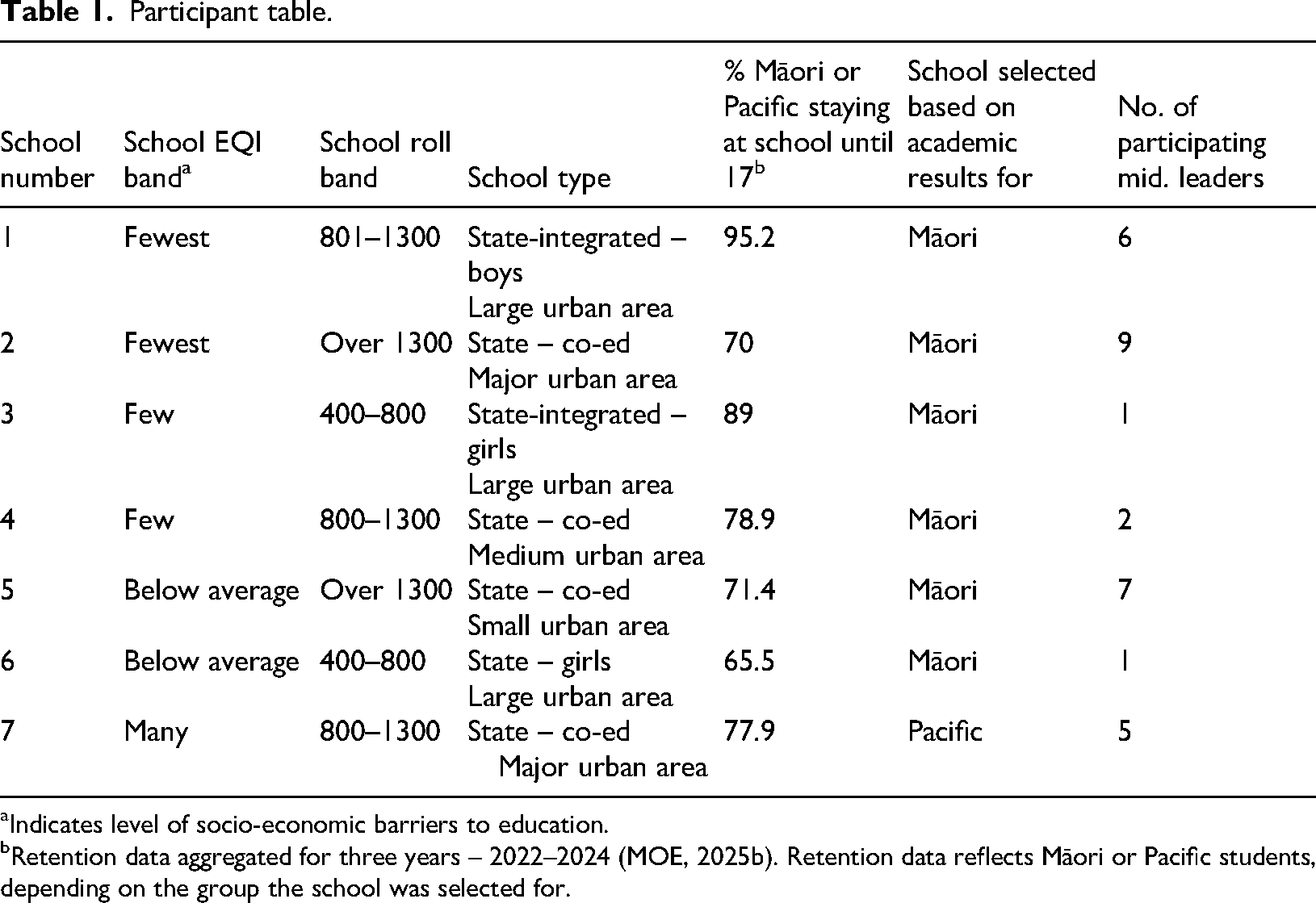
Indicates level of socio-economic barriers to education.
Retention data aggregated for three years – 2022–2024 (MOE, 2025b). Retention data reflects Māori or Pacific students, depending on the group the school was selected for.
Ethnicity
In this study, ethnicity is defined as the ethnic group ‘that people identify with or feel they belong to’. Ethnicity is a measure of cultural affiliation, as opposed to race, ancestry, nationality or citizenship’ (Winter-Smith et al., 2023: 1). Furthermore, people may affiliate themselves with more than one ethnic group and a growing number of New Zealanders view themselves as multi-ethnic. This study focusses on the academic results of students who have self-identified on their school enrolment form as either Māori or Pacific (NZQA, 2024b). In Western countries, terms such as Pacific, are often used to describe people from over 16 Pacific Island nations across the regions of Polynesia, Micronesia and Melanesia (Winter-Smith et al., 2023). Winter-Smith et al. (2023) argue this label homogenises different Pacific cultures under a term that exists only outside of Pacific Island countries. Indeed, Pacific peoples in New Zealand include recent migrants and New Zealand-born Pacific peoples, which may have multiple heritages and identities (Salesa, 2017). Despite differences, Pacific peoples in New Zealand share ties with one another and with Māori, through comparable historical experiences, values and cultural traditions. A central connection is a collectivist worldview which emphasises family to include wider whānau and community (Hunter et al., 2024).
The 2023 census data, indicates the Māori population is growing at twice the rate of the general population, and therefore Māori students are a growing demographic making up nearly 25% of the national school roll data in 2023/2024 (Corlett, 2024; Ministry of Education, 2026). The Pacific population in New Zealand has also had rapid growth, at about twice the rate of New Zealand's overall population with Pacific students contributing to just under 10% of the national school roll data in 2023/2024 (Foon, 2024; Ministry of Education, 2026). Therefore, there is an increasing proportion of young people in New Zealand schools who identify with Māori and/or Pacific heritage.
Qualifications in the senior secondary school
The UE award has been utilised in this study as a signifier of academic success because it is the highest level of academic achievement available at secondary school. The attainment of UE provides students with a broader choice of career pathways and is stated as a key goal in the current government's Tertiary Education Strategy (Ministry of Education, 2025c). The most common pathway to university in New Zealand is through gaining the required credits at Level 3 in the National Certificate of Educational Achievement (NCEA), when students exit school in year 13 (Turner-Adams et al., 2023). The UE award is intended to provide further evidence of academic performance and is met through the achievement of NCEA Level 3, the 42 credit three-subject requirement and the UE literacy and numeracy requirement (NZQA, 2025a). However, in a 2022 report, NZQA investigated factors affecting UE and found the system was not enabling Māori and Pacific students to achieve UE at the same rate as other groups of students (NZQA, 2022). The report explained that the most common reason for this phenomenon is that the three-subject requirement was not met (60%). Furthermore, a significant proportion of students also did not meet the UE literacy requirement (39%). NZQA provided evidence that 68% of Māori students were not entered into enough credits in their last year at school to pass the approved subjects needed to gain UE (NZQA, 2022). Unsurprisingly, a key indicator of success in attaining UE in the last year of school is that students have achieved credits in five or more academic curriculum courses (14+ credits) in their previous years of study at secondary school (NZQA, 2022).
The first phase of this study drew on NCEA level 3 and UE academic results from 2023, with the school level data presented in this paper being updated to include aggregated 2023/24 achievement results. At a national level, attainment of Level 3 and UE showed modest gains in 2024, when compared with data from 2023 (NZQA, 2025b). However, the results reveal a significant underlying equity gap between Māori and Pacific students, and the New Zealand European and Asian cohort at each level of NCEA. At a whole country level, Māori and Pacific students were awarded UE at around half the rate of their New Zealand European and Asian peers in 2023 (NZQA, 2024a). A further concerning statistic evident in New Zealand wide data is that Māori students are significantly more likely than other students to leave school before the age of 17 (MOE, 2025d). In 2024, 67.1% of Māori school leavers remained in school until 17, a slight increase compared to 2023, but still 13.8% below all school leavers (MOE, 2025d). Therefore, this study sought to investigate the culturally responsive and instructional strategies that enabled Māori and Pacific students to remain at school and perform well academically.
Literature review
School leaders are expected to create inclusive, equitable environments where every student can thrive regardless of their background and wider social inequities (Mifsud, 2024). New Zealand school leaders generally recognise that Māori students experience poor patterns of attendance, engagement, retention, and achievement, shaped by generations of negative stereotyping and bias within teacher practices and school structures (Bishop, 2023). Pacific school students also remain under-served, reflected in persistent achievement gaps through schooling and lower participation in tertiary study (Hunter et al., 2024). Teachers recognise the need to address their racial biases because evidence shows these biases help sustain inequities, shaping both students’ achievement and the opportunities available to them (Hetaraka and Hemara, 2025). Therefore, understanding how middle leaders’ promote equity for students in their department is not just an extension of the principal's policies or agenda but an ‘autonomous dimension of social justice leadership’ (Shaked, 2025: 1).
The importance of middle leaders in promoting social justice
Middle leaders that encourage effective teaching practices which focus on high expectations have been consistently shown as having a direct positive impact for students, particularly those in the senior secondary school (Highfield, 2010; Tang et al., 2022). This type of leadership, with an unrelenting focus on enabling all students to achieve their potential, is advocated by Öqvista and Malmström (2017) as having a profound impact on student's extrinsic motivation and self-efficacy in terms of students own beliefs in their ability to complete tasks and attain goals (Bandura, 2007). When students and teachers function in an atmosphere of educational success, and the motivation to learn, is expected and rewarded, students inevitably experience academic success (Öqvista and Malmström, 2017). Recent New Zealand research investigating the experience of Māori and Pacific students has also shown that high levels of student motivation and engagement is predictive of positive academic efficacy, perceptions of academic and social support, and cultural pride (Alansari et al., 2022). Research in New Zealand has found that teachers pedagogical approaches and support of whānau as partners in student learning has a significant impact on how Māori and Pacific students see and apply themselves academically and socially (Alansari et al., 2022).
Academic optimism and high expectations
Through analysis of positive factors impacting student achievement at the school level, Hoy (2012) identified the construct of academic optimism as a general latent concept related to student achievement even after controlling for socio-economic status (SES), previous performance, and other demographic variables. Through structural equation modelling, Hoy et al., (2006) found that the collective properties of academic emphasis, collective efficacy, and departments working in a high trust, unified fashion created positive academic environments that promoted student learning. Gramaje and Buenviaje (2023) argued that middle leaders are critical players in the development of academic optimism within a school. McGuigan and Hoy (2006) termed academic optimism as a school-wide confidence that students will succeed academically, and this optimism is enacted through teachers conveying high expectations of student achievement (Rubie-Davies, 2014). Bishop et al. (2009) have also established that the relationship between teachers and students is particularly crucial for engagement and achievement for Indigenous students because teachers must communicate to students that they have high expectations for, and care about, student learning. In a New Zealand study regarding secondary school student motivation, students’ explained their educational aspirations as reflecting perceptions of overt and covert messages from teachers and schools that they saw as differentially communicating high versus low expectations (Walkey et al., 2013). Students with lower achievement aspirations perceived that their teachers did not care about their learning and felt rejected by teachers (Walkey et al., 2013). Therefore, students interpersonal relationships with teachers and others may be particularly influential for the achievement of those students underperforming in secondary school.
Factors that influence student academic success at school
Student learning and participation are shaped by factors within schools, such as streaming, and wider factors such as socio-economic differences, and school zoning policies (Mifsud, 2024). Organisational bodies such as the OECD (2019a, 2019b) and UNESCO (2021) have reported the SES of students as having a powerful effect on their academic achievement. This view is supported by Strand (2014) in an extensive analysis of British school results which demonstrated that at age 16, the student achievement gap related to social class was six times larger than the gender gap and twice as large as the biggest ethnic gap. However, researchers have argued that because middle leaders are key shapers of organisational culture, they have the propensity to foster a strong culture of academic optimism (Gramaje and Buenvaije, 2023), as key to increasing student achievement, regardless of SES (Hoy, 2012).
Student success continues to be evidenced within schools that support academic motivation, emotional competence (Ekeh and Njoku, 2014) and engagement in learning (Ruyle, 2014). A recent project undertaken by the New Zealand Council for Educational Research (NZCER) examined approaches that schools adopted to support Māori and Pacific students to attain UE (Smaill et al., 2024). The research included six schools with above-average UE attainment for this group of students, exploring the initiatives these schools carried out to support UE attainment. Across the six schools, the most effective initiatives included: School environments that affirm the language, culture and identity of Māori and Pacific students; positive learning relationships with school leaders; prioritising high expectations for all students; using achievement data to set targets; identifying and responding to student needs; and ensuring students know and understand the pathway to UE (Smaill et al., 2024).
Our research builds from this recent study with a more targeted research question:
What is the relationship between high Māori / Pacific academic achievement rates and culturally responsive leadership and instructional practices within high-performing schools?
Methods
To identify schools where Māori and Pacific students achieved high academic results, New Zealand Qualifications Authority data (NZQA, 2024b) for students at all New Zealand schools in 2023 were sorted using excel. Schools were selected for the study based on two criteria:
Schools where Māori or Pacific students achieve at higher rates than non-Māori or Pacific students in the school Schools where Māori or Pacific students achieve at higher rates than the national norm for Māori or Pacific students
These criteria were used to create a list of 94 (Māori) and 23 (Pacific) high-achieving schools. These school principals were then invited to participate in our study by requesting middle leaders in their school to complete an online Qualtrics questionnaire designed to investigate the culturally responsive leadership practices occurring in their school. Middle leaders from seven schools participated in this study, resulting in 31 completed surveys (Table 1).
The questionnaire items were developed from the He Poutama Cultural Competence model (Karaka-Clarke et al., 2021) and aimed to investigate middle leader perceptions of both the school and department level factors they believed were contributing to high academic achievement for Māori and/or Pacific students. The survey items linked to Likert scale ratings are noted in detail in Figure two. The quantitative questions in the survey were designed to understand school level factors that could positively impact student outcomes, and qualitative questions were designed to gather insight into department level factors. Due to the low number of participants, quantitative responses were counted in Excel and grouped by school to capture contextual differences, account for varied participation levels, and summarise how participants responded. Qualitative questions required middle leaders to reflect on the specific practices or strategies used in their department to support the academic achievement of Māori and Pacific students, including how they use data and evidence of student achievement, and how their department supports student decision making around subject choices. Qualitative data was thematically analysed using an inductive approach to analysis (Braun and Clarke, 2012). The research team initially read and familiarised themselves with the data and discussed initial interpretations. The data were uploaded into NVivo to support systematic coding which proceeded iteratively, with codes refined to accurately reflect the meaning of participant responses with regular reviews to ensure consistency. Themes were generated by merging similar codes to form broader themes which were then reviewed and discussed to ensure a shared interpretation so that they accurately reflected participant responses. Once the themes were reviewed, they were then defined and named, prior to generating an info graphic to demonstrate the findings (Figure 3). Response rates for each theme are included in Figure 3.
The study design was approved by the University of Auckland Human Ethics Committee on 21 March 2025 (UAHPEC28606). Once ethics was approved a recruitment email was sent to all principals of the 117 high-achieving schools identified by researchers analysis. Although the response rate from school principals was lower than anticipated with only seven principals agreeing for their middle leaders to participate in the study, the participants provided useful, insightful and nuanced responses in the qualitative section of the survey. The student academic achievement results for Māori and Pacific students in both 2023 and 2024 were then analysed in each of the seven participating schools to provide a more robust analysis of the pattern of academic results alongside the culturally responsive practices reported by the middle leaders.
Results
This section provides the academic results for the seven participating schools alongside an analysis of the qualitative and quantitative responses of the 31 middle leaders to reveal the deliberate culturally responsive and instructional strategies occurring in these schools where Māori and Pacific students are achieving well academically.
Figure one shows the aggregated 2023–24 academic results for Māori or Pacific school leavers in each of the seven schools (NZQA, 2024b). Six schools were selected based on Māori achievement patterns, and one based on Pacific achievement. To provide meaningful comparisons, each school's Māori or Pacific achievement data has been matched with that of other schools in the same EQI band, allowing performance to be considered between schools serving students from a similar socio-economic context. While Māori or Pacific students from all schools in the study have performed above the national average, figure one provides a more nuanced understanding of student achievement in participating schools. The three schools in the sample with higher socio-economic disadvantage performed well above the norm for their EQI band, whereas the four schools serving students with less socio-economic disadvantage performed on a par, or slightly below the norm for schools with a similar EQI.
Retention data for Māori and Pacific students in each participating school is included in Table one because completing secondary school is an important indicator of students’ opportunity to increase their knowledge and skills for their future (MOE, 2025d). Retention data in Table One has been aggregated over three years (2022–24) to account for yearly variance between cohorts (MOE, 2025b). All schools in this sample had higher retention for Māori (or Pacific) students when compared to the aggregated national average over the same period (Māori – 65.7%/Pacific – 79.1%, MOE, 2025e), indicating the schools in this sample are supporting students to remain engaged in schooling.
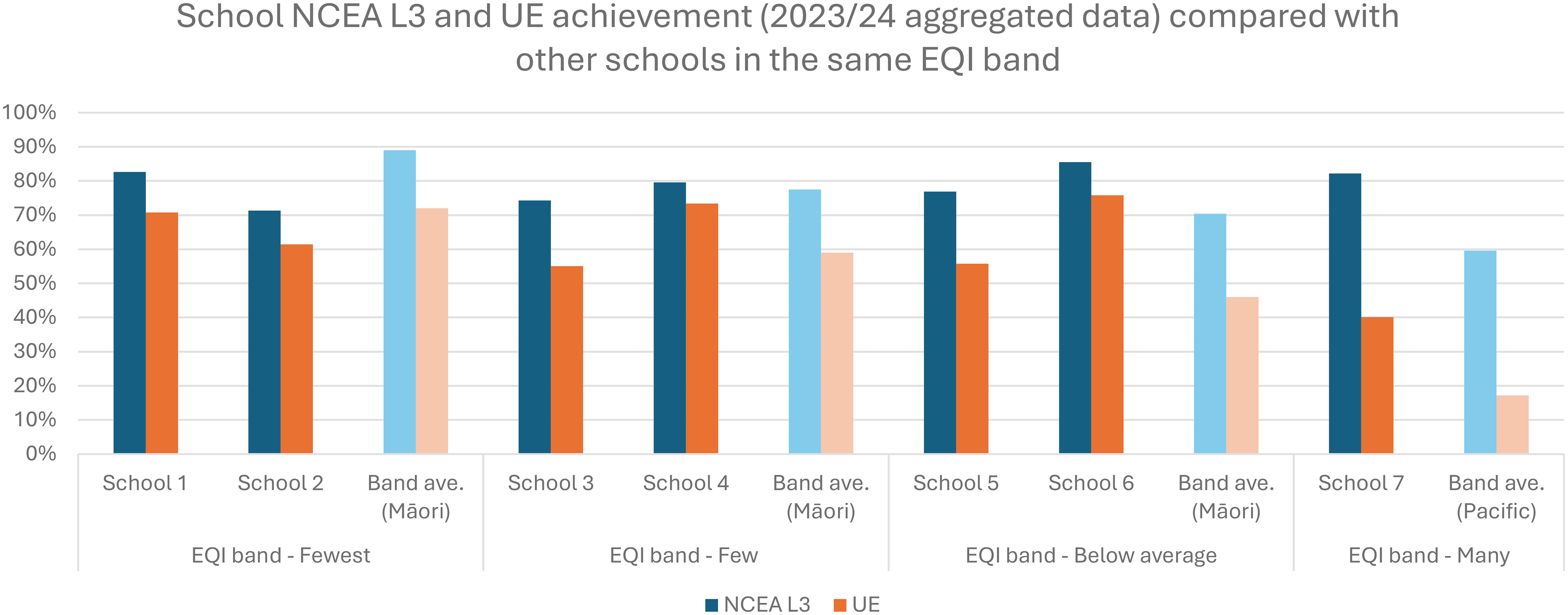
School NCEA L3 and UE achievement (2023/24 aggregated data) compared with other schools in the same EQI band.
Middle leader responses to the survey
The quantitative and qualitative results reflecting the views and perceptions of middle leaders employed in academically high-performing schools for Māori and Pacific students provides insights into the high expectations culture of these schools alongside detail of the practical strategies enacted to support student academic success.
The first section of the survey asked middle leaders their views regarding the types of school-wide strategies that supported the achievement of Māori and Pacific students in their school (Figure 2). Middle leader insights into school-wide strategies informed the analysis of qualitative data on department level practices.
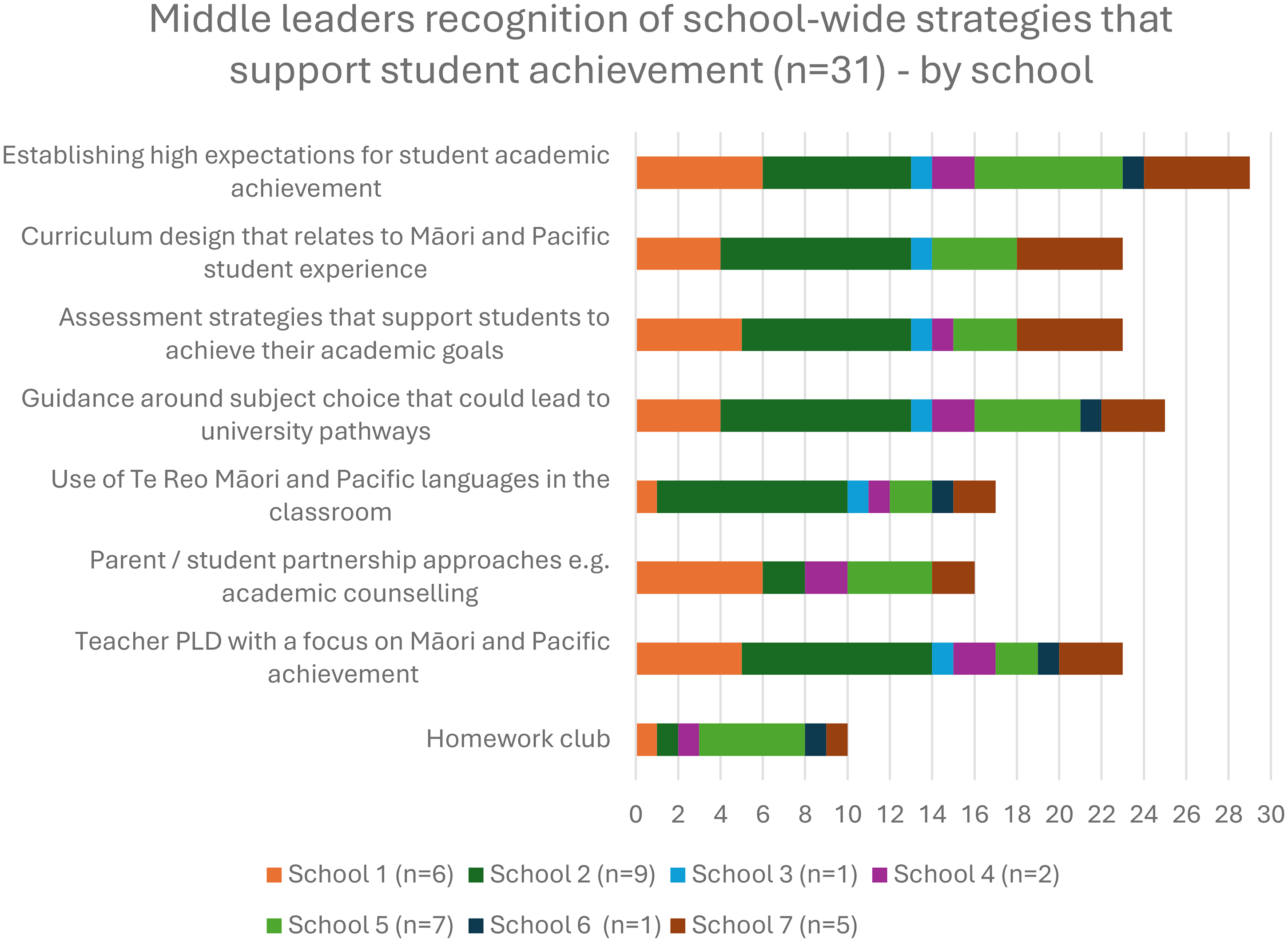
Middle leaders recognition of school-wide strategies that support student achievement.
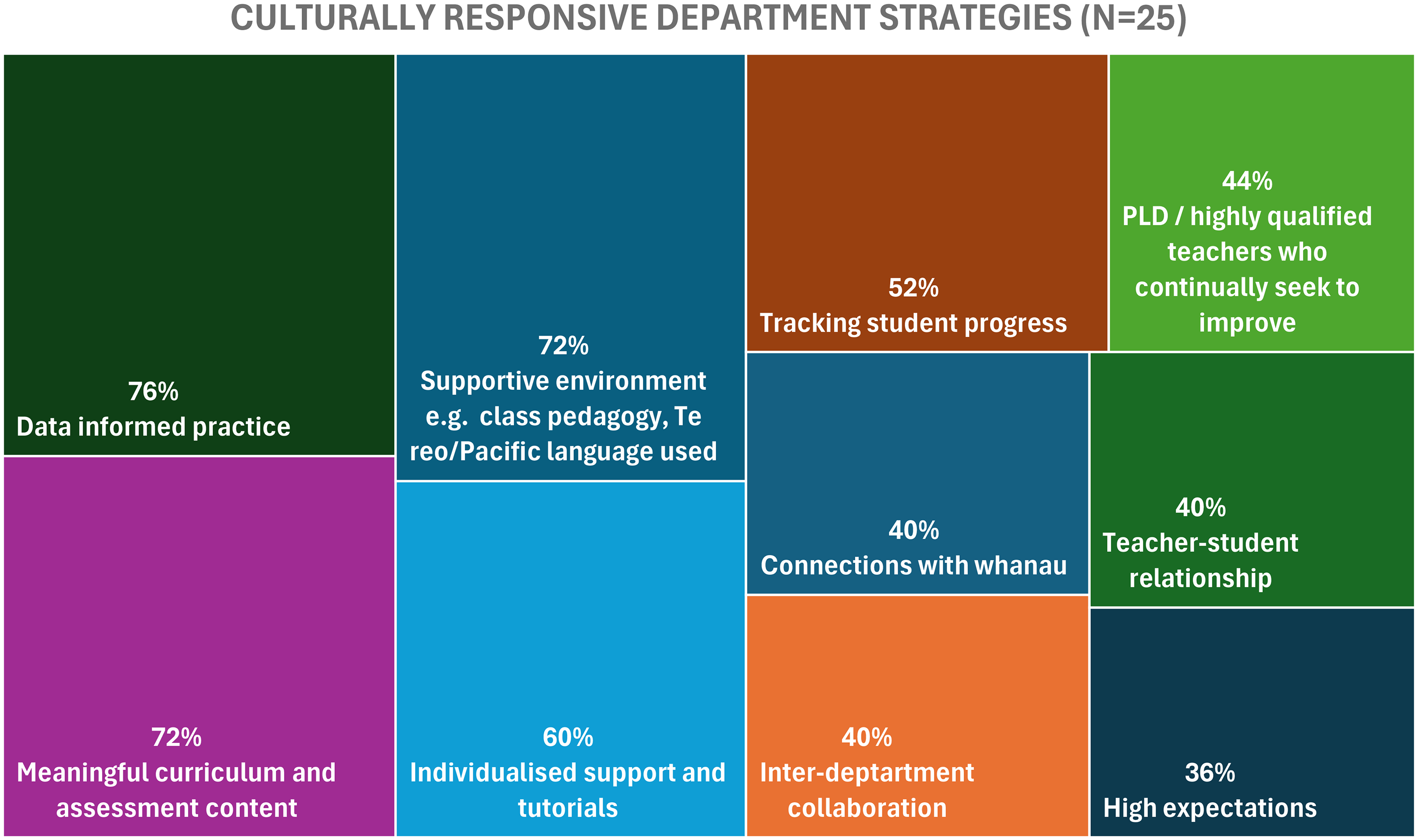
Culturally responsive department strategies.
Twenty-five middle leader participants provided qualitative responses describing the culturally responsive practices they enacted at department level (comments came from a mix of all schools, although the number of comments was weighted towards responses from schools 1, 2, 5 and 7). The comments provided extensive descriptions and examples of the strategies middle leaders employed. Although some of their self-reported practices were aligned with the school level strategies, such as high expectations, curriculum content and assessment, others were more departmentally focussed (see Figure 3).
The use of student achievement data
Assessment strategies which supported students to achieve their academic goals and curriculum design that related to Māori and Pacific student experience was acknowledged by a high proportion of participants as occurring in their school. This was stressed as a school-wide strategy by all participants in School 7, which serves students with the largest barriers to learning due to their socio-economic circumstances and School 2 which serves students with fewest barriers to learning.
The use of student achievement data to inform practice alongside tracking and monitoring student progress was consistently discussed with one participant commenting ‘We look at how students are achieving and change the way we deliver and assess the curriculum if needed’ (Participant 9, School 3). A range of data gathering strategies were named such as teacher observations, student voice, student engagement and whānau feedback along with academic achievement data. One participant commented ‘We analyse our data very thoroughly and break down our Māori achievement at each senior year level and we also look at Pacific student achievement across each senior year’ (Participant 19, School 5).
Culturally responsive learning environment
Nearly all participants expressed a view that establishing high expectations for student's academic achievement was fundamental and evident in their school-wide practices and at department level. They wanted students to feel comfortable learning in their department, engaging with curriculum content that was engaging and interesting for students, with teachers tracking student progress and having high expectations. One participant commented We set high expectations while providing the scaffolding needed for success – through differentiated tasks, targeted feedback, and one-on-one mentoring when needed. Teachers monitor progress and check in with students to ensure they’re on track with their goals. The use of mini deadlines has helped with this process. We also collaborate with whānau and utilise culturally relevant frameworks to connect learning to students’ lived experiences and values (Participant 18, School 5). Staff are all required to take part in culturally responsive professional development which supports the language and understanding of te reo Māori and the pedagogy to support our Māori students. I make it part of my Professional Growth Cycle
3
every year to ensure I push the staff into areas that support raising Māori and Pacific student academic results and that the changes we are slowly making for the department with schemes for the new curriculum and assessment reflect their growth (Participant 13, School 1). Culturally responsive strategies are being enacted to some extent, particularly by long-serving staff who draw on their experience and past professional development. These teachers integrate relevant contexts and build strong relationships with Māori and Pacific students. However, the consistency of these practices across the department is mixed. Newer staff have not had the same exposure to culturally sustaining pedagogies and can lack confidence in adapting content to suit diverse learners. As a result, the effectiveness of strategies varies depending on the individual teacher (Participant 3, School 7). Some staff are intuitively receptive to te ao Māori, whereas other staff are very resistant to pronouncing the word ‘Māori’ correctly and place names correctly. They remain quiet during professional development, but I know being committed to Te Tiriti
4
is not something they believe in. I struggle with this as I do not know how to encourage them to be open to honouring our tangata whenua (indigenous people). I struggle to address this as often what I say entrenches their negativity (Participant 19, School 5).
Collaboration to support students goal setting through academic counselling
Middle leaders discussed collaborating together with colleagues within their department and in other leadership roles both within the school and in external agencies; to ensure students had the right support and were encouraged to reach their academic goals. One participant explained As a department we meet regularly about the student's academic and pastoral journey. Students along with their parents set aims/goals for their academic outcomes in terms of the academic grades they want to achieve. We then support that goal by providing external and internal support via the pastoral care system, form class teachers, and externally via organisations that provide apprenticeships and University visits. We then monitor and track student's goals with their parents to a point where the student and whānau drive their own goals and we simply observe and support (Participant 8, School 1).
Many of the middle leaders reported using data to influence curriculum, teaching and assessment in their departments. One participant explained We are starting to allow more student choice in their courses, changes in assessment styles and thematic assessments to cater for the younger students (13–15-year-olds) and their interests. We are also looking into integrated approaches where we work with another curriculum department, such as Physical Education and Social Sciences to integrate a unit of work and even the assessment. All these changes are in response to helping close any gaps between any ethnic groups at our school, we want to ensure all students achieve the best they can, and have the academic results show that no group is at a disadvantage (Participant 13, School 1).
Connecting with whānau (families)
Parent student partnership approaches to ensure effective programmes such as academic counselling were mentioned by over half the respondents, with this practice particularly strong at school 1, the single sex boys school where all participants noted this strategy. Careers night events at the school were described by six participants (schools 1, 2 and 7) as encouraging whānau (family) involvement in targeted academic course counselling opportunities, designed for families and their students. Participants explained that student goal setting was important and ensuring students had access to the curriculum subjects they needed to reach those career goals was critical in senior secondary school. One participant commented We strongly encourage our students to seek courses that suit their potential pathways, NOT based on academic results. We do not stream (track) at our school, and whilst we do have minimal pre-requisites, NO student is denied entry into any course if they have a pathway in mind and they require the necessary course to gain entry into a specific career pathway (Participant 13, School 1).
Discussion
The results of this study establish a layered and intersectional understanding of what is required to support educational success for all students.
Enacting high expectations
Positively focussed school and department strategies which ensure students believe their teachers expect them to succeed and will support their academic success was evident in all the responses from middle leaders. Researchers have emphasized the importance of creating positive, supportive relationships within the classroom, pointing in particular to enhancing relationships with teachers and acknowledging students’ cultural background as important if Indigenous students are to be engaged in schooling (Santoro, 2007; Thorpe et al., 2013). Recent research in Indigenous communities in Australia, found that students were able to positively engage in their school when they learnt in a culturally nourishing environment that supported their local language and cultural knowledges (Gollege et al., 2025). Although past research has strongly focussed on the importance of positive relationships between teachers and students (Berryman and Eley, 2024), we argue that these relationships need to also be entrenched in an attitude of positive expectations for student academic success (Rubie-Davies and Peterson, 2016) within an academically optimistic school culture (Hoy, 2012), which was a sentiment reflected in all of the qualitative responses. Many Māori and Pacific students will have endured countless experiences of bias and racism by the time they are 16 years old (Mayeda et al., 2014). Therefore, teachers and leaders who can consistently ensure a counter narrative of positive dialogue focussed on motivational goal setting that stretches students aspirations and opens possibilities for their futures, in conversation with their parents are essential. Although previous studies in this field have shown that teachers and leaders have demonstrated they consistently ensure a culture of care and ‘being nice’, their concern for students remains at surface level and less attention is paid to important initiatives that would have long lasting life impacts on often educationally marginalised and under-served students (Highfield et al., 2024b). In completing an initial analysis of student academic results this study design provides responses of middle leaders whose students are shown to be achieving UE at higher-than-expected rates and therefore the initiatives they believe drive improvement for Māori and Pacific students are worth noting.
In a recent New Zealand study, most middle leader participants explained relationships as being key to effective teaching of Māori students but fewer than half had high or any expectations for Māori student academic success or mentioned this as an important indicator of student accomplishment (Highfield et al., 2024b). In addition, only 2.8% of middle leaders in that study referred to students setting academic goals or tracking progress towards their goals (Highfield et al., 2024b). It was therefore encouraging to see evidence that middle leaders in the high-performing schools participating in this study were able to articulate clear and specific strategies at both school and department level that they were willingly undertaking to deliberately promote success and mitigate negative stereotyping, deficit theorising and bias.
Collaborative goal setting, career planning and academic counselling with students and their whānau
Although the connection between goal setting and student motivation has been widely investigated, the relationship of goal setting and student achievement at the classroom level continues to be under-explored (Moeller et al., 2012). A strong theme in the responses from middle leaders in this study was a focus on supporting students to set academic goals and targets alongside their parents, with teachers utilising data and evidence to monitor their progress toward meeting those targets. Students’ goal setting is impacted, in part, by their perceptions of the support they receive from teachers (Eberley et al., 2011). When leaders and teachers support students in developing new skills, goal setting and achieving a feeling of mastery in a subject, it motivates them to feel they are supported by adults, including teachers and whānau, in the process of learning (Moeller et al. 2012). Participatory goal theory states that students who choose their own goals perform at higher academic levels than students who have goals set for them (Mento et al., 1987). This type of facilitated goal setting support also develops students own self-efficacy which plays a significant role in motivation while also influencing an individual's choice of activities, level of effort, persistence, and emotional reactions to success or failure (Bandura, 2007; Zimmerman, 2000).
The middle leaders in this study understood that supporting students to set goals with their families, within a career or academic counselling framework, placed them on a pathway to academic success that was driven by their own self-efficacy and intrinsic motivation. It is important that students are taught how to strive toward their goals, such as by mapping out the steps involved in working toward their goals and monitoring their progress (Martin, 2011). In a recent study involving over 60,000 high school students in Australia; Martin et al. (2022) found that goal setting predicted gains in students’ perseverance, aspirations, and homework behaviour; and appeared to significantly bolster some outcomes for previously low-achieving students and students from low SES backgrounds. There is some evidence of similar results from the New Zealand study reported in this paper.
When teachers engage in collaborative academic goal setting with students and monitor progress by discussing those goals alongside whānau; positive results can occur for students in the senior secondary school (Webber et al., 2016). Evidence suggests that poor or inconsistent career counselling services have been linked to student underachievement and less career success (Symonds et al., 2011) which is more likely to impact Māori and Pacific students (Webber et al., 2016). Employing a data informed, goal orientated, career pathways model with high-quality academic instruction, is one way that schools are attempting to improve students’ university and work readiness (Stipanovic et al., 2017) and this was clearly evident in this study both at school and department level.
Limitations
A key limitation of this study is the low number of middle leader participants and schools which restricts generalisability of the findings. Nevertheless, the results offer valuable insights into leadership practices occurring within these diverse and high-performing state funded schools supporting academic achievement for Māori and Pacific students.
Conclusion
Middle leaders in this study describe in detail the reflective, evidence-based and grounded practices which seek to challenge inequitable outcomes for students. This kind of leadership is essential to ensure whole school strategies are aligned with department level initiatives. All schools demonstrated Māori or Pacific student achievement above the national average. However, three schools in the highest socio-economic areas performed slightly below similarly advantaged schools, likely reflecting the elevated achievement norms associated with high socio-economic contexts. Regardless, middle leaders across all schools in the study described practices aligned with culturally responsive leadership and are therefore recognising and responding to the historical legacies of colonisation while re-imagining leadership practices that reflect current needs and contexts (Gollege et al., 2025). The study provides insights into highly transferable macro and micro practices within secondary schools that leaders report as positively impacting students typically under-served by the education system.
Footnotes

Funding
The authors received no financial support for the research, authorship and/or publication of this article.
Declaration of conflicting interests
The authors declared no potential conflicts of interest with respect to the research, authorship and/or publication of this article.