




Abstract
Middle leaders in schools are increasingly recognised as playing pivotal roles in school improvement. Although some school systems provide formal professional development for middle leaders, many middle leaders express a preference for job-embedded learning. Yet, international research has documented difficulties in providing intensive support from principals which instead is often ad hoc. This study examines how middle leaders’ professional learning can be supported through the development of appropriate organisational structures. It presents three principal-designed models distilled from qualitative data collected in 12 case study schools, inclusive of public, semi-private, and international schools in four East Asian societies. Each model contributed to the development of middle leadership capacity in areas relevant to the schools’ improvement agendas. The models vary in degrees of formality, resource intensiveness, and processes for engaging and developing leadership. The findings contribute to the growing literature on middle leader development, and the role of school infrastructure in professional learning by suggesting how school-based leader development strategies can be framed in coherent and intentional models that take into account of the available infrastructure and potential professional interactions to provide systematic in situ support for middle leaders.
Introduction
This article investigates coherent school-based models designed to enhance middle leaders’ (MLs) professional learning. MLs are commonly understood as teachers who also hold a formal leadership role in their schools. They work directly with teachers as leaders in a defined area and commonly hold positions such as head of a subject area, or leader of a grade level. The literature notes that MLs may hold school-wide responsibilities such as instructional coaches or coordinators of specific improvement initiatives (DeNobile, 2019; Lipscombe et al., 2021).
Whereas MLs are positioned as curriculum administrators who serve as conduits between senior leaders, that is, principals and vice principals (VPs), and teachers, the research emphasises their potential as pedagogical leaders, innovators, and facilitators of teachers’ professional development (PD). MLs play essential roles in school-level decision-making and as instructional leaders (Gurr and Drysdale, 2013; Lillejord and Børte, 2019). When supported by principals, MLs influence the organisation by building teacher capacity (Edwards-Groves et al., 2019), aligning professional activity to mission, and implementing policy (Bryant, 2019; DeNobile, 2019; Gurr and Drysdale, 2013).
Given their potential impact on school improvement agendas, MLs’ professional learning should be a priority for principals. Research on instructional leadership identifies developing people as a core area of principals’ practice (Boyce and Bowers, 2018; Day et al., 2011). However, how principals develop MLs specifically tends to be limited to a smaller set of intensive, direct practices, such as coaching and mentoring.
Recent literature points to the potential of organisational designs to support on-the-job professional learning. Teachers’ on-the-job interactions around reforms, when associated with system-level structures, can predict change in instructional practices that are not found through participation in formal PD programmes (Shirrell et al., 2019). School-based re-definition of MLs’ team roles and how they interact with teachers can re-focus conversations about on-the-job professional learning in defined areas of school improvement (Bryant et al., 2020). Principals play a pivotal role in nurturing the structures and conditions necessary to make in-school professional learning happen (Qian and Walker, 2020). Yet, how principal-led organizational designs facilitate MLs’ professional learning at schools is unexplored.
The theoretical purpose of this article is to enhance understanding of how school-based structures can work coherently as holistic models to intentionally build middle leadership capacity that supports school improvement and teacher development agendas. To focus our investigation, we ask two research questions pertaining to models found in the schools:
What do intentional models that build middle leader capacity look like? How do the different components of the models work together to promote professional learning?
To address these questions, we first review literature related to PD, with a focus on in-school professional learning practices that develop MLs. We also examine the principal's role in nurturing this development and assess the potential of school-based educational infrastructure to support professional learning. Second, we describe the methodology and analytical approach employed. Third, we present the findings, which take the form of the three data-driven models showing how schools changed their organisational designs to provide on-the-job professional learning opportunities for MLs. We examine the purposes, structures, and core features of such designs. Evaluation of their impact on teacher and ML efficacy lies beyond the scope of this study. Finally, we discuss the contribution of the research, its limitations, and implications for research, policy, and practice.
This article makes three contributions to the literature. First, it develops the literature on educational infrastructure by showing how holistic models can develop ML capacity in schools. Second, it advances understanding of the principals’ role in ML development, which presently focuses mainly on challenges around implementing a few high-maintenance strategies. We present other intentional alternatives. Third, much of the research on schools’ organisational structure focuses on building teacher capacity, rather than ML capacity, and usually in the context of school systems rather than school-based educational infrastructure. The three models presented in this article suggest how structural alternatives can provide additional and intentional principal-led support for on-the-job ML development.
Literature review
In simple terms, professional learning in schools flows from a range of approaches. These include formally planned PD activities, which take staff out of their classrooms, to more deeply embedded on-(or in-)-the-job activities woven into staff's daily work. Both aim to improve individual or collective competency and expertise. Formal PD includes activities such as workshops, postgraduate study, in-service days, conferences, and participation in professional organisations. Whereas teachers benefit from the learning which flows from these activities, they give it more credence when it meets their individual needs, engages them in collaborative and active learning, and integrates opportunities for application to their daily work (Parise and Spillane, 2010; Shirrell et al., 2019).
On-the-job learning is situated in the workplace and typically occurs through interactions with leaders and/or peers. This can happen through focused discussions, giving and receiving feedback, participating in lesson observations, information sharing, mentoring, and coaching, and participating in action research and professional learning communities (Thurlings et al., 2015). On-the-job learning that is highly collaborative has been found to predict change in teaching practice (Parise and Spillane, 2010).
The bulk of literature on professional learning in schools addresses the PD of teachers; included in this literature is the role MLs play in teacher learning. For example, research has examined MLs as facilitators of teachers’ on-the-job learning by leading instructional teams and professional learning committees or working directly with teachers to build the latter's expertise (Bryant et al., 2020; Edwards-Groves et al., 2019; Willis et al., 2018). However, beyond an understanding that their professional learning can also come through formal programmes or in situ learning, less has been written about the PD of MLs themselves (Lillejord and Børte, 2019; Lipscombe et al., 2021).
Research into the PD of MLs carries at least three important findings. First, although MLs are appointed because of their classroom experience and teaching expertise, their new leadership roles require skill sets that differ from those of teachers. MLs want help to develop these skills (Irvine and Brundrett, 2017). Second, MLs prioritise practical on-the-job experience over formal leadership training and qualifications (Lillejord and Børte, 2019; Lipscombe et al., 2021). Whereas all development forms can be valuable, learning from external programmes may be less effective if strong linkages to context are not established (Desimone et al., 2002; Spillane et al., 2018). Although some formal ML development programmes give increasing attention to on-the-job linkages, this is typically through practice-based units of study, such as action research projects, which may not necessarily involve senior leaders or other teachers (Lipscombe et al., 2020).
Third, MLs perceive their growth, development, and self-efficacy as highly dependent on senior leaders’ support (Bryant, 2019). However, little research has investigated in any depth the forms this support might take, how principals can create opportunities for learning, and how this might be sustained (DeNobile, 2018). Instead, the literature documents and advocates a limited set of general practices such as mentoring, coaching, shadowing and school-based development programmes (Lipscombe et al., 2021). Irvine and Brundrett (2017) articulate a hopeful strategy of senior leaders providing ‘modest leadership tasks’ for teachers to gradually build a reservoir of experiences which, when coupled with mentoring or guided self-reflection, can later be drawn upon. This article contributes understanding to what senior leaders can do to enhance meaningful and sustainable PD for MLs.
MLs’ development is too often self-managed and unsupported by senior leaders (Lillejord and Børte, 2019). There are several reasons for this. First, individual coaching or mentoring is time-intensive, which impedes sustained and direct principal involvement. Second, principal support, if offered, is often ad hoc and inconsistent (Gurr, 2019), lacking the guidance necessary to turn experience into leadership capacity (Irvine and Brundrett, 2017). Third, when principals perceive risk, they tend to allocate MLs straightforward managerial tasks rather than leadership opportunities (Javadi et al., 2017). Fourth, conventional school structures, such as subject areas, may balkanise MLs who then prioritise their teams’ needs over contributing to school-wide initiatives, limiting their scope of influence (Bennett et al., 2007). Fifth, senior leaders may have little knowledge or experience about how to design and nurture sustainable, school-embedded structures, and cultural conditions necessary to provide meaningful PD for MLs. Despite the potential of developing supportive cultures, structures, and policies (Gurr and Drysdale, 2013), exactly how principals provide sustained and systematic support for MLs’ development remains underdeveloped in the literature. This paucity needs to be addressed to give principals additional tools to use in building MLs’ capacity.
To be effective, on-the-job leadership learning mechanisms are not left to chance, rather they are structured and nurtured in ways that integrate them into daily school life and work (Irvine and Brundrett, 2017). Working with educational infrastructure provides a key to promoting effective on-site PD (Shirrell et al., 2019). As defined by Spillane and colleagues, educational infrastructure means ‘the coordinated roles, structures, and resources that school systems design and use to support and coordinate instruction, maintain instructional quality and enable instructional improvement’ (Cohen et al., 2018: 205). Infrastructure includes roles, routines, and tools. Examples include formal and informal positions (roles), meetings, study groups, instructional rounds (routines), curriculum materials, assessments, protocols, and templates (tools) (Spillane and Coldren, 2011). Intentional infrastructure designs can stimulate meaningful professional interaction, strategically change the nature of these interactions, and build individual and collective capacity (Spillane et al., 2018). However, much of the work-around infrastructure examines system rather than school-based designs. Findings from research in mainland Chinese schools suggest the potential of school designs that provide articulated middle leadership roles, team structures or professional learning communities, and recognition at the school and system levels (Bryant and Rao, 2019; Qian and Walker, 2020). These findings suggest a variety of ML roles and authority. At the school level, responsibility for redesigning schools organisationally lies with principals. This article presents three data-driven models which show how principals designed and reshaped organisational structures to provide on-the-job professional learning opportunities for MLs.
Methodology
This research used a collective case study design. Collective case studies draw data from multiple case studies across different contexts to investigate phenomena. Findings from across multiple cases suggest the potential for replication in other contexts. Therefore, we present our research design as a collective design rather than a dozen separate cases.
Our data draws on two studies on middle leadership. Both studies collected data on the enactment of middle leadership – the first gathered data in public and semi-private Hong Kong schools. Four schools were recruited from each school type. These schools ranged from serving relatively underprivileged to middle-income families. The second study focused on middle leadership in four international schools (Hong Kong, China, South Korea, and Japan). All served middle- to high-income families and enjoyed considerable autonomy. The second study extended the findings from the first by probing more deeply organisational structures supporting professional learning.
We used four criteria to select schools. Each had formally stated missions or purposes, was engaged in innovative agendas related to mission enactment, had formal organisational structures which assigned responsibilities to MLs, and provided MLs opportunities to lead. The purpose of these criteria was to identify schools where MLs play a vital role in the leadership structure, are engaged in work beyond bureaucratic procedures and curriculum administration, and where professional learning was valued.
Within each school, we purposively selected participants based on positional roles. All interviews were conducted face-to-face in participants’ schools and lasted for approximately 50 min. We interviewed 38 senior leaders (principals and VPs) and 117 MLs (subject leaders, grade level leaders, and programme coordinators). Because this paper does not examine MLs’ impact on teachers, we have not included data from teacher interviews. Interviews were guided by an aide-de-memoire developed around the project's key purposes. All interviews were audio-recorded and fully transcribed; time on-site in each school ranged from 3 to 5 consecutive days. In all schools, senior leaders and programme coordinators were interviewed individually. Subject or grade-level leaders were also typically interviewed individually, although in 3 schools, interviews occurred in focus groups of 3–6 participants each (n = 31 focus group participants). This variation depended on school size and their decisions about scheduling. In Hong Kong and China, a second research team member accompanied the lead researcher. Due to financial limitations, only the lead researcher conducted interviews in South Korea and Japan. The lead researcher was therefore present in all interviews.
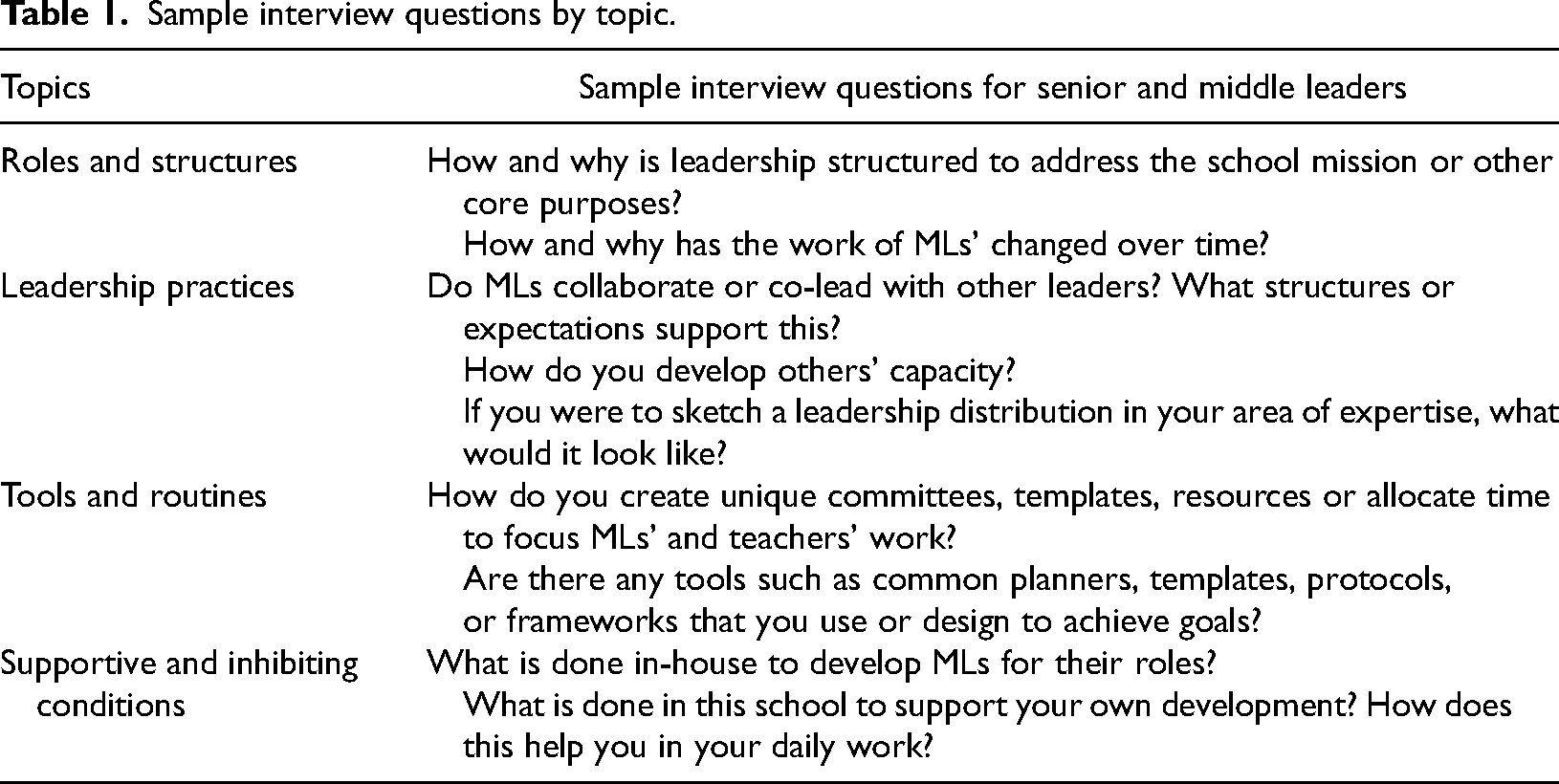
Our analysis comprised a constant comparative approach within each case. The research team worked together to analyse the data through different stages. This approach allowed us to jointly identify perspectives from each type of leader and then compare these across leaders. To facilitate this, the first round of data coding pertained specifically to middle leadership roles, expectations of senior leaders, MLs’ understandings of their roles, practices, tools, and routines that supported their practices and development, and supportive and inhibiting conditions. These codes reflected the topics of the interview questions; examples of which are shown in Table 1. Strategies to verify our analyses included returning case reports to schools, conducting follow-up interviews with selected leaders, and/or presenting our preliminary findings and obtaining feedback from participants at their schools. These variations were related to degrees of access depending on school locations and calendar constraints.
Sample interview questions by topic.
We identified a range of practices and supports for MLs’ professional learning through the comparative analysis. We then related these practices to specific roles, tools, and routines. To analyse these interrelationships, we constructed explanatory schematic models of ML professional learning (Miles and Huberman, 1994). Each schema aligned the codes (e.g., role, tools, routines), leadership practices (e.g., policy co-design), and participant(s) with the coded data. By matching the coded data within selected exemplary cases to specific points on the models, these auditable figures served to verify our assumptions and formed the basis for the models displayed in the findings. We again compared the cross-case data against these models to assess commonality/variance of practice. We now present the resulting explanatory models.
Findings: The three models
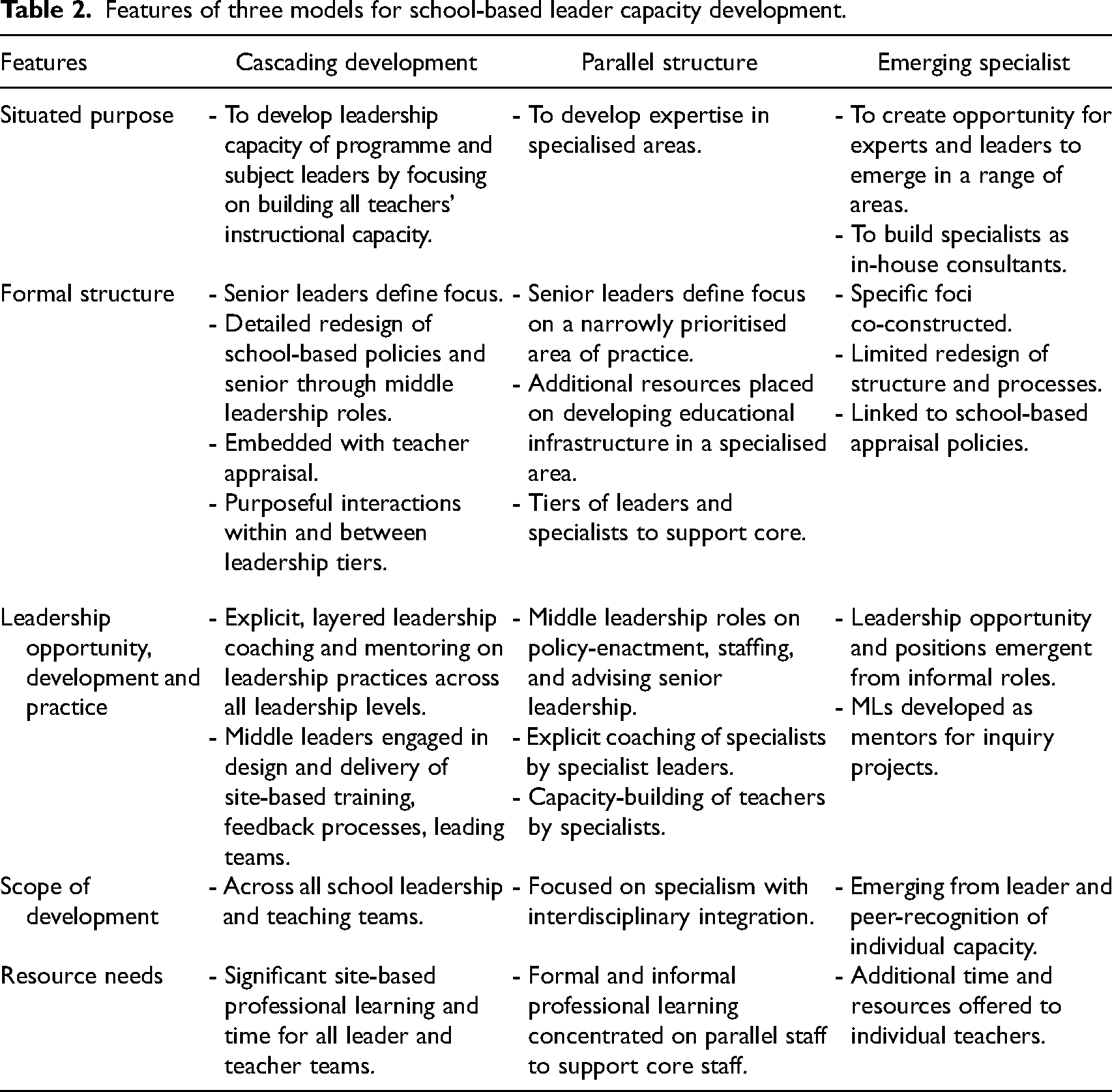
To address the first research question, the three models describe structures put into place by school leaders to develop the professional capacity of MLs. 1 We name these Cascade, Parallel Structure, and Emergent Specialist designs. The Cascade design, as the metaphor suggests, organises professional learning through an interconnected but tiered approach. Responsibilities for capacity building move in a linked structure inclusive of intentional interactions among senior leaders to MLs to teachers. The Parallel Structure model builds leader and teacher capacity in mission-critical areas by creating a series of leadership and specialist positions that run parallel to the conventional school structure of principal, VPs, MLs, and teachers. Staff directly support students in their area of expertise and serve as advisors and supporters to core academic staff. The Emergent Specialist model provides opportunities to enhance the capacity of teachers and MLs by flexibly permitting them to develop expertise in areas of interest. Through this process, informal and formal leaders with specific expertise develop across the organisation. Given the situated nature of middle leadership, the models by design address the professional learning of all staff. To answer the second research findings, we look specifically into how the models support ML capacity.
Each model was fully enacted in at least one school. All were partially enacted in several schools. We root the analysis of each in one clear case and include illustrative cross-case data where relevant. One international school implemented the cascade model. Four different types of schools exemplified the parallel structure model. Two international schools exemplified the Emerging Specialist model.
In the findings, we explain the structure of each model and how they work to build professional and leadership capacity, and outline key features derived from the findings. Table 2 serves as a visual organiser that compares the three models, the details of which are elaborated in the findings.
Features of three models for school-based leader capacity development.
Cascade model
Structure
The Cascade model (see Figure 1) depicts interactions among tiers of leaders in an International Baccalaureate (IB) school: the principal, VP, two programme coordinators, and five subject leaders. The model was designed to support a portfolio-based performance appraisal system focused on six professional teacher standards designed ‘… to recognise staff and … to support [teachers] in their professional growth’ (Principal). The principal and school governors formalised the professional learning structures: Our board decides what success is … If I don't have policies, job descriptions and support measures in place to define our expectations and what success means, then I’m not setting [teachers] up for success … [Principal] Cascade model.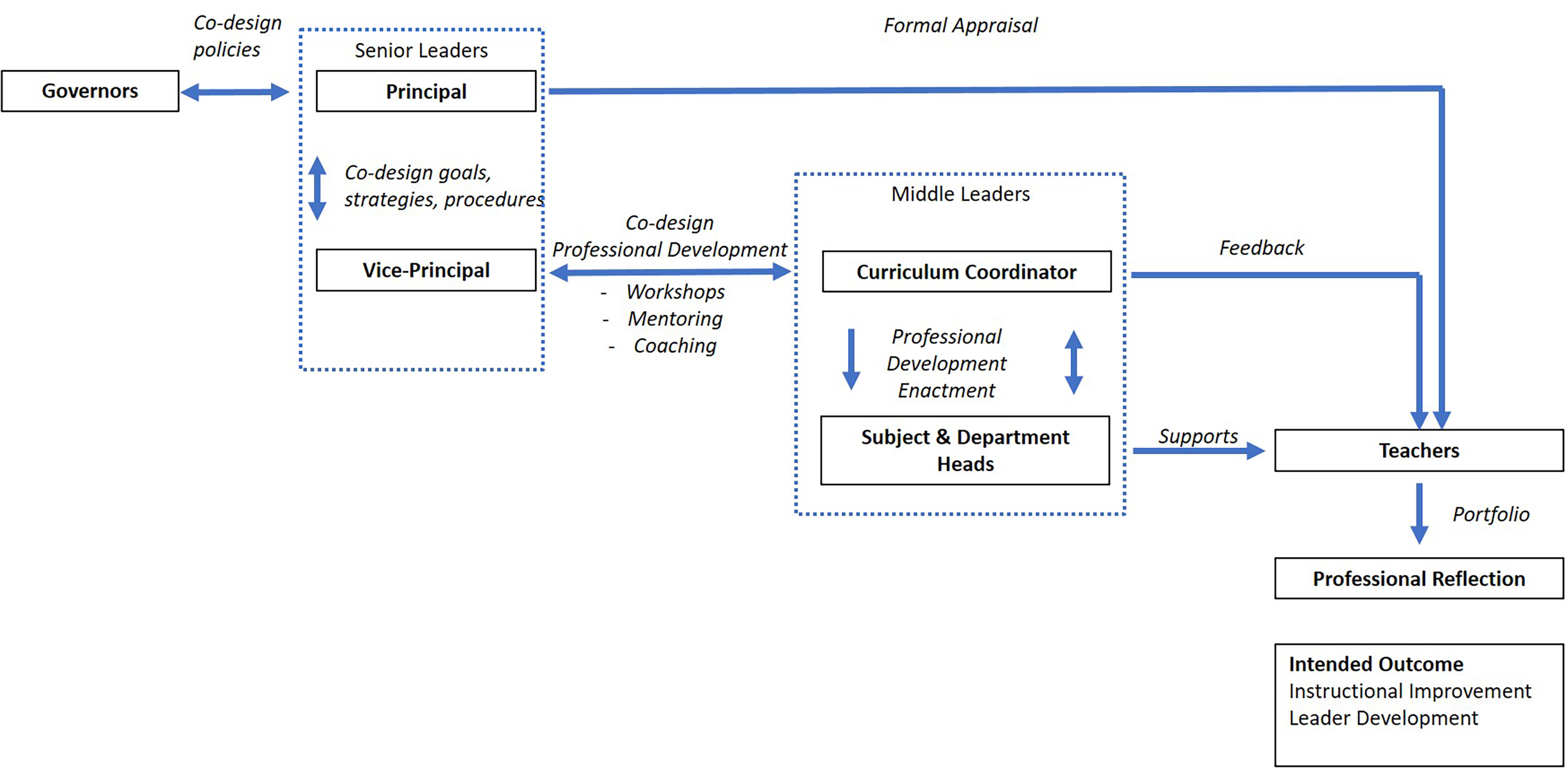
The principal drafted the relevant policies which the board endorsed. To implement the appraisal system, the VP updated the teacher handbook to include specific documents detailing instructional planning procedures and expectations for how teachers should plan, deliver, and assess learning. The VP then coached the programme coordinators so they understood the purpose and mechanics of the new system. In turn, the coordinators coached the subject leaders to work with teachers to put selected appraisal expectations into practice. The VP explained the approach: [I’m] trying to do a bit more of workshop-style so that the coordinator was able to give the subject leaders some tools to work with the subject teachers on how you would review a unit plan, how you would decide on whether this assessment was meaningful …
We label the developmental flow from VP to programme coordinators to subject leaders to teachers the Cascade Design of professional learning.
Processes/capacity building
Mentoring built around observation and feedback formed the heart of the learning process. Through the appraisal system, the Principal and VP claimed responsibility for formal teacher evaluation. This freed the coordinators to work directly with subject leaders to improve classroom practice in an ongoing, collegial manner. The VP illustrated how this could work, ‘Sometimes the MLs will talk with me first … [they] can follow-up without a teacher feeling it's the subject leader who makes the final evaluation’. One coordinator corroborated that ‘a lot of my work here is teaching teachers … strategies for teaching’. For example, a teacher invited the leader to observe them explaining a new assessment strategy to students. The coordinator provided immediate written feedback, referencing formal assessment guidelines, followed by a brief discussion that was not part of the formal assessment. Teachers could include informal feedback in their assessment portfolios. The second coordinator conducted workshop-like sessions with subject leaders to discuss how assessment works and to build capacity around the skills needed to deliver the programme. Subject leaders were teachers’ first contact point for curriculum-related issues. … my focus is supporting individual teachers in their teaching … I go and observe teacher's lessons and if I see something that could improve, or if they have things that they want to improve themselves, I sit with them and go through possible improvement strategies.
Another Subject Leader reiterated: I offer support to the teachers when needed, and I am the kind of an unofficial person who has the experience in teaching to support them.
The above data illustrate a structured array of leadership practices that included mentoring, observations, and feedback. Interviewees claimed these informed the flow of learning from the VP to MLs to teachers. The VP explained that separating formal evaluation responsibilities and setting expectations on ‘how teachers should plan, deliver, and assess’ allows programme coordinators to focus their leadership on capacity-building activities rather than evaluation. He noted that while formal job descriptions have not changed, the ‘increased support and clarity in detail allows MLs to get into their instructional roles’.
Leadership development
The above suggests a layered, cascading approach to capacity building across the school. Similar processes focused on MLs’ development. For instance, the VP incrementally devolved instructional leadership responsibilities. Two years before the study reported here the VP chaired an Instructional Leadership Team (ILT) comprised of coordinators and subject leaders. He developed ‘a years’ agenda with 4 or 5 focuses …’ around curriculum coordination. The following year, the coordinators ‘came up with very specific instructional focuses’, devised agendas, and elicited feedback from the VP. By the year this study commenced, the coordinators had taken full ownership. As the VP stated: ‘I’m getting to the point where I’m not even asking them to show me what they’re going to do with the ILT’.
The coordinators explained that with their new discretion they co-led regularly scheduled workshops with subject leaders to develop a toolbox of leadership strategies. These included ways to run department meetings, organise departments, and provide feedback – all aimed to streamline instructional improvement. The VP held that ‘increasingly trying to delegate a bit more curriculum leadership to the coordinators’ enabled the VP to focus on new priorities, ‘pedagogy, or initiatives, or goals’.
Across the Cascade model senior leaders distributed leadership responsibilities to MLs: We’re counting on the [subject leaders]. … We are trying to make sure that they’re comfortable with what they’re doing … Each department can decide the way they want to do by themselves, but we want to make sure that everything is in place. (Programme Coordinator)
Features
The analysis depicts several key features of the model that supports middle leadership development:
Clear and understood expectations. A formal policy framing professional learning outcomes and support structures. Linked to but distinct from formal teacher performance appraisal. Development of supporting tools, e.g., documentation and procedures. Clear roles for different types of senior and MLs which define the flow of learning. Layered instructional leadership development activities in which senior leaders focus on the development of those below in the organisational hierarchy. Incorporated a set of development activities into the design: mentoring, workshops, formal and informal observations, and feedback on instructional practices and leadership activities. Shared leadership responsibilities among senior and MLs that are enacted in collaborative and coordinated ways. Incrementally devolved leadership responsibilities from senior to more junior leaders.
Although holding features of conventional hierarchical structures, the design as envisioned by the senior leaders aimed to facilitate learning-focused interactions among leaders and teachers, collaborative engagement and shared responsibility, and ongoing, multidirectional feedback, but aligned as part of a coherent whole.
Parallel structure model
The parallel structure model (Figure 2) presents an alternative approach to building in-school capacity. We explore data from an international school's Outdoor Education agenda, a semi-private school's pastoral care initiative, and an aided school's aims to include minority and special educational needs (SEN) students. The parallel structure supports key mission-central agendas that require specialist knowledge.
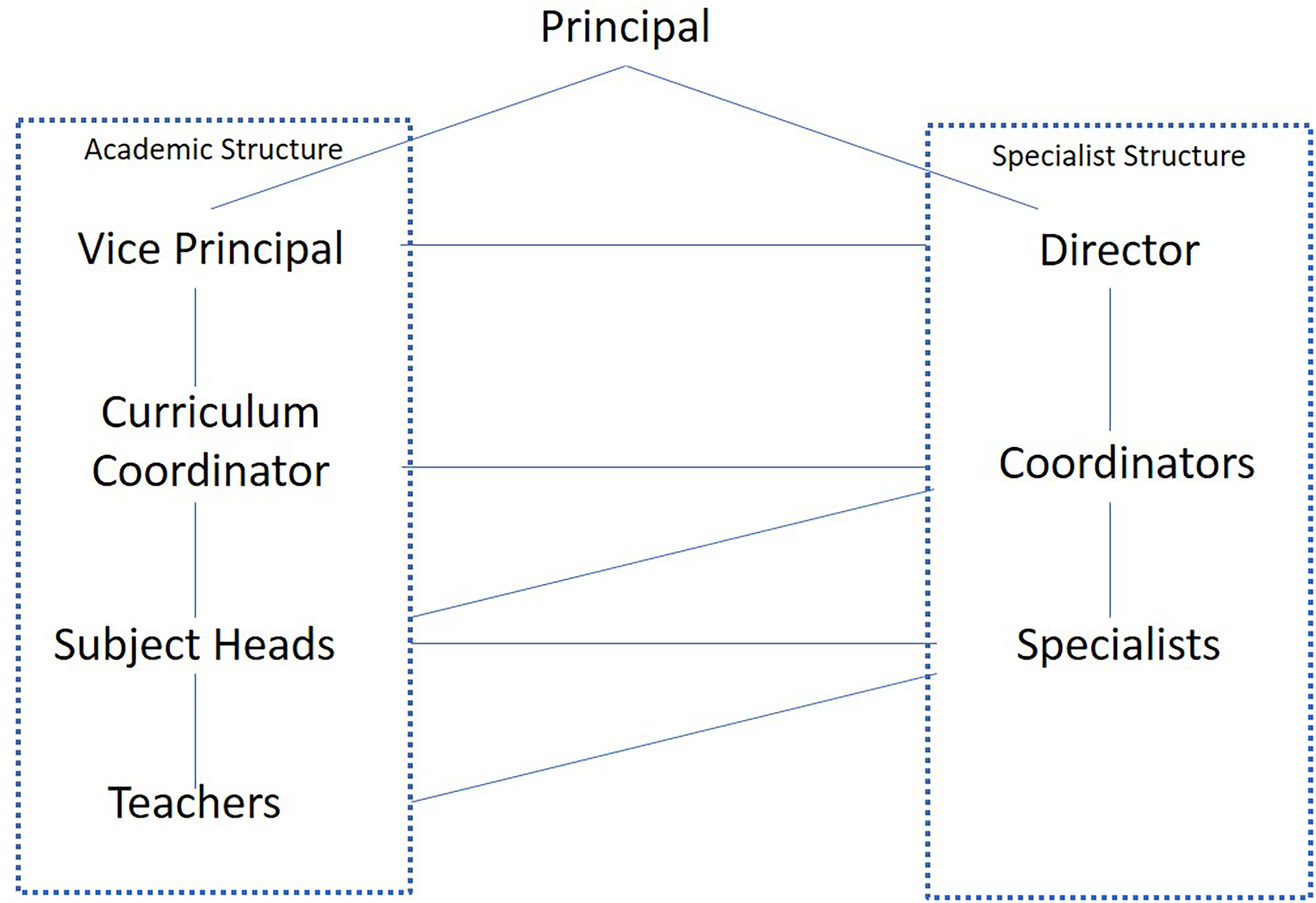
Parallel structure model.
Structure
In each school, we asked different leaders to explain the roles of staff members in the parallel structure. The Director of Outdoor Education at an International School related: We try to hire and train local instructors … The specialist must coordinate, network, or spread the network … for the staffing, consultants, interns, and instructors.
This structure, incorporating specialist directors or coordinators, instructors, and staff, was echoed in other schools. For example, the semi-private school principal explained the process of recruiting a Director of Progress who: … came in on the pastoral side and made substantial improvements with policies, writing them all … A lot of our initial focus [on] leadership had gone into the subject areas … We had only organically developed leadership positions on the pastoral side … [Now] we have developed more positions on the pastoral side to try and get a balance in terms of leadership.
This points to a conception of bilateral academic subjects and pastoral care strands that require appropriate balancing. The focus on specialists who put into place necessary mechanisms was echoed by the public-school SEN coordinator (SENCO): We were new to the policy and inclusion measures … With this allowance for specialists … we employed social workers, extra teachers, teaching assistants and activity assistants.
The above data suggests the importance of formal leadership positions and supporting structures for initiatives deemed critical to students. The schools employ specialist directors or coordinators who devise and enact policy, oversee budgets, and recruit and train specialists and other staff. This focused allocation of human and fiscal resources indicates a significant priority in the relationship of the parallel structure to the conventional core academic structure.
The data show a progression from the ‘organic’ and ‘new’ to an intentionally designed leadership structure. This progression suggests that as schools’ missions are (re)defined, a parallel structure provides a potential design solution that adds the necessary leadership roles and other relevant infrastructure to the schools’ existing core.
Capacity building
The parallel structure aimed to build ML and teacher capacity by first building the capacity of specialists. Directors or coordinators and specialists in the parallel structure claimed they developed a range of capacities, including: … staying up on trends, policy, procedures, staffing, training, and programming. (Outdoor Education Specialist, International School).
… working … with government policies and school accountability and social changes about how our program is perceived by the general public (Director of Outdoor Education, International School)
… helping the school to think clearly about what we should do … . [addressing] procedures which may touch on student's rights (SENCO, Public School)
The above data indicate a broad range of leadership engagement around staffing, administration, programme development, and external roles related to the schools’ policy and social contexts. These functions and positions seemed to create a broad range of leadership activities beyond the conventional academic structure. Additionally, a key role pertains to engaging others and building their capacity: Since we’ve had the Director of Pastoral Care, I’ve been able to grow and have more autonomy in a more guided sense. Whereas before there was nobody to guide me, now, it's more structured (Middle Leader, semi-private school)
The amount of work that we have is so much greater in terms of supporting students. But we’re trying to change that so [MLs] have more of a role to play in supporting students in the classroom. (Director of Pastoral Care, semi-private school)
Leader development
The above data suggest the impact of the parallel design in providing guidance, support, structure, and a sense of self-efficacy for MLs. In addition, we found that the parallel structure afforded middle and senior leaders alike avenues for seeking specialised support that was more difficult within the conventional structure. Similarly, the MLs in the parallel structure worked with other school constituents: I talk with the principal, the vice-principals, the assistant principals, sometimes I also talk with the IT leaders, because we need their support … I show different members of the school that they are important for us to form a team to support students from really different capacities and cultural backgrounds. (SENCO, Public School)
Running the Outdoor Education program is complex and involves problem-solving and decision-making activities by the middle leadership teams at the planning stage … I work with the grade level leaders [and] the curriculum coordinator. (Outdoor Education Specialist)
Our analysis suggests a more limited focus on explicit leader development strategies than the cascade design, where explicit coaching, mentoring, and feedback were provided. However, specialists in the parallel structure inform and equip other school leaders with the knowledge required for decision-making, enhancing school-wide capacity. Such knowledge includes strengthening the capacity of both senior and MLs. Further, the parallel structure potentially provides leadership opportunities for a range of specialised leaders. These include leading teams within the specialisation and, at times, the core academic structure, interpreting the policy and broader societal contexts to support school-based policy and decision-making. Specialists provide input into short and long-term school plans. As the parallel structure involves several specialists, it signifies the importance of the initiative to the school mission to the academic staff and wider school community.
Features
In each case, the parallel structures were related to schools’ missions. Schools allocated significant fiscal, physical, and human resources to support this design. Whereas schools may commonly have specialists to support initiatives, this parallel structure differs in its comprehensiveness, incorporating both senior and middle leadership roles.
Our analysis highlights the following distinct attributes of the parallel design:
specialists with technical skills advise on and implement school-based policy and procedures. formal positions, such as directors, coordinators, and specialists, parallel the conventional core academic roles. design supports the capacity building of academic leaders and teachers. layers of leadership are employed at the senior and middle leadership levels. design emphasises specialist knowledge, with building capacity across the school. introduction or adaptation of the parallel structure as responsive to (changing) school missions or agendas.
Emergent specialist model
The emergent specialist model (Figure 3) provides opportunities to enhance the capacity of teachers and MLs by providing them flexibility and discretion to develop expertise in areas of interest. Through this process, informal leaders without a leadership title, and MLs develop specific expertise. Although variations of this model appear in all types of schools, a school-based inquiry project adopted by international schools provided a clear example of this model at work. The emergence aspect implies subtle change over time, which we address below.
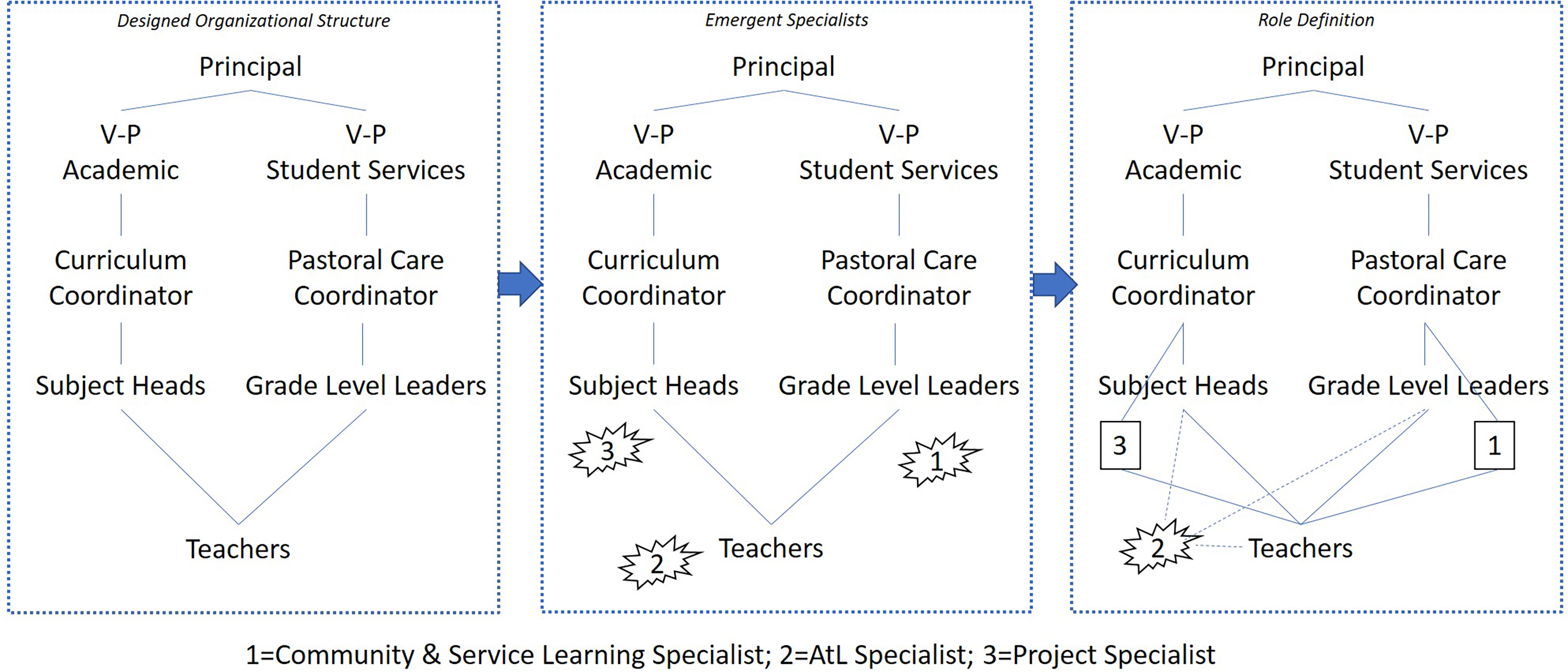
Emergent specialist model.
Structure
In this case, the model supported the implementation of a reworked school appraisal system. The new system was built around the introduction of a teacher inquiry process. The process gave experienced teachers discretion to design and implement self-identified research projects targeting improved learning and teaching. MLs supported the teacher inquiry process, which usually provided them with new PD opportunities.
Senior and MLs in an international school responded to our questions about how middle leadership capacity was developed by pointing to a change in the school's appraisal system: We used to have an appraisal system like a tick box … we felt that was not meaningful for people improving their practice. So, we have developed and enhanced … teacher inquiry … (Humanities Chair)
Teacher inquiry allows us to explore things that we’re wanting to develop … You decide on what your focus is and then [the senior leaders] group us together and we trial it. We have feedback sessions, and we inform the others about our practices. (Year 8 Grade Level Leader)
While all staff participated in an inquiry group, the school principal explained how the process impacted some staff members in particular: … a lot of the work that's come out of teaching inquiries has become passion projects. Staff members will focus on an element of what makes a difference to student learning: what do we want to look at that will improve the quality of what the students gets in school? And that leads onto some passionate staff who want to do something further around it … (Secondary Principal)
The above data suggest that providing a broader opportunity to conduct an inquiry project served, in some cases, to identify areas of impact on school improvement. Engagement in a project allows for collaborative staff development and for individual interests and expertise potentially to emerge. Others corroborated this perspective. In some instances, formal roles were created and allocated to an emergent specialist. One example of this was a physical education teacher with a passion for service learning who was promoted to the formal position of Community Services Coordinator. Figure 3 depicts this transition from informal to formal roles. The first panel depicts the initial school structure. The stars in panel 2 represent emergent specialists; solid lines and boxes illustrate their new formal roles in the third panel.
Processes/capacity development
Our analysis indicates that the introduction of the teaching inquiry programme led to new professional learning opportunities. We did a lot of work to train the teachers [in teacher inquiry], and especially the middle leaders. … it's just a great opportunity, not just for the middle leaders, but for the teachers. [Head of Language Acquisition]
This ML explained that rather than receiving ‘random feedback’, this process led teacher teams to develop concrete improvement plans that emerged from ‘student learning data’. She perceived a change in the school culture. MLs took roles that included checking teachers’ progress, maintaining a focus on ‘student learning data’ and ‘student growth’, and acting as a ‘guide’ through the inquiry process. Other interview participants related both the potential for teacher PD and, more specifically, for ML development. We noted, for instance, training the MLs in the capacities needed to lead the inquiry process and, as the principal related, building school capacity from teachers’ passions.
Leadership development
Other leaders explained the impact of the inquiry process on developing the professional capacity to act as specialists in specific areas. For example, a programme coordinator stated: [We are] trying to develop those people as leaders … If you need someone to provide you with advice on the construction of your assessment task, you can see Larry and Phyllis or Angelina (pseudonyms). If it's about teaching and learning, have a chat with Michael or Michelle or Joan (pseudonyms).
When asked whether the identified specialists held formal leadership roles, the coordinator explained that some did, but others were teachers. Regardless, the inquiry process seemed to expand their influence on the teaching and learning process. One ML told us that teaching teams would sometimes consult her during instructional planning meetings to provide advice in her emergent area of expertise. The inquiry approach provided a ‘springboard … to build capacity across the school’ (coordinator) by creating professional leadership opportunities in and sometimes outside of the school.
Features
The emergent specialist design's approach was distinct from the previous two models in that it adopts a different level of formality in both design and leadership structures:
Connected to but not dependent on extant practices such as teacher inquiry and performance appraisal. Engages MLs in formal on-site PD to support the implementation of key processes (e.g. inquiry). Identifies and builds on potential and serving MLs’ interests. Develops pool of potential leaders. Provides leadership opportunity for potential and serving MLs. Links emergent specialists to teachers and teaching teams as informal consultants in ad hoc or routine instructional design processes.
Discussion
Most literature on middle leadership development has focused on building capacity through formal training programmes (Lipscombe et al., 2020) or on a limited suite of on-the-job leader development practices. The latter often depend upon professional reflection and close ongoing support for impact (Irvine and Brundrett, 2017; Thurlings et al., 2015). Internationally, a key challenge for middle and senior leaders alike has been the intense commitment by senior leaders to facilitate these approaches (Gurr, 2019). Recent research shows the potential of aligning school personnel and various resources, or infrastructure, to support teachers’ PD (Lillejord and Børte, 2019; Shirrell et al., 2019). What has remained undeveloped is how this alignment is represented in distinct models, how such models serve the purposes of middle leadership development specifically, and the potential of school-based rather than systems-designed models. Our research identified three principal-led models designed to develop MLs’ capacity. These defined, employed, or appropriated formal policies and procedures, leader and teacher roles, and school committees and networks. The three models of school-based leader development are not exhaustive, but they point to the potential of principal-led school-based models that meet the specific needs of individual schools and MLs. In each model, we see examples of recognised ML development strategies. Our focus is on how these cohere in an intentional structure.
Taken together, the three models provide several tentative insights into the design of in-school structures to enhance ML development considering the situated nature of professional learning in schools (Thurlings et al., 2015). These include the importance of linking models to specific school agendas, the critical role of principal design intentionality, formal and informal structures accompanying the design parameters, the necessity for different forms of support, and a focus on building layered connections through school infrastructures.
Linked to school agendas
The three models anchored ML development activities in clearly defined school processes, policies, missions, and the teaching and learning agenda. The designs variously considered implementing professional standards, experiential learning, student literacy, SEN, pastoral care, and key facets of curriculum and assessment. These were primarily school agendas that reflected government policy priorities or curricular frameworks from authorising agencies. Principals intentionally built holistic structures around their schools’ specific preferences.
Principal-framed intentionality
In each school, the principals were intentional about design decisions pertaining to educational infrastructure, which our analysis depicts as models. Therefore, leader development was linked to context and the core work of the school, not as a peripheral activity (Lipscombe et al., 2020). Nor was it seen as additional ad hoc work for senior leaders (Gurr, 2019). Each model reflected the principal's responsibility to develop middle leadership capacity, which functioned alongside direction setting and redesigning the organisation (Day et al., 2011). Development was infused into structures through, variously, clarifying role expectations, developing connections to appraisal mechanisms, reworking committee structures, or highlighting professional interactions. As such, principals selectively invested time designing, connecting, and energising the models rather than providing individual support for all potential and serving leaders. The data across the three models showed that principals establish policies and procedures supporting the design and provide direct support to a limited number of experienced leaders responsible for developing more junior leaders or teachers. Still, the models provided for the necessity of job-embeddedness to optimally develop middle leadership capacity. The designs accomplish this within broader teacher development and school improvement agendas—the focus of the literature on infrastructure (Cohen et al., 2018). We expand this by focusing on principal-led and school-based models. How this was done varied across the three models. Commonly, the principals focused their energies mainly on the school-wide processes with a limited number of leaders who supported various aspects of the models’ infrastructure. To different extents, the principal-designed models utilised both formal and informal structures. Variation across schools likely relates to the degree of autonomy of the principals within their respective systems, availability of resources, and the different improvement agendas.
Formal and informal structures
Different models developed in different contexts, suggesting variation in relation to school missions, professional learning needs, and resources. These included differences in the degree of formality embedded in each structure and the mechanisms by which MLs are developed. In this study, the structures with the greatest formality arguably consumed the most time, documented policies and procedures, and defined leadership roles and committee responsibilities. The cascade and parallel structure models appeared to have the greatest formality. The former primarily supports professional learning for teachers and MLs and the latter mission-critical specialised agendas, suggesting that school-based infrastructure may be differently designed or aligned. This provides a framework for principals’ work in organizational redesign to support school improvement agendas (Day et al., 2011).
In comparison, the emerging specialist model incorporated broad-based support that allows specialisms and new leaders to emerge organically rather than by predetermined design. This arrangement potentially capitalises on building leadership across the organisation. Further, this reflects the priority of principals’ considering the broad-based school context and relating it to leader development needs on a holistic basis, a key skill in systems thinking (Shaked and Schechter, 2019). In our findings, the parallel design seemed the most favoured across different school types. This may relate to the linkage of strategy to school resources and schools’ developmental stage. Given that not all schools can invest in a comprehensive leader and PD strategy, investing in a narrowly focused specialism that serves the mission and stakeholders potentially optimises resources while still allowing leader development opportunities. Designs, therefore, can vary depending on the resources that individual schools can invest.
Supporting middle leader capacity
Holistic models potentially enhance leadership capacity formally and informally. This refers to the expansiveness of the designs and the development of formal and informal leadership roles. In all three models, MLs received support that ranged from highly structured and defined (Cascade) to focused training with open-ended backing from professional teams (Emergent Specialist). In all three models, teachers received support for their professional learning and, in some instances, were given the opportunity to lead in areas of developing expertise (Emergent Specialist). Developing teachers’ informal leadership capacity through leadership opportunity provides a leadership pipeline by which principals can identify potential MLs through initial lower stakes leadership tasks (Irvine and Brundrett, 2017; Javadi et al., 2017). This seems a necessary provision, given that not all teachers want to be leaders (Gurr and Drysdale, 2013). Such an arrangement can potentially be accomplished by connecting models to the formative purpose of performance appraisal while separating it from summative teacher evaluation. Although taking different pathways, all models aimed to increase professional connections and interactions through working with school infrastructure.
Layered connections and infrastructure
Although all models opened opportunities to lead (Irvine and Brundrett, 2017), variations included mentoring and coaching activities—such as modelling, provision of feedback, and guided reflection (cascade), to the provision of mission-critical support and training provided by specialists (parallel structure), to providing support for professional learning through action research and learning communities (emergent specialist). Although each of these strategies is included in the literature (Lipscombe et al., 2021), they tend to be described as informal or individual activities and are not located within formal holistic models that delineate layers of practice, or interrelationships among tiers of leaders and teachers, and the connections to school missions or priorities. This suggests additional support for claims that a critical role for principals is in organisational design (Day et al., 2011). At its best, this role is framed holistically and takes careful account of schools’ available infrastructure. All models facilitated increased interaction and more robust interrelationships among staff. These appeared important in terms of capacity building and support previous research suggesting that infrastructure changes impact on the success of educational reforms (Shirrell et al., 2019; Spillane et al., 2018). An investment in design considerations that maximise professional interactions evidently pays off in terms of building leadership capacity across the school.
Conclusion
Our analysis suggests the potential for senior leadership teams to build middle leadership capacity in schools by designing school-based models closely connected to school priorities and resources. These differ from but may build upon formal organisational hierarchies. More than one model could function in a single school, such as schools that employ both parallel structure and emergent specialist models. The potential of designing models for leadership development purposes highlights the importance of principals moving beyond just supporting teachers’ PD to prioritising leadership development. It suggests the need for both leadership development and design considerations to figure prominently in principal development programmes.
Although we believe the findings contribute usefully to the literature, it is important to acknowledge that the study's outcomes should not be over-generalised or extrapolated unthinkingly because of several methodological limitations. First, data were collected in different types of schools across four international settings, each operating within a unique context that could influence organisational activity and structure. Second, our research findings are limited by the scope of the data, which represents snapshots at single points of time only. Further research investigating the efficacy of the models using a longitudinal design would add considerably to knowledge in the area. Third, data reported came from senior and MLs, not teachers, who are arguably best placed to determine the veracity of the models depicted. Accordingly, how the models are formed and sustained in relation to contextual variance, leadership styles and individuals’ professional priorities, and the extent to which they support school missions or intended goals over the long-term requires deeper investigation. Researchers may further examine the prevalence of school-based models and their variations, permeations, and sustainability – this may provide additional examples for school leaders to adapt or adopt. In summary, future research agendas may better evaluate the varied impact of such models on the development of formal and informal leaders and how variation in different contextual factors specifically impact such designs.
Although we do not claim that the three models presented here can work in all schools, they suggest diversity in design options and that principals can explore different options to overcome the challenge of providing on-the-job leader development support for MLs (Gurr, 2019; Irvine and Brundrett, 2017) through the design of holistic models. Such models can provide appropriate leadership opportunities, coupled with structured support from other leaders, policies, procedures, and professional teams. More research into how principals and schools build middle leadership capacity is needed; this could draw on in-school teacher development work, which seems more advanced.
Nor do we claim that the models identified in the study are the only structures available to schools. On the contrary, given their linkage to specific school agendas, variations to the models in line with context are inevitable and desirable. However, we suggest that this research may provide insights into what is needed for models to maximise their potential to work. These insights include the importance of principal design intentionality, coherence, linkage to school context and agendas, awareness of formal, informal and situated avenues to learning, multi-layered support, and a focus on getting educational infrastructure right to promote broader and deeper PD interaction and relations. In terms of our work presented here, and depending on further research, these principles appear worthy of consideration for schools looking to provide worthwhile and ongoing PD for MLs and those aspiring to the role.
Footnotes
Acknowledgements
Grants and research support to be inserted after blind review. The authors would like to thank Mr Wong Yui Lun for his assistance in data collection and analysis.
Declaration of conflicting interests
The authors declared no potential conflicts of interest with respect to the research, authorship, and/or publication of this article.
Funding
The authors disclosed receipt of the following financial support for the research, authorship, and/or publication of this article: This work was supported by the IB Research and the Research Grants Council, University Grants Committee (grant Ref. No. ECS28611215).
