




Abstract
Teacher innovativeness and pedagogical knowledge are crucial for sustainable development and implementation of innovation initiatives in schools. Although schools often lack resources and capabilities to innovate, external knowledge sources can essentially enrich their innovation processes. How external knowledge is valued, acquired and used depends on individual attitudes, organisational absorptive capacities and knowledge management. Therefore, school leaders are considered crucial knowledge brokers and facilitators who foster innovation. This study explores the impact of external knowledge sources on collective teacher innovativeness, mediated by schools’ pedagogical absorptive capacity, and school leaders’ knowledge-sharing practices and not-invented-here syndrome. A random sample of German school leaders was analysed through structural equation modelling, mediation analysis and latent moderated structural equation modelling. The results indicate that pedagogical knowledge absorptive capacity is vital for schools to ensure that they benefit from external knowledge sources. School leaders’ not-invented-here syndrome and effective knowledge-sharing are significant antecedents of collective teacher innovativeness. Fostering school leaders’ openness towards external knowledge, schools’ absorptive capacities and developing strategic knowledge-sharing practices are essential for enhancing teacher innovativeness and developing innovative teaching practices.
Keywords
Introduction
Innovations in schools aim to enhance the quality of teaching and learning and support schools in processes of change when adapting to societal developments (Blömeke et al., 2021; Nguyen et al., 2021; Serdyukov, 2017). Previous research on school effectiveness and improvement has investigated the factors that impact the development and implementation of innovation strategies in education, highlighting the fundamental role of collaborative innovation and teachers’ collective innovativeness (TI) (Anderson and West, 1998; Fullan, 2016). At the level of individuals, factors such as attitudes, values, competencies and openness to change determine the successful implementation of innovations (McGeown, 1980). Perceived impracticability, conflicts with existing knowledge and poor knowledge management can easily lead to stakeholders’ resistance and rejection of innovation processes (Rahmat, 2020). Furthermore, the development of effective and innovative teaching and learning solutions designed to cater to students’ needs depends on teachers’ general pedagogical knowledge (GPK) and pedagogical content knowledge (Fenstermacher, 1994; Shulman, 1987). Since various individual and contextual factors influence teachers’ existing knowledge, their collective participation in knowledge exchange and acquisition of new knowledge is required to continuously extend their GPK (Garet et al., 2001; Shulman, 1986). Beyond that, professional learning opportunities and development, as well as an innovative school climate, are essential antecedents that foster TI (Blömeke et al., 2021; OECD, 2019).
Hence, as knowledge brokers, change facilitators and policy implementers, school leaders must effectively explore and lead knowledge-sharing (KS) initiatives or processes (Anderson and Weiner, 2023; Benoliel and Schechter, 2017). Especially, the implementation of reforms requires a coherent understanding of all stakeholders and needs adjustment to the schools’ preferences (Bros and Schechter, 2022; Fullan and Quinn, 2015). Knowledge of leading change processes regarding broader educational contexts is fundamental for school leaders to ensure the success and sustainability of reforms (Acton, 2021). On the one hand, they must explore and identify valuable external knowledge sources for their schools (Polatcan et al., 2024; Zainal and Mohd Matore, 2021). On the other hand, they must establish a culture of innovation and trust within their schools, thus facilitating KS, professional learning and increasing teachers’ encouragement (Buske, 2018; Dedering and Pietsch, 2023). Despite the extensive discourse on the significance of TI and GPK, research on the dynamic processes and capabilities that are required to access and utilise external knowledge successfully remains scarce.
In other fields of research, knowledge is emphasised as one of the most critical resources for innovation (Cohen and Levinthal, 1990; Grant, 1996; Pereira and Bamel, 2021). From the knowledge-based view (KBV), organisational development, performance, success and innovation are the result of effective knowledge production and transfer (Kaplan et al., 2001; Low and Ho, 2016). As valuable knowledge and resources are often widely dispersed (West et al., 2008), benefitting from existing and novel knowledge requires specific capabilities and integration and coordination systems, which can reduce absorption and integration boundaries (Figure 1) (Kaplan et al., 2001; Pereira and Bamel, 2021). Da’as and Qadach (2019) and Da’as et al. (2020) emphasised school leaders’ importance in facilitating teachers’ acquisition of external knowledge while promoting internal learning processes and highlighted that a school's absorptive capacity (ACAP) plays a decisive role in this interplay. Cohen and Levinthal (1990) mentioned that ACAP enables individuals and organisations to recognise, assimilate, transform and purposively apply new knowledge. ACAP is domain-specific, which means that different capabilities are required to absorb and integrate knowledge from various fields (Schweisfurth and Raasch, 2018). The acquisition and utilisation of novel pedagogical knowledge necessitate a specific form of ACAP, namely pedagogical knowledge ACAP (PACAP). Furthermore, ACAP, strategic knowledge management and the creation of a collaborative and trustful innovation climate are essential to overcome barriers to knowledge exchange (Lichtenthaler and Ernst, 2006; Mehrwald, 1999). Individuals’ attitudes and beliefs primarily influence the course of their knowledge processes (Lowik et al., 2017). A negative attitude towards external knowledge, such as the not-invented-here syndrome (NIH), can hinder knowledge exchange and acquisition (Antons and Piller, 2015; Lichtenthaler and Ernst, 2006). This study aims to analyse collaborative innovation processes in schools from a KBV while considering school leaders and their openness to external knowledge as facilitators of knowledge exchange and TI. The following research question guided our research: To what extent does school leaders’ NIH affect collaborative innovation and TI in schools?
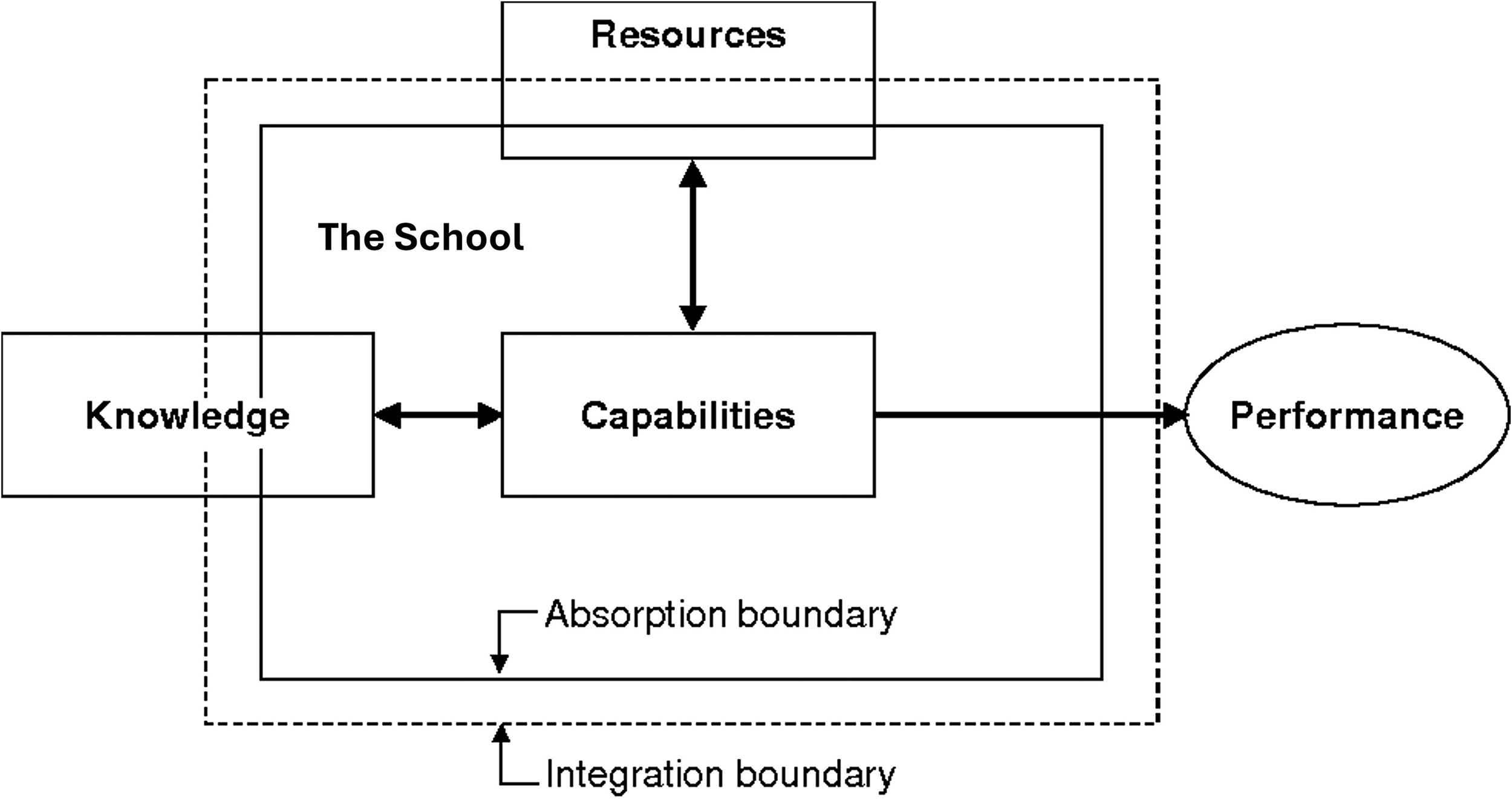
Theoretical concept of knowledge creation from the knowledge-based view (KBV)
Theoretical background
Collective teacher innovativeness
TI is a critical component and resource to transform schools, enable prosperous innovation processes and enhance creativity (Anderson and West, 1998; Nguyen et al., 2021). TI is defined as teachers’ receptivity, openness and willingness to embrace change (Fullan, 2016) and their internalisation of innovative changes and active participation in change-related activities (McGeown, 1980). At the individual level, it refers to an individual's openness and readiness for change (Mazman Akar, 2019), and at the collective level, it refers to teams’ or organisations’ capabilities to change (Buske, 2018). Collective TI includes collaborative and collective endeavours and consciousness of an organisation's employees towards shared visions and goals (Buyukgoze et al., 2024).
Following Dedering and Pietsch, collective TI can be defined as ‘an organisational climate characteristic for assessing teachers’ collective innovativeness at the school level’, as expressed by the school leaders’ perceived working climate and innovativeness of their team of teachers. Thus, TI is a characteristic of psychological and organisational climate (Blömeke et al., 2021).
Collective TI is influenced by teachers’ perceptions, attitudes and participation in professional learning (Blömeke et al., 2021; Buyukgoze et al., 2024; Nguyen et al., 2021). According to KBV theory and research on the impact of teachers’ pedagogical knowledge, continuous knowledge acquisition and exchange are crucial for innovative teaching practices (Fenstermacher, 1994; König and Pflanzl, 2016; Low and Ho, 2016; Vanderlinde and van Braak, 2010). At the organisational level, an innovative and collaborative school climate positively supports TI, enhancing teachers’ practices, network activities and perceptions regarding the schools’ openness and risk tolerance (Nguyen et al., 2021). Thus, school leaders’ knowledge management and leadership style impact conditions that foster collective TI (Buske, 2018; Buyukgoze et al., 2024; Dedering and Pietsch, 2023).
External knowledge sourcing for innovation
External knowledge sources are key for developing new ideas and driving innovation (Bogers et al., 2019; Brunswicker and Vanhaverbeke, 2015), as solely inward-oriented innovation leaves valuable knowledge and ideas unexploited (Chesbrough, 2012). Active exchange and purpose-driven use of knowledge in- and outflows accelerate organisational innovation (Chesbrough et al., 2006).
Schools are knowledge-creating organisations that are expected to adapt and develop continuously; they need ‘a strong awareness of the external environment, including opportunities (…) and pressures (…), and a capacity to recognise, assimilate and exploit external knowledge’ (Hargreaves, 1999: 126). However, schools predominantly rely on internal sources within their innovation processes (Pietsch et al., 2023a), facing knowledge management challenges within and across school borders and lacking the capabilities and resources that enable autonomous innovation (Asad et al., 2022). Nevertheless, several studies have pointed to the benefits of broad knowledge exchange and sourcing in education. On the one hand, the strategic mobilisation of knowledge allows the creation and targeted use of knowledge (Harris, 2008) and the development of professional networks that increase motivation to change and improve teaching practices (Brown, 2023). On the other hand, external knowledge sources that are systematically linked to internal knowledge significantly predict school innovations (Pietsch et al., 2023b).
From the perspective of teachers’ GPK, the value of external knowledge is also evident. GPK is defined as ‘the broad principles and strategies of classroom management and organisation that appear to transcend subject matter’ (Shulman, 1987: 8), allowing teachers to effectively manage instructional processes and students’ learning, motivation and development (Leijen et al., 2022). GPK is initially developed and acquired by an individual during university studies and practical school training; however, it undergoes refinement mainly through self-reflection and experimentation during the later stages of an individual's career (König and Pflanzl, 2016; Weyers et al., 2024). However, pedagogical knowledge needs to be constantly in the current state of knowledge to enable innovative teaching practices in dynamic contexts (Levin et al., 2013). Thus, professional learning communities, intense cooperation with external knowledge partners and context-specific applicability of new knowledge are essential conditions to foster GPK (Vanderlinde and van Braak, 2010). However, the diverse nature of external knowledge sourcing provides access to various knowledge domains and stakeholders through collaboration and networks (Brunswicker and Vanhaverbeke, 2015); hence, environmental circumstances, opportunities, individual experiences and attitudes towards KS across organisational boundaries affect the initiation and implementation of external search strategies (Chesbrough, 2017; Cohen and Levinthal, 1990).
Absorptive capacity
Advantaging from external knowledge sources requires recognition and valuation of new external knowledge and its assimilation and purposive application (Cohen and Levinthal, 1990). These capabilities are called absorptive capacity (ACAP) and are critical to access external knowledge for internal change, knowledge-creation and innovation processes (Schweisfurth and Raasch, 2018; Teece et al., 1997). ACAP combines the following dynamic capabilities: (1) recognition, referring to searching and evaluating the opportunities of external knowledge; (2) assimilation: adapting acquired knowledge to organisational contexts; (3) transformation: combining acquired knowledge with prior knowledge and (4) exploitation: internalising new knowledge in routines and structures (Lowik et al., 2017).
Zahra and George (2002) further emphasised that ACAP is embedded in organisational routines and processes. They also differentiated between potential ACAP, which encompasses knowledge acquisition and assimilation capabilities and realised ACAP, which encompasses transforming and exploiting acquired knowledge. Knowledge acquisition refers to identifying and acquiring externally generated knowledge. Notably, these two forms of ACAP are complementary, and organisations that lack capabilities in terms of either potential or realised ACAP face substantial difficulties in improving their performance (Zahra and George, 2002). ACAP exists at two levels: the individual level that pertains to individuals’ skills, knowledge, experiences, commitment and mental models that influence knowledge assessment and the organisational level that encompasses the available expertise and capabilities and established routines and processes within the organisation (Lane et al., 2006; Tutida et al., 2023; Zahra and George, 2002). In general, organisational ACAP depends on individuals’ abilities and is leveraged through organisational structures and routines (Cohen and Levinthal, 1990; Todorova and Durisin, 2007). According to dynamic model designed by Todorova and Durisin (2007) (Figure 2), ACAP depends on several factors. First, knowledge recognition and acquisition rely on valuing new knowledge sources, existing knowledge and previous experiences. In this context, they mention feedback loops as an essential aspect of the dynamic concept of ACAP, as ‘future absorptive capacity is determined by the current absorption of new knowledge […]’ (Todorova and Durisin, 2007: 783). Second, powerful relationships and key stakeholders are necessary for valuing new knowledge before it can be acquired and utilised for an innovative outcome. Third, all dynamic capabilities of ACAP are framed by social integration mechanisms that are expected to influence social interactions and, thereby, all processes of ACAP within organisations (Zahra and George, 2002). Hence, the valuation and acquisition of external knowledge can be considered to affect schools’ PACAP and thereby TI.
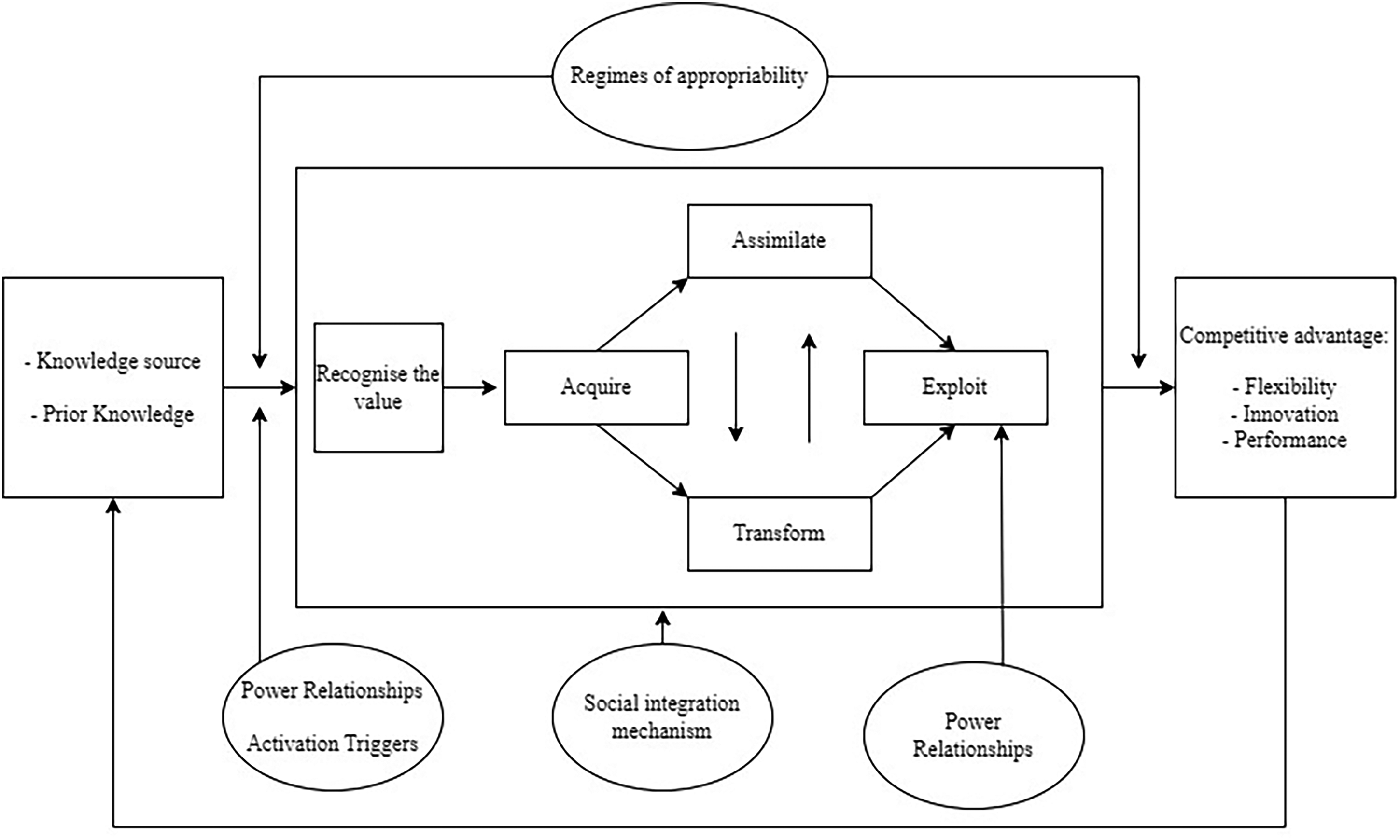
Theoretical model of absorptive capacity (Todorova and Durisin, 2007).
This study specifically explores schools’ PACAP and its impact on TI. Different knowledge types and prior knowledge in specific domains require distinct ACAP types (Schweisfurth and Raasch, 2018). Further, Lane et al. (2006) outlined the impact of specific characteristics, tacitness and the complexity of knowledge that affect its absorption and assimilation. Pedagogical knowledge is a specific type of knowledge that exists at the organisational and individual levels in schools. Therefore, the absorption and utilisation of new external pedagogical knowledge rely on specific ACAP and prior pedagogical knowledge. According to the definition of GPK by Shulman (1987), PACAP refers to schools’ capacity to recognise, assimilate and apply new pedagogical knowledge to improve teaching practices. Schools with high PACAP are actively searching for external pedagogical knowledge and translating and applying it to innovative teaching practices.
The impact of ACAP on various organisational factors and employees’ innovativeness has been investigated intensively (Kang and Lee, 2017; Schweisfurth and Raasch, 2018). However, research in educational contexts remains scarce (Da’as and Qadach, 2019; Tutida et al., 2023) and highlights that schools with high ACAP are expected to successfully implement educational reforms, exploit acquired knowledge and utilise it through improved and effective teaching practices (Da’as and Qadach, 2019). Furthermore, teachers’ internally existing knowledge and skills, active opportunities to engage in knowledge transfer, sense-making processes and active interaction with the environment are predictors of effective ACAP (Zuckerman et al., 2018). Consequently, these factors are likely conducive to sustainably developing PACAP in schools.
H1: External knowledge positively affects schools’ PACAP. H2: PACAP positively affects TI. H2a: PACAP mediates the effect between external knowledge and TI.
The roles of school leaders and KS in schools
School leadership is imperative for organisational learning (Stoll and Kools, 2017) and educational innovation (Bryk, 2010; Kovačević and Hallinger, 2019). Its contribution to school development and student learning has been extensively studied (Hallinger, 2011; Leithwood, 2021). By acting in dynamic contexts, school leaders influence and are influenced by several organisational factors (Hallinger, 2011). Larger school contexts, cultures and policies impact school leaders’ roles and possibilities. Their responsibilities develop with policy changes and reform strategies (Acton, 2021; Bros and Schechter, 2022; Mincu, 2022). Especially when implementing policies, school leaders have to interpret and frame the policy messages, communicate them to their staff and lead the implementation process (Bros and Schechter, 2022; Park and Jeong, 2013). Controversy regarding authorities and reform goals can thereby influence school leaders’ capacities and behaviour (Bros and Schechter, 2022). With their behaviour, leadership style and decisions, they shape circumstances of organisational learning, and thereby affecting teachers’ work and students’ perceptions and learning (Mulford, 2008). In the background of dynamic school development and continuous improvement, strategic leadership in schools, emphasising KS, engaging staff members and coordinating and supporting development and implementation of innovative ideas is critical (Farrell et al., 2019; Zuckerman et al., 2018). Furthermore, specific leadership behaviours and knowledge management activities affect teachers’ professional development, innovativeness, problem-solving abilities and, consequently, schools’ successful improvement (Cheng, 2015; Leithwood et al., 2004; Polatcan et al., 2024; Zainal and Mohd Matore, 2021). In particular, disruptive societal changes, e.g. caused by global climate crisis, wars or the fast development of digital media and artificial intelligence, knowledge distribution and continuous capability advancements have become major challenges (Mulford and Silins, 2011; Schechter and Atarchi, 2014). On this behalf, KS is crucial for knowledge creation and practical implementations’ development, as it enables access to existing internal knowledge and novel external knowledge (Cummings, 2003; Wiewiora et al., 2013). Although external knowledge absorption and ACAP are influenced by interactions among organisational members (Todorova and Durisin, 2007; Zahra and George, 2002), school leaders are key stakeholders in fostering KS internally and building learning communities within their schools (Fullan, 2002). Some empirical findings support the relevance of organisationally managed KS activities in schools, as they reduce barriers between different stakeholders in the school and allow them to express their knowledge and experiences, thereby fostering creative cooperation and professional learning (Asad et al., 2022; Rismark and Solvberg, 2011). KS can be considered a social integration mechanism managed by school leaders that fosters trustful knowledge transfer, interaction and communication among individuals, leading to a collective outcome (Tortoriello, 2015; Tutida et al., 2023). In other words, school leaders’ KS is an essential factor impacting schools’ PACAP and moderates the effect of external knowledge on TI.
On the one hand, school leaders are responsible for establishing a collaborative culture and trust, facilitating opportunities for continuous learning and active involvement (Dedering and Pietsch, 2023; Levin and Datnow, 2012). On the other hand, they act as mediators who ensure knowledge creation and exchange within and across the school, as they explore and integrate potentially beneficial external knowledge for the school's development (Benoliel and Schechter, 2017). Accordingly, school leaders are referred to as knowledge brokers who bridge the gaps among various knowledge sources and stakeholders and are accountable for KS and schools’ strategic organisational learning (Anderson and Weiner, 2023; Schechter and Qadach, 2016). However, school leaders’ knowledge base, personal experiences, characteristics and beliefs are pivotal antecedents that impact their leadership behaviours (Murphy et al., 2006). Effectively leading change in schools demands that school leaders are open and willing to draw on multiple knowledge sources, engage with the broader community and encourage staff to actively engage in school improvement (Fullan, 2010; Holmes et al., 2013; Williams, 2008).
H3: School leaders’ KS positively affects PACAP. H3a: PACAP mediates the effects between school leaders’ KS and TI. H3b: School leaders’ KS moderates the relationship between PACAP and TI.
Not-invented-here syndrome
Openness towards inter- and intra-organisational knowledge exchange is vital for enjoying the benefits of knowledge transactions and enabling innovation processes (Lichtenthaler and Ernst, 2006). Organisational and management structures are essential to facilitate KS; however, social psychology highlights the human aspect as another powerful factor that hinders or supports the acquisition, processing and utilisation of external knowledge (Bohner and Dickel, 2011; Marzi et al., 2023), because individual attitudes, as precursors of knowledge perception, valuation and processing, determine innovative behaviour (Spithoven et al., 2010). One of the most widely mentioned constructs in the knowledge management domain is NIH (Antons and Piller, 2015; Lichtenthaler and Ernst, 2006). According to Antons and Piller (2015), NIH is an individuals’ attitude-based bias that stems from negative attitudes towards external knowledge and leads to suboptimal utilisation or rejection of the same (197). This attitude limits external knowledge acquisition and sharing and thus decreases organisational performance (Katz and Allen, 1982). NIH as an attitude is not only an individuals’ filter to perceive information and protect individual values, but is also a social phenomenon that changes with social contexts, group dynamics and organisations’ ACAP (Burcharth et al., 2014; Lichtenthaler and Ernst, 2006). Threats of organisational identities through external knowledge and a lack of trust may also trigger NIH as a form of protection, e.g. individuals’ or divisions’ knowledge, roles and responsibilities within an organisation (Hannen et al., 2019; Vanska and Hurmelinna-Laukkanen, 2023). Furthermore, shared social experiences, relationships, values and beliefs within organisations result in a collective interpretation of knowledge and can also lead to biased perceptions and evaluation of useful external knowledge (Burcharth and Fosfuri, 2015). Positive experiences, professional training, socialisation and debiasing practices and dynamic organisational capabilities (i.e. ACAP) have been shown to help overcome NIH and enable innovation through the implementation of knowledge from external sources (Burcharth and Fosfuri, 2015; Cohen and Levinthal, 1990; Hannen et al., 2019; West and Bogers, 2014). Therefore, the effects of NIH on innovative behaviours and innovation outcomes are likely mediated by other organisational factors such as KS and PACAP. Considering the initial definition of ACAP (Cohen and Levinthal, 1990; Todorova and Durisin, 2007), valuing external knowledge is the basis for subsequent acquisition and knowledge-creation processes. Accordingly, higher levels of NIH can either increase or decrease knowledge absorption and sharing processes, thus affecting innovation processes. Hence, drawing on the study by Antons et al. (2017) for measuring NIH, i.e. school leaders’ positive attitudes towards external knowledge, the following hypotheses were proposed:
H4: NIH positively affects school leaders’ KS and the schools’ PACAP. H4a: NIH positively affects PACAP mediated by KS. H4b: NIH positively affects TI mediated by KS and PACAP. H4c: NIH moderates the relationships among school leaders’ KS and schools’ PACAP, external knowledge and PACAP, as well as among school leaders’ KS and TI and schools’ PACAP and TI.
NIH has been extensively investigated in many research fields; however, to the best of our knowledge, no research on school leaders’ NIH has yet been conducted. This study aims to close this research gap and add to the knowledge base on the antecedents of effective leadership that help bring change in the education sector by investigating the interdependencies among school leaders’ KS practices, schools’ PACAP and TI (see Figures 3 and 4).
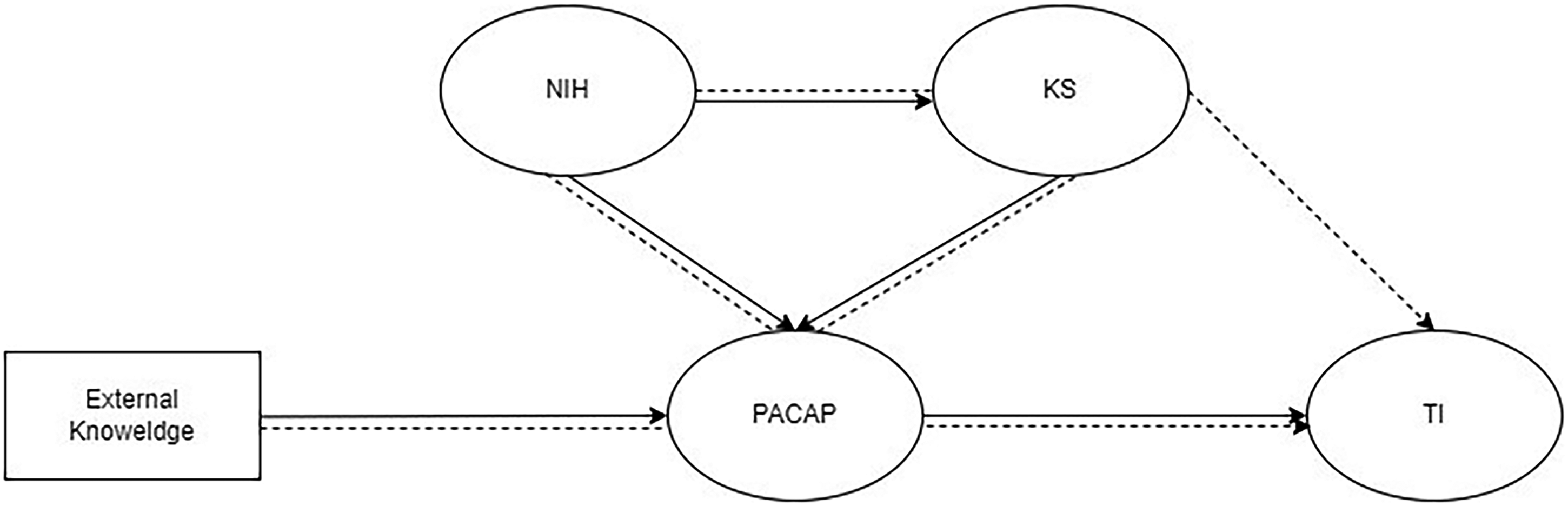
Direct and indirect effects.
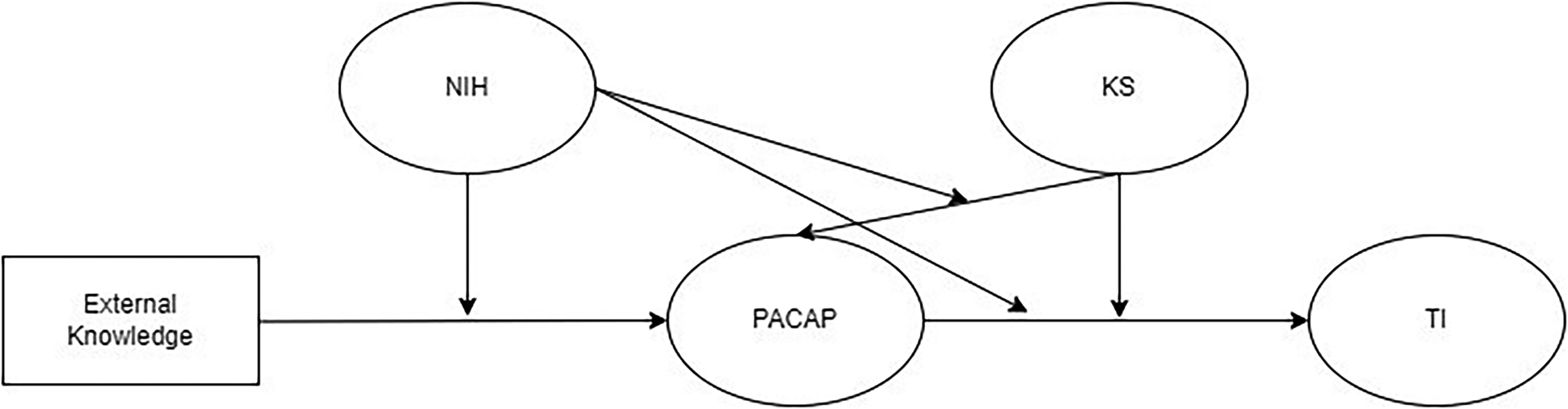
Moderation effects.
Methodology
Theoretical model
Study context
The study is part of an international project conducted in Austria, Chile, China, Uganda, Germany, Kazakhstan, Kyrgyzstan, Malaysia, Nigeria, Switzerland, Türkiye and Ukraine (e.g. see Özdemir et al., 2024; Pietsch et al., 2025). In this study, data from Germany were analysed.
The decentralised education system in Germany is complex, with varying educational structures. Educational policies are generally developed and implemented by the country's 16 states. Nevertheless, nationwide graduation examination standards and general educational standards have been developed to serve as the basis for curricular development (Tulowitzki et al., 2018). Across all states, school attendance is compulsory. Students aged 6–10 attend primary schools and those aged 11 and older attend secondary schools that were traditionally divided into three types (Hauptschule, Realschule and Gymnasium) and have been recently reformed, including current comprehensive schools (Pietsch et al., 2023b).
Before applying for the position of principal, school leaders require education and experience in teaching. Even though management experience is preferable, formal qualifications, such as a master's degree in educational leadership, are not required (Tulowitzki, 2015). Differences among states exist in terms of leadership responsibilities, decision-making authorities and the teaching mandate of school leaders. School leaders across Germany are expected to continuously develop their schools, programmes, pedagogical work and objectives according to school-specific needs (Brauckmann and Schwarz, 2015). However, school leaders’ autonomy and decision-making power remain limited, as most decisions (e.g. organisational structures and resource allocation) are made at the levels of the system or state (Klein, 2017; Pietsch and Tulowitzki, 2017). School leaders are required to find a balance between implementing reform strategies and fostering local innovations, while ensuring that the school runs smoothly (Huber, 2008). Studies on school leaders’ exploitation and exploration activities have revealed that German school leaders focus more on exploitive than explorative activities (Pietsch et al., 2022; Röhl et al., 2022). Furthermore, schools rely predominantly on internal knowledge sources to develop innovation (Pietsch et al., 2023b). Consequently, school leaders in Germany focus on maintaining the existing status of the school instead of searching for new knowledge to innovate and are less experienced in innovation strategies, such as open innovation.
Sample
The database of the study is drawn from the Leadership in German Schools study (LineS). Within this longitudinal study, data was collected at three measurements from a random and representative sample of school leaders in Germany (Cramer et al., 2021; Dedering & Pietsch, 2023; Röhl et al., 2022). The following analysis relies on the cross-sectional data from the third measurement, collected from August to November 2021. Following ESOMAR professional standards (see: https://standards.esomar.org/resources/international-codes), participants’ data were collected using an online questionnaire allowing random allocations of items, sections, filter questions, question blocks and varying question formats. The variation in item wording, random rotations and scrambling of the item blocks across the survey minimised common method bias (Podsakoff et al., 2012).
The sample consisted of 411 German school leaders, of which 247 (60.1%) were women, 163 (39.7%) were men and 0.2% were diverse. In terms of participants’ age, 3.9% were aged 39 or less, 25.8% were aged 40–49, 50.4% were aged 50–59 and 20% were aged 60 or more. Within the sample, 53% of the participants worked at primary schools, 38.2% at secondary schools and 8.5% at other school types (e.g. schools for special educational needs). For more detailed information on the study's context and sample description, see Cramer et al., 2021; Pietsch et al., 2023a; Pietsch et al., 2023b; Witthöft et al., 2024.
Measures
We used five scales from the LineS questionnaire, which were translated from English and adapted to the German educational context by following the framework proposed by Hambleton et al. (2004). If not stated differently, responses were collected on a one-to-four-point Likert scale ranging from ‘strongly disagree’ to ‘strongly agree’. All scales and items are provided in the Appendix.
The model's dependent variable, TI, was measured by four items from TALIS 2018 (OECD, 2019), as suggested by Anderson and West (1998). For example, an item on the scale was ‘Most teachers at my school try to develop new ideas for teaching’. The internal consistency of the scale was reported as McDonald's omega as ω = 0.81.
External knowledge was measured in a two-step procedure. First, the participants were asked whether they had implemented any innovations in their schools in the past 12 months. This binary-coded variable revealed that of all the participants, 78.8% introduced innovations, 19.2% did not introduce any innovations and 2% did not answer. For the following analysis, all values of those who did not answer or did not introduce innovations were coded as 0. Second, a scale, according to Laursen and Salter (2006), which referred to various external sources schools relied on to develop innovations, was presented to those participants who did introduce innovations. The scales’ structure consisted of the following item stem: ‘The knowledge we used for the innovation came from…’ with eight response options (parents/guardians, other schools, authorities/state institutes, universities/other scientific institutions, independent school-improvement consultants, commercial companies, professional training and/or conventions and professional literature) (Pietsch et al., 2023b). The items were measured on a six-point Likert scale ranging from ‘not at all’ to ‘an exceptionally high degree’. External knowledge represented the mean of those variables and had an internal consistency of ω = 0.76.
A scale from Schweisfurth and Raasch (2018) was used to measure the school's PACAP. The scale was adapted by addressing the recognition, assimilation and application of new pedagogical knowledge at the school level. The scale was introduced with two explanations: (1) the relevance of adapting effective new knowledge according to teachers’ needs and (2) the definition of pedagogical knowledge, which states that ‘pedagogical knowledge comprises knowledge about learning and teaching that relates to the organisation of teaching situations and can be applied independently of the subject, i.e. to different subjects and areas of education’, as given by Shulman (1986). For example, an item for recognising knowledge was ‘We are constantly looking for new pedagogical knowledge to innovate teaching’, that for assimilating knowledge was ‘We create new ideas for teaching from existing pedagogical knowledge’ and that for applying knowledge was ‘We constantly consider how we can use new pedagogical knowledge to improve teaching’. The scales’ internal consistency was ω = 0.85.
According to Van Den Hooff and Ridder (2004), three items of their knowledge-donating scale measure the models’ moderating variable KS. For example, an item was ‘I share the information I have with the teachers at my school’, and the scale's internal consistency was ω = 0.75. The second moderating variable, NIH, was measured using three items based on Antons et al. (2017). The applied items measured school leaders’ positive attitudes towards external knowledge exchange, sourcing and acquisition. For example, one item was ‘I look for opportunities to exchange with persons having a different knowledge background’, and the scale's internal consistency was ω = 0.72.
Analytical strategy
The data analysis was performed using Mplus version 8.3 (Muthén and Muthén, 2017), with maximum-likelihood and robust standard error as this estimator is robustness to non-normality (Cheung et al., 2021). First, the descriptive and reliability statistics were estimated, followed by estimating correlations between the model's latent constructs. Confirmatory factor analysis (CFA) was applied to confirm the adequacy of the measurement models. Goodness-of-fit was assessed based on the following fit indices and ranges: standardised root mean square residual (SRMR < 0.08), the comparative fit index (CFI > 0.95) and the standardised factor loadings (>0.4) (Schermelleh-Engel and Moosbrugger, 2003). Root mean square error of approximation was not used for model evaluation, as it is sensitive to the applied method and ordinal indicators (Shi and Maydeu-Olivares, 2020).
Structural equation modelling (SEM) (model A) was then estimated to assess direct effects and the model fit, which served as a baseline model for the following comparative model evaluation because Mplus does not provide conventional fit indices for interaction models (Muthén, 2012). Following the SEM, a mediation analysis (model B) was performed by adding the indirect effects to model A. To obtain the partially standardised results of the mediation effects, the regression coefficients were divided by the standard deviation (SD) of the dependent variable TI (Preacher and Kelley, 2011). The fully standardised effects of the mediation analysis were estimated by standardising the manifest variable (external knowledge) and fixing the latent variables’ (KS, NIH, PACAP) variances to one, which standardised the means of all latent variables to zero with an SD of one. The 95% bias-corrected bootstrap confidence intervals (CIs) with 1000 replications were estimated with the maximum-likelihood (ML) estimator to evaluate the robustness of the mediation effects (Hayes, 2018; Preacher and Hayes, 2008). The indirect effects are considered significant if the 95% CI excludes the value of zero (Hayes, 2018).
After testing the moderation effects, latent structural equation modelling (LMS) was applied, following the study by Cheung et al. (2021). To estimate the interaction effects, the commands ‘TYPE = RANDOM’ and ‘ALGORYTHM = INTEGRATION’ were added to the Mplus code to request random slopes and numerical integration. The LMS model fit was assessed using the log-likelihood ratio test D, which compares the relative fit of the LMS with the fit of the baseline model (model A) and is distributed as χ2 (Klein and Moosbrugger, 2000; Maslowsky et al., 2015). The change in the R2 of the two-way interaction model was estimated based on the following: 1 − residual variance of Y/Total variance of Y. In this way, it was ascertained whether including the latent interactions explained additional variance in the dependent variable (Cheung et al., 2021). The effect size of the significant interaction effects was determined based on Cohen's f2 (Cohen, 2013; Dawson, 2014).
Statistically significant interaction effects were analysed through a simple slope test with bootstrapping using ML as an estimator. The Johnson–Neyman technique (Johnson and Neyman, 1936) and an Excel file provided by Cheung et al. (2021) were used to plot the unstandardised and standardised results. As all variables were measured using the same instrument, common method bias was assessed by loading all items on a single unrotated factor (Harman, 1960). With a total variance extracted of 25.16%, the threshold of 50% was not exceeded, and a common method bias was rejected.
Results
Descriptive statistics and measurement evaluation
The descriptive statistics and correlations among the models’ constructs were based on the observed total scores (Table 1). The mean (M) and SD of external knowledge showed that schools use external knowledge sources for developing internal innovation to a medium but rather low degree (M = 2.39, SD = 0.67). The mean value of PACAP (M = 2.87, SD = 0.50) explained that schools’ recognition, assimilation and application of new pedagogical knowledge were moderately pronounced. However, their stronger pronounced KS values (M = 3.62, SD = 0.43) highlighted that school leaders often share their knowledge, information and new insights with the teachers in their schools. NIH (M = 3.57, SD = 0.41) represented a predominantly positive attitude towards knowledge sourcing and sharing among the surveyed school leaders.
Descriptive statistics.
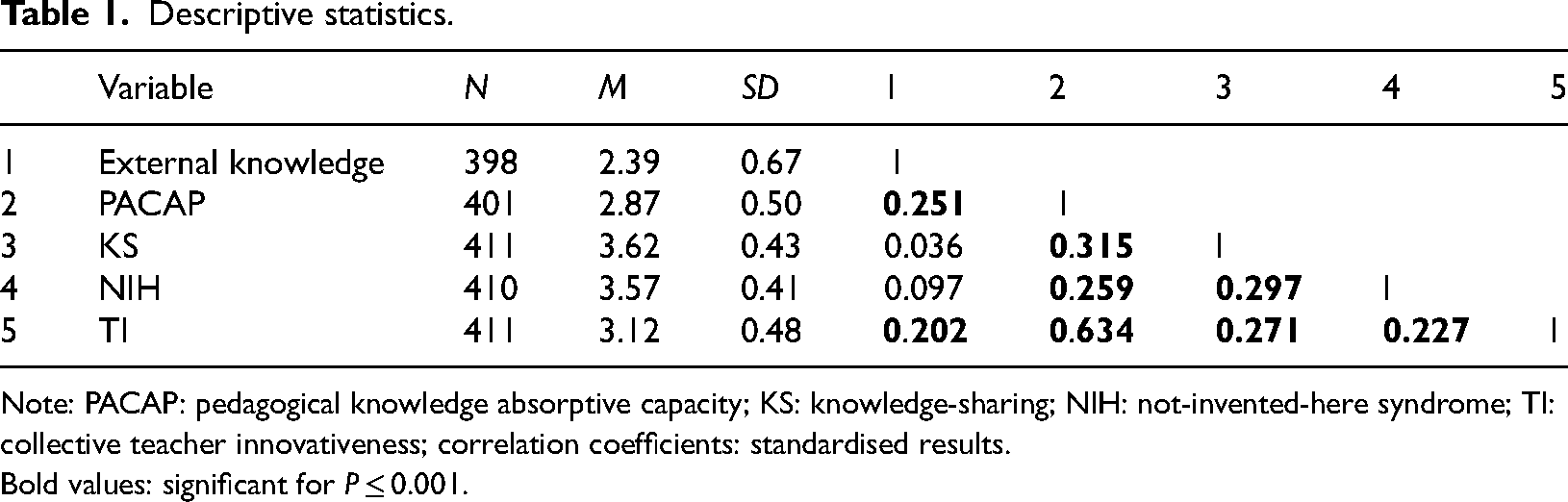
Note: PACAP: pedagogical knowledge absorptive capacity; KS: knowledge-sharing; NIH: not-invented-here syndrome; TI: collective teacher innovativeness; correlation coefficients: standardised results.
Bold values: significant for P ≤ 0.001.
The correlation matrix indicated that external knowledge statistically significantly correlates with PACAP (r = 0.251, P < 0.001) and TI (r = 0.202, P < 0.001). All four constructs were significantly correlated (r between 0.227 and 0.634, P < 0.001); however, the correlation coefficients supported that the applied scales measured distinct constructs.
The CFAs of PACAP and TI confirmed good measurement quality (PACAP: χ2(9) = 49.566, CFI = 0.974, SRMR = 0.041; TI: χ2(2) = 2.631, CFI = 0.99, SRMR = 0.028). The CFA of all four model constructs confirmed a good model fit (χ2(98) = 147.222, CFI = 0.974, SRMR = 0.038). The total variance of the dependent variable TI, based on unstandardised results, was 0.203. All unstandardised factor loadings of the indicators were statistically significant (P < 0.001), and the standardised factor loadings exceeded the threshold value of 0.40 (Ford et al., 1986).
Structural equation model
Model A (Table 2) provided a good fit to the data (χ2(115) = 164.267, CFI = 0.97, SRMR = 0.042), revealing that external knowledge significantly positively impacts PACAP (β = 0.237, P < 0.001). PACAP, in turn, had a significantly positive effect on TI (β = 0.640, P < 0.001). NIH significantly affected PACAP (β = 0.166, P < 0.05) and KS (β = 0.293, P < 0.001). Furthermore, KS had a significantly positive effect on PACAP (β = 0.269, P < 0.001). Accordingly, hypotheses H1–H4 were accepted. Model A accounted for 40.9%, 18.2% and 8.6% of the variance in TI, PACAP and KS, respectively. For the subsequent comparison between models A and C, the model's log-likelihood value (H0 = −4763.028) and the scaling correction factor (1.1336, df = 53) were assessed.
Direct linear effects.
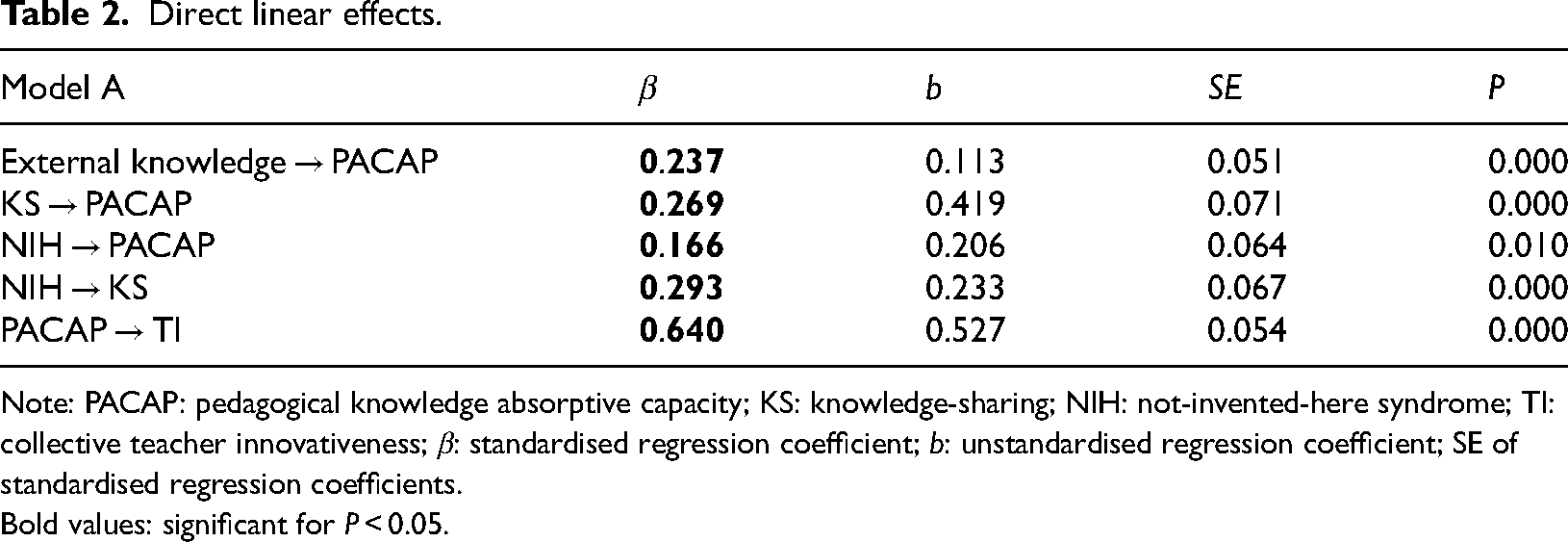
Note: PACAP: pedagogical knowledge absorptive capacity; KS: knowledge-sharing; NIH: not-invented-here syndrome; TI: collective teacher innovativeness; β: standardised regression coefficient; b: unstandardised regression coefficient; SE of standardised regression coefficients.
Bold values: significant for P < 0.05.
Mediation analysis
All indirect effects of model B were tested by calculating the indirect effects and total indirect effects. The model fit indices confirmed a good fit to the data (χ2(112) = 170.694, CFI = 0.97, SRMR = 0.039). The mediation analysis results (Table 3) showed that PACAP mediates the relationship between external knowledge and TI, with a specific indirect effect of b = 0.053 (P < 0.001, 95% CI [0.028–0.088]). The indirect effect of KS on TI mediated by PACAP was significantly positive (b = 0.197, P < 0.001, 95% CI [0.105–0.315]), and the indirect effect of NIH on TI mediated by PACAP was significantly positive (b = 0.096, P < 0.05, 95% CI [0.025–0.186]). Furthermore, the indirect effect of NIH on TI was significant when mediated by KS and PACAP (b = 0.046, P < 0.05, 95% CI [0.020–0.090]); however, it is not statistically significant when mediated by KS (b = 0.021, P = 0.332, 95% CI [−0.013 to 0.075]). In addition, the analysis revealed that NIH indirectly affected PACAP via KS (b = 0.095, P < 0.005, 95% CI [0.040–0.190]). Thus, hypotheses H2a, H3a, H4a and H4b were confirmed. The partially- and fully-standardised results are provided in Table 3.
Mediation analysis.
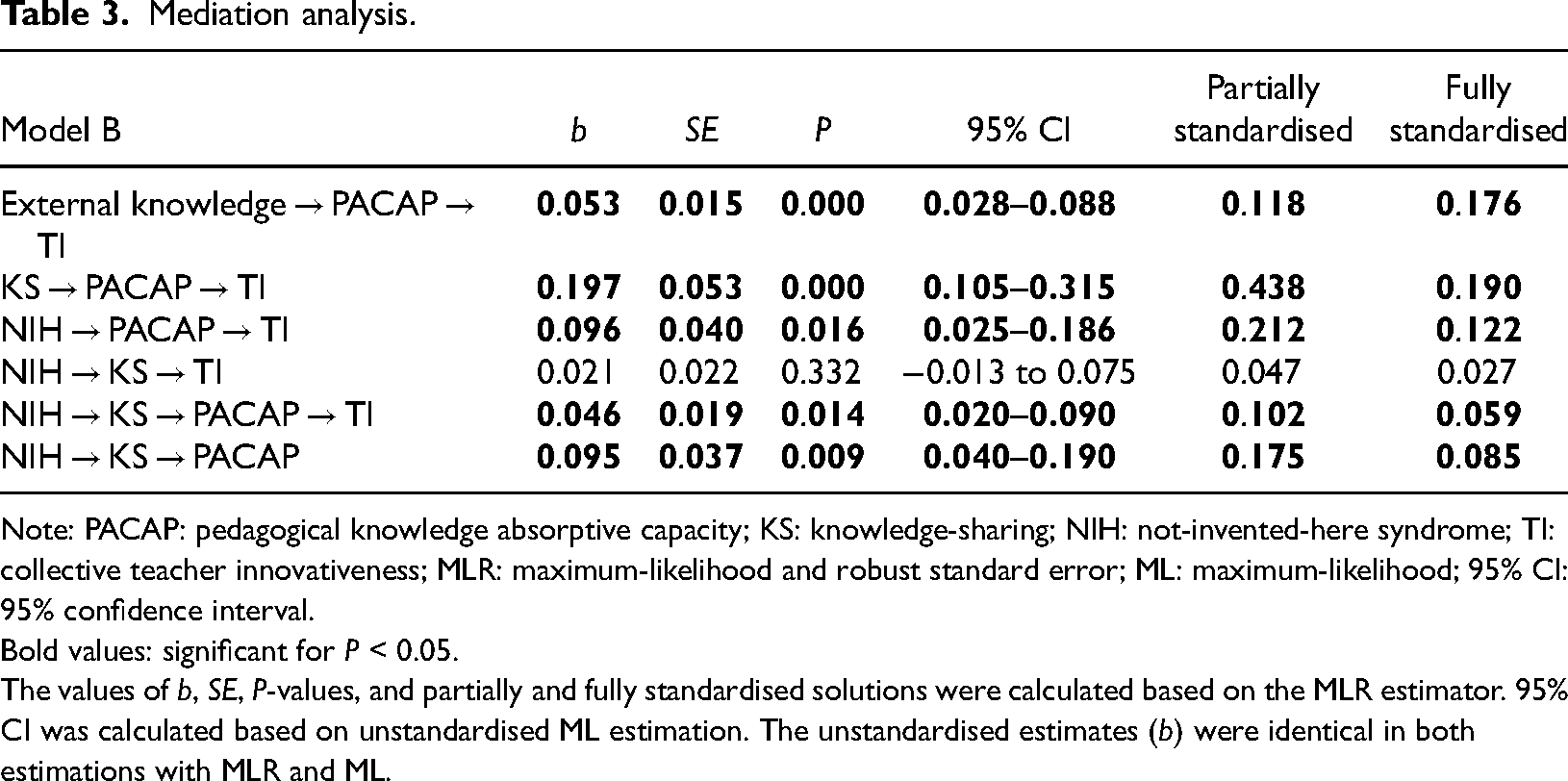
Note: PACAP: pedagogical knowledge absorptive capacity; KS: knowledge-sharing; NIH: not-invented-here syndrome; TI: collective teacher innovativeness; MLR: maximum-likelihood and robust standard error; ML: maximum-likelihood; 95% CI: 95% confidence interval.
Bold values: significant for P < 0.05.
The values of b, SE, P-values, and partially and fully standardised solutions were calculated based on the MLR estimator. 95% CI was calculated based on unstandardised ML estimation. The unstandardised estimates (b) were identical in both estimations with MLR and ML.
Moderation analysis
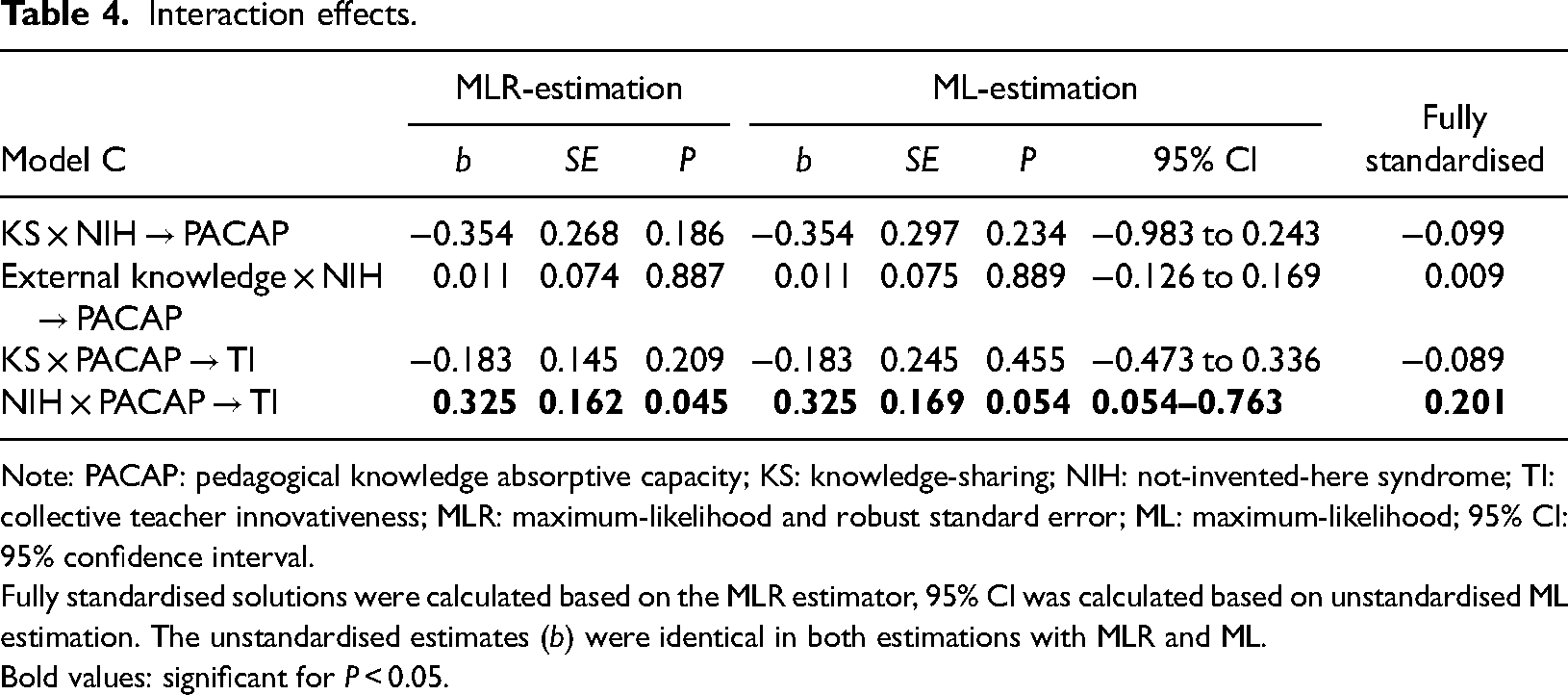
The LMS held a log-likelihood value of H0 = −4756.808, a scaling correction factor of 1.1529, df = 59. The inclusion of interaction terms in the model significantly increases the model fit D = 12.44, df = 6, P < 0.05. The results of the LMS (Table 4) showed that only the regression coefficient of NIH × PACAP on TI was statistically significant (b = 0.325, P < 0.05, 95% CI [0.054–0.763]); the standardised coefficients are provided in Table 4. As NIH only moderates the relationship between PACAP and TI, hypothesis H3b was rejected, and H4c was partially supported. With an R2 of 0.438, the LMS explained 43.8% of the variance in TI. The change in the R2 from model A to model C (0.438 − 0.409) was 0.029, explaining an additional variance of 2.9% in TI. The effect size of the interaction was Cohen's f2 = (0.029/1 − 0.438) = 0.051, which represented a small effect, as f2 was greater than 0.02 (Cohen, 2013). The unstandardised effect of PACAP on TI at various levels of NIH is shown in Figure 5, revealing that the effect of PACAP on TI increases with an increase in the level of NIH. Figure 6 shows the standardised effect of PACAP on TI when NIH was at one SD above and below the mean.
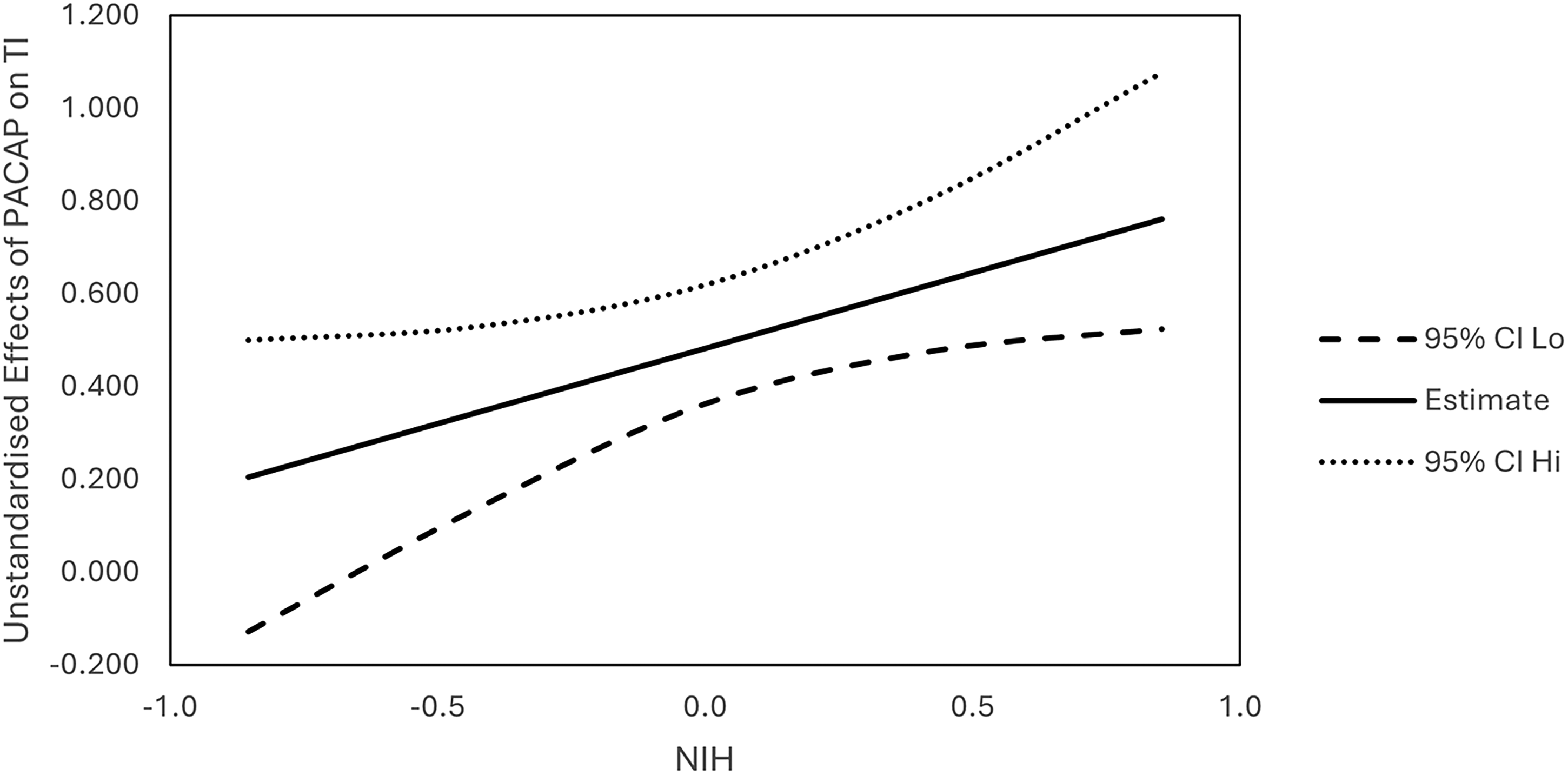
Unstandardised moderation effect.
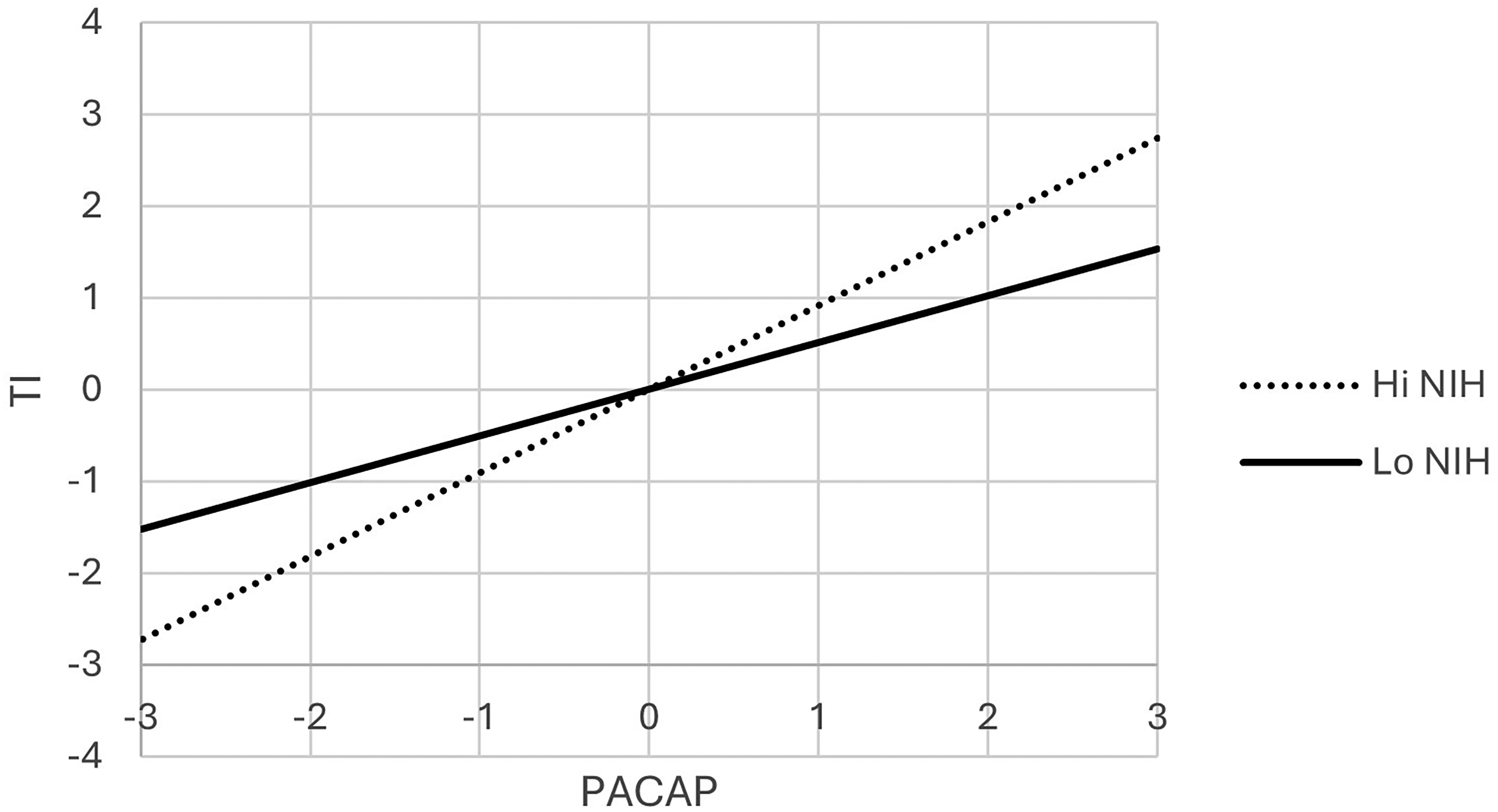
Standardised moderation effects.
Interaction effects.
Note: PACAP: pedagogical knowledge absorptive capacity; KS: knowledge-sharing; NIH: not-invented-here syndrome; TI: collective teacher innovativeness; MLR: maximum-likelihood and robust standard error; ML: maximum-likelihood; 95% CI: 95% confidence interval.
Fully standardised solutions were calculated based on the MLR estimator, 95% CI was calculated based on unstandardised ML estimation. The unstandardised estimates (b) were identical in both estimations with MLR and ML.
Bold values: significant for P < 0.05.
Discussion
This study investigated the relationship between external knowledge sources and collaborative TI in German schools while examining the impact of school leaders’ NIH, PACAP and KS on this relationship. Several main findings can be drawn from these results.
First, schools lacking PACAP are less likely to use external knowledge to increase TI. Organisational PACAP in schools allows collaborative innovation processes and functions as an intermediary to implement external knowledge successfully. Furthermore, PACAP mediates the relationship between school leaders’ KS and TI and thus helps manage internal KS. School leaders’ KS is necessary to enrich PACAP in schools (Zuckerman et al., 2018). These findings are in line with previous studies that highlighted the crucial role of ACAP in advancing from external knowledge and implementing it to enhance internally available expertise (Cohen and Levinthal, 1990; Lane et al., 2006; Tutida et al., 2023; Zahra and George, 2002).
Second, the results support the idea of school leaders’ central role as knowledge brokers who need to ensure staff members’ engagement and professionalisation to build learning communities and foster TI (Anderson and Weiner, 2023; Benoliel and Schechter, 2017; Schechter and Qadach, 2016).
Third, direct, indirect and moderating effects of NIH underlined that school leaders’ attitudes are pivotal antecedents that impact their leadership behaviours (Murphy et al., 2006). Accordingly, school leaders with a positive attitude towards external knowledge are more likely to build the schools’ PACAP, actively share knowledge within the school and enhance TI. These findings highlight the need for school leaders’ openness to draw on multiple knowledge sources and engage with the community to lead change effectively (Fullan, 2010; Holmes et al., 2013). In general, NIH is a barrier to external knowledge acquisition, especially in the context of innovation implementation and organisational change (Antons and Piller, 2015). The findings of this study support the impact of individual attitudes towards external knowledge in terms of knowledge creation and collaborative innovation processes (Bohner and Dickel, 2011; Spithoven et al., 2010). Overall, these findings align with those of previous studies, highlighting the facilitating role of school leaders in creating a culture of trust, knowledge exchange and innovation (Dedering and Pietsch, 2023; Hallinger, 2011; Leithwood, 2021; Polatcan et al., 2024). Furthermore, empirical evidence was observed in terms of the positive effect of schools’ PACAP in implementing external knowledge for developing innovation, thus contributing to the research base on ACAP in education (Da’as et al., 2020; Da’as and Qadach, 2019; Zuckerman et al., 2018). Investigating school leaders’ NIH opened a new perspective on individuals’ unconscious decision biases that impact openness towards external knowledge and innovation processes in education. The positive reverse of the construct allowed us to shed light on the impact of school leaders’ positive attitudes towards external knowledge in innovation, proposing positive attitudes and beliefs as a solution to the lack of knowledge exchange in educational settings.
When interpreting these findings, considering the contextual factors of the study is important. The infrequent use of external knowledge sources can result from organisational structures, decision-making policies (Lane and Lubatkin, 1998; Lichtenthaler and Lichtenthaler, 2010; Rezaei-Zadeh and Darwish, 2016), school leaders’ limited autonomy in the German educational system and lack of experience in knowledge exploration (Pietsch et al., 2022). Although the school leaders in this study had highly pronounced KS and NIH, contextual factors and highly demanding tasks, such as implementing reform strategies and developing innovations while running the school (Huber, 2008), might hinder the active search for and successful acquisition of external knowledge sources.
Limitations
While this study provides valuable insights into the impact of school leaders’ NIH and schools’ PACAP on collaborative knowledge creation and TI, the following limitations need to be considered. This study relied on cross-sectional data, which is why causality can only be assumed, and the results are not generalisable. In particular, in the context of growing digitisation, artificial intelligence and easily accessible communication and knowledge exchange channels, longitudinal data could offer crucial insights into the development of knowledge exchange. Furthermore, the analysis was performed based on school leaders’ self-reports from Germany only, allowing for no comparison with other stakeholders’ perceptions (e.g. teachers, students or other contexts). NIH can lead to serious rejection of knowledge exchange and decreased organisational development and performance (Katz and Allen, 1982); however, investigating all stakeholders’ attitudes, their origins/ and the resulting impact on innovativeness within and across schools remains necessary.
Due to the novelty of this study, control variables were not incorporated into the analysis because even valid controls may be endogenous, representing a combination of multiple causal mechanisms (Hünermund and Louw, 2025). Hence, it is recommended that control variables should always be chosen based on theory (Hünermund et al., 2025), with transparent selection processes and rationales (Becker et al., 2016). Furthermore, control variables should be used sparsely in management research (Mändli and Rönkkö, 2025). Bernerth et al. (2018: 131) stated that ‘control variable usage in existing leadership studies is rarely grounded in theory but instead frequently relies on outdated misconceptions’. Therefore, this limitation was avoided in the present study. However, the implementation of well-founded theoretical control variables (Hünermund et al., 2025) has the potential to offer a profound understanding of the relationships and varying effects concerning different organisational contexts or individual characteristics and should be given due consideration in future investigations.
Conclusion
The findings of this study provide insights into the complex processes and antecedents required to absorb and utilise external knowledge to enhance collaborative TI successfully. Notably, external knowledge sources serve as resources for collaborative knowledge creation and increase TI. However, accessing the benefits of knowledge sources depends on schools’ capabilities to absorb, transform, adapt and apply new knowledge strategically. Thus, schools’ PACAP enables teachers to access and utilise external knowledge to develop innovative teaching practices. As knowledge brokers, school leaders are responsible for facilitating learning opportunities, establishing KS practices and creating a culture of change in their schools (Dedering and Pietsch, 2023; Farrell et al., 2019). Considering these responsibilities and the broader context in which school leaders act, fostering their knowledge on leading change and innovation processes is essential (Acton, 2021; Bros and Schechter, 2022).
By investigating the impact of school leaders’ NIH as a potential barrier to knowledge flow and external knowledge absorption, this study adopted a novel perspective on how school leaders’ attitudes impact TI. The findings show that school leaders’ positive attitudes and beliefs can enhance knowledge acquisition and transfer and increase teachers’ opportunities to learn collaboratively in schools. Teachers’ collaborative innovation can be strengthened through a responsive culture characterised by school leaders’ behaviours. With school leaders as facilitators of learning, a positive culture of KS and sensing affects not only teachers’ professionalisation but also students’ learning processes (Hallinger, 2011; Leithwood, 2021; Mulford, 2008).
Although implementing external knowledge is essential for constantly developing adequate and innovative teaching and learning opportunities (Pietsch et al., 2023b), several practical and policy implications can be suggested. School leaders and teachers need to be prepared and educated about the impact of negative attitudes, i.e. NIH, on knowledge-creation and innovation processes. To overcome these barriers, their openness to external knowledge and knowledge exchange must be strengthened. School leaders, especially in their facilitating and steering roles (Benoliel and Schechter, 2017; Dedering and Pietsch, 2023), must be open and value external knowledge as a resource for innovation. Professionalisation programmes should address school leaders’ responsibility for creating a climate of change and development and the need for organisational KS and transfer to support organisational learning and TI (Anderson and Weiner, 2023; Schechter and Qadach, 2016). An open culture in school communities in which experimentation is supported and failures are accepted can be the basis for overcoming the fear of negative consequences when implementing external knowledge and help school leaders lower the degrees of their NIH, which often has an ego-defensive and self-protective function (Antons and Piller, 2015). In addition, socialisation practices and opportunities to engage in organisational collaborative and creative thinking processes are essential (Burcharth and Fosfuri, 2015). In general, school leaders need to understand the roots and origins of their attitudes, and strategies of cognitive debiasing (e.g. perspective taking) were especially found to effectively mitigate the effects of NIH on innovation processes (Hannen et al., 2019) and could be a helpful strategy for school leaders to change their negative attitudes.
Furthermore, the development of PACAP helps overcome attitude-based biases and enables the implementation of external knowledge; hence, this dynamic capacity needs to be strengthened in educational contexts (Cohen and Levinthal, 1990; West and Bogers, 2014). Moreover, research highlights that building professional autonomy in schools is a prerequisite for success (Caldwell, 2018). Considering the low autonomy of schools in Germany in comparison to other Organisation for Economic Cooperation and Development states (OECD, 2016), increasing school leaders’ autonomy and decision-making power could be a first step towards fostering knowledge exploration activities and bottom-up innovation processes. Overall, this study demonstrates the impact of school leaders’ attitudes on collaborative knowledge creation and TI, highlighting the need for their positive attitudes, willingness and openness towards external knowledge sourcing, internal knowledge management and PACAP for utilising and implementing new knowledge in more targeted ways.
Although this study was able to transfer the concept of NIH into the educational context and gain essential insights into school leaders’ NIH, the need to extend the research on factors supporting successful pedagogical innovation remains necessary. It would be prudent to adopt models that have been previously developed and empirically tested in other disciplines. Typically, three contingency factors are considered particularly relevant in the context of ACAP (Todorova and Durisin, 2007; Zahra and George, 2002): activation triggers, social integration mechanisms and regimes of appropriability. Future research should investigate the antecedents and conditions that shape the negative attitudes and beliefs of all pedagogical stakeholders while developing strategies that foster positive cultures of knowledge flow. Due to ACAP's domain-specific nature, more research is warranted on various types of ACAP and their impact on collaborative learning and collective innovativeness in schools. In addition, investigating the impact of different leadership styles and cultural phenomena in schools, e.g. distributed or transformational leadership, on different stakeholders’ NIH and schools’ ACAP can help develop an understanding of how power relationships impact collaborative cultures, knowledge transfer and innovation within and beyond school.
Footnotes
Data availability
To protect the study’s participants’ privacy, it is impossible to share our data.
Declaration of conflicting interests
The authors declared no potential conflicts of interest with respect to the research, authorship, and/or publication of this article.
Ethical approval and informed consent
Participants for the study were recruited by the field service provider Forsa (forsa.de), based in Germany. This institute specialises in conducting surveys for research, political and state institutions, as well as private companies. Forsa is a member of ESOMAR ( ). Consequently, the process adhered entirely to the ESOMAR code of ethics. The study was conducted with informed consent and in accordance with the applicable rights under the general data protection regulation. All participants were informed that participation was voluntary and that their anonymised data would be protected in accordance with the legal requirements. Additionally, they were made aware that the survey results might be used for academic publications. All data were fully anonymised by Forsa before being made accessible to the authors.
Funding
The authors disclosed receipt of the following financial support for the research, authorship, and/or publication of this article: This work was supported by the German Research Foundation [Deutsche Forschungsgemeinschaft] (DFG) under Grant number 451458391.