




Abstract
This article reports on factor analyses of the Middle Leadership Roles Questionnaire – School Edition (MLRQ-SE) that were conducted to test a theoretical model. This work was completed as part of a larger study that investigated the roles of formal middle-leadership positions in public schools of New South Wales, Australia. Quantitative data from an adapted version of the MLRQ-SE, which was completed by 2608 employees in formal middle leader positions in NSW public schools, were factor analysed to identify theorised roles and thereby confirm an overarching model of middle leadership roles as well as assist with ongoing refinement of the instrument's scales. Exploratory factor analyses identified seven salient roles of middle leaders. Confirmatory factor analyses of data from the two largest position categories supported the seven-role model for assistant principals and head teachers. While the scales within the MLRQ-SE were based on a wide review of previous research, the data reported here is from one educational jurisdiction in one country. However, the findings provide evidence for the existence middle leader roles often theorised in literature but to date not confirmed empirically. The findings also hold implications for policy, practice and future research regarding leadership development and recruitment.
Introduction
The purpose of this article is to report on Phase 1 of a research project commissioned by the School Leadership Institute (SLI), a dedicated leadership unit within the New South Wales Department of Education (NSWDoE). The NSWDoE is one of the largest and most diverse education systems in the world, and at the time of the study had 2210 schools supporting approximately 805,673 students including 64,692 Aboriginal and Torres Strait Islander students (CESE, 2019). Working in partnership with scholars at three universities, the NSW Formal Middle Leadership research project (FML_NSW) was established. Its aim was to advance understanding of middle leadership within the NSWDoE in order to proactively support the professional development of these important school leadership positions across NSW public schools. Phase 1 investigated the roles formal middle leaders enacted when leading in their schools.
Within public (government run) schools of New South Wales Australia middle leaders are practising teachers who have school leadership responsibilities connected to a formal position, such as Assistant Principal (AP) or Head Teacher (HT). In New South Wales, public schools APs are most typically positioned in primary (K-6) and central (K-10) schools, and generally work in the classroom as well as lead a Stage (e.g., Stage 1 = Years 1 and 2). Head Teachers are more commonly located in secondary schools, teach in the classroom, and lead curriculum areas (such as English) and non-curriculum areas (such as student welfare). While HT (sometimes referred to as head of subject or department) is typically a middle leader position across different jurisdictions and countries (Bryant and Walker, 2022; Fleming, 2019), the role of AP is less commonly defined as a middle leadership role and the nomenclature instead associated with senior leadership positions in other contexts, such as NSW Catholic schools and other public school jurisdictions such as Victoria. However, in NSW public schools, the AP is a middle leadership position because they have a high classroom teaching workload as part of their position and also perform the duties expected of middle leaders in primary schools in other Australian jurisdictions (De Nobile and Ridden, 2014).
Despite increasing research interest in middle leadership, primarily due to school middle leaders being identified as pivotal to driving classroom improvements to increase student learning outcomes (Lipscombe et al. 2020a), this facet of school governance remains undertheorised and the roles of formal middle leaders have been subject to limited empirical investigation (De Nobile, 2021; Tang et al., 2022). Research completed on middle leadership associated with roles and responsibilities has found their positioning between senior leaders and teachers has caused challenges associated with clarity (Lipscombe et al., 2021) and conflicting responsibilities (De Nobile, 2021). These challenges coupled with a lack of large-scale quantitative research have resulted in some researchers suggesting middle leadership roles and practices are at risk of being managerial and task-oriented instead of focused on leadership and strategy for classroom and school improvement (Forde et al., 2019; Lipscombe et al. 2020a).
In order to provide some empirical clarity on middle leadership roles, the Middle Leadership Roles Questionnaire – School Edition (MLRQ-SE) was developed to investigate the roles of middle leaders across a range of contexts as well as test the theoretical conceptualisation of roles identified in previous literature and proposed as leadership roles within the Middle Leadership in Schools (MLiS) model (De Nobile, 2018). While the MLiS has been cited extensively (e.g., Gurr, 2019; Harris et al., 2019; Tang et al., 2022), the model remains untested empirically. In this study, the MLRQ-SE data from 2608 middle leaders in NSW government schools was used to test the model.
The aim of this study was, therefore, to test the theorised six role model within the MLiS using proven statistical procedures. Exploratory and confirmatory factor analyses (CFAs) from MLRQ-SE data were used to help identify and confirm salient middle leader roles proposed by De Nobile (2018) and thereby test that model. The research question guiding the study reported here was: What roles do middle leaders perform in NSWDoE schools? Findings from this study intended to provide information that school systems and policy makers can use to better prepare and recruit teachers who aspire to formal middle leadership positions as well as to support important and much needed work in areas such as middle leadership role descriptions (Gurr and Drysdale, 2013) and professional development (Tang et al., 2022).
Middle leadership roles in schools
Research in school leadership continues to demonstrate the prevalence of distributed forms of leadership to middle-level leadership roles. Middle leaders, best described as educators working in classrooms while also leading in additional areas such as curriculum, year level cohorts and faculties and have been identified as important to developing teacher practice (Gurr, 2019), teacher professional learning (Edwards-Groves et al., 2019), improving student outcomes (Highfield and Rubie-Davies, 2022) and school reform (Bryant and Rao, 2019). There is, however, a research challenge when the terms ‘middle’ and ‘leadership’ are brought together. Educational leadership on its own is a complex construct and one that is difficult to define or delineate as a research construct (Gunter, 2005). ‘Middle’ when considered as part of leadership points to a particular type of leadership, typically that of a teacher with additional responsibilities, and a form of leadership that is distinct from more senior positions such as principals. Reports of a position that is sandwiched (Bentley-Davies, 2012) and squeezed in the middle (Odhiambo, 2014) suggest middle leadership is complex but also ambiguous and contested in definition due to the newness of the field and the highly contextual work performed across school sites (Grootenboer, 2018). Thien et al. (2022) refer to such ambiguity as the unacknowledged work of middle leaders being brokers between principals and teachers, as they play a substantial role in school improvement (Bryant and Walker, 2022). Their work tends to be relational and agentic (Chaaban et al., 2023).
In Australian schools, middle leaders are typically subject to jurisdictional requirements (state and territorial) and sectoral permutations (government and non-government) and they are influenced by school type (primary or secondary) (Lipscombe et al., 2020a, 2020b). This has resulted in a multitude of terms, with some confusion regarding who middle leaders are, and what roles and responsibilities they enact. This makes defining middle leadership a challenge. In attempting to draw the known theoretical and practical aspects of middle leadership together De Nobile (2018) defined middle leadership as teachers (and non-teachers) who are responsible for maintenance, improvement or development of aspects of the organisation of the school. This definition, however, assumed middle leaders to be in formal promotion positions or working informally. While this definition influenced the development of the main instrument used in the study reported here, the larger research project, needed a more focused point of reference. For the purpose of this study, the operational definition proposed by Lipscombe et al., (2021) was used to define middle leadership as ‘formally appointed leaders, with accountable responsibilities, who operate between senior leaders and teachers, and lead in order to positively impact teaching and student learning’ (p.14).
Over the last two decades, there has been a shift in the expectations of middle leaders from predominately practising managerial responsibilities such as timetabling to leading in areas associated with teaching and learning (Bennett et al., 2007; De Nobile, 2018). This evolution of expectations has been attributed to increased complexities of school administration (De Nobile, 2018), distribution of school leadership (Bryant, 2019) and increased focus on school improvement (Harris and Jones, 2017). While there appears to be an expectation that the roles and responsibilities of middle leaders result in leadership above managing, research does suggest a somewhat different reality. Research by Fitzgerald (2009) in New Zealand revealed bureaucracy led middle leaders’ responsibilities to be dominated by management tasks leaving little time for strategic leadership. Bassett and Shaw (2018) found middle leaders in New Zealand schools placed primary importance on their teaching role and found managerial administrative tasks time consuming which, coupled with a lack of confidence, resulted in leading not being prioritised. From their study of high schools in Israel, Farchi and Tubin (2019) reported that subject leaders from less successful schools were engaged in managerial tasks more than their colleagues in more successful schools and argue that only when school administrative practices become seamless, may middle leaders lead school teaching and learning. From the literature, what is evident is managing and leading are different, but complementary practices that middle leaders enact (Drysdale et al., 2016) with their roles and responsibilities being bound by the school, political, social and economic context they work in (Edwards-Groves et al., 2019).
There is research indicating that school level might influence middle leaders’ practices. For example, Dinham (2007) found that heads of department in secondary schools were focused on promoting the interests of their subject area and developing teacher capabilities in the specific disciplines. Grootenboer (2018) also observed this focus, adding that middle leaders in secondary schools were often dealing with one or more deputy principals rather than the principal, which complicated their ability to engage in strategic leadership work for their departments and this was less of a problem for middle leaders in primary schools.
Compared to senior leaders, middle leaders have many advantages regarding school improvement. Middle leaders are closer to the classroom (Grootenboer et al., 2020), they are mostly well skilled and current (Dinham, 2007; Lillejord and Borte, 2020), impact development across different spheres of influence (Lipscombe et al., 2020a) and work between two subcultures: teachers and leaders (Grice, 2019; Lipscombe et al., 2021). To enact their role effectively, an increasing body of research emphasises the role of factors such as principal support (De Nobile, 2021; Farchin and Tubin, 2019), role descriptions (Gurr and Drysdale, 2013), leadership development programs (Lipscombe et al., 2020c), non-teaching time (Bennett et al., 2007) and trusting collegial relationships (Grootenboer, 2018) is needed.
Research has identified inherent tensions for middle leaders including that middle leaders need human and financial resources to enact leadership effectively (Grootenboer, 2018), feel disempowered and lack authority (Hammersley-Fletcher and Strain 2011), feel underprepared for the job (Lipscombe et al., 2020c), lack clarity in their role (Irvine and Brundrett, 2016), lack confidence to deal with teacher performance (Meyer and Hanna, 2023) and have limited opportunities for leadership development (Lipscombe et al., 2020c). The issue of authority has been noted in Australia and overseas. A study of middle leaders in Hong Kong noted lack of organisational authority as perceived by teachers as a potential constraint on middle leader efforts to promote instructional innovations (Ho et al., 2022). This issue has been reported in previous research (for example, Bassett and Shaw, 2018).
Consequently, it is critically important to strengthen middle leadership research to advance both theory and practice in the field. The concept of middle leadership has received attention in the literature since the late 1990s, but it continues to be under-researched and under-theorised. While there have been some attempts to develop models of middle leadership to guide professional development (De Nobile, 2019), there are relatively few empirically well-grounded theories focused on middle leaders in schools, and even fewer empirical studies which are large scale and quantitative (Harris et al., 2019; Lipscombe et al., 2021).
Roles middle leaders perform in schools were investigated in a review of research by De Nobile (2018), which yielded the MLiS model described earlier. The six roles identified from the MLiS investigation were the student-focused role, administration role, organisational role, supervisory role, staff development role and the strategic role. The student-focused role concerned assisting students with academic, personal or behavioural issues. The administration role referred to the systems and procedures put in place to manage inventory, expenditures and information, including student achievement data. The organisational role concerned the organisation of people and places, including rosters and event timetables. The supervisory role concerned the evaluation and monitoring of teacher performance. The staff development role related to how middle leaders develop the competence and capacities of colleagues. The strategic role was about the setting of goals and sharing of vision for the given area of responsibility. Detailed descriptions of these roles and how they were conceptualised are provided elsewhere (De Nobile, 2016; 2018; 2019).
While the sources that produced the MLiS Model were extensive, an empirically derived set of middle leadership roles is far more useful to the theorising of middle leadership, as well as to inform the practices that facilitate development of middle leaders. For this reason, the study reported here aimed to answer the research question: What roles do middle leaders perform in NSWDoE schools? To answer the research question, the theorised middle leader six role model (MLiS) proposed by De Nobile (2018) was tested using a survey instrument (MLRQ-SE). It was hypothesised that a six-factor model of middle leadership roles for APs and HTs would emerge from exploratory and CFAs, providing empirical evidence for middle leadership roles that have been previously proposed but not systematically investigated (De Nobile, 2019).
Methodology
Given that a theoretical model of roles was to be tested using measured variables from a survey instrument, the aims of this investigation required measurement of variables representing theorised roles. Therefore, a positivistic and quantitative research design was employed. Within the positivist paradigm, researchers may assume that phenomena and experiences are measurable through meaningfully representative variables (Chirkov and Anderson, 2018; Johnson and Christensen, 2020). Ontologically, these variables are meant to describe the reality of middle leader roles (Park et al., 2020). Epistemologically, the reality of middle leader roles was derived from previous research about middle leadership which has been well reported elsewhere (De Nobile, 2018; De Nobile, 2019). That extensive review of research enabled operationalisation of the six theorised leadership roles into discrete items representing aspects of middle leader roles.
Sample
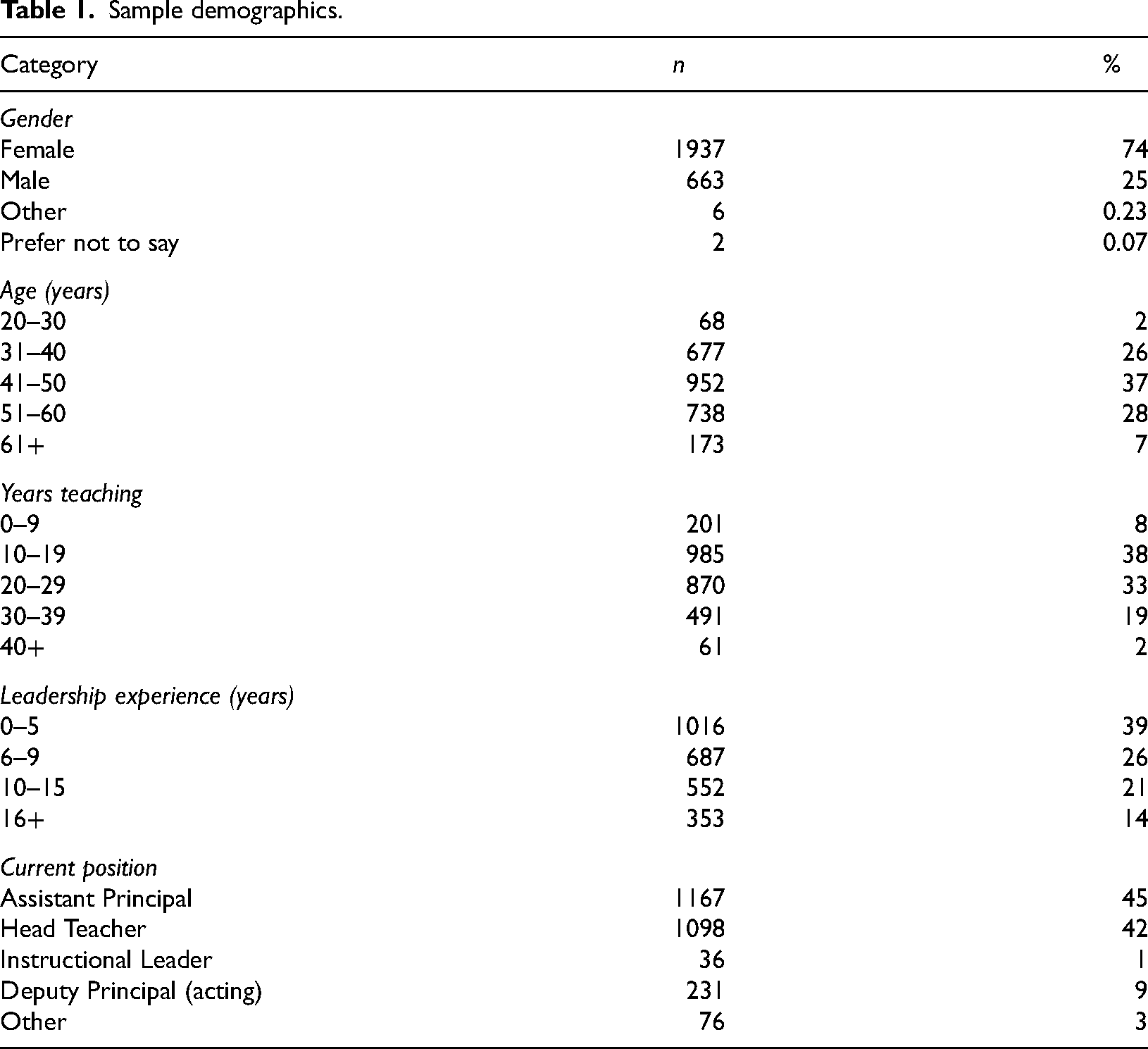
A total of 7751 teachers in formal middle leadership positions employed in schools of the NSWDoE were invited to participate in the study through an email from SLI that contained information about the study and a link to the Qualtrics hosted survey. Out of the 2714 completed surveys, 106 were rejected due to incomplete responses, leaving 2608 useable surveys and a response rate of 33.65%. While the overwhelming majority of participants were either APs (mainly from primary schools) or HTs (all in secondary schools), there were some other positions represented such as instructional leaders and (acting) deputy principals (middle leaders temporarily acting in that role). A breakdown of the demographics of the sample is presented in Table 1.
Sample demographics.
Instrument
The MLRQ-SE was developed by De Nobile (2016) to facilitate the empirical measurement of middle leader roles. The MLRQ-SE comprised 36 items that represented six salient middle leader roles (student-focused, administration, organisational, supervisory, staff development and strategic) garnered from the extensive systemic literature review that produced the MLiS model (De Nobile, 2018). Detailed explanations of the conceptualisation of role categories and development of representative items for the instrument are provided in De Nobile (2016; 2019; 2021).
All data was collected through an online survey that comprised the MLRQ-SE along with questions about demographic characteristics pertinent to the larger study. The 36-item MLRQ-SE comprised items that represented aspects of each theorised role. Content validity of the items was initially described by the original author of the instrument by linking items in each role-cluster to the specific literature sources (De Nobile, 2019). In addition, however, each item was scrutinised for relationships to middle leader tasks by all members of the current research team, resulting in adjustments to wording of two items. This process was advanced further through a review of all items by senior leaders within the SLI, as part of a brief piloting process, resulting in adjusted wording of two other items. During that process SLI required the authors to justify inclusion of items such as ‘Helping students’ (see Appendix A) as valid representations of the related constructs. As a result of these processes we were confident of the ability of the refined MLRQ-SE items to measure the constructs as wording of items better suited the terminologies used in NSWDoE schools.
The survey was accessible via secure online link in Qualtics. For the MLRQ items, participants were asked to rate the frequency with which they engaged in tasks described in each item on a Likert scale from 1 (not at all) to 5 (very frequently).
Analyses
Data were entered into an SPSS database and cases checked for missing responses and anomalies. Exploratory factor analyses (EFAs) were conducted to identify which of the six theorised roles emerged as salient constructs according to participant responses and to ascertain initial reliability of the items as scales measuring the roles. Factor analyses also serve as assurance of the construct reliability of the MLRQ items via acceptable loadings and interpretability of the solution (Hair et al., 2019). Separate CFAs were then conducted on the two largest groups in the sample: APs and HTs in order to further authenticate the results for specific formal leader positions. Reliabilities of each factor were calculated using the Cronbach alpha statistic after EFA (Hair et al., 2019), and Composite Reliability procedure after CFA (Peterson et al., 2020).
Confirmatory factor analyses were done using the structural equation modelling procedure with AMOS software (linked to the SPSS dataset). This procedure requires that a ‘hypothesised’ model be constructed (Byrne, 2016). In the hypothesised models, all the MLRQ-SE items were linked to their designated latent variables (representing each of the six theorised middle leader roles). Performing CFAs separately for APs and HTs, while helping to confirm the roles for each group, also provided a split sampling deemed beneficial to the robustness of such procedures (Hair et al., 2019).
Results
The results are presented in two main sections. First, we report the outcomes of the EFAs. These elaborate on initial data provided in an earlier report (Lipscombe et al., 2020b). We then report on results of the CFAs.
Exploratory factor analyses
Initial analyses using principal axis factoring and a varimax rotation were problematic with a large number of items cross-loading on two or more factors. This would indicate that the emerging factors might be interrelated (Hair et al., 2019), and this was certainly anticipated by De Nobile who stated roles ‘can be interrelated and actions within the domain of one role can lead to enactment of another role’ (2019, p.6). Principal axis factoring with an oblimin rotation was performed to account for these relationships (Hair et al., 2019). This yielded a satisfactory solution with seven emerging factors that accounted for 60% of the variance. The solution was verified through inspection of the scree plot, eigenvalues greater than unity and interpretability of item clusters (Hair et al., 2019). No items were removed from the factor solution due to their excellent conceptual fit within the emerging clusters, despite three having communalities just below 0.4, the minimum suggested by Hair et al. (2019). Indeed, the lower communalities may be explained by the oblimin rotation and the potential inter-correlation of factors (Hutcheson and Sofrionou, 1999).
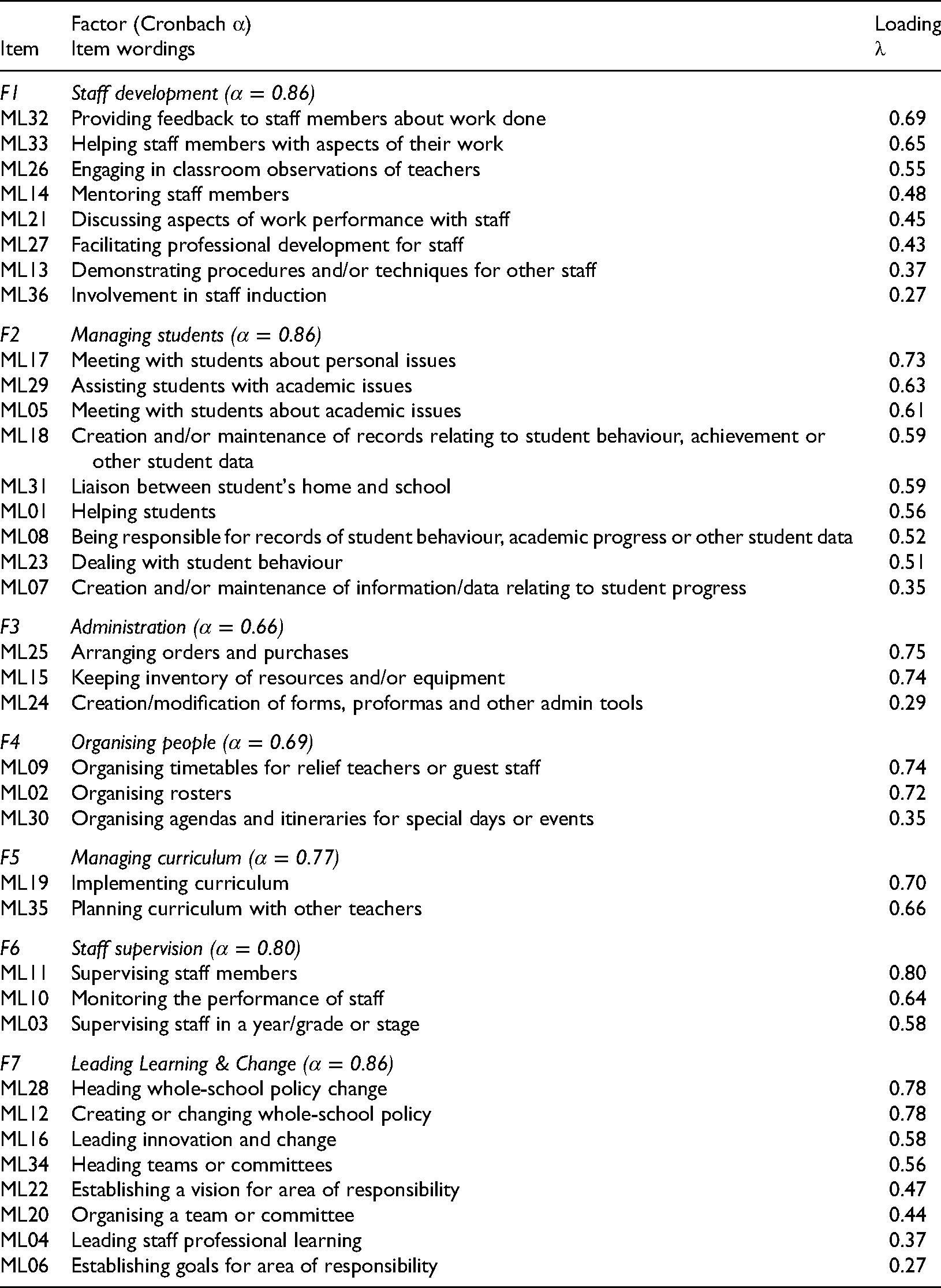
The Kaiser–Meyer–Olkin statistic for sampling adequacy was at a high level (KMO = 0.930). Cronbach alpha co-efficients were all at acceptable levels given the experimental nature of the analyses. The overall reliability for the model represented by the seven factors was also high (α = 0.84). The results are presented in Table 2. Means and correlations between variables are presented in Table 3. The full factor solution (including all items) is presented in Appendix A.
Factor solution for the MLRQ-SE.
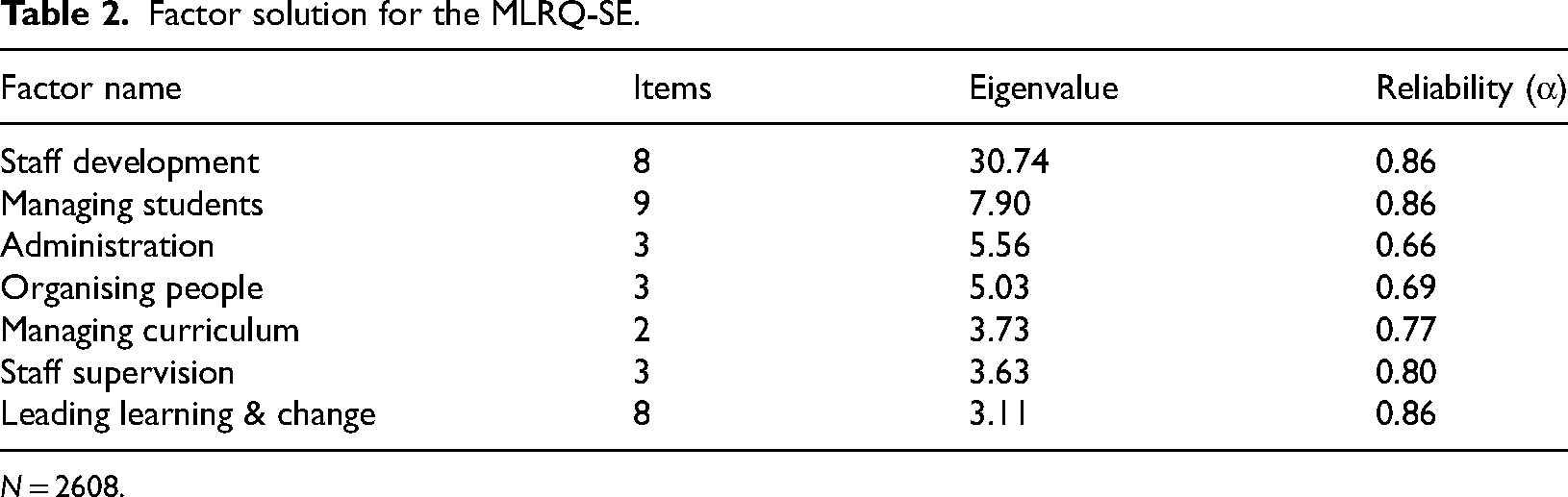
N = 2608.
Factor means and correlations.
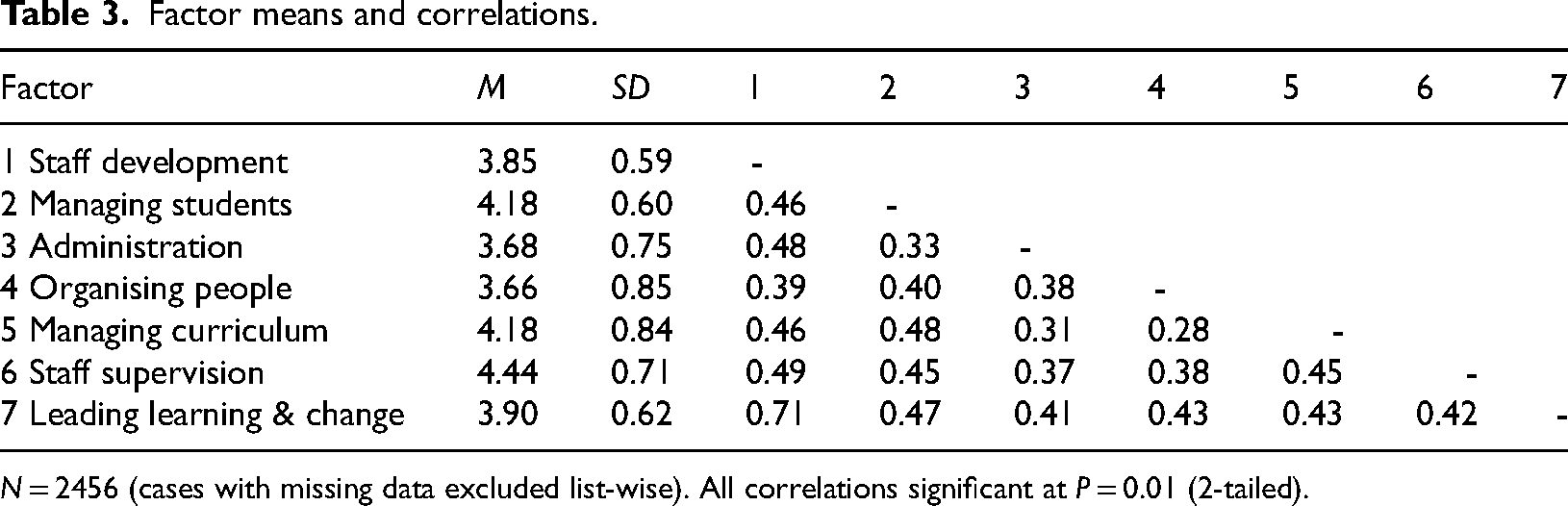
N = 2456 (cases with missing data excluded list-wise). All correlations significant at P = 0.01 (2-tailed).
The factor analyses revealed seven factors interpretable as middle leader roles. These related closely to the roles theorised by De Nobile (2018; 2019), providing initial support for the overarching hypothesis, but suggesting an additional role. An unanticipated factor concerning curriculum emerged. Removal of these items as well as allocation of these to the factors representing theorised role (organisational) that they were originally written for resulted in degradation of the factor solution, evident in a reduced KMO index for these alternate models. We were, therefore, confident that the solution was the correct one. Each of the emerging factors are described below.
The Staff development role concerned the tasks middle leaders undertake to develop the capabilities of other staff. The eight items comprising this factor were to do with discussions about work performance, including feedback. Items also described assistance provided to other staff with aspects of work. Mentoring and induction were also part of this role, although the item ‘Involvement in staff induction’ had the lowest loading. Three items originally written to represent the theoretical ‘Supervision’ role were included here. These items, involving feedback, classroom observation and discussing performance suggest that middle leaders view these tasks as staff development activities rather than supervision.
The Managing students role comprised nine items that described the ways middle leaders manage student academic and well-being issues. This factor comprised all the items that were originally written for the theorised ‘Student-focused’ role. In addition, three items that had been written for the theorised ‘Administration’ role loaded on to this factor. These items all related to the management of data about students (e.g. ‘Creation and/or maintenance of records relating to student behaviour, achievement or other student data’). Their loading on this factor made sense conceptually as the items were focussed on students.
The Administration role that emerged here comprised the remaining items that had been written for the theorised role, hence the same name was applied. The key focus of the role emerging here though was on things, as opposed to people. This explains the loss of student data related items to Student-centred role, reflecting the perceptions of the participants. This role concerned the ordering, inventory and other management processes for resources and equipment, including budget.
The Organising people role comprised three items that concerned the organisation of people. These items were all written for the theorised ‘Organisational’ role, but focussed on timetables, rosters and itineraries relating to movement of personnel and running of events.
The Managing curriculum role concerned the tasks middle leaders undertake to manage the planning or implementation of curriculum in their schools. While they were originally written for the theorised ‘Organisational’ role, their separation into a coherent factor focussed on curriculum indicated that the middle leaders participating in this study perceived these tasks as distinct. Both items loaded quite strongly on to this factor and attempts at factor models that forced these items onto factors where they had significant but weaker loadings, and their removal led to a less satisfactory factor structure. Their relatively high reliability despite the small number of items (α = 0.77) provided confidence that this was a legitimate salient factor (Hair et al., 2019).
The sixth factor to emerge related to a Supervising staff role. All items had been written for the theoretical ‘Supervisory’ role. This role concerned the supervision, including monitoring, the performance of staff members, inclusive of those who work with a specific cohort of students.
The role of Leading learning & change concerned what middle leaders do to achieve the ultimate goal of improving student learning through establishing a vision and goals for areas of responsibility, changing policy and leading innovation. This appears to be a refinement of the theorised ‘Strategic’ role for which most of the items were written. The inclusion of the items ‘Organising a team or committee’ and ‘Leading staff professional learning’ (written for the theorised ‘Organisational’ and ‘Staff development’ roles, respectively) made sense in relation to the work teams do to change or innovate and professional learning as a logical corollary. High reliability and strong factor loadings provided confidence for the research team to infer that this was how the participating middle leaders viewed the strategic work of leading learning and change in schools.
Turning our attention to the means for each of the factors (Table 3), it was quite clear that the middle leaders participating in the study were engaged in all of the roles. They were most engaged in not only the Staff supervision role but also acting substantially within the Managing students and Managing curriculum roles. These middle leaders were also substantially involved in Leading learning & change as well as Staff development, but to a slightly lesser degree. They were least engaged in tasks about Organising people and Administration.
Some correlation between the roles was expected, but the extent of these was not. Several moderate correlations (r > 0.40), and one high correlation (r = 0.71) were found. The high association between Staff development and Leading learning & change is explainable via the logical triggering of staff development during policy change or innovation mentioned previously and indeed vice versa. The relationship between Staff development and Staff supervision (r = 0.49) also made sense given one may lead to the other (in both directions). The moderate associations between Staff development and other roles speak to the way other roles may support (Administration) or necessitate (Managing curriculum) this role. Likewise, the relationship between Staff supervision and Managing curriculum (r = 0.45) was accounted for through the monitoring and supervision commonly occurring during curriculum implementation and change. The correlations between (in order of size) Managing students and Managing curriculum, Leading learning & change, Staff development and Staff supervision are less obvious, but may reflect students at the centre of the core business of schooling.
The correlations reported above provide support for the proposition that middle leadership roles are interrelated (De Nobile, 2019). However, these relationships had implications for the model specifications required during CFAs.
Confirmatory factor analyses
The emergent seven-factor model of middle leadership roles was submitted to CFAs in order to examine the structure more rigorously (Hair et al., 2019) and to further justify the MLRQ-SE items as valid measures of the roles (Jackson et al., 2009). Confirmatory factor analyses were conducted using the two largest groups in the sample: APs and HTs.
Assistant principals are the predominant formal middle leadership positions in primary schools, while HTs are their counterparts in secondary schools within the NSWDoE. Assistant principals usually have responsibility for year or stage cohorts as well as learning areas in primary schools. Head teachers normally have responsibility for a subject area, but often also responsible for a cohort (Lipscombe et al., 2020c; De Nobile, 2018). Participants in this study included 1167 APs and 1098 HTs (total = 2265), representing 87% of the total sample. The CFA procedure was conducted in two stages using the AMOS Version 28.
During the first stage, items that loaded on each factor from the EFA procedure were linked to a latent variable representing the given construct. These became the measurement models for each construct (middle leadership role). Each were evaluated by first examining the standardised regression weights (loadings), standard error indices, Chi-square and the Chi-square by degrees of freedom ratio (χ2/df) to obtain an initial impression of overall fit. This was followed by estimation of the goodness of fit index (GFI). The comparative fit index (CFI) was also estimated as this measure is reported to be more robust and accounts for sample size (Schreiber et al., 2006).
Whilst fit indices at 0.95 or above are commonly considered a ‘benchmark’ for goodness of fit (Hu and Bentler, 1999), GFI and CFI values between 0.90 and 0.94 were also considered acceptable indicators of fit given the experimental nature of this research (Peterson et al., 2020; Sellbom and Tellegen, 2019; Xia and Yang, 2019). In addition, standardised root mean square residual (SRMR) and root mean square error of approximation (RMSEA) were calculated to judge model fit based on residuals and specification errors as recommended by Hu and Bentler (1999). Values less than 0.08 were considered acceptable (Peterson et al., 2020; Sellbom and Tellegen, 2019). During each procedure, modification indices (MIs) and standardised residual co-variances (SRCs) were inspected and any re-specifications to models considered if SRCs were above the threshold of 2.58 and MIs were substantially large as suggested by Byrne (2016).
During the second stage, all final measurement models (representing roles as latent variables) were combined to construct the full hypothesised model for middle leadership roles. The same procedures and fit statistics were employed with two additions. The adjusted GFI not only offers an absolute estimation of fit like the GFI but also accounts for additional parameters specified in the larger model (Byrne, 2016) and in so doing provides a rigorous check on models after re-specifications occur. The Tucker–Lewis index (TLI) was also included. The TLI is a non-normed measure as opposed to CFI, therefore, providing a suitable additional fit measure (Sellbom and Tellegen, 2019). The Hoelter Critical N (Hoelter CN) estimate was also used to check the suitability of sample size for each combined model (Byrne, 2016).
Assistant principals
All cases with missing data were removed from the dataset (Byrne, 2016; Jackson et al., 2009). As a result, there were 908 APs represented in the dataset for this CFA. Some re-specifications, involving linking of error co-variances, were needed in order to achieve acceptable fit. During the CFA for each individual factor, items that loaded low from the EFA were removed and fit statistics checked (for example, ML06 in Leading learning & change). In each case, there was substantial degradation of fit so all items were retained in the measurement models. For instance, removal of ML07 from Managing students (EFA factor loading = 0.35) led to less than satisfactory fit (χ2/df = 22.122, GFI = 0.886, CFI = 0.849, RMSEA = 0.153), confirming that the final model reported here was the best one.
Table 4 presents the results for CFA of measurement models. The final models were used to construct the larger model for APs (factor loadings, represented in CFA as regression weights, are represented in the table with the lambda statistic). Very good fit was achieved for all measurement models. Due to the small number of items no re-specification was possible for Managing curriculum, so the initial model was the only possible model (Byrne, 2016). The high RMSEA figures for Organising people and especially Managing curriculum were due to the low number of items and degree of freedom limitations (Kenny et al., 2015; Shi et al., 2019).
CFA results for the individual measurement models (Assistant principals).
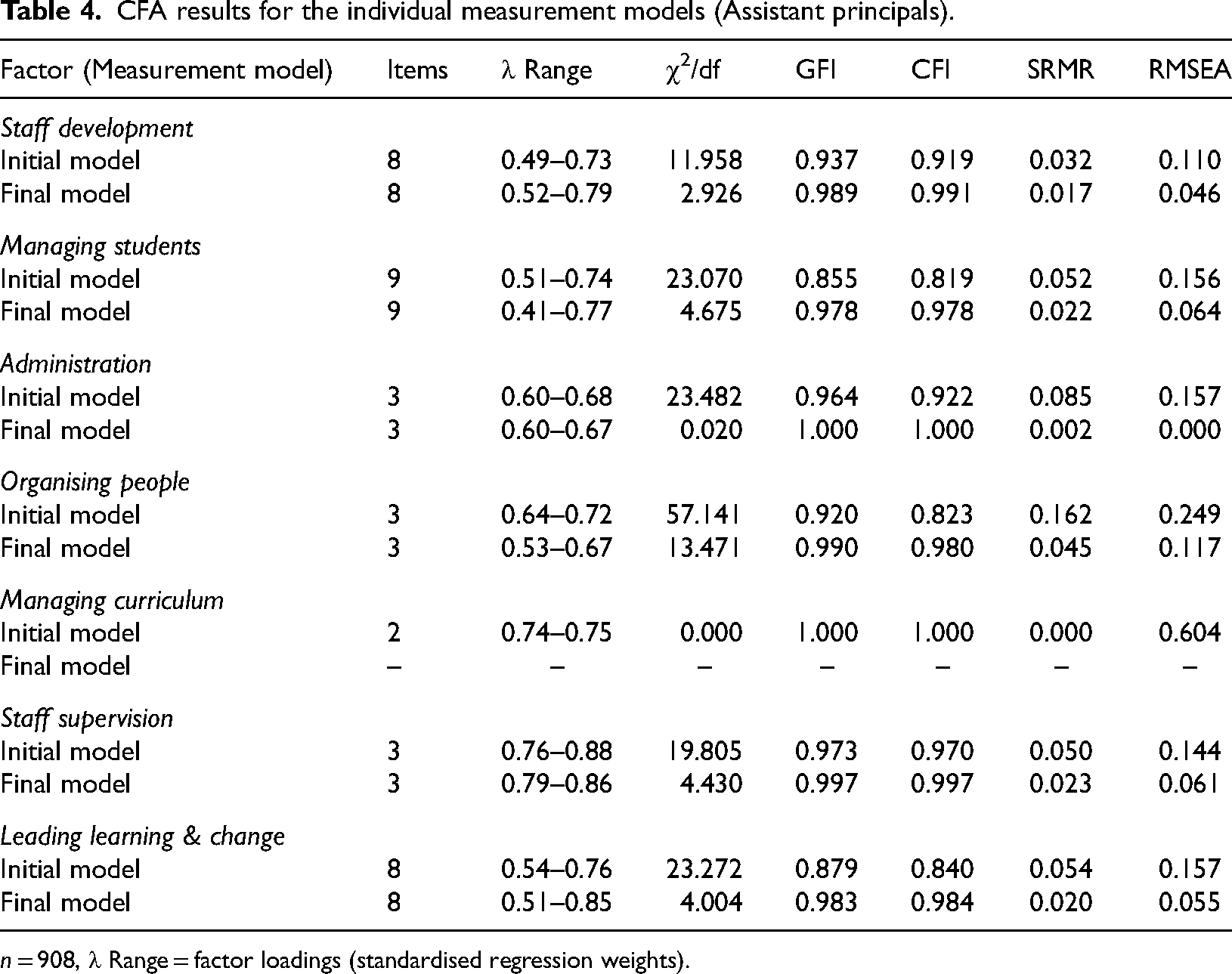
n = 908, λ Range = factor loadings (standardised regression weights).
The combined seven-factor model was then submitted to a similar CFA procedure. For the initial model (Model 1), all middle leadership roles were allowed to be correlated in line with the post EFA analyses. No other specifications were made. The results of these analyses are presented in Table 5. The final model is shown in Figure 1.
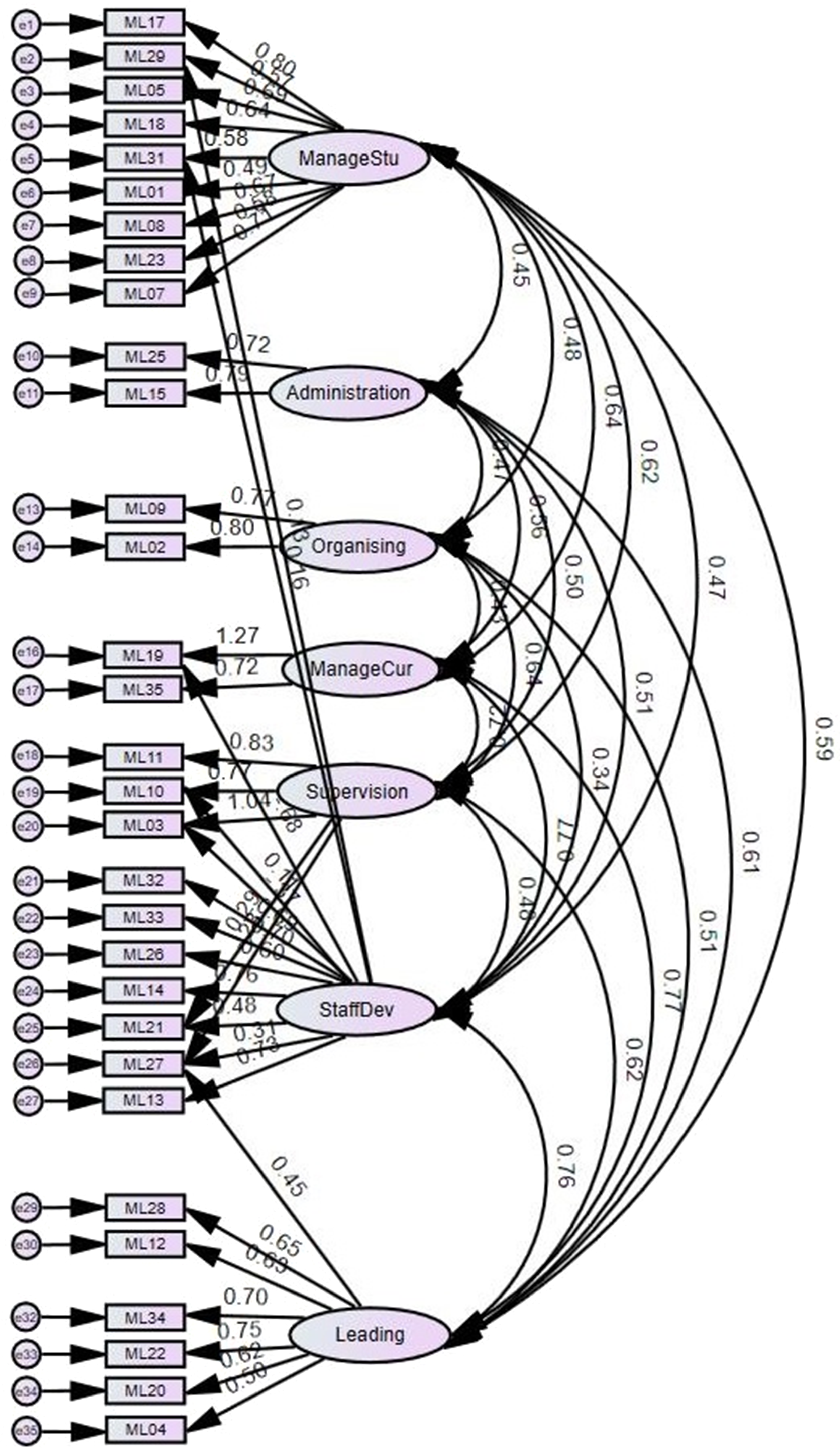
Final model of middle leadership roles for assistant principals.
CFA results for assistant principal roles.
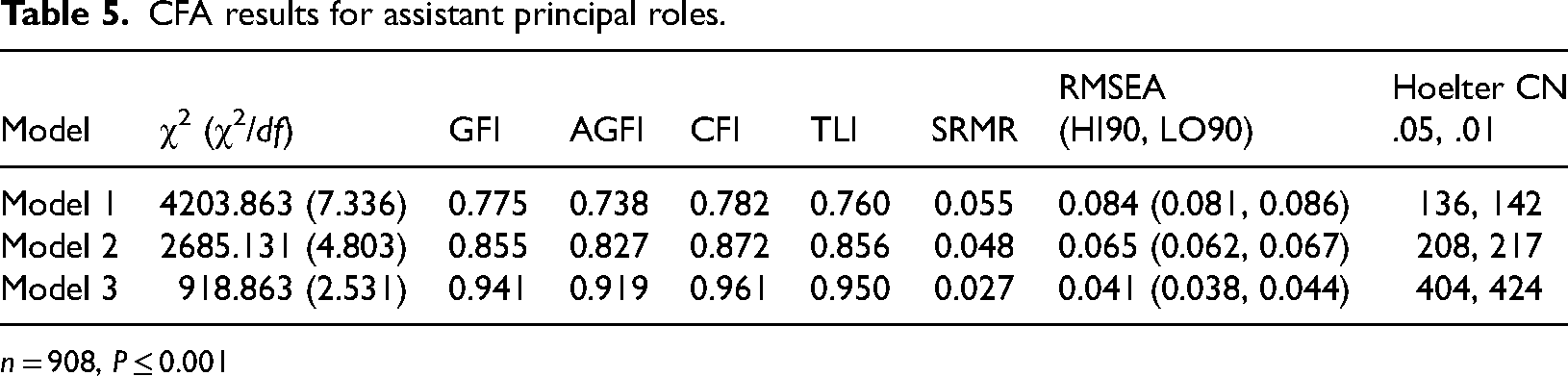
n = 908, P ≤ 0.001
Fit indices for the initial model indicated a poor fit and examination of the SRC matrix along with the MIs suggested that some re-specifications were needed (Byrne, 2016). Ultimately, three types of model re-specification were needed: error co-variances, allowances for cross-loaded items and item removals. Only changes that made sense theoretically were enacted in accordance with guidelines suggested by Byrne (2016) and Hooper et al. (2008).
Allowing additional error co-variances were the predominant re-specifications made and they improved fit considerably (Model 2). For example, it made sense to link error terms for ML27 (concerning facilitating professional development for staff) and ML 04 (concerning leading staff professional learning) (e26 < - > e35, r = 0.55, P < 0.001) as both items address leadership of professional development. Likewise, linking the error terms for ML03 (concerning supervising a grade or stage) and ML23 (concerning addressing student behaviour) reflected a key task middle leaders may encounter when coordinating a cohort (e20 < - > e8, r = 0.20, P < 0.001).
Specifying items from one factor to cross-load on to another factor as an additional parameter in a model is acceptable so long as there is theoretical logic to such associations (Byrne, 2016) and are indeed useful to explain intricacies and nuances of multifactor models (Marsh et al., 2014). Eight such specifications were made, and five of these were cross-loads with Staff development, so these are addressed first. ML19 concerning implementing curriculum loaded strongly on to Staff development (λ = −0.68), the negative direction suggesting an appropriate dichotomy: one is either developing staff or implementing curriculum at any one time and the association was probably a result of response patterns (Byrne, 2016). This logic may also be applied to the loading of ML03 concerning supervision of staff from a grade/stage (λ = −0.37). Two other cross-loadings to Staff development were much weaker suggesting that liaison between student home and school (ML31, λ = 0.16), and assisting students with academic issues (ML29, (λ = 0.13), might be a focus of staff professional learning. The contribution of ML10 concerning monitoring staff performance (λ = 0.11) made obvious logical sense. The next two cross-loadings were to Supervision, and both items were part of Staff development. The loading of ML21 concerning discussion of aspects of work (λ = 0.29) and ML27 concerning facilitating professional development (λ = 0.23) simply provide further evidence of the link between middle leader involvement in developing staff as well as supervising them. The final cross-loading examined, between ML27 and Leading learning & change (λ = 0.45), logically reflects the facilitation of professional development as leadership behaviour perceived from Staff development activity.
Five items (ML06, ML16, ML24, ML30 and ML36) were removed from the model for APs. In each case, the removal was based on SRC and MIs that indicated cross-loadings on all or most factors, or high interactions (co-variances) with other items. In each case, removal improved overall model fit. These results provided support for the study hypothesis in relation to APs, with the additional seventh factor retained.
Head teachers
Confirmatory factor analyses for HTs were conducted exactly the same way as for APs. Removing cases with missing data left 883 HTs in the dataset. Very good fit was achieved for all the measurement models. Low item numbers and degree of freedom limitations prevented alternative models for Managing curriculum and Staff supervision. For the latter, though, there were no cases for re-specification within the SRC Matrix or MIs. Results of CFA or measurement models are presented in Table 6. Results of the CFA for combined model are presented in Table 7. The final model is shown in Figure 2.
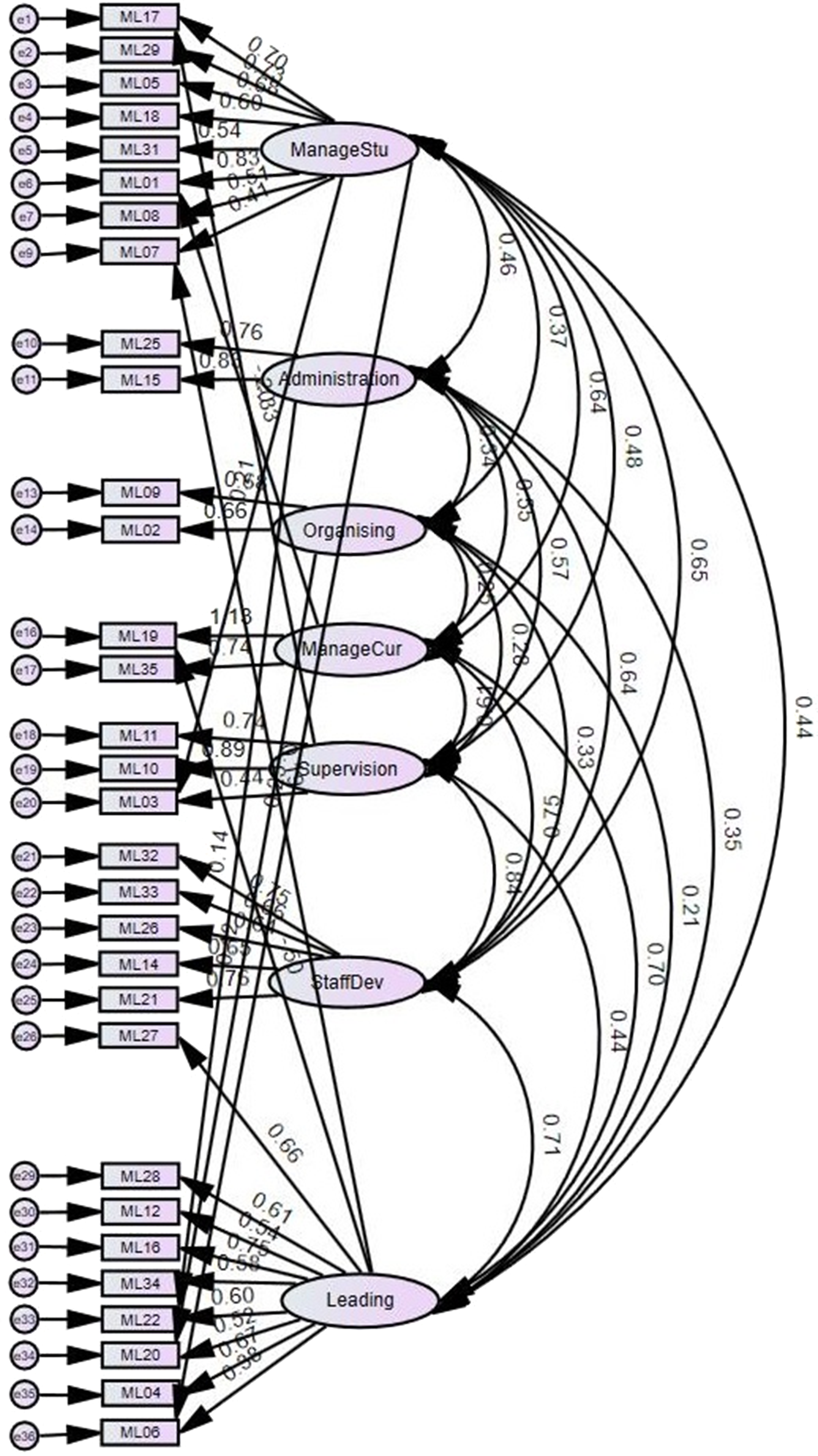
Final model of middle leadership roles for head teachers.
CFA results for the individual measurement models (Head teachers).
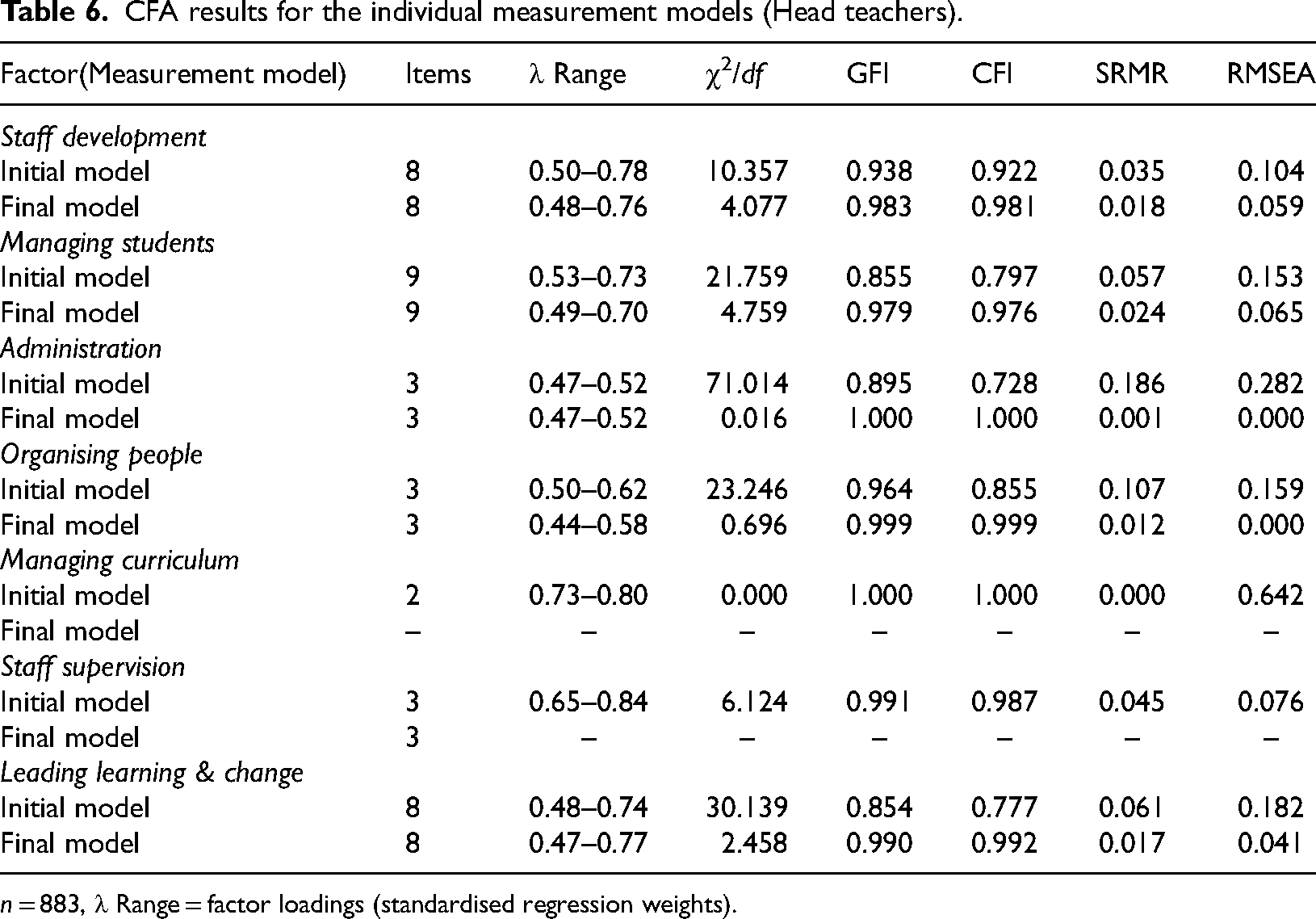
n = 883, λ Range = factor loadings (standardised regression weights).
CFA results for head teacher roles.
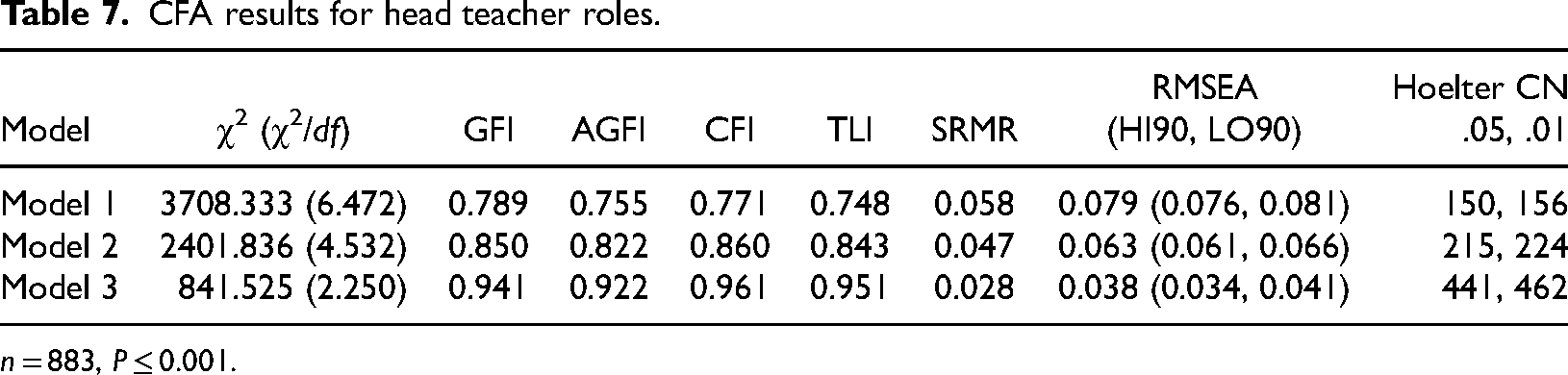
n = 883, P ≤ 0.001.
The initial combined model (Model 1) did not achieve satisfactory goodness of fit. As with APs re-specifications involving error co-variances, cross-loaded items and item removals were necessary. Model 2 represented the model prior to cross-load re-specification and item removals. Error co-variances were similar to those for APs. However, cross-loadings were different.
Three items cross-loaded with Leading learning & change. As was the case for APs, ML27 (λ = 0.66) suggested facilitation of PD was associated with leading as well as staff development. The cross-loading of ML19, concerning implementing curriculum (λ = −0.50), suggests a perception of leadership as dichotomous to curriculum work. The association of ML07, concerning student progress data (λ = 0.19), suggests HTs associated this task with leading as well. Two items were cross-loaded to Managing students. ML06 about establishing goals (λ = 0.23) and ML03 concerning supervision of staff from a cohort (λ = 0.20) suggesting perceptions of wider responsibilities relating to student management in the minds of HTs. While ML01 (‘Helping students’) was allowed to be cross-loaded to Managing Curriculum due to high a MI reading, the negative direction seems to confirm these are dichotomous, and therefore of little concern to the overall model (λ = −0.33). The cross-loading of ML17 to Staff supervision (λ = −0.21) was also negative and therefore considered dichotomous. The cross-loading of ML22, concerning establishing vision, on to Administration (λ = 0.14) and ML20, concerning organising teams or committees to Organising people (λ = 0.12) were minor, but made sense theoretically, especially the latter.
Five item removals were necessitated due to cross-loadings on several factors, or high interactions (co-variances) with other items. As with APs, ML24, ML30 and ML36 required removal. In contrast to the AP model, ML13 and ML23 were removed. All of these items except ML23 had loaded low on their factors in the EFA. The removal of ML23, due to exceptionally high MIs improved fit considerably and led to the final model (Model 3). These results provided further support for the study hypothesis in relation to HTs, with the additional seventh factor retained.
While the models are presented diagrammatically here (with error co-variances hidden for clarity), the loading, average variance explained and composite reliability statistics for each combined model can be found in Appendix B. We note that while CR figures were robust, some AVE indices were just below the recommended threshold of 0.50, suggesting the items accounted for less than half of total variance (Hair et al., 2019). However, the lower indices are likely an artefact of large number of items as reported by Peterson et al. (2020).
Discussion
This study confirmed the existence of salient middle leadership roles. Factor analyses established and confirmed a seven-factor model of school middle leader roles that included one distinctly focussed on curriculum. While a curriculum centred role makes sense, especially in relation to HTs, there was little evidence found in the literature that underpinned the MLiS model. Perhaps it is taken for granted. For example, Dinham's (2007) study reported on the roles department heads play in planning and programming, but the findings concentrated on organising and planning rather than specifically implementing curriculum. Hammersley–Fletcher's earlier study of subject leaders found this to be a task that ‘only a minority’ carried out (2002, p.411). This explains why curriculum work was subsumed within a theorised ‘Organisational’ role (De Nobile, 2019).
The findings reported here, however, make clear that management of curriculum is a role not to be ignored or subsumed. This appears to be supported by the recent work by Grootenboer et al., who assert that middle leaders are ‘intimately involved’ in such work (2020, p.6). While Dinham's work and the nomenclature of HTs used in schools (such as Heads of subject) make the curriculum role obvious for those middle leaders, there is far less evidence of a curriculum role for APs or their equivalents in other jurisdictions in primary schools. It is evident from this study that curriculum centred work is a salient role for APs too.
The high engagement reported in Managing curriculum and Managing students, along with Staff supervision suggests that APs and HTs are focussed on teaching and learning. We were not looking for evidence of this specifically. However, it was hard to ignore the congruence of the roles mentioned with key aspects of leading teaching and learning. We therefore assert that the findings support the sometimes overlooked possibility that middle leaders are predominately leading teaching and learning in schools (Lillejord and Borte, 2020; Lipscombe et al., 2021). Similarly, the high engagement reported in Staff development, Leading learning & change, and Staff Supervision suggest, as others have reported (Grice, 2019; Lipscombe et al., 2019), that middle leaders operate across multiple sub-cultures and shape educational development across various spheres of influence.
The inter-correlations among middle leader roles reported from EFA, and evident in the final models for both APs and HTs emerging from CFA provide evidence for co-dependency of middle leadership roles (De Nobile, 2019). The implication here is that professional learning efforts aimed at developing both aspirant and appointed middle leaders should address all of them with equal importance and the same applies to recruitment criteria and role descriptions. Indeed, there is currently very limited policy guidance on what is expected of middle leaders in Australian schools (Lipscombe et al.,, 2020b).
Apart from contributing a seven-role model, the findings provide a first step towards validation of the MLRQ-SE as a measure of middle leadership roles. Further research utilising the MLRQ-SE is necessary to establish its validity across contexts. This would ideally include studies conducted in other Australian states and, indeed, other countries, as middle leaders operate in schools all over the world. A clear implication of this further work is that items might need to be reworded or changed to reflect the given contexts. The instrument can, nevertheless, be contextually adapted not only to measure the extent to which roles are performed or are inter-correlated but also to explore relationships between roles and other variables such as student achievement or teacher attitudes (De Nobile, 2021) subsequently contributing to theory-building about the nature of middle leadership.
The removal of items during CFA for each model should not suggest these items are unsuitable, as there were differences between APs and HTs. Indeed, there is expectation that items will be ‘lost’ in CFA modelling (Byrne, 2016) and that item removals can differ between populations (Sellbom and Tellegen, 2019). Likewise, the inter-correlations mentioned previously should not reflect on the quality of items (Marsh et al., 2014). They will, however, likely trigger model re-specifications by way of error co-variances and item cross-loadings for researchers wishing to use the MLRQ-SE for CFA modelling (Hooper et al., 2008).
Although a seven-factor model was confirmed for both APs and HTs, the CFA models suggest that the two groups experience the roles differently. This was evident through the variation in inter-correlations as well as the different cross-load patterns between the two groups. One example of this was the association of items concerning establishing goals and supervising staff with Managing students for HTs. Another was the intricate linkages between Staff supervision and Staff development for APs. It makes sense that nuances exist here because APs operate in primary schools and work mainly with age cohorts, while HTs work in secondary schools and typically focus on subject areas (De Nobile, 2018; Lipscombe et al.,, 2020c). Given this, and the nature of the roles that emerged in the factor analyses, a case is made for leadership development and recruitment policies and related procedures to be nuanced to the specific promotion positions and for specific capabilities related to leading learning, including relational skills, to be emphasised.
What the results of this study don’t uncover are more detailed descriptions of how, when and why each role is performed. There is also a need to ensure the theory underpinning the instrument encompasses the fullest possible range of roles. Future research should, therefore, include qualitative studies of middle leaders to develop deep descriptions of their roles and better understand the nuances among formal middle leadership positions. Future research involving the MLRQ-SE should be informed by inductive qualitative studies so that any ‘undiscovered’ roles can be identified. Indeed, the suggestion from the emergent factor structure is that future iterations of the instrument include at least 2–3 more items concerning curriculum centred work.
While the findings of this study make an empirical contribution to knowledge and particularly theory about middle leadership roles, two clear implications for theory building stand out. First, it might be wise to revise the MLiS model pertaining to roles so that ‘seven plus’ roles are indicated. This would account for the curriculum centred role as well as possible other roles discovered in the qualitative research suggested above. Second, any model of middle leadership roles should account for the interrelatedness among the roles. These theoretical revisions would then better align to the reality of middle leadership for APs and HTs at the very least.
Conclusion
The aims of our study were to engage in use of an instrument to measure middle leadership roles and ‘test’ a theoretical framework of these roles. The results confirmed a seven-factor model of salient middle leadership roles and provided evidence of reliable scales derived from the MLRQ-SE. We do acknowledge that the sample was derived from one educational system, despite the existence of several government school systems and indeed non-government school groupings in Australia and that this might be viewed as a limitation. The findings, nevertheless, contribute to broader understandings of middle leadership roles. Implications for policy and practice include recognition of the importance of a curriculum centred role for APs as well as HTs, recognition that the roles are interrelated and co-dependent and, therefore, that all roles should be given equal importance in leadership development and recruitment efforts.
This research has established the MLRQ-SE as a reliable instrument that can be adapted and used to investigate middle leadership roles in future research notwithstanding the limited sample reported here. The instrument can be used simply to examine the extent to which middle leaders engage in various roles, or to probe more deeply into the nuances of those roles by exploring variation between items representing each role (Lipscombe et al., 2020b). The findings also suggest that future research and theory building should focus on the possibilities for other roles with the aid of qualitative research designs, as well as accounting for and further investigating how the roles interact. This further work should be aimed at achieving greater theoretical clarity for middle leadership at a time when their work in schools becomes ever more important.
Footnotes
Acknowledgements
The authors would like to thank Vincent Char for his assistance with the CFA modelling.
Declaration of conflicting interests
The authors declared no potential conflicts of interest with respect to the research, authorship, and/or publication of this article.
Funding
The authors disclosed receipt of the following financial support for the research, authorship, and/or publication of this article: This research was supported with funding from the New South Wales Department of Education.

Author biographies
Appendix A: Full factor solution for the MLRQ-SE.
| Item | Factor (Cronbach α) |
Loading |
|---|---|---|
| F1 | Staff development (α = 0.86) | |
| ML32 | Providing feedback to staff members about work done | 0.69 |
| ML33 | Helping staff members with aspects of their work | 0.65 |
| ML26 | Engaging in classroom observations of teachers | 0.55 |
| ML14 | Mentoring staff members | 0.48 |
| ML21 | Discussing aspects of work performance with staff | 0.45 |
| ML27 | Facilitating professional development for staff | 0.43 |
| ML13 | Demonstrating procedures and/or techniques for other staff | 0.37 |
| ML36 | Involvement in staff induction | 0.27 |
| F2 | Managing students (α = 0.86) | |
| ML17 | Meeting with students about personal issues | 0.73 |
| ML29 | Assisting students with academic issues | 0.63 |
| ML05 | Meeting with students about academic issues | 0.61 |
| ML18 | Creation and/or maintenance of records relating to student behaviour, achievement or other student data | 0.59 |
| ML31 | Liaison between student's home and school | 0.59 |
| ML01 | Helping students | 0.56 |
| ML08 | Being responsible for records of student behaviour, academic progress or other student data | 0.52 |
| ML23 | Dealing with student behaviour | 0.51 |
| ML07 | Creation and/or maintenance of information/data relating to student progress | 0.35 |
| F3 | Administration (α = 0.66) | |
| ML25 | Arranging orders and purchases | 0.75 |
| ML15 | Keeping inventory of resources and/or equipment | 0.74 |
| ML24 | Creation/modification of forms, proformas and other admin tools | 0.29 |
| F4 | Organising people (α = 0.69) | |
| ML09 | Organising timetables for relief teachers or guest staff | 0.74 |
| ML02 | Organising rosters | 0.72 |
| ML30 | Organising agendas and itineraries for special days or events | 0.35 |
| F5 | Managing curriculum (α = 0.77) | |
| ML19 | Implementing curriculum | 0.70 |
| ML35 | Planning curriculum with other teachers | 0.66 |
| F6 | Staff supervision (α = 0.80) | |
| ML11 | Supervising staff members | 0.80 |
| ML10 | Monitoring the performance of staff | 0.64 |
| ML03 | Supervising staff in a year/grade or stage | 0.58 |
| F7 | Leading Learning & Change (α = 0.86) | |
| ML28 | Heading whole-school policy change | 0.78 |
| ML12 | Creating or changing whole-school policy | 0.78 |
| ML16 | Leading innovation and change | 0.58 |
| ML34 | Heading teams or committees | 0.56 |
| ML22 | Establishing a vision for area of responsibility | 0.47 |
| ML20 | Organising a team or committee | 0.44 |
| ML04 | Leading staff professional learning | 0.37 |
| ML06 | Establishing goals for area of responsibility | 0.27 |