



Abstract
Instructional quality is a hot topic in education. Among the possible factors that can influence instructional quality, distributed leadership has emerged as a particularly influential factor at the school level. This study argues that distributed leadership relies on teachers taking autonomous responsibility and engaging in innovative practices. However, few studies have investigated the impact of distributed leadership on instructional quality through teacher autonomy or innovativeness. As such, we developed and tested a multilevel mediation model to examine teacher autonomy and teacher innovativeness as mediators in the relationship between distributed leadership and instructional quality. We used hierarchical linear modeling to analyze data from the 2018 Teaching and Learning International Survey, which includes responses from 2451 senior high school teachers in Taiwan. The results indicate that distributed leadership negatively affected instructional quality but positively influenced teacher autonomy and teacher innovativeness. Teacher autonomy and teacher innovativeness directly contribute to instructional quality, acting as competitive partial mediators in the relationship between distributed leadership and instructional quality. This study's findings provide evidence for understanding the association between distributed leadership and instructional quality at the high school level in Taiwan. Moreover, this study suggests that teachers’ autonomy and innovativeness effectively enhance instructional quality.
Introduction
Amid global change, Taiwan has actively reshaped its educational framework, including leadership, curriculum, pedagogy, and assessment, to enhance instructional quality and promote students’ adaptability (Pan et al., 2017; 2020). The importance of instructional quality in student outcomes and development is widely recognized (Holzberger and Schiepe-Tiska, 2021). Furthermore, the literature indicates that school- and teacher-related factors can impact instructional quality (Doğan and Yurtseven, 2018).
Effective leadership is a crucial factor in enhancing teacher professional development, instructional quality, and overall school success (Bellibaş et al., 2021; Kemethofer et al., 2022). To improve educational quality and equity, many school leadership systems worldwide are transitioning from formal administrative to collaborative leadership focused on working with teachers and staff to improve school outcomes (Kemethofer et al., 2022; Pont, 2020). Therefore, distributed leadership, which allows principals to share leadership and empower teachers, has gained popularity in the 21st century (Or and Berkovich, 2021).
Distributed leadership can be applied to enhance teaching (Pont, 2020), with formal leadership (e.g., principals) impacting instruction through informal leadership (e.g., teachers) channels (Liu and Werblow, 2019; Tian and Virtanen, 2021). First, the core element of distributed leadership, “expert authority,” enables teachers to assume the responsibility of leadership, allowing them to have sufficient, free, and independent power to make decisions and address events (Copland, 2003). Following social identity theory, when teachers are empowered by and feel that the collective recognizes and respects their values, they will take more initiative to create shared value (Tajfel, 1974). Empirical studies have found a significant positive impact of distributed leadership on teacher autonomy (Lin, 2022; Liu et al., 2021). Moreover, teacher autonomy is essential for encouraging teacher collaboration and professional learning, positively improving instructional quality (Nguyen et al., 2021). Building upon this context, Guo and Wang (2021) found that teacher autonomy significantly positively predicts instructional quality. Second, as a dynamic process focusing on the interplay among leaders, followers, and situations (Spillane, 2005), leaders can foster innovation by gaining the trust and support of their followers (Hogg, 2001). Based on the social identity approach regarding staff within this dynamic group of power flow, the more they feel a sense of belonging and identification, the likelier they are to engage in innovative outcomes (Barattucci et al., 2021; Dai, 2023). Buyukgoze et al. (2022) reported that distributed leadership affects teacher innovativeness directly and indirectly and is mediated by job satisfaction and professional collaboration. Furthermore, teacher innovativeness is also recognized as the main factor in improving instructional quality (Nguyen et al., 2021; Serdyukov, 2017).
The literature mentioned above indicates that teacher autonomy and teacher innovativeness are strongly linked to distributed leadership and instructional quality. However, the outcomes of distributed leadership vary across different countries/regions, and, in some cases, the results are negative (Bush and Ng, 2019; Liu and Werblow, 2019), presenting both opportunities and challenges (Harris, 2013). In Australia, Keddie et al. (2022) found that under distributed leadership, teachers reported a negative experience with autonomy. Most past research on distributed leadership is based on Western individualistic contexts, with limited exploration in Asian settings (Liu et al., 2022a; Lu, 2022). The effectiveness of distributed leadership in Taiwan—whether it can achieve the desired improvement in instructional quality—requires in-depth investigation.
Therefore, the present study sought to answer two questions: (1) To what extent does distributed leadership directly impact instructional quality? (2) To what extent do teacher autonomy and teacher innovativeness mediate the effect of distributed leadership on instructional quality? Figure 1 presents this study's overall research model.
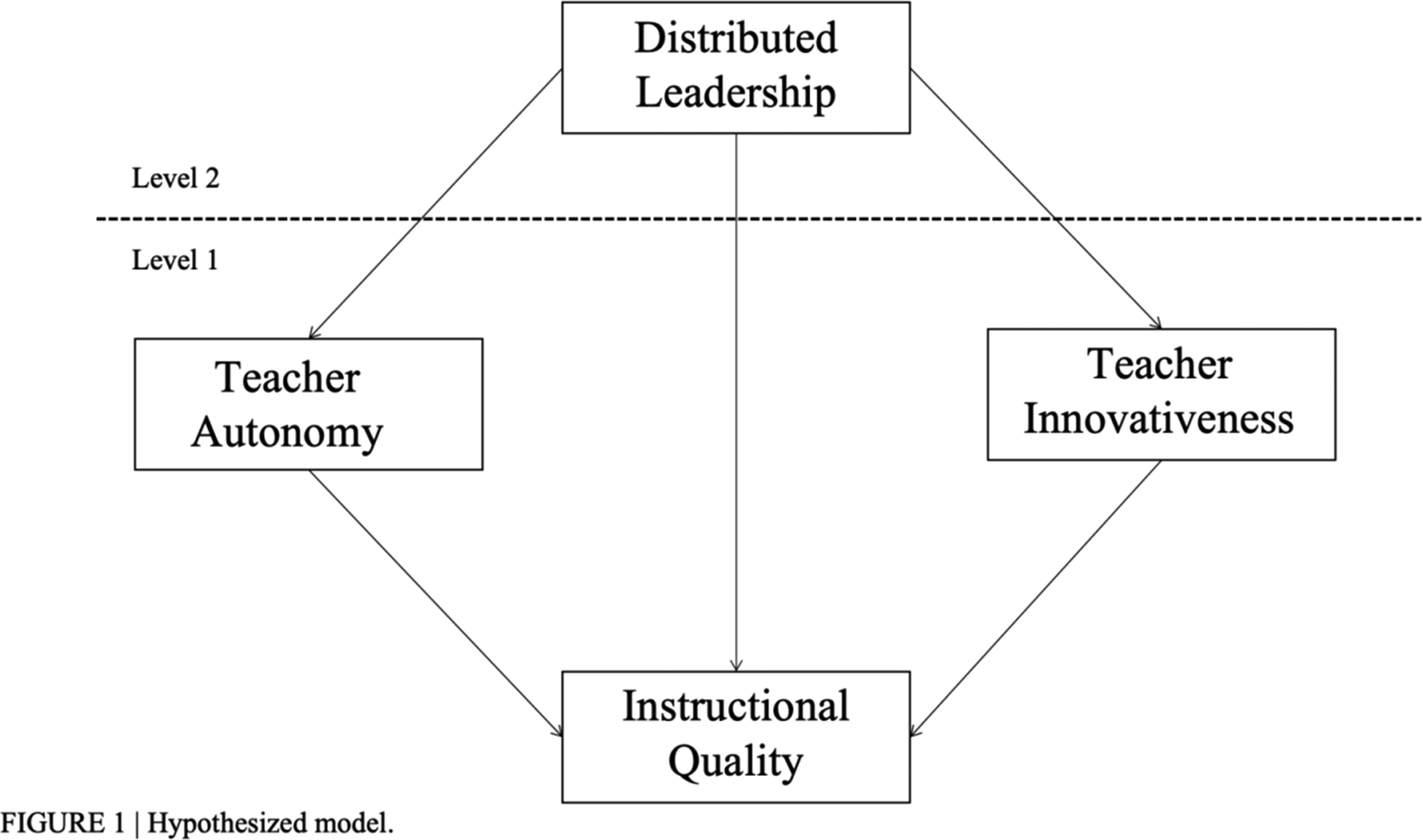
Hypothesized model.
The following section describes the context of Taiwan's high schools and establishes the theoretical foundation of this research.
Research context: Senior high schools in Taiwan
During the 1990s, Taiwan embarked on a series of reforms focused on relaxing and decentralizing its system, which has profoundly impacted the roles of teachers, school leadership, and power structures (Pan et al., 2017). Meanwhile, Taiwan's increasing immigrant population and cultural diversity have led its education sector to embrace a broader range of values and complex behaviors. Traditional principal-centered leadership may struggle to navigate these diverse, intricate school environments (Chen et al., 2017). Therefore, despite the primary responsibility of education resting on principals, decision-making authority is now being shared among principals, teachers, and parents (Chen, 2008; Pan et al., 2017). Research suggests that in Taiwan, school principals are presently adopting distributed leadership by sharing administrative authority with their teams (Hsieh and Weng, 2019). While distributed leadership originated in Western contexts, it is being adopted within schools at various stages in Taiwan's changing educational landscape.
Taiwan's education system is continually undergoing reform and development. The 12-Year Basic Education Policy Curriculum Guidelines, with its core principles of voluntarism, interaction, and mutual benefit, are intended to enhance instructional quality while achieving holistic education (NAER, 2014). In a decentralized context, the Ministry of Education is improving teachers’ autonomy and innovativeness in school curriculum development (Pan et al., 2020). Taiwan's education system is transforming from a traditional, centralized, campus-based, conservative structure to a more diversified, decentralized, community-oriented, and innovative environment (Hung and Li, 2017).
Research on the global implementation of distributed leadership in various countries/regions needs to be more extensive to enhance our understanding (Liu and Werblow, 2019). Taiwan participated in Teaching and Learning International Survey (TALIS) for the first time in the International Standard Classification of Education 1, 2, and 3 2018 surveys (corresponding to elementary, middle, and high school education levels, respectively). The survey results can provide a deeper understanding of the implementation of distributed leadership in Taiwan within the context of diverse cultures. Thus, to some extent, the data of TALIS address existing research gaps. Most research on distributed leadership in Taiwan centers on primary and junior high schools. However, Or and Berkovich (2021) indicate that high schools, being larger and more complex than primary schools, are ideal settings for exploring distributed leadership. Taiwan's senior high school curriculum is the most complex among its education curricula: students aspiring to be admitted into a top-ranking university is a factor in evaluating instructional quality. Therefore, we have selected the high school level as the scope of this study's research.
Theoretical foundation: Social identity theory
This study's theoretical foundation draws upon Tajfel's (1974) and Hogg's (2001) social identity theory. Social identity theory explores how group membership affects individual social behavior and how it is connected to dynamic aspects of environmental structures (Hogg et al., 1995). Social identity is established through social categorization, social comparison, and the principle of positive distinctiveness (Tajfel, 1982). Previous studies have used social identity theory to elucidate the impact of leadership practices (Barattucci et al., 2021; Edwards, 2011; Hogg, 2001), while noting that leadership can be influenced by how group members categorize themselves. Those who classify themselves as fitting expected group characteristics (prototypical members) typically have a stronger sense of identification and display more prominent group behaviors. These behaviors include increased conformity, higher in-group loyalty, and a greater willingness to serve the group. Under the previous heroic leadership model, teachers might have been compelled to perform specific tasks (Spillane, 2005). When they identified with such a social identity and context, their individual autonomy was constrained.
However, when employees perceive themselves as part of a caring and supportive organization, this support facilitates the cultivation of essential self-reflective attitudes, skills, and autonomy (Johnston, 2017). Specifically, while employees perceive themselves, their colleagues, and formal leaders as belonging to a homogeneous social category, and when empowerment is regarded as supportive and grounded in collective contributions, employees appear to be more proactive in connecting with their organization, resulting in positive work outcomes (Barattucci et al., 2021). Furthermore, when employees identify as part of a group, their behaviors and objectives tend to align more closely with the characteristics of that group (Barattucci et al., 2021). Taiwan's Curriculum Guidelines of the 12-Year Basic Education Policy focus on improving educational quality and promoting innovative teaching (NAER, 2014). If teachers have a stronger sense of identification with their school, they will exhibit more innovative behavior and strive to improve teaching quality (Hung and Li, 2017). Research indicates that in Asian Pacific educational contexts, support, and recognition from school principals are considered more crucial for the effectively implementing distributed leadership than monetary rewards or job promotions (Tian and Virtanen, 2021).
Literature review and hypotheses
First, this section conceptualizes the study variables. Second, the impact of distributed leadership on instructional quality is examined, and the potential mediating roles of teacher autonomy and innovativeness in this relationship are also elaborated. Finally, we formulate the research hypotheses after discussing each variable.
The relationship between distributed leadership and instructional quality
Instructional quality
Instructional quality has been divided into different dimensions by various scholars. For example, Doğan and Yurtseven (2018) consider (a) effective classroom management, (b) a supportive student-centered classroom environment, and (c) cognitive activation with challenging content as the three critical dimensions of instructional quality. Building on definitions from previous scholars, Bellibaş et al. (2021) further delineated instructional quality into four main dimensions: (a) communicating with students, (b) using question and discussion techniques, (c) actively engaging students in the learning process, and (d) incorporating assessment into instruction. As such, instructional quality primarily reflects how teachers behave in class and consistently affects students’ cognitive and noncognitive outcomes (Pohle et al., 2022).
Instructional quality is generally considered the driving force of students’ motivational beliefs and achievements (Burić and Kim, 2020). However, despite the global empirical data that establish a connection between instructional quality and student performance, few systematic empirical inquiries have investigated the factors explaining instructional quality within the context of educational reform (Doğan and Yurtseven, 2018).
The conceptualization of instructional quality in the present study is informed by the data we utilized and the synthesis conducted by Bellibaş et al. (2021). Instructional quality refers to the extent to which teachers craft good questions for their students, make clear expectations, use various assessment strategies, have students follow the rules, provide alternative explanations when students are confused, apply diverse instructional strategies, motivate students, etc. (Bellibaş et al., 2021).
Distributed leadership
Distributed leadership is an organizational theory that emerged in the late twentieth century and gained scholarly attention from the mid-1990s onward (Copland, 2003; Timperley, 2005). In this context, Mayrowetz (2008) posits that the positive impact of distributed leadership is evident in its ability to promote democracy, enhance efficiency and effectiveness, and foster human capacity development. She also highlights that these uses have advantages and disadvantages, requiring further inquiry by future scholars (Mayrowetz, 2008). Synthesizing prior research, the nature of distributed leadership can be highlighted as follows: (1) Expert authority, which recognizes expertise rather than a formal position as the basis of leadership authority in groups (Copland, 2003); (2) Collective interaction, which allows multiple staff members and stakeholders to participate in decision-making processes as a team: when interacting with others, the result is more than any one leader could contribute (Timperley, 2005); (3) Spanning power boundaries: “stretching” over allocates leadership capacity, empowers staff, and shares the decision-making, promoting interdependency (Amzat et al., 2022; Bellibaş et al., 2021).
Spillane et al. (2001) highlight that distributed leadership involves leaders, followers, and situations. They emphasize that it is not leadership at the individual level but to understand leadership practice, we should consider the practitioner's perspective and “theories in use” (Spillane et al., 2001). Therefore, in the school context, distributed leadership is defined as an interdependent, power-sharing, interaction including collaborative activities among formal school leaders (e.g., principals, department chairs, and instructional coaches) assigned specific roles.
Although the definition of distributed leadership is still under discussion, it is widely recognized as an alternative to various leadership models, particularly regarding school leadership (Amzat et al., 2022). Liu et al. (2018) summarized that research on distributed leadership within schools over the past decade has encompassed definitions, classification, formation, stimulus, and various related factors. Distributed leadership plays a vital role in reinforcing school outcomes through its influence on teachers’ professional collaboration (Lin, 2022), professional development (Amzat et al., 2022), and job satisfaction (Bellibaş et al., 2021). However, some scholars have highlighted that in different cultural contexts, members may display varying interpretations and implementation of distributed leadership (Pont, 2020; Or and Berkovich, 2021), which can potentially have negative effects on school outcomes (Keddie and MacDonald, 2022; Liu and Werblow, 2019). The effectiveness of distributed leadership implementation needs further validation in various cultural contexts.
Most research on distributed leadership within schools is rooted in Western individualistic settings (Liu et al., 2022a; Or and Berkovich, 2021). There is insufficient knowledge regarding distributed leadership in Confucian-influenced and large-scale schools, particularly in non-Western educational environments characterized by collectivist cultures (Liu et al., 2022a; Lu, 2022). Within the modernization process of Taiwan society, a certain degree of individualism has emerged, though Taiwan still predominantly maintains a collective culture (Ali et al., 2005). Therefore, studying the impact of distributed leadership in Taiwan is essential, where Confucian cultural traditions prevail alongside a predominant collective culture and coexist with a democratic culture. This inquiry can provide deeper insight into implementing distributed leadership.
Drawing upon the above definitions, the present study conceptualizes distributed leadership as the capacity of schools to involve multiple school staff members and stakeholders in decision-making processes while working as a team, building relationships, and empowering interdependency (Amzat et al., 2022; Bellibaş et al., 2021).
Distributed leadership and instructional quality
It is challenging for individual teachers to manage their classrooms effectively and provide instructional support without extensive collaboration and support from colleagues and principals (Holzberger and Schiepe-Tiska, 2021). Therefore, appropriate leadership should consider ways to improve instructional quality. The present study proposes that distributed leadership may influence instructional quality for three reasons. First, the quality and distribution of leadership functions increase interactions and collaboration among organizational members, which enhances teacher job involvement and is crucial for transforming instructional quality (Hulpia et al., 2012). Second, principals engaging teachers and students during school decision-making enhances their satisfaction, such as teachers thinking of themselves as the masters of the school, which motivates teachers to participate (Bellibaş et al., 2021). Third, based on social identity theory (Tajfel, 1974), when teachers believe that their organization respects everyone's ideas and actions and acknowledges that everyone can be a leader and are indispensable to the collective, they will behave autonomously and exert effort to produce high-quality instruction. Moreover, research indicates that when principals involve teachers in making school decisions, it can enhance instructional quality (Bellibaş et al., 2021). Based on the abovementioned empirical evidence, the following hypothesis is proposed. H1: Distributed leadership is significantly and positively related to instructional quality.
Teacher autonomy as a mediator
As many scholars acknowledge, teacher autonomy is an essential contributor to education development (Guo and Wang, 2021; Lin, 2022). Mausethagen and Mølstad (2015) identify teacher autonomy as encompassing pedagogical freedom and the ability to justify practices and local responsibility. Another definition of teacher autonomy (Vangrieken et al., 2017) includes self-governance, interdependence, personal choice processes, and promoting connectedness. This suggests that teachers are free to make decisions in lesson planning, topic selection, curriculum choices, textbook use, student assignments, goal setting, assessment, teaching methods, time management, and behavioral management (Vangrieken et al., 2017). The definition of teacher autonomy is multidimensional and dependent on specific circumstances (Salokangas and Wermke, 2020). The present study's definition of teacher autonomy was informed by the definition in TALIS 2018 and research regarding teacher autonomy based on the TALIS 2018 data. Thus, teacher autonomy refers to the degree of discretion or freedom teachers have in making decisions on various aspects of their teaching, including course content, teaching methods, assessment of student learning, and discipline issues (OECD, 2019a). These are the scope of action teachers employ as classroom professionals (Liu et al., 2021; Nguyen et al., 2021).
Teacher autonomy and instructional quality
Scholars have investigated different aspects of teacher autonomy, including job satisfaction, self-efficacy, collaboration, teachers’ working environment, instruction, and learner autonomy (Guo and Wang, 2021; Liu et al., 2021; Nguyen et al., 2021). Nguyen et al. (2021) found that teacher autonomy promotes teacher collaboration, which, in turn, enhances professional learning and ultimately improves instructional quality. Moreover, research suggests that teacher autonomy plays a pivotal role in improving education and instructional quality in mainland China (Wang et al., 2014). Thus, teacher autonomy is considered crucial in shaping the quality of their instruction.
Distributed leadership and teacher autonomy
Distributed leadership has been found to positively promote teacher autonomy when school management transfers some of its authority to teachers (Liu et al., 2021). The span of power boundaries provides formerly subordinate teachers more opportunities and authority, leading them to recategorize themselves within the group. When teachers categorize the school implementing distributed leadership as an “internal group,” they actively contribute to it (Edwards, 2011). Additionally, when principals involve more teachers in school decisions, it improves teachers’ connectedness; these collegial interactions serve as a positive foundation for work autonomy (Barattucci et al., 2021). This connection enhances teachers’ sense of shared identity and belonging with others, fostering greater identification with their profession and organization (Edwards, 2011). Prior studies indicate that teachers often perceive greater individual autonomy under distributed leadership (Lin, 2022; Liu et al., 2021).
According to these findings, the following hypotheses are proposed. H2: Distributed leadership is significantly and positively related to teacher autonomy. H3: Teacher autonomy is significantly and positively related to instructional quality. H4: Teacher autonomy mediates the relationship between distributed leadership and instructional quality.
Teacher innovativeness as a mediator
Innovation has been regarded as the cornerstone of contemporary education. In the myriad facets of educational innovation, teachers are deemed to be the most proactive facilitators due to the close correlation between their innovativeness and various activities within classrooms and schools (Buske, 2018; Nguyen et al., 2021). Teacher innovation refers to the generation and implementation of new ideas, teaching methods, and curriculum design in their work, which is crucial for distinguishing “stuck schools” from “moving schools” (Liu et al., 2022b). Serdyukov (2017) stated that innovation necessitates three primary stages: an idea, its execution, and the results that stem from implementing the concept, leading to change. The stages in innovation align with innovativeness (Buyukgoze et al., 2022). Hence, teacher innovativeness is crucial in creating an innovative working environment and achieving innovation (Anderson and West, 1998; Buyukgoze et al., 2022). Teacher innovativeness is a characteristic of the psychological and organizational climate (Blömeke et al., 2021). Moreover, it has received notable attention for its ability to connect organizational context and member behavior (Patterson et al., 2005).
Teacher innovativeness and instructional quality
This study conceptualizes teacher innovativeness as teachers’ openness, receptivity, adoption, and internalization of creative ideas and ongoing engagement in innovation-related professional practices (Lin, 2022; Nguyen et al., 2021). It is a vital factor in enhancing teacher performance, student academic achievement, and school development (Buske, 2018; Lin, 2022). Innovative teachers demonstrate greater creativity in their teaching and adapt their instruction and management techniques to align with students’ experiences and interests; they encourage active student participation and achieve more effective learning outcomes (Ucus and Acar, 2018). Teacher innovativeness can be defined as traits or characteristics at individual and organizational levels. Whether perceived by individual teachers or the entire school's teaching staff, the perception of innovation within a school enhances teachers’ practice for successful education (Blömeke et al., 2021). Thus, higher teachers’ innovativeness will promote greater teacher innovation and other practices that enhance instructional quality (Nguyen et al., 2021).
Distributed leadership and teacher innovativeness
Studies indicate that teacher innovativeness is shaped by both organizational and individual factors (Thurlings et al., 2015). Leadership is a critical factor in promoting teacher innovativeness (Buske, 2018; Spillane et al., 2004). Innovativeness can stem from various factors, including an organization's mission and vision, participative safety, support for innovation, task orientation, and interaction frequency (Anderson and West, 1998). It involves the coupling of complex thoughts in unique ways (Liu et al., 2022b), in which distributed leadership provides support for these factors. Research suggests that distributed leadership can enhance employee participation and job satisfaction through shared leadership, encouraging employees to think critically and propose new ideas and solutions, thus driving innovation and development (Jønsson et al., 2021). Furthermore, distributed leadership creates an environment of interaction and collaboration, fostering a sense of belonging to a shared community (Lin, 2022). Based on social identity theory, a sense of belonging increases teachers’ motivation to contribute to the collective (Hung and Li, 2017) and strive toward shared goals (Barattucci et al., 2021). Research also indicates that job motivation is a source of teacher innovativeness (Suharyati, 2017). Studies suggest that the distributed leadership of school leaders plays a crucial role and positively affects teacher innovativeness (Buyukgoze et al., 2022; Jønsson et al., 2021; Lin, 2022). Given the above, the following hypotheses are proposed. H5: Distributed leadership is significantly and positively related to teacher innovativeness. H6: Teacher innovativeness is significantly and positively related to instructional quality. H7: Teacher innovativeness mediates the relationship between distributed leadership and instructional quality.
Figure 1 presents the hypothesized model of the present study.
Methodology
Data source and sample
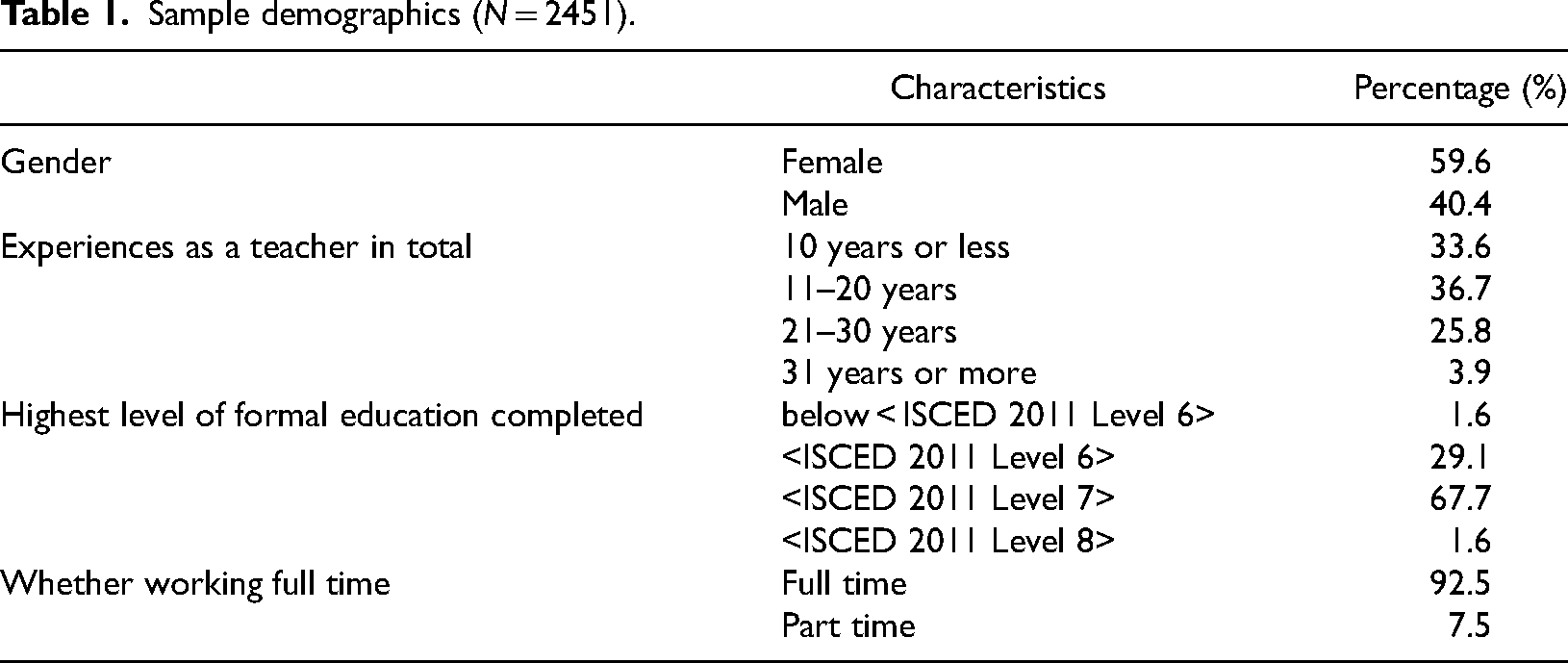
This study's secondary data analysis was conducted using the TALIS 2018 data. Teaching and Learning International Survey, a survey conducted by the Organization for Economic Cooperation and Development, provides international and cross-sectional data regarding teachers, teaching, and learning environments for researchers and policymakers (OECD, 2019a:12). The survey includes data from teachers and principals from primary schools (ISCED 1), lower secondary schools (ISCED 2), and high-secondary schools (ISCED 3) across 48 countries and economies. Participating countries and economies are authorized to administer the ISCED 2 core survey to teachers and principals under TALIS 2018 (OECD, 2019b:12), ensuring consistency across surveys. We selected the high school data constrained only within Taiwan, which included 2800 teachers. We used the “complete case analysis” method to address missing data. We selected this method due to challenges in confirming whether the missing values conform to a specific distribution or if incorporating them into the analysis may introduce potential biases (Rubin, 1976). This approach involves the deletion of individual data where any data are missing, and only surveys with complete data are employed for analysis. After eliminating responses with missing data, 2451 valid responses remained. The teachers’ demographics in this study are presented in Table 1.
Sample demographics (N = 2451).
Variables
This section describes the variables from TALIS 2018 used in this study. This is divided into three components: the dependent variable (instructional quality), the independent variable (distributed leadership), and the mediating variables (teacher autonomy, teacher innovativeness). All variables were based on the teachers’ responses. All items are presented in Appendix A.
Dependent variable
We identified several items in the TALIS 2018 teachers’ survey in the literature review to develop the instructional quality construct. These items have been used in previous research (Bellibaş et al., 2021) and align with this study's definition of instructional quality. In the 2018 TALIS teacher datasets, TT3G34A–TT3G34L (12 items, ω = 0.91) included questions asking teachers to what extent they conduct certain classroom activities. All items were answered on a four-point Likert-type scale, ranging from “not at all” to “a lot.” The Confirmatory Factor Analysis (CFA) results indicate a good model fit (GFI = .949; CFI = .953; AGFI = .919; RMSEA = .077; TLI = .937; SRMR = .041), with the AVE slightly lower than 0.5.
Mediating variables
The current study included two mediating variables: teacher autonomy and teacher innovativeness. We selected TT3G40A–TT3G40E (five items, ω = 0.92) to measure teacher autonomy. The core question was, “How strongly do you agree or disagree that you have control over the following areas of your planning and teaching in this <target class>?” Past studies have similarly considered these five questions suitable for measuring teacher autonomy (Liu et al., 2021; Nguyen et al., 2021). Responses to these questions were measured using a four-point Likert scale, ranging from “strongly disagree” to “strongly agree.” The CFA results indicate a good model fit (GFI = .933; CFI = .956; AGFI = .798; RMSEA = .186; TLI = .912; SRMR = .041), with an AVE of .699.
The second mediating variable was teacher innovativeness, which was constructed using survey items from the 2018 TALIS dataset based on the following question: “Thinking about the teachers in this school, how strongly do you agree or disagree with the following statements?” (Nguyen et al., 2021). The items included TT3G32A–TT3G32D (four items, ω = 0.92). Teacher innovativeness was also assessed with a four-point scale ranging from 1 = “strongly disagree” to 4 = “strongly agree.” The CFA results indicate a good model fit (GFI = .987; CFI = .991; AGFI = .933; RMSEA = .115; TLI = .972; SRMR = .014), with an AVE of .734.
Independent variable
This study's independent variable was distributed leadership. Questionnaires for both teachers and principals included the same items in TALIS 2018. Due to the collaborative nature of distributed leadership, teachers, being frontline practitioners in the field of education, have a more direct, sensitive connection to distributed leadership within the school; this enables them to provide more accurate feedback (Lin, 2022). Therefore, we selected the teachers’ questionnaire responses for analysis, which asked participants, “How strongly do you agree or disagree with these statements as applied to this school?” The items included TT3G48A–TT3G48E (five items, ω = 0.86) and were measured using a four-point Likert scale, ranging from “strongly disagree” to “strongly agree.” The CFA results indicate a good model fit (GFI = .980; CFI = .979; AGFI = .926; RMSEA = .109; TLI = .948; SRMR = .032), with an AVE of .515.
Control variables
Finally, teachers’ gender (TT3G01), degree (TT3G03), type of work (TT3G10B)—whether working full time—and overall teaching experience (TT3G11B) were added to the analysis as control variables, which refer to their possible influence on instructional quality (Bellibaş et al., 2021).
Aggregation test
This study aggregated individual teacher perceptions of distributed leadership to the school-level distributed leadership in Level 2. Assessing the validity of this aggregation, we calculated rWG(j) as a measure of the within-group interrater agreement among school teachers regarding the school-level constructs (James et al., 1993). The average rWG for distributed leadership was 0.91, exceeding the recommended value of 0.7; this statistically supports aggregating the data at the school level (James et al., 1993).
To ascertain the presence of a significant aggregation of distributed leadership at the school level, we computed the intraclass correlation coefficient (ICC). The ICC1 assesses within-group variance by examining the extent to which variation in the measurement can be linked to organizational membership. In contrast, ICC2 appraises between-group variance by gauging the consistency of organizational means within a given sample (Bliese, 2000). The ICC values for distributed leadership were ICC1 = .08 and ICC2 = 0.63. Following Bliese's (2000) guidelines, ICC1 values generally range from 0 to .50, and ICC2 reliability scores typically fall between .40 and .75, supporting the suitability of aggregating the data to the school level in this study.
Analytical approach
This study's analysis involved the following stages. We conducted mean, standard deviation, and the Pearson's product–moment correlation analysis for the descriptive statistics. We examined the measurement's construct validity using CFA. This study used IBM AMOS 22.0 and the maximum likelihood estimation method to analyze the results to confirm the measurement model's convergent validity and to measure the quality of the individual items. While the α coefficient is widely favored for assessing reliability, it provides estimates at the lower end of the reliability spectrum (Dunn et al., 2014). Consequently, given the more robust nature of McDonald's omega coefficient (ω) as a measure of reliability, we opted to report ω for assessing this study's scale reliability.
For testing the hypotheses, we conducted a multilevel regression analysis to examine the relationships between distributed leadership and teacher autonomy, between distributed leadership and teacher innovativeness, between distributed leadership and instructional quality, between teacher autonomy and instructional quality, and between teacher innovativeness and instructional quality. The multilevel analysis was conducted using HLM 7 software. Hierarchical linear modeling (HLM) is recognized as a suitable method for analyzing data with a hierarchical structure, such as teachers nested within schools (Ma and Marion, 2021). It offers the advantage of simultaneously capturing the relationships between predictor and outcome variables at Levels 1 and 2 of the hierarchy (Hoffmann, 1997).
Results
Descriptive statistics and correlations
Table 2 presents the study variables’ mean, standard deviations, and correlations. According to the table, high school teachers in Taiwan reported slightly higher levels of teacher autonomy than innovativeness. These data imply that instructional quality was significantly positively related to teacher autonomy (r = 0.24, P < 0.001), distributed leadership (r = 0.10, P < 0.001), and teacher innovativeness (r = 0.11, P < 0.001). Furthermore, distributed leadership was positively related to teacher autonomy (r = 0.06, P < 0.01) and teacher innovativeness (r = 0.42, P < 0.001).
Mean (M), standard deviations (SD), and correlations among the study variables.
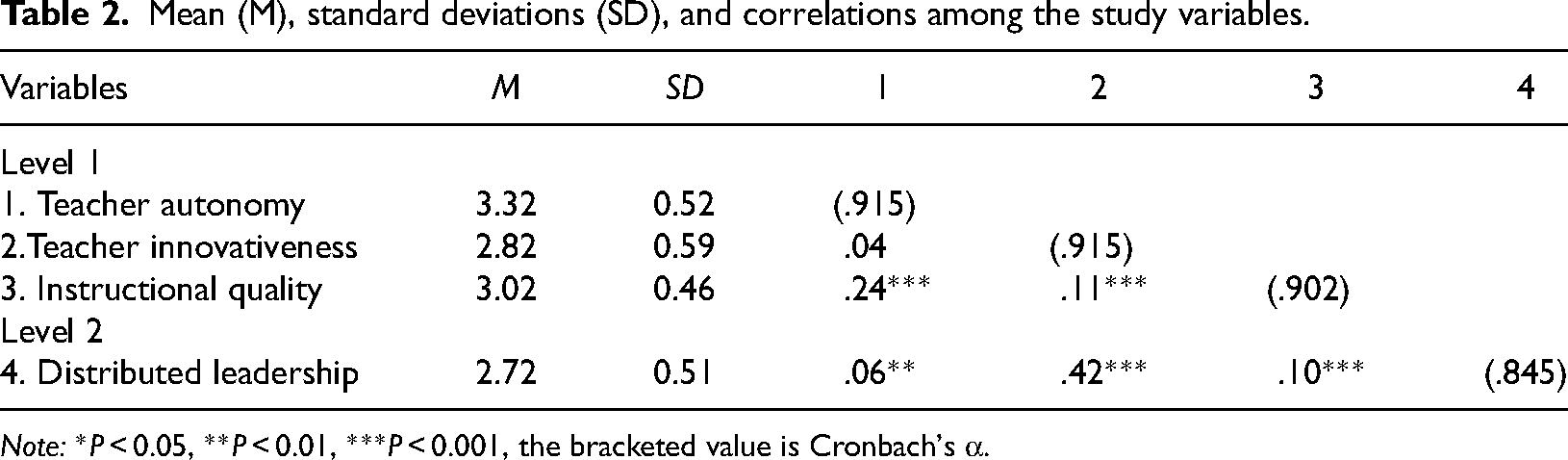
Note: *P < 0.05, **P < 0.01, ***P < 0.001, the bracketed value is Cronbach's α.
Hypothesis testing
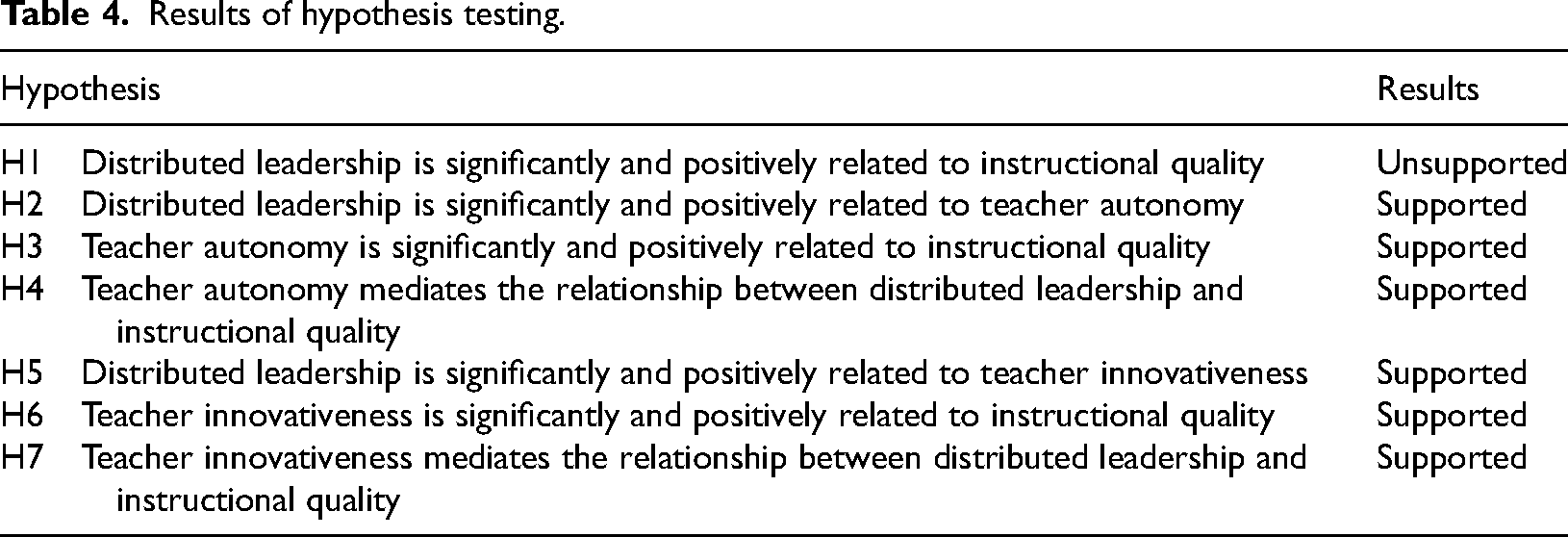
Table 3 presents the HLM results of this study's hypothesis testing. Model 1 results show that distributed leadership was significantly positively related to teacher autonomy (β = .222, P < 0.001), thus supporting H2. Model 2 results indicate that distributed leadership was significantly positively related to teacher innovativeness (β = .412, P < 0.001), thus supporting H5. On the other hand, Model 3 indicates that distributed leadership was significantly negatively related to instructional quality (β = −.155, P < 0.05), providing partial evidence to support H1. Further, the effect of teacher autonomy (β = .210, P < 0.001) and teacher innovativeness (β = .085, P < 0.001) on instructional quality reached significant positive values, supporting H3 and H6.
Hierarchical linear modeling (HLM) results.
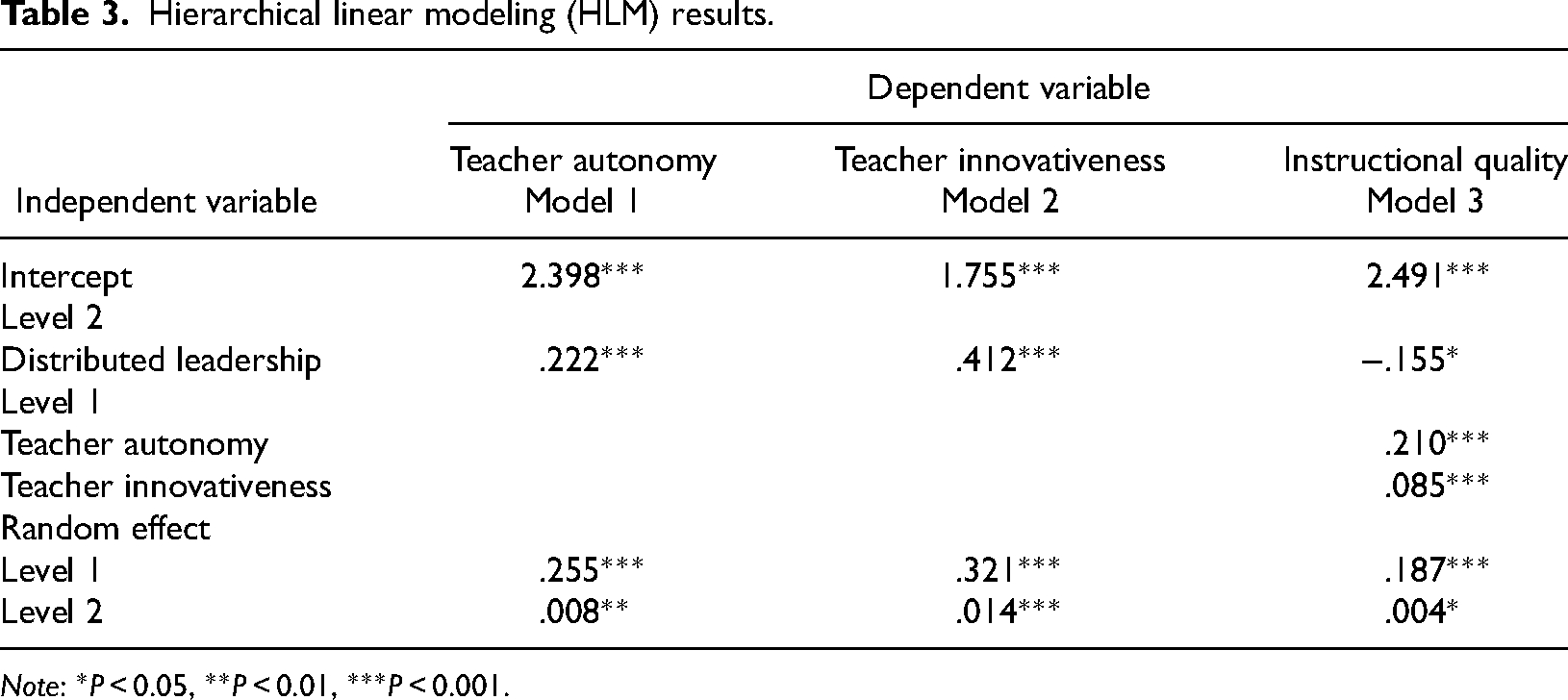
Note: *P < 0.05, **P < 0.01, ***P < 0.001.
H4 and H7 proposed that teacher autonomy and teacher innovativeness mediate the relationship between distributed leadership and instructional quality. The calculated result using the Sobel test (Sobel, 1982) was Z = 3.481 (P < 0.01). This confirms the mediation effect of teacher autonomy in the relationship between distributed leadership and instructional quality, and H4 is supported. Similarly, Sobel's Z accepted the mediation effect of teacher innovativeness on the relationship between distributed leadership and instructional quality (Z = 2.974, P < 0.01), thus supporting H7. Table 4 summarizes the results of the hypothesis testing.
Results of hypothesis testing.
Discussion and conclusion
Taiwan has invested substantial human and other resources to improve educational quality to unlock the unlimited potential of every child. Recent educational reforms, including changes in school leadership and teaching methods, are part of the 12-Year Basic Education program. The present study explored the relationships between distributed leadership, teacher autonomy, teacher innovativeness, and instructional quality. The multilevel analysis reveals that distributed leadership directly and significantly negatively impacted instructional quality. Distributed leadership also significantly affected instructional quality when mediated by teacher autonomy and teacher innovativeness, creating a competitive partial mediation model.
The effects of distributed leadership and instructional quality
Empirical evidence indicates that distributed leadership does not always produce positive effects (Bush and Ng, 2019; Keddie et al., 2022). This study's results confirm this argument. We found that in Taiwan's high school stage, the direct impact of distributed leadership on instructional quality was significantly negative (H1). One possible reason for this finding is that, despite the cultural diversity in Taiwan, collectivism still prevails (Ali et al., 2005). In this cultural context, respecting authority remains dominant. Distributed leadership can be used to politicize and increase teachers’ workload and facilitate teachers’ engagement; however, the distribution of resources and power may be unequal (Lu, 2022). Consequently, teachers may perceive that what leaders share is merely additional work tasks rather than empowerment, potentially creating stress while ultimately affecting the enhancement of instructional quality (Barattucci et al., 2021; Lu, 2022; Tian and Nutbrown, 2023). This research finding further validates using social identity theory as a framework to explain the relationship between leadership and instructional quality. According to social identity theory, individuals who feel neglected, excluded from the distributed leadership collective, or burdened with additional tasks may exhibit negative behaviors and attitudes (Hogg, 2001; Johnston, 2017). This assertion aligns with Harris (2013), who emphasized that distributed leadership is not a cure-all for success and is fraught with challenges.
The mediating role of teacher autonomy
Consistent with past research (Lin, 2022; Liu et al., 2021), the current study identified a positive effect of distributed leadership on teacher autonomy (H2). Additionally, we found that teacher autonomy positively impacted instructional quality (H3), aligning with Guo and Wang's (2021) findings. Further analyses revealed that teacher autonomy was a mediator in the relationship between distributed leadership and instructional quality (H4). This suggests that teacher autonomy plays a crucial role as one of the essential pathways through which leadership enhances instructional quality. The mediating effect of teacher autonomy between distributed leadership and instructional quality may stem from teachers feeling supported and valued within an organization (Johnston, 2017), constituting a part of their teacher autonomy. Thus, they are more likely to make autonomous decisions regarding teaching and assessment methods based on student needs, promoting the enhancement of instructional quality (Wang et al., 2014). Implementing distributed leadership exhibits a dichotomous nature, encompassing disadvantages and advantages (Harris, 2013). Its primary objective involves promoting democratic principles and developing individual competencies (Mayrowetz, 2008), allowing teachers the opportunity for power-sharing and collective cooperation. In practical terms, when teachers feel they have less control within their organization and more decision-making authority, it strengthens their sense of belonging while enhancing their autonomy (Barattucci et al., 2021; Liu et al., 2021). Teachers with sufficient independent decision-making power to handle teaching practices know what they should do for their students. They can demonstrate that their teaching methods are suitable, design appropriate courses for students, and meet their needs, which improves instructional quality (Liu et al., 2021).
Moreover, teachers’ autonomy is pivotal in offsetting the negative effects of distributed leadership on instructional quality, underscoring the importance of equality and a sense of belonging within Taiwan's schools. Equality implies that teachers perceive fair treatment from school administrators, indicating a higher level of identification and a sense of belonging to their organization. In a Confucian cultural context, the significance of equality and trust is strongly emphasized. When school leaders demonstrate the values of equality, they are more likely to gain teachers’ trust (Liu et al., 2022a). This, in turn, encourages teachers to exhibit a higher level of organizational identification and a greater willingness to actively serve the organization. This finding further substantiates the role of social identity theory in explaining the mechanism of teacher autonomy as a mediator.
The mediating role of teacher innovativeness
Our findings are consistent with previous studies in that distributed leadership significantly affects teacher innovativeness (H5) (e.g., Buyukgoze et al., 2022; Lin, 2022). As Buyukgoze et al. (2022) explained, distributed leadership provides teachers with a working environment of mutual support and collaboration, thus enhancing teachers’ innovative ideas and atmosphere. Hypotheses 6 and 7 indicate that teacher innovativeness positively impacted instructional quality and mediated between distributed leadership and instructional quality. Similar to Nguyen et al. (2021), teacher innovation in this study was a critical factor in improving the quality of teaching and learning. The more innovative the teachers are, the more they can achieve effective instruction (Suharyati, 2017). Furthermore, when distributed leadership cultivates an engaging and productive work environment, enabling teachers to “brainstorm” and “leverage each other's strengths,” it promotes the development and broadening of teaching skills and innovative thinking (Buyukgoze et al., 2022). In the Asian Pacific context, while additional compensation and leadership titles are considered the least effective motivators, principal support is regarded as the most critical factor for implementing distributed leadership among teachers (Tian and Virtanen, 2021). Teachers’ instructional quality will improve when they continue participating in innovative professional practice, are open to adopting innovative ideas, and internalize innovative content into their knowledge base.
Additionally, the positive mediating role of teacher innovativeness can be seen as a mechanism for social identity, which helps mitigate the direct negative impact of distributed leadership. When teachers feel they play an essential role within the collective and have opportunities to contribute positively to educational quality, they are more motivated to engage with innovative teaching to enhance instructional quality (Hogg, 2001; Hung and Li, 2017). This finding confirms the results of past research (Liu et al., 2021) that while distributed leadership promotes instructional quality, it must be implemented through teachers.
Conclusion and implications
Distributed leadership takes on various forms in different cultural contexts, and the present research provides evidence for this viewpoint. In Taiwan, a culture characterized by collectivism and cultural diversity, distributed leadership can yield positive outcomes through teacher autonomy and innovation. Therefore, as leadership is dispersed more widely within schools, questions such as “Whose knowledge carries influence?” “Who is marginalized in leadership roles?” and “Whose voices are suppressed by the system?” must be addressed. Researchers and policymakers must consider teachers’ proactive attributes and actions to enhance the effectiveness of distributed leadership. Based on the results of this study, we propose the following changes to educational leadership in Taiwan. First, school leaders should optimize the practice of distributed leadership by considering the feelings and perspectives of teachers during implementation. This involves creating an organizational atmosphere where teachers feel a sense of belonging, and their autonomy and creativity are fully respected. School leaders can give teachers the right to choose teaching methods, determine course content and workload, and formulate assessments. School leaders should also create an innovative atmosphere for teachers, keep an open attitude toward new ideas, provide opportunities for teacher training and cooperative learning, and develop teachers’ innovative abilities. Second, schools can increase teacher training and professional development programs. This may involve offering training courses related to distributed leadership to help teachers better understand and engage with this leadership model. Third, policymakers can consider modifying or adjusting existing education policies to ensure equitable resource allocation. They can also provide economic incentives to promote the connection between educational research and practical implementation, encouraging schools to actively embrace distributed leadership and innovation.
Limitations and future research
There are four limitations to the current study. First, the TALIS 2018 data used was self-reported by teachers, which reflects the teachers’ perception of supervisors not entirely equivalent to objective indicators. Second, this study used a cross-sectional survey design. Thus, it could not provide evidence for a causal relationship among variables such as distributed leadership, teacher autonomy, teacher innovativeness, and instructional quality. Therefore, future research should adopt longitudinal methods or interview surveys to explore causal relationships. Third, within the study's scope, we did not add or compare data with missing values. Future research can further explore this aspect. Fourth, the selected study sample only represents the high school stage in Taiwan. Future research can include regions such as Shanghai, Japan, and other areas with predominant collective cultures to better understand how distributed leadership is implemented within the Asian Pacific cultural context.
Supplemental Material
sj-docx-1-ema-10.1177_17411432241231421 - Supplemental material for Analyzing the relationship between distributed leadership and instructional quality in Taiwan: The mediating roles of teacher autonomy and teacher innovation
Supplemental material, sj-docx-1-ema-10.1177_17411432241231421 for Analyzing the relationship between distributed leadership and instructional quality in Taiwan: The mediating roles of teacher autonomy and teacher innovation by Chuan-Chung Hsieh, Yurou Song, and Hui-Chieh Li in Educational Management Administration & Leadership
Footnotes
Declaration of conflicting interests
The author(s) declared no potential conflicts of interest with respect to the research, authorship, and/or publication of this article.
Funding
The author(s) received no financial support for the research, authorship, and/or publication of this article.

Supplemental material
Supplemental material for this article is available online.
References
Supplementary Material
Please find the following supplemental material available below.
For Open Access articles published under a Creative Commons License, all supplemental material carries the same license as the article it is associated with.
For non-Open Access articles published, all supplemental material carries a non-exclusive license, and permission requests for re-use of supplemental material or any part of supplemental material shall be sent directly to the copyright owner as specified in the copyright notice associated with the article.
