



Abstract
In an era of rapid global change – from pandemics and climate crises to technological shifts and social inequalities – schools need leadership that sparks collaborative innovation to build resilience and equity in lower secondary education. Drawing on TALIS 2018 data from 48 countries (approximately 260,000 teachers and 15,000 principals), this study uses psychometric network analysis and meta-analytical synthesis to explore how specific leadership and collaboration practices interconnect at the item level across seven key scales: instructional leadership, distributed leadership, partnerships, organizational innovativeness, professional collaboration in lessons, team innovativeness and teacher exchange. Our findings reveal that teacher collaboration forms the vibrant core of these networks, with practices like joint professional learning and team conferences acting as central bridges. While collaboration patterns show remarkable stability across countries, connections between distributed leadership and innovation vary widely (I2 > 90%), highlighting the importance of context. Instructional leadership practices often appear more peripheral, suggesting opportunities to better integrate them with distributed approaches. These insights strengthen the theoretical integration of instructional and distributed leadership models and offer practical guidance for school leaders: prioritizing professional learning communities and shared decision-making can drive equitable, innovative practices tailored to diverse cultural and ecosocial challenges.
Keywords
Introduction
In an era marked by global disruptions – ranging from technological upheaval, social inequality and evolving policy landscapes to climate crises – schools are increasingly tasked with fostering adaptability, innovation and collaborative problem-solving, particularly in lower secondary education (Fullan, 2016; Saiz-Linares et al., 2025; Serdyukov, 2017). Educational leadership, long viewed as central to school improvement, now operates at the nexus of complexity and rapid change, where leaders must not only manage instruction but also cultivate cultures of collaboration and innovation within school communities (Brown, 2020; Pietsch et al., 2023; Tschannen-Moran, 2001). As systems grapple with these challenges, the interplay between leadership practices and collaborative innovation becomes crucial to effective schooling across diverse nations (Buyukgoze et al., 2024; de Jong et al., 2020; Nguyen et al., 2021). This study explores how school leadership influences and is influenced by collaborative dynamics in schools, using data from the Teaching and Learning International Survey (TALIS) 2018, which captures responses from principals and teachers in 48 countries.
While TALIS has been leveraged to examine leadership typologies, principals’ time use, and professional collaboration (e.g., Gümüş et al., 2024; Veletić and Olsen, 2024), most analyses aggregate constructs into broad profiles, often overlooking the granular item-level interactions that shape leadership and collaboration in practice. To address this gap, we apply psychometric network analysis – a method that treats leadership and collaboration as systems of interconnected behaviors rather than fixed traits (Epskamp et al., 2018a, 2018b; Schmittmann et al., 2013). This approach identifies specific leadership actions central to collaboration networks and captures variations across schools and countries, including how principals allocate time to instructional versus administrative tasks (Gümüş et al., 2024). To our knowledge, this study represents one of the first applications of psychometric and meta-analytic network analysis to international educational leadership data (Eryilmaz et al., 2025). Our contribution is both methodological and conceptual, highlighting how school leadership drives innovation through collaborative relationships, with implications for equitable and inclusive practices that complement social justice goals (Harris, 2008; Oplatka and Arar, 2017).
The analysis centers on seven key TALIS 2018 constructs related to school leadership and teacher collaboration from lower secondary schools (typically ages 11–16, varying by national context; OECD, 2019). Instead of relying on aggregate scores, we examine the structure and strength of item-level interconnections, both within and across countries. This multidimensional framework offers a more precise view of the leadership–collaboration nexus, building on recent TALIS studies that link distributed leadership to collective teacher innovativeness via professional collaboration (Buyukgoze et al., 2024; Nguyen et al., 2021).
We begin by tracing the evolution of school leadership theory, focusing on two key models – – instructional leadership (IL) and distributed leadership (DL) – and their interplay in fostering collaborative innovation. Next, we review cross-cultural perspectives on leadership and collaborative innovation in education, justifying our methodological approach through psychometric and meta-analytical network techniques. Finally, we introduce the TALIS 2018 data and measures. This integrated framework advances empirical and theoretical understanding of how leadership fosters collaborative innovation in diverse educational systems, emphasizing the need for culturally responsive practices that align with ecosocial challenges (Saiz-Linares et al., 2025; UNESCO, 2016).
This study holds significance for global education by uncovering context-sensitive patterns in leadership practices that inform culturally responsive strategies, particularly in varied secondary education structures across Europe and beyond (Eryilmaz and Sandoval-Hernandez, 2023; Hallinger, 2018). It addresses three research questions: (1) How do items from the seven TALIS 2018 scales interrelate within country-specific psychometric networks? (2) What universal and heterogeneous patterns emerge across countries in the meta-analytical synthesis? (3) How do these networks align with IL and DL models, and what implications do they hold for collaborative innovation? By modeling leadership as interconnected behaviors rather than latent traits, our findings offer actionable insights for fostering collaborative innovation in diverse systems.
Theoretical background
Theories of school leadership have evolved from hierarchical models to more distributed, collaborative approaches that emphasize learning throughout the organization (Hallinger, 2011; Murphy et al., 2007). We focus on two key models – instructional leadership (IL) and distributed leadership (DL) – which together support collaborative innovation by blending direct instructional oversight with shared responsibilities.
Instructional leadership, prominent in the 1980s, positioned principals as instructional coordinators, emphasizing teaching quality, academic goals and monitoring (Boyce and Bowers, 2018; Hallinger, 2005; Hallinger and Murphy, 1985). While effective for student outcomes, its top-down nature can limit teacher autonomy (Marks and Printy, 2003; Robinson et al., 2008). Transformational leadership, which gained traction in the 1990s, focused on vision, intellectual stimulation and staff motivation, though its direct links to learning remained ambiguous (Bass and Riggio, 2006; Leithwood and Jantzi, 2000; Robinson et al., 2008).
Distributed leadership emerged in the 2000s, viewing leadership as a collective function stretched across roles and contexts. It promotes teacher involvement in decision-making and fosters professional learning communities (Hargreaves and Fink, 2006; Harris, 2008; Spillane et al., 2004). This model complements IL by distributing instructional responsibilities and enhancing equity and social justice through inclusive practices (Oplatka and Arar, 2017; Walker and Hallinger, 2015). Recent TALIS research highlights DL's role in boosting collective teacher innovativeness through job satisfaction and collaboration, while IL prioritizes instructional time use (Buyukgoze et al., 2024; Gümüş et al., 2024; Nguyen et al., 2021). Effective leadership often integrates IL and DL, creating coherence across vision, strategy and relationships while accounting for contextual variation (Daniëls et al., 2019; Hallinger, 2018).
These principal-driven elements extend into stakeholder involvement and partnerships. Grounded in stakeholder theory, this perspective advocates balancing the interests of parents, guardians and community actors to strengthen school legitimacy and resource mobilization (Donaldson and Preston, 1995; Sadovska et al., 2025; Yihong et al., 2024). Such reciprocal engagements, including community cooperation, help build resilience against socioeconomic inequities.
Collaborative innovation – co-creating new practices through vertical and horizontal interactions – relies on IL for instructional focus and DL for shared expertise (Owen et al., 2008; Sørensen and Torfing, 2016; Torfing, 2019; Torfing and Triantafillou, 2016). Rooted in organizational learning and knowledge creation (Argyris and Schön, 1996; Nonaka and Takeuchi, 1995), it involves multi-stakeholder participation and risk-tolerant cultures (Admiraal et al., 2012; Van de Ven et al., 1999). DL helps overcome challenges like resistance by enabling professional collaboration (Ronfeldt et al., 2015; Torfing, 2019; Vangrieken et al., 2015). In ecosocial contexts, it supports sustainable education through teacher networks (Saiz-Linares et al., 2025). Our network approach extends TALIS insights on team innovativeness and professional learning communities (Gümüş et al., 2024; Stoll et al., 2006).
At the teacher level, professional collaboration in lessons draws from the professional learning communities (PLCs) framework. It emphasizes sustained interactions, such as joint teaching and feedback, to refine instructional practice (Christensen and Jerrim, 2025; Hudson, 2024; Vescio et al., 2008). TALIS 2018 analyses show that such collaboration – including team teaching, peer feedback and cross-class activities – predicts cognitively activating practices that foster critical thinking and creativity (Baumert et al., 2010; Bellibaş et al., 2025b; Lipowsky et al., 2009). These forms vary from sharing to joint work, creating spaces for knowledge exchange in diverse contexts (Goodyear and Casey, 2015; Kilinc et al., 2022; Little, 1990; van Schaik et al., 2019; Vangrieken et al., 2017).
This collaboration underpins team innovativeness, where teachers collectively embrace novelty and support problem-solving (Buyukgoze et al., 2024; Dedering and Pietsch, 2025; Hu et al., 2024). TALIS evidence confirms that collective innovativeness moderates the link between collaboration and cognitively activating practices, promoting constructivist and equitable approaches (Bellibaş et al., 2025b; Buske, 2018; Moolenaar et al., 2014; Nguyen et al., 2021; Tondeur et al., 2009; Ucus and Acar, 2018).
Finally, teacher exchange and coordination involve reciprocal resource sharing, building trust and normative commitments (Ahmad et al., 2023; Kolleck et al., 2021; Moolenaar, 2012). These interactions reduce isolation and amplify collective innovativeness amid varying demographics (Bellibaş et al., 2025b; Kelchtermans, 2006; Pietsch et al., 2025c; Vangrieken et al., 2017). Cross-cultural perspectives show that leadership models must adapt to contexts shaped by power distance, collectivism and policy environments (Eryilmaz and Sandoval Hernandez, 2024; Hallinger, 2018; House et al., 2004). Directive IL may suit high power-distance cultures, while DL thrives in egalitarian ones (Brewer et al., 2020; Mango, 2018; Pietsch et al., 2025a). TALIS data reveal universal collaboration centrality alongside context-dependent effects, enriching understanding of innovation in diverse systems (Nguyen et al., 2021; Saiz-Linares et al., 2025).
Psychometric network analysis and meta-analytical approaches
Educational leadership research often uses variable-centered approaches like regression or structural modeling (Hallinger and Heck, 2010), which may overlook item-level interactions. Cluster analysis provides profiles (Veletić and Olsen, 2024), but may miss behavioral interdependencies. Cross-national comparisons often assume measurement invariance, ignoring cultural differences (Rutkowski and Svetina, 2014). Recent research therefore highlights various limitations of traditional analytical approaches in the field of school leadership studies and underscores that the use of more advanced and complex methods offers the opportunity to challenge, test and refine existing theories and assumptions, as well as to act as catalysts for broadening the range of explanations that a theory can encompass in both educational leadership and educational innovation research (Aydın et al., 2025; Bellibaş et al., 2025a; Choi et al., 2025; Pietsch et al., 2025b).
To address these methodological limitations, our study applies psychometric network analysis (PNA) and meta-analytical network modeling to analyze the item-level structure of leadership and collaboration constructs across 48 countries using TALIS 2018 data. PNA reconceptualizes constructs as systems of interrelated behaviors (Borsboom and Cramer, 2013; Eryilmaz et al., 2025), offering a dynamic perspective in which observed variables (e.g., leadership practices) interact to form higher-order patterns (Schmittmann et al., 2013). This allows us to identify not only which leadership behaviors are most central, but also how different collaborative practices interconnect within and across cultural contexts (Bringmann et al., 2019). Building on this, we use meta-analytical network techniques (Epskamp et al., 2021; Williams et al., 2020) to synthesize item-level relationships and estimate heterogeneity in edge strengths across countries. Our aim is to uncover both universally central elements and culturally contingent structures in the leadership–collaboration nexus, contributing a more nuanced, context-sensitive and theory-informed understanding of how school leadership fosters collaborative innovation worldwide.
Methods
Data
The Teaching and Learning International Survey (TALIS) 2018, coordinated by the Organization for Economic Co-operation and Development (OECD), collected data from approximately 260,000 lower secondary teachers and 15,000 school principals across 48 countries and economies (OECD, 2019). The survey used a two-stage stratified sampling design: a representative sample of schools was first selected in each country, followed by a random sample of teachers within those schools.
Data were collected through questionnaires administered to both teachers and principals, covering a wide range of topics related to teaching practices, professional development, school leadership, collaboration and school climate. The TALIS 2018 dataset provides nationally representative and internationally comparable information on teachers’ and principals’ experiences and working conditions across diverse educational systems. TALIS 2018 focuses on lower secondary education (ISCED Level 2), representing a core stage of compulsory schooling across participating countries. Although specific grade structures vary internationally, this level typically includes students aged approximately 11–16. Clarifying the target level is important because leadership and collaboration practices can differ across educational stages; by focusing on a relatively comparable segment of schooling, TALIS 2018 provides a consistent basis for examining cross-national patterns in school leadership and teacher collaboration.
Measures
Description of the seven selected scales
Our analysis centers on seven scales from TALIS 2018 that capture key dimensions of leadership and collaborative innovation. Each scale consists of multiple items measured on Likert-type scales, with responses standardized internationally to facilitate cross-country comparisons. Reliability estimates for each scale are reported using Cronbach's Alpha and McDonald's Omega.
School Leadership (T3PLEADS): This scale measures the frequency of leadership actions that support teacher cooperation for developing new teaching practices. It consists of three items assessing how often school leaders support collaboration among teachers, ensure teachers take responsibility for improving their teaching skills and ensure teachers feel responsible for student learning outcomes (OECD, 2019). The scale demonstrates high internal consistency (α = 0.82, ω = 0.83).
Participation among Stakeholders – Principals (T3PLEADP): This five-item scale captures principals’ perceptions of staff and stakeholder involvement in school-level decision-making. Items include staff participation in school decisions, student involvement, parental engagement and the presence of a collaborative school culture (OECD, 2019). The reliability of the scale is acceptable (α = 0.76, ω = 0.82).
Stakeholder Involvement – Partnership (T3PCOM): This three-item scale assesses principals’ perceptions of external stakeholder support from parents and the local community. Items relate to parental involvement in school activities, parental support for student achievement and school-community cooperation (OECD, 2019). The scale shows moderate reliability (α = 0.67, ω = 0.71).
Organizational Innovativeness (T3PORGIN): This four-item scale measures principals’ views on their school's adaptability and innovation capacity, including openness to new ideas, responsiveness to change and support for innovation (OECD, 2019). The scale demonstrates strong internal consistency (α = 0.85, ω = 0.89).
Professional Collaboration in Lessons among Teachers (T3COLES): This four-item teacher-reported scale captures joint teaching activities such as team teaching, observing classes, engaging in joint instructional activities and providing feedback to colleagues (OECD, 2019). It shows moderate reliability (α = 0.65, ω = 0.73).
Team Innovativeness (T3TEAM): This four-item teacher-reported scale assesses teachers’ perceptions of their colleagues’ openness to change and support for innovation. Items include developing new ideas, problem-solving and offering practical support (OECD, 2019). The scale has excellent internal consistency (α = 0.95, ω = 0.95).
Exchange and Cooperation among Teachers (T3EXCH): This four-item teacher-reported scale measures the frequency of material sharing, student-related discussions, joint evaluation practices and participation in team conferences (OECD, 2019). It demonstrates good reliability (α = 0.77, ω = 0.83).
Together, these seven scales provide a comprehensive view of school leadership and collaborative innovation, combining both principal-reported measures (T3PLEADS, T3PLEADP, T3PCOM, T3PORGIN) and teacher-reported measures aggregated to the school level (T3COLES, T3TEAM, T3EXCH). They align with key dimensions of the Leadership for Learning framework, including instructional leadership, distributed leadership, organizational culture, professional collaboration and external partnerships.
Analytical strategy
This study adopted a multi-phase analytical strategy to investigate the relationships between leadership and collaboration constructs in schools using TALIS 2018 data. The analysis proceeded in three stages: (1) pooled psychometric network analysis, (2) country-specific network estimations and (3) meta-analytical network synthesis.
Stage 1: Pooled psychometric network analysis
We began by estimating a pooled psychometric network using data from all countries combined. This analysis modeled the partial correlations among items from seven TALIS 2018 scales (T3PLEADS, T3PLEADP, T3PCOM, T3PORGIN, T3COLES, T3TEAM, T3EXCH), offering an overall view of the global structure of inter-item relationships across leadership and collaboration domains. All item responses were z-standardized, and networks were estimated using Gaussian Graphical Models (GGMs) with the graphical LASSO algorithm and EBIC model selection (Foygel and Drton, 2010). This approach regularizes the estimation to ensure sparse and interpretable networks while balancing fit and parsimony.
The pooled network enabled the identification of core item-level associations and central nodes – defined using strength centrality – that reflect influential aspects of leadership and collaboration across systems. This initial model served as a reference for the subsequent country-level comparisons.
Stage 2: Country-specific network estimation
Following the pooled analysis, separate psychometric networks were estimated for each of the 48 countries in our sample. The same GGM estimation procedure was applied using the qgraph and bootnet packages in R (Epskamp et al., 2012; Epskamp and Fried, 2018), ensuring methodological consistency. These country-specific networks captured the unique item-level associations within each national context, allowing for a detailed exploration of how leadership and collaboration constructs interrelate in different systems. Each country-level network was visualized using the Fruchterman-Reingold layout (Fruchterman and Reingold, 1991), and centrality indices were computed to identify the most influential items per country. These analyses facilitated a nuanced understanding of structural similarities and divergences in the leadership-collaboration nexus across diverse educational systems.
Stage 3: Meta-analytical network synthesis
To synthesize the findings from the 48 country-specific networks, we employed meta-analytical network modeling. For each edge (pairwise item connection), we extracted partial correlation coefficients and their standard errors and conducted random-effects meta-analysis using the metafor package (Viechtbauer, 2010). This approach accounts for both within-country sampling variability and between-country heterogeneity in edge strength.
The degree of cross-national heterogeneity was assessed using τ2 (between-country variance) and I2 statistics (Borenstein et al., 2010). Edges with high I2 values were interpreted as demonstrating substantial variation across countries, potentially reflecting context-specific leadership dynamics or cultural factors.
Due to the methodological limitations of current network meta-analytical frameworks, moderator analyses (e.g., with GDP, governance indicators or educational policies) were not included but are suggested for future research via multilevel meta-analytic structural equation modeling (Cheung, 2015; Van den Noortgate et al., 2013).
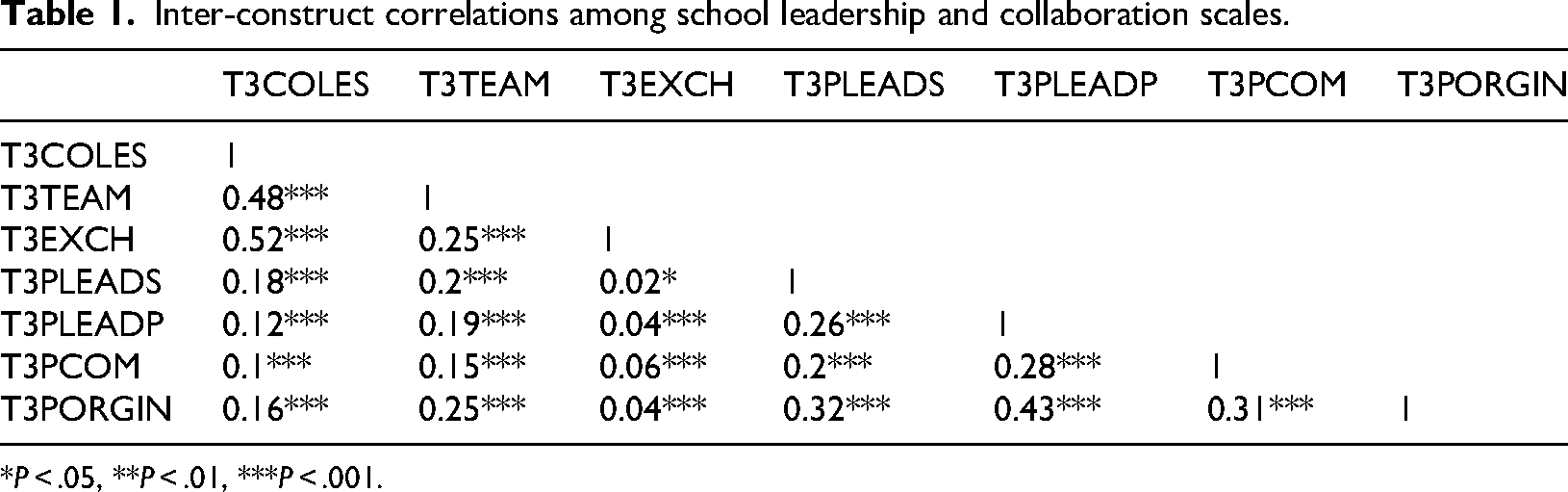
To justify the aggregation of teacher-level items to the school level, we assessed within-group agreement and reliability using ICC1 and ICC2 indices for each teacher-reported scale across countries. The median ICC1 values were 0.13 for T3COLES, 0.11 for T3TEAM and 0.10 for T3EXCH, with corresponding median ICC2 values of 0.70, 0.66 and 0.62, respectively. These values are consistent with established guidelines suggesting that ICC1 values above 0.05 and ICC2 values above 0.60 support aggregation (Bliese, 2000). These results provide sufficient justification for aggregating teacher responses to the school level for the purposes of psychometric network modeling (Table 1).
Inter-construct correlations among school leadership and collaboration scales.
*P < .05, **P < .01, ***P < .001.
Results
Table 1 presents the inter-construct correlations among the seven-school leadership and collaboration scales. All constructs are positively and significantly correlated, suggesting they represent related but distinct aspects of school leadership practices. The strongest associations are observed between T3COLES (collaborative leadership) and T3EXCH (exchange of ideas) (r = .52, p < .001), and between T3TEAM (team collaboration) and T3COLES (r = .48, p < .001), indicating that leadership styles fostering collaboration are closely tied to both teamwork and professional exchange. Moderate correlations are also evident between T3PLEADP (distributed leadership practices) and T3PORGIN (organizational participation) (r = .43, p < .001), and between T3PLEADS (instructional leadership) and T3PORGIN (r = .32, p < .001). These findings reinforce the interconnectedness of leadership domains in shaping collaborative and participatory school environments, while the modest correlations among some constructs (e.g., T3EXCH and T3PLEADS, r = .02, p < .05) highlight their conceptual distinctiveness.
Results from pooled psychometric network analysis
Pooled network structure
Figure 1 presents the psychometric network estimated from the pooled TALIS 2018 data using weighted correlations across 27 school-level variables. Each node represents a survey item from one of the seven leadership and collaboration constructs, and edges denote partial correlations between items after controlling for all other variables. Edge thickness reflects the strength of the association, with blue lines indicating positive connections and red lines indicating negative ones. The network layout reveals clear clustering by construct, demonstrating strong within-construct cohesion for all seven domains.
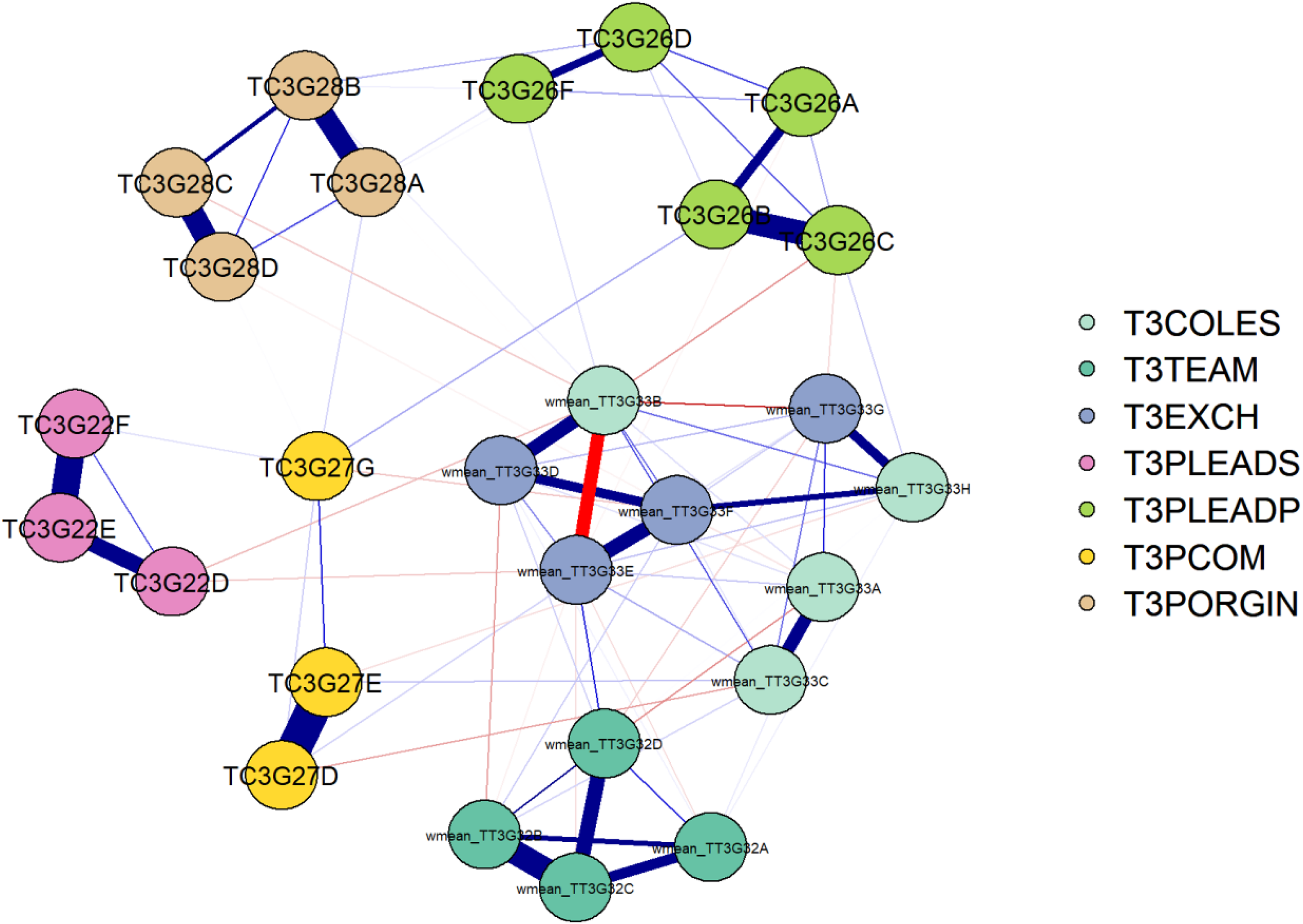
Pooled data with weights.
Instructional leadership connectivity. The three instructional-leadership items display limited cross-construct connections in the pooled network (Figure 1), forming a small, internally cohesive cluster with few edges linking to collaboration or innovativeness items. Their strength-centrality values are among the lowest across all nodes, indicating that these principal-reported behaviors occupy a peripheral position within the broader leadership–collaboration system. This pattern likely reflects both the modest behavioral scope of the instructional-leadership scale in TALIS 2018 – which captures only a narrow subset of IL activities – and reporting-source differences between principal- and teacher-level measures. Consequently, instructional leadership appears structurally less embedded in the collaboration network, even though it may influence these dynamics indirectly through distributed leadership and professional collaboration pathways.
Dense connectivity emerged within team innovativeness and exchange/coordination among teachers, indicating highly interrelated teacher-level collaboration practices. For example, providing feedback to colleagues and discussing students’ learning development showed particularly strong ties. Likewise, the distributed/participatory leadership items clustered tightly, highlighting the coherence of principal-reported leadership behaviors.
Cross-construct item-level edges were generally sparse. Notable exceptions linked professional collaboration in lessons with exchange and coordination among teachers, indicating overlap between lesson-focused joint work and broader collegial exchange. In addition, several edges connected team innovativeness with organizational innovativeness, suggesting that innovative team behaviors co-occur with a wider school climate that is open to change.
Strength centrality
Figure 2 displays the strength centrality indices for each item in the pooled network, quantifying the overall connectedness of a node to others in the network. Higher values indicate greater influence within the system. Among the most central items were:
wmean_TT3G33H (participation in collaborative professional learning), wmean_TT3G33G (attendance at team conferences), wmean_TT3G33F (working toward common standards for evaluation), and wmean_TT3G33E (discussion of student development).
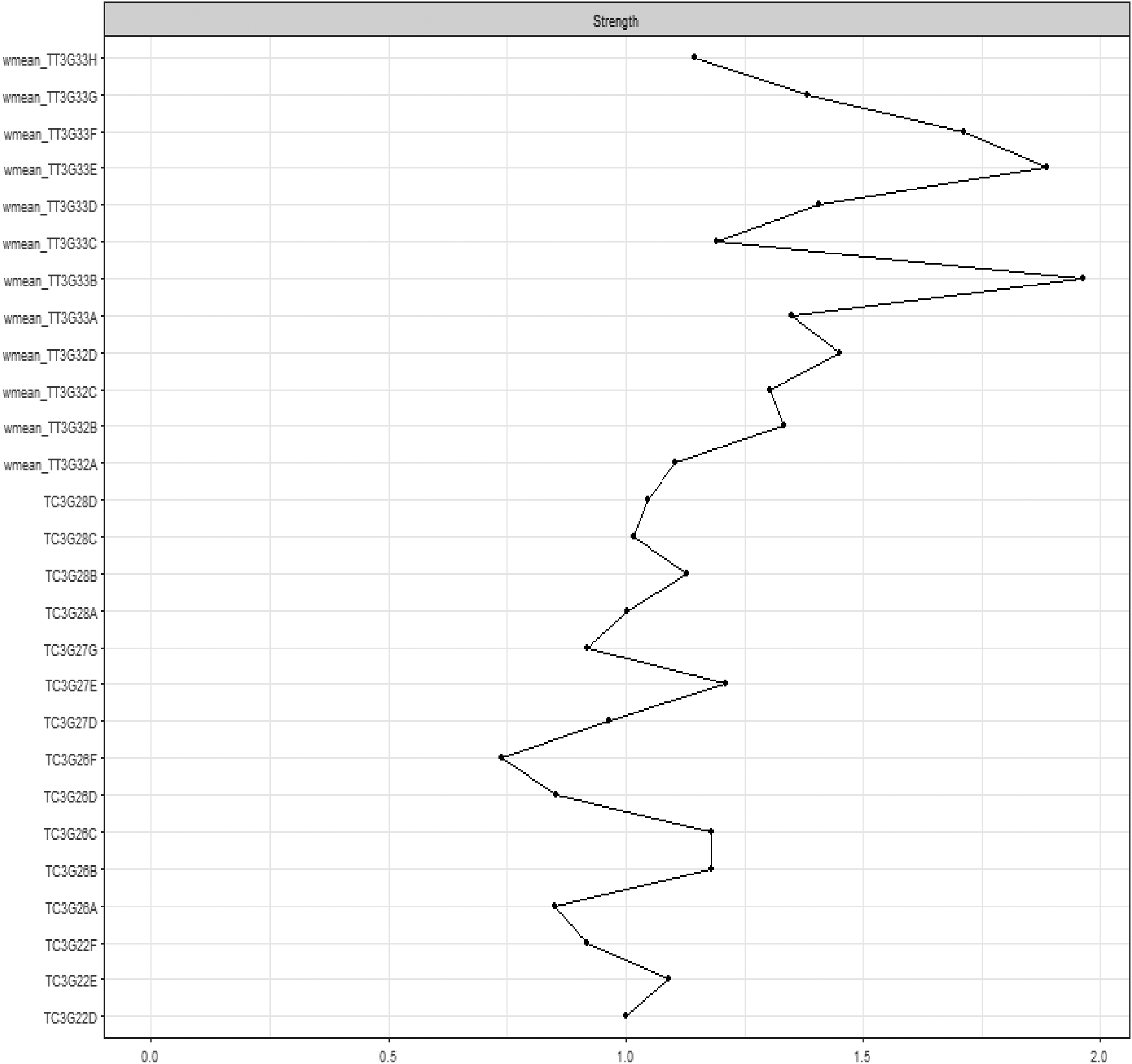
The strength of items of pooled data estimates.
These results indicate that teacher–collaboration practices centered on shared learning and coordinated work function as key hubs in the broader leadership–collaboration network. Immediately after these, team innovativeness (e.g., openness to new ideas) and participatory/distributed leadership (e.g., staff participation in decisions) also emerge as influential, suggesting that both innovation-oriented teamwork and inclusive leadership play a vital integrative role.
By contrast, items reflecting external stakeholder involvement and instructional leadership showed comparatively lower centrality, suggesting that their influence within the overall leadership–collaboration system is more peripheral in the pooled model.
Results from meta-analytical network analysis
For clarity in interpreting the meta-analytic results, we briefly restate the seven TALIS constructs analyzed in this study: school leadership (T3PLEADS), participation among stakeholders (T3PLEADP), stakeholder partnerships (T3PCOM), organizational innovativeness (T3PORGIN), professional collaboration in lessons (T3COLES), team innovativeness (T3TEAM) and teacher exchange and coordination (T3EXCH). These constructs form the basis of the item clusters examined in both the pooled and country-specific networks.
Meta-analytic network structure
Figure 3 (meta-analytic network across 48 countries). Figure 3 integrates 48 country-specific partial-correlation networks via random-effects meta-analysis to provide a comparative map of associations among leadership and teacher–collaboration items. Nodes denote items (colored by construct); edge thickness represents the pooled partial correlation, and edge transparency denotes between-country heterogeneity (lighter = greater heterogeneity).
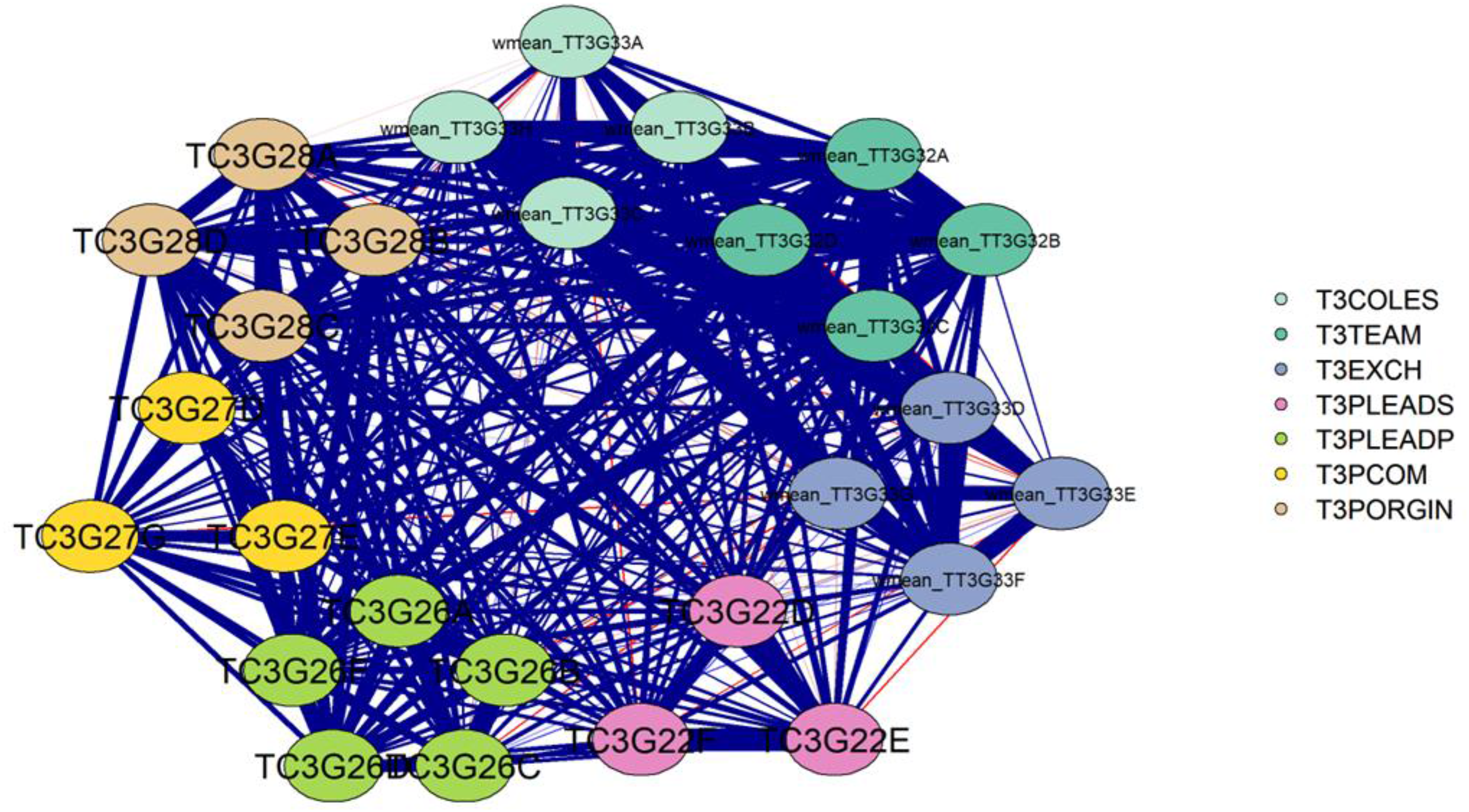
Meta analytical approach.
The network exhibits high overall connectivity. Consistent with the pooled model, items reflecting exchange and coordination among teachers and team innovativeness form tightly interconnected clusters, demonstrating strong conceptual coherence across national contexts. Substantial within-construct cohesion is also observed for stakeholder partnerships and distributed leadership, indicating robust consistency in these domains at the international level.
Relative to the pooled network, the meta-analytic solution displays more numerous and stronger cross-construct ties, consistent with the stabilizing influence of aggregation across diverse systems. Connections between exchange/coordination among teachers and collaboration in lessons remain prominent, underscoring the transnational role of teacher collaboration as a bridge between classroom practice and organizational routines. Likewise, multiple pathways linking team innovativeness to organizational innovativeness point to a recurrent pattern in which innovative teacher teams are embedded within schools characterized by broader openness to change.
Centrality analysis
Figure 4 presents the strength centrality scores of all 27 items in the meta-analytic network. Centrality values in this context represent the average magnitude of partial correlations each item shares with all other items in the network.
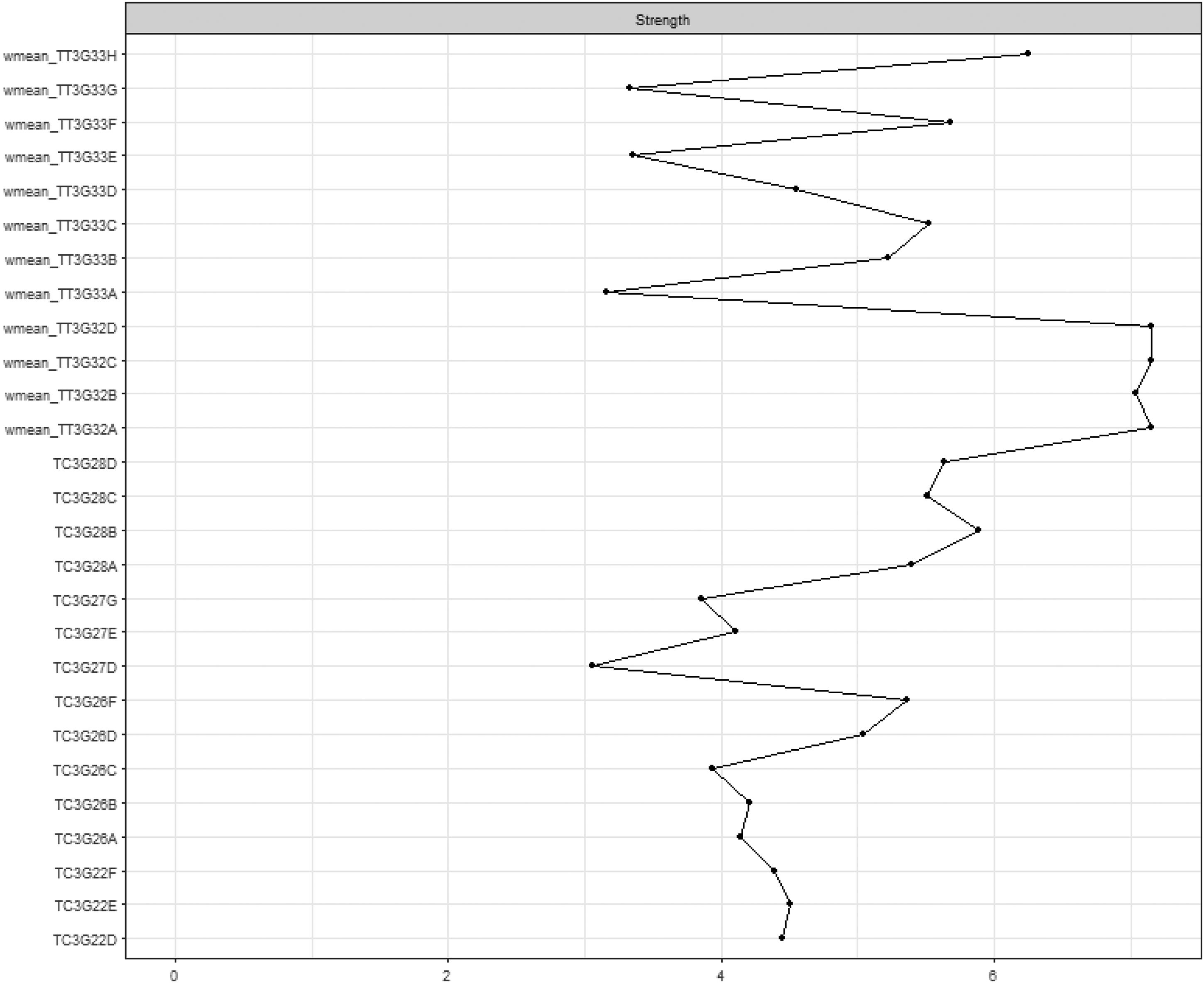
The strength of items of meta-analytical approach estimates.
The most central items – those with the strongest connections to the broader network – are:
wmean_TT3G33H (participation in collaborative professional learning), wmean_TT3G33G (attendance at team conferences), wmean_TT3G33F (working toward common standards for evaluation), wmean_TT3G33E (discussion of student learning development), and wmean_TT3G33D (exchange of teaching materials).
These results emphasize the foundational role of teacher collaboration behaviors in the global leadership–collaboration system, as practices related to exchange and coordination among teachers consistently emerge as the most central elements across countries.
Following these were central items from the team innovativeness construct, reflecting teachers’ efforts to develop new ideas and support innovation, along with several items from professional collaboration in lessons. Together, these findings indicate that both innovation-oriented teamwork and lesson-level collaboration constitute core components of the global leadership–collaboration network.
Conversely, instructional leadership items – particularly those focused on ensuring responsibility for student outcomes and instructional improvement – appear less central, suggesting that these behaviors are relatively peripheral within the international network. Stakeholder partnership items (e.g., community involvement and parental engagement) also show low centrality, implying that external partnership elements are less tightly integrated into the network structure across countries.
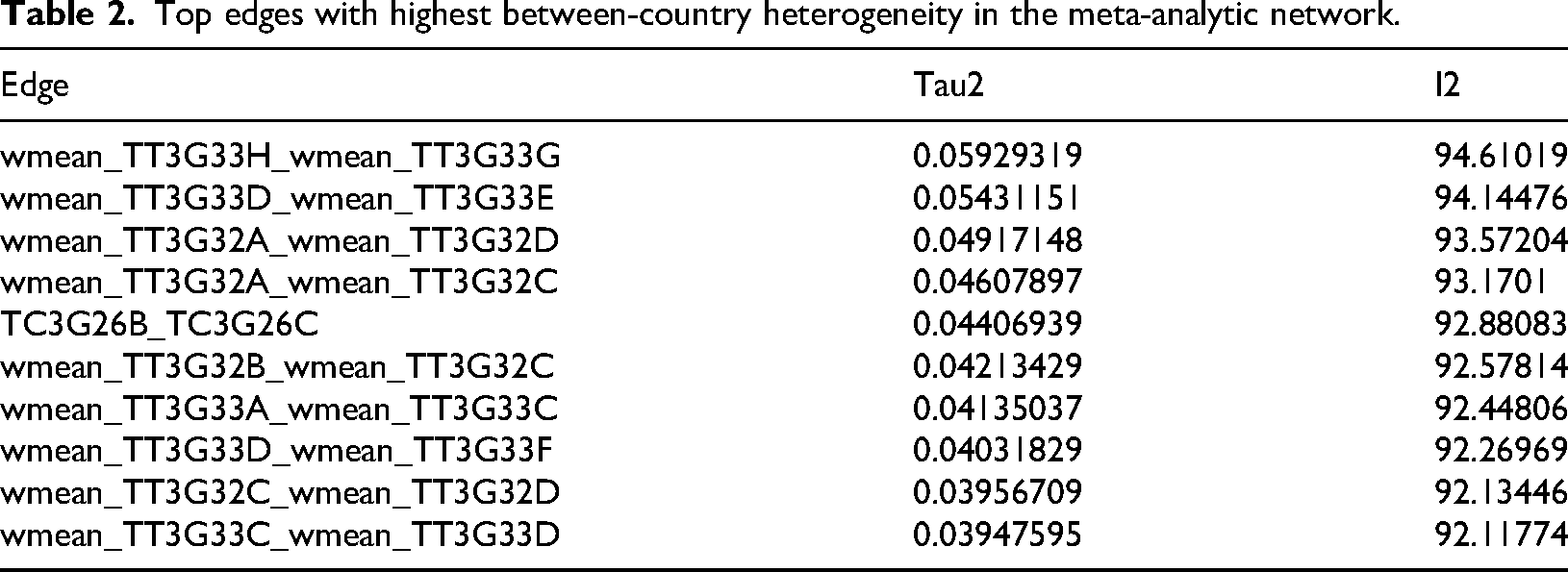
Table 2 presents the ten network edges with the highest heterogeneity across countries, based on meta-analytic estimates of between-country variance (τ2) and the proportion of total variance attributable to heterogeneity (I2). All listed edges exhibit exceptionally high I2 values (above 90%), indicating that differences in correlations between these variable pairs are primarily due to true cross-national variation rather than sampling error. Notably, the most heterogeneous relationships involve teacher collaboration constructs – team innovativeness, professional collaboration in lessons and exchange/coordination among teachers – alongside principal leadership practices. This pattern indicates that the structure and function of collaboration and leadership differ substantially across systems. These results underscore the need to model between-country heterogeneity in international network studies and highlight the context-dependent nature of educational leadership and collaboration.
Top edges with highest between-country heterogeneity in the meta-analytic network.
Discussion
This study examined how school leadership practices relate to collaborative innovation across diverse systems using psychometric network analysis and a meta-analytical synthesis of TALIS 2018 data from 48 countries. We addressed three questions: (1) how leadership and collaboration items interrelate within country-specific networks; (2) which common and context-dependent item-level patterns emerge in the cross-country meta-analytic network and (3) how these structures map onto Instructional Leadership (IL) and Distributed Leadership (DL), and what this implies for collaborative innovation. By conceptualizing leadership as a system of interconnected behaviors rather than as latent traits, our findings illuminate both a shared collaboration core and substantial cross-national variability in leadership linkages.
In response to RQ1, the country-specific networks showed coherent within-construct patterns, especially among teacher collaboration (professional collaboration in lessons, team innovativeness and exchange/coordination among teachers) and among distributed/participatory leadership items. Across many national networks, the most central items consistently involved shared professional learning, team meetings and coordinated assessment practices, indicating that collaborative, relational routines span classroom and organizational levels (e.g., MacBeath and Dempster, 2009; Spillane et al., 2004). By contrast, instructional leadership and external stakeholder engagement items were often less central, suggesting more context-dependent or peripheral roles in many systems (cf. Robinson et al., 2008).
For RQ2, the meta-analytical network synthesis revealed robust transnational patterns – particularly the centrality of teacher collaboration practices – and highlighted several item-level associations that remained stable across countries. Nonetheless, substantial between-country heterogeneity emerged in several key edges. Table 2 lists the ten most variable item pairs, all with I2 > 90%. The most heterogeneous relations involved peer-to-peer collaboration (e.g., exchanging materials and discussing individual students’ progress), team innovativeness (e.g., developing new ideas and providing practical support) and participatory decision-making (e.g., opportunities for parents and students to participate in school decisions), indicating that these links vary markedly across systems. These findings suggest that while collaborative innovation is a broadly shared aim, the specific mechanisms through which it manifests are shaped by institutional, cultural and systemic contexts (Hallinger, 2018; House et al., 2004; Oplatka and Arar, 2017). Such variability reinforces longstanding cautions in cross-national leadership research about assuming universality of leadership practices (Walker and Hallinger, 2015).
Regarding RQ3, the observed network structures align partially with Distributed Leadership (DL) and Instructional Leadership (IL). Items indexing teacher collaboration and team innovativeness emerged as consistently central, indicating that collaboration-oriented routines are the most embedded features of the leadership–collaboration system across countries. By contrast, items related to instructional leadership and external partnerships occupied more peripheral positions, suggesting that their links to day-to-day collaborative practice are more context-dependent. We interpret these patterns cautiously given the limited variable coverage of IL and partnership behaviors in TALIS 2018 and the mixed reporting sources (principal vs. teacher), both of which can attenuate cross-domain connections in partial-correlation networks. The substantial cross-national heterogeneity we document further indicates that the structure and salience of these relations vary with institutional and cultural conditions (e.g., governance, autonomy, professional norms; cf. Daniëls et al., 2019; Hallinger, 2018; Hargreaves and Fink, 2006). Taken together, the findings do not claim comprehensive validation of leadership theories; rather, they provide evidence-based, context-sensitive insights into how collaboration practices anchor school improvement, while leadership linkages differ across systems. Future work should broaden IL coverage (e.g., observation/feedback, data use, PD design), harmonize respondent sources and test moderators to explain between-country variation.
Finally, the results provide practical implications for policymakers and school leaders. Systems aiming to foster collaborative innovation should prioritize structures and supports for professional learning communities, coordinated teamwork and mutual goal setting among teachers (Fullan, 2007; Hargreaves and O'Connor, 2018). Leadership development programs should focus not only on formal authority roles but on building distributed capacities for shared decision-making, collective reflection and knowledge sharing within and beyond schools (Fischer-Schöneborn et al., 2025; Harris, 2008; Spillane et al., 2004). Importantly, reform efforts must be sensitive to cultural and institutional conditions, recognizing that the “center” of innovation may vary significantly across contexts (Brewer et al., 2020; UNESCO, 2016). Ultimately, our findings highlight the need for a revised perspective on educational innovation that accounts for the inherent complexity of schools as social systems and emphasizes key underlying mechanisms, including prevailing mindsets (Özdemir et al., 2024; Witthöft et al., 2024) and openness to collaboration (Pietsch et al., 2024).
Limitations and future directions
Despite offering novel insights into the structure of leadership and collaboration practices across international contexts, this study is not without limitations. First, while our meta-analytical network approach effectively quantified heterogeneity in edge strengths across countries, it did not model the sources of such heterogeneity. That is, although we identified considerable between-country variation in several key relationships – such as those involving teacher collaboration and distributed leadership – we were unable to explore what national-level factors (e.g., economic indicators, education policy contexts, cultural dimensions) might explain these differences. Due to current methodological constraints, moderator analysis could not be implemented within the MAGNA framework. Future research could address this gap by employing multilevel meta-analytic structural equation modeling (ML-MASEM), which allows for the inclusion of country-level predictors and facilitates a deeper understanding of contextual drivers of network variation.
Second, while the study offers strong construct coverage through seven TALIS 2018 scales, it is limited to the variables available in the dataset. Important dimensions of leadership and innovation – such as emotional intelligence, policy leadership or digital transformation strategies – were not captured and therefore could not be modeled. In addition, although teacher-reported variables were aggregated to the school level to align with principal reports, this approach may mask important within-school variation in collaboration dynamics. Future work could explore multi-level network models to account for nested data structures and teacher-level variability within schools.
Finally, our cross-sectional design constrains causal inference. While psychometric networks offer clues about interdependencies and central variables, the directionality and temporal dynamics of influence remain speculative. Longitudinal extensions using repeated TALIS cycles or mixed-method network ethnographies could offer more robust insights into how school leadership and collaborative innovation evolve over time.
Conclusion
This study contributes to both educational leadership and innovation research by applying psychometric and meta-analytical network approaches to explore how leadership practices and teacher collaboration coalesce to support innovation in schools worldwide. Through fine-grained modeling of item-level interactions in TALIS 2018 data, we identified both universal and context-dependent patterns in the leadership–collaboration nexus. Our findings reinforce the central role of teacher-led collaboration and distributed leadership in advancing the goals of the Leadership for Learning framework, while also revealing underexplored linkages between team-level innovation and school-level adaptability.
In doing so, this study addresses longstanding methodological and theoretical gaps in cross-national education research. Rather than relying on aggregate comparisons, it sheds light on the structure, strength and variability of leadership practices at a granular level. As education systems grapple with increasingly complex challenges – from technological disruption to issues of equity and inclusion – understanding leadership as a dynamic, context-sensitive system becomes not only timely but essential. Future research should explore how institutional conditions, leadership development models and cultural norms shape these leadership networks, with the aim of developing school leadership strategies that are globally informed, locally grounded and capable of fostering innovation across diverse educational contexts.
Footnotes
Acknowledgments
N/A

Consent for publication
All authors have reviewed and approved the final manuscript and consent to its publication in Educational Management Administration & Leadership.
Competing interests
We do not have any competing interests.
Funding
Marcus Pietsch is supported by the German Research Foundation (Deutsche Forschungsgemeinschaft [DFG]) through a DFG Heisenberg Professorship (451458391) and project funding (531146345).
Declaration of conflicting interests
The authors declared no potential conflicts of interest with respect to the research, authorship and/or publication of this article.