



Abstract
Expectations regarding team leadership in early childhood education (ECE) have grown in recent decades, both in Finland and elsewhere in the world. This change can be seen through the increased research knowledge regarding the importance of pedagogical leadership as a key factor in the quality of ECE and the emphasis on pedagogy in basic ECE tasks. In Finland, teachers are responsible for pedagogical work among teams and ensuring that ECE goals are achievable. For this reason, teachers are expected to lead their teams. For this reason, we wanted to ask the following research questions: (1) To what extent do ECE teachers feel that team leadership is realised in their work? (2) What different types of leadership profiles can be identified and what underlying elements define them? (3) To what extent do ECE teachers’ experiences of teamwork leadership differ? In our research, we utilised the Team Leadership Questionnaire to ask how teachers in ECE centres experience team leadership implemented when they work in ECE teams. Our survey was completed by 1221 teachers in ECE centres from 66 Finnish municipalities. We identified four team leader profiles through which team leadership is implemented differently: experienced experts, experienced organisers, discussion-oriented novices and learning novices. According to this study, teachers have different levels of knowledge and competence regarding team leading, which is especially influenced by work experience and divides teachers into different team leadership profiles.
Keywords
Introduction
In Finland, early childhood education (ECE) refers to a service aimed at children aged 0–6 years. Pre-primary education begins one year before the child starts primary education. Both ECE and pre-primary education are based on a model that combines teaching, education and care. Both services place particular emphasis on pedagogy. The services are guided by several political documents. The Ministry of Education defines the acts and the Finnish National Agency of Education develops the tools to implement them. The guidelines defining the activities at the international level come from the European Commission (1996), the United Nations (1989, 2006) and the United Nations Educational, Scientific, and Cultural Organization (UNESCO) (1994). The Act on Early Childhood Education and Care (ECE Act, 540/2018) emphasises the subjective right of the child to participate in ECE. ECE is regulated by the ECE Act (540/2018) and directed by the ECE curriculum (FNAE, 2022). Pre-primary education is regulated by the Basic Education Act (628/1998) and is directed by the pre-primary education curriculum (FNAE, 2014). The aim is to holistically support the child's well-being, growth and development.
In Finnish ECE centres, the size of the child group is determined by the ECE professional-child ratios. The number of children in a group may not exceed the number of three ECE professionals (Act 540/2018). The ratio of children under 3 years old is 1:4 (maximum 12 children), and the ratio of children over 3 years old is 1:7 (maximum 21 children). The ECE centre director is primarily responsible for creating teams with the appropriate, multi-professional personnel structure (see Heikka et al., 2021). In addition to the teacher, the team consists of caregivers, social workers, special teachers and assistants. The team combinations vary, but most commonly, teams consist of three professionals. Each professional has specific expertise that their education has focused on. Teacher's special expertise includes research-based and theoretical understanding of children's learning and development, teaching and ECE pedagogy, in which case teachers act as pedagogical experts in their teams (ECE Act 540/2018; FNAE, 2022). The professionals’ various expertise and competencies have been understood as valuable and crucial when implementing high-quality ECE that meets children's holistic needs (ECE Act 540/2018; Karila, 2012; see also Horwitz and Horwitz, 2007). The functionality of teamwork has been found to have a key effect on the quality of ECE (e.g., Cumming et al., 2020; Melasalmi, 2018; Ranta and Uusiautti, 2022).
Emphasising pedagogy as the main point of activities is a new phenomenon in Finnish ECE. It goes back to the 2013 transfer of administration when ECE came under the control of the Ministry of Education and Culture. Pedagogy and its development was presented as the starting point for organising ECE services (Ranta et al., 2021). There are also differences in the educational backgrounds of ECE teachers. The education of person working as an ECE teacher can have a university, university of applied sciences or vocational school background. The ECE Act (540/2018) stipulated that the qualification of an ECE teacher requires the future to be educated as a Bachelor of Education at a university. In order to achieve the goals set for the ECE, the teachers’ responsibility for the pedagogical activities of their teams began to be recognised as crucial. Teachers, in particular, are responsible for ECE pedagogical activities in child groups and act as leaders for their teams regarding pedagogical issues (FNAE, 2022; Heikka et al., 2016).
In contrast to the other professionals in the team, at least 13% of teachers’ working time is devoted to planning assessing and developing pedagogy [PAD time] (see Heikka et al., 2022a). Children's individual pedagogical plans are also supposed to be made during this PAD time. In addition, teachers must schedule sufficient time for parent meetings and interprofessional collaboration (FNAE, 2022; KVTES, 2018).
Although expectations of team leadership have increased as part of ECE teachers’ profession, studies have provided indications of ECE teachers’ insufficient capacity to perform the leadership task and difficulties identifying themselves as pedagogical leaders in their teams (e.g., Antoneva et al., 2018; Campbell-Evans et al., 2014; Heikka et al., 2018). Furthermore, teacher studies have mainly focused on pedagogical competence and teacher interactions with children, paying little attention to collaboration among professionals (Campbell-Evans et al., 2014; Mistry and Sood, 2012). Therefore, it is important to strengthen the capacity of ECE teachers to respond to the increased responsibilities of leadership and research the sort of support teachers need for their leadership.
Theoretical underpinnings
The theoretical underpinnings of this study are based on teamwork and team leadership in ECE (Morgeson et al., 2010). Leadership as part of the ECE teacher's profession has typically been approached through the concepts of distributed leadership, pedagogical leadership and teacher leadership (e.g., Bøe and Hognestad, 2017; Heikka et al., 2021; Li, 2015; Wang and Ho, 2020). This theoretical section will review how, when viewed through these concepts, the ECE teacher is also expected to exercise team leadership.
Teamwork in ECE
A team often refers to a group of individuals who work together for common goals by sharing information and knowledge and distributing interdependent working tasks (Cohen and Bailey, 1997; Katzenbach and Smith, 1993). Teamwork is defined as a challenging and complex system influenced by several different team and organisational factors and national systems. Understanding the context and specific features of the work environment is important so that the development of teamwork can be supported and teams can function effectively (Driskell et al., 2018; Salas et al., 2000). Teamwork refers to activities in which team members work to achieve common goals. As an activity, teamwork involves several processes, such as goal setting, organising activities and supporting team members (e.g., Driskell et al., 2018; Morgeson et al., 2010). Usually, teamwork is considered one of the basic elements of successful work, regardless of the nature of the work (see e.g., Uusiautti, 2017). At its best, teamwork promotes work efficiency and embodies good collaboration and functional work culture (Melton and Hartline, 2012; Quinn, 2015). It can bring out and evolve the collective competence of the work community (Boreham, 2004).
However, teamwork can also hinder the realisation of the goals set for ECE (e.g., Ranta and Uusiautti, 2022). At its worst, teamwork is a struggle between employees, represented by the mistrust, competition or underappreciation of team members (Uusiautti and Määttä, 2013) or a situation in which collective thinking hinders the innovative ideas or the development of activities (Quinn, 2015). The consequences of well-designed teamwork in ECE can affect children's positive learning experiences, how the teacher considers and supports children's autonomy and peer-to-peer relationships, adult relationships and professionals’ engagement and well-being (see also Nislin et al., 2015; Ranta, 2020a; Ranta et al., 2020b; Uusiautti and Määttä, 2014). For teams to work consistently and as intended, the teams’ processes must also be monitored, developed and led. As teamwork becomes more common in organisations, interest in leadership has grown as part of the quality and performance of teams’ work (Morgeson et al., 2010).
Teachers as performing team leadership
Leadership, as a key element in providing high-quality ECE, has become a popular area of research in the ECE field (e.g., Klevering and McNae, 2018). In ECE, leadership is based on the view of distributed leadership, in which each member of an ECE organisation is seen as involved in leadership according to their professional position (Bøe and Hognestad, 2017; Heikka et al., 2021). Distributed leadership is a leadership approach characterised by interdependence, cooperation, and the distribution of leadership opportunities among group members. It emphasises self-management and meaningful participation in decision-making processes (Spillane, 2005). This approach differs from traditional leadership models, which focus on the power and decision-making authority of a single leader (Denee and Thornton, 2021). In Finland, ECE teachers, as they are responsible for pedagogy, are expected to implement leadership in their teams. Teachers as team leaders are seen as necessary because the directors in ECE centres are perceived as distant in relation to day-to-day ECE activities (Heikka et al., 2018).
International research has explored the leadership role played by ECE teachers using various concepts, including teacher leadership. Teacher leadership in ECE refers to teachers’ leadership responsibilities to enhance and improve pedagogical practices for children's holistic learning and well-being (Heikka et al., 2016, 2018; Kahila et al., 2020; Li, 2015). Teacher leadership can include both formal and informal roles, and it extends beyond the groups of children being taught. It's considered a form of distributed leadership, where teachers are involved and hold a central and important position within ECE centres (Heikka et al., 2016, 2018).
In the context of ECE, teacher leadership involves leading pedagogy, promoting change and development, directing the team and work culture as well as engaging team members, children and parents (Kahila et al., 2020). The focus of these activities is on pedagogical leadership, which, in turn, is understood as supporting children's overall development and well-being, leading curriculum implementation and pedagogical practices and building ECE professionals’ capacity and understanding about the pedagogical goals, values and ethical principles (Bøe and Hognestad, 2017; Douglass, 2018; Heikka and Waniganayake, 2011).
From the perspective of both teacher leadership and pedagogical leadership, ECE teachers’ responsibilities include elements of team leadership (see Morgeson et al., 2010), which is the focus of this study. According to Driskell et al. (2018), team leadership functions are essential for team effectiveness, which refers to the processes of teamwork that underlie team performance and results (Salas et al., 2005). In team leadership, the perspective is the development of the team's operational capability and the promotion of the team's efficiency. Team leadership functions can be viewed through the functions of the transition and action phase. In the functions of the transition phase, the focus is on the activities that create the premises for achieving the team's goals. In the functions of the action phase, the focus is on the processes that immediately promote the achievement of goals (Morgeson et al., 2010; Zaccaro et al., 2001).
ECE teachers as team leadership coordinate and direct their teams towards achieving pedagogical goals, evaluating team performance and creating an open culture of discussion (Bøe and Hognestad, 2017; Heikka et al., 2022b; Li, 2015; Ranta and Uusiautti, 2022). The team leader not only represents and protects the team but also plans and evaluates activities to ensure that they align with the pedagogical goals of ECE (Heikka et al., 2018; 2022b). Regular interaction, communication and exchange of information between team members are necessary for successful teamwork and an open culture of discussion (Cohen and Levesque, 1991; Dickinson and McIntyre, 1997; Ranta and Uusiautti, 2022). Therefore, team leader aims to foster a positive and interactive atmosphere that supports effective teamwork in ECE (Salas et al., 2005). ECE leadership is a highly contextual phenomenon, and therefore, a variety of factors, including cultural, political, organisational as well as personal aspects, also affect the leadership expected of ECE teachers (see Kahila et al., 2020; Wang and Ho, 2020). For instance, teachers’ professional identities, personal attitudes and views about leadership are considered critical to their commitment to acting as team leaders (Grarock and Morrissey, 2013; Heikka et al., 2021; Wang and Ho, 2020). In Finnish ECE settings, one challenge can be seen in the fact that teachers must assume team leadership responsibilities, even if they do not hold positions of authority (Fonsén et al., 2021). For this reason, the support of the director of the ECE centre and other colleagues is crucial (Heikka et al., 2021; see also Ranta and Uusiautti, 2022).
Research questions
Team leadership has been identified in several studies of working life as a key element for functional teamwork (e.g., Cohen and Levesque, 1991; Salas et al., 2005; Stewart and Manz, 1995). This study examines team leadership in the context of ECE teachers' work. The phenomenon is approached from the perspective of ECE teachers themselves. Utilising the Team Leadership Questionnaire (TLQ), we investigated the following questions:
To what extent do ECE teachers feel that team leadership is realised in their work? What different types of leadership profiles can be identified? To what extent do ECE teachers’ experiences of teamwork leadership differ?
This research aims to provide knowledge that can be used to support both in-service and pre-service teachers’ professional development towards increased team leadership responsibilities and thus promote the improvement of teamwork as a resource for high-quality ECE.
Methods
Participants
We collected our data in the spring of 2022 using discretionary sampling. We applied for a research permit from 100 (N = 309) of the largest Finnish municipalities, 66 of which were willing to participate in our survey. Respondents to our survey were required to (1) work as teachers in ECE, including supplementary ECE after pre-primary education, and (2) work as a team. In the survey, we defined ‘team’ to mean that, in addition to the respondent, the children's group also has other staff who work closely with the respondent on a daily basis.
The survey was shared with persons working as ECE teachers through the municipalities’ contact person. Participation in the research was voluntary, and the study did not ask for personal information that would allow an individual respondent to be identified. The survey was open for six weeks, and through contact persons, we sent a reminder message about answering the survey two times. A total of 1221 respondents answered the survey. The data was stored in the university's secure database and is protected by a password with two-factor authentication to which only the researcher has access.
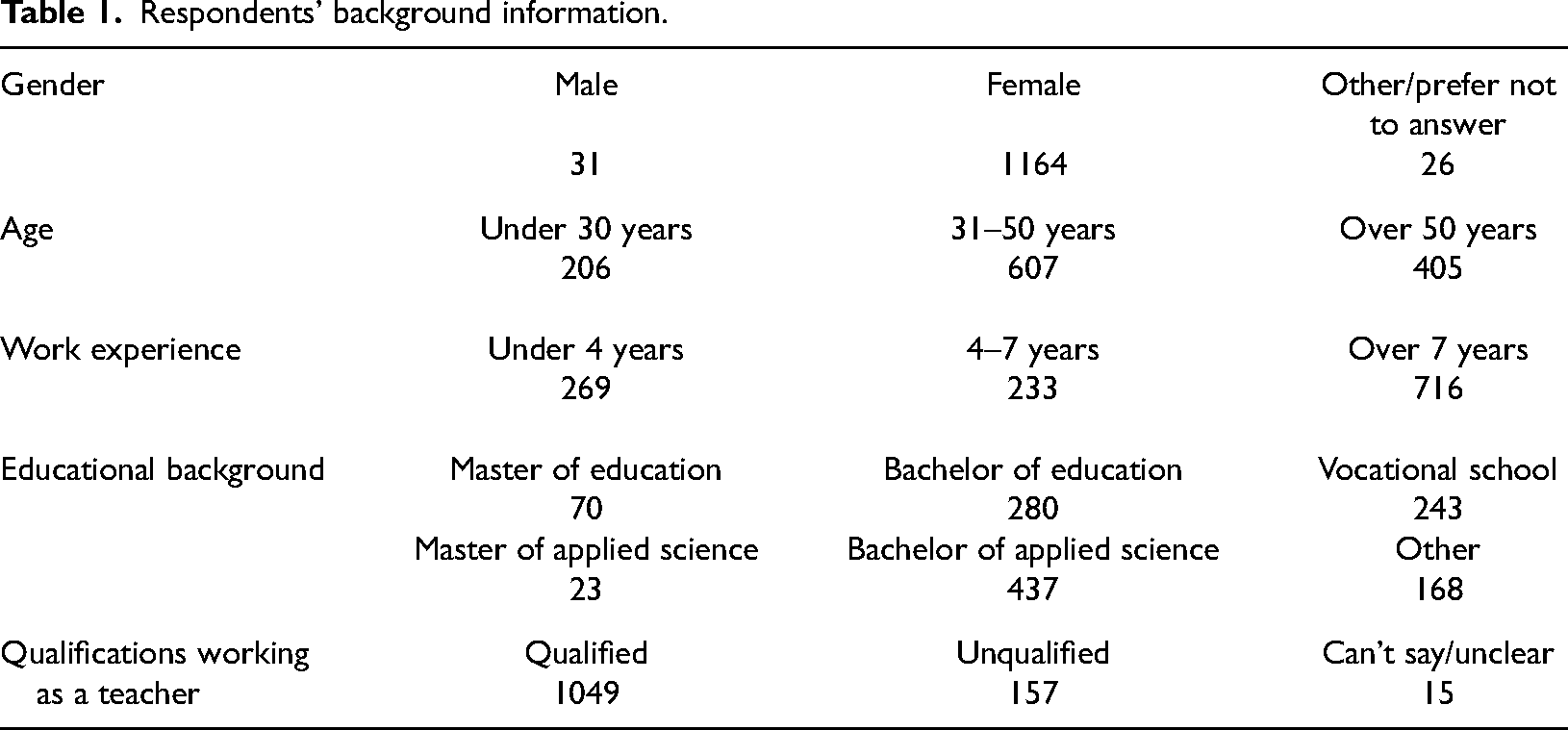
Our research is interested in how team leadership profiles differ and whether explanatory factors can be found for them. We are interested in whether factors based on age, work experience or educational background influence team leadership. The majority of respondents to our survey were women (1164). Of the respondents 206 were under 30 years old, most of the respondents (607) represented the age group between 30 and 50 years, and 405 respondents said they were over 50 years old. Three respondents prefer not to answer the question of age. Of the respondents, 269 reported less than 4 years of work experience, 233 respondents reported work experience between 4 and 7 years and 716 respondents represent more than 7 years of work experience in ECE positions. There were also differences in the respondent's educational backgrounds when 350 reported that they had graduated as teachers from a university (Bachelor or Master of Education), 460 had a background in university applied science (Bachelor or Master of Applied science) and 411 respondents stated that they represented some other education. Of the respondents, 1049 reported that they have a qualification to work as a teacher. Taking into account previous surveys and studies, we estimate that the respondents represent the national situation in Finnish ECE at the time of data collection (see e.g., Ranta, 2020). Regarding background issues, we wanted to check that teachers felt they had leadership responsibilities. Of the respondents, 99.2% said that they were responsible for the pedagogical activities of their groups. This background information is presented in Table 1. Answering every question was voluntary.
Respondents’ background information.
Instrument
Team leadership has been studied in several different studies using different metrics. Often, these metrics study team leadership behaviour from a specific perspective, such as through shared leadership (e.g., Arnold et al., 2000; Hoch et al., 2010), developing team resilience (e.g., Sommer et al., 2016) or through transformational leadership (e.g., Dionne et al., 2004). In ECE, not much attention has been paid to how teachers lead the different processes of teamwork. This is why we wanted to use the measurement that comprehensively considers the leading of the different processes of teamwork to strengthen team performance and it is adjustable to the context of ECE. In our research, we chose to utilise the TLQ measure that specifically studies the behaviour of team leaders from the perspective of promoting teamwork performance and efficiency. Morgeson et al. (2010) developed the TLQ using an extensive literature review. The researchers found 15 functions related to team efficiency, through which the team leader's behaviour is studied. According to Heikka et al. (2018), a teacher can act as either a formal or informal leader in his team, depending on the unit or municipal-level decisions. The TLQ meter enables the study of team leadership, whether the teacher acts as a formal or informal team leader (Morgeson et al., 2010).
By utilising the TLQ measure, we, together with the research team, modified the measure to suit the ECE context. Each item was discussed, and the meaning of each word was debated. This type of approach makes a higher level of analysis possible when the quality to be studied is jointly agreed upon (see Leedy and Ormrod, 2001). Twelve leadership-related functions were selected for our meter, each of which included five items. The survey is built upon three different 7-point Likert scales: (a) assess how well the item describes you, (b) assess how well the item describes team leadership and (c) assess how often the following items appear in your action (see Appendix 1). In the questionnaire, nine items have an inverse scale. In addition, the questionnaire was tested three times, asking for detailed feedback on the contents of the items. Through the feedback, we could clarify and transform the items into a more understandable form.
The TLQ divides team leadership into two phases: the transition and action phases. First, in the transition phase, teams focus on activities that enable them to achieve their goals. The primary focus of the transition phase is not direct task work but activities that create the structures and processes that enable the quality of future ECE activities. The functions of team leadership related to the transition phase are defining the mission, goals and standards of performing, organising and structuring roles and activities and facilitating feedback processes in the team. The action phase focuses on team activities that directly contribute to the achievement of the team's goals. During the action phase, team leadership includes monitoring the team, managing team boundaries, challenging the team, performing the teams’ work, problem-solving, providing resources, encouraging the team to self-manage and supporting the social climate (Morgeson et al., 2010).
Transition phase leadership functions
Define mission: The primary task of the team leader is to ensure that the mission of the team is clear and to set realistic but challenging goals and that these goals are shared among the team members. It is especially important that all team members understand their responsibilities so that the team's actions are directed towards achieving goals. The defined mission function lays the foundation for the team's common identity and strengthens the team's mutual relations. Establish expectations and goals: To promote team performance, setting team goals and expectations is one of the most important tasks of team leadership. The team leader will work alongside the team and individual team members to develop goals and expectations for operations and operational development. Structure and plan: The task of the team leader is to organise and plan the team's work. The team should develop a shared understanding of how best to coordinate team members’ activities and work together to achieve goals. This function includes determining how the work will be accomplished (e.g., different methods), clarifying team members’ roles, scheduling work and ensuring timing. This function directs the team's activities, coordinates teamwork, develops activities and standardises team processes. Provide feedback: Providing feedback to the team and team members allows the team to evaluate their activities and adapt their activities when necessary. Activities should be evaluated regularly according to the criteria or assessment metrics selected by the team for their performance. Feedback processes are an integral part of the team leadership process so that teams can develop (Morgeson et al., 2010).
Action phase leadership functions
Monitor team: Monitoring is a critical form of team leadership because it provides information for other team leadership functions. Monitoring ensures the team's functionality and effectiveness. This function requires monitoring and evaluating the team's progress and ensuring that they are performing up to their potential. Managing team boundaries: This function requires the management of team relations within the context of the organisation (in the ECE unit). Although the team works tightly with its own child group, the team's boundaries must be loose enough that the team will not be isolated. By managing the team's boundaries, the team leader exchanges information that is important for the team and enables the necessary cooperation with other teams. Challenge team: This function includes challenging the team's methods, assumptions and processes to find the best ways for the team to do its work. The team leader is responsible for ensuring that the team seeks to create new approaches or develop existing methods. It is important that team members critically evaluate established functions, look for alternative ways to work and consider the suitability of new ideas. Perform team task: This function directs the team leader to an active role in the team by participating, helping, intervening and acting as an example within the team. The purpose of this function is to support the team and team members with their tasks. Solve problems: The team leader should diagnose challenges and find solutions to any problems that prevent the team from functioning up to their potential. Function, in this context, means carefully identifying and diagnosing task-related problems with the help of a team to combine the expertise of a team member to analyse problems and find solutions. Provide resources: Teams must have the necessary resources to perform their tasks (e.g., informational, expertise and materials). This function includes actions to secure these resources. Having the necessary resources and ensuring their proper functioning are important parts of team leadership, as they create the conditions for the team to perform. Encourage team self-management: This function includes the idea of team members’ self-management and directs the use of more autonomous work structures. By supporting and encouraging team members to solve problems related to tasks and teamwork themselves, a team leader can encourage a team to operate more resiliently and adaptably. Support social climate: In this function, the team leader is directed to take care of the social environment and the relationships between the team. This function is especially important when there are interpersonal issues within the team that can interfere with their performance. By supporting positive interactions between team members, the team leader can influence the quality of actions and team functionality (Morgeson et al., 2010).
Data analysis
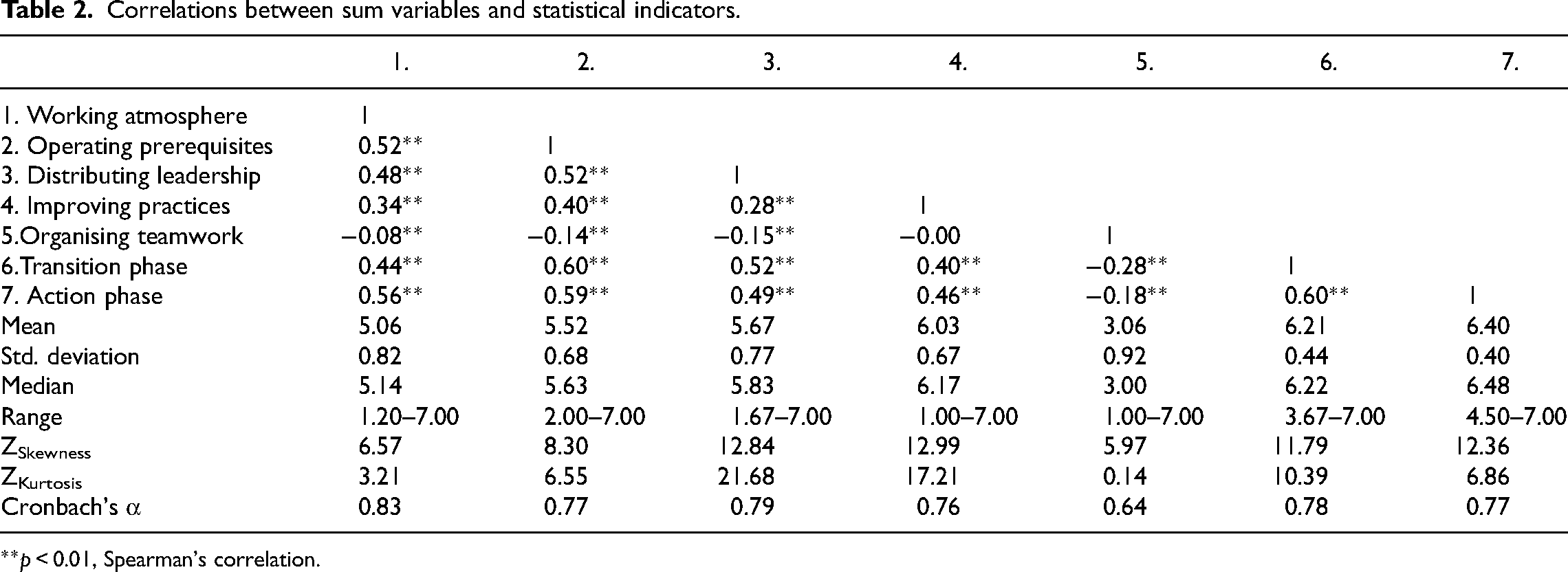
We used exploratory factor analysis as a method of principal component analysis (PCA) and the rotating method, and the rectangular Varimax was used to compact 60 TLQ variables into sum variables. The suitability of factor analysis for data evaluation used cut-off values KMO > 0.80 and Bartlett's sphericity test p < .001 (Field, 2013). For team leadership, the sum variables (scaling to the original scale) were formed from the variables of the principal component solution. The sum variables’ reliability was considered using Cronbach's alpha (Table 2). The normal distribution and symmetry of the team leadership sum variables were considered using skewness and kurtosis.
Correlations between sum variables and statistical indicators.
**p < 0.01, Spearman's correlation.
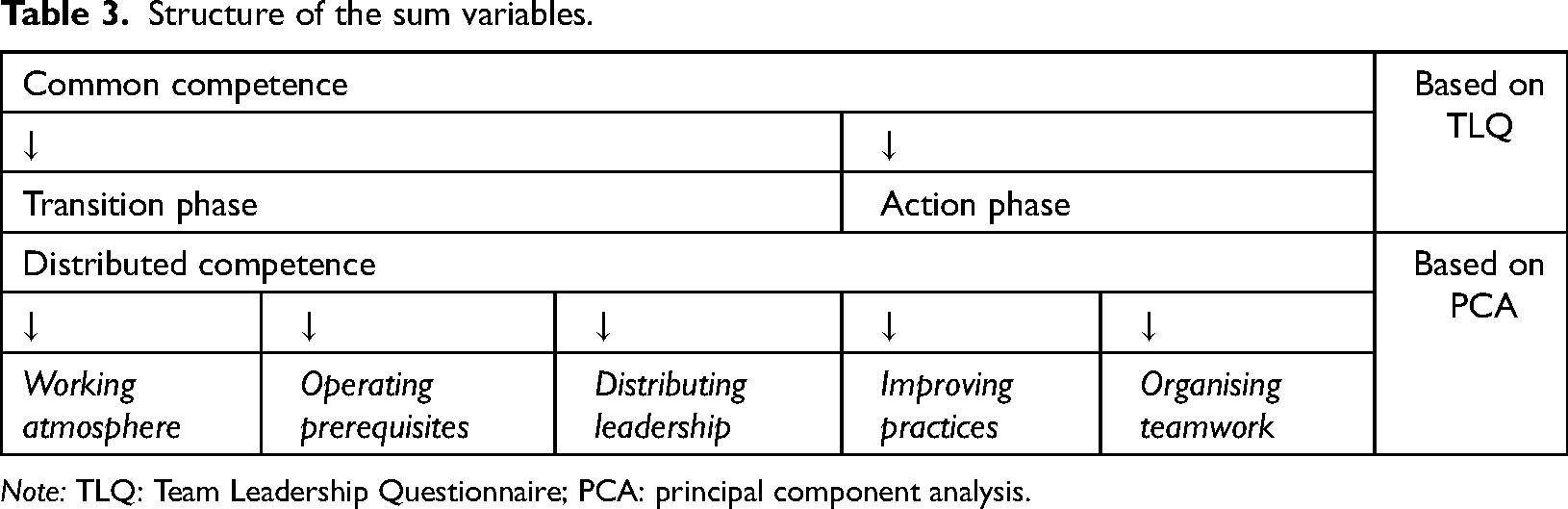
The variables to be included in the PCA were reduced on the basis of variance so that only those variables with a variance greater than 1 were included in the PCA. PCA is a statistical method based on variance; thus, variables with insufficient variance impair the reliability of PCA. A total of 39 variables with a variance greater than 1 were found in the data. The PCA divided 39 variables into nine principal components (KMO = 0.88 and Bartlett's sphericity test p = .000). The values of the communality of the variables ranged from 0.36 to 0.66. The overall explanation rate for the nine main components was 48.95%. A total of five mean sum variables with Cronbach's alpha values ranging from 0.64 to 0.83 were constructed from the nine principal components, which can be considered acceptable (George and Mallery, 2003). The five sum variables consisted of 33 variables. Based on the TLQ, 21 variables with a variance of less than 1 were divided into transition (Cronbach's alpha = 0.77) and action (Cronbach's alpha = 0.78) phase sum variables. At least two researchers were involved in all stages of the analysis. The structure of the sum variables is shown in Table 3.
Structure of the sum variables.
Note: TLQ: Team Leadership Questionnaire; PCA: principal component analysis.
This study used non-parametric statistical tests, as the z-scores of skewness and kurtosis of the sum variables were larger than 1.96 (Field, 2013). Z-scores of skewness and kurtosis, as well as the means and medians of the sum variables, are reported in Table 2. Connections between sum variables were considered using Spearman's rank correlation coefficient (rs) (Table 2).
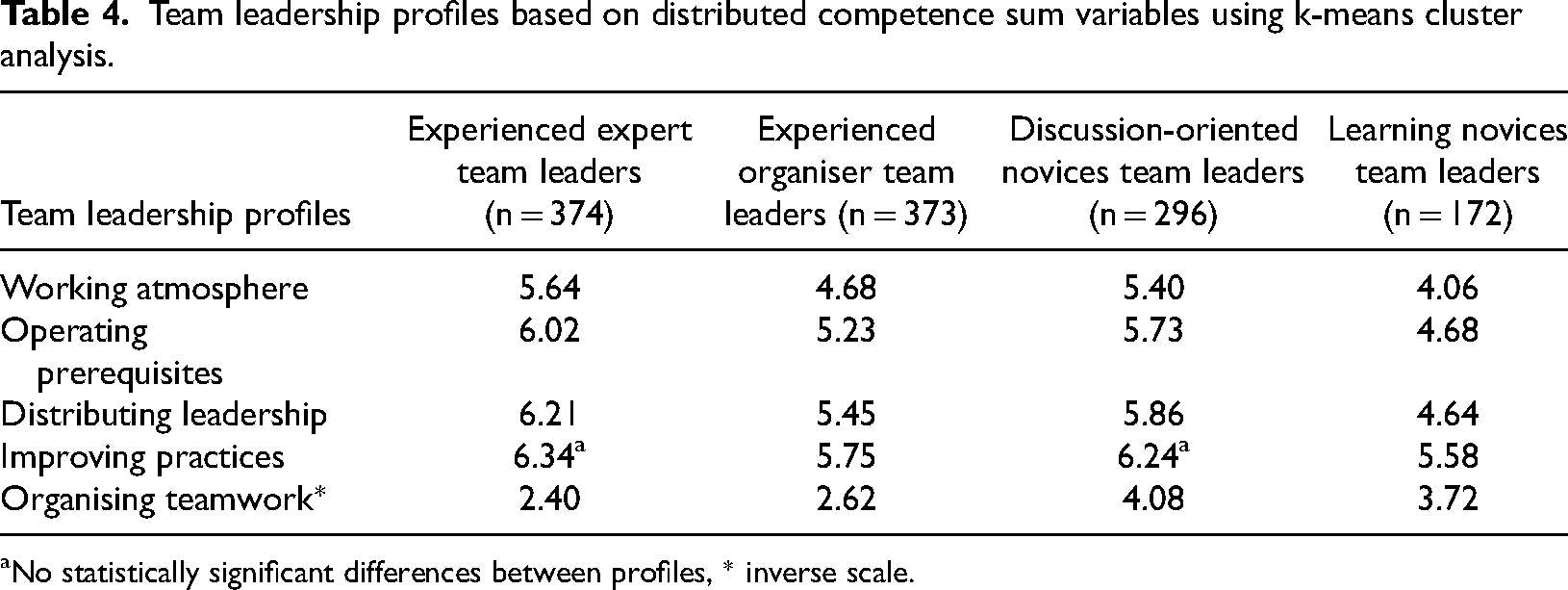
K-means clustering was used to group respondents (Metsämuuronen, 2009). In each grouping, the data were clustered in seven rounds with k-values of 2–8. The analysis was performed by looking at the differences of the groups by variable (i.e., by using analysis of variance [ANOVA]), the number of iteration rounds and the sizes of the formed groups in each round. In addition, the smallest difference between the two group centres was determined. Based on the different solutions, a cluster model was developed that would clearly distinguish the groups. The greatest value of change in the separation of group centres was sought using the last leap method (Gupta et al., 2018). This method provides a search for solutions in which the groups are as far apart as possible. In analysing the data, k-means clustering was used to form team leadership profiles. The profiles and group centres found are shown in Table 4.
Team leadership profiles based on distributed competence sum variables using k-means cluster analysis.
No statistically significant differences between profiles, * inverse scale.
The differences between groups of respondents obtained by k-means clustering and sum variables were studied using the Kruskal–Wallis test, and post-testing pairwise comparisons were conducted using the Bonferroni correction (Field, 2013). The differences in the groups of respondents were studied using Friedman tests. In the interpretation of the statistical differences of the Kruskal–Wallis test effect is used as the number R, the interpretation limit of a medium-sized effect is 0.30 < R < 0.50 (Cohen, 1988) and in Friedman test effect is used Kendall's W, the interpretation limit of medium-sized effect is 0.30 < R < 0.50 (Tomczak and Tomczak, 2014). Comparisons of categorical variables were conducted using chi-square tests. In the interpretation of statistical differences, Cramer's V was used as the effect number, the interpretation limit for a medium-sized effect is 0.30 (Tähtinen et al., 2020). Deviations were determined using standardised residuals (rs) and the lower limit of significant (p < .05) differences was 1.96 as the value of the residual (Field, 2013). In cases where the assumptions of the chi-square tests were not valid, the results were verified using the Monte Carlo simulation. Test results are reported using means, medians, p-value and effect numbers describing statistical significance.
Results
Based on our data, we studied how teachers’ team leadership in ECE centres is realised based on self-assessment. Our analysis is based on seven sum variables, which can be divided into the following:
Five PCA-based sum variables describing distributed competence: working atmosphere, operating prerequisites, distributing leadership, improving practices and organising teamwork; and Two TLQ-based sum variables describing common competence: the transition phase and the action phase.
The working atmosphere sum variable contains statements related to maintaining and supporting the team atmosphere. The operating variable involves claims that address the support of team members in an appropriate way, for example, by providing the necessary tools. The distribution variable for distribution leadership includes statements that promote the self-direction of team members. The sum variable of improving practices contains statements related to the evaluation and development of operations. The variable regarding the value of organising teamwork is inverse (negative) and contains statements specifically related to the organisation and management of the team's activities. Descriptions of the transition and action phase sum variables found in “Methods” section, and correlations between all sum variables and statistical indicators (mean, standard deviation, median, skewness and kurtosis) are shown in Table 2.
As can be seen in Table 2, Spearman's correlations between the sum variables, except for one correlation pair, are statistically significant. Cronbach's alpha values for all sum variables are acceptable, and other indicators suggest that the data should be examined using non-parametric tests. The means and medians show that teachers feel quite good in the different areas of team leadership skills.
To determine the difference in team leadership experiences of teachers, respondents were grouped using sum variables 1–5 (Table 4) using k-means cluster analysis. The most suitable solution proved to be a solution in which teachers were divided into four different team leadership profiles in terms of distributed competence; experienced expert, experienced organiser, discussion-oriented novices and learning novices team leaders. Two clear extremes were discovered in the team leadership profiles: experienced expert and learning novices. In the profiles of experienced expert, leadership was strongest in all areas, while in learning novices, it was the weakest. In the profiles of experienced organiser and discussion-oriented novices, competence was focused on specific areas.
Experienced expert consisted of the set of respondents with the highest values of cluster centres in each sum variable. Teachers in this team leadership profile were also well-versed in the various aspects of the transition and action phases. Learning novices represented the opposite and included those respondents who received the lowest values of cluster centres, with the exception of one sum variable (organising teamwork). Teachers in this profile had the most to learn in different areas of team leadership. The biggest differences between experienced organiser and discussion-oriented novices were found to be in the working atmosphere and organising teamwork sum variables. Discussion-oriented novices paid more attention to the team atmosphere, and experienced organiser paid attention to the organisation of the team and the operations. The values of the discussion-oriented novices’ cluster centres were also higher in the operating prerequisites, distributing leadership and improving practices sum variables.
Next, we examined which of the background variables (Table 1) were related to team leadership profiles and could explain whether the respondents belonged to one of the profiles. Age and work experience (Table 5) had a statistically significant, low-effect relationship to the different profiles. Age and work experience correlated strongly (r = 0.62, r2 = 0.38) and were statistically very significant (p = .000); thus, work experience was chosen as the subject of this study.
The connection between work experience and team leadership profiles.
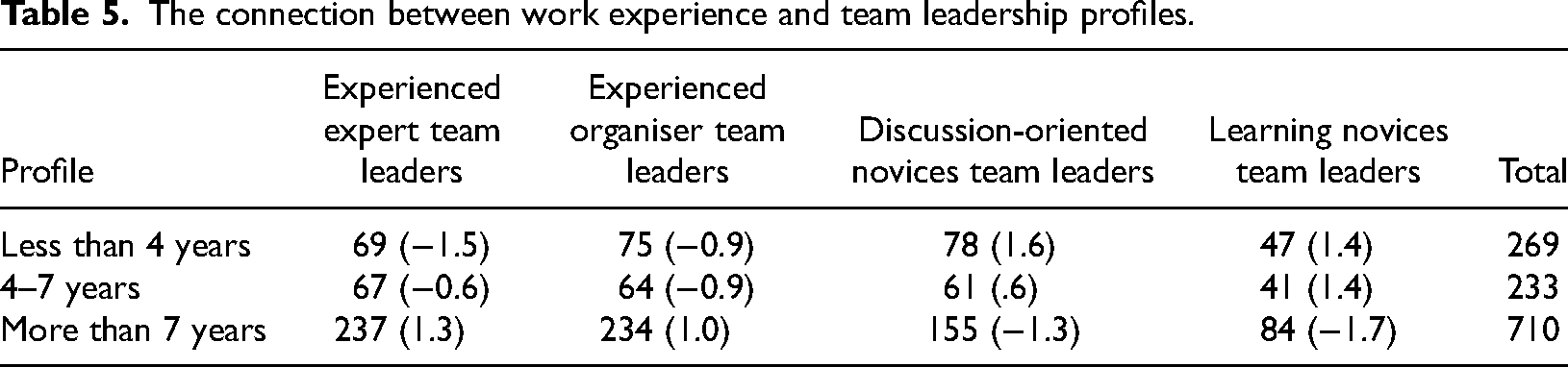
A statistically weak effect was found between team leadership profiles and work experience (χ2(6) = 18.13, p = .01, Cramer's V = 0.10). Teachers with less than 4 years of work experience were overrepresented in the profiles for discussion-oriented novices and learning novices and underrepresented in the experienced expert’ profile. Teachers with 4–7 years of work experience were overrepresented in the learning novices’ profile. There was no clear underrepresentation of teachers with 4–7 years of work experience in any profile. Teachers with more than 7 years of work experience were overrepresented in the profiles for experienced expert and experienced organiser and underrepresented in the profiles for learning novices and discussion-oriented novices.
As seen in Table 5, work experience had a weak effect on the different team leadership profiles. Teachers with less than 4 years of work experience were most likely to be among the profiles for discussion-oriented novices and learning novices. Similarly, teachers with 4–7 years of work experience were most likely learning novices, and teachers with the most work experience were most likely to be experienced leaders.
Differences in the experiences of teachers’ team leadership profiles in the common and distributed competencies sum variables were examined using the Kruskal–Wallis test with Bonferroni correction (Table 6), and intraprofile differences in the common and distributed competencies sum variables were examined using Friedman ANOVA (Table 7). Table 6 shows that all profiles have statistically significant differences in terms of both common competence and distributed competence when the differences are considered by sum variables.
Medians of team leadership profiles and differences between profiles by sum variables.
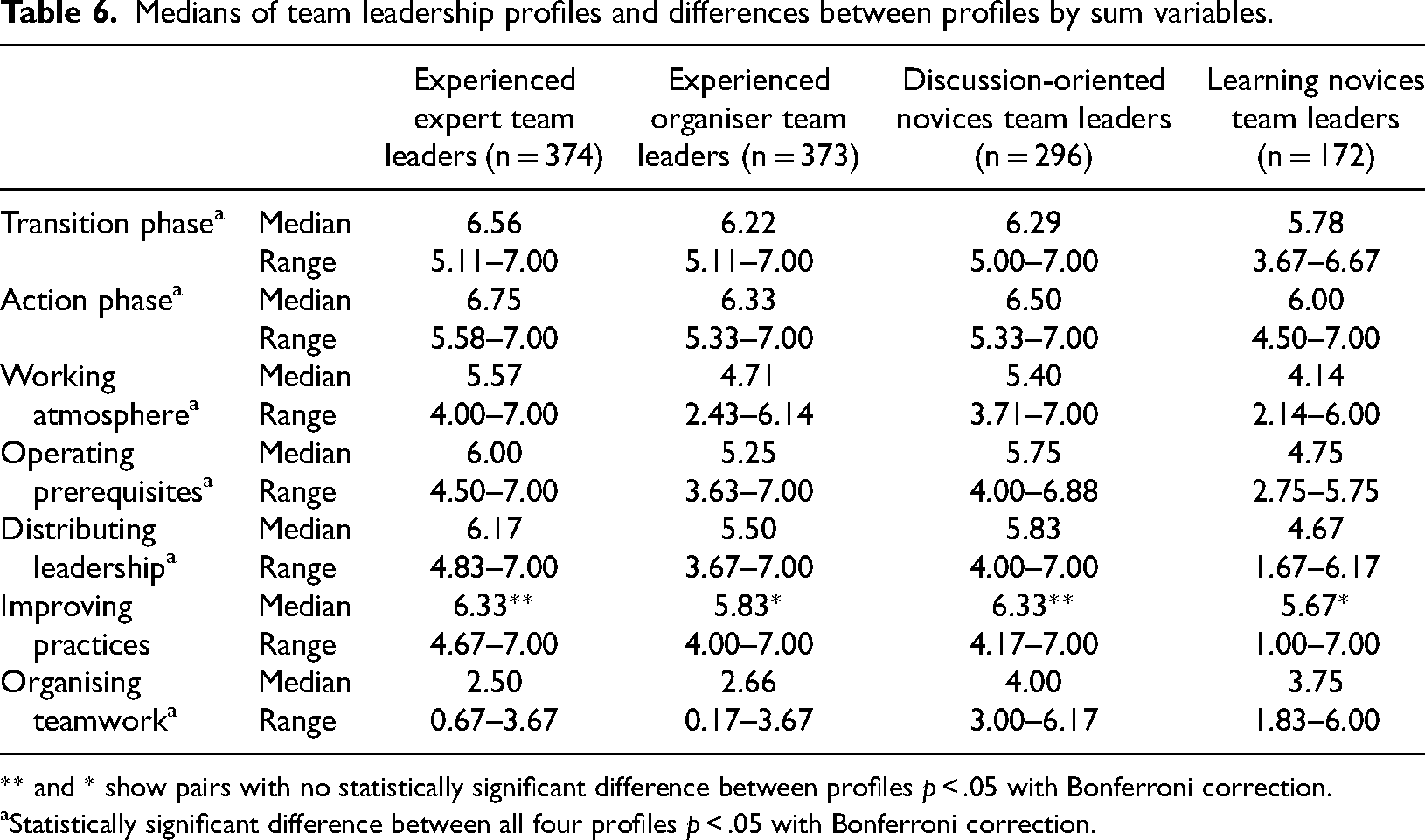
** and * show pairs with no statistically significant difference between profiles p < .05 with Bonferroni correction.
Statistically significant difference between all four profiles p < .05 with Bonferroni correction.
Comparison of sum variables by profile according to median: I: Experienced expert team leaders, II: Experienced organiser team leaders, III: Discussion-oriented novices team leaders, IV: Learning novices team leaders.
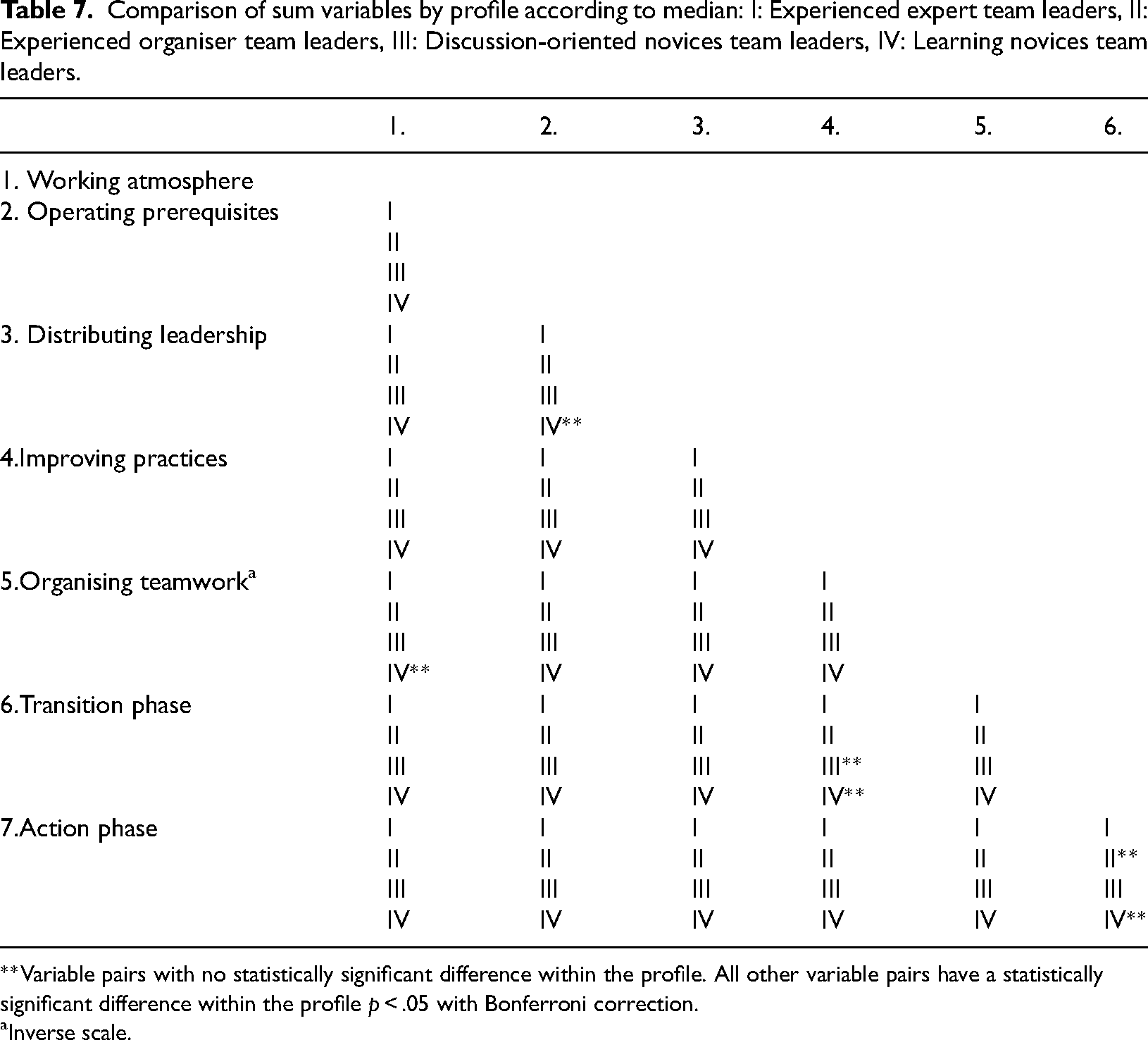
**Variable pairs with no statistically significant difference within the profile. All other variable pairs have a statistically significant difference within the profile p < .05 with Bonferroni correction.
Inverse scale.
In terms of variables of common competencies, all four team leadership profiles showed statistically significant differences when viewed as divided into transition phase (χ2(3) = 382.11, p = .000, R = 0.56) and action phase (χ2(3) = 421.93, p = .000, R = 0.59) sum variables. The effect of the profiles on perceived common competence was large. In terms of distributed competencies, all four team leadership profiles showed statistically significant differences in the sum variables of working atmosphere (χ2(3) = 607.27, p = .00, R = 0.71), operating prerequisites (χ2(3) = 586.51, p = .00, R = 0.69), distributing leadership (χ2(3) = 548.72, p = .00, R = 0.67) and organising teamwork (χ2(3) = 773.58, p = .00, R = 0.80). For the sum variable of improving practices, the profiles for discussion-oriented novices and experienced expert and the profiles for learning novices and experienced organiser did not differ. In all other profile pairs, the difference was statistically significant, and the effect size range was 0.68–0.86. The effect of the profiles on perceived distributed competence was large. Table 7 examines the internal differences in team leadership profiles between the sum variables of distributed and common competencies.
In the experienced experts’ profile, differences were found between the sum variables of all distributed and common competencies (χ2(6) = 1516.23, p = .000, Kendall's W = 0.68). In the experienced organisers’ profile, statistically significant differences (χ2(6) = 1724.48, p = .000, Kendall's W = 0.77) were found between the sum variables, except for one pair of sum variables (transition phase–action phase). Similarly, in the discussion-oriented novices’ profile, with the exception of one pair of sum variables (improving practices-transition phase), differences were found in all sum variables (χ2(6) = 1161.26, p = .000, Kendall's W = 0.65). The learning novices’ profile had four pairs of sum variables with no statistically significant difference. A statistically significant difference was found between the other pairs of sum variables (χ2(6) = 783.78, p = .000, Kendall's W = 0.76). In all profiles, the effect size of the differences between the sum variables was large (Kendall's W > 0.5).
Competence and experience skills showed statistically significant differences in various areas of team leadership and among different areas (Table 7). Based on the results it is clear, that teachers, as team leaders, act with different levels of knowledge and competence in team leading. Due to this variation, teachers can be grouped into four different knowledge and competence profiles in team leading.
Discussion
Team leadership is a demanding task that is generally combined into one significant part of a well-functioning team. The team leader must be able to master a number of different functions, including directing, monitoring, evaluating, developing, supporting the atmosphere, assisting team members and challenging the team (see e.g., Cohen and Levesque, 1991; Morgeson et al., 2010; Salas et al., 2005). In this research, using the TLQ, we aimed to discover to what extent teachers experienced team leadership functions being implemented in Finnish ECE centres. Based on our analysis, we were able to find common and differentiated competencies for all respondents. Common competence included statements about almost all aspects of the TLQ measure and could be described as structuring the basic task. The structure of the basic task was divided into the transition phase and action phase sum variables. Differentiated expertise was built on five sum variables: working atmosphere, operating prerequisites, distributing leadership, improving practices and organising teamwork.
This research shows that the team leadership skills and competencies experienced by ECE teachers vary. Competence and skills showed statistically significant differences between profiles describing varying team leadership in different areas. Thus, it could be said that in Finnish ECE centres, team leaders have varying levels of knowledge and skill, and these differences can be classified into four different profiles that represent various realisations of team leadership performed by ECE teachers: experienced experts, experienced organisers, discussion-oriented novices and learning novices.
The experienced team leader profile was overrepresented by teachers with more than seven years of work experience. Evolving team leaders were particularly represented by teachers with less than four years of work experience. Experienced expert team leaders were represented by teachers who had a good command of the various functions of team leadership. In contrast, learning novices team leaders still had much to develop in all differentiated competencies. Our research indicates that work experience is the key to becoming an experienced expert team leader. The significant weight given to work experience may be connected to the fact that in teacher training, professional collaboration and teacher leadership in supporting the child's learning is only marginally covered (e.g., Campbell-Evans et al., 2014; Mistry and Sood, 2012). Correspondingly, Kahila et al. (2023, in press) discovered in their recent study that in students’ practicums, practicing pedagogical leadership focused on the children's group activities, leaving aside the team leadership. The understanding of the tasks and responsibilities of professionals with various educational backgrounds may remain unclear during teacher education (see also Ylitapio-Mäntylä, 2016).
Experienced organisers and discussion-oriented novices team leaders were between the expert and learning team leader profiles. Experienced organiser team leaders paid special attention to the organisation of activities and the division of tasks, while in the discussion-oriented novices team leaders’ profile, a good working atmosphere was emphasised. Based on our research, it is hard to identify which of these two profiles is more appropriate for the ECE context; hence, further research in this area is needed. However, prior research has shown that the quality of ECE activities is mostly impacted by the teacher's planning, organising and evaluating activities (see e.g., Heikka et al., 2018). On the other hand, several studies of teamwork and pedagogical leadership emphasise the importance of the mutual interaction of team members and an open discussion culture for success in teamwork and well-being at work (Fonsén et al., 2022; Salas et al., 2005; Uusiautti and Määttä, 2014). An open and conversational work culture is important so that team members dare to openly discuss work-related problems and share their own ideas (Cohen and Levesque, 1991; Dickinson and McIntyre, 1997; Ranta and Uusiautti, 2022; Tarricone and Luca, 2001). However, focusing only on creating a positive work atmosphere can result in feelings of inequality and fear of causing conflicts when organising the division of labour (Bøe and Hognestad, 2017; Cervantes and Öqvist, 2021; Karila and Kinos, 2012).
Limitations of this study
The study has some limitations that should be noted. The generalisability of the results is limited. First, the generalisability is limited by the fact that the degree of explanation for the PCA remains quite low, even though the sum variables could be considered sufficiently reliable. It should be noted that we modified the survey to reflect the ECE context and its peripheral conditions. Consequently, our research was a pilot of this survey, which also revealed weaknesses in the survey in the ECE context. It is clear that the survey needs to be condensed and the layouts of the questions re-examined to improve the reliability of the survey results. Second, the Friedman test is an unordered multigroup comparison test, but its problem is that it lacks a precise hypothesis. The test simply looks for more intergroup variation than can be expected by chance. For this reason, caution should be taken in interpreting and generalising the results. Third, the Kruskal–Wallis test can provide a result that differs clearly from the exact level of significance in a situation where multiple respondents in relation to an independent variable receive the same values. Therefore, when interpreting paretic comparisons, Bonferroni corrected p-values were used. However, in this study, the large effect sizes of non-parametric tests increase the reliability of the results and their practical significance. Based on this study, it is not possible to say with certainty what explains teachers’ different experiences, variations and differences in team leadership. Further research is needed to confirm the results of this study. Finally, the results of the study are also weakened by the fact that the measurement of team leadership was based on teachers’ self-assessments. This should be taken into account when drawing conclusions, and care should be taken in the generalisability of the results.
Conclusion and implications
ECE teachers are expected to contribute to leadership in ECE, in their children's groups, in their teams and in the whole work community. In this study, leadership as part of the teacher's profession was examined from the perspective of team leadership by exploring how teachers perceive the implementation of team leadership in their teams. The results confirm previous studies that teachers’ experiences of team leadership vary, and some teachers may find it challenging to identify as team leaders (e.g., Antoneva et al., 2018; Campbell-Evans et al., 2014; Heikka et al., 2018). It has been shown also that teachers’ attitudes towards leadership also have a central effect on teachers’ commitment to leading their teams (e.g., Heikka et al., 2021). Based on variation of team leadership skills, four different team leader profiles can be identified, which were experienced experts, experienced organisers, discussion-oriented novices and learning novice.
The importance of work experience for the implementation of team leadership was highlighted in the results of this study. According to teachers’ experiences of team leadership, it appears that teachers’ ability to act as team leaders develops and changes during their careers. However, work experience does not always lead to teachers’ experience they have extensive competence in all the different functions of team leadership. Recognising different leadership profiles provides opportunities for more targeted training and can help better support the development of leadership skills during teacher education and teachers’ working lives. Therefore, it would be important to make efforts to actively promote teachers’ professional development towards team leadership. Additionally, more knowledge is needed on how to support the development of leadership skills both during teacher education and at the beginning of working life. Based on this study, it is also essential to consider whether the bachelor's level teacher training meets the requirements of the competences needed in ECE teacher's profession today.
Supplemental Material
sj-docx-1-ema-10.1177_17411432231168234 - Supplemental material for Team leadership profiles in Finnish early childhood education centres – Teachers’ experiences of team leadership
Supplemental material, sj-docx-1-ema-10.1177_17411432231168234 for Team leadership profiles in Finnish early childhood education centres – Teachers’ experiences of team leadership by Samuli Ranta, Henri Heiskanen and Sanni Kahila in Educational Management Administration & Leadership
Footnotes
Declaration of conflicting interests
The author(s) declared no potential conflicts of interest with respect to the research, authorship, and/or publication of this article.
Funding
The author(s) received no financial support for the research, authorship, and/or publication of this article.

Supplemental material
Supplemental material for this article is available online.
Author biographies
References
Supplementary Material
Please find the following supplemental material available below.
For Open Access articles published under a Creative Commons License, all supplemental material carries the same license as the article it is associated with.
For non-Open Access articles published, all supplemental material carries a non-exclusive license, and permission requests for re-use of supplemental material or any part of supplemental material shall be sent directly to the copyright owner as specified in the copyright notice associated with the article.
