




Abstract
The COVID-19 pandemic caused education systems to embrace remote schooling and online learning. In the context of this dramatic change, the principal's role has also changed. Instead of interacting face to face, school leaders had to become distant leaders operating digitally. The field has no knowledge of digital instructional leadership. The study used new and adapted measures to explore principals’ digital instructional leadership, its mechanisms of operation, and its outcomes. In particular, the research examined how digital instructional leadership affects perceived student learning in online settings through teachers’ intrinsic motivation for digital instruction (i.e. the mediator). The study used data from 380 teachers in Bahrain. Results indicated support for mediation. This is an empirical exploratory study, and therefore it is limited in scope. Nevertheless, its concepts, measures, and findings offer valuable contributions to research and practice. The limitations, findings, and implications of the study are discussed. The significance of the study derives from the growing incorporation of hybrid schooling in education and digital instructional leadership practices in mainstream principalship.
Keywords
Introduction
Although the new millennium brought a high level of technology and offered promising possibilities for its integration into schools and school management (Flanagan and Jacobsen, 2003), empirical knowledge about principals’ digital 1 instructional leadership is scarce. The COVID-19 pandemic marks an opportunity to address this gap. The outbreak of the COVID-19 pandemic in the last two years and the restrictions it brought about presented a difficult challenge for education systems worldwide (e.g. Longmuir, 2021; Pollock, 2020). Many countries adopted remote schooling and online instruction to ensure that the education systems continue to function. As a result, remote schooling and online instruction started being widely used (OECD, 2021; Weiner et al., 2021).
This made school principals focus on leading schools virtually and managing online learning (Pollock, 2020). Online schooling is an Internet-based K-12 delivery model in which students participate in online courses that typically include watching teachers’ live or recorded lectures, participating in discussion groups and forums, performing online assignments and tests, and more (Black et al., 2021; Saultz and Fusarelli, 2017). Although online schooling existed before COVID-19, it was limited in scope and far from being a mainstream approach (Saultz and Fusarelli, 2017). In the last two years, during the pandemic, many if not most schools in developed countries engaged to varying degrees in virtual and online learning. For example, about 25% of surveyed districts in the US intended to run online schools in 2021–2022, a dramatic increase from the 3% level reported in the pre-pandemic era (Diliberti and Schwartz, 2021). In addition, K-12 schooling data collected in 59 countries during COVID in 2021 by Johns Hopkins University, the World Bank, and UNICEF indicated that 20% to 23% have adopted a remote online schooling model and 72% to 75% adopted a hybrid online and face-to-face model (Vincent-Lancrin et al., 2022).
The pandemic provides the chance to further study the application and effectiveness of digital instructional leadership in schools (Pollock, 2020). The present study focused on the following research questions associated with the wide implementation of digital instructional leadership in schools: (a) what are the conditions needed for teachers to teach online effectively and for their students to learn effectively? and (b) in what way does the school principal, as a digital leader, support these conditions, bolster the teacher's motivation to teach online, and enhance perceived student learning? Thus, the current research sought to examine the effect of principals’ digital instructional leadership during COVID-19 on teachers’ intrinsic motivation for digital instruction, and in turn, the effect of school leadership and teachers’ motivation on perceived learning. The present quantitative study is exploratory in nature, as it examines topics that have received little research attention in the past (Bermejo et al., 2014). The study provides important knowledge that is currently lacking in the educational administration community about leadership in an expanding schooling model.
Recent scholarly syntheses indicate that teachers’ attitudes and practices are central mechanisms through them instructional leadership exerts its effects on students’ learning and academic success (Hallinger et al., 2020); of these mechanisms, motivation is viewed as crucial (Gümüş et al., 2021). One of the strong and supported claims regarding successful school leadership is that motivation is a key path by which school leadership contributes to learning (Leithwood et al., 2020). The proposed model of the present research is shown in Figure 1.
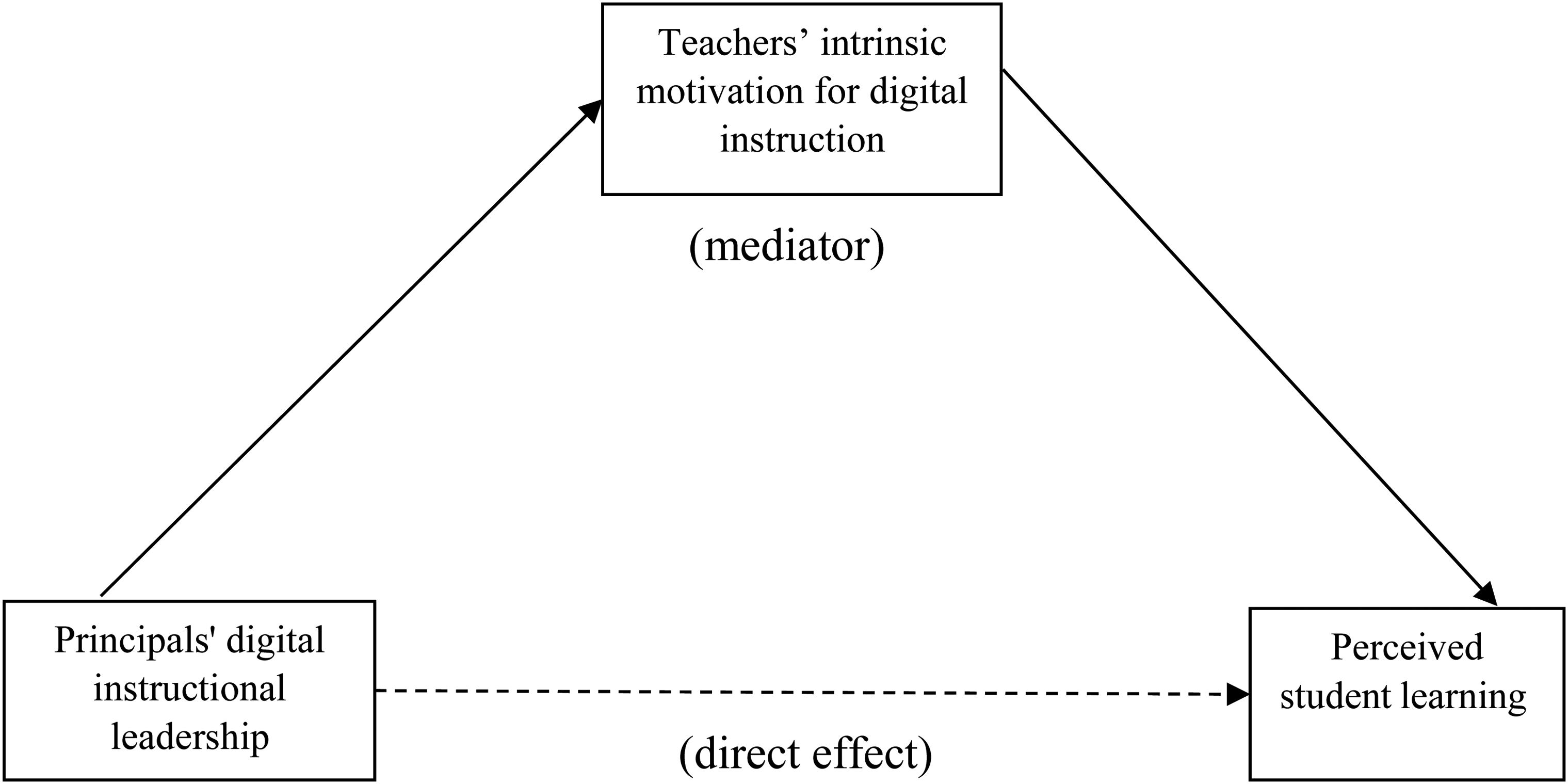
The proposed mediation model.
The theoretical and practical considerations of conducting research under COVID constraints resulted in the research technique presented in the flowchart in Appendix A.
Theoretical background
Principals’ instructional leadership
In recent years, a large body of empirical evidence has provided support for the idea that principals’ instructional leadership plays an important part in the success of schools (Bellibaş et al., 2020; Boyce and Bowers, 2018; Gümüş et al., 2021; Liu and Hallinger, 2018). The classic mainstream conceptualization of principals’ instructional leadership suggests that it encompasses three sets of behavioural components (Hallinger and Wang, 2015; Liu and Hallinger, 2018): (a) definition of school mission, which involves setting school instructional goals and communicating them to the school staff and stakeholders; (b) management of school instructional programmes, which involves supervision and evaluation of instruction, monitoring students’ progress, and coordinating the curriculum; and (c) development of school climate, which involves supporting teachers’ professional development, addressing time management, and providing incentives and rewards for both teachers and students. Recently, scholars addressing principals’ instructional leadership have distinguished between its two types: regular (i.e. at the school site) and digital (Arar et al., 2021; McLeod, 2015; Pollock, 2020; Shepherd and Taylor, 2019; Sorenson et al., 2016). Although the two manifestations have many shared aspects, it has been suggested that some differences exist between the two (McLeod, 2015; Pollock, 2020; Shepherd and Taylor, 2019).
The limited literature on digital instructional leadership is mainly theoretical (McLeod, 2015; Pollock, 2020; Sorenson et al., 2016). The few empirical studies used only principals’ self-report, which focused on their knowledge and confidence in the use of digital technologies for leading learning (Sanchez Corona, 2019; Shepherd and Taylor, 2019). Although the theoretical and empirical knowledge on digital instructional leadership is greatly lacking (Sanchez Corona, 2019; Shepherd and Taylor, 2019), there is writing and research on technological leadership in education and schools (e.g. Chang, 2012; Esplin et al., 2018). Being a digital educational leader requires the ability to use information technology and its practices, understand the dynamics of organizational change, promote a vision about the role of technology integration and its functions in school, and create opportunities for professional growth in incorporating technology (Blau and Presser, 2013; Hately and Schiller, 2003; Jones and Dexter, 2018; Richardson and Sterrett, 2018).
Nevertheless, although the potential for practising digital instructional leadership has grown as a result of the pandemic, there are no solid indications that it has been widely adopted or effective (Pollock, 2020). Adoption of instructional leadership by the principal is affected by the socio-cultural norms of the school (e.g. power distance, clan culture, and identification with instructional goals – see Shaked et al., 2020). The research available to date suggests that the move to remote schooling resulting from the COVID pandemic may have had some effect on these norms (Adams et al., 2021; Harris, 2020; Srivastava et al., 2022): (1) remote schooling is said to further undermine hierarchical functioning, and makes socio-emotional goals more central than they were in the past; and (2) remote schooling is said to destabilize existing school culture and school work culture and solidarity. Thus, it is unclear whether instructional leadership was promoted at all during the pandemic.
Perceived student learning
One of the hallmarks of successful instructional leadership is its ability to promote learning (Hallinger and Wang, 2015). The current study focuses on academic learning, which can be defined as gaining knowledge, problem-solving skills, and personal understandings, as well as on changes in the mental state resulting from individual or social experiences within an academic setting, or from both (Koballa et al., 2000; Wong, 2012). In particular, the research explores perceived academic learning. Perceived learning is defined as a ‘set of beliefs and feelings one has regarding the learning that has occurred’ (Caspi and Blau, 2008: 327). In recent years, there has been growing interest in perceived learning in online learning environments (Yunusa and Umar, 2021). This is much warranted because one of the key challenges in teaching in the 21st century is the integration of information and communication technology in schooling (Voogt et al., 2018). Online learning environments provide students with a lower level of support and guidance compared to face-to-face learning environments (Kizilcec et al., 2017). An online learning environment forces students to address the cognitive, social, and emotional hardships caused by qualities that gain importance in online learning, such as self-regulation skills (Hrastinski, 2019). Studies have indicated that the content and design of online instruction help with such hardships and affect perceived learning in an online learning environment (Barzilai and Blau, 2014). The COVID-19 pandemic has made the use of online learning environments a highly prevalent phenomenon in education, and interest in perceived learning has grown (Baber, 2020; Zhou et al., 2021). Studies have documented a positive effect of online learning environments on perceived learning mainly in higher education. Although there is no research on the effect of principals’ instructional leadership (regular or digital) on perceived student learning, the literature indicates that principals’ regular instructional leadership is related to student achievement (Hou et al., 2019; Shatzer et al., 2014). Thus, the principal's instructional leadership may promote perceived learning in online learning environments.
Teachers’ intrinsic motivation
Hu et al. (2016) conceptualized motivation as the desire to engage in goal-oriented behaviour or activity. Of the various motivation types, the present study focuses on intrinsic motivation. 2 Intrinsic motivation is defined as the ‘performance of an activity for no apparent reinforcement other than the process of performing the activity per se’ (Davis et al., 1992: 1112). In the context of teaching, it means that teachers perform the job because they view the job itself as interesting. It includes a sense of autonomy because the teachers are willing to do their job voluntarily and out of interest (Eyal and Roth, 2011). Teachers’ intrinsic motivation was found to be affected by their perception that the environment is supportive of autonomy, and that their psychological needs are being satisfied (Berkovich and Eyal, 2017; Eyal and Roth, 2011; Klaeijsen et al., 2018).
A mixed-method study conducted by Doo et al. (2020) in higher education found that instructors’ motivation for teaching digitally is related primarily to their intrinsic motivation. During the COVID-19 pandemic, given the prevalence of the need for remote schooling, the centrality of teachers’ intrinsic motivation to employ digital technology was high (Panisoara et al., 2020). A study conducted in Spain during the pandemic found that teachers’ use of digital technology was driven by intrinsic motivation, which has grown during the pandemic mostly because of a rising sense of proficiency in using these technologies (Beardsley et al., 2021).
In school settings, teachers’ intrinsic motivation was found to be influenced significantly by leadership styles, such as transformational leadership (Berkovich and Eyal, 2017; Eyal and Roth, 2011). Thus, it is reasonable to assume that principals’ instructional leadership may influence teachers’ intrinsic motivation. Boyce and Bowers’s (2018) meta-narrative review on the Schools and Staffing Survey instructional leadership research in the US showed that instructional leadership affected teacher autonomy and influence. Addressing the circumstances of COVID-19, scholars have argued that student and teacher motivation for online (remote) learning is cardinal for effective schooling (Chiu et al., 2021). Thus, although teachers’ intrinsic motivation has not been directly explored in instructional leadership research, there is some basis for investigating the effect of instructional leadership on motivation in online instruction.
Method
The current research is based on a cross-sectional survey, that is, data collection on multiple variables of interest from a population (or a sample of it) at one particular point in time. It aimed to shed light on school leadership during the COVID-19 pandemic. Data were collected by the second author. The research was located in Bahrain. Bahrain is a small country in the Gulf Region. It underwent many changes in the past few decades in social, education, health, economic, and political domains. Its economy is based primarily on the oil industry. The Ministry of Education has implemented several projects to improve the education system. Among those relevant to the present study is the King Hamad Schools of the Future project, which is based on connecting schools to the Internet, introducing technology in the schools, such as smart boards, training teachers in information technology (IT), and providing educational technology specialists for each school (AlKoofi, 2016). During COVID-19, the Ministry of Education in Bahrain took precautionary measures to limit the effect of the pandemic, including switching from physical to online learning by using digital applications in education, such as MS Teams, Zoom, and ClassDojo (Al-Rawi et al., 2021; Taufiq-Hail et al., 2021). A full listing of the items used in the survey can be found in Appendix B. The research method is presented in the flowchart in Appendix C.
Sample and data collection
The study used convenience sampling. Because of COVID-19-related complications and restrictions, the data were collected using an online survey form that has been distributed on Facebook and WhatsApp to teachers’ groups in Bahrain. The respondents included 380 teachers, 31.3% of them in primary schools, 36.1% in middle schools, and the rest in high schools; 48.7% of the sample were identified as women. Most teachers worked in a strong socio-economic school context (50.3%), and a medium one (31.8%). The vast majority of teachers had a bachelor's degree (98.7%). Teachers’ age ranged from 25 to 55 (M = 40.27, SD = 8.51), and in general the participants had considerable teaching experience (M = 13.83 years, SD = 8.14 years).
Measures
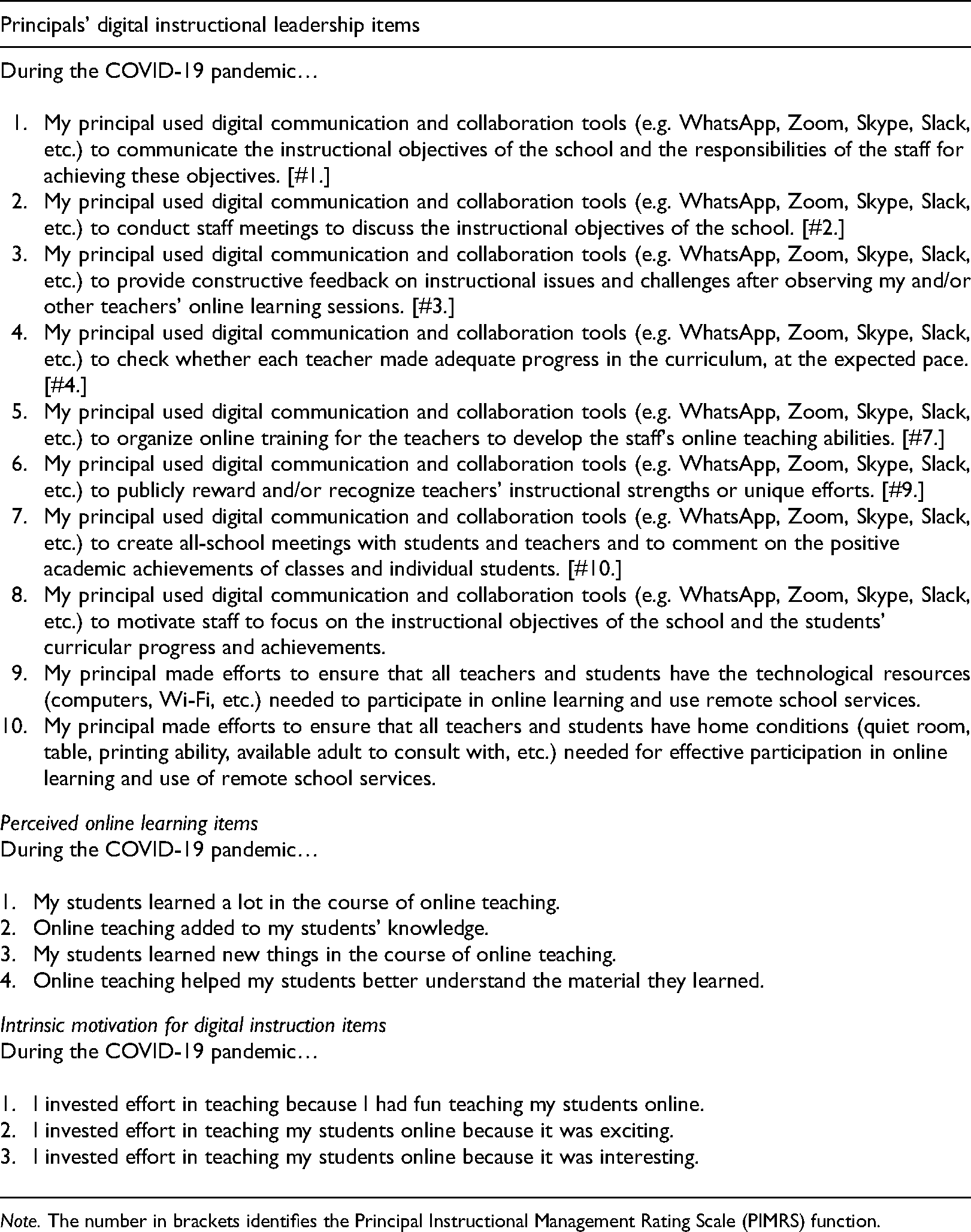
Principals’ digital instructional leadership. As no valid scale exists at this time for assessing digital instructional leadership, the study composed a new measure based on the literature. First, the authors consulted the Principal Instructional Management Rating Scale (PIMRS) conceptual framework formulated by Hallinger and Murphy (Hallinger and Murphy, 1985). According to the PIMRS, instructional leadership involves 10 functions: (#1) framing school goals, (#2) communicating school goals, (#3) supervising and evaluating instruction, (#4) coordinating the curriculum, (#5) monitoring student progress, (#6) protecting instructional time, (#7) promoting professional development, (#8) maintaining high visibility, (#9) providing incentives for teachers, and (#10) providing incentives for learning (Hallinger and Wang, 2015). Reworking the PIMRS framework to generate shorter instructional leadership measures is common (e.g. Kwan, 2020). The new items composed to reflect principals’ digital instructional leadership drew on these functions (see the list of items and their respective functions in Appendix B). A total of 7 items were composed based on 7 PIMRS functions. As functions #6 (protecting instructional time), #5 (monitoring student progress), and #8 (maintaining high visibility) were not relevant to the COVID-19 reality of lockdowns, remote schooling, and waiving on regular testing, they were excluded. The rationale for this exclusion is based on the literature. A recent study suggests that during COVID, principals had difficulty maintaining traditional responsibilities, such as monitoring learning and teachers, because of the evolving and uncertain effect of the pandemic on schooling (Reid, 2022). A large US national survey indicated that 67% of respondents (parents and students) reported lost instructional time and learning losses compared to a regular school year (Baum et al., 2021). Moreover, remote schooling is likely to undermine key elements of principals’ ability to be visible, which is largely spatial (e.g. being early in the office, being present in the teachers’ lounge, walking the school grounds, doing playground duty, and more; see a description in Eacott, 2022). In addition, because of quarantine and illness of students, educational policymakers and management often monitored completion and pass/fail percentages rather than conducting regular assessments (Ramos Jones, 2021). Second, Pollock (2020) suggested that issues related to the digital divide, home conditions for learning, and motivating staff were a key part of digital instructional leadership during the time of the COVID pandemic; therefore, the items concerning these issues were added. These three issues also surfaced in the international OECD overview of global experiences in supporting learning (mostly online and hybrid models) during the pandemic (Vincent-Lancrin et al., 2022). In total, the study used 10 items to assess digital instructional leadership. Detailed information on the analysis of the new scale is presented at the beginning of the Results section.
Teachers’ intrinsic motivation for digital instruction. The study used the intrinsic motivation sub-scale from the Multi-dimensional Work Motivation Scale by Gagné et al. (2015), which contains four items. The intrinsic motivation sub-scale items were adapted to assess intrinsic motivation for digital instruction during the COVID-19 pandemic (sample item – ‘During the COVID-19 pandemic, I invested effort in teaching because I had fun teaching my students online’. See the list of adapted items used in the survey in Appendix B). Participants were asked to indicate agreement on a 5-point Likert scale, 3 ranging from 1 (strongly disagree) to 5 (strongly agree). An exploratory factor analysis with Varimax rotation produced one factor with an eigenvalue above 1, which accounted for 88.41% of the variance (α = .93).
Perceived student learning. The study used the perceived learning scale by Barzilai and Blau (2014). The scale has four items that represent the cognitive aspects of perceived learning. The self-report items were adapted so that they capture students’ (as reported by teachers) online learning during the COVID-19 pandemic. Reporting by teachers on learning is considered less problematic than students’ reports because the latter are more likely to be inflated by self-enhancement bias as a result of motivated self-reporting (Mazer, 2013). For example, the item ‘I learned new things from the game’ was adapted to ‘During the COVID-19 pandemic, my students learned a lot in the course of online teaching’ (see the list of adapted items used in the survey in Appendix B). Teachers were asked to indicate their level of agreement with the statements on a 5-point Likert scale, ranging from 1 (strongly disagree) to 5 (strongly agree). An exploratory factor analysis with Varimax rotation produced one factor with an eigenvalue above 1, which accounted for 87.33% of the variance (α = .94).
Controls. Previous literature suggests that instructors’ characteristics affect perceived learning (Arbaugh, 2014; Eom et al., 2006). Therefore, teachers’ teaching experience (years), gender (male, female), and education (BA, MA) were incorporated as controls. The study also controlled for prior experience in online instruction (little, some, much).
Results
Preliminary analyses
An exploratory factor analysis was conducted to assess the structure of the principals’ digital instructional leadership items. The analysis applied a Varimax rotation, which yielded three factors with eigenvalues above 1.00, which explained 58.1% of the total variance (Table 1).
The final structure of exploratory factor analysis of the principals’ digital instructional leadership scale (N = 380).
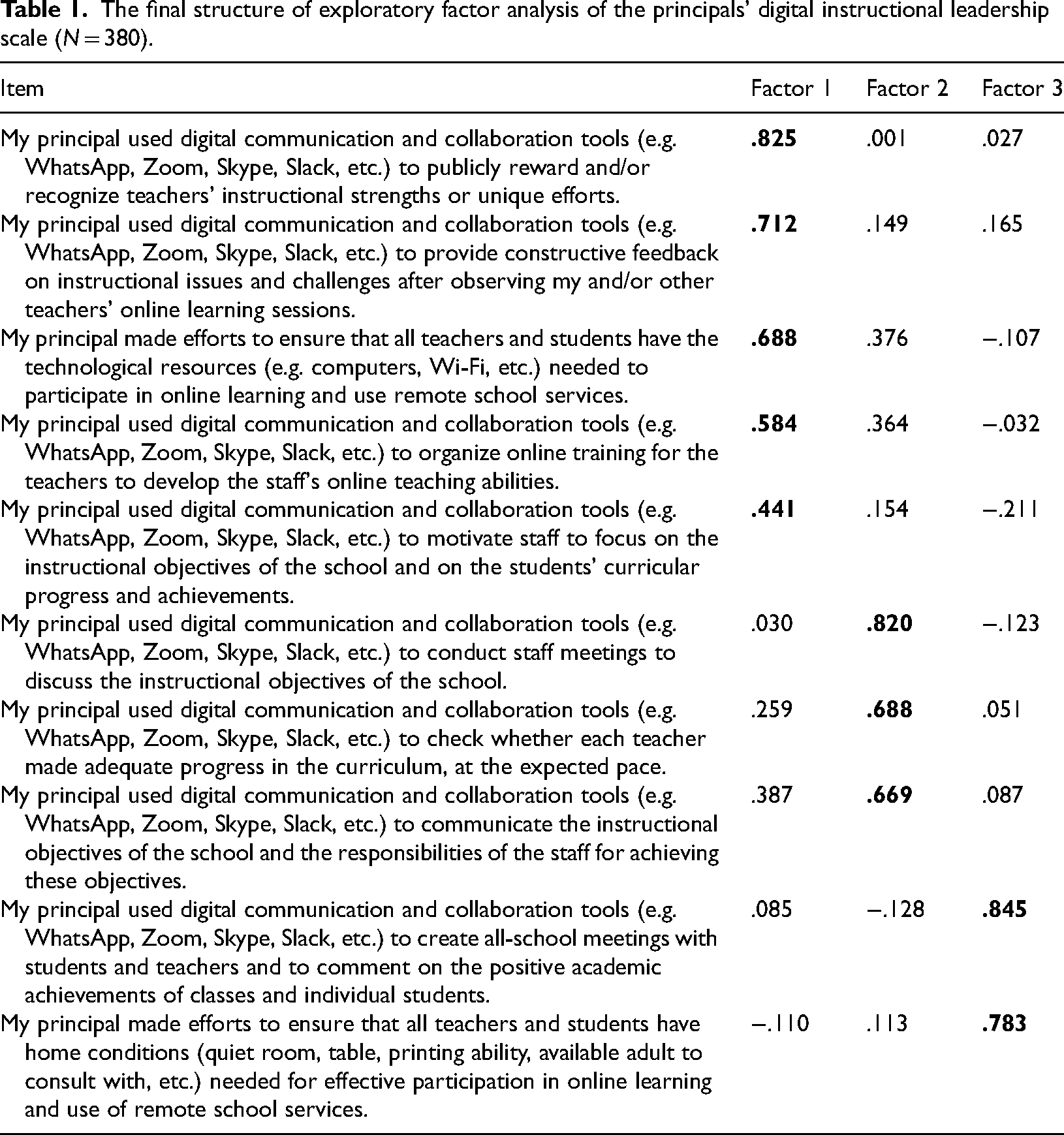
After exploring the item content of the factors, the following labels were assigned: factor 1 – general digital instructional leadership; factor 2 – goal-setting digital instructional leadership; and factor 3 – community-oriented digital instructional leadership. Cronbach's alpha values for factors 1 and 2 were .71 and .65, respectively. This suggests adequate consistency of the two factors. As factor 3 consisted of 2 items, composite reliability was calculated, which indicated good internal consistency (CR = .79). Correlations of the three digital instructional leadership factors indicated a positive link between factor 1 and factor 2 (r = .526, p < .001), and non-significant links between factor 3 and the other two factors (r = −.016, r = −.015, respectively).
Correlation results further suggested that teachers’ gender and education created non-significant correlations with the study variables of interest, therefore these controls were omitted in subsequent analyses. Teaching experience produced a weak correlation only with intrinsic motivation. By contrast, prior experience in online instruction displayed medium-to-high correlations with all study variables of interest. To adjust for these influences of prior experience in online instruction, partial correlations were calculated. The descriptive statistics and partial correlations between the variables are shown in Table 2. As indicated in Table 2, the partial correlations between the main study variables, specifically those involving factors 1 and 3 of digital instructional leadership, indicated initial support for the mediation hypothesis. These correlations suggest that both general instructional leadership (factor 1) and community-oriented instructional leadership (factor 3) promote conditions for teachers to teach online effectively and for their students to learn successfully. It is not surprising that factor 2 of digital instructional leadership was unrelated to student outcomes, as previous studies also reported mixed correlations between principal instructional leadership and school achievement in regular school settings (see Fancera and Bliss, 2011). The average correlation of the two digital instructional leadership factors with intrinsic motivation was .19, and the average correlation of the two digital instructional leadership factors with perceived learning was .21. The size of these correlations is much smaller than those with somewhat equivalent constructs reported in prior work on instructional leadership in regular school settings (see Supriadi et al., 2015: work motivation .53 and perceived students’ achievements .45). As the relationship between factor 1 and factor 3 was non-significant, they were regarded as a distinct set of leadership behaviours and explored each one separately in the follow-up mediation analysis.
Descriptive statistics and partial correlations for study variables (N = 380).
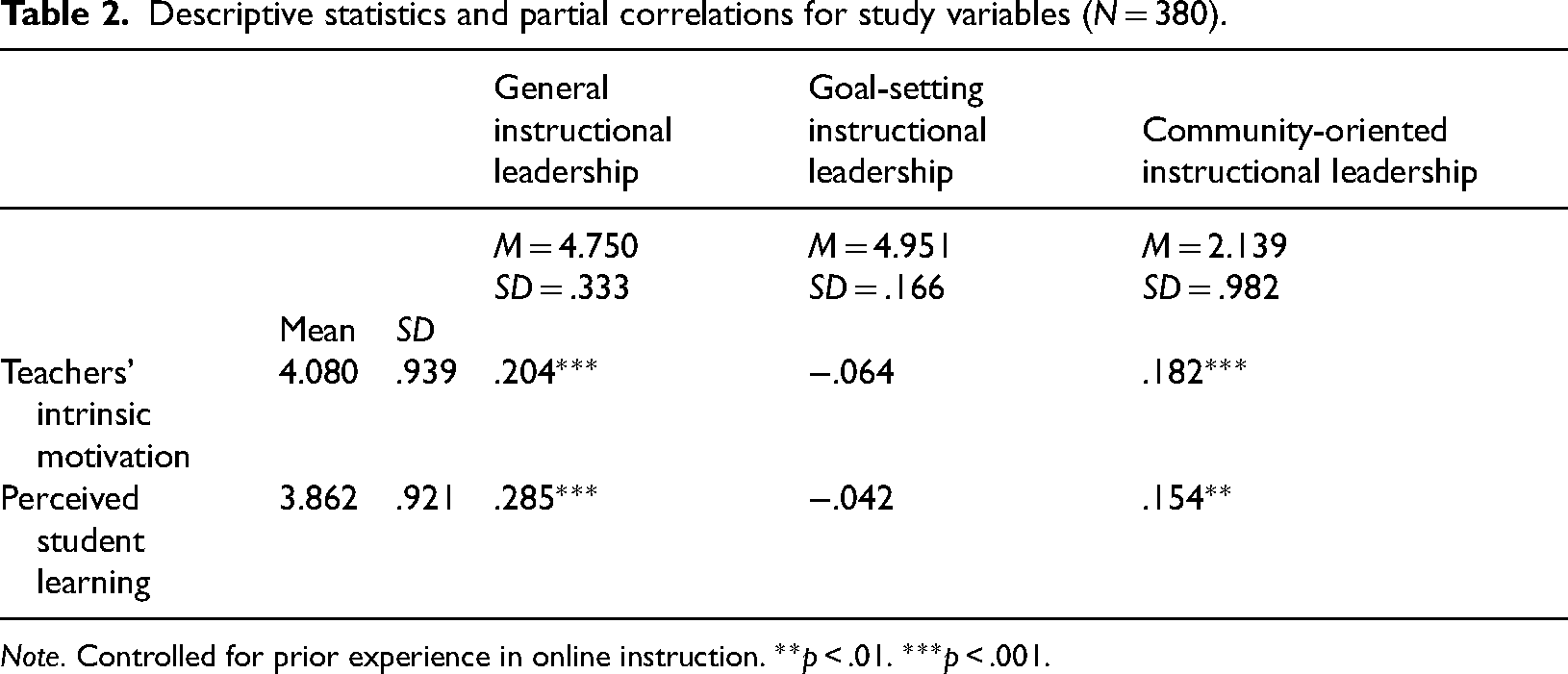
Note. Controlled for prior experience in online instruction. **p < .01. ***p < .001.
Test of hypothesis
To explore the proposed mediation model outlining the effect of principals’ digital instructional leadership on perceived student learning through teachers’ intrinsic motivation for digital instruction, a single-step test was used (Preacher and Hayes, 2004). Unlike multiple-step methods (Baron and Kenny, 1986), the single-step method directly estimates the indirect (i.e. mediated) effect (Preacher and Hayes, 2004). Applying Hayes’s (2013) SPSS PROCESS procedure (Model 4), set to 5000 resamplings using a bootstrapping technique, the mediation effects were calculated. For each of the two digital instructional leadership factors (1 and 3), a separate analysis was performed. In all analyses, one factor of digital instructional leadership was entered as an independent variable, teachers’ intrinsic motivation for digital instruction was entered as a mediator, perceived student learning as a dependent variable, and teachers’ teaching experience and prior experience in online instruction as controls of the mediator and the dependent variable. The two mediation analyses (involving factors 1 and 3) emerged as significant. Therefore, the hypothesis was confirmed, suggesting that the effect of principals’ digital instructional leadership on perceived student learning is mediated by teachers’ intrinsic motivation for digital instruction. As shown in Figures 2 and 3, the results indicate (a) a partial mediation effect 4 of principals’ general digital instructional leadership on perceived learning through teachers’ intrinsic motivation for digital instruction (as there is still a significant unmediated, direct effect of leadership on learning in the model); and (b) a full mediation effect of principals’ community-oriented digital instructional leadership on perceived learning through teachers’ intrinsic motivation for digital instruction. This suggests that school principals as digital leaders indeed bolster the teacher's motivation to teach online, which in turn enhances perceived student learning.
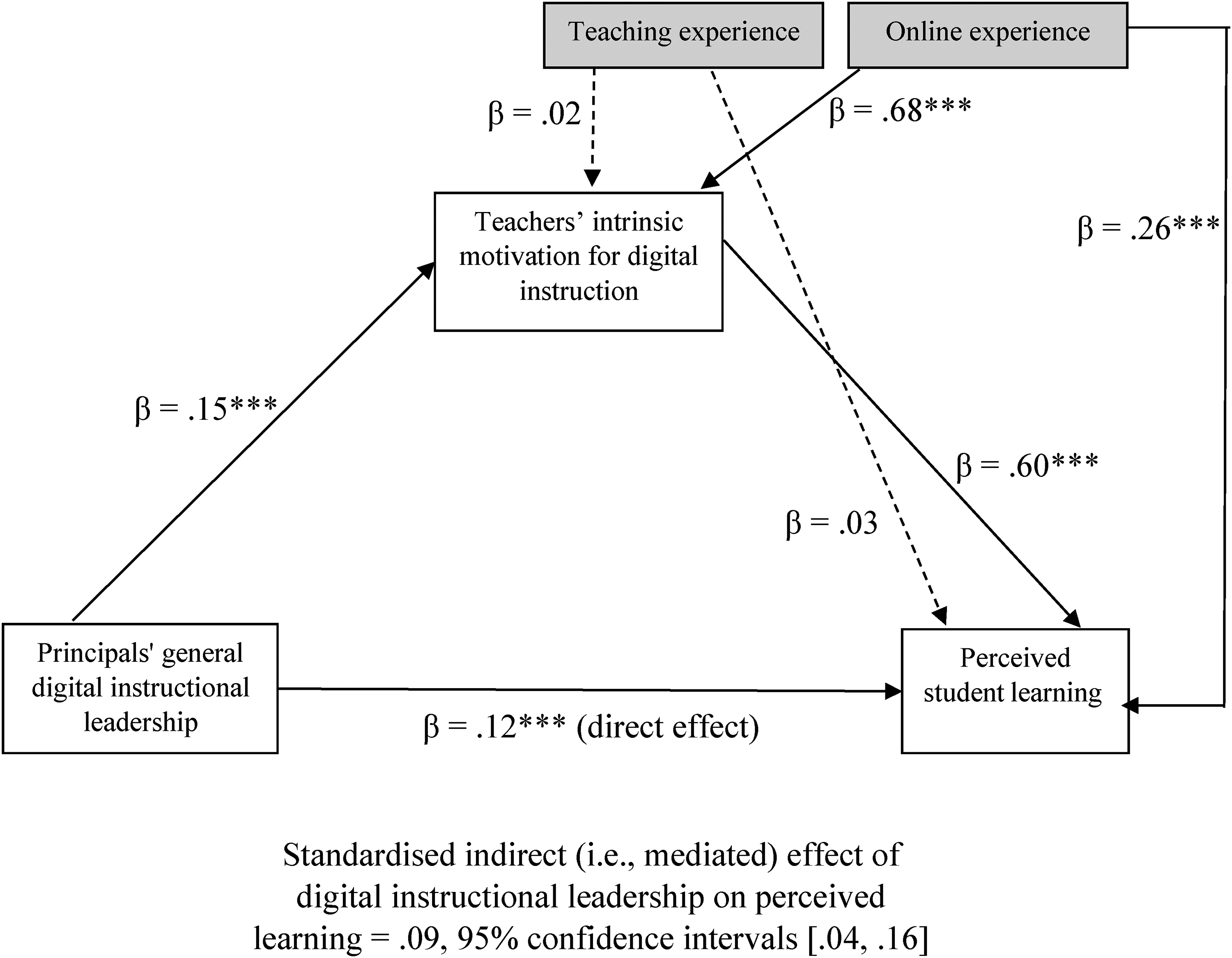
Results of mediation analysis involving principals’ general digital instructional leadership. Standardized coefficients are reported. Bootstrap = 5000. Light grey colour indicates control variables. ***p < .001. Dashed lines indicate non-significant effects.
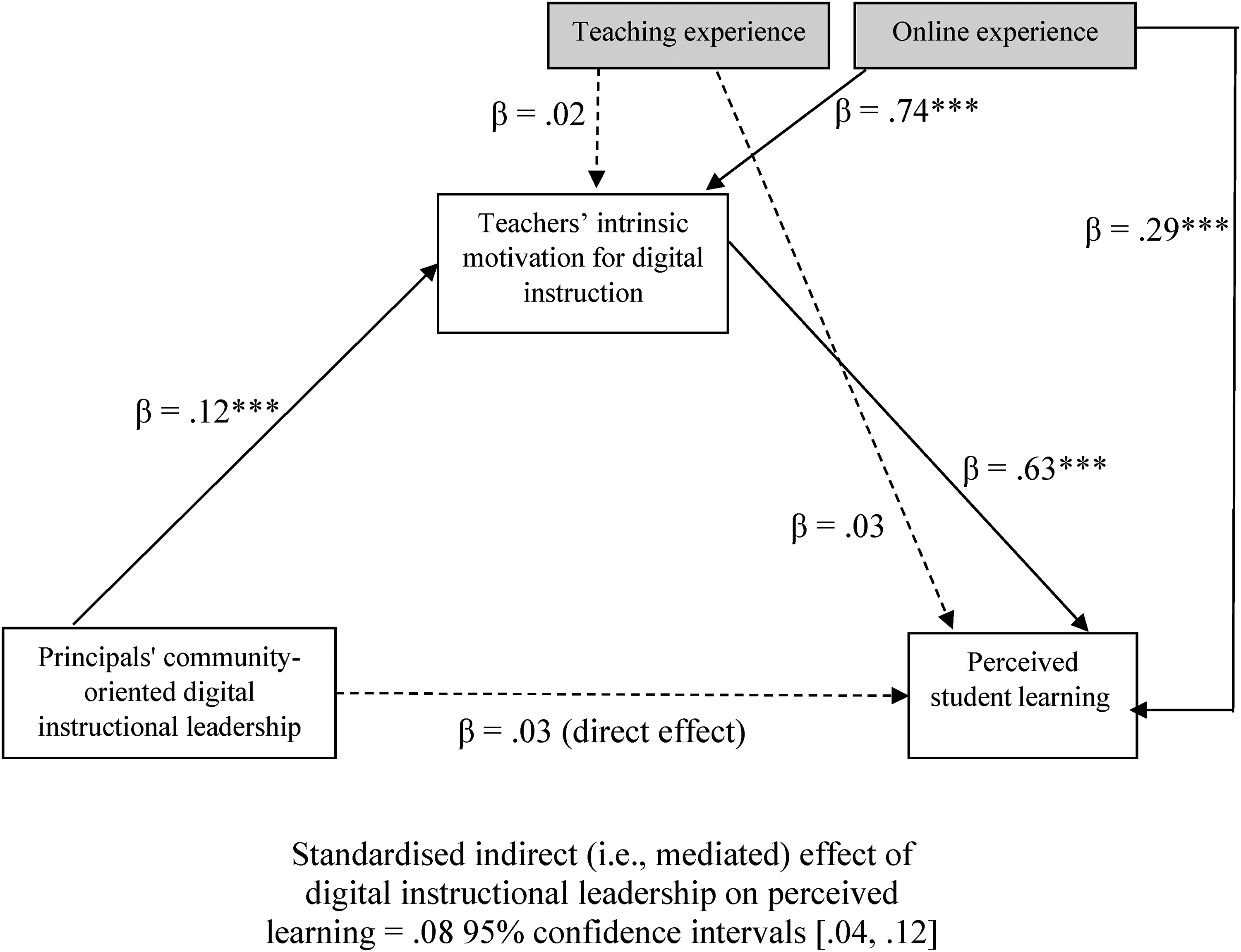
Results of mediation analysis involving principals' community-oriented digital instructional leadership. Standardized coefficients are reported. Bootstrap = 5000. Light grey colour indicates control variables. ***p < .001. Dashed lines indicate non-significant effects.
Discussion
During the pandemic, many education systems turned to remote schooling and online learning, and the principal's role was dramatically transformed. In this context, the lacuna in the knowledge of digital instructional leadership is cardinal. The existing literature is mainly theoretical (McLeod, 2015; Pollock, 2020; Sorenson et al., 2016), and the few empirical studies available were based on self-reporting and focused on principals’ knowledge and confidence in digital technologies used to lead learning (Sanchez Corona, 2019; Shepherd and Taylor, 2019). The present study greatly expanded empirical knowledge. It developed a measure to assess digital instructional leadership and illustrated its value by exploring its effects on teacher motivation and perceived student learning in online settings during the COVID-19 pandemic.
The research has several key implications. First, the measure adopted indicates that digital instructional leadership is complex and multi-dimensional. Consistent with the general approach in educational leadership research (Hitt and Tucker, 2016), digital instructional leadership was conceptualized as a unified model of effective leadership practices. Nevertheless, the measure seems to include a behavioural repertoire, in which each set of behaviours is largely distinct from the others. The study documented three subtypes of digital instructional leadership behaviours: general digital instructional leadership, goal-setting digital instructional leadership, and community-oriented digital instructional leadership. These subtypes are partly consistent with documented instructional leadership, such as the prevailing logic and the social justice logic (Rigby, 2014). Although the measure does not directly evaluate the technological and virtual team leadership skills that leaders need (Cortellazzo et al., 2019), it implicitly assumes that digital instructional leaders need some basic level of these skills as a threshold condition.
Second, the results indicate a prevalence of digital instructional leadership. Unlike past research showing that principals were reluctant to use instructional leadership even when formal policy promoted it (Israeli studies: Shaked et al., 2020), or used it on and off without a method (Thai principals’ instructional leadership as related by teachers: Hallinger et al., 1994). These results appear to be rather stable, as a study investigating change over time found no difference in the level of engagement in instructional leadership of Thai principals in two decades (Hallinger and Lee, 2014). The high means of most digital instructional leadership behaviours (besides those related to community-oriented digital instructional leadership) reported by teachers can be interpreted with causation (because of a lack of a baseline for instructional leadership) as a substantial change in mainstream principalship in Bahrain. This change is likely due to the remote schooling prompted by COVID, which dramatically reformed the principals’ leadership role, and was possibly affected also by past local policy efforts to accelerate the integration of digital technologies in schools. Moreover, Bahrain is a relatively wealthy country, and the sample represented strong socio-economic schools. Given the state of the digital divide (students’ access to computers and the Internet; see OECD, 2020), digital instructional leadership is a concept that can flourish currently mainly in rich nations or population groups.
Third, the study attests that the effect of digital instructional leadership on teachers’ intrinsic motivation for digital instruction is small but meaningful. Similar small effects of school leadership on teachers’ motivation are documented in existing works in regular school settings (e.g. Berkovich and Eyal, 2017). But cultivating intrinsic motivation is more central in remote schooling and work at home. The effectiveness of remote leadership (Shamir, 2012) is encouraging. Managers no longer work often with employees in one space but everybody works together from afar, without any or with little physical contact (Contreras et al., 2020). General digital instructional leadership and community-oriented digital instructional leadership were positive leadership behaviours supporting teachers’ intrinsic motivation. But goal-setting digital instructional leadership was not related to teachers’ intrinsic motivation, which possibly indicates that it might be experienced by some teachers as controlling. Controlling behaviours are known to undermine intrinsic motivation in superior–subordinate relations (Assor et al., 2005). The study found that the general digital instructional leadership subtype was partly related to rewards. Rewards have been traditionally linked in the literature to extrinsic motivation, but some scholars recognize that intrinsic motivation can also be minorly driven by rewards (see Fischer et al., 2019; Malhotra et al., 2008). Previous work suggests that two key motivational outlooks dominate the images of teachers and teachers’ work (Firestone, 2014). Based on these outlooks, it is possible to suggest that goal-setting digital instructional leadership is rooted in economic logic, focusing on extrinsic incentives and regulating ‘bad’ teachers and teaching, and that general digital instructional leadership is rooted in positive psychological logic, focusing on intrinsic incentives and capacity building of teachers and teaching.
Fourth, the findings also support a small effect of digital instructional leadership on perceived student learning. Previous work that focused mostly on students’ achievements documented equivalent small possible effects of regular instructional leadership (Hou et al., 2019; Shatzer et al., 2014). Under the COVID-19 conditions, however, schooling practice was reconsidered (Cairns, 2021) and alternative indications of students’ learning were stressed, which were considered to be more relevant to remote schooling and upheaval caused by the crisis. The results are consistent with the existing works indicating that the effects of educational leaders in general (Leithwood et al., 2020) and instructional leaders in particular (Gümüş et al., 2021; Hallinger et al., 2020) on students’ learning are not direct but operate through teachers’ attitudes and practices. The indirect effects of both types of digital instructional leadership were expected, but it was surprising to discover a direct effect of general digital instructional leadership on perceived learning. Such a direct effect is less likely in a crisis and under the home-work conditions that were part of the work reality of the COVID pandemic. The direct effect found is likely to indicate that this type of leadership has a balancing power that can overcome the destabilization of hierarchical functioning and existing school culture (Adams et al., 2021; Harris, 2020; Srivastava et al., 2022).
Limitations and future research
The study has several shortcomings. First, the data were collected in a cross-sectional design, which denies causal inference despite the promising and grounded theoretical model offered here. Second, teachers were used as the source that also reported on the learning outcomes. Although the use of prior experience in online instruction dramatically reduced the possible inflation of subjective reports in a manner that reasonably addresses such concerns, future research is advised to incorporate objective reports on learning. Third, the study was conducted in Bahrain, which has a unique social, economic, and cultural background (e.g. traditional society, oil industry economy, existing policy to promote digital technologies in schools). Thus, additional research is needed to check whether digital instructional leadership varies across social, economic, and cultural contexts. Fourth, it is recommended that future research compares the digital instructional leadership model with its equivalent in regular school settings to determine whether the paths are the product of online settings or also reflect basic trends of instructional leadership, regardless of settings. Fifth, this was a quantitative study, therefore the concepts of interest were a priori operationalized. This may have led to the partial or even inadequate understanding by the participants of the concepts (i.e. instructional leadership, motivation, and learning), as they were applied by researchers. Future research can benefit from qualitative context-situated works that shed light on principals’ and teachers’ grasp of the nature of the concepts and their connections.
Conclusion
The present research was motivated by the growing institutionalization of the digital form of instructional leadership in recent years owing to the COVID-19 pandemic. The pandemic and the government restrictions aimed at coping with it caused a serious upheaval in the routine of education systems worldwide (e.g. Longmuir, 2021; Pollock, 2020). In response to it, remote schooling and online instruction became popular and common practices for operating schools under the reality of the pandemic (OECD, 2021; Weiner et al., 2021). In remote schooling, the instructional aspect of principalship assumed a digital form aimed at supporting and ensuring effective online educational practices and student learning from a distance (Pollock, 2020).
This empirical exploratory study of an underexplored phenomenon that has become prevalent marks significant progress in the research of digital instructional leadership. The study innovated in the areas of concept definition and operationalization of measures. Its findings provide important support for the motivational mechanism by which digital instructional leadership exerts its power on student learning on remote online platforms. Based on the experience accumulated in recent years, the authors believe that remote schooling is likely to be more broadly incorporated into mainstream teaching, at least in hybrid schooling.
Supplemental Material
sj-docx-1-ema-10.1177_17411432221113411 - Supplemental material for Principals’ digital instructional leadership during the pandemic: Impact on teachers’ intrinsic motivation and students’ learning
Supplemental material, sj-docx-1-ema-10.1177_17411432221113411 for Principals’ digital instructional leadership during the pandemic: Impact on teachers’ intrinsic motivation and students’ learning by Izhak Berkovich and Tahani Hassan in Educational Management Administration & Leadership
Footnotes
Declaration of conflicting interests
The author(s) declared no potential conflicts of interest with respect to the research, authorship, and/or publication of this article.
Funding
The author(s) received no financial support for the research, authorship, and/or publication of this article.

Supplemental material
Supplemental material for this article is available online.
Notes
Author biographies
Appendix A: Flowchart of the research technique
Appendix B: Items used in the survey
| Principals’ digital instructional leadership items |
|---|
|
During the COVID-19 pandemic…
My principal used digital communication and collaboration tools (e.g. WhatsApp, Zoom, Skype, Slack, etc.) to communicate the instructional objectives of the school and the responsibilities of the staff for achieving these objectives. [#1.] My principal used digital communication and collaboration tools (e.g. WhatsApp, Zoom, Skype, Slack, etc.) to conduct staff meetings to discuss the instructional objectives of the school. [#2.] My principal used digital communication and collaboration tools (e.g. WhatsApp, Zoom, Skype, Slack, etc.) to provide constructive feedback on instructional issues and challenges after observing my and/or other teachers' online learning sessions. [#3.] My principal used digital communication and collaboration tools (e.g. WhatsApp, Zoom, Skype, Slack, etc.) to check whether each teacher made adequate progress in the curriculum, at the expected pace. [#4.] My principal used digital communication and collaboration tools (e.g. WhatsApp, Zoom, Skype, Slack, etc.) to organize online training for the teachers to develop the staff's online teaching abilities. [#7.] My principal used digital communication and collaboration tools (e.g. WhatsApp, Zoom, Skype, Slack, etc.) to publicly reward and/or recognize teachers' instructional strengths or unique efforts. [#9.] My principal used digital communication and collaboration tools (e.g. WhatsApp, Zoom, Skype, Slack, etc.) to create all-school meetings with students and teachers and to comment on the positive academic achievements of classes and individual students. [#10.] My principal used digital communication and collaboration tools (e.g. WhatsApp, Zoom, Skype, Slack, etc.) to motivate staff to focus on the instructional objectives of the school and the students' curricular progress and achievements. My principal made efforts to ensure that all teachers and students have the technological resources (computers, Wi-Fi, etc.) needed to participate in online learning and use remote school services. My principal made efforts to ensure that all teachers and students have home conditions (quiet room, table, printing ability, available adult to consult with, etc.) needed for effective participation in online learning and use of remote school services. |
| Perceived online learning items |
|
During the COVID-19 pandemic…
My students learned a lot in the course of online teaching. Online teaching added to my students' knowledge. My students learned new things in the course of online teaching. Online teaching helped my students better understand the material they learned. |
| Intrinsic motivation for digital instruction items |
|
During the COVID-19 pandemic…
I invested effort in teaching because I had fun teaching my students online. I invested effort in teaching my students online because it was exciting. I invested effort in teaching my students online because it was interesting. |
Note. The number in brackets identifies the Principal Instructional Management Rating Scale (PIMRS) function.
Appendix C: Flowchart of the research method
References
Supplementary Material
Please find the following supplemental material available below.
For Open Access articles published under a Creative Commons License, all supplemental material carries the same license as the article it is associated with.
For non-Open Access articles published, all supplemental material carries a non-exclusive license, and permission requests for re-use of supplemental material or any part of supplemental material shall be sent directly to the copyright owner as specified in the copyright notice associated with the article.
