




Abstract
Prior research has suggested that well-performing school leadership clusters around a set of general core practices, which appear to be effective across a range of national, social and cultural contexts, yet contingent of school leaders being responsive to context and responding appropriately to their different contextual demands when they employ these core practices. So far school leadership in rural regions has received only modest attention in leadership research. Therefore, this study was designed to explore the relationship between the core practices of school leaders, organizational school climate and student academic achievement in primary and lower secondary rural schools in a county in Norway. The research design involved a cross-sectional study based on ratings from 275 teachers situated in 20 rural schools, split into two sub-groups of 10 ‘high-performing’ and 10 ‘low-performing’ schools. The results from the multivariate analysis and comparisons between the sub-groups suggest that two distinct core practices of school leadership emerge as critical in Norwegian rural school settings. Further, the results indicate that in the higher performing rural schools, the teachers reported a more positive organizational school climate, with higher level of collaborative learning and self-confidence, than in the opposite sub-group.
Introduction
There is wide agreement among researchers and practitioners that school leadership exerts a measurable, albeit indirect, effect on student learning outcomes (Hallinger and Heck, 2011; Louis et al., 2010; Robinson et al., 2008) and a significant effect on certain features of school organization, which positively influences the quality of teaching and learning (Leithwood et al., 2019). As evident in a number of literature reviews, meta-analysis and single large-scale studies during the last 25 years, the actions performed by school leaders that exert significant influence on the quality of classroom teaching and student learning cluster and cohere around certain core practices (Leithwood et al., 2019). Moreover, a line of prior research has suggested that these core practices appear to be effective across a range of national, social and cultural contexts (Day and Sammons, 2013; Day et al., 2011; Leithwood et al., 2006). But, it is not the core practices per se that ensure desirable outcomes; rather, it is the ways through which the individual school leader adapts them to the various contexts in which his/her work is situated (Leithwood et al., 2019). Hallinger and Heck (2011) suggested, in a similar vein, that there is no single style of leadership for learning that stands out as effective for all school contexts. In consequence, successful school leaders do indeed need to adapt their styles and strategies to both internal school conditions and to a range of contexts external to the individual leader (Hallinger, 2016).
Norwegian local government is based on a two-tier structure consisting of 11 counties and 356 municipalities. Both tiers have directly elected councils and their own administration. Generally, they have separate functions: Counties provide upper secondary education-academic schooling or vocational training (grade 11–13) whereas the municipalities are responsible for compulsory primary and lower secondary education (grade 1–10). Approximately half of the Norwegian municipalities have fewer than 5000 inhabitants. 1 The municipalities function as school districts whereas a great portion is and situated in rural areas. The current study is located within a larger research and development project, formed to raise students’ learning achievements in primary and lower-secondary schools in a county in the eastern part of Norway, consisting of several rural regions. As in most national systems there are significant variations in a range of student achievements across regions and school districts in Norway (Steffensen et al., 2017). To get a broader understanding of the cause of variation in student performance and schools as organizations, Jarl et al. (2017), based on a longitudinal study of organizational characteristics of respectively successful and failing schools in Sweden, emphasize the importance of designing systematic comparisons between high-performing and low-performing schools. Against this background, this study draws specific attention to the core practices of school leaders in Norwegian high-performing and low-performing rural schools.
The practices school leaders in rural areas employ in order to deal with their demands has received modest attention in leadership research both internationally and in the Scandinavian context (Nordholm et al., 2021). Fargas-Malet and Bagley (2021) state that rural schools have been defined in different ways, varied within countries and studies. In the absence of a formal definition of ‘rural’, there is a tendency to use ‘small’ rather than ‘rural’ (Hargreaves, 2009). Therefore, rural schools are mostly defined by the number of pupils enrolled (Fargas-Malet and Bagley, 2021). According to Hargreaves (2009), a number of upper thresholds have been identified as small in the literature, for example, ranged from under 70 for a primary school and under 400 for a secondary school (Fargas-Malet and Bagley, 2021; Hargreaves, 2009). In the present study, we emphasize the rural context. Thus we define ‘rural schools’ as those in communities with fewer than 3000 people (OECD, 2018); not ‘urban’, open and small settlements, sparsely populated areas and rural communities (Solstad and Andrews, 2020). Echazarra and Radinger (2019) identified that the rural contexts present their own challenges for school leadership such as frequent leadership changes, lack of administrative and basic resources at district level and a wide range of tasks, diversity of roles and responsibilities for the school leaders (see also Karlberg-Granlund, 2019; Nordholm et al., 2021; Nusche et al., 2011; Solstad and Andrews, 2020).
On the other hand, the evidence that has accumulated from more than two decades of research indicates that, to a large extent, higher-performing schools, across a range of different socio-economic, demographical and political contexts, function as stronger collective learning systems (Louis and Murphy, 2017; Schechter, 2008; Schechter and Mowafaq, 2013; Silins et al., 2002). As learning organizations, these schools develop learning processes, strategies and structures, which strengthen their capacity to utilize their collective learning capacity in the interests of their students (Jarl et al., 2021; Leithwood et al., 2000; Marks and Louis, 1999; Schechter and Asher, 2012). Moreover, high-performing schools are also characterized by goal oriented leadership, that is organized collectively and includes district level leadership (Jarl et al., 2021), an organizational climate where teachers typically are committed to their work, are enthusiastic about teaching and have a sense of being capable of developing professionally as educators (Berkovich and Bogler, 2021).
The initial point for constructing the theoretical framework of the study has been a sample of systematic review work (Leithwood et al., 2019) and large-scale longitudinal studies (Leithwood and Louis, 2012) suggesting a leadership framework of four main core practices (Leithwood, 2012), most notably in the latest review of successful school leadership (Leithwood et al., 2019). The authors include a set of organizational conditions, labelled the organizational path (Leithwood et al., 2017), that structure the relationships and interactions among organizational members, and these conditions are directly related both to school leaders’ core practices and student achievements. Among the most significant of these conditions are school environment and collaborative cultures among staff. The current study follows this line of reasoning and includes the organizational features important organizational conditions through the concept of organizational school climate.
Theoretical framework
Core practices of effective school leadership
As demonstrated by Leithwood et al. (2008, 2019) in their two reviews of successful school leadership, almost all successful leaders draw on four broad core practices in their endeavours to adapt general leadership principles to the various contexts/material (socio-economic, political and cultural) in which their work is situated (Leithwood et al., 2019). Furthermore, each of the four core practices encompasses from three to five more specific action repertoires that draw on specific elements from the models of respectively transformational leadership (Bass and Avolio, 1994; Leithwood, 1994) and instructional leadership (Robinson et al., 2008). The four core practices are as follows.
Setting direction
The first core practice incorporates four specific processes: building a shared vision, fostering the acceptance of group goals, creating high performance expectations and communicating the direction. These processes are one of the main sources of motivation and inspiration for the school staff (Day et al., 2011; Leithwood et al., 2010). Overall, this component is about the establishment of what Fullan (2003) denotes as ‘moral purpose’ and is vital because it is aimed at bringing a focus to the individual and collective work of staff members in the school (Leithwood, 2012).
Developing people
This practice consists of three processes that make a significant contribution to staff motivation (Day et al., 2011): providing individualized support and consideration, offering intellectual stimulation and modelling appropriate values and practices. The primary aim of these processes is capacity building, not only of the knowledge and of skills staff members need to accomplish organizational goals but also the disposition staff members need to persist in applying the knowledge and skills (Day et al., 2011). Because people are motivated by what they are good at, individual teachers’ self-efficacy is arguably critical. By modelling desires and actions, leaders are able to enhance others’ beliefs about their own capacities, that is, self-efficacy (Bandura, 1997) and their enthusiasm for change (Leithwood et al., 2010).
Redesigning the organization
This third category contains four processes: building collaborative cultures, modifying organisational structures to nurture collaboration, building productive relations with families and communities and connecting the school to the wider community. The processes are intended to establish workplace conditions that will allow staff members to make the most of their motivations and capacities. Hence, school leaders play an important role in establishing the norms and structures that allow teachers to develop and operate as professional communities (Tschannen-Moran, 2009) that include shared norms and values, collective focus on student learning, collaboration in the development of curriculum and instruction, reflective dialogue and de-privatized practice (Louis, 2015).
Improving the instructional program
This fourth category includes processes and leadership practices that focus on teaching and learning: staffing the instructional program, monitoring progress of students, teachers and the school, providing instructional support, aligning resources and buffering staff from distractions from their work. Compared to the previous categories, these leadership practices have the most direct effects on students because they directly shape the nature and quality of instruction in classrooms (Leithwood et al., 2010). The practices in this category provide the coordination for the initiatives stimulated by the other core practices, to provide the stability necessary for school improvement.
Teachers and school leaders in successful schools seem to agree that the most instructionally helpful leadership practices include school leaders focusing on goals and expectations for student achievement, ‘keeping track of teachers’ professional development needs, and creating structures and opportunities for teachers to collaborate’ (Louis et al., 2010: 66). The various ways school leaders undertake each set of practices will vary by context. So what is contingent about leadership is not the basic or core practices themselves, but the manner in which leaders apply these practices in concert with their unique environments that determines the degree to which they influence student learning (Day et al., 2011; Leithwood et al., 2019).
Organizational school climate
The literature on school climate uses the concept to analyse a wide range of properties of the school organisation (Hoy et al., 2002; Thapa et al., 2013; Wang and Degol, 2015; Zullig et al., 2014, 2015). We assume that organizational school climate is based on ‘patterns of people's experiences of school life and reflects norms, goals, values, interpersonal relationships, teaching and learning practices, and organizational structures’ (Cohen et al., 2009: 182). The measure instrument used in this current study drew upon Grosins’(1991, 2002, 2004) model of school climate with emphasis on teachers’ perceptions of self-confidence in maintaining class discipline, order and work conditions. The concept also includes elements of teachers’ professional commitment in terms of their sense of being committed to their work, being enthusiastic about teaching and a sense of being capable of developing professionally as educators. In general terms, professional commitment is defined as involvement at the present job and recognition of the importance of work in general (Berkovich and Bogler, 2021). It is further argued that schools as loosely coupled organizations have difficulty assessing teaching performance and mandating specific practices; thus, teachers’ professional commitment is argued to be a crucial social-cognitive asset for archiving good classroom instruction (Somech, 2005).
A supportive organizational climate is viewed as ‘the overall amount of perceived support employees receive from their immediate colleagues, other departments, and their supervisor that they view as helping them to successfully perform their work duties’ (Luthans et al., 2008: 225). Models of organizational school climate include teachers’ engagement in professional collaboration with colleagues (e.g. Grosin, 1991; Wang and Degol, 2015), and, by implication, the concept overlaps with the generic multi-dimensional model of professional community as developed through empirical research (e.g. Bryk et al., 1999; Louis, 2008). More specifically, teacher collaboration embraces a school-wide culture of mutual engagement in pedagogical matters, problematic instructional issues, assessment practices or innovative behaviours (Louis, 2015). According to Karlberg-Granlund (2019: 302), the rural school is built on collaboration and extended collegiality despite geographical isolation, and ‘teamwork is a cornerstone for teaching and learning in small school contexts’. Further, a positive link has also been demonstrated between teachers’ engagements in internal and external communities of practice and their capacity to incorporate new curricula into their teaching skills (Printy, 2008). In a similar vein, internal and external collaborative engagement have been associated with growth in teachers’ commitment and their sense of a positive impact on students, colleagues and school organization from their work efforts (Hjertø et al., 2014; Liu et al., 2020). Moreover, in large-scale studies of organizational learning in school systems, teacher collaboration constitutes a central component of a school's capacity for organizational learning (Marks and Louis, 1999), which again is strongly associated with student achievement in academic subjects as well as student participation and engagement in school work (Silins et al., 2002). According to Silins et al. (2002: 616) ‘Schools that function as learning organizations in a context of rapid global change are those that have systems and structures in place that enable staff at all levels to collaboratively and continuously learn and put new learnings to use. This capacity for collaborative learning defines the process of organizational learning in schools’.
Research question
Taken together, a considerable amount of prior research has highlighted that high-performing school leadership is linked to the capacity to adapt leadership strategies and practices to the specific setting (e.g. Hallinger, 2011, 2016; Leithwood et al., 2019; Louis et al., 2010). At the same time, school leadership in rural regions has received modest attention in leadership research, (Bæck, 2015; Nordholm et al., 2021; Preston and Barnes, 2018). The research question that has guided the study is: What is the relationship between the core practices of school leaders and organizational school climate in respectively high-performing and low-performing Norwegian rural school settings?
Methods
Procedure
The schools studied participated in a larger research and development project initiated by the county governor. Empirically, this article build on data obtained from a survey carried out in the project. Data were collected in 2016 using an online questionnaire developed by the Centre for the Study of Educational Practice (SePU) at the Inland Norway University of Applied Sciences. Information explaining the purpose and procedure of the study was provided all participants, who were also assured that participants would be anonymous and that participation was voluntary. The survey was registered with the Norwegian Centre for Research Data (NSD for its initials in Norwegian) in accordance with Norwegian law.
Selection of participants
In total, the survey consisted of 111 primary and lower secondary schools situated in 22 municipalities and included 2103 teachers. For the present study, we selected 20 rural schools; 10 ‘high-performing’ and 10 ‘low-performing’ schools, which included at a total of 275 teachers. The selection of schools was based on students’ academic achievement in Norwegian, mathematics and English. Students’ academic achievement was measured through informant-based reports provided by teachers using the SSRS 2 (Gresham and Elliott, 1990). Data (the sum score of the three subjects) at the student (individual) level were aggregated, so that each of the 111 schools received its average level of student achievement. Based on the average level we ranged the schools from 1 to 111. Further, we examined the location of the schools and labelled schools in communities with fewer than 3000 people (OECD, 2018) as ‘rural’. Then, we selected the 10 highest-performing and the 10 lowest-performing rural schools in the county. Table 1 provides an overview of the selected schools including number of teachers, students and school leaders.
Overview of the study's high-performing and low-performing schools.
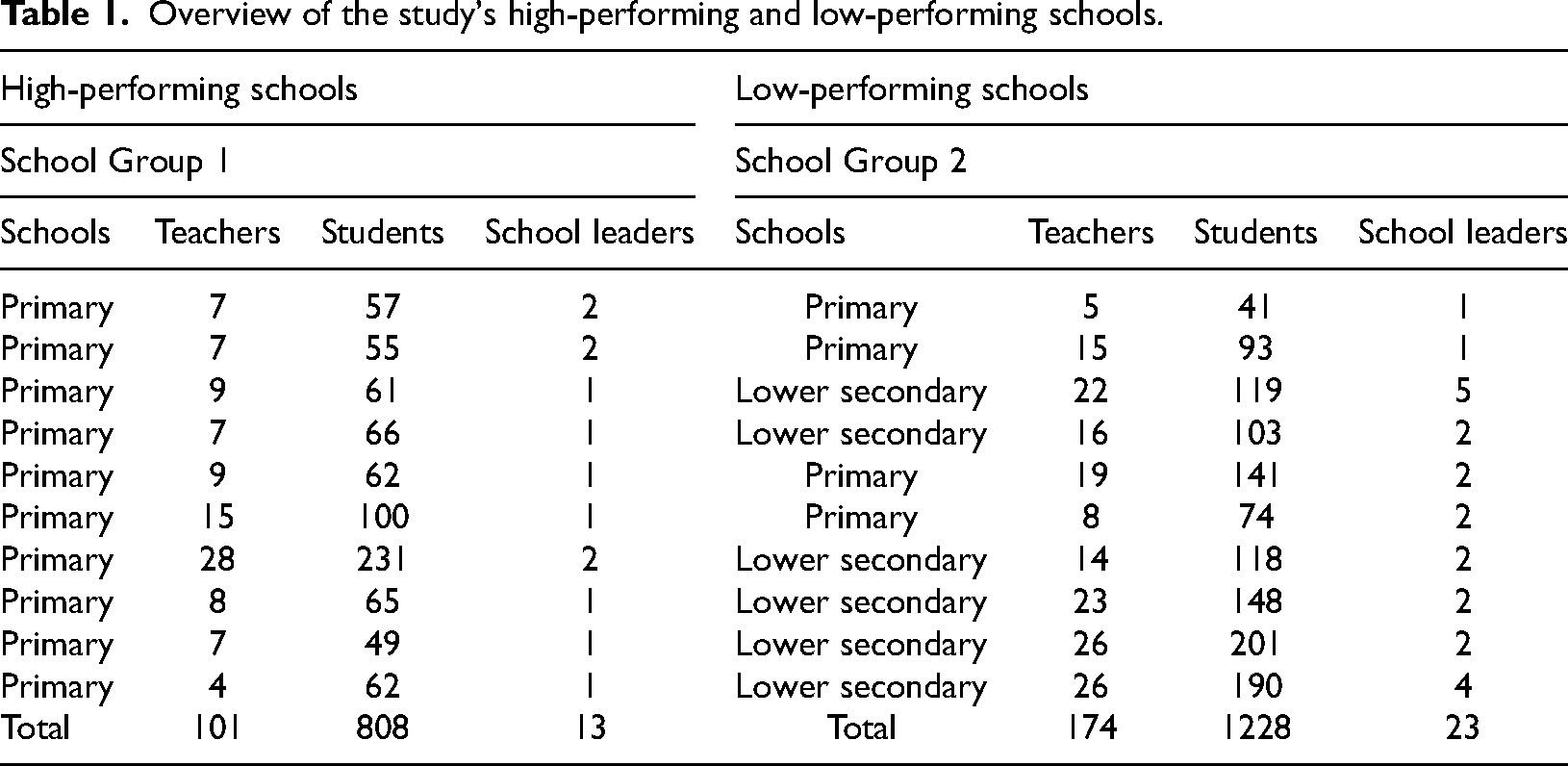
The schools selected were located in the countryside, farmland and forest areas, and in smaller settlements outside of villages and towns. As shown in Table 1, the schools vary in size. Due to financial challenges, demographic changes, and political decisions some school districts have chosen to close down the smallest schools and move students to the neighbouring school, while others have maintained a structure with several small schools within a rural region. It is worth noting that none of the county's lower secondary schools were selected into school group 1. Conversely, there is a predominance of lower primary schools in school group 2. ‘School leaders’ in this sample are principals, deputy principals, middle leaders or team leaders The number of school leaders in each school are based on self-reported numbers by the principals.
Instruments
Operationalization of the measuring instruments has been carried out on the basis of what previous research has shown to be important for students’ learning and well-being (Nordahl et al., 2012). Furthermore, several of the measuring instruments have previously been used in a number of surveys in both Danish and Norwegian schools (Nordahl et al., 2010, 2013).
School leadership
The scale was developed by researchers at SePU, inspired of Grosin (2002) and Robinson (2011), for the research and development project. Teachers assessed school leaders’ practices using a 10-item Likert scale, ranging from 1 (never) to 5 (very often). Items from this scale were used to explore school leaders’ core practices (see Table 3).
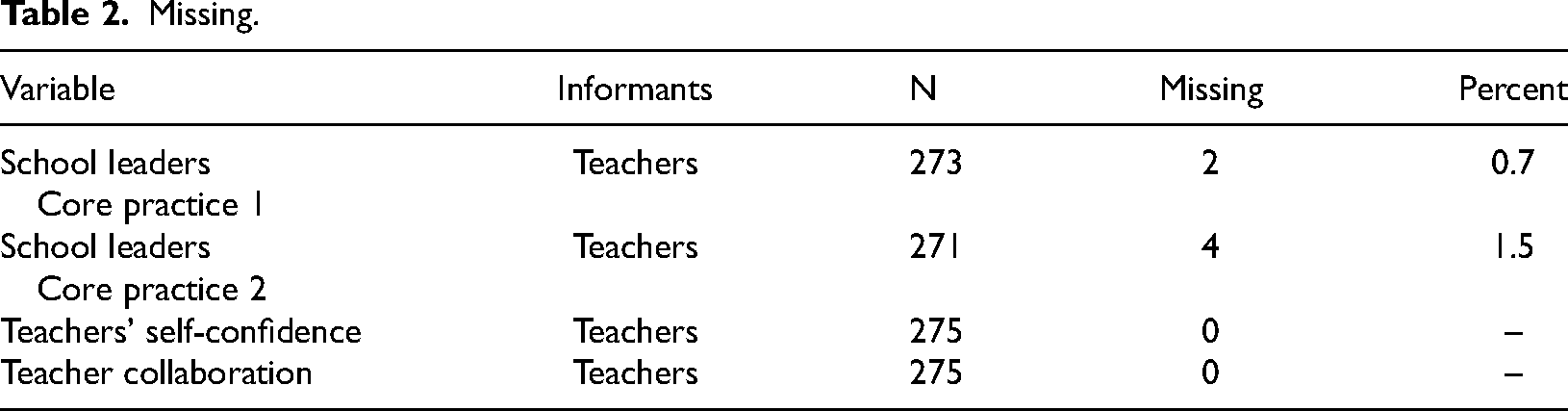
Missing.
Teachers’ self-confidence
This was self-reported by teachers on five items using a scale adapted from Grosin (1991, 2004). Examples of items are: ‘I have great confidence in myself as a teacher’, ‘I am enthusiastic and committed to my work’ and ‘In this school I develop as a teacher’. The responses were recorded on a 4-point Likert scale with categories ranging from 1 (does not fit so well) to 4 (fits very well). Cronbach's alpha: 0.74.
Teacher collaboration
Teachers responded to four single items adapted from Grosin (1991, 2004) using a 4-point Likert scale with categories ranging from 1 (does not fit so well) to 4 (fits very well). The teachers rated items, such as ‘Each teacher, in their own teaching, has to take other teachers’ teaching into consideration’ and ‘In this school there is a mutually committed collaboration between teachers in most aspects concerning teaching’. Cronbach's alpha: 0.79.
Missing
The amount of missing data was generally low as reflected in Table 2.
Statistics
First, with the intention of exploring school leaders’ core practices in Norwegian rural school settings, the ten items from the school leadership scale were subjected to Principal Component Analysis with Oblimin Kaizer normalization rotation.
By aggregating survey data from the individual level (teachers) to school level, each school received its average level of school leaders’ core practices, teachers’ self-confidence and teacher collaboration.
Descriptive data were subjected to correlation analyses. In general, the following guidelines for the strength of relationships, as determined by Pearson's r were used (Cohen et al., 2011): 0–0.20 (very weak), 0.20–0.40 (weak), 0.40–0.60 (moderate), 0.60–0.80 (strong) and 0.80–1.00 (very strong).
Given the purpose to examine differences across the two categories of high-performing and low-performing rural schools, variance analyses (ANOVA) were implemented. Although, only variation and covariation between two groups were investigated, one-way ANOVA was used; this, because with one-way ANOVA the total average standard deviation is given. Cohen's d was used as a measure of the effect size of differences in the means between high-performing and low-performing schools. This measure is generally interpreted as small (d = 0.2), medium (d = 0.5) and large (d = 0.8) (Cohen, 1988). The following formula was used to calculate the difference between high-performing schools (School Group 1) and low-performing schools (School Group 2) expressed in standard deviations:
Results
School leaders’ core practices
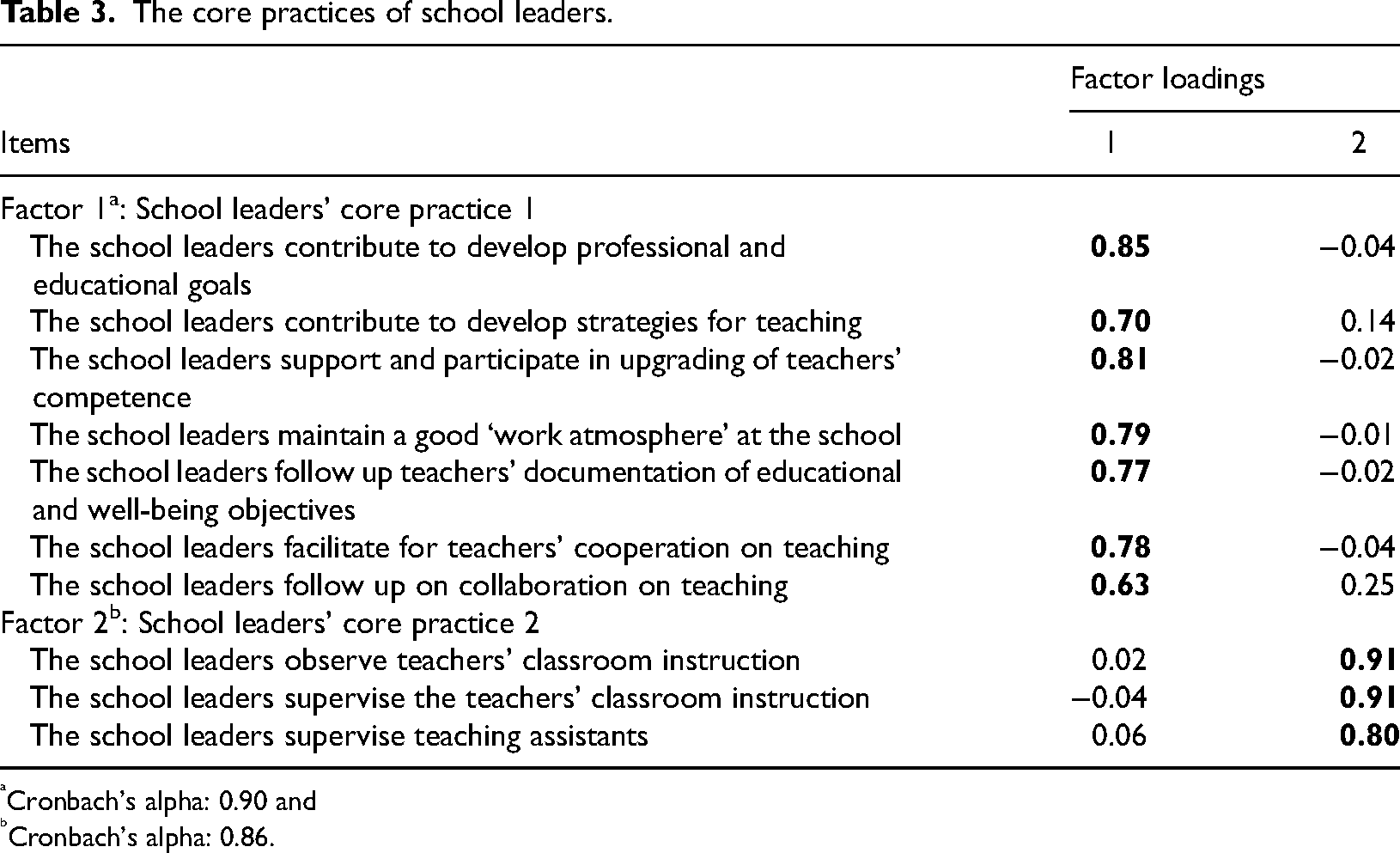
Table 3 presents the results from the factor analysis of the 10 items school leader scale.
The core practices of school leaders.
Cronbach's alpha: 0.90 and
Cronbach's alpha: 0.86.
The Kaiser-Meyer-Olkin value was 0.90 and Bartlett's Test of Sphericity reached statistical significance. The two-component solution for school leaders’ core practices explained a total of 67, 4% of the variance. Table 3 shows that contrary to the conceptual model of successful school leadership consisting of four core practices, Leithwood (2012), our empirical model resulted in two distinct core practices, labelled ‘school leaders’ core practice 1′ and ‘school leaders’ core practice 2′. Our core practice 1included setting direction (goals), engagement in improving teaching strategies, upgrading teacher competence, maintaining good ‘work atmosphere, following up teachers’ documentation of students’ academic achievement and well-being, facilitating teachers professional development and building a collaborative culture in school, and core practice 2 included classroom observation targeted at instruction, supervision of teachers of classroom instruction and supervision of teaching assistants.
Correlations between school leaders’ core practices, organizational school climate and students’ academic achievement
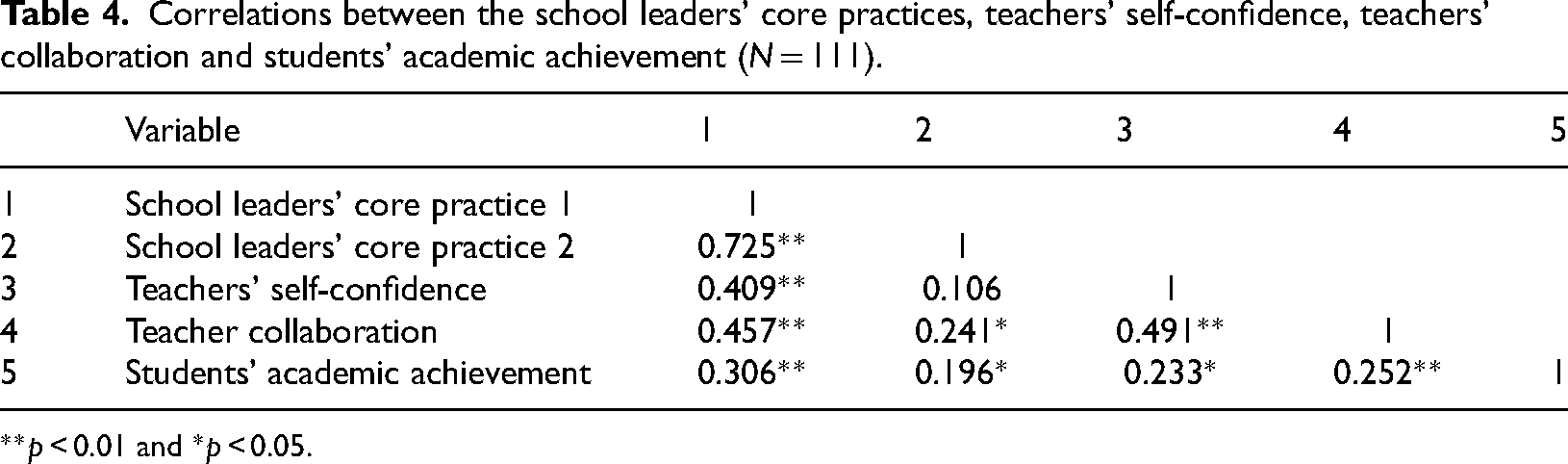
Table 4 reports correlations at school level (N = 111) for the variables included in the analysis. In this current study, teachers’ perceptions of self-confidence and teachers’ engagements in professional collaboration with colleagues are included as part of organizational school climate.
Correlations between the school leaders’ core practices, teachers’ self-confidence, teachers’ collaboration and students’ academic achievement (N = 111).
**p < 0.01 and *p < 0.05.
Positive, statistically significant correlations were found between school leaders’ core practice 1, core practice 2, teachers’ self-confidence, teacher collaboration and teacher-reported student academic achievement. On the other hand, core practice 2 correlated weaker, but scientifically, with teacher collaboration and student academic achievement. Notably, the correlation between core leadership practices and the other variables explored indicates a stronger correlation with leadership core practice 1 than with leadership core practice 2.
Cross-comparison between high-performing and low-performing schools
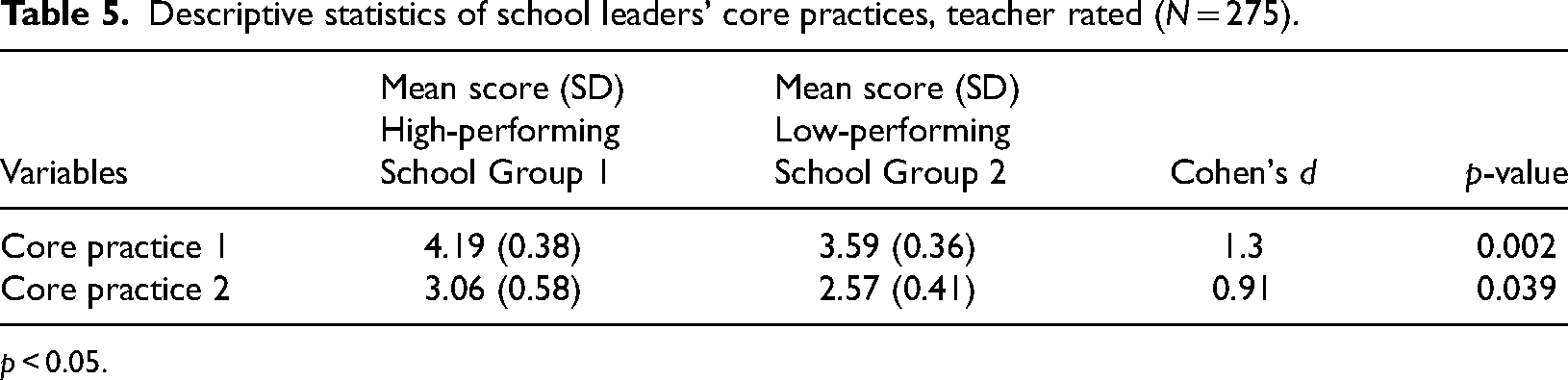
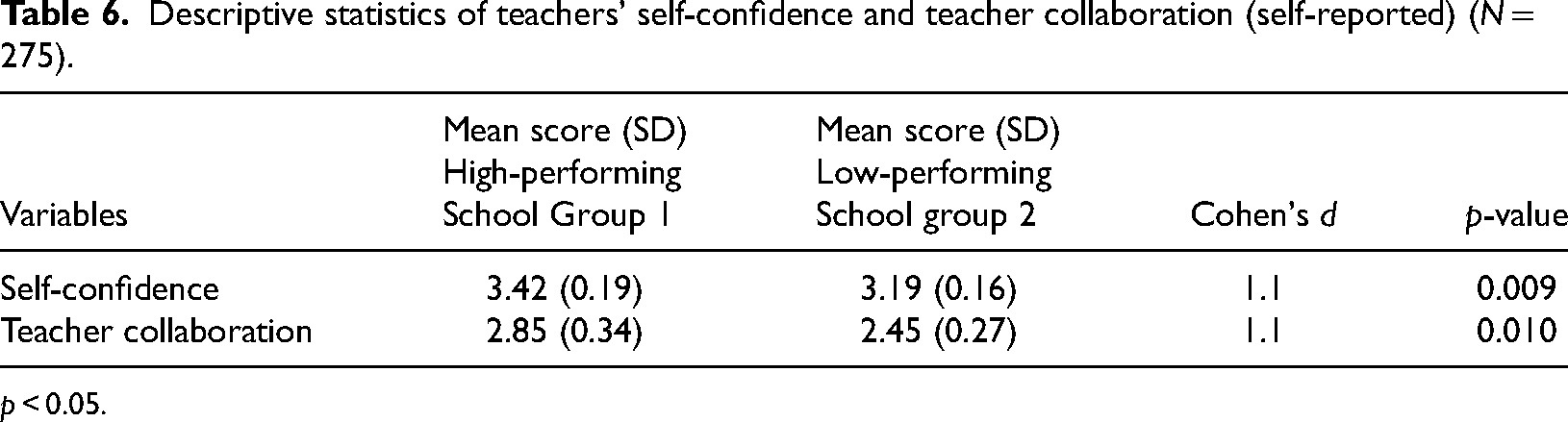
Tables 5 and 6 present results of the cross-comparison between high-performing and low-performing rural schools in terms of school leaders’ core practices, teachers’ self-confidence and teacher collaboration.
Descriptive statistics of school leaders’ core practices, teacher rated (N = 275).
p < 0.05.
Descriptive statistics of teachers’ self-confidence and teacher collaboration (self-reported) (N = 275).
p < 0.05.
In this sample, teachers in the high-performing schools rated school leaders’ core practice 1 and core practice 2 higher than teachers in low-performing schools. Both school groups had high average scores on school leaders’ core practice 1 and rated this core practice higher than core practice 2. However, there were significant differences between the high-performing and low-performing schools.
Teachers in high-performing schools and teachers in low-performing schools rated their self-confidence and collaboration with other colleagues at their schools. Table 5 shows that the teachers in high-performing schools rated their self-confidence significantly higher than teachers in low-performing schools. The same pattern seemed to apply to teachers’ ratings of collaboration on teaching in their schools. In other words, teachers in high-performing rural schools seemed to experience a more positive organizational school climate than teachers in the low-performing rural schools.
Discussion
The purpose of this current study was to explore the relationship between the core practices of school leaders and organizational school climate in respectively high-performing and low-performing Norwegian rural school settings.
Two major results emerged from the study. First, contrary to the conceptual model of successful school leadership (Leithwood et al., 2019), our empirical model clustered around two distinct core practices for school leadership; core practice 1 included setting direction (goals), engagement in improving teaching strategies, upgrading teacher competence, maintaining good ‘work atmosphere, following up teachers’ documentation of students’ academic achievement and well-being, facilitating teachers professional development and building a collaborative culture in school, and core practice 2 included classroom observation targeted at instruction, supervision of teachers of classroom instruction and supervision of teaching assistants. Second, teachers, both in high-performing and low-performing rural schools had high average scores on school leaders’ core practice 1 and rated this core practice higher than core practice 2. Still, teachers in high-performing rural schools had higher ratings on both school leadership core practices, and teachers’ self-confidence and teacher collaboration (organizational school climate) compared to teachers in low-performing rural schools.
As noted by Fargas-Malet and Bagley (2021), rural schools in the literature are mostly defined by a small number of pupils enrolled. In a similar vein, the small number of pupils in rural contexts is often ‘a clear implications in terms of the size of staff and buildings/resources’ (Fargas-Malet and Bagley, 2021: 7). Additionally, being situated in a small community in a remote location often means being at risk of closure, which is described as a stable property of the small rural school context (Kvalsund, 2009). Despite the seemingly non-contested idea that small rural schools are naturally ‘hub of the local community’, Karlberg-Granlund (2019) identified a series of tensions related to the social proximity in small rural schools: Control, distrust and vulnerability. The argument is that these tensions take the form of a balancing act of the continuums of security–vulnerability, cohesion–control and confidence–distrust, like two sides of a balance’ (2019: 300), which supports the notion that rural schools may inhibit different, that is both positive or negative, developmental paths. The current study illustrates this point implicitly by analysing both high-performing and low-performing schools, suggesting that rural schools are not entirely determined by their political and demographical context. Karlberg-Granlund (2019) argues further that among the most effective support mechanisms, in order to deal effectively with these tensions, collegial networking and site-based professional development emerge as effective action strategies. The findings of the study concur with this line of argument by showing that in high-performing rural schools the levels of teacher collaboration and teachers’ self-confidence were systematically higher than in the low-performing rural schools. Moreover, the teachers’ high scoring of organizational school climate factors in this better performing schools co-existed with the teachers’ assessment of their school leaders being capable of bringing the two core practices into action: Setting direction for the school, facilitating professional development for teachers, building a collaborative culture and good ‘work atmosphere’, upgrading teacher competence and stimulating work engagement related to improving teaching strategies (core practice 1), accompanied by core practice 2 in classroom observation targeted at instruction, supervision of teachers of classroom instruction and supervision of teaching assistants.
Implications for school leadership practice
The findings of our study suggest a link between the two core practices of school leadership and teachers’ engagement in collaborative learning. Moreover, the comparative analysis suggests that this is a characteristic of the higher-performing schools in terms of student achievements. The ANOVA analysis demonstrated that in the higher-performing schools, the teachers scored their level of collaborative learning higher than in the opposite sub-group. This was also the case for teachers’ self-confidence and for the two core practices of school leadership as demonstrated by our analysis. Our findings demonstrate a positive co-existence between school leaders’ skills in setting direction for their schools, establishing a collaborative work-culture and teacher-reported student achievements. Moreover, there is a similar correlation between a more direct leadership behaviour classroom observation and supervision of teachers and teaching assistants, and high student achievements.
Our leadership practices included in the second set should be emphasized in school leadership training since the effects have been scored systematically lower, and since this cluster of direct behaviours is more weakly correlated to student learning and school climate factors. Our comparative analysis supports the notion that this set of behaviours from principals and middle leaders should be at the forefront for turning weaker performing schools into a growth cycle. Notably, we recommend not underestimating the importance of embedding classroom observation, monitoring and supervision in interpersonal trust between the school leader and the individual teachers, subjected to observation and supervision. A comparative study of school leadership training in Norway and Sweden suggested that when school leaders take part in systematic observation supervision, their capacity for instructional leadership is strengthened (Aas and Paulsen, 2019). This argument was supported by Owen et al. (2020), demonstrating that school leaders’ capacity for instructional leadership was strengthened with ‘leaders undertaking regular observations in classrooms, systematic tracking of student achievement and nurturing a positive culture for learning, as well as establishment of various collaborative processes involving community and teacher peer learning groups’ (Owen et al., 2020: 1615).
Implications for further conceptual development
Aas and Brandmo (2016) studied Norwegian school leaders’ task preferences and leadership orientation through an empirical validation of the conceptual models of transformational leadership (TL) and instructional leadership (IL) tested in a sample of Norwegian principals and middle level leaders. They concluded that, ‘Norwegian school leaders’ leadership preferences are rather complex and cross the traditional models of IL and TL’ (Aas and Brandmo, 2016: 103). Implicitly, their study posits that ‘global’ conceptual models of school leadership may play out differently when adapted to a wide variety of national and local socio-economic, material and cultural contexts. Following this line of reasoning, although our findings concur with central elements of the core practice model of Leithwood et al. (2019), our study suggests more emphasis on school leaders’ facilitating of organizational learning in communities of teachers alongside strengthening collaborative cultures and paired with engagement in professional competence enhancement (that is, our core practice 1). In line with Aas and Brandmo’s (2016) conclusion, our study supports the assumption that Norwegian school leaders hold preferences of ‘a considerable amount of trust and loyalty lower down the system, particularly trust in the professional community and the focus on collective development rather than individual responsibility’ (Aas and Brandmo, 2016: 103). On the other hand, our study shows that leadership preferences towards classroom observation and supervision of teachers and assistants that are targeted on instruction—that is, core practice 2—is more weakly represented in our data. The school leaders in our sample work in small rural schools characterized by close direct relationships between leaders and teachers. In such a setting, effective leadership encompasses school principals’ and middle leaders’ capacity to model and demonstrate preferable practices by means of supervision, guidance and observation, which is suggested to be included in further conceptualizations of effective school leadership in rural settings.
Implications for further research
We see the study of the organization of leadership and teacher professional development as a promising path for further research as pointing in a possible direction for further research and development of school leadership practice. In future research, a larger sample representing various geographic areas of rural schools, preferably including other countries, is highly recommended. Also the inclusion of small and rural schools in comparative case studies is recommended by Kvalsund and Hargreaves: ‘The inclusion of small and/or rural schools as sampling categories in large scale quantitative studies so that comparative analyses can be conducted between small/rural schools and other categories’ (Kvalsund and Hargreaves, 2009: 147). In a wider sense, the findings presented in this study concurs with the accumulated evidence from 25 years of research showing that higher-performing schools work as stronger collective learning systems (Louis and Murphy, 2017; Louis et al., 2010; Silins et al., 2002). These schools develop learning processes, strategies and structures that strengthen their capacity to deal effectively with change and to utilize their collective learning capacity in the interests of their students (Jarl et al., 2021; Leithwood et al., 2000; Marks and Louis, 1999; Schechter and Asher, 2012). Furthermore, in schools that have developed sustainable organizational learning mechanisms embedded in a collectively oriented professional culture, we typically find school leaders that are capable of combining direction-setting leadership practices with engagement in professional learning and supervision of teachers in dyadic relations (Louis et al., 2010). Additionally, our comparative analysis reveals that teachers’ self-confidence is a consistent pattern in the high-performing rural schools, and we recommend this to be a direction for further research.
Limitations
The current study may be considered on the basis of several possible potential methodological weaknesses. The study sample was limited to 20 rural schools, (10 high-performing and 10 low-performing) in a Norwegian county. Further, the sample is uneven. As a result of our selection criteria, no lower secondary schools were included in the group of high-performing schools. In addition, some of the variables are exploratory, due to lack of pre-validated measure models and the results are based on assessments and self-reported practices perceived by teachers.
Footnotes
Declaration of conflicting interests
The authors declared no potential conflicts of interest with respect to the research, authorship, and/or publication of this article.
Funding
The authors received no financial support for the research, authorship and/or publication of this article.
