



Abstract
This article seeks to understand the extent to which rural schools in isolated Andalusia approach the meaning and functioning of professional learning communities (PLCs), focusing on collaborative leadership, shared pedagogical practices and active community participation in the construction and development of a shared improvement project. He argues that the PCL model is a good response in contexts of geographical isolation and teacher instability because it fosters networks of interrelation around a shared purpose that is sustainable over time, with an impact on improving learning. A case study was carried out, focusing on three schools in the region of the Comarca de Las Villas. Data were collected through interviews, field notes, and document analysis, followed by emergent coding and thematic analysis to identify commonalities and differences in the degree of development of PLC dimensions across schools and, consequently, an understanding of the extent to which they align with the PLC model and which factors need further development. The findings reveal that the rural schools under study have clear leadership, are progressing around a shared purpose of improvement, and foster connections with their local communities to address challenges arising from their isolated locations. All schools display at varying levels of development the key dimensions of a PLC, including learning-oriented leadership, establishing a shared purpose that addresses local challenges, and efforts to increase social and professional capital through community engagement. However, the evidence does not consistently support that they operate as full PLCs. Factors such as geographic isolation and high teacher turnover contribute to the instability of collaborative practices and inhibit a sustainable, unified sense of purpose for improvement. Each school shows unique improvement strategies and is at a different stage of development, with different levels of impact from factors such as teachers’ social engagement, relational trust, and community connections. These actions represent a local response to the barriers faced by isolated rural environments, such as high teacher turnover, cultural isolation from the school, and limited access to technological resources.
Keywords
Introduction
One of the most significant challenges teachers currently face is ensuring quality education for all students, particularly those from vulnerable backgrounds (Arcaro, 2024). Isolated rural contexts create additional vulnerabilities, including high teacher turnover, complicating efforts to achieve equitable educational success for all students. Research has identified socioeconomic status as the primary predictor of academic failure, with other factors such as geographic isolation and loss of social capital complicating these challenges, particularly pronounced in sparsely populated rural areas known as “empty Spain.”
In these contexts, challenges are both quantitative, related to the availability of resources, and qualitative, addressing the quality of education, including pedagogical practices and school leadership, involving the availability of educational programs and their alignment with the specific needs of rural communities (Santana and Barrero, 2021). Geographic isolation and resource limitations directly impact the accessibility and quality of education, highlighting the necessity for educational models responsive to these unique conditions. Given the impact of location and poverty on rural education, there is a growing need to prioritize meaningful learning strategies tailored to rural students’ realities (Caballero, 2023).
Improving learning outcomes in this complex and challenging environment requires emphasizing well-established practices: fostering leadership, adopting a more inclusive and flexible approach, addressing challenges through “interactive professionalism” (Hargreaves and O’Connor, 2018), building a shared purpose between school and community, and enhancing the professional capital of the school (Hargreaves and Fullan, 2012, 2020). However, as indicated by the TALIS 2018 study (González, 2020) and other studies related to the Andalusian context (Domingo et al., 2024), these practices are not yet widespread in Spain, both in leadership and the development of professional collaboration in practice. In challenging contexts, there are some promising initiatives that, without being PLCs themselves, are providing themselves with organizational conditions and facilitating structures (Gray et al., 2016), have increased their perception as a community (De Jong et al., 2021) and have significant advances in the dimensions that characterizee them as such, which are worth identifying and contextualizing.
The relevance of this study lies in exploring the rural context to determine to what extent these schools develop shared cultures of thought, feeling, action, and beliefs (Hargreaves and O’Connor, 2018), capable of collectively and co-responsibly addressing their problems and challenges, learning from them. Focusing on an isolated rural region of Andalusia, where schools are working to maintain and improve learning outcomes, this research aims to assess the degree to which schools in this region are advancing in line with the dimensions, practices, and approaches of Professional Learning Communities (PLCs) (Admiraal et al., 2021; Bolívar and Domingo, 2024; De Jong et al., 2021; Dufour and Eaker, 2008; Stoll and Kools, 2017; Stoll and Louis, 2007). They can be a valuable resource that supports sustainable collective initiatives for community development, social inclusion, and educational improvement in specific rural schools.
The study identifies commonalities and unique characteristics in all cases to highlight effective practices, specific challenges, and ways to better support educators in these communities. In this context, we pose the following research questions:
To what extent do the Andalusian rural schools studied (from a cross-sectional analysis) address the key dimensions of the Professional Learning Communities in response to their contextual challenges? How do these dimensions manifest themselves (from a vertical analysis by cases) in a differential and contingent way in isolated rural environments?
Literature review
Challenging contexts and social transformation
The impact of challenging contexts on education is complex, with external factors playing an important role in school improvement (Harris et al., 2006). Schools in areas with low socioeconomic and cultural indices face unique challenges (Harris, 2010), which necessitate adapting professional policies and practices to align with the specific realities of these settings (Reynolds et al., 2006).
The term “challenging contexts” refers to schools and communities in socioeconomically disadvantaged areas where certain barriers hinder educational quality and accessibility (Sowton, 2021). Addressing these barriers requires a deep understanding of the communities’ unique needs to implement effective educational practices. From an inclusive education and social justice perspective, these challenges demand professional, cultural, and community responses that are context-sensitive and sustainable over time (Ainscow, 2020).
Learning improvement: a shared community project
Improving learning outcomes in vulnerable contexts requires more than just teachers’ efforts; it demands a community-driven approach (Khalil and Ebner, 2015). Responses to these challenges must extend beyond the school itself to address the complexity of the situation collaboratively. Research has shown that schools actively engaged with their communities can transform the realities of their environments (López and Sánchez, 2021), and leadership plays a pivotal role in this transformation (Otero, 2019). Although some studies, such as Armstrong et al., suggest that the effects of collaboration on student outcomes are not conclusive, other research highlights significant benefits in specific contexts, justifying a more detailed exploration of this phenomenon in Andalusian rural schools
Interrelationship networks also serve as vital tools in addressing these challenges, both within the school (Hargreaves and O’Connor, 2018) and between the school its community (Longás and Civís, 2019). This term refer to structured and strategic connections among educators, administrators, students, and the community, facilitating the exchange of resources, knowledge, and mutual support. In education, the concept of “community” involves support networks among teachers, administrators, students, and families, all working toward the common goal of improving learning outcomes (López and Sánchez, 2021). The term “community” in organizational studies encompasses not only support networks but also power dynamics, conflicts, and differences in incentives and constraints among its members. Such collaboration helps to address barriers like limited resources and economic instability. In rural contexts especially, building robust educational communities is crucial for enhancing educational quality in the face of geographical isolation and limited resources.
Challenging contexts, as advocated by normative guidelines, require projects and practices that promote professional learning environments, with organizational structures that support regular collaboration, professional dialogue, and collective reflection on educational practice, essential for sustainable pedagogical development. A good answer would be professional learning communities (PLCs), which promote structured collaboration, fostering the exchange of teaching practices and adopting new methodologies, using reflection, and collective learning to enhance teaching effectiveness and student performance (De Jong et al., 2021). The adaptability and responsiveness of these communities are essential for addressing today's evolving challenges and meeting the needs of complex contexts (Dufour et al., 2006). This adaptability is particularly important to support educational equity in a localized way, promote collaboration among teachers, connect with the community, and link schools and institutions focused on shared improvement goals. Through PLCs, resources, social capital, and professional practices are shared and adapted to the future needs of students (Vescio et al., 2008).
Characterization of professional learning communities (PLCs)
PLCs are groups of educators who collaborate consistently and systematically to enhance teaching practices and student achievement. According to Dufour et al. (2006), PLCs are built on three core pillars:
Ensuring students learn: PLCs prioritize ensuring that all students learn. This involves collaboratively identifying learning objectives, developing formative assessments, and analyzing data to improve educational outcomes (Stoll and Louis, 2007). Creating a culture of Collaboration and Professional Interconnection: Collaboration in PLCs extends beyond teachers to include other stakeholders and the broader community (Bolívar and Domingo, 2024). This culture is grounded in reflection, professional dialogue, and continuous learning to improve student learning (Admiraal et al., 2021; Hargreaves and O’Connor, 2018). Focusing on results: PLCs focus on enhancing educational outcomes by analyzing evidence to ensure that their collaborative efforts lead to measurable improvements (Vescio et al., 2008).
The concept of PLCs has evolved, now encompassing more complex and inclusive approaches. It goes beyond shared purposes, structures, and collaborative practices, integrating perspectives that emphasize learning for and among all, openness to the community, and networked collaboration. Table 1 presents a synthesis of the key characteristics and dimensions of a PLC (Admiraal et al., 2021; Bolívar and Domingo, 2024; De Jong et al., 2021; Huffman and Hipp, 2003; Stoll and Kools, 2017; Stoll and Louis, 2007) (see Table 1).
Key characteristics and dimensions of PLC.
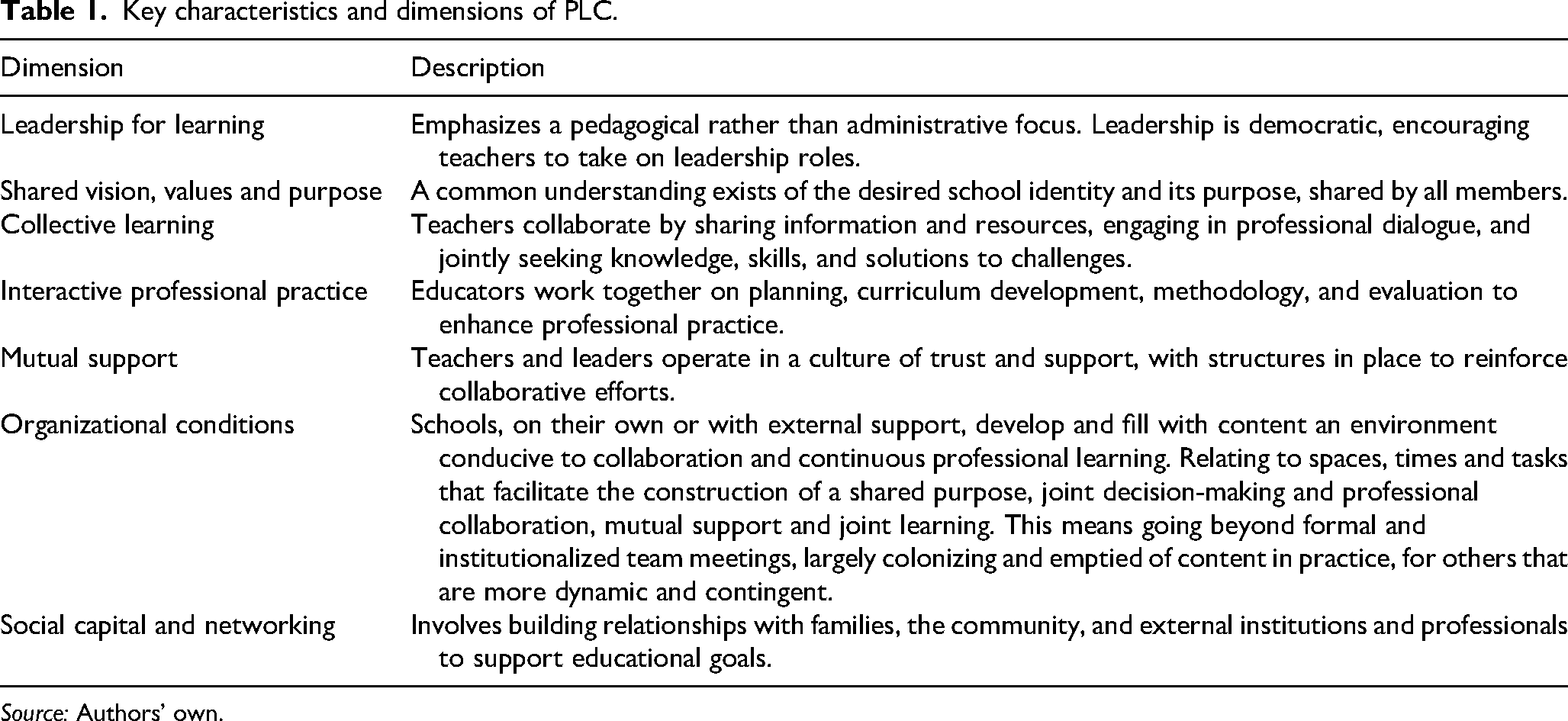
Source: Authors’ own.
Andalusian schools as professional learning communities (PLCs)
PLCs offer a promising solution for enhancing education in challenging contexts. By promoting collaboration among teachers and continuous learning, PLCs not only improve pedagogical practice but also transform the educational culture, helping students acquire essential skills to face future challenges (INEE, 2020; Mourshed, Chijioke and Barber, 2009). These conditions enable PLCs to foster innovation and improve learning outcomes for all. However, despite this potential, the institutionalization of PLCs in Andalusia remains limited, with ongoing progress but significant obstacles to effective implementation, particularly in areas like school leadership and fostering a collaborative teacher culture (Bellibas, Bulut and Gedik, 2017; Bolívar and Bolívar-Ruano, 2016). It is then interesting to see if in our schools, especially in vulnerable contexts due to isolation, there are facilitating conditions (organizational structures, leadership and project) such as understanding the degree of progress as a community (both in collaboration, interrelation and involvement around a shared purpose) in the dimensions that define a PCL (see Table 1, together with the nuances and contingencies emerging from the reports themselves)
Studies conducted in Andalusia (Domingo et al., 2024) reveal a reality similar to that of other Mediterranean countries, where professional community and collegiality among teachers remain limited. Although there is a positive perception of leadership and teacher collaboration, cultural barriers hinder the establishment of sustainable collaborative practices rooted in school culture that positively impact educational outcomes (Bolívar, 2019; INEE, 2020). Key barriers include a lack of time for collaboration, inadequate school leadership, and weak evaluation policies (Moral, Amores and Ritacco, 2016). Additionally, tendencies toward professional individualism and limited school preparedness reduce opportunities to create environments conducive to collaborative learning (Bolívar, 2020).
Progress towards collective learning has been driven by grassroots and governmental initiatives in Andalusia, urging progress in line with learning communities (Cantero and Pantoja, 2016; Valls et al., 2014; Fernández-Terol and Domingo, in press). The COVID-19 pandemic has further exposed the system's vulnerabilities—particularly in schools lacking agency and community capacity—and alerted us to important lessons in leadership, interactive professionalism, and community engagement (Bolívar et al., 2022). Although collaborative work is generally valued, it remains uncertain whether the necessary structures and conditions to sustain shared professional practices are firmly in place (Hargreaves and Fullan, 2020). To address these challenges, fostering intermediate leadership is essential to mobilize social and professional capital, promote a unified educational project that meets the needs of all students, and strengthen collaboration both within and across schools.
Methodology
Method and design
This research examines the degree of presence, development, and sustainability of the dimensions of a PLC through a case study conducted in a rural educational district, focusing on three specific educational schools. Rather than aiming to generalize its findings, the study seeks to understand the unique circumstances of each case. This approach allows for an in-depth exploration of the complex dynamics between events and human factors within each school. The multiple case study design provides a detailed view of the situations, uncovering nuances and relationships that may not be captured through numerical analysis alone. Prioritizing processes over outcomes allows for deeper insights and a richer understanding of meaning. The selection of multiple (maximum variability among them) within the same educational context, … (seeking maximum variability among them) cases within the same educational context (in the region of Las Villas, as a case), and from an ethnographic, (auto)biographical, and non-colonizing participatory-dialogic immersion to enhance the validity and robustness of the findings, offering a comparative and comprehensive perspective on the phenomena under investigation.
Sample: overview and rationale
The study focuses on the Las Villas region, located in the eastern part of the Jaén province in Andalusia. This area is rich in natural resources, including part of the Natural Park of the Sierras de Cazorla, Segura, and Las Villas. The local economy is primarily driven by olive cultivation and oil production. However, the region faces demographic challenges, characterized by an ageing and declining population, reflecting the broader demographic and economic regression typical of rural areas in the interior of the Iberian Peninsula. Additionally, the region lacks active rail networks and modern transportation infrastructure, limiting its connectivity. As such, it serves as a representative case of a rural school environment. Three regional schools were selected, ensuring maximum differentiation to provide a comprehensive view of the area. As shown in Table 2, the selection of cases was based on the following criteria:
Criteria for case selection.

Key informants were selected from the three schools (see Table 3). In all cases, these are leaders and teachers and other professionals who have professional experience and in-depth knowledge of the school under study. Leadership positions in these schools are predominantly held by women who are deeply connected to the local context. Furthermore, the snowball sampling method used to identify additional key informants led to the selection of these individuals, as they were particularly receptive to discussing social and community-related issues.
Characteristics of school participants.
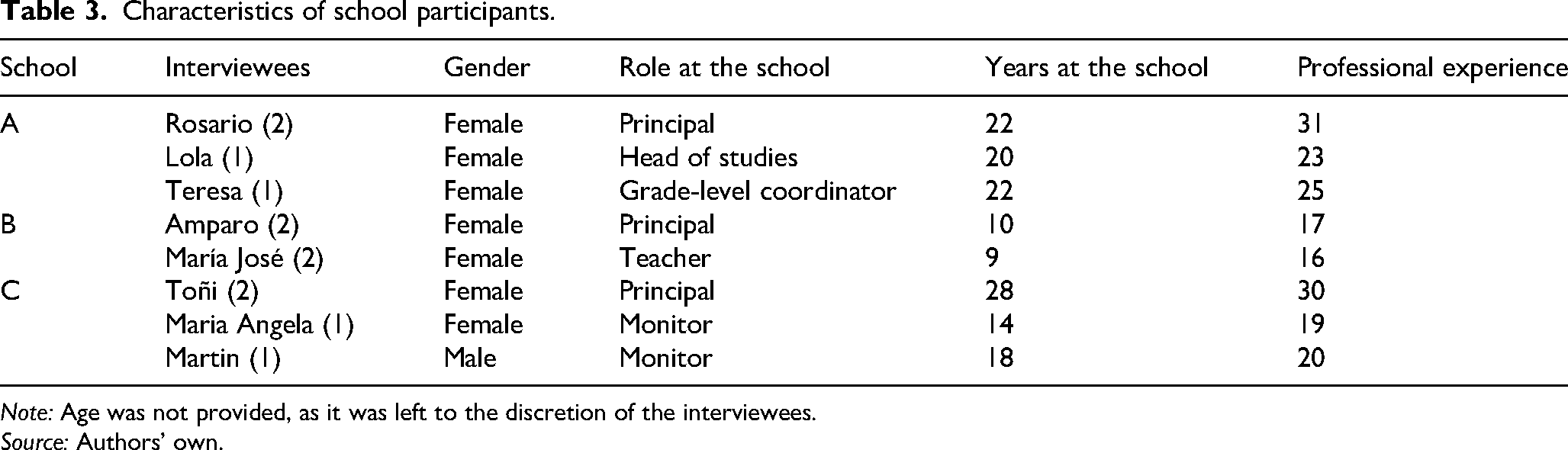
Note: Age was not provided, as it was left to the discretion of the interviewees.
Source: Authors’ own.
Information collection and analysis
Figure 1 summarizes the phases, procedures, and instruments used in the study.
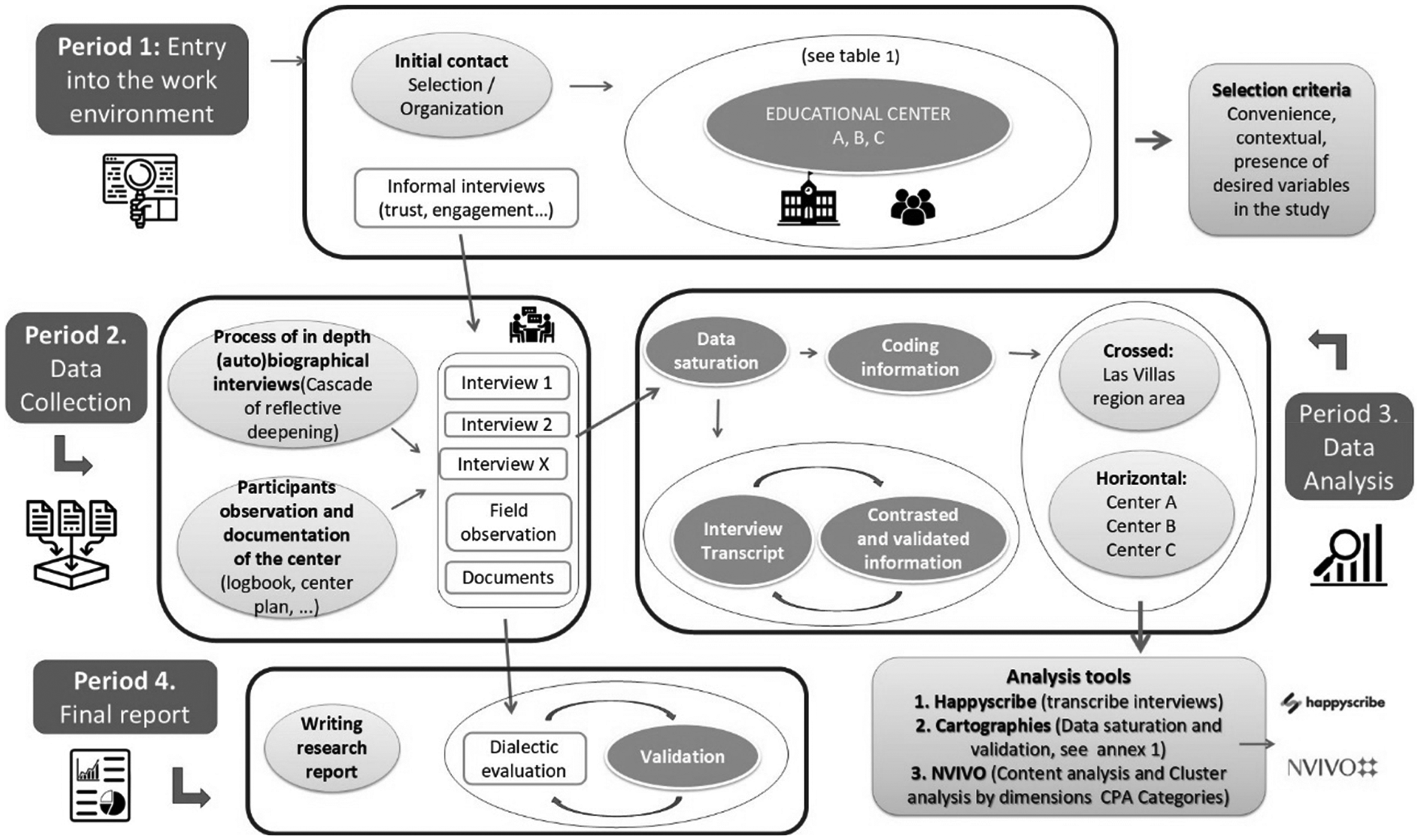
Phases, procedures, and instruments. Source: Authors’ own.
Participants from each school were intentionally selected to gather relevant and valuable information to address our research questions . An initial contact with all the schools in the Villas was used to select the three experiences that showed the greatest variability of scenarios with significant approaches to the development of shared practices within the schools and between them and their community. In the first phase, we established contact with schools, prioritizing commitment, ethics, and mutual trust.
For data collection, in-depth interviews, field notes, and documentation from schools (such as research and improvement plans) were used. The voices of the participants were captured through reflective deepening, which included cycles of in-depth (auto)biographical interviews to all key informants (to arrive at practical knowledge and experience in that school), dialogic debate with them (to complete and validate arguments and reasons), and participant observation (to locate and capture another series of dimensions). With all this, it was possible to obtain a rich and multidimensional understanding of the educational environment, dialectically validated with the key informants, which allowed a nuanced response to the research questions. A common semi-structured protocol from interviews (to gather relevant information regarding the dimensions under study), with flexibility to adapt and capture emerging themes or perspectives in each case, in order to address both the overall status of these schools as PLCs (Question 1) and the specific characteristics of each educational center (Question 2). Each interview lasted between 30 and 90 min.
Data collection and analysis were conducted in strict adherence to the ethical guidelines outlined in the Code of Good Practice of the University of Granada (honesty, responsibility, and rigor), as well as the specific research agreements between the University of Granada and the educational administration of Andalusia.
For the ongoing dialectical validation process, cartographies were used as a tool for deepening and validation. The use of cartographies facilitated continuous dialogue with participants, creating a co-constructive process of knowledge that enriched the study dimensions and contextualized the understanding of the phenomena under study.
As noted by Padilla-Petry et al. (2021), cartographies are visual tools that enable the mapping and graphic representation of interview data in a clear and understandable format. In this study, cartographies (see Annex 1) were employed to verify the consistency and coherence of the information obtained from the interviews. By tracing connections, relationships, and emerging patterns within the maps, it was possible to identify any gaps or contradictions in the data. Furthermore, the mappings provided opportunities to explore new perspectives and generate fresh insights from the existing information.
The interviews were recorded and transcribed, then reviewed multiple times to identify recurring patterns using the Happyscribe program. The analysis was conducted continuously throughout the process to detect and explore key themes that made up the dimensions under study and the nuances of each school that emerged during the reflective deepening cycles of the collected interviews. Data were analyzed following the principles of grounded theory. The aim was to gain an understanding of the dimensions of PLCs. For this reason, the defining dimensions of PLCs were used as a framework to integrate all the units of meaning (i.e. fully meaningful phrases related to the themes under study) that provided depth and nuance to each dimension.
The data were categorized through a sequential process that began with a horizontal cross-sectional analysis of the entire educational area of the comarca of Las Villas, followed by a vertical analysis of the specific schools within the area (A, B, and C). Both the cross-sectional and vertical analyses were supported by NVivo 12 software tools. While grounded theory principles guided the initial exploration of data to ensure that emerging themes, perspectives, and contingencies were not overlooked, a semi-open matrix of codes derived from predefined theoretical dimensions was chosen (see Table 1). This allowed for a structured and focused analysis that led to a better understanding of the data.
All this was developed following a dynamic and sequential design, which integrates a set of vertical (by cases) and cross-sectional (by themes) analyses, taking into account three types of complementary analytical evidence: the degrees of presence of thematic units expressed in percentages and the cluster analyses (more typical of a parametric qualitative analysis), but contrasted, enriched, nuanced, and deepened from the observation of participants, and from the sense of the informants’ own voice and their dialectical validation of the results.
Results and discussion
This study sought to address the following research questions:
To what extent do the Andalusian rural schools studied exhibit the characteristics of Professional Learning Communities in response to their contextual challenges?
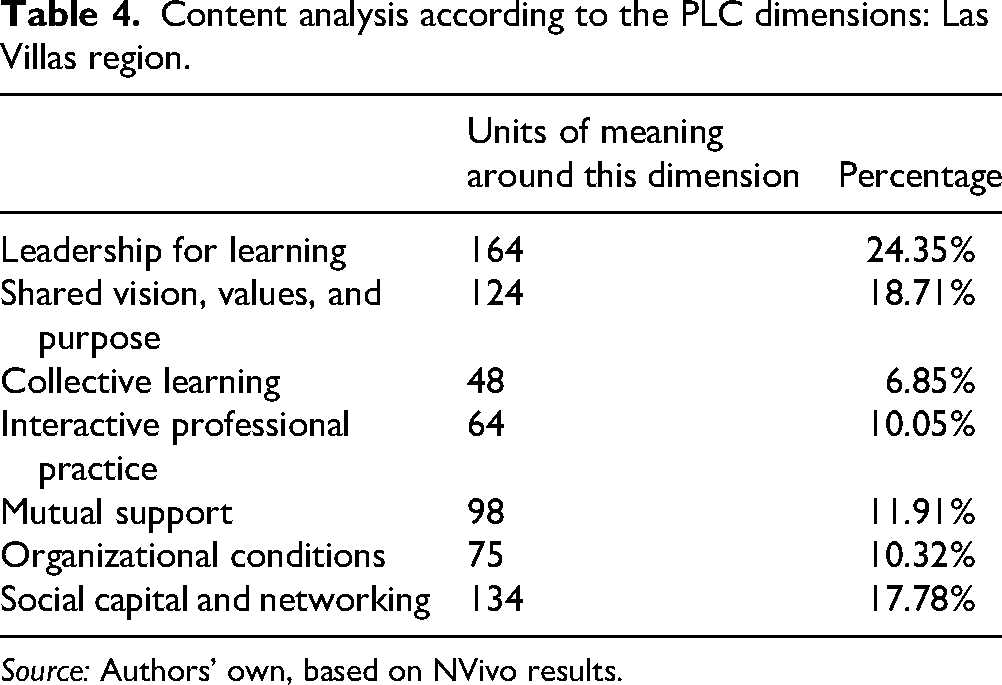
Table 4 summarizes the key findings from the units of meaning related to the dimensions under study in the educational area of Comarca Las Villas.
Content analysis according to the PLC dimensions: Las Villas region.
Source: Authors’ own, based on NVivo results.
When observing the percentage of occurrences of units of meaning related to the dimensions that characterize a PLC and also according to the degree of meaning in the different reports, the following profile emerges:
Leadership for Learning stands out clearly above the rest, highlighting its fundamental role in the development of PLCs. This dimension emphasizes the importance of effective leadership to foster a culture of learning within the community. Next, two key dimensions: Shared Vision, Values and Purpose (which form the basis of the improvement projects that govern the life of schools) and Social Capital and Networks (which address both their needs for collaboration, as well as the demand for it and its interconnection with the community). A third group of dimensions, with less specific weight, includes Mutual Support, Organizational Conditions and Collaboration. Although important, these factors are not as central to PLC development as leadership and shared purpose. Finally, Collective Learning emerges as an almost residual or secondary aspect. These findings are aligned with the TALIS-Spain report (González, 2020) and studies on professional collaboration in our context (Domingo et al., 2024). But it highlights that in all cases and informants, there is a need and a shared purpose of improvement. These trends align with recent findings (Fernández-Terolet and Domingo, in press) which emphasize the power of community-based approaches to inclusive professional development.
Figure 2 illustrates in more detail the relationships between these dimensions.
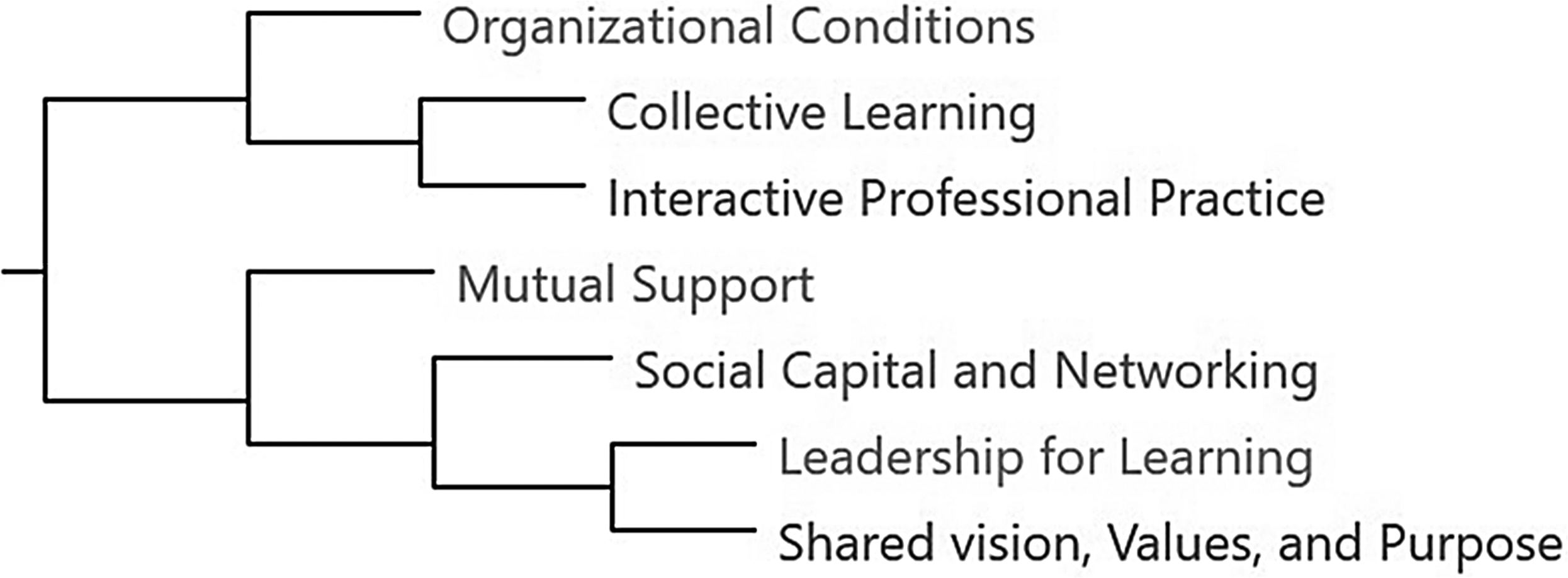
Cluster analysis. Comarca Las Villas region. Source: Authors’ own using NVivo 12 tools.
The cluster analysis reveals that, across the three schools in the “Las Villas” region, leadership for learning and shared vision, values, and purpose are the most prominent dimensions deeply integrated into the organizational culture. These dimensions form the strategic foundation upon which educational actions are built. Evidence from interviews suggests that shared leadership is fostered through regular staff meetings and participatory decision-making processes, which, according to school leaders, contribute to aligning the educational team around a common purpose (Harris and Jones, 2017; Leithwood et al., 2020). This leadership model supports the implementation of structured improvement projects aimed at addressing local educational challenges (Bolívar et al., 2022; Otero, 2019).
At the core of this foundation is recognizing the need to increase social capital and networking, which connect the schools to their local communities. These networks strengthen collaboration with families and external institutions, as evidenced by the partnerships established with local councils, NGOs, and regional education initiatives. School leaders emphasized that these collaborations provide access to external training opportunities for teachers and facilitate resource-sharing agreements, which in turn contribute to fostering a shared educational vision (Penuel et al., 2009; Putnam, 2016).
Next, school leaders and staff highlight mutual support as a factor contributing to relational trust and teacher well-being. However, given the limited number of teacher participants in the study—given their poor stability in the schools under study—further research is needed to assess the broader impact of these support mechanisms on teacher cohesion and their long-term commitment to educational improvement.
Lastly, although organizational conditions that support collective learning and interactive professional practice appear less frequently in the discourse and represent an area where progress needs to be made, they are assigned equal importance in the informants’ discourse. They all emphasize that these conditions would enable teachers to engage in collective learning and share methodologies, thereby enhancing pedagogical practices overall.
How are collaboration and learning practices among teachers differentially manifested in challenging rural environments?
School A
Table 5 summarizes the results of the content analysis for the PLC dimensions in school A, with the units of meaning categorized into three levels of development based on their degree of presence.
The dimension of Leadership for Learning (22.96%) emphasizing its central role in the conduct of the educational project and the alignment of the team with a common purpose. It is closely followed by the dimension of Shared Vision, Values and Purpose a fundamental component that leaders use to direct the direction and continuity of the educational project. This shared vision is crucial for gradually building team alignment around common goals and setting a clear direction. Mutual support also emerges as a critical factor, fostering relational trust and encouraging teacher collaboration. Only they have to be built and renovated almost every year. A third group, moderately represented in the participants’ discourse includes Organizational Conditions and Social Capital and Networking. Although they are still in the early stages of development, they are considered essential to the school's functionality. Collective Learning is both a tool to improve and a need to share knowledge, although there is still room for growth. Meanwhile, Interactive Professional Practice is very in the classroom.
Content analysis according to the PLC dimensions: School A.
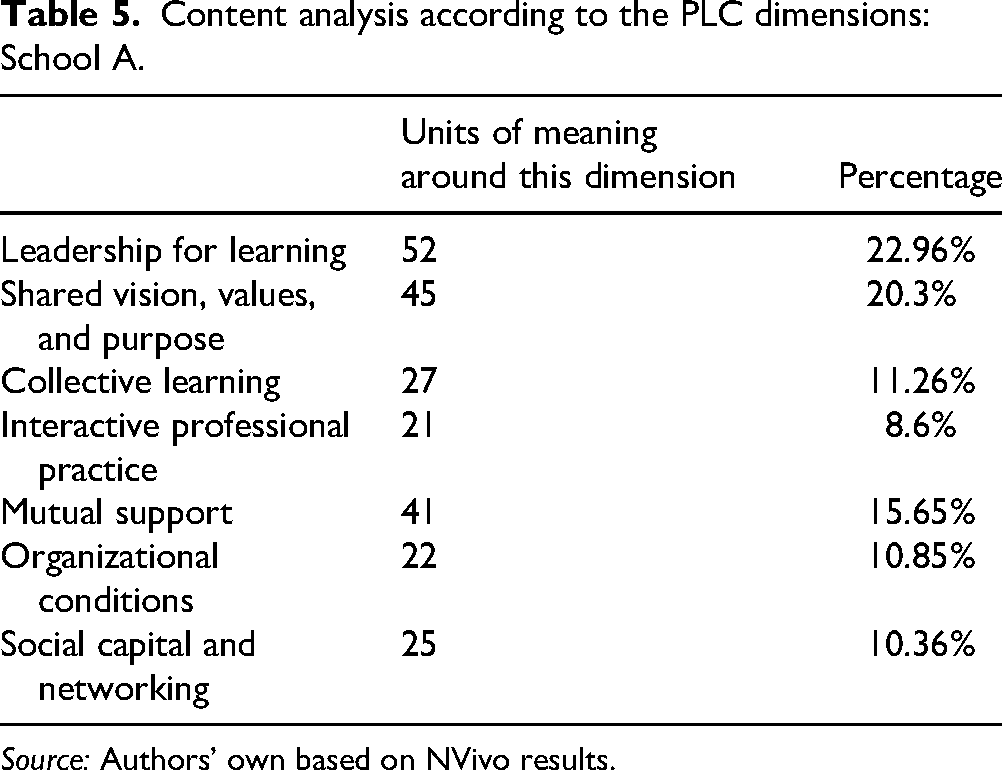
Source: Authors’ own based on NVivo results.
Consistent with these findings, the cluster analysis in Figure 3 reinforces the conclusion that in this school, leadership focused on learning and a shared project from the foundation of the school's culture. The principal serves as the central figure, inspiring and guiding the team. Although she does not view herself this way, she is dedicated to a distributed leadership approach that encourages everyone's participation. “I wanted to organize a shared leadership so that we all have responsibilities…. Actually, everything is pretty much spread out.” “It is critical that we are aligned with the school's vision, that every action is geared toward social justice and inclusion.” “The school is like a ship…. I steer it, but my crew are the ones who keep everything running. If a rope breaks, the others hold it up.” “We are a close-knit team…we always support each other in times of difficulty.” “It is very difficult to coordinate because there is not enough time. We work from 4 to 7 on Mondays, but it's complicated to do everything in that time.” “We need technology, but we buy it ourselves by depriving ourselves of other things.” “The City Council is very involved, but sometimes we overlap with each other's activity days because they organize things on their own.” “We have tried to share our practices, but we lack the time and resources to make this more effective.”
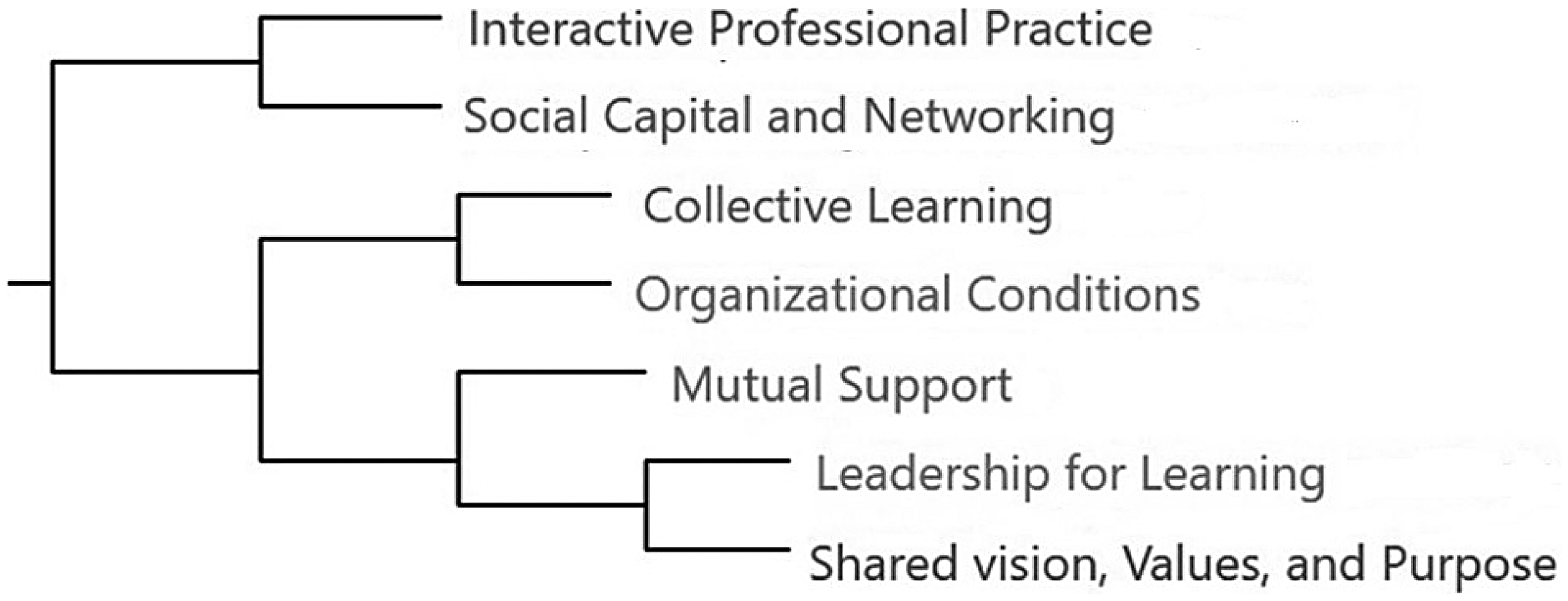
Cluster analysis. School A. Source: Authors’ own using NVivo 12 tools.
School B
The dimensions (see Table 6) that characterize this educational school reveal a reality in which:
The dimension of Leadership for Learning occupies a prominent place, with a central role in the development of the school. Along with this, the construction and development of a Shared Vision, Values and Purpose also occupies a prominent place in the discourse, denoting the importance of these elements to guide the educational project and bring together the efforts of the community. It is followed by Social Capital and Networks. The stories emphasizing the value of connections and collaborations both inside and outside the school to maximize available resources. But, as denoted by the third group of dimensions. The topics related to Mutual Support, Organizational Conditions and Interactive Professional Practice. While there has been progress in structural and formal conditions—as enabling structures—actual collaboration remains relatively low. This is evidenced by the minimal presence of the Collective Learning dimension in the discourse of the informantsThis suggests that collective collaboration is rare within the school, indicating the need for better support and organizational structure to facilitate professional cooperation.
Content analysis according to the PLC dimensions: School B.
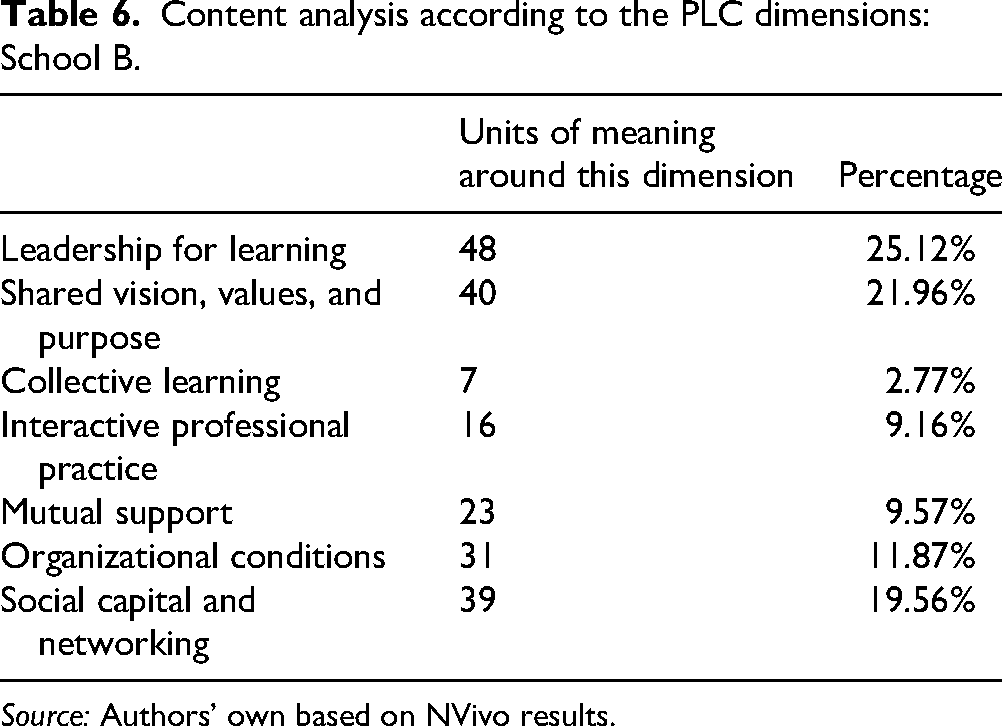
Source: Authors’ own based on NVivo results.
The cluster analysis (see Figure 4) reveals a hierarchical structure in the discourse regarding how School B is organized, operates, and is guided. It emphasizes that leadership for learning serves as the central pillar, forming the foundation upon which other dimensions are built, particularly developing a project focused on improvement through shared purposes. The role of the director is clearly pivotal in this school, not only as a pedagogical leader but also as the driving force behind the entire team. In the words of the secretary: “Amparo is indispensable. We are always meeting after class to discuss our students and work together to find possible ways of improving things.”
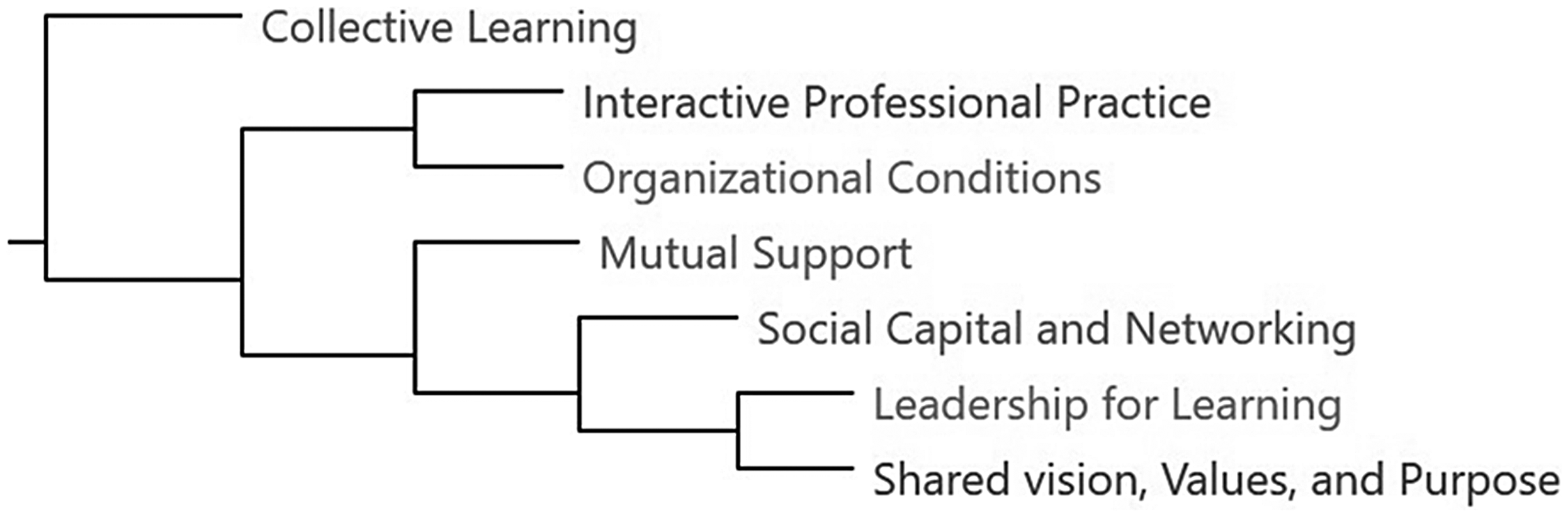
Cluster analysis. School B. Source: Authors’ own using NVivo 12 tools.
Thus, it is precisely this shared vision and values that constitute the second pillar supporting the school. This is not only a common ideal but also a coherent direction that enables each team member to clearly understand where the educational community is heading. Decisions are made as a team, always with the students’ well-being in mind.
Social capital and networks become crucial in a context characterized by isolation and high teacher turnover. Indeed, the strength of these networks is essential for the school to continue moving forward and realizing its vision. A clear example of this is provided by the principal, who highlights how they managed to repair students’ computers through the support of external projects, the help of the City Council, and local associations. These relationships not only help secure resources but also ensure the sustainability of the educational project and strengthen ties with the external community.
They also emphasize the importance of mutual support and view organizational conditions as connected dimensions that foster trust and cooperation among teachers. In this regard, the principal stresses the importance of creating conditions from the beginning of the school year that promote closeness and collaboration among staff: “We have an initial meeting so that new teachers can become familiar with the school and the environment, and we are very supportive of each other, especially in the beginning.”
However, the organizational conditions of the school pose certain restrictions, particularly in terms of scheduling opportunities for staff to work together. There is a clear need for better organizational structures that enable more fluid professional interactions, as the current conditions hinder the effectiveness and frequency of collaborative work. As the head of studies notes: “We coordinate as best we can, and since time is limited, we end up doing a lot of work at home.”
School C
Finally, we present a case that has advanced somewhat further toward embodying what it means to be a PLC committed to inclusion and the development of a community project. Table 7 highlights the following:
As in the previous schools, the dimension of Leadership for Learning stands out, from a transformative, caring, resilient and environmental perspective, emphasizing its central role in the functioning of the school. What distinguishes this school, however, is that it actively supports, seeks and strengthens the presence and development of social capital and networks to improve the school. This reflects the principal's strong belief in the importance of connections between the school and its community in facilitating access to resources and improving social cohesion. A second group of dimensions includes Shared Vision, Values and Purpose and Interactive Professional Practice which, although slightly less prominent, are essential to consolidate collaboration among the teaching team and guide actions towards common objectives. A third set of dimensions, comprising Organizational Conditions and Mutual Aid, is moderately represented in the discourse However, Collective Learning remains a significant challenge, with a more marginal presence. Focusing on inclusion and service users decreases the emphasis on how school professionals learn.
Content analysis according to the PLC dimensions: School C.
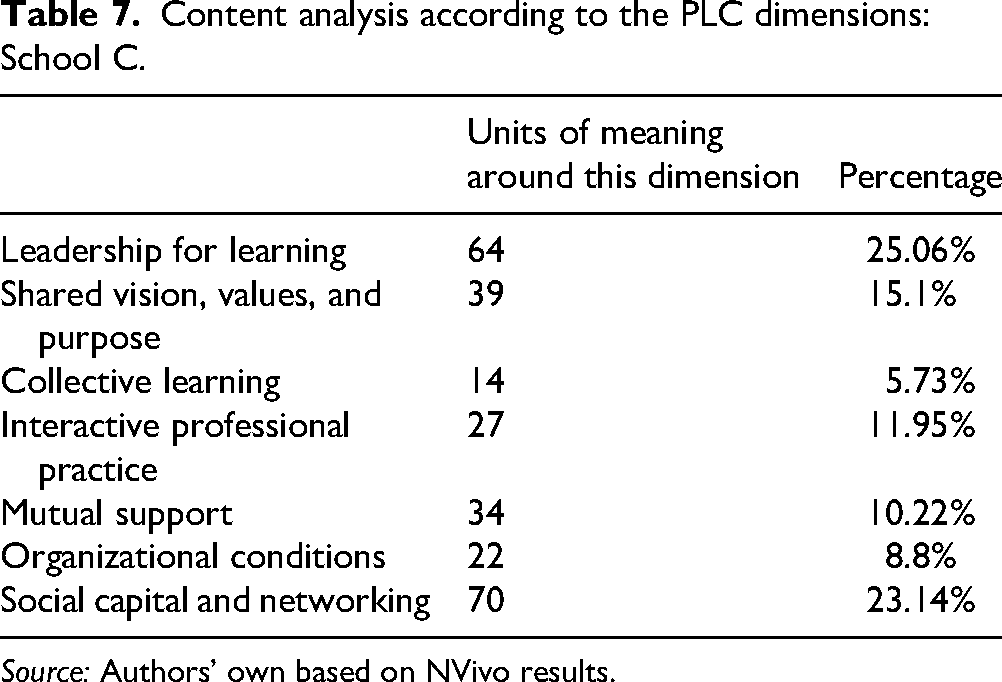
Source: Authors’ own based on NVivo results.
The cluster analysis in Figure 5 supports this analysis, showing that this community's foundation lies in its director's transformational and inclusive leadership. She works to build and sustain an environment of mutual support and collaboration within the school, fostering relational trust and care for both colleagues and users. This leader is widely recognized for her leadership abilities, as well as her closeness and empathy toward the entire community. In this regard, Martín, a monitor at the school, notes that: “She's a director, yes, but now she's family. She truly lives it and makes us feel like a family where everyone helps each other and wants to contribute their share.” “Toni knows how to guide us and delegate… Whenever there's a problem, she calls us, and we solve it as a team. This is how we ensure everything goes well and maintain a good relationship with families and institutions.”
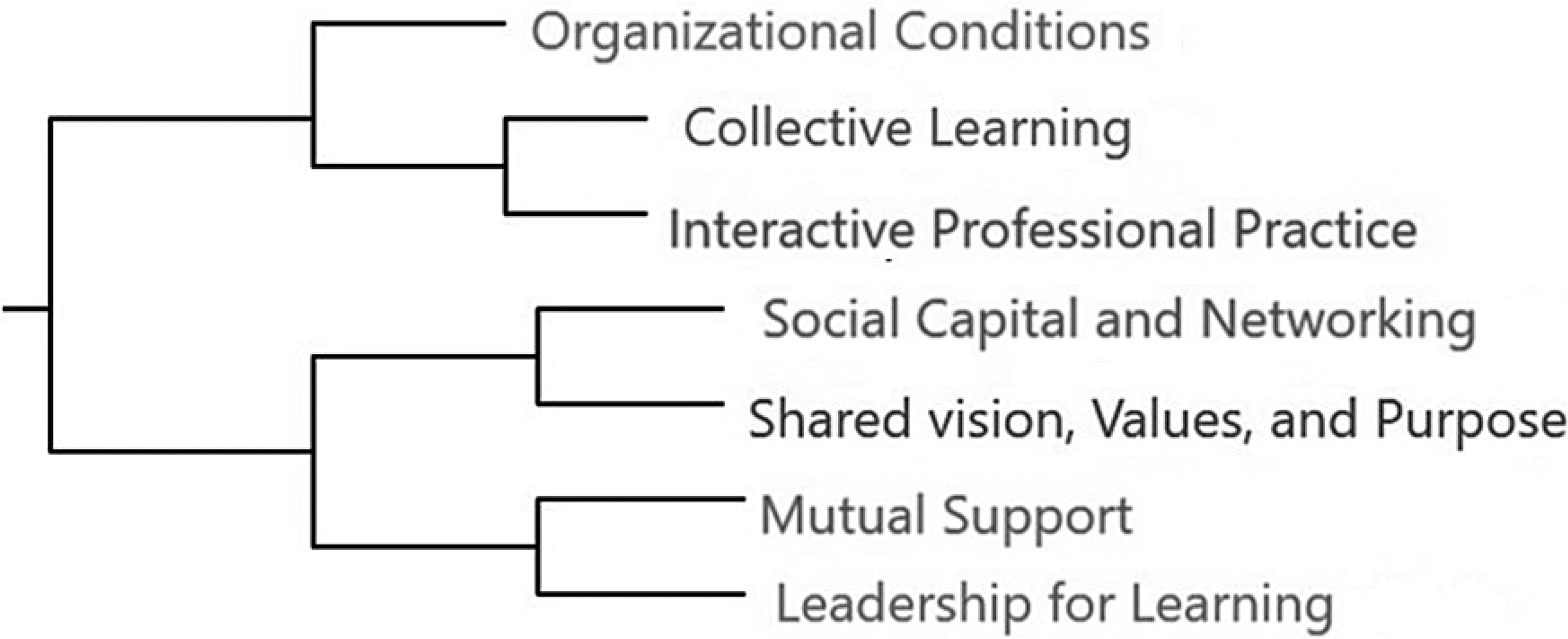
Analysis of PLC dimensions: School C. Source: Authors’ own based on NVivo 12 analyses.
Building on this leadership and establishing relational trust and mutual support, the school is committed to developing and achieving a shared vision, values, and purpose at the community level. This shared vision can mobilize additional efforts, wills, and people to contribute to the project. To this end, they focus on generating, harmonizing, and strengthening the project's social capital and interrelationship networks. This structure of dimensions illustrates how the school progresses along these two key lines of work to create a shared identity that steers all actions toward a common goal—namely, inclusion and social justice—both within the educational institution and in collaboration with the local community. Toni highlights how they collaborate with other schools on events such as the International Day of Persons with Disabilities, an initiative that reinforces values of inclusion from an early age: “We've been collaborating with schools for years…. The children in the school refer to our students as friends, which reinforces inclusion.” “She gets the money from wherever necessary. If the budget isn’t enough, she does whatever it takes, and if parents need to be involved, she does it. But she's always there, the first to offer support.” “One person in the workshop implemented a binding methodology that significantly improved learning…. We have an internal training plan so those who attend courses can share what they have learned.” “The hardest part was obtaining the quality certifications. In the end, we succeeded and understood the importance of accessibility and the environment, aspects that we were already implementing but had not made visible.”
Conclusions
Regarding the first research objective, the Andalusian rural schools studied demonstrate alignment with the findings of Domingo et al. (2024), In other words, the Andalusian school system as a whole does not fully align with the PLC model, although it does include dimensions that serve as pillars of this perspective, as well as others in which progress is being made or where more advanced experiences can be found. This study reveals other own nuances—not shared by the majority of the system—and with evidence that incites hope, such as having a clear shared purpose, strong interconnection with the community, and transformative leadership. At the same time, they highlight policies that are developed to increase the stability of teachers in these isolated rural contexts (to establish the prerequisite conditions for sustaining professional collaboration and, therefore, the possibility of progressing as a PLC). Although these schools have not explicitly aimed to establish themselves as, they have adopted leadership and shared purpose building strategies that respond to the improvement needs of their context, and seek to increase their levels of collaboration and interrelatedness and an emphasis on community engagement that aligns with the key dimensions of PLC. However, challenges such as geographic isolation and staff turnover limit their ability to fully institutionalize these practices.
Evidence from school leaders’ testimonies highlights the emphasis on leadership practices that prioritize the development and sustainability of collaborative initiatives (Day and Sammons, 2016; Spillane and Diamond, 2007) and teacher involvement. A central issue to improve the Spanish school (Bolívar, 2019; Bolívar and Bolívar-Ruano, 2016). These efforts also include community engagement projects and structured professional development activities, which align with previous findings on educational leadership in rural contexts (Bolívar et al., 2022; Otero, 2019)
School leaders demonstrate a commitment to pedagogical and transformational leadership, as reflected in their efforts to create structured collaborative spaces and facilitate teacher participation in decision-making processes. However, more evidence is needed to assess the extent to which these practices are consistently applied and perceived by all staff.
The close relationship between the educational team and the local community is crucial in facilitating the creation of supportive and collaborative networks. This proximity fosters cohesion and dedication within teaching teams, making it possible to implement PLCs. Consequently, school leaders prioritize building connections with the community to foster collaboration and mobilize resources that support educational initiatives. These efforts contribute to enhancing the collective professional capital of the teaching staff by expanding their access to knowledge-sharing networks and external professional development opportunities.
However, in rural environments, factors such as remoteness, isolation, high teacher turnover, and limited technological resources create additional challenges. These factors restrict the sense of belonging and hinder the development of stable, interrelated networks essential for sustaining long-term community projects. Although there is a desire to advance professional relationships and collaboration, rural contexts affect collaborative practices and peer learning among teachers (Caballero, 2023; Santana and Barrero, 2021). Staff instability, resource limitations, and geographic distances impact the effectiveness and continuity of these collaborative practices, suggesting that findings might differ in more stable environments—such as in School C.
Therefore, it is crucial to emphasize leadership qualities and establish a strong project that serves as a reference, if not a shared purpose, while fostering resilience and care. Building relational trust and ensuring everyone feels part of the initiative are vital. Across all cases, dimensions like leadership, project structure, educational zone, and the need for professional capital remain central. Due to the challenges of adapting, staying, and committing in rural schools, they focus on strengthening mutual support, resilient leadership, and a caring, companionate approach. These schools need support and resources to build and increase their social and professional capital (Hargreaves and Fullan, 2012). All these elements aim to create effective organizational conditions—as facilitating structures (Grey et al., 2016)—that enhance and sustain teacher leadership and professional collaboration (Hargreaves and O'Connor, 2018).
Committed and democratic leadership has been crucial in some schools in overcoming these barriers, fostering resilient educational communities capable of adapting to challenges through collaboration. The involvement of local communities in these contexts has facilitated initiatives such as joint training sessions and mentorship programs, which provide teachers with additional learning opportunities. While these initiatives have been positively received by school staff, further research is needed to determine their long-term impact on teacher motivation, job satisfaction, and student learning outcomes.
Regarding the second objective, the schools analyzed display varying levels of development, each with a unique implementation of the dimensions of PLCs, depending on their specific circumstances and capacities for improvement (Bolívar, 2014).
The conclusions should be interpreted considering the following analyzers. While the study has a notable strength—its use of a case study approach with depth and detail—it also has a limitation, as the sample is restricted to three educational schools within a specific region, which limits the generalizability of the findings to other educational contexts. Another limitation is the non-participation in the study with the voice of the non-permanent (fluctuating) teaching staff. Therefore, it would be advisable to analyze this variable in the future to confirm to what extent these practices are applied consistently across all teaching staff.
An emerging conclusion of the study highlights both the added value of leaders and communities committed to confronting and transforming their reality through collective improvement projects as a response to the specific challenges faced by isolated rural contexts, and the need for teacher stability that has significant implications for education policy.
Therefore, it would be beneficial to complement and expand this understanding with additional research and evidence to identify common and unique patterns in the implementation of initiatives moving forward in line with PLC in similar contexts. This would help to evaluate its impact on educational improvement and to inform appropriate actions.
Footnotes

Funding
The authors disclosed receipt of the following financial support for the research, authorship, and/or publication of this article: This study is supported by predoctoral contracts awarded by the Ministerio de Ciencia e Innovación de España (grant number PRE2021-098075) and the project PID2020-117020GB-I00, funded by MCIN/AEI/10.13039/501100011033.
Declaration of conflicting interests
The authors declared no potential conflicts of interest with respect to the research, authorship, and/or publication of this article.
Author biographies
Annex I. Example of cartography used in the validation process
Note: In our specific case, and as shown in Annex 1, a mapping approach was implemented by dividing a piece of cardboard into four dimensions: the central actor was located in the upper left, the school of action was represented in the upper right, and the external networks of collaboration and leadership were indicated in the lower left. The x and y axes were incorporated into this graphic representation to facilitate analysis.
A timeline was drawn on the x-axis, extending from the right (representing the past) to the left (indicating the present). This timeline made it possible to identify the changes in the variables over time in each dimension. The variables on the y-axis were categorized into different aspects: positive aspects (represented in green), barriers (represented in yellow), key moments (represented in pink), and aspects to reflect on (represented in orange). In addition, in the leadership dimension, an additional variable related to external networks was added, represented in blue.
During the analysis process, researchers and interviewers used colored sticky notes corresponding to each axis variable to record observations and relevant opinions provided by interviewees. These sticky notes were placed on the cardboard in the corresponding location, considering the dimension and the moment in time. The sticky notes could be moved, added, or adjusted according to the evolution of the discussions, which allowed for a dynamic and deep conversation on the relevant topics.
In addition, to further enrich the analysis, an additional dimension was introduced in the lower right-hand side of the map. In this dimension, connections were established between certain aspects and ways of working identified in the study and the contributions of major authors in the field.