




Abstract
This study sheds light on the underrepresentation of women as school principals by analysing which model (organisational or individual) is most identified with the gender differences in the quality of management found in favour of women principals. To do so, this study presents a model for the appointment of school heads in a two-sided market: demand and supply. On the demand side (organisational model), the presence of double standards, with respect to the promotion of women, would imply that higher bars are set for the evaluation of women. Alternatively, on the supply side (individual model), a potential lower self-efficacy perception among women could lead them to self-exclude from managerial positions. In both cases, the findings reveal only highly-skilled females as principals and a gender gap in principal positions. By using the World Management Survey (WMS), data indicate that female principals are associated with higher management quality, which confirms the presence of barriers to female promotion. Exploration of the market side responsible for these barriers found that only the demand side is significant, which signals the double-standard argument. This supports the argument that changes in the principal selection process should be implemented for the maximisation of the available pool of talent.
Introduction
In Organization for Economic Co-operation and Development (OECD) countries, the average number of female teachers in secondary education makes up 68% of the teaching population, but they hold only 45% of principal positions, as of 2013 (last available data) (OECD, 2016).
Having more male than female principals is not a problem per se, but rather, it is more a consequence of a problem. Indeed, one could attribute the problem of female underrepresentation in top school management positions not only to employers’ practices but also to women’s choices. The scarcity of women in principalship positions is a complex reality, with many contextual factors and different social and political aspects that can combine to produce unique modes of bias. In an effort of systematisation, Gabaldon et al. (2016) grouped the principal reasons that prevent women from reaching leadership positions into demand and supply factors of the principals’ market. On the demand side, there could be bias that stems from organisational policies that create double standards in the promotion of women. In their event history analyses, Davis et al. (2017) found that males are more likely than female counterparts of the same race (or ethnicity) to enter the principalship and do so at a faster rate, suggesting that the selection process may be influenced by systemic gender biases. In contrast, on the supply side, there could exist internal barriers that lead women to self-exclude from leadership positions.
The demand-side perspective belongs to the sphere of ‘organisational perspective’ or the ‘discrimination model’, which highlights obstacles within the educational system to women’s full integration into educational leadership roles. In this model, the organisational structures and practices in education overtly or subtly discriminate against women in the selection for leadership positions, which explains why women do not advance, even if they are qualified and ready to do so (Estler, 1975; Tallerico and Burstyn, 1996).
On the other hand, the supply-side approach corresponds to the ‘individual perspective model’ (Estler, 1975), which looks at the internal barriers of women as the cause of their under-representation in educational leadership positions. Within this framework, individual barriers can be grouped into three clusters: gender differences in values and attitudes (e.g. women being less achievement- and power-oriented); identification of gender-expected roles leading to the imposition of the ‘appropriate’ leadership behaviour on male models; and family conflicts affecting women’s professional choices and career paths (Gabaldon et al., 2016; Terjesen et al., 2009). According to this model, individual attitudes that fall into the psychological orientation domain, such as poor self-esteem and lack of self-confidence, could act as important internal barriers, leading women to exclude themselves from school administration positions (Tallerico and Burstyn, 1996).
This paper attempts to identify signals of gender bias in a school’s principal promotion process by examining gender differences in the management quality. If biases in the promotion process are hindering women’s access to managerial positions, the implication would be that women are required to be more highly qualified than men to become a principal. As a consequence, women would perform better than men. The presence of a double standard (i.e. higher bars to evaluate women) would explain possible gender differences in management quality and, ultimately, the gender gap among school principals.
An alternative explanation for the lower proportion of female principals with concurrent higher management quality scores (MQS) could be that women have lower self-efficacy perception. In this case, not only would fewer women have access to managerial positions, but those who did have access would have to be more prepared to compensate for their lower self-perception in their ability to match the competencies and skills required, which, in turn, would lead them to perform better as managers than their male counterparts. In this regard, Hoff and Mitchell (2008), in their study of school administrators in Maine, showed that 61.14% of women waited until they met all of the educational requirements compared to only 5.21% of men – a result attributed to the tendency of women wanting to be ‘super-prepared’ before applying. Spencer and Kochan (2000) argue that women with higher levels of education and experience may have raised their confidence in their knowledge and skills to occupy such positions.
Other causes of self-exclusion from the supply side – such as women seeming to be less power-oriented than men (Adams and Funk, 2012) or avoiding positions countering their gender self-schemas (Eddleston et al., 2006) – do not explain the simultaneous gender gap in top school positions and gender differences in quality management. Therefore, we focused the supply-side perspective on lower self-efficacy perception.
To explore both sides of the nomination process and their relationships with the lower presence of women in school principal positions, we looked for gender differences in MQS, utilising data from the WMS (Bloom et al., 2015). Bloom et al. (2015) found that female principals outperformed their male counterparts but without offering any explanation for this phenomenon, as gender was only a control variable within the scope of their study.
First, the authors constructed a model around the two-sided perspective of the principals’ market (Gabaldon et al., 2016), which explains two stylised and apparently contradictory facts: the existence of a gender gap in principal positions and a gender gap in favour of women in MQS. Then, to discover which of the proposed barriers are the most plausible, this study followed Hallinger et al.’s (2016) recommendations to carry out multivariate studies that advance the understanding of gender differences in leadership by using moderator effects of gender. Thus, the present authors interact gender with two factors that are available in the WMS and that pertain to both theories: a supply-side factor (the principal has a background in science, technology, engineering, mathematics or business (STEMB)) and a demand-side factor (the school competition level).
Thus, if the demand side (i.e. double standards in the promotion process) is responsible for the gender gap in MQS, then school competition will have a moderator effect of the principal’s gender on management quality, as predicted by Becker’s (1957) theory of discrimination. On the contrary, if the supply side (self-exclusion due to lower self-efficacy perception) is the main cause, then a personal factor, such as the principal’s STEMB background, could mitigate their lower self-confidence in holding such a position, since women who choose a STEMB career tend to have higher self-efficacy ratings (MacPhee et al., 2013; Nauta, 2004). In this way, this study uses the STEMB background of the principal as some kind of ‘treatment or therapy’ that segments the pool of women principals between those with a STEMB background – who, according to the literature, have higher self-esteem on average – and those without a STEMB background. If the women with a STEMB background are more similar – in terms of MQS – to their male counterparts than those without it, this would be a ‘signal’ that women’s self-perception is boosted by the higher confidence linked to STEMB fields. Other aspects that might be related to the choice of a STEMB degree, such as a higher motivation, would not explain the gender differences in management.
A better understanding of the barriers that women are facing as they try to reach the higher echelons of educational administration would advance the topic of female representation in school leadership positions, identify areas for future research and help to build a more equitable and efficient work environment in the upper ranks of educational administration.
Theory and research questions
Double standard and women’s lower self-efficacy perception
This study observes two stylised facts with regard to gender differences in school principals. First, there are more male than female school principals. Second, female school principals tend to exhibit higher MQS, which this paper confirms in a later section.
Given these stylised facts, the authors built a theoretical model around the two-sided perspective of the principals’ market (Gabaldon et al., 2016), as presented in the introduction, which corresponds to two models used in the literature to explain women’s underrepresentation in educational leadership positions (Estler, 1975; Tallerico and Burstyn, 1996). To show how both theories work, this paper presents them in a formalised way.
On the demand side: Double standard
Figure 1 gives a schematic representation of the existence of double standards at the appointment stage. Bell-shaped curves represent the distribution of MQS for both women (top) and men (bottom). The teachers who are promoted would be the ones with the best MQS, assuming that both women and men are equally qualified (i.e. distributions with equal means and variances).
1
Under this theory, divergences appear because of double standards. Male candidates are considered for principal positions if their
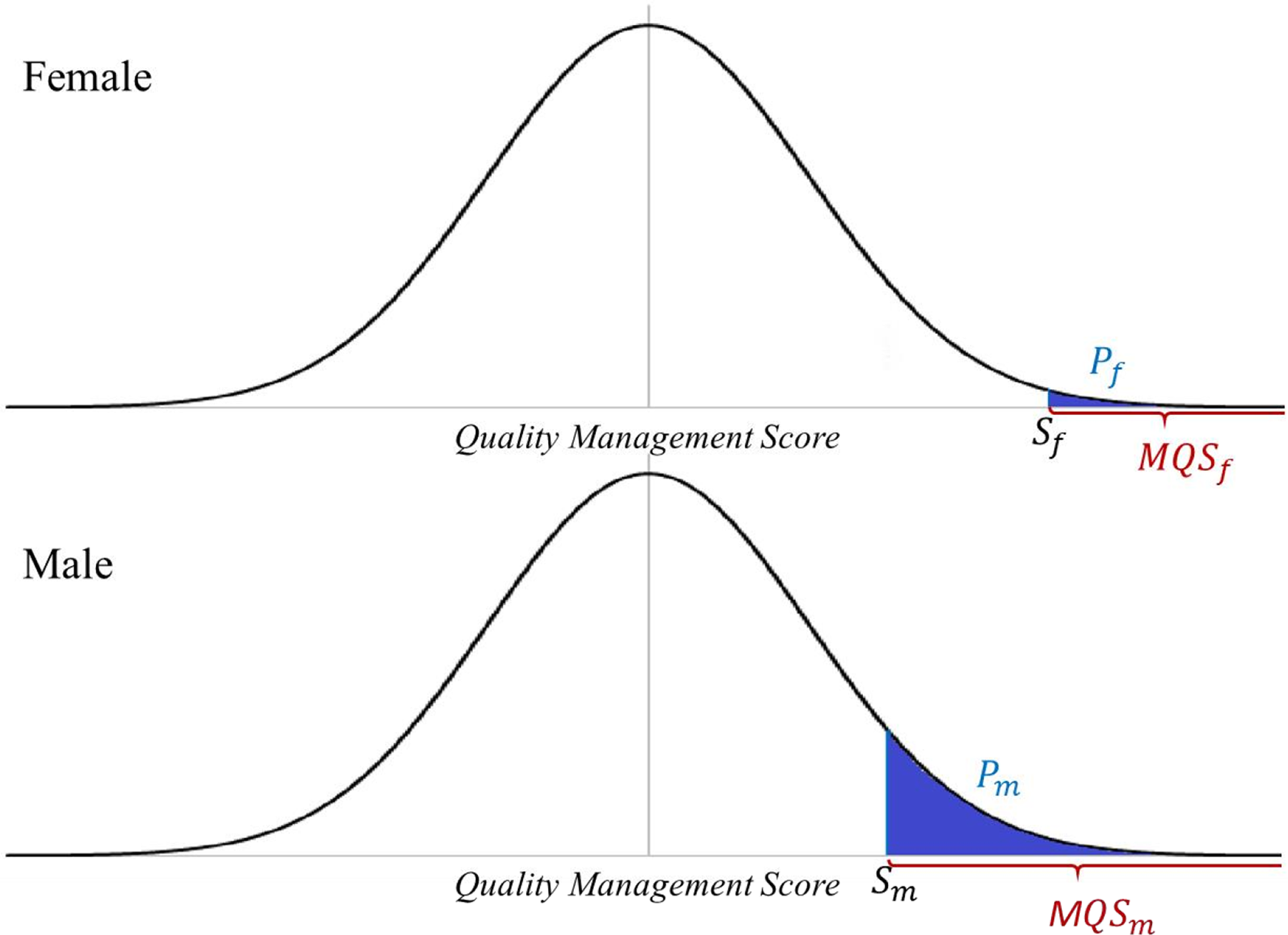
Double standard theory.
The presence of double standards of competence would imply that status characteristics (e.g. gender, ethnicity, socio-economic class) become a basis for stricter standards for people with a lower status. Although there has been a growth in the proportion of women in middle management in recent decades, there is still clear evidence of the gender gap in senior positions (Mateos de Cabo et al., 2019). Regarding leadership in education, Coleman (2005) argues that the expectation that the maternal role will be extended to the care and education of very young children, as well as stereotypes about female and male leaders, preserves the headship of the more prestigious parts of the educational system, such as the secondary schools, as the domain of men. Indeed, the proportion of women principals still lags behind that of women in the teaching force. In the UK, only 38% of secondary heads were women, out of a teaching force that was composed of 66% females (Department for Education and Skills, 2018). In the USA, 33% of high school heads are women, even though 64% of teachers are females (US Department of Education, 2019). These proportions are quite similar to those of Portugal, the Netherlands and Finland (OECD, 2016).
Coleman (2005) argue that the feminisation of the profession is related to its status. Therefore, when teaching becomes a ‘feminine’ occupation, men preserve their dominance and hegemony by moving to positions of leadership, leaving women as mere teachers. According to this, in the male-dominated world of the educational management of high schools, women would tend to be lower-status people (Foschi, 2000). Thus, as predicted by the double standards of competence perspective, a strict standard for competent ability in settings involving evaluation (e.g. the selection process for a managerial position) would mean that women would be required to provide more evidence of competence than their male counterparts to be promoted to higher-echelon positions. Therefore, the existence of double standards in evaluating men and women could produce more highly-skilled female than male leaders.
In her study, Foschi (1996) links double standards to gender prejudices (i.e. to gender bias or discrimination). In the educational field, several studies show the existence of some kind of conscious or unconscious bias against women in leadership roles. Coleman (2005) – using data from large-scale surveys of secondary school principals in England – found that at least half of the women perceived discrimination in relation to appointments. Females were considered generally unsuited to the demands of a role that was thought to require masculine qualities. In a comparative study between the UK and Greece, Mitroussi and Mitroussi (2009) found evidence of gender discrimination against women in terms of opportunities for promotion in the education workplace. More recently, Coronel et al. (2010a), in their case studies of female principals in Spain, found that women often felt like they had more to prove than their male colleagues for the same administrative issues. However, women can also face discrimination and sexism at the early stages of their principal careers, as Dunshea (1998) showed in a study of female principals beginning their careers in New South Wales, Australia.
On the supply side: Women’s lower self-efficacy perception
Figure 2 gives a schematic representation of the effect of women’s lower self-efficacy perception as an internal barrier in gender gaps. Again, teachers with the best MQS are the ones promoted to the position of principal. However, in this case, the standard applied is the same (
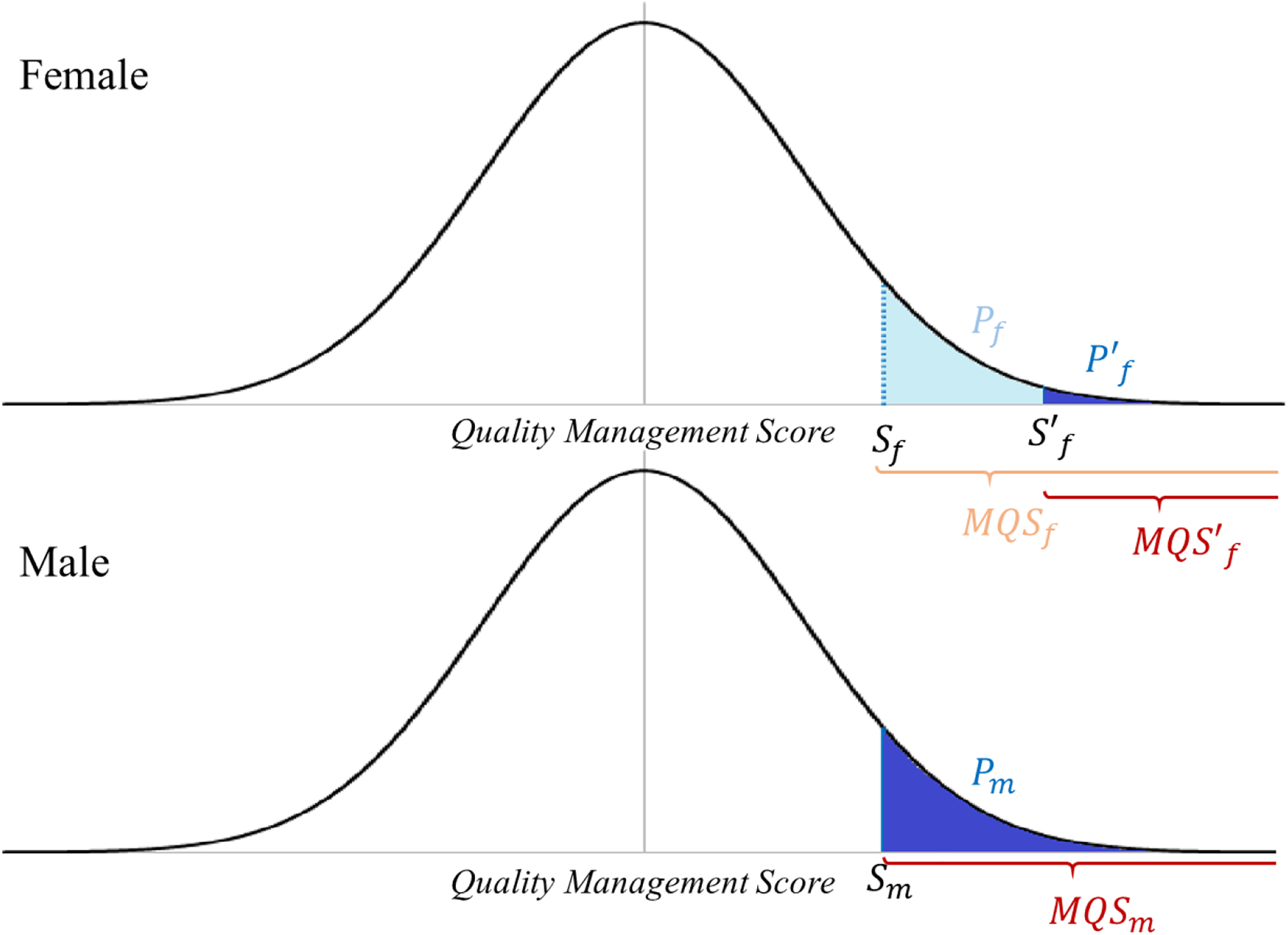
Female lower self-efficacy perception theory.
Women’s higher self-imposed standards, associated with their decisions of whether to apply for top managerial positions, can come from the fact that women generally judge themselves as being less suitable than men for many non-traditional occupations. Bandura (1977) has conceptualised self-efficacy as the expectations one has about one’s abilities to complete a task or tasks related to a specific goal.
Leadership positions are often believed to require agentic qualities (e.g. speaking assertively, competing for attention, influencing others) that are usually associated with men. By contrast, communal qualities (e.g. accepting others’ direction, supporting and soothing others, contributing to the solution of relational and interpersonal problems) – which are not usually considered important for leadership success – are associated with women.
Since agentic qualities are the typical qualities needed to succeed as a leader (Eagly and Carli, 2007), the mismatch between the female gender role and the leadership role could raise internal barriers that would prevent more women from considering themselves to be ready for top positions. Women could decline to apply for a job or for a promotion if they believe they lack any of the listed qualifications, while their male counterparts predictably step forward if they possess even a few of the skills that match the listed requirements (Dickerson and Taylor, 2000). Such insight into self-efficacy is especially relevant to an understanding of female behaviour, as it relates to the decision to apply for a leadership position, given the role and gender stereotypes women face that can threaten their levels of perceived efficacy (Bosak and Sczesny, 2008). This lower self-efficacy perception, in relation to success in traditionally masculine tasks (i.e. occupying a principal position), means that not only must women contend with the negative view that others hold of their competence in traditional male domains, but they also have to contend with their own negative self-views (Haynes and Heilman, 2013).
This does not mean, however, that the relative absence of women leaders is at the fault of women, but rather a consequence of women who are actually internalising the prominent values relating to gender and management (i.e. the ‘think manager-think male’ phenomenon). Indeed, Schein (2001) examined this phenomenon in the international arena, finding it is a pervasive phenomenon that exists among men and women.
In the literature on gender and leadership in education, there are several studies that mention, in varying degrees of explicitness, this perception of lower self-efficacy possessed by women seeking or actually holding a leadership position. In this regard, the multi-country study conducted by Cubillo and Brown (2003) refers to women’s lack of confidence and self-esteem as an important internal barrier to their progress in educational leadership. Helterbran and Rieg (2004) mention the perceived need to be ‘better qualified’ before applying for a leadership position, as being among the main barriers for women seeking positions in educational leadership. McGee (2010), exploring women administrators’ self-imposed barriers in Florida, found that a lack of confidence ranks fourth in the list of barriers for climbing into leadership positions within the last 10 years and currently. Mitroussi and Mitroussi (2009) argue that because the work environment is male-dominated, women must recurrently prove themselves before they are recognised, which requires great psychological strength and self-confidence to cope with the pressure. Other research asserts that women often delay entry into administration to be highly prepared (Hoff and Mitchell, 2008), and they enter with greater professional preparation than men (Spencer and Kochan, 2000). Moreover, Hoff and Mitchell (2008) pointed out that this tendency could reveal traditional social norms for women, such as modesty. These results are in line with the supply-side argument, based on lower self-efficacy perception.
Research questions
Gender and school management
Different studies have reported gender differences in the way males and females administrate schools, including transformational versus transactional approaches, democratic versus autocratic leadership orientation (Eagly et al., 1992; Eagly et al., 2003; Eagly and Johannesen-Schmidt, 2001; Krüger, 1996, 2008; Pounder and Coleman, 2002) and instructional leadership (Hallinger, 2011; Hallinger and Murphy, 1985; Krüger, 2008; Shaked et al., 2019). Given the gender differences in leadership established in the body of education scholarship, it is not unreasonable to consider the existence of such gender gap differences in the quality of school management. If the results confirm gender differences, the present authors will try to uncover their ultimate motivation(s). Therefore, the first research question is: RQ1: Do female principals present higher MQS than men?
With regard to management quality, following Bloom et al. (2015), this study distinguishes two types of management qualities: talent management and non-people management. Talent management includes practices such as hiring, firing, paying and promoting, while non-people management includes operations, monitoring and target setting. Bloom et al. (2015) also found that talent management scores were notably weaker than non-people management scores, indicating that these categories should be handled separately. In any case, for both categories, the assumption is that female principals exhibit higher MQS than men; therefore, we propose the following sub-research question: RQ1a: Do female principals present higher non-people MQS than men? RQ1b: Do female principals present higher talent MQS than men?
If the previous research questions are accepted, the second goal will be to discover whether the connection comes from the demand side (i.e. double standard) or from the supply side (i.e. female lower self-efficacy perception). Two moderating factors are chosen: one from the demand side (the level of competition of the school) and one from the supply side (the principal’s STEMB background), which, according to the literature, could have a potential impact on the relationship between principal gender and management quality, as argued in the following sub-sections.
The role of a STEMB background in management quality gender differences
There are potential barriers to top management positions on the supply side. The literature tends to sort supply-side effects into three groups of causes: possible gender differences in values and attitudes, identification of gender-expected roles, and family conflicts (Gabaldón et al., 2016; Terjesen et al., 2009). Within the first group, a specific female attitude, that is, a lower level of self-efficacy perception than men, dominates over the rest of the causes of self-exclusion (e.g. practical reasons and lifestyle choices, family-work balance) as an explanation for the better female management qualities. Here, it is worth noting that although these causes of self-exclusion are grouped on the supply-side by the literature, one could argue that they have their roots in the expectations that society poses on different gender roles (e.g. places responsibility for families largely on women instead of men).
Thus, women’s lower self-efficacy perception is tested to ascertain whether there is a relationship between women’s higher MQS and the lower proportion of female principals. For this purpose, the principal’s STEMB background serves as a relevant factor in potentially moderating the effect of gender on management quality, since, according to the literature, it is a very good indicator of an individual’s self-confidence. MacPhee et al. (2013) support the evidence that women with high ratings of self-efficacy are more likely to persist in a STEMB career and are more self-confident in their ability to fulfil the competencies and skills required (Cech et al., 2011).
Given that this study involved high schools, in which teachers’ degrees represent many diverse disciplines, including STEMB, a gender gap in principal positions and management quality ultimately caused by women’s lower self-efficacy perception should be mitigated by a STEMB background (Grogan and Shakeshaft, 2011). Therefore, the authors posit the following research question: RQ2: Does a STEMB background in female principals attenuate the effect of the female gender of the principal on the MQS?
The role of school competition in management quality gender differences
If the root cause of the gender gap was on the demand side (double standard), we could expect that a higher level of competition among schools (measured by the availability of schools offering education to same age students within a 30-minute drive from each of them) could reduce the room that schools have to apply double standards.
There is evidence of negative beliefs about women and leadership among those involved in hiring school leaders (e.g. school board members, educational search consultants, search committee members, practising administrators), preventing women from becoming educational leaders (Grogan, 1999; Skrla et al., 2000). Becker’s (1957) theory of discrimination predicts that these discriminatory practices would lead to higher costs in terms of loss of efficiency and lower profits. Consequently, in a perfectly competitive market, the schools that discriminate would not survive in the long term, as they have poorer management practices. Although this prediction has been criticised because gender imbalances in organisations are persistent, Heckman (1998) stressed that discrimination will only disappear completely in the presence of strong competition, and even then, it may take decades to remove inefficient organisations (i.e. those engaged in discrimination). In less competitive markets, extra rents allow companies to continue their preconceptions and beliefs; thus, discrimination can be seen as an affordable option, even when it is inefficient.
Therefore, if the origin of the higher MQS comes from the demand side, we could expect that there could be a relationship between women principals’ higher MQS and a low level of school competition, with this gap being attenuated in schools that face high competition levels. Therefore, the present authors propose the following: RQ3: Do higher school competition levels lessen the effect of the gender of the principal on the MQS?
As mentioned previously, and considering the two main management quality components established by Bloom et al. (2015), RQ2 and RQ3 can be divided into two sub-research questions: RQ2a: Does a STEMB background in female principals attenuate the effect of the female gender of the principal on the non-people MQS? RQ2b: Does a STEMB background in female principals attenuate the effect of the female gender of the principal on talent MQS? RQ3a: Do higher school competition levels lessen the effect of the gender of the principal on the non-people MQS? RQ3b: Do higher school competition levels lessen the effect of the gender of the principal on talent MQS?
Sample and methodology
This study uses data from the WMS (Bloom et al., 2015). The WMS is a cross-country dataset, built to measure the quality of management practices in different industries (i.e. education, healthcare, manufacturing and retail), run out of the Centre for Economic Performance of the London School of Economics. In the education survey of the WMS, interviews with 1800 high school principals in eight countries (the UK, the USA, Sweden, Canada, Germany, Italy, Brazil and India) were used to investigate the adoption of 20 basic management practices. All schools offered education to 15-year-old students and had at least 50 pupils. In all countries, these schools were part of the secondary or high school education system, except for Sweden, where they are considered primary schools. The sample includes regular state schools, private schools and autonomous government schools.
Data were collected via telephone interviews with school principals. As reflected in the WMS data, 69% of interviews were conducted in the presence of two interviewers. Open-ended questions were marked on a scoring grid from 1 (‘worst practice’) to 5 (‘best practice’). When the interview was over, the team in charge of the research discussed the scores with the primary interviewer to provide on-going training and calibration.
The management index for each school represents the average of these scores. It includes 20 questions about the following issues: operations (measures teaching methods and student learning); monitoring (measures how schools track performance and attitudes toward school improvement); target setting (measures how goals are set and whether they are appropriate and openly communicated) and people management (measures how schools deal with employees, career progression and attracting and retaining talent) (Bloom et al., 2015).
In addition to information about the quality of management, the WMS survey includes other types of questions related to personal characteristics of the director (background and tenure), the school (size, students-to-teacher ratio and ownership) and the environment (number of competitors), which enables us to conduct an analysis in a multivariate framework.
The base model for this study is as follows:

where Yi
is the MQS for each principal and Female is a dummy variable with a value of 1 if the principal is a woman and 0 if not. STEMB background is a dummy variable that indicates if the principal has a STEMB degree, and
Table 1 includes the main descriptors of all the variables used. Principal characteristics included gender, his or her tenure, whether he or she has a STEMB degree, academic content and personnel autonomy. The school characteristics considered were: the number of pupils, the pupil/teacher ratio, the school’s ownership (private for-profit, private not-for-profit or public), if the school has a regular curriculum versus a technical education and if the school makes its pupil selection based on academic merit. Finally, we included the school’s number of competitors.
Means and standard deviation of variables.
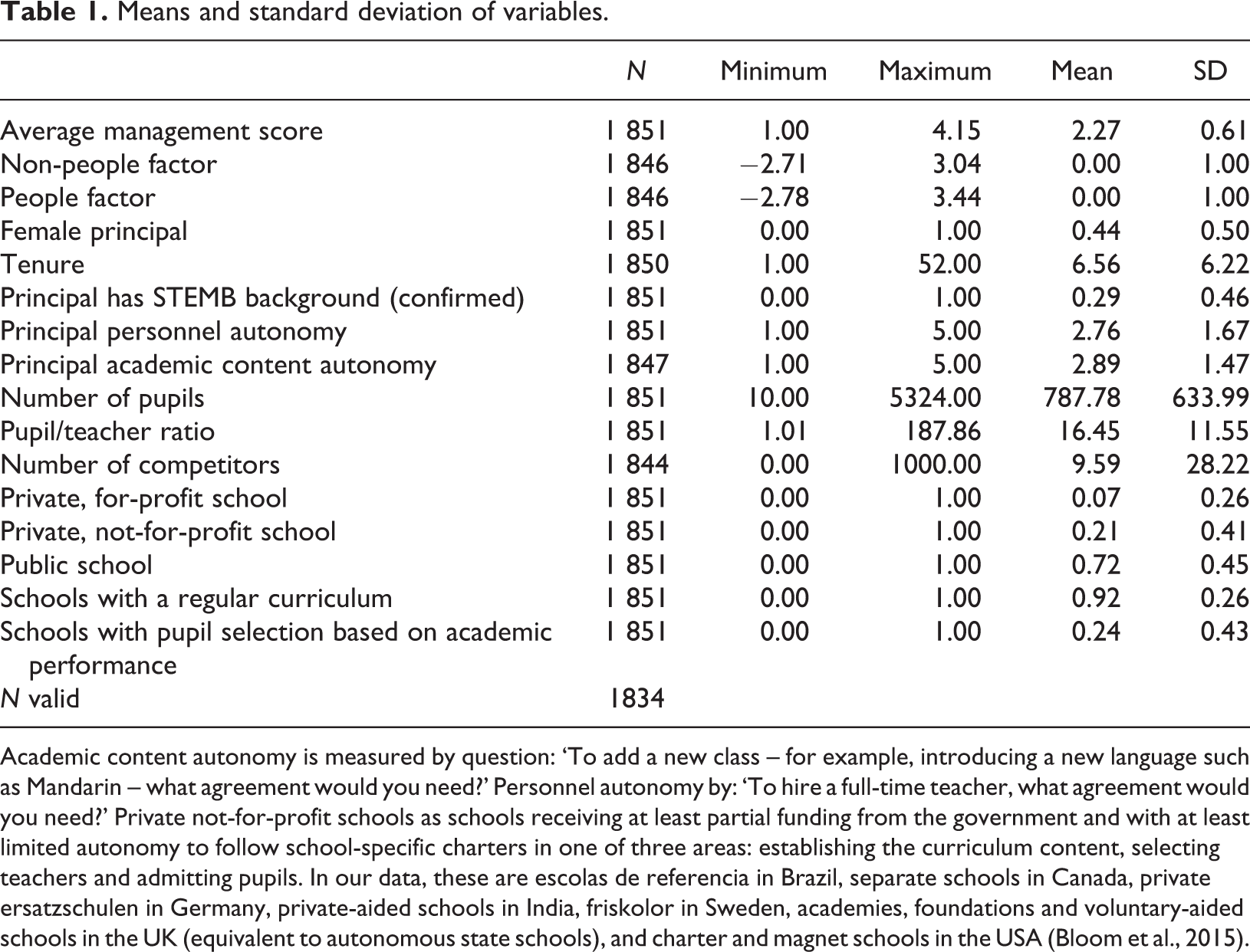
Academic content autonomy is measured by question: ‘To add a new class – for example, introducing a new language such as Mandarin – what agreement would you need?’ Personnel autonomy by: ‘To hire a full-time teacher, what agreement would you need?’ Private not-for-profit schools as schools receiving at least partial funding from the government and with at least limited autonomy to follow school-specific charters in one of three areas: establishing the curriculum content, selecting teachers and admitting pupils. In our data, these are escolas de referencia in Brazil, separate schools in Canada, private ersatzschulen in Germany, private-aided schools in India, friskolor in Sweden, academies, foundations and voluntary-aided schools in the UK (equivalent to autonomous state schools), and charter and magnet schools in the USA (Bloom et al., 2015).
The measure of competition was collected during the survey itself by asking the principal: ‘How many other schools offering education to 15-year-olds are within a 30-minute drive from your school?’ (Bloom et al., 2015). This is an accepted indicator for measuring competition, as posed by Misra et al. (2012), who established the competition influence area of each school within a radius up to 25 miles. 2
Results
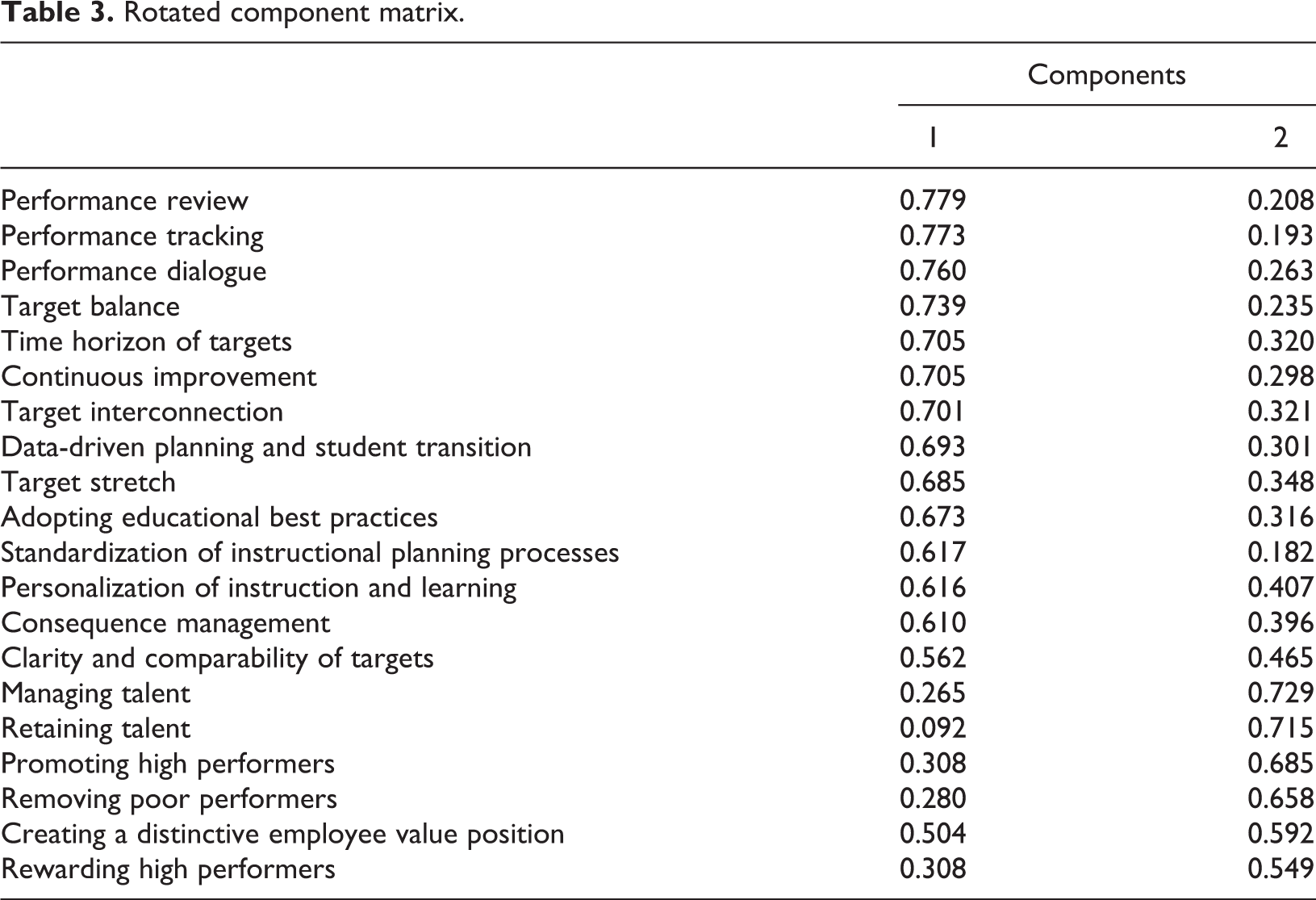
First, since the questions included in the WMS education survey consider a wide range of aspects, the present study explored whether the management index could be decomposed into several components. Therefore, a principal component analysis (PCA) was conducted on the 20 management practice questions with orthogonal rotation (varimax). The Kaiser–Meyer–Olkin (KMO) measure verified the sampling adequacy for the analysis: KMO = 0.97. All KMO values for individual items were greater than 0.95, which is well above the acceptable limit of 0.5. Bartlett’s sphericity test χ2(190) = 20715.19, p < 0.001, indicating that correlations between questions were sufficiently large for the PCA (see Table 2). Two components had eigenvalues over Kaiser’s criterion of 1 and, in combination, explained 56.22% of the variance; therefore, this is the number of components retained in the final analysis. Table 3 shows the factor loadings after rotation. The questions that cluster on the same components suggest that Component 1 represents a non-people MQS, and Component 2 represents a talent MQS.
KMO and Bartlett’s Test.

Rotated component matrix.
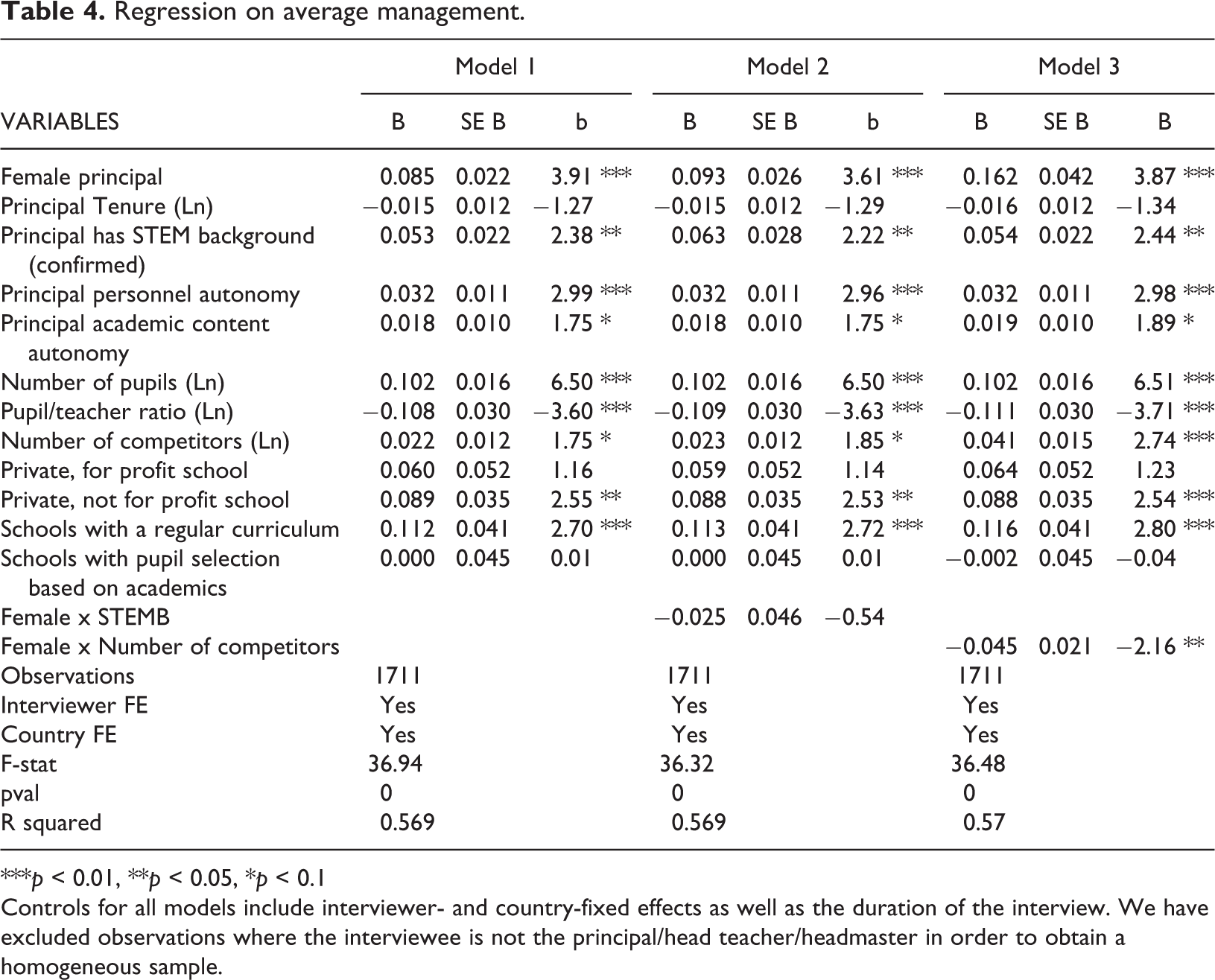
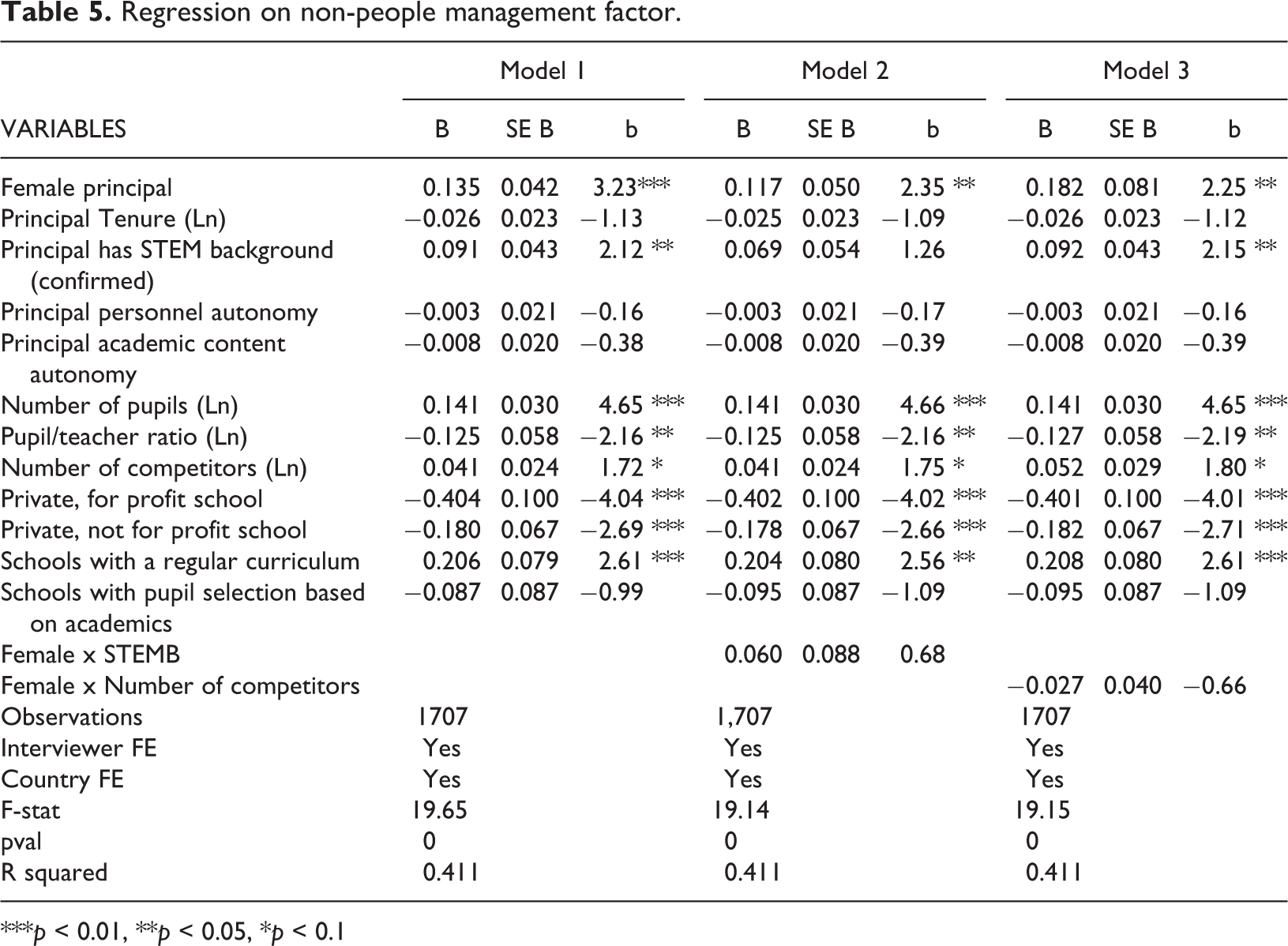
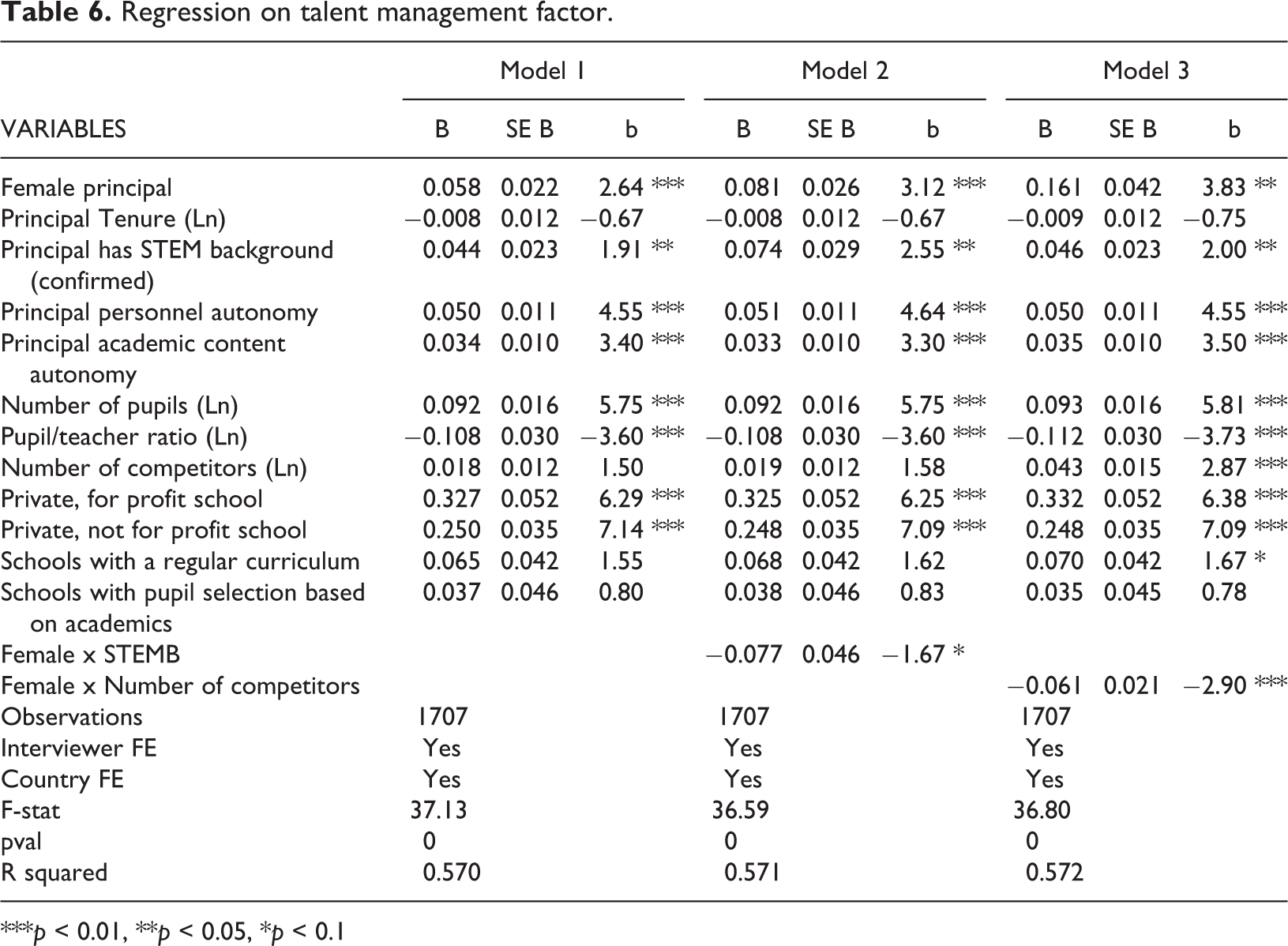
Subsequently, the present authors ran three different regression models: one to explain the average MQS (Table 4), as well as one for each of the two factors: the non-people factor (Table 5) and the talent factor (Table 6). In all tables, Column 1 estimates the basic model in a multivariate framework, whereas Columns 2 and 3 interact ‘female’ with the moderating factors presented in research questions RQ2 and RQ3: the principal’s STEMB background and the school competition level, respectively.
Regression on average management.
***p < 0.01, **p < 0.05, *p < 0.1
Controls for all models include interviewer- and country-fixed effects as well as the duration of the interview. We have excluded observations where the interviewee is not the principal/head teacher/headmaster in order to obtain a homogeneous sample.
Regression on non-people management factor.
***p < 0.01, **p < 0.05, *p < 0.1
Regression on talent management factor.
***p < 0.01, **p < 0.05, *p < 0.1
For the regression on the average MQS, the principal’s STEMB background, principal’s personnel autonomy, number of pupils, private not-for-profit schools (with public schools being the reference category) and schools with a regular curriculum are positively associated with the MQS, whereas the pupil/teacher ratio is negatively associated with this score. These results are consistent for all the models. The positive and highly significant coefficient for the female variable strongly supports RQ1, in line with the work of Bloom et al. (2015).
RQ2 and RQ3 identify the factors that moderate the influence of gender on management quality to try to determine whether the cause of the gender gap in MQS comes from individual or organisational barriers. There was no evidence supporting RQ2, since the principal’s STEMB background does not seem to significantly moderate the effect of the female variable on the average MQS. By contrast, the interaction between ‘female’ and number of competitors is negative and significant. This finding is consistent with gender differences in MQS in schools displaying double standards through the appointment stage (demand side).
The estimated regression models explain the non-people factor score (Table 6). The positive and significant coefficient for the female variable in all models indicate that female principals are associated with higher non-people MQS (this confirms RQ1a). With respect to the supply side, which may have generated this effect, the present authors studied the moderating effects stated by RQ2a (STEMB background) and RQ3a (school competition). Due to the absence of significance, neither interactions were supported.
Finally, the present authors estimated regression models on the talent management factor (Table 6). With regard to RQ1b, the positive and highly significant coefficient for the female variable in all models suggests that women principals are better than their male counterparts when managing talent in schools.
Moving to the moderating effect of the STEMB background and the school competition level, the results are quite similar to those found for the regressions on the average MQS; thus, RQ3b is confirmed. The interaction between the female variable and number of competitors is negative and highly significant, again pointing to the demand side as the most plausible cause of gender differences in talent management, and ultimately in principalship positions. In regard to RQ2b, there was only a marginal interaction between the female variable and STEMB background, which does not provide enough evidence to support this research question.
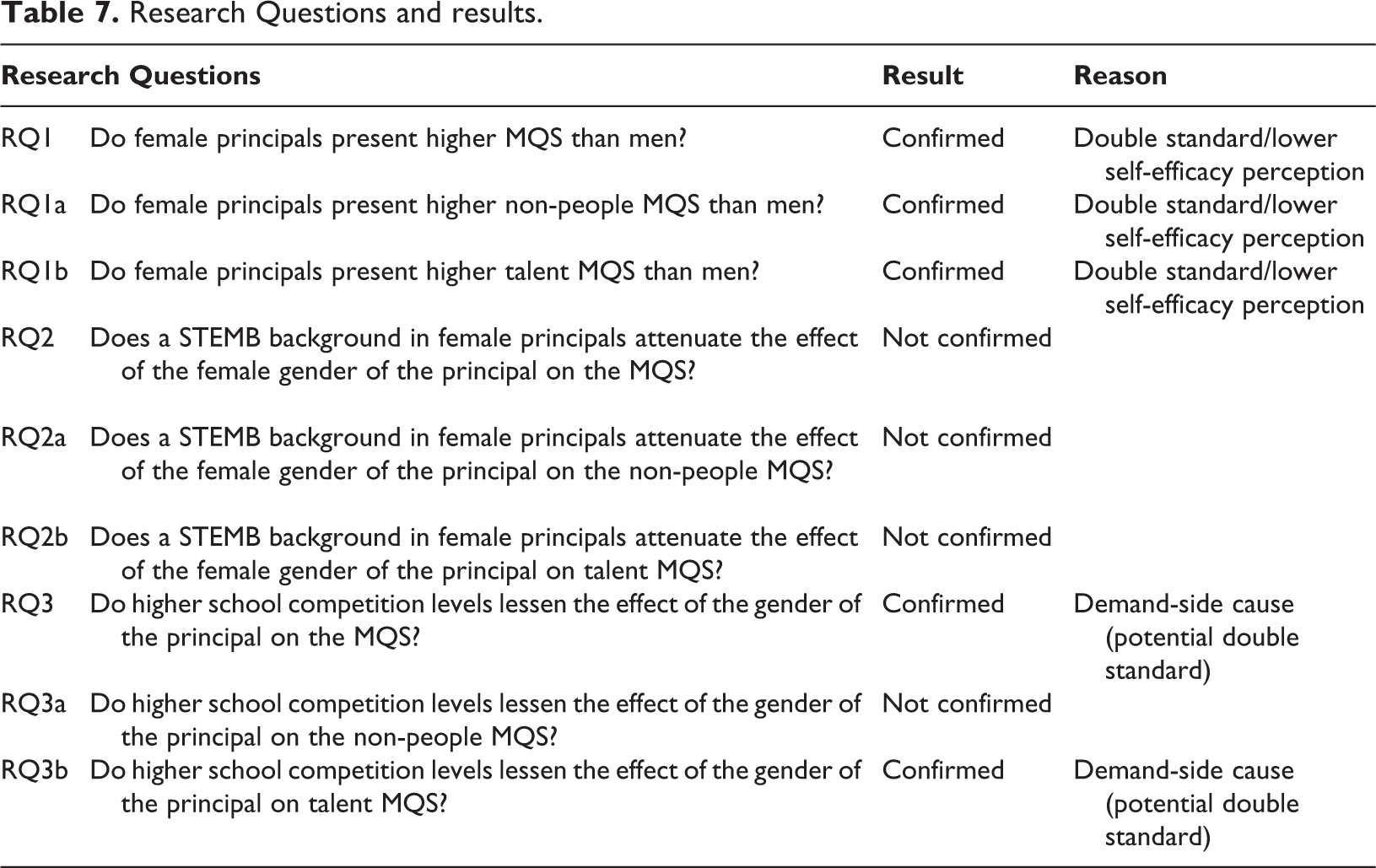
In sum, Table 7 shows research questions that were confirmed by analysis of the results. These results seem to indicate that the gender differences found in MQS – and ultimately, the gender gap in principalship – may come from the demand side at the organisational level, which produces double-standard practices against women in education. These practices seem to be lessened by high competition levels, as opposed to the supply side, which operates at the individual level.
Research Questions and results.
Discussion
In this paper, the present authors have developed a theoretical framework that simultaneously encompasses two stylised facts regarding school principals: gender imbalance in principal positions and a positive gender gap in quality management. Previous theories only explain the reduced proportion of women principals and ignore the higher quality of women’s management, thereby losing half of the picture. Thus, this study used an approach that explains the appointment of school heads from two perspectives: the demand side (double standards at the appointment stage) and the supply side (lower self-efficacy perceptions).
To empirically test this model, the present authors have designed a strategy that uses interaction terms to disentangle the demand side from the supply side. This strategy consists of checking whether it is an individual factor (STEMB background) or an organisational factor (school competition) moderating the effect of gender on MQS. To avoid biased generalisations from analysis of certain contexts, the present authors used an international survey that includes six OECD countries (the UK, the USA, Sweden, Canada, Germany and Italy) and two non-OECD countries (Brazil and India) to test both alternatives. The estimated models show that the most plausible explanation for the gender differences in MQS in schools seems to come from the demand side, since only school competition plays a moderating role, while internal barriers at the individual level do not play a significant role. Thus, the positive gap in MQS is attenuated in schools that face high competition levels.
Regarding the type of organisational barriers that hinder the development of women in schools, Coronel et al. (2010b) showed that in Spain, certain features of the management culture, which was perceived as heavily masculine, were among the principal factors barring women from accession to leadership positions. In a similar vein, in the UK, Moreau et al. (2005) demonstrated that a significant barrier is that women’s interrupted work patterns continue to be perceived as abnormal or deficient, since it departs from the ‘masculine’, dominant, linear career pathway. Hutchings (2002) highlighted that women’s underrepresentation at senior management levels tends to self-perpetuate gender segregation among principals, since it reduces their power and influence over policy in schools and produces a lack of women role models, which creates an environment in which women are less likely to have received encouragement to pursue leadership positions. McGee (2010) found politics and old-boys’ networks as important barriers that women administrators commonly encountered in their upward career paths. Coleman (2002) also records overt sexist comments from governors, who play a key role in the appointment and promotion processes. The lack of priority given to gender issues in teacher training, and in education in general, may be related to the presence of bias in selection and appointment procedures (Coffey and Acker, 1991).
The main policy implication of our results – in regard to education management – is that efforts should be made to implement strategies and policies to support women’s advancement in education. In this regard, programs aimed at eliminating, or at least reducing, the double standard in the evaluation of women should be implemented for a better use of the available talent pool. Skrla et al. (2000) suggest that individuals involved in hiring new principals in schools (e.g. school board members, educational search consultants, search committee members and practising administrators) should receive training on gender issues to increase their awareness of the possible presence of bias in the hiring and promotion processes. A blind selection process could also help to eliminate gender bias. Nevertheless, given the impact that gender-based stereotypes may have on unconscious recruitment (Keller, 1999; Shepard, 1999), Young and McLeod (2001) request practising administrators to consciously recruit talented women into administration (i.e. to request a target). A halfway solution between soft measures, such as awareness campaigns, and stronger actions, like an explicit gender target, would be the inclusion of more than one woman in the pool of finalists for the principal position (Johnson et al., 2016). When more than one woman is in the final pool, the status quo among the final candidates changes, and the decision makers actually consider hiring a woman candidate (which is commonly referred to as the ‘get two in the pool effect’).
Limitations and future research
One limitation comes from the cross-sectional nature of the data. To ensure causality, longitudinal studies would be preferable. Indeed, from longitudinal data, one could investigate the possible interaction between the presence of double standards on the employer side and a lower self-efficacy perception on the female side, which are commonly treated as independent. In this regard, Brands and Fernandez-Mateo (2017) theorise (and show) that past recruitment rejection leads women to self-exclude from other positions. In a similar way, double standards applied to women by a current or past recruiters could trigger a lower self-efficacy perception, causing them to self-exclude from competing for top management jobs. This could perpetuate gender disadvantage for women in access to principalship.
Additionally, the data of this study are secondary. This means that the study was limited by the design of the WMS and the original questionnaire. Therefore, the action capacity was quite limited, as the schools sampled were anonymous and incapable of being matched with any other database. Furthermore, it was not possible to collect additional information on other alternative moderating variables. In this regard, the present authors were able to investigate the possible moderating effect of alternative factors from both sides of the principal’s market on the gender impact on MQS to check the robustness of the results. For example, a possible moderator variable on the supply side would be female principals that hold a master’s degree or a PhD, this would be expected to have a similar effect as the STEMB background on enhancing female self-efficacy perception. Also, a previous female school principal that acts as a role model could also help to mitigate the possible lower self-efficacy perception of female teachers. On the demand side, it would be interesting to check whether the gender of the individuals involved in hiring new principals has any influence on the double standards applied to the evaluation of female candidates.
Finally, secondary data from a survey that is not specifically designed to investigate barriers hindering women’s access to management positions only allows us to find signs of such barriers through gender differences in MQS. Thus, to distinguish the ultimate cause that explains these differences, future research would require additional primary data to complement and confirm the results of this study. It could be useful to carry out in-depth interviews with the pool of candidates to discover their feelings about why they are not being promoted. An experimental design would allow for a comparison of the self-evaluations of female candidates to their actual skills, in relation to performing a leadership task in school, which could then be compared to their male counterparts to test their lower self-efficacy perceptions. On the demand side, Implicit Association Tests (IATs) on the individuals involved in hiring new principals to ascertain whether there is implicit discrimination against women could be a possibility. Another potential experimental design would be to screen identical curricula assigned to a male and a female name, to discover whether there is explicit discrimination (Bertrand et al., 2005).
Footnotes
Acknowledgements
We thank Daniela Scur, Alison Cook, Siri Terjesen and Ricardo Gimeno, as well as the different assistants at the I Workshop on Female Leadership in Madrid, the VI Workshop on Talent Management in Barcelona and EURAM2018 in Reykjavik for their helpful comments.
Declaration of conflicting interests
The author(s) declared no potential conflicts of interest with respect to the research, authorship, and/or publication of this article.
Funding
The author(s) disclosed receipt of the following financial support for the research, authorship, and/or publication of this article: This research has received financial support from the Spanish Government (Project I+D+i FEM2017-83006-R, funded by AEI/FEDER, UE) and CEU-Mutua Madrileña Chair: 060516-USPMM-02/17.
