




Abstract
Objective:
This study aimed to comprehensively investigate the correlation of ERCC1 expression and chemosensitivity of ovarian cancer.
Methods:
The literature on the relationship between the excision repair cross complementary gene 1 (ERCC1) and the chemosensitivity of ovarian cancer published in PubMed, Web of Science, EMBASE, CNKI, and the China Wanfang database from the establishment of the databases to June 2020 were searched. Chemosensitivity is evaluated by clinical effective rate (complete remission plus partial remission). Statistical analysis was carried out by using Stata 15.1 software.
Results:
A total of 11 articles met the inclusion criteria, consisting of 758 patients with ovarian cancer. The results showed a significant difference in chemosensitivity between the low expression group and the high expression group of ERCC1 (odds ratio 4.23; 95% confidence interval 2.96, 6.06; P < 0. 01). The same result was shown in the ethnicity subgroup.
Conclusion:
The chemosensitivity of ovarian cancer patients with a low expression of ERCC1 is better than that of patients with a high expression.
Introduction
Ovarian cancer is one of the most common malignant gynecological tumors in women, with the third highest incidence behind cervical cancer and endometrial cancer. 1 At present, the main screening methods for ovarian cancer are color Doppler ultrasound, nuclear magnetic resonance imaging, computed tomography, and tumor markers, but the specificity and sensitivity of ovarian cancer are low. 2 Epithelial ovarian cancer (EOC) is one of the three most common malignant tumors in the female reproductive system. It has high mortality and poor prognosis, which seriously threatens the physical and mental health of women. The ovary is located in the deep part of the pelvis. Due to the lack of early diagnostic methods and inconspicuous clinical symptoms, most ovarian cancers are found in the late stage. According to some studies, approximately 70% of the patients are diagnosed in this stage. 3 The 5-year survival rate of patients with ovarian cancer has hovered under 45%. 4 The mortality of ovarian cancer ranks first in all kinds of gynecological tumors and poses a serious threat to the lives of women. The embryonic development, tissue anatomy, and endocrine function of the ovary are complex, and the early symptoms are not typical.
It is very difficult to distinguish the tissue type of ovarian tumor and whether it is benign or malignant before operating. 5 With the advance of medical science and technology in recent years, the progress of chemotherapy combined with paclitaxel and platinum has greatly improved the therapeutic effect of ovarian cancer and the success rate of treatment to a certain extent. Nevertheless, there is no significant improvement in the 5-year survival rate. Currently, a small number of patients in the initial stage of treatment do not respond to platinum drugs, and some patients in whom the initial treatment is effective experience a recurrence. According to the literature, the 5-year survival rate of advanced ovarian cancer is 20%–30%, while that of early ovarian cancer is as high as 90%. 6 Surgery combined with chemotherapy cannot cure advanced ovarian cancer; it can only play the role of temporary relief. Thus, 70%–80% of patients with such ovarian cancer still experience recurrence. 7 The resistance of the tumor to platinum is the main obstacle. The development of tumor cells resistance to platinum is caused by multiple factors, which may include the decrease of drug accumulation, the increase of glutathione levels and metallothionein, and the improvement of DNA repair ability. 7 Nucleotide excision repair cross complementary gene 1 (ERCC1) is a gene that can recognize DNA damage and cleave the DNA chain. Its overexpression can remove platinum DNA compounds. The damaged tumor DNA is repaired and replicated again. 8 The ERCC1 gene is considered to repair damaged tumor cells’ platinum and DNA compounds, which are related to the ability of tumor tissue to restore replication and proliferation. Therefore, its expression may be used to predict the efficacy of platinum chemotherapy in patients with EOC to guide the clinical use of drugs. 9
It has been reported that there is a correlation between the high expression of ERCC1 and cisplatin resistance, which also affects the survival rate of patients with ovarian cancer.10, 11 Current studies tend to suggest that people with a low expression of ERCC1 have a better response to cisplatin chemotherapy than those with high expression. 12 However, this conclusion is also controversial. Bösmüller et al. 13 have found that the expression of ERCC1 is not related to platinum chemosensitivity in patients with ovarian cancer. At present, the studies on chemotherapy and ERCC1 gene or protein expression in ovarian cancer are limited to small-scale and small-sample research, but lack of large-sample multicenter clinical studies. Therefore, this study conducted a meta-analysis of the relationship between the expression of ERCC1 gene protein and platinum chemosensitivity in patients with ovarian cancer, and comprehensively evaluated the effect of ERCC1 expression on platinum chemosensitivity in those patients.
Material and methods
Literature retrieval
Through a computer search of PubMed, Web of Science, Excerpta Medica Database (EMBASE), China National Knowledge Infrastructure (CNKI), and China Wanfang databases, the literature from their inceptions to June 2020 were selected, regarding the expression of ERCC1 and the chemosensitivity of platinum drugs in ovarian cancer. The search strategy was as follows: (“Ovarian cancer” OR “Ovarian carcinoma”) AND (“ERCC1” OR “excision repair cross-complementation group 1”) AND “Chemosensitivity”. There were no language restrictions.
Inclusion and exclusion criteria of the literature
Inclusion criteria: (a) Patients diagnosed with ovarian cancer by pathological or cytological examination; (b) immunohistochemistry, branch DNA-liquid phase core technique, or polymerase chain reaction were used to detect the expression of ERCC1 in ovarian cancer tissues; (c) patients with ovarian cancer were treated with platinum chemotherapy; and (d) the number of cases in which the expression of ERCC1 in ovarian cancer was sensitive to chemotherapy with high or low platinum drugs was provided.
Exclusion criteria: (a) Repeated reports of the same study; (b) animal experiments or ovarian cancer cell lines; (c) non-platinum regimen chemotherapy, or fewer than two courses of chemotherapy; and (d) Newcastle-Ottawa scale (NOS) score less than 6.
Literature screening and data extraction
After two trained researchers read the titles and abstracts independently—excluding trials that obviously did not meet the inclusion criteria and met the exclusion criteria—they further read the full text of the other part of the trials to determine whether they really met the requirements, and cross-checked them. For trials where it was difficult to determine whether to include them, the divergence on choice was resolved through panel discussions. The two researchers independently completed the information extraction according to the pre-designed data extraction table. For repeatedly published articles, only the most recently published and most complete were selected.
Literature quality evaluation
According to the NOS, 14 the quality of the literature was evaluated. Literature with fewer than 6 stars was low quality, while literature with 6 stars or more were high quality. Only the high-quality reports were included in this study.
Statistical methods
The meta-analysis was carried out by using Stata 15.1 software. The odds ratio (OR) and 95% confidence interval (CI), as the effect size, were calculated to represent the results. A Q-test was used to test the heterogeneity of the results of each study. If I2 ⩾ 50%, or P ⩽ 0.05, it was considered to be of heterogeneity and the random-effects model was used. If I2 < 50%, and P > 0.05, there was no heterogeneity, so the fixed-effects model (FEM) could be used for data consolidation. The Z-test was used to test the significance of the combined OR value. This meta-analysis was included in the evaluation of publication bias, and the judged standard was whether the funnel plot was symmetrical or not. The funnel plot was to use the standard error of each study log (OR) to map its OR value. If the funnel plot was asymmetric, there may be publication bias. Egger’s Test was used to test the publication bias. Subgroup analysis was carried out according to the ethnicity of the population included in the study. The sensitivity of the results was analyzed to determine the robustness of the conclusion.
Results
Literature retrieval results
A comprehensive search of the literature in each database was undertaken and the results were cross-checked. After the obtained literature was read, it was screened in strict accordance with the requirements of inclusion and exclusion criteria, and quality control. The specific screening process is shown in Figure 1, and the basic characteristics of the literature are shown in Table 1. Eleven studies12, 13, 15-23 were included in the analysis. A total of 758 patients with ovarian cancer were positive, with the positive expression rate of 55.1%. In the included studies, the cut-off value of ERCC1 expression, the source of the primary antibody, the dilution ratio, and the detection method of chemosensitivity are shown in Supplementary Table 1.
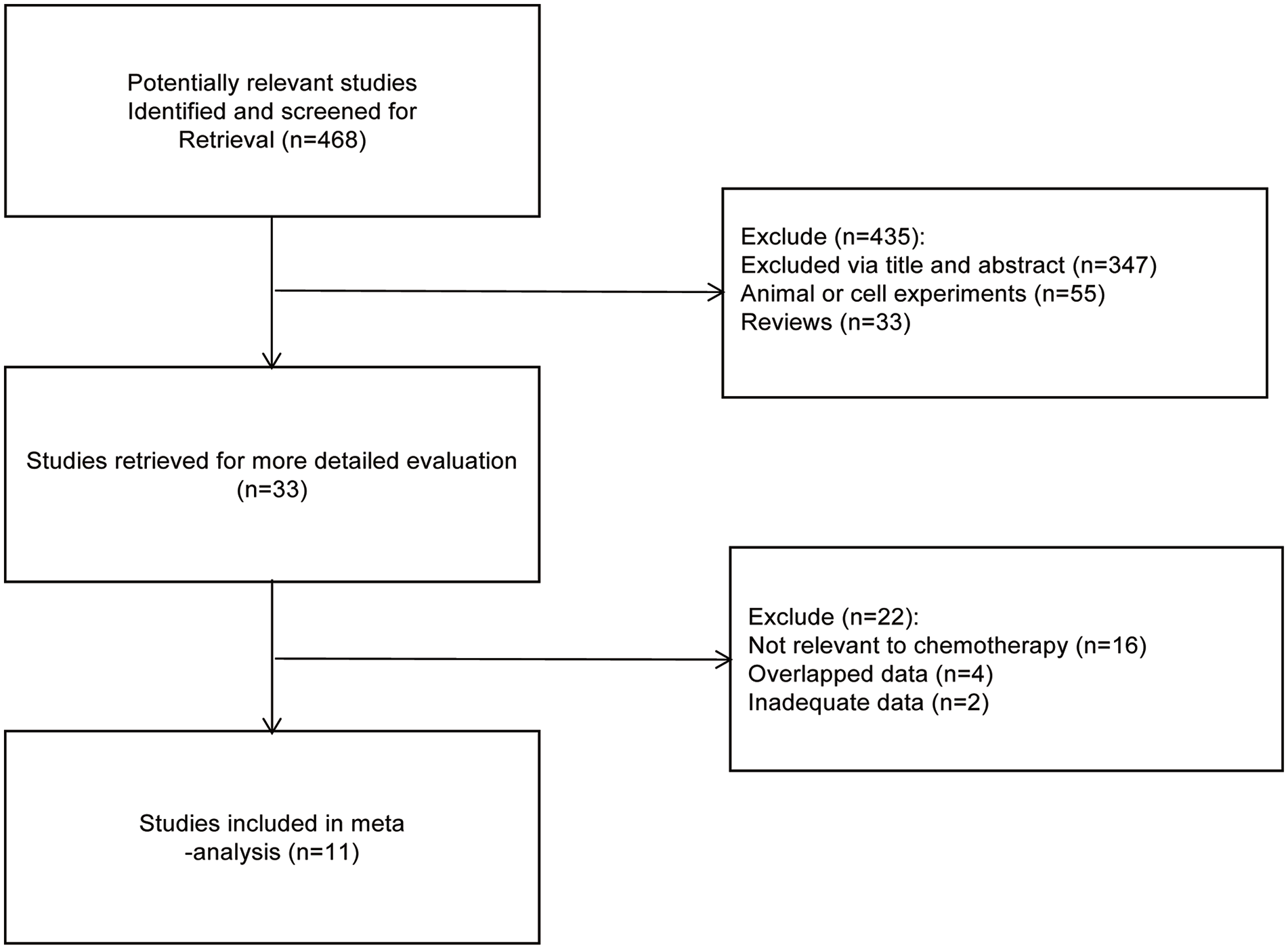
A flow diagram of the study selection process.
Basic characteristics of the inclusion studies.
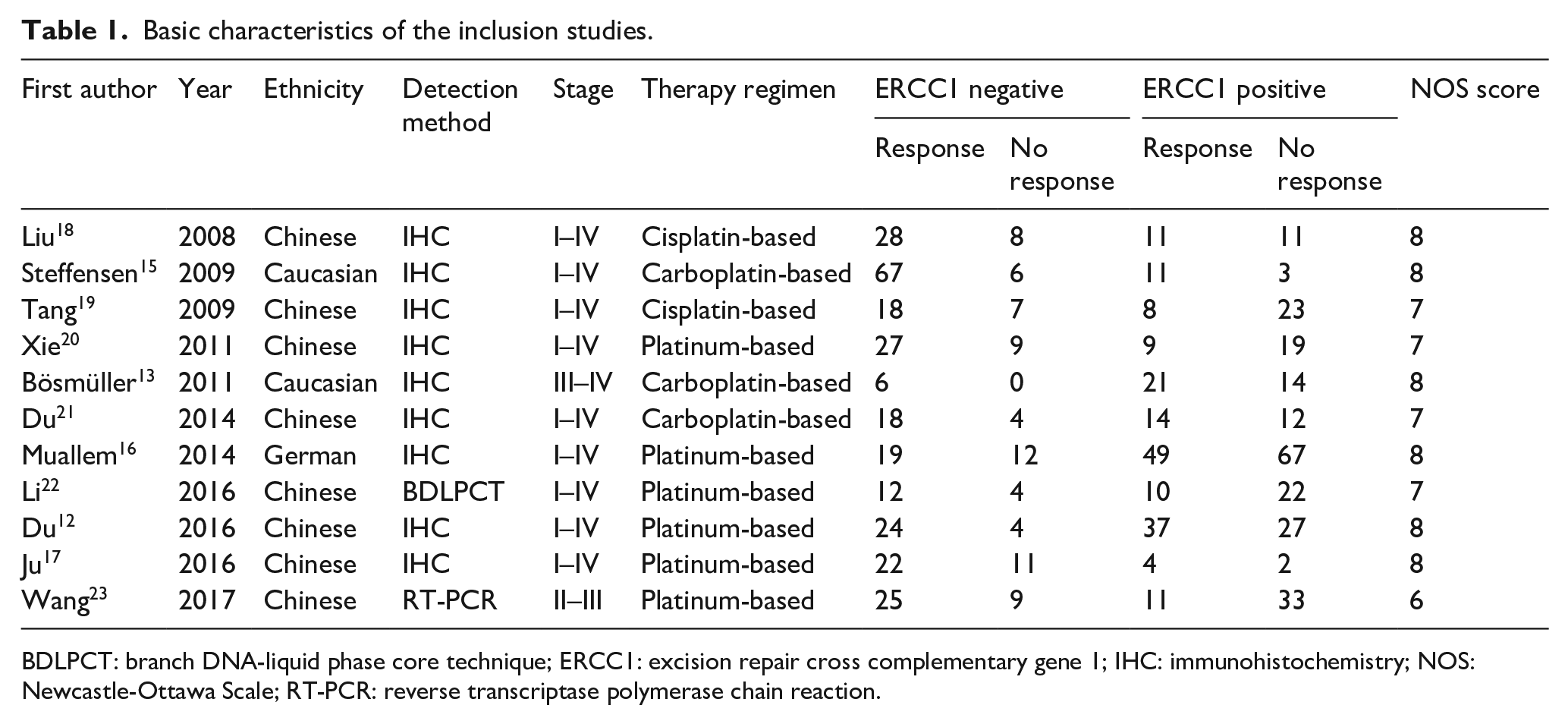
BDLPCT: branch DNA-liquid phase core technique; ERCC1: excision repair cross complementary gene 1; IHC: immunohistochemistry; NOS: Newcastle-Ottawa Scale; RT-PCR: reverse transcriptase polymerase chain reaction.
Relationship between ERCC1 expression and chemotherapy sensitivity of platinum drugs in ovarian cancer
The meta-analysis showed that there was no statistical heterogeneity among the 11 studies (P =0.534; I2 =0. 0%). The FEM was used to analyze and then the forest plot was able to be drawn (see Figure 2). The complete remission rate plus the partial remission rate of ovarian cancer patients reported in the 11 studies (758 cases) displayed that the patients with a low expression of ERCC1 were more sensitive to chemotherapy than those with a high expression. The pooled OR value was 4.23 (95% CI 2.96, 6.06; P<0.01). The results of an ethnicity subgroup analysis showed that the expression of ERCC1 was associated with the chemosensitivity of ovarian cancer in the Chinese population, with an OR 5.05 (95% CI 3.31, 7.72; P < 0.01), and the expression of ERCC1 was associated with chemosensitivity of ovarian cancer in the Caucasian population, with an OR 2.63 (95% CI 3.31, 5.24, P<0.01). The differences were statistically significant. When the subgroup used the immunohistochemical method was analyzed, the expression of ERCC1 was related to chemosensitivity of platinum drugs in ovarian cancer (OR 3.61; 95% CI 2.40, 5.44). The results showed that there was a correlation between the expression of ERCC1 and platinum sensitivity in patients with ovarian cancer. The chemotherapy sensitivity of patients with a low expression of ERCC1 was higher than that of patients with a high expression of platinum.
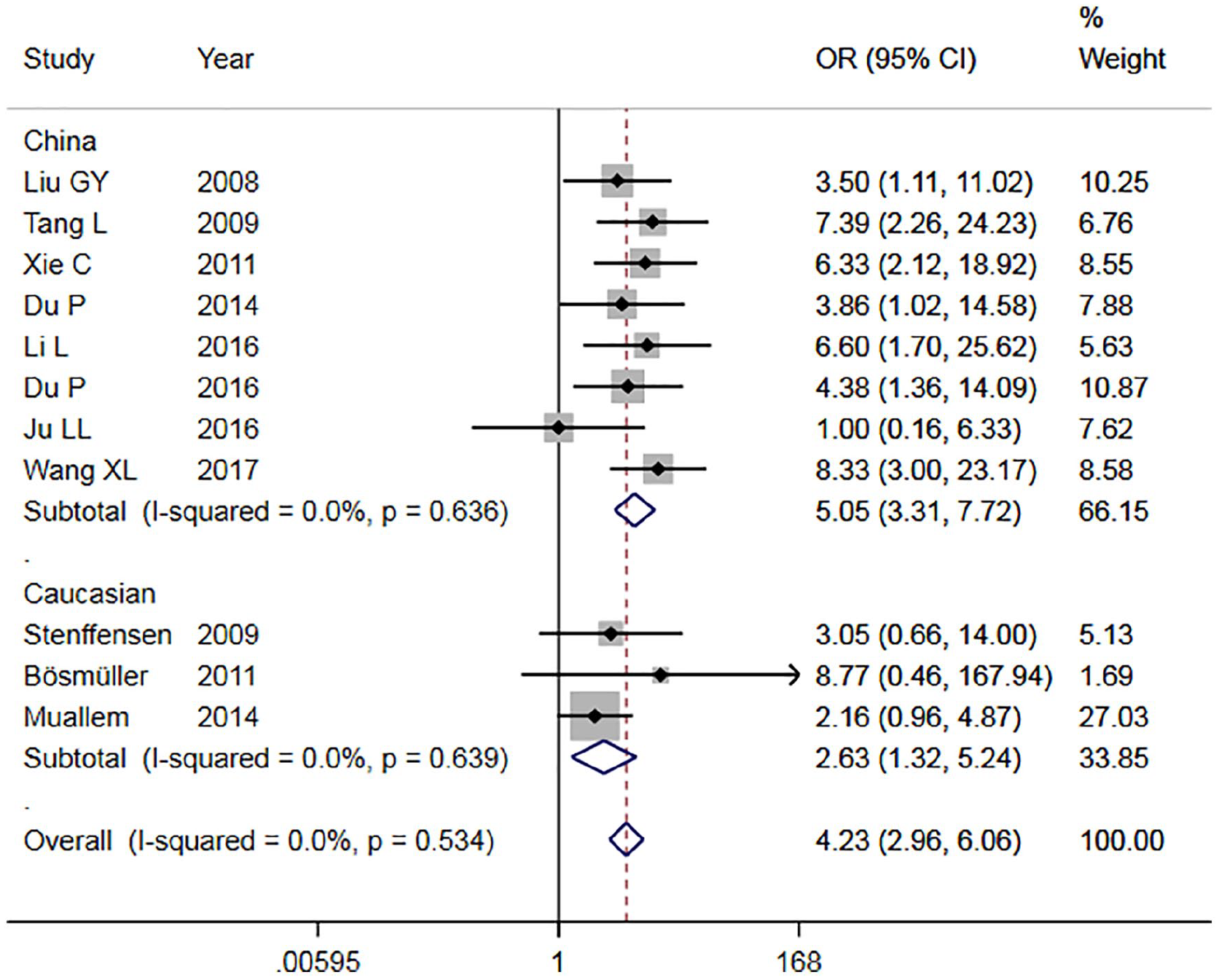
Forest plot for the association between ERCC1 expression and platinum chemosensitivity of ovarian cancer. ERCC1: excision repair cross complementary gene 1.
Publication bias analysis
The funnel plot was used to analyze the selected literature, and the symmetry of it was analyzed by Egger’s Z-test. The specific results are shown in Figure 3. The results demonstrated that the funnel plot was basically symmetrical, and by Egger’s Z-test the P-value was more than 0.05, indicating that there was no publication bias.
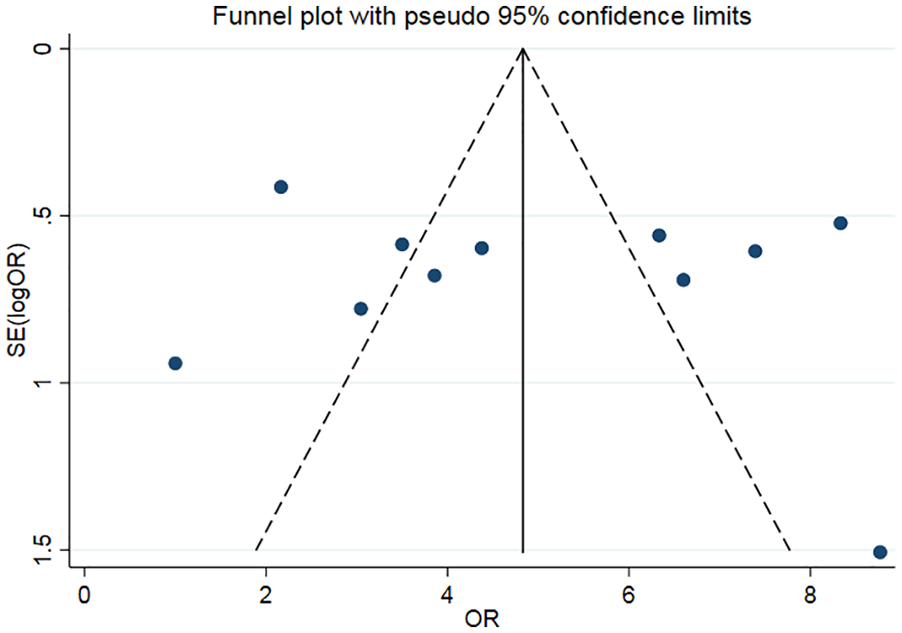
Funnel plot for the assessment of publication bias.
Sensitivity analysis
The results of the sensitivity analysis are shown in Figure 4. After excluding each study one by one and by using a meta-analysis, the results demonstrated that there was no significant change in the combined effect. This showed that the conclusions drawn from the 11 included articles were robust.
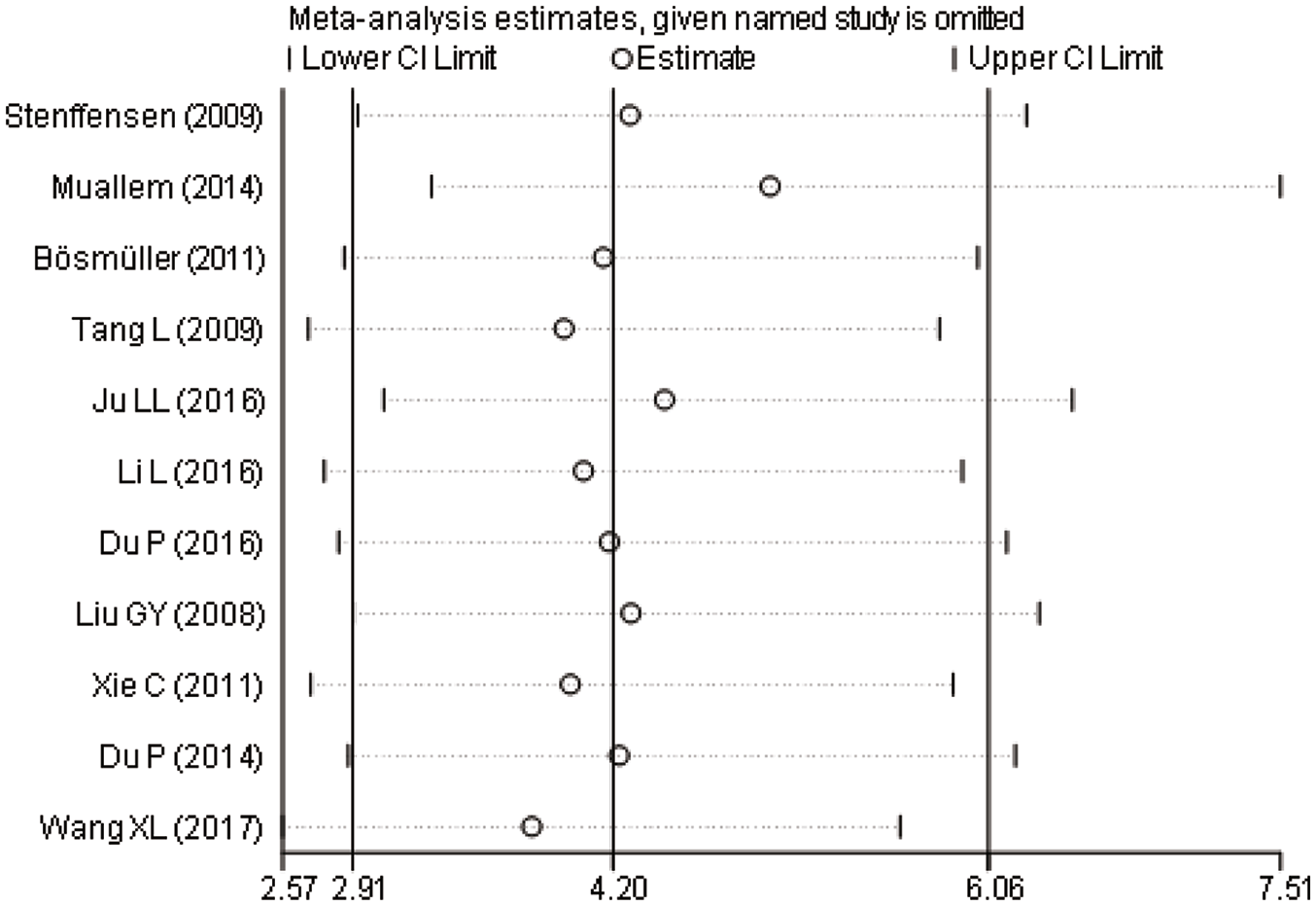
Sensitivity analysis results.
Discussion
In this study, a meta-analysis was used to study the relationship between the expression of ERCC1 and the chemosensitivity of platinum drugs in patients with ovarian cancer. The results showed that compared with ovarian cancer patients with a high expression of ERCC1, ovarian cancer patients with a low expression of ERCC1 were more sensitive to chemotherapy. Platinum preparation is the first-line chemotherapy drug for the treatment of ovarian cancer. It inhibits tumor cell division by inhibiting DNA replication. 24 The ERCC1 gene is the DNA damage repair gene. Its significance is to repair the genome dysfunction caused by carcinogenic factors and it has the effect of fighting the tumor. However, it has been reported that the ERCC1 gene is involved in the repair of DNA damage caused by platinum drugs and reduces the efficacy of chemotherapy. The expression level of the ERCC1 gene in tumors is closely related to the chemotherapeutic effect of platinum drugs on patients. 25 ERCC1 has endonuclease activity, which is the core factor of the nucleotide excision repair pathway and plays an important role in the repair process. It is indispensable in participating in the repair process in vivo, with two functions of excision of 5 ‘end and damage identification. On the one hand, ERCC1—as an endonuclease at the protein level—can repair the DNA damage caused by platinum drugs. On the other hand, the mechanism of drug resistance caused by the high expression of ERCC1 to tumor cells leads to the damage of DNA. Both of these aspects can cause platinum resistance. Platinum enters tumor cells and hydrolyzes into dichlorodiaminoplatinum, which binds to intracellular nucleophilic DNA to form platinum-DNA adducts, resulting in the inter-chain or intra-chain crosslinking of DNA, affecting the replication and transcription of DNA. It causes DNA damage and apoptosis of tumor cells.
ERCC1 can recognize and repair the injury caused by platinum. It can effectively remove the damaged nucleotides in time, so the tumor cells themselves can avoid the effect of chemotherapeutic drugs and produce drug resistance, 26 thus affecting the chemosensitivity of platinum drugs. The expression of ERCC1 is also related to the occurrence and prognosis of ovarian cancer. The expression of ERCC1 in 64 cases of epithelial ovarian carcinoma was studied. 27 It was found that the positive expression rate of ERCC1 in the chemotherapy-resistant group was significantly higher than that in the chemotherapy-sensitive group. Also, the expression of ERCC1 was not related to clinical characteristics. In the study of 60 cases of ovarian tumors, 17 it was found that the positive expression of ERCC1 in borderline ovarian tumors was significantly higher than that in benign ovarian tumors and ovarian cancer. The expression of ERCC1 was not correlated with age, pathological type, tumor differentiation, and FIGO stage.
This meta-analysis included 11 articles consisting of 758 patients with ovarian cancer. The overall positive rate of ERCC1 was 55.1%. The results showed that the overexpression of ERCC1 correlated with the chemosensitivity of platinum drugs in ovarian cancer. Compared with the high expression of ERCC1, the low expression was more sensitive to platinum chemotherapy for ovarian cancer. Subgroup analysis on the Chinese and Caucasian populations had the same results. From the point of view of statistical heterogeneity, the difference had no statistical significance, indicating that the homogeneity of samples in the study was good. From the perspective of publication bias, the funnel plot was basically symmetrical. Egger’s Z-test revealed that the P value was greater than 0.05, so it was considered that there was no publication bias. The results of the sensitivity analysis showed that excluding each study one by one and using a meta-analysis, the combined effect did not change significantly, indicating that the stability of the included study was good. Thus, it showed that the conclusion of this study was most reliable.
The results of Li et al. 28 demonstrated that the low expression of ERCC1 was more sensitive to platinum chemotherapy in ovarian cancer. This is consistent with the conclusion of this study. However, this study included more high-quality literature and an increased sample size, and made the conclusion more convincing. Numerous multivariate analyses have confirmed that the expression of ERCC1 is an important predictor of chemotherapy prognosis of ovarian cancer.12,15 The conclusion of this study explains the reason to some extent.
Of course, this study also had some limitations: (a) The methods used in the included literature were basically immunohistochemical, which was used to detect the expression of ERCC1. There are some subjectivities and inconsistencies in the positive judgment of different researchers. (b) The number of the included literature was relatively small, most of which were from Asian countries, with only three from the Caucasian population. The population from African countries was zero. (c) It is unclear whether patients with ovarian cancer who are sensitive to platinum drugs are eligible to be retreated with platinum drugs. (d) Although all the included studies were reported to detect the expression of ERCC1 by immunohistochemistry, the manufacturer, dilution concentration, and judgment criteria of the antibody were not exactly the same, which may also affect the results of this meta-analysis.
Conclusion
There is a correlation between ERCC1 overexpression and platinum chemosensitivity of ovarian cancer. A low expression of ERCC1 is more sensitive to the platinum chemotherapy of ovarian cancer than a high expression, which is true in both Asian and Caucasian populations. The ERCC1 state may be a potential biomarker for predicting the efficacy of platinum chemotherapy in ovarian cancer. However, in view of the limitations of this study, large-scale and well-designed studies are still needed to investigate the factors that may affect patient response to platinum chemotherapy.
Supplemental Material
Supplementary_Table_1_1 – Supplemental material for ERCC1 expression and platinum chemosensitivity in patients with ovarian cancer: A meta-analysis
Supplemental material, Supplementary_Table_1_1 for ERCC1 expression and platinum chemosensitivity in patients with ovarian cancer: A meta-analysis by Chunjie Zhang, Shan Gao and Jingwen Hou in The International Journal of Biological Markers
Footnotes
Acknowledgements
This paper was supported by the Fundamental Research Funds for the Central Universities (grant no.31920190195) and Key Technology R&D Program of Gansu Province (grant no.144FKCA089).
Authors’ contributions
All authors contributed to the study design; all authors collected the data and performed the data analysis; all authors prepared the manuscript.
Abbreviations
EOC: Epithelial ovarian cancer ; ERCC1: excision Repair Cross Complementary gene 1 ;IHC: immunohistochemical ; PCR: Polymerase Chain Reaction; NOS: Newcastle–Ottawa scale; REM: random-effects model ; FEM: fixed-effects model ; NER: nucleotide excision repair
Availability of data and materials
The datasets used and/or analyzed during the present study are available from the corresponding author upon reasonable request.
Competing interests
The authors declare that they have no competing interests.
Consent for publication
Not applicable.
Declaration of Conflicting Interests
The author(s) declared no potential conflict of interest with respect to the research, authorship, and/or publication of this article.
Ethics approval and consent to participate
Ethical approval was not needed because this is a meta-analysis.
Funding
The authors disclosed receipt of the following financial support for the research, authorship, and/or publication of this article: Our paper was supported by the Fundamental Research Funds for the Central Universities (grant no.31920190195) and Key Technology recurrent Program of Gansu Province (grant no.144FKCA089).

Supplemental material
Supplemental material for this article is available online.
References
Supplementary Material
Please find the following supplemental material available below.
For Open Access articles published under a Creative Commons License, all supplemental material carries the same license as the article it is associated with.
For non-Open Access articles published, all supplemental material carries a non-exclusive license, and permission requests for re-use of supplemental material or any part of supplemental material shall be sent directly to the copyright owner as specified in the copyright notice associated with the article.
