



Abstract
Aim:
The lncRNA growth arrest-special 5 (GAS5) is a critical tumor suppressor lncRNA, and its expression level has been found to be decreased in many types of cancers. So GAS5 polymorphisms are also likely to influence predisposition to many types of malignant diseases. Nevertheless, the relationships between GAS5 polymorphisms and cancer are still controversial. Thus, the authors designed this meta-analysis to get a more statistically reliable conclusion.
Methods:
The authors searched PubMed, Embase, and Web of Science for eligible studies. A total of 12 eligible studies involving 8693 cancer cases and 10,805 controls were pooled and analyzed in this meta-analysis.
Results:
Among GAS5 polymorphisms, only GAS5 rs145204276 insertion/deletion polymorphism could be analyzed in a meta-analysis with regard to predisposition to cancer since no any other GAS5 polymorphisms were explored by at least two individual genetic association studies. All eligible studies were found to be of Asian origin. Although the overall pooled meta-analysis results did not show any significant associations between rs145204276 insertion/deletion polymorphism and a predisposition to cancer, rs145204276 insertion/deletion polymorphism was demonstrated to be significantly associated with a predisposition to gastric cancer (dominant comparison: P<0.0001; recessive comparison: P=0.005; over-dominant comparison: P=0.0003; over-dominant comparison: P<0.0001) in Asians in further subgroup analyses.
Conclusions:
This meta-analysis demonstrated that GAS5 rs145204276 insertion/deletion polymorphism was associated with a predisposition to gastric cancer in Asians. Nevertheless, considering that this positive finding was only based on three eligible studies from the same area, future studies with larger sample sizes in other populations are still warranted to test the robustness of our findings.
Introduction
Cancer is the second most common cause of death worldwide.1-2 Although its definite pathogenesis mechanisms are still unclear, accumulating evidence suggests that genetic architecture plays a vital role in its development. First, the incidences of many types of cancer have been found to be much higher in subjects with positive family history in first-degree relatives, and genetic background is probably one of reasons behind this phenomenon.3-8 Second, previous genetic association studies have also detected numerous susceptible genetic loci of cancer in different populations.9-12 However, the pathogenesis mechanisms of cancer are very complicated, and genetic factors that contribute to the development of cancer still need intensive explorations.
Long non-coding RNAs (lncRNAs) regulate the expression of protein-encoding genes, and serve as crucial regulators of many vital cellular processes, including proliferation, differentiation, and apoptosis.13,14 Recently, lncRNAs have also been widely investigated regarding their associations with cancer, and it has been demonstrated that they play vital roles in carcinogenesis and cancer progression.15,16 The lncRNA growth arrest-special 5 (GAS5) regulates the expression of protein-encoding genes through association with the eukaryotic translation initiation factor-4E (eIF4E) or acting as a competing endogenous RNA (ceRNA).17,18 It is a critical tumor suppressor lncRNA growth arrest-special 5 (GAS5), and its expression level has also been found to be decreased in many types of cancers.19-22 Therefore, if a polymorphism is of potential functional significance and can impact the expression of GAS5, it is likely that this polymorphism might also influence the predisposition to many types of malignant diseases.
In the last two decades, investigators across the world have extensively explored relationships between GAS5 polymorphisms and cancer risk, yet the relationships between GAS5 polymorphisms and cancer risk are still controversial. Thus, the authors designed this meta-analysis to obtain a more statistically reliable conclusion regarding relationships between GAS5 polymorphisms and cancer risk by pooling the results of related studies.
Materials and methods
The PRISMA guideline was followed by the authors when conducting this meta-analysis. 23
Literature search and inclusion criteria
Literature searching of PubMed, Web of Science, and Embase was performed by the authors using the following terms: “GAS5 or GAS-5 or growth arrest-specific 5” and “polymorphism or variant or variation or mutation or SNP or genome-wide association study or genetic association study or genotype or allele” and “cancer or tumor or carcinoma or neoplasm or malignancy.” The authors also checked the references of retrieved articles for additional related studies.
Eligible studies must meet all of three inclusion criteria: (a) formally published genetic association studies evaluating relationships between GAS5 polymorphisms and cancer risk; (b) provide genotypic distributions of GAS5 polymorphisms in patients with cancer and controls; and (c) the full manuscript is available in English. Articles were excluded when at least one of the following three conditions was fulfilled: (a) studies not concerning GAS5 polymorphisms and cancer risk; (b) reviews, expert comments, or conference abstracts; and (c) case series only involved patients with cancer. When duplicate reports were observed during the literature search, only the most complete one with the largest sample size was included for the pooled analyses.
Data extraction and quality assessment
We extracted the following items from eligible studies: (a) surname of the first author; (b) year of online publication; (c) country and ethnicity of involved subjects; (d) number of patients and controls in each study; and (e) genotypic distributions of GAS5 polymorphisms in patients and control subjects. We also calculated P values of Hardy-Weinberg equilibrium (HWE) based on genotypic distributions of GAS5 polymorphisms.
The authors used Newcastle-Ottawa scale (NOS) to assess the quality of included studies. 24 Its score range is from 0 to 9, and the methodology quality of a study is considered to be good if it can get a score of more than 7.
Data extraction and the quality assessment of included studies were performed by two authors separately. We wrote to the corresponding authors of eligible studies for additional data if we failed to extract necessary information from the included studies.
Statistical analyses
The authors used Review Manager to pool the meta-analysis results. The authors used odds ratios (ORs) and the corresponding 95% confidence intervals (CIs) to evaluate relationships between GAS5 polymorphisms and any predisposition to cancer. We compared the genetic distributions of GAS5 polymorphisms among cases and controls in dominant, recessive, over-dominant, and allele models. The dominant genetic model is defined as M/M versus M/m + m/m; the recessive genetic model is defined as m/m versus M/M +M/m; the over-dominant genetic model is defined as M/m versus M/M + m/m; and the allele genetic model is defined as M versus m. The authors set the statistically significant threshold at 0.05 and used I2 statistics to estimate the heterogeneity. The DerSimonian-Laird method was used to pool the results if I2 was larger than 50%; if not, the Mantel-Haenszel method was used. Subgroup analyses were conducted by the type of cancer, and the stability of pooled meta-analyses results was examined by omitting one study each time and pooling the results of the other studies. Publication biases were examined by using funnel plots and Egger’s tests.
Results
Characteristics of included studies
Ninety-three articles were retrieved by the authors through the literature search strategy mentioned above. The authors assessed 20 articles for eligibility after omitting unrelated and repeated reports. A further 5 reviews and 3 case series were excluded by the authors. A total of 12 studies were finally pooled in our meta-analyses (Figure 1). Extracted data of eligible studies are summarized in Table 1.
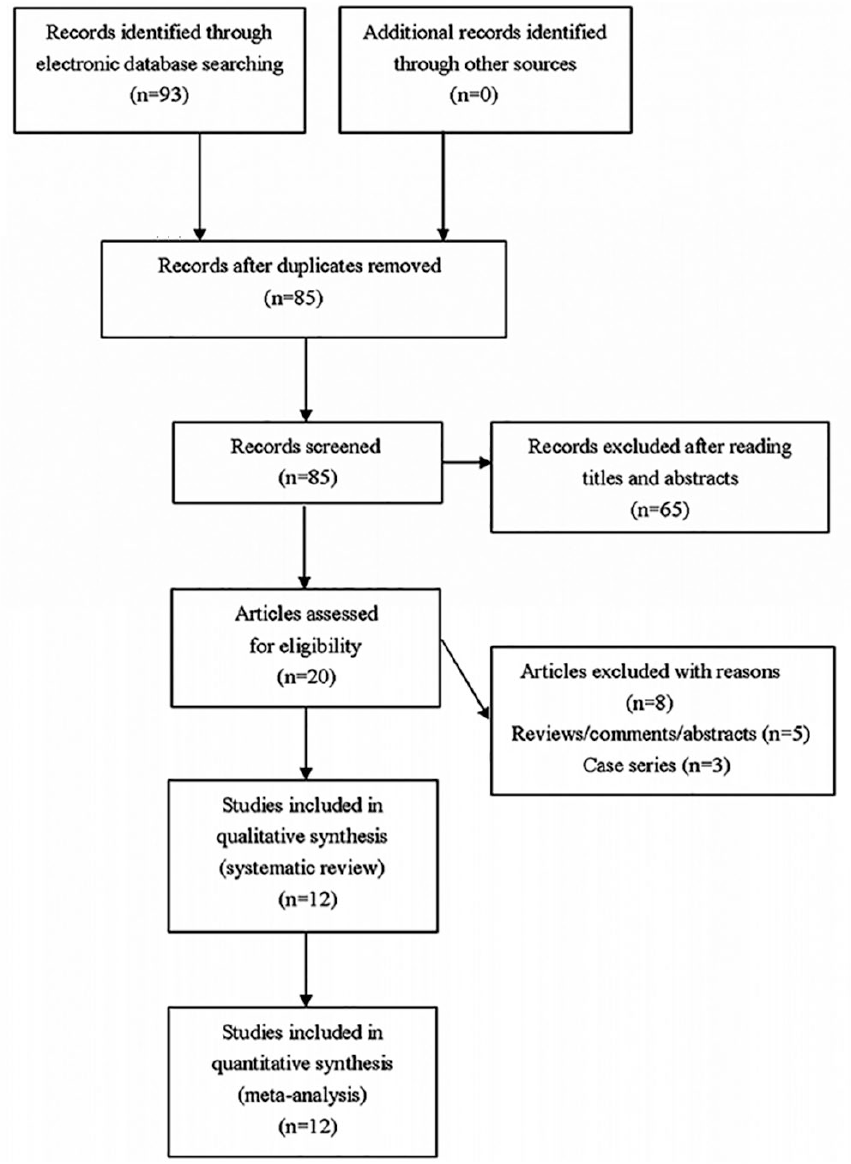
Flowchart of study selection for the present study.
The characteristics of included studies.
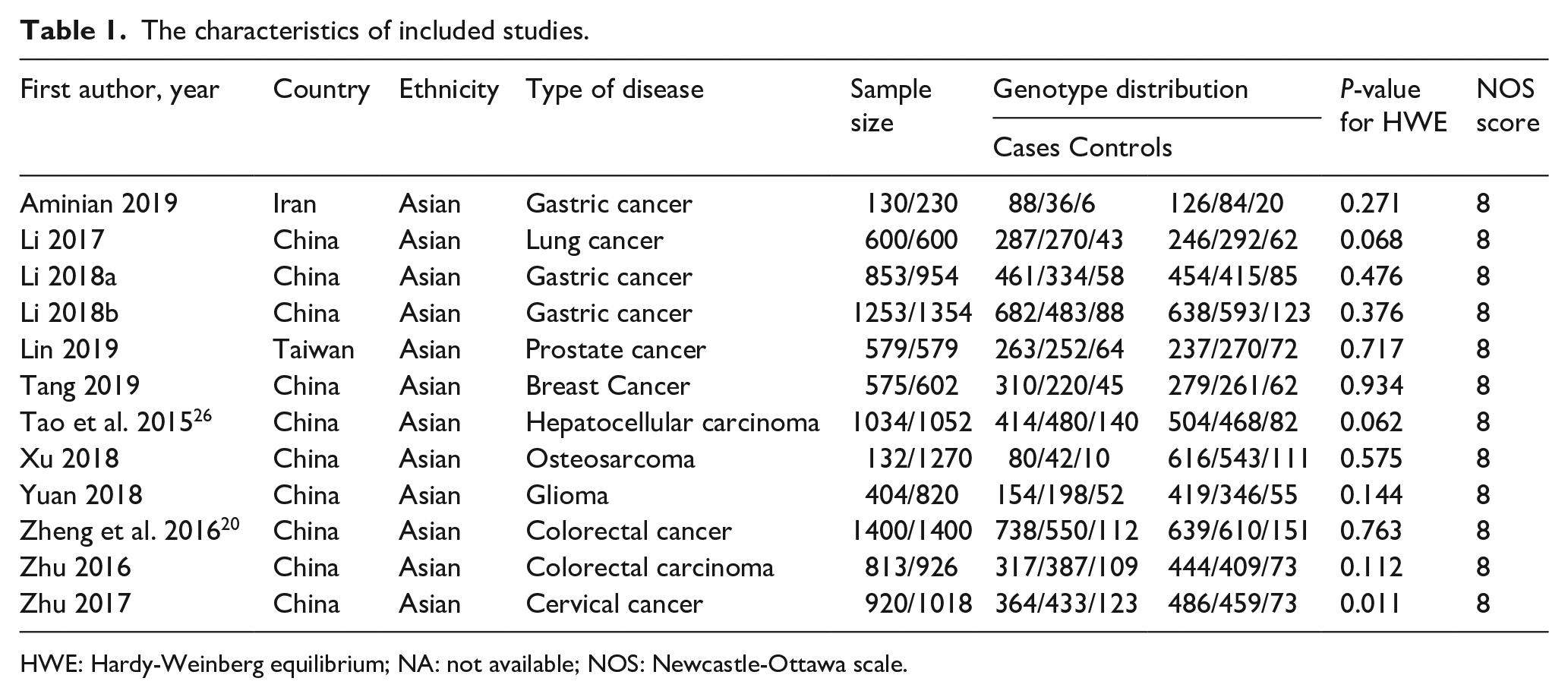
HWE: Hardy-Weinberg equilibrium; NA: not available; NOS: Newcastle-Ottawa scale.
Meta-analysis results of GAS5 polymorphisms and cancer
Among the GAS5 polymorphisms, only rs145204276 insertion/deletion polymorphism could be analyzed in the meta-analysis with regard to predisposition to cancer, since no any other GAS5 polymorphisms were explored by at least two individual genetic association studies. Twelve studies, including 8693 cancer cases and 10,805 controls, were eligible for estimation of the relationship between the GAS5 rs145204276 polymorphism and cancer risk. All eligible studies were found to be of Asian origin. Although the overall pooled meta-analyses results did not show any significant associations between the rs145204276 insertion/deletion polymorphism and a predisposition to cancer, the rs145204276 insertion/deletion polymorphism was demonstrated to be significantly associated with a predisposition to gastric cancer (dominant comparison: P<0.0001; recessive comparison: P=0.005; over-dominant comparison: P=0.0003; over-dominant comparison: P<0.0001) in Asians in further subgroup analyses (see Table 2 and Supplementary Figure 1).
Results of pooled meta-analyses.
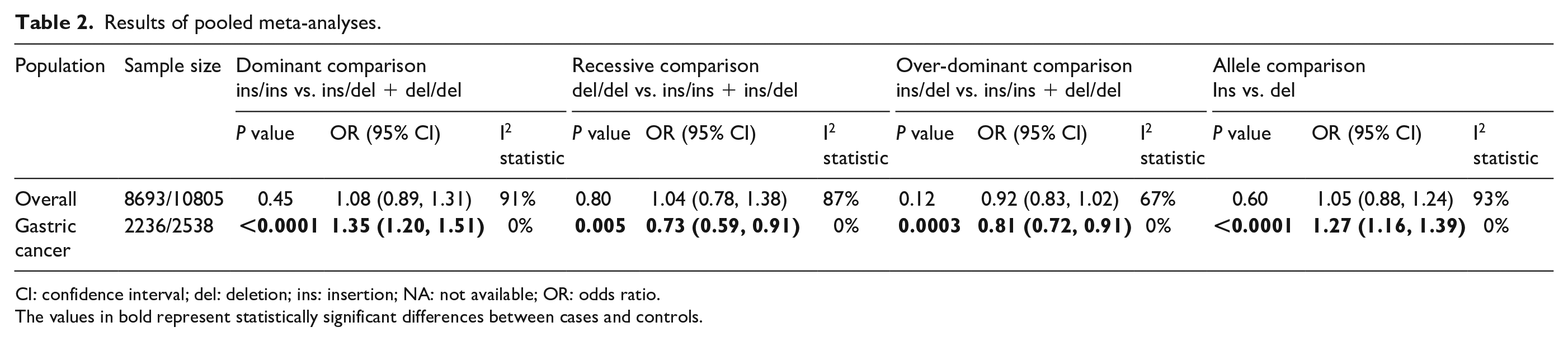
CI: confidence interval; del: deletion; ins: insertion; NA: not available; OR: odds ratio.
The values in bold represent statistically significant differences between cases and controls.
Sensitivity analyses
Obvious heterogeneities were observed in all comparisons of overall pooled analyses. Stabilities of pooled meta-analyses results were further examined by omitting one study each time and pooling the results of the other studies. We found that heterogeneities remained significant for all comparisons, and no alterations of results were detected in the sensitivity analyses (see Table 3).
Results of sensitivity analyses.
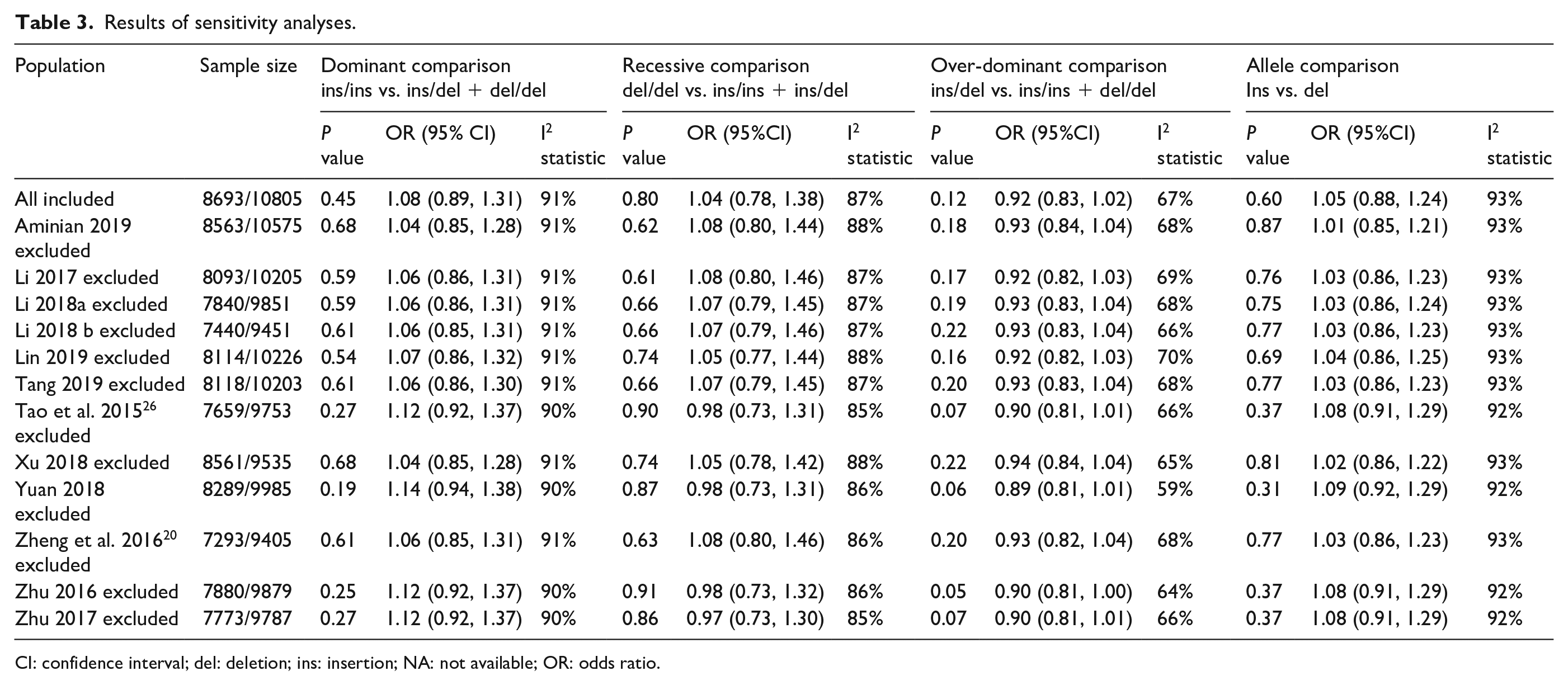
CI: confidence interval; del: deletion; ins: insertion; NA: not available; OR: odds ratio.
Publication biases
Publication biases were examined by funnel plots and Egger’s tests. The funnel plots were symmetrical overall (see Supplementary Figure 2). We further calculated P values for Egger’s tests, and found that the P values were greater than 0.05 in all comparisons (dominant comparison, P =0.362; recessive comparison, P =0.409; over-dominant comparison, P =0.298; allele comparison, P =0.461), which suggested that our pooled meta-analyses results were not likely to be severely influenced by publication bias.
Discussion
This meta-analysis, for the first time, has summarized the association of GAS5 polymorphisms with a predisposition to cancer. The pooled meta-analyses results demonstrated that GAS5 rs145204276 insertion/deletion polymorphism was associated with a predisposition to gastric cancer. The trends of associations remained unchanged in sensitivity analyses, suggesting that our pooled meta-analyses results were statistically quite stable.
However, a few points need to be considered when interpreting our findings. First, previous experimental studies have demonstrated that the rs145204276 insertion/deletion polymorphism might result in the altered gene expression of GAS5.19,25,26 Although the mechanisms of lncRNA GAS5 in cancer development are still not fully understood, several reports have already illustrated a down-regulation of GAS5 in various types of cancers.20-22 Also, it has been demonstrated that the down-regulation of GAS5 is associated with a poor prognosis, whereas the up-regulation of GAS5 is associated with a more promising treatment outcome in many types of cancers.27-30 Thus, it is likely that the rs145204276 insertion/deletion polymorphism might influence the normal functioning of GAS5 and influence the predisposition to many types of malignancies. Second, although we pooled the results of published studies, there was only one report for many types of malignancies, so future genetic association studies are still needed to estimate the relationship between the rs145204276 insertion/deletion polymorphism and the predisposition to different types of cancers. Third, we aimed to investigate all GAS5 polymorphisms at the beginning. However, we did not find a sufficient number of published articles to support pooled meta-analyses of other GAS5 polymorphisms, so we only examined the rs145204276 insertion/deletion polymorphism in this meta-analysis. Fourth, all eligible studies were found to be of Asian origin, so the relationship between this polymorphism and cancer risk should also be tested by researchers in other populations. Fifth, significant heterogeneities were observed in overall pooled analyses, which suggested that the effects of the GAS5 rs145204276 insertion/deletion polymorphism on the predisposition to different types of cancers may be different. Therefore, detailed mechanism studies are also warranted to reveal the exact roles of GAS5 in different types of cancers.
Like all meta-analyses, a few limitations of our pooled meta-analyses should be acknowledged. First, our pooled meta-analyses results were derived from pooling unadjusted findings since the authors did not have raw data of eligible studies. 31 Second, environmental factors might also influence the relationships between GAS5 polymorphisms and cancer risk. However, most investigators only focused on genetic associations in their work, so genetic–environmental interactions were not explored in this meta-analysis. 32 Third, we did not consider grey literature. Even though the funnel plots were symmetrical overall, and the P values of Egger’s tests were greater than 0.05, publication bias may still affect the robustness of our pooled results. 33
Conclusions
This meta-analysis has demonstrated that the GAS5 rs145204276 insertion/deletion polymorphism was associated with a predisposition to gastric cancer in Asians. Nevertheless, considering that this positive finding was only based on three eligible studies from the same area, future studies with larger sample sizes in other populations are still warranted to test the robustness of our findings.
Supplemental Material
Supplementary_material – Supplemental material for LncRNA growth arrest-special 5 polymorphisms and predisposition to cancer: A meta-analysis
Supplemental material, Supplementary_material for LncRNA growth arrest-special 5 polymorphisms and predisposition to cancer: A meta-analysis by Hairong Cai, Wenyan Xu and Xian Zhang in The International Journal of Biological Markers
Footnotes
Acknowledgements
None.
Authors’ contributions
Hairong Cai and Xian Zhang designed this study. Hairong Cai and Wenyan Xu searched the literature. Hairong Cai and Wenyan Xu analyzed the data. Hairong Cai and Xian Zhang wrote the manuscript. All authors have approved the final manuscript as submitted.
Declaration of conflicting interests
The author(s) declared no potential conflicts of interest with respect to the research, authorship, and/or publication of this article.
Funding
The author(s) received no financial support for the research, authorship, and/or publication of this article.
Statement of ethics
This article does not contain any studies with human participants or animals performed by any of the authors, thus ethical approval and informed consent are not required.

Supplemental material
Supplemental material for this article is available online.
References
Supplementary Material
Please find the following supplemental material available below.
For Open Access articles published under a Creative Commons License, all supplemental material carries the same license as the article it is associated with.
For non-Open Access articles published, all supplemental material carries a non-exclusive license, and permission requests for re-use of supplemental material or any part of supplemental material shall be sent directly to the copyright owner as specified in the copyright notice associated with the article.
