



Abstract
Background:
CD44 has recently been reported as a biomarker for pancreatic cancer. However, the predictive value of CD44 in pancreatic cancer remains controversial. Therefore, we performed this meta-analysis to evaluate the association between the expression of CD44 and clinicopathological features, and the outcome of pancreatic cancer patients.
Materials and method:
A comprehensive literature search was performed using PubMed, Embase, and Chinese National Knowledge Infrastructure. The statistical analysis was conducted using Stata software.
Results:
A total of nine studies including 583 cases were included in this meta-analysis. The meta-analysis indicated that CD44 overexpression was associated with poor five-year overall survival rate (OR 0.52; 95% CI 0.30, 0.91; P = 0.02), more lymph node invasion (OR 3.14 (positive vs. negative); 95% CI 1.47, 6.73; P = 0.003), more advanced T stage (OR 2.4 (T3,4 vs. T1,2); 95% CI 1.28, 4.52; P = 0.007), and more advanced TNM stage (OR 4.53 (III~IV vs. I~II); 95% CI 1.46, 14.08; P = 0.01). However, CD44 overexpression was not associated with other clinicopathological features, such as tumor size, differentiation, and distance metastasis.
Conclusions:
The current evidence suggests that CD44 is an efficient prognostic factor in pancreatic cancer.
Introduction
Pancreatic cancer ranks tenth in annual incidence among the different cancers, and is the fourth leading cause of cancer-related death. 1 The one year survival rate is less than 20% and the five-year survival rate of patients with locally advanced disease is less than 10%, due to both local disease progression and metastasis.2,3 Therefore, it is imperative to search for more specific histopathological markers for pancreatic cancer progression.
Cancer stem cells (CSC) are responsible for tumor initiation, proliferation, metastasis, and resistance to chemotherapy. 4 CD44 is an important marker for CSC and CD44 is a membrane glycoprotein involved in cell–cell and cell–extracellular matrix adhesion, and therefore plays important roles in cell migration, differentiation, and survival.5,6 Overexpression of CD44 has been found in various types of tumors and could serve as a prognostic marker in various solid tumors, including ovarian cancer, 7 gastric cancer, 8 breast cancer, 9 hepatocellular carcinoma, 10 and renal cell carcinoma. 11
There are many studies conducted to explore the relationship between CD44 and the prognosis of pancreatic cancer.12–20 Some of the studies suggested that overexpression of CD44 was associated with lymph node metastasis and worse overall survival in patients with pancreatic cancer. However, some other studies disclosed that CD44 elicits no effect on the survival of pancreatic cancer patients. Therefore, we performed this meta-analysis to determine the prognostic value of CD44 in pancreatic cancer. We also analyzed the correlation between CD44 expression and other clinical features of pancreatic cancer.
Materials and methods
Search strategy
Potential literature was retrieved by searching the following databases until July 2017: Medline, Embase, and CNAI. The search strategy included the following keywords: “CD44,” “cluster of differentiation 44,” “pancreatic cancer,” “pancreatic ductal adenocarcinoma,” and “pancreatic adenocarcinoma.” The reference lists of studies with information on the topic were also reviewed to avoid missing studies. Only English and Chinese literature are included in this study.
Study selection
All studies that evaluated the correlation of CD44 expression with clinicopathological characteristics and the overall survival of pancreatic cancer were included in this meta-analysis. To be eligible for inclusion, a study was required to meet the following criteria: (a) published in English or Chinese with full text available; (b) relative risk ratios and their 95% confidence intervals (CIs) had to be estimated from the data presented; (c) CD44 expression in pancreatic cancer was detected by immunohistochemistry (IHC); and (d) studies of CD44 expression were based on primary pancreatic cancer tissue, rather than serum or any other kinds of specimen. Those reviews, meta-analyses or systematic reviews, letters, abstracts, plus those that provided insufficient data and those that did not use IHC were excluded. We did not assess the methodologic quality of the included studies, given that quality scoring of observational studies in meta-analysis is controversial. 21
Data extraction
The following data were extracted from each article: the name of first author, publication year, country, patient number, clinicopathological features, positive rates of CD44 expression, and the overall survival (OS) rate. All data were carefully extracted by two investigators independently, and differences in data extraction were resolved by a third investigator. For those studies that did not provide OS directly, Kaplan–Meier curves were read by GetData Graph Digitizer (http://getdatagraph-digitizer.com).
Statistical analysis
Comparisons of CD44 expression with different clinicopathologic features and five-year OS of pancreatic cancer were assessed by pooled estimates of odds ratio (OR) as well as the 95% CI. P values less than 0.05 were considered statistically significant. Statistical heterogeneity was tested using a Chi-square test and an I-square. When there was no between-study heterogeneity, the fixed-effects models (Mantel-Haenszel) were used; otherwise, the random effect models (DerSimonian and Laird) were used. Sensitivity analysis was conducted by omitting each study to find potential outliers. Begg’s and Egger’s test was used to assess publication bias. Statistical analysis was performed by STATA 11.0 (Stata Corporation, College Station, TX, USA).
Results
Literature information and study characteristics
Using the search strategy above, 937 potential papers were identified initially, 907 of which were excluded after reading the titles and abstracts, due to non-pancreatic-related studies, non-original articles (review, letter), and duplicate studies. After reading full texts, we excluded another 21 studies due to no usable data and no IHC method, plus non-CD44 related studies. Eventually, nine studies (eight in English and one in Chinese) were included in the present meta-analysis, including 583 cases.12–20 The detailed literature selection procedure is shown in Figure 1. All of the included studies evaluated the expression of CD44 and the risk of pancreatic cancer by the IHC staining method. The detailed characteristics of the included studies are shown in Table S1. The excluded 21 studies are listed in Table S2.
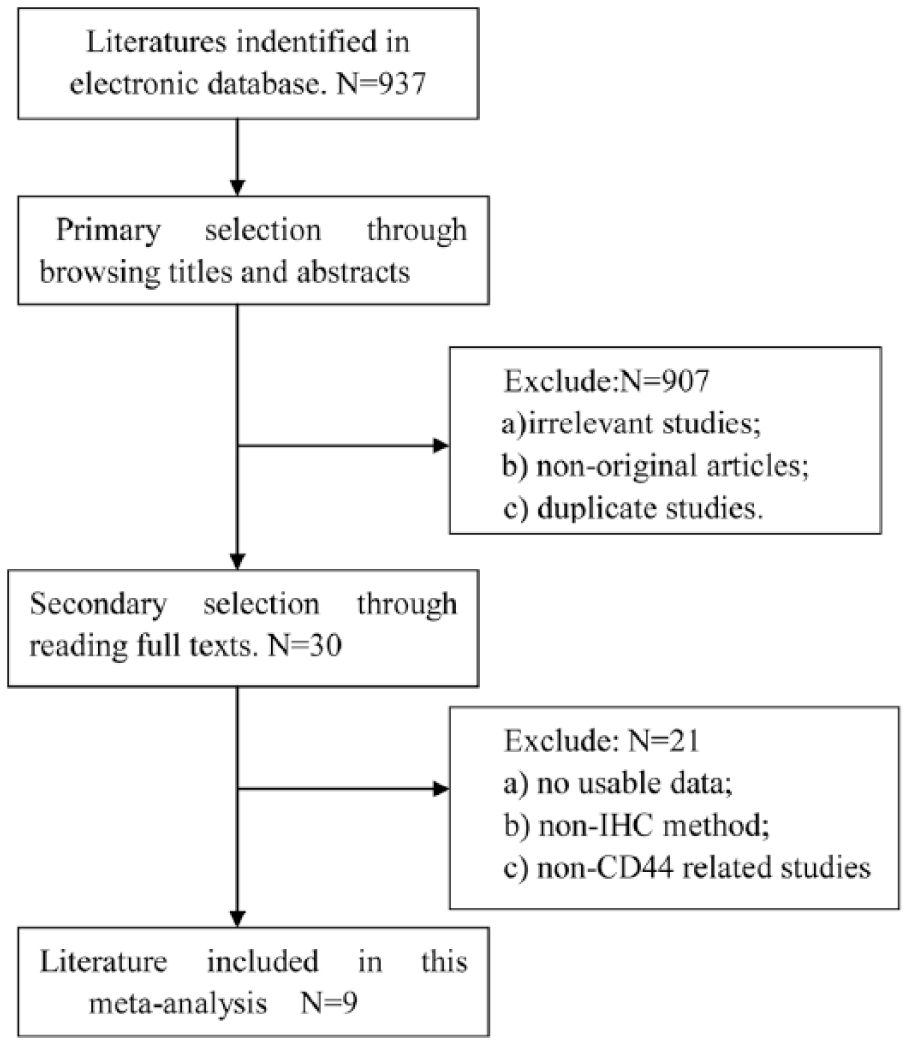
Flowchart of the literature selection.
CD44 overexpression in the pancreatic cancer group versus the control group
A total of two studies12,14 reported the overexpression of CD44 both in the pancreatic cancer group and the control group (pericarcinoma tissues or normal pancreatic tissues); another three studies13,18,19 reported the overexpression of CD44 in pancreatic cancer tissues. The pooled analysis indicated that overexpression of CD44 in the pancreatic cancer group is higher than in the control group. The difference between two groups was statistically significant (OR 3.36; 95% CI 1.45, 7.83; P = 0.005).
Impact of CD44 on five-year OS of pancreatic cancer
A total of five studies13,15,17–19 reported the association of CD44 and the five-year OS rate of pancreatic cancer. A meta-analysis indicated that CD44 overexpression was significantly associated with poor five-year OS rate in a fixed-effects model (OR 0.52; 95% CI 0.30, 0.91; P = 0.02; Figure 2), and the five-year OS rate was 0.52-fold lower in CD44 positive pancreatic cancer patients.
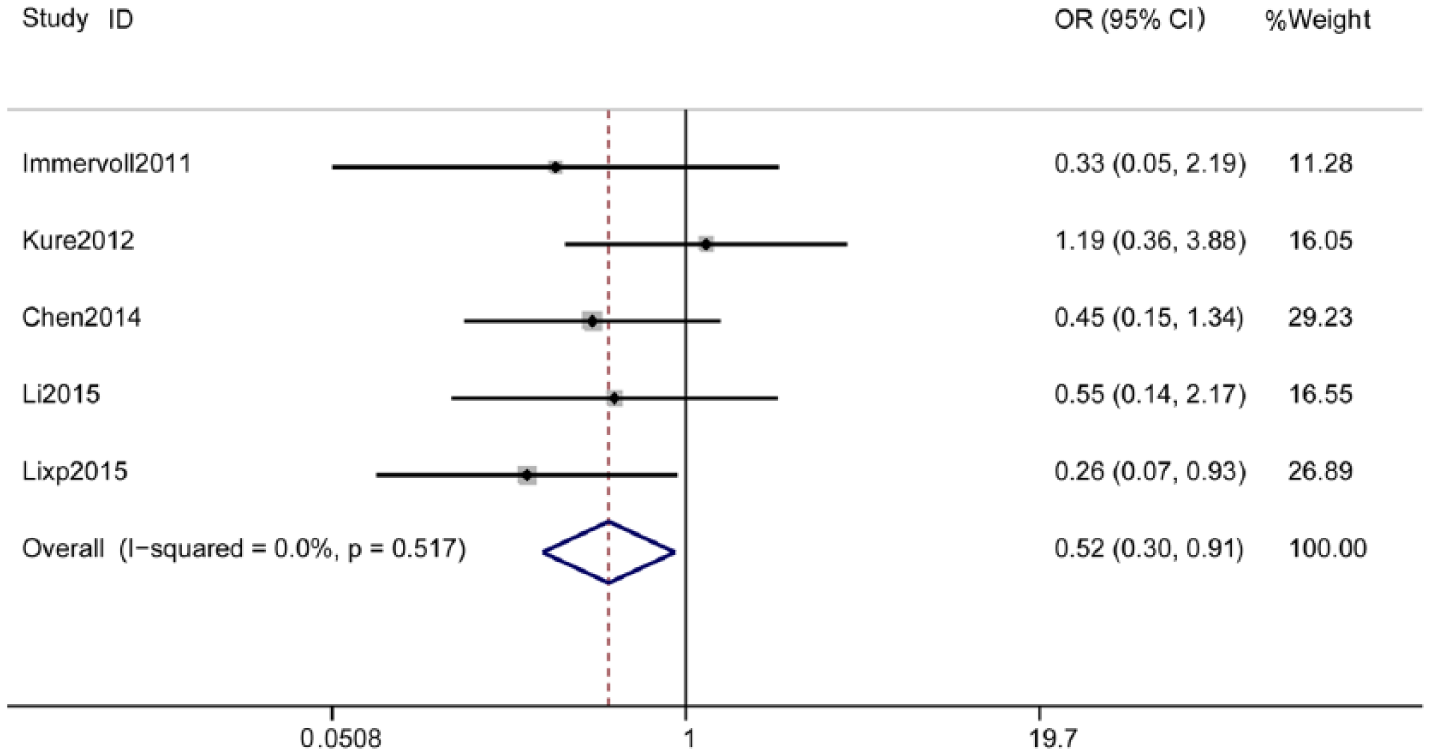
Forest plots of CD44 overexpression and five-year OS rate.
Correlation of CD44 with clinicopathological features of pancreatic cancer
The association between CD44 and several clinicopathological features of pancreatic cancer is shown in Table 1. Six studies12,13,16,18,19,20 reported the overexpression of CD44 in positive and negative lymph node metastasis of pancreatic cancer patients, and the pooled analysis showed that CD44 overexpression was associated with lymph node invasion (OR 3.14 (positive vs. negative); 95% CI 1.47, 6.73; P = 0.003; Figure S1). Three studies18–20 reported the overexpression of CD44 in the T stage of pancreatic cancer patients, and the meta-analysis indicated that CD44 overexpression was associated with more advanced T stage (OR 2.4 (T3,4 vs. T1,2); 95% CI 1.28, 4.52; P = 0.007). A total of five studies14,16,18–20 reported the overexpression of CD44 in the TNM III~IV stage group and the TNM I~II stage group of pancreatic cancer patients; the meta-analysis showed that CD44 overexpression was associated with more advanced TNM stage (OR 4.53 (III~IV vs. I~II); 95% CI 1.46, 14.08; P = 0.01). However, CD44 was not associated with other clinicopathological features, such as tumor size (OR 1.03 (large vs. small); 95% CI 0.53, 2.01; P = 0.67), differentiation (OR 1.45 (poor vs. well/moderate); 95% CI 0.84, 2.47; P = 0.18) or distance metastasis (OR 1.39 (M1 vs. M0); 95% CI 0.42, 4.56; P = 0.59).
CD44 with the clinicopathological features of pancreatic cancer.
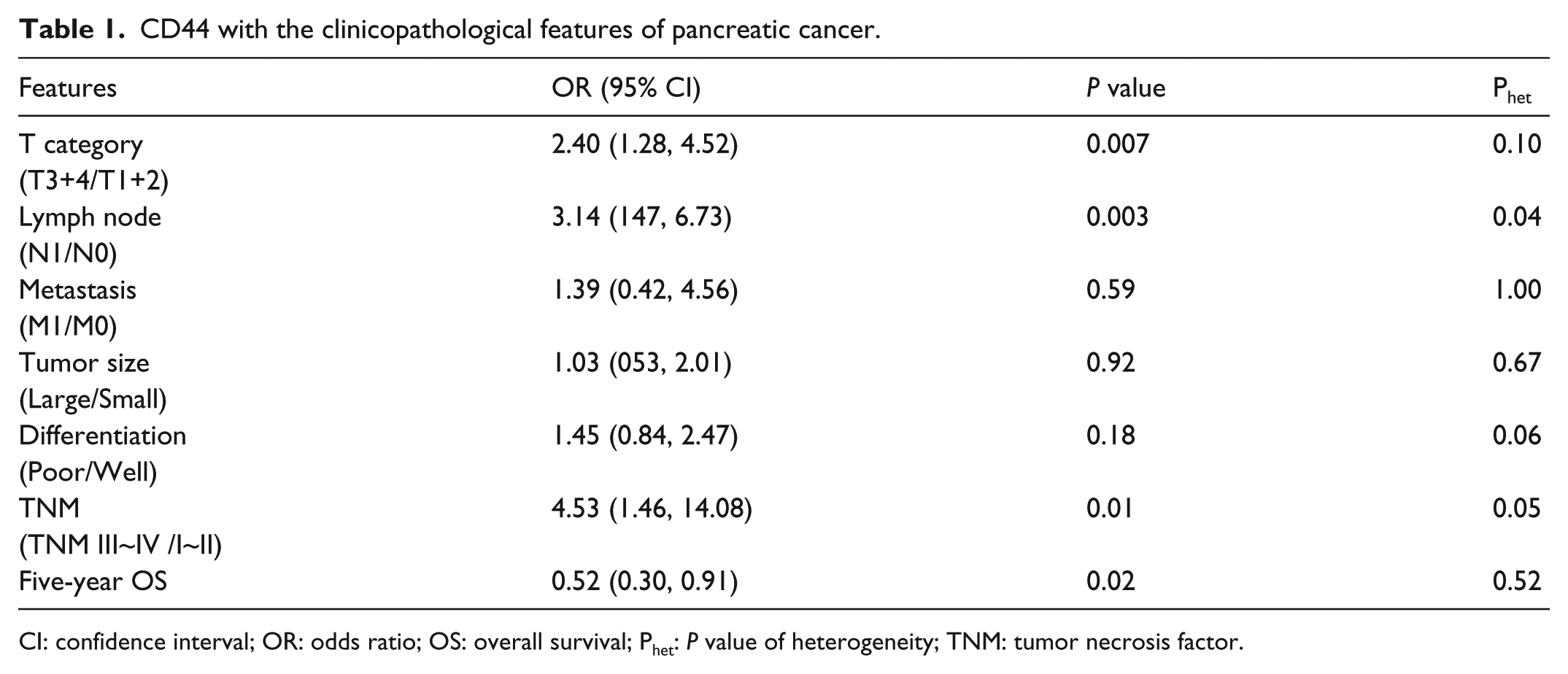
CI: confidence interval; OR: odds ratio; OS: overall survival; Phet: P value of heterogeneity; TNM: tumor necrosis factor.
Sensitivity analysis and publication bias
We also performed sensitivity analyses in order to assess the influence of each individual study on the pooled results regarding five-year OS and lymph node invasion. The analysis indicated that no individual study could statistically significantly affect the pooled results of five-year OS and lymph node invasion (Figure 3(a) and (b)). Potential publication bias was examined by Begg’s test. The shape of the funnel plots was symmetric, and the P values assessed by the Begg’s test were all greater than 0.05, indicating no obvious publication bias among those studies regarding the five-year OS rate and lymph node invasion (Figure 4(a) and (b)).
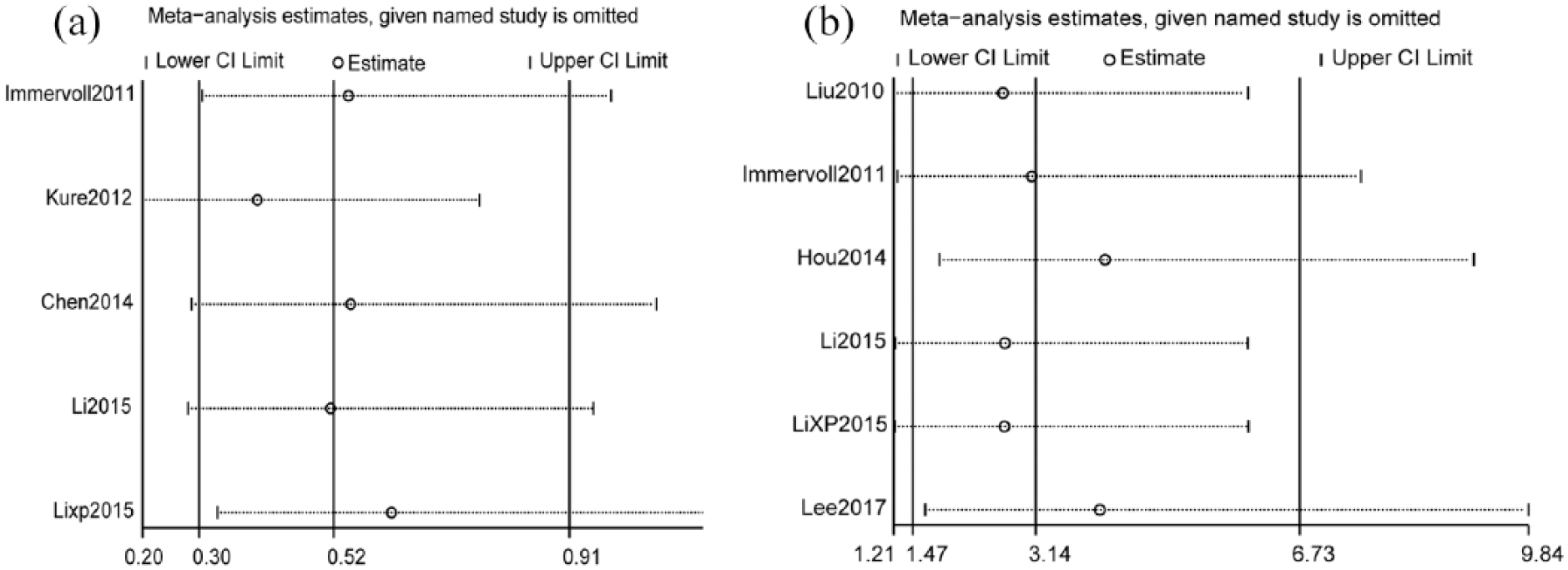
(a) Influence analysis regarding five-year overall survival rate. (b) Influence analysis regarding lymph node invasion.
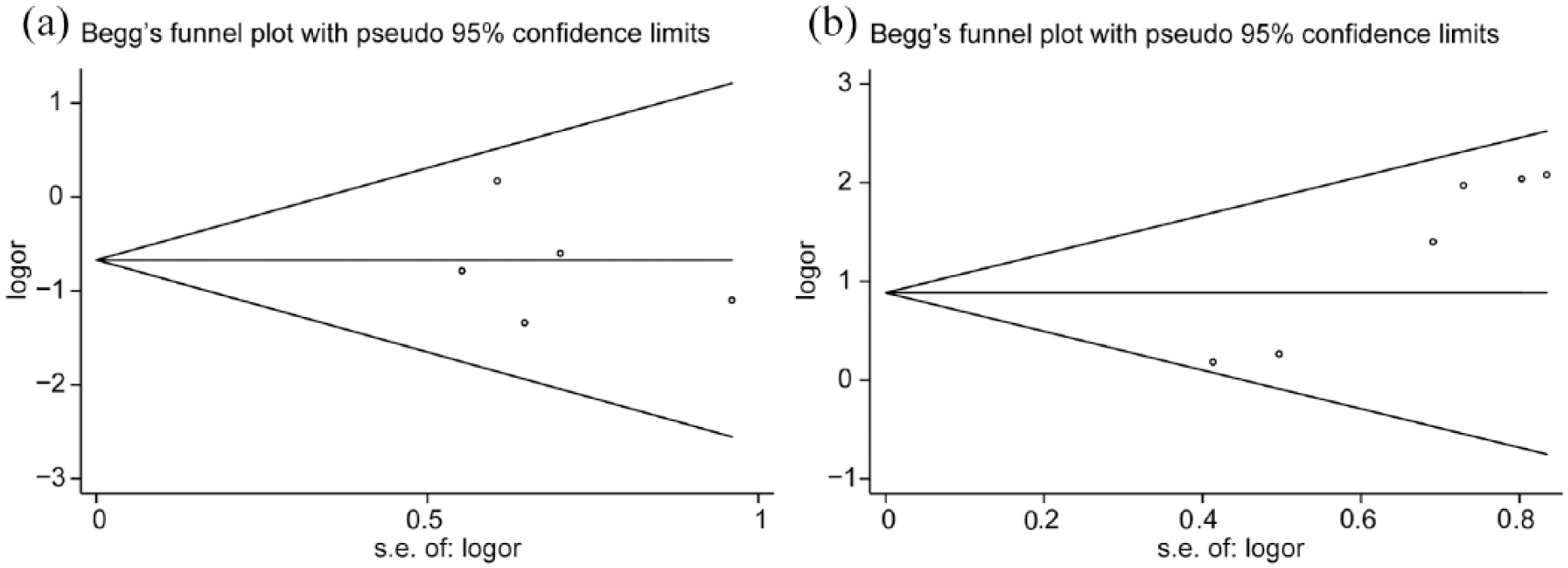
Begg’s test for publication bias regarding the analysis of five-year overall survival rate (a) and lymph node invasion (b).
Discussion
CSC is a subpopulation of tumor cells; some cell surface markers have been reported as CSC markers, such as CD44, CD24, CD133, ALDH1, and ABCG2, of which CD44 is an important marker for CSC in pancreatic carcinoma. 22 Regarding the biological properties of CSCs, many studies suggested that evaluation of CD44 expression in pancreatic cancer tissues may be useful in the future as a novel prognostic factor. A variety of clinical studies have been conducted to explore the correlation of CD44 and the clinicopathology of pancreatic cancer; however, no consensus has been reached in detail. Therefore, we performed this meta-analysis to procure a reasonable conclusion based on previous literature.
To our knowledge, this is the first meta-analysis that has evaluated the association between CD44 expression and the risk of pancreatic cancer and its clinicopathological parameters. We found that the overexpression rate of CD44 in the pancreatic cancer group was higher than that in the control group by pooled analysis. Moreover, the overexpression of CD44 was related to lymph node invasion, the T stage, and the TNM stage of pancreatic cancer. Furthermore, CD44 overexpression was significantly associated with a poor five-year OS rate of pancreatic cancer patients. In conclusion, overexpression of CD44 and its clinicopathological features were closely related in pancreatic cancer.
Our results provide further support to the potential translational significance of CD44 in pancreatic cancer. Zhao et al.’s study 23 revealed that pancreatic cancer cells expressing high levels of CD44s were highly invasive and developed chemoresistance to gemcitabine in vivo. Molejon et al.’s studies24,25 found that CD44 positive cells may proliferate and are responsible for tumor recurrence following standard chemotherapy for pancreatic cancer, and administration of an anti-CD44 monoclonal antibody to human pancreatic cancer-derived xenografts in mice is an effective strategy, suggesting that targeting CD44 is a novel therapeutic approach for treating pancreatic cancer recurrence. Jiang et al.’s study 26 found that CD44 is required for the induction of epithelial-mesenchymal transition and the activation of an invasive program in pancreatic cancer through regulating MT1/MMP expression. While our meta-analysis and many clinical studies have suggested potential translational properties of CD44 in pancreatic cancer, there are still some controversies with this issue. 27 Therefore, more prospective studies need to be conducted.
Although this meta-analysis aimed at providing the best possible estimate of the overexpression and clinical significance of CD44 in pancreatic cancer, it may have several limitations. First, only nine studies were included in this meta-analysis; therefore, the number of included studies was relatively small with only about 583 cases and no randomized controlled trials (RCTs) were found. Furthermore, in the included studies, most of the cases were Pancreatic ductal cell carcinoma (PDAC); however, Bünger et al.’s study 14 included both PDAC and other histological types of pancreatic cancer. Liu et al.’s study 12 reported pancreatic carcinoma, and that the biological characteristics of different histological types of pancreatic cancer are different. Therefore, the results from this meta-analysis may be biased. Second, there was between-study heterogeneity in some of the analyses, such as the lymph node invasion analysis and the TNM analysis; this may be due to the different antibodies used and the different cut-off values of CD44 expression used in these studies. As we know, IHC is an antibody-based technique and different antibody clones might provide different results. In the included studies, a different antibody was used in each individual study; therefore, the results may be biased in this meta-analysis. Third, only the studies detecting CD44 expression by IHC were included in this meta-analysis; other studies using reverse transcription polymerase chain reaction and flow cytometry were excluded from this study. Finally, although we tried to identify all relevant data and the Begg’s test did not show it, potential publication bias was unavoidable.
In conclusion, the present study shows a significant correlation between CD44 overexpression and lymph node invasion and the five-year OS rate in pancreatic cancer patients. CD44 may have prognostic significance for pancreatic cancer patients based on the present meta-analysis. Further larger prospective studies and RCTs are warranted to confirm the findings from our study.
Supplemental Material
Supplementary_material – Supplemental material for CD44 overexpression related to lymph node metastasis and poor prognosis of pancreatic cancer
Supplemental material, Supplementary_material for CD44 overexpression related to lymph node metastasis and poor prognosis of pancreatic cancer by Yijuan Liu, Ting Wu, Dong Lu, Jiantao Zhen and Lin Zhang in The International Journal of Biological Markers
Footnotes
Declaration of conflicting interest
The author(s) declared no potential conflicts of interest with respect to the research, authorship, and/or publication of this article.
Funding
The author(s) disclosed receipt of the following financial support for the research, authorship, and/or publication of this article: This study was supported by the Young Scientists Foundation of Fujian Provincial Health Bureau (No. 2016-1-53).
References
Supplementary Material
Please find the following supplemental material available below.
For Open Access articles published under a Creative Commons License, all supplemental material carries the same license as the article it is associated with.
For non-Open Access articles published, all supplemental material carries a non-exclusive license, and permission requests for re-use of supplemental material or any part of supplemental material shall be sent directly to the copyright owner as specified in the copyright notice associated with the article.
