




Abstract
To analyze the fractal form of the vascular network in the human circulatory system, the optimal transport effect has been achieved from the point of view of biological evolution. The blood flow mathematical models based on the fractal theory for capillary network and arteriole–capillary vascular fractal network were established using theory derivation, and the blood flow characteristics, dynamic flow resistance effects, and vascular fractal physiology property based on the fractal porous medium theory for the coronary artery circulatory network were analyzed under the consideration of some influencing factors, namely, non-Newtonian fluid characteristics of blood, hemocoagulation and embolization effect in capillaries, and plasma mass flow effects. Moreover, the Poiseuille flow equation is modified by introducing the correction function, and the flow model of blood in the vascular network is established. Obviously, the relationship characteristics between blood flow and bifurcation grade in fractal vascular, fractal dimension in the arteriole–capillary vascular network, fractal dimensions of the diameter of capillary tubular diameter, fractal dimensions of capillary blood vessels, blood Casson yield stress, and ratio of red blood cell radius to capillary diameter can be obtained. And the relationship characteristics between blood flow resistance and ratio of erythrocyte radius to capillary diameter, ratios of the distance between adjacent red blood cells to the radius of red cells, and bifurcation grade can be obtained. Finally, the clinical verification tests were accomplished to verify the theory is worthy of authenticity and rationality where the curve tendencies are very similar with those obtained by numerical simulations based on the theoretical models and experimental test showed that the theoretical calculation and simulation analysis of blood circulation system of fractal vascular network were reasonable and applicable by means of experimental relative method because of the maximum relative error is less than 10%, whatever fractal dimension m changes under different conditions.
Keywords
Introduction
The vascular vessel is an important component of blood transport and material exchange in the circulatory system of the human body, and the distribution of blood vessels is mostly in the form of tree-branched bifurcation meshes based on the fractal theory within biological world; this mode of material transportation must be an “ideal” network transportation structure that can achieve maximum transport efficiency and minimum transmission resistance from the perspective of biological evolution theory.1–3 The fractal theory of transportation network vessel for biological circulatory system has been emphasized by scientists and physiologists from the research institutions at home and abroad the last century, which includes the distribution precognition of fractal blood pipeline network, optimization of transportation efficiency models, and ideal distribution pattern of energy consumption for the biological blood circulation system.4,5 The famous Murray’s law, a basic physical principle for transfer networks, was proposed based on the previous theoretical analysis and research results in 1926 that the required total energy cost for transport and maintenance blood circulation motion is minimized relative to other distribution reticular structures in the vascular and respiratory systems of animals and it is predicted that the optimal vascular radius/diameter is proportional to the cube of blood flow velocity for the local area. 6 Obviously, Murray’s law is also a powerful biomimetics design tool in engineering. Murray’s original analysis is based on the assumption that the radii inside a lumen-based system are such that the work for transport and upkeep is minimized. Larger vessels lower the expended energy for transport, but increase the overall volume of blood in the system; blood being a living fluid and hence requiring metabolic support. Murray’s law is therefore an optimization exercise to balance these factors. 7 It has been applied in the design of self-healing materials, batteries, photocatalysts, and gas sensors to exclude small trachea device for the larger error. 8 Subsequently, a large number of research results for fractal theory and extensibility studies based on Murray’s law were analyzed and proposed to design advanced materials, reactors, and industrial processes for maximizing mass or energy transfer to improve material performance and process efficiency. 9 For example, ER Weibel 10 considered the developments in understanding the quantitative anatomy of the lung in the correlation of anatomy with physiology and looked into the mode of distribution and geometric forms that should eventually facilitate mathematical and physical considerations regarding the function of the lungs. G Hooper 11 and JB West 12 established a mathematical model of the sheep bronchus to derive a relationship between the diameter of a bronchus and the diameters of its branches which is applicable to different types of branching and is consistent with principles of minimum energy loss within the bronchial tree; that is, the weight, and hence volume, of a cast of the bronchial tree of a sheep distal to any point was found to be a function of the diameter of the bronchus at that point. K Horsfield and Cumming 13 found that linear relationships were obtained when the number, mean diameter, and mean length of branches in each order are plotted semilogarithmically against order via the branches were ordered by the method of Strahler and the number of branches in each order counted for dogs. E Gabryś et al. 14 used the fractal dimension to study the effect of fractal network symmetry on the blood circulation system that is blood vessel models have been generated according to morphology and structural properties, such as segment radii and lengths, branching angle, and their relation to segment diameter and influence of asymmetry on creation circulatory system has been explored by means of the various numbers of morphological parameters have been tested for symmetrical and asymmetrical trees. A Dokoumetzidis and Macheras 15 developed a simple model for the heterogeneous transport of materials in the circulatory system of mammals, based on a single tube dispersion–convection system which is equivalent to the fractal network of the branching tubes. M Baptiste and Benjamin’s 16 study result showed that Murray’s original law also applies to fluids of im-undergo phase separation effect such as blood and an extended version of Murray’s law was derived when Fahræus-like phase separation effects occur, and the optimal geometries factors of fractal trees to mimic an idealized arterial based on Quemada’s fluid model were analyzed theoretically. The main contribution of D Quemada 17 is that extension to visco-elastic behavior has been obtained using a Maxwell model with instantaneous values of viscosity and elasticity, which both are functions of the structural variable phi p(t, gamma). CY Cheung et al. 18 found that the new score of retinal vascular optimality combining fractals and caliber showed a strong association with blood pressure, and retinal blood vessel fractal dimension has an important influence on the risk factors of the eye. A general survey of recent works on capillary blood flow is given and a method is offered for the calculation of pressure drop in the capillary as a function of various physical parameters according to YC Fung’s 19 study results. The overall hydrodynamics is described in terms of hydraulic conductivity coefficients for the arterial and venous flow rates whose functional form provides an explanation for the singular behavior of the vascular resistance observed in experiments, and results show that assumption of uniform interstitial pressure is not generally appropriate. 20 DA Beard and Bassingthwaighte 21 found that the distributed models must account for diffusional as well as permeation processes to provide physiologically appropriate parameter estimates. Fumihiko Kajiya et al. 22 thought that flow velocity waveforms of coronary arterial inflow and venous outflow of myocardium are influenced by cardiac contraction and relaxation: arterial flow is exclusively diastolic; venous outflow is systolic; and an understanding of mechanoenergetic interaction is fundamentally important to an understanding of intramyocardial coronary circulation. Vittorio Cristini and Kassab 23 provided an overview of the state-of-the-art computational methods for modeling of red blood cell (RBC) rheology and dynamics in the microcirculation to produce new algorithms capable of describing the motion and deformation of large systems of RBCs in microvessels at physiologically relevant volume fractions. Benjamin Kaimovitz et al. 24 found the present model constitutes the first most extensive reconstruction of the entire coronary arterial system which will serve as a geometric foundation for future studies of flow in an anatomically accurate three-dimensional (3D) coronary vascular model, and the 3D tree structure was reconstructed initially in rectangular slab geometry using global geometrical optimization using parallel simulated annealing (SA) algorithm. The fluid is acted by an oscillating pressure gradient and an external magnetic field based on a mathematical model with Caputo fractional derivatives in terms of some practical problems, and the interaction between magnetic nanoparticles (NPs) and blood pressure gradient in the blood flow were analyzed by this mathematical method. 25 SI Abdelsalam and colleagues26,27 proposed a simplified mathematical model of long creep wave and peristaltic flow field to study the effects of magnetic field and endoscope on peristaltic blood flow of nanofluid in porous ring, that is composed of temperature, continuity, NP concentration, and equation of motion. A Korolj et al. 28 discussed the examples of the implementation of fractal theory in designing novel materials, biomedical devices, diagnostics, and clinical therapies and suggest moving toward using fractal frameworks as a basis for the research and development of better tools for the future of biomedical engineering. N Abbas et al. 29 and Alblawi et al. 30 deliberated the flow of magnetized micropolar hybrid NPs fluid flow over the Riga curved surface, and comparison with the literature has been worked out and excellent agreement is found. S Nadeem and colleagues31–33 also studied the numerical analysis of water-based carbon nanotubes (CNTs) flow of micropolar fluid, reduce atherosclerotic lesions method of bifurcated arteries with compliance walls and the finite volume method of mixed convection of nanofluids.
For the study of vascular metrology, blood transitive properties and blood vessel fractal characteristics for the organism body have been proposed and many models of approximation algorithms focusing on direct numerical solutions within circulatory system were proposed. However, the publications devoted to the effects of blood physiological properties on blood flow and flow resistance based on vascular fractal theory using theoretical research and physiological testing are relatively scarce. Therefore, the blood physiological and flow characteristics within coronary artery circulatory network for human heart based on vascular fractal theory were investigated using blood flow within the arterioles, and the complex branching system of capillaries is equivalent to the porosity media for osmotic fluids. The blood flow characteristics and dynamic flow resistance effects in the coronary artery circulatory network were analyzed by considering some influencing factors, namely, non-Newtonian fluid characteristics of blood, hemocoagulation and embolization effect in capillaries, and plasma mass flow effects.
Theoretical analysis of blood flow within fractal vascular network for heart and coronary network
Vascular fractal mechanism
The vascular network of the human circulatory system exists in the form of a tree bifurcation, and Murray’s law predicts the thickness of branches in transport networks, such that the cost for transport and maintenance of the transport medium are minimized. Murray’s law is therefore an optimization exercise to balance these factors. For n child branches splitting from a common parent branch, the law states that (Figure 1) 34

where d0 is the diameter of the parent branch, and d1, … , dn are the diameters of the child branches.

The simplified graphics of Murray’s law.
Obviously, the fractal dimension is an important parameter to describe fractal scale properties of porous medium in terms of fractal statistics. 35 The theoretical analysis method of fractal scaling can be used to analyze the physio-physical properties of the vascular network according to the similarity mechanism between vascular network and porous medium in terms. The function between porosity and fractal scales for porous medium is obtained as follows

where
Erythrocyte embolization effect
From arteries to veins, the blood has to go through the “capillary” blood vessels. These blood vessels are so small that often their diameter is smaller than that of the RBCs. Intimate interactions occur, therefore, between the blood cells and the blood vessels, and hemodynamic behavior of blood is complicated due to the presence of RBCs and their motion in the capillary. The RBCs will deform to get into the blood vessels in the manner of being squeezed when a red cell moves in a capillary blood vessel. If the red cell is circular in planform and thin at the center, the relationship function between flow and pressure gradient in the absence of slip conditions is obtained 19

where
The effect and model of plasma mass flow between RBCs
There is also a phenomenon of plasma flow between two adjacent RBCs in the capillaries that the plasma between the adjacent two RBCs is mobilized on both sides of the blood vessel symmetrical center axis in Figure 2. According to Fung’s 36 theory, the Navier–Stokes function based on the Poiseuille corrections coefficient theory is obtained as

where

The plasma flow effect between closed red blood cells.
Non-Newtonian characteristics of blood
It can be seen that blood has non-Newtonian fluid properties due to the presence of blood cells, and the Casson fluid’s motion characters are similar to the relationship function between shear rate and shear stress in human blood according to Copley’s research results in Figure 2. Obviously, the stress and variability function of Casson fluid is obtained 37

where
Blood flow model within the fractal vascular network
The blood flow model in an arteriole–capillary vascular network in muscle tissue was established using equivalent analogy method that arterial vessel network is equivalent to a random fractal dendritic bifurcation network, and the capillary network and tissue cells within the tissue are equivalent to the porous media matrix void to meet warping, bending, and fractals’ physical feature requirements for physiological circulatory system by the random fractal scaling law of porous medium.
Kinetic equation of blood bolus flow within capillaries net
The following derivation process was proved by applying Lew and Fung’s theoretical results which assume that there is no slip and infiltration of plasma between the capillary wall and erythrocyte spheres. 37 The flow continuity equation for blood vessels is obtained

and the boundary conditions for motion function are as follows

To solve the above problem, the pressure equation

According to the Navier–Stokes equation and omitting the inertia term, the simultaneous equation between equations (4) and (7) can be obtained

According to the flow’s continuity equation, the speed equation
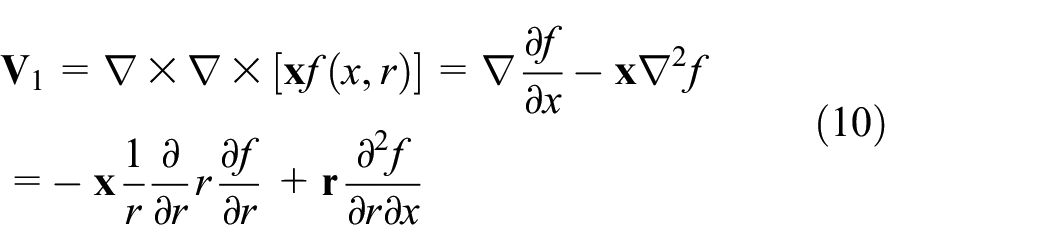
Substituting equation (10) into equation (9), the following equation can be obtained
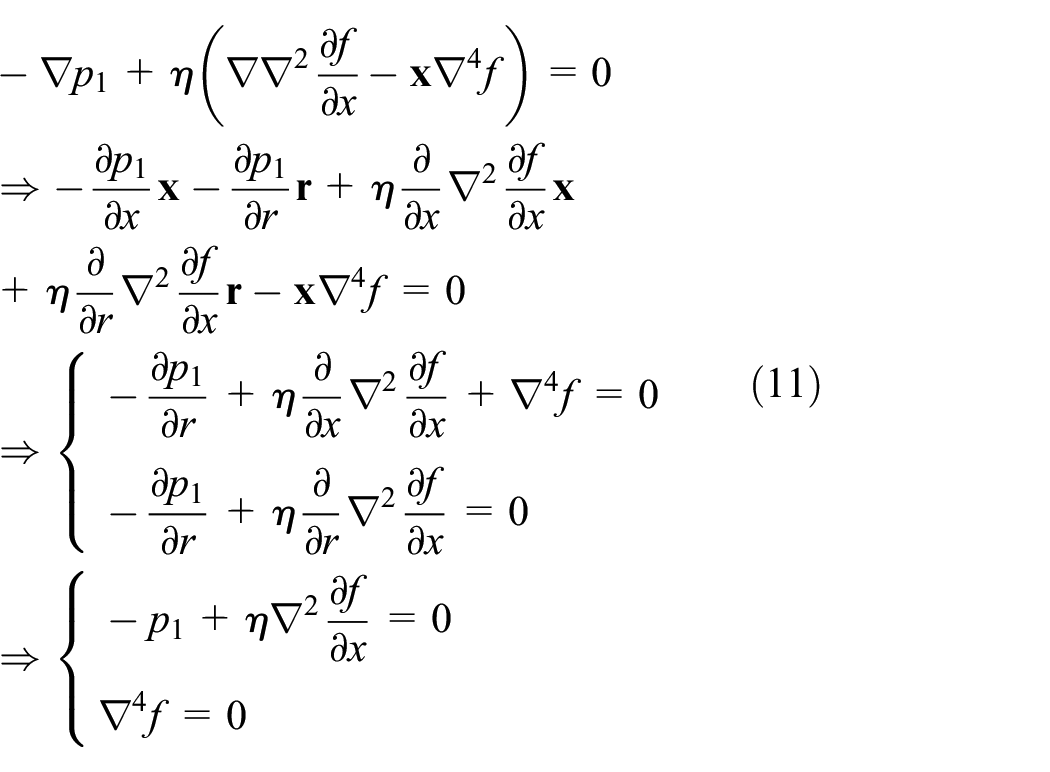
Obviously, according to the boundary condition (27) and boundary value of the biharmonic equation f(x, r), the constant

Admittedly

Substituting equation (13) into equation (10), the following equation can be obtained

Obviously, according to the boundary condition (12), the constant function

Obviously, group constant
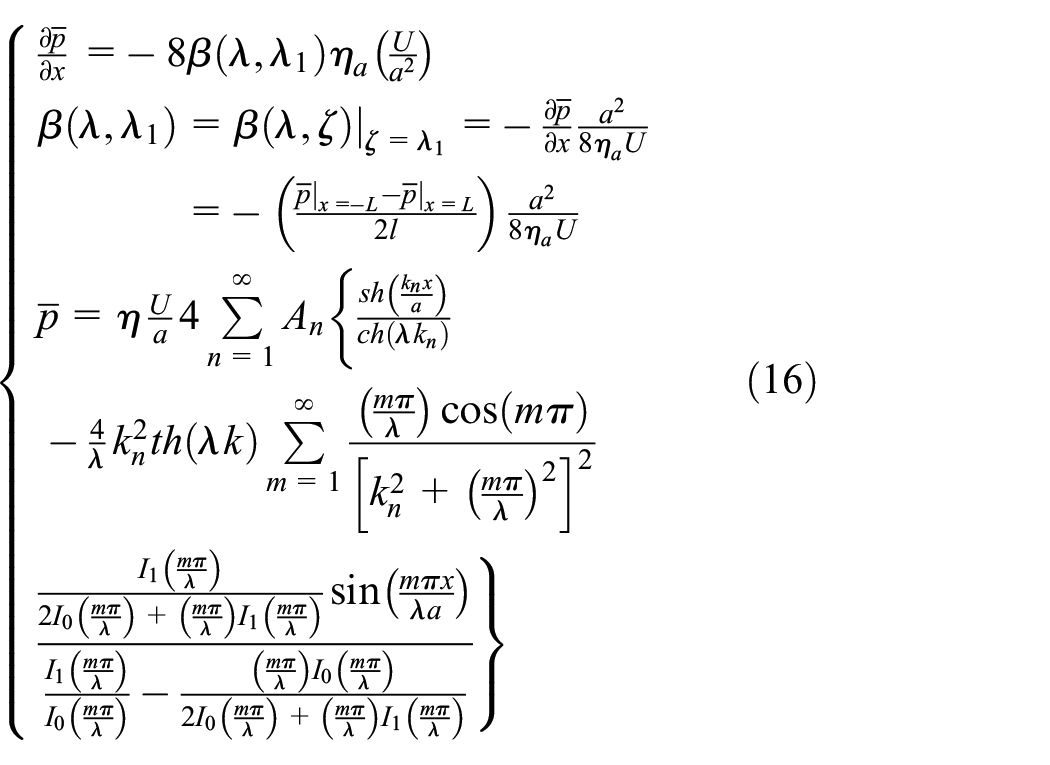
where
Blood flow model within capillary network
Obviously, the intercellular capillary network meets the requirements of curved capillary channels structure and quantity of fractal scale law for porous according to the physical similarity rule, the following equation can be obtained 38

If correction function

Certainly, the blood flow model within the capillary network through integral operation is given as follows

where Df1 is the capillary dimension of the capillary tube; r and rmax are the pore radius and the maximum pore radius, respectively; DT is the twisted fractal dimension of the capillary; Δpc is the pressure difference between import and export for capillary; σ is the liquid surface tension; and θ0 is the contact angle.
The blood flow model within arteriole–capillary vascular fractal network
The arteriole–arteriole dendritic fractal vascular network is considered equivalent to a simulation tree derivation of random fractal bifurcation network for porous medium. The flow equation of single-parent pipe for fractal bifurcation network traffic is obtained as follows 40

Casson’s flow equation for blood with correction functions is obtained as follows 36

Obviously, the blood flow mathematical model within arteriole–capillary vascular fractal network is obtained as follows

where
Admittedly, the blood flow rate in the vascular network is given as follows

Analysis and discussion
Simulation parameters determination
The physiologic simulation parameters of the vascular network based on physiology data of human body and the above theoretical derivation are shown in Table 1.
Main parameters of fractal vascular network.

Characteristic analysis and discussion
In this article, the MATLAB software is used for theoretical analysis and image acquisition. Figures 3 and 4 show the relationships between blood flow and bifurcation grade m under different pressure and bifurcation angle conditions, respectively. It is seen from Figure 3 that the blood flow in the fractal vascular network decreases as the number of bifurcation stages increases, the speed of which approaches to 0 when the stage number is high enough. Under different pressure conditions, the blood flow increases following the rise of pressure, which performs significantly in low bifurcation progression. And the differences in blood flow under different pressures decrease with increasing the bifurcation progression. It is seen from Figure 4 that as the bifurcation angle of the fractal vascular network increases, the blood flow decreases gradually, where the differences of blood flow first increase and then gradually decrease with the increase of bifurcation progression.

The relationship between blood flow and bifurcation grade in fractal vascular network m under different pressures.

The relationship between blood flow and bifurcation grade in fractal vascular network m under different bifurcation angles.
Figures 5 and 6 show the characteristics of blood flow and flow resistance affected by different diameters of the arteriole–capillary vascular network Df under different pressure and bifurcation angle conditions, respectively. In Figures 5 and 6, it is seen that with the increase of the diameters of the arteriole–capillary vascular network, the blood flow rises while the flow resistance reduces.

The relationship between the blood flow and the fractal dimension of diameter of the arteriole–capillary vascular network Df in the different pressures.

The relationship between the blood flow resistance and the fractal dimension Df in the different bifurcation angles.
Figures 7 and 8 show the characteristics of blood flow and flow resistance affected by different fractal dimensions of the diameter of capillary tubular diameter

The relationship between blood flow and fractal dimensions of the diameter of capillary tubular diameter
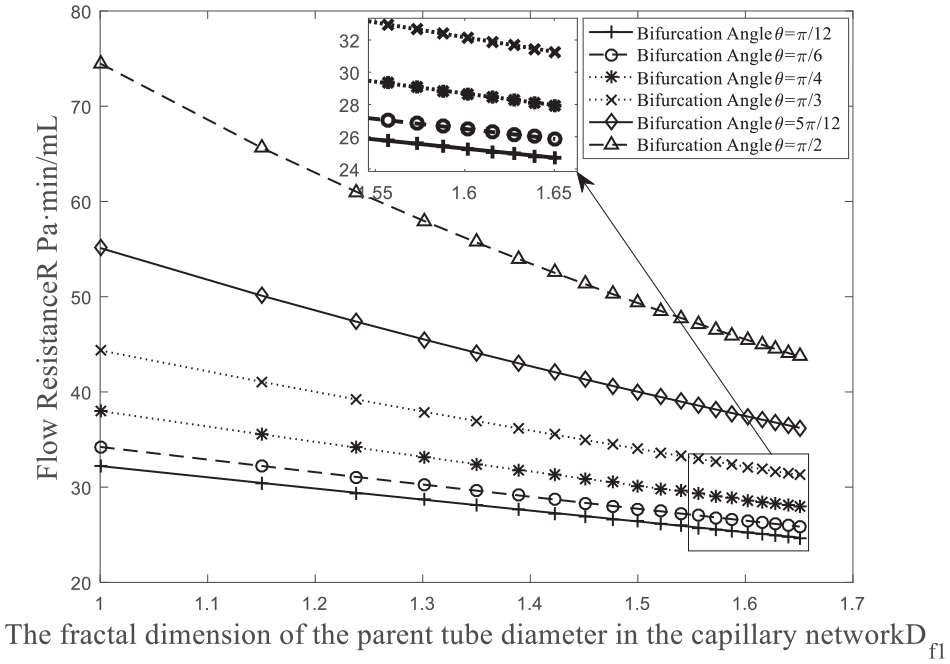
The relationship between blood flow resistance and fractal dimensions of the diameter of capillary tubular diameter
Figure 9 shows the relationships between blood flow and fractal dimensions of capillary blood vessels DT under different pressure conditions, in which the slowly decreasing curves suggest the blood flow reduces as the fractal dimensions increase. Figure 10 shows the effect on blood flow caused by blood Casson yield stress, and the decreasing curve in the figure suggests that the non-Newtonian rheological properties of blood do have an effect on blood flow.

The relationship between blood flow and fractal dimensions of capillary blood vessels DT under different pressure conditions.

The relationship between blood flow and blood Casson yield stress
Figures 11 and 12 show the characteristics of blood flow and flow resistance affected by different ratios of RBC radius to capillary diameter
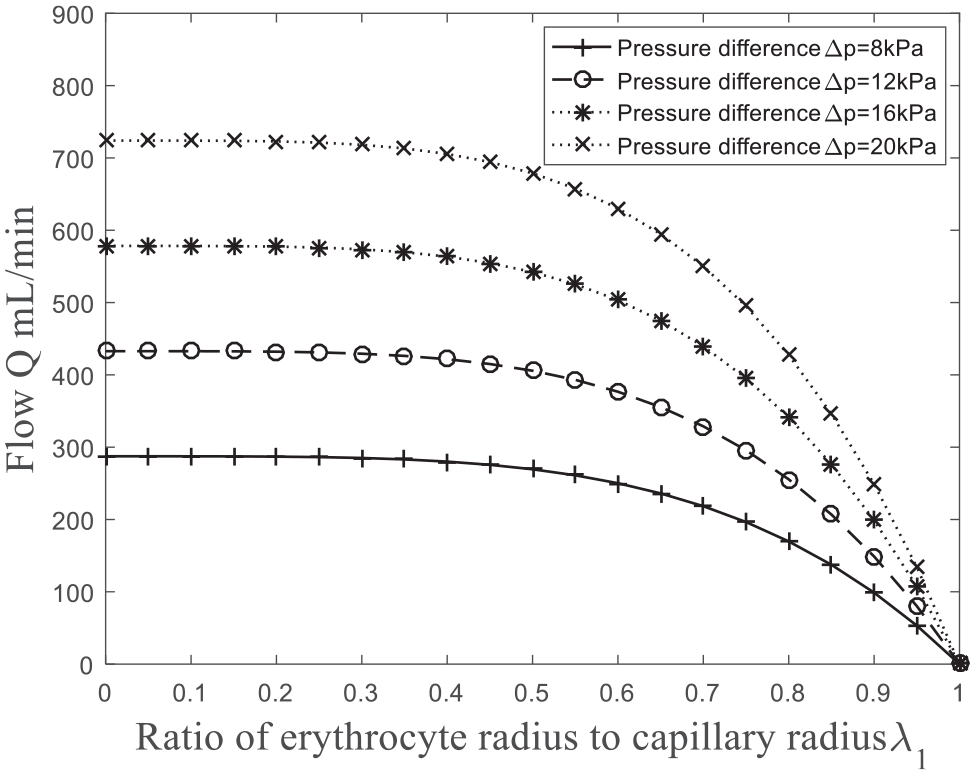
The relationship between blood flow and ratio of red blood cell radius to capillary diameter

The relationship between blood flow resistance and ratio of erythrocyte radius to capillary diameter
Figures 13 and 14 show the characteristics of blood flow and flow resistance affected by different ratios of the distance between adjacent RBCs to the radius of red cells

The relationship between blood flow and ratios of the distance between adjacent red blood cells to the radius of red cells
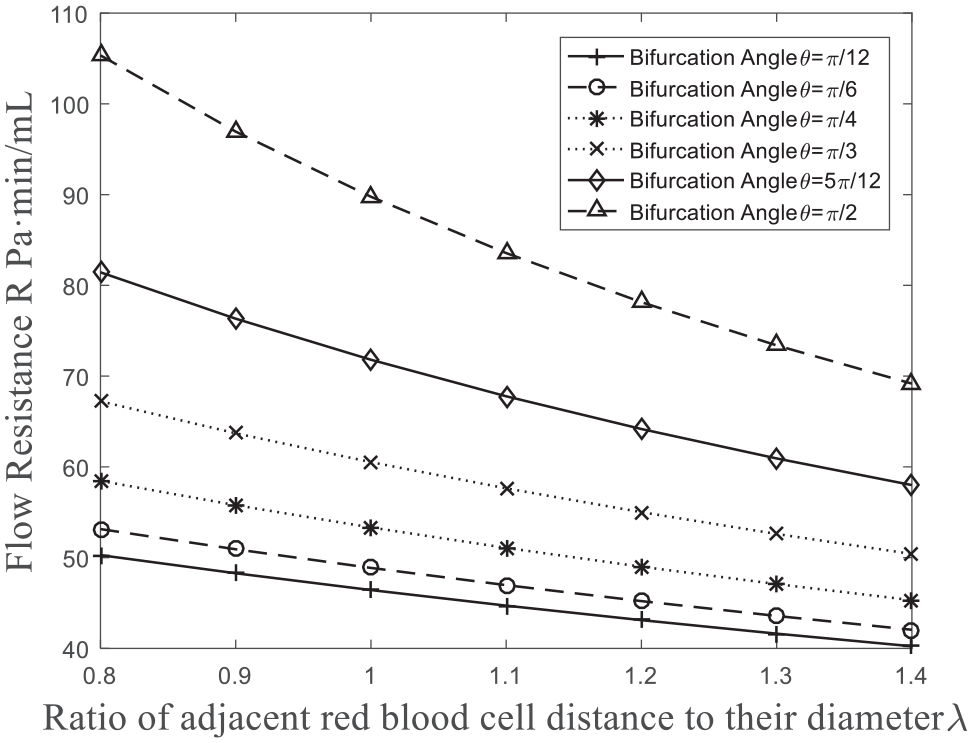
The relationship between blood flow resistance and ratios of the distance between adjacent red blood cells to the radius of red cells
Figure 15 shows the characteristics of blood flow resistance caused by different bifurcation progression
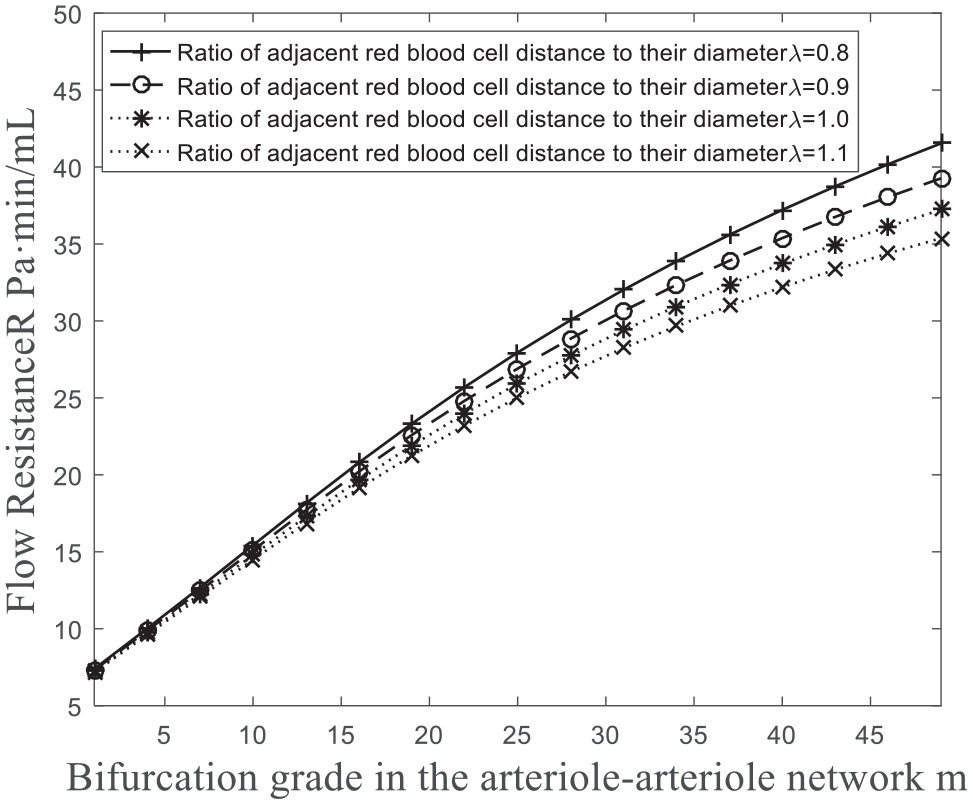
The relationship between blood flow resistance and bifurcation grade m under different ratios of the distance between adjacent red blood cells to the radius of red cells.
Experimental verification
Figure 16(a)–(d) shows the contrastographic pictures of cardiac coronary artery network for the male healthy volunteer (56 years old) at the Bethune First Hospital of Jilin University on 4 May 2018. Tables 2 and 3 show the main physical parameters and physiological parameters of cardiovascular network system for volunteer, respectively.

The contrastographic pictures of cardiac coronary artery network: (a) cardiac coronary angiography image with case A, (b) cardiac coronary angiography image with case B, (c) cardiac coronary angiography image with case C, and (d) cardiac coronary angiography image with case D.
The main physical parameters by measuring method.

Main physiological parameters.

Table 4 shows the number of fractal dimension and the average flow of cardiac coronary artery network for the volunteer. It can be seen that the fractal dimension m compared to Figure 16 (Case A/B/C/D) is 1.67, 1.44, 1.52, and 1.58 using the Box-counting dimension method to the coronary artery network, respectively. Moreover, the relative error ξ increases with fractal dimension m decreasing, when relative error ξ is almost minimal value at m = mmax, and experimental test showed that the theoretical calculation and simulation analysis of blood circulation system of fractal vascular network were reasonable and applicable using experimental relative method because of the maximum relative error ξ is less than 10%, whenever fractal dimension m changes under different conditions.
Comparative data.

Conclusion
The following conclusions can be drawn:
The blood flow models within the fractal vascular network including the kinetic equation of blood bolus flow within capillaries network, capillary network, and arteriole–capillary vascular fractal network were established.
The characteristics of blood flow and flow resistance were analyzed, which caused by the bifurcation progression
The clinical verification tests were accomplished, where the curve tendencies are very similar to those obtained by numerical simulations based on the theoretical models.
The experimental test showed that the theoretical calculation and simulation analysis of blood circulation system of fractal vascular network were reasonable and applicable using experimental relative method because the maximum relative error ξ is less than 10%, whenever fractal dimension m changes under different conditions.
Footnotes
Handling Editor: James Baldwin
Declaration of conflicting interests
The author(s) declared no potential conflicts of interest with respect to the research, authorship, and/or publication of this article.
Funding
The author(s) disclosed receipt of the following financial support for the research, authorship, and/or publication of this article: This project is supported by the National Natural Science Foundation of China (grant no. 51505174), Scientific and Technological Development Program of Jilin Province of China (grant no. 20170101206JC), China Postdoctoral Science Foundation (grant no. 2014M560232), Foundation of Education Bureau of Jilin Province (grant no. JJKH20170789KJ), National Key Research and Development Program of China (grant no. 2017YFC0602002), and Jilin Province Key Science and Technology R&D Project (grant no. 20180201040GX).
